Vedavati said: i cannot help but adore these flowers. L.O.V.E that they pop open white and shrivel up “maroon”. Mother Nature is such a marvel.
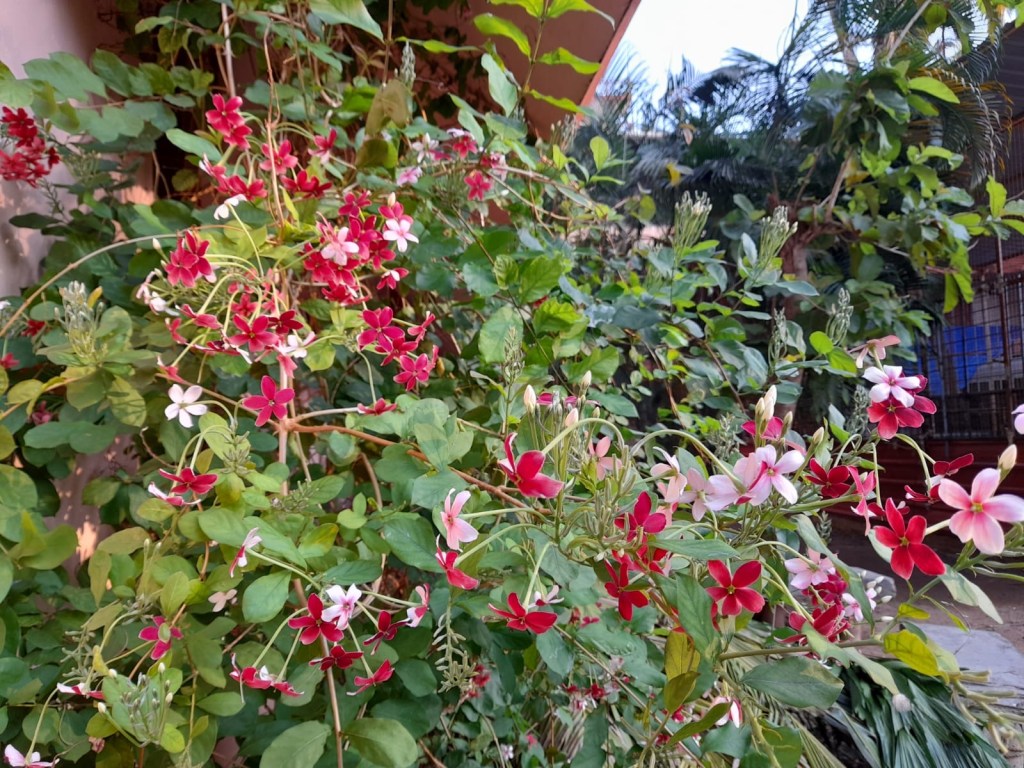

Vedavati said: i cannot help but adore these flowers. L.O.V.E that they pop open white and shrivel up “maroon”. Mother Nature is such a marvel.
To download the newsletter, click on the link or the photo.
Enjoy!

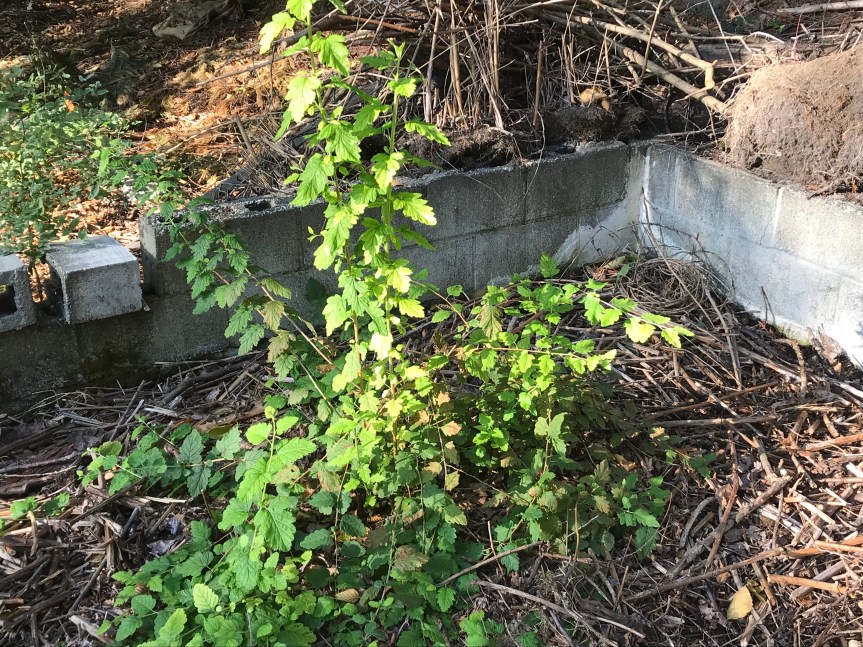
On January 22, 2019, I found a shovel on our Greenbelt restoration site. It was standing up against the remnants of a house foundation that is on the site. I was very surprised because I had been standing in that spot the day before, and it wasn’t there then. I put it away. The following day, I found a shrub sitting on the ledge next to the place where I had found the shovel.
There was blue and white checkered flagging tape on the plant, which indicated that it had been planted somewhere in Autumn of 2018. I couldn’t find any hole on the site so I had no idea where the shrub had come from.
Since I couldn’t think of any reasonable explanation for these events, I concluded, tentatively, that I was “supposed” to plant the shrub in the foundation. In January 2019, I wrote about that mystery- A Mystery in the Greenbelt. Towards the end of March, I wrote a followup article- Mystery Followup. Both articles contain numerous photos.
Before I go on, let me give some more backstory. The house foundation was discovered in April 2017 when Seattle Parks Department staff cut down the blackberry vines on the site. Because of items we found within the foundation and the presence of charred material in the area, we believed the house had burned down in the 1950’s.
We decided to use the foundation to store the racks we build to facilitate drying out blackberry, ivy and bindweed vines and other invasive weeds we dig out on the site. Putting these invasive plants on racks prevents them from re-rooting.
Early in January, 2019, we started disassembling the racks and spread the dried debris throughout the foundation. We also spread the dried debris from other racks on the site in the foundation. We planned, in time, to use that space as another planting area.
At that time, I had planned to plant in the foundation after the dried debris had composted and turned into dirt. When the mystery plant showed up, however, I let go of that plan; I would plant the shrub in the foundation.
Planting in dried debris is not the same as planting in dirt. There was some material towards the bottom of the debris that was pretty well composted but almost everything above it consisted of dried canes and branches. I decided to dig a hole in the debris and then place some dirt in the bottom of the hole, put the plant on top of it and then spread as much dirt as I could around it.
As I was deciding what to use for dirt, my eye fell on a single mole hill that was near the foundation. I noticed that dirt was very light and airy. I thought it would be perfect! By the beginning of August, the shrub, which turned out to be oceanspray, had grown significantly. My planting strategy had obviously worked.

Fast forward to mid-November 2019. We had some extra Roemer’s fescue and tall managrass plants after our November 2019 planting day. I thought it would be interesting to use the plants to experiment with planting in the foundation area again. Shirley (Sarva) and I decided we would have the UW service-learning students plant the fescue and managrass along the inner southern and western borders of the foundation.
The day before the students came, I saw the scene in the photo below in front of the foundation. At the time, I had been wondering what dirt we would use for the planting.

We rarely see mole hills on the property and to see four big ones (there were four even though the photo only shows three) directly in front of the foundation seemed like no accident. I realized that, once again, Mother Nature had provided the dirt we needed for the experiment. And again, the soil was so light and airy; perfect for planting the new plants.
On November 19th, the students planted 9 fescue and managrass plants.


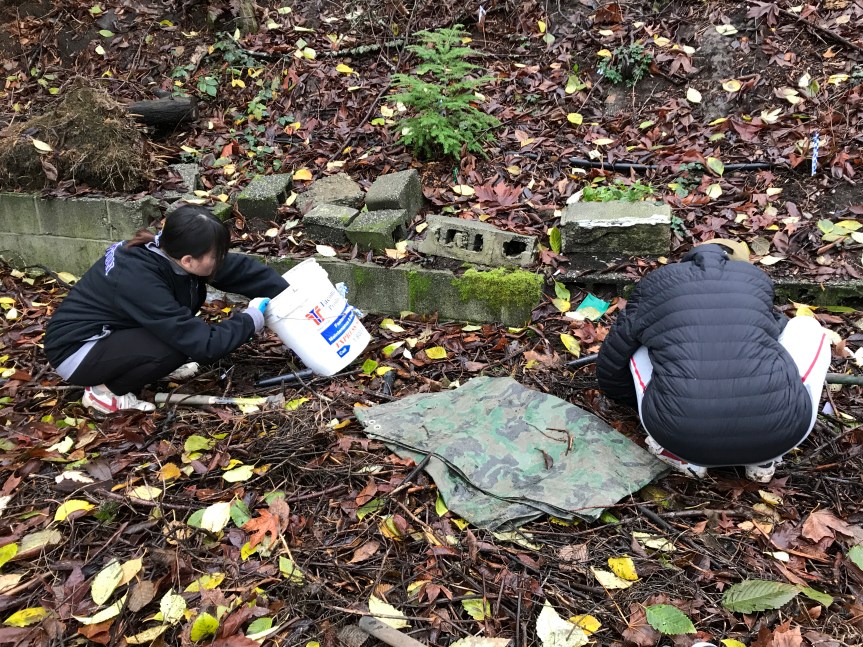


It will be interesting to see how they grow in this location. I imagine I will be writing updates in the future!
In my front yard there is a dahlia plant that has gigantic blooms. In mid to late summer it looks like this:
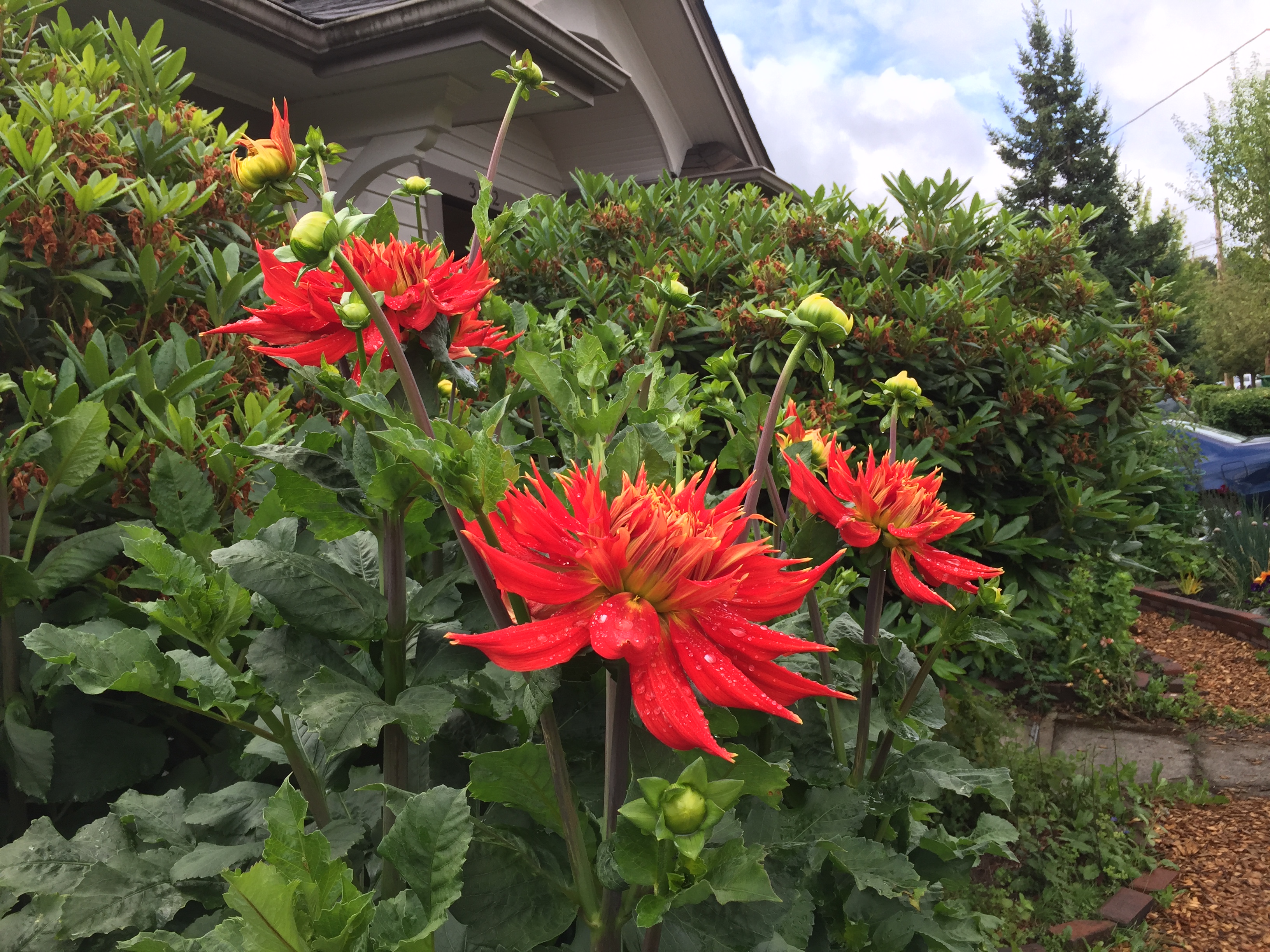

When I came back from India this year (towards the end of September), the blooms were dead, or dying. A week or so later, I cut them off. There were still some tiny buds on the plant. I left them alone event though I thought it was too late in the season for them to bloom.
When I walked by the plant on October 16, I was startled by what I saw. The buds were opening!

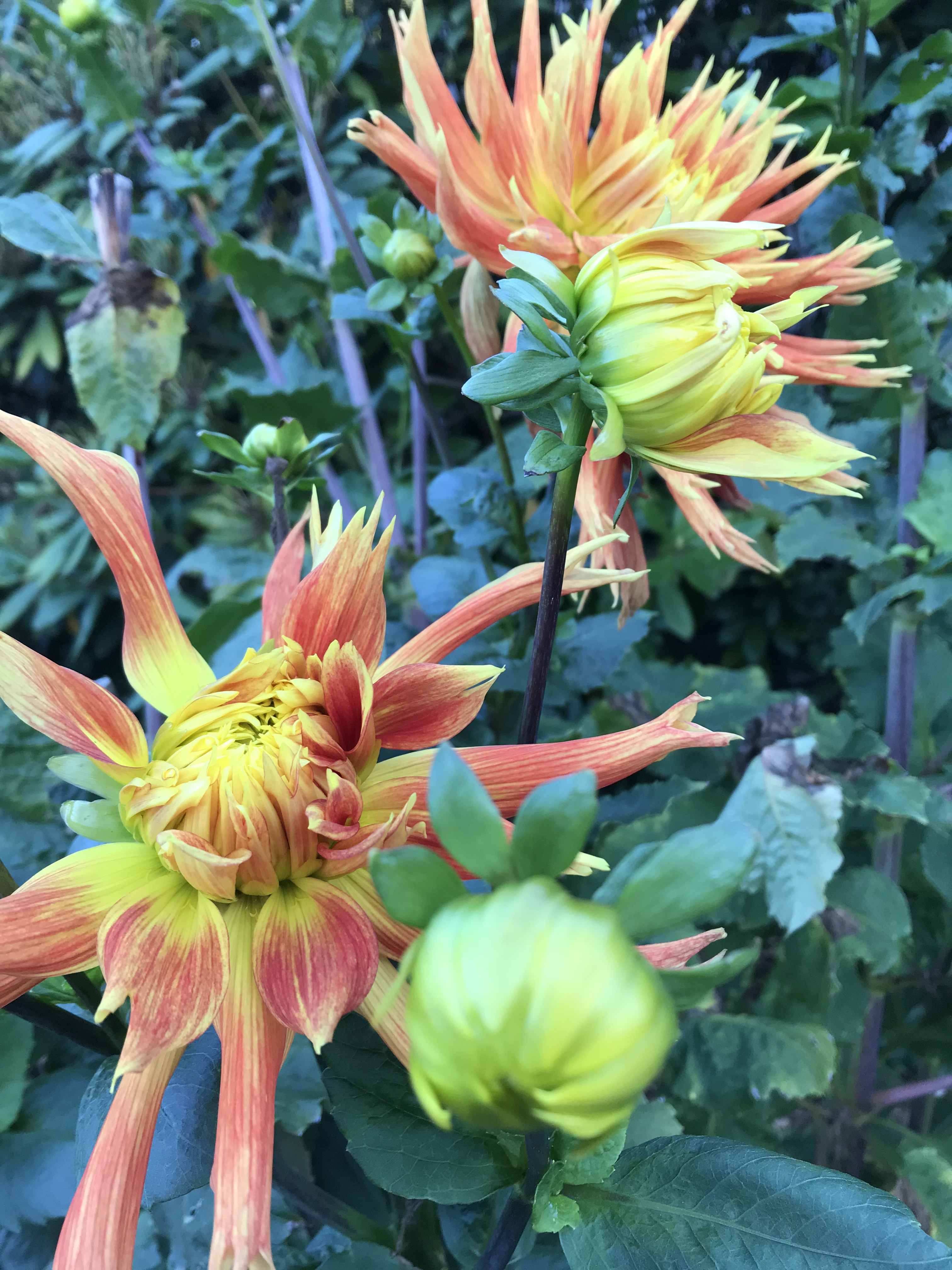

The flowers didn’t have the brilliant color of the dahlia in the summer, but they were beautiful in their own way. And they certainly show traits of Mother Nature such as the will to live and the tendency to give and give and then give some more..

My neighbor John and I had plans to pull ivy, blackberries and other weeds in the Greenbelt for a couple hours today. Problem was, the weather forecast was for rain, and neither of us were interested in working in the rain.
We planned to start weeding at 11:30. When it began to rain at 11:00, I felt doubtful that we would be able to work. At 11:30, the rain stopped as abruptly as it had begun. The sun came out and we got busy. Before long it was so warm that I took off my coat. The weather change was remarkable.
After two hours, we decided we had done enough for that session. As soon as John left, I noticed that it was getting dark. It seemed like dusk, even though it was only 2:45 in the afternoon. By the time I finished picking up my tools and putting the weeds I had pulled on the racks to dry, it started to rain.
I felt as if Mother Nature had blessed us twice- when we were given sun and warmth while we worked and when the rain started as soon as we finished, showering the plants we love with much needed water.
Thank you Mother for taking care of all of your children, whether they be insects, animals, plants or people.
This past summer, during Amma’s Chicago programs, ideas for how to design one of the planting areas in our Seattle forest restoration site started coming into my mind. The next day, I walked to the children’s program room, borrowed colored pencils and graph paper, and drew that design.
When I returned to Seattle, I transferred the design onto the ground as best as I could. It took hours and hours to accomplish that task as I was trying to lay it out perfectly. When I finally finished, I started laughing at myself. It had taken me that long to create placement for 12 plants. We had ordered more than 300 shrubs and ground covers. Clearly, that was not how I was going to maketo make planting plans for the whole site.
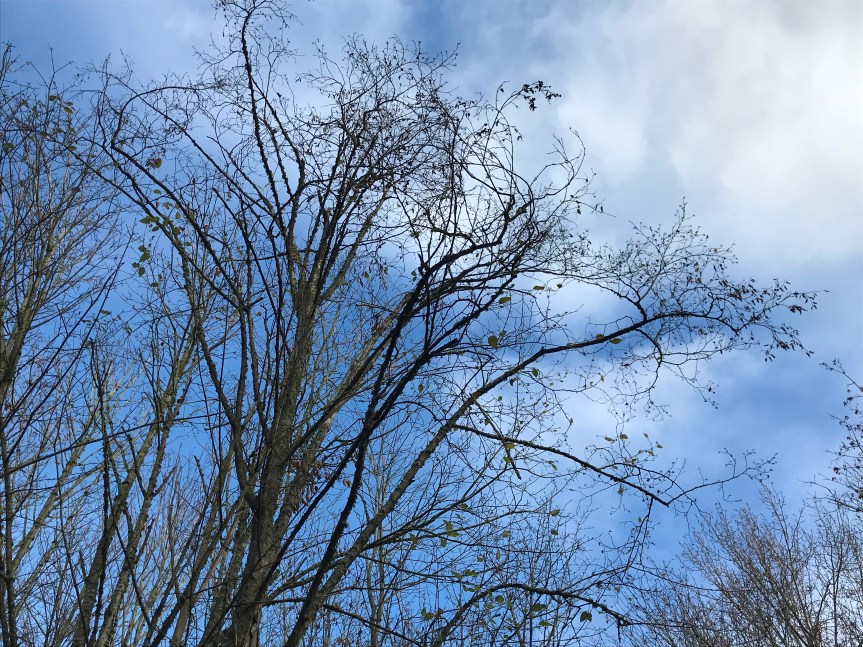
I enjoyed having “my area” though and dreamed of what it would look like in the future. This fall, I started noticing how often branches from nearby trees fell into “my area”. I also noticed that I was only seeing them in “my area”.
A few weeks ago we had a wind storm. In the photo below you can see some of the branches I took out of “my area” after the storm.

On November 15, we had the big planting work party. It was wonderful to finally have the native plants in “my area”. I day-dreamed about what the area would look like in the Spring.
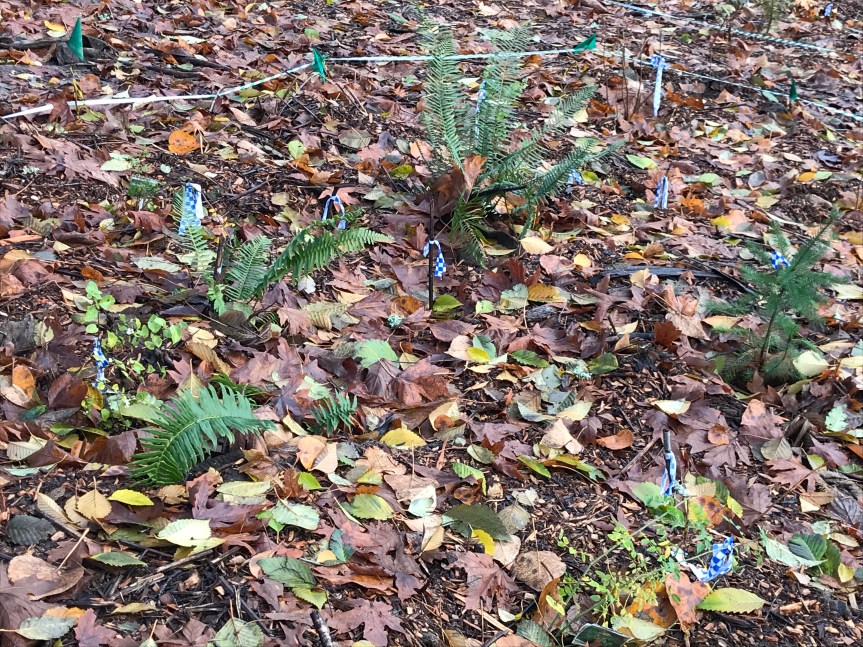
Then I had a horrifying thought: “Those falling branches could kill ‘my plants’!” I’ve been resisting the apparent fact that in forestry 50% of what we plant may not survive. In fact, I haven’t dealt with it at all because I believe “our” plants will be different. And I hadn’t even considered the possibility that any of the plants in “my area” would die.”
At that point, I took a good look at the terrain surrounding “my area”.
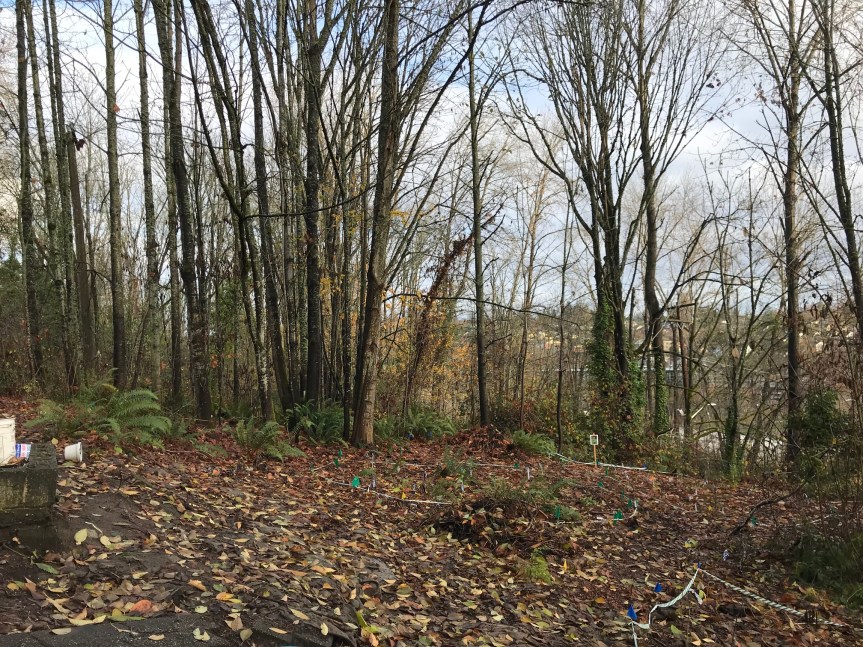
The trees are really tall, they are old, and “my area” is closest to them.


As I reflected on this situation, I had many thoughts.
As I was writing this post, I thought about the title that the Green Seattle Partnership gave those of us whom they trained to lead forest restoration work parties. We are called Forest Stewards. I decided to look up steward to see exactly what the word means. Merriam-Webster Dictionary defines steward as “a person hired to perform household or personal services.” It gives these words as synonyms: “domestic, flunky, lackey, menial, retainer, slavey, servant”. That’s it. I am not an owner, I am a servant of the forest.
I am a Forest Steward.
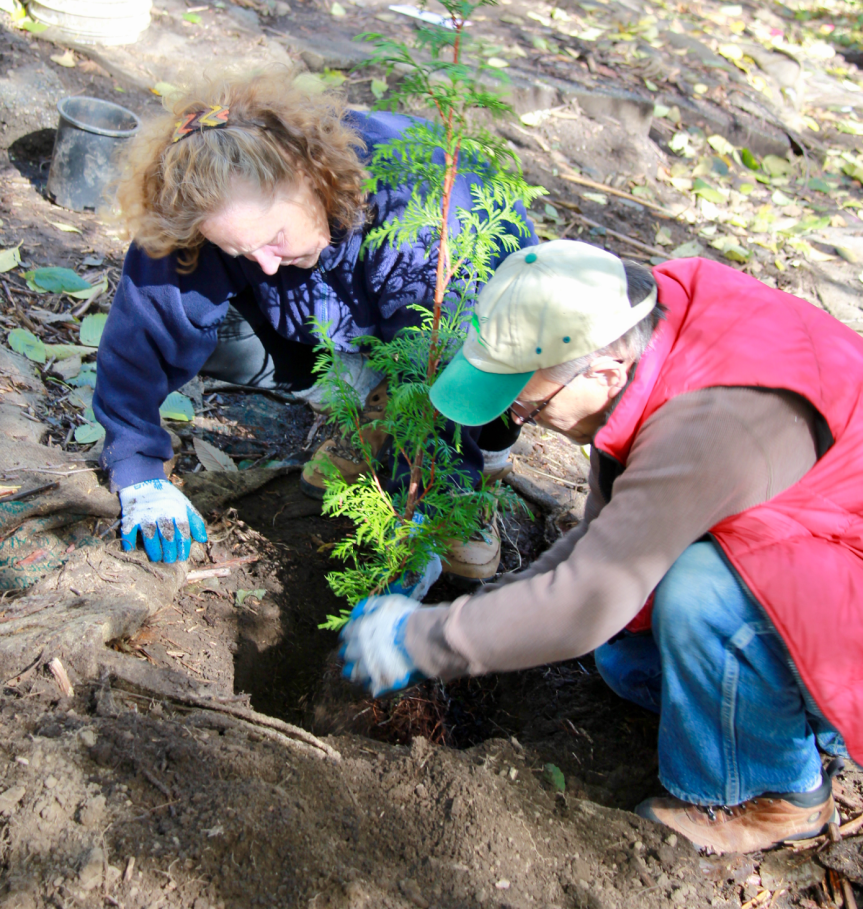
For many years, Amma has been encouraging us to plant trees as a way of healing the Earth. This year, devotees in the Pacific Northwest decided to honor Amma’s 64th birthday by planting trees. We asked everyone to let us know how many trees they would plant and to complete the planting by November 5th. We were hoping at least 64 trees would be pledged. At the time I am writing this post, the pledge count is up to 211!
Seattle Parks Department gave us 37 trees to plant in our Greenbelt site. That work party was held last Sunday, October 22nd. Thirty-two GreenFriends members participated. Many of them had never seen the site before and others hadn’t been there for a long time. I enjoyed seeing and hearing their reactions to the work we’ve done over the last year.
The work party began with an orientation to the site…


and then Pujarini Meera conducted a series of rituals asking Mother Earth for permission to plant the trees and to nurture and protect them after they are planted. I thought it was a beautiful ceremony. (Click on any of the galleries to enlarge the photos.)


After the rituals were over, Ananya and I gave planting instructions…


and then came the fun of planting the trees.


Amma’s birthday project will be over on November 5, but our work in the restoring this Greenbelt site will, of course, continue. We will finish preparing nine planting areas at a work party on November 11 and then will plant 360 shrubs in those areas on November 15!
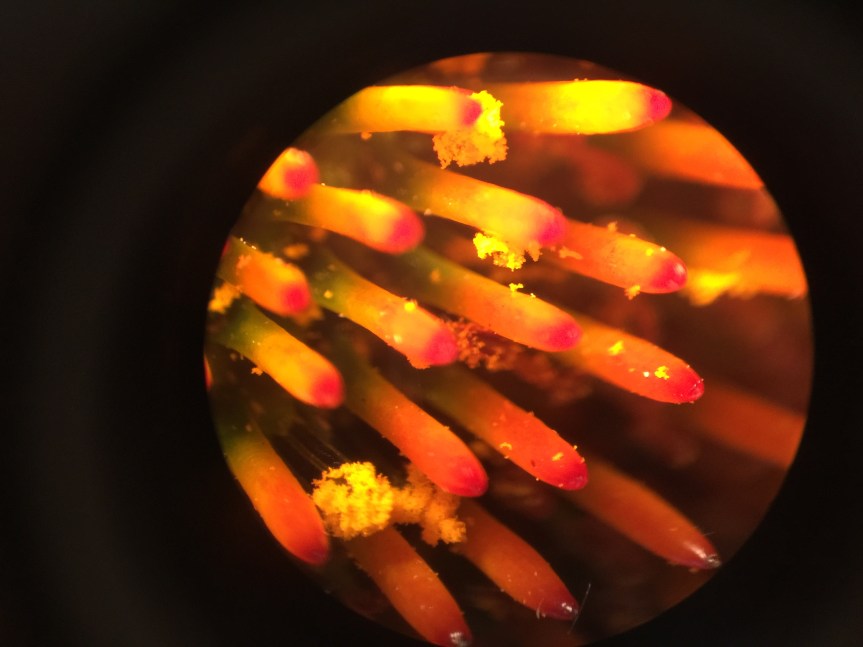
When I attended Amma’s programs at MA Center Chicago last summer, I walked to their big echinacea field. I found the flowers fascinating. I loved how unusual they looked at each stage of development and was particularly intrigued by the spikes in the center of the flower.


Soon after returning to Seattle, I decided to purchase some echinacea plants for my own garden… and a microscope. When I looked at the flower under the microscope, I gasped; my eyes beheld the magnificence and wonder of nature. (Click on the galleries to enlarge the photos.)


Throughout Seattle, there are groups of people working to remove blackberry vines, morning glories and ivy from parks and Greenbelts. The empty lot that is behind my house is in of one of the Greenbelts. During the last three decades, the invasive plants have completely taken over the once beautiful land. So many trees have died.
There have been times in the past where I cleared parts of the lot, but since I can’t take out all of the roots, they, of course, always come back. Lately removing the blackberry vines and other invasives from the lot has become a passion for me. A friend and I have worked many hours cutting them down.
This is my favorite tree on that property. (It is actually two different trees, and each one of them split into two trunks so there are actually four trunks, but I still see them all as one tree.)

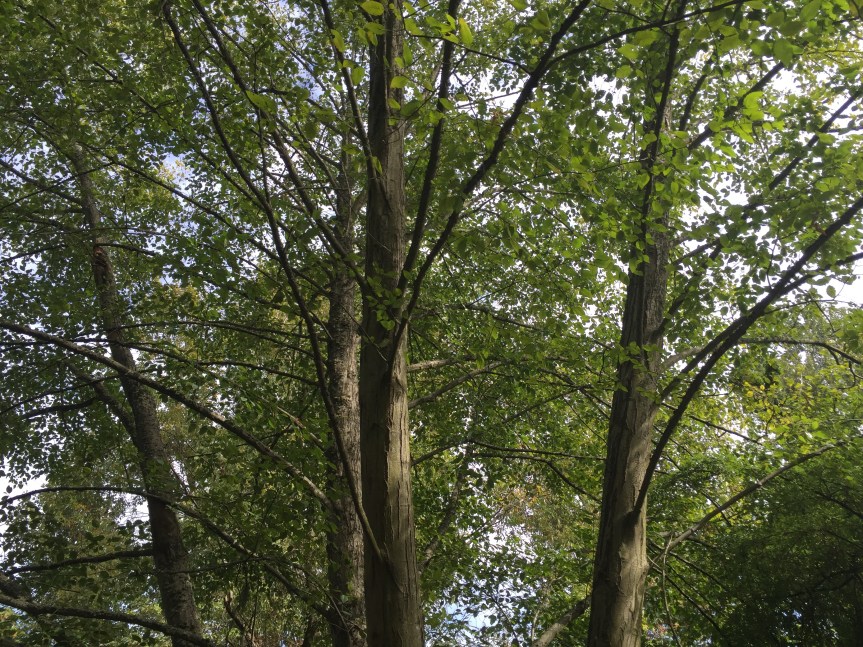
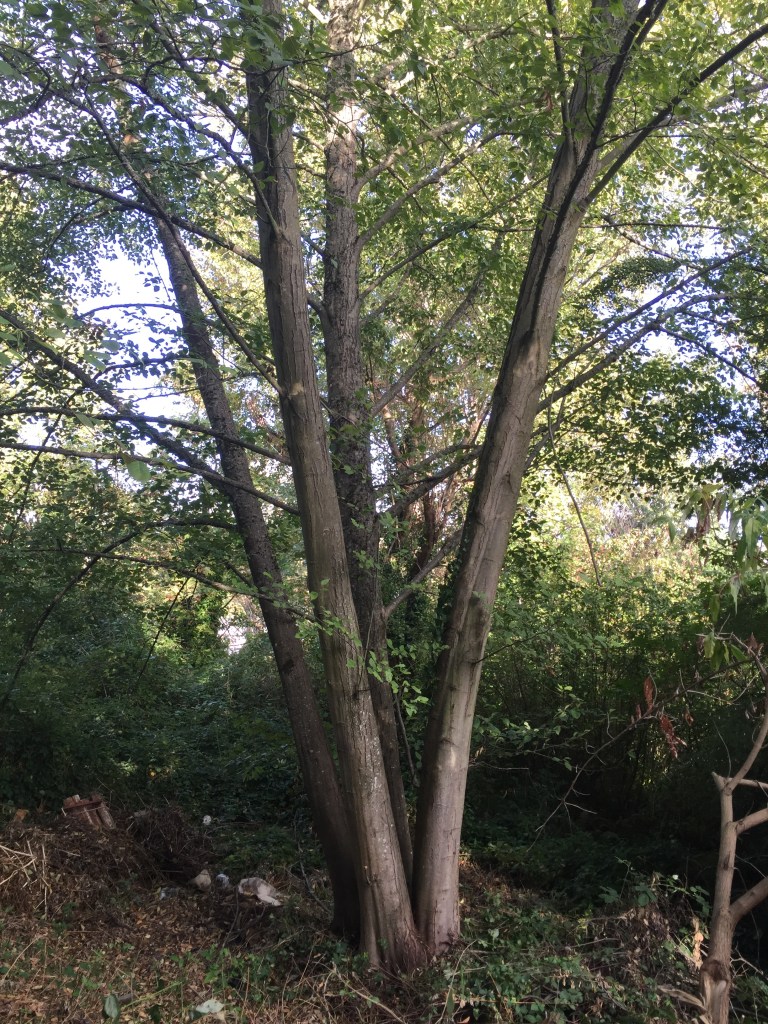
One of my first priorities was to remove the blackberry vines and ivy from that tree. I have done that enough times over the years that was a fairly easy goal for me to accomplish. For the first time, however, I noticed that there was a branch on the north side of the tree that was so long that it disappeared into the blackberries. I resolved to free the branch.


But how would I even get to it? There was no easy course.
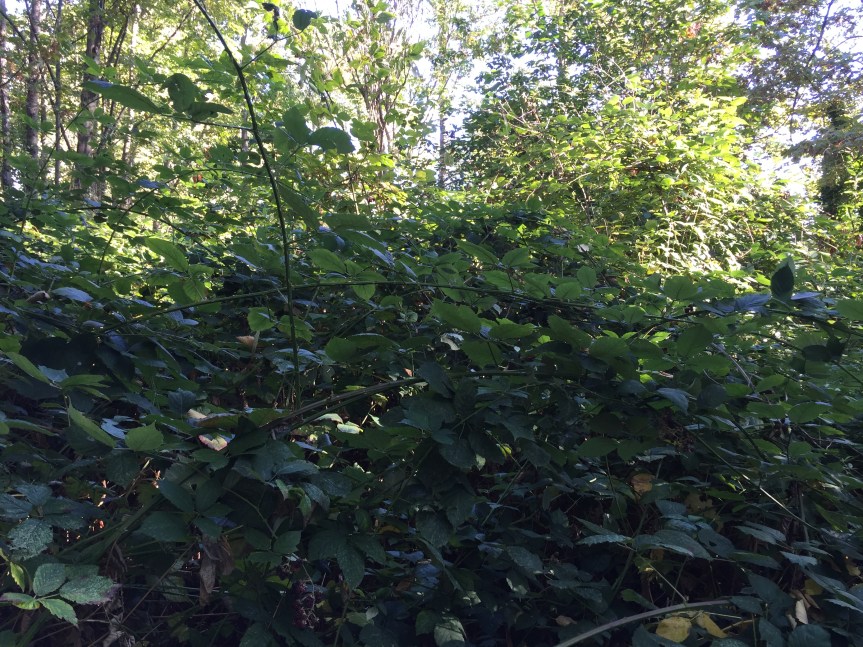
I planned my route to the buried branch and committed to free it the next day.
Early Sunday morning, I set out to accomplish my goal. First, I went to the storage shed to pick up the tools I needed.
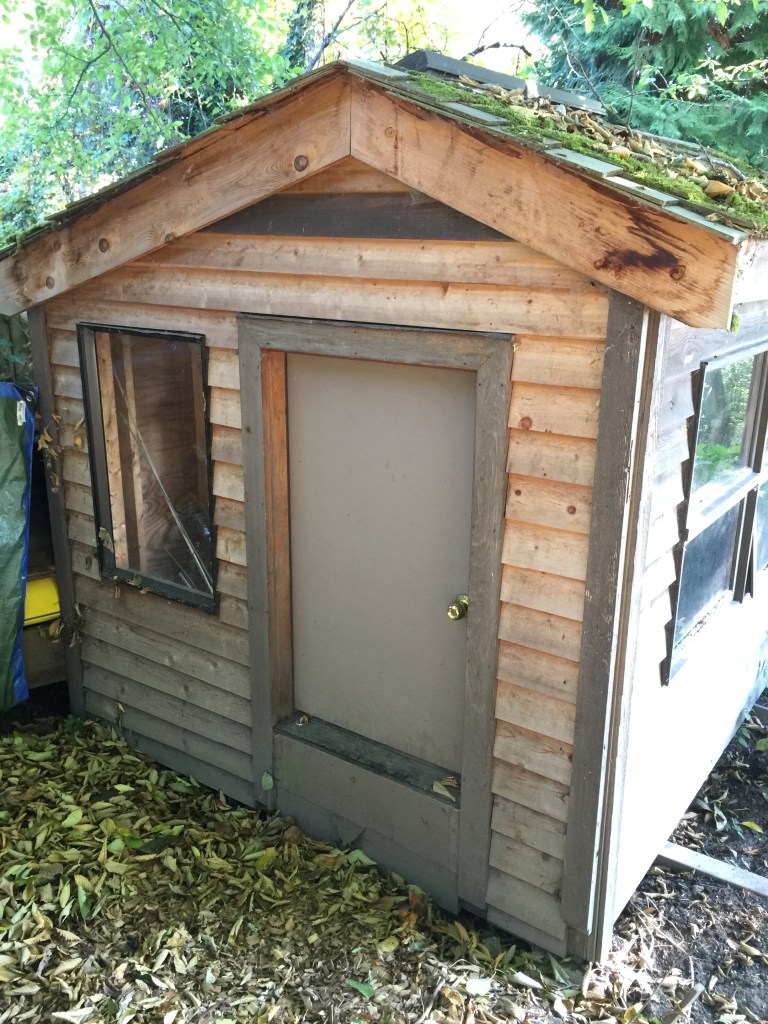
As I started to open the shed door, I walked face first into a big spider web. Yuck. I backed up to see where the spider was. What I saw was a yard spider that was bigger than any I’ve ever seen before.
I had been looking for a subject for the Weekly Photo Challenge: Quest. The moment I came face to face with that spider was the moment that I knew I had my subject for the photo story. Freeing this tree branch was indeed going to be a Quest.
I picked up my tools and then headed towards the stairs that go to the lower lot.
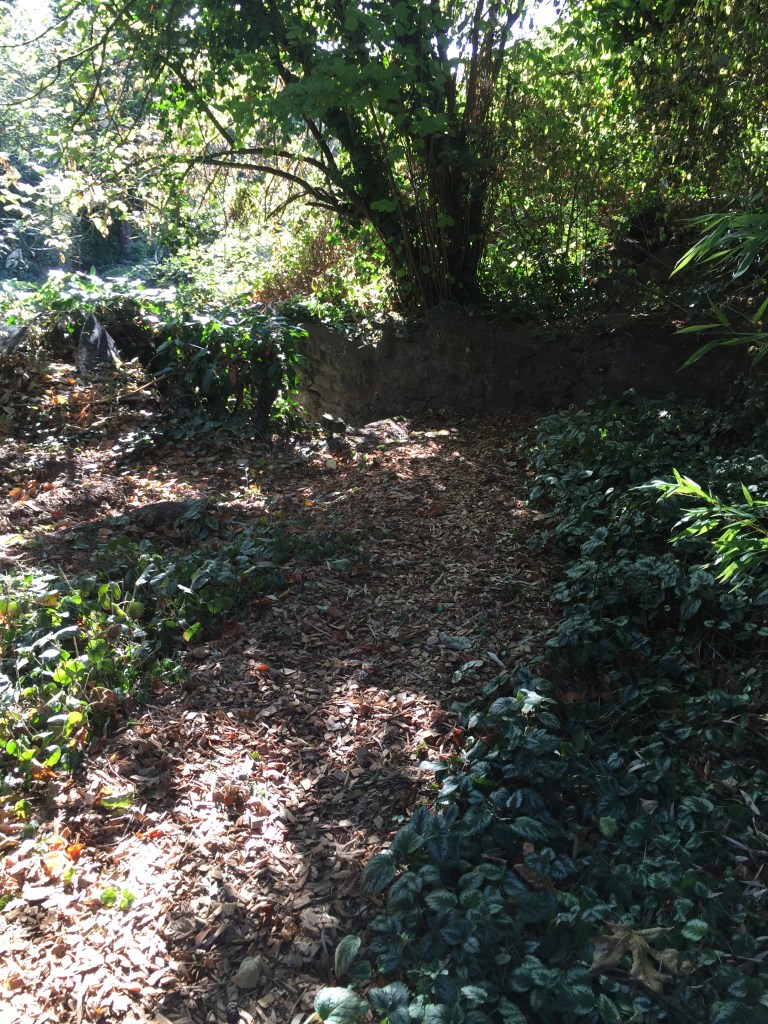

Shortly thereafter, I again walked into an unseen spider.

Okay, it is time for me to get conscious.
I inched my way down the hill, drawing ever closer to the tree. As I descended, I appreciated how much clearing we have already done.
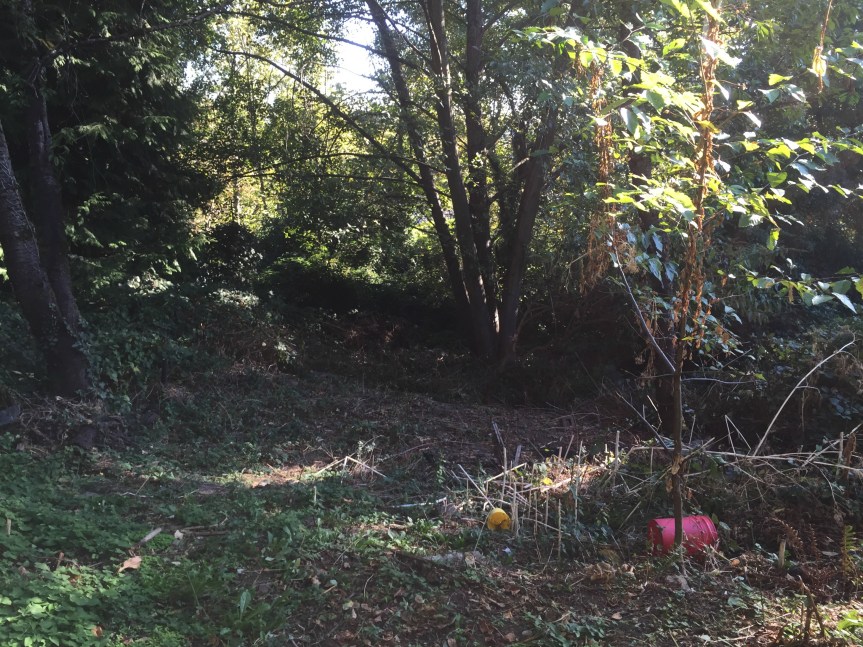
Cutting a path through the blackberry vines, I drew closer and closer to my destination. It wasn’t just a matter of cutting down the upper layer of blackberries. If I opened a hole in the mass, I could see that many of the old ones were in layers three feet deep. I had to be careful not to accidentally put my foot into a drop off.
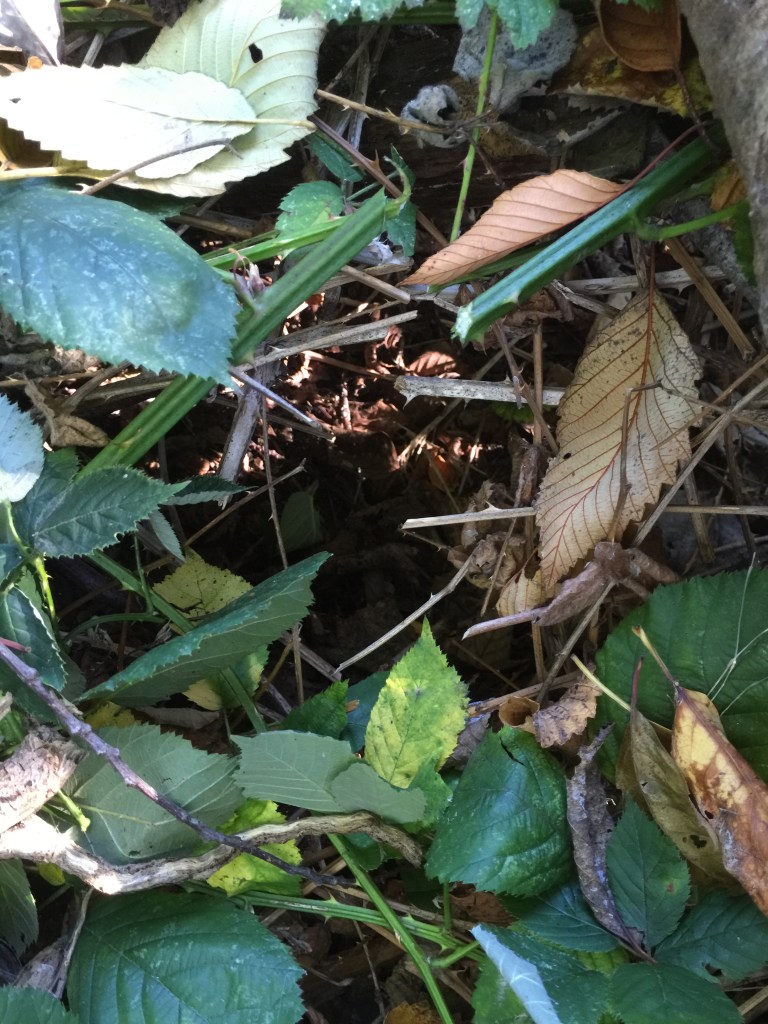
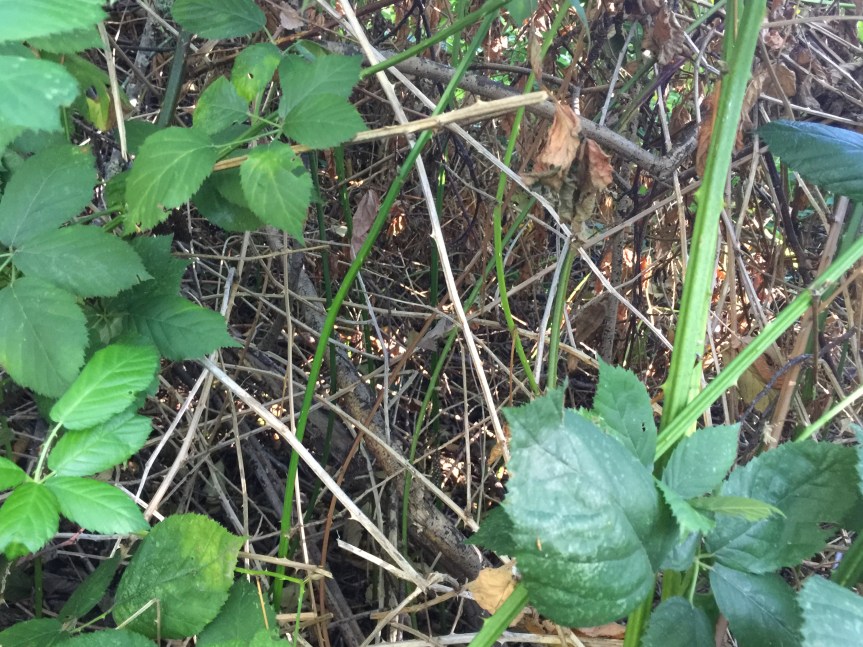
Finally, I got close enough to the branch that I could begin cutting the vines that were holding it down.

I worked diligently, oblivious of the time.
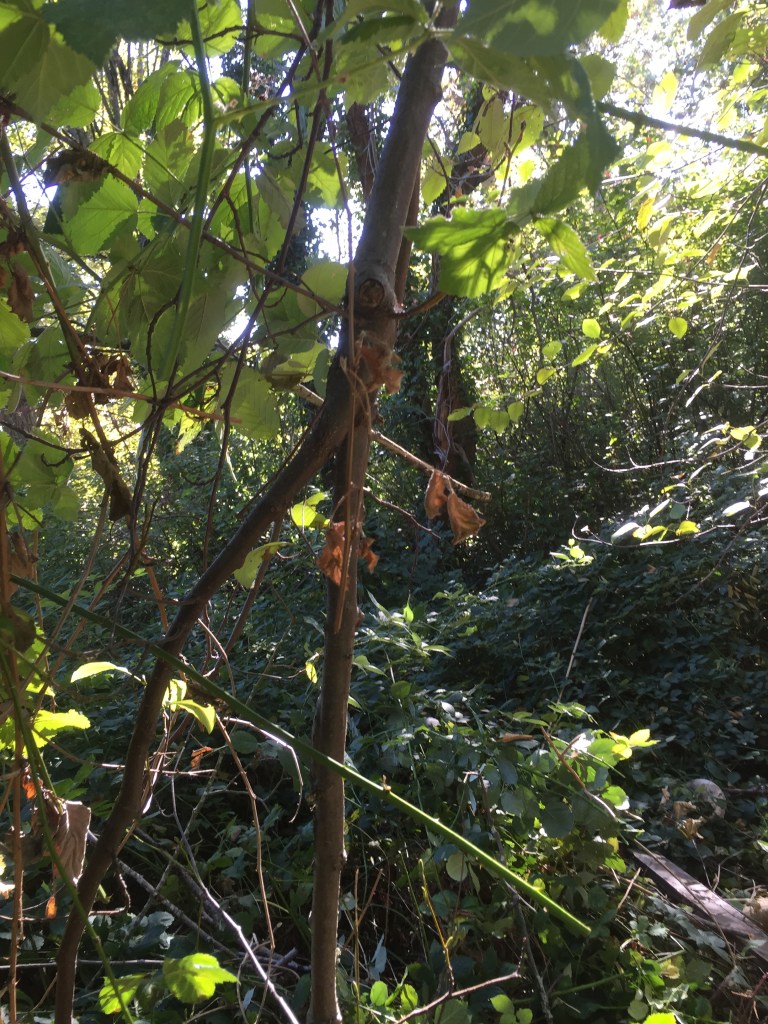
I was excited to see that there were many signs of life on the smaller branches that were offshoots of the larger one.

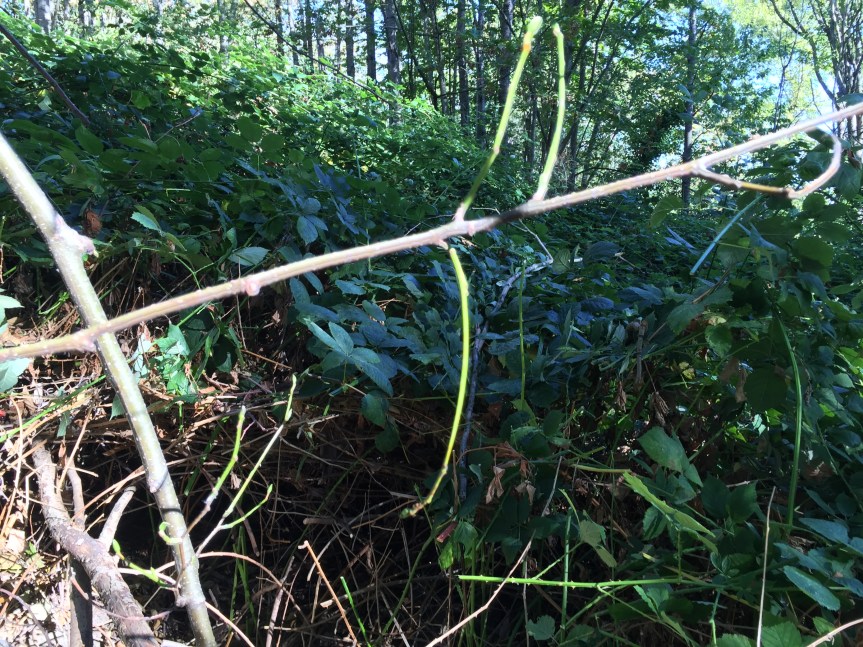
When I thought I had freed it, I discovered that there was still one part was still trapped. I couldn’t even see where it ended. It occurred to me that none of the other branches on the tree were anywhere near that long, so I decided to cut it just under the areas of growth.

When I made the cut, the branch rose ten to twelve feet into the air.
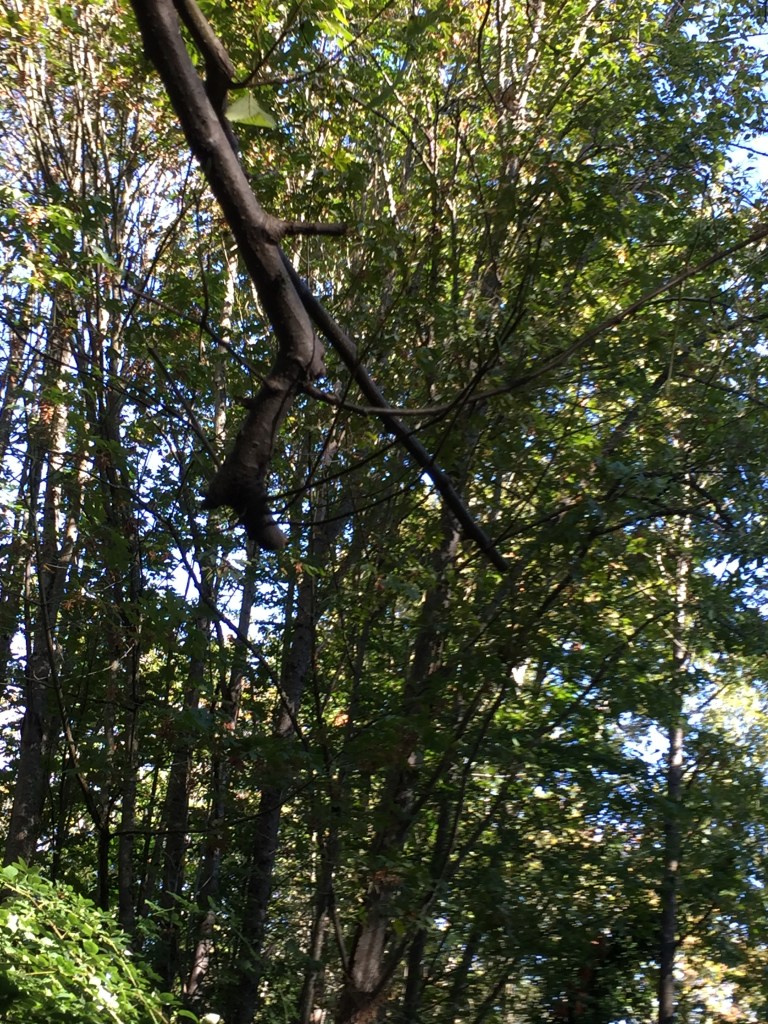
Free, free at last!

Mission accomplished. As I started to leave the area, I saw so many other trees that need to be liberated from the blackberries. I recommitted to come back and do more of that work, but this quest was enough for one day.
Time to go home.
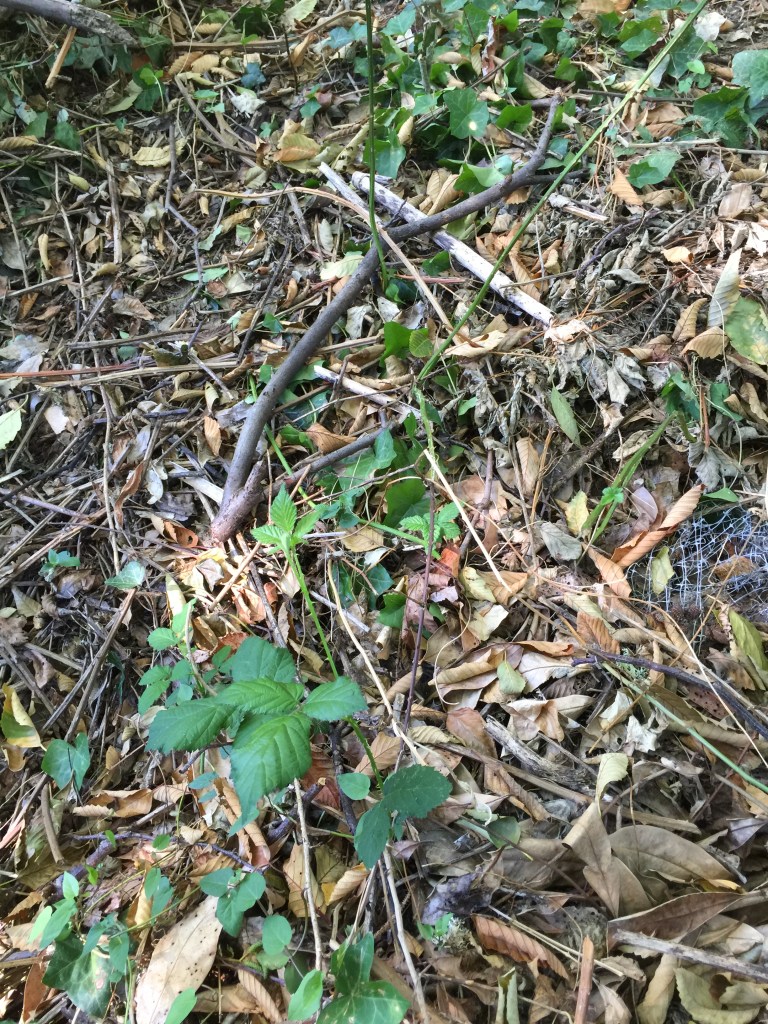
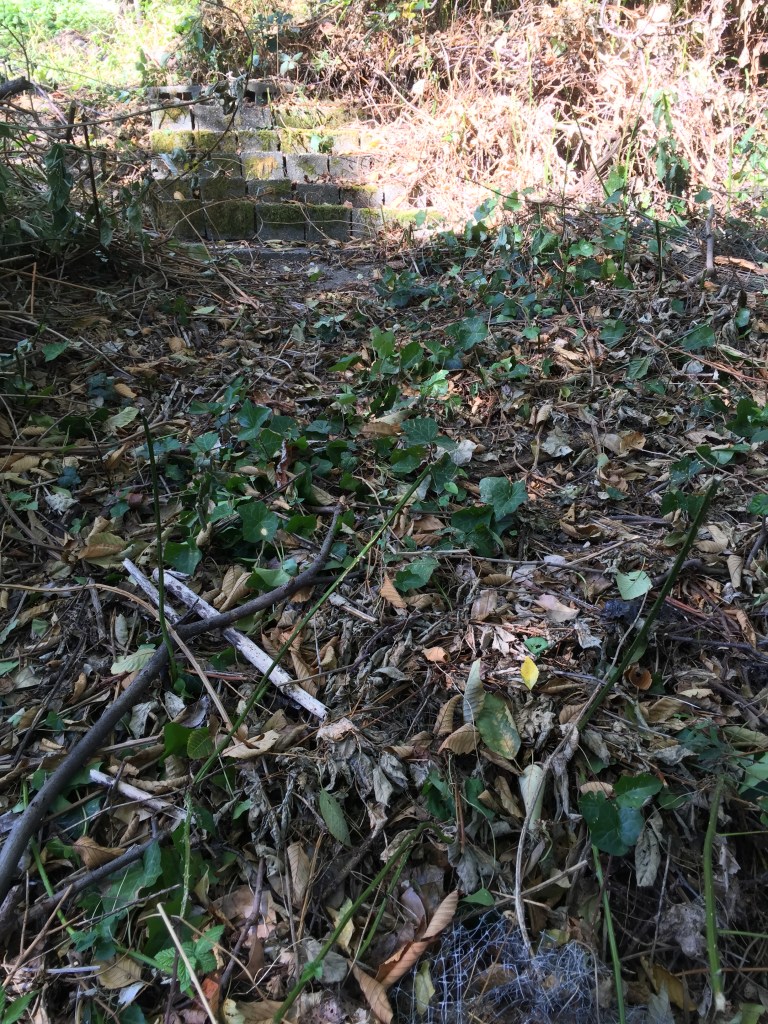
Before I knew it, I was nearing my back deck.

My quest was complete and it was time for me to have a well deserved rest.
Most of my photos are of some aspect of nature. These two remain my favorites:


When I saw this week’s challenge, I also thought of a Sanskrit prayer that many children in India chant before they get up in the morning, prior to their feet touching the ground. Here is the English translation:
O! Mother Earth
who has the ocean as clothes
and mountains and forests on her body
who is the wife of Lord Vishnu.
I bow to you.
Please forgive me for touching you with my feet.
May we all develop such devotion and humility.
Written for Weekly Photo Challenge: Earth
The Art and Craft of Blogging
A collection of discussions on the environmental issues
“The fool doth think he is wise, but the wise man knows himself to be a fool.” “Love all, trust a few, do wrong to none.” “Love looks not with the eyes, but with the mind, And therefore is winged Cupid painted blind.”-William Shakespeare
...moments of unexpected clarity
Home of Lukas Kondraciuk Photography
Wellness, Support and Mindset
Thoughts on Creativity & Deeper Things
A Blog by Novella Carpenter
Ramblings of an Irish ecologist and gardener
Teaching the art of composition for photography.
Blog from SathyaSaiMemories ~ stories of love in action and the benefits of giving
There are 11,507 stories in Haddonfield; this is one of them.
Perennial gardening and more from the Green Mountains of Vermont
Whatever it will be...
Welcome to my little slice of the blogosphere
 Living, Learning and Letting Go