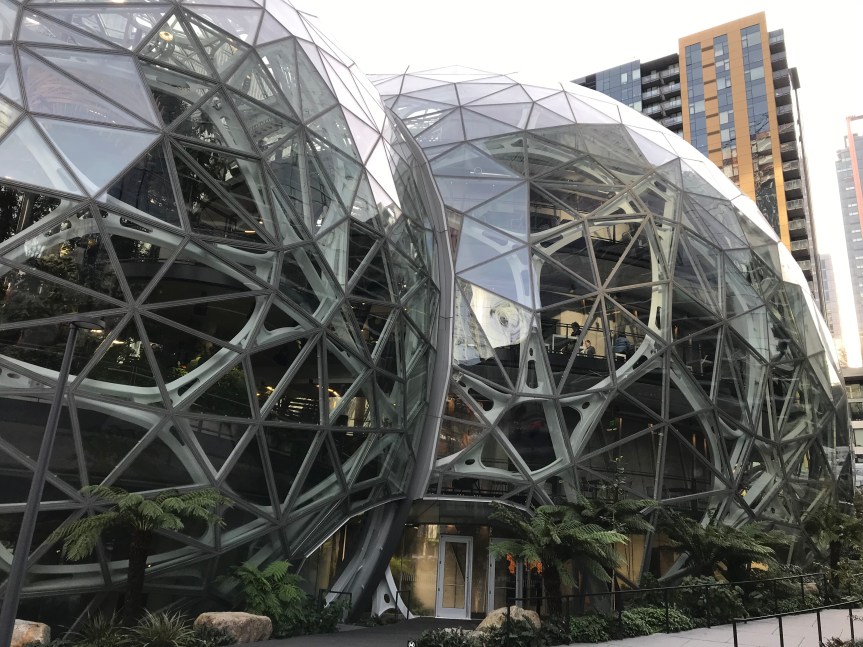
My Visit to the Amazon Spheres


I have wanted to see the Amazon Spheres since they opened on January 30, 2018. Amazon’s website says:

The Spheres are a place where employees can think and work differently surrounded by plants.

The Spheres are a result of innovative thinking about the character of a workplace and an extended conversation about what is typically missing from urban offices– a direct link to nature. The Spheres are home to more than 40,000 plants from the cloud forest regions of over 30 countries.

Amazon offers two public showings a month, but at the time I checked on them the reserved spaces were full far into the future. I decided to ask a friend who works at Amazon if employees were allowed to bring visitors. He said “Yes”, and offered to show me the Spheres. It took me until November 20th to take him up on his generous offer, but the day finally arrived.

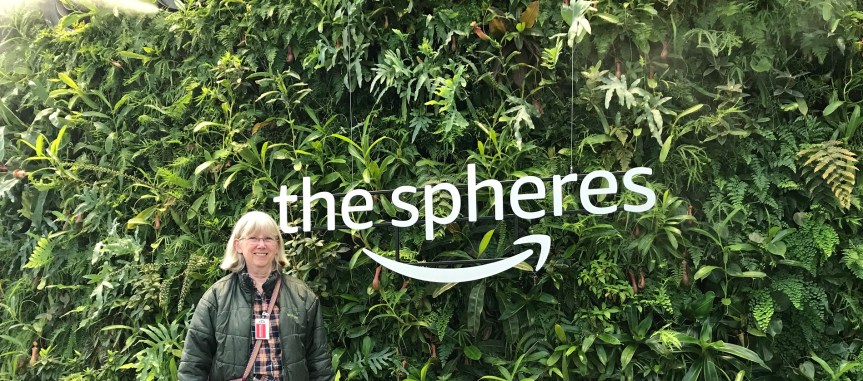
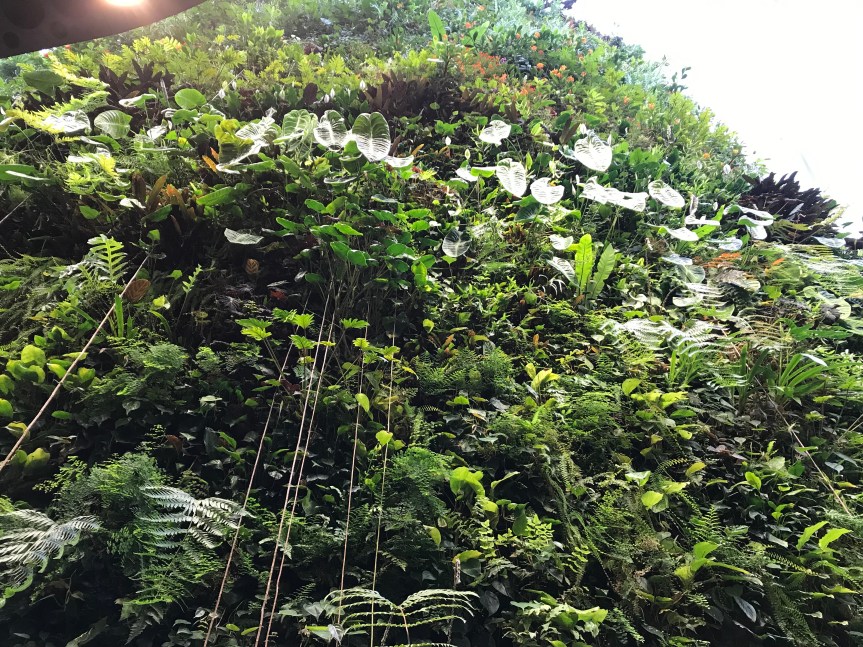
When we entered the Spheres, the first thing I saw was a living wall (aka green wall). I had looked up living walls when I was working on a PNW GreenFriends Newsletter (Issue 87, page 23) a few months ago. I was impressed by the concept and by seeing photos of living walls throughout the world. And now I was standing in front of one.

This living wall was 3 stories high. It was impossible for me to photograph it in its entirety but I did my best.
 

When I left the wall, I looked around me. I felt as if I had entered a wonderland. The area shown in the photo below had small waterfalls.


There were so many beautiful plants.

(Click on the galleries to enlarge the photos.)

I was surprised to learn that these were ginger plants.

I thought these carnivorous plants were fascinating. They reminded me of the Venus fly trap plant I had when I was a kid.

As Rashmesh and I walked up the stairs, we had various views of the big living wall.

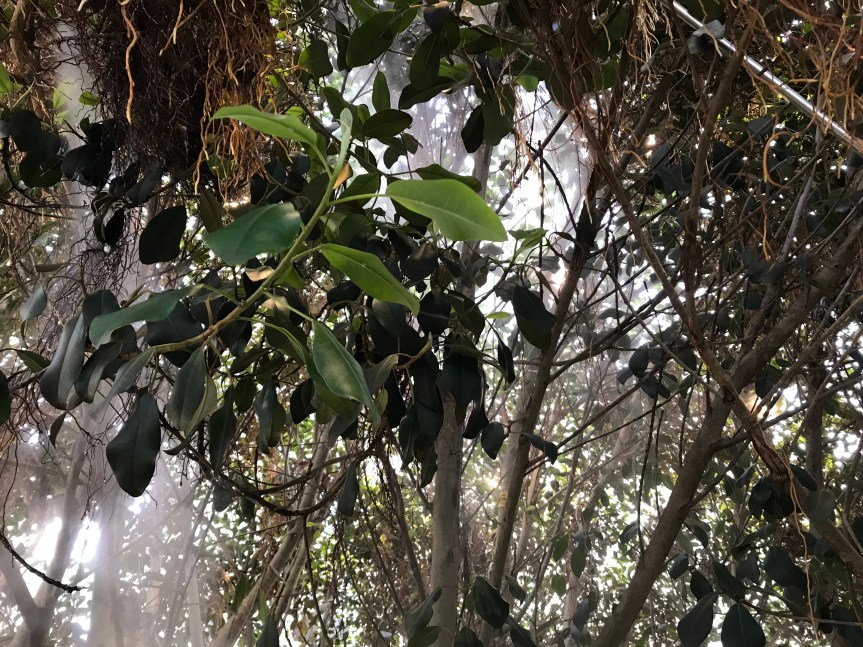
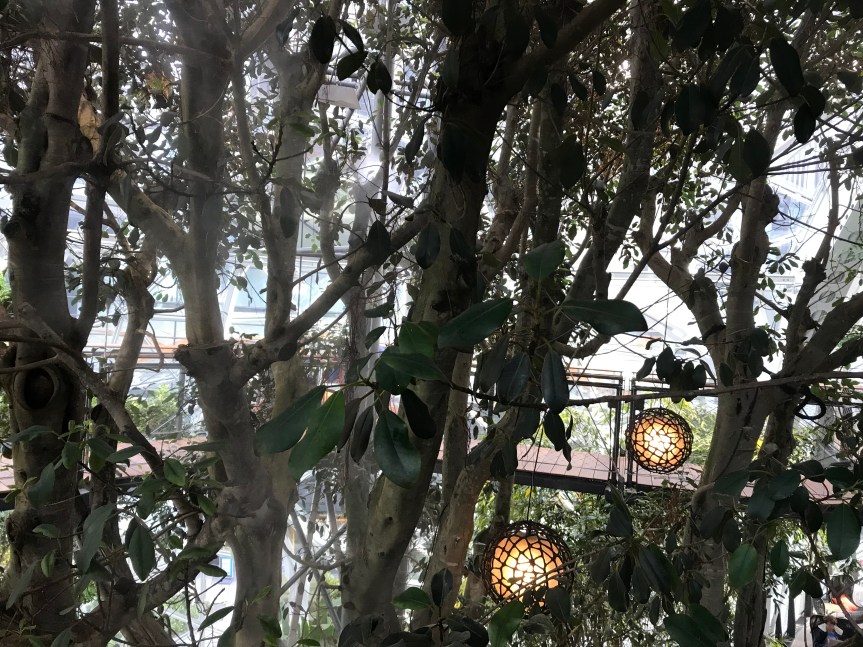
There was a tree inside the spheres that was three stories high. How in the world had they brought it to Seattle?  And how did they get it into the building, or did they build the spheres around it? I wish I had asked. The first photo shows the top part of the tree; the second shows the middle section; and you can see part of the trunk on the right side of the third photo.


The plant in the first photo below was called fan aloe. I’ve never seen aloe that looks like that! I don’t know the name of the plant in the second and third picture but I thought it was beautiful… and fascinating.

Before I knew it, we had made it through the spheres. I imagine I could visit these structures over and over and each time see plants I hadn’t seen before. Perhaps I will do that.

Thank you Rashmesh… for giving me this experience!

Guest Post: A Morning With The Greenbelt Crew by Lin Rose

Lin

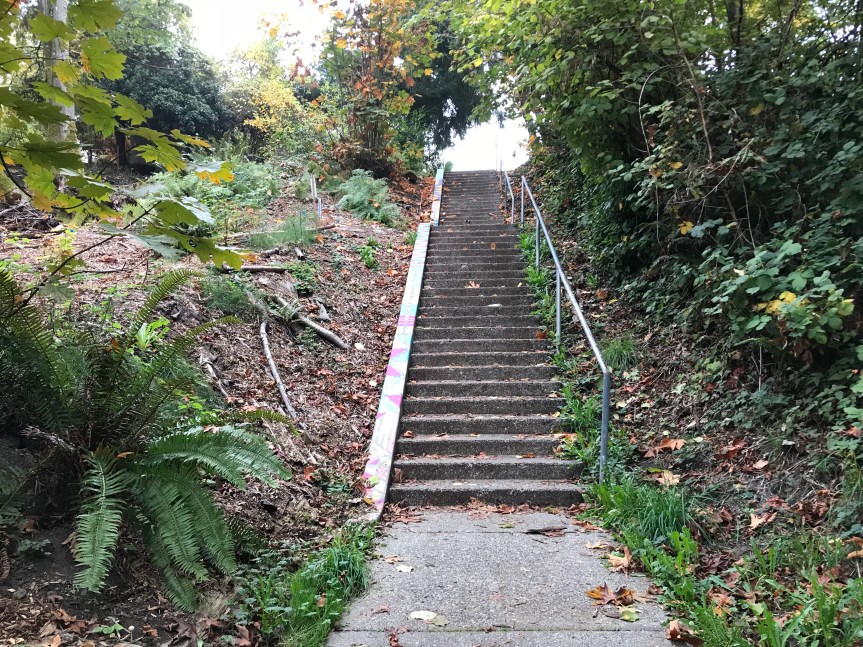
“I’m looking for Karuna,” a tall young man said as he descended the first tier of the Hanford Stairs to the Greenbelt work party.

He was the last of 20 volunteers from the University of Washington’s Introduction to Environmental Science class that turned up on a cold, foggy morning in Seattle to volunteer their labor. Below us, the silver cars of the Light Rail Transit system rattled across the horizon, headed for SeaTac. Tall maples showing fall colors formed a canopy overhead, and ferns filled the understory.

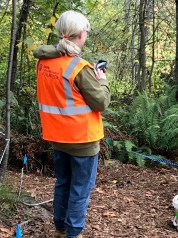
“Just sign your name here on the roster,” I said, offering my clipboard. “Then follow the blue flags along the trail to find Karuna and the others and get some work gloves.”

He strode off enthusiastically into the greenery, leaving me free to walk around the work site and take pictures. I had been afraid the footing would be too uneven for me to handle, but the expertly built wood-chip trails were cushy and sturdy. I just followed the dozens of little blue flags marking the way.

Seeing what the crews have accomplished during this year’s and last year’s work seasons blew me away. The photographs over the months have simply not done the scene justice! For one thing, the drying piles of blackberry and ivy debris are bigger than they look, and areas that have been re-planted with native trees and plants have a more complex flagging and labeling system than can be captured in photos.

I could tell the layout has been carefully thought out and executed. The site will become a lovely forest as everything begins to take hold and mature.

Another way to tell what has been accomplished is to compare the left side of the Hanford Stairs to the right side.

To the right of the stairs (see the photo below—the north side of the site) is a solid wall of greenery—you can’t even make out individual trees among the tall tangle of blackberries, miscellaneous vines, and other invasive plants. It’s a telling indication of what the greenbelt volunteers had to deal with when they began the cleanup!

To the left of the stairs—the south side of the site—is an open slope dotted with ferns and tiny new plantings below the maples, cedars, cherry, and alder trees that now stand in the open, free of their former strangulation by ivy and blackberry vines.


My photos don’t do any better justice to the project than those before them—but I can’t resist trying to give a sense of the work that’s being done.

Watching the students’ bucket brigade reminded me of a line of ants as they carried wood chips from a giant pile at the foot of the stairs, across the road, up the stairs, and handed them off to other workers lined up along the trail. The trail ants ferried buckets to an area where they were being emptied around some new plantings to form a trail. Then the ants headed back down the stairs and started over. I was transfixed by all that youthful energy and willing teamwork.


Karuna unobtrusively walked a circular loop that went up and down the stairs and back and forth on the trail as she conferred with coordinators spotted around at strategic points to direct the volunteers. Clearly, she loves this place. If she stood still long enough, she might grow roots right in the middle of a cluster of ferns.

I Feel Grateful and Blessed

I dealt with numerous challenges yesterday… and this morning. Today, those challenges have been resolving one after another.

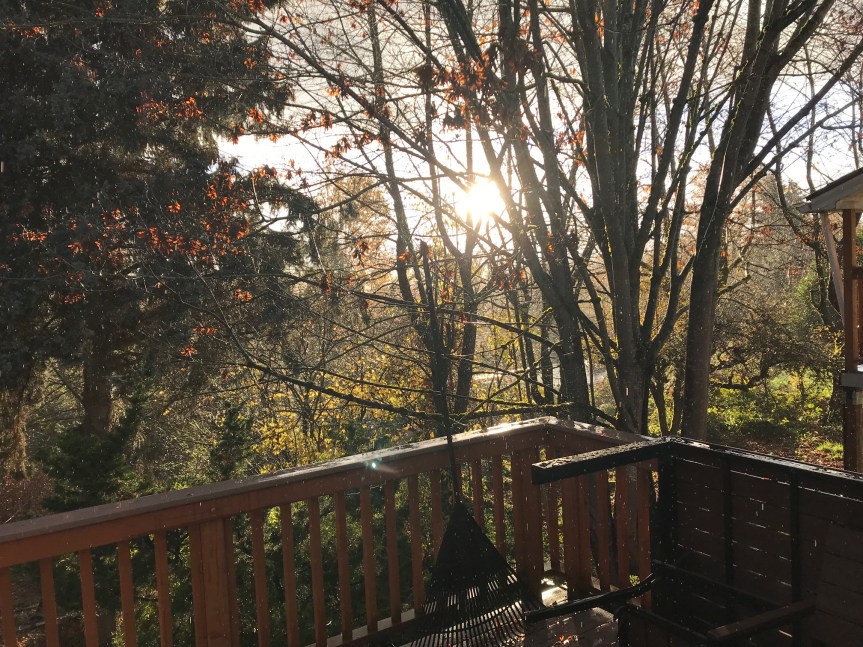
just after 8 a.m., I looked out of my dining room window and saw sunlight streaming through the trees. At the same time this was happening, it was raining. The sunlight made the raindrops sparkle. My photo doesn’t do this experience justice, but I hope, along with my words, it gives you a sense of the beauty I witnessed.

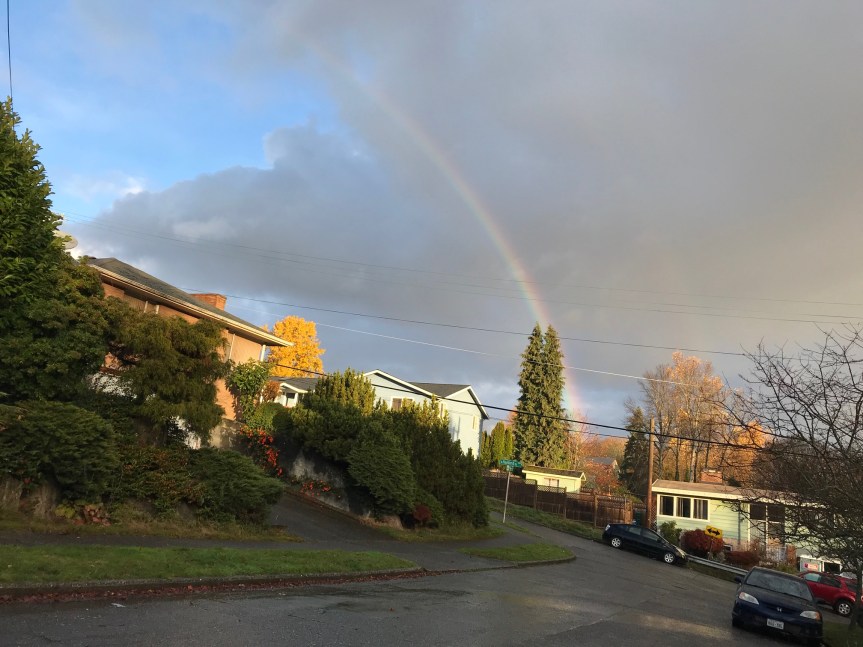
Then I got into my car so I could drive to the bakery to pick up the pumpkin pies I’m taking to a Thanksgiving dinner later in the day. As I drove out of the driveway, the first thing I saw was a beautiful rainbow. I parked the car so that I could take another photograph. The rainbow was already beginning to fade when I snapped the picture, but I think the photo offers a glimpse of its beauty. Fifteen seconds later, the rainbow was gone.

I feel grateful and blessed.

Happy Thanksgiving to all.

Greenbelt Restoration Work Party: DocuSign Planting Day- November 15, 2018

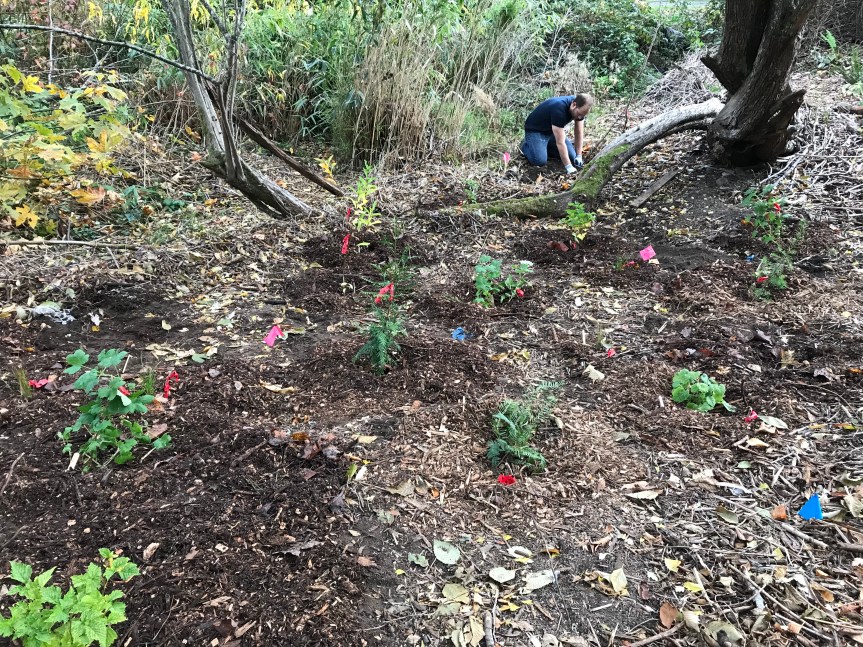
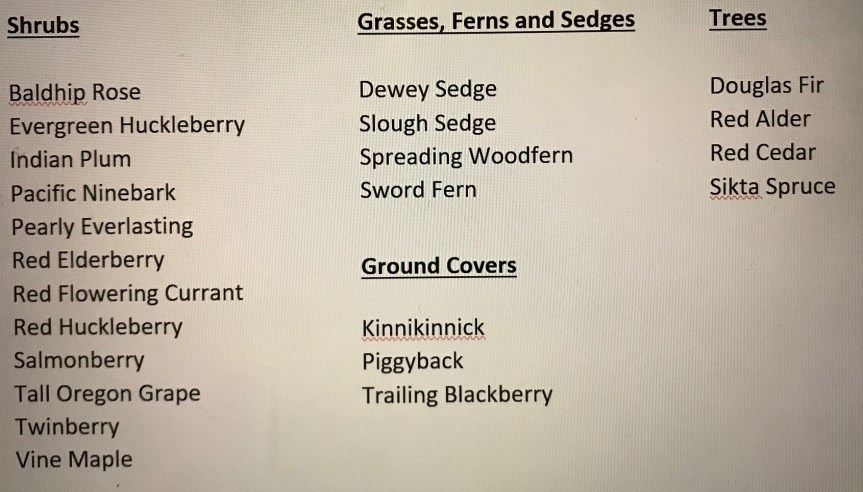
The November 15th planting day work party was the sixth forest restoration event we had held in six weeks. The first five work parties focused on preparing the site for the 33 native trees and 220 native shrubs and ground covers we would be planting. This was our fall 2018 plant list:

On November 15, 2017, a corporate group from DocuSign came to work at our restoration site. The event was held on their Global IMPACT Day. At that time, I looked up the philosophy behind Impact Day and found this statement:

We believe character is defined through action. With DocuSign IMPACT, we are committed to putting this character into action by harnessing the power of DocuSign’s people, products, and profits to make a difference in the global communities in which our employees and customers live and work.

Employees from DocuSign returned for another IMPACT day on April 27, 2018  and they would also be doing our Fall 2018 planting. I love working with them and was eager for their arrival.

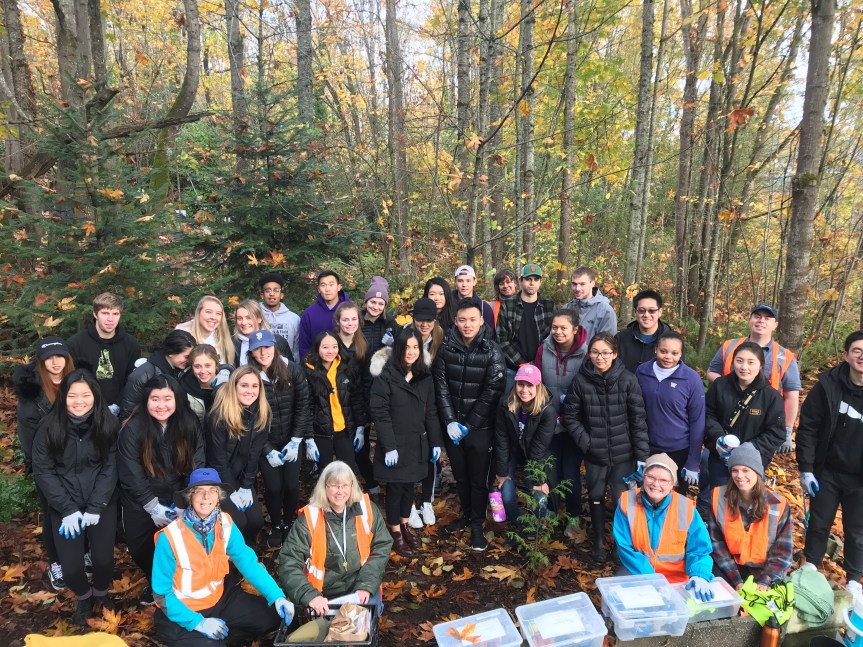
The big day finally arrived. This time, 22 employees participated. Our staff consisted of Maya from Forterra; Susan, a Forest Steward from another Cheasty Greenspace site; Claire and Shirley from GreenFriends and me.

After a brief orientation, we got to work. I think the photographs below say it all!

(Click on any of the galleries to enlarge the photos.)


Once again, the DocuSign employees did amazing work and I think everyone had a good time. Rumor has it that they may come back again in April. I sure hope that is the case!

I offer my heartfelt thanks to everyone who participated in our planting day and to everyone who helped prepare for it. Each person made a significant and important contribution to returning this stretch of Seattle’s Greenbelt to a healthy forest.

Greenbelt Restoration Work Party: November 10, 2018

The November 10th work party was one of our biggest. Six team leaders, four of which were Green Friends members, four neighbors, and 29 students from the UW Introduction to Environmental Science class participated.

During the first part of the work party, we split the group in half and ran two bucket brigades at the same time. One spanned the distance from the wood chip piles located at the bottom of the Hanford Stairs and the Greenbelt. We had used wood chips from those piles at the previous work party, so the piles looked small. I had expected that we would finish moving those chips and need to move to piles at a different location but that wasn’t the case. Even now more wood chips are available there. The second bucket brigade started at the top of the Hanford Stairs. In that location there were two piles of wood chips that had been delivered the previous week.

These bucket brigades had two purposes. 1) We would create new piles of wood chips throughout the restoration site. The chips in those piles will be used during our November 15 planting work party, during which time two buckets of wood chips will be placed around each tree, shrub and ground cover that is put into the ground. In this instance, the wood chips serve as mulch, reducing weed growth and holding in moisture. 2) We would finish covering most of the paths that snake through the site.with three inches of wood chips. Our hope is that having a thick layer of wood chips on top of the paths will prevent them from getting muddy and slippery during the winter rains.

(Click on any of the galleries to enlarge the photos.)

During the second part of the work party, we formed four teams. These teams focused on getting areas ready for the upcoming planting event. One team moved dried branches and blackberry canes out of a new planting area. That group also spread dirt in an area where a compost pile had been taken apart during previous work parties.

The second team cleared the ground around two sides of a red twig dogwood patch.

The third team pulled out blackberry root balls and raked out a section of land north of the Hanford Stairs.

One of our neighbor volunteers cut down blackberry canes and dug out blackberry root balls and weeds from an area just across the stairs from the third team.

We make a plant order in May of each year. The Seattle Parks Department provides us with the plants towards the end of October or the beginning of November. This year we had ordered 250 plants of 23 varieties.

Prior to this work party, the shrubs and ground covers had been separated into ten groups, each number assigned to the planting area where the plants will be placed in the ground. The trees were grouped separately.

The fourth team carried those trees, shrubs and ground covers to the areas where they will be planted.

After the work party was over, three of the team leaders walked around the site placing every plant in the spot where it will be planted.

Thanks to the effort of these students, neighbors and team leaders, we are now ready to plant. I am so excited to see what the land will look like once the trees, shrubs and ground covers are settled into their new homes!

Green Seattle Day: November 3, 2018

Each year, the Green Seattle Partnership sponsors a Green Seattle Day. On that day, work parties are held in parklands all over Seattle. Sarva and I decided to volunteer as team leaders at Cheasty Mt. View Park. Several other GreenFriends members and their friends joined us.

The number of people who registered for the work party amazed me. There were seven in our GreenFriends contingent, but 126 volunteers in the whole group.

One of the leaders encouraged the participants to plant from a place of gratitude. She suggested that the volunteers name their trees … and that they talk to the trees as they put them into the earth. As I wandered through our section, helping people with the planting, I heard many participants doing that.

After some of our GreenFriends group planted this tree, they decided to give it a kiss.

The 126 volunteers planted 800 trees, shrubs and ground covers during the first hour of the work party.

We spent the rest of the work party removing invasive blackberry and ivy vines. Again, it was phenomenal to witness how much can be accomplished in a short period of time.

We put vines we cut onto drying racks so that they don’t touch the ground and re-root. There were several drying racks in the area where we were working but they were soon full. Before long there were big piles of cuttings around the site.

Some of the volunteers built a new drying rack and then we moved the piles of cuttings to the new rack.

Before long, the three-hour work party was over and we prepared to leave.

What a wonderful morning it had been. The work party was such a good example of the adage “Many hands make light work.”

More Mushrooms

When Sarva (Shirley) and I were working in the Greenbelt on Sunday, Sarva saw some BIG mushrooms. It seemed to me that they were in the same place as mushrooms I had photographed on October 29 and had included in my November 4th post. Could they have grown so big so fast?

(Click on the gallery to enlarge the photos.)

I realized there was one photograph I hadn’t shared in that post.  It was of two mushrooms that were near the patch of mushrooms that I had included.

When I looked at the two photos together and compared them to the new photos, I realized I was seeing the same mushrooms. They had indeed grown this big in one week. Now, they were near the end of their life cycle.

Yesterday, I saw another patch of mushrooms that I had shared in my previous post. They had both grown and multiplied.

Mushrooms in the Greenbelt

I’ve been seeing different types of mushrooms in our Greenbelt restoration site. They range in size from very small to 7 inches in diameter! (Click on the gallery to enlarge the photos.)

Still Blooming

I recently published a post about some dahlia buds that had bloomed in mid October. Today I noticed that the flowers are becoming even more beautiful. Pretty amazing for November in Seattle.

FOTD

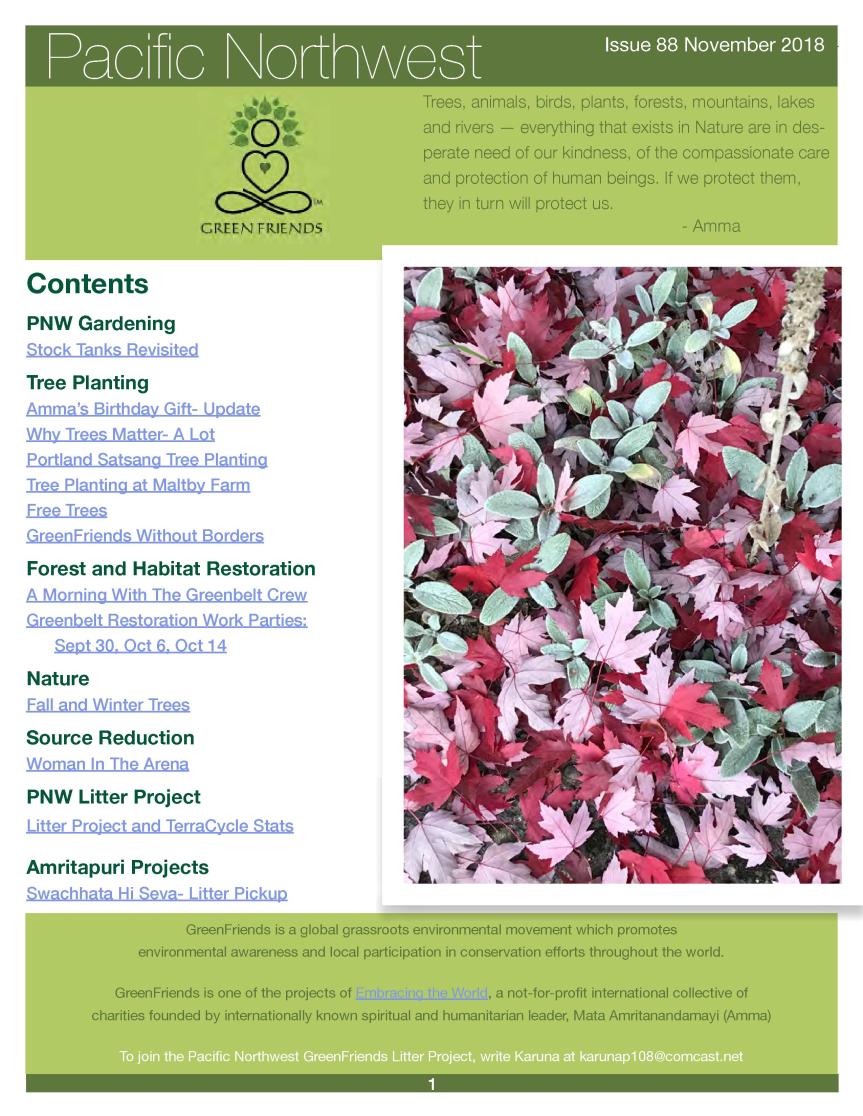
GreenFriends Newsletter: November 2018

To download the latest PNW GreenFriends newsletter, click on the photo.

Enjoy!