An Unexpected Visitor

The plant order for our Greenbelt restoration site arrived today. As I was sorting them out, a shiny object caught my eye. When I looked closer, I discovered that it was the shell of a snail.

The snail was moving along the top of a pot. By the time I grabbed my iPhone camera, it looked to me like it was planning to go down the side of the pot.

I was wrong. That was not what the snail had in mind.

I loved watching the snail’s amazing journey. However, I didn’t want it eating the new Greenbelt plants, so I carried it to a place where it could munch on something else.

Cee’s Flower of the Day Photography Challenge: October Flowers

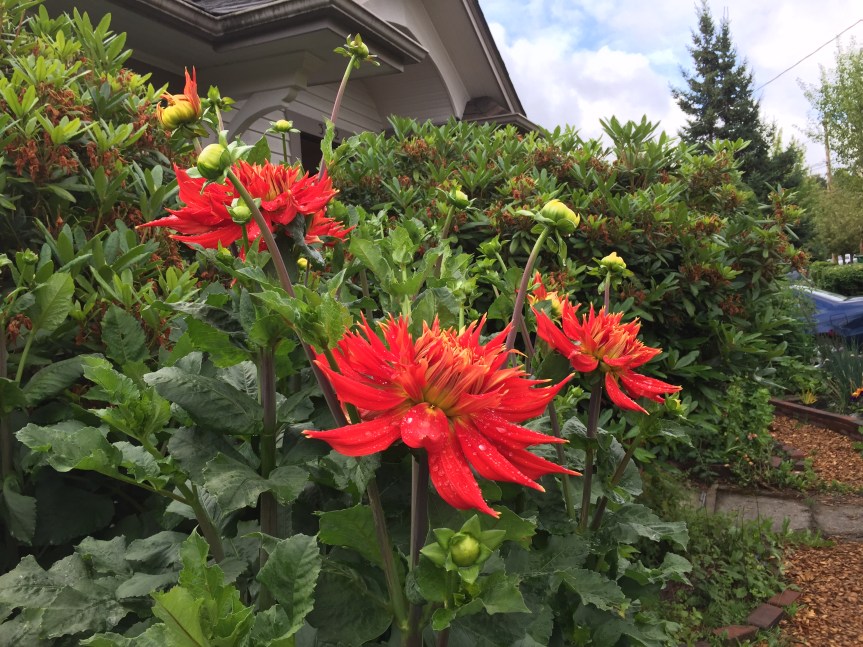
In my front yard there is a dahlia plant that has gigantic blooms. In mid to late summer it looks like this:

When I came back from India this year (towards the end of September), the blooms were dead, or dying. A week or so later, I cut them off. There were still some tiny buds on the plant. I left them alone event though I thought it was too late in the season for them to bloom.

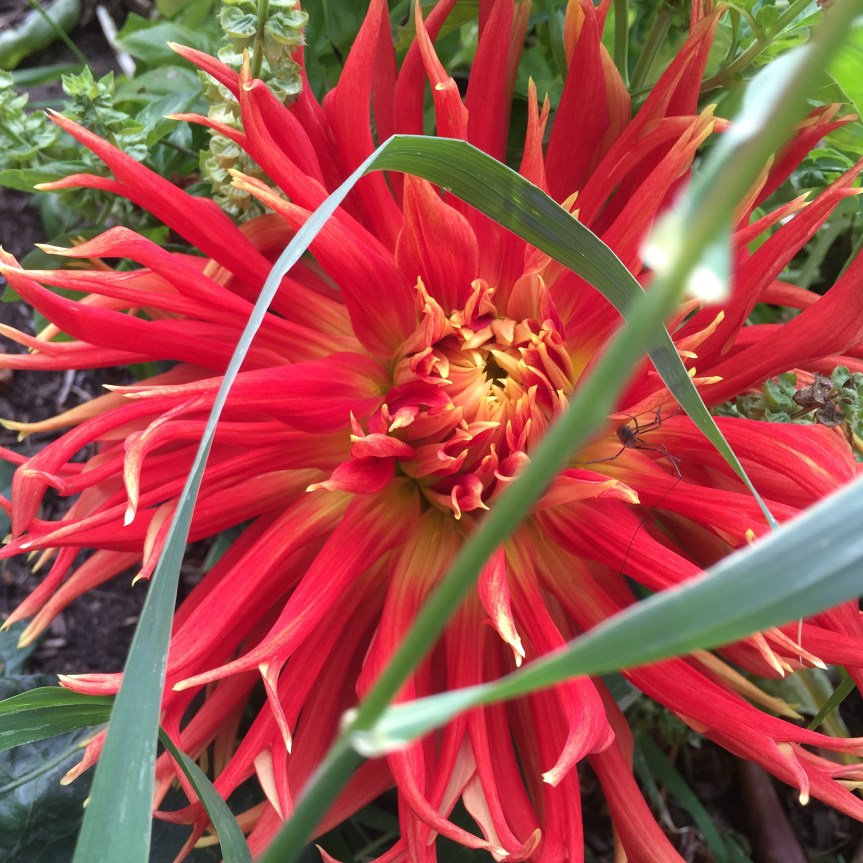
When I walked by the plant on October 16, I was startled by what I saw. The buds were opening!

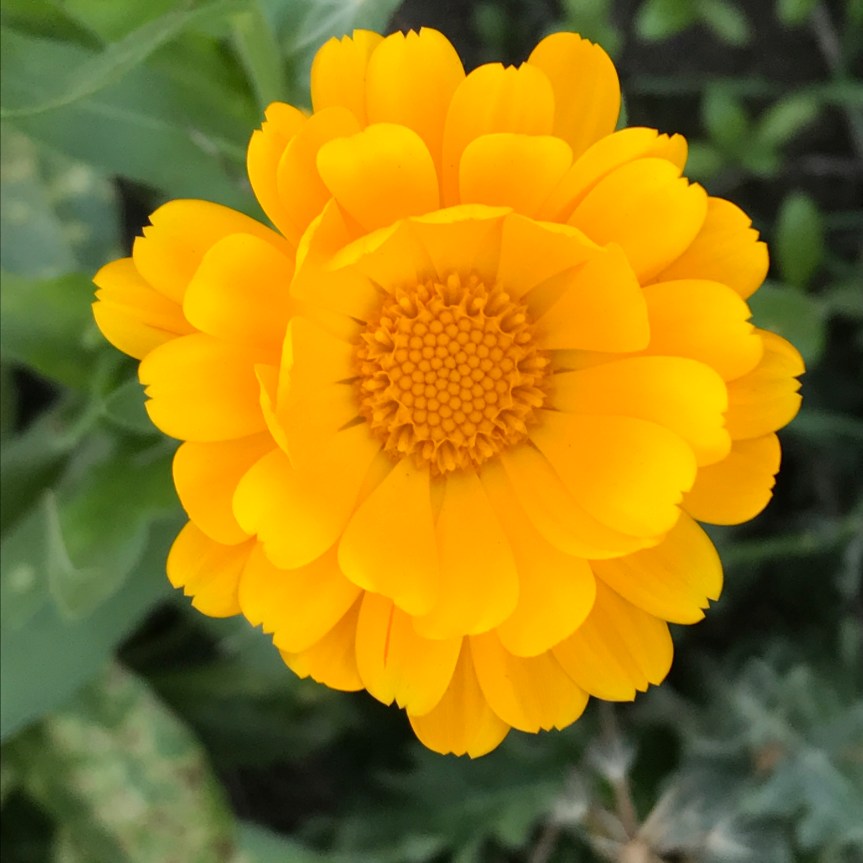
The flowers didn’t have the brilliant color of the dahlia in the summer, but they were beautiful in their own way. And they certainly show traits of Mother Nature such as the will to live and the tendency to give and give and then give some more..

FOTD

Greenbelt Restoration Work Party: October 21, 2018

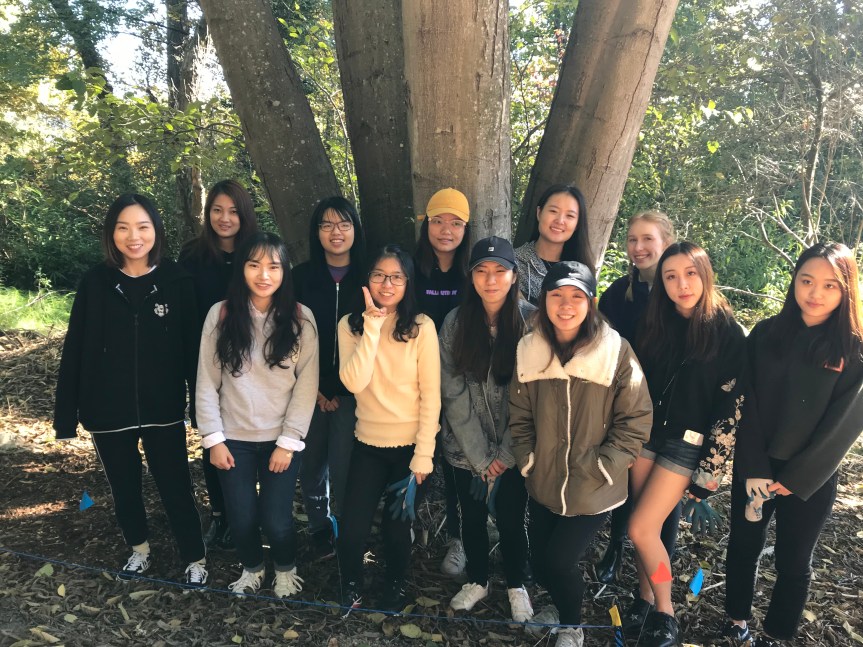
Twenty six volunteers participated in the October 21 work party. Twenty of them came from the UW Introduction to Environmental Science class, five were GreenFriends members who served as staff and one was a neighbor.

The first part of this work party focused on bringing wood chips from the street into the Greenbelt. Most of them were placed on the pathways we are making throughout the site. After finishing the paths we were working on that day, we created two piles of wood chips that will be used on November 15 when a corporate group comes to do the first planting for this season. (Note: Planting starts in November after the rains begin and continues through mid-March. Planting during these months gives the plants a chance to root before the dry summer months.)

During the second part of the work party, we focused on cutting up dried blackberry debris and spreading it on the paths we will be making next; clearing wood chips from around the plants that were planted last season, weeding and clearing a new planting space.

Wood chip bucket brigade

Filling the buckets (Click on any of the galleries to enlarge the photos.)


Carrying the filled buckets into the Greenbelt


The new paths and piles (Hold cursor over photos below to see the captions)


Cutting Up Debris

I was surprised to see that I forgot to take photos of the group who cut up dried blackberry vines, ivy  and branches, but I do have pictures of one of the paths-to-be we spread them on. We will more than likely cover this debris with wood chips during the next work party. (Note: We primarily use the debris in this way so we can eliminate the piles of debris that are scattered throughout the site. Over time, the debris will break down and enrich the soil.)

Cleaning Out the Donut Holes

When we plant a tree, shrub or ground cover, we pour a ring of wood chips around it, leaving the center clear. The outer ring looks like a donut and we refer to the center area as the donut hole. We try to keep the donut hole, the area closest to the plant, free of wood chips and weeds so the plant can get the full value of any rain that falls. One group of volunteers at this work party cleared the donut holes in almost every planting area on the site.

Today, when I walked outside to take photos of some of those areas, I found that a lot of leaves had fallen, so the donut holes didn’t look as empty as they did at the end of the work party.


Weeding

Two groups of students weeded four planting areas on the property. The first two pictures show volunteers working in an area that has wild ginger. After each planting area was weeded,  students cleared the wood chips from the donut holes. One group then used more wood chips to form new rings around the plants, keeping the center area clear. (Note: When wood chips are inside a planting areas, they serve as mulch.)


Clearing a new planting area

My neighbor, who is in the background of the first photo below, has become skilled in removing blackberry vines and root balls with a pick ax. During this work party, he cleared a new area; you can see it in the second photo. Two trees will be planted in that space on November 15.


This was the biggest work party we’ve had in a long time. The next one will be held on November 10. There are already 31 students registered for that event and we still have two weeks to go!

Many thanks to everyone who participated in the September 21 work party. You each made a significant contribution to the goal of turning this Greenbelt site back into a healthy forest.

Cee’s FOTD Photography Challenge: October 23, 2018

Again, I’m going to take advantage of Cee’s expanded version of what can be considered for the Flower of the Day Challenge.

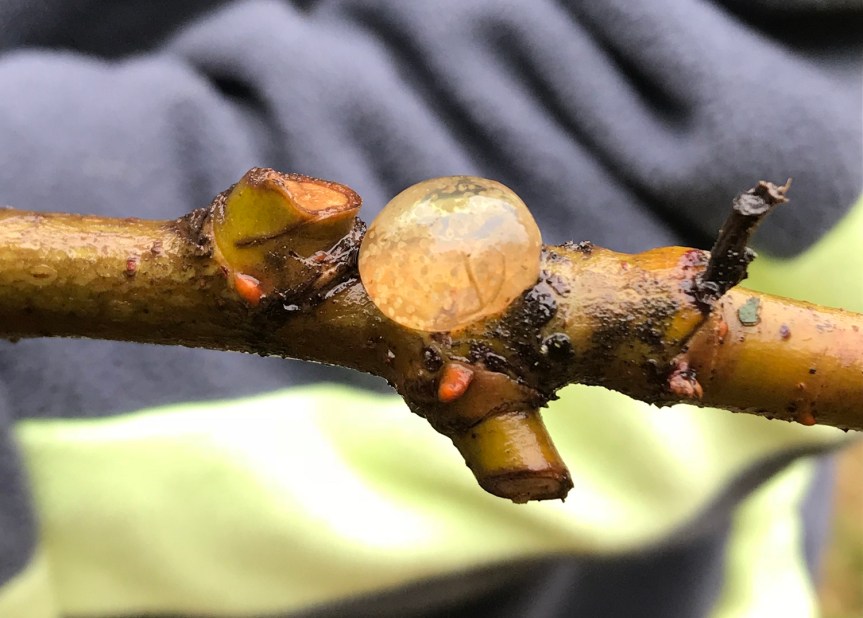
This weekend, I was planting Willow cuttings (live stakes) with a friend. A gelatinous substance on one of the branches caught my eye.

FOTD

Another October Rose

Cee’s Flower of the Day Photo Challenge (FOTD)

An October Rose

Cee’s Flower of the Day Photo Challenge (FOTD)

Cee’s Flower of the Day Photography Challenge: October 20, 2018

Cee’s Flower of the Day (FOTD) Photography Challenge: October 19, 2018

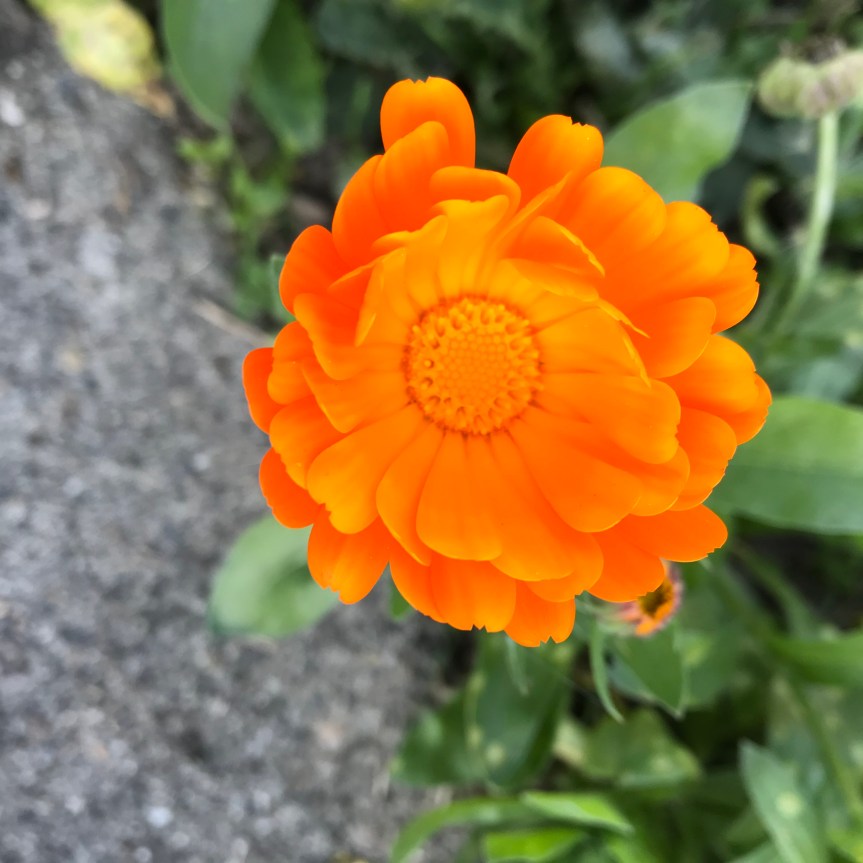
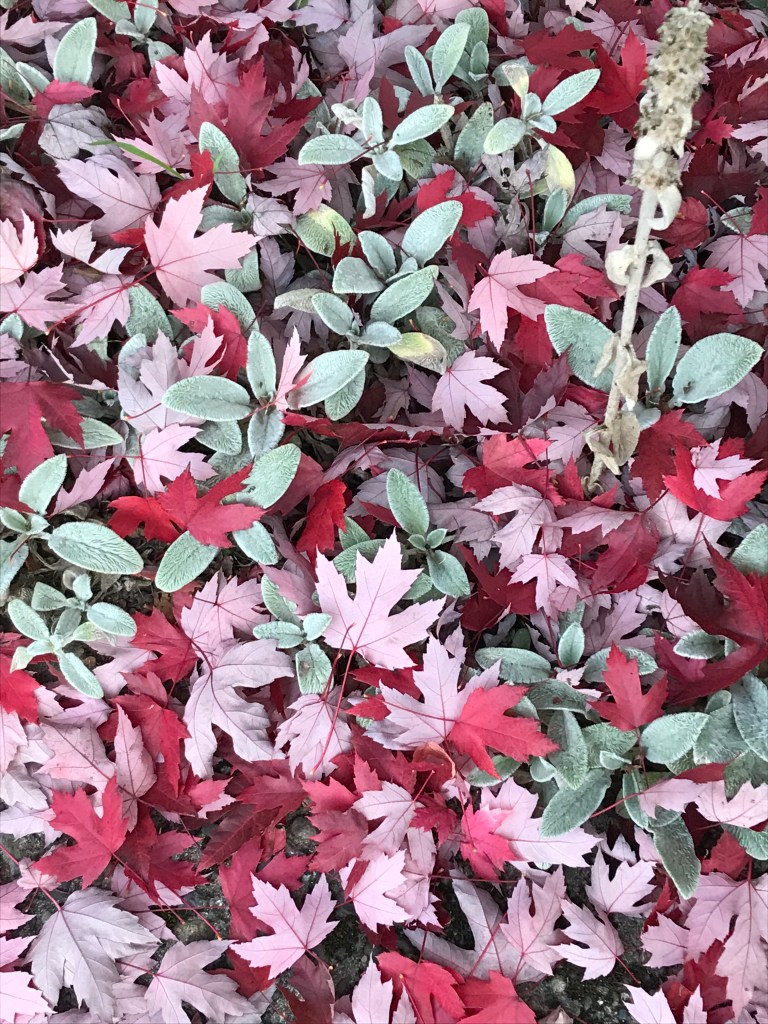
Cee expanded the types of photos that can be used for her Flower of the Day (FOTD) Challenges. Now we can include: single flowers, buds, multiple flowers, bouquets, flower fields, wildflowers, tree or bush blossoms, autumn leaves, spring leaves, decorative cabbage, berries, still life, fake or silk flowers. I’m going to take advantage of that change and share a photo I took in my neighborhood last week. I love how it turned out.

Greenbelt Restoration Work Party: October 14, 2018

I had scheduled six work parties to be held in our Greenbelt Restoration site between September 30 and November 15. The October 14th work party was the third of that series. On that day, 12 students from the UW Introduction to Environmental Science class and four staff participated in the event.

During the first part of the work party, we focused on creating a path that goes from one of the lower parts of the Hanford Stairs to the far side of the site. We had placed cut-up debris (dried blackberry canes, ivy and small branches) along the path during the October 6th work party. At the end of that event, the volunteers had filled 20 buckets with wood chips so we could start spreading chips at the beginning of this work party.

Once we emptied those buckets, everyone walked to the wood chip pile to refill their bucket. And so the bucket brigade began. We spread wood chips three inches high and three feet wide along 285 feet of pathways. These wood chip paths are so much easier to walk on than the uneven paths that were there before and the wood chips will (hopefully) keep the paths from getting muddy and slippery during the winter rains.

(Click on any gallery to enlarge the photos.)

The new paths are beautiful. We even made a roundabout around a large fern!

Once we finished working on the paths for the day, we took a short snack break. Afterwards, we divided into four groups. All of the groups continued projects that volunteers had begun during the previous two work parties.

Group 1 cut up debris (dried blackberry canes, ivy and branches) into 4-8 inch pieces.

Every week this debris pile gets smaller. When we started on September 30, the pile was 4-5 feet high and you couldn’t see the planting area on the other side of it. Now the western part of the pile has branches that are too big to be cut with hand clippers. The rest of the pile is about 2 feet high and you can easily see what is on the other side of it.

Group 2 continued the process of taking apart the compost pile. They separated small and large branches, placing the big branches on a pile and cutting up the smaller ones. One of the students started spreading the composted dirt.

On the morning of September 30, the area where the compost pile was looked like this:

Before September 30

This is what it looks like at the end of the October 14 work party:

The trees and shrubs that are planted in this area next month will certainly benefit from the rich soil.

During a site visit in May, the Green Seattle Partnership and Seattle Parks Department representatives told us that we had planted one tree too close to power lines. Group 3 transplanted that tree, moving it to a more appropriate area.

Group 4 removed bindweed and blackberries from the area where we will be making paths next weekend.

When the volunteers in the first two groups finished cutting up debris, they brought it to this area. Once there, it was spread on the paths-to-be.

While the student groups were working, my neighbor John, cleared many blackberry shoots from one of the planting areas and then moved a pile of big branches and logs to a new location. He also removed ivy that was scattered throughout that area.

Before we knew it, the work party was over. Week by week, we are getting closer to having the site ready for the winter rains and for planting new trees, shrubs and ground covers.

The students at this work party were a delight to work with. I thank them for their work and also want to thank Shirley, Claire and Dave for being team leaders during this event. I so appreciate them and all of the other volunteers who are helping to turn this land back into a healthy forest.
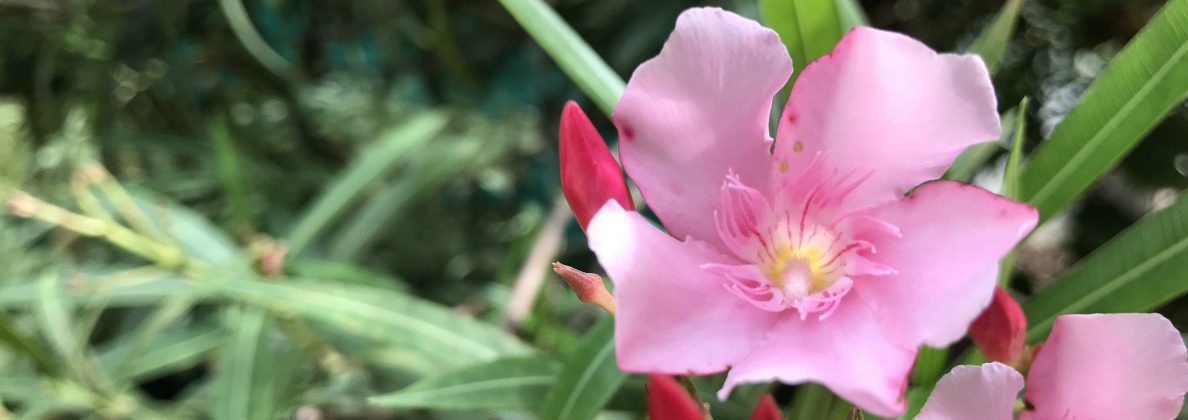
Cee’s Flower of the Day (FOTD) Photography Challenge: October 18, 2018