The Fascinating Naga Linga Tree

On Sunday, when I was waiting in line to be admitted to a wedding feast, a nearby tree caught my eye. The flowers were fascinating. I soon realized a young man standing near me was talking about the tree. He said it was called Naga Linga and was a very sacred tree. He mentioned that the tree had that name because the flowers look like the hood of a cobra (naga is the Sanskrit word for snake). Later, I learned that another name for the tree is Shiva Linga and that they are often planted near Shiva temples. The tree is also sacred to Buddhists. (Click on the gallery below to enlarge the pictures.)

There were only a few flowers on the tree in Amritapuri. I hope someday I will be here when all the buds are open. It must be a stunning sight.

The English name for the tree is Cannonball. The reason for that becomes obvious when you see the fruit. I found these photos on Wikimedia.

Photo Credit: Wikimedia

The fruit can reach a diameter of 10 inches. When one falls to the ground it may cause a loud explosive sound. The fruit usually cracks open at that time. The pulp inside is edible but humans often don’t like the smell so it is usually eaten by animals.
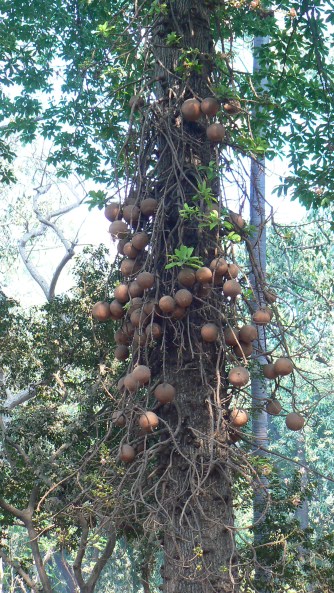
Photo Credit: Wikimedia

Wikipedia says this about the tree’s medicinal value:

There are many medicinal uses for the plant. Native Amazonians use extracts of several parts of the tree to treat hypertension, tumors, pain, and inflammation. It has been used to treat the common cold, stomachache, skin conditions and wounds, malaria, and toothache.[5] The fruit pulp is rubbed on sick dogs to cure them of mange.[10] Laboratory tests show that extracts of the plant have some antimicrobial activity and inhibit the formation of biofilms.[5]


References:

Couroupita guianensis

The weird and mysterious Naga Linga or Shiva Linga tree

To view the previous posts in this series click here.

Weekly Photo Challenge: Ooh, Shiny

When I think of Ooh, Shiny, I think of:

… flowers in India

… flowers in Seattle

… microscopic photos of flowers

… fruit from my garden

… and Kavita and Meera’s beautiful Navaratri altar

To view the previous posts in this series click here.

Wordless Wednesday

To view the previous posts in this series click here.


A Welcome Sight

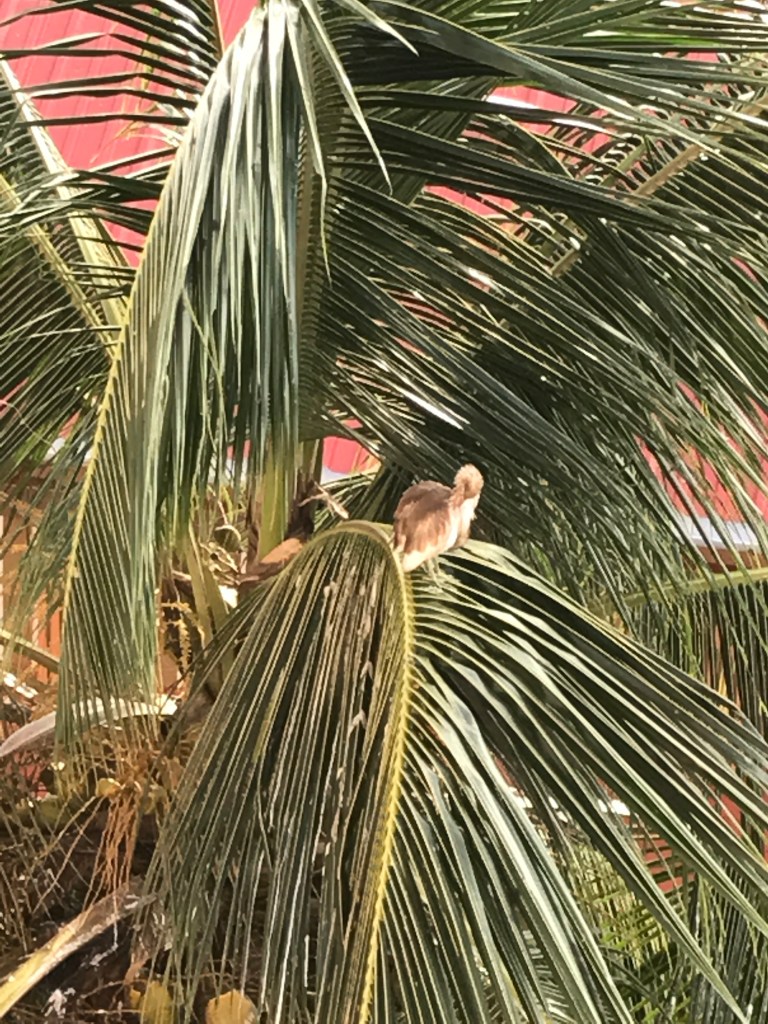
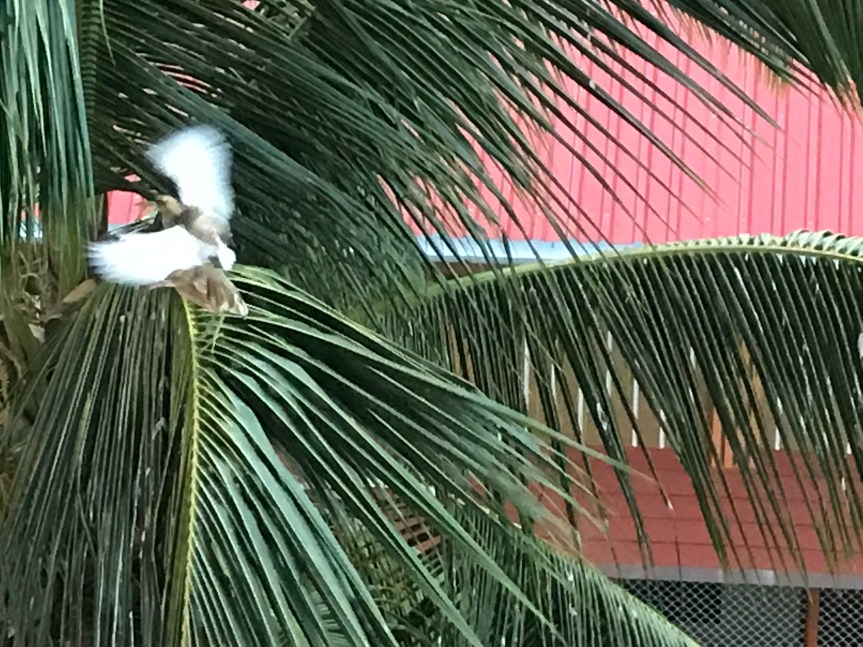
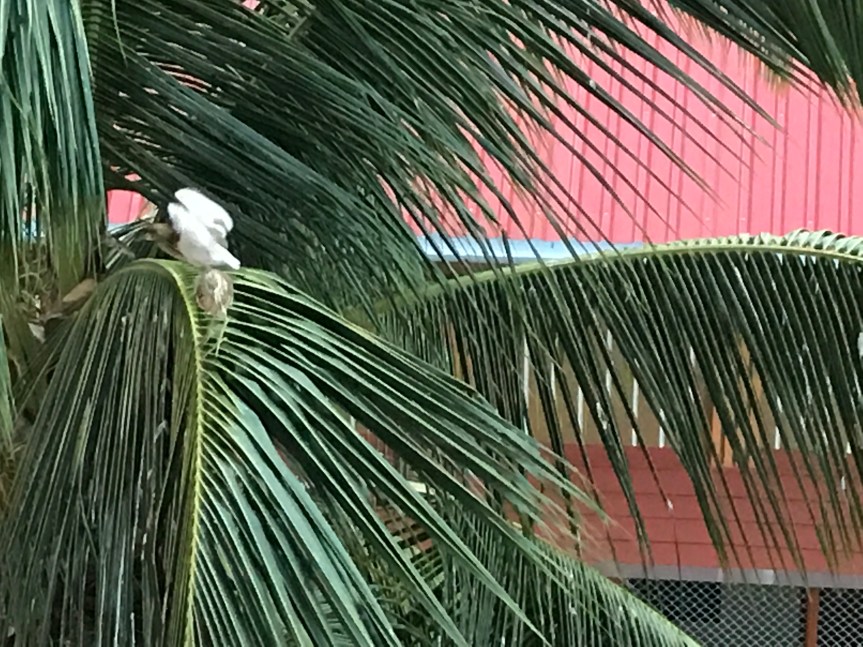
On the morning I arrived in Amritapuri, I looked out the window of my flat and saw two small birds sitting together in a nearby palm tree. They looked like fluffy baby birds although were not tiny. I tried to take a photo but could not get the camera to zoom close enough.

Early the next morning, I saw the same, or similar, birds in the tree. They were usually perched side-by-side but occasionally they separated. This time, I could snap close up photos.

The birds groomed each other.  At times, they were so close that if I hadn’t known better I would have thought there was only one bird in the tree.

At one point, one of them started to open its wings…

… but then tucked them in again.

Then they both flew away. Their wings were pure white and way bigger than I had thought. I believed I had been able to capture a photo of the birds in flight, but when I looked all that was on my camera was a picture of the empty tree!

At least I have the vision of their beautiful wings etched in my memory.


To view the previous posts in this series click here.
 

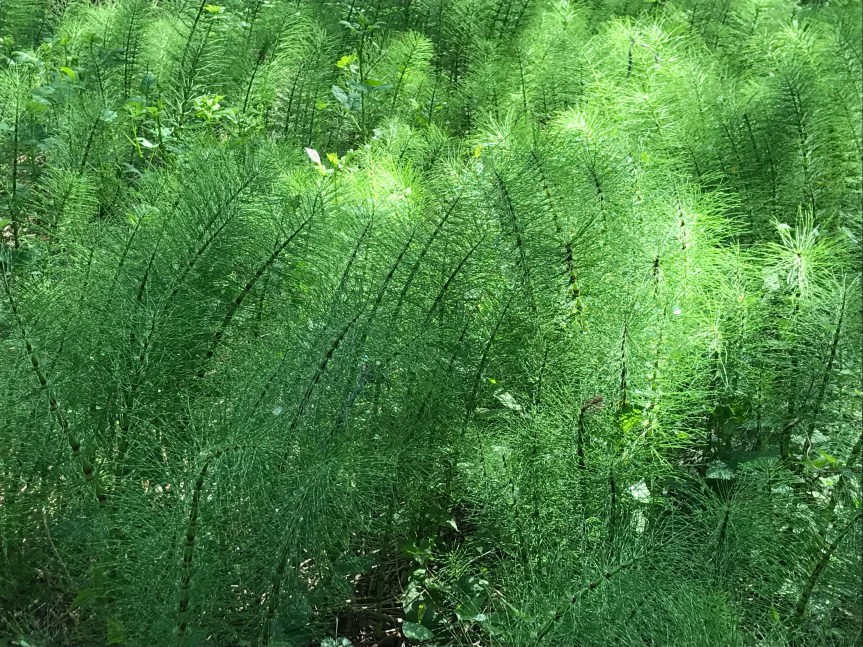
Interesting Facts about Horsetails

  • Horsetails are native to every continent except Antartica and Australasia.
  • Horsetails date back to the Palaeozoic era which lasted from 541 to 252 million years ago. That means they were around before the dinosaurs!
  • Horsetails are related to ferns.
  • Equisetum is the only remaining species of horesetail.
  • Equisetum is sometimes called a living fossil.
  • Equisetum is also called horsetail, snake grass, scouring rush and puzzlegrass.
  • Eating too many horsetails can kill horses.
  • Horsetails evolved from plants that were 98 feet tall. Today’s horsetails are usually 1-2 feet although there is one in South America that grows to 32 feet..
  • In many places, horsetails are considered invasive plants.
  • Horsetails can be used to scrub metal.
  • Horsetails were used to treat a variety of ailments during the Greek and Roman days.
  • Some people use it to stop bleeding, as a diuretic or an astringent.
  • Horsetails reproduce via spores rather than seeds.

For more information read:

Equisetum
Horsetail
Horsetail Benefits
Horsetail Facts
Horsetail Plant Genus
Horsetails- a Modern Herbal
Paleozoic

I originally wrote this post for the Pacific Northwest GreenFriends Newsletter, August 2017, page 25.

New Microscopic Photos and More

Yesterday, I decided to accept the self-imposed challenge of taking microscopic pictures primarily with my non-dominant hand. Even under normal circumstances, I have trouble hooking up the adapter that connects my iPhone to my microscope. I wondered if adding a wrist splint to the mix would make the task impossible. I would, of course, stop if the endeavor caused any pain at all. It took some effort, but before long the equipment was ready for me to snap some photos.

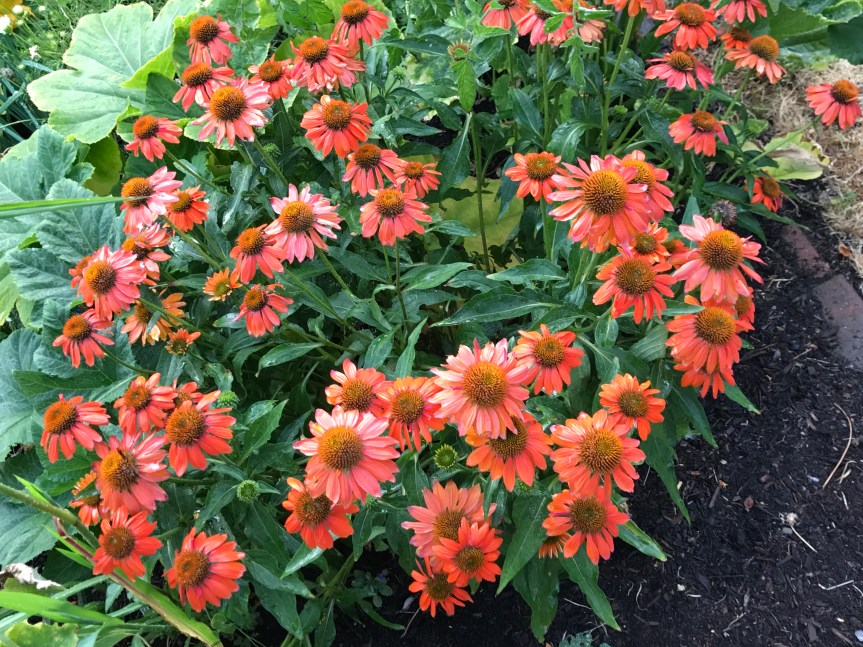
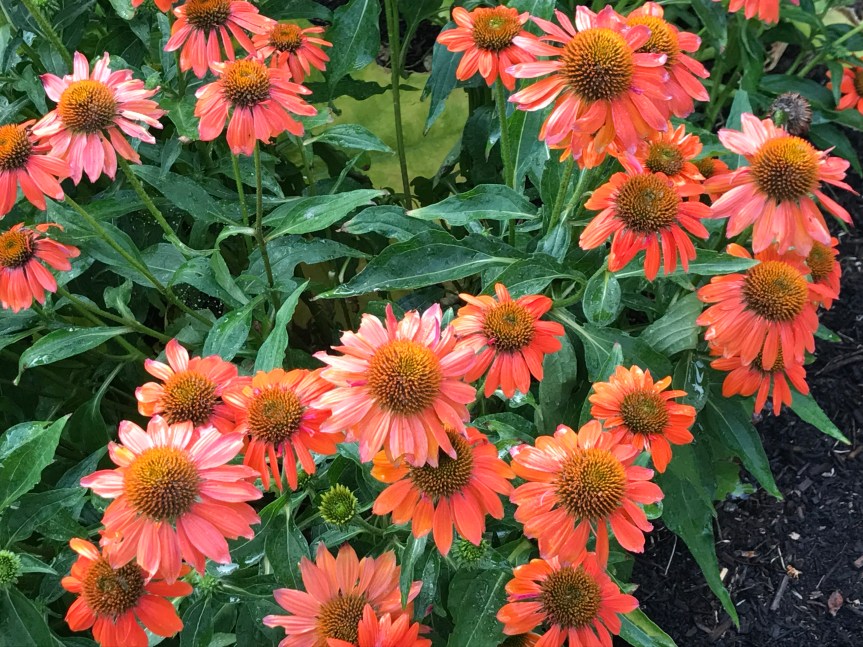
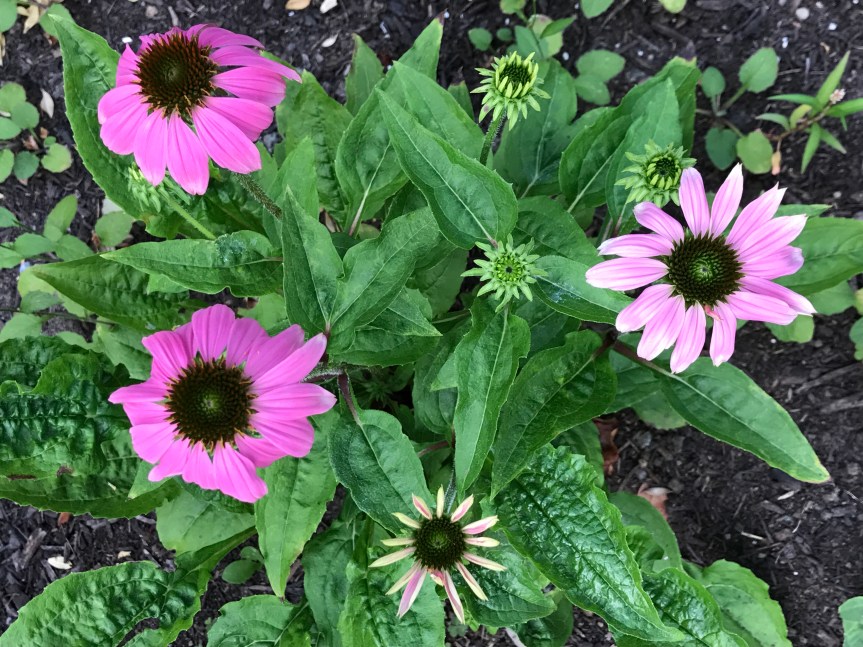
Last summer, I took microscopic pictures of the orange Echinacea flowers in my garden. This year, my goal was to photograph flowers on all three of the Echinacea plants. Each plant has blooms that are a different color. I was able to accomplish that objective and more.

Plant #1

While I was taking the photos, I saw something I had never seen before. It was quite a surprise. Take a look at my first microscopic video!

I did not notice that the photos of that plant had come out pink, instead of light purple, until I created the photo gallery above last night. I wondered if that happened because of the light source I was using for the microscope. This morning, I decided to shine that light on the flower again to see if it changed the color.

When I went outside to retrieve the purple flower from the back deck, I was flabbergasted to see that it had turned pink during the night. It had not looked pink when I checked it last night.

Plant #2

I found another bug when I examined the second flower through the microscope. It was a different kind of insect, though, or was it a spider? It resembled a spider in the way it looked and acted but insects have six legs and spiders have eight. I only see six on this creature so I don’t know what it is. It was so small that I couldn’t see it on the plant even when I looked for it wearing my reading glasses.

Note: There is a point in the video below where the creature stops moving for a while, but it starts again.

Plant #3

I appreciate the iPhone camera and the beautiful photos it takes. I appreciate whoever came up with the way to connect the microscope and the iPhone camera. I appreciate the ease of the WordPress blogging platform. I appreciate how easy it is to create photograph galleries on WordPress.com blogs. I appreciate the dictation program for Office products that Microsoft released last week and the person that told me about it. I appreciate the neighbor who took the case off my iPhone so I had a chance of  making this project a success. I appreciate my willingness to take on challenges in difficult situations. And, last but not least, I appreciate all of you who read my posts.

More Echinacea Photos

When I last posted echinacea photos I had flowers only on one plant and none of those blooms were fully open. I decided to try to take pictures this morning even though I’m still wearing a splint. It worked!

I couldn’t resist photographing the Lazy Susan flowers as well!

Greenbelt Restoration Work Party: July 9

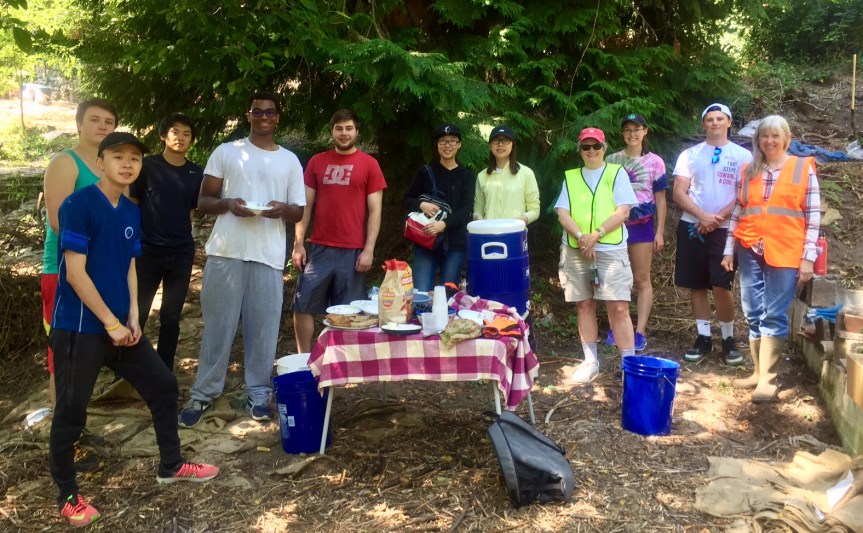
It seems like I think every work party we have is the best. That was true on this day too. Eight students from the University of Washington’s Introduction to Environmental Science class, one student from Garfield High School, one neighbor and three GreenFriends members came together to do restoration work in the Greenbelt.

We cut blackberry vines, dug out blackberry root balls and bindweed (morning glory vines)

(click on any of the galleries if you want to enlarge the photos)

…. picked up trash

…. freed ferns

…. carried wood chips from a pile near 25th Avenue S and S Hanford, down the Hanford stairs, into the Greenbelt and scattered them in an area that will be used for a 250 square foot cluster of trees, shrubs and ground covers when we start to plant in the fall. Having the wood chips there will facilitate decomposition of the burlap bags that are under it and help to build the soil by creating mulch.

…. and moved debris to the rack zone to dry.

Vandya, Ellen, John and I organized the work party and led work groups. Vandya and I also took photos. At one point, we snapped pictures of each other taking photos!

During the three hour work party we cleared a lot of land. The next step will be to spread burlap bags to prevent erosion and weed growth.

One group dug out the biggest root ball we’ve found!

Needless to say, our July 9 work party was a big success.