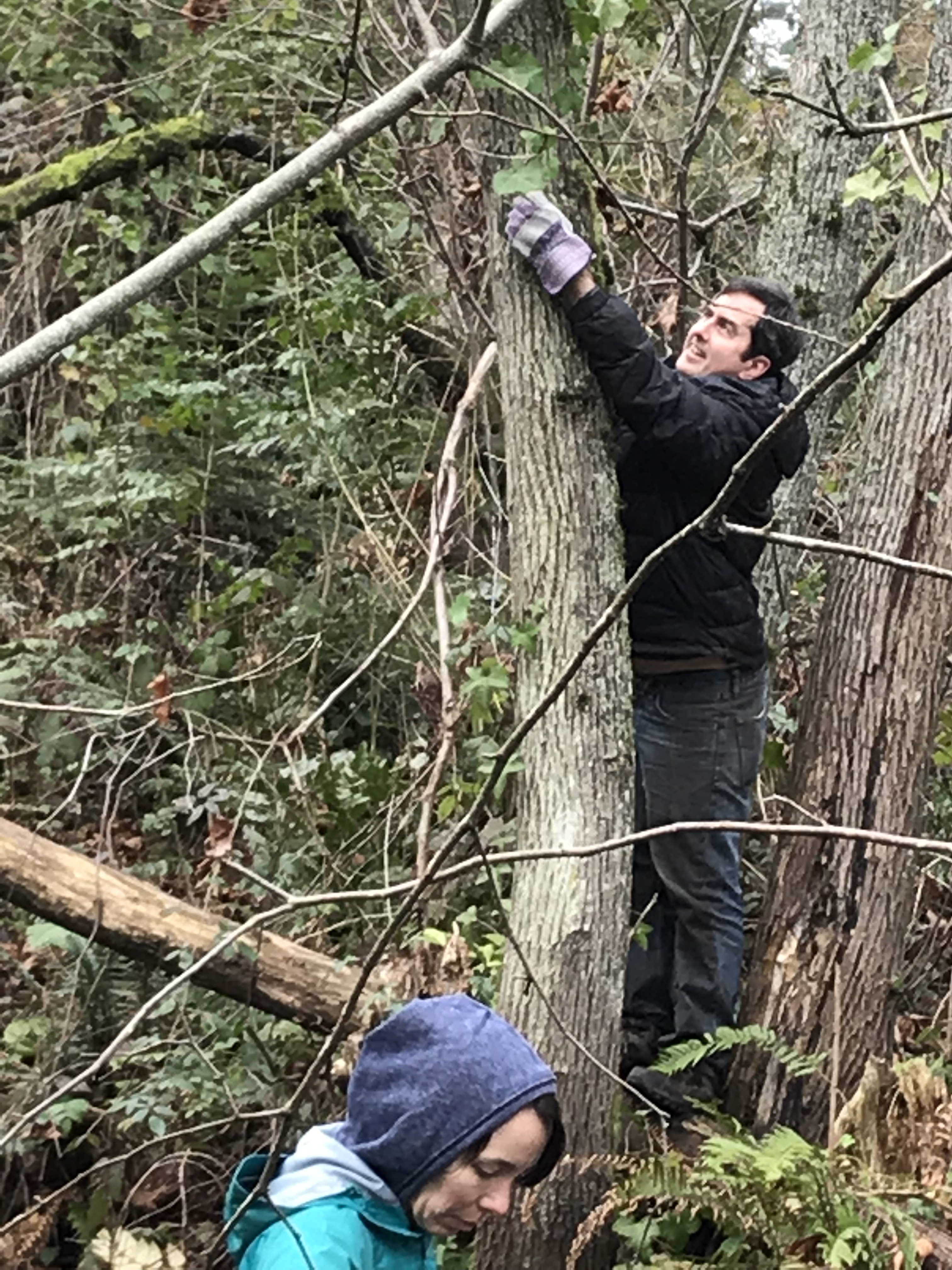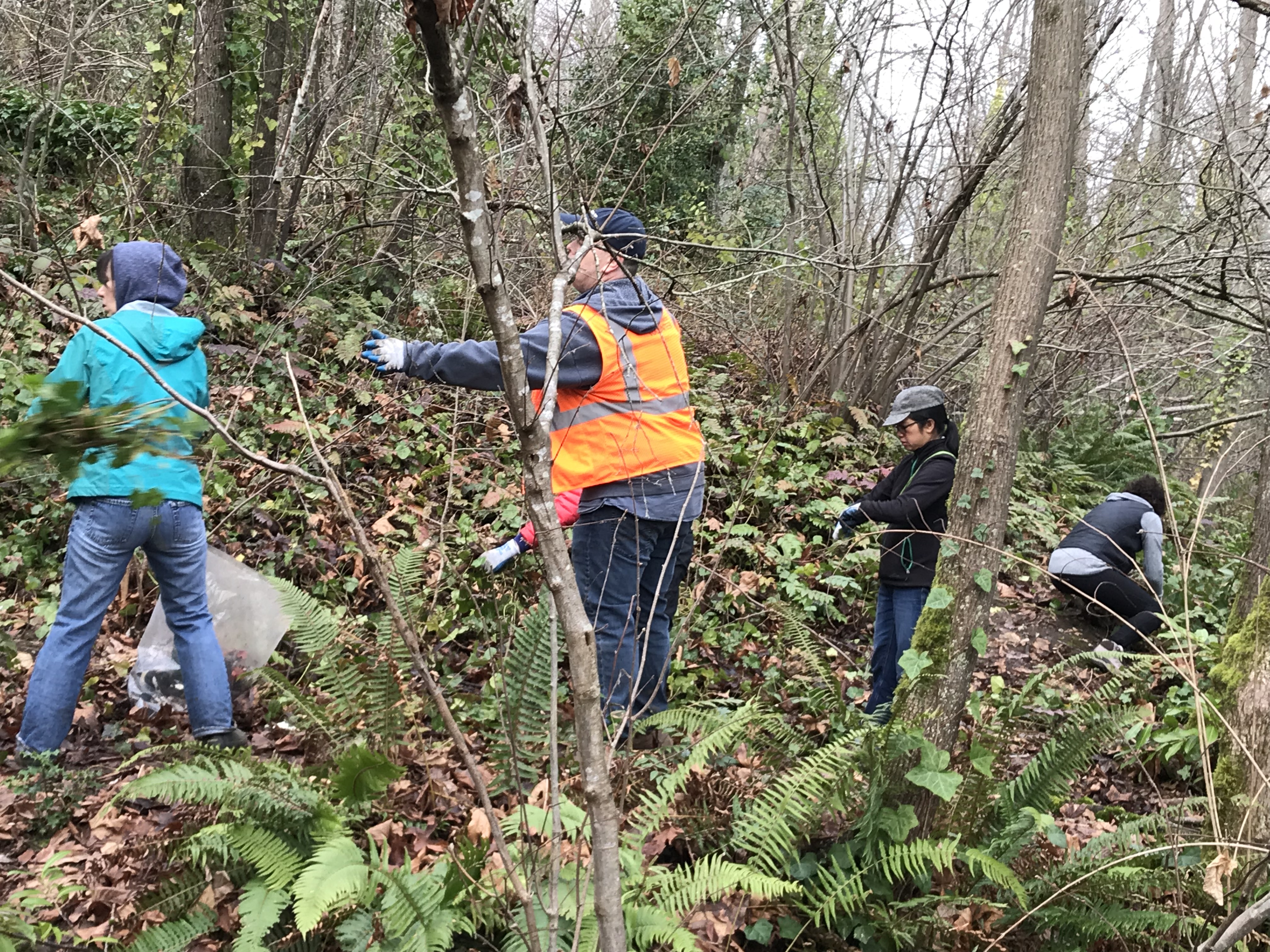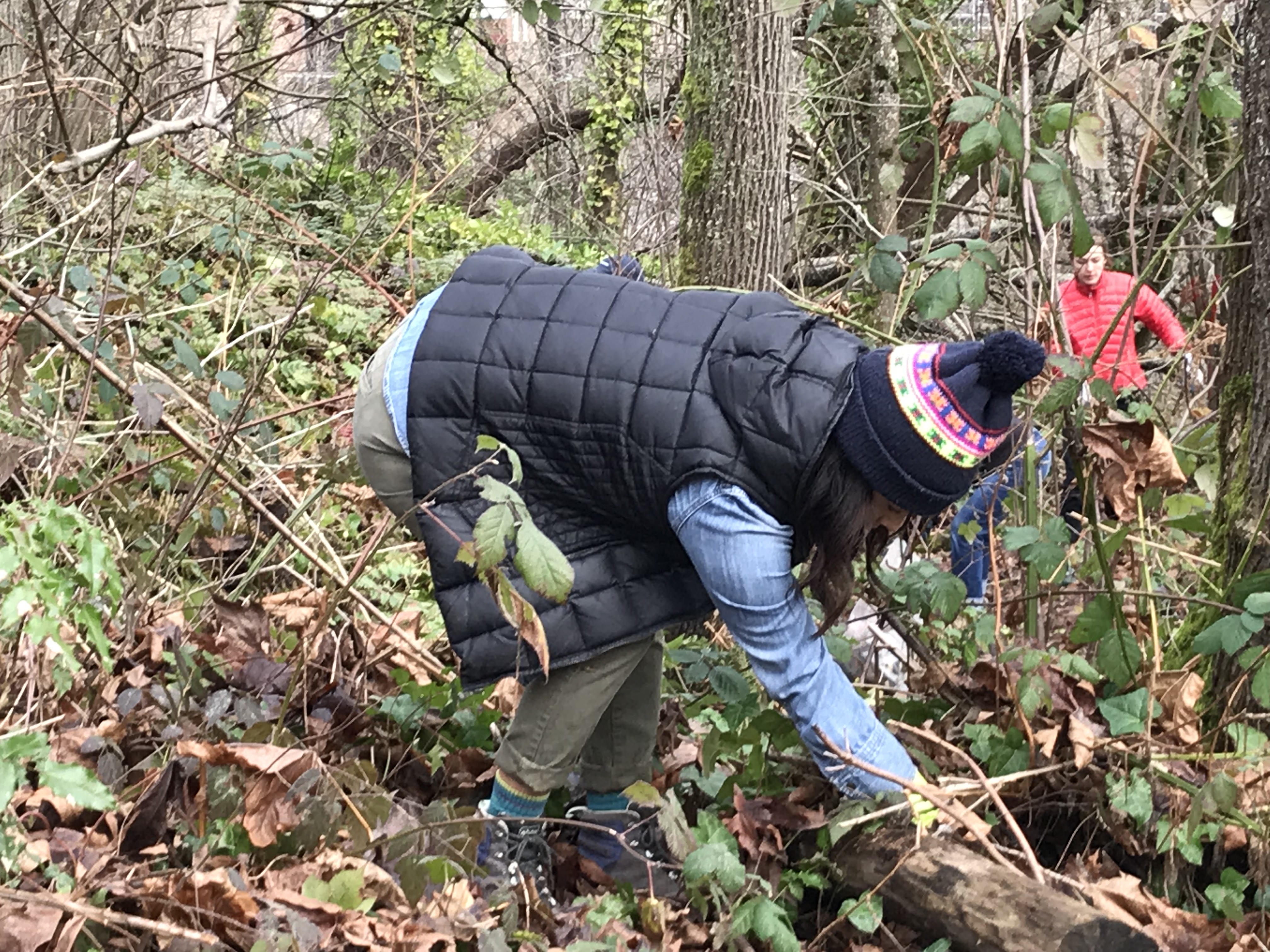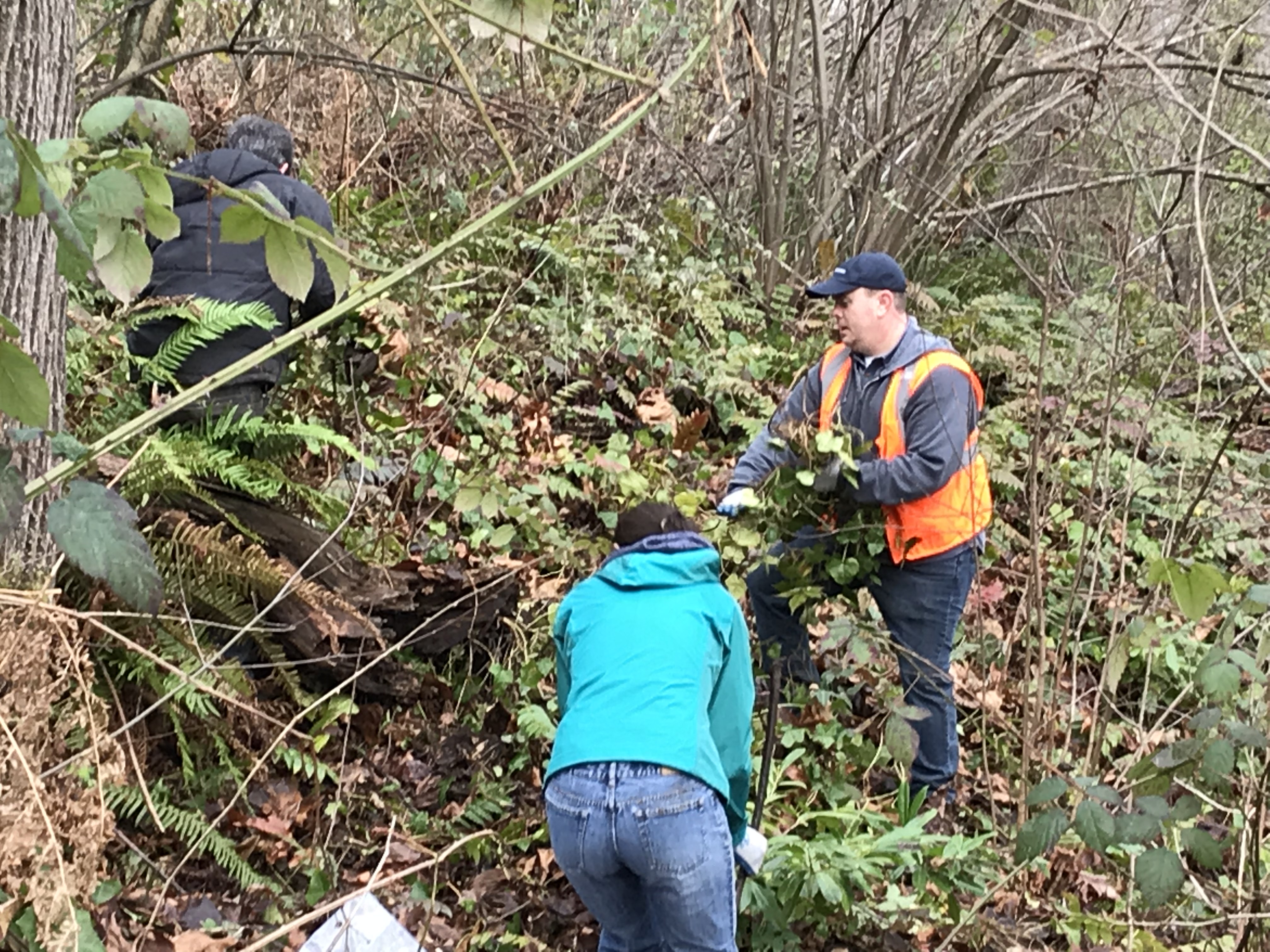
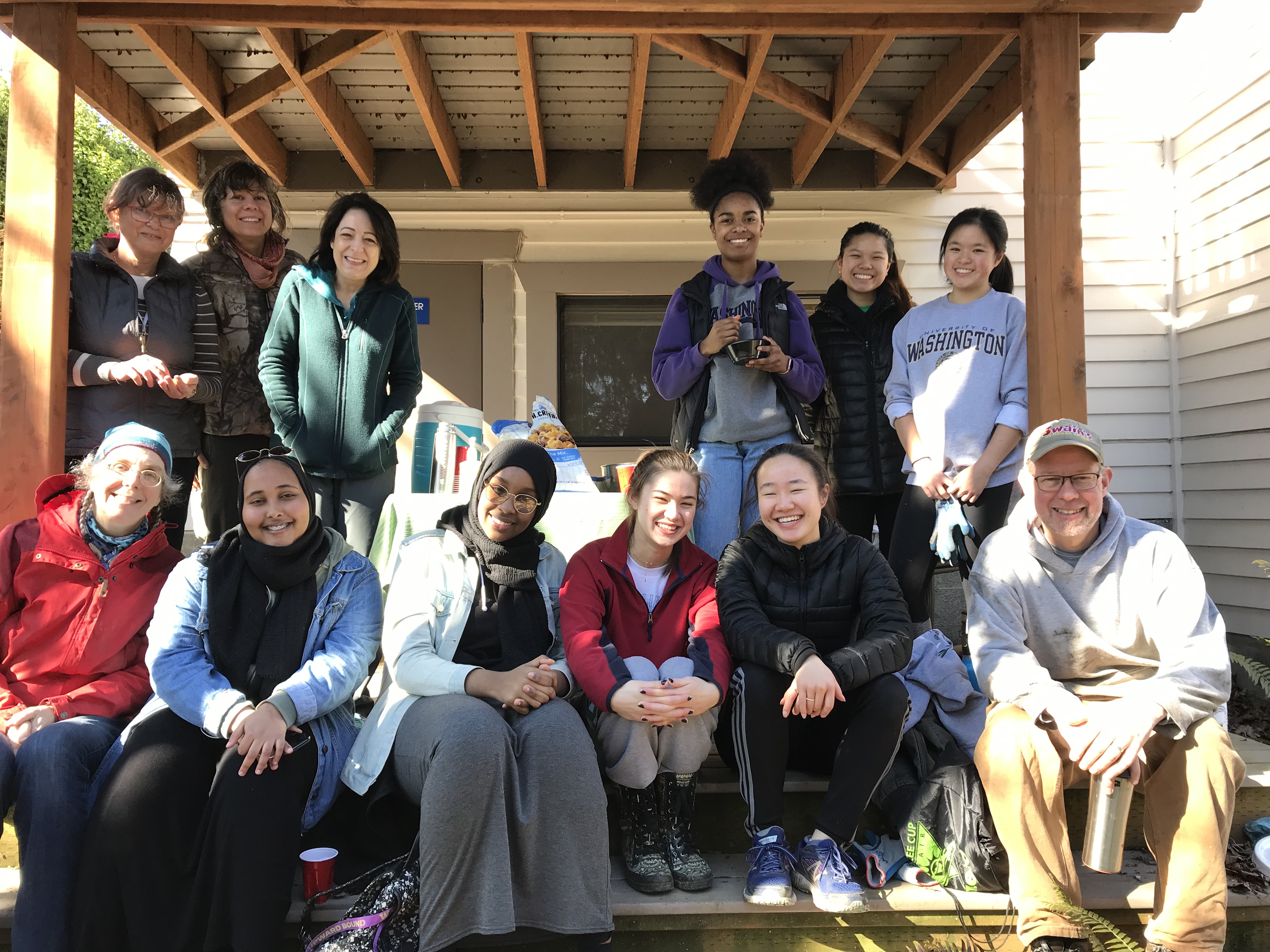
Greenbelt Restoration Work Party: March 10, 2019

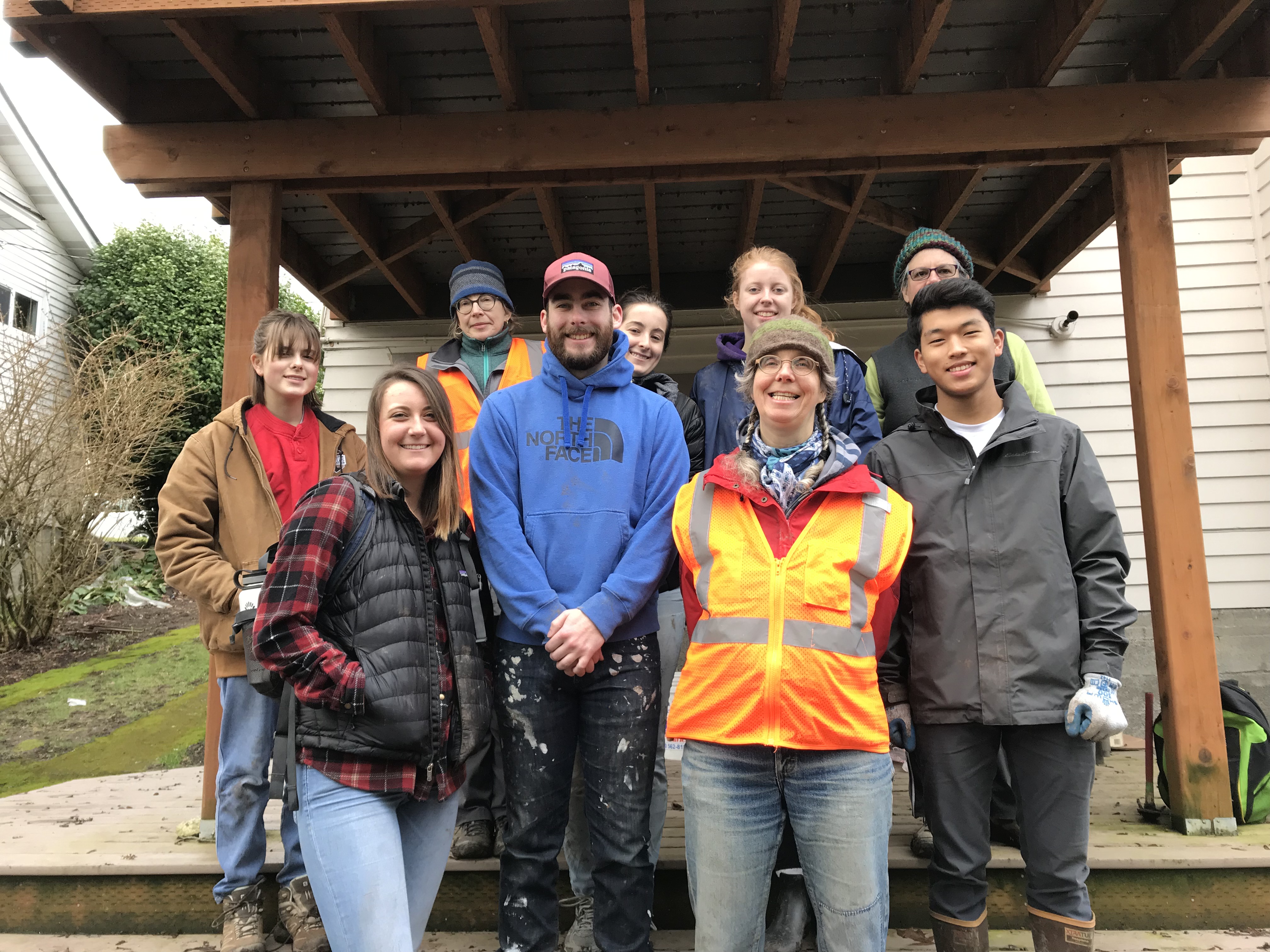
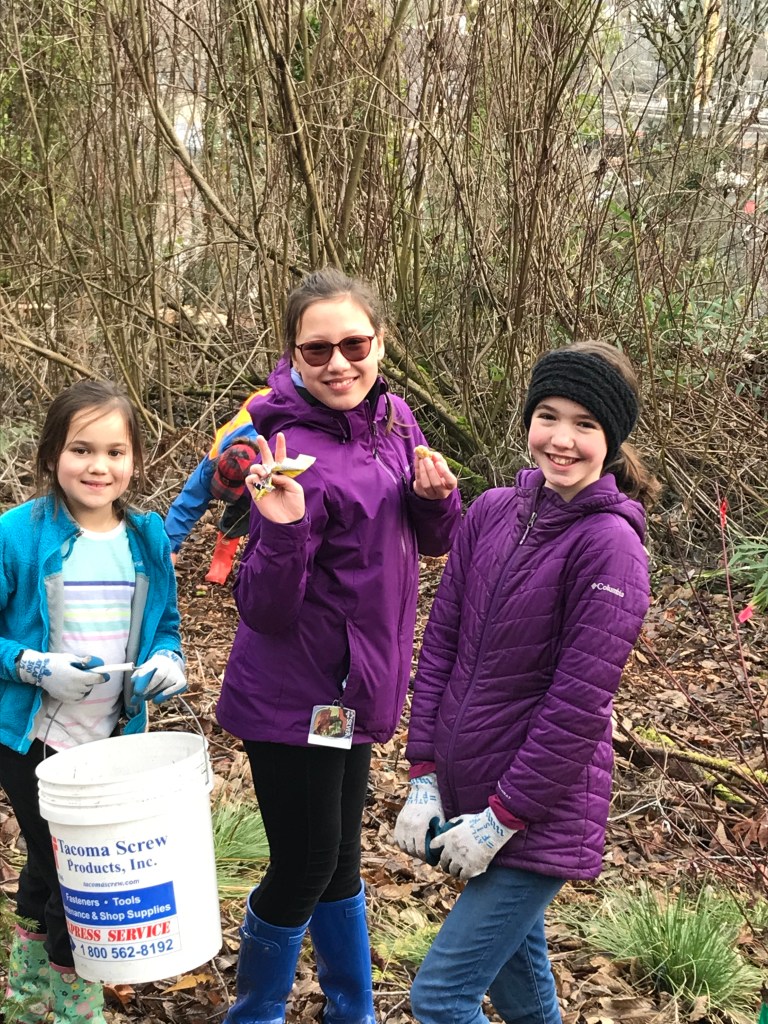
We will be planting 75 shrubs and ground covers in our GreenFriends forest restoration site on March 17. The March 10 work party focused on getting new areas prepared for planting. Almost all of our team leaders attended that work party as did seven members of the Franklin National Honor Society. In addition, friends of two of the team leaders worked with us. In all, 16 volunteers took part in the March 10 work party.

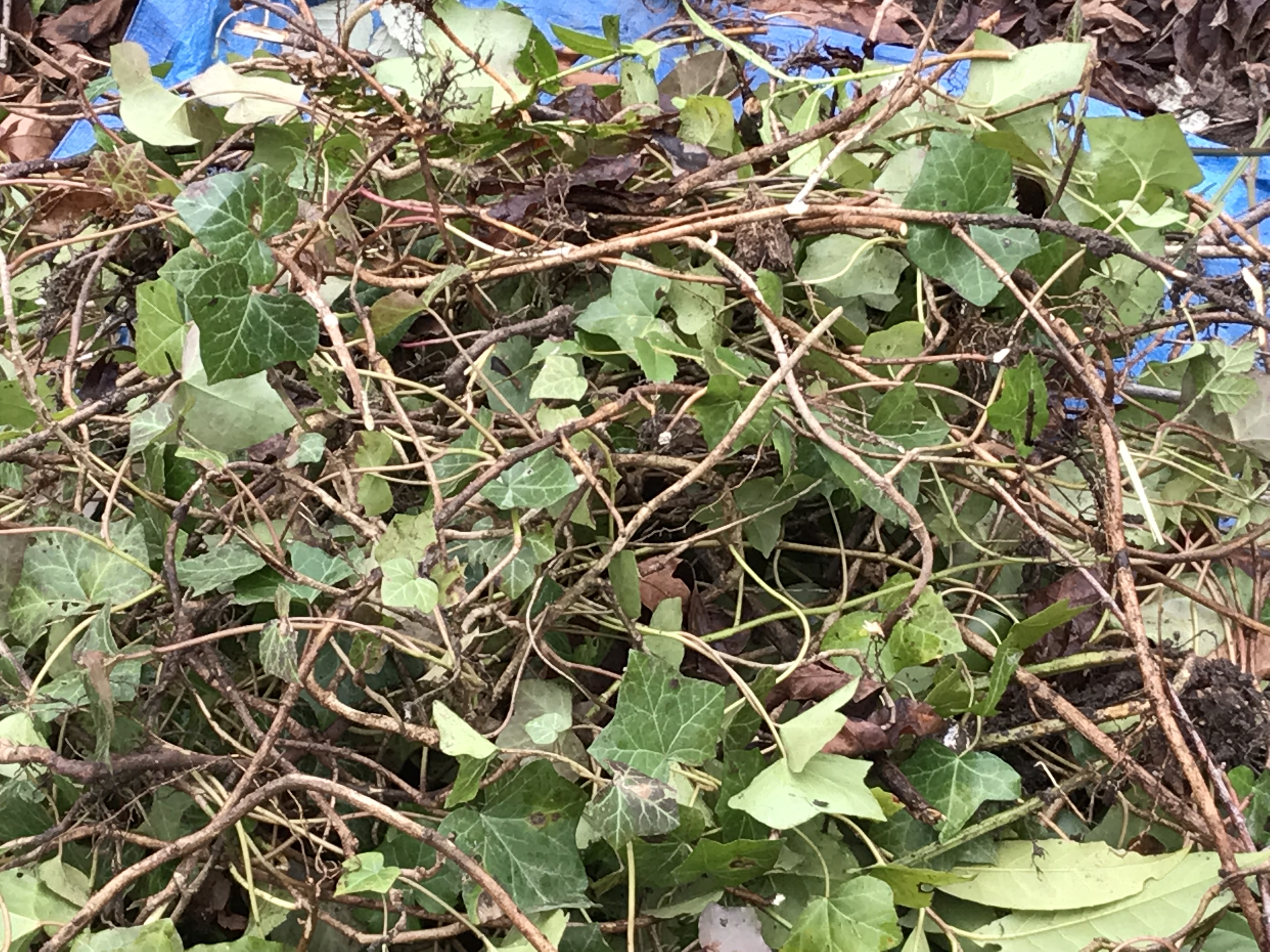
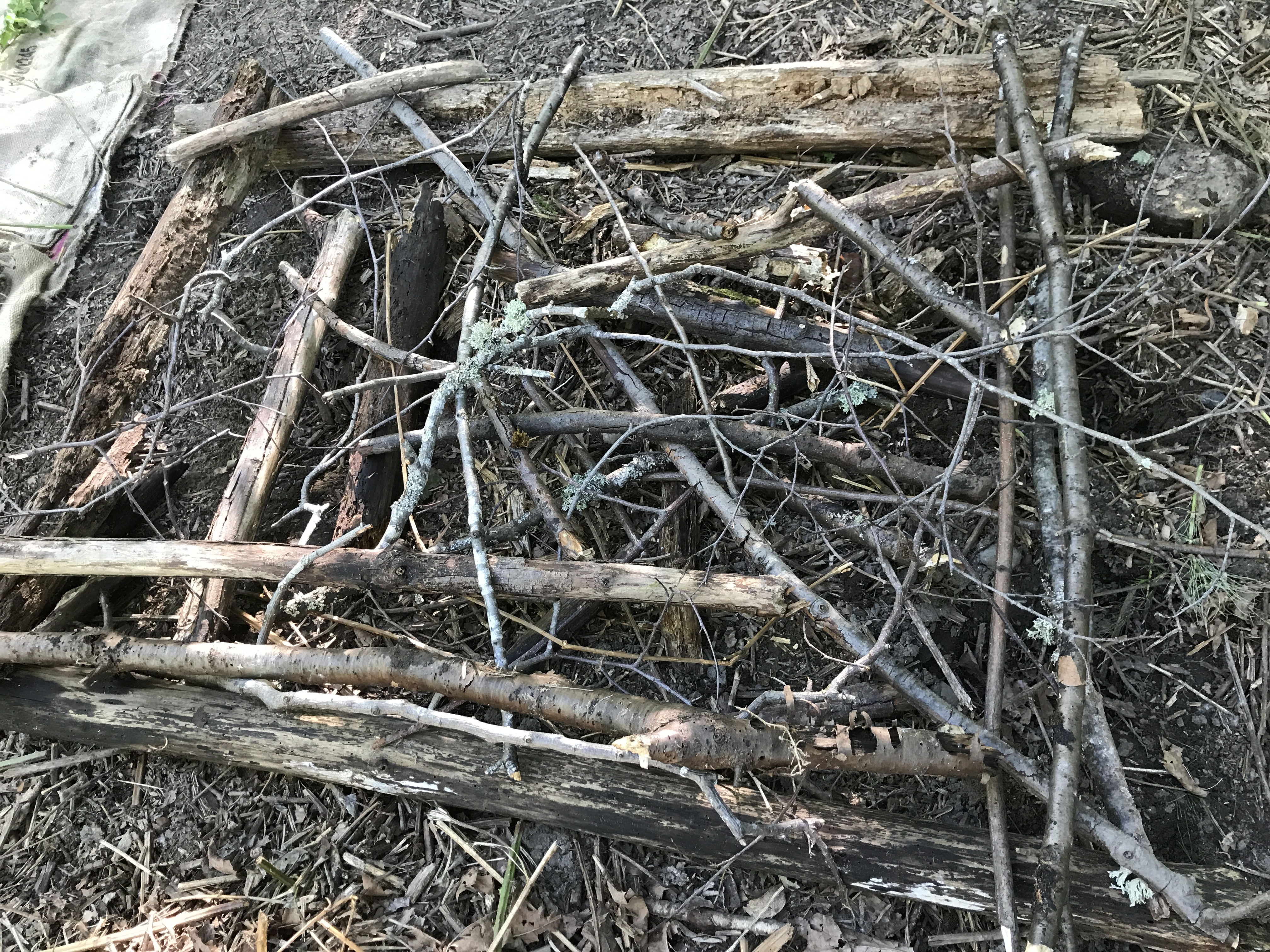
During the last two years, when we cut or pulled out vines such as blackberry, ivy and bindweed, and when we dug out blackberry root balls, we usually took the waste to the foundation of a house that exists on our Greenbelt site. Once there, we placed the waste on drying racks that we had built inside the foundation. We call that area “The Rack Zone” and we generally refer to the dried vines, branches and root balls as “debris.”

In January, we had taken apart the majority of the racks in The Rack Zone and spread the debris throughout the Zone. The debris will continue to decompose and in time The Rack Zone will become another planting area.

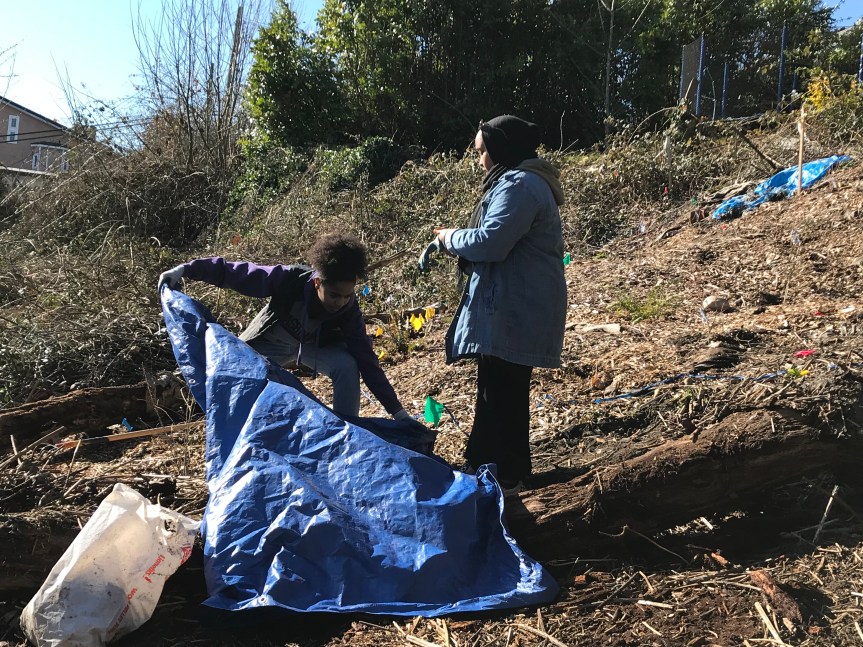
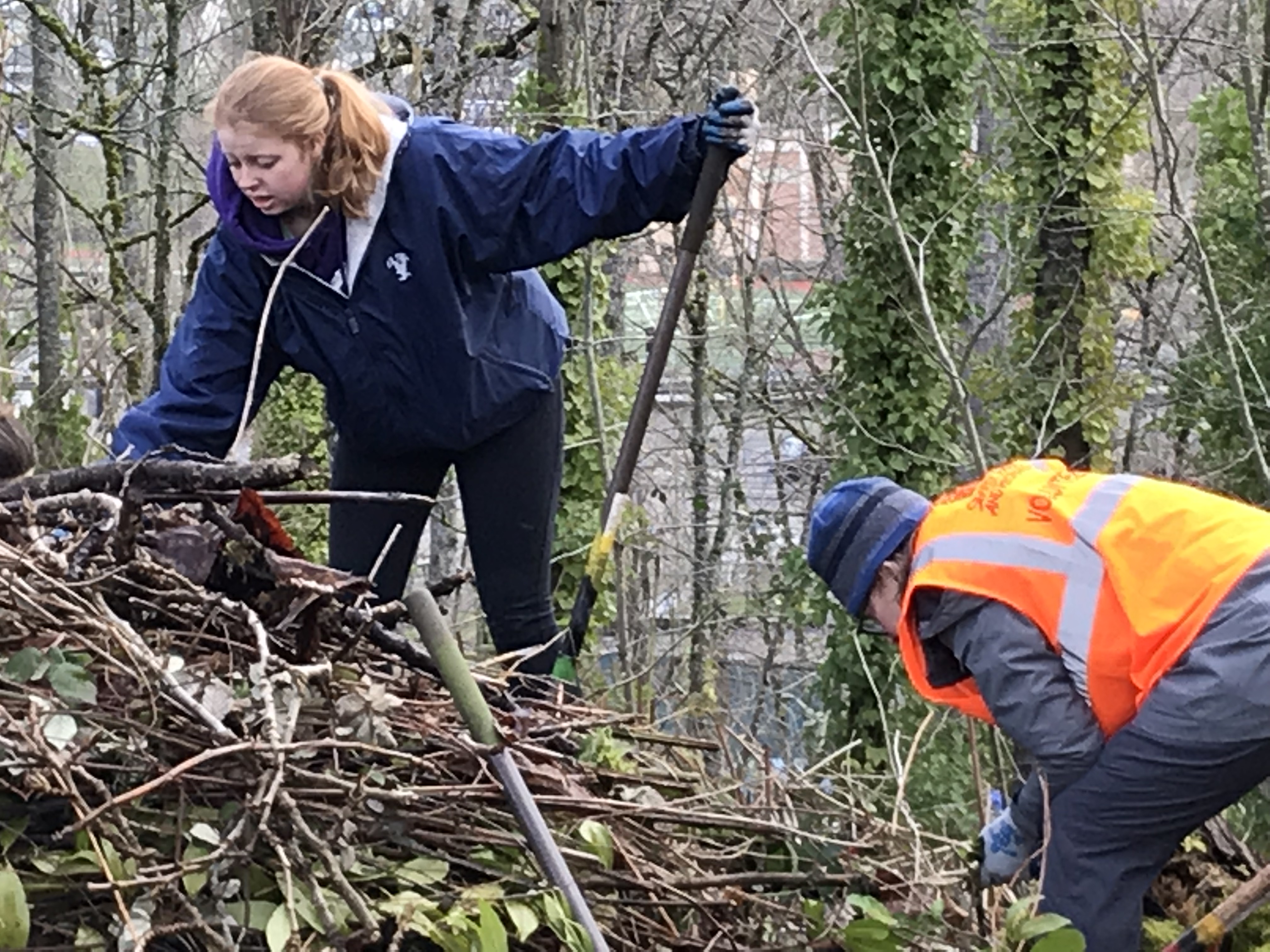
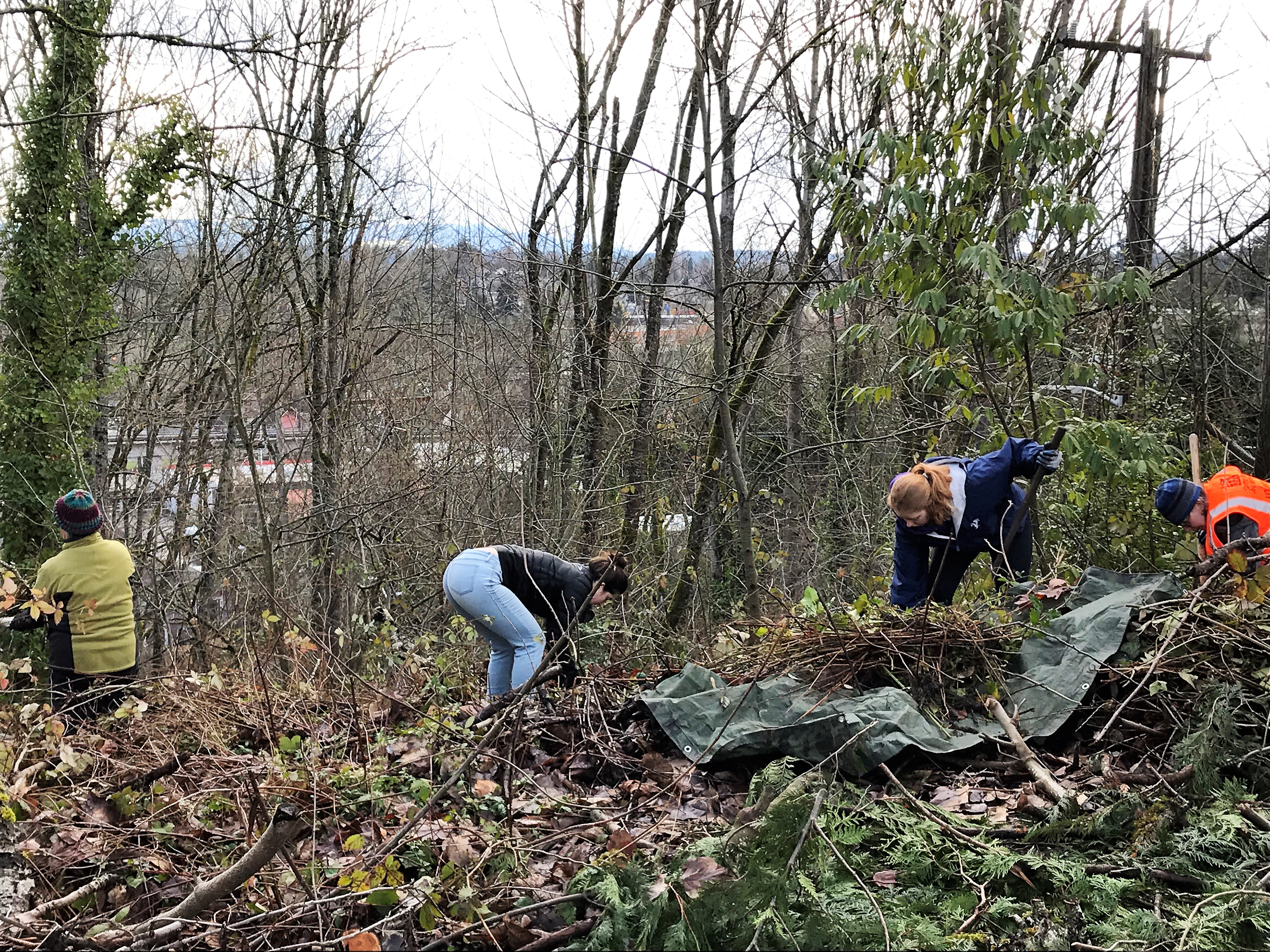
Not all of the debris is located in The Rack Zone however; some of it has been placed on racks that are scattered throughout the site. During the first part of the March 10 work party, we began the process of putting the dried debris in those piles on tarps… and then dumped the contents in The Rack Zone. Removing the piles of debris was the first step in getting those areas ready for planting.

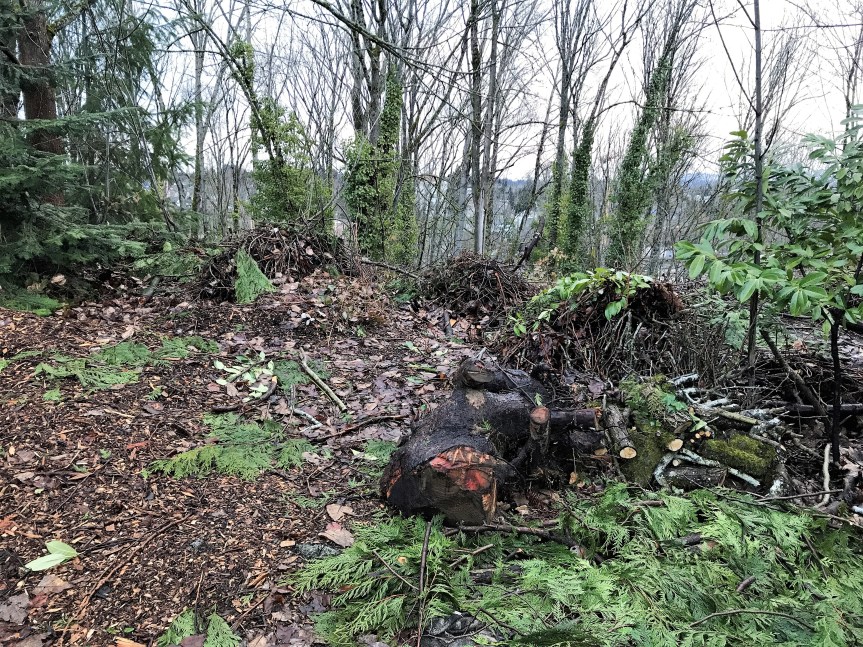
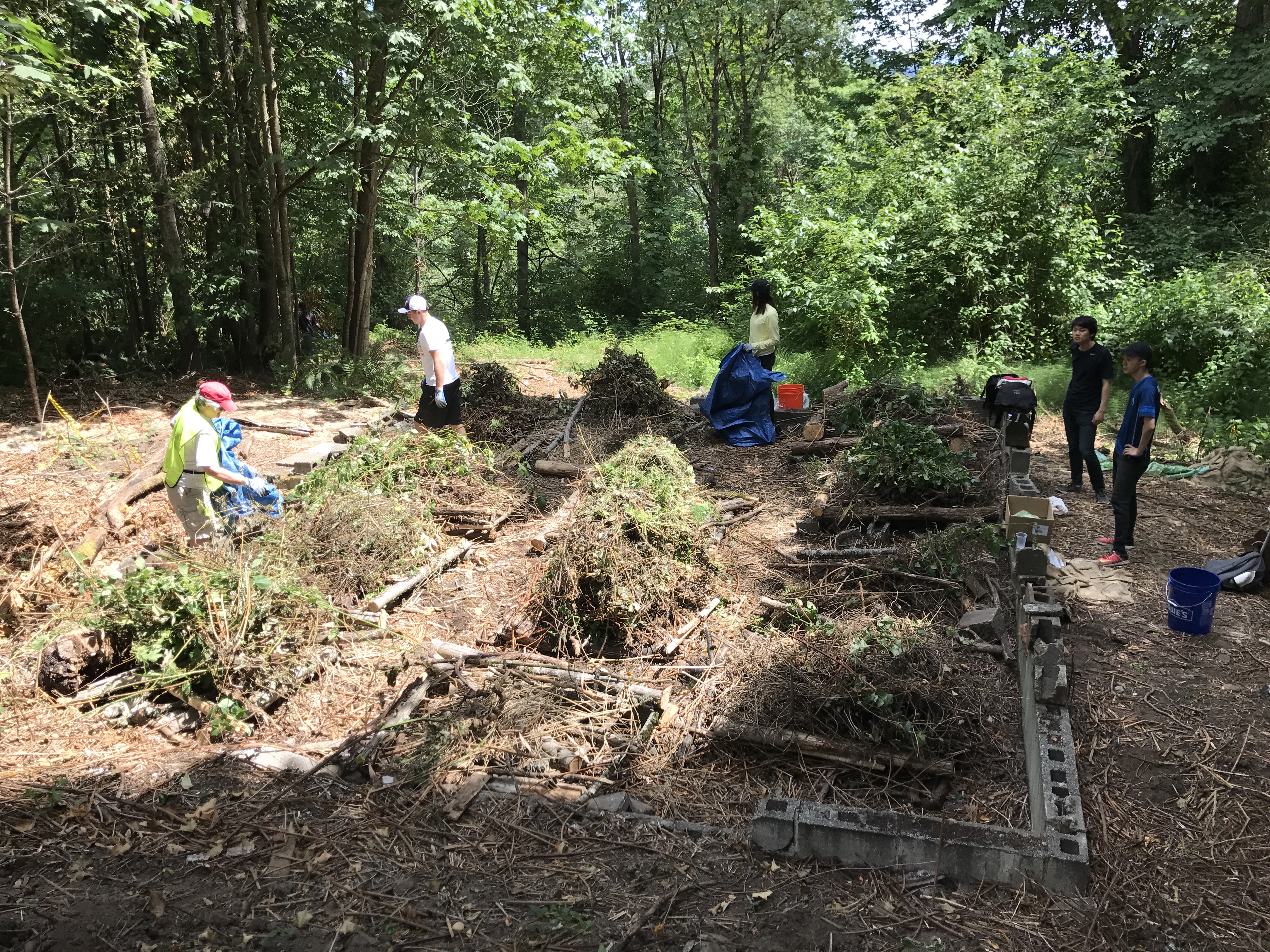
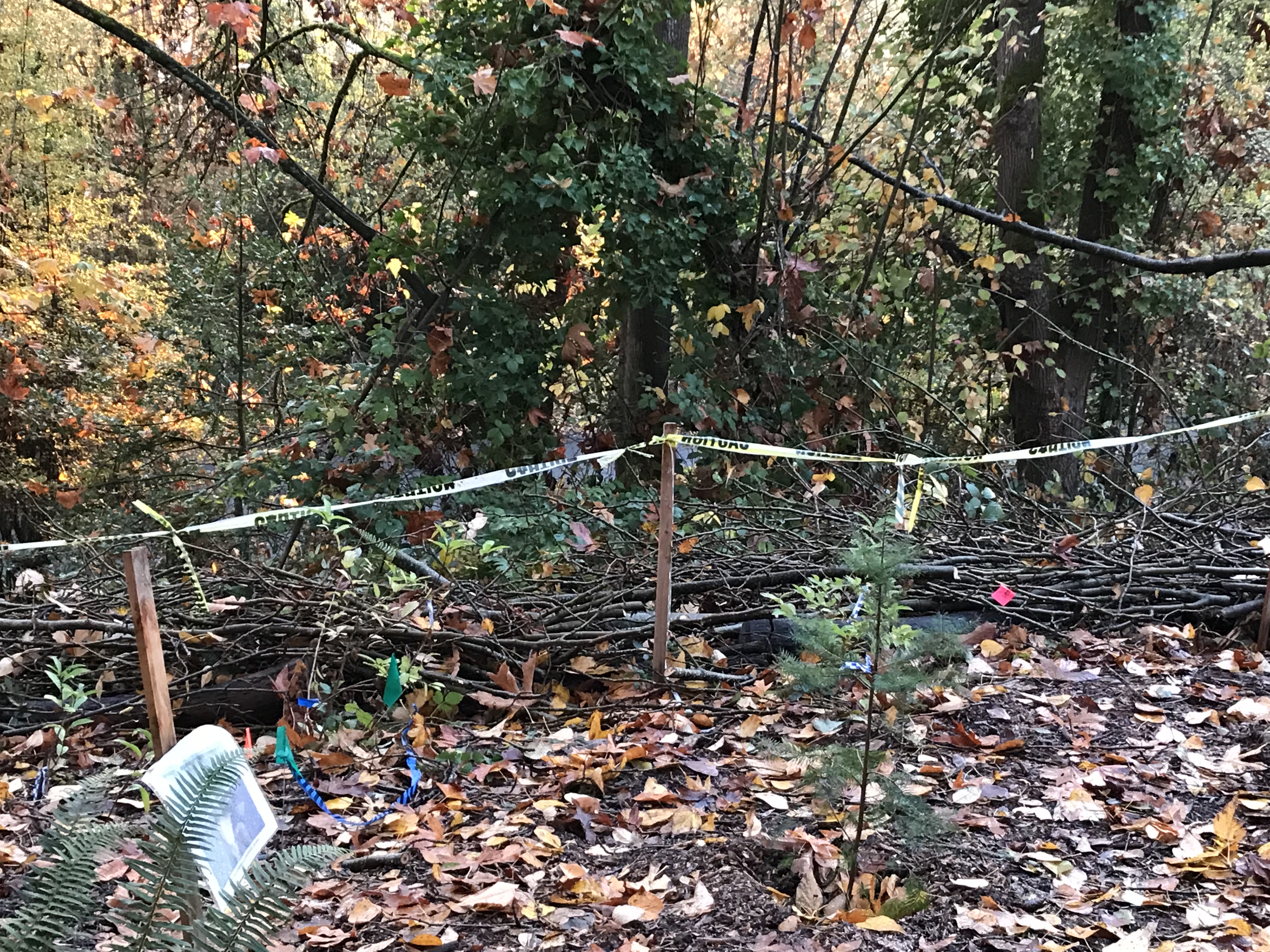
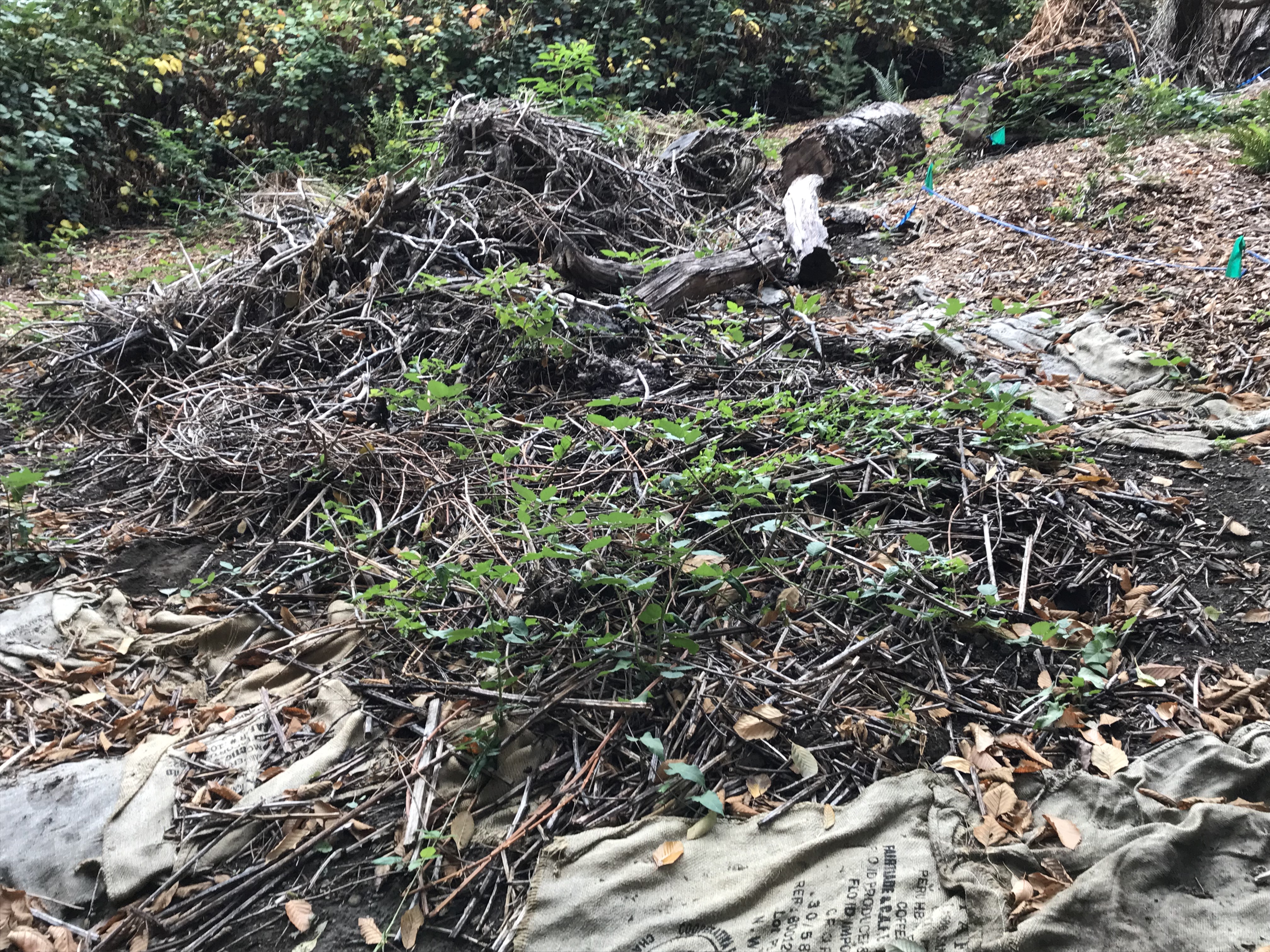
We started by dismantling the racks on the south end of the site. The photo below shows what one area looked like at the beginning of the work party. Last Fall, that pile of debris had been four to five feet high but other work party participants had removed a lot of it. Our goal during this work party was to move the remainder of the debris to The Rack Zone.
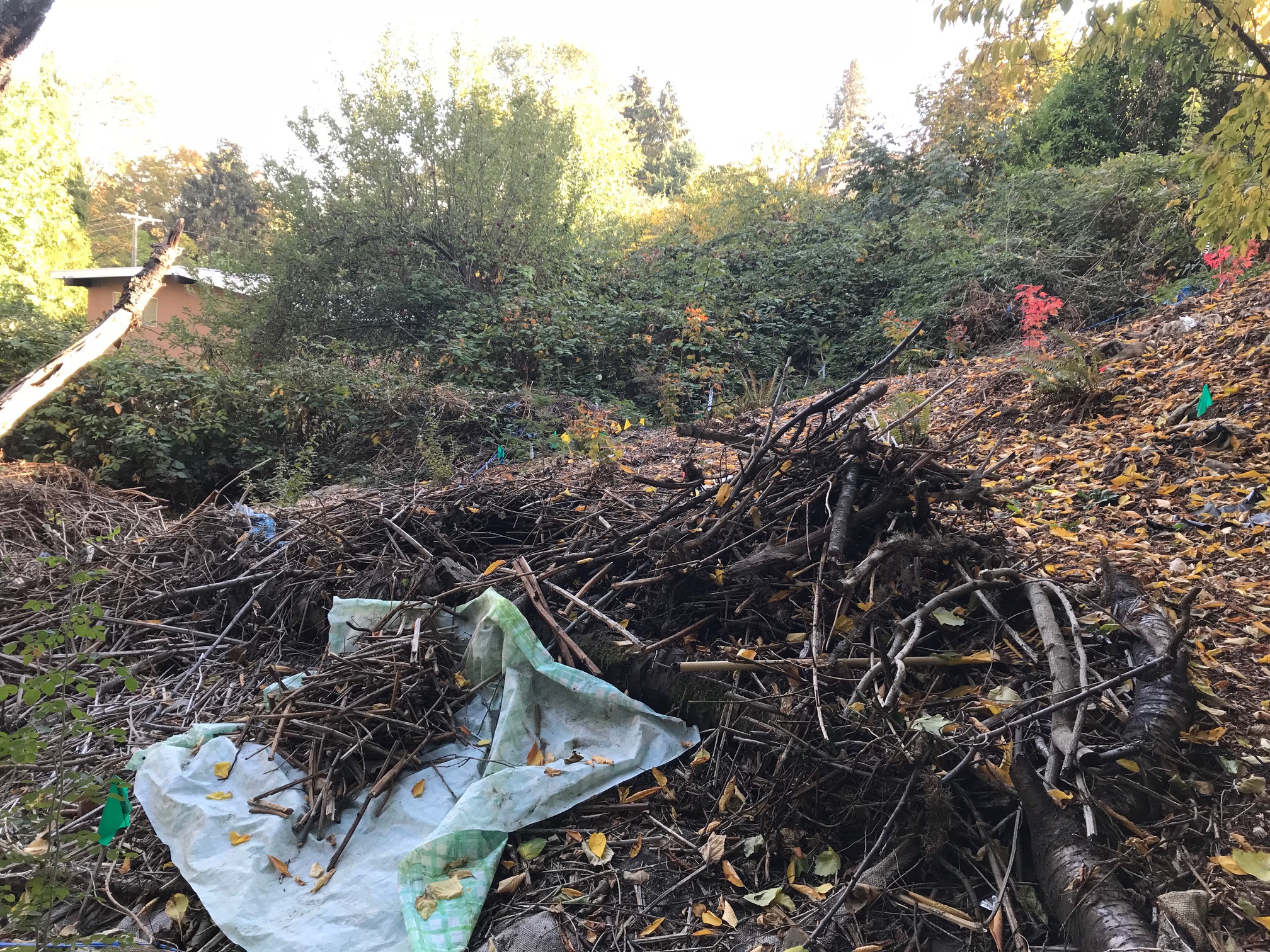
We would also be taking down a big pile of debris just east of it. You can see part of that pile in the middle left section of the photo above. That pile was much bigger than what you can see in the photo.

These two piles were located at the southwest part of the site. We also removed a pile of debris in the southeast section of the site and one north of the Hanford Stairs.

(You can enlarge the photos in any of the galleries by
clicking on one of the photos.)
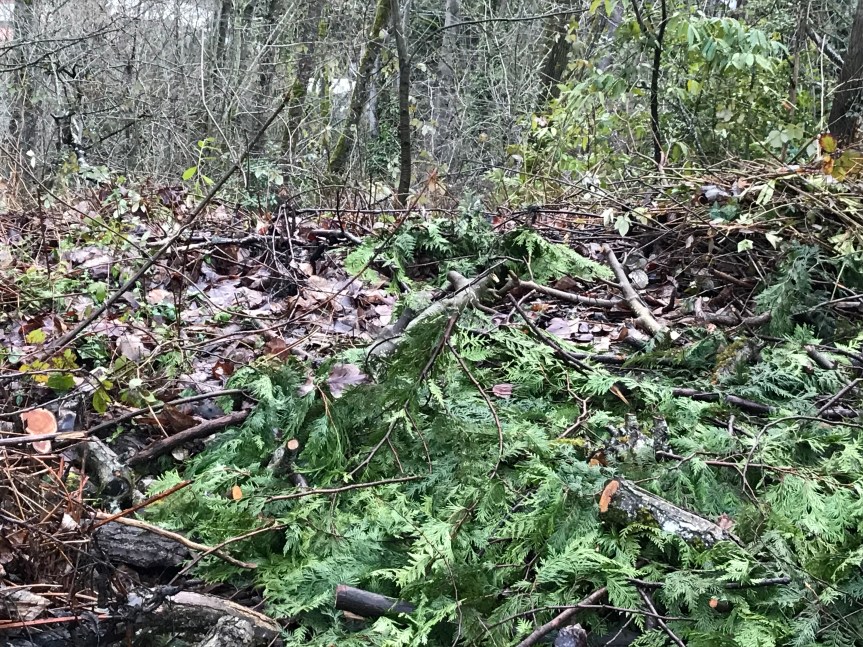
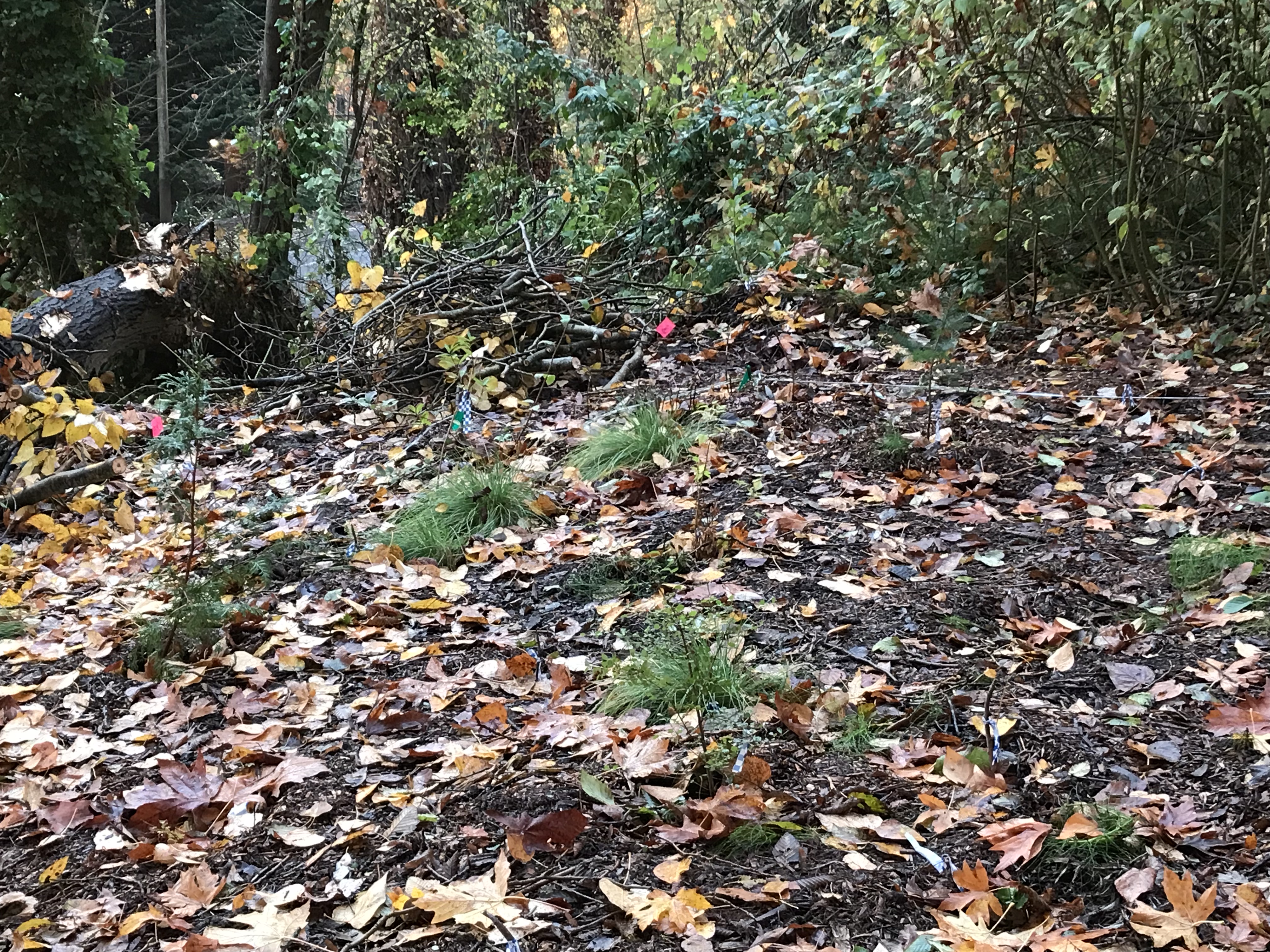
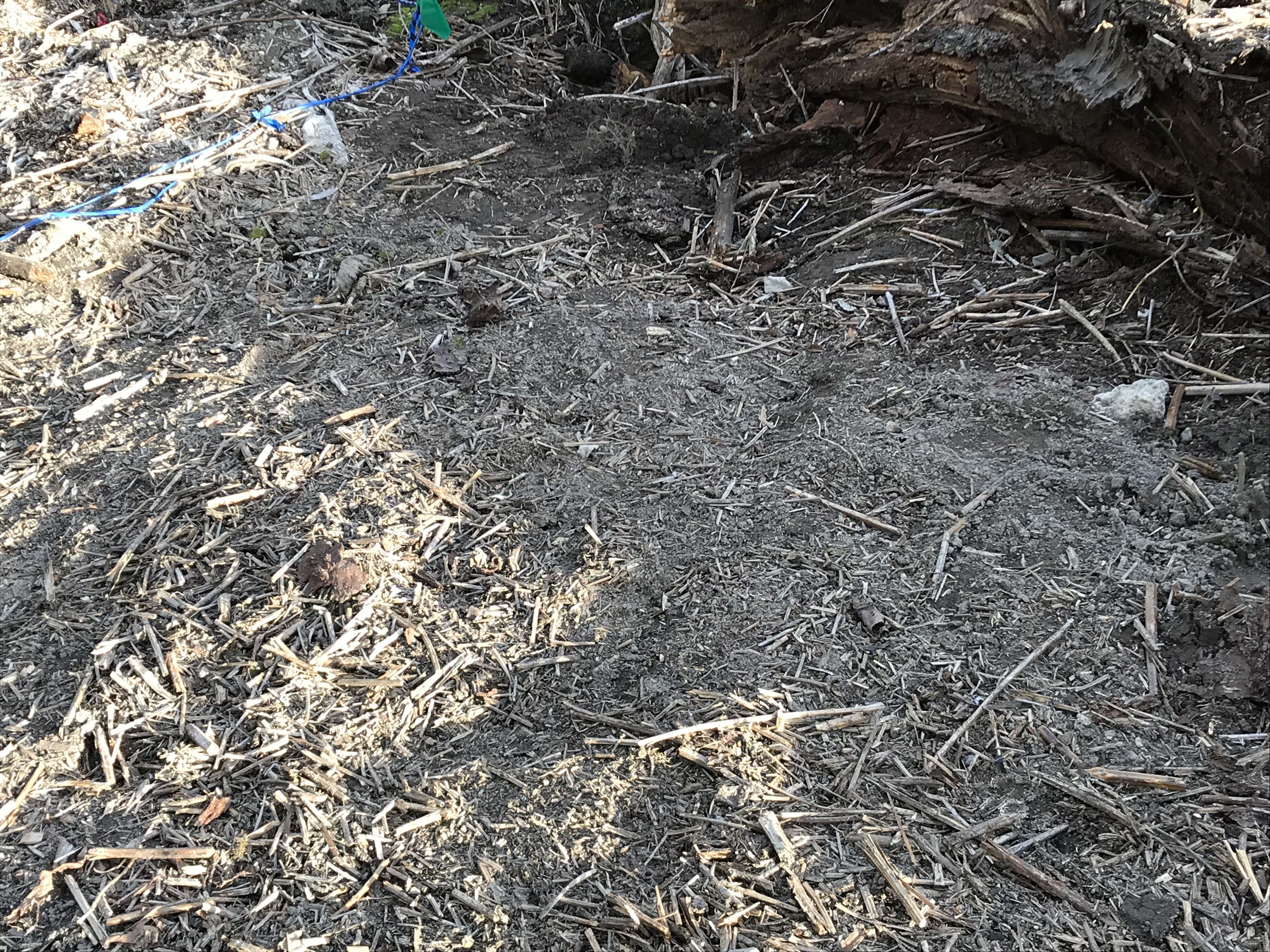
The southwest area looked like this once the piles had been removed. The debris that is still scattered on the ground will become mulch.

While most of the volunteers were clearing the section on the southwest part of the site, a smaller group worked in the southeast area. The photo below was taken of this space the end of September 2018.
The volunteers in this group moved the pile of dried debris to The Rack Zone.

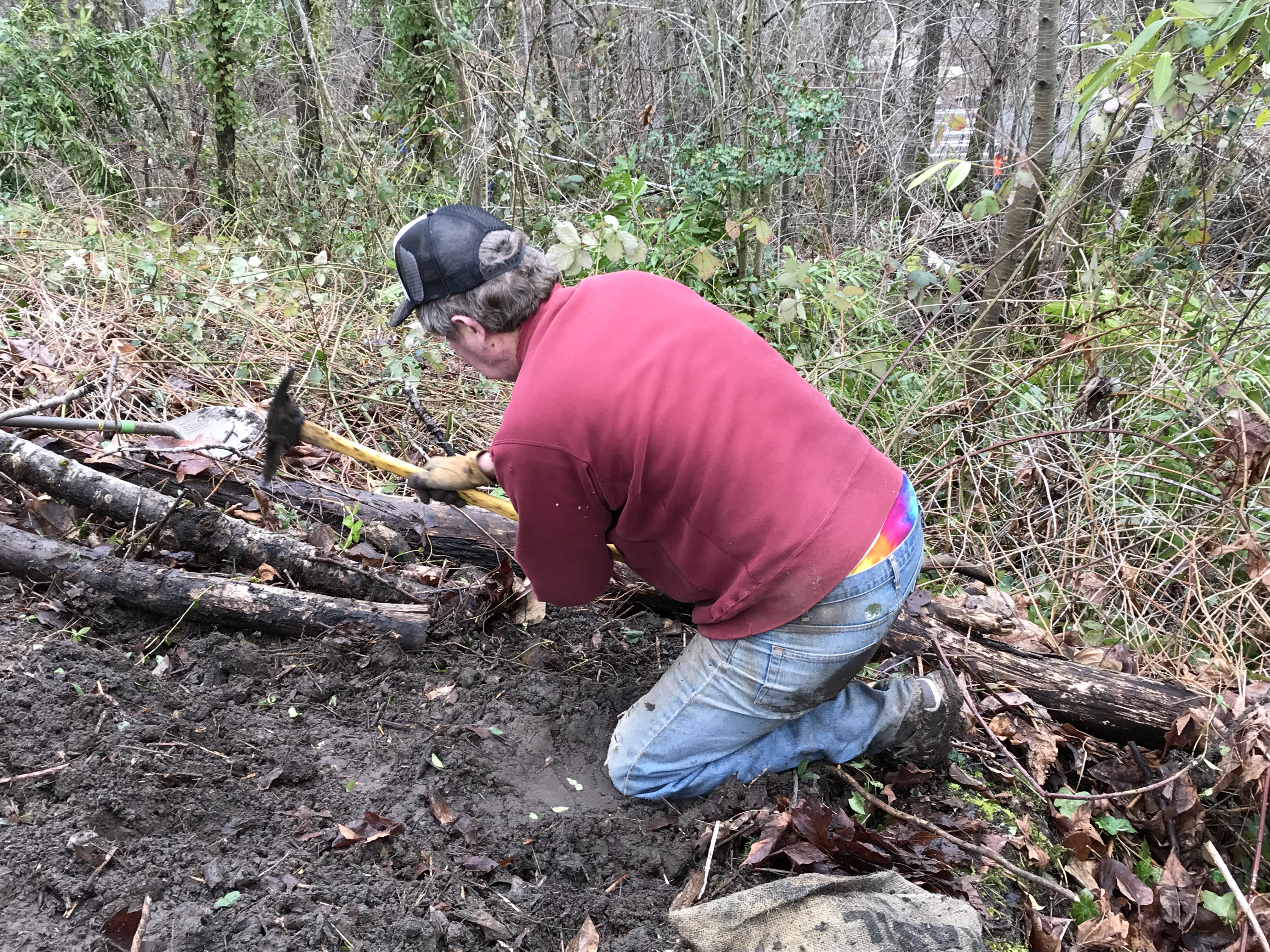
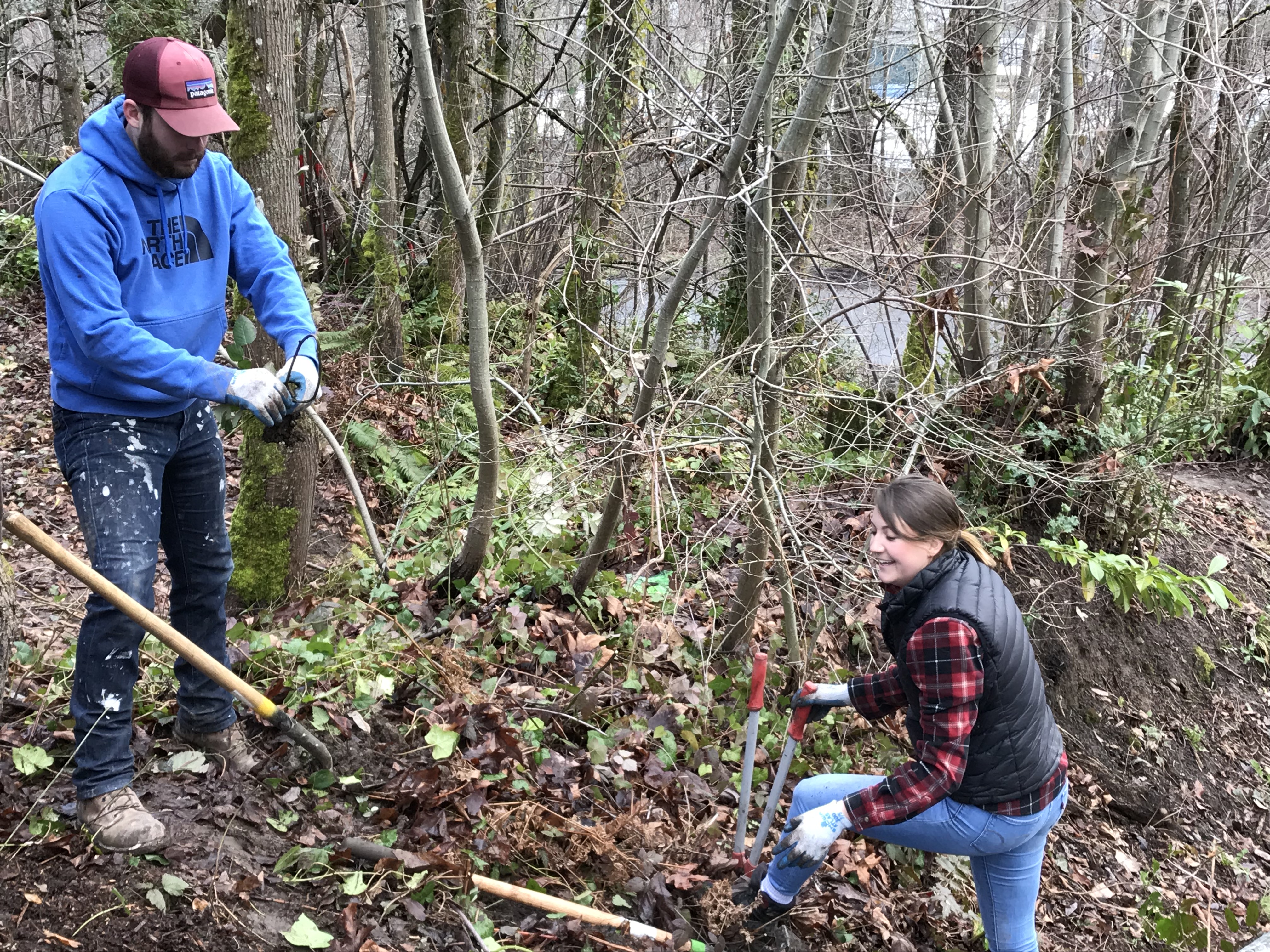
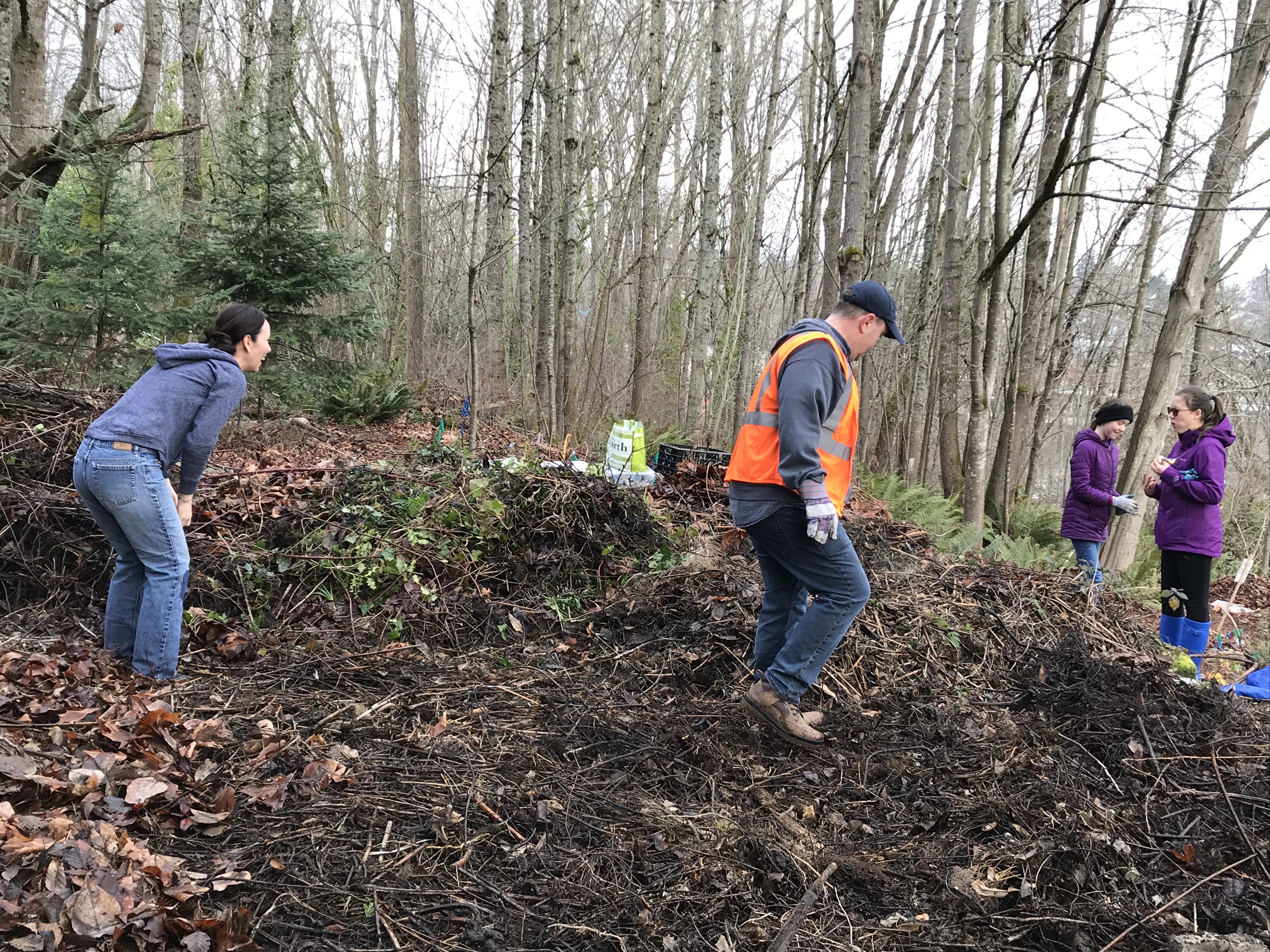
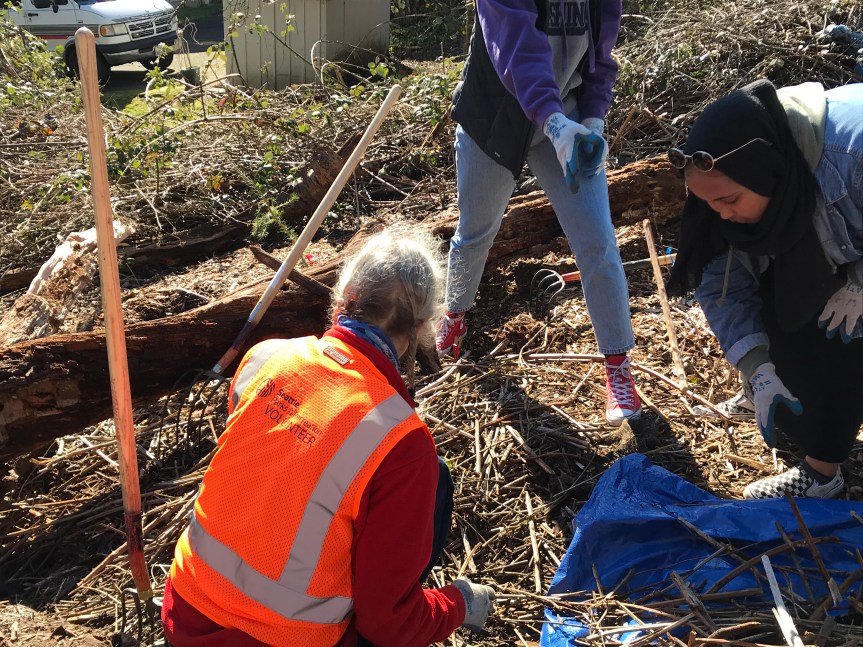
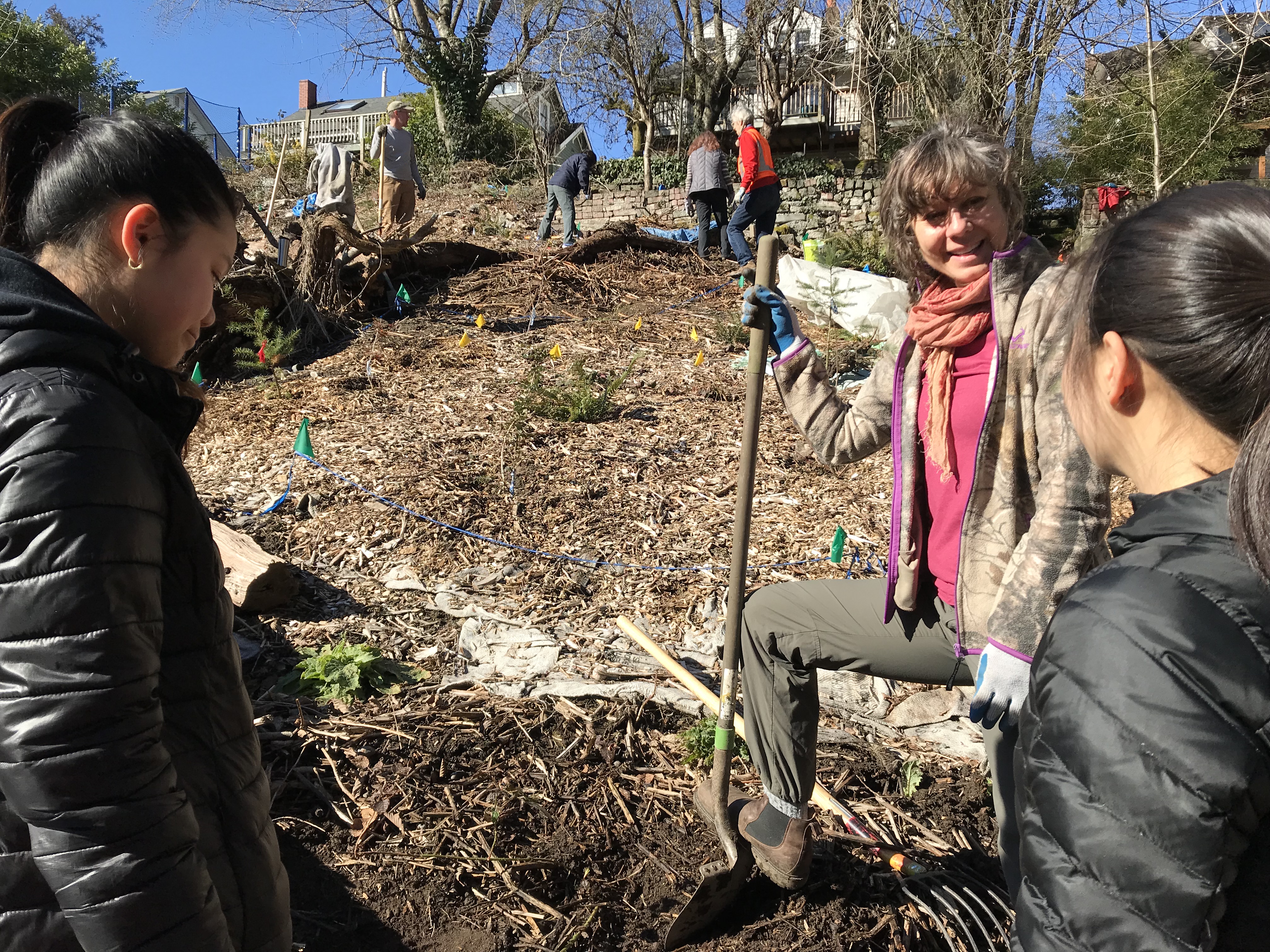
In the photo below, a team leader is teaching the students how to dig out blackberry root balls. If you look up the hill from where they are standing, you will also see some of the larger group working in the southwest area. By the time this photo was taken, both groups had removed most of the debris in their areas.
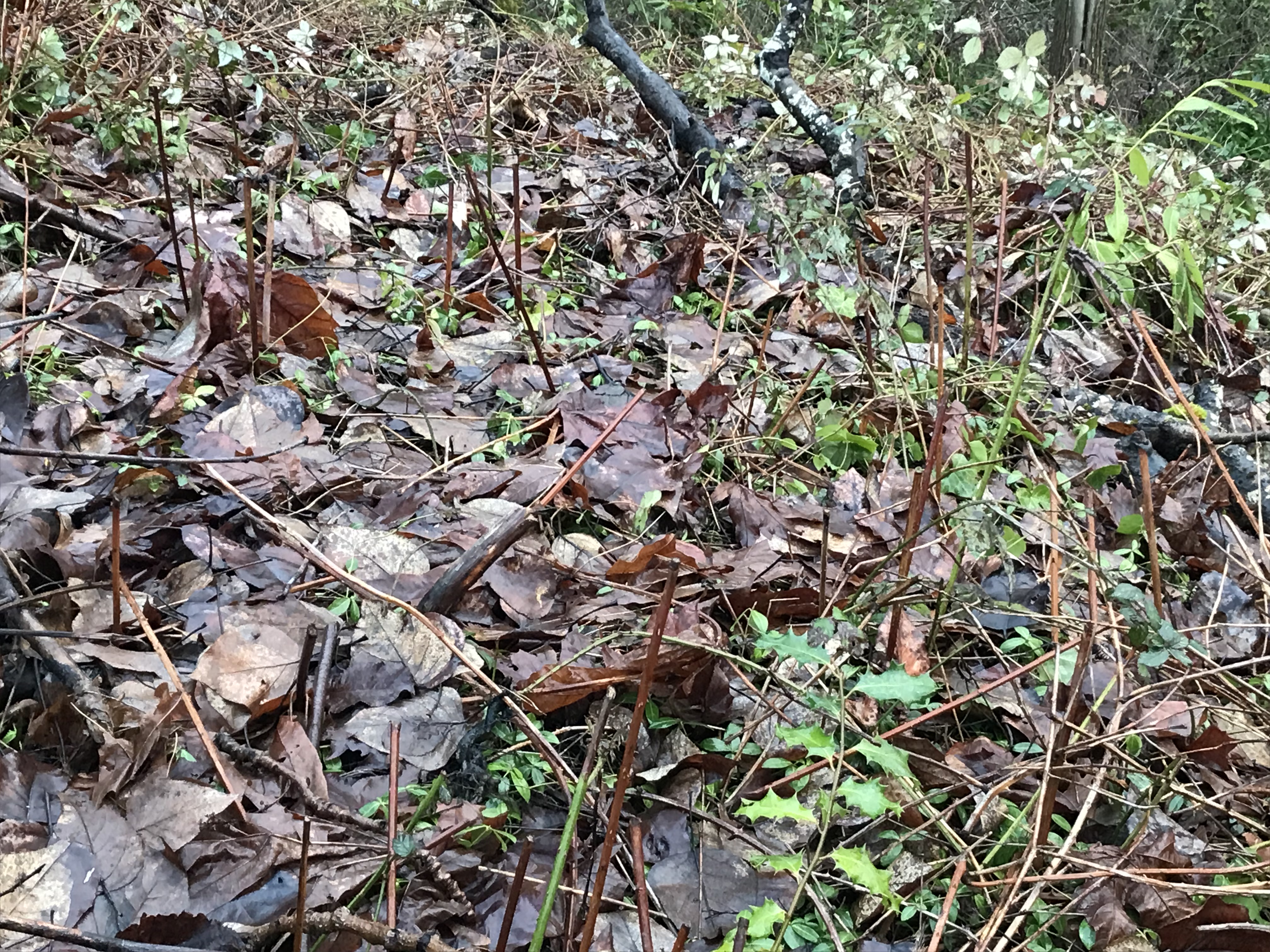
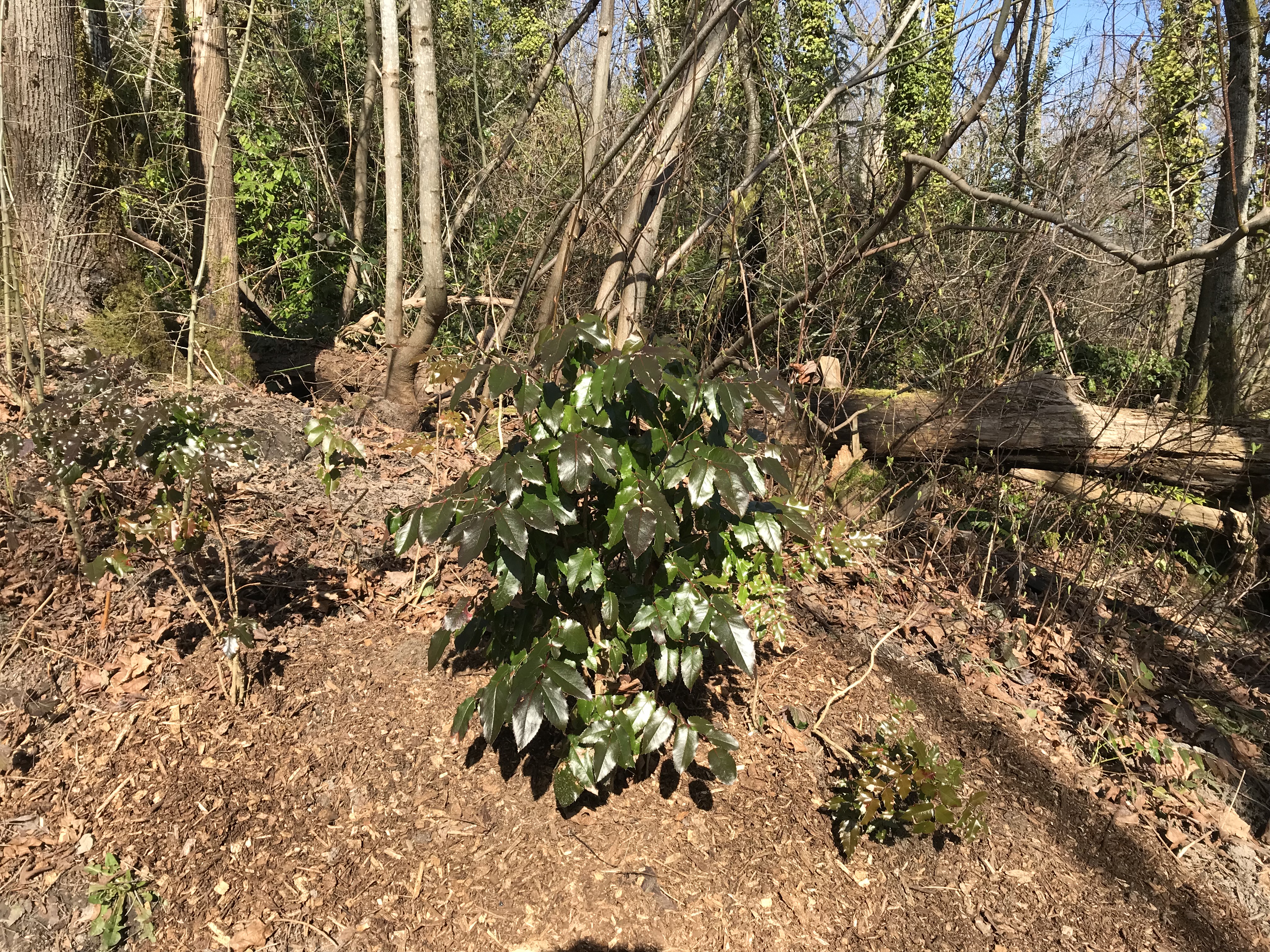
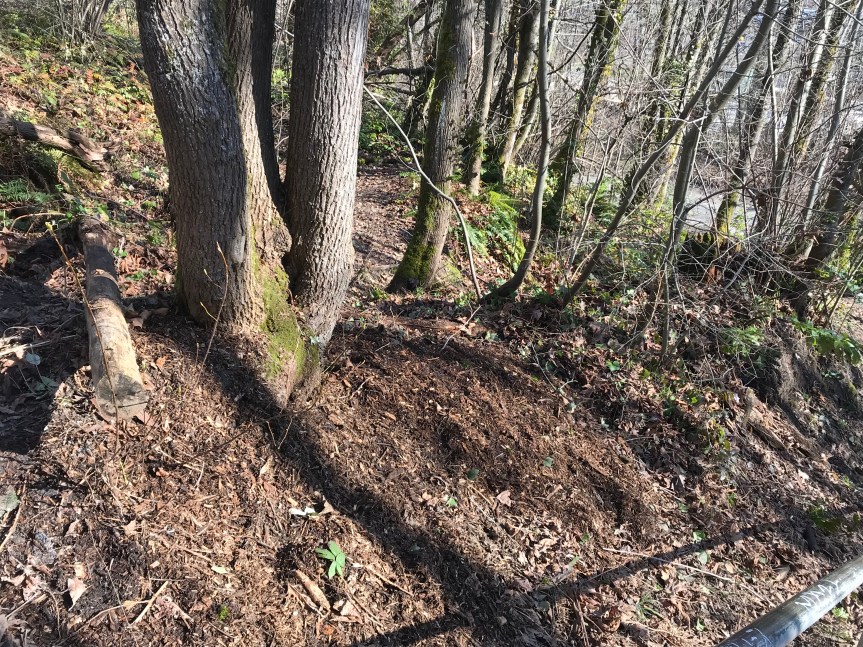
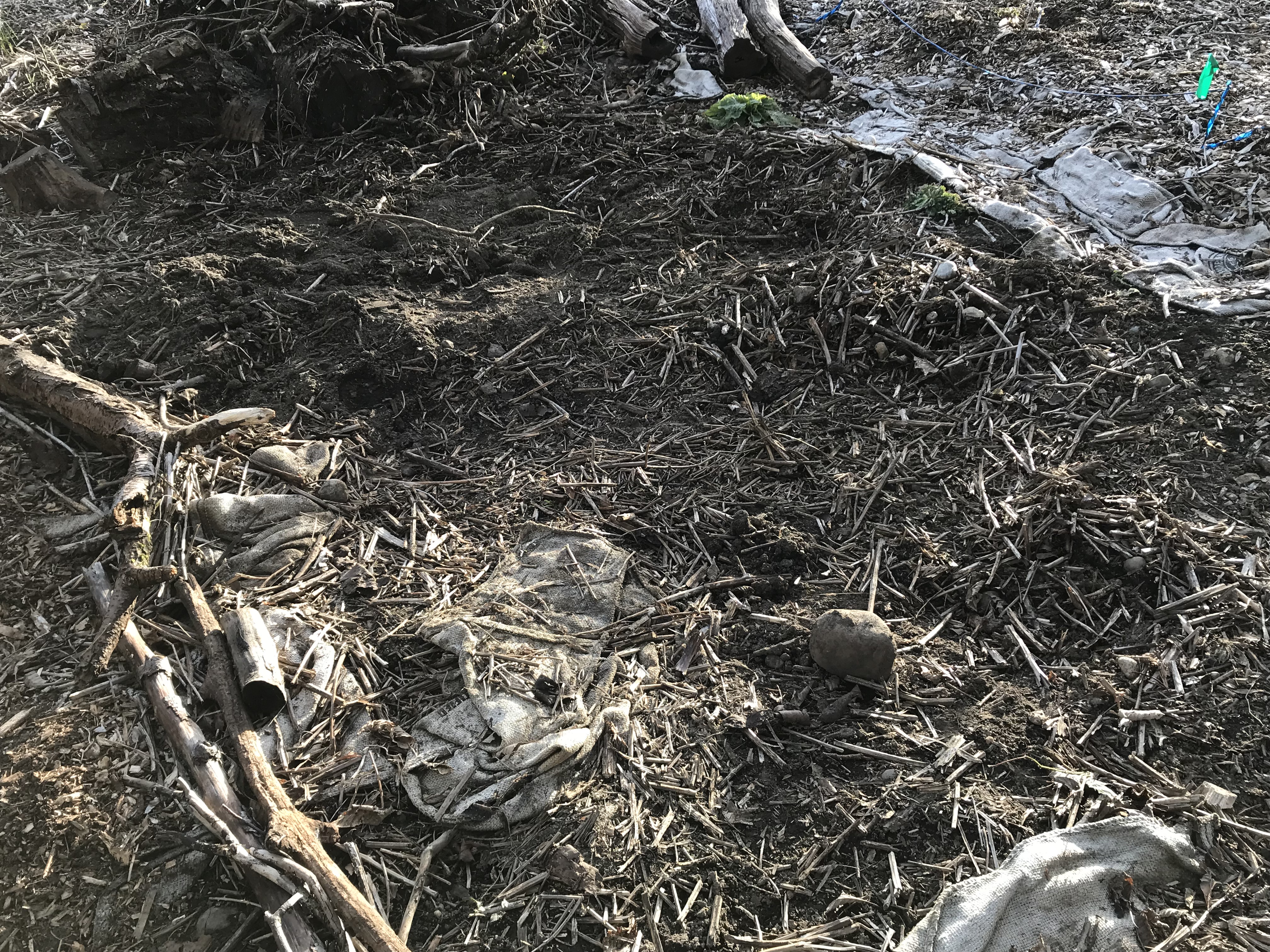
This is what the space in the southeast area looked like once the pile of debris and the blackberry root balls had been removed. The land is ready for planting and the remaining debris will be used for mulch.
An hour-and-a-half into the March 10 work party, we took a snack break. Afterwards, we divided into three groups.

Group 1

Before I tell you about Group 1’s work, I will share some back story.

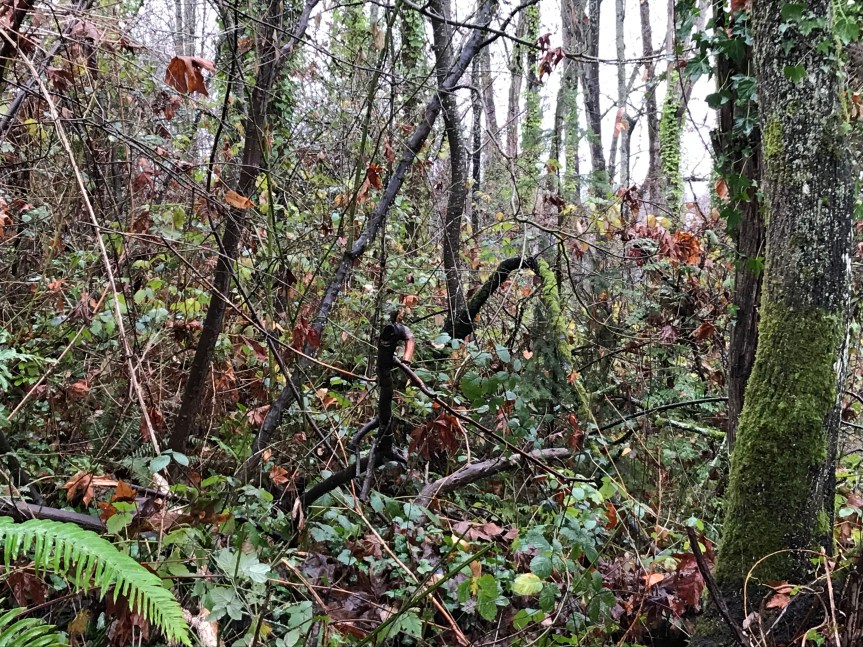
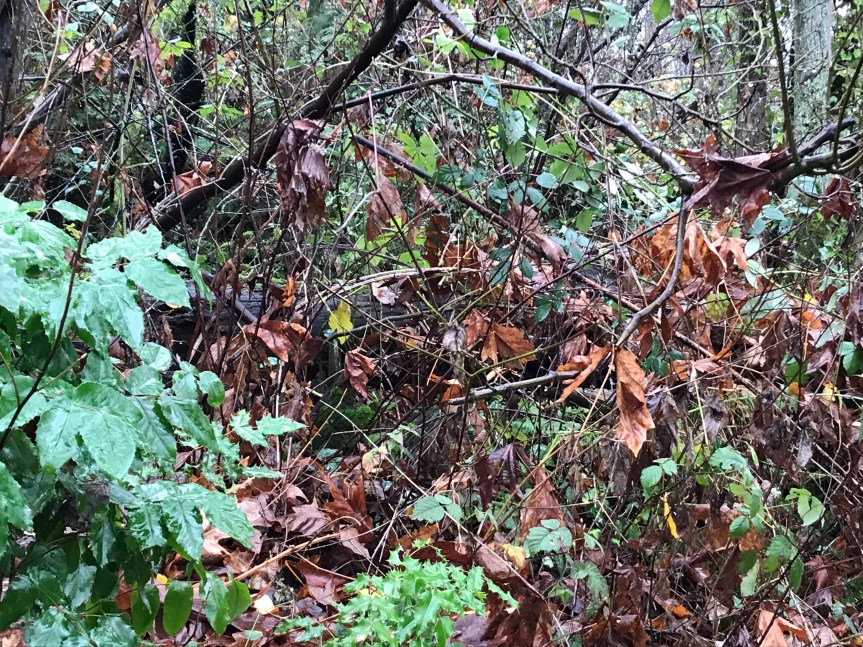
There is an area along 25th Ave S. that is part of an adjacent Greenbelt site. When we started to clear that area during the February 24 work party, blackberry, ivy and periwinkle vines formed a tight web over much of the ground. There was also a lot of downed trees, branches and other debris.

While we had accomplished a great deal on February 24, I felt overwhelmed by what it would take to have it ready for planting on March 17.

A few days later, I worked on my own and cleared enough space to feel some hope that we could have it ready by the 17th. My neighbor John worked alongside me the two following days. Since he uses a pick ax, we progressed much faster. The land suitable for planting was growing!

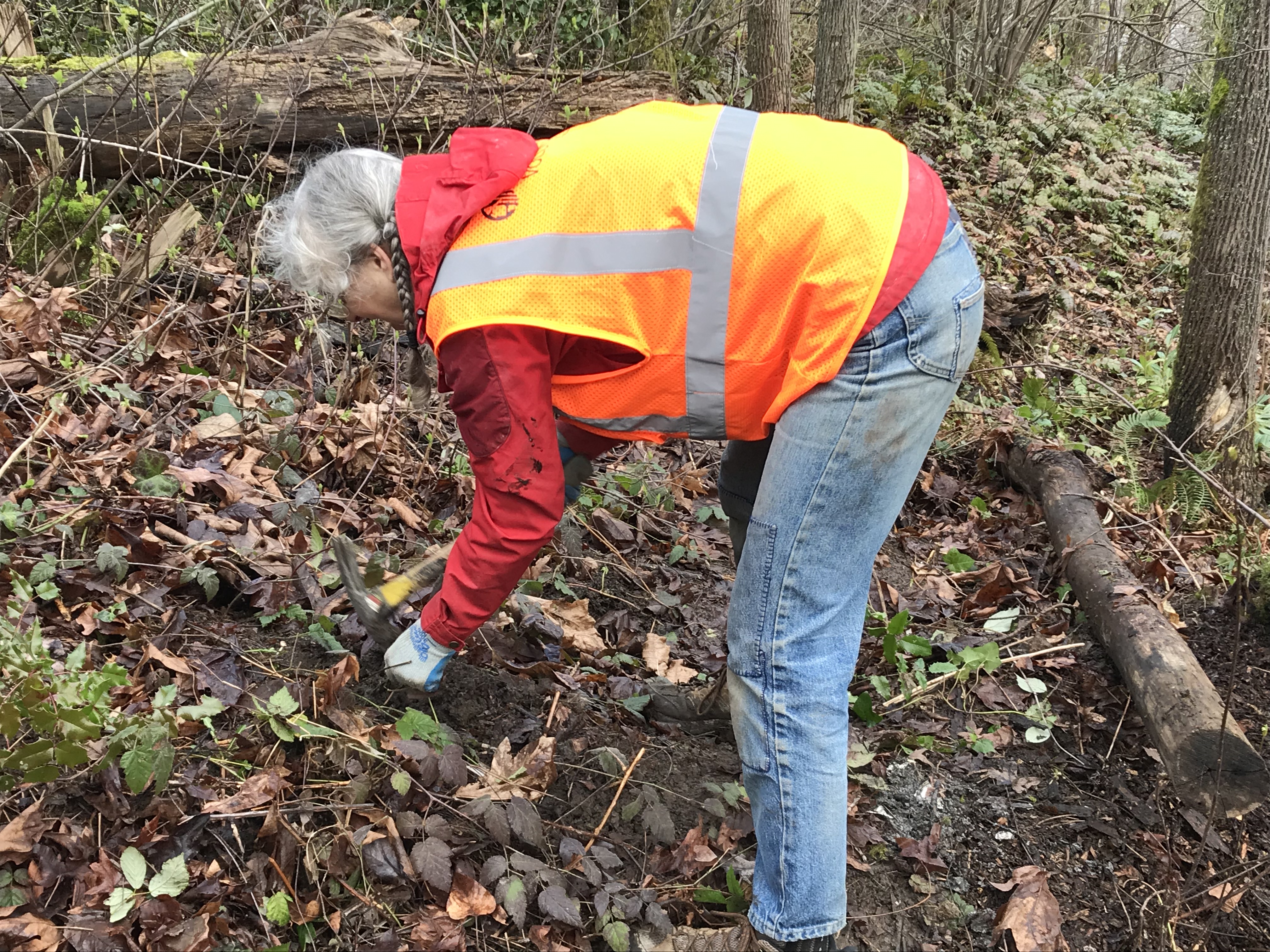
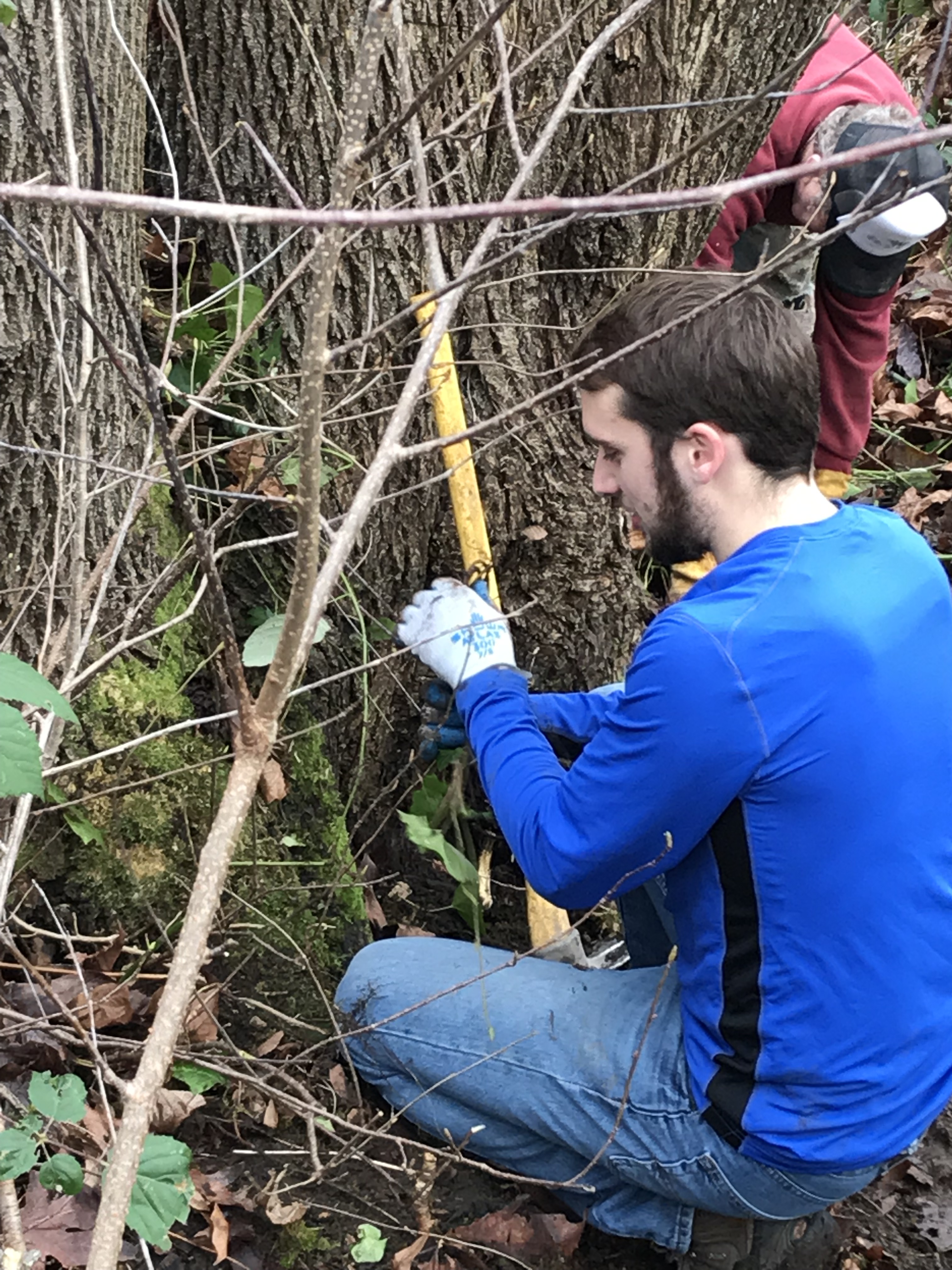
During this work party on March 10, Group 1 removed a debris pile from the 25th Ave. S area and expanded the planting area. They also moved a lot of the branches and logs that were scattered in that area and dug out blackberry root balls.

Group 2

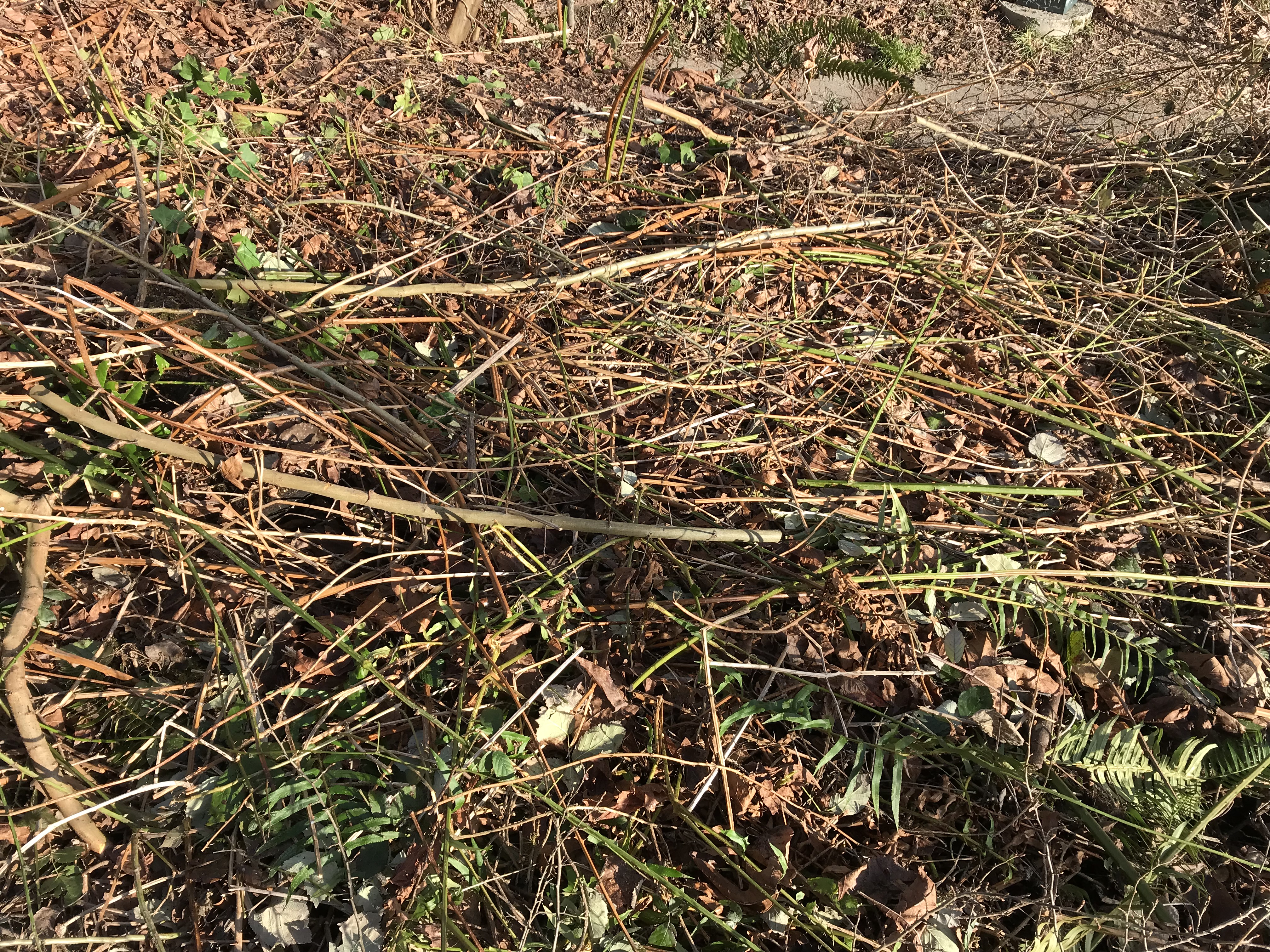
John and Jason, who are both neighbors and team leaders, worked in an area where blackberry vines had pulled two trees to the ground. They freed those trees and cut down blackberry vines in the surrounding area. I wish I had been present when the trees lost their shackles. I love to see how the they snap up and reach for the sky in that moment .

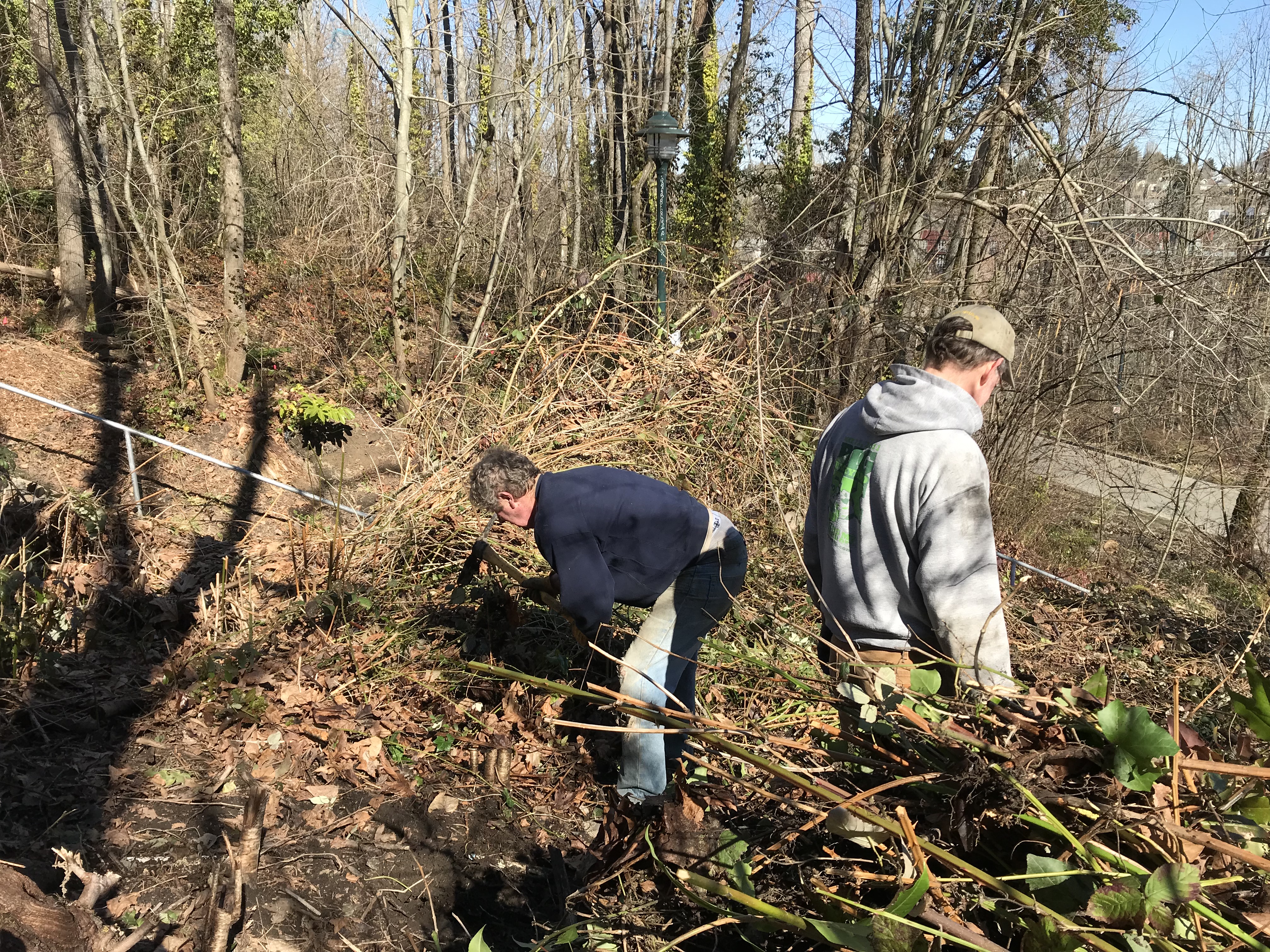
This area will take a lot more work to clear. Here is what it looks like now.
Group 3

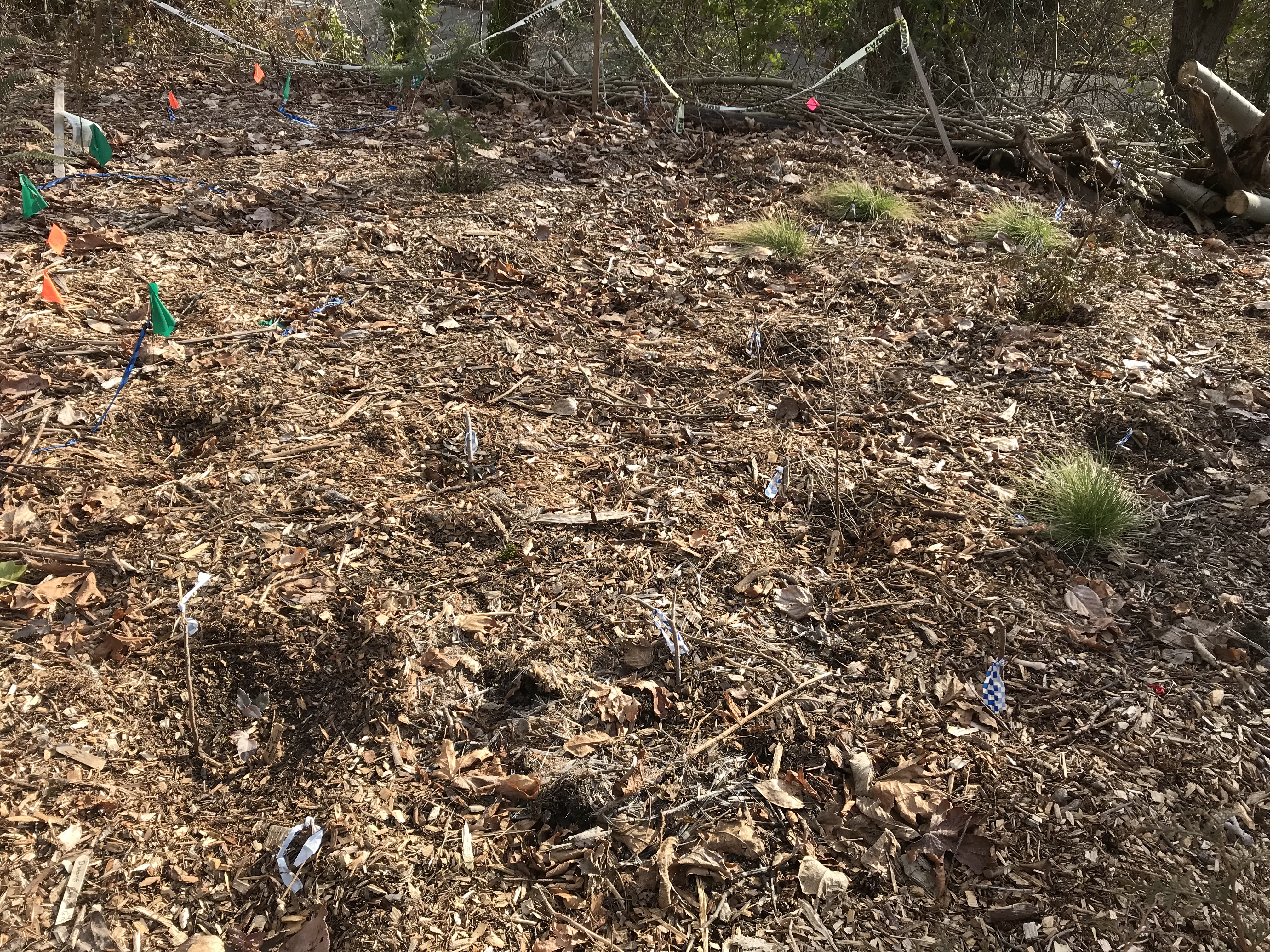
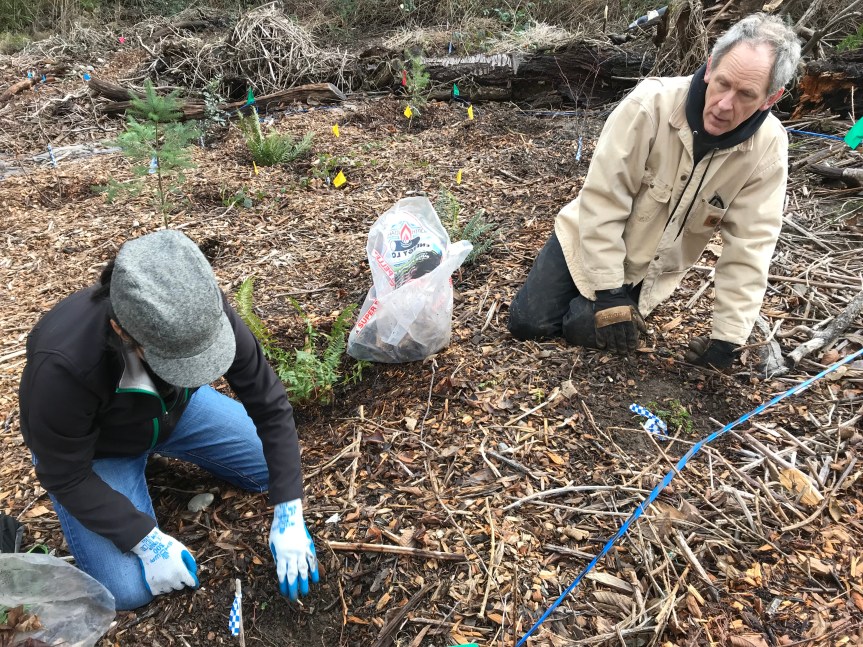
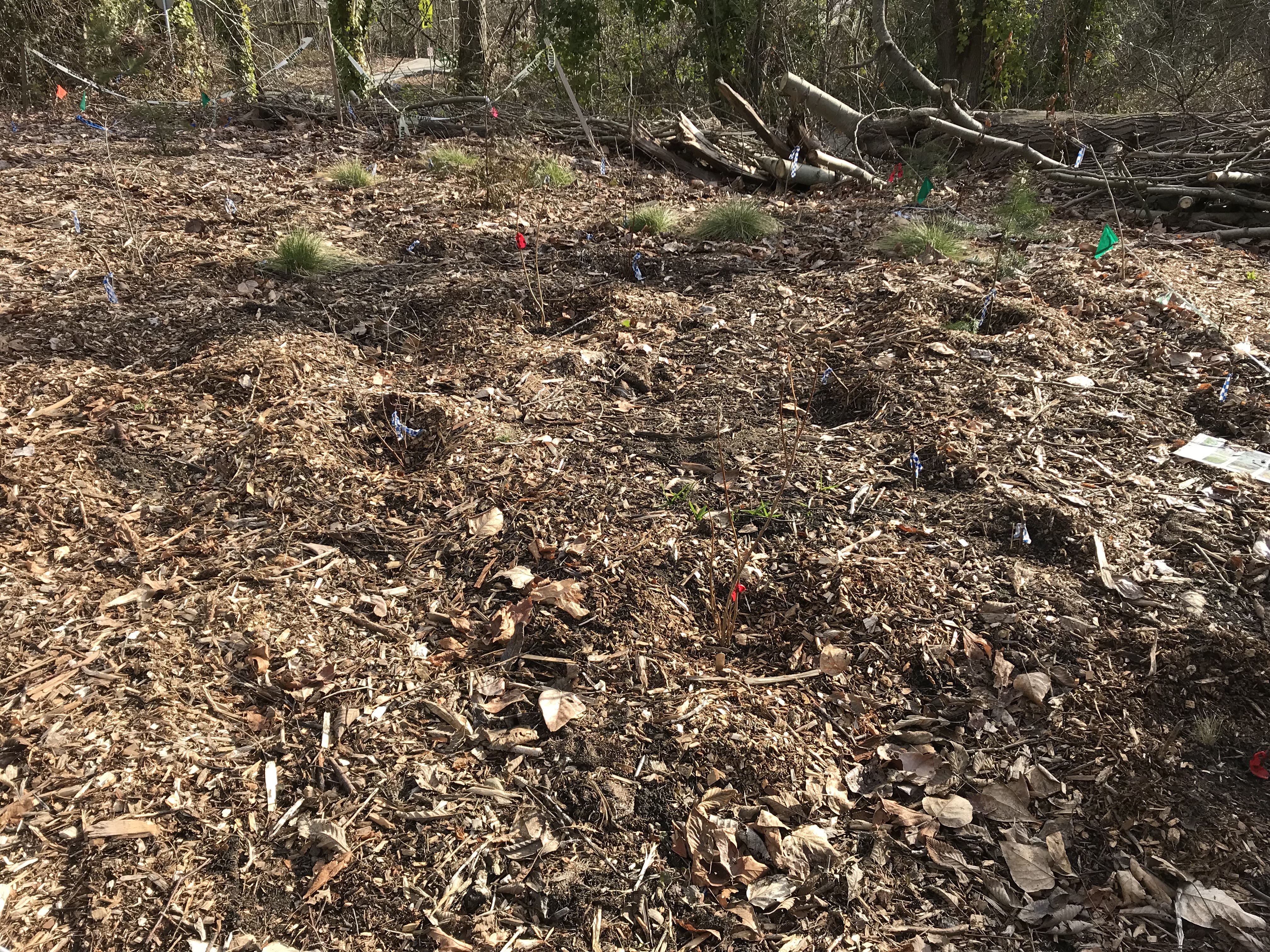
Prior to this work party, I marked the places where new plants will be planted. In each space, I placed a pink flag, a white sign that indicates the name of the plant and a stick with red and black flagging tape. The red and black tape indicates that the item was planted during the 2018-19 planting season.

On March 17, participants will look for the pink flags. They will then plant the specified shrub or ground covers putting the white sign and the stick with the red and black flagging tape into the ground next to the plant.

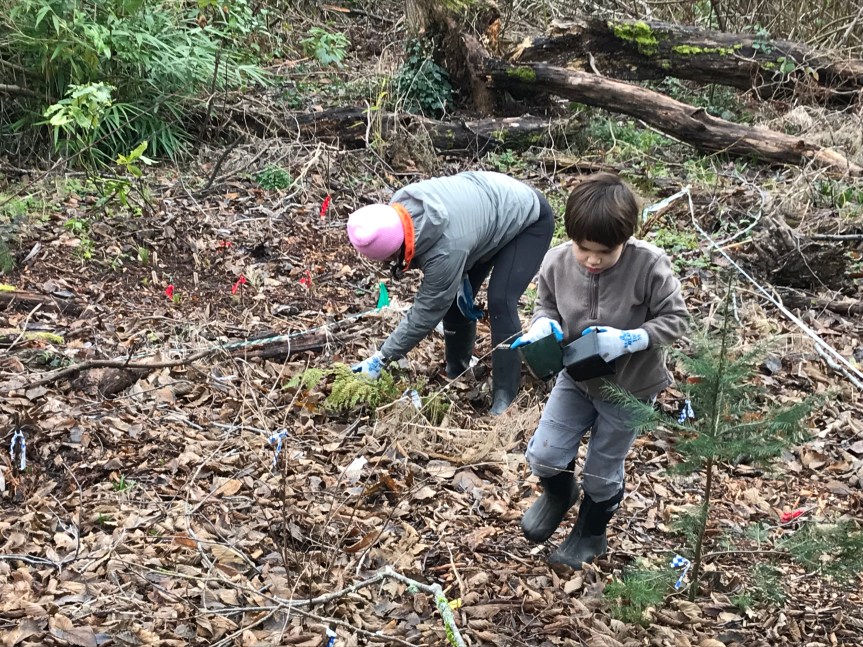
The third group of volunteers worked in the lower planting area that is on the north side of the Hanford Stairs and near Cheasty Blvd. Their task was to see that all three markers had been left for each future plant .
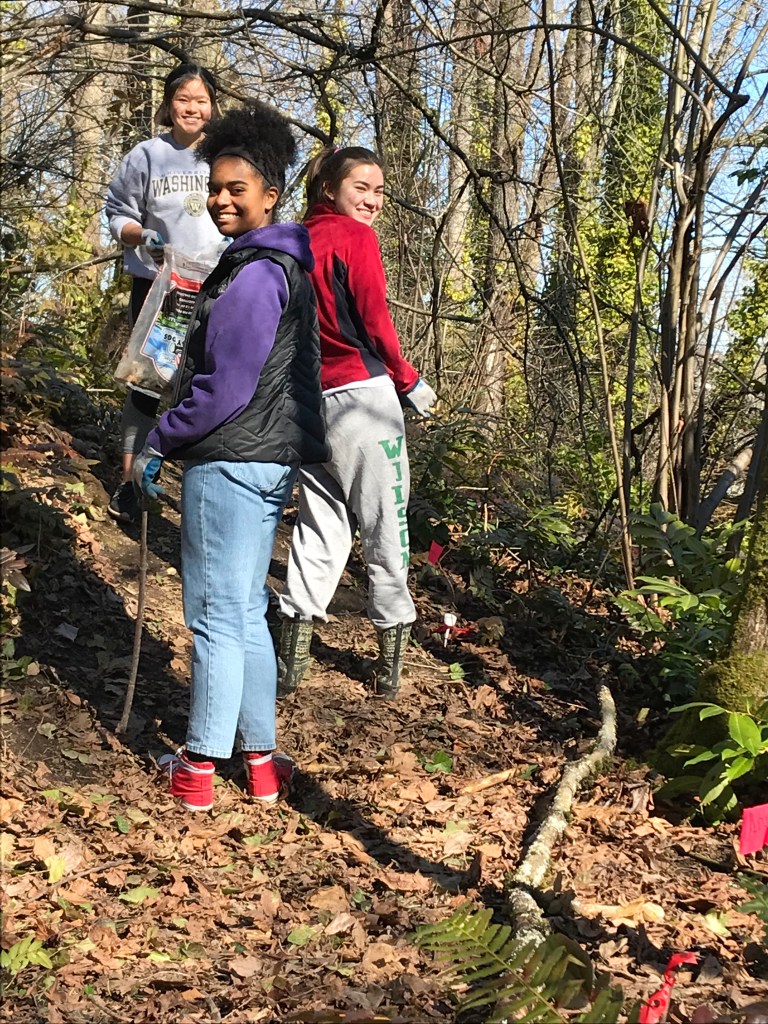
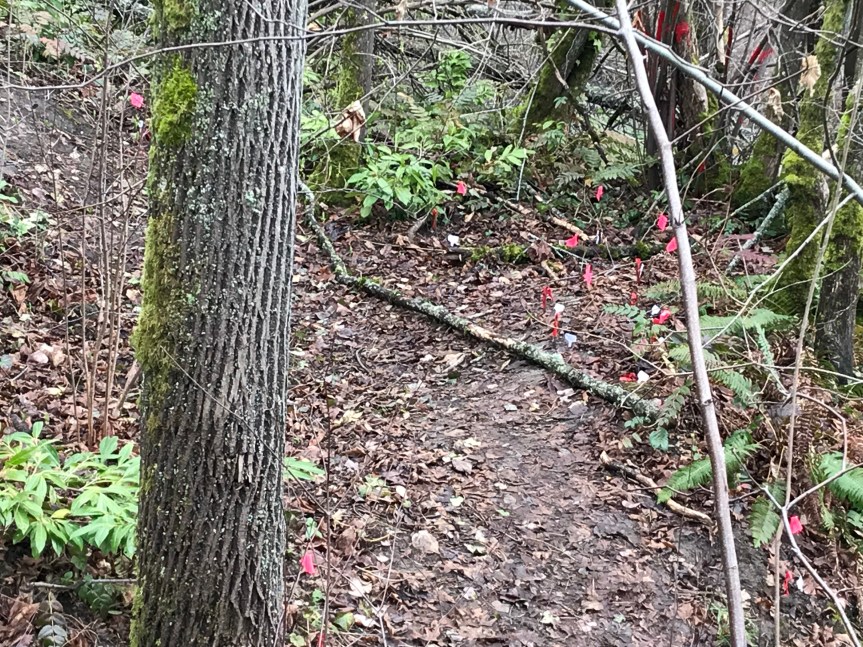
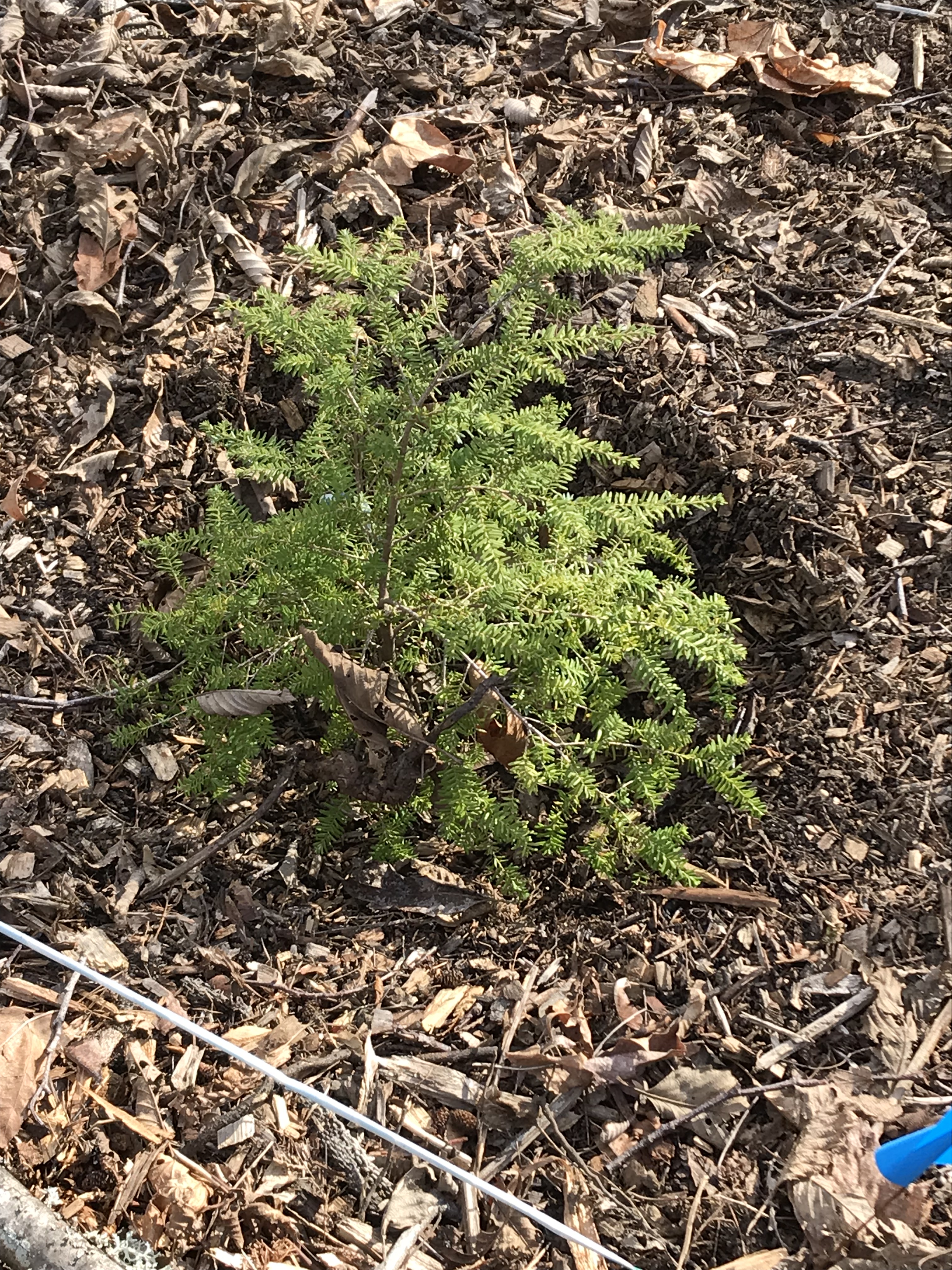
When that task was finished, those volunteers moved to a different part of the site and cleaned out leaves and wood chips from the “donut holes” around the trees, shrubs and ground covers that had been planted in previous years. (When we plant, we put a four inch layer of wood chips around each plant to hold in moisture. We keep the area close to the plant free of those wood chips. That area is referred to as the donut hole.)

The group also removed the leaves from one entire planting area. All of the leaves were taken to The Rack Zone. The areas looked so beautiful when the group finished their work.
Group 4

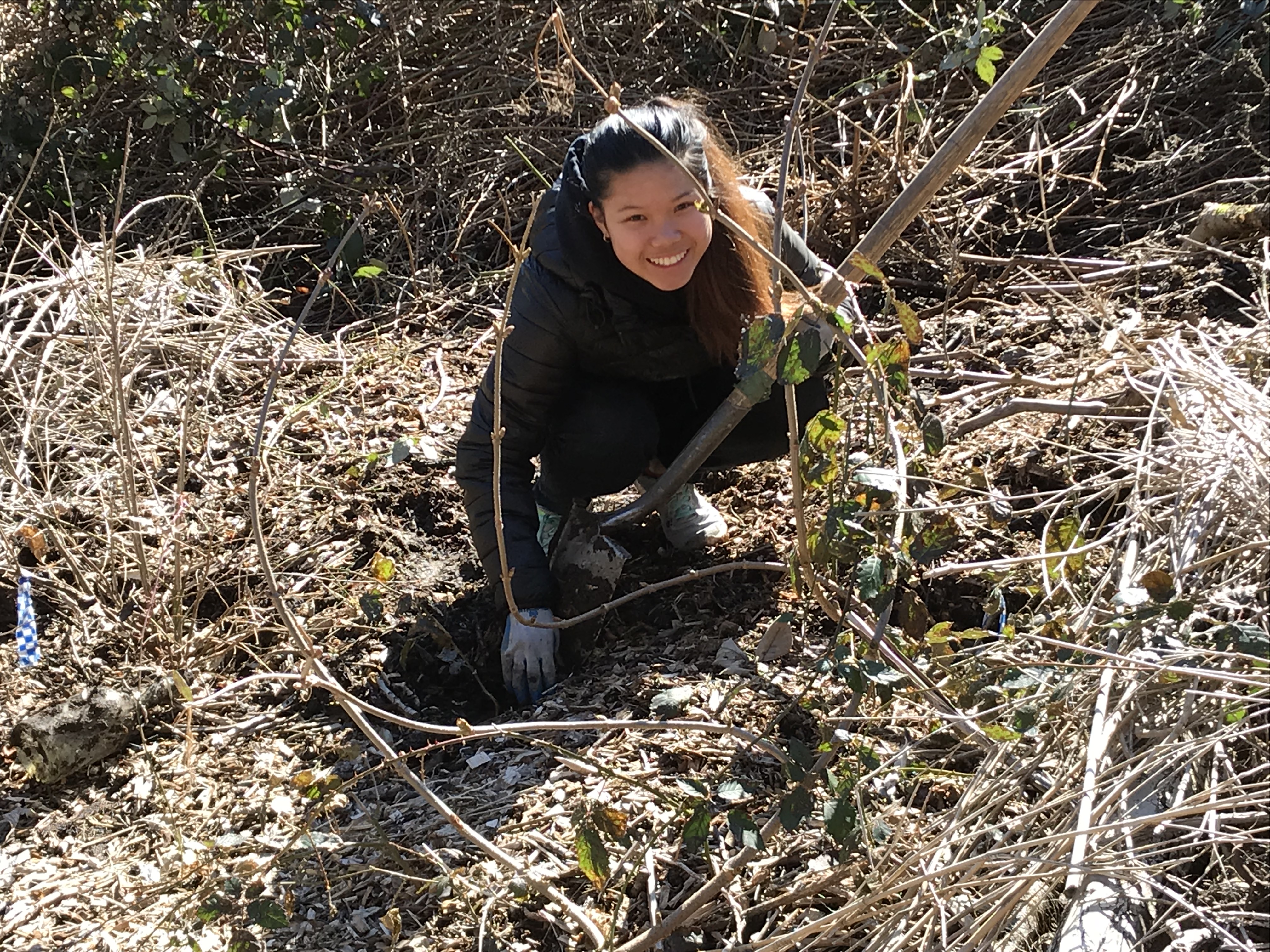
The group who had worked in the southeast section during the first part of the work party, continued working there after the snack break. They finished digging out the root balls and then cut back the blackberry vines that are on the south edge of the property. (We have to leave a buffer zone between the neighbor’s house and the Greenbelt so we will need to continue to cut back those vines throughout the year and for years to come.)

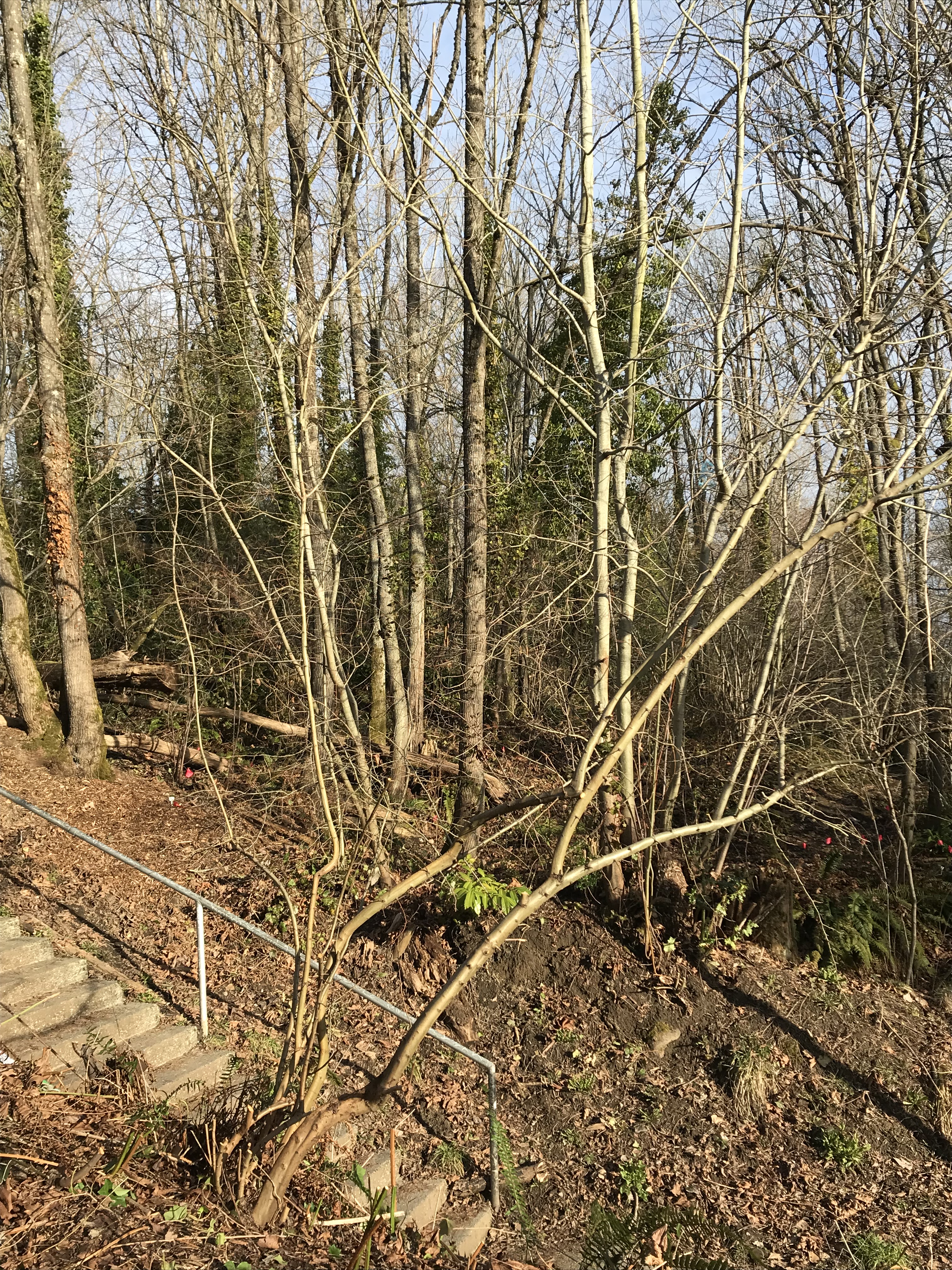
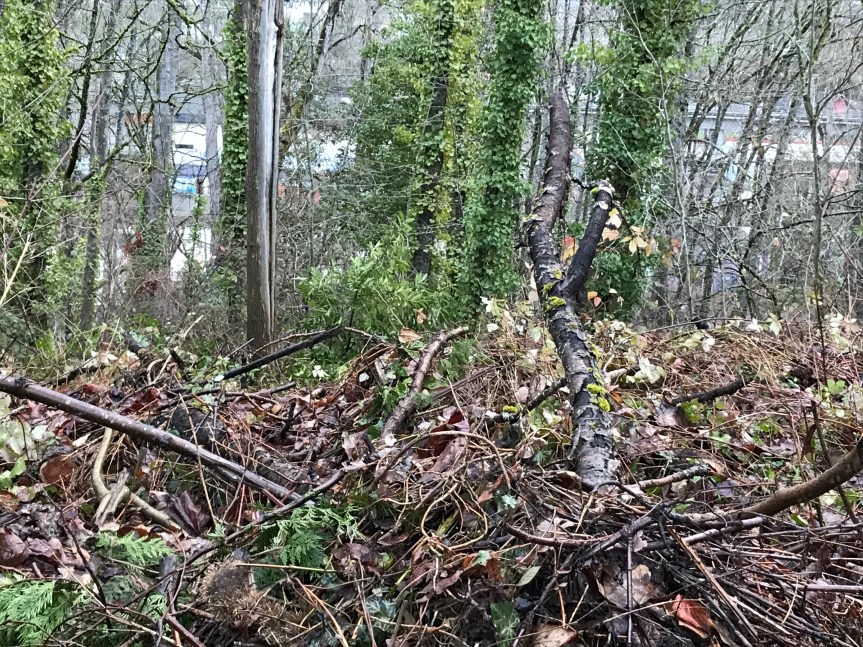
In the third photo below you will see both the buffer zone and that there is a mound of dried debris that goes across the planting area. That area of the site is hilly. Numerous strips like that one were placed there last year in an attempt to prevent or reduce erosion.
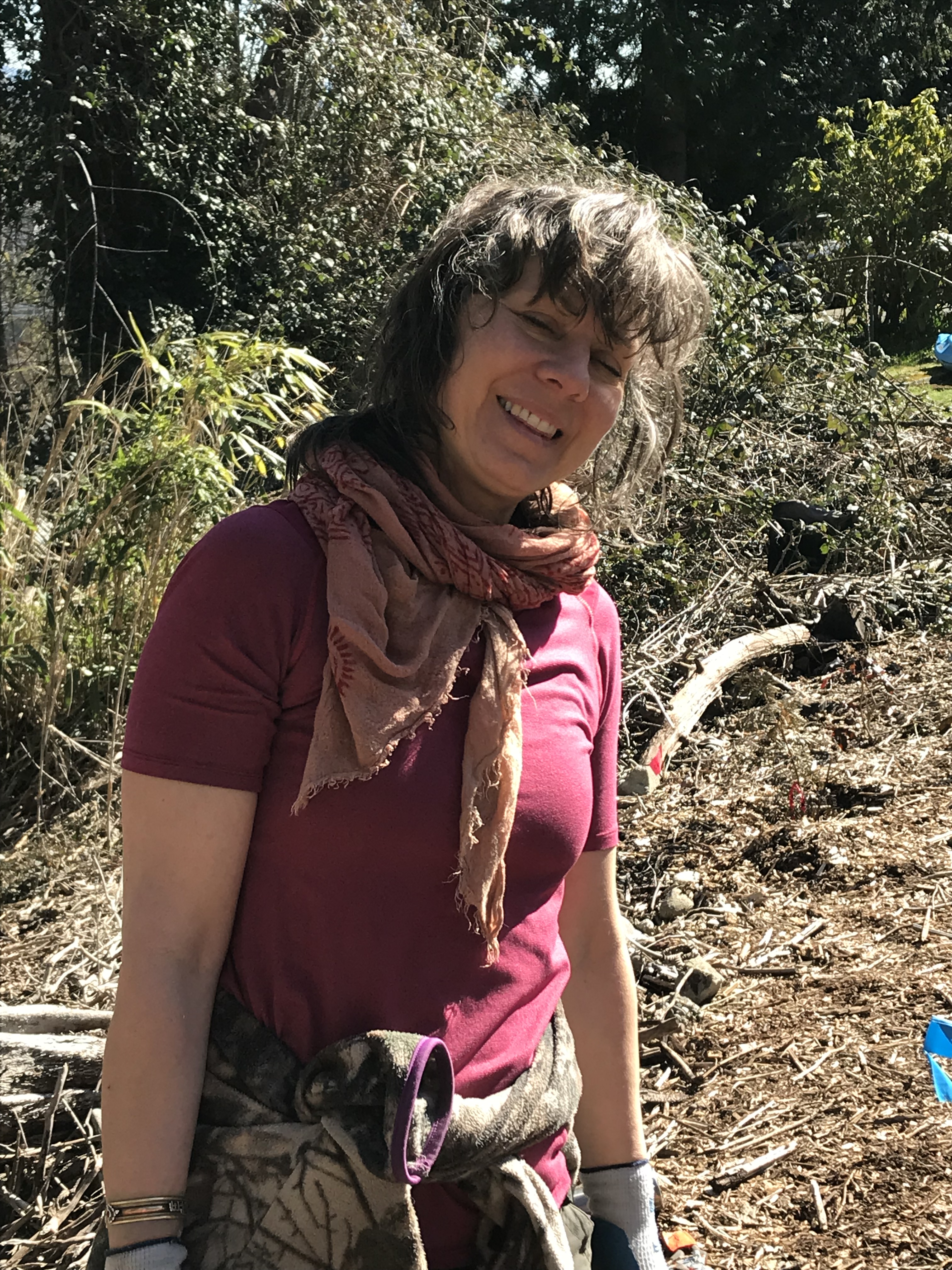
I encouraged everyone to walk in The Rack Zone as much as possible throughout the work party, hoping all the traffic would break down the debris faster. I was delighted to see a group of volunteers gathering there towards the end of the event.
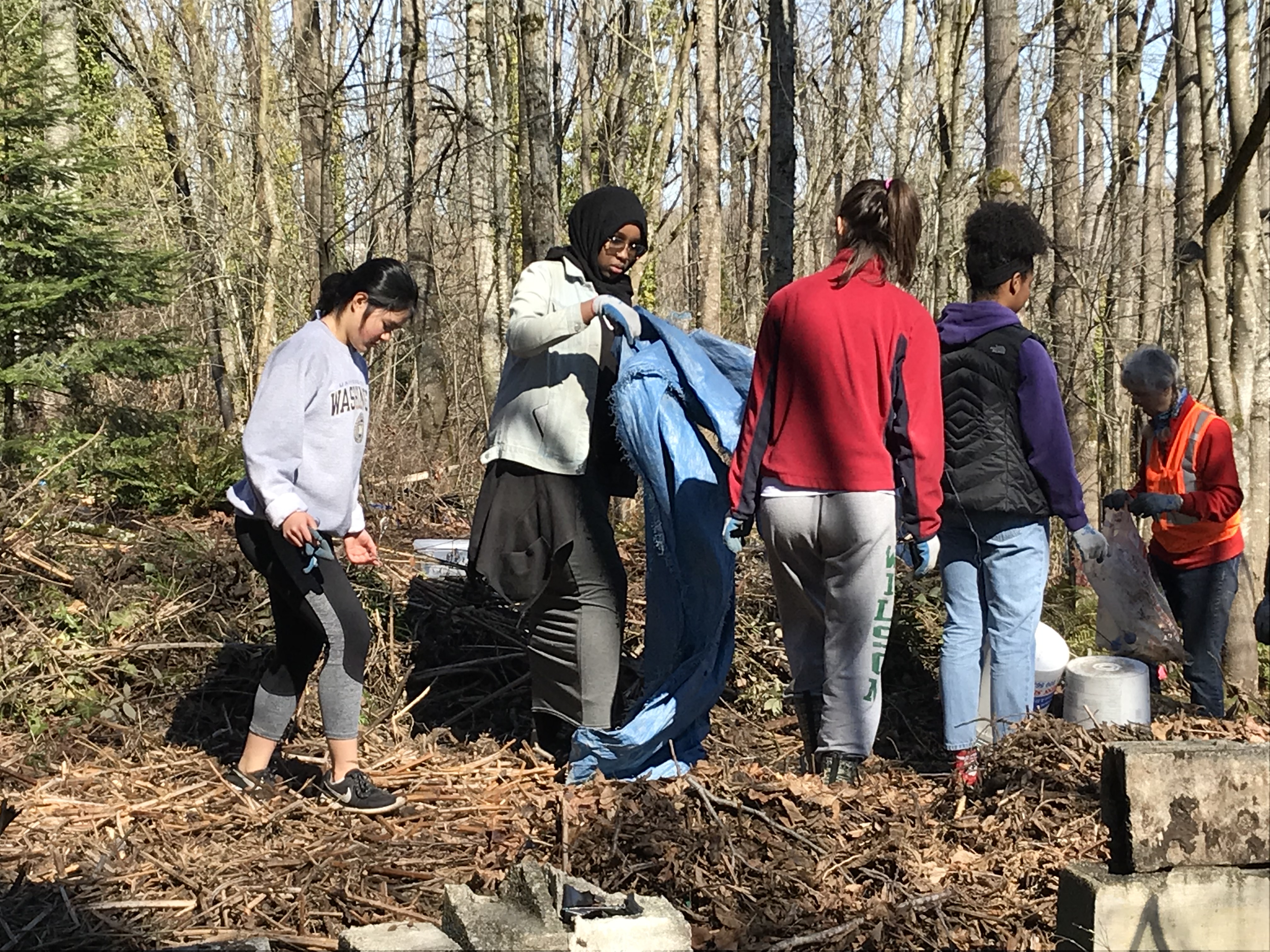
As always, I was amazed by how much we had accomplished during the three-hour work party. I believe everyone had a good time and I appreciated that the new planting areas were all ready to receive the new plants.

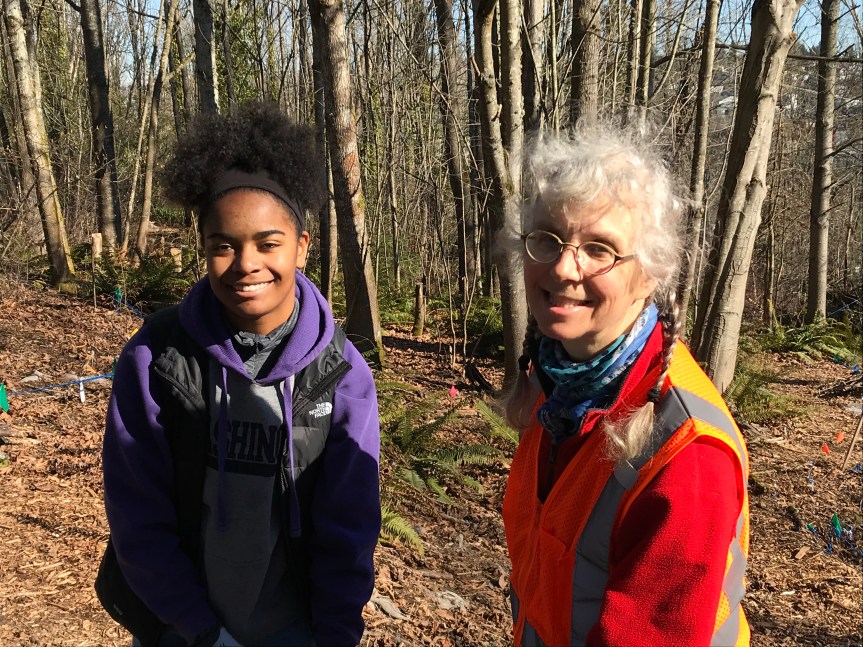
An added bonus is that the Franklin National Honor Society students want to come back! I look forward to working with them again in the future.

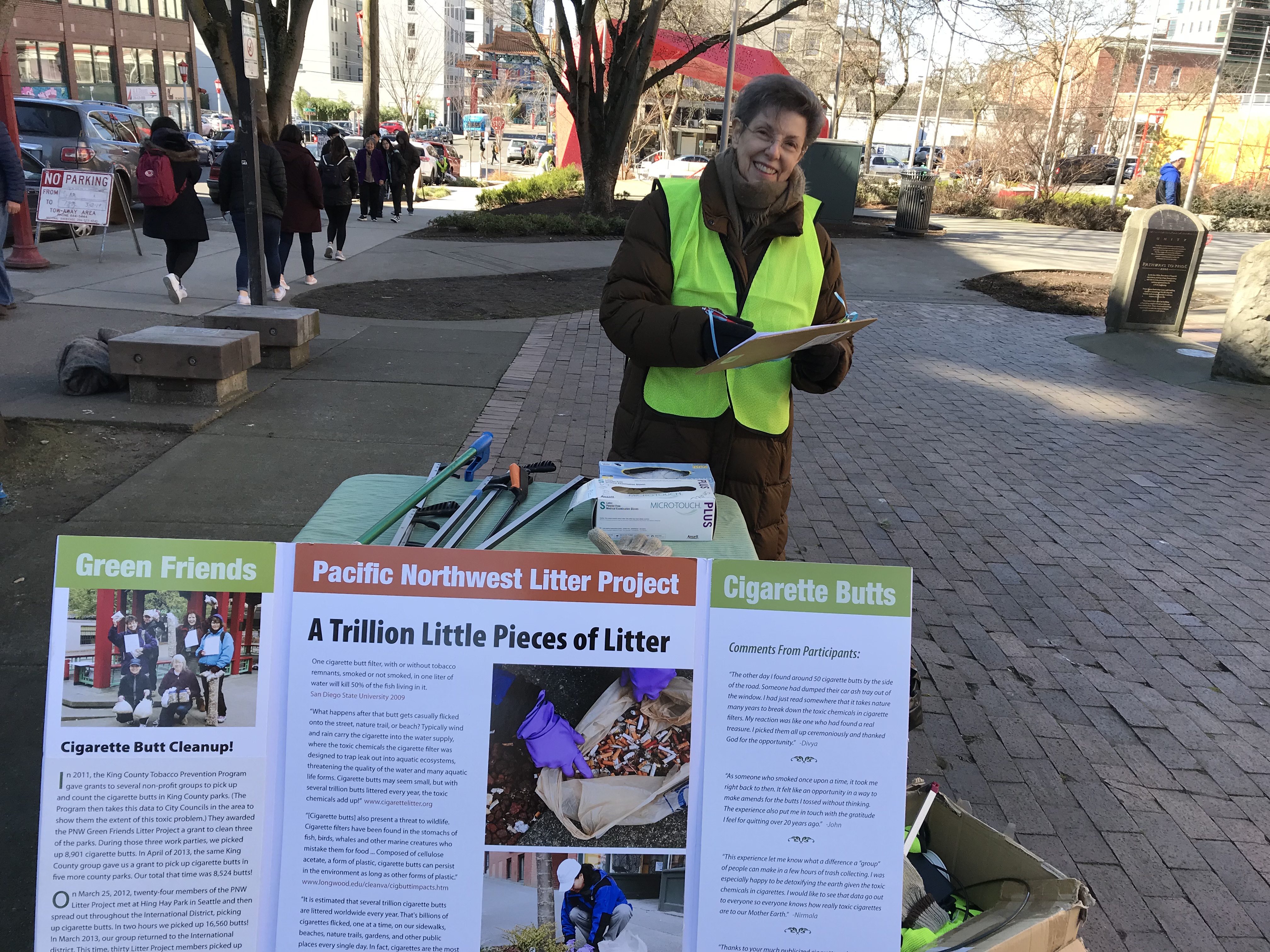
GreenFriends PNW Litter Project: Kick Butts Day 2019

February was the coldest month in Seattle since 1940. The weather was unstable with the forecast changing day to day and sometimes hour to hour. March started off cold too. I was delighted when the prediction for full sun on March 4 stayed steady.

This was the 8th year that the GreenFriends PNW Litter Project held a cigarette butt pick-up work party in support of Kick Butts Day, a day of activism sponsored by the Campaign for Tobacco Free Kids. Their vision:

The Campaign for Tobacco-Free Kids is a leading force in the fight to reduce tobacco use and its deadly toll in the United States and around the world. Our vision: A future free of the death and disease caused by tobacco. We work to save lives by advocating for public policies that prevent kids from smoking, help smokers quit and protect everyone from secondhand smoke.

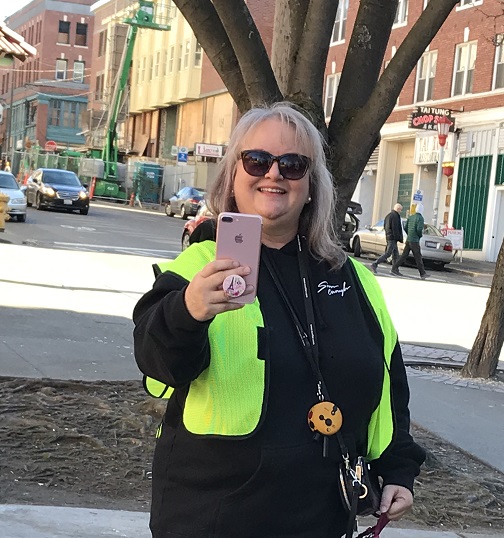
The actual Kick Butts Day is on Wednesday March 20 but we had picked Sunday March 4 as our day to support their vision. Fifteen eager volunteers gathered in the International District at 10 a.m.

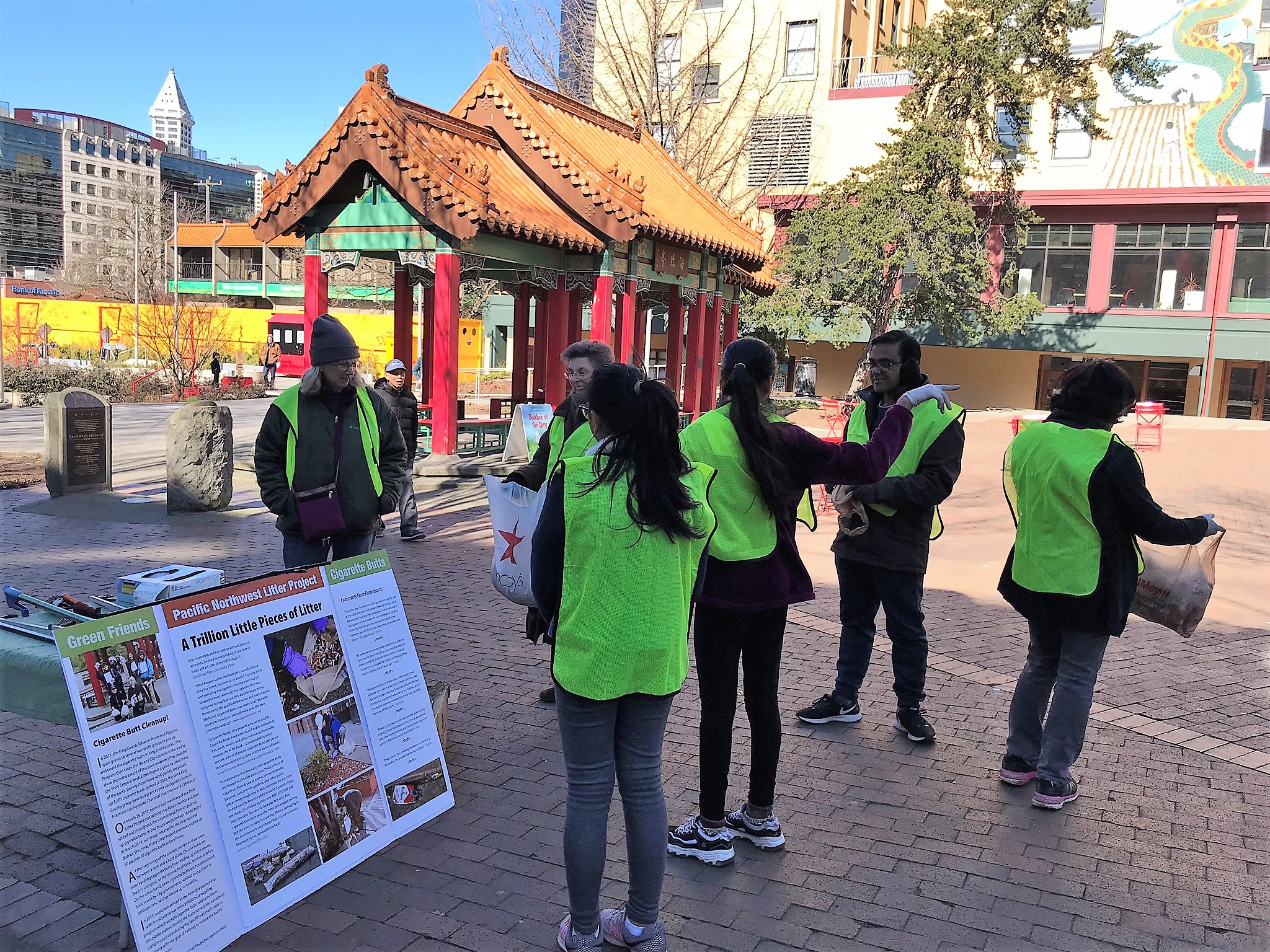
After signing in, the participants picked up gloves, bags to put their cigarette butts in, and litter grabbers if they wanted one. Once the volunteers were ready, they spread throughout the area.

Sign in

Cigarette filters are NOT made of cotton, they are made of cellulose acetate tow, which is a form of plastic, and they can take decades to degrade. Investigators in a past San Diego State University study discovered that if you put fathead minnows and a single cigarette butt in a liter of water, half of the fish will die.

We take the attitude that every cigarette we pick up is one less that could end up being swallowed by a fish, bird or other form of wildlife. By sending them to TerraCycle to be recycled into plastic pallets, we also keep them out of the landfill.

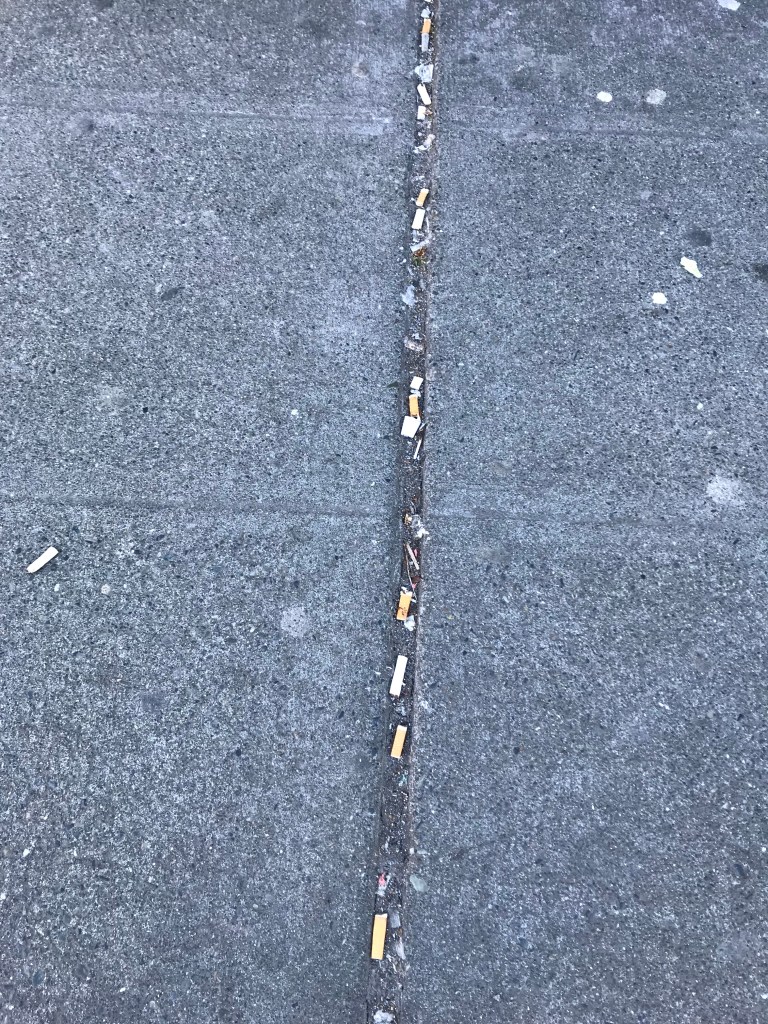
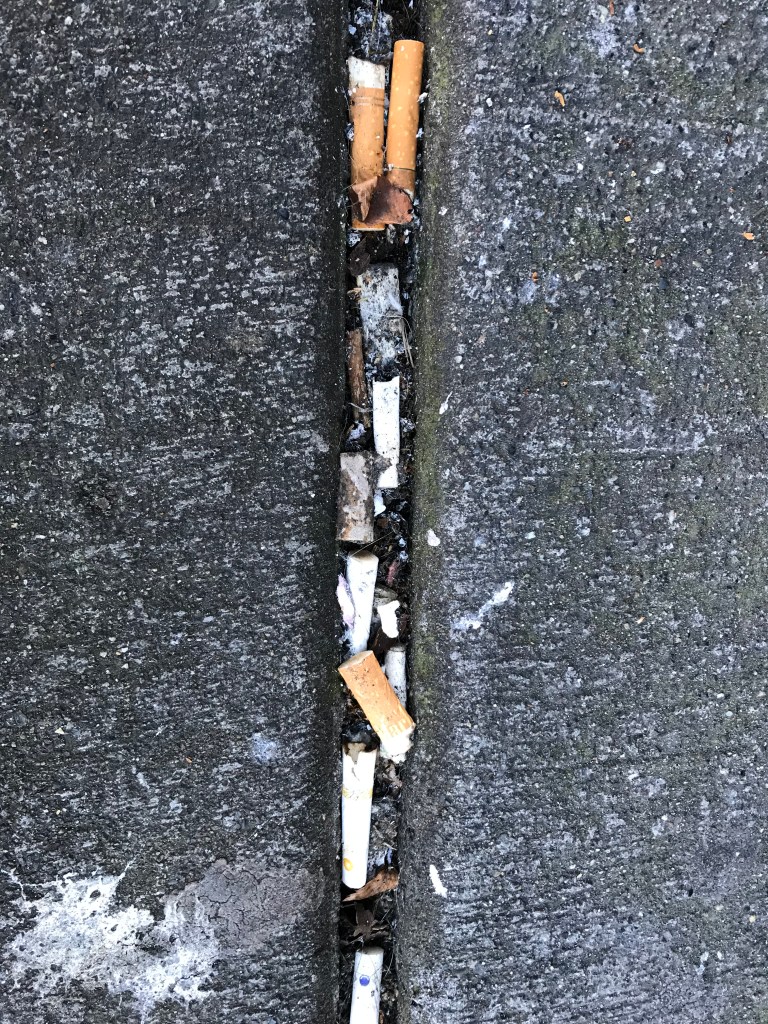
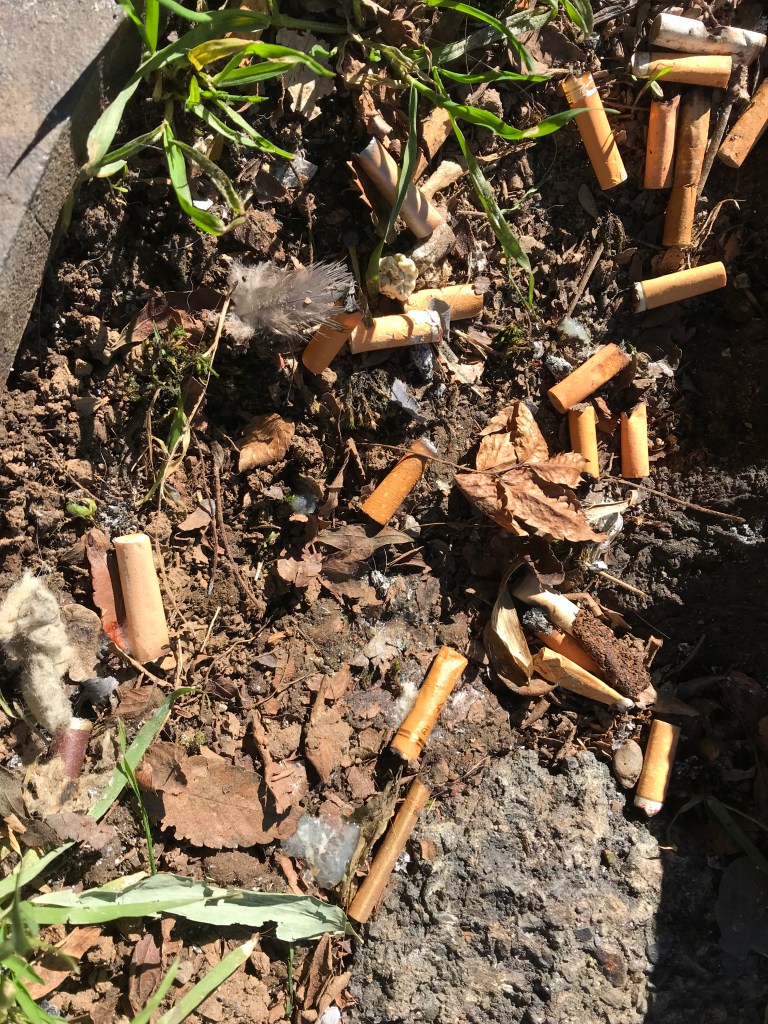
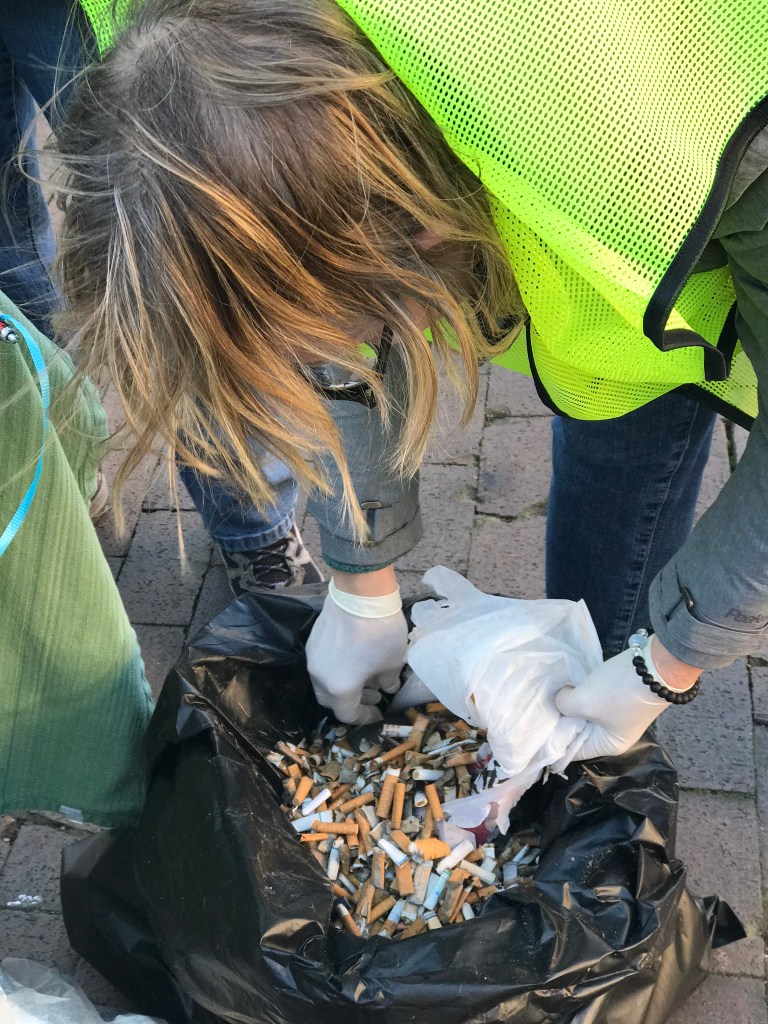
Some years there are more butts on the ground than others. This year, in some areas, there were more butts than I have ever seen. The photos below were taken in front of a building that was a block from where we we had gathered.

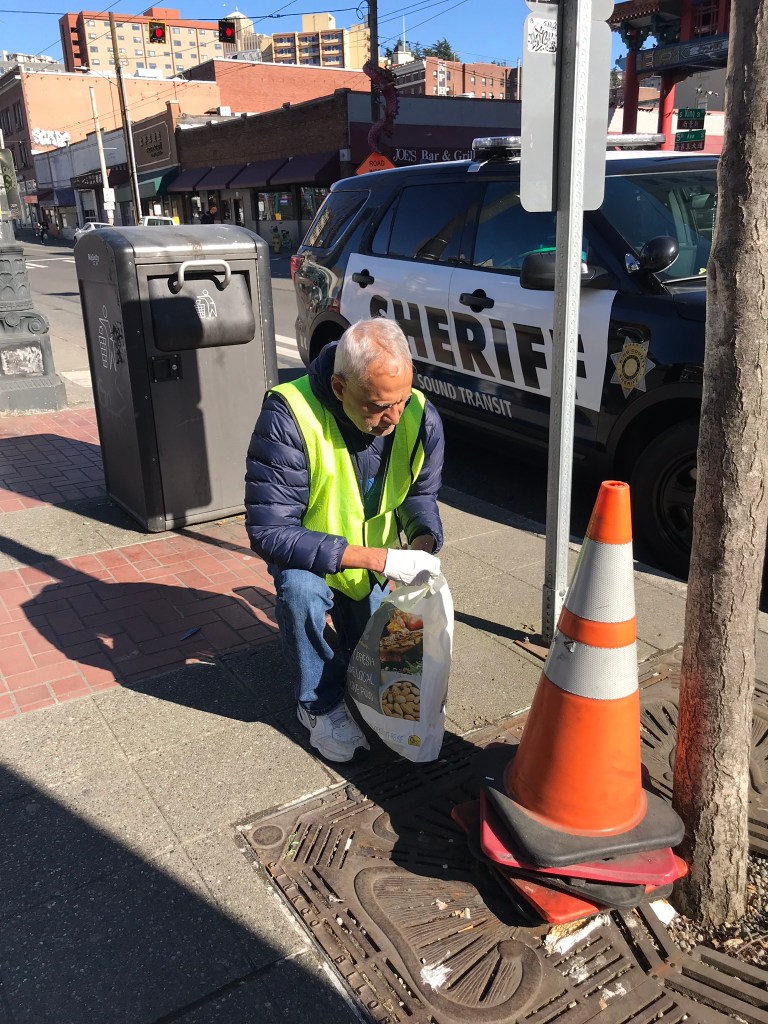
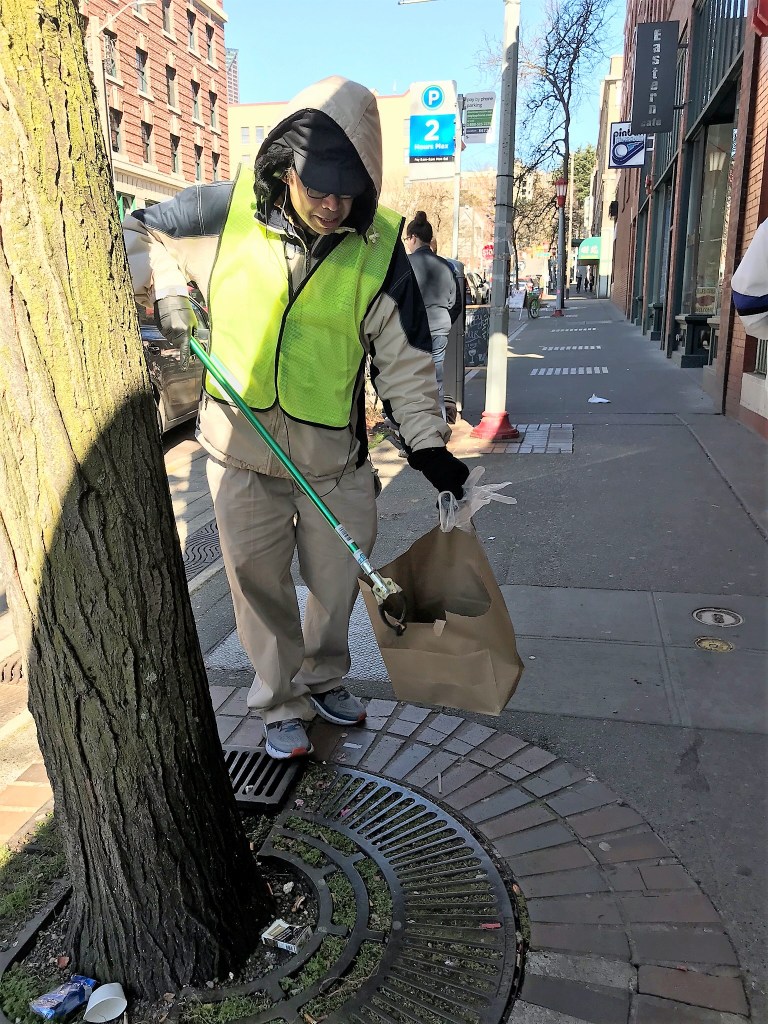
Every member of the group worked diligently.

Just before noon, everyone came back to the park. Once there, we each added the cigarette butts we had collected to the main bag.

We waited for everyone to return…..

… and then took the group photo that is at the top of this post.

It had been another fun and productive cigarette butt pick-up work party. We won’t know how many butts we removed until they get to TerraCycle but we knew each one that was in our bag was one that didn’t end up in the landfill, waterways, or stomach of birds, fish or other creatures.

Greenbelt Restoration Work Party: February 24, 2019

On a chilly but snow-free February morning, eleven volunteers gathered to work in our Greenbelt forest restoration site. Kelly, Antje and I served as team leaders. In addition, a neighbor, two students from Seattle University’s Environmental Perspectives class and five volunteers who had found us on the Green Seattle Partnership’s Event Page participated.

This was the first time we held a work party where the restoration work was exclusively in the Greenbelt site that is north of the Hanford Stairs. (Our main site is south of the stairs.)

After the initial orientation, we divided into three teams.

Teams One and Two

We have been having a problem with people dumping yard waste and trash into a section of the Greenbelt that we had begun to clear last fall. I wondered if we planted trees, shrubs and ground covers in that area if the dumping would stop.

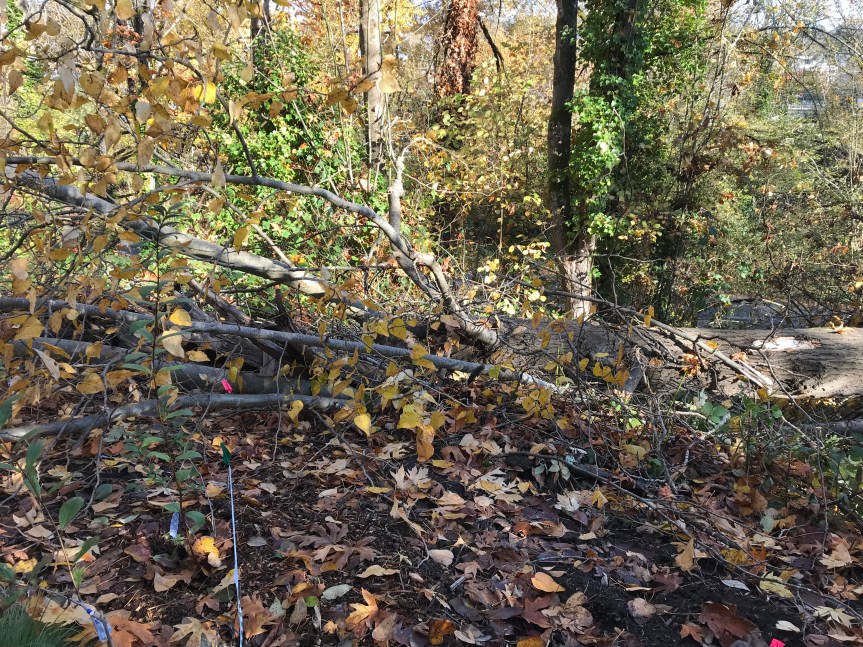
Planting in that section would be no easy matter. Take a look at what the land looked like at the beginning of this work party.

(To get a better sense of the enormity of the task, click on the gallery)

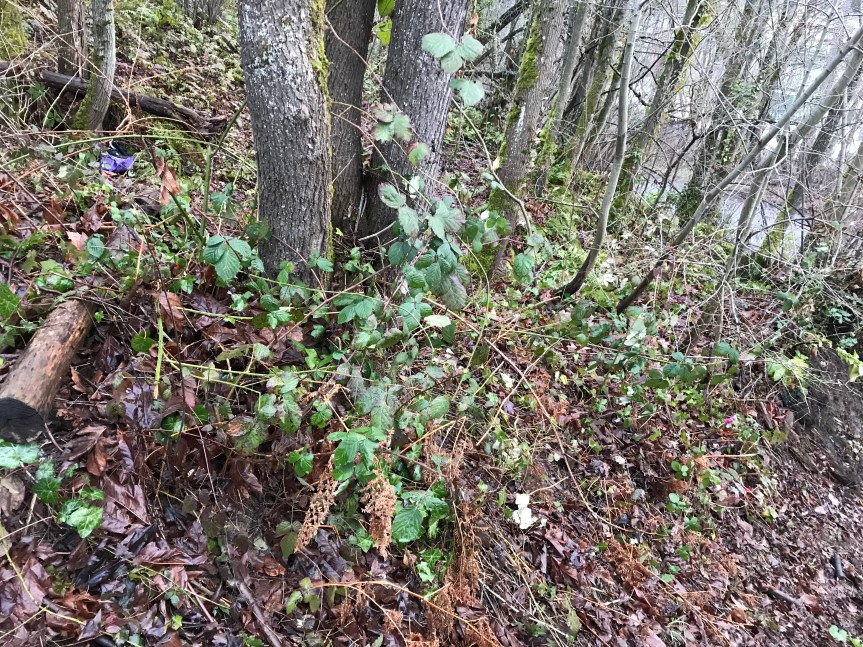
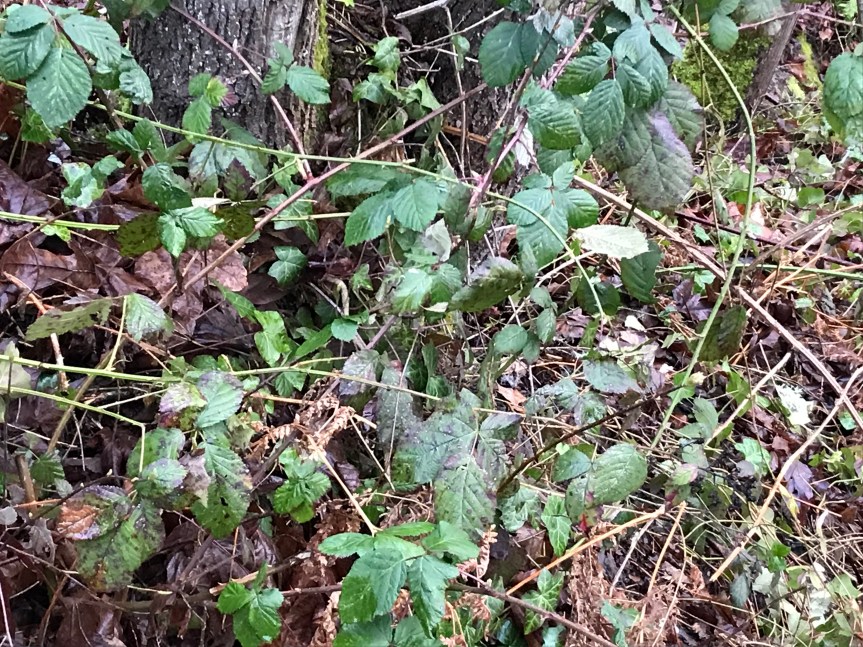
Getting this land ready for planting will take many work parties. We decided to start in a section where the blackberry vines had been cut down but the root balls hadn’t been dug out (see the photo below).

Before

Our plan for this work party was to clear a small strip of land on the edge of the place where the Greenbelt becomes a steep slope. Once it was cleared, we would create a barrier along that strip. The barrier might be helpful in reducing dumping. Even if it wasn’t, it would make people more aware of the slope on the other side of it. [Note: barrier is probably the wrong word since the structure will only be 3-4 feet high, but I can’t think of a better one. Border is a possibility but that doesn’t seem right either.]

The barrier would be built from dried branches as well as materials that might slow down weed growth. All of the materials we will use to create it will decompose over time and enrich the soil. Once the barrier is built, we will plant the trees, shrubs and ground covers on the flat land that is east of it.

As the team began to work, they discovered that there were many layers of ivy and periwinkle vines both on top of the ground and under it. There was also a small holly plant.

The team worked diligently

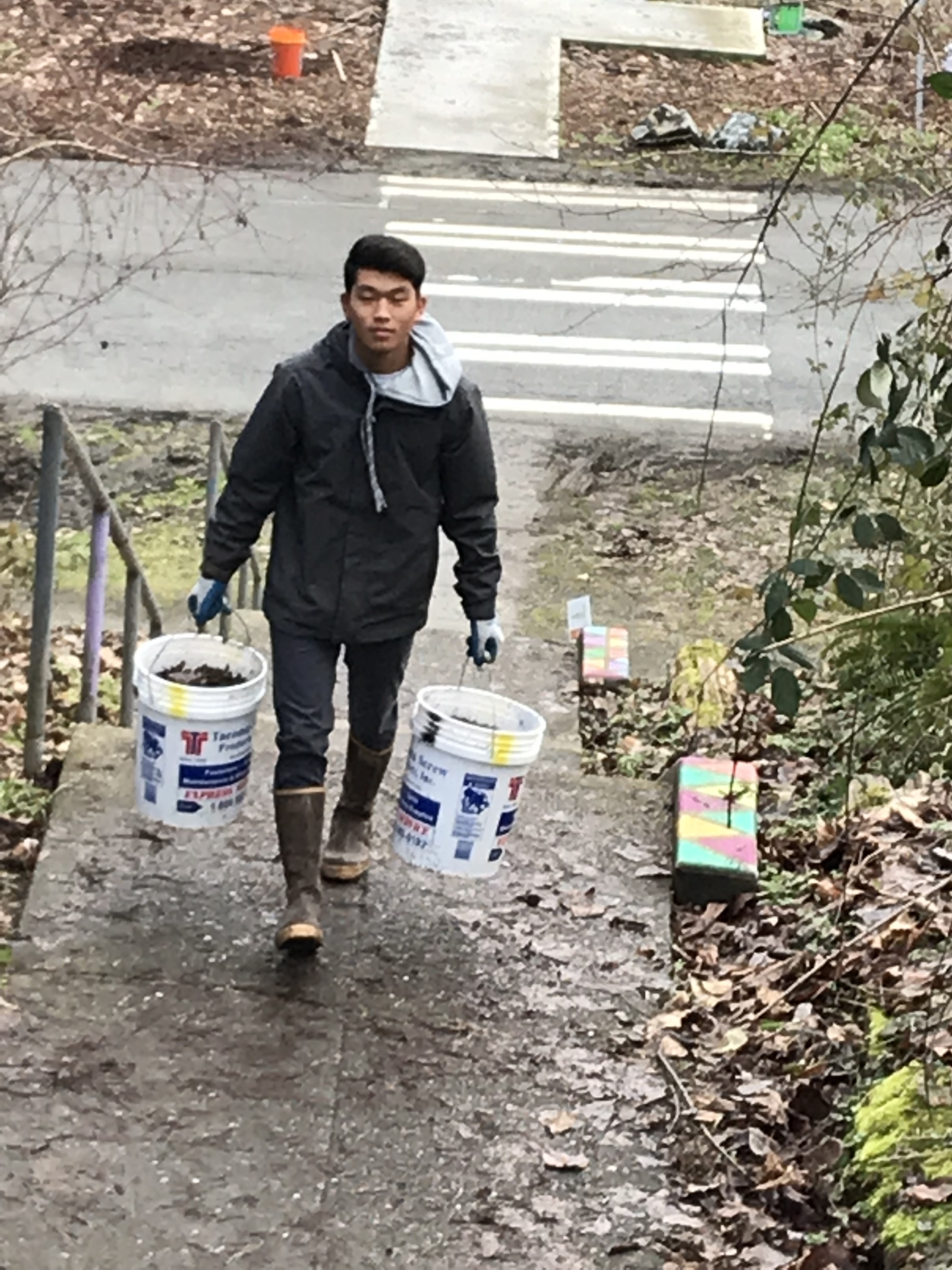
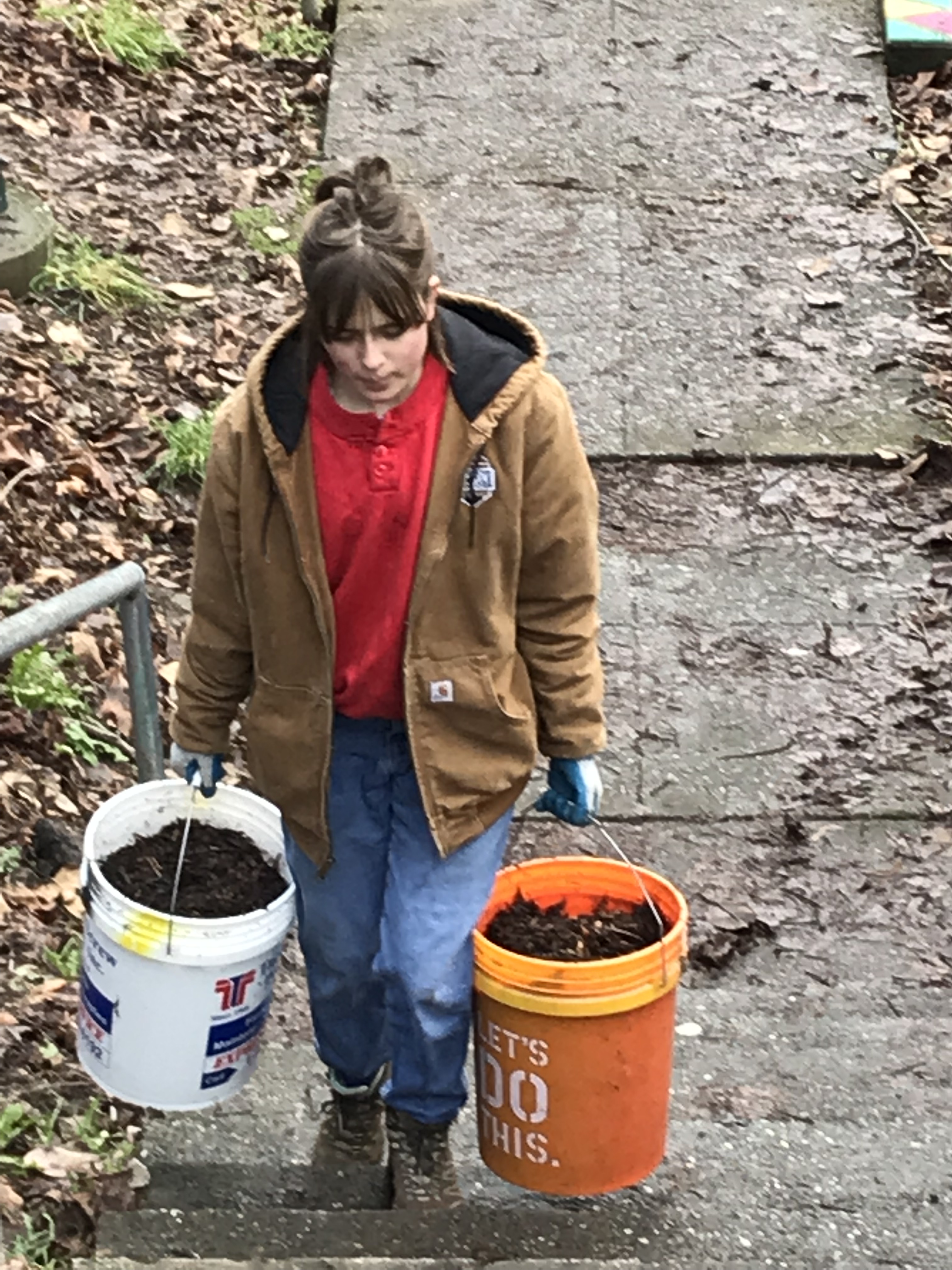
While the first team was clearing the land in the strip, the second team did tasks that supported the first and third teams. For example, they filled buckets with wood chips and then took the buckets to the areas where the wood chips would be spread over cleared ground.

Once the buckets were empty, team two volunteers refilled them. They also filled several buckets with branches that would become part of the barrier. After some time, the second team joined the first team in clearing the strip.

These groups cleared a significant amount of land. This is what the strip looked like once the blackberry root balls, ivy and periwinkle vines had been removed.

After

During part of the clearing time, one of the volunteers cut cedar leaves off cedar branches that had been dumped in the Greenbelt. Sometimes the leaves were left on the thinner branches. Those leaves became the first layer of the barrier.

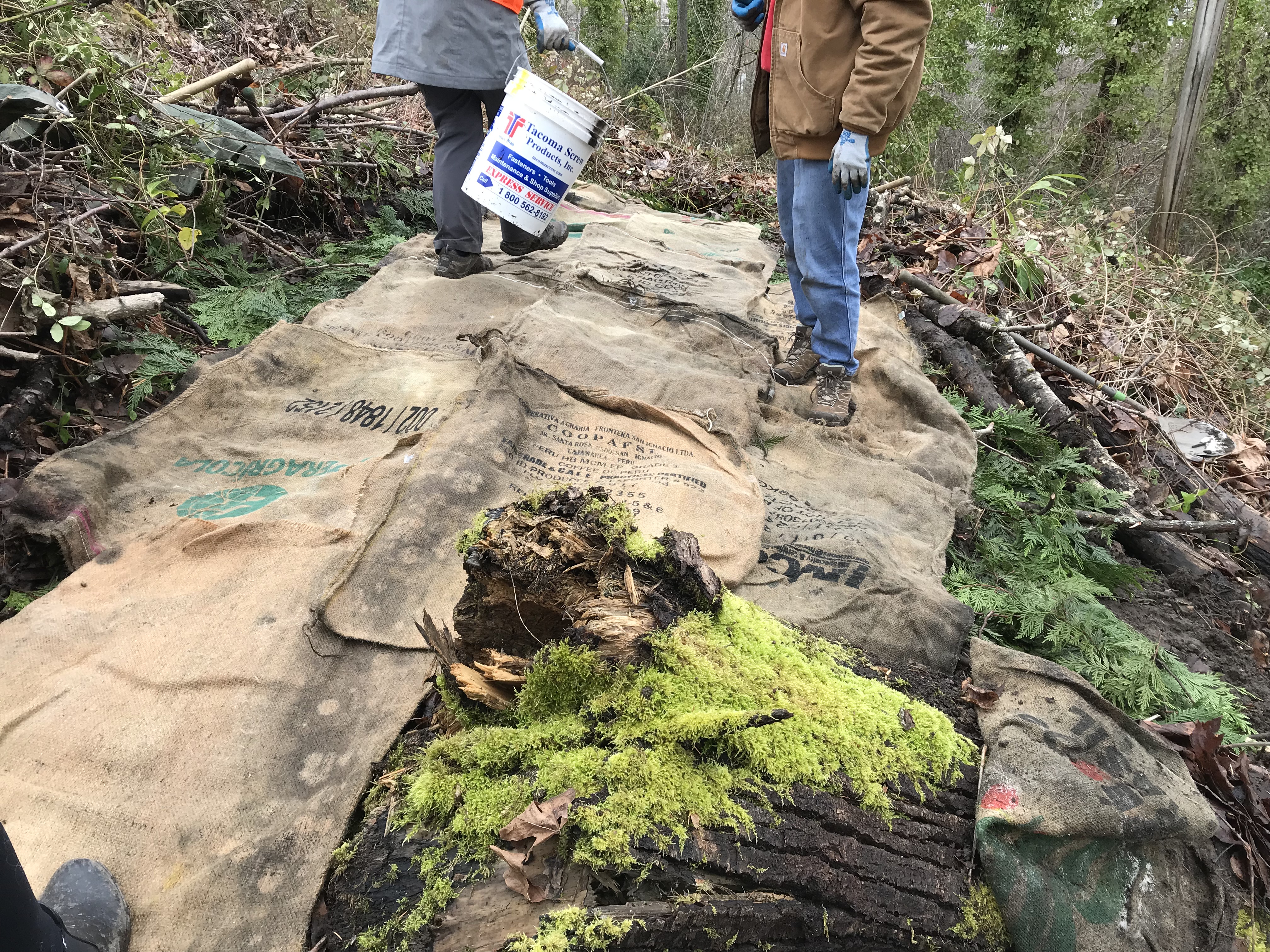
Next the team covered the cedar leaves with two layers of burlap bags.

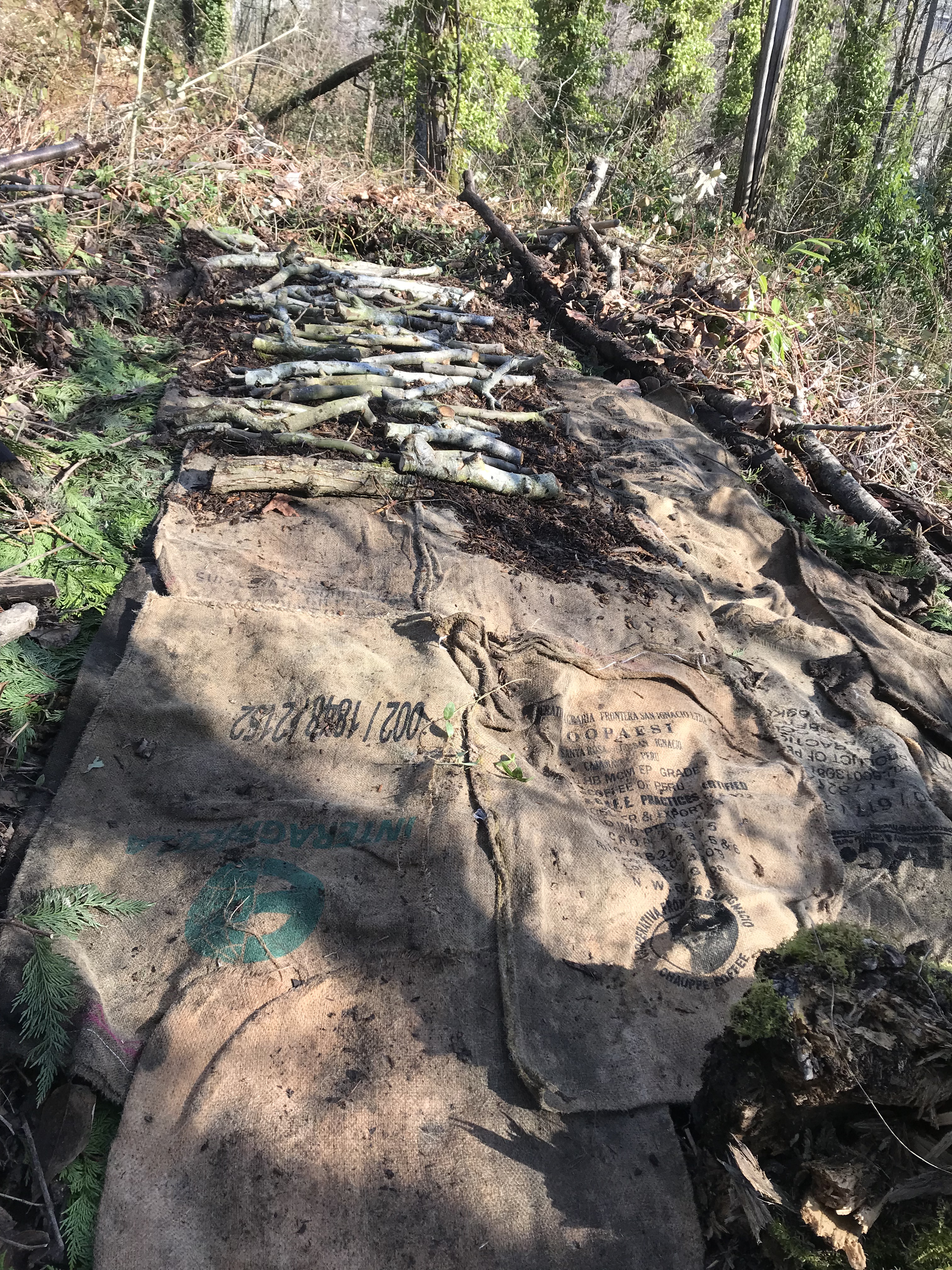
Then a layer of wood chips was spread. The work party was almost over so we put a layer of branches on top of the wood chips. If there had been more time, we probably would have added a thicker layer of wood chips.

There will be many more layers in the barrier and in time the strip will be at least three times as long as it is now. I don’t know exactly what it will look like when we finish it. This project is definitely an experiment.

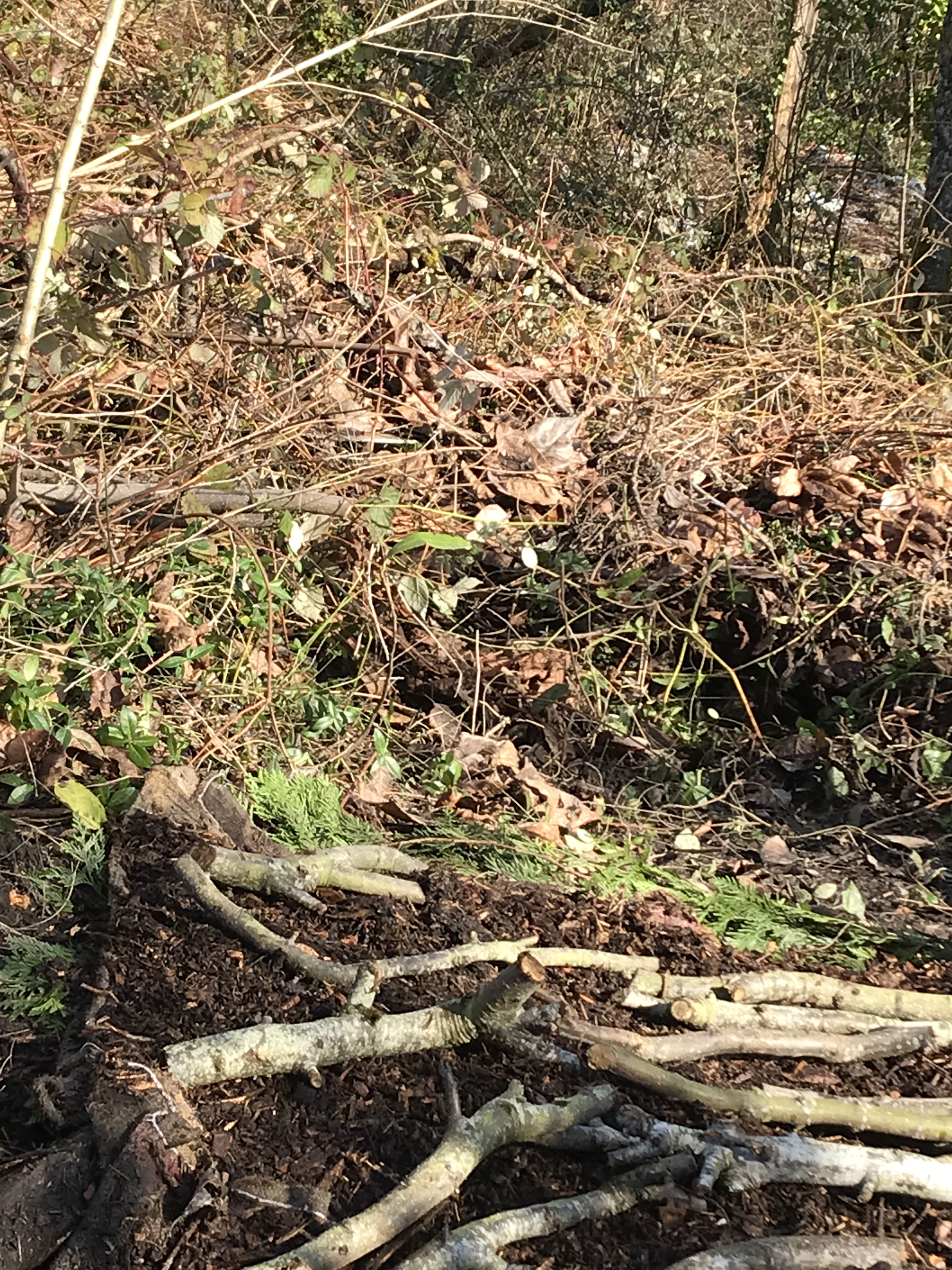
The first photo below shows the entire strip the team created that day and the second photo will give you a glimpse of the challenges we will face when we extend it.

Team 3

The third team started their day clearing an area near the Hanford stairs; an area that also had invasive blackberry, ivy and periwinkle vines.

As soon as a section was cleared, the volunteers covered the ground with wood chips. Here the wood chips serve primarily as mulch. I was excited to see the changes that were occurring before my eyes. When they finished the area along the stairs looked like this:

After
After

After a snack break, team three decided to clear invasive ivy, blackberry and periwinkle vines… and occasionally trash… in a part of the Greenbelt that was a bit further away from the stairs. One member of group two and I joined them.

I didn’t take before and after photos where this group worked except for the “after” photo below. It shows a section that is full of Dwarf Oregon Grape plants. The space between the plants used to be filled with ivy.

I give thanks to all of the volunteers who helped during this work party and during the work parties that proceeded it. It is due to the volunteers that this land is once again becoming a healthy forest.

***

I always enjoy writing these posts. Whenever I do that, I get to re-live the magic that occurs during each work party.

If you would like to participate in this restoration work, write me at hanfordstairsgreenbelt@gmail.com or you can find information about and/or sign up for our March 10 work party at: https://seattle.greencitypartnerships.org/event/15840/.

GreenFriends Newsletter: March 2019

To download the newsletter, click on the photo.
Enjoy!

Greenbelt Restoration Work Party: Martin Luther King Day of Service

On January 21, twenty-two eager volunteers met to do forest restoration work in our North Beacon Hill Greenbelt site. Four of the volunteers were veterans of this project and served as team leaders. Most of the other volunteers found out about the work party from Green Seattle Partnership listings; two found out about it from one of the local or regional Amma newsletters. Three children between 6 and 8, a pre-teen (12 years) and a teenager (13 years) participated.

This work party was held on the Martin Luther King Jr. National Day of Service. When that holiday was being created his wife, Coretta Scott King, said it should be substantive as well as symbolic. Since his was a life of service, the holiday became a National Day of Service.

While I knew of Martin Luther King’s role in civil rights, I didn’t know that he inspired the environmental justice movement, a movement that believes everyone has the right to clean air, water, and soil, as well as a right to live in safe and healthy communities.

After receiving an initial orientation, the volunteers divided into four groups.

Group 1

One of the team leaders and three of the other volunteers started the process of taking down the racks in The Rack Zone. When we clear land of blackberry, ivy and bindweed vines, all of the cuttings and root balls are put onto racks so that they don’t touch the ground before they dry out. If the vines touch the ground, they may re-root. I refer to the invasive plants we have cut down or dug out as “debris”.

The racks are made from logs and branches. This is a photo of one of the racks we built early on.

In most parks, racks are scattered throughout a site, but since we had a house foundation on the property, we decided to put most of the racks there. The concrete slab that was under the foundation would also prevent re-rooting. We named that area The Rack Zone.

Our plan was to let all of invasive plant cuttings dry out and decompose. In that way good dirt would build up and we could plant beautiful flowering shrubs in that area.

This was what The Rack Zone looked like in July of 2017, several months after we started using it. You can see that under the new cuttings there is a lot of debris that is becoming dry. There are at least two racks in the photo that have been used yet.

In January of 2018, we took most of the racks apart but didn’t spread the debris; we just built new racks on top it. During 2018, the new racks became filled and overflowing. We would start the process of taking them down completely at this work party.

I thought that would be a long process since what taking them apart the previous year had taken a long time. I thought that these volunteers would disassemble one to three racks during the first portion of the work party. That process would include separating the dried debris from the debris that was still living, taking out any logs or branches that were too big to readily decompose, and spread the debris that was dry.

When I checked on the group later, I was astounded by what they had already accomplished.

By the end of that segment of the work party, they had finished taking apart all but three of the racks!

We still have to figure out what to do with all the branches and logs that were too big to spread in this future planting area. Right now they are stacked on the north and south sides of The Rack Zone. In addition, there was a lot of broken concrete under the racks. Those are stacked on the ledge of the foundation and will also need to be moved to some yet unknown location.

Groups 2 and 3

Two groups worked in the planting areas, clearing out leaves and wood chips from around each plant. We refer that area as a donut hole. In addition, some members of those groups cleared branches that had fallen onto the paths during the winter winds and/or carried buckets of leaves to the newly cleared areas of The Rack Zone. Once there, they will decompose and become part of the composted soil.

The groups cleared the donut holes in most of the site. Each area looked so nice when they finished.

Group 4

Another team leader and a volunteer began to clear an area that was full of blackberry vines and ivy.

This is part of what that area looked like by the time the work party ended.

The work party had begun at 10 a.m. At 11:30 a.m. we took a short snack break. Before we went back to work, we gathered for a group photo. While we took some serious photos, the one that I loved most was a funny one.

The parents with young children planned to go home early, and did. Most of the remaining volunteers moved to the Greenbelt site that is on the north side of the Hanford Stairs; our main site is south of the stairs. I have been eager to start restoration work in that area.

This is what that that land looked like in December 2018.

January 21, 2019 work party photos:

This photo was taken after we finished that day.

The volunteers had removed a lot of trash and ivy.

It always amazes me how much can be accomplished during a three-hour work party. The land always looks substantially different when the volunteers leave, after having given freely of their time and their energy. Together we are helping this part of Seattle’s Greenbelt to once again become a healthy forest.

If you live in the Seattle area and would like to help with a future work party, write hanfordstairsgreenbelt@gmail.com.

GreenFriends Newsletter: February 2019

To download the newsletter, click on the photo.
Enjoy!

GreenFriends Newsletter: January 2019

The January issue was published early! To download it, click on the photo.
Enjoy!

Practice in Letting Go: November 2018

I have found that our GreenFriends Greenbelt Restoration Project has provided me with seemly endless opportunities to practice life lessons and spiritual practices such as persistence, flexibility, being in the moment, surrender, impermanence, non-attachment, equanimity and letting go.

When I think of letting go, I think of the title of a book that I purchased in the mid-80’s, Life is Goodbye, Life is Hello: Grieving Well Through All Kinds of Loss. The title reminds me that loss is inevitable and it often, if not usually, leads to grief. I know that grief includes anger and fear as well as sadness.

I believe that every ending brings with it a new beginning and that it becomes easier for us to let go as our faith grows; e.g. faith in God, faith in ourselves, faith in others. As I reflect on letting go, I also remember that I wrote 23 Affirmations for Letting Go in 1994 and shared them in this blog in March of 2014. To see those affirmations click here.

I knew early on that the reforestation work would give me many opportunities to practice letting go. In my initial Forest Steward training, the students were told that we should be prepared to lose 30% of the trees, shrubs and ground covers that we plant. The thought of so many plants dying was totally unacceptable to me, but I also realized that I have no control over the weather and very little control over disease.

A forest is not like a garden that you can keep well watered; the amount of water that the plants receive is determined by the weather. I did have some control over whether the plants were planted properly and stayed free of invasive blackberry, ivy and bindweed vines. And I could give them my attention and my love. My job would be to put in the effort and let go of the results.

Just before we did our first tree planting in November of 2017, our GreenFriends group performed rituals asking Mother Nature for permission to plant and requesting that she protect and nurture everything we planted. We didn’t lose anywhere near 30% of our initial planting. In fact, during this summer’s long drought, only one of the trees died and almost all of the shrubs and ground covers grew substantially.

While I have experienced lessons in letting go throughout the project, November 2018 seemed to bring more of them than ever before. Before I tell you about some of those events, I will share a bit of back story. In April of 2018, I decided we would clear some of the invasive vines on Cheasty Boulevard, the street on the east side of our site. As I walked down the road looking for a place to start, my eyes fell on some gigantic cottonwoods hidden among dense blackberry and ivy vines. I thought that was a perfect area for us to begin the new endeavor.

On April 27, a corporate group from DocuSign came to work on our site. We divided the participants into several groups with each group having a team leader. One group worked on freeing those cottonwood trees from the invasive vines.

In the months after the work party, I enjoyed walking down Cheasty Blvd. to visit the trees. They were so big and majestic. The photos above don’t accurately reflect their height or their width. Then, on November 5th, I received a notice from one of the Green Seattle Partnership staff saying that a number of cottonwood trees on Cheasty Blvd. were going to be cut down. Tests had been done that showed the trees were hollow and had significant decay in the lower part of the trees and roots. If they fell, they would be dangerous.

I had a sense that some of the trees that were to be removed were “my trees” so I walked down the Hanford stairs to look. Two of those trees had big R’s written in white chalk on the trunks which confirmed my fear. I was not surprised though. The trees were very old and one had a big fungus (Ganoderma) on it, which is also a sign of decay.

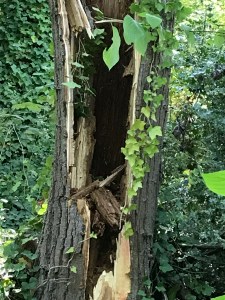
My lack of surprise was also because in July, a smaller cottonwood tree had fallen across the road. I say smaller but it was still very tall; tall enough that when it fell, it took down the power lines on the far side of the street. When I looked at at the remains of that tree later, I had seen that it was hollow. So even though I was sad that the big cottonwoods were going to be cut down, I understood the importance of the act. Safety was of primary importance. It was much easier for me to accept this situation and let go than it might have been in a different circumstance.

The trees that were to be removed were so big that the city had to hire a crane company to cut down the top part of the trees. I didn’t go anywhere near the work that day, but I did look at and take pictures of it from my back yard, which borders the site. I was shocked when I saw the size of the crane through the trees. My uneducated guess was that it was 250 feet high. (There is a steep drop off between the main part of our site and Cheasty Blvd. so the bottom quarter of the crane and tree trunks can not be seen in the photos below.)

(Click on any of the galleries to enlarge the photos.)

The person in the basket not only cut off the top portion of the tree, he/she also cut off most or all of the branches . At one point during the day, my whole house shook. I thought that must have been caused by one of the tops falling to the earth, or was it a whole tree?

I thought it was curious that several of the largest trees were left standing. I later found out that Seattle Parks Department will be finishing the job.

The next day, I walked into the Greenbelt, as I do most days. When I arrived at our eastern planting areas, I was horrified to see that the top of one of the trees was covering all of one planting area and part of another. I had never considered that as a possibility. There didn’t seem any chance that our plants could have survived such an event. I knew it was another letting go opportunity, but this one wasn’t going to be easy, I was way too attached.


When I looked closely, I could see one of the trees through the branches. I walked back to my house to get a pair of hand clippers and cut away some of the branches. I could tell that the tree was going to be okay.

We had a work party scheduled for the next day. It was obvious that we would need to let go of at least part of our plans for the work party. I didn’t know how we would manage to move the big branches but that wasn’t the task for the present, dealing with the smaller branches would be the first step.

I called Andrea, one of my Green Seattle Partnership supervisors. We talked about what had happened and she agreed we could remove some of the small branches but said we would need to be sure none of the ones that were holding the tree off the ground were cut. We didn’t want to chance anyone getting hurt.

Andrea mentioned that some Parks Department staff would be coming later that day and would take a look at the situation. When I walked down to that part of the site that evening, I was astounded by what I saw.

The Parks Department staff had indeed come. They had cut up all of the branches and had stacked them neatly out of the way. I soon discovered that not a single plant had been injured by the falling tree or by the staff’s work. In fact, the planting areas were neater than they had been before the event. The branches, and the trunk that had fallen outside of the planting area, would decrease the chance of erosion and would become a home for insects and other wildlife.


What an experience this had been. I felt like I had been on a roller coaster. I had been willing to let go, but not until I put in the effort to do what I could do to save the plants. I had also been willing to let go of the plans for the work party so we could do things that were more important.

In the end, the plants were fine and we were able to return to the original work party plan. My faith in the support that is available from Green Seattle Partnership and the Seattle Parks Department had grown.

As I reflected on the incident during the next few days, I remembered the rituals we had done asking Mother Nature to protect the plants. My faith in that process also grew.

One morning during the next week or two, as I was waking up, I was pondering how I would write this post. When I got out of bed and checked my email, I received another shock, and another letting go opportunity. Again, the challenge was related to the Greenbelt reforestation work.

But that is a story for another post!

Interview by Maya Klem: “Forest Steward Spotlight- Karuna Poole”

What park do you work at?

Cheasty Greenspace on North Beacon Hill.

How long have you been involved with Green Seattle and why did you chose the park where you work?

This stretch of Seattle’s Greenbelt is behind my house. The land had been overrun by blackberry vines and ivy for about 30-50 years. By 2016, the densely packed blackberry vines were five to nine feet tall on most of the property. One day in August of that year, I decided I wasn’t willing to stand by and watch trees die anymore. I found my shears and started cutting the vines away from the trees. Then I had an idea. I belong to a group known as GreenFriends. Some of the GreenFriends members in our area agreed to take on this endeavor as one of their projects. Soon thereafter, we started working with the Green Seattle Partnership.

What keeps you volunteering with the Green Seattle Partnership?

I love the work. I love watching the land transform in front of my eyes. I love working with the Green Seattle Partnership staff. I love working with the volunteers. I love serving Mother Nature. I am so grateful for all the help I receive from Green Seattle Partnership. The Partnership provides classes and supervision that is invaluable. They also provide us with the supplies we use and the trees, shrubs and ground covers we plant.

Do you have a favorite memory from your involvement?

I remember a time when I was cutting through a mass of blackberry vines and saw what looked like a small section of a concrete block. Over the next few weeks, I saw more glimpses of concrete. I remember thinking the block was at least eight feet long. What could it be? How did it get here? In March 2017, Seattle Parks Department staff cut down blackberry canes throughout the site. It was at that time, we discovered that the concrete was part of the slab foundation of a house. We think it might have burned down in the 1950’s. We turned that foundation into a place we call “The Rack Zone.” The rack zone contains the racks where we dry most of the invasive debris we have removed from the site.

What is something funny or unusual that has happened at an event/while volunteering?

It may seem strange, but I am fascinated by the trash we have found during work parties. We have removed around a hundred golf balls, four golf clubs, stuffed animals, and much, much more. My favorite items have been toy dinosaurs, a plumber’s tool kit from the 50’s, metal handcuffs and a gold bracelet studded with 27 “diamonds.” I found the bracelet, about six inches underground, when I was digging out a blackberry root ball. I assumed it was costume jewelry but as days went by, I kept thinking, “What if it isn’t?” I took it to a jeweler who, after looking at it under a microscope, determined that it was “fun jewelry”.
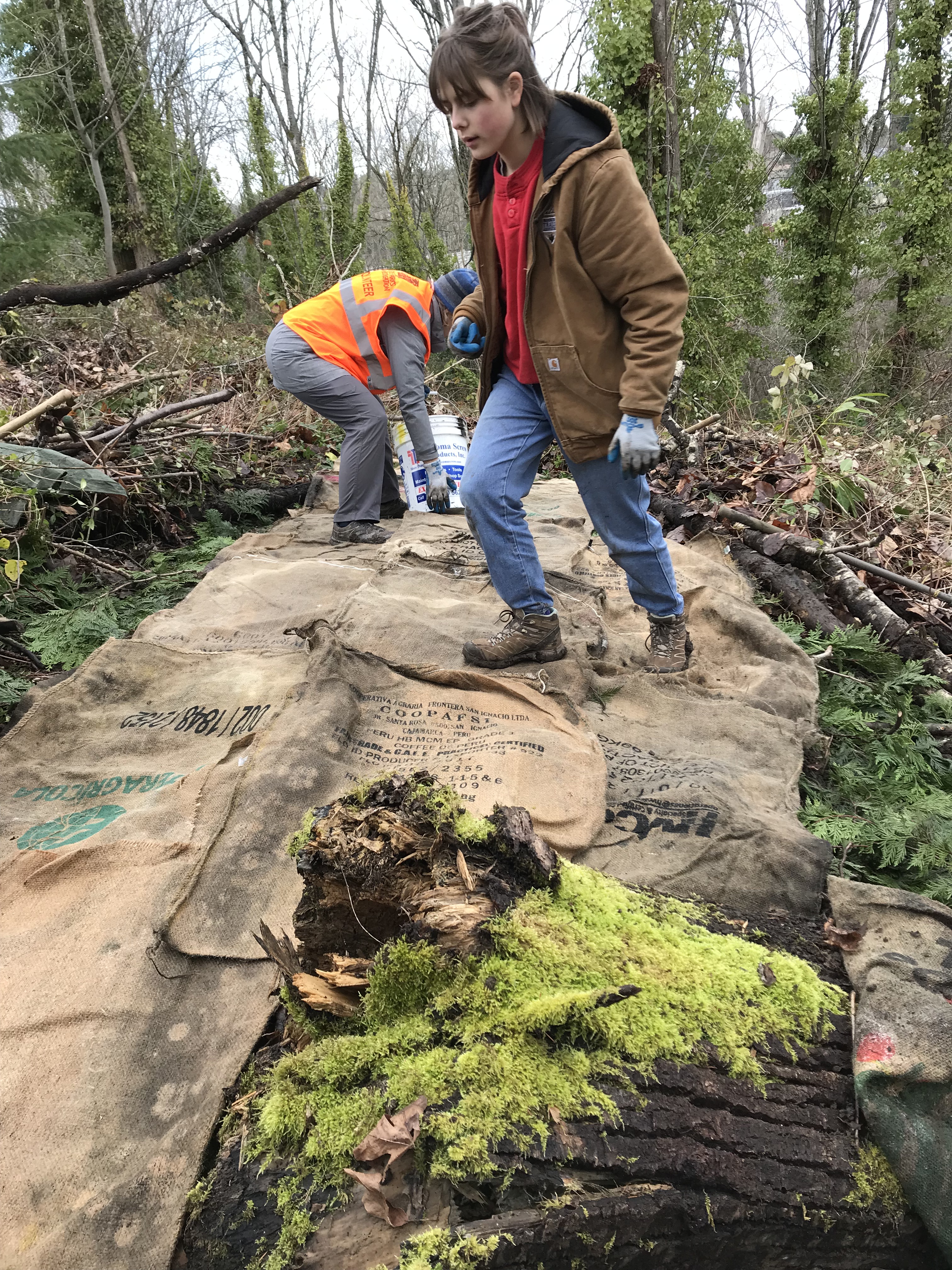
What part of the work makes you feel that you are making a difference in your community through forest restoration?

During the last 27 months we’ve replaced invasive plants with 88 trees and 750 shrubs and ground covers. There is no question that we are making a difference in our community as we restore this part of the Greenbelt to a place that provides shelter and food for wildlife, enhances air quality, and provides beauty and tranquility for humans and other living beings.

Is there a specific time when you looked at your restoration and felt like you were finally making progress? If so, tell us about it. If you haven’t had that moment yet, what do you think will make you feel like you are finally making progress on the ground?

Soon after I started the project, I realized that it would become much bigger than the area behind my house. Still, I was stunned and overwhelmed when the Seattle Parks Department staff cut down the invasive vines on most of the site. How in the world would we manage this huge amount of work with such a small number of volunteers? After a sleepless night, it occurred to me that it was a good opportunity to practice staying in the moment by focusing on one task at a time. That day, I decided to clear blackberries and weeds from one small area. Three hours later, I was amazed by how much I had accomplished. Suddenly, the project seemed doable. We would do it one step at a time.
If you were plant species found at your restoration site (native or non-native) which would it be and why?

I don’t have a clue how I am like Roemer’s fescue but I do know that the plant fascinates me!

If you aren’t working in the park where would we most likely find you and what would you be doing?

You would probably find me inside, in front of my laptop. I coordinate the process of putting together a monthly GreenFriends online newsletter that is usually 30-35 pages long. I also write for my blog, “Living, Learning and Letting Go.”

Anything else you want us to know?

We’ve offered around 40 work parties since we started this project. Some events have had three volunteers, our biggest had 47. I appreciate Shirley Rutherford, Claire Oravec, Haley Rutherford, and the other volunteers who have served as team leaders during our events. I appreciate Susan Zeaman, a Forest Steward from another Cheasty Greenspace park, who has been a mentor to me. I appreciate my neighbor John O’Brien who has attended almost every work party and has worked many hours on his own, or with me, in addition to the work parties. I appreciate the environmental science students, corporate groups and other volunteers who have supported this project through their enthusiasm and their labor.

To learn more about Karuna and her team’s work visit her blog by clicking here

Want to have your own chance to meet Karuna and to hear more about her time as a Forest Steward with Green Seattle? Then starting in the new year, you should attend one of the upcoming volunteer work parties at Cheasty Blvd. and help Karuna to continue her Forest Steward legacy!

~~~

Maya Klem

Stewardship Associate, Forterra

Maya was born and raised in the Pacific Northwest, and is thrilled to be part of a team dedicated to protecting the land she has always called home. Maya recently graduated Western Washington University where she studied Biology, Chemistry, and Spanish.   During her time in college, she discovered a passion for conservation and restoration work while studying in the jungles of Costa Rica and Peru. Aside from exploring tropical and temperate forests, Maya enjoys cooking, traveling, skiing, and smiling at dogs. Maya is serving a one year AmeriCorps term with Forterra.

Greenbelt Restoration Work Party: A New Beginning- December 10, 2018

In August of 2016, if you had stood on the property that borders the western section of our GreenFriends Greenbelt Restoration Project, you would have seen land covered by blackberry, bindweed and ivy vines.

If you viewed the Greenbelt from that same place today, you would see an expanse of cleared land. The invasive plants have been replaced by more than 800 native trees, shrubs and ground covers.

While there will always be more work to do on this site… lots more… it also seemed like it was time for us to begin to focus on the adjacent Greenbelt site, the one to the north of the Hanford Stairs. I have been eager to begin that work in earnest for some time.

On December 10, we held a tiny work party. Four of the five people who registered for the event were individuals who have served as team leaders at previous work parties.  Most of them have been involved with this project from the beginning. (The fifth person was a neighbor we had not met before. She and her daughter came for the last hour of the work party and dove right in; helping wherever they were needed. I look forward to working with the two of them in the future.)

This small group was an ideal way to begin our new focus. The photos below show what the area looked like when we began to work that morning.

(Click on any of the galleries to enlarge the photos.)

Before the work party:

Three of the participants worked in areas along the Hanford Stairs; one worked towards the top of the stairs, one in the middle and one towards the bottom. I cleaned up an old trash dump that was about 20 feet into the site. When I needed a break from trash, I pulled out ivy in the surrounding area.

This work party was interesting for a variety of reasons. It was the first time in years that we were working as individuals instead of leading teams of volunteers. Also, since we were each working in a different area, there was almost no interaction between us. From time to time, it was so quiet that I wondered if everyone had gone home. Soon after having that unlikely thought, I would see or hear the rustling of a branch and know I wasn’t alone. Working in the silence felt very sacred to me.

We accomplished so much during that three-hour period. The transformation was remarkable.

After the work party:

This land seems very different than our original site. There are fewer blackberry vines and more ivy. There are a lot of sword ferns and Oregon Grape shrubs. It will be interesting to see what other native plants are present when as everything begins to bloom in the Spring.

We’ve barely begun to explore this site, but we only need to look beyond the Hanford Stairs to see what our next steps will be.