Mystery in the Greenbelt

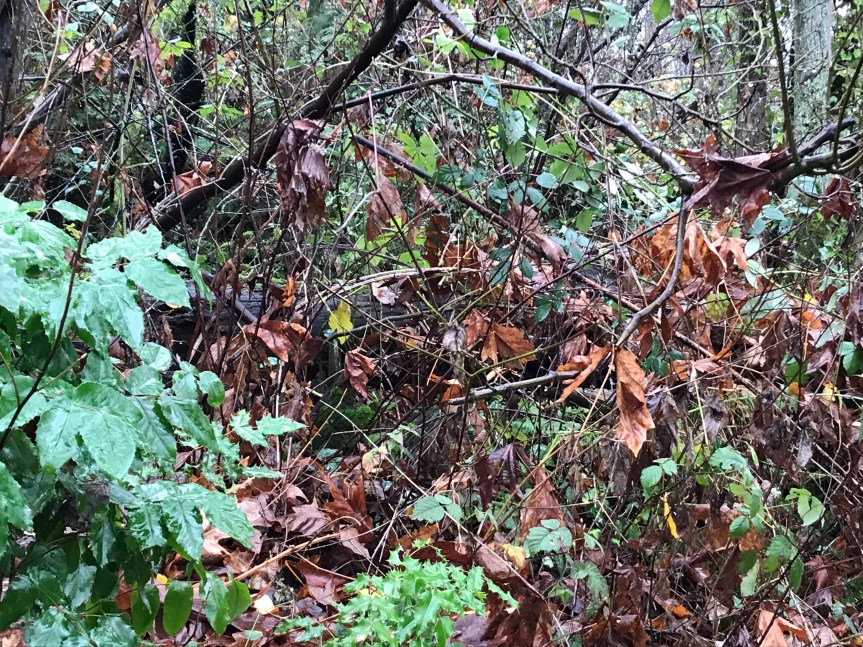
The day after our January 21 work party, I was taking photos of our work and was shocked to see a shovel propped up against the foundation of an old house that is in the middle of the site. I was particularly surprised to see the shovel there because all of the team leaders had been standing close-by that area at the end of the work party. If the shovel was present at that time, one of us would certainly have seen it and put it in the job box where our tools are stored.

The fact that the team leader who had gone through the site looking for tools later hadn’t seen it either added to the mystery. Where did it come from? Who had put it there?

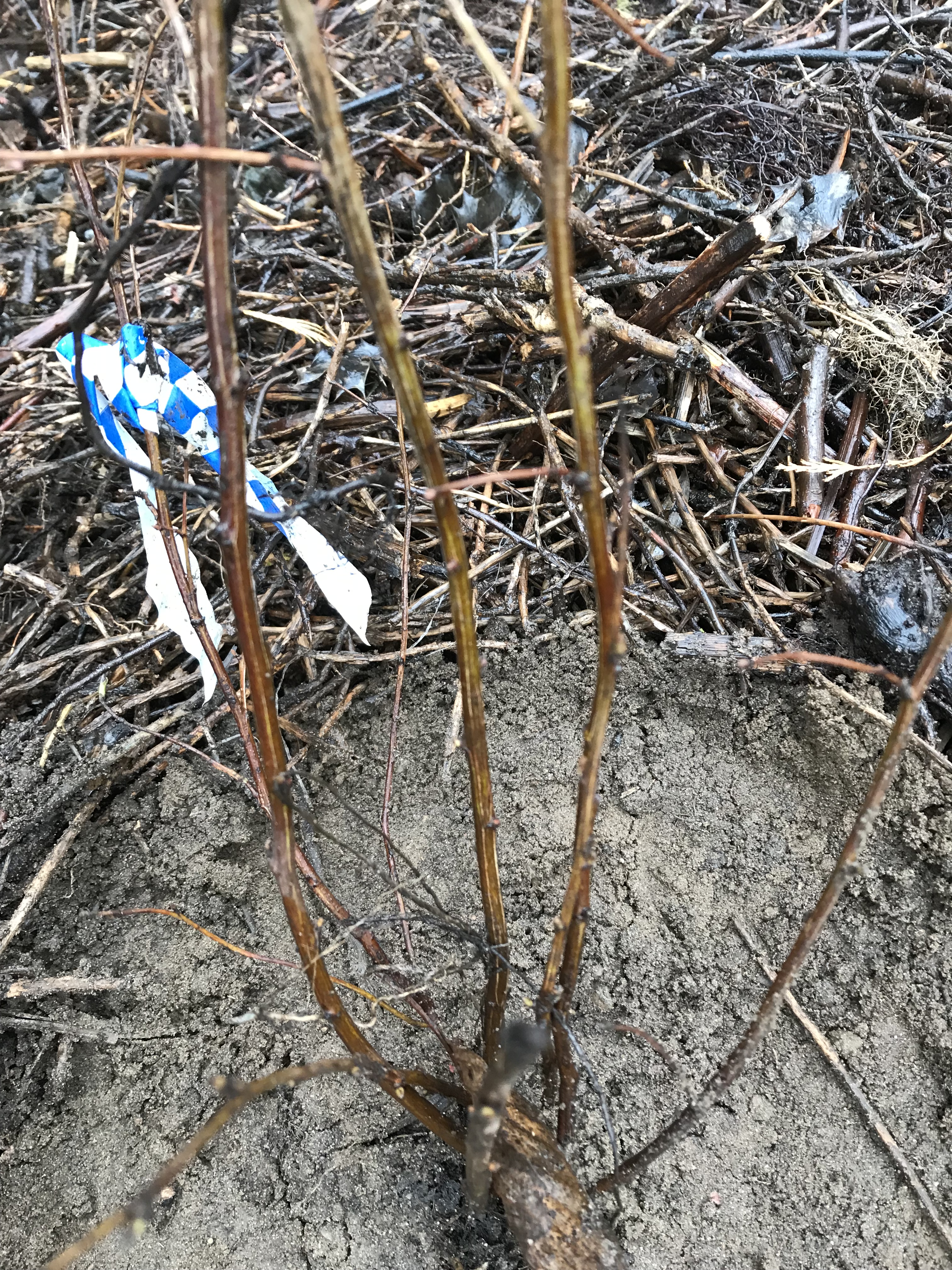
On January 23, I was shocked to see an un-potted plant sitting on the ledge not far from where the shovel had been. I hadn’t seen it the day before. Had it been sitting there when I found the shovel? I didn’t think so but I will never know.
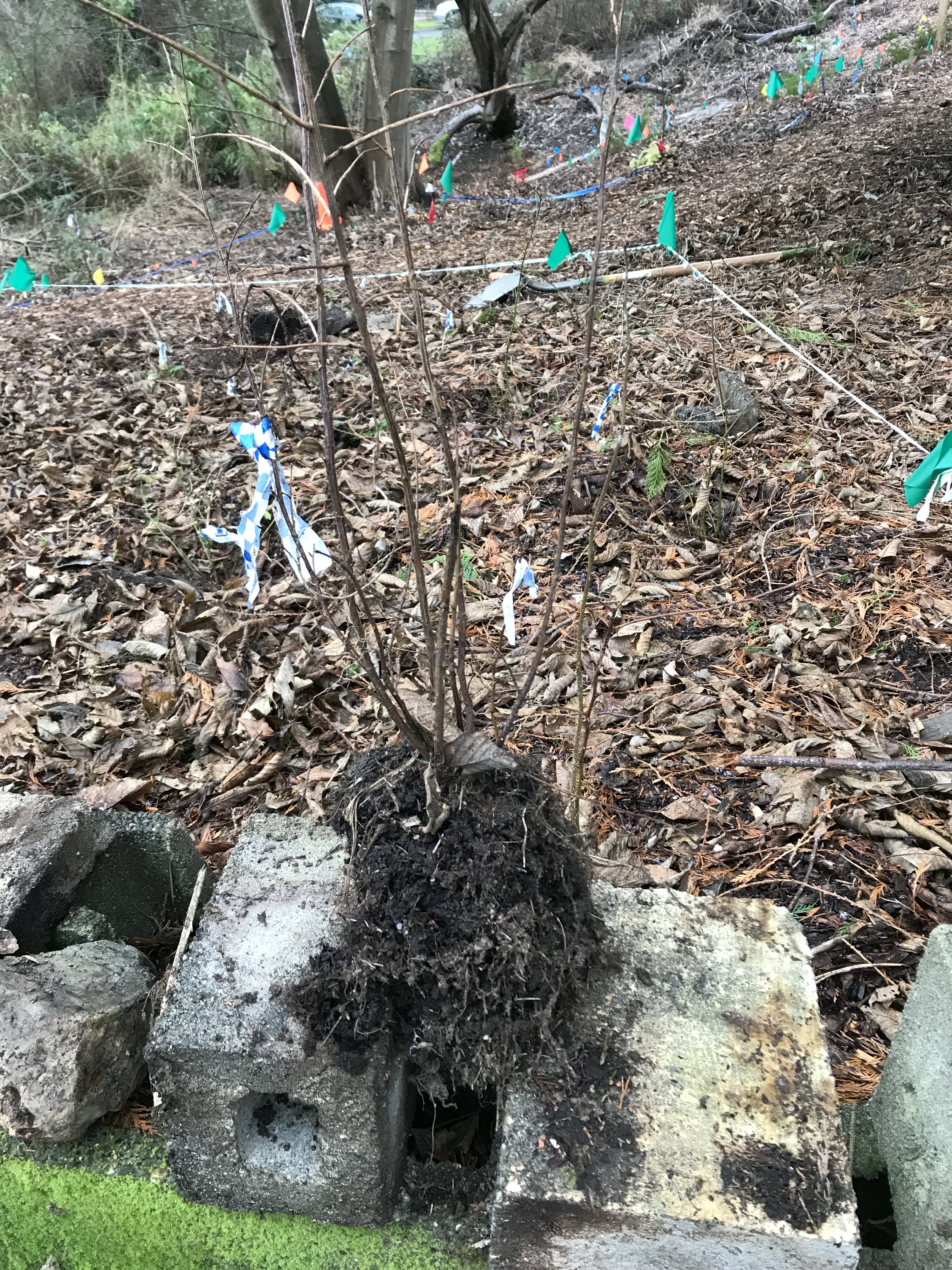
I assumed someone had removed a plant from one of the planting areas. The mystery deepened when I couldn’t find any holes that had missing plants. Inside that foundation is the area we call The Rack Zone. Until the January 21 work party, it had contained drying racks for most of the invasive plants we had cut down or dug out since the project began. During the work party, some of the volunteers had taken apart the drying racks and spread the dried debris. We have planned to plant beautiful shrubs and ground covers in that area at some point in the future.

Had this shrub been in one of the racks that had been taken apart? That seemed unlikely, but I called the team leader who had been working on that project. He said, “NO” and that if he had seen it, he would have shown it to me.

It occurred to me that since there was no rational explanation for how the shovel and the plant got there, I should look for a non-rational explanation. The thought that came to my mind was that this was to be the first shrub to be planted in The Rack Zone.

I walked into The Rack Zone and looked for an area where the new “ground” looked higher than the rest of it. Once I found a suitable place, I pulled back the surface debris that hadn’t fully decomposed to see whether there was composted dirt under it. There was, and it was deep enough to plant the shrub. I made the hole bigger and then inserted the shrub. I also made sure that there were no inter-twined ivy vines that would strangle it as it grew.
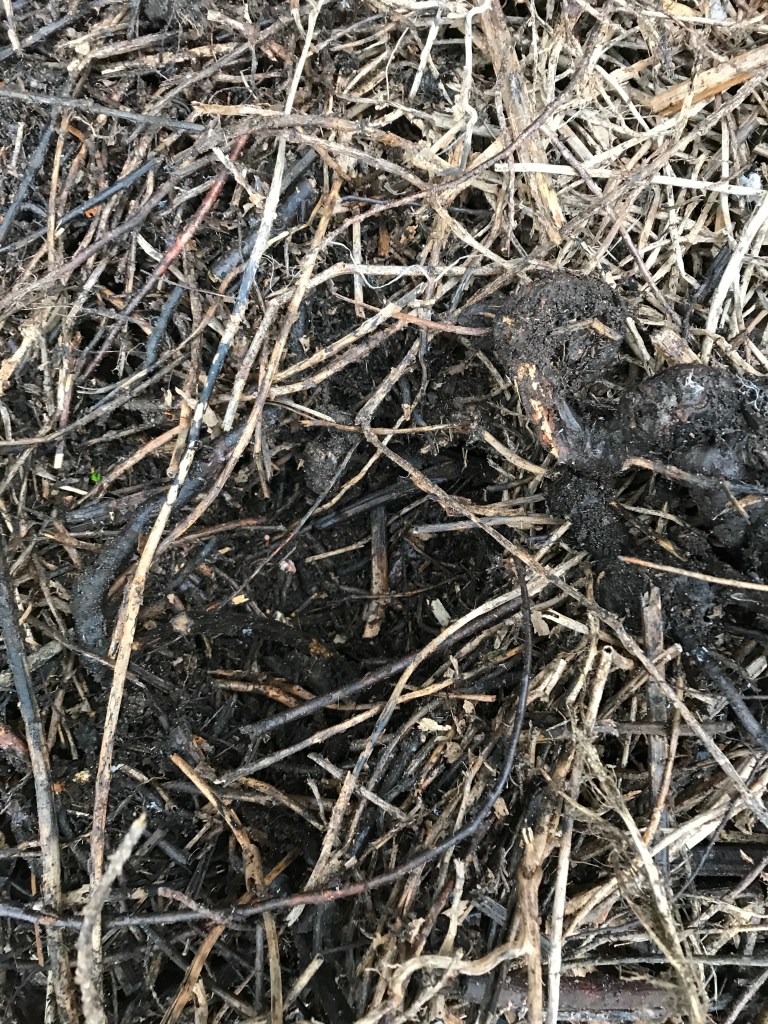
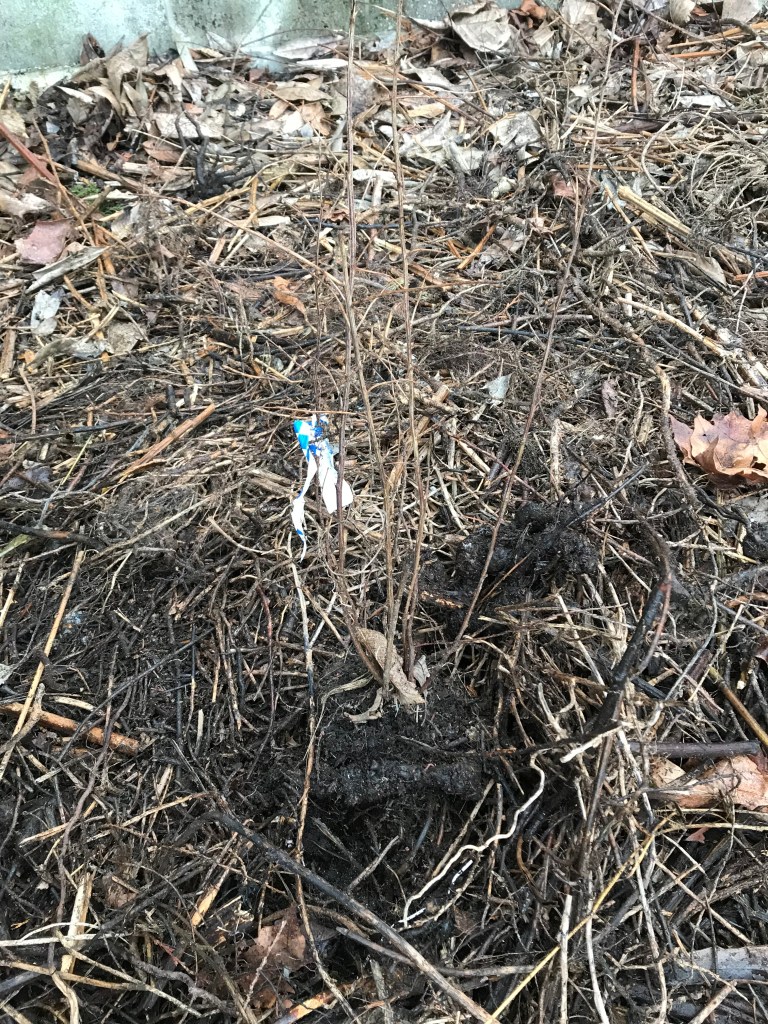
I needed more dirt to fill in the hole. After thinking about it for a moment, I remembered that I had seen mole mounds nearby. I also remembered a friend once helping me re-frame how I saw the moles in my own yard. She told me that the moles were providing me with free aeration for my soil. I decided to use the dirt from mole mounds for completing the planting process.

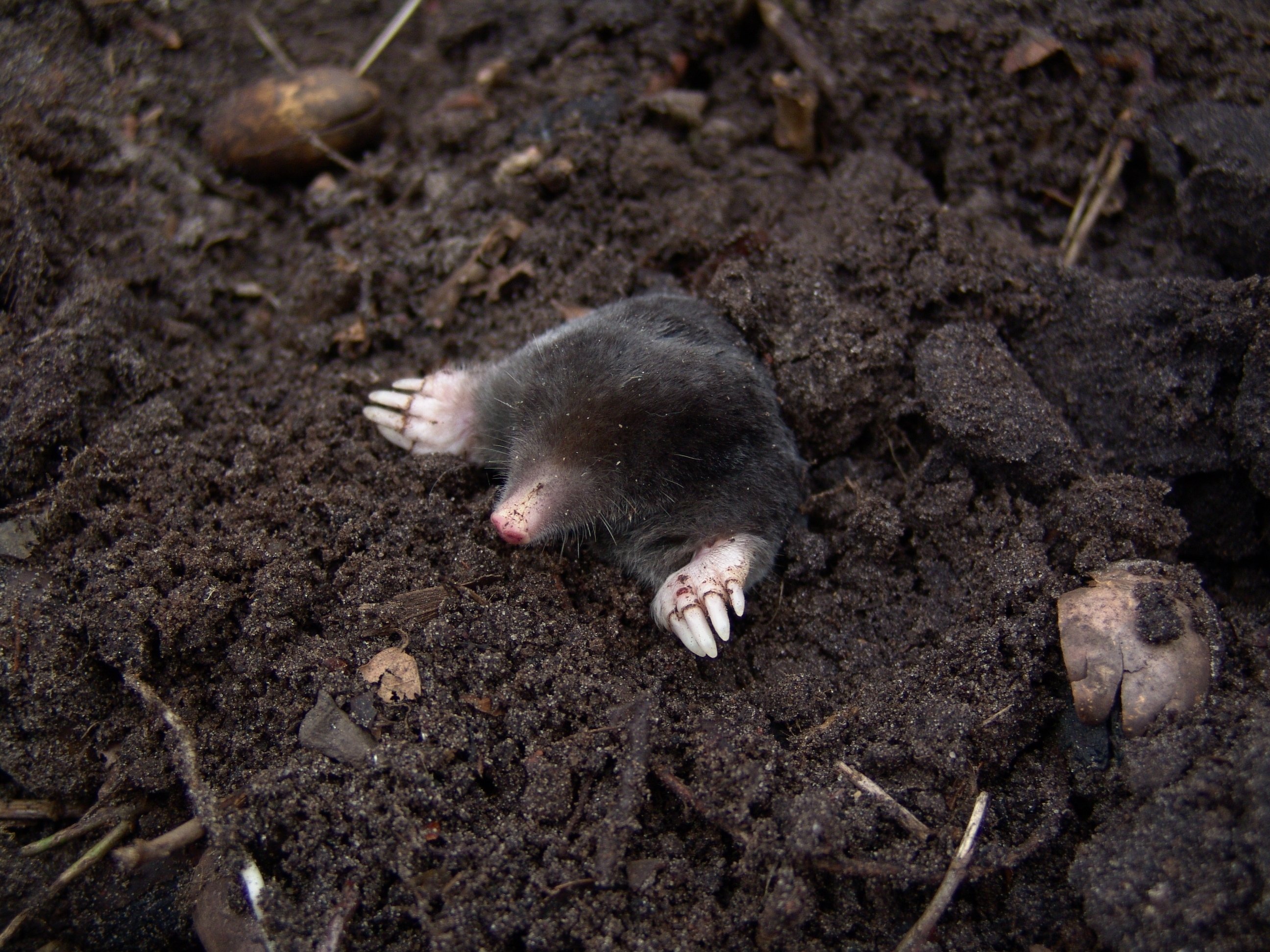
Another memory resurfaced when I was thinking about moles. Soon after we started this Greenbelt project, the person who was co-leading the project with me at the time, was sitting on the ledge of the foundation. A mole came out of the ground and looked up at her. While the photo below comes from pixabay.com, seeing it reminds me of that incident.
That shrub is now securely planted in its new home. It remains to be seen whether or not it is alive. There are no buds on it that look alive, but the branches are not brittle. Even though many of the Greenbelt plants are budding, it is only January. Maybe this is a plant that buds later. If it is living, our first shrub has been planted in The Rack Zone!
Greenbelt Restoration Work Party: Martin Luther King Day of Service

On January 21, twenty-two eager volunteers met to do forest restoration work in our North Beacon Hill Greenbelt site. Four of the volunteers were veterans of this project and served as team leaders. Most of the other volunteers found out about the work party from Green Seattle Partnership listings; two found out about it from one of the local or regional Amma newsletters. Three children between 6 and 8, a pre-teen (12 years) and a teenager (13 years) participated.

This work party was held on the Martin Luther King Jr. National Day of Service. When that holiday was being created his wife, Coretta Scott King, said it should be substantive as well as symbolic. Since his was a life of service, the holiday became a National Day of Service.

While I knew of Martin Luther King’s role in civil rights, I didn’t know that he inspired the environmental justice movement, a movement that believes everyone has the right to clean air, water, and soil, as well as a right to live in safe and healthy communities.

After receiving an initial orientation, the volunteers divided into four groups.

Group 1

One of the team leaders and three of the other volunteers started the process of taking down the racks in The Rack Zone. When we clear land of blackberry, ivy and bindweed vines, all of the cuttings and root balls are put onto racks so that they don’t touch the ground before they dry out. If the vines touch the ground, they may re-root. I refer to the invasive plants we have cut down or dug out as “debris”.

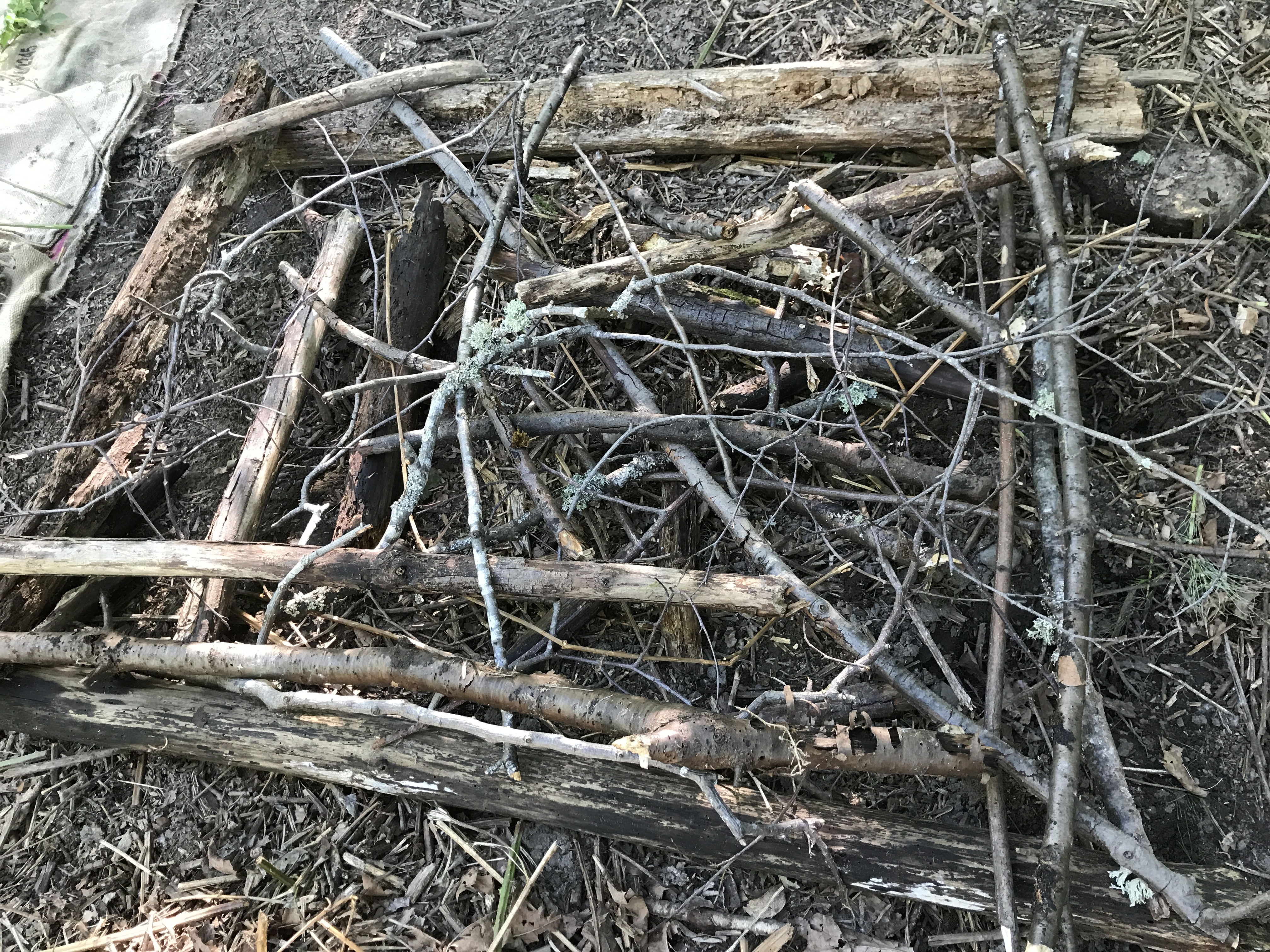
The racks are made from logs and branches. This is a photo of one of the racks we built early on.

In most parks, racks are scattered throughout a site, but since we had a house foundation on the property, we decided to put most of the racks there. The concrete slab that was under the foundation would also prevent re-rooting. We named that area The Rack Zone.

Our plan was to let all of invasive plant cuttings dry out and decompose. In that way good dirt would build up and we could plant beautiful flowering shrubs in that area.

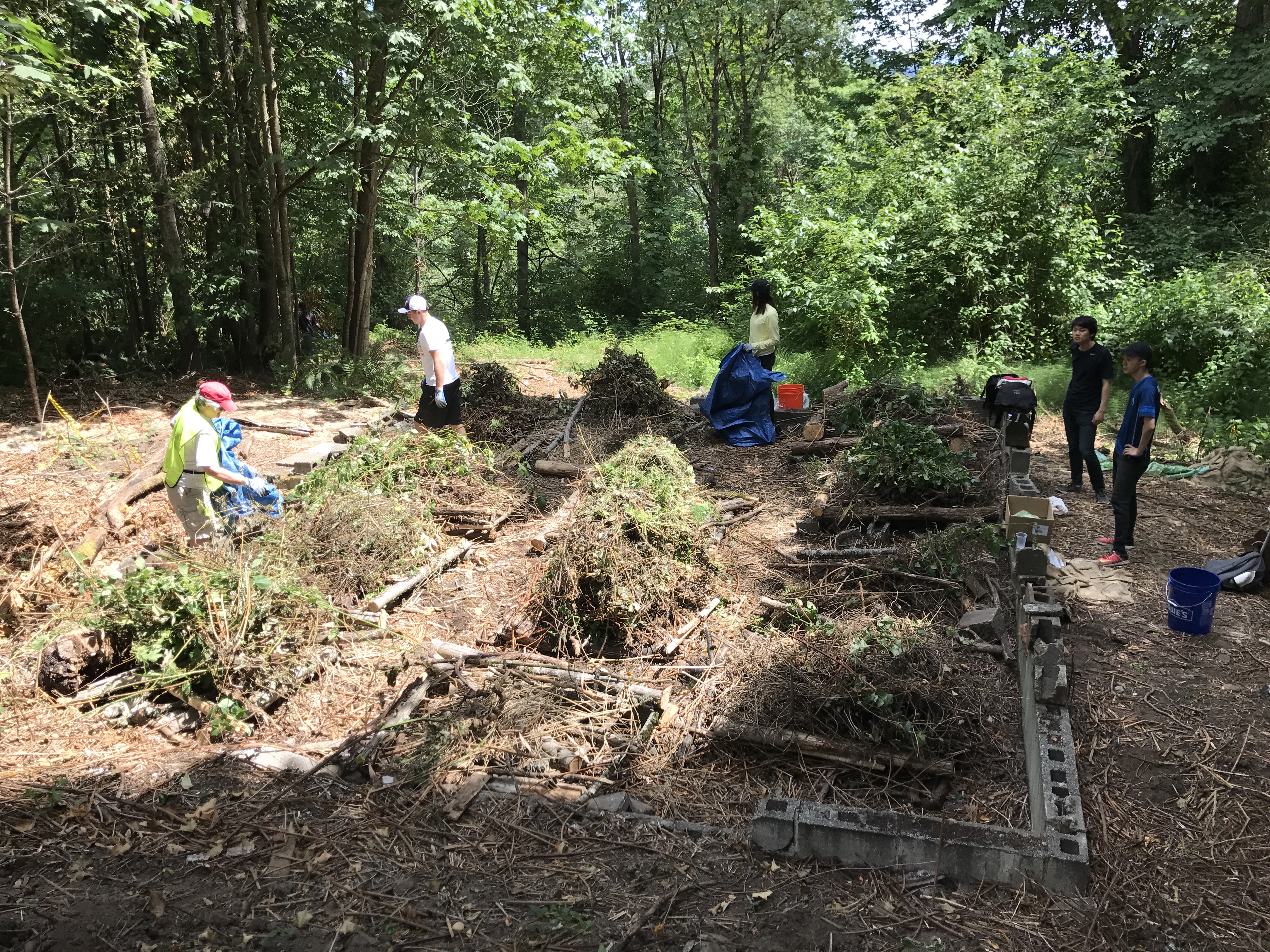
This was what The Rack Zone looked like in July of 2017, several months after we started using it. You can see that under the new cuttings there is a lot of debris that is becoming dry. There are at least two racks in the photo that have been used yet.

In January of 2018, we took most of the racks apart but didn’t spread the debris; we just built new racks on top it. During 2018, the new racks became filled and overflowing. We would start the process of taking them down completely at this work party.

I thought that would be a long process since what taking them apart the previous year had taken a long time. I thought that these volunteers would disassemble one to three racks during the first portion of the work party. That process would include separating the dried debris from the debris that was still living, taking out any logs or branches that were too big to readily decompose, and spread the debris that was dry.

When I checked on the group later, I was astounded by what they had already accomplished.

By the end of that segment of the work party, they had finished taking apart all but three of the racks!

We still have to figure out what to do with all the branches and logs that were too big to spread in this future planting area. Right now they are stacked on the north and south sides of The Rack Zone. In addition, there was a lot of broken concrete under the racks. Those are stacked on the ledge of the foundation and will also need to be moved to some yet unknown location.

Groups 2 and 3

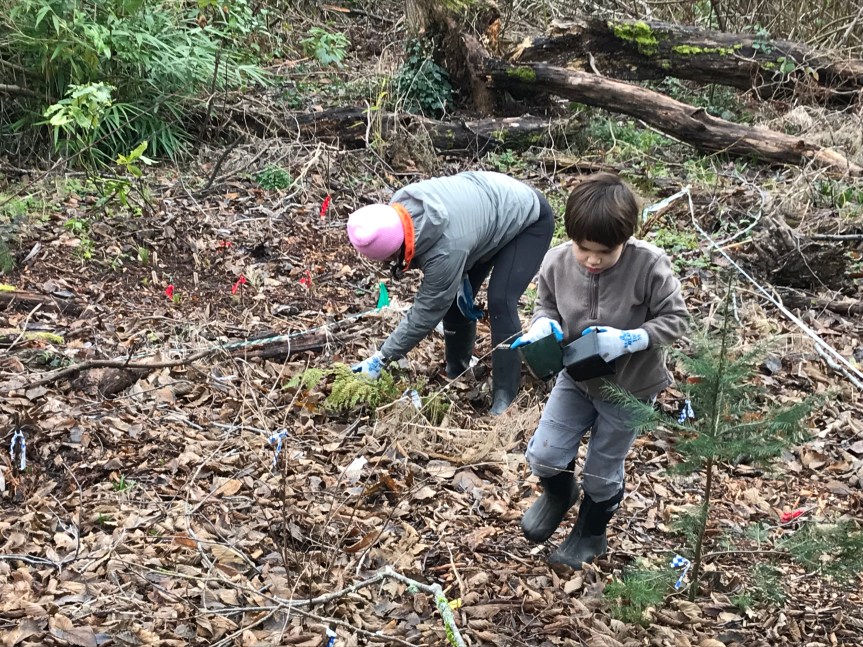
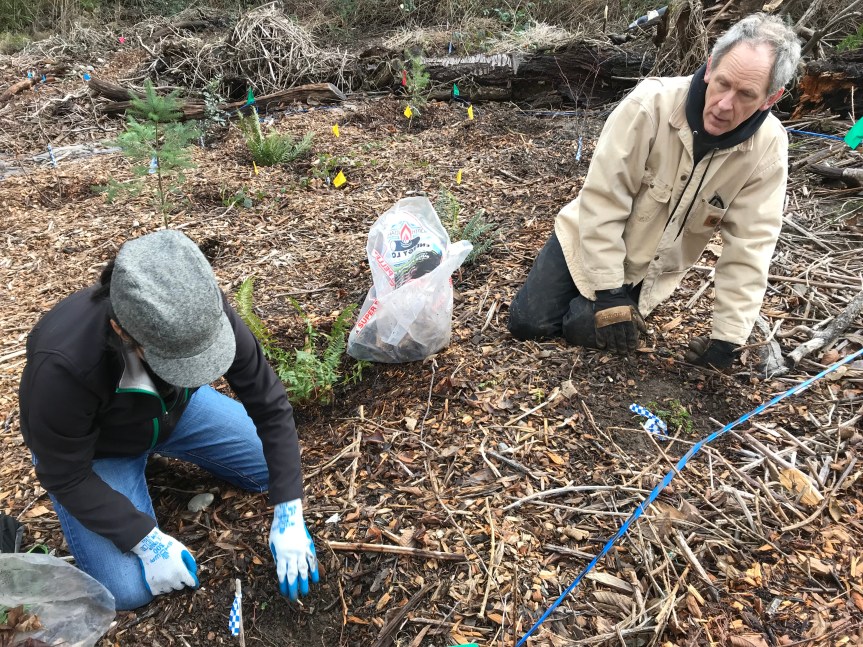
Two groups worked in the planting areas, clearing out leaves and wood chips from around each plant. We refer that area as a donut hole. In addition, some members of those groups cleared branches that had fallen onto the paths during the winter winds and/or carried buckets of leaves to the newly cleared areas of The Rack Zone. Once there, they will decompose and become part of the composted soil.

The groups cleared the donut holes in most of the site. Each area looked so nice when they finished.

Group 4

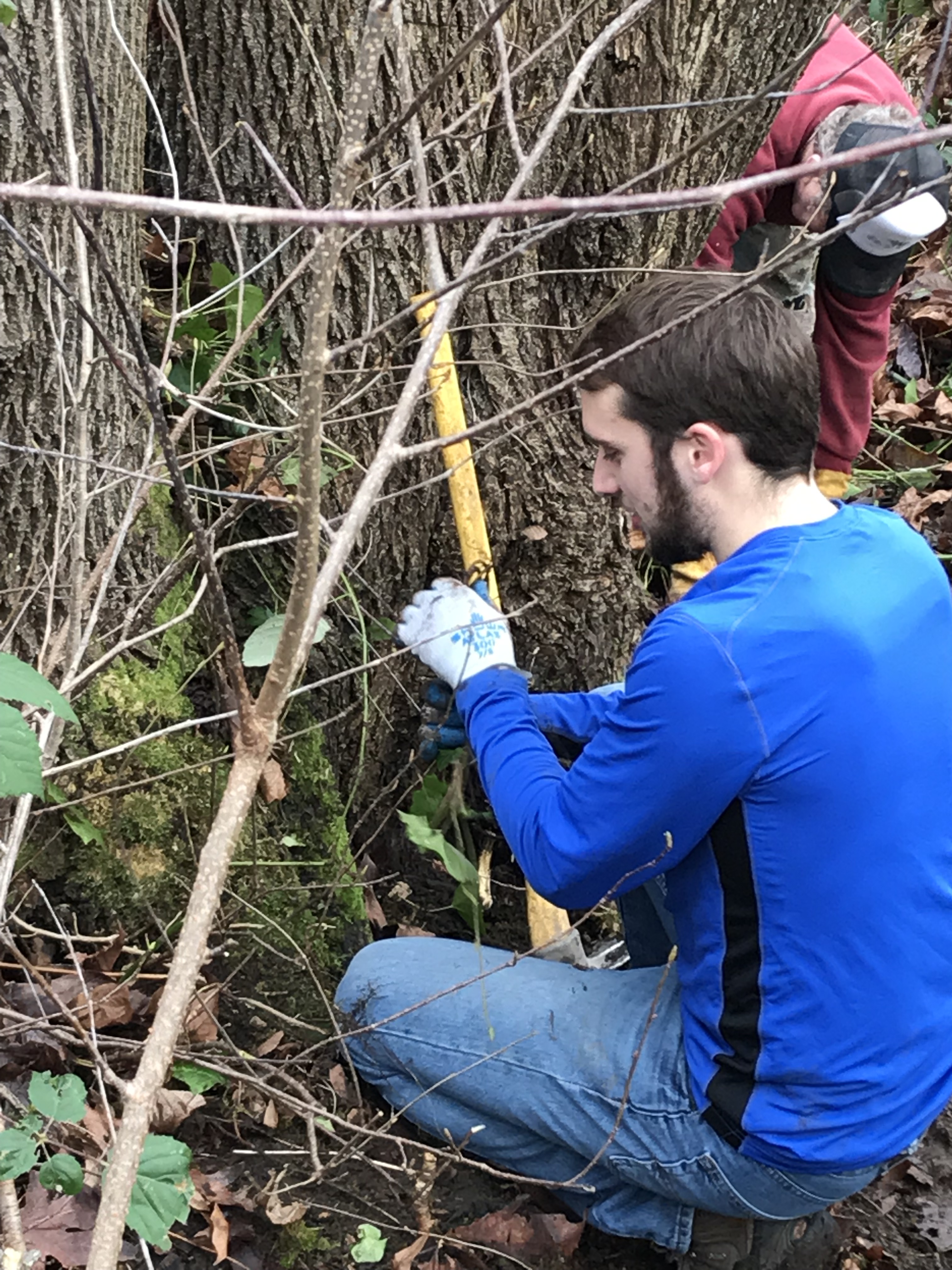
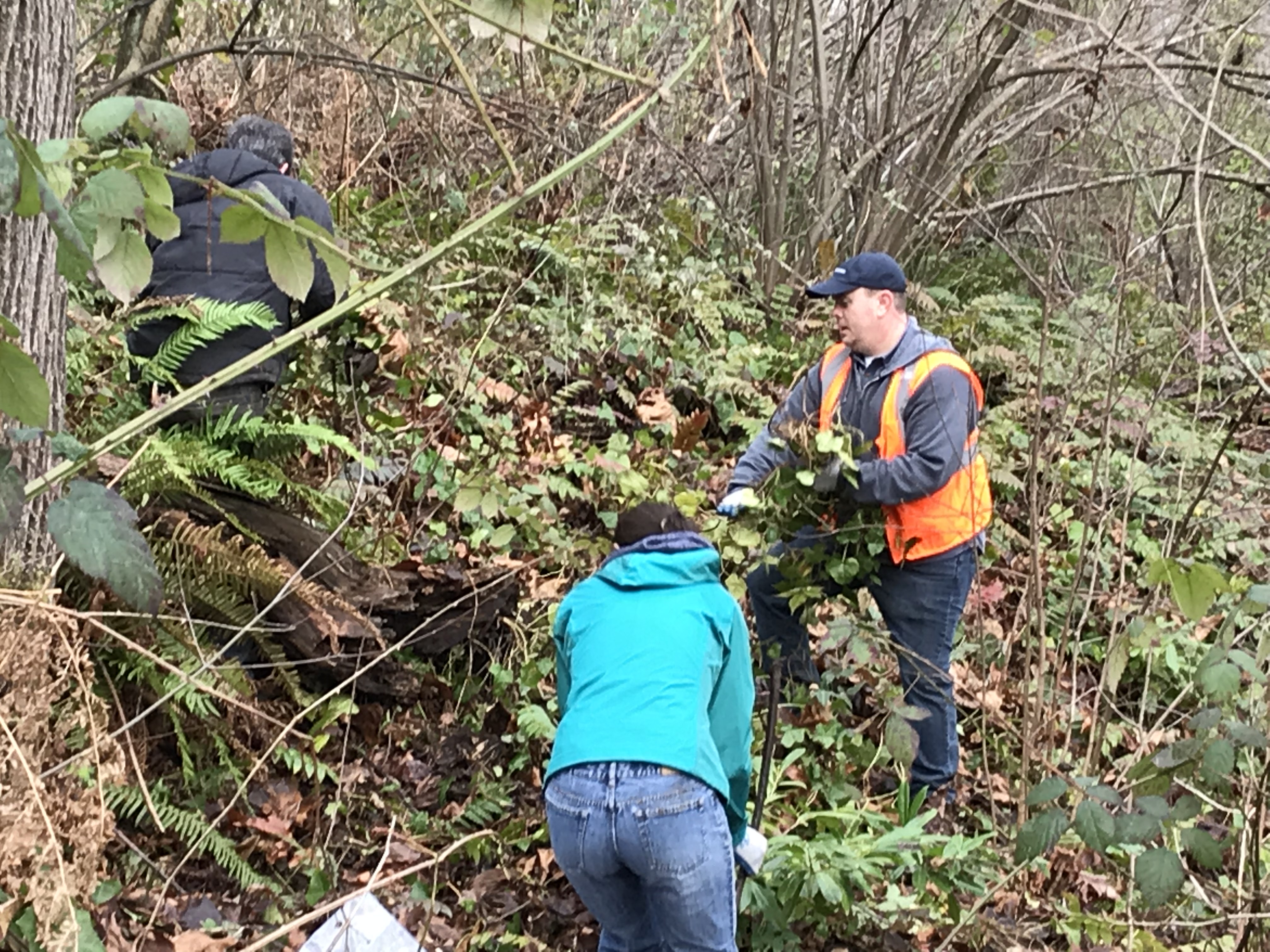
Another team leader and a volunteer began to clear an area that was full of blackberry vines and ivy.

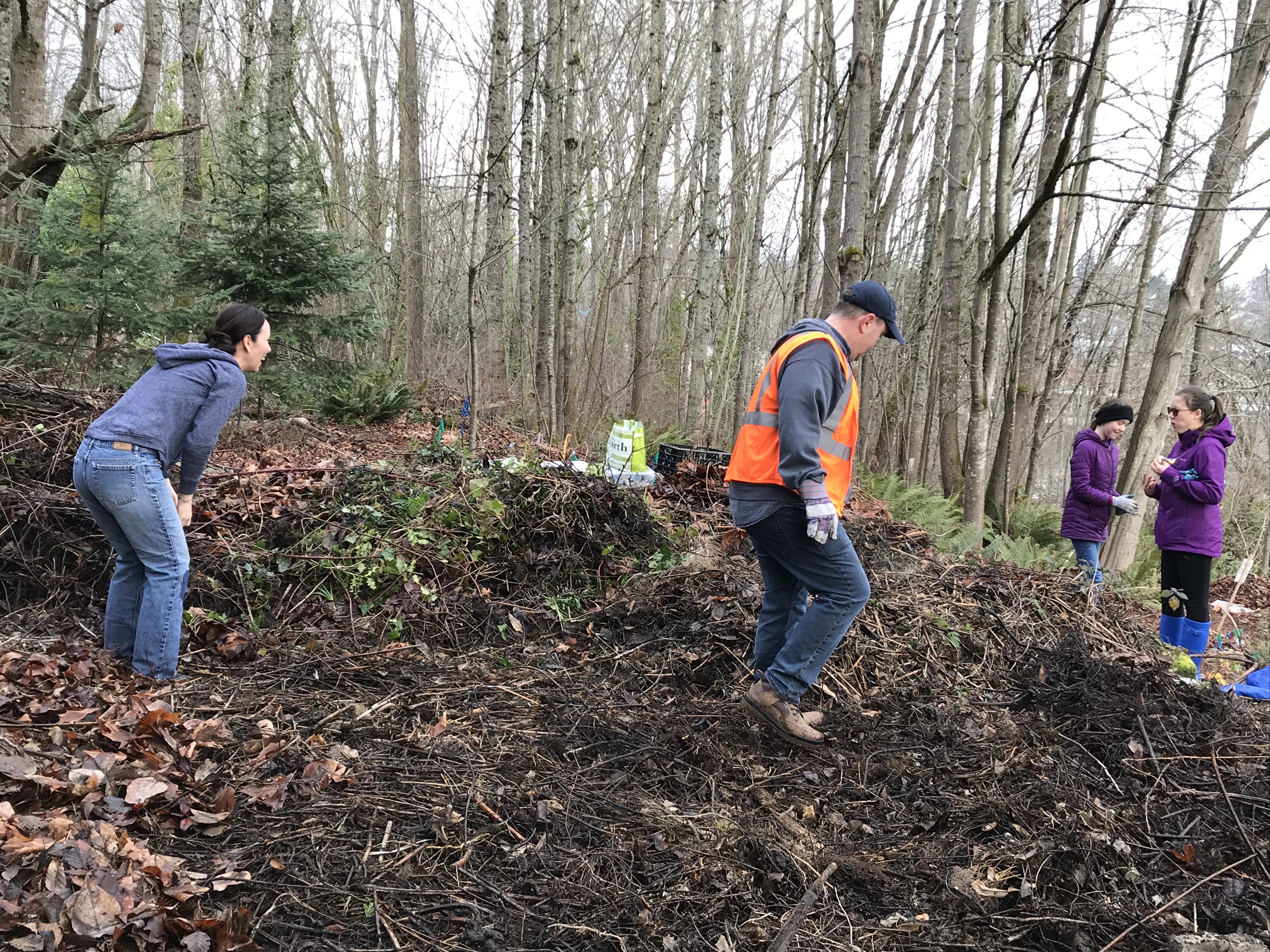
This is part of what that area looked like by the time the work party ended.

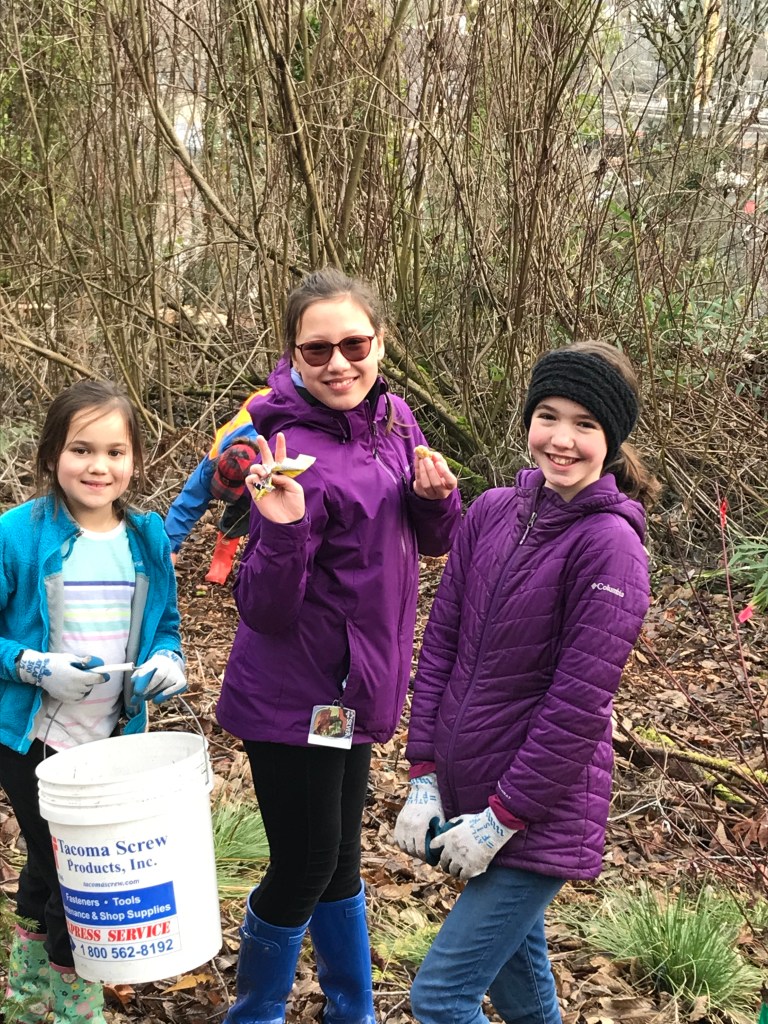
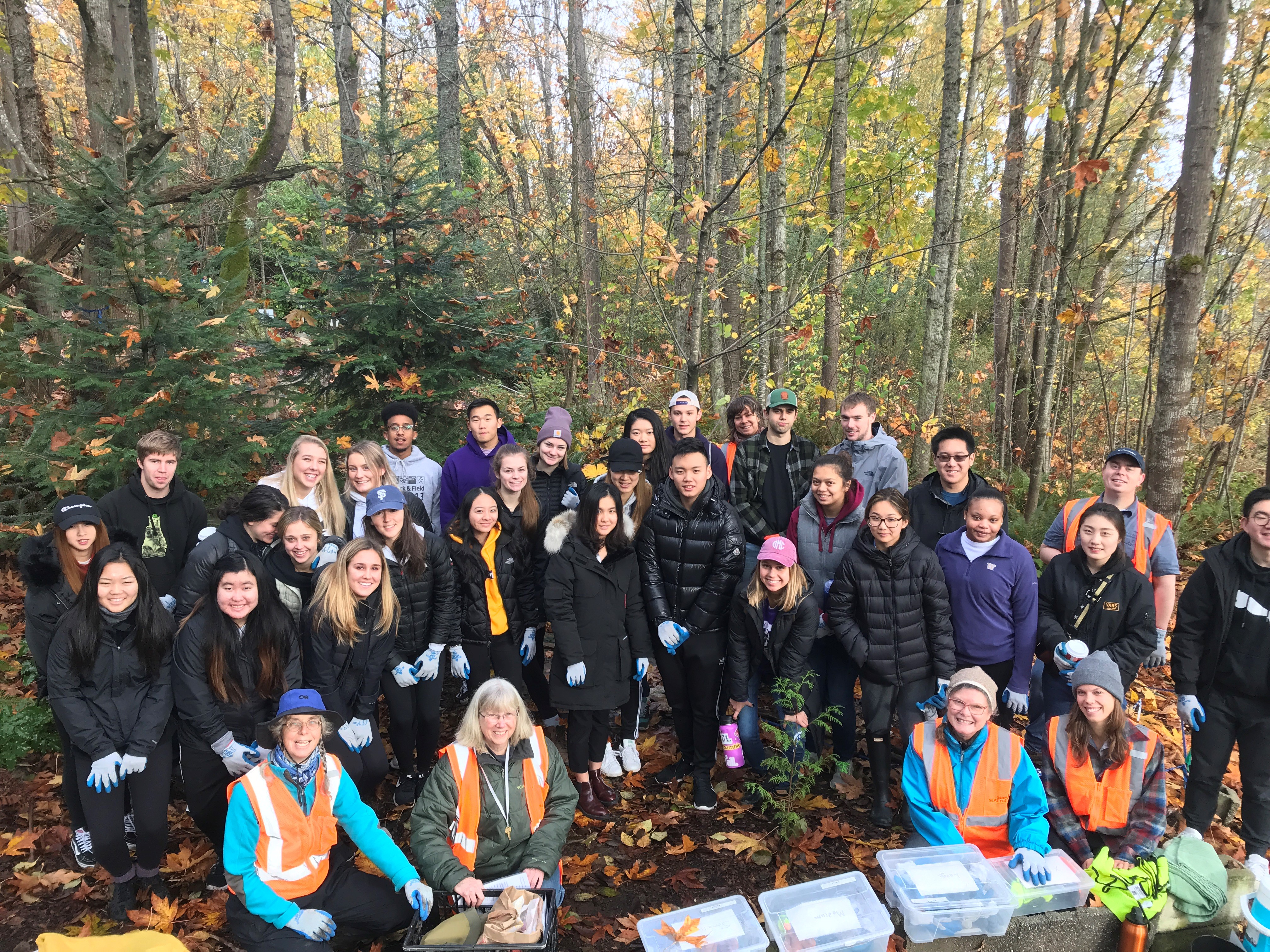
The work party had begun at 10 a.m. At 11:30 a.m. we took a short snack break. Before we went back to work, we gathered for a group photo. While we took some serious photos, the one that I loved most was a funny one.

The parents with young children planned to go home early, and did. Most of the remaining volunteers moved to the Greenbelt site that is on the north side of the Hanford Stairs; our main site is south of the stairs. I have been eager to start restoration work in that area.

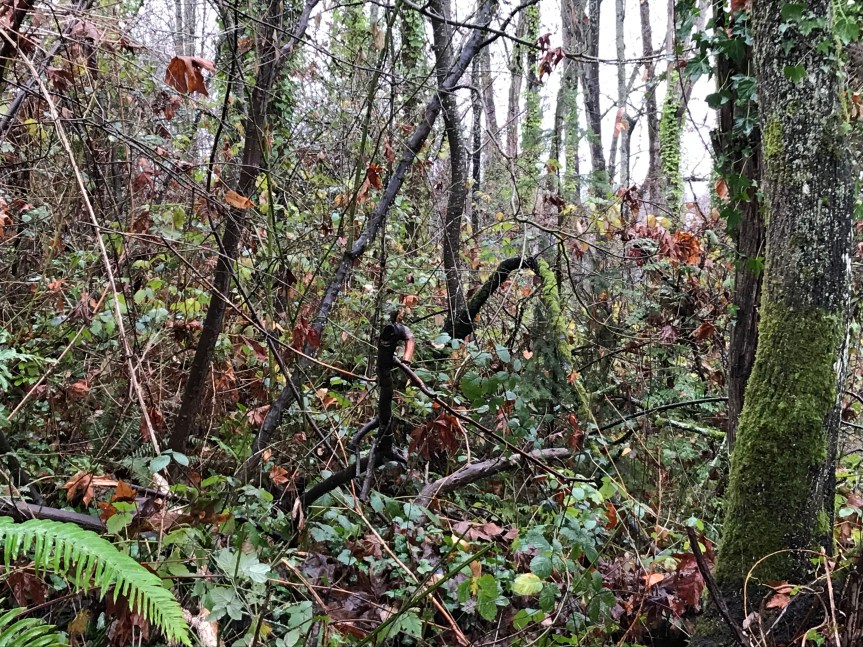
This is what that that land looked like in December 2018.

January 21, 2019 work party photos:

This photo was taken after we finished that day.

The volunteers had removed a lot of trash and ivy.

It always amazes me how much can be accomplished during a three-hour work party. The land always looks substantially different when the volunteers leave, after having given freely of their time and their energy. Together we are helping this part of Seattle’s Greenbelt to once again become a healthy forest.

If you live in the Seattle area and would like to help with a future work party, write hanfordstairsgreenbelt@gmail.com.

Pearly Everlasting

In November of 2017, I took a Wetlands Best Practices workshop that was offered by Green Seattle Partnership and held in Seattle’s Discovery Park. As we were about to leave the park, several shrubs covered in white flowers caught my eye. I asked the instructor about them and learned that they were called Pearly Everlasting. In that moment, I committed to myself to include that plant in my 2018 plant order.

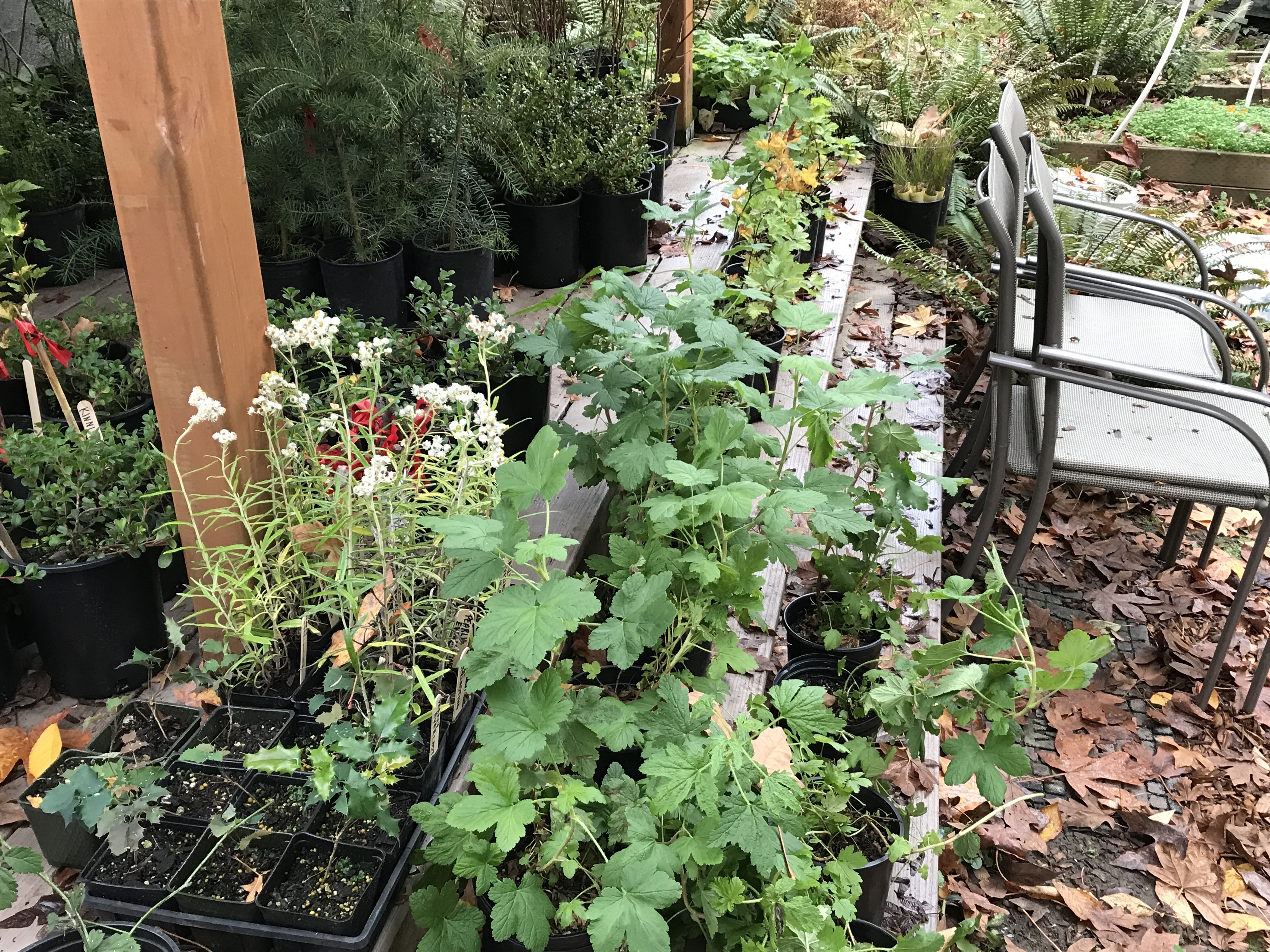
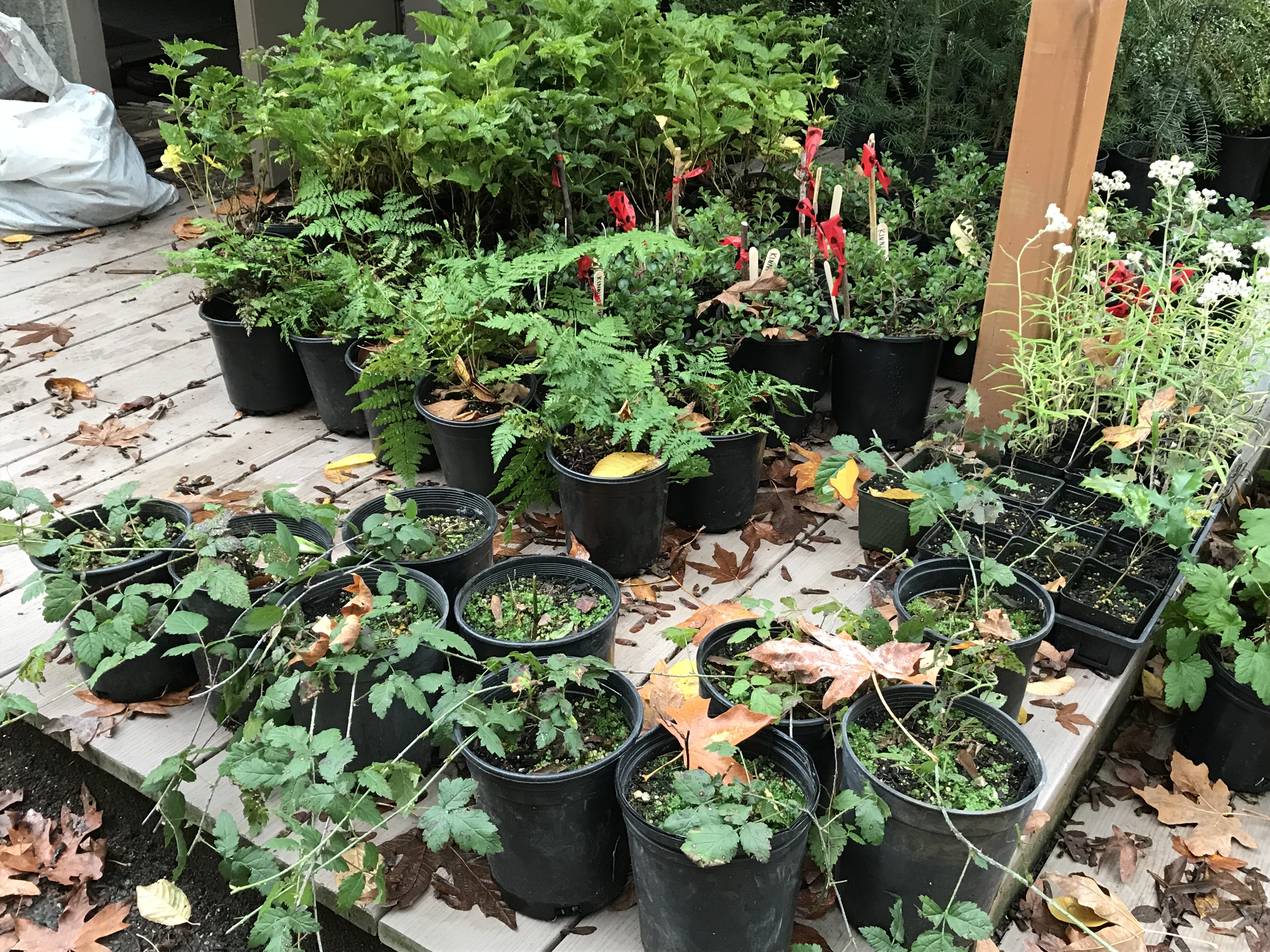
When the plants arrived at our forest restoration site in November of 2018, I was surprised by how small they were. In the photo below, there are ten Pearly Everlasting seedlings next to the deck post.

The Pearly Everlasting plants I saw in Discovery Park had been used as a border in hopes that they would keep park visitors on a trail rather than walking through vulnerable plants. I decided to try that rationale in our site too. Four of the Pearly Everlasting plants, still in their pots, are in the forefront of the photo below.

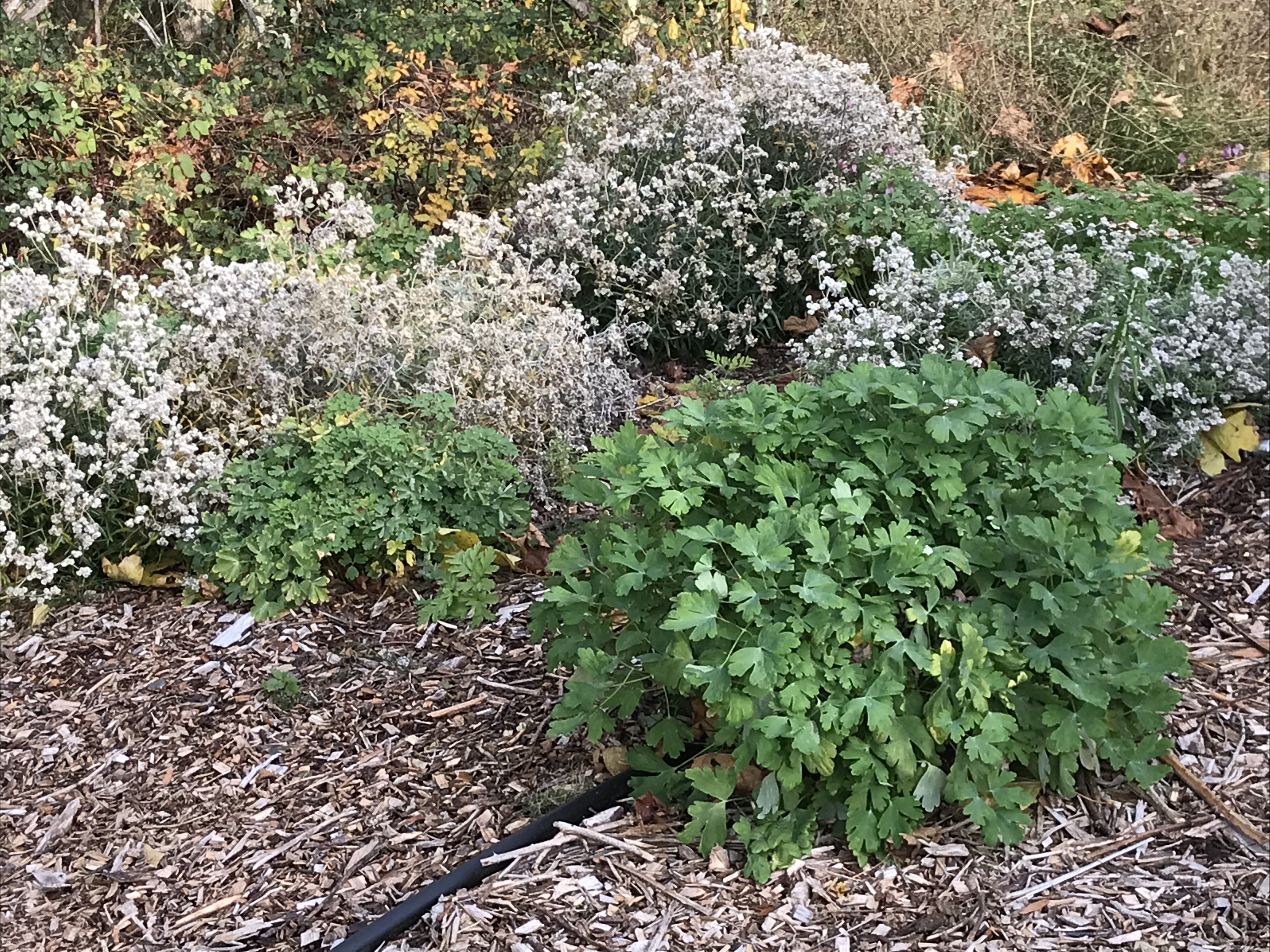
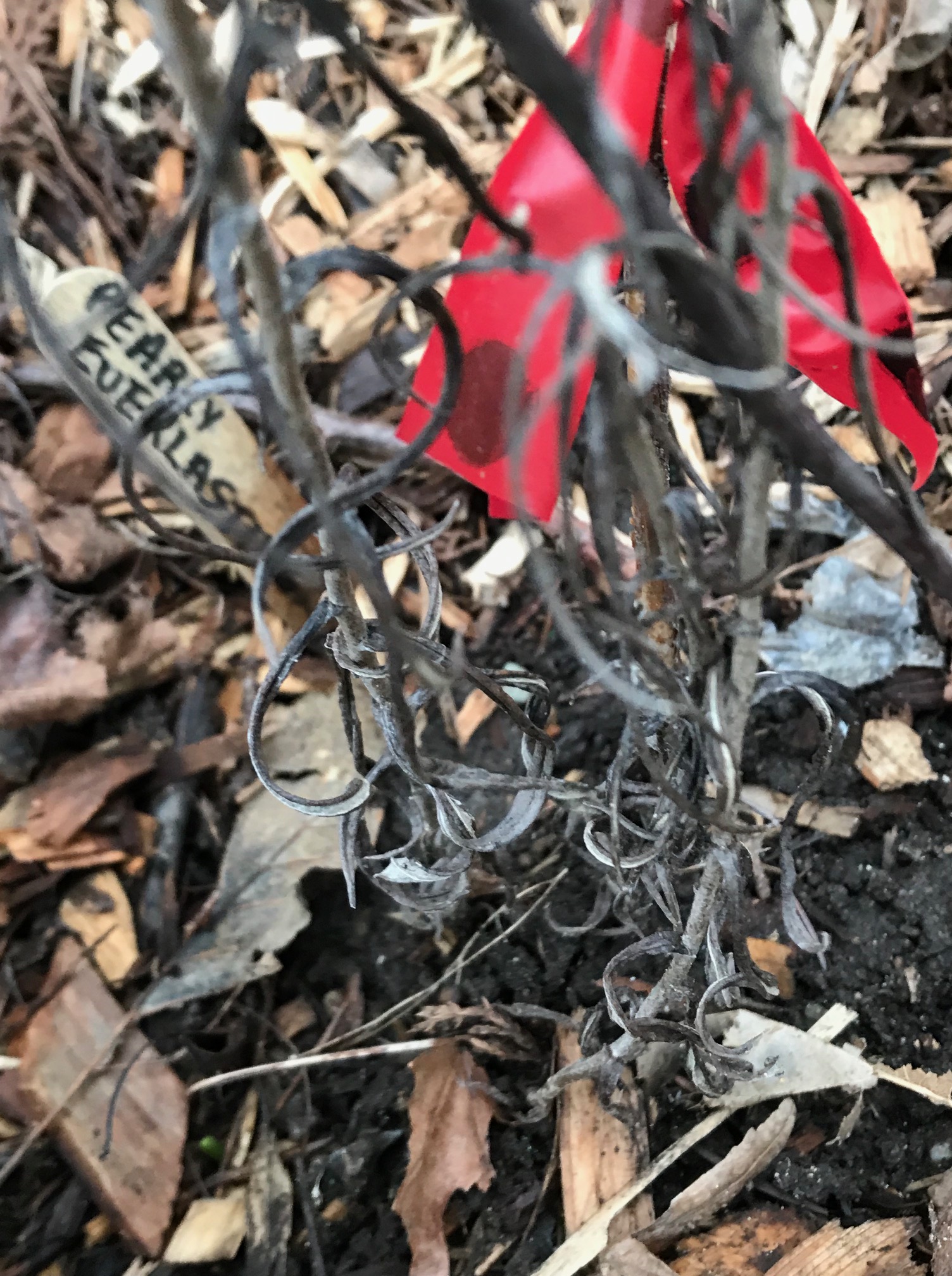
Most of the Pearly Everlasting plants seemed to wither and dry up soon after we planted them. I wondered if we were going to lose them. I don’t have photos from back then, but this is what they look like now.

Two weeks ago, I moved the leaves from around the base of one of the plants and found a few shoots coming out of the ground near it.

I looked at the ground around that plant again on January 25th and this is what I saw!

I’m excited and eager to see how these shoots/shrubs change day to day, month to month, and year to year.

GreenFriends Newsletter: January 2019

The January issue was published early! To download it, click on the photo.
Enjoy!

Interview by Maya Klem: “Forest Steward Spotlight- Karuna Poole”

What park do you work at?

Cheasty Greenspace on North Beacon Hill.

How long have you been involved with Green Seattle and why did you chose the park where you work?

This stretch of Seattle’s Greenbelt is behind my house. The land had been overrun by blackberry vines and ivy for about 30-50 years. By 2016, the densely packed blackberry vines were five to nine feet tall on most of the property. One day in August of that year, I decided I wasn’t willing to stand by and watch trees die anymore. I found my shears and started cutting the vines away from the trees. Then I had an idea. I belong to a group known as GreenFriends. Some of the GreenFriends members in our area agreed to take on this endeavor as one of their projects. Soon thereafter, we started working with the Green Seattle Partnership.

What keeps you volunteering with the Green Seattle Partnership?

I love the work. I love watching the land transform in front of my eyes. I love working with the Green Seattle Partnership staff. I love working with the volunteers. I love serving Mother Nature. I am so grateful for all the help I receive from Green Seattle Partnership. The Partnership provides classes and supervision that is invaluable. They also provide us with the supplies we use and the trees, shrubs and ground covers we plant.

Do you have a favorite memory from your involvement?

I remember a time when I was cutting through a mass of blackberry vines and saw what looked like a small section of a concrete block. Over the next few weeks, I saw more glimpses of concrete. I remember thinking the block was at least eight feet long. What could it be? How did it get here? In March 2017, Seattle Parks Department staff cut down blackberry canes throughout the site. It was at that time, we discovered that the concrete was part of the slab foundation of a house. We think it might have burned down in the 1950’s. We turned that foundation into a place we call “The Rack Zone.” The rack zone contains the racks where we dry most of the invasive debris we have removed from the site.

What is something funny or unusual that has happened at an event/while volunteering?

It may seem strange, but I am fascinated by the trash we have found during work parties. We have removed around a hundred golf balls, four golf clubs, stuffed animals, and much, much more. My favorite items have been toy dinosaurs, a plumber’s tool kit from the 50’s, metal handcuffs and a gold bracelet studded with 27 “diamonds.” I found the bracelet, about six inches underground, when I was digging out a blackberry root ball. I assumed it was costume jewelry but as days went by, I kept thinking, “What if it isn’t?” I took it to a jeweler who, after looking at it under a microscope, determined that it was “fun jewelry”.

What part of the work makes you feel that you are making a difference in your community through forest restoration?

During the last 27 months we’ve replaced invasive plants with 88 trees and 750 shrubs and ground covers. There is no question that we are making a difference in our community as we restore this part of the Greenbelt to a place that provides shelter and food for wildlife, enhances air quality, and provides beauty and tranquility for humans and other living beings.

Is there a specific time when you looked at your restoration and felt like you were finally making progress? If so, tell us about it. If you haven’t had that moment yet, what do you think will make you feel like you are finally making progress on the ground?

Soon after I started the project, I realized that it would become much bigger than the area behind my house. Still, I was stunned and overwhelmed when the Seattle Parks Department staff cut down the invasive vines on most of the site. How in the world would we manage this huge amount of work with such a small number of volunteers? After a sleepless night, it occurred to me that it was a good opportunity to practice staying in the moment by focusing on one task at a time. That day, I decided to clear blackberries and weeds from one small area. Three hours later, I was amazed by how much I had accomplished. Suddenly, the project seemed doable. We would do it one step at a time.

If you were plant species found at your restoration site (native or non-native) which would it be and why?

I don’t have a clue how I am like Roemer’s fescue but I do know that the plant fascinates me!
If you aren’t working in the park where would we most likely find you and what would you be doing?

You would probably find me inside, in front of my laptop. I coordinate the process of putting together a monthly GreenFriends online newsletter that is usually 30-35 pages long. I also write for my blog, “Living, Learning and Letting Go.”

Anything else you want us to know?

We’ve offered around 40 work parties since we started this project. Some events have had three volunteers, our biggest had 47. I appreciate Shirley Rutherford, Claire Oravec, Haley Rutherford, and the other volunteers who have served as team leaders during our events. I appreciate Susan Zeaman, a Forest Steward from another Cheasty Greenspace park, who has been a mentor to me. I appreciate my neighbor John O’Brien who has attended almost every work party and has worked many hours on his own, or with me, in addition to the work parties. I appreciate the environmental science students, corporate groups and other volunteers who have supported this project through their enthusiasm and their labor.

To learn more about Karuna and her team’s work visit her blog by clicking here

Want to have your own chance to meet Karuna and to hear more about her time as a Forest Steward with Green Seattle? Then starting in the new year, you should attend one of the upcoming volunteer work parties at Cheasty Blvd. and help Karuna to continue her Forest Steward legacy!

~~~

Maya Klem

Stewardship Associate, Forterra

Maya was born and raised in the Pacific Northwest, and is thrilled to be part of a team dedicated to protecting the land she has always called home. Maya recently graduated Western Washington University where she studied Biology, Chemistry, and Spanish.   During her time in college, she discovered a passion for conservation and restoration work while studying in the jungles of Costa Rica and Peru. Aside from exploring tropical and temperate forests, Maya enjoys cooking, traveling, skiing, and smiling at dogs. Maya is serving a one year AmeriCorps term with Forterra.

Greenbelt Restoration Work Party: A New Beginning- December 10, 2018

In August of 2016, if you had stood on the property that borders the western section of our GreenFriends Greenbelt Restoration Project, you would have seen land covered by blackberry, bindweed and ivy vines.

If you viewed the Greenbelt from that same place today, you would see an expanse of cleared land. The invasive plants have been replaced by more than 800 native trees, shrubs and ground covers.

While there will always be more work to do on this site… lots more… it also seemed like it was time for us to begin to focus on the adjacent Greenbelt site, the one to the north of the Hanford Stairs. I have been eager to begin that work in earnest for some time.

On December 10, we held a tiny work party. Four of the five people who registered for the event were individuals who have served as team leaders at previous work parties.  Most of them have been involved with this project from the beginning. (The fifth person was a neighbor we had not met before. She and her daughter came for the last hour of the work party and dove right in; helping wherever they were needed. I look forward to working with the two of them in the future.)

This small group was an ideal way to begin our new focus. The photos below show what the area looked like when we began to work that morning.

(Click on any of the galleries to enlarge the photos.)

Before the work party:

Three of the participants worked in areas along the Hanford Stairs; one worked towards the top of the stairs, one in the middle and one towards the bottom. I cleaned up an old trash dump that was about 20 feet into the site. When I needed a break from trash, I pulled out ivy in the surrounding area.

This work party was interesting for a variety of reasons. It was the first time in years that we were working as individuals instead of leading teams of volunteers. Also, since we were each working in a different area, there was almost no interaction between us. From time to time, it was so quiet that I wondered if everyone had gone home. Soon after having that unlikely thought, I would see or hear the rustling of a branch and know I wasn’t alone. Working in the silence felt very sacred to me.

We accomplished so much during that three-hour period. The transformation was remarkable.

After the work party:

This land seems very different than our original site. There are fewer blackberry vines and more ivy. There are a lot of sword ferns and Oregon Grape shrubs. It will be interesting to see what other native plants are present when as everything begins to bloom in the Spring.

We’ve barely begun to explore this site, but we only need to look beyond the Hanford Stairs to see what our next steps will be.

GreenFriends Newsletter: December 2018

To download the latest PNW GreenFriends newsletter, click on the photo.

Enjoy!


Greenbelt Restoration Work Party: DocuSign Planting Day- November 15, 2018

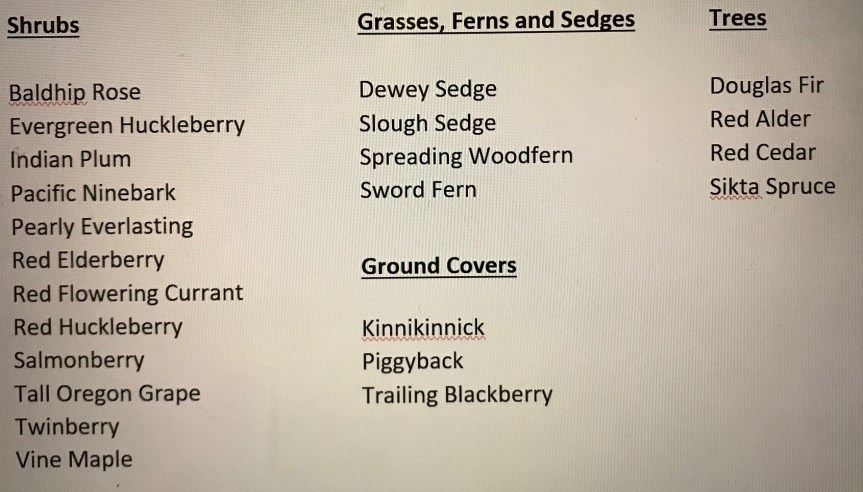
The November 15th planting day work party was the sixth forest restoration event we had held in six weeks. The first five work parties focused on preparing the site for the 33 native trees and 220 native shrubs and ground covers we would be planting. This was our fall 2018 plant list:

On November 15, 2017, a corporate group from DocuSign came to work at our restoration site. The event was held on their Global IMPACT Day. At that time, I looked up the philosophy behind Impact Day and found this statement:

We believe character is defined through action. With DocuSign IMPACT, we are committed to putting this character into action by harnessing the power of DocuSign’s people, products, and profits to make a difference in the global communities in which our employees and customers live and work.

Employees from DocuSign returned for another IMPACT day on April 27, 2018  and they would also be doing our Fall 2018 planting. I love working with them and was eager for their arrival.

The big day finally arrived. This time, 22 employees participated. Our staff consisted of Maya from Forterra; Susan, a Forest Steward from another Cheasty Greenspace site; Claire and Shirley from GreenFriends and me.

After a brief orientation, we got to work. I think the photographs below say it all!

(Click on any of the galleries to enlarge the photos.)


Once again, the DocuSign employees did amazing work and I think everyone had a good time. Rumor has it that they may come back again in April. I sure hope that is the case!

I offer my heartfelt thanks to everyone who participated in our planting day and to everyone who helped prepare for it. Each person made a significant and important contribution to returning this stretch of Seattle’s Greenbelt to a healthy forest.

Greenbelt Restoration Work Party: November 10, 2018

The November 10th work party was one of our biggest. Six team leaders, four of which were Green Friends members, four neighbors, and 29 students from the UW Introduction to Environmental Science class participated.

During the first part of the work party, we split the group in half and ran two bucket brigades at the same time. One spanned the distance from the wood chip piles located at the bottom of the Hanford Stairs and the Greenbelt. We had used wood chips from those piles at the previous work party, so the piles looked small. I had expected that we would finish moving those chips and need to move to piles at a different location but that wasn’t the case. Even now more wood chips are available there. The second bucket brigade started at the top of the Hanford Stairs. In that location there were two piles of wood chips that had been delivered the previous week.

These bucket brigades had two purposes. 1) We would create new piles of wood chips throughout the restoration site. The chips in those piles will be used during our November 15 planting work party, during which time two buckets of wood chips will be placed around each tree, shrub and ground cover that is put into the ground. In this instance, the wood chips serve as mulch, reducing weed growth and holding in moisture. 2) We would finish covering most of the paths that snake through the site.with three inches of wood chips. Our hope is that having a thick layer of wood chips on top of the paths will prevent them from getting muddy and slippery during the winter rains.

(Click on any of the galleries to enlarge the photos.)

During the second part of the work party, we formed four teams. These teams focused on getting areas ready for the upcoming planting event. One team moved dried branches and blackberry canes out of a new planting area. That group also spread dirt in an area where a compost pile had been taken apart during previous work parties.

The second team cleared the ground around two sides of a red twig dogwood patch.

The third team pulled out blackberry root balls and raked out a section of land north of the Hanford Stairs.

One of our neighbor volunteers cut down blackberry canes and dug out blackberry root balls and weeds from an area just across the stairs from the third team.

We make a plant order in May of each year. The Seattle Parks Department provides us with the plants towards the end of October or the beginning of November. This year we had ordered 250 plants of 23 varieties.

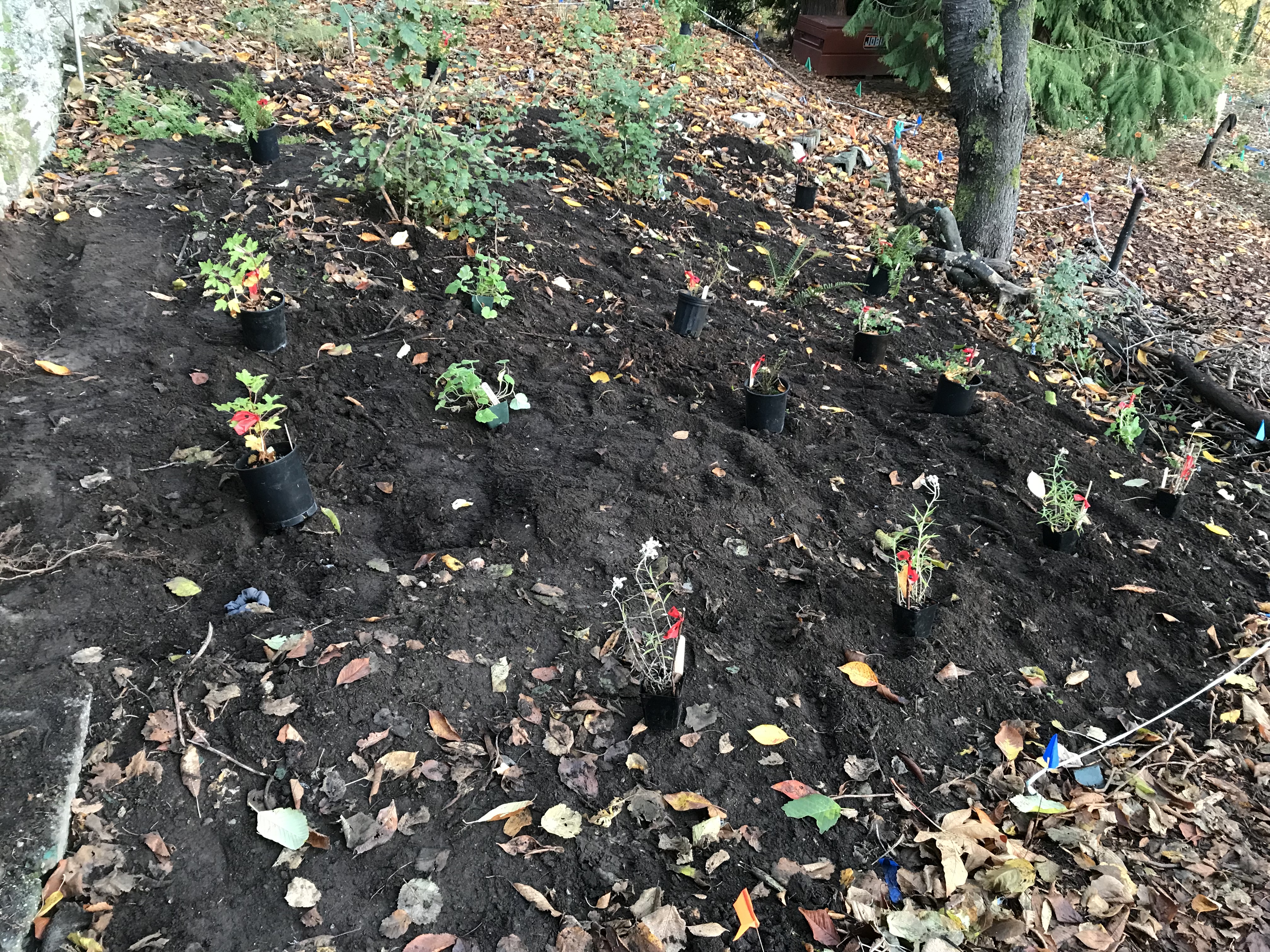
Prior to this work party, the shrubs and ground covers had been separated into ten groups, each number assigned to the planting area where the plants will be placed in the ground. The trees were grouped separately.

The fourth team carried those trees, shrubs and ground covers to the areas where they will be planted.

After the work party was over, three of the team leaders walked around the site placing every plant in the spot where it will be planted.

Thanks to the effort of these students, neighbors and team leaders, we are now ready to plant. I am so excited to see what the land will look like once the trees, shrubs and ground covers are settled into their new homes!
Greenbelt Restoration Site: We Are Almost Ready!

We’ve been preparing for our first 2018-19 season planting day for months. We’ve done that by 1) putting a three inch layer of wood chips on the paths that run throughout the site, 2)clearing new planting areas, and 3) weeding the existing planting areas.

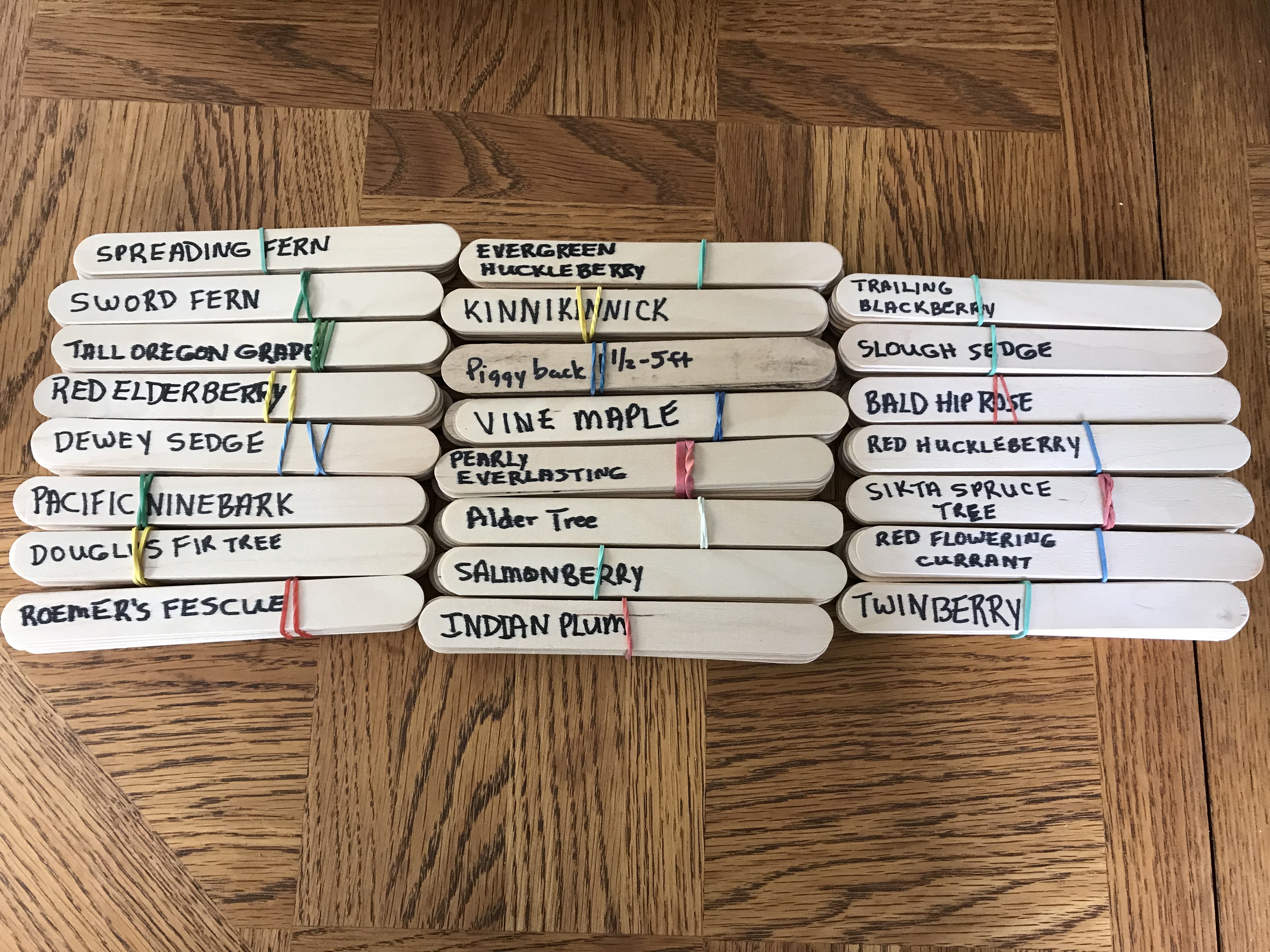
In mid October, I started making “plant signs” by writing the name of each plant we had ordered from the Seattle Parks Department on a Popsicle stick. The “signs” would be put into each of the pots once we received the plants. After each tree, shrub or ground cover has been planted, the volunteer who does the planting will push the sign into the ground next to the plant.

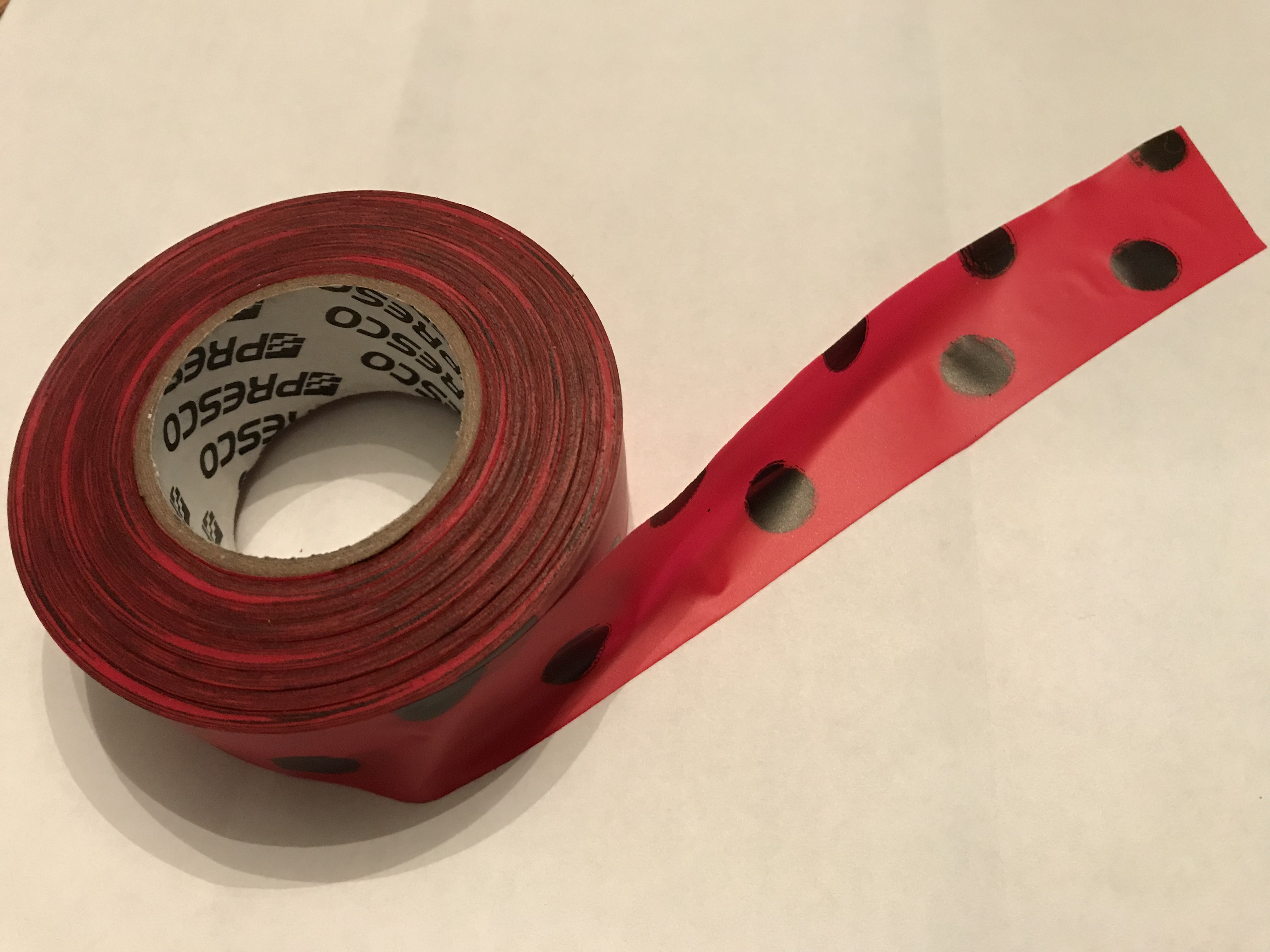
Each year, flagging tape is used to tag the plants so we know what year each of them was planted. Blue and white checkered tape was used throughout the 2017-18 planting season. During the 2018-19 season, the tape will be red with black polka dots. This year’s flagging tape was chosen by a group of children!

The normal practice is to tag each plant after it is planted. This year, we are going to put the tape on the plants before the planting day. That will ensure that each plant is tagged and will allow the us to tag the plants in a more leisurely manner.

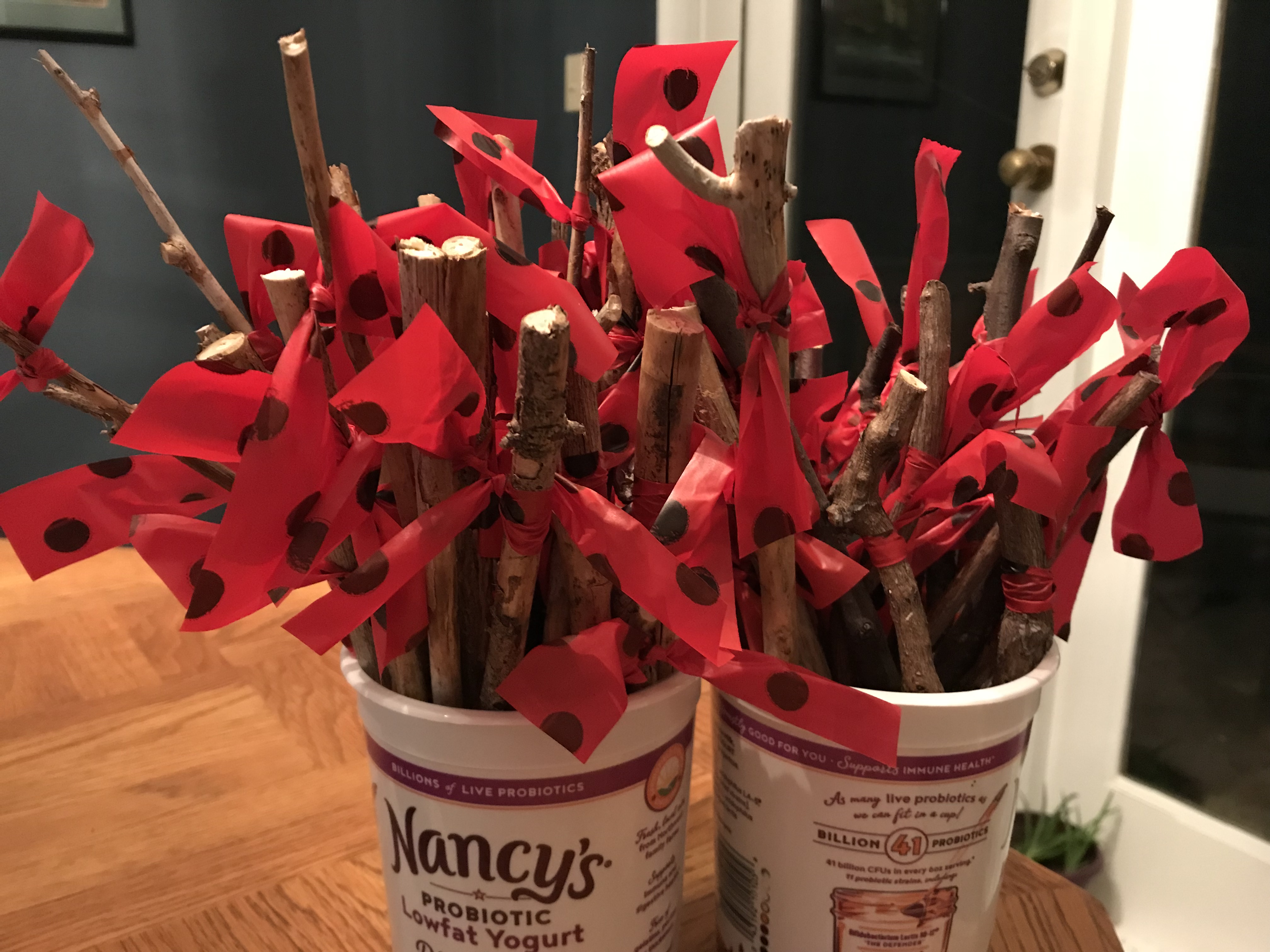
Small plants are often not able to be tagged in the same way as the larger ones, since they may have fragile or tiny stems. In the past, we have picked up a dried branch from the ground and put the flagging tape on one end and then pushed the branch into the ground near the newly planted plant. This year, I decided to prepare the flagging sticks ahead of time too. It occurred to me this was also a way to put the small but sturdy branches that are in our debris piles to good use.

I gathered several branches from the site and brought them into my house where I could prepare the sticks in comfort. From these few branches, I was able to make 65 flagging sticks! I needed to make more, but this was a good start. (Click on any of the galleries to enlarge the photos.)

A fellow student in my Tai Chi class gave our restoration site three cedar trees he had raised. Those were the first trees I tagged.

Our plants arrived on October 30. When they were delivered, they had no labels and were not sorted.

It was a lot easier for me to sort the plants this year than last, since I was more familiar with the plants. I sent photos of the varieties that I wasn’t sure about to Jayanand, a plant ecologist friend who lives in Pt. Angeles. Soon, all of the plants were sorted and ready to be tagged.

After our October 21st work party, Sarva, Anavadya and I picked out locations for the 33 trees we will be planting. Sarva and I also met on November 4th to decide where most of the shrubs and ground covers will go.

The other thing that happened on November 4th was that Kavita performed a puja asking Mother Nature for her blessing, to protect and help the new plants to grow.

We already have 37 volunteers registered for our November 10th work party. On that day, we will finish preparing the site for planting. After that work party, Sarva and I will put the plants on the spots where they are to be planted; and on the 12th or 13th, Anavadya and I will distribute the 95 plants that don’t have a designated space yet.

Then, on November 15th, most or all of the trees, shrubs and ground covers will be planted by DocuSign employees, a corporate group. This is such an exciting time of the year.