
 The Atlanta International Pop Festival was over at 10 a.m. Monday so we packed up, hitched a ride to our car and were off by 11:30. We decided to drive about 60 miles north, clean up and look for a job. When we got out of the car to pay our fee at a state campground, the ranger informed us that we could not camp there unless we had an adult chaperon. Since we were between 19 and 22 years of age, I was flabbergasted. He wouldn’t even let us wash up. He said this would be true in any state campground. His last remark was, “Lady, this is Georgia!”
We drove to another campground 20 miles away. They registered us without blinking an eye.
We showered and then drove to Griffin. The Farm Labor office was closed so we went to a grocery store to shop. As we pulled into the parking lot, we realized that some young back men and women were picketing the store. We asked them where they suggested we shop. They answered our question and then one man asked if we had come from the festival. When we said yes, he smiled and responded, “We like you people.” What a difference from the first park ranger!
The next day we drove around looking for work. It was not an easy task. The white farmers weren’t about to let us work with black pickers and they weren’t even nice about it.
One person suggested that we go to the farmers’ market in Atlanta, so we did. We applied for work at the office and then set up our camp stove in an empty stall. A truck driver and a younger guy came over and talked with us and then Brenda took out her guitar and we sang. Pretty soon another man, whom we found out later was a fruit inspector, came over and joined us.
When the office had not called us by 9 am, we decided to go look for a job ourselves. We were successful in that endeavor.
Brenda and I sold watermelons from 11:30-4:00. That night we slept in the back of the watermelon truck. The next morning the truck driver and his friend took us to breakfast and then we worked from 10:00-3:00.
While working at the farmers market, we ran into a new problem. Many of the white farmers assumed that white girls doing this kind of work were prostitutes and we were continually being propositioned. If we had wanted to, we could have made a fortune. By 3:00 we were sick of dealing with the men and took off.
Numerous people told us if we wanted to pick peaches, we should go to Fort Valley. The fruit inspector even gave us the names of some people to talk to when we got there.
We arrived in Ft. Valley about 6 pm and went directly to the Farm Labor office. I had a sense that if they knew we had gone to the festival, we would have been escorted out of town. We were told they would help us find a job, but it would not be picking. They also said they would help us find a place to stay. The apartment they arranged for us was fantastic. It was a garage apartment on the edge of town. There were two bedrooms plus a large living room and a kitchen. It was completely furnished. Our rent was $20 a week.
After we unpacked the car, Mimi and I headed for a laundromat. There was a 13 year-old white girl there who told us a lot about the festival even though she had not attended. If everyone believed the same things she did, it was no wonder they hated hippies. According to her, the hippies had “stripped naked in car washes, in grocery stores, in back seats of cars, and who knows where else.” While we were in the laundromat, a black man came in and put his clothes in the dryer. The girl had a fit. She made a nasty comment and then rushed to get her laundry and ran out the door. I was so angry by the time I left the laundromat, I was shaking. I had a sense that if I had spoken to the man, his life and ours could have been in danger.
The next day, we went job hunting. There were no jobs at the packing house, cannery or brewery so we decided to go to the fields and ask the black pickers where they thought we could get a job. They were thoroughly shocked at our inquiry, but were very nice. They told us where we could catch the pickers’ bus the next day.
The next morning we were on the bus, headed for the fields. The workers that filled the bus were, for the most part, younger than us. I heard a girl tell an older man that no, she did not respect him. She said that was what was wrong with the world; too much respect and too much waiting.
We arrived at the fields about 9:00 am. The whole bus load of us were told that we were too late and sent home. After we returned to the parking lot, we sat around and talked with the people. A few white policemen passed by which made me nervous but I decided to ignore them.
After a while, we decided to talk to the farm labor office staff again. We were told the cannery was hiring a third shift. We returned to the cannery but didn’t make it past the gate. We did go back to the bus parking lot to tell the pickers they were hiring at the cannery. As we started to drive away, a policeman stopped us and got out of his car. His words, “They want you at the cannery.” It had only been five minutes since we had left the cannery, but when we returned, they hired us.
Our shift would be 8 pm to 3 am starting that night. The woman who talked to us said her husband had bet her $5 that we wouldn’t last more than two days.
The first day, we worked 8:00 to 1:30 am and then picked fruit from 7 am to 1 pm. We were working with kids who were 13-16 years old. I really enjoyed myself.
I made $2.40 at the picking job. We were picking from trees where the fruit had been harvested before, so we earned less than we might have otherwise.
The cannery work was interesting. We were assigned to work on the machines that put the peaches into the cans and sealed them. Mimi and I were on one machine; Brenda and Laura on another. Our job was to make sure the cans were filled appropriately, both in quality and quantity. The fruit came to us at a rate of 120 peaches a minute. The cans also had to be the right weight, so we added or took away a peach as needed.
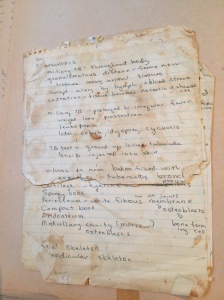
Brenda and I studied for our licensing exams as we worked. We hung our notes on the canning machine. That really surprised our foreman. He couldn’t believe we could study and work at the same time but we did and he allowed it.
We soon discovered it was a horrible, smelly job. We stood still for seven hours in water filled with peach juice. It was impossible to get the juice off of our shoes. Our shoe laces stood straight up and had a putrid smell.
The working conditions were unbelievable:
- Everyone worked eight to ten hours a day, seven days a week. If anyone missed one day, they were fired. There was no overtime pay.
- Everyone worked eight to ten hours a day with only one ten minute break; no dinner.
- No one was paid when the machines weren’t working, which could be as much as four hours a shift. If anyone left, they were fired.
A few days later we decided go picking after work. We didn’t get home until 6 pm. At work that night we were told the shifts were now going to be eight hours long and our shift would be the one to start the new schedule. That meant we had to work until 6 a.m. We were hurting so bad by the end of the shift as we had been on our feet about 36 hours.
It was interesting to note that night shift workers were almost all black and the day shift was 100% white except for the black men who did the dirty work.
We quickly tired of working in the cannery. We were ready to move on, but had committed to five more days of work.
Our bosses had been really nice to us but they didn’t know what to think about us. In fact, the whole town couldn’t figure us out. I think everyone knew where we were from, what kind of car we drove and where we were living. I believe we left good impressions everywhere we’d been, except for the first Georgia state ranger.
Saturday night of our last week, the generator in the place we were living blew out and the electricity went off. Within two minutes we were off to Macon to see a movie. We hadn’t planned to go that far. We had gone to Byron and asked where the theater was. The response we heard was, “Lady, you got to be kidding.” So we went on to Macon and saw “Two Mules for Sister Sara.” It was a good movie. We made it back to work as the first whistle blew.
Sunday night we sat and talked with Larry, our boss, after our shift was over. We really liked him. He gave us each an empty peach can as a souvenir! The cannery canned under many different labels. The one he picked for us was “Pride of Georgia!”
I knew it would be a long time before I ate another canned peach. (Among other things they soaked the peaches in lye to remove the skins. The machines we ran bubbled over with lye that had not been completely washed off.)
When we went to work on Monday night we were told that the entire night shift had been laid off. Hallelujah! That night we composed two songs.
To the tune of “The ants go marching one by one.”
The cans go marching one by one, hurrah, hurrah (x 3)
Eight more hours before we’re doneThe cans go marching one by one, hurrah, hurrah
All the peaches fell in my shoeThe cans go marching …
I close my eyes and that’s all I seeThe cans go marching …
I can hardly wait till I’m out the doorThe cans go marching …
It’s hard to believe I’m still aliveThe cans go marching …
And I sure hope the next one sticksThe cans go marching …
What will I do, it’s only eleven?The cans go marching …
While I stand here and curse my fateThe cans go marching …
I sure wish they were filled with wineThe cans go marching …
Tomorrow night we will do it again
And to the tune of “Twinkle Twinkle Little Star”
Rotten rotten little peach
Will you tell me I beseech
How past all these eyes you came?
With the rest though not the same.In my can you’ll not be found
So I’ll throw you on the ground
But alas, you’re out of reach
Someone gets a rotten peach
The next day we left Fort Valley. We had had a good experience, but swore we would never work in a cannery again. Next stop: South Carolina!
[Note: Many years later, I saw a small article in the Seattle newspaper talking about a cannery in Georgia that had been shut down because of violations. Yes, it was the cannery where we worked!]
The next post in this series will be published on Friday December 18.
To read the previous posts go to:
1970: My Summer as a Migrant Farm Laborer (Series Intro)
1970: My Summer as a Migrant Farm Laborer #1 (Seattle to Florida)
1970: My Summer as a Migrant Farm Laborer #2 (Atlanta International Pop Festival)









 Living, Learning and Letting Go