I talked about my challenges in finding the Seed-Saving farm in my last post and said I would tell you more about my visit there in a separate post. That time has come!
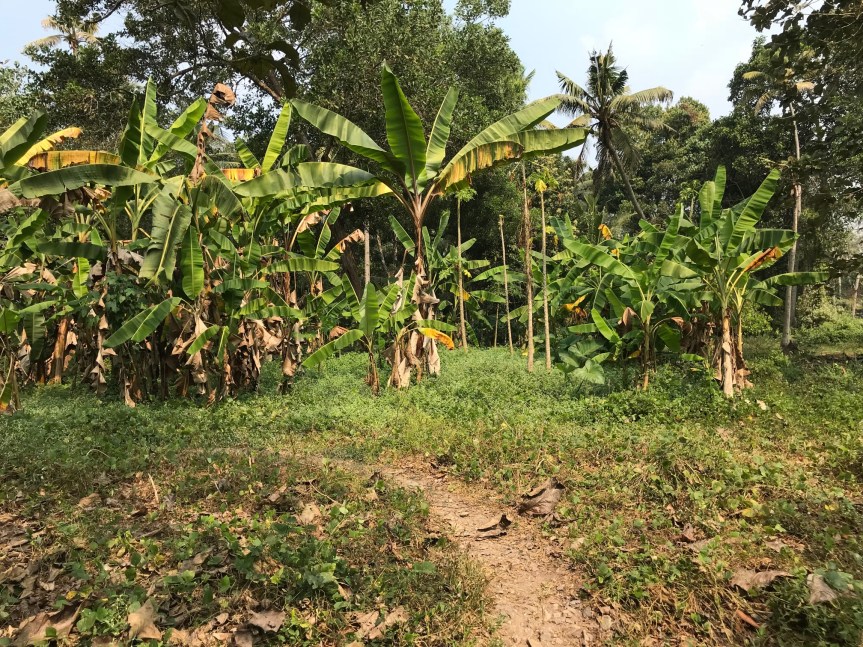
When I arrived at the farm, Lokesh, the volunteer who manages this project, told me that in Kerala they can grow four sets of crops each year. Since they had just finished harvesting the last crop and were only beginning to prepare for the next one, he was disappointed that he couldn’t show me more.
While I thought he shared an abundance of information with me, I found a delightful video on his YouTube channel that gave me a sense of what would be like to participate in this community gardening activity.
The soil on the farm, and in most, if not all, of the land in this area is very sandy and of poor quality.
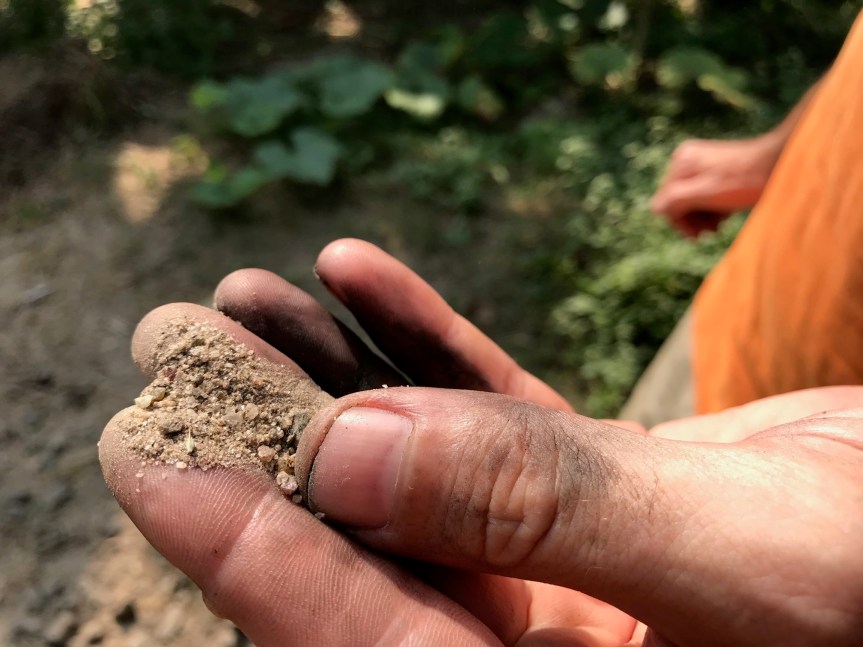
At the seed-saving farm, volunteers are making charcoal by burning coconut husks. The charcoal is then turned to powder and added to dried cow dung and dirt. Charcoal is used because it holds in nutrients. The first video in this post had a segment where the devotees were adding the charcoal to the dung/dirt mixture. In the video that mixture was put into pots and then seeds were planted in the pots. The mixture may also be spread on the land and covered with cut up coconut palm fronds or mixed with other kinds of mulch.


Ideally, Lokesh would like to have seven planting fields on this 13 acre property. At this point, they are working primarily on an eggplant field. So far, the volunteers have dug 100 holes and filled them with mulch. They add more mulch and other soil enhancers, such as the charcoal mix, as the mulch breaks down. While I was at the farm, there were two women cutting up coconut fronds to add to that area. Sticks surround each space that will eventually hold a seedling.


Another part of the farm is dedicated to producing tapioca. Tapioca is easy to grow in Kerala and it usually doesn’t need to be watered. In this farm, a plant called cirra is often grown under it. (Note: I’m not sure of the spelling of cirra.) Chaitanya told me later that cirra is one of the many forms of spinach that is grown at the ashram. There is also a red leafed plant that is being grown. In some of the other gardens, it is called red spinach and used as a vegetable. Lokesh told me it is actually a form of amaranth.


One part of the property had ridge gourds growing. I had never seen anything like them. When I read about them, I learned that they can grow up to 13 inches long. I believe the ones I saw were longer than that. I also saw remnants of pea and bean plants.


There were several nurseries at this farm. The first photo shows echinacea seedlings. I don’t remember what the other ones were.


I’m realizing that I haven’t said anything about seed-saving at the Seed-Saving farm. They are indeed saving seeds but as I understand it, part of that process is knowing how to select the right seeds and also how to grow plants that will produce healthy seeds. I know from this visit and my visit last year, that Lokesh is doing a lot of experimenting to determine how to provide the most support to the plants so that they create the best seeds possible.
On this visit, he told me that he had been given an old Kerala type pumpkin, a pumpkin that is very rare. He used four plants that were grown from that pumpkin; two of them he grew as they were and the other two he crossed with a pumpkin from the agricultural university. The pumpkins that grew from the old Kerala pumpkin seeds looked like this:
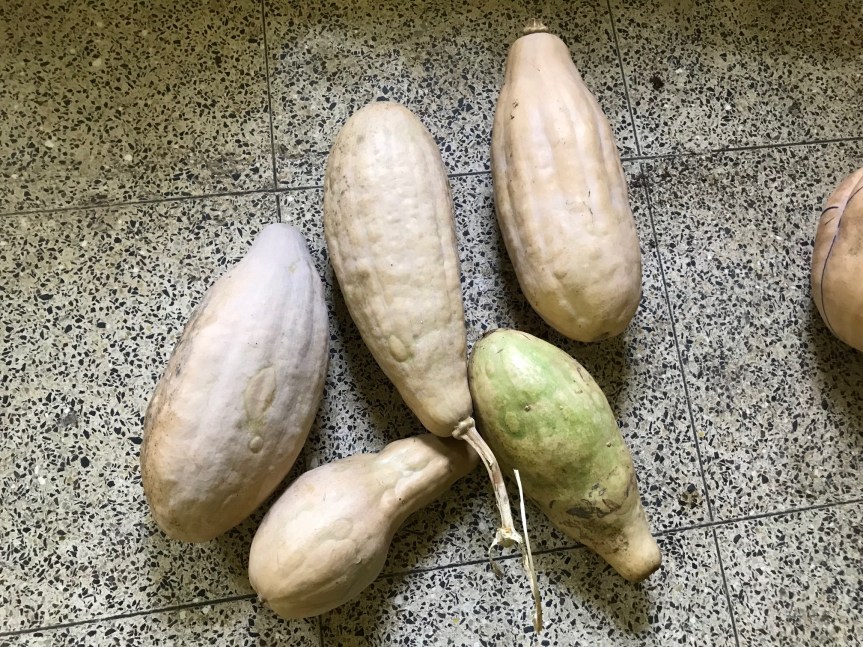
The ones that were crossed with the university pumpkin had similarities to the old Kerala pumpkin, but also differences.

Lokesh explained that he was crossing these varieties because when a vegetable is grown without diversity it becomes very weak and will eventually “fizzle out”. By crossing them, he will be able to develop a stronger strain of pumpkin and then will eventually breed out the university strain. The new plant will produce a pumpkin that will have the characteristics of the old Kerala pumpkin that gave it its superior quality, but it will be a much stronger plant. That process is called back dropping.
This video will give you more information about this topic:
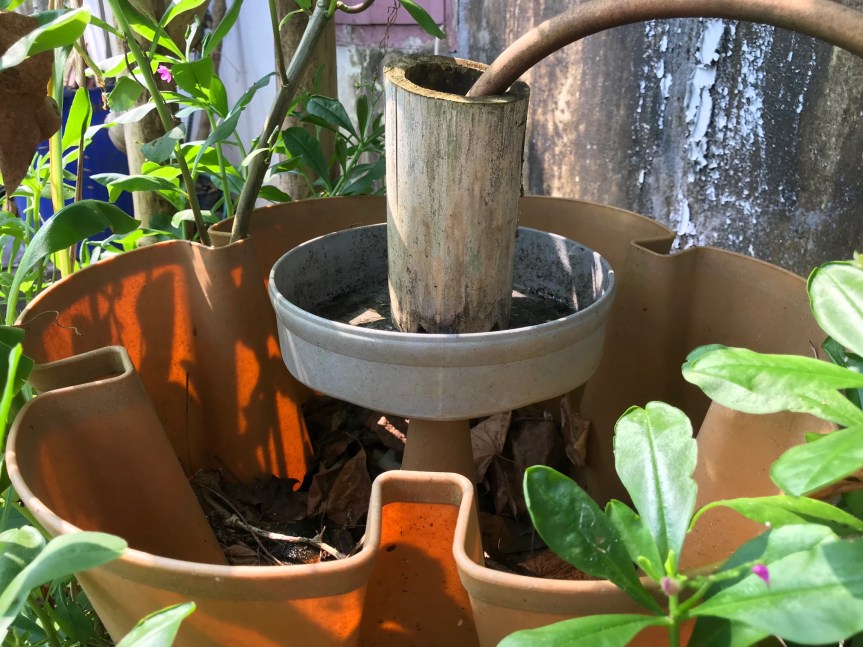
I was fascinated by two other things I saw on that day. One was a structure that provided water to a group of plants, one drip at a time. To use it, you put a bucket of water in the tub that is at the bottom of the structure. I don’t understand exactly how it works but I know that when a machine is turned on, air is pumped intermittently in a way that causes water to be pumped from that bottom tub into a container at the top of the structure. The water then drips down to the plants below it, over a week’s time.
The first photo shows the plants and glimpses of the structure I don’t know what the main plants are, but the big ones with the long leaves are tumeric plants.

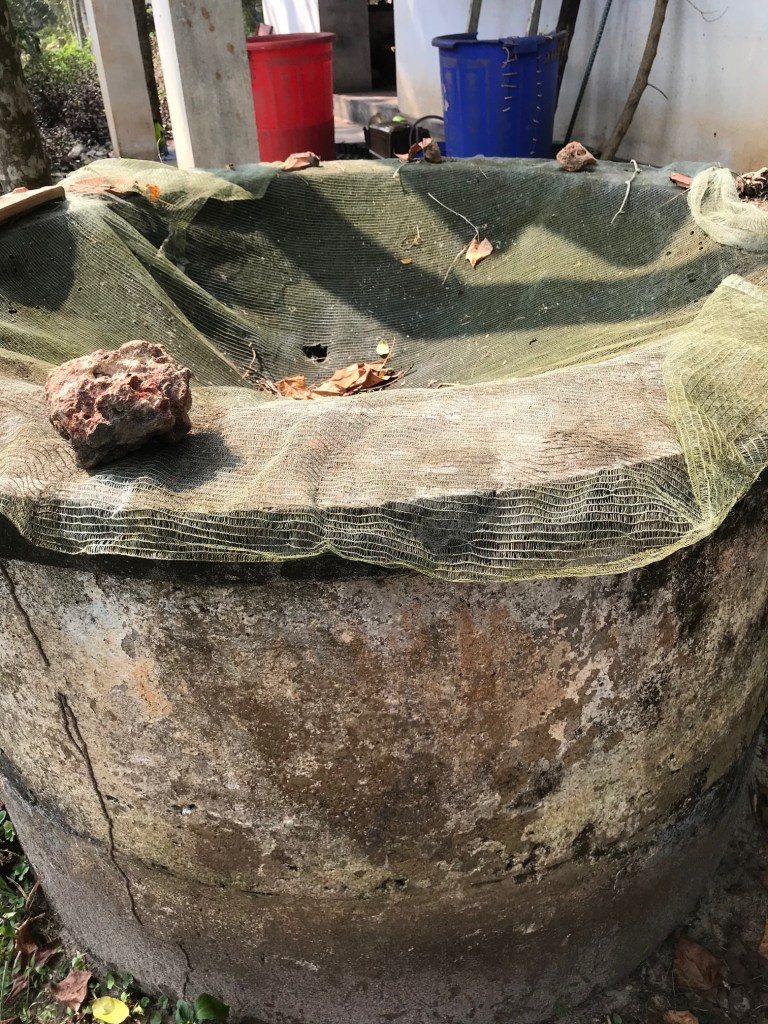
There is a well located next to the plants. Water from this well is used to fill a tub at the bottom of the structure.
The next photo shows the top part of the structure. Lokesh turned the machine on when I was there. I think some water will begin to pool in the blue-gray part after it runs for a while.)
This photo shows the body and the bottom of the structure. You will notice that the tumeric plant is drooping. That plant starts to die when it is ready to be harvested. We checked in the soil around it and could feel big tumeric bulbs.

I’m going to end this post by telling you that Lokesh is creating a blacksmith shop on the property. He is inventing all sorts of things there. His most recent invention is a power hammer made from an old bicycle!
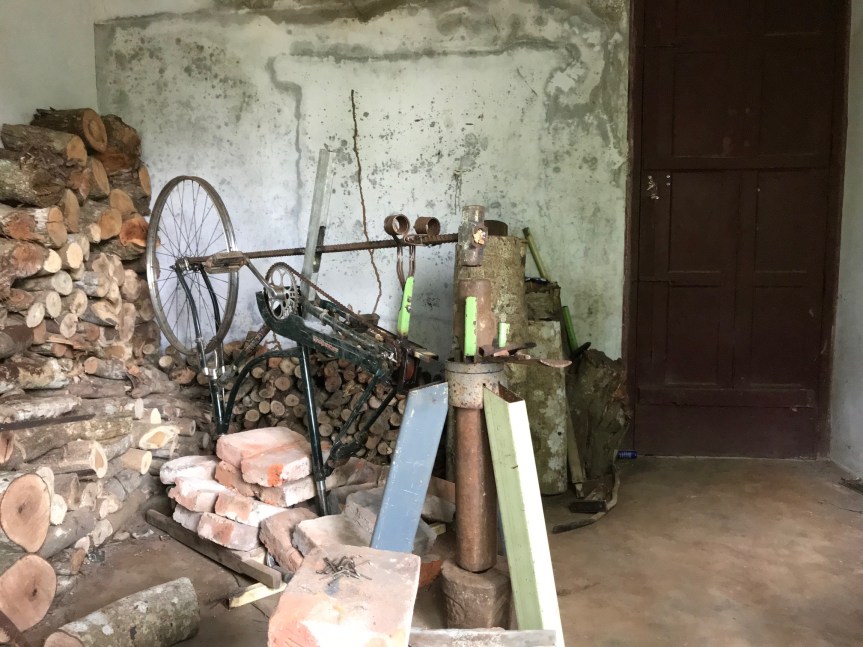
Below is a video that shows how he made the hammer. There are several other blacksmithing videos on his YouTube channel, as well as videos on many other interesting subjects.
As I imagine you can tell from my post, I thoroughly enjoyed my time at this farm and look forward to going back there the next time I am in Amritapuri.
[Note: I apologize for any mistakes I may have made in relaying the information I learned that day. These subjects are all so new to me.]
To read the previous posts in this series click here.



 Living, Learning and Letting Go