One Step at a Time

Snowberry fruit

In April, my neighbor John and I started doing some clearing of invasive plants, mainly ivy and blackberry vines, in the Greenbelt site that is to the north of ours. Members of Earth Corps had cleared parts of that site 10-15 years ago. They had also planted evergreen trees, native shrubs and ground covers. I know that Susan, who like me is a Green Seattle Partnership Forest Steward worked in that area with some elementary school students several years ago, but for the most part it has gone wild. I’ve been eager to delve into removing the invasive plants from that land for some time, but know that clearing and maintaining our main site needs to stay the priority for our work parties and for work John and/or I did on our own.

A few weeks ago, I decided to spend two hours on two different days working along 25th Avenue S north of the Hanford Stairs, which is on the west border of the Greenbelt site that has been calling me. Once the area along the street was cleared, I/we would clear the land along the Hanford Stairs and eventually work deeper in the forest. We could work on this project from time to time and still keep our main Greenbelt site our top priority.

The small area I decided to tackle that day was dense with snowberry and Indian plum shrubs, a maple tree and numerous evergreen trees. Blackberry vines ran through it all. The shrubs were so close together that it was impossible to walk through them. Experiencing the density of the native shrubs was a good reminder that almost everything we are planting in the other site will get big and I need to keep that in mind when making planting decisions.

I couldn’t figure out how to reach the blackberry roots so that I could dig out the root balls. The best I could do was reach into the foliage and cut back the stalks.

The first picture below shows what the shrubs along the street looked like when I began working that day.

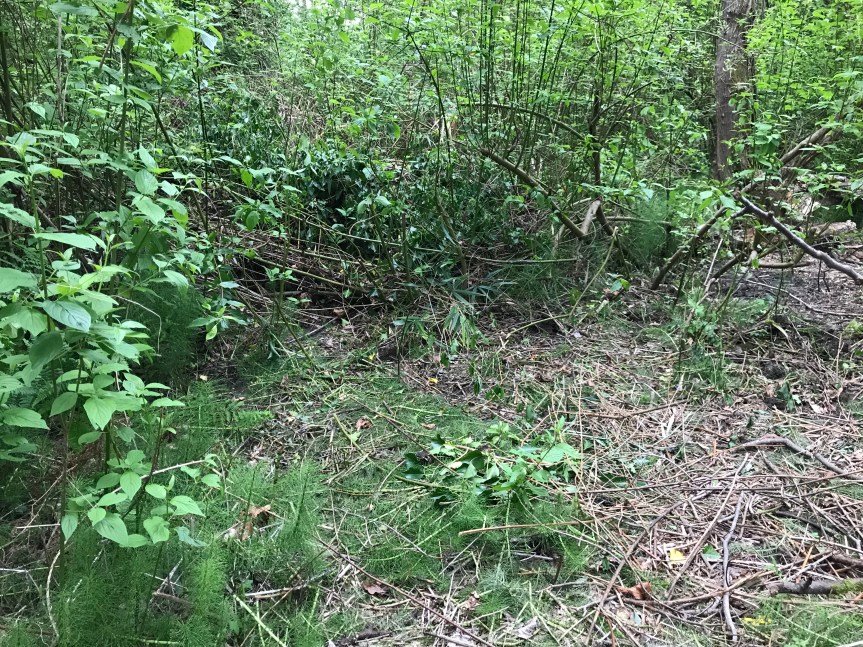
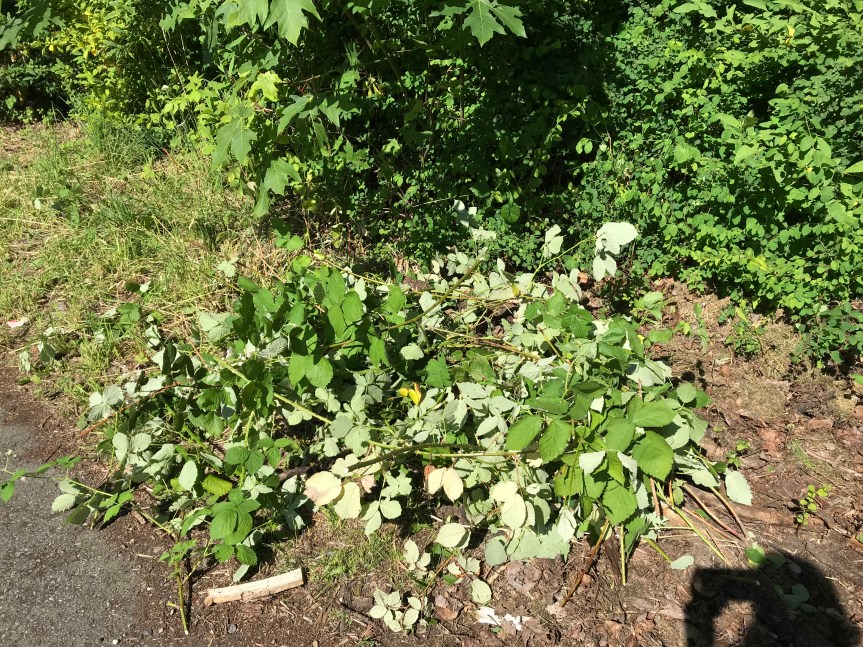
The next one is of the first pile of blackberry stalks I removed.  By the time I took that photograph, I had already partially cleared the ground to the right of the cut stalks. You can get a sense what the ground looked like when I started by looking to the left of the pile.
At one point, I noticed that the snowberry plants had many tiny pink blossoms on them.

A moment later, I saw a small purple fruit deep in the foliage. I realized it was the fruit of an Indian plum shrub. I enjoyed seeing what the plants looked like when they were mature. I haven’t noticed either the pink blossoms of a snowberry plant or the purple fruit of an Indian plum shrub on our site yet.

As I was preparing to stop my work on the second day, I heard lots of buzzing. When I took the time to investigate the source of the sound, I saw honey bees, bumble bees and mason bees flitting from one pink snowberry blossom to another. I loved seeing that wildlife has returned to this site and look forward to the plants in our site getting big enough to attract the bees too.

Once I had cleared the land in front of the shrubs, and cut back as many of the blackberry stalks as I could reach, I laid burlap bags on the ground and scattered wood chip mulch over them. The burlap and mulch will help reduce weed growth and hold in moisture.

This is what the section looked like when I stopped working on the second day.

The before and after photos below show the increased space that resulted from removing the blackberry stalks. I hope to learn how to get to and dig out the roots balls. I also need to find out if there are other things I should be doing to decrease the density of the shrubs.

At one point, I saw an evergreen tree covered by blackberry vines deep in the mass of shrubs. I tried to get to it from all sides but never found a way into the thicket that surrounded it. I look forward to being able to free that tree from the blackberries. Hopefully that will be in the near future.

[I don’t think that particular tree can be seen in the following photo, but the photo may give you a sense of why I couldn’t get to it.]
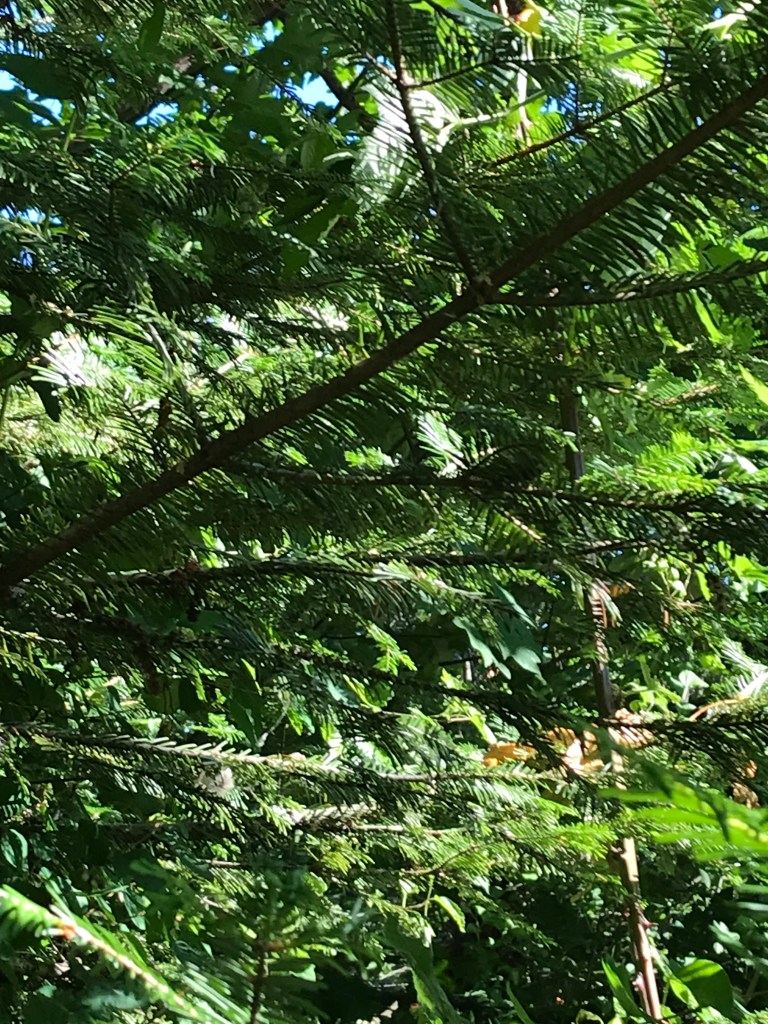
As I was trying to find my way to the tree, I saw a shrub with beautiful white flowers. I thought it was stunning. I used my phone’s Plant Net app to see if I could find out what it type of plant it was. I was excited to discover it was an oceanspray shrub. In February we planted 10 oceanspray shrubs in our site. I loved having had a glimpse of what they will eventually look like.

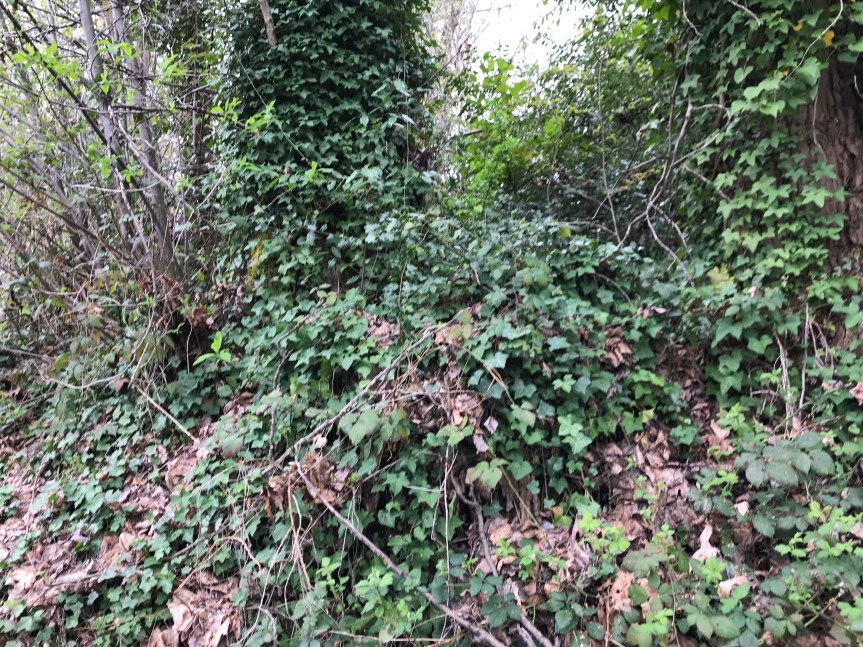
The strip of land I worked on was only 15 to 20 feet long. So much more needs to be done even in this small section of the second Greenbelt site. Below are photos taken of an area adjacent to the one I described in this post. It is another 15 foot segment.

The strip along 25th Avenue S is 150-200 feet long. The whole site is 1.89 acres. I know it is important for me to focus on the moment rather than looking at the immensity of the whole. In other words, I will remember I need to move forward “One Step at a Time.”
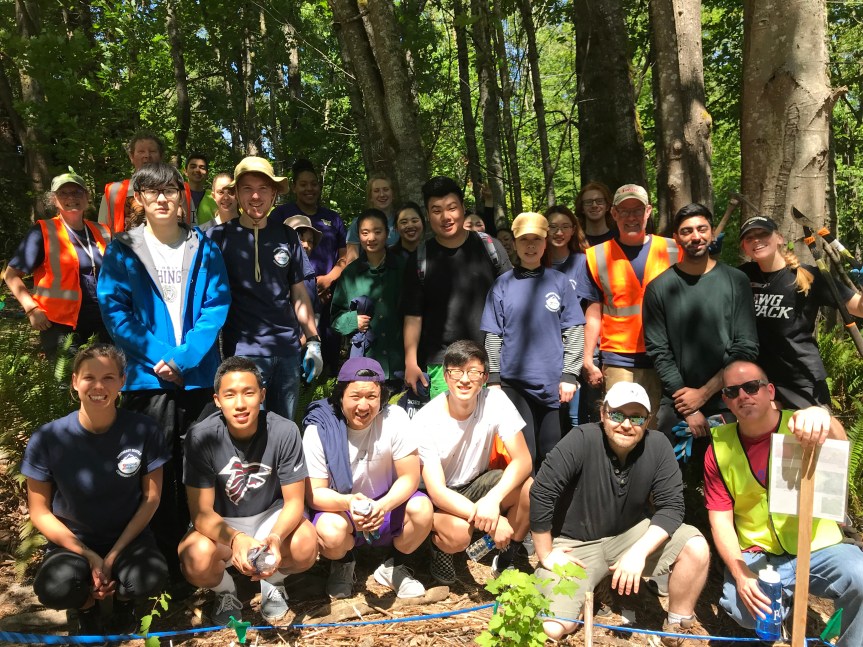
Greenbelt Restoration Work Party: May 12, 2018

Our May 12th work party was a collaborative effort between GreenFriends, Green Seattle Partnership, Bridge2Beach, and neighbors. Thirty-two volunteers participated in the event. The five team leaders were GreenFriends members and/or neighbors. Additional GreenFriends members and neighbors helped with the sign in process and photography.

Twenty-five additional volunteers had pre-registered through the Bridge2Beach and Green Seattle Partnership event calendars. Twenty-one of them were from the U.W.’s Introduction to Environmental Science course. The UW students who had worked at our May 9 event could also be considered part of this collaboration since they did so much to prepare the planting sites for the work that was done on the 12th.

The volunteers arrived by car, bus and light rail. Once they had signed in they each picked up a pair of gloves and listened to an orientation. The various work opportunities were presented and then the participants divided into three teams.

Sixteen of the volunteers and their team leaders formed a bucket brigade to carry wood chip mulch from the city street into the Greenbelt. Once on the site, the mulch was placed around approximately 300 plants which had been planted and mulched in October or November of last year. Since there is no water source on the site, the additional mulch will help hold in moisture during the dry summer months.

Click on any of the galleries to enlarge the photos.

The second team consisted of six volunteers and the team leader. They removed a dense cover of invasive ivy, blackberry vines, and holly from an area on the eastern border of the site. While there will be many other teams working in this area in the future, the transformation that occurred during this three hour work party was remarkable.

Before

After (These photos show only a small segment of the work this team did that day.)

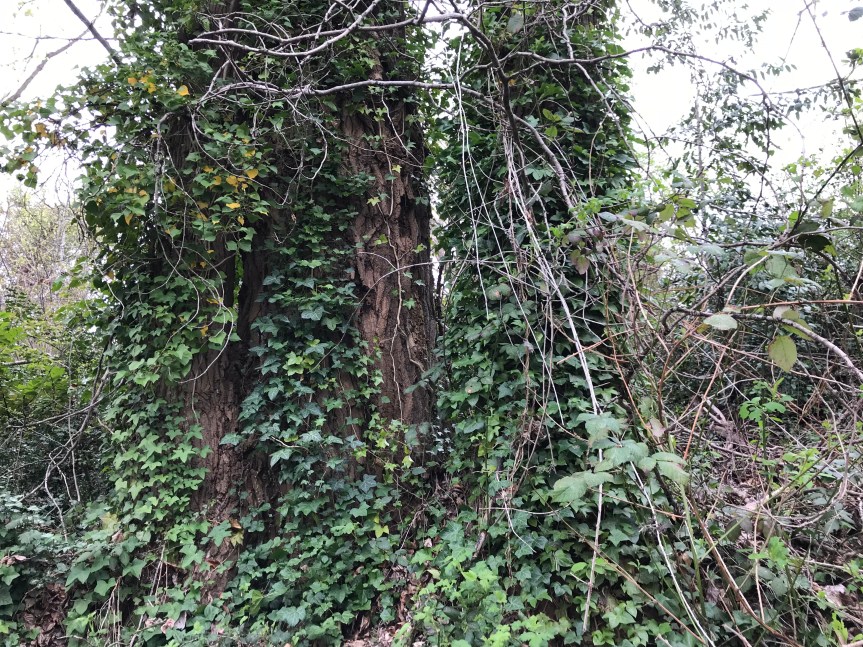
The third team was comprised of the team leader and three other volunteers. They worked in an area that is north of the site we’ve been restoring. In three hours time, they cut survival rings around eleven trees!  In addition, they began to remove ivy and blackberry vines from the land in the vicinity of those trees. [Note: Ivy kills trees. We create a survival ring by removing ivy on a tree from ground level to shoulder height. That way the ivy that is higher up will die off without creating the risk of pulling dead or dying branches onto ourselves or other people.]

While I didn’t take a photo of this area prior to the work party, you can get a sense of what it was like by looking at the backgrounds of the photos below.

I had eagerly awaited this particular work party, and it was everything I had hoped for. We had finished mulching all of the planting areas and accomplished significant invasive plant removal in two new areas.

Next steps:

  1. Remove blackberries and other weeds from pathways all over the site.
  2. Remove weeds from all over the site as they pop up again.
  3. Take apart dried debris piles that are ready to be spread on the paths.
  4. Remove invasive plants from small areas on this site that have not been cleared before.
  5. Continue clearing the larger areas we worked on during this work party

Greenbelt Restoration Work Party: May 9, 2018

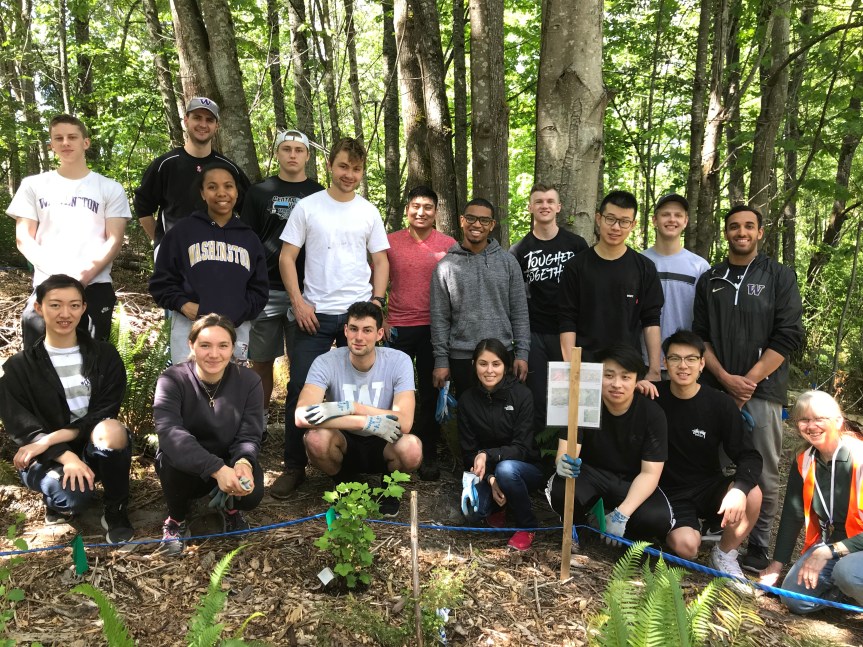
Many of the volunteers who help us with our GreenFriends Greenbelt restoration project are students from the University of Washington’s Introduction to Environmental Science course. We are having a big work party this coming Saturday, May 12th, but I decided to offer one mid-week as well. Susan Zeman, a Green Seattle Partnership Forest Steward in a park just south of ours agreed to help me lead the work party. Seventeen students participated. They were a delight to work with.

Susan led a work group in an area that is packed with invasive holly, blackberries and bamboo. It is also an area that has many red twig dogwood plants and a red flower from a rhododendron bush can be seen in the distance. Susan’s group was tasked with starting the process of removing the invasive plants so that the native plants can thrive.

While it will take many work parties to free the area from invasive plants, the group made a lot of progress during this three hour work party.

They were even able to dig out a huge clump of bamboo.

Towards the end of the work party, the students carried all of the invasive plants they had removed to the “Rack Zone”, a place on the site where the debris dries out on racks. By being kept off the ground, the vines and other invasives will not be able to re-root.

The second group of students removed blackberry vines, bindweed and other weeds that had started to sprout in all of the planting areas.

They also removed any wood chip mulch that was too close to the base of the plants. (When we spread wood chip mulch we take care to create a “donut hole” around each plant, keeping the wood chips from actually touching the plants. When it rains, the  chips tend to slide into that empty space.) These students cleaned weeds and chips from the donut holes around approximately 500 plants!

When they finished cleaning up the planting areas, they pulled out ivy, blackberry and bindweed vines that were in the paths and/or mixed in the ferns that are scattered throughout the site.

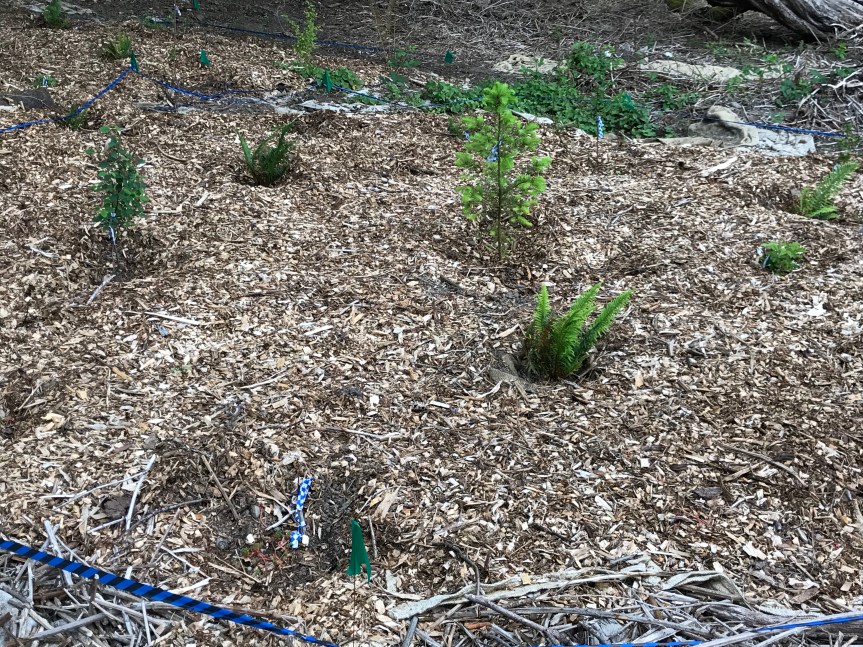
Every work party adds to the miracle that is occurring on this site. As I was writing this post, I came across a photo that was taken on March 15. It shows what one area looked like two weeks after trees, shrubs and ground covers were planted in it.

This is what that same area looks like today.


Next steps: On Saturday May 12 we will create a big bucket brigade for the purpose of spreading more wood chips around plants that were planted back in October and November of 2017. The work that the students did in this (May 9th) work party will make that process much easier. We will also be clearing ivy and other invasive plants from parts of the property that we have not worked on before.

Greenbelt Restoration Work Party: The DocuSign Employees Come Back!

On November 15, 2017, a corporate group from DocuSign came to work at our restoration site. The event was held on their Global IMPACT Day. At that time, I looked up the philosophy behind Impact Day and found this statement:

We believe character is defined through action. With DocuSign IMPACT, we are committed to putting this character into action by harnessing the power of DocuSign’s people, products, and profits to make a difference in the global communities in which our employees and customers live and work.

During that work party, the 42 DocuSign volunteers planted 330 shrubs and ground covers.

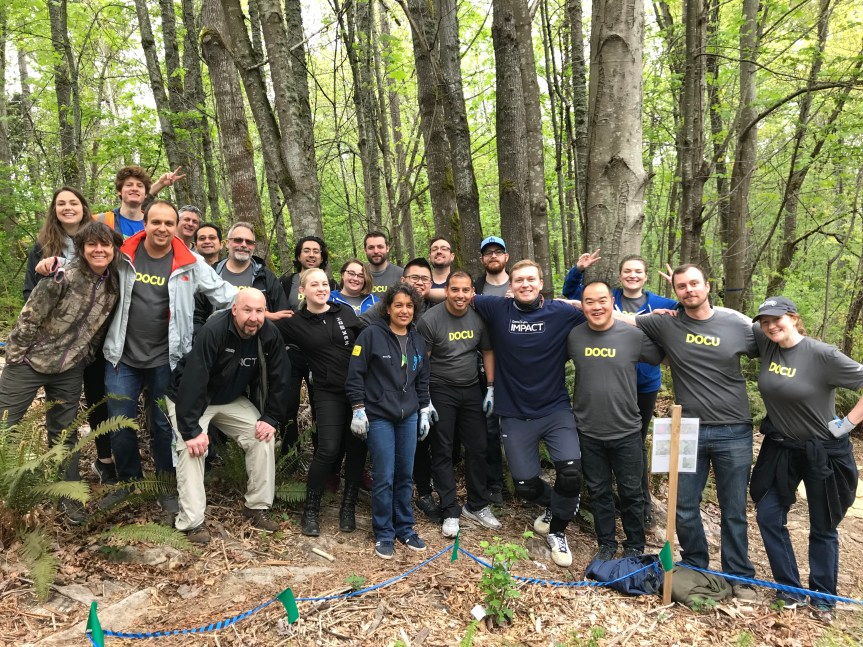
Last Friday (April 27), DocuSign held another IMPACT day, and once again they chose our site to be one of the options. This time we had 20 volunteers from DocuSign and a student from the University of Washington’s Introduction to Environmental Science class.

Our staff consisted of  Claire (GreenFriends), Jeb (Forterra) and me (GreenFriends and Green Seattle Partnership.)

I had been working with Andrew and Maksim from DocuSign to plan the event. Maksim attended the work party as well. His help that day was invaluable.

The group signed in, picked up gloves, listened to a short orientation…


… divided into three teams and began to work.

Team 1 gathered the remaining wood chips from our mulch pile and placed them around each plant in 2 1/2 planting areas. The mulch will hold in moisture and make it more likely that the plants will survive the summer if there is little to no rain. (In March there was 15 cu. yd. of mulch in that pile. At that time, it was 6-8 feet high!)


Team 2 removed weeds. While all of this land had been cleared during the year, shoots of blackberry, ivy and bindweed vines were popping up throughout the site. After the work party, I discovered that the group had weeded more than 13,500 sq.ft. of land. The ground looked so clean and open.


(Note: Two of our planting areas contain lots of horsetails. Horsetails are native plants; ones that were here before there were dinosaurs. We leave most of the horesetails alone, removing them only when they are crowding out other native plants.)

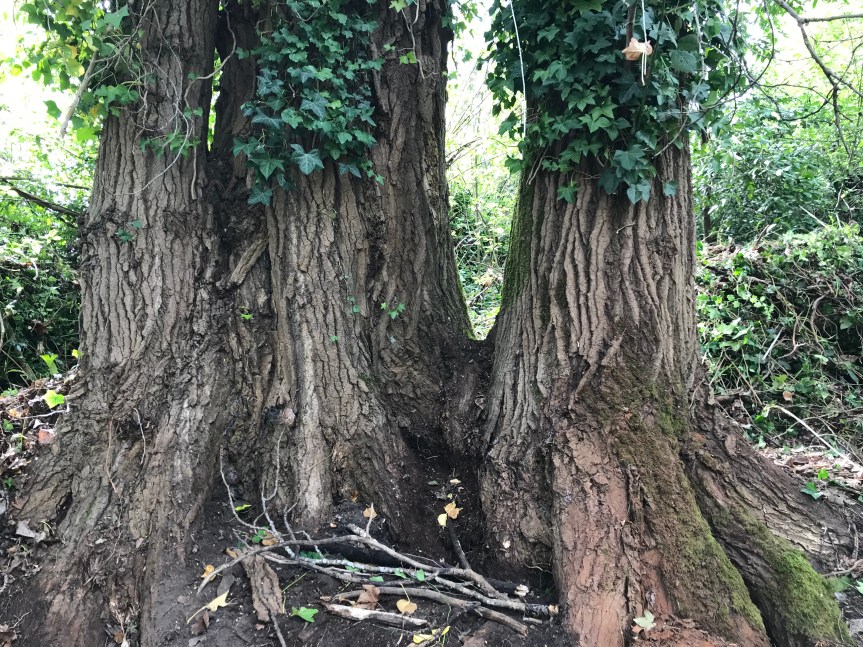
Team 3 worked on a part of the site that we hadn’t worked on before. It is located on the west side of Cheasty Boulevard. We chose to start in a place where there are some gigantic trees. They are located near the bottom of a steep slope. The team cleared blackberry vines and ivy from the ground and made survival rings around four big cottonwood trees. (Note: A survival ring is created by removing ivy from all sides of a tree starting at ground level and going to shoulder height. Cut off from their roots, the rest of the ivy in the tree will die off.)

The group created two drying racks behind the trees. All of the debris was placed on these racks in order to prevent the vines from reaching the ground and regrowing.


These “Before” and “After” photos show the dramatic changes the team made in this area.

Before

After

Once again, the DocuSign volunteers (and the UW student) did incredible work. I look forward to the possibility that they will return here in November for their next Global Impact Day!

Greenbelt Restoration Work Party: April 14, 2018

During the week leading up to the April 14 party, there were plenty of opportunities to practice Amma‘s teaching to “Be like a bird on a dry twig, ready to fly at a moment’s notice”. The weather forecast looked pretty good a week out but then it got worse and worse. The night before the event, it seemed like there was a chance that it might not rain during the work party, but when I checked the next morning it had shifted back to 90% chance of rain during the last two hours.

We don’t cancel work parties for rain, we only cancel for high winds, so I also got practice in maintaining equanimity. There was no use in worrying about what might or might not happen; that would only result in me creating an emotional roller coaster for myself. Instead, I  needed to come up with a variety of plans and decide what we would do in the moment.

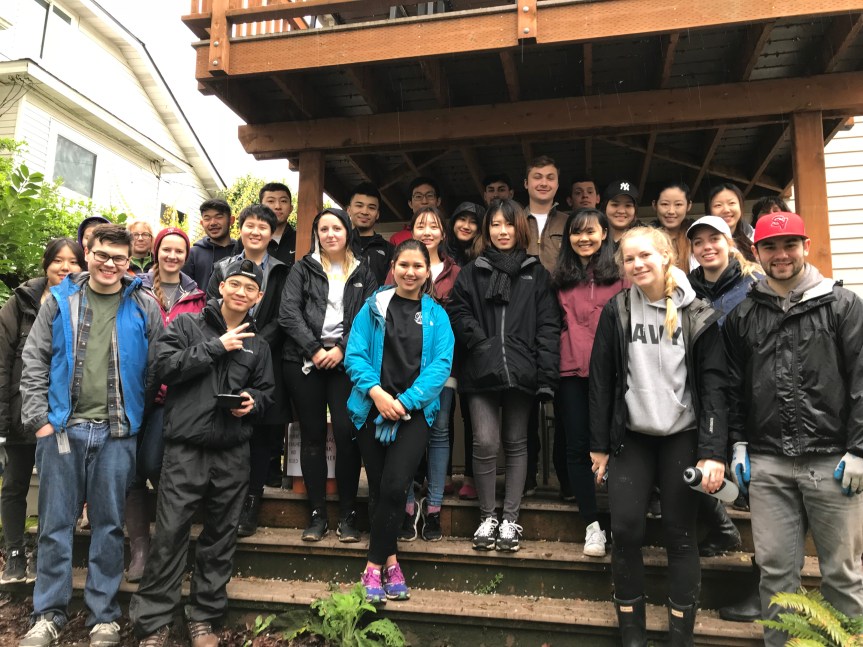
Twenty-five students from the University of Washington’s Introduction to Environmental Science class participated in the event. I felt so grateful that they were willing to work knowing that it might rain. Three GreenFriends members served as team leaders.

After an orientation, we started the day with a bucket brigade that everyone could participate in, moving wood chip mulch from an area on the street that is north of our Greenbelt site to a planting area in the southern part of the site.

When the mulch arrived at its destination, a few students spread it four to five inches thick throughout the area. Trees and shrubs had been planted there on February 26th. Being heavily mulched will keep the ground moist making it make it more likely that the plants will survive the dry summer months. The mulch also deters weed growth and prevents erosion.

The 600 sq. ft. of land we covered that day is on a continual slope. There are several swale-like structures towards the bottom of the strip that will also help reduce erosion.

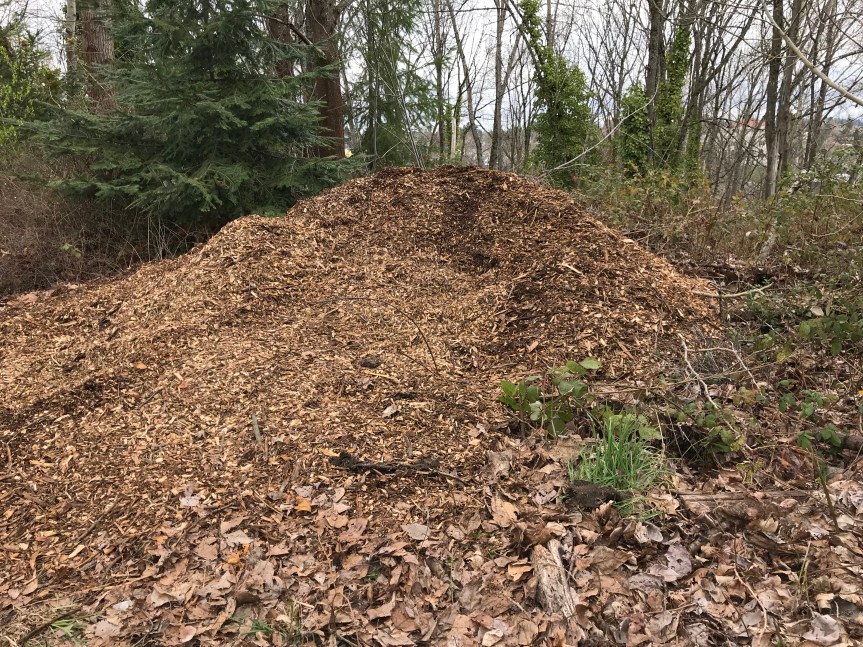
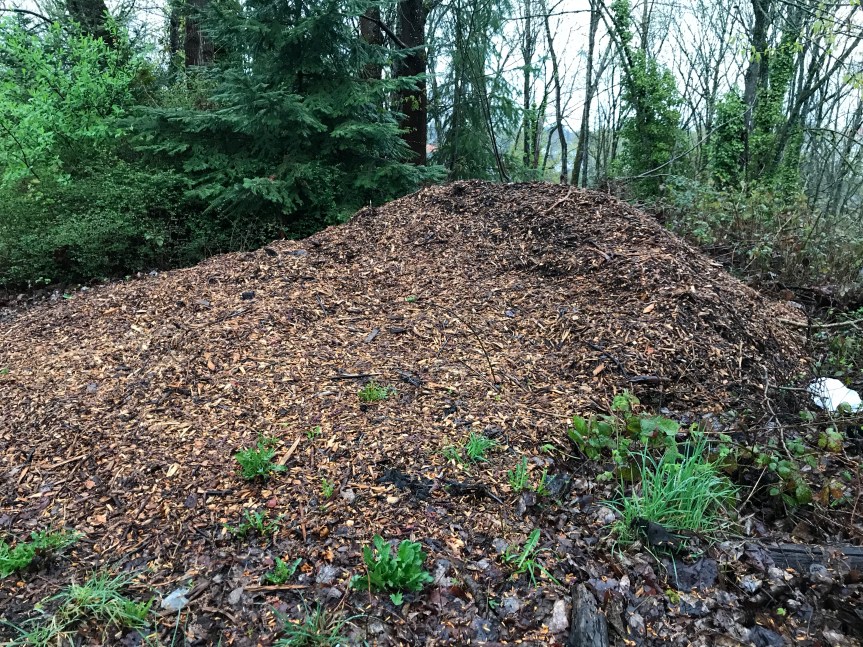
The mulch we were getting the wood chips from had been delivered on March 5. At that time, there were 15 cu. ft. of them and the pile was 6-8 feet tall. (Susan was standing on a slope so the pile was actually taller than it looks in the second photo.)

We have had three bucket brigade work parties since that time. I have enjoyed watching the pile decrease in size.  I have no idea how many hundreds of buckets filled with wood chips have been passed down the line during those work parties.

After the March 17 work party the pile looked like this:

After the April 8 work party:

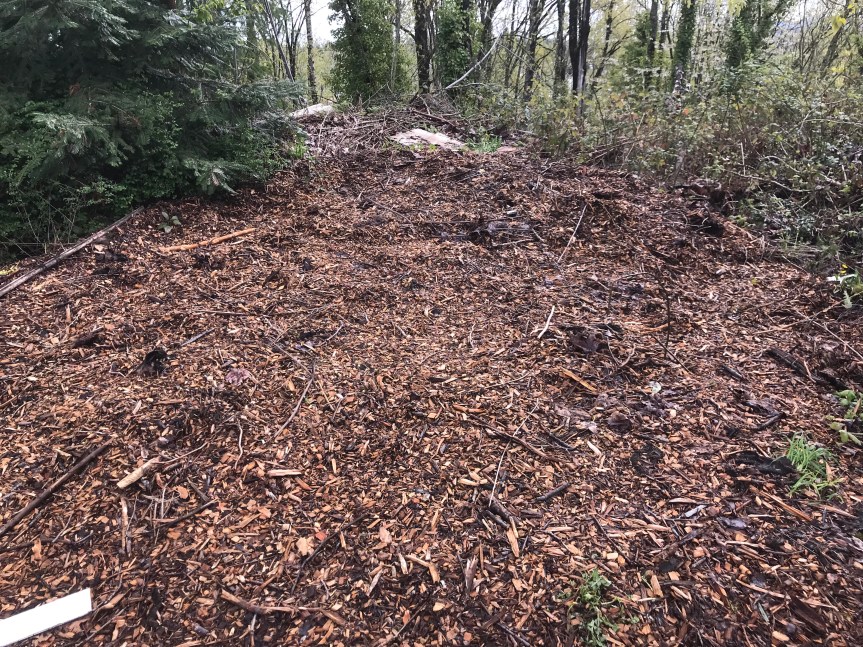
And after the April 14 work party:

The bucket brigade continued until it was time for a snack break. By that point, it had started to rain; luckily, it was a light rain. After the break, we broke into three groups for the last 45 minutes of work time. During that time, the groups would focus on removing non-native invasive plants- blackberry and ivy vines, bindweed, laurel, holly and bamboo. 

There is a Douglas Fir tree on the northwest corner of the property that had been partially topped in the past because it was too close to power lines. On the day of the work party, the tree was surrounded by a patch of laurel so thick that the bottom part of the Douglas Fir trunk was barely visible.

The students cut off the laurel plants lower branches. As the lower branches were removed, we could see that the laurel was covering and/or displacing Pacific ninebark, Oregon grape and other shrubs. I also saw new laurel shoots nearby. Finding the native plants being crowded out by the laurel made it obvious to me why laurel is considered an invasive plant. I know that the part of the Greenbelt that is north of the site we are working on has big areas of laurel.

I appreciated being able to see more of the Douglas Fir tree truck and look forward to the day when I will be able to see all of it. I feel sad that the treetop had needed to be cut away from power lines. Seeing the deformity, though, will serve as a constant reminder that we need to be careful where we plant trees as we restore this piece of forest.

Now that it is spring, all of the trees, shrubs and ground covers we have planted since October are growing rapidly. Simultaneously, new shoots of blackberries and bindweed are emerging from the ground. There are also several areas on the site that still have ivy.

A second group of students scoured a section of the land that is full of old maple trees, sword ferns, and other older shrubs. Their purpose: locate and remove invasive plants. Everything was wet and it was still raining. The students worked diligently even in these less than desirable conditions.

The third group worked in an area that was new to us. Our plan had been to clear a path, dig out holly and cut bamboo. The group cleared a path that led to the holly and bamboo, but after a week or more of rain, the ground was too muddy to work with the holly. (We didn’t want to make the area any muddier than it already was.)

Instead the group focused on cutting and stripping the bamboo. Last year, we used the bamboo branches from another bamboo field in building the racks we create to dry out the invasive plants. We gave the stripped stalks to gardeners to use as stakes.

When the last forty-five minute work period was up, the students from all three groups took the invasive plants they had removed to the racks to dry and then gathered, cleaned and put away all of the tools. Afterwards, we celebrated our accomplishments. Then everyone brushed the mud from their shoes and headed home.

Soon after the work party was over, the rain became very heavy. April 14, 2018 turned out to have the largest rainfall that has ever been recorded in Seattle in April. Mother Nature had certainly blessed our work party. Two hours of the three hour work party had been rain-free and even though it rained during the last hour, the rain was comparatively light.

Next on our to do list:

  • Finish mulching some small areas on the property that have not been mulched yet
  • Weeding, weeding and more weeding
  • Remulch areas that were planted in October and November of 2017
  • Finish cutting down the bamboo
  • Dig out the holly and bamboo

The list could go on and on but that is enough to think about today!

Greenbelt Restoration Project: Our First Planting Season is Over

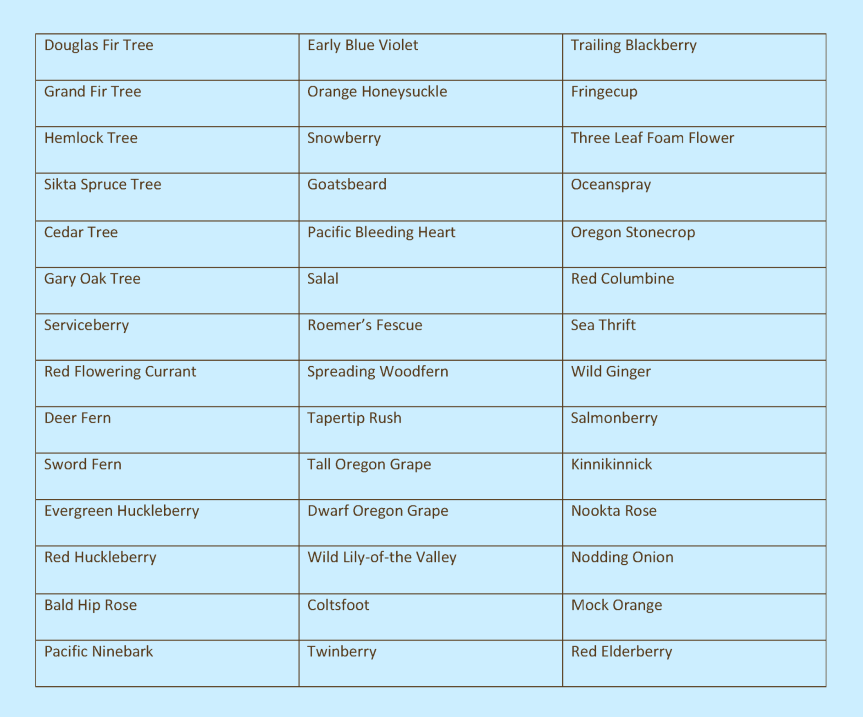
The planting season in Seattle’s parklands starts when the autumn rains begin and ends in mid-March. The reason for planting during those months is that it gives the plants time to root before they have to deal with the dry summer months. During our first planting season, we have planted 55 trees and 530 shrubs and ground covers.

All of the new plants are native to the Pacific Northwest. This chart lists the types of plants we planted during our first season.

I love watching the plants grow. Some have doubled or tripled in size since we planted them. Almost all of them have leaves now and some even have flowers.

There are plants emerging from the ground that are a complete surprise. One day, I noticed long stalks scattered around one area.

Later, I was told they are Bracken ferns. I found some photos of Bracken ferns on Pixabay.

We are going to have a LOT of Bracken ferns in that area. I hope they get along with the new plants.

When I was outside taking photos today, a tiny hummingbird came within two feet of me. It is going to be an exciting spring and summer. I hope I see some butterflies too!

Greenbelt Restoration Work Party: April 8, 2018

April 8 was our first work party of Spring Quarter. I so love this forest restoration work and I love working with the University of Washington Introduction to Environmental Science students and, of course, anyone else who joins us. It had only been three weeks since our last work party but it felt a lot longer than that to me. I was eager and ready.

There was a lot of rain the week leading up to the event. The weather forecast for that day was breezy weather and rain but we lucked out. It rained as I was setting up, but there was none during the work party. Twenty-three students braved the forecast and came ready to work. Three GreenFriends members served as team leaders.

We split into two teams for the first part of the event. The larger group moved 1250 sq. ft. of burlap from the street into different sections of the restoration site. The burlap is used to cover areas we have cleared of invasive plants such as blackberry and ivy vines. The burlap helps to reduce weed growth and prevent erosion. Having it located onsite gives us easier access to it.

(Click on the galleries to enlarge the photos.)


After all the burlap had been moved, the same group starting filling buckets with wood chips. Wood chips are spread around each plant and also throughout the planting areas. The wood chips serve as mulch, thereby holding in water, making it more likely the plants will survive during the dry summer months. Both the wood chips and the burlap will eventually decompose and enrich the soil.


The second group focused on weeding; in this case searching for and removing ivy and blackberry vines. These vines have smothered and killed most of the trees and shrubs in this section of the Greenbelt and we need to prevent them from regrowing so that they don’t destroy all of the native trees, shrubs and ground covers we’ve planted since October.


Midway through the work party we took a snack break…..

and then everyone participated in a bucket brigade. We sent the buckets we had previously filled with wood chips down the line and then started filling more. Once each bucket reached the end of the line the wood chips were poured around newly planted shrubs, and then throughout the planting area.


We were able to spread the mulch through three different planting areas. Below are photos of two of them.


Once again, we had accomplished so much during the three hour work party and I think everyone had enjoyed working together. I know I did!

Greenbelt Restoration Work Party: March 17, 2018

On March 17, thirteen hardy volunteers gathered to spread wood chips in areas that had been planted during the February 26 work party. The wood chip mulch will hold in moisture, reduce weed growth and enrich the soil.

Two neighborhood parents brought their children for part of the event. I felt moved when I realized that this forest may become important to these children as they grow up.

Most of the group had worked on this restoration project before, but for some it was their first time on the property. There was also a nice mix of GreenFriends members, neighbors and friends.

We didn’t have enough participants to do the traditional type of bucket brigade; i.e., handing buckets from person to person down a long line of people. Instead, everyone filled buckets for a short period of time and then most volunteers began to carry them to their destination on the other end of the site. Later on, the system changed again. At that point, part of the group carried the buckets the first half of the way, and then left them for others to carry to the planting areas. Once the buckets of wood chips reached a planting area, someone poured the chips onto the burlap.

My neighbor Christine was in two of my favorite photos from this work party. I took the first one during a time when she and I were filling buckets. At one point, she climbed to the top of the eight or nine-foot pile of wood chips and filled her bucket from there!

If you look closely you may be able to see steam rising from the wood chips. It reminded me of the steam I’ve seen coming from decomposing compost piles whenever I visit the compost center at Amma’s ashram in Amritapuri, India.

Marine took the other photo when Christine was talking with one of our young visitors.

We accomplished more than I thought was possible; spreading wood chips throughout three large planting areas and several small ones. The transformation in the look of the land was remarkable.

At the beginning of February 2018, the property looked like this:

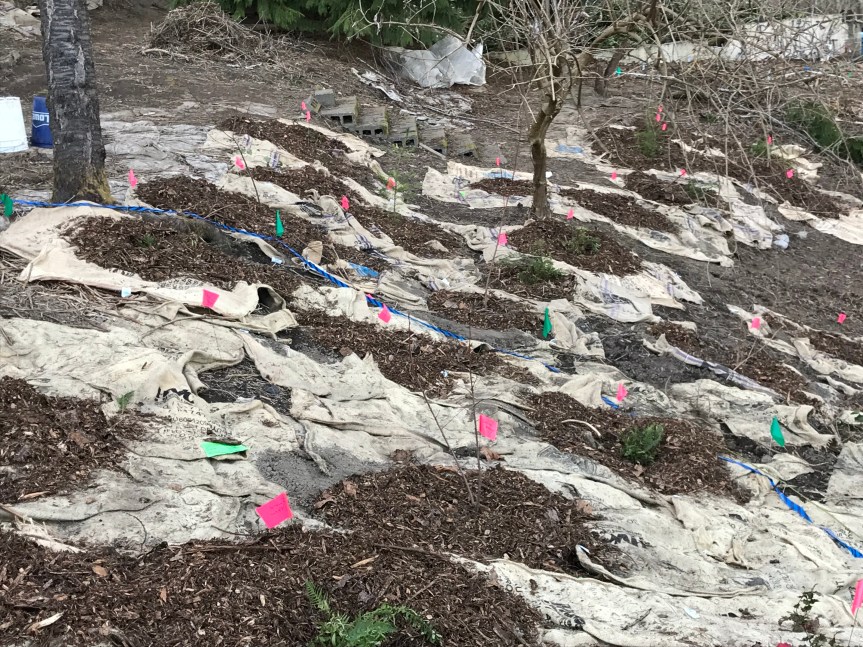
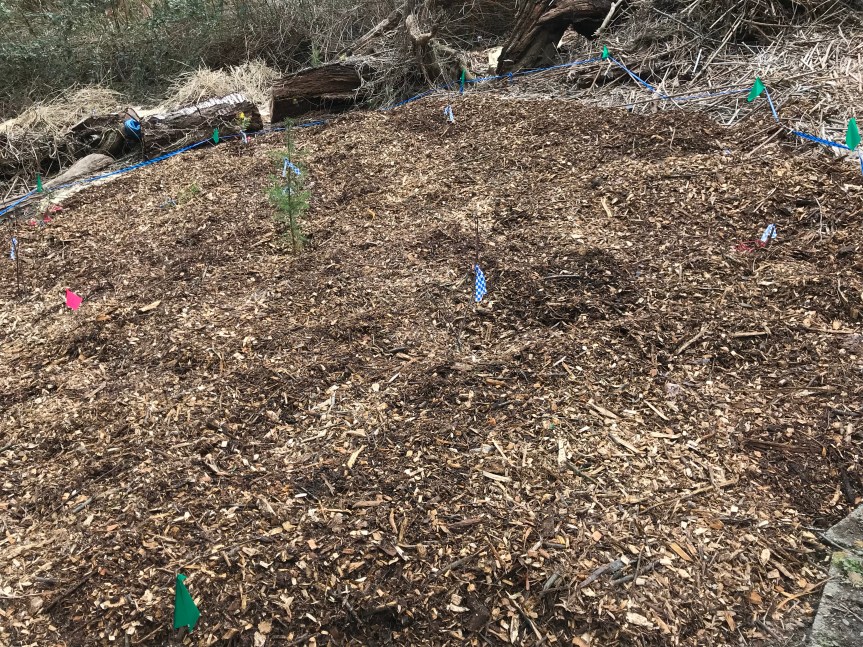
During the first three weeks in February, work party participants removed blackberry root balls and ivy from the land. On February 26, another group planted trees, shrubs and ground covers, and placed burlap and two buckets of wood chips around each plant. By the end of that work party, this is what the land looked like:

And this was the beautiful sight that greeted my eyes at the end of the March 17th work party:

We have many more wood chips to spread. It is gratifying to know that the work we are doing now will give the plants a better chance of surviving the summer, a season when rainfall may be minimal.

Greenbelt Restoration Work Party: February 26, 2018 Planting Day

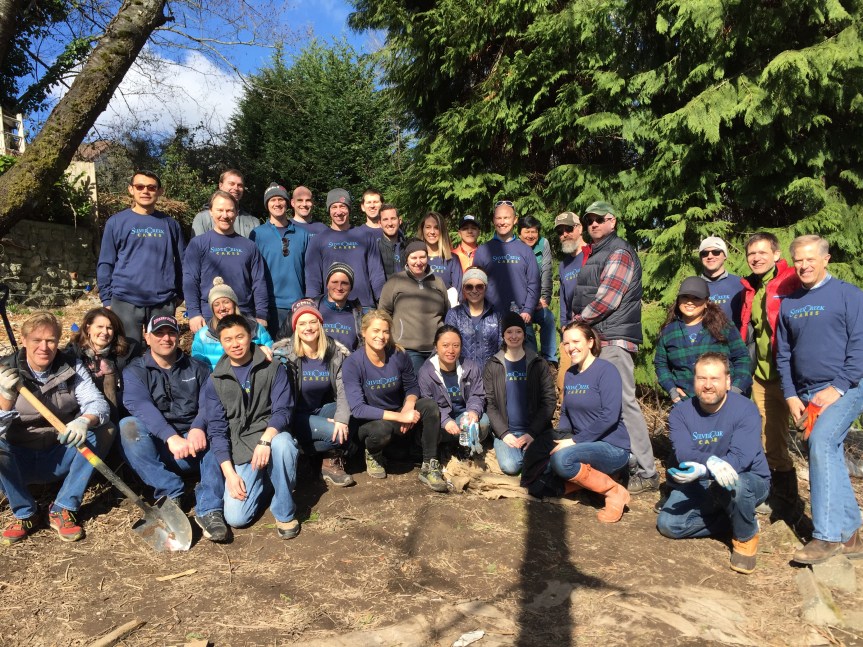
Monday, February 26 was an exciting day. On that day, 31 enthusiastic employees from Silver Creek Capital Management came to plant trees, shrubs and ground covers in our Greenbelt site. Our staff consisted of Nicole from Forterra, Claire a master gardener, and two Green Seattle Partnership Forest Stewards- Peter from Mt. Baker Park and me. Claire and I also belong to GreenFriends, the environmental arm of Embracing the World.

During the three-hour work party, we planted 17 trees, 75 shrubs and 77 ground covers! Every new plant is native to the Pacific Northwest. We spread two buckets of wood chip mulch around each plant to reduce weed growth and retain water. (The burlap we place on the ground after removing blackberries and ivy from the land also helps with weed reduction and water retention). At future work parties we will be covering any exposed burlap in the planting areas with wood chips.

(Click on the gallery above to enlarge the photos.)

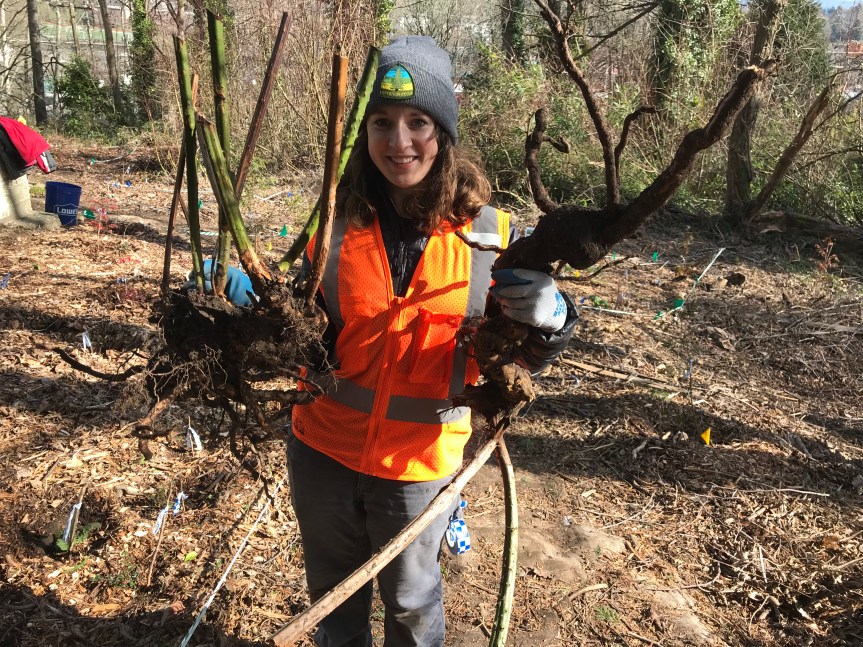
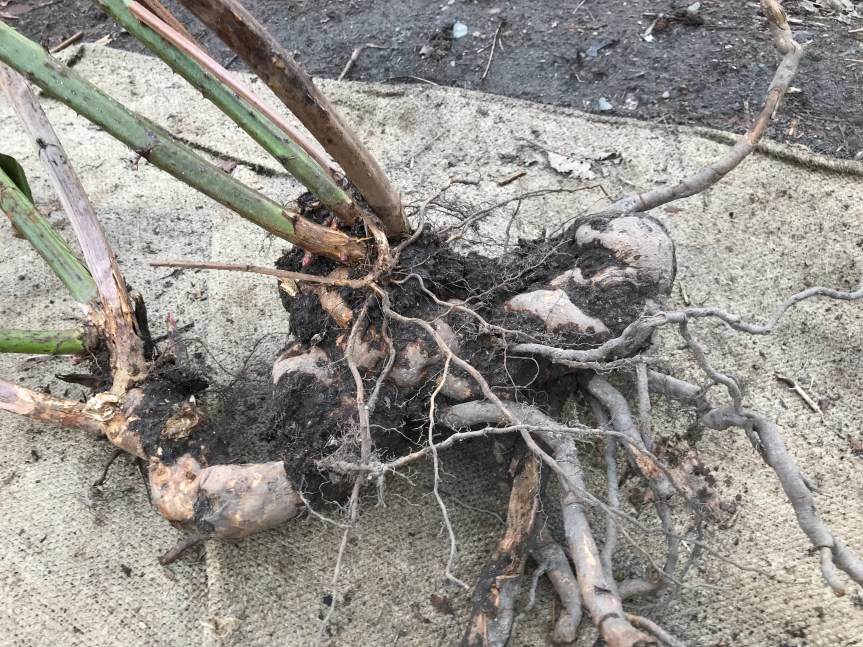
Towards the end of the event, part of Nicole’s team cleared more land. They dug up some huge blackberry root balls.

A few days later I weighed the biggest one. It weighed almost 10 pounds!

When the work party was over, we cleaned and put away the tools and celebrated all we had done. I think everyone had enjoyed their experience.

Later, I took another look at what we had accomplished. Once again, I was awed by how much the land had been transformed by a single work party.

Photos by Laurel Webb, Nicole Marcotte and Karuna Poole


Greenbelt Restoration Work Parties: February 21, 22, and 23, 2018

Amma teaches us to “Be like a bird perched on a dry twig, ready to fly at a moment’s notice.” She also teaches us that “What we need will be provided” and to “Put in the effort and let go of the results.” Taking those attitudes can help us to stay in the moment which in turn can decrease the tendency to worry about the future. The Greenbelt restoration work parties we held during the last half of February provided me with many opportunities to practice each of those attitudes.

Students who take the University of Washington’s Introduction to Environmental Science course are required to do three hours of volunteer work. I had scheduled a work party for February 17 because it was the weekend before their assignment was due. That is always our biggest work party of the quarter.

I was concerned about that work party though, because the people who usually lead teams at our events were going to be at a retreat in Oregon that weekend. I decided to “think outside the box” and started inviting neighbors and people in the Amma community who weren’t going to the retreat. None of them had worked on this project before, but I knew they would do a good job.  Pretty soon I had three volunteers. They all came to the site ahead of time for an orientation. We were ready!

I soon discovered more good news was in store. Someone who had planned to go to the retreat, decided not to go, and volunteered to help at the work party. She had lead teams many times so that was a real bonus. Then, the Forest Steward from Mt. Baker park wrote me and said he would help. Just before the work party, another neighbor volunteered to lead a team. I was excited. We had an abundance of staff. While all of this was coming together, 31 students registered for the work party. We were set. What a good example it had been of “What you need will be provided.”

Then “Be like a bird perched on a dry twig” took over. Days ahead of time, we heard that a big wind storm was coming on the same day as the work party. You can do forestry work in the rain, but you can’t do it in high winds; branches might break or trees might fall. On the 16th, it became obvious we couldn’t hold the work party. In fact, the Parks Department canceled work parties that day on a park by park basis. Ours was one that was canceled.

That left both me and the students in a dilemma. I needed to have the land prepared for a corporate group that was coming to plant trees, shrubs and ground covers on Monday, February 26. And the students needed their volunteer hours. I knew that most or all of the team leaders would be at work if I planned events during the week. I decided I would hold three small work parties on Wednesday, Thursday and Friday and be prepared to lead them by myself.

The “Be like a bird” lesson continued as the weather forecasters talked about the possibility of breezy weather and snow. Would these work parties have to be canceled too? The first indication that what I needed would be provided was when I found out that two of the people who had been scheduled to lead teams on the 17th had the week off from work and would help with one of the work parties!

Wednesday, February 21

Wednesday arrived and all was well. In fact it was better than just “well.” A half hour before the work party began, Peter, the Forest Steward from Mt. Baker, emerged from the forest. Not only was he going to help with this work party, he was going to help with all three of them! What a surprise blessing he was. So we had two Forest Stewards and 7 students that day. We began to clear new areas of ivy and blackberries vines. We dug out some big blackberry roots!

(Click on the galleries to enlarge the photos.)

Thursday, February 22

Knowing that Peter would be helping made it possible for me to accept more students than I had originally planned.  The work party grew to 23 students.

Maintaining the “Be like a bird” attitude was still important as the forecast was for snow and by Wednesday evening it was snowing, and sticking to the ground. Would I have to cancel the work party? I would decide in the morning.

Thursday’s work party had been scheduled to go from 2:30-5:30 to accommodate the students’ class schedule. The snow was very wet and was beginning to melt when I woke up that morning. Around 10 a.m. I decided to walk to the light rail and around the Greenbelt to see how much snow there was and whether we could work in it. I discovered the streets and sidewalks were clear and most of the Greenbelt was free of snow. What snow remained was melting. Even though the temperature was in the 30’s, it felt warmer than the day before because it was sunny.

My neighbor John also worked with us that day so we had three staff. We continued clearing the land that we had worked on the previous day.

After a snack break, we formed a bucket brigade and carried wood chips from the street into the site. The chips would be used as mulch during the February 26  planting work party.

While we were moving the wood chips, it started to snow lightly. When we finished, we cleaned and put away the tools and quickly headed back to our respective homes.

Friday, February 23

During the week’s third work party, we two Forest Stewards and three GreenFriends members served as staff. Twenty-one students participated. I experienced such a sense of abundance…. an abundance of staff and an abundance of students. Once again, what I had needed was provided.

About half of the students worked in the area we had been clearing during the previous work parties. We had cleared land that I hadn’t expected to clear until later this year! Peter, the Mt. Baker Forest Steward, worked with the students to create swale-like structures that will help prevent erosion. I appreciated learning new skills from him.

Another team worked in an area that has a big ivy mass. That team moved the big piles of ivy to the place on the site that has racks where ivy and blackberries can dry out rather than re-root.

A different group of students placed burlap around flags that were scattered through the site. Those flags marked the places we will be planting on the 26th.

After the break we formed another bucket brigade and finished moving the wood chips into the site.

After the remainder of the wood chips were onsite, we cleaned up and put away the tools, celebrated our accomplishments and went on our way.

What a week it had been. I was consistently challenged to stay in the moment, to let go, to trust what I need would be provided and to put in the effort and let go of the results.  And I had certainly felt like a bird perched on a dry twig. We accomplished so much during these three work parties. Grace had flowed.