
Today is packed with “must do” events for me. I have little to no time to write, but when I saw The Daily Post challenge in my inbox, I knew I had to make the time. The prompt is:
Remember the seven cardinal sins? You’re given the serious task of adding a new one to the list — another trait or behavior you find particularly unacceptable, for whatever reason. What’s sin #8 for you? Why?
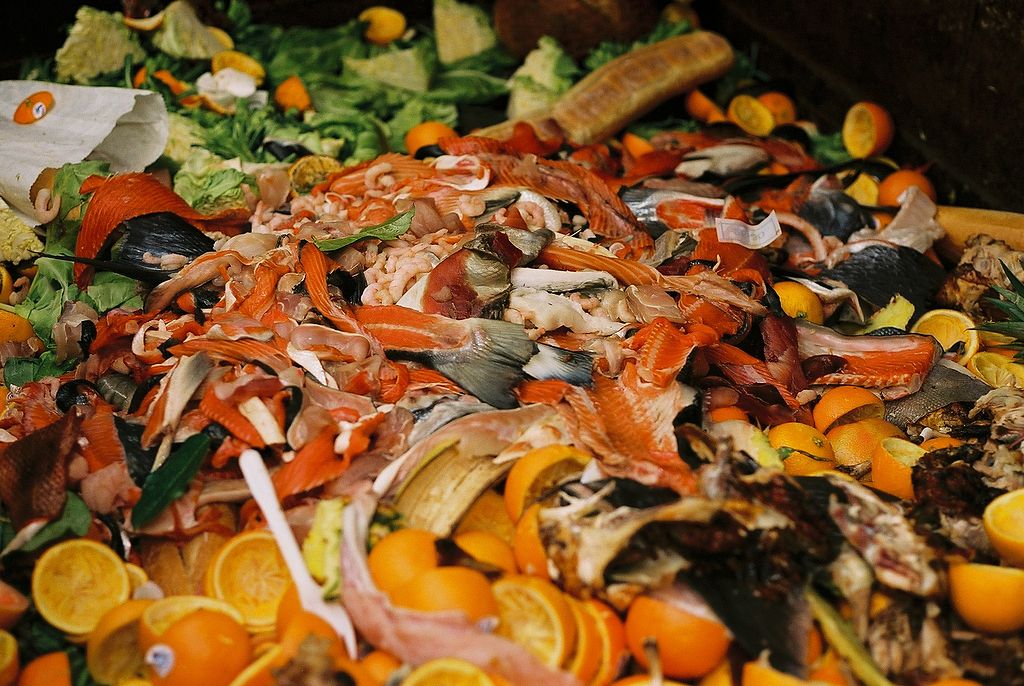
The seven cardinal sins listed in the Bible are: wrath, avarice, sloth, pride, lust, envy and gluttony. So what would I consider to be the eighth cardinal sin? I knew my answer immediately. For me, it is to waste food when so many people in the world go hungry.
In 2012 the National Resources Defense Council (NRDC) of the United States concluded that the U.S. wastes 40% of its food. That waste is valued at 165 billion US dollars.
- Much food is wasted at the farm level. Seven percent of the food we grow in the U.S. is never harvested. Some of the causes: damage from pests, disease and weather; prices are too low to make it worth harvesting: over-planting; food safety scares; and labor shortages.
- Food is lost between harvest and sale due to culling- removing products based on quality or criteria such as size, color, weight, blemishes and sugar content. Some businesses report that 25% of cucumbers and 20-50% of citrus and other fruit are edible but not marketable. One packing house said they can fill a dump truck with 22,000 pounds of discarded tomatoes every 40 minutes.
- Waste occurs in processing as well. A lot of this waste is caused by trimming of skin, fat, peels, bones, and pits. Waste during processing can also be due to overproduction, product and packaging damage and technical malfunction. A study in the U.K. found that 23% of food loss occurred as the result of these factors. Another study found that only 50% of potatoes made it through the processing plant.
- Waste during the distribution phase is caused by inconsistent refrigeration, keeping food on the loading dock for too long, imported food delays, and rejected shipments.
- Retail waste occurs when perishable foods are not sold. The food may not be sold because customers want perfect produce, the package sizes are too large or the food is damaged, outdated or unpopular.
- Four to ten percent of food from restaurants, cafeterias, fast food businesses and caterers become waste before it reaches the customer. Waste also occurs when the customers do not finish the food that is served to them. It is estimated that diners leave 17% of their food uneaten and most of it is not taken home. Increased portion size has also increased the problem of waste.
- The study reports that Americans throw out 25% of the food and beverages they buy. In part, that is because wasting food is not seen as an issue. Confusion over label dates and spoilage from improper storage, poor visibility, partially used ingredients and misjudged food needs are also problems. Impulse and bulk purchases, poor planning and over preparation are considered significant factors as well.
- The study reports that decomposition of uneaten foods causes 23% of the methane emissions in the U.S.
(Please see the report for much more detailed information as well as the original sources for the statistics.)
Solving the problem
The NRDC report lays out solutions for all of the problems. For this post, I’m going to focus on some things that each of us can address personally.
The report comments that Americans discard 10 times as much food as the average South Asian. I imagine we waste more food than that most, or maybe all, other countries.
Many of us grew up with parents demanding that we eat our food because of the starving kids in China. As a result, many members of my generation tuned that message out and disregard the fact that there is some truth to that way of thinking. I believe it is important for us to become responsible citizens of the world.
That does not mean we should force ourselves or our children to eat when we/they aren’t hungry. It is also not about shaming people into cleaning their plates. Instead I think we should focus on how much we buy, how much we cook, and how much we put on our plates. Children will be more likely to finish their food if they are given a small portion. They can always ask for more if they want more. That is true for adults as well.
We can also compost leftover food. In Seattle we are able to compost all foods, even diary and meat products through the city system. That service is not available everywhere of course but most of us can compost our vegetables and other non-meat, non-dairy foods at home. By doing that we will create rich soil compost for our gardens.
I believe it is important for all of us to take personal responsibility for helping to solve this problem. What ways do you prevent food wastage in your home? Are there any new commitments you are willing to make to reduce your food wastage in the future?
*****
 Living, Learning and Letting Go
Great great post!! And something for all of us to be mindful of!!
LikeLike
Thanks so much!
LikeLike
So true…thanks for the reminder 🙂
LikeLiked by 1 person
I definitely waste too much food. Though, our last child left home almost thirty years ago, I have not mastered the art of conserving food. I suck at: retrieving food stored in the freezer; serving refrigerated leftovers; and, cooking for just two people. The result wasted food. I need to find a solution.
LikeLike
I work on it, but I am far from perfect. It is an ongoing process for most of us I think!
LikeLike
I buy frozen vegetables as the fresh ones go off so quickly. And I make up meals like chilli and curries and freeze them in single serve portions. I also freeze rice in small containers. I have to say that conservation of our environment – both land and sea is a major issue as well. Animals, fish and plants deserve their space on the planet too.
LikeLike
I definitely agree with you!
LikeLiked by 1 person
Sensible, helpful suggestions on good stewardship. =)
LikeLike
I’m glad you found them sensible and helpful!
LikeLike
I’m glad you found them to be sensible and helpful suggestions. Thanks for letting me know!
LikeLike
Great post and so important to be reminded. In one of my haiku series on Justice, I talk about our landfills stocked up with wasted food. Living alone, I took a few years to get used to cooking for only me…I freeze almost everything and take what I need, like bread, meeat is always cut and stored in freezer for one meal. I waste a lot less this way and once a month at least I make an ETF soup (Empty The Fridge Soup) which I made last night…I never know what will be in the soup but I won’t wast any of those vegies either.
LikeLike
Good job! You are really meticulous.
I have two worm bins so the worms get a lot of the leftover vegetables and fruit if I let them get too old.
LikeLike
Well, I am not sure I could do this in my apartment…I should check with my landlord. As for leftovers…um, I love to eat too much…I don’t waste…haha
LikeLike
One of the worm bins is made for the inside the house or apartment. I keep it in my kitchen. It is called Worm Factory if I remember right. I love worm composting!
LikeLike
does it have a cover as my cat will surely go nuts.
LikeLike
Yes there is a cover. I don’t think they could get into it. You can get it different places but here is a link for the amazon one.
http://www.amazon.com/Worm-Factory-DS3GT-3-Tray-Composter/dp/B000S6LZBO/ref=sr_1_2?ie=UTF8&qid=1407216757&sr=8-2&keywords=the+worm+factory
LikeLike
Thanks…I can’t get over I have waited so long …but I am tired of the lack of commitment even for recycling in my building with plastics and paper…
LikeLike
It is too bad there isn’t commitment. That is one thing that Seattle is great at. Even restaurant food is composted here.
LikeLike
Wow, your post is so detailed!
Makes me feel good about my no-wastage policy. 🙂
LikeLike
I’m glad you have that policy. It is still a work in progress for me!
LikeLike
It’s pretty easy.
At restaurants, order items in phases – order an amount just below of what you think might fill you up. If you aren’t satisfied, order more.
At home, if you don’t diligently measure the amount of food being made, look up recipes that utilise leftovers and use them the next day.
With these two simple rules, I ensure that at least no edible components are wasted at my house. I don’t compost yet, so can’t save the non-edible components.
LikeLike