To download the newsletter, click on the photo.
Enjoy!
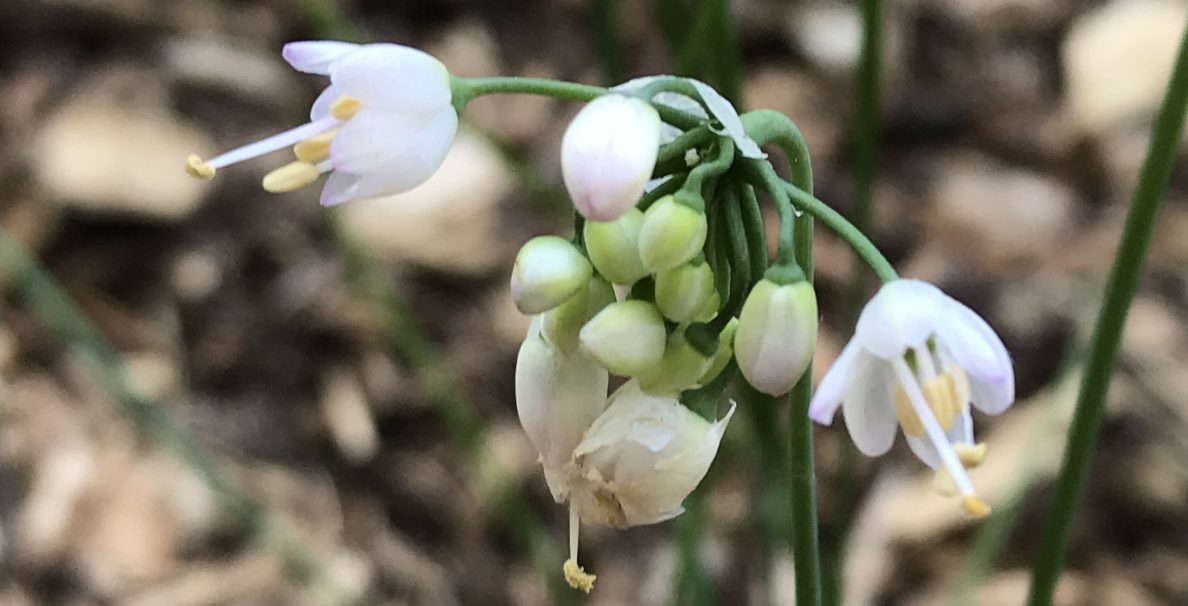
To download the newsletter, click on the photo.
Enjoy!
I shared this piece written by my younger brother on this blog in May of 2014. He wrote it before he died of cancer at the age of 39. This seems like a good time to share it again.
The Truth I Live By
(William John Smith 1953-1992)
Everything makes sense. This can be paraphrased many different ways, although many attempts are less accurate. One of Voltaire’s characters stated, “All is for the best, in the best of all possible worlds.” This is unnecessarily optimistic. My phrasing doesn’t imply that everything that happens to us is good either in the short or the long term. Everyone experiences moments or long periods of unpleasantness. One can hope that over the long period of a lifetime these sad times may not add up to much overall, but most persons with a little thought can think of individuals whom “fate has treated unkindly,” i.e. who have received more than their share of agonies. I think this is one of the hardest things for you, C., that what has happened is just not fair. I’m not sure how long ago I came to believe (or realize) that fairness isn’t the issue. There is nothing fair about life, either in distribution of rewards or unhappiness. And what’s to say that it should be fair. If each of us had an opportunity to create a world, then maybe that’s an attribute that we would build in. But this world is not of our making, and all of the mental checklists that we might make comparing who’s gotten more breaks than we have, etc., will never change the fact that we have to make the best of what we’ve got, not despair over what we perceive as inequities. So life isn’t fair. How do we cope with that? One way might be to remind ourselves that no matter how bad things seem to be at any one time, a little time spent flipping around the TV channel or reading a news magazine will serve as a reminder that we should be embarrassed to be heard complaining about the vast majority of things that concern us. I don’t doubt for a second that I have lived a very privileged existence compared to 90% of the world’s people.
I’m not sure that that is the best way to approach a new tragedy, though (i.e., making ourselves feel better by thinking of others doing worse). I would appreciate a more optimistic approach. The best way to greet each unpleasant event is to grab it by the throat and make the best of it. C. and I have both had our share of suffering, almost all of it, I’m happy to say proceeding our first date. There is no doubt that led to a degree of maturity that made our time together (pre-diagnosis and post-diagnosis) much more meaningful than the lives of those growing up “with the silver spoons.”
Is cancer unfair? Is it fair that we should expect billions of cells in our body to reproduce over and over again, over an entire lifetime, and always get it right? Doesn’t it make more sense to recognize the initial miracle of our birth, the magnificence of our growth into feeling, loving, praising adults, the privilege of experiencing enough of life that we can despair over not having the time to spend longer doing the same? One of the things I am most grateful for is that many, many years ago I learned to be grateful for what I’ve been given. I didn’t, as occurs with many, only get shocked into this realization by a terminal tragedy. This type of appreciation often does begin in the midst of despair, and for that reason I am actually glad that I had enough hard times as a young man, to allow me to think hard about what things are and are not important. Accordingly, for the past 15 or 20 years, I’ve been able to ignore aspects of 20 th century American living that are of no consequence to me (parties, cars, frivolous chatter, clubs, etc.) and concentrate on things that touch me personally. I am forever grateful for what it was that dropped the blinders from my eyes so many years ago.
I am very sad that people seem to see so little of the world around them. I can’t walk outside without seeing the beauty of our created world, from the rainbow in a line of earthworm slime, to another visible ring on Jupiter. We have been given this magnificent world to study and enjoy in limitless detail at any level, microscopic to cosmic. Even though I have enough things to interest me another 10 lifetimes, I must take solace in knowing that, at least compared to others, I’ve had much more than my share even in half a life time..
I am blessed to have had a brother who could embody these attitudes. I hope those of you who read this find his words meaningful in your lives as well.
Today is the Zodiac New Year in India. In the state of Kerala, that day is called Vishu. Amma sent this message on Vishu a few years ago. It seems a very fitting way to begin this post.

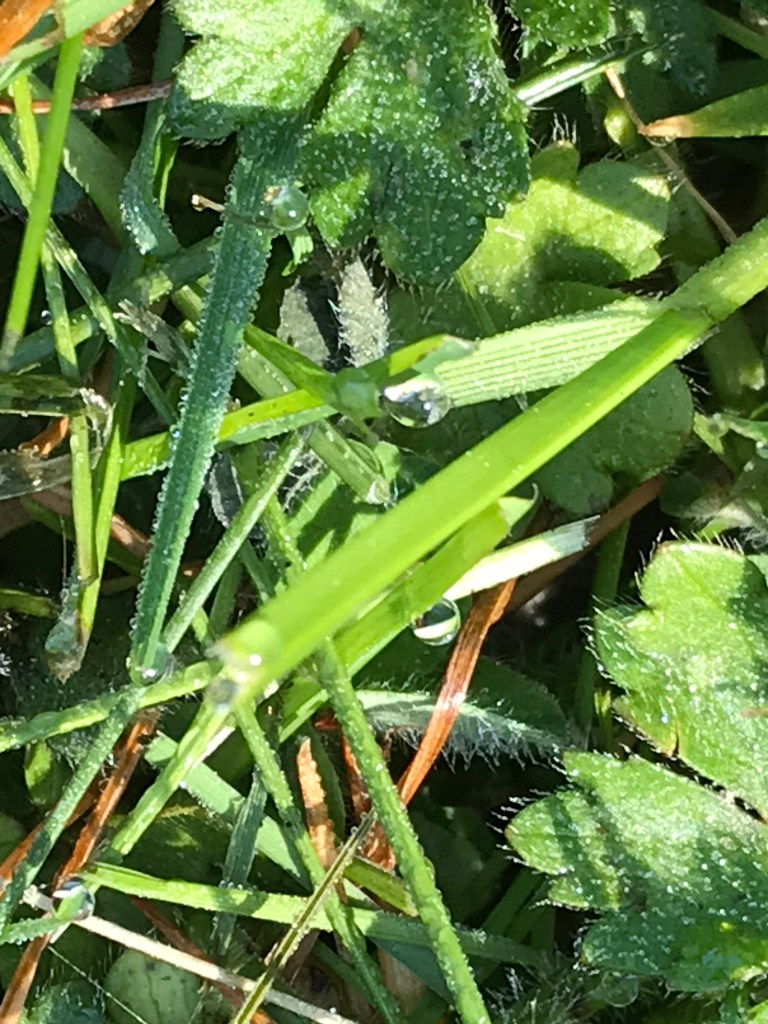
The color of Vishu is yellow. In honor of Vishu, I’m going to post a series of yellow flowers I have taken over the years.



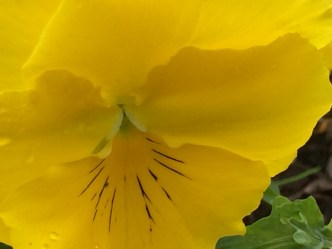


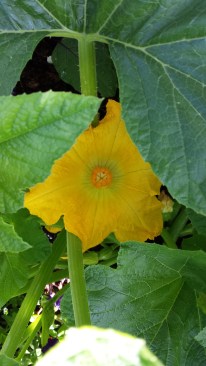


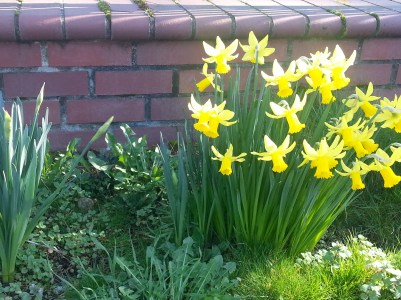


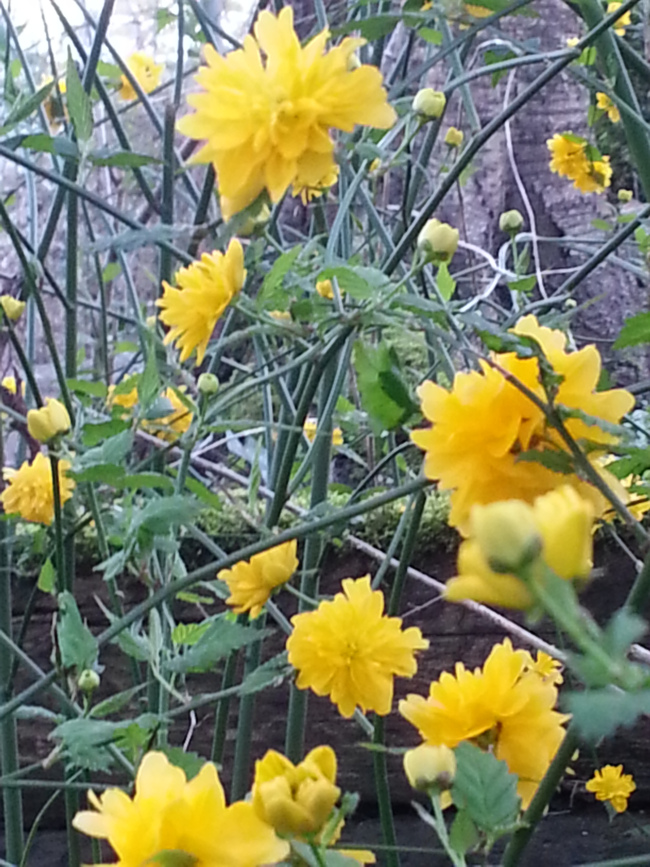
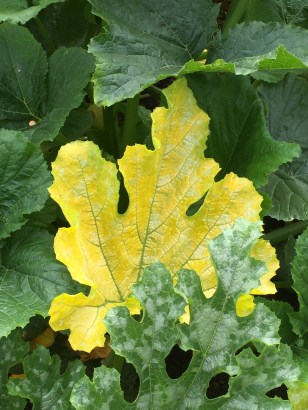
And I will add a yellow vegetable and a yellow leaf!

Al and I bought a house on Beacon Hill in Seattle in November of 1973. Soon thereafter, we bought the lot behind our house. The properties on both sides of our new lot were completely overrun with blackberry vines; but our lot, thanks to the people who had lived there since sometime in the 1930’s, was well maintained. It was terraced and had several fruit trees. We added vegetable gardens and did our best to keep the property free of blackberry vines and weeds.
After we divorced in the 80’s, I sold the lot; there was no way for me to keep it up and I needed the income. At that point, the blackberry and ivy vines began to invade the property. The person I sold it to, sold it to someone else and that person sold it to the city when they were buying property to create the Seattle Greenbelt.
In 2014 and 2015, I attempted to remove some of the blackberry and ivy vines, particularly around big cedar tree and a big alder tree. Sometimes I enlisted a friend to help, but we barely made a dent in the invasive vines.
In March of 2015, I saw some yellow down by the alder tree and was intrigued; I wanted to see what it was. I picked up my shears and made my way through the dried blackberry vines. It was not easy to get to the yellow, which turned out to be daffodils, but I eventually made it.


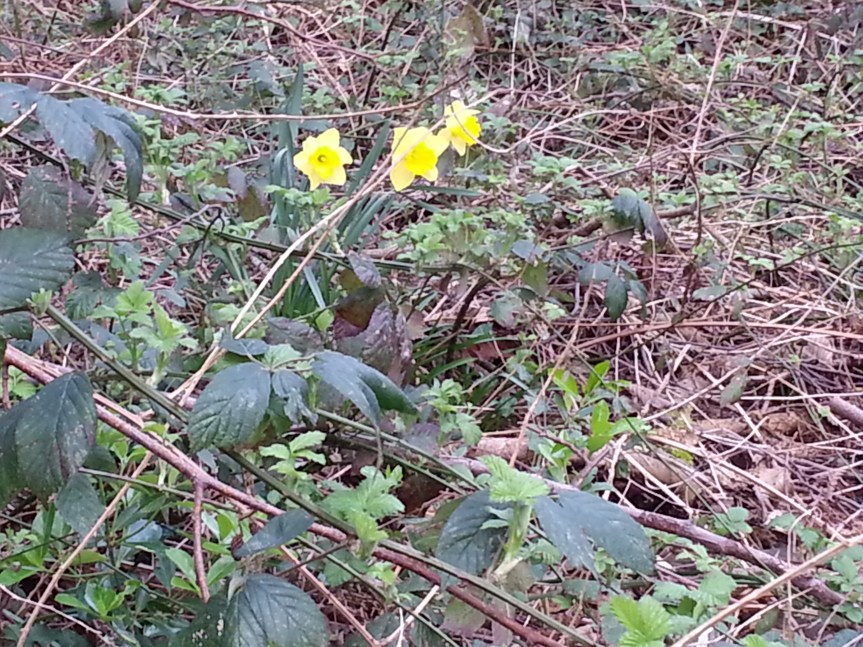
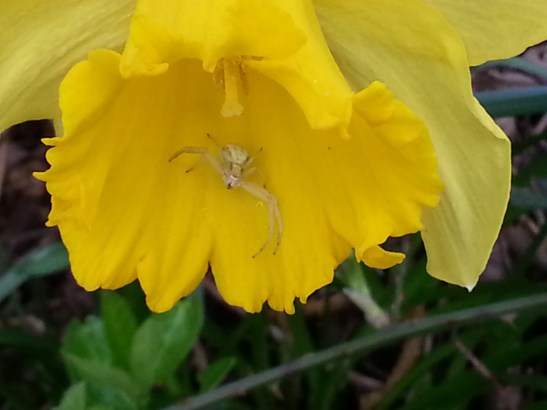
The daffodils were beautiful and when I looked inside one of them, I was surprised to see a spider.
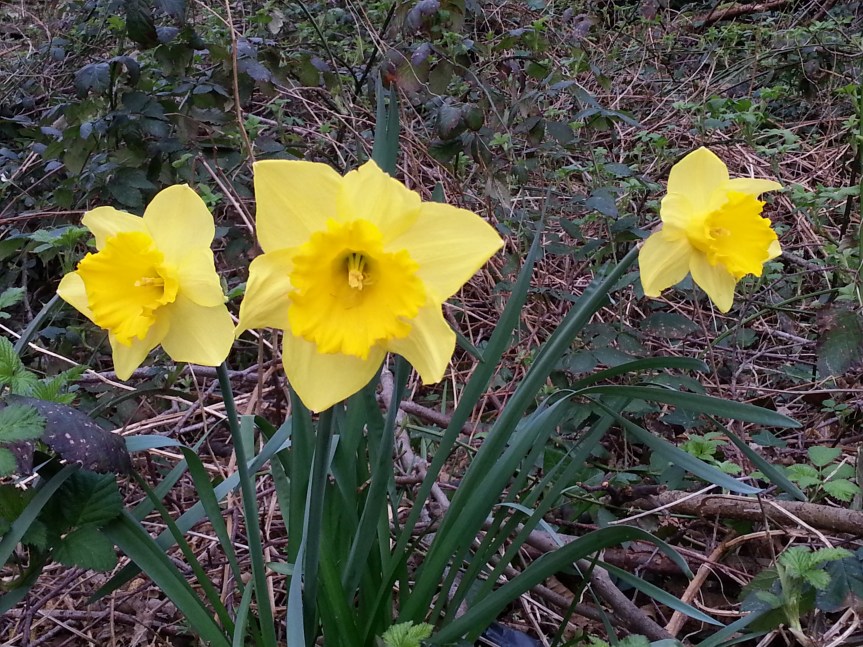


If you would like to read more about that 2015 adventure go to: Keep Your Eyes on the Prize)
In fall of 2016, GreenFriends members joined with Green Seattle Partnership in restoring this section of the Greenbelt. Our site not only included the lot I had once owned but three other lots as well.
A few days ago, I was looking out my kitchen window and saw yellow in the distance. I knew immediately what it was. I took a photo from the kitchen. Look at the photo below and see if you can see any hint of yellow.

Then I took a closeup photo, still from the kitchen window. Can you see the yellow in the distance now? Don’t worry if you can’t; you will be able to see it soon!

The next day, I decided to get as close as I could to the flowers. This time my journey would not be hampered by blackberry vines but it might be halted by my physical mobility issues (poor balance and dizziness). I decided the safest way for me to get to them was to walk down the Hanford Stairs, because those stairs have a handrail. I would also bring my cane.
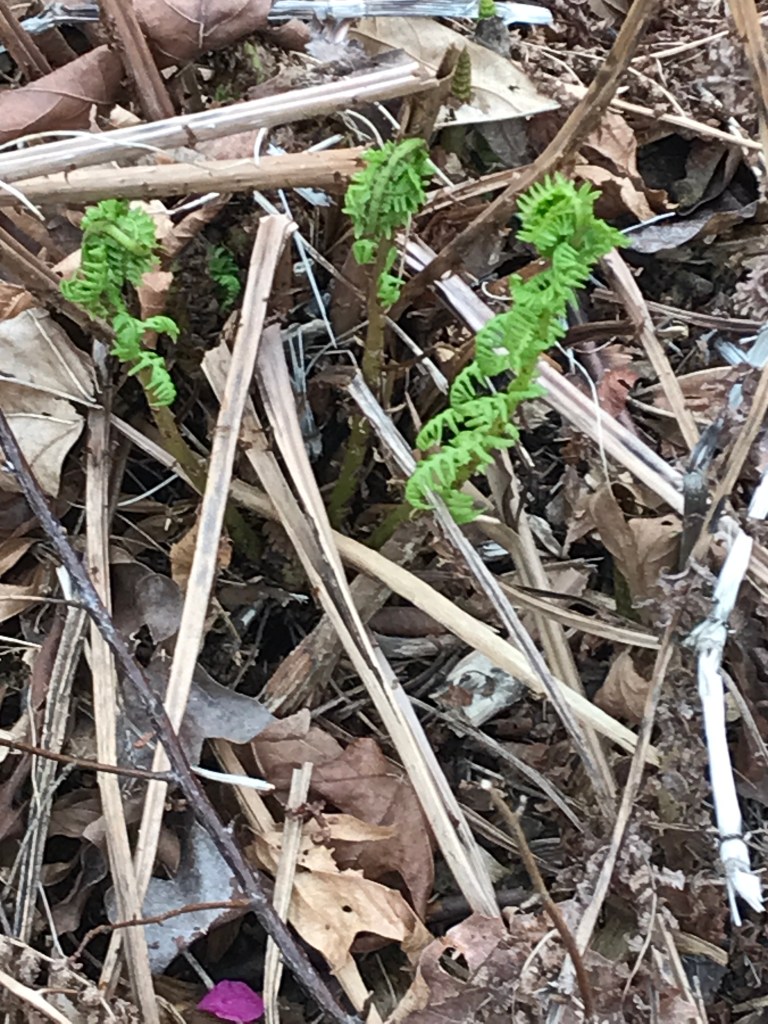
Once I arrived at the entrance to the lower path, I left the stairs and entered the Greenbelt. There was so much new growth on the site. This unfolding fern was one of the first things that caught my eye.


Next, I noticed that several of the wild ginger plants we had planted in 2017 were now dwarfed by fringecup volunteers (volunteers in this case are plants that sprout on their own, i.e. we hadn’t planted them). In the photo below the wild ginger is peeking out from under the fringecup. Both are native plants.

As I came close to the main part of the site, I saw a flowering tree in the distance. What in the world was that?

Before I turned the corner into the clearing, I passed a planting area and saw that horsetails were coming up en force! I knew from experience, that before long we won’t be able to see anything other than horsetails in the lower areas of the site!

When I entered the clearing, the flowering tree mystery was solved; the blooms were on the top part of the big tree that had fallen during the first week in March.
(Click on any of the galleries to enlarge the photos.)


From this area, I was able to get a view of the fallen tree from a different perspective than I had before. There was still no way to capture all of the tree in one photograph.


Soon, I continued my journey to the daffodils. They were on a slope, so I didn’t feel safe to get close to them but I did take some closeup photos from the path.
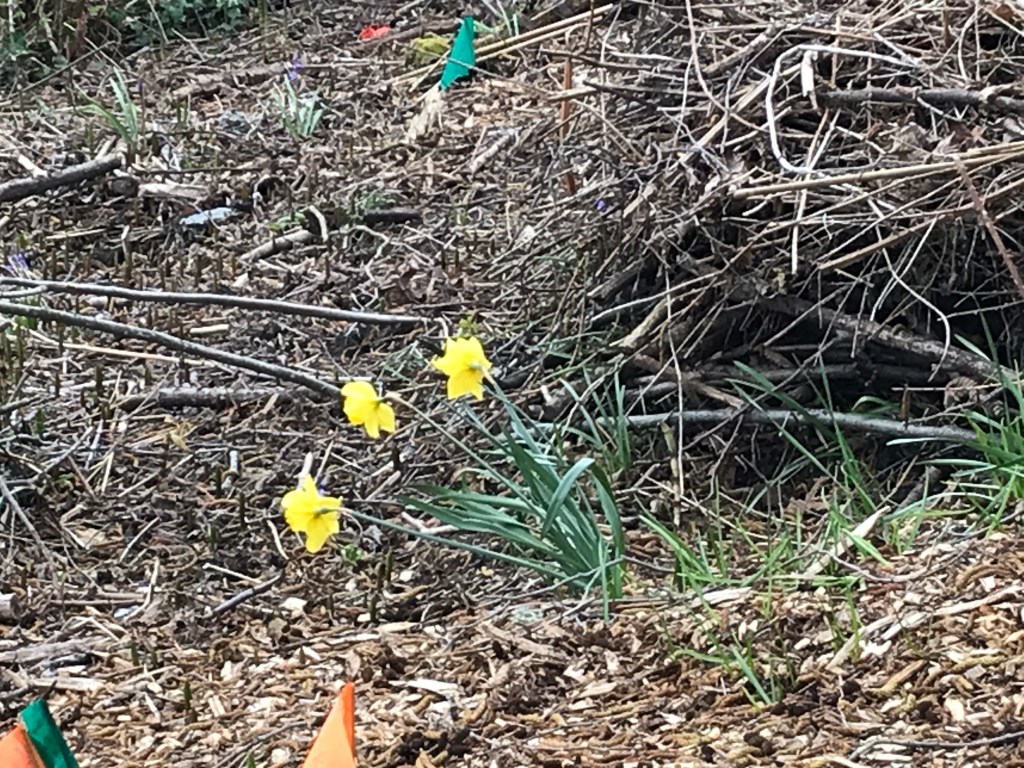

Then I looked at the nearby planting areas.


I decided to return to my house using the stairs behind my house since I am much more stable going up stairs than down them. On the way back, I saw how much the pearly everlasting shoots have grown. And there are so many of them. If you would like to read my previous update about those plants go to: Pearly Everlasting Shrubs pp. 24-27.

The next day, I decided to see if I could get a little closer to the daffodils. I noticed that if I walked towards them from the south side, the ground was almost flat. I knew I still couldn’t take ground level photos like I did in 2015 but I was very happy to get a closer shot…

… and to have completed another adventure!
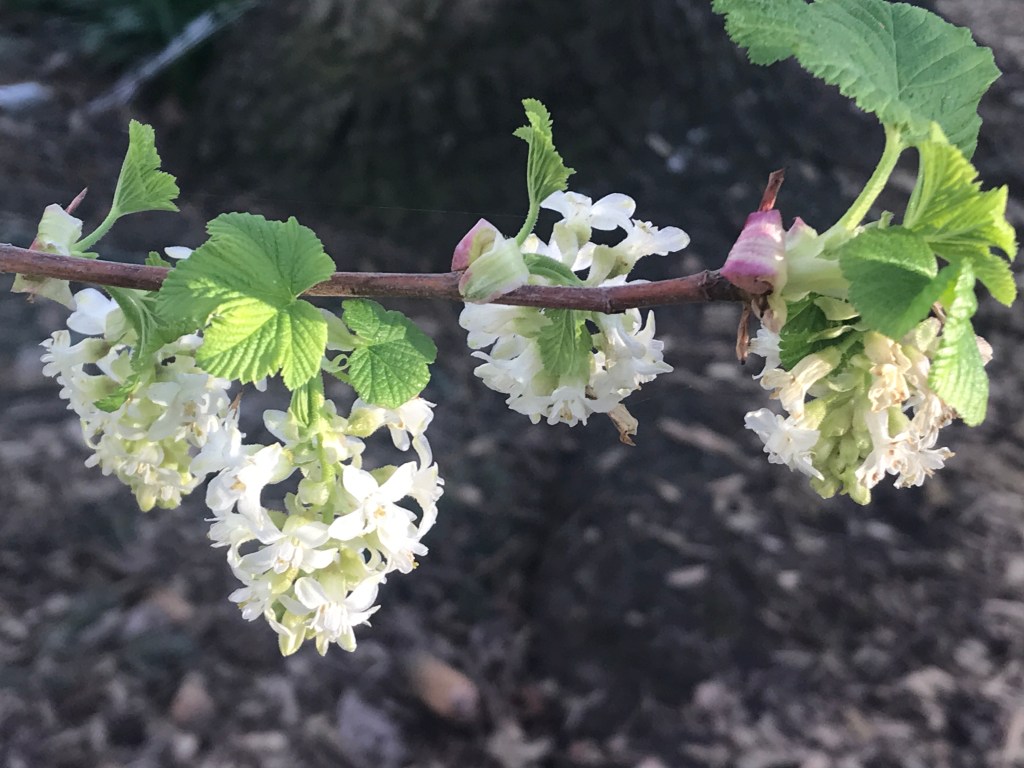
Last week, I posted two of the blooms on the red flowering currant shrub in my yard. Now that plant is full of flowers!
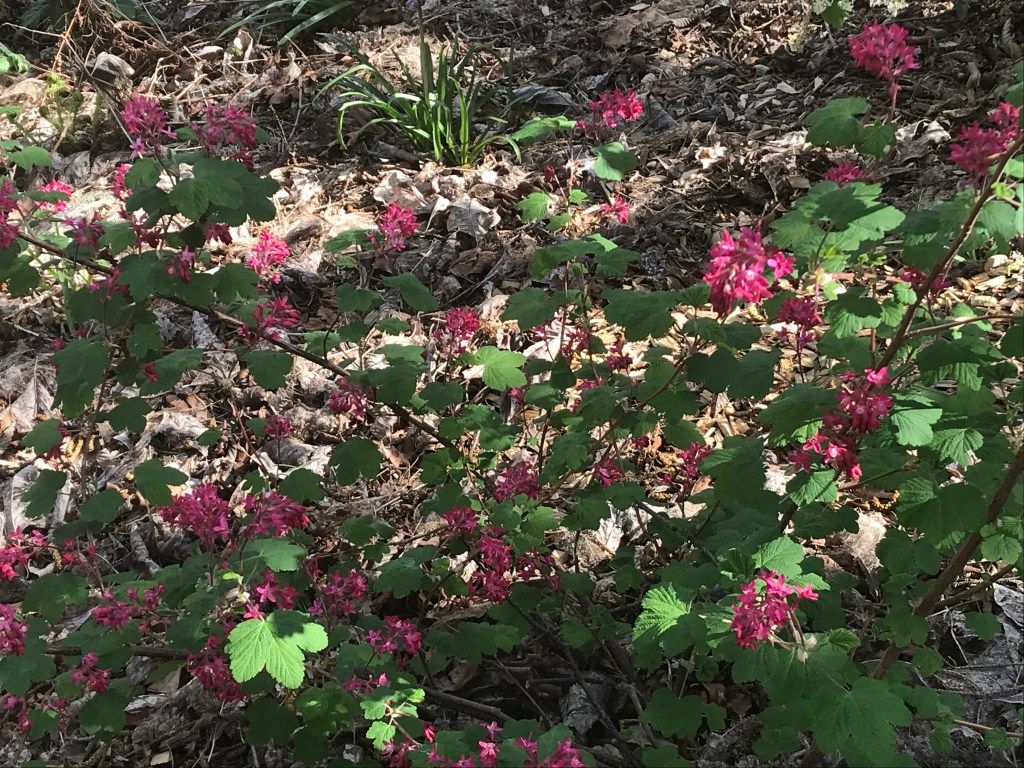
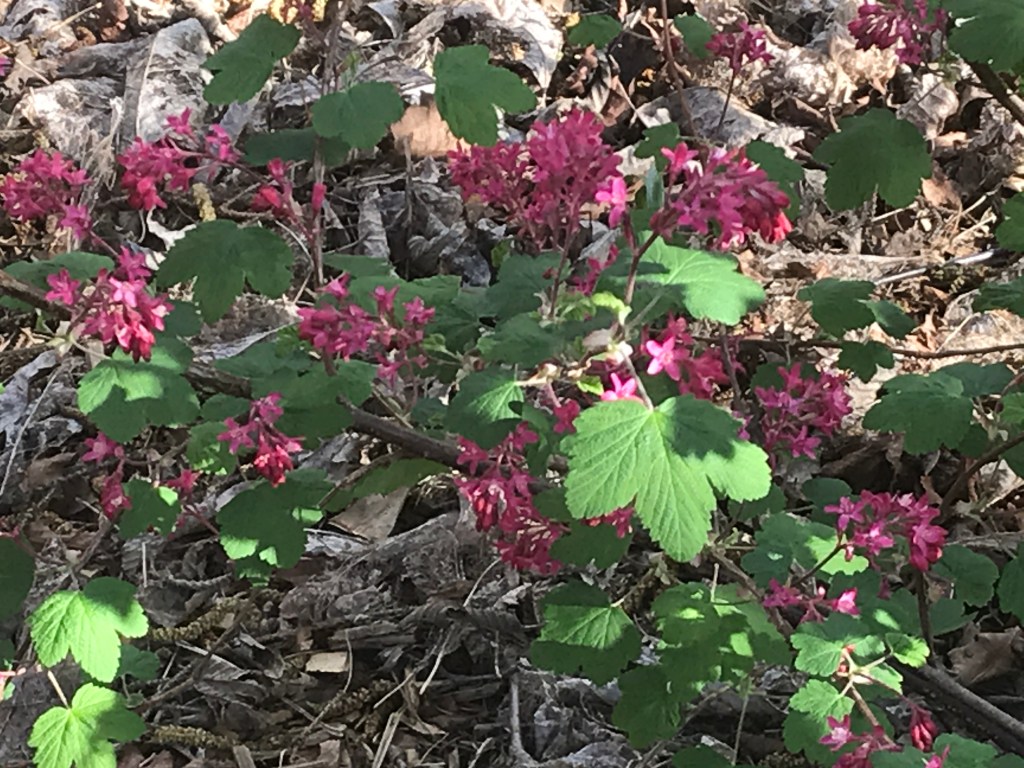
To download the newsletter, click on the photo.
Enjoy!

Since I’m not working in the Greenbelt, I (hopefully) will be able to focus on my own yard again. I say hopefully because I’m not able to get up and down well at this point. Regardless of what the future holds, there is plenty of beauty there already.
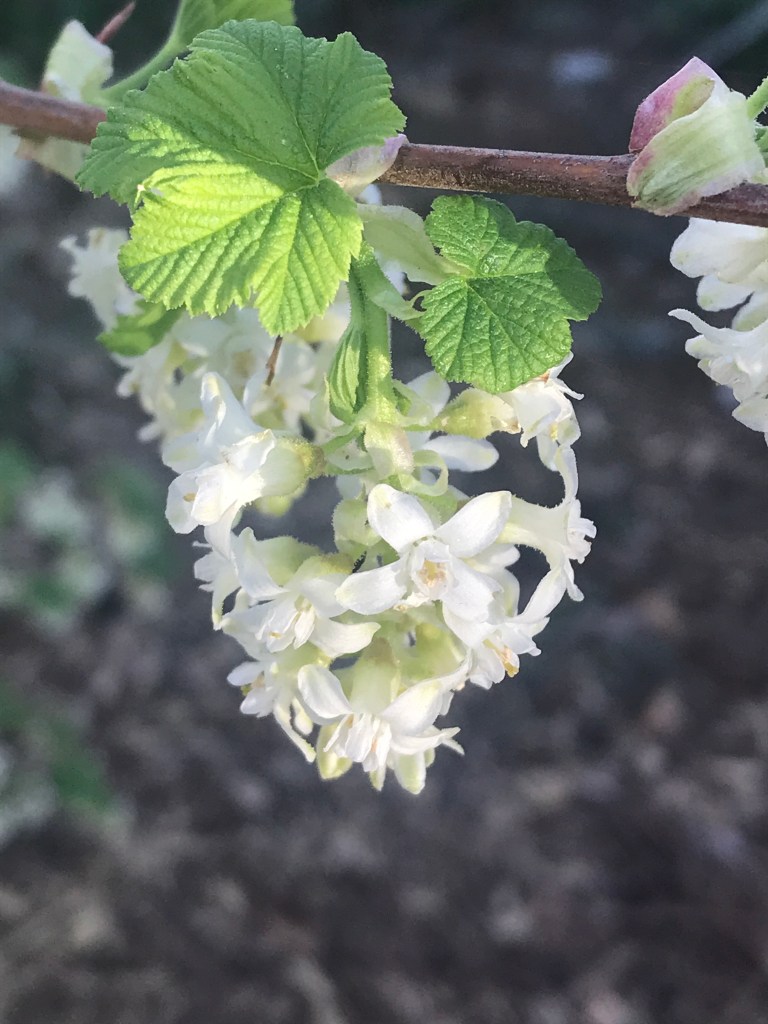



When we held the February 26 and March 4 work parties none of us knew that they would be the last work parties of the quarter. The remaining ones would be canceled due to the pandemic.
February 26
When I went outside to make last minute preparations for the work party, I got a big surprise. A big tree had fallen not far from our toolbox. I hadn’t been to that part of the site for several days, so I didn’t know when it fell but guessed it was during or soon after the big wind and rain storm that had occurred the previous weekend.
The tree had fallen from the top path, over the old house foundation that is on the property, and partially over the planting area that is below the foundation. I hadn’t realized how big the tree was until it fell; it must have been at least 80 feet tall. The photos in this post are primarily from the tree’s bottom and top so in no way do they show its magnitude.
(To enlarge the photos click on any of the galleries.)

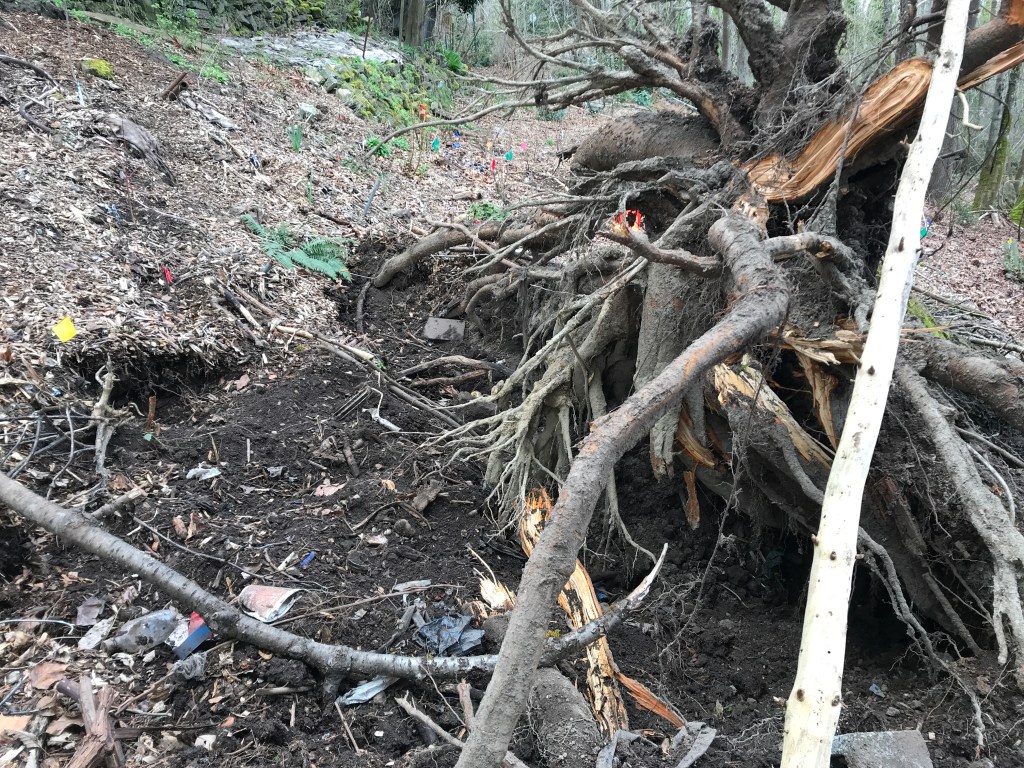


The tree fell between two drying racks. It touched both of the racks but didn’t damage either of them. Even though it had fallen over numerous planting areas, none of our native plants were significantly harmed; in fact only one branch on a bald hip rose shrub and one on a pacific ninebark shrub was damaged. Once again, against incredible odds, Mother Nature had protected the plants.
The tree had fallen from the top path, over the old house foundation that is on the property, and partially over the planting area that is below the foundation. We hadn’t realized how big the tree was until it fell; it must have been at least 80 feet tall. The photos in this post are primarily from the tree’s bottom and top so in no way do they show its full magnitude.
Soon after I discovered the fallen tree, I called my supervisor at the Seattle Parks Department to inform him that the tree had fallen. He told me it would probably be left on the ground to provide habitat for birds and insects.
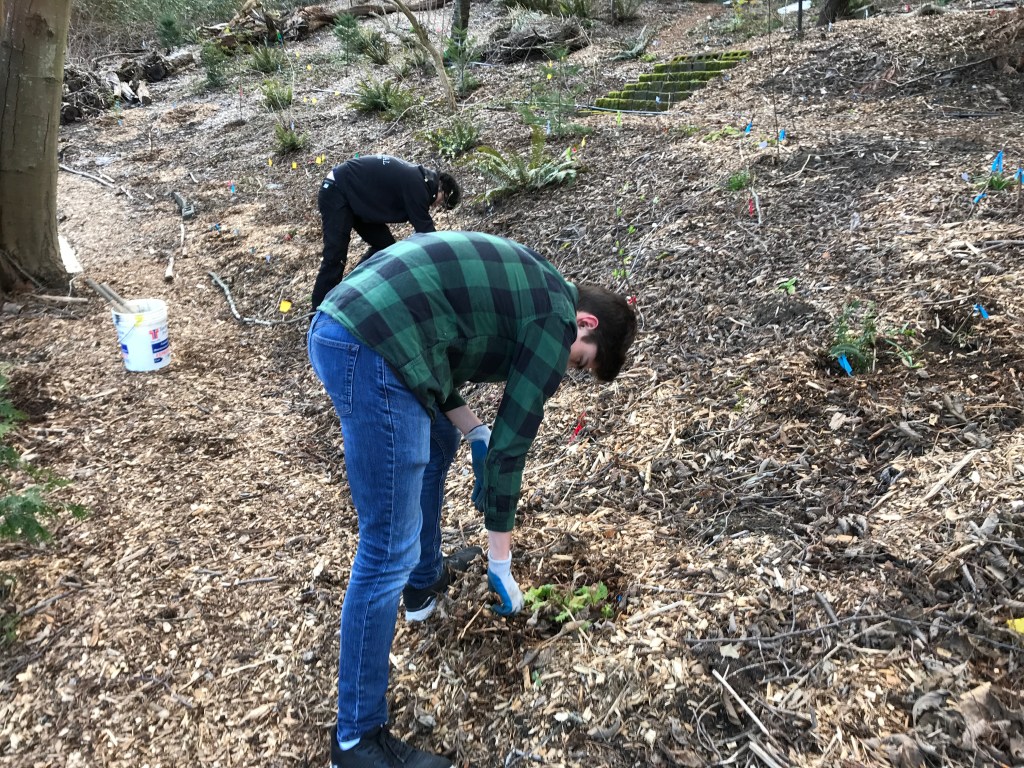
So, after all of us spent some time looking at the exposed tree roots, we began the planned activities for the day. Most of the students started removing weeds, wood chips and leaves from around all of the trees, shrubs and ground covers we had planted on the site since 2017. Having bare ground around each plant helps water reach the plant roots when it rains. The UW Capstone interns were team leaders for the UW service-learning students during this work party.

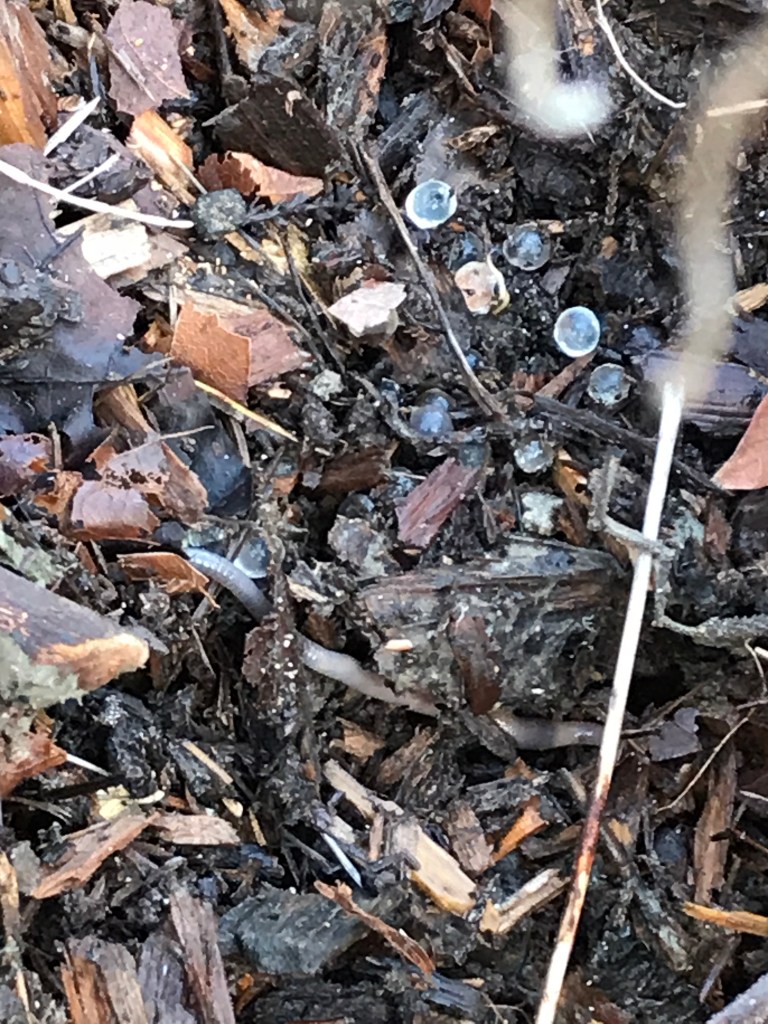
An intern found some snail or slug eggs as she was working.
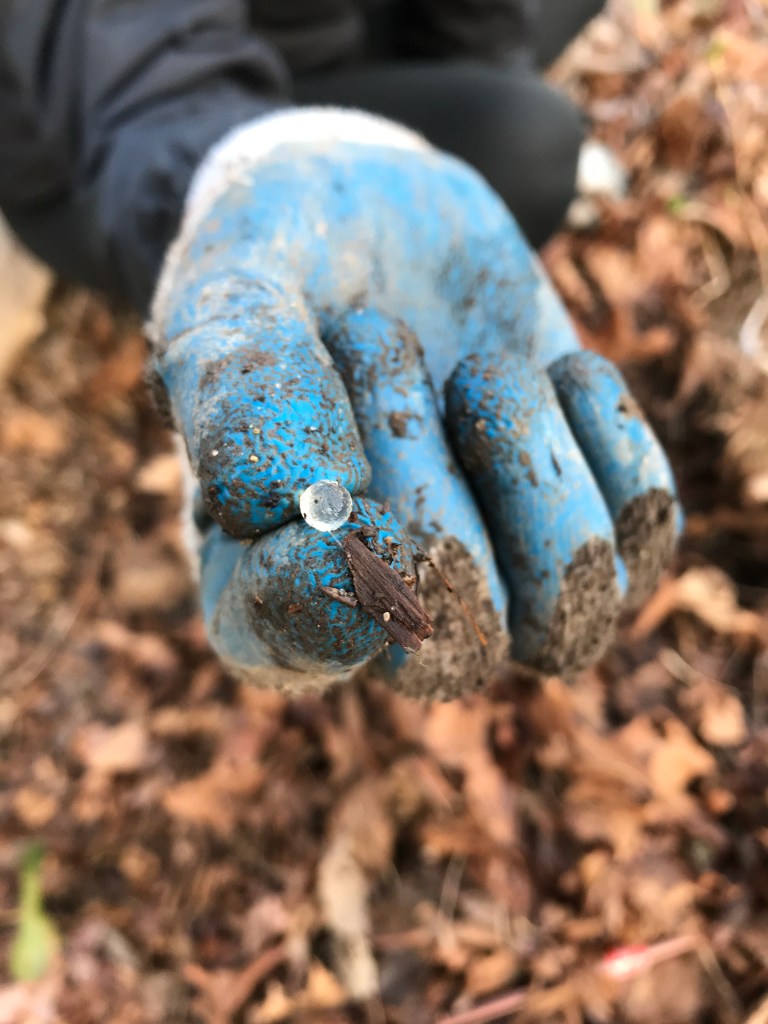
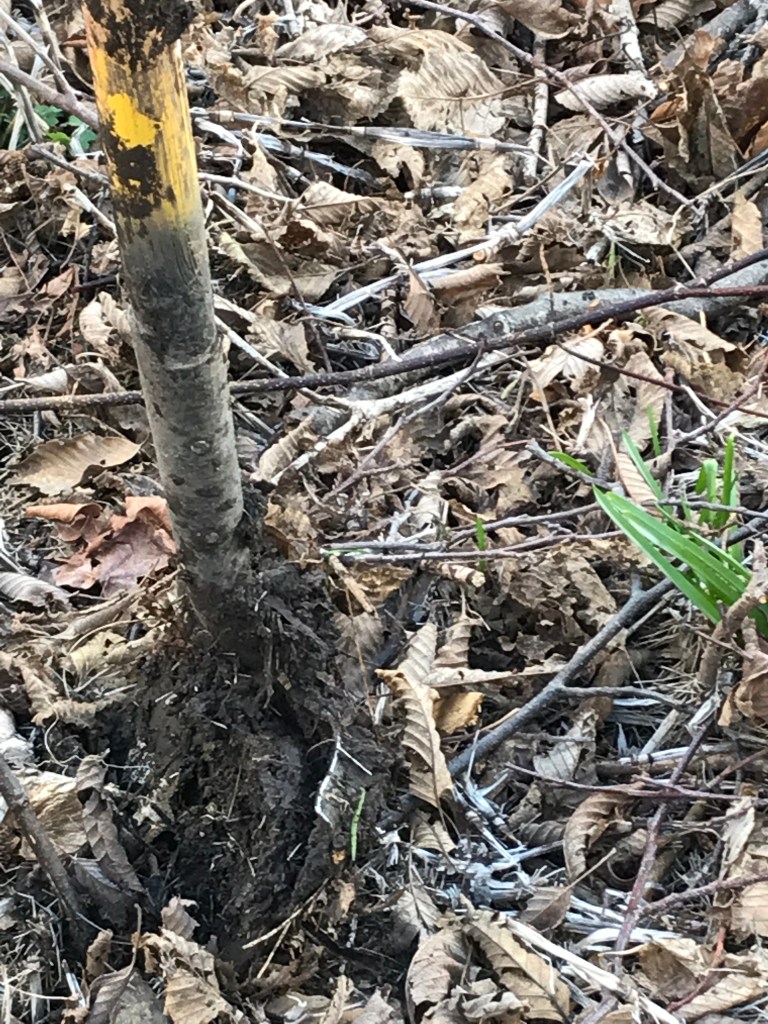
A student that loves to dig out invasive blue bell bulbs did that instead of clearing the areas around the plants. The photo of her shovel shows how wet the soil was that day.

While all of this activity was occurring, Antje, one of our regular team leaders, cut back bamboo shoots.

Later, one of the student teams removed some of the smaller fallen tree branches that were near the native plants.

While those students removed branches, the other team finished clearing the areas around the plants on the site and then picked up litter. Sorry, no photos of that work!
March 4
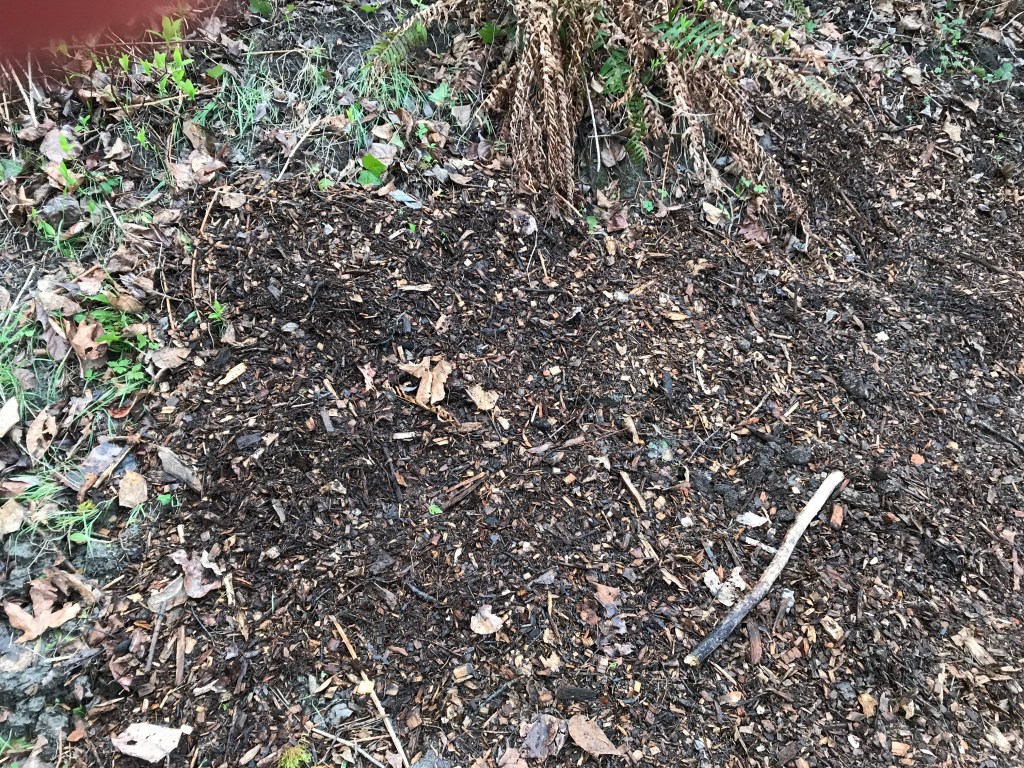
During what turned out to be our last work party, the interns took the service-learning students back to the area along Cheasty Boulevard that they had started to clear several weeks before. Weeds were already growing through the wood chip mulch they had spread at that time. On March 4th, they dug out those weeds and cleared more of the area, and then spread more wood chips over all of the cleared area. I don’t have photos of the work but I do have photos of the results!

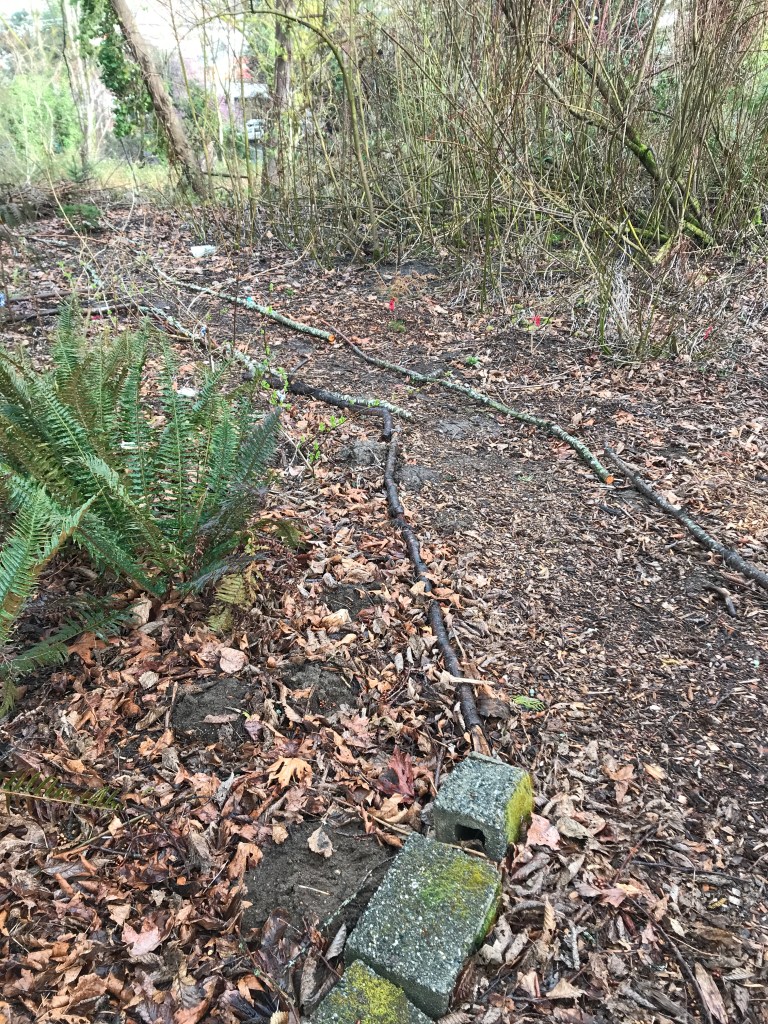
The fallen tree covered all but one of our Greenbelt paths. While the students worked, Antje identified and marked new ways to get around the lower part of the site without walking through the planted areas.


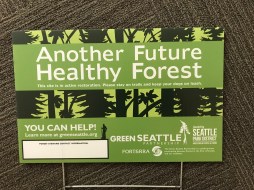
I feel so grateful to all of the students who chose to work on our site for their service-learning or internship this quarter. I also feel grateful for those who have worked here in the past or will work here in the future. Every volunteer leaves having made a significant contribution in creating “Another Future Healthy Forest”.
I’ve had a post I’ve wanted to write since my last days in India. Today is the day to finish it!
My plane was scheduled to leave India at 4:30 a.m. on Thursday, January 9th. That meant I had to be at the airport at 1:30 a.m. that morning. I have found that it works best for me to stay at a hotel in the vicinity of the airport the day before to make sure I get some sleep before starting the journey back to Seattle.
I decided to leave the ashram on the evening of January 7 and take a taxi to Kovalam. I arrived at the hotel at 10 p.m.
If you read my posts throughout the visit, you might remember that I had stayed at hotel in Kovalam when I arrived in India. At that time, I discovered there was road construction between the hotel and the restaurants. There was no way to get food without walking through the construction area. That is common in India, but it meant that at times I was walking through hot tar and gravel. Needless to say, the soles of my shoes were a mess.
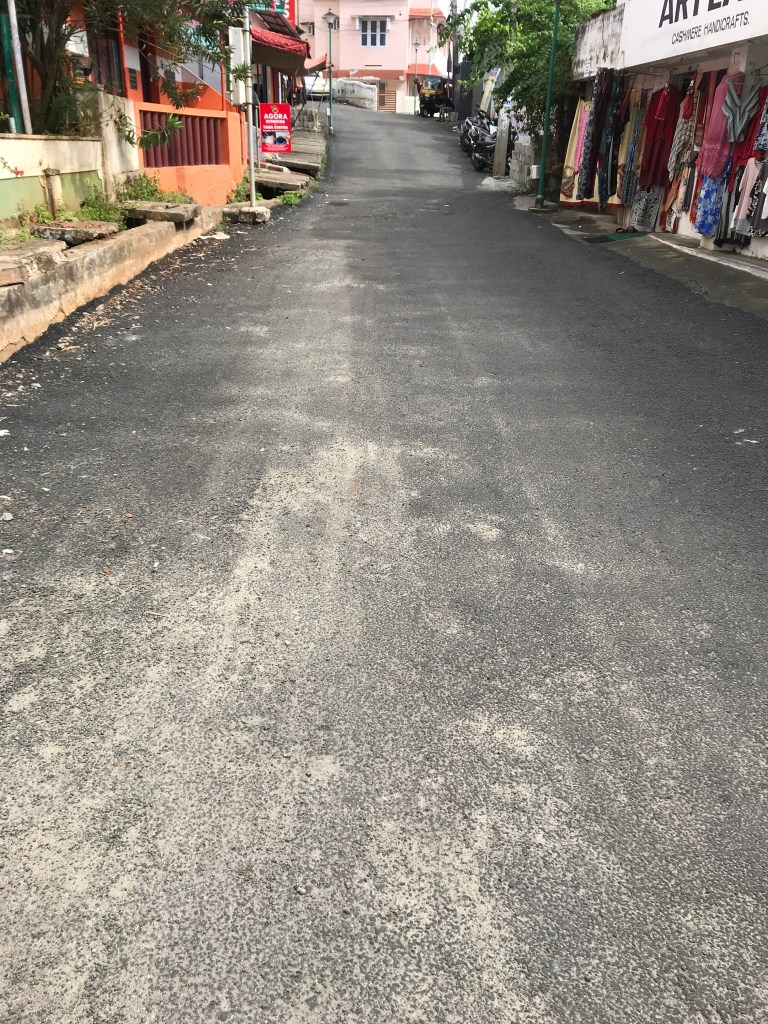
When I walked to the restaurants on January 8, however, the roads had been finished. I was able to walk down a street that was free of potholes and hot tar!
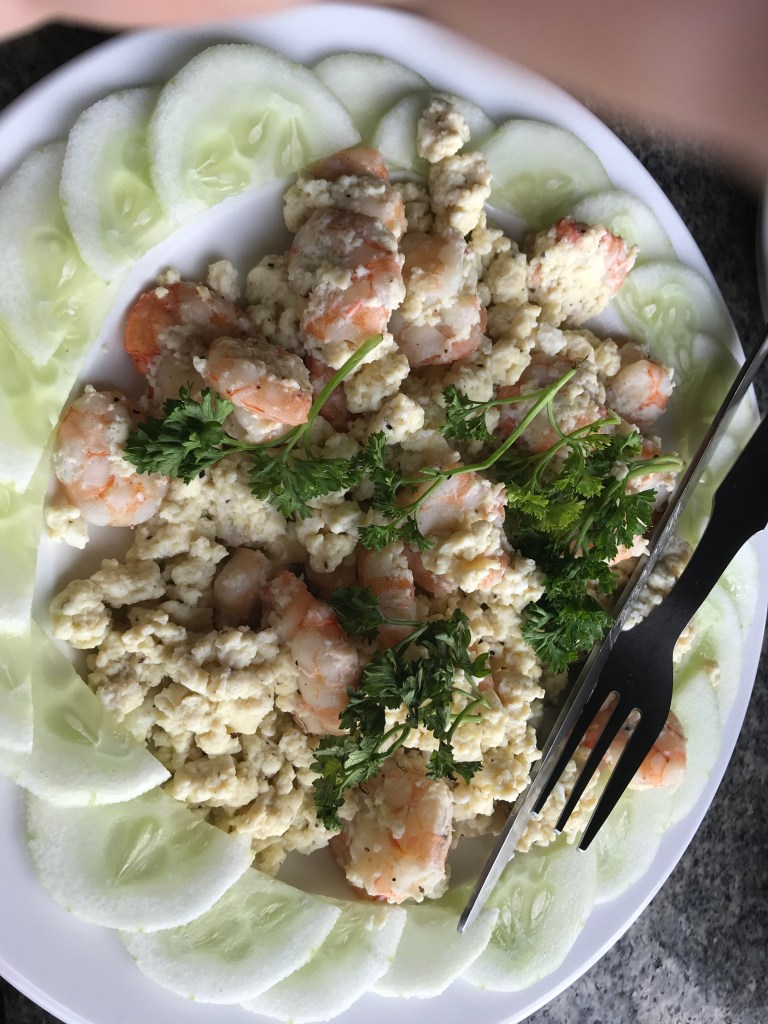
There are many restaurants that border the beach. I decided to go to one called a German Bakery and get scrambled eggs, shrimp and cucumbers. Afterwards I went to the gelato shop and got chocolate gelato. The food in both restaurants were works of art.

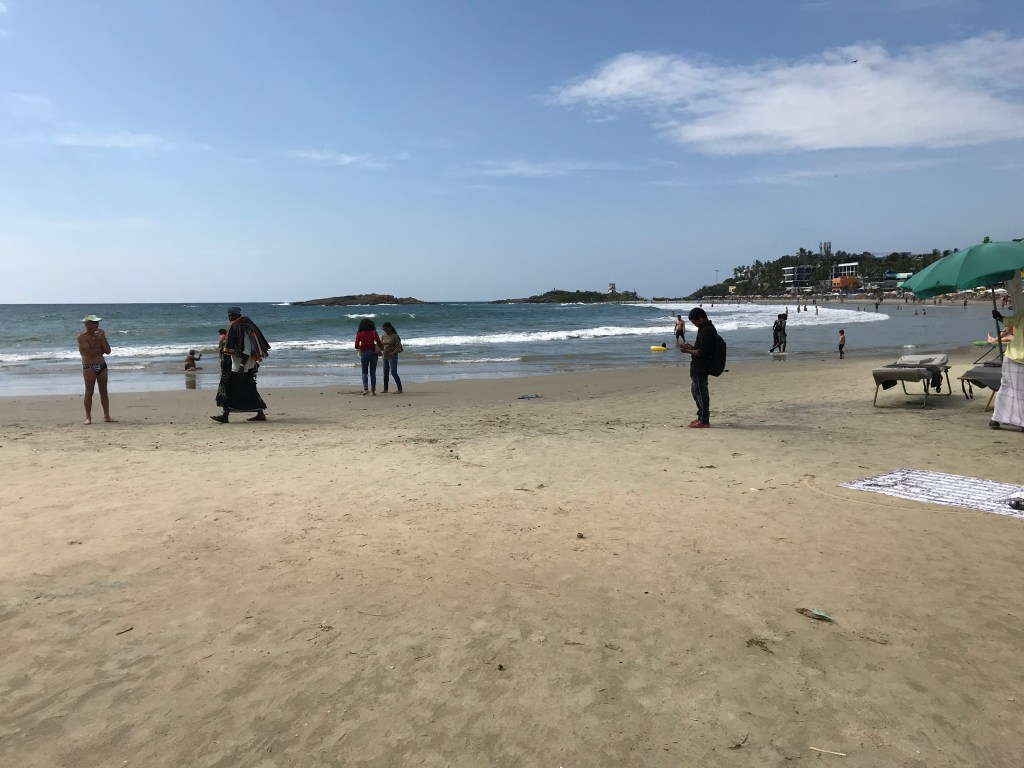
Then I decided to walk down to the beach.
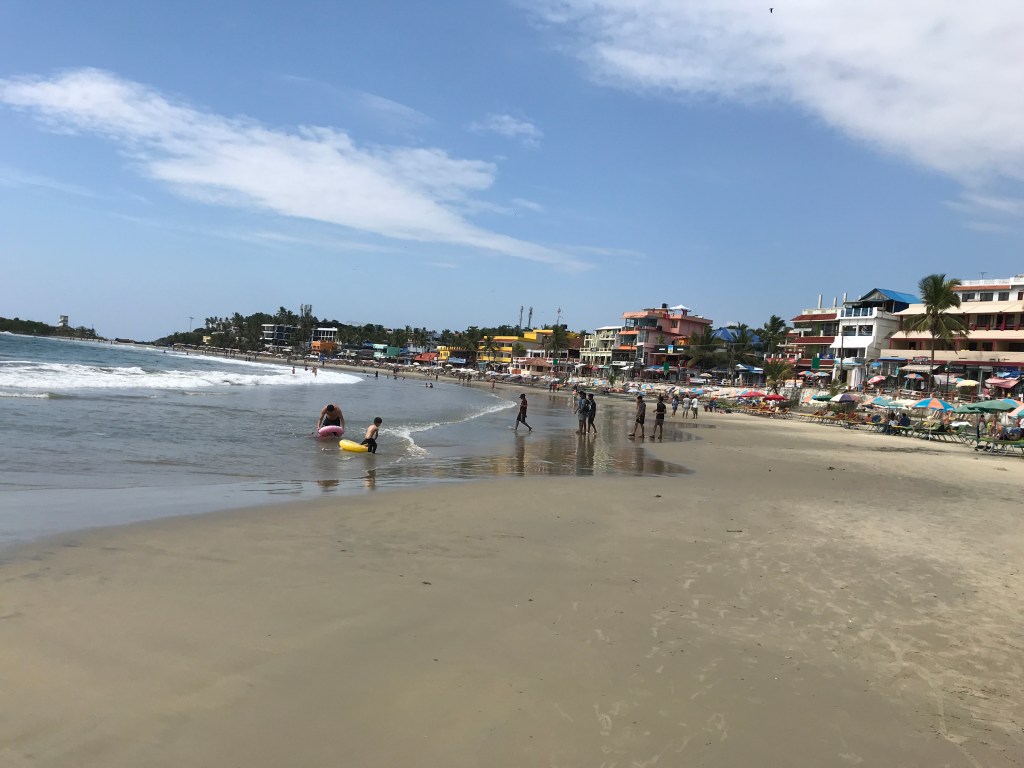
When I was standing on the balcony of my hotel room, later in the day, I noticed that I could see a different beach.
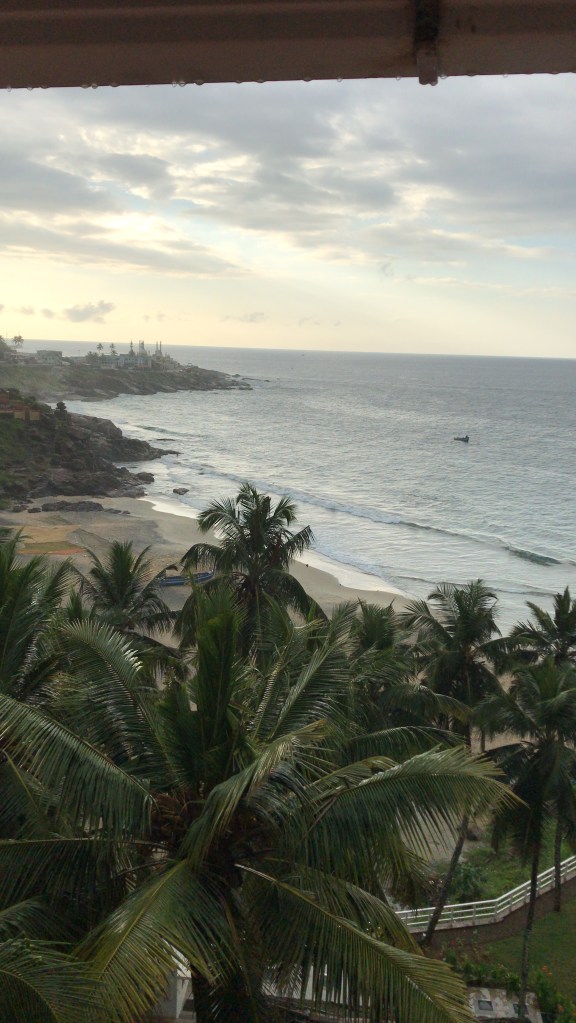
It occurred to me that the hotel might have an exit that opened up to a path that led to that beach. I asked at the front desk and learned that was indeed true, if I walked down another flight of stairs, I would find the exit.
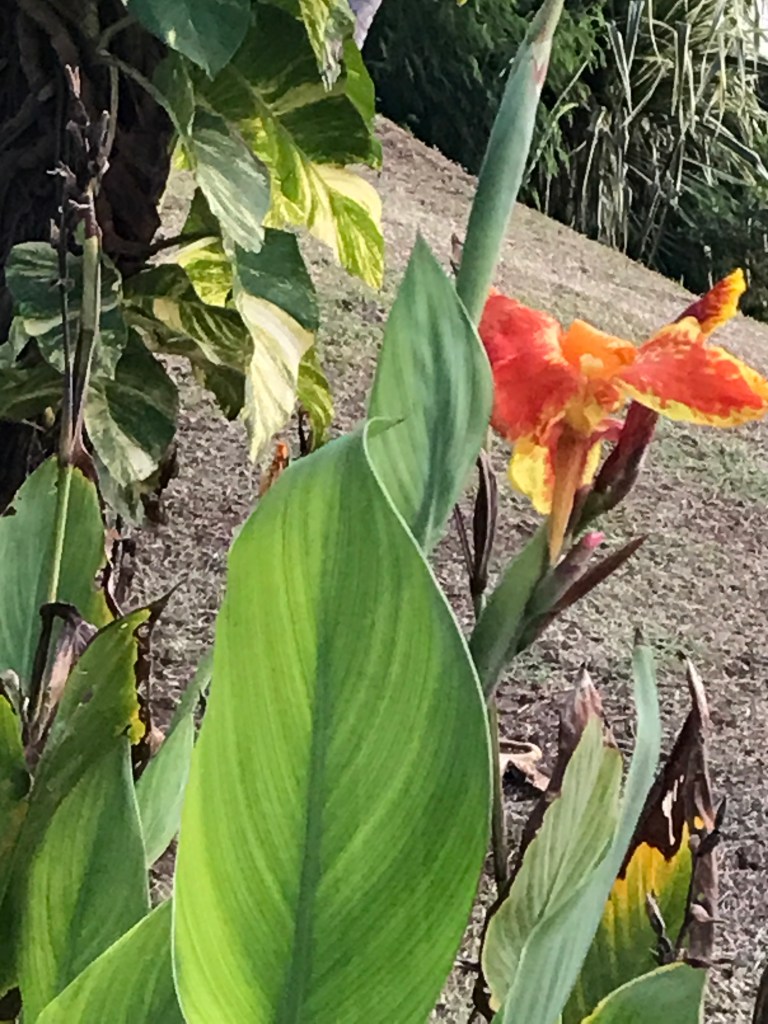
After leaving the hotel, I started walking down the path. One of the first things I saw was this beautiful shrub.
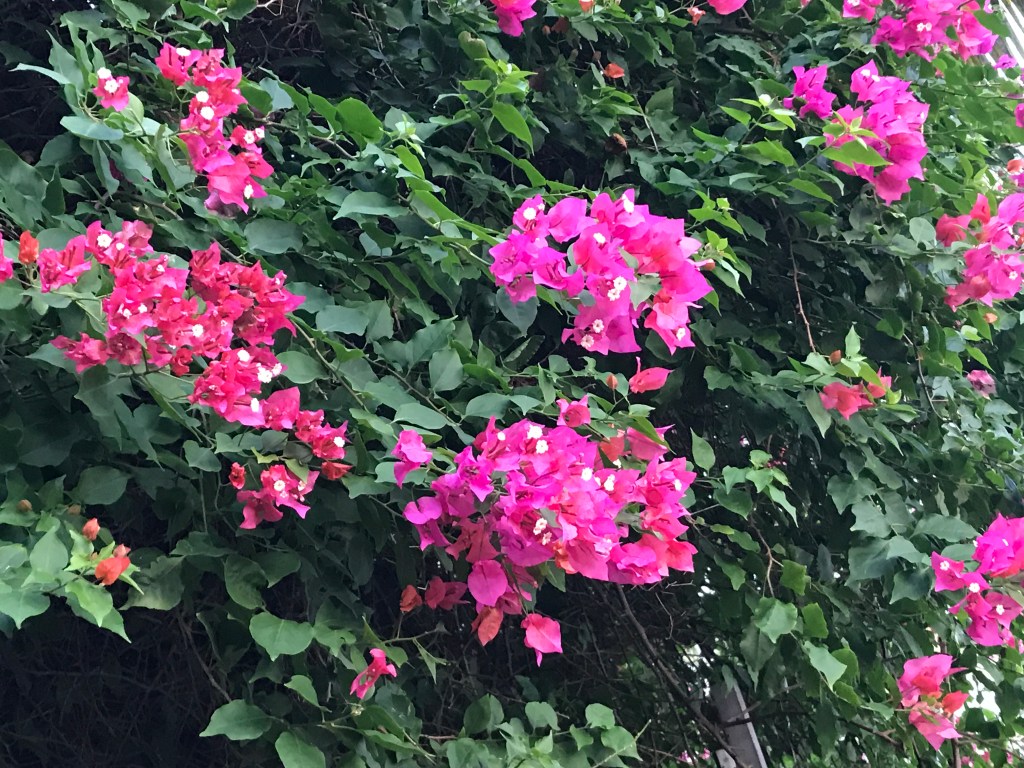
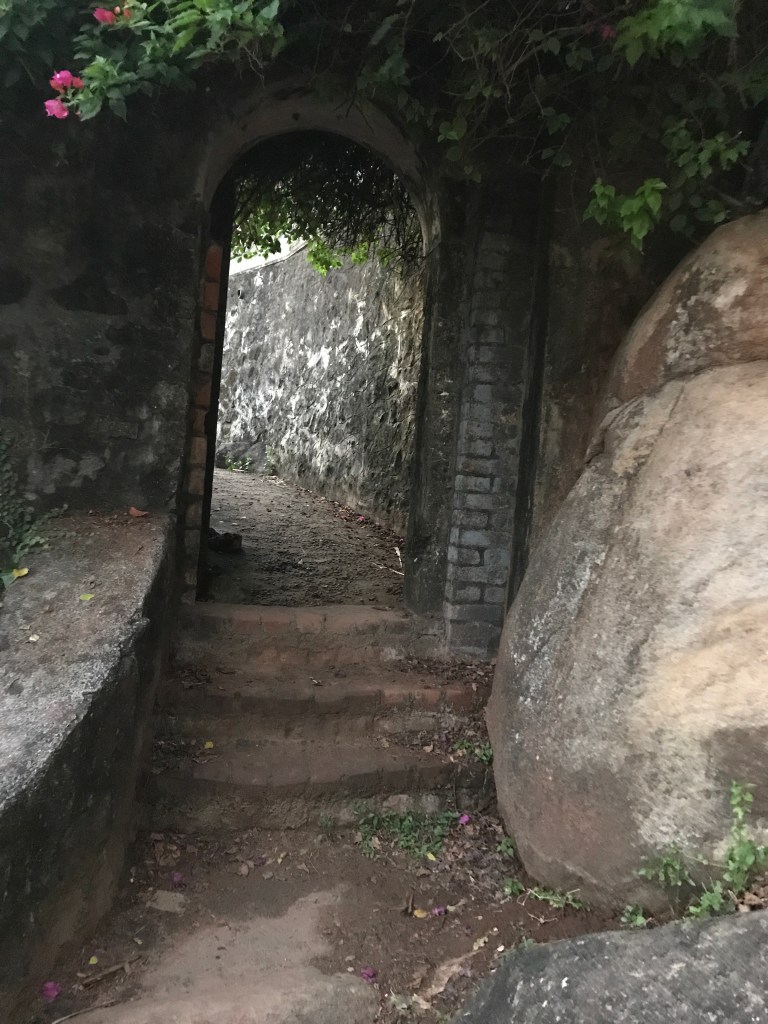
Then I walked through a short tunnel. I thought this rock was interesting.
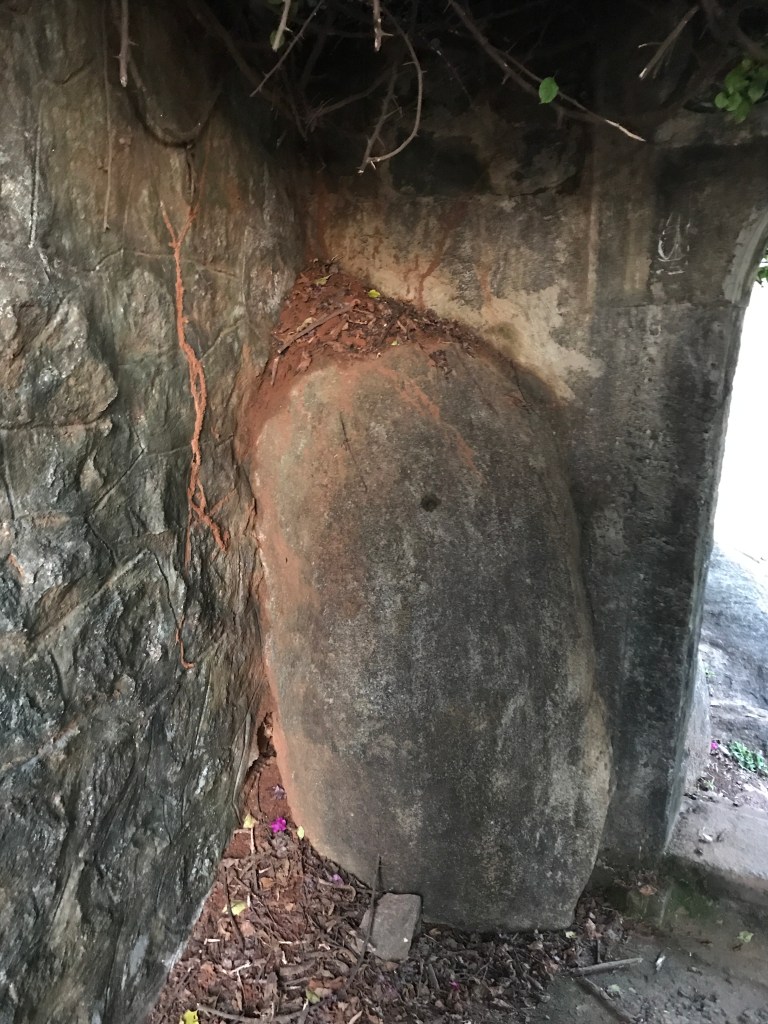
Along the way I had to make some choices. When I saw this turn on the path, I thought “I don’t think so” and continued on.
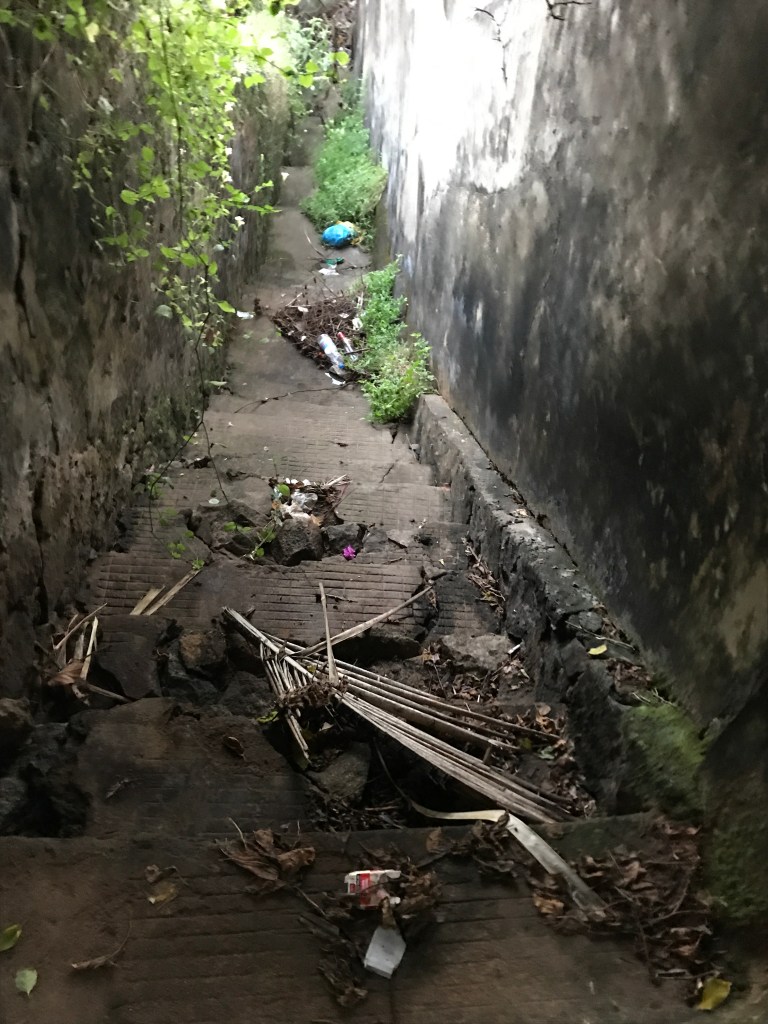
This choice seemed much more likely to lead to my destination.
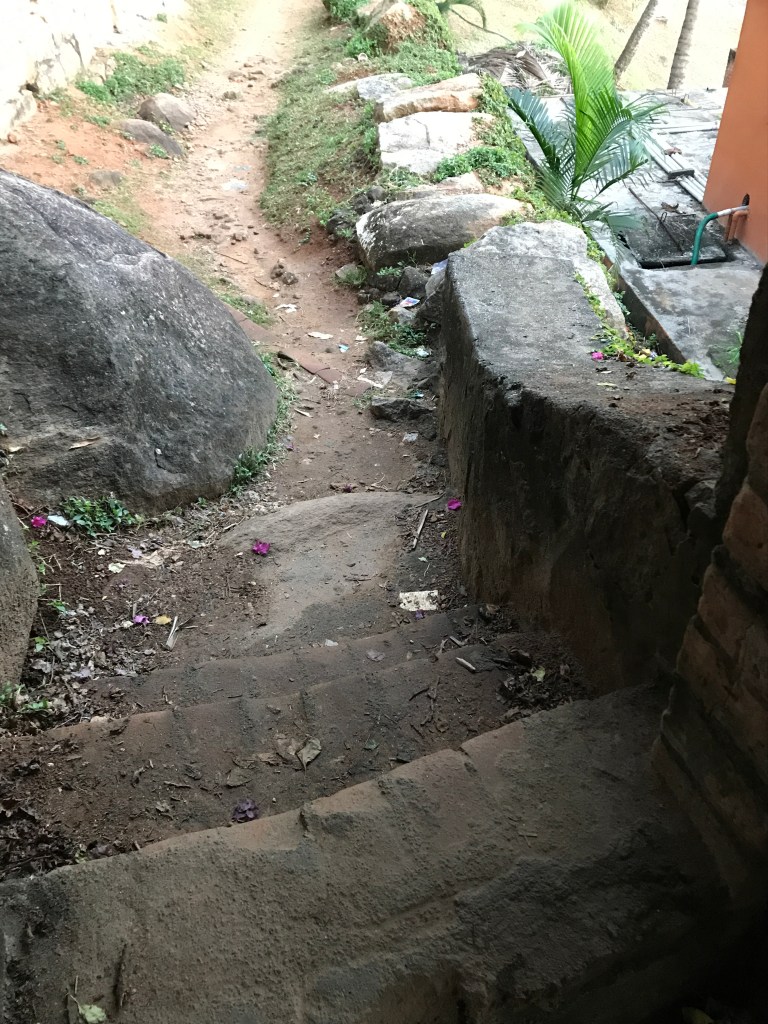

Soon I was near the beach; but I ran into an obstacle. To get to the beach I would have to go down many stairs, and there were no handrails. I had my cane, but I was having balance problems and didn’t feel stable enough to do that. I would have to be content with just looking at the beach from afar.
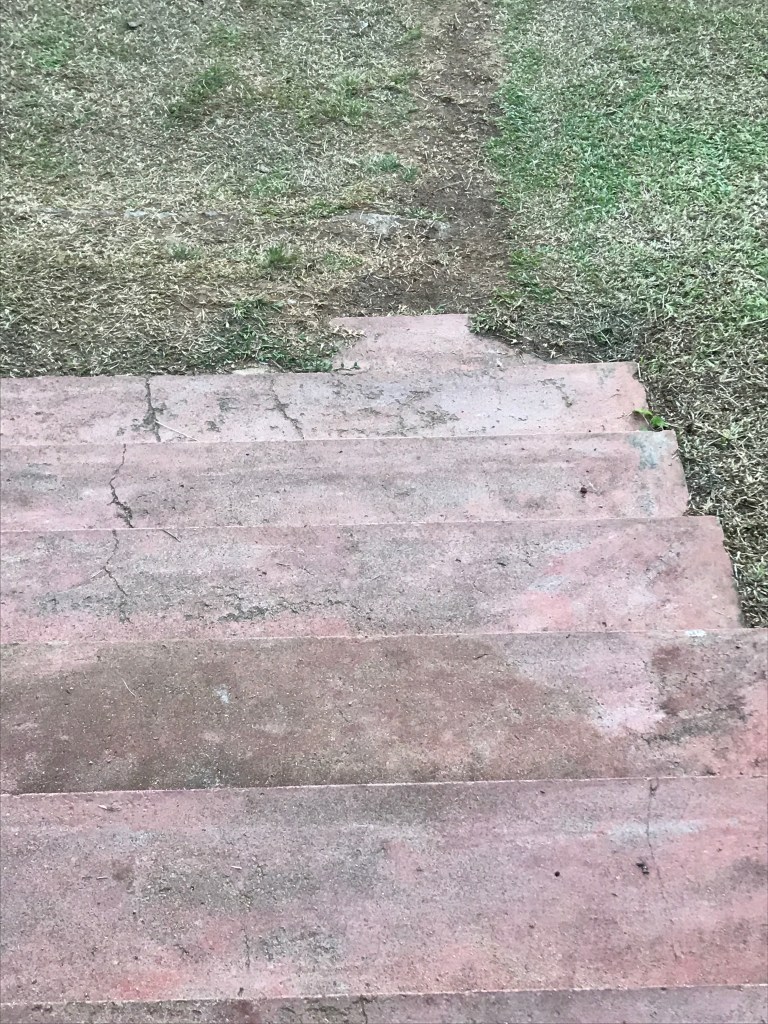
At that point, a young man who was with a group of his friends saw my dilemma, walked up to me, and offered his hand. He then walked me down all of the stairs! I felt so grateful.
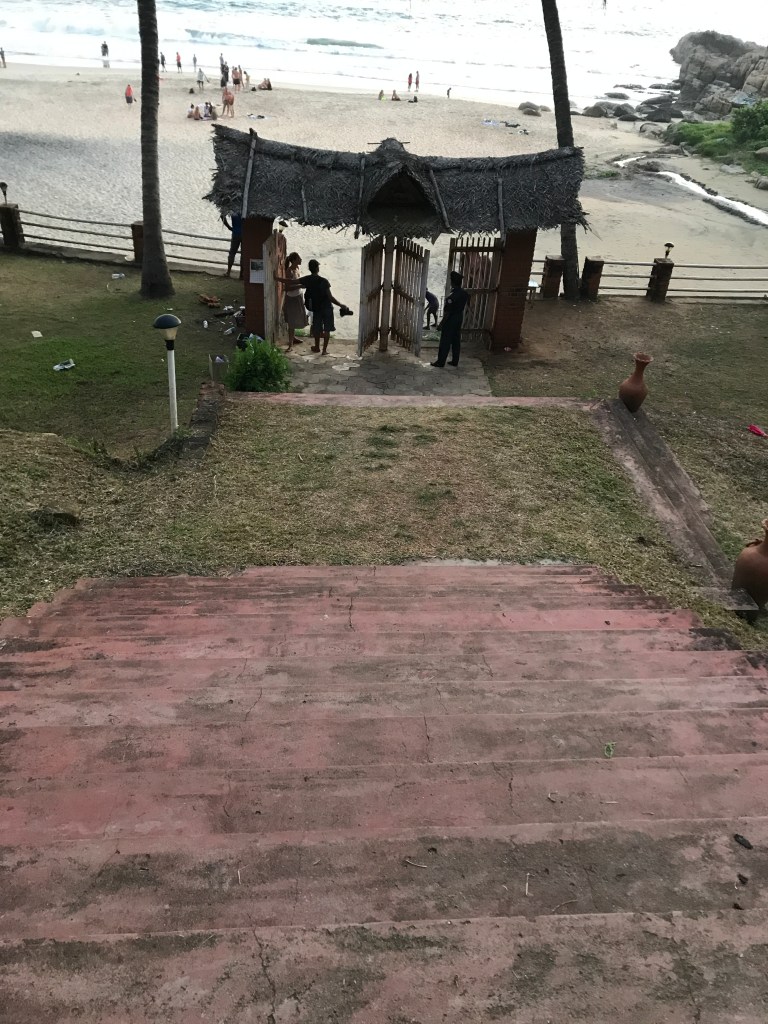
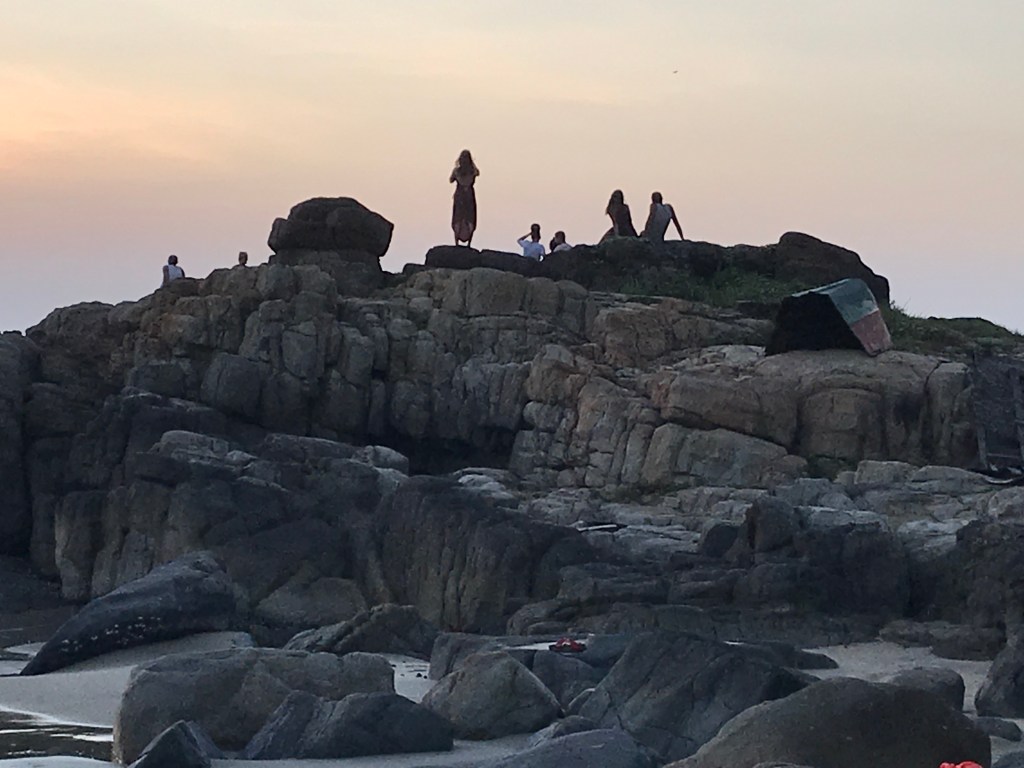
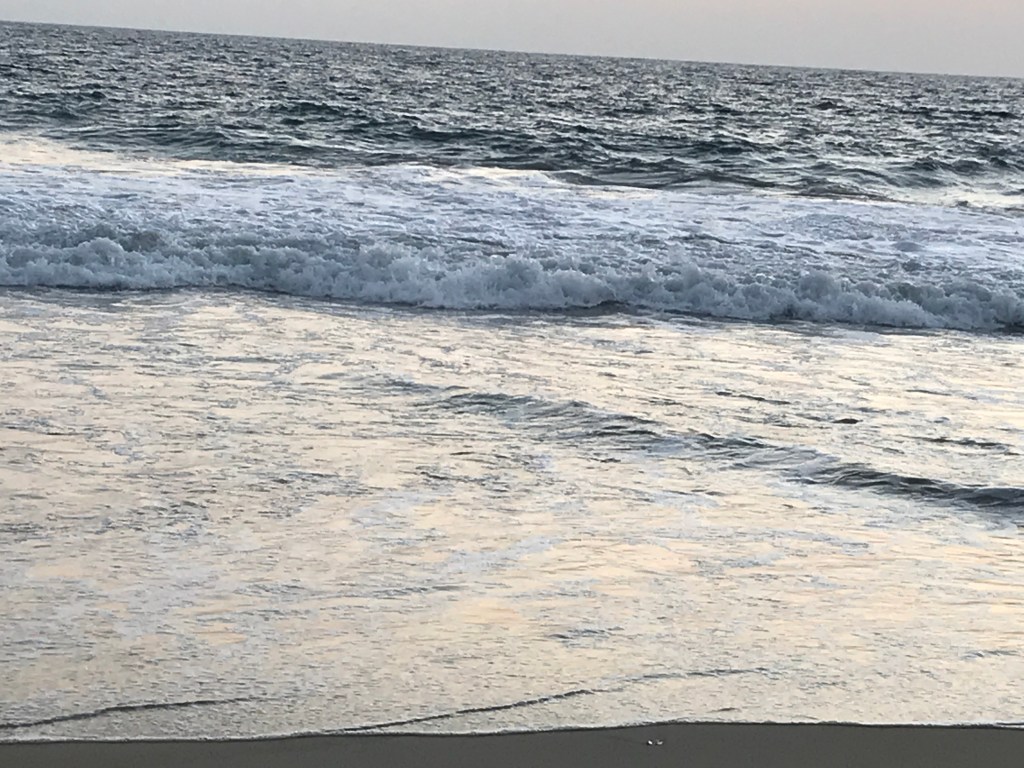
I enjoyed being at the beach but soon realized it was nearing sundown. It gets dark quickly in India, so I knew I needed to head back to the hotel. I looked at all of the stairs ahead of me.
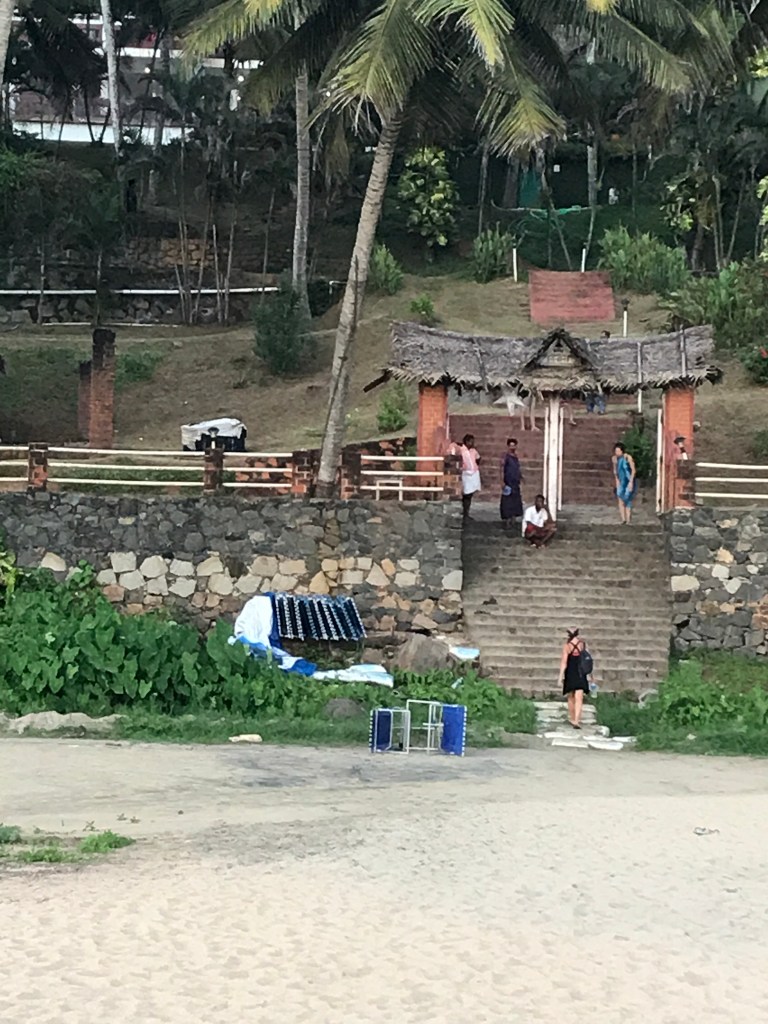
I had no doubt I could climb the stairs with the help of the cane as I am more stable going up stairs than going down them. So I started walking back to the hotel
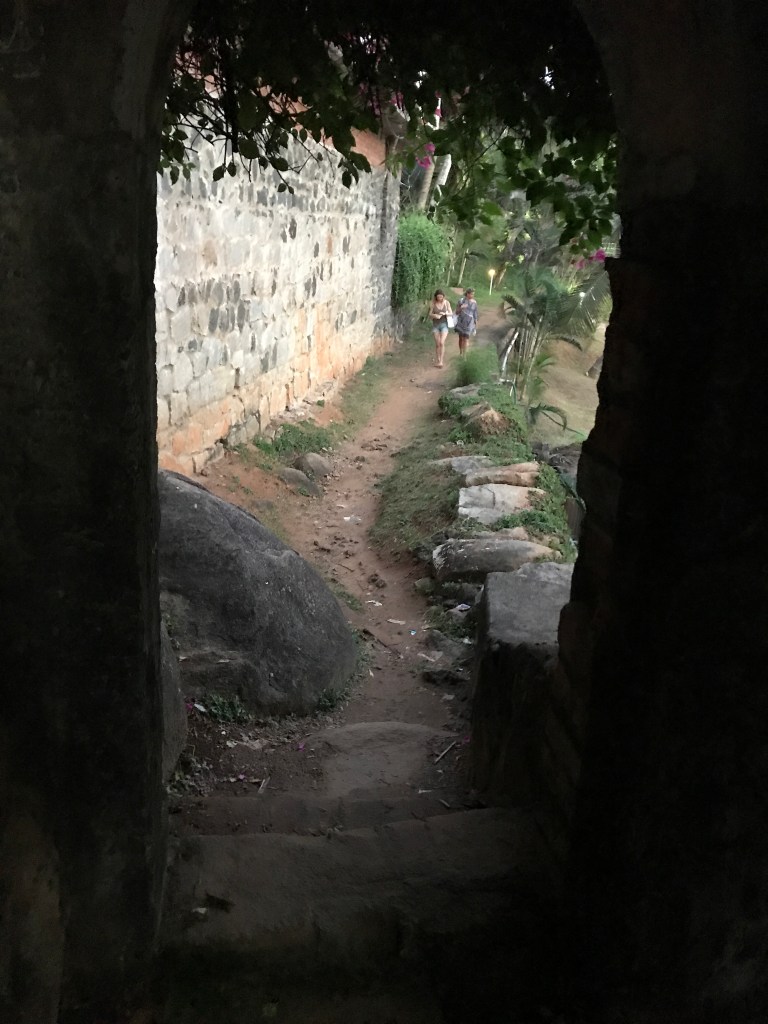
I hadn’t taken many photos as I walked down to the beach, so as I returned to the hotel, I took some pictures looking backwards, so I would have them when I wrote this post. I’m not sure, because of the placement of the rocks, where in my journey these last two photos belong. Since I really like them, I decided to end the post with them!
The Art and Craft of Blogging
A collection of discussions on the environmental issues
“The fool doth think he is wise, but the wise man knows himself to be a fool.” “Love all, trust a few, do wrong to none.” “Love looks not with the eyes, but with the mind, And therefore is winged Cupid painted blind.”-William Shakespeare
...moments of unexpected clarity
Home of Lukas Kondraciuk Photography
Wellness, Support and Mindset
Thoughts on Creativity & Deeper Things
A Blog by Novella Carpenter
Ramblings of an Irish ecologist and gardener
Teaching the art of composition for photography.
Blog from SathyaSaiMemories ~ stories of love in action and the benefits of giving
There are 11,507 stories in Haddonfield; this is one of them.
Perennial gardening and more from the Green Mountains of Vermont
Whatever it will be...
Welcome to my little slice of the blogosphere
 Living, Learning and Letting Go