
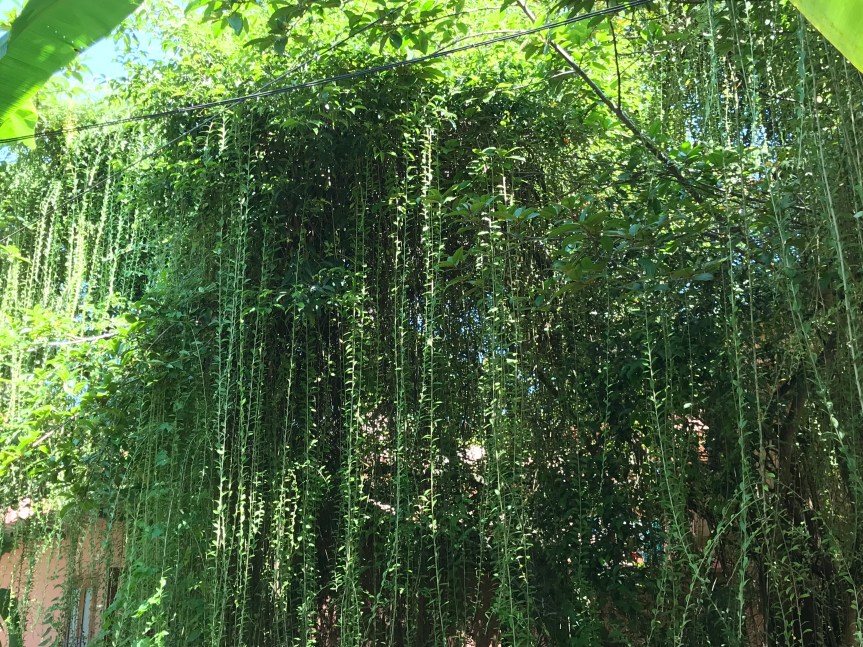
Wordless Wednesday
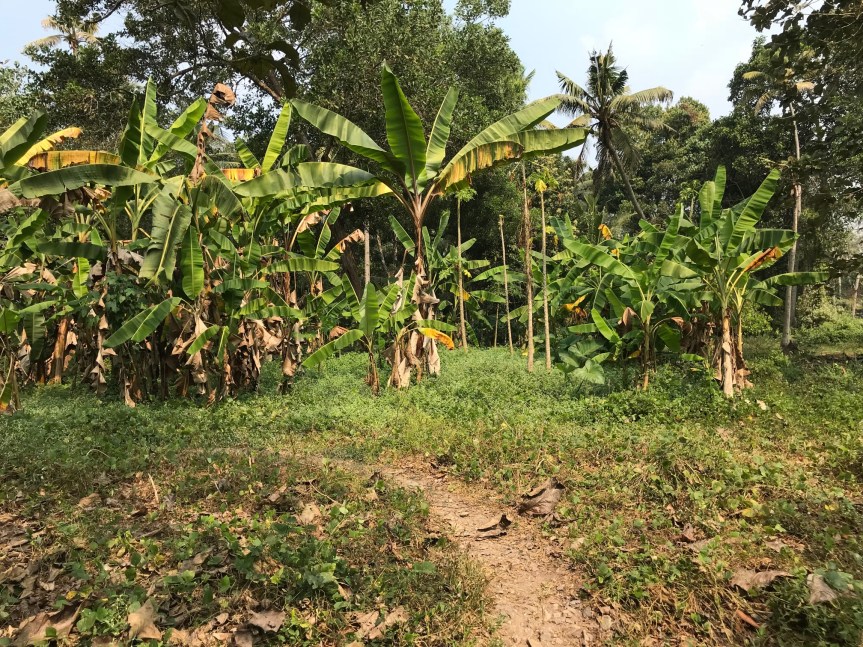
I talked about my challenges in finding the Seed-Saving farm in my last post and said I would tell you more about my visit there in a separate post. That time has come!
When I arrived at the farm, Lokesh, the volunteer who manages this project, told me that in Kerala they can grow four sets of crops each year. Since they had just finished harvesting the last crop and were only beginning to prepare for the next one, he was disappointed that he couldn’t show me more.
While I thought he shared an abundance of information with me, I found a delightful video on his YouTube channel that gave me a sense of what would be like to participate in this community gardening activity.
The soil on the farm, and in most, if not all, of the land in this area is very sandy and of poor quality.
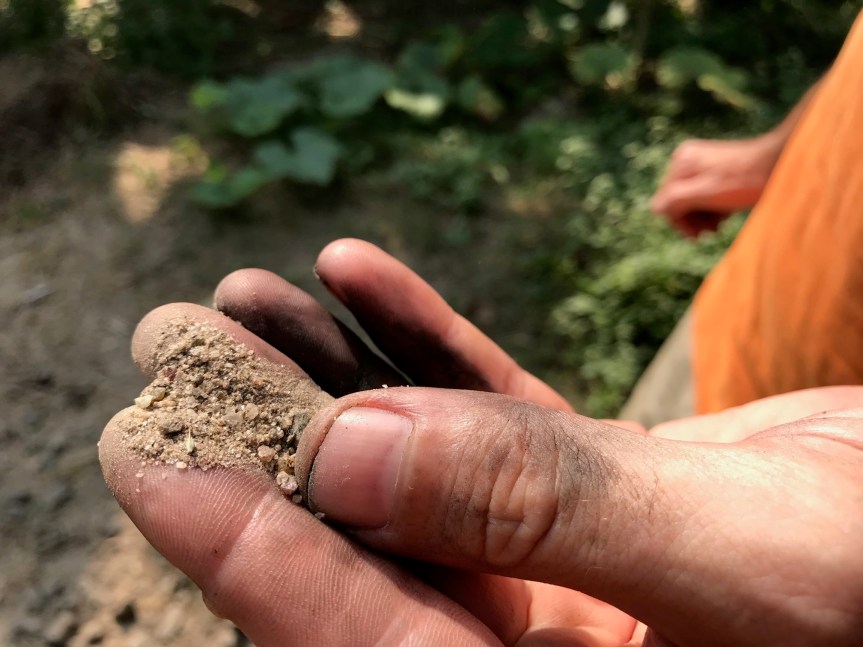
At the seed-saving farm, volunteers are making charcoal by burning coconut husks. The charcoal is then turned to powder and added to dried cow dung and dirt. Charcoal is used because it holds in nutrients. The first video in this post had a segment where the devotees were adding the charcoal to the dung/dirt mixture. In the video that mixture was put into pots and then seeds were planted in the pots. The mixture may also be spread on the land and covered with cut up coconut palm fronds or mixed with other kinds of mulch.


Ideally, Lokesh would like to have seven planting fields on this 13 acre property. At this point, they are working primarily on an eggplant field. So far, the volunteers have dug 100 holes and filled them with mulch. They add more mulch and other soil enhancers, such as the charcoal mix, as the mulch breaks down. While I was at the farm, there were two women cutting up coconut fronds to add to that area. Sticks surround each space that will eventually hold a seedling.


Another part of the farm is dedicated to producing tapioca. Tapioca is easy to grow in Kerala and it usually doesn’t need to be watered. In this farm, a plant called cirra is often grown under it. (Note: I’m not sure of the spelling of cirra.) Chaitanya told me later that cirra is one of the many forms of spinach that is grown at the ashram. There is also a red leafed plant that is being grown. In some of the other gardens, it is called red spinach and used as a vegetable. Lokesh told me it is actually a form of amaranth.


One part of the property had ridge gourds growing. I had never seen anything like them. When I read about them, I learned that they can grow up to 13 inches long. I believe the ones I saw were longer than that. I also saw remnants of pea and bean plants.


There were several nurseries at this farm. The first photo shows echinacea seedlings. I don’t remember what the other ones were.


I’m realizing that I haven’t said anything about seed-saving at the Seed-Saving farm. They are indeed saving seeds but as I understand it, part of that process is knowing how to select the right seeds and also how to grow plants that will produce healthy seeds. I know from this visit and my visit last year, that Lokesh is doing a lot of experimenting to determine how to provide the most support to the plants so that they create the best seeds possible.
On this visit, he told me that he had been given an old Kerala type pumpkin, a pumpkin that is very rare. He used four plants that were grown from that pumpkin; two of them he grew as they were and the other two he crossed with a pumpkin from the agricultural university. The pumpkins that grew from the old Kerala pumpkin seeds looked like this:
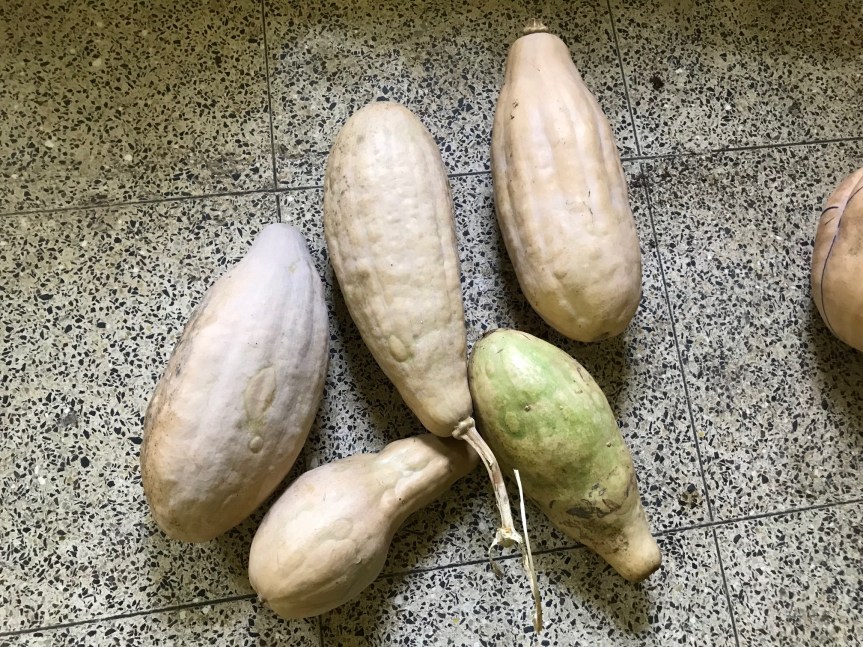
The ones that were crossed with the university pumpkin had similarities to the old Kerala pumpkin, but also differences.

Lokesh explained that he was crossing these varieties because when a vegetable is grown without diversity it becomes very weak and will eventually “fizzle out”. By crossing them, he will be able to develop a stronger strain of pumpkin and then will eventually breed out the university strain. The new plant will produce a pumpkin that will have the characteristics of the old Kerala pumpkin that gave it its superior quality, but it will be a much stronger plant. That process is called back dropping.
This video will give you more information about this topic:
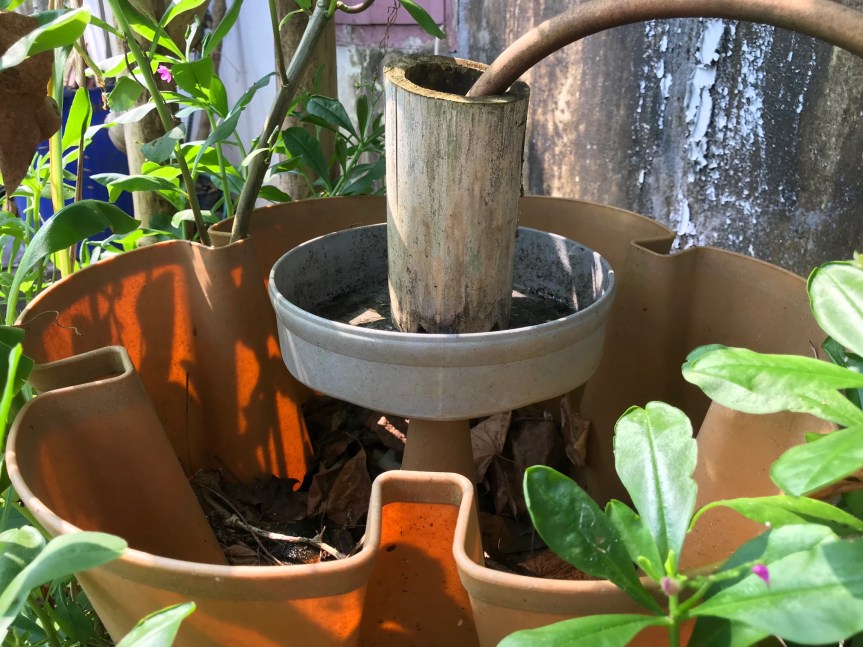
I was fascinated by two other things I saw on that day. One was a structure that provided water to a group of plants, one drip at a time. To use it, you put a bucket of water in the tub that is at the bottom of the structure. I don’t understand exactly how it works but I know that when a machine is turned on, air is pumped intermittently in a way that causes water to be pumped from that bottom tub into a container at the top of the structure. The water then drips down to the plants below it, over a week’s time.
The first photo shows the plants and glimpses of the structure I don’t know what the main plants are, but the big ones with the long leaves are tumeric plants.

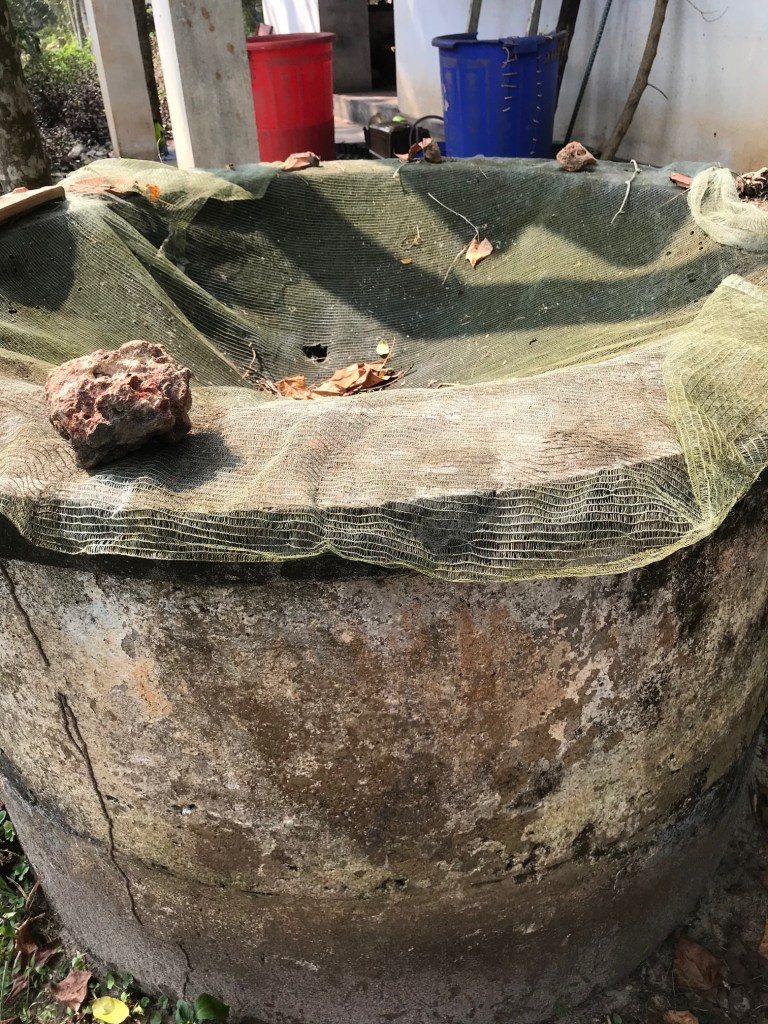
There is a well located next to the plants. Water from this well is used to fill a tub at the bottom of the structure.
The next photo shows the top part of the structure. Lokesh turned the machine on when I was there. I think some water will begin to pool in the blue-gray part after it runs for a while.)
This photo shows the body and the bottom of the structure. You will notice that the tumeric plant is drooping. That plant starts to die when it is ready to be harvested. We checked in the soil around it and could feel big tumeric bulbs.

I’m going to end this post by telling you that Lokesh is creating a blacksmith shop on the property. He is inventing all sorts of things there. His most recent invention is a power hammer made from an old bicycle!
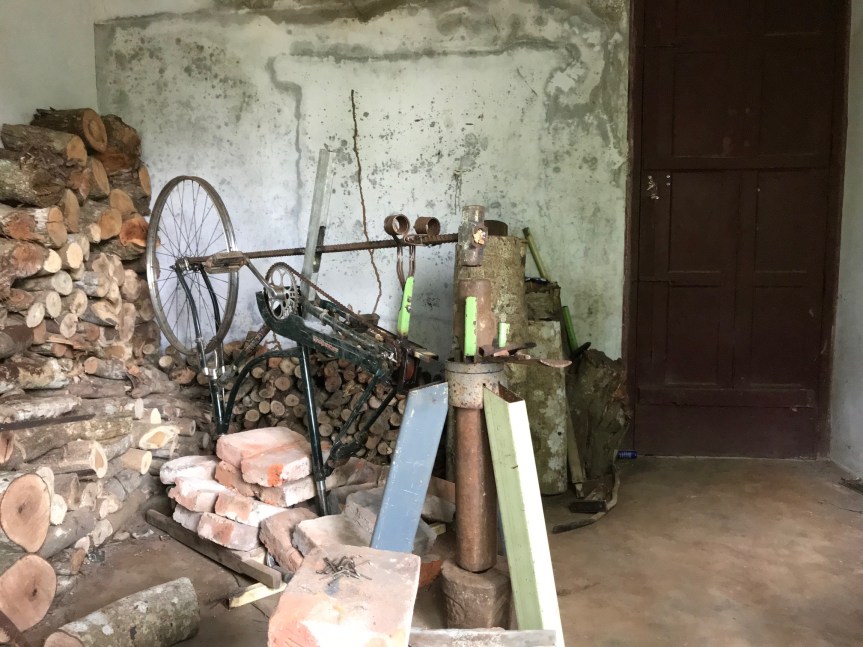
Below is a video that shows how he made the hammer. There are several other blacksmithing videos on his YouTube channel, as well as videos on many other interesting subjects.
As I imagine you can tell from my post, I thoroughly enjoyed my time at this farm and look forward to going back there the next time I am in Amritapuri.
[Note: I apologize for any mistakes I may have made in relaying the information I learned that day. These subjects are all so new to me.]
To read the previous posts in this series click here.
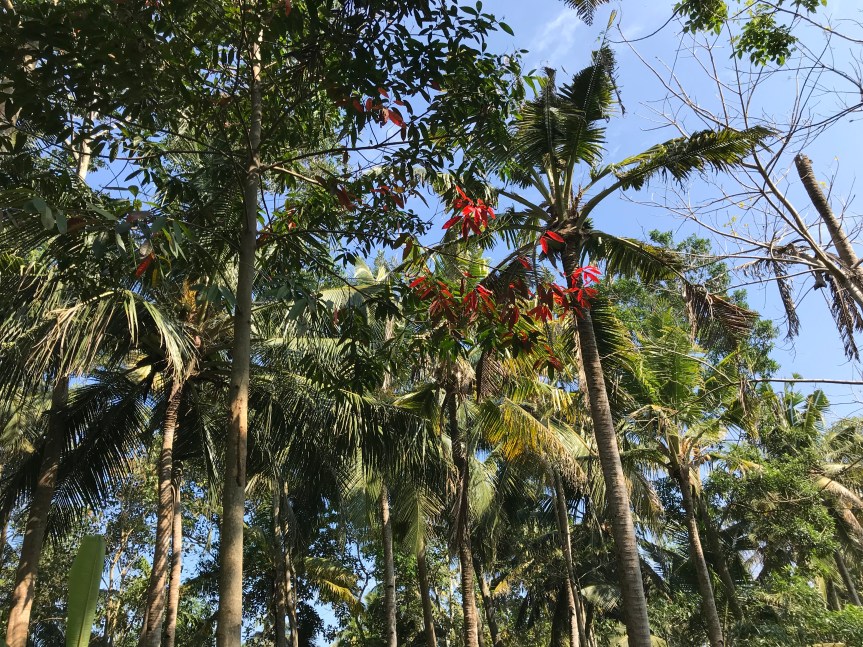
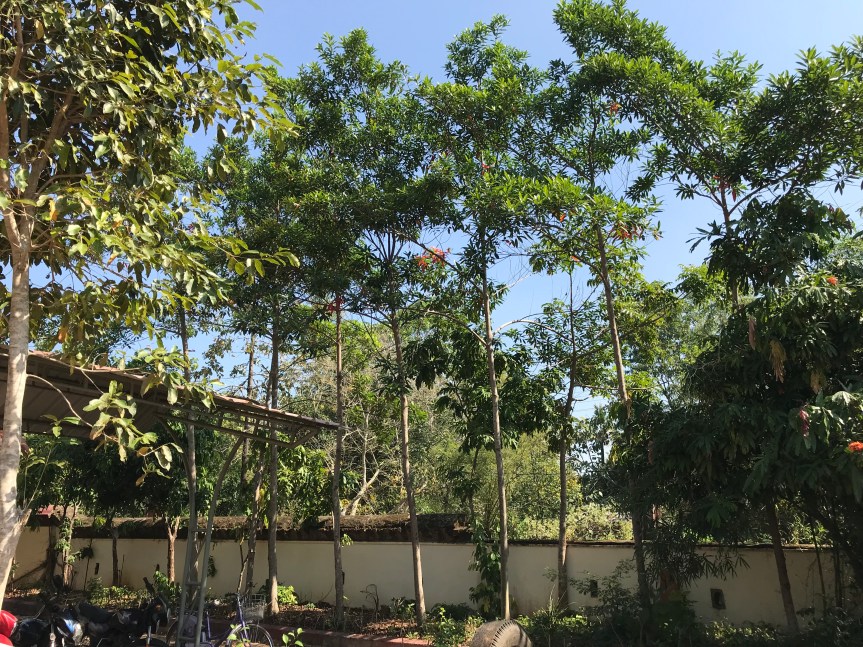
On December 29, Gopika and I visited Vrindavan Field. This garden was started many years ago. At that time it was a tulasi garden. Over time, the devotees added many other kinds of plants. Several years ago, they discovered that some of the trees on the site were rudraksha trees. The seed that is inside of the rudraksha fruit is sacred. Since then, gardens all over the ashram have been raising rudraksha tree seedlings. The photo above shows an area that contains a combination of coconut palm trees and rudraksha trees. The tree in the foreground on the left is a rudraksha tree.
One of the first plants I was drawn to on this visit was a banana palm sprout that was growing out of a nearly dead banana palm stalk that was lying on the ground. You can see a tiny bit of the sprout on the left side of the first photo below; most of the photo is of the stalk. The second photo shows the full sprout. Banana palms only give fruit once; then they die and new sprouts take their place.


(Click on any of the galleries to enlarge the photos.)
The gardens and farms in this field have had to deal with so many problems over the years. For example: lack of water, flooding, disease, and poor soil. The staff have experimented with so many processes to enrich the soil and to retain water. Their effort has definitely paid off, but challenges still come and go.
This year a lot of the tulasi plants died and the garden doesn’t seem as lush as it did last year. But there is still plenty of beauty and the site is producing a considerable amount of food. I saw bananas, coconuts, tapioca, many kinds of spinach, beans, eggplant, okra, basil and moringa growing. There were plants that I didn’t recognize and I suspect many of them are edible.


I didn’t see as many flowers as in the past, but there were some…


… and there were plenty of interesting plants.


As we were leaving, one of the staff offered to take us to see the rudraksha trees on the School of Ayurveda grounds. She said those trees were much smaller than the ones in Vrindavan Field. We gladly took her up on her offer and it was well worth it; the trees were beautiful.

To read the previous posts in this series click here.

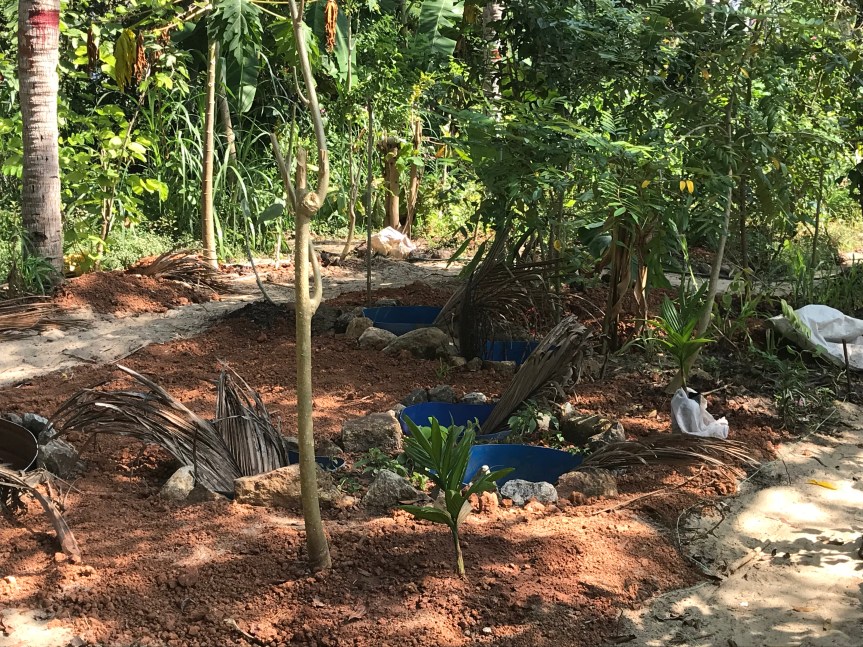
Three days ago, I wrote a post about my visit to Kuzhitura Farm. In it, I showed some tubs that were buried in the ground. I said they were being used to collect water. A friend of mine from Seattle asked me to give her more information about the new water catchment method. When I thought about it some more, I realized I had made an assumption that was probably wrong; while the tubs could hold rain-water, they weren’t big enough to provide much of a water source for a farm that size.
Yesterday, I had a chance to talk to an Amritapuri friend who works at that farm. She told me that the water catching system they have used for the last few years didn’t work well. The old system looked like this:
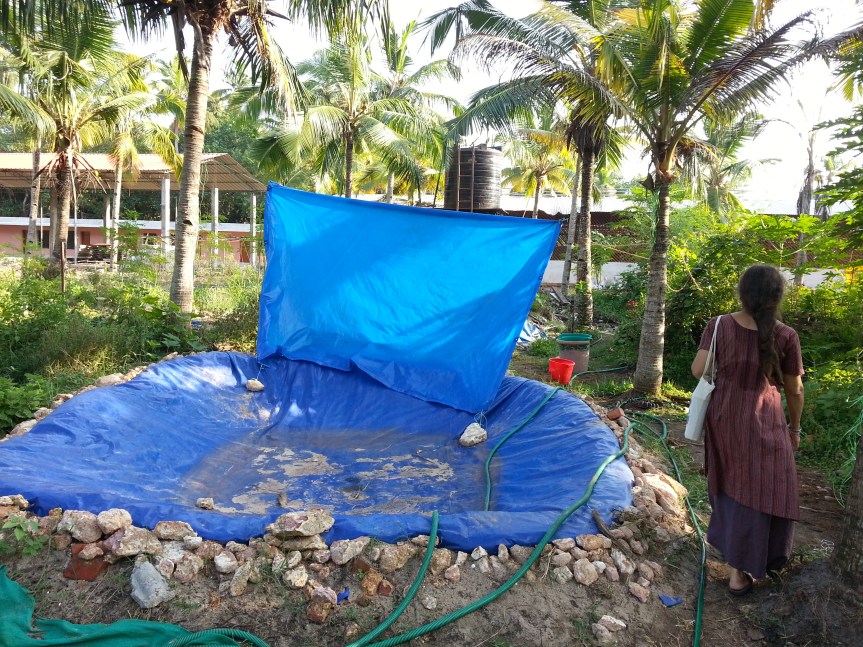
While the plastic did catch some water, it turned into a pond for turtles instead of a way to store water. The devotees who take care of this farm often found turtle eggs in it.
It was not a suitable home for the turtles or their eggs, however. It is hot here and many months there is little to no rain. During those times, the pond dries up. The staff decided to build homes for the turtles that would be more sustainable. Soon they will live in the tubs!


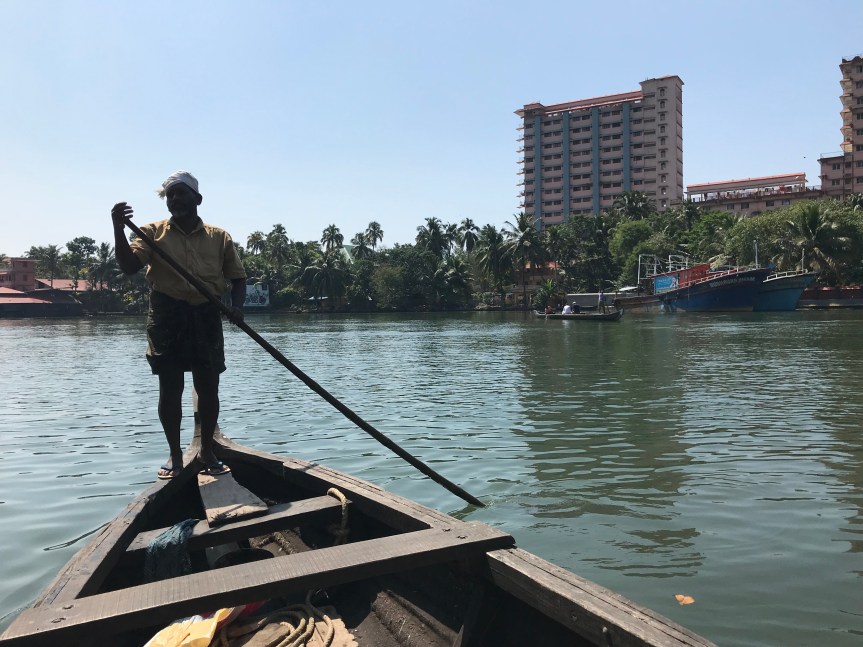
Gopika and I decided to take a canoe back to the ashram yesterday after visiting Amma’s Vrindavan Field, the Ayurvedic Herbal Garden, and the Ayurvedic College, School of Engineering and School of Biotechnology grounds. I will write about our visit to those places another time but wanted you to see the canoe photos now.

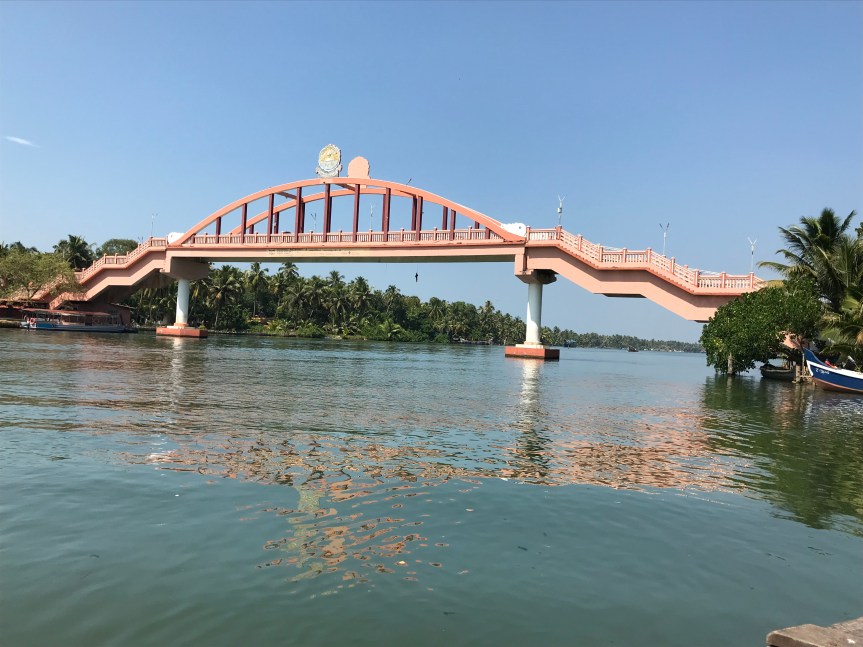

On Wednesday, I went to Kuzhitura Farm. The farm is a 20 to 30 minute walk south of the ashram. I think I have visited it for five years straight.
When I walked onto the land, I saw two friends weeding a tulasi and basil field.
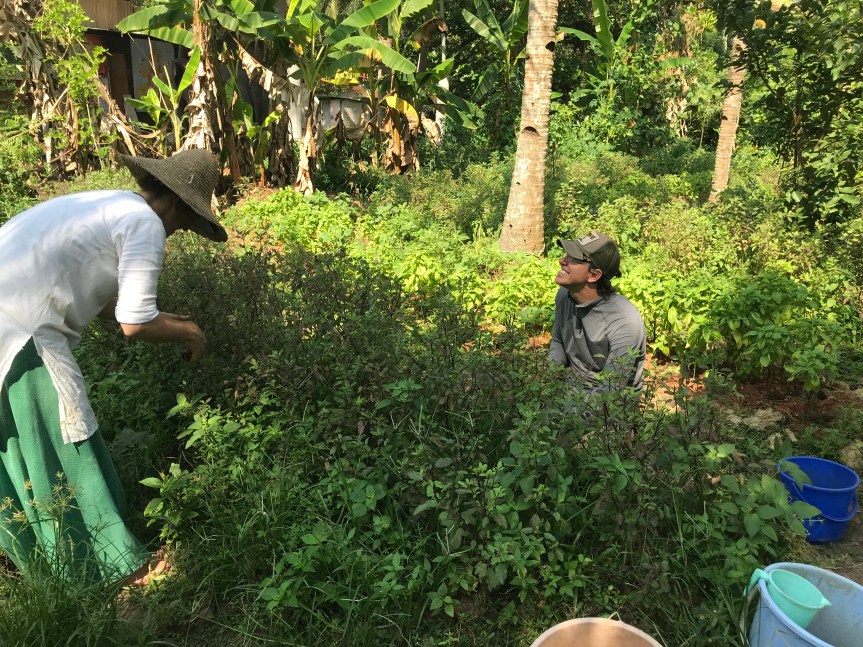
My attention was then pulled to a form of “spinach” I was introduced to last December. It is so tender and can be eaten either raw or cooked. I loved it so much that I found some seeds in the U.S. and planted them, but they didn’t sprout. I’m going to try again this year even though it probably doesn’t get hot enough in Seattle to grow that type of spinach.


Over the years, the devotees who have worked at this farm have tried various ways of catching and storing water. They had a new method this year. [Note: I was wrong about these tubs being used to catch water. Read I Was Wrong for an update!]


I saw so many beautiful flowers. (Click on any of the galleries to enlarge the photos.)


In the middle of the property, there was an Amma altar…

… and many other beautiful and interesting sights. Everything grows so fast in the tropics. Some plants that were a foot tall last year or the year before have grown to a height of five feet.


I saw butterflies, birds, and a dragonfly. I tried to take photos to show you but they all moved too fast, so I gave up and looked at them for myself. When I took the time to observe them, I noticed there were at least a dozen types of butterflies. The colors and markings on their bodies were exquisite. Maybe some day you will come here and see them for yourselves!
To read the previous posts in this series click here.
To read the previous posts in this series click here.
The Tulasi Garden is the first garden I ever visited in Amritapuri. I probably saw it for the first time a decade or more ago. It has changed so much over the years. They have added land and there are so many different kinds of plants there now. Most of the plants are edible.
I really enjoyed my visit to the Tulasi garden last week. These first photos are of the nursery and some newly planted seedlings. (Click on any of the galleries to enlarge the photos.)


The garden had a banana palm that was at least thirty feet tall. It was twice the size of any I have seen in the past. I also saw several sprouts, the beginning of new banana palms. These photos show various views of banana palms.


I thought this scene of a coconut palm tree was beautiful.

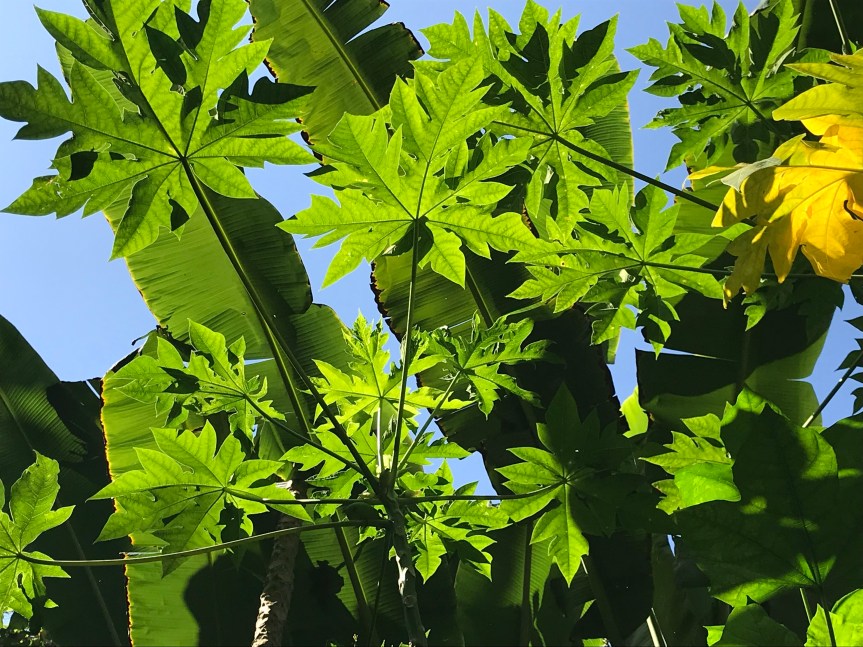
These are old and new papaya trees. The short ones surround the tall one.


There was a wild orchid in the garden.


This is a photo of some of the rudraksha trees…
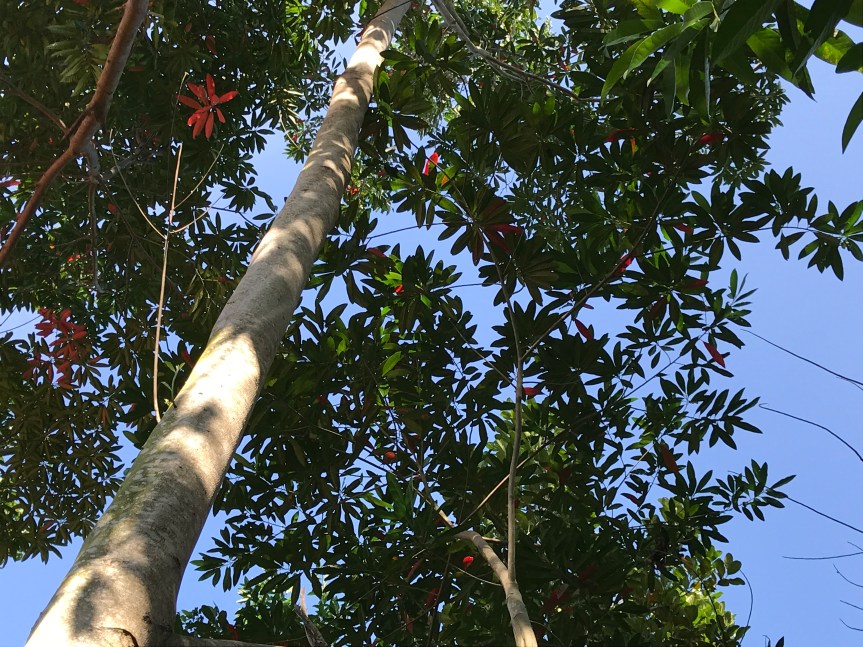
The seeds that are inside the fruit of a rudraksha tree are sacred. They are often used in making malas. I took these photos of the fruit of rudraksha trees, and the seeds that are inside of them, a few years ago. The second photo was taken at a work station where ashram residents were separating the seeds from the fruit.


Below are photos of other plants I saw in the garden.


And last but not least, I saw this unusual but beautiful tree as I walked back to the main part of the ashram.
To read the previous posts in this series click here.
I was unsuccessful in locating the photos I took of the School of Biotechnology grounds a few years ago. All I can do is tell you that when I saw it last week, I was astounded by how much some of the shrubs have grown since I saw it back then. The land was beautiful at that time, and it is even more beautiful now. (Click on the gallery to enlarge the photos.)


To read the previous posts in this series click here.
The Art and Craft of Blogging
A collection of discussions on the environmental issues
“The fool doth think he is wise, but the wise man knows himself to be a fool.” “Love all, trust a few, do wrong to none.” “Love looks not with the eyes, but with the mind, And therefore is winged Cupid painted blind.”-William Shakespeare
...moments of unexpected clarity
Home of Lukas Kondraciuk Photography
Wellness, Support and Mindset
Thoughts on Creativity & Deeper Things
A Blog by Novella Carpenter
Ramblings of an Irish ecologist and gardener
Teaching the art of composition for photography.
Blog from SathyaSaiMemories ~ stories of love in action and the benefits of giving
There are 11,507 stories in Haddonfield; this is one of them.
Perennial gardening and more from the Green Mountains of Vermont
Whatever it will be...
Welcome to my little slice of the blogosphere
 Living, Learning and Letting Go