Wonders of Nature: Echinacea Flowers

IMG_8812[1]

I have been fascinated by Echinacea flowers since I was introduced to them last year. I know that bees and butterflies love them too. In the last two weeks I have planted three Echinacea plants in or near my front yard vegetable garden.

The bees are already visiting the Echinacea. Next year, I hope the butterflies will come as well. I was so excited when I saw one yellow butterfly in my garden earlier this year. That was the first one I’d seen in years.

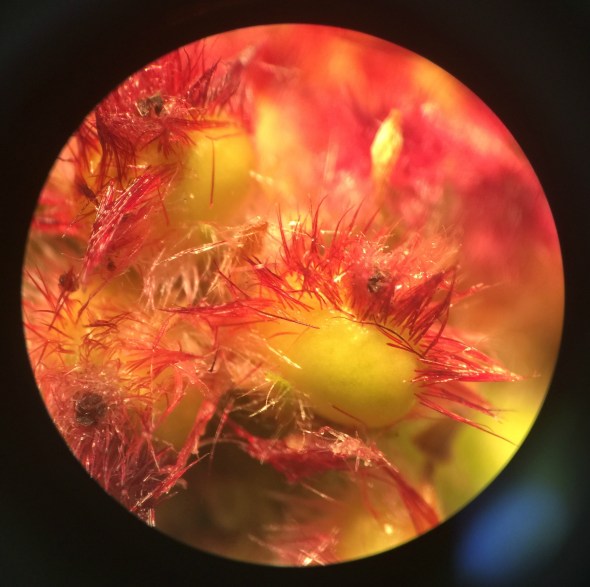
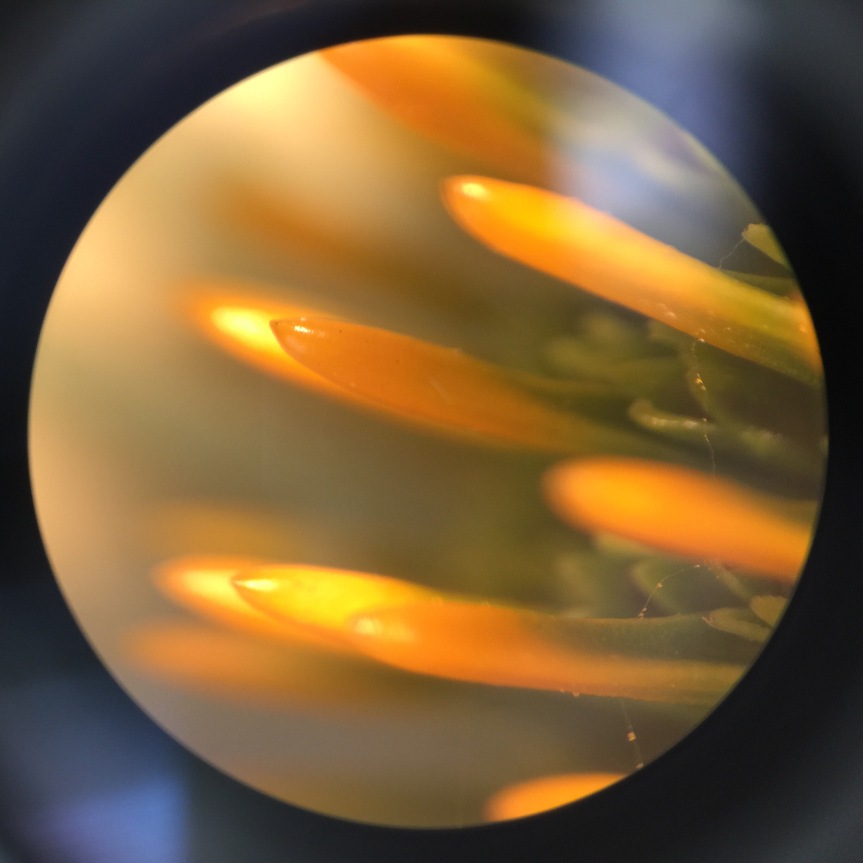
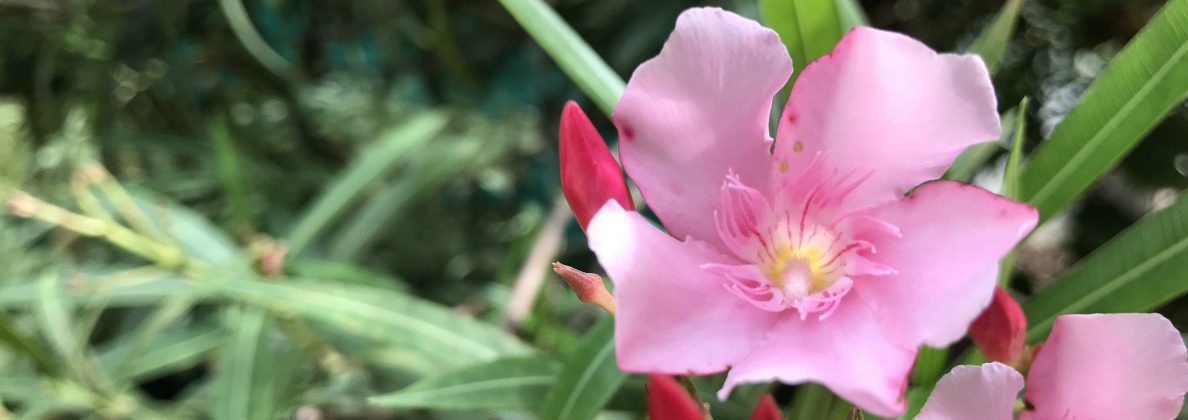
This afternoon, I decided to look at two of the orange flowers under the microscope. Most of the photos below are of one of the smaller, and younger, flowers. It was similar to the flower that you can see at the bottom center of the photograph at the top of this post.


I think the microscopic photographs are like works of art. This is my favorite of the shots I took today.
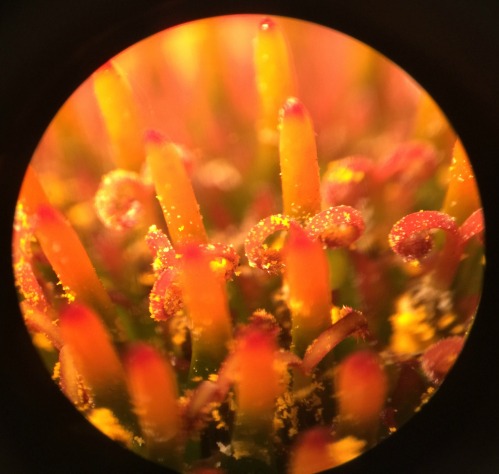
echinacea


The next group of photos show what the flower looked like when I cut the center part of it in half. I found the white photo particularly fascinating. (Click on it if you want to see a clearer view.) The intricacies of nature never cease to amaze me.

This last group of photos shows three views of one of the bigger and older Echinacea flowers.

Every time I look at my Echinacea flowers, I think of the Echinacea field at Amma’s Center in Chicago (M.A. Center Chicago) that I saw earlier this summer.  I will end this post with an aerial video that was taken of that field last year.

Maltby Garden

20160810_105841

Two weeks ago I took photos of a garden in Maltby, a town northeast of Seattle. I had seen the garden soon after it was started in May and the transformation is remarkable. Seeing and walking through it has certainly inspired me.

(Click gallery to enlarge photos)


Weekly Photo Challenge: Rare

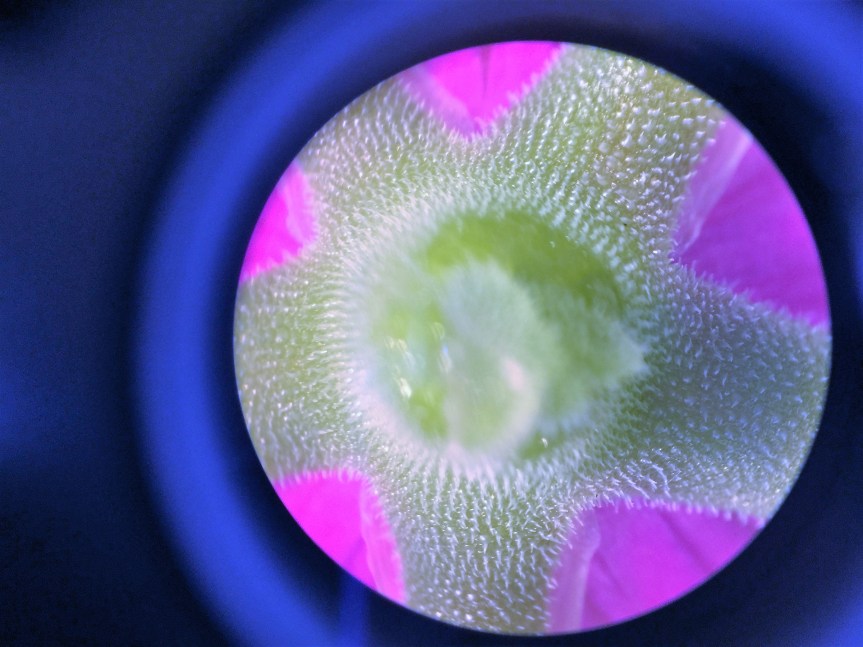
This week’s Weekly Photo Challenge is to share a photo of something rare. I believe that the microscopic nature photos I have been sharing on my blog are rare. This is one I took yesterday of the center of an Echinacea flower.

IMG_8770

Dahlias

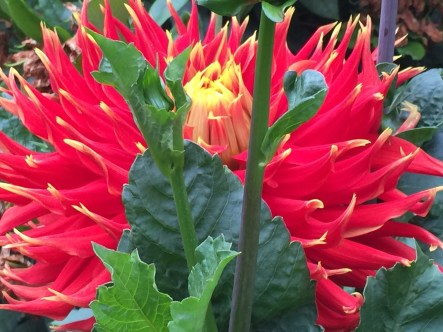
There are so many different kinds of dahlias.  Who would think these flowers would be the same genus

as this one!

IMG_4293

Wikipedia says that dahlias are also related to sunflowers, daisies, chrysanthemums, and zinnias.

Photo Journal of a Snail’s Adventure

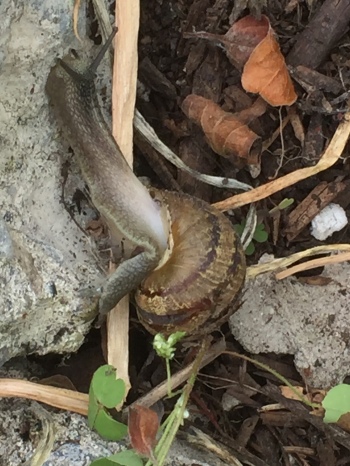
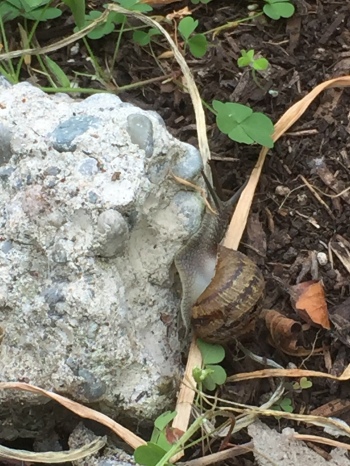
Last week, when I removed an overgrown chive plant from my garden, I discovered it had been covering two snails. One appeared to be missing a big part of its shell and mucous was pouring out of that area. It looked like the other snail was eating the mucous. When I separated them, the wounded one didn’t move but the other one did. I followed its movement taking photographs along the way.

Notice in the photos below that the snail is approaching a crevice in the piece of concrete.

IMG_7990

IMG_7991

IMG_7992

Wow!IMG_7995

Turning to the right.

IMG_7998

And then pulling his shell up.

IMG_7999

He has almost made it to the top.

IMG_8002

Success!

IMG_8004

As I continued to watch, I decided to follow him by video.

You  are about to enter a snail’s world.  [The snail you see at the very end of the first video is the wounded snail. The snail from the photographs above is the star of the first video (47 seconds) and all of the second one (2.59 minutes).]

I thought he was headed in a particular direction but I was wrong!

After about 20 minutes, the wounded snail began to show signs of life. In time it started on its own journey. So was it really wounded? If not, had they been mating?

I looked for information and videos on snail mating but nothing that was described or shown looked like what I had seen. There is so much I don’t know. I appreciate the glimpse into the wonders of nature that this experience has given me.


Weekly Photo Challenge: Fun (for me!)

The Beauty of Chinese Lantern Pods

IMG_7047

I have long been fascinated by Chinese Lantern plants. One of my neighbors has them lining the fence in front of her yard. In reading about them for this post, I learned they are nightshades, and therefore are related to tomatoes, peppers and eggplants.

I try not to pluck any bloom before its time so have never had the opportunity to look at the pods closely. However, when I walked by the house yesterday, one of the pods was lying in the middle of the sidewalk. I took it home and began my investigation! What follows is a mixture of camera and microscopic photos.

(You can enlarge the photos by clicking on any of the galleries.)

The pod itself has a consistency similar to a heavy paper. When I opened it, I discovered that it was not the hollow object I had thought it to be. The red ball I found inside was striking, and it did indeed seem similar to a ripe tomato.

IMG_8565

When I opened the fruit, it looked even more like a tomato. One of the things I learned later was that the fruit is edible when it is ripe, although not very tasty, but it is poisonous when it is not ripe. I felt relieved I had had the intuition that I should wash my hands after cutting it open.

IMG_8679

Using the microscope I had the privilege of once again viewing the beauty and intricacies of nature.

Here are photos of the pod from the outside

and the inside.

 The stem has multiple colors and features.

Here is what the bottom of the pod looks like.

Once I opened the pod, I found the shiny red fruit and the part that connects the fruit to the pod to be so interesting.

 My favorite views came when I looked inside the fruit.

I hope you enjoyed this journey into the Chinese Lantern pod. I sure did.

A Fascinating Pacific Madrone Tree

I was fascinated by the various surfaces on this Pacific Madrone (Arbutus menziesii) tree that is located in Lincoln Park in Seattle.


(Click any gallery for closer view of the photos.)

Daily Prompt: Surface