A New Beginning in Seattle

Leaving home for college!

In September of 1966, I left my family home in Florida to go to college in Seattle.  I was so excited.  My first night there, I stayed in a downtown hotel.  The next morning, I walked the Seattle streets marveling at the skyscrapers. Having grown up on army bases, I had never seen buildings so high. The other thing I remember doing that day was buying a small typewriter, one with a red case.  Since the suitcases I had brought from Florida were also red, I’m assuming that must have been my favorite color in those days. Or maybe it was the color of new beginnings. In September of this year, I will have lived in Seattle for 50 years, so that day was definitely a new beginning!

This post was originally meant to be a response to last Wednesday’s Daily Post prompt- City.  As I started thinking about this 1966 event though, I became curious  about changes I have witnessed since I moved here. I remember at that time the Smith Tower was the highest building in Seattle. No one was allowed to build a skyscraper that was taller. The only exception to that rule was the Space Needle which had been built for a World’s Fair in 1962.

The Smith Tower was built in 1914 and is 38 stories and 484 feet. The Space Needle which is 605 feet high and, as I already mentioned, was built in 1962. The height restriction was eventually changed and the Seafirst Building was built in 1969. It has 50 stories and is 638 feet high. Now, the tallest building in Seattle is the Columbia Center.  It is 76 stories and 943 feet high and was built in 1983.
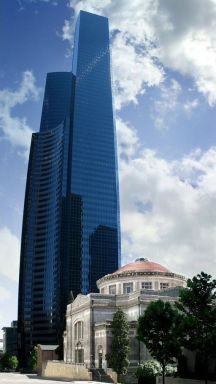
Columbia_Center,_by_simonsonjh
Columbia Center

Next, I wondered how the population had changed during the 50 years I have lived here.

In 1970, the population of Seattle was 530, 831 and in 2015 it was 668, 831.  The current population was much smaller than I expected. When I looked into it, I discovered that the city’s population actually went down when the Boeing workforce was reduced from 80,400 to 37,200 in 1970/71. While the city itself did not have tremendous growth between 1970 and 2015, the suburbs and metropolitan area really grew. In 2015, the population of Seattle metropolitan area was 3,733,580 and we had the 15th largest metropolitan area in the U.S.
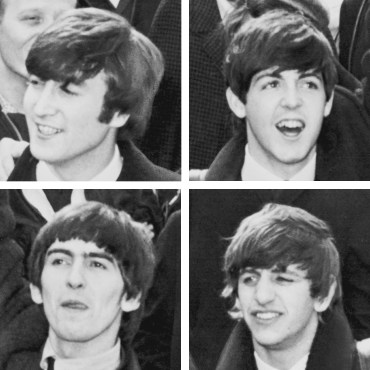
The_Fabs

The last thing I will mention is that when I first Goggled “1966 Seattle” I was rather surprised to see that the first three listings were about the Beatles August 25, 1966 concert! I don’t remember being aware of their recent visit at the time, but I imagine it must have been a major topic of conversation for many Seattlites.

It has been interesting to think about my arrival in Seattle and learn more about the city I chose to be my home. Thank you WordPress for your “City” prompt.

****

Photo Credits : Wikimedia

Smith Tower

Space Needle

Seafirst Building

Columbia Center

The Beatles

All statistics come from Wikipedia.com

Burning Down the House

One of the first things I saw this morning was the Word Press Daily Prompt entitled Burning Down the House.

The writing directions were:

Your home is on fire. Grab five items (assume all people and animals are safe). What did you grab?


Five items instantly popped into my head.  I’ve continued to ponder that question throughout the day and my answer has not changed.  Even though I believe I could walk away from any of my belongings, these are the five that came to mind.

#1

20140918_154756New Laptop

*****

#2

355px-Samsung_Galaxy_S3_(GT-I9300)_16GB_Pebble_bluePhoto Credit: Wikimedia

Samsung Galaxy S3

I couldn’t take my own picture of this since my camera is on the phone!

*****

#3 and #4

Sreejit2

chai

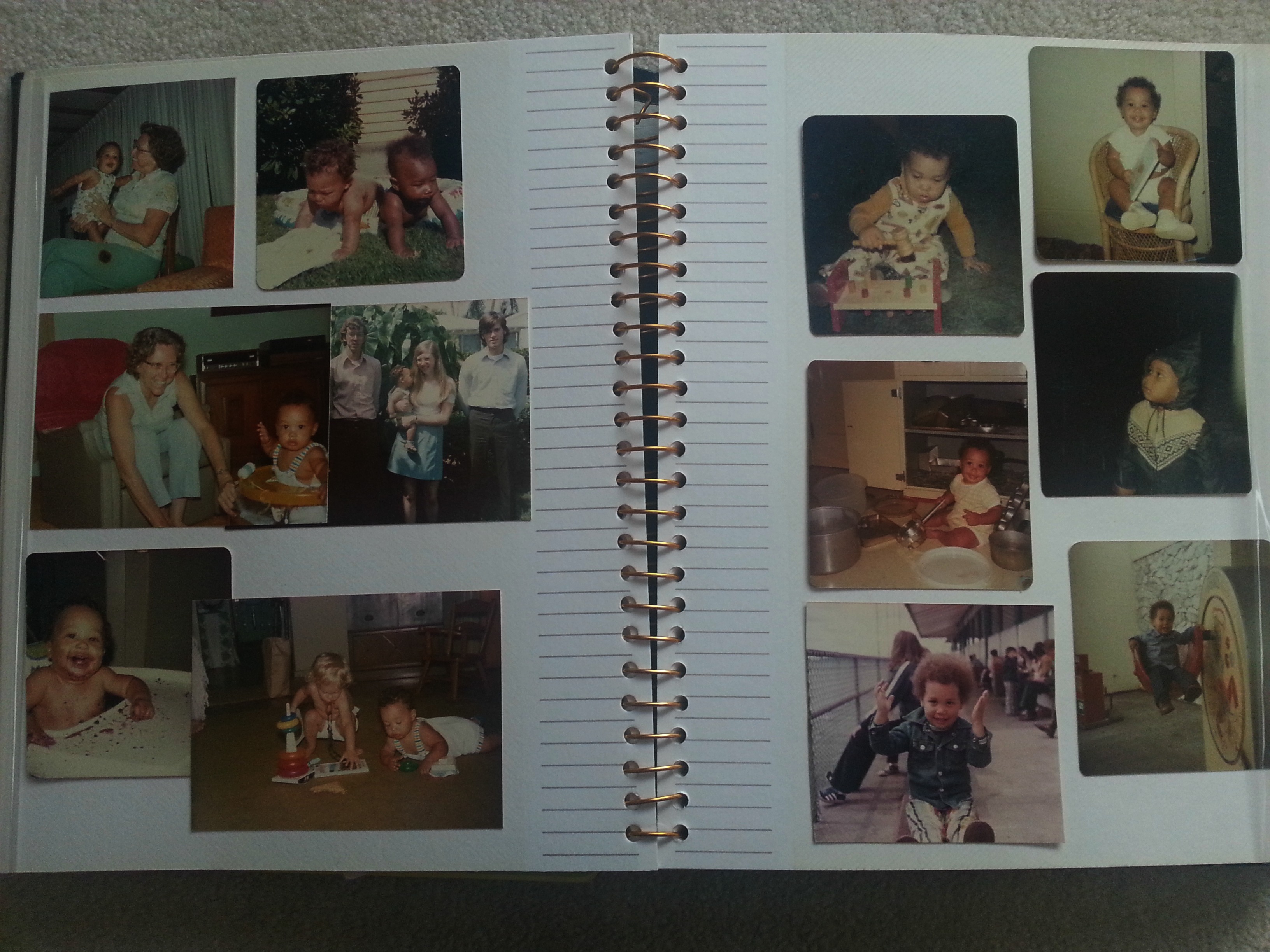
Years ago I made each of my children an album containing pictures from throughout their life. They both live in India now and the albums would not fare well in the heat there so I am storing them at my house in Seattle.

*****

#5

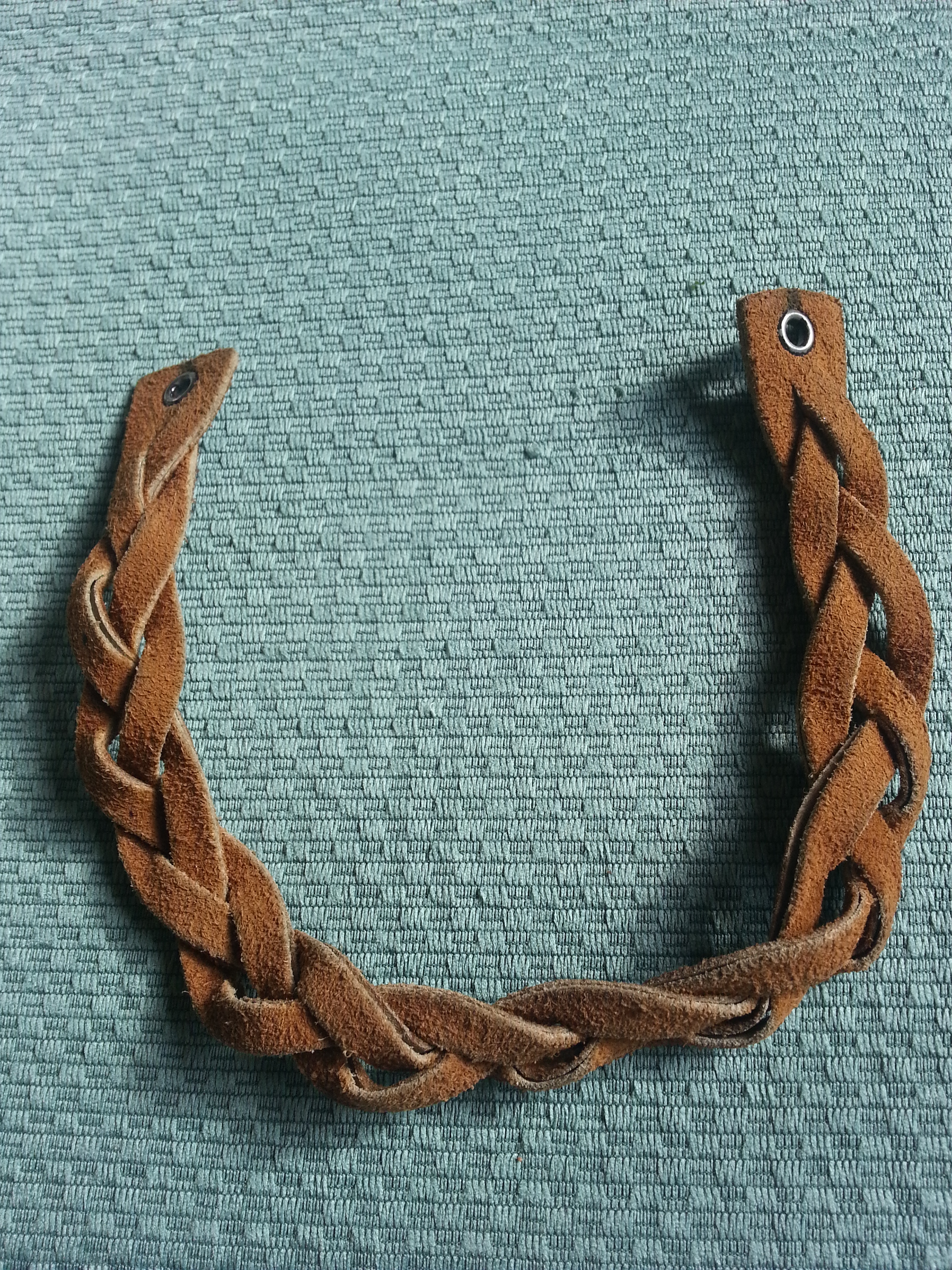
20140628_083124Headband from my hippie days!

*****

Wasting Food Revisited

20140928_155756

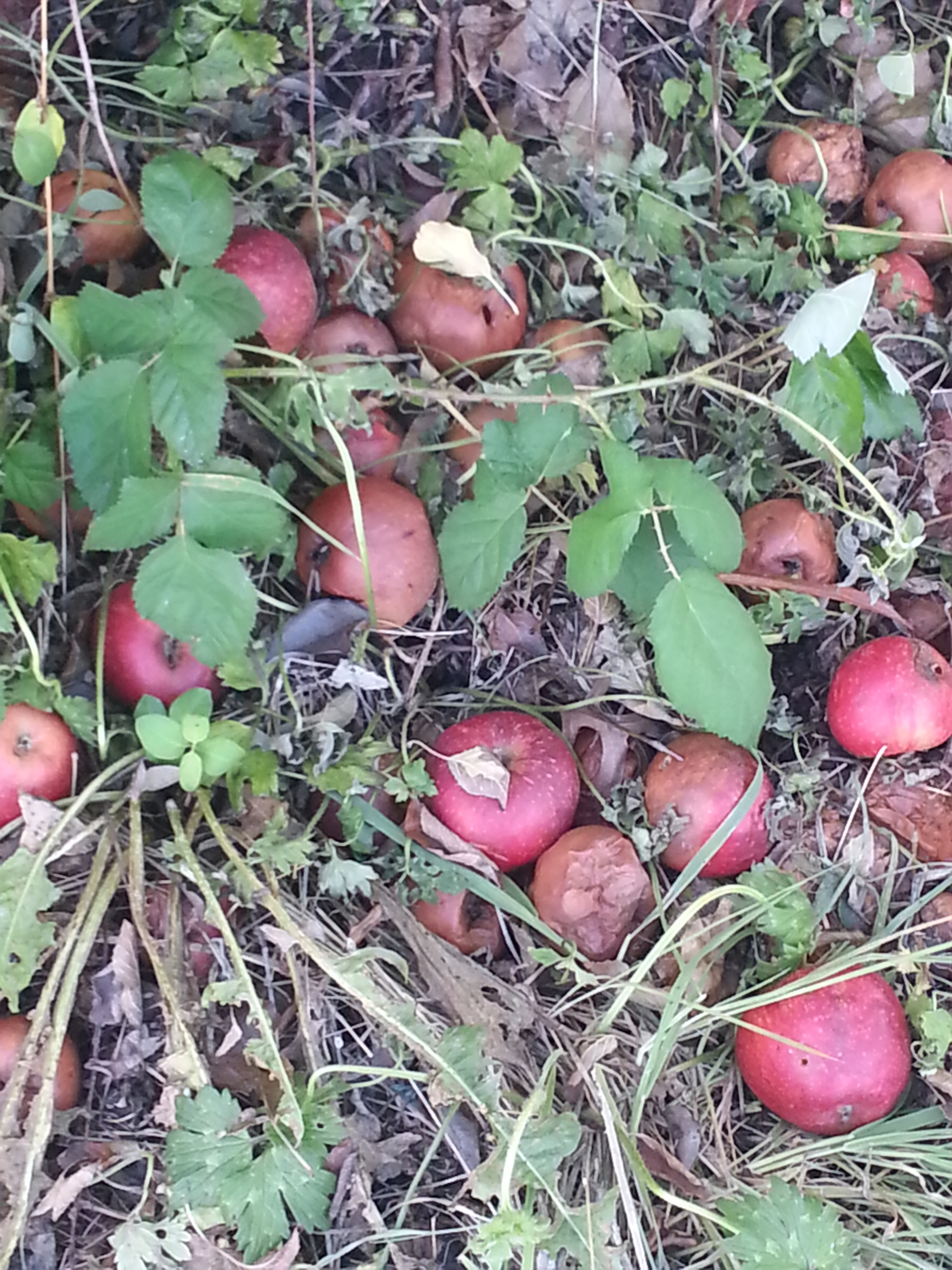
On a morning walk several weeks ago, I passed by a number of homes where the ground under fruit trees was covered with rotting fruit.  Seeing the apples reminded me of a post I wrote in August.  At that time, The Daily Post challenge had been to identify what we considered to be the 8th Cardinal Sin.  I decided to add “Wasting Food” to the 7 Cardinal Sins from the Bible. (See The Eighth Cardinal Sin: Wasting Food)

In doing the research for that post, I learned that in 2012, the National Resources Defense Council (NRDC) of the United States concluded that the U.S. wastes 40 percent of its food.  My response to the challenge reviewed many of the ways we waste food in this country.  When I saw the rotten apples, I realized I should also consider letting the fruit and vegetables in our gardens rot as a form of wasting food.  After all, if we don’t need the produce, we could give it to individuals and families in need or to organizations such as missions and/or food banks.

Earlier this summer, I had considered sending a note to neighbors reminding them that the food banks welcome garden fruit and vegetables but I never did it.  I regret not having followed through on that impulse.

A few days go, I discovered in Seattle we have a group called City Fruit.  Their website states:

City Fruit promotes the cultivation of urban fruit in order to nourish people, build community and protect the climate. We help tree owners grow healthy fruit, provide assistance in harvesting and preserving fruit, promote the sharing of extra fruit, and work to protect urban fruit trees.

Since 2008, City Fruit volunteers have harvested and donated more than 80,000 pounds of fruit (24,000 pounds were harvested in this year alone).  This is definitely a group I could tell my neighbors about next year.

The spiritual group I belong to feeds the homeless in Seattle once or twice a month. That project is called “Mother’s Kitchen.”  In August, one of our members decided to plant a garden dedicated to Mother’s Kitchen so that the people we serve would be eating more organic produce.  She also asked us to donate vegetables from our gardens.  I did not have a very good harvest this year so did not donate anything.

I pledge to those of you who are reading this, that next year I will inform neighbors of places that would welcome their unwanted fruit and vegetables and will do a better job of not wasting garden produce myself.  I will continue to give extra produce to family members and friends, but will also share what I have grown with food banks and Mother’s Kitchen.

How do you, or will you, prevent vegetable and fruit wastage in your gardens?

Experiences of Inequality

While we have made progress in addressing inequality in the world since I was a child, the work is far from done.  There are still examples of inequality all around us. It may be due to race, sexual orientation, social status, gender, religion or a myriad of other factors.

Inequality exists when African American and Hispanic citizens fill our prisons due to racial profiling and when they receive harsher jail sentences for committing the same crime as Caucasians.  Inequality exists when unarmed teenagers are shot by police, when rich children have better funded schools than poor children and when homosexual men and women suffer hate crimes, or have different privileges than heterosexuals. Inequality exists when women and children are forced into the sex trade.

When I think of inequality in my own life, two experiences come to mind. The first happened the summer of 1970, soon after I graduated from college. I decided to spend that summer doing migrant farm labor while I studied for the State Board of Nursing exams I would take in the fall. Three friends and I picked fruit and vegetables in Florida, Georgia, South Carolina, Maryland, Pennsylvania and Washington State. Continue reading “Experiences of Inequality”