I was fascinated by the various surfaces on this Pacific Madrone (Arbutus menziesii) tree that is located in Lincoln Park in Seattle.


(Click any gallery for closer view of the photos.)

I was fascinated by the various surfaces on this Pacific Madrone (Arbutus menziesii) tree that is located in Lincoln Park in Seattle.
(Click any gallery for closer view of the photos.)

In September of 1966, I left my family home in Florida to go to college in Seattle. I was so excited. My first night there, I stayed in a downtown hotel. The next morning, I walked the Seattle streets marveling at the skyscrapers. Having grown up on army bases, I had never seen buildings so high. The other thing I remember doing that day was buying a small typewriter, one with a red case. Since the suitcases I had brought from Florida were also red, I’m assuming that must have been my favorite color in those days. Or maybe it was the color of new beginnings. In September of this year, I will have lived in Seattle for 50 years, so that day was definitely a new beginning!
This post was originally meant to be a response to last Wednesday’s Daily Post prompt- City. As I started thinking about this 1966 event though, I became curious about changes I have witnessed since I moved here. I remember at that time the Smith Tower was the highest building in Seattle. No one was allowed to build a skyscraper that was taller. The only exception to that rule was the Space Needle which had been built for a World’s Fair in 1962.


The Smith Tower was built in 1914 and is 38 stories and 484 feet. The Space Needle which is 605 feet high and, as I already mentioned, was built in 1962. The height restriction was eventually changed and the Seafirst Building was built in 1969. It has 50 stories and is 638 feet high. Now, the tallest building in Seattle is the Columbia Center. It is 76 stories and 943 feet high and was built in 1983.
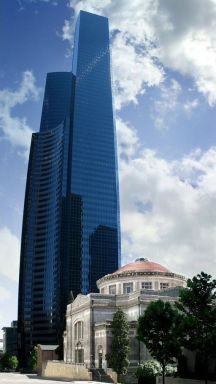
Next, I wondered how the population had changed during the 50 years I have lived here.
In 1970, the population of Seattle was 530, 831 and in 2015 it was 668, 831. The current population was much smaller than I expected. When I looked into it, I discovered that the city’s population actually went down when the Boeing workforce was reduced from 80,400 to 37,200 in 1970/71. While the city itself did not have tremendous growth between 1970 and 2015, the suburbs and metropolitan area really grew. In 2015, the population of Seattle metropolitan area was 3,733,580 and we had the 15th largest metropolitan area in the U.S.
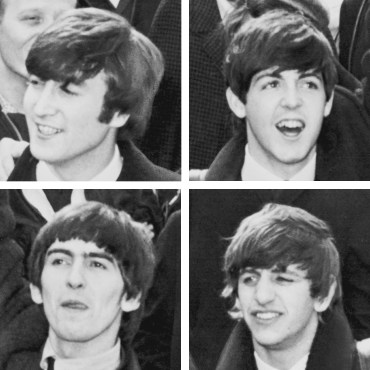
The last thing I will mention is that when I first Goggled “1966 Seattle” I was rather surprised to see that the first three listings were about the Beatles August 25, 1966 concert! I don’t remember being aware of their recent visit at the time, but I imagine it must have been a major topic of conversation for many Seattlites.
It has been interesting to think about my arrival in Seattle and learn more about the city I chose to be my home. Thank you WordPress for your “City” prompt.
****
Photo Credits : Wikimedia
All statistics come from Wikipedia.com
Today’s prompt from The Daily Post is called “Key Takeaway” and the instructions are:
Give your newer sisters and brothers-in-WordPress one piece of advice based on your experiences blogging
This is a topic very close to my heart. First of all, I’d like to welcome all of you who are new to the blogging world. I have found blogging to be one of the most rewarding experiences in my life and I hope the same for you.
My advice is to celebrate when friends, relatives, colleagues and members of your personal community are interested in your blog, but don’t count on it being the case. See blogging as a way of building an additional community for yourself, as a way of sharing information with like-minded people, and as an opportunity to communicate with those for whom your thoughts and experiences are an exciting new world.
I have learned so much from reading other people’s blogs and I have developed new and treasured friendships within the Word Press community. Blogging has expanded my own world and I know that others have learned from reading mine. I will be forever grateful to my son Sreejit (The Seeker’s Dungeon and Where Love Meets War) for encouraging /pushing me to start my blog.
Photo Credit: Wikimedia
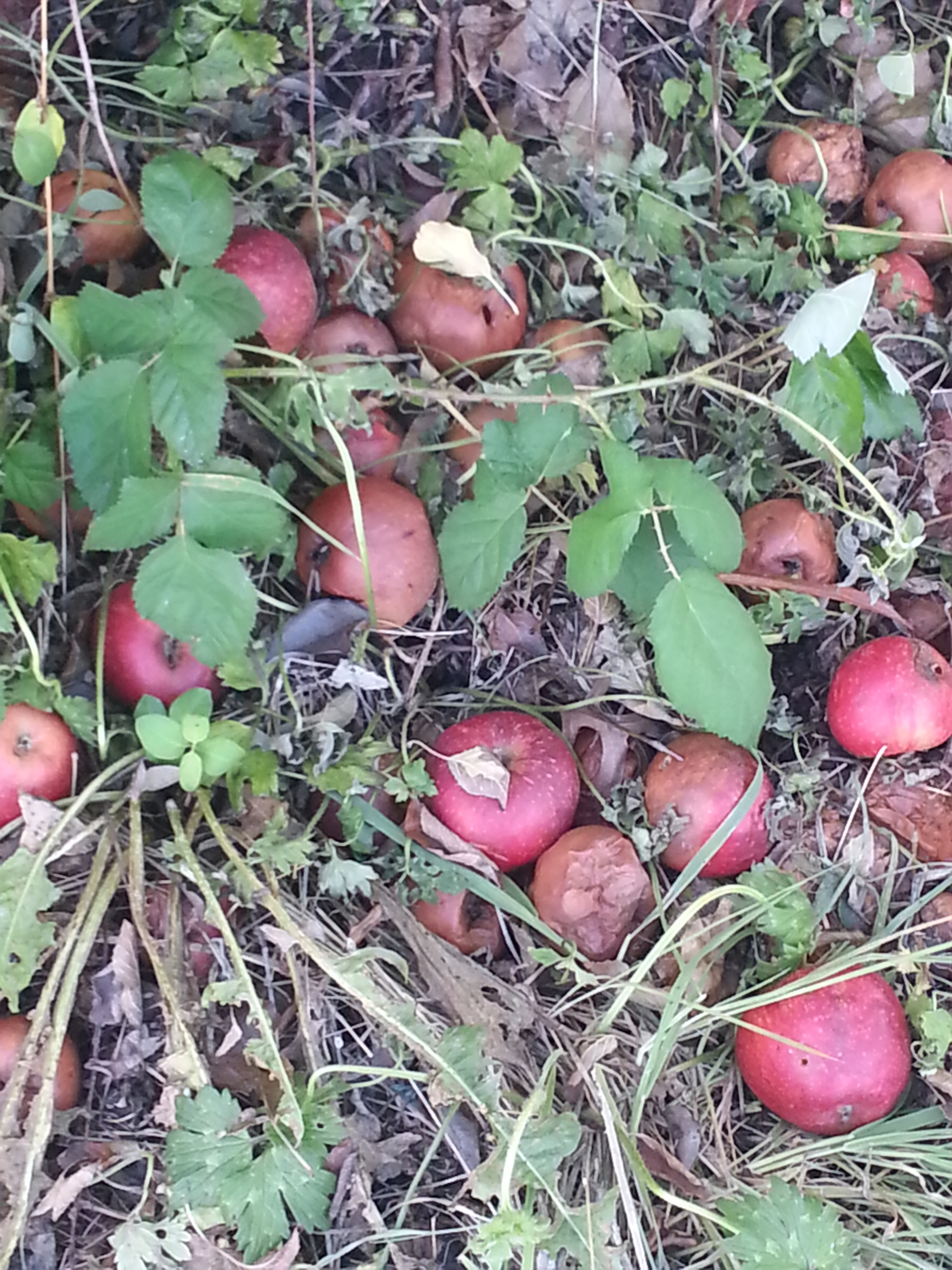
On a morning walk several weeks ago, I passed by a number of homes where the ground under fruit trees was covered with rotting fruit. Seeing the apples reminded me of a post I wrote in August. At that time, The Daily Post challenge had been to identify what we considered to be the 8th Cardinal Sin. I decided to add “Wasting Food” to the 7 Cardinal Sins from the Bible. (See The Eighth Cardinal Sin: Wasting Food)
In doing the research for that post, I learned that in 2012, the National Resources Defense Council (NRDC) of the United States concluded that the U.S. wastes 40 percent of its food. My response to the challenge reviewed many of the ways we waste food in this country. When I saw the rotten apples, I realized I should also consider letting the fruit and vegetables in our gardens rot as a form of wasting food. After all, if we don’t need the produce, we could give it to individuals and families in need or to organizations such as missions and/or food banks.
Earlier this summer, I had considered sending a note to neighbors reminding them that the food banks welcome garden fruit and vegetables but I never did it. I regret not having followed through on that impulse.
A few days go, I discovered in Seattle we have a group called City Fruit. Their website states:
City Fruit promotes the cultivation of urban fruit in order to nourish people, build community and protect the climate. We help tree owners grow healthy fruit, provide assistance in harvesting and preserving fruit, promote the sharing of extra fruit, and work to protect urban fruit trees.
Since 2008, City Fruit volunteers have harvested and donated more than 80,000 pounds of fruit (24,000 pounds were harvested in this year alone). This is definitely a group I could tell my neighbors about next year.
The spiritual group I belong to feeds the homeless in Seattle once or twice a month. That project is called “Mother’s Kitchen.” In August, one of our members decided to plant a garden dedicated to Mother’s Kitchen so that the people we serve would be eating more organic produce. She also asked us to donate vegetables from our gardens. I did not have a very good harvest this year so did not donate anything.
I pledge to those of you who are reading this, that next year I will inform neighbors of places that would welcome their unwanted fruit and vegetables and will do a better job of not wasting garden produce myself. I will continue to give extra produce to family members and friends, but will also share what I have grown with food banks and Mother’s Kitchen.
How do you, or will you, prevent vegetable and fruit wastage in your gardens?
Today is the third day of the Blogging 201 course. Our assignment is to :
Conduct a short and simple stats analysis that will help you create an editorial calendar for the next 30 days. Why do this? Because knowing which topics and posts are most popular helps you to brainstorm new content that you know your audience will love. Because knowing which days of the week your visitors are most likely to show up lets you plan to publish that content on your best days.
I decided to examine the posts that had the top number of “likes,” those that had the top number of “views” and the days of the week that visitors showed up. Likes When reviewed by the number of likes, six of the top ten posts were posts inspired by photography challenges. Another one on that top ten list was primarily composed of photographs. Views When I look at number of views, however, it is a different matter. Here are my top twenty-one posts and how many views they have received. Continue reading “Give ‘Em What They Want”
The Art and Craft of Blogging
A collection of discussions on the environmental issues
“The fool doth think he is wise, but the wise man knows himself to be a fool.” “Love all, trust a few, do wrong to none.” “Love looks not with the eyes, but with the mind, And therefore is winged Cupid painted blind.”-William Shakespeare
...moments of unexpected clarity
Home of Lukas Kondraciuk Photography
Wellness, Support and Mindset
Thoughts on Creativity & Deeper Things
A Blog by Novella Carpenter
Ramblings of an Irish ecologist and gardener
Teaching the art of composition for photography.
Blog from SathyaSaiMemories ~ stories of love in action and the benefits of giving
There are 11,507 stories in Haddonfield; this is one of them.
Perennial gardening and more from the Green Mountains of Vermont
Whatever it will be...
Welcome to my little slice of the blogosphere
 Living, Learning and Letting Go


