


Perspective means different ways of seeing things.

When some people see worms they get squeamish. They wouldn’t even think holding them and letting them run through their fingers.
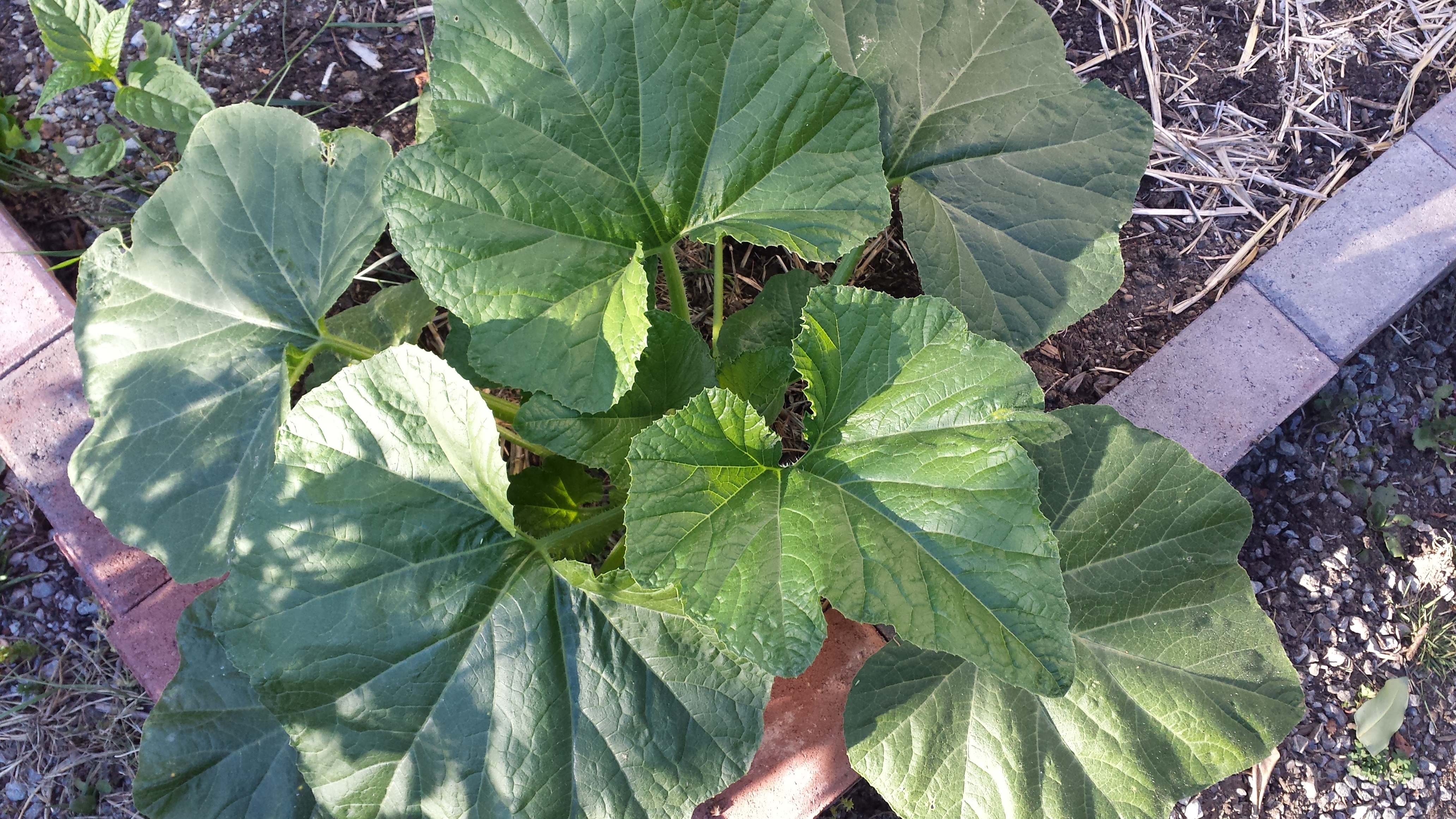
The picture above is of the worms in my vermicomposting bin. I feed the worms and in turn they create fertilizer! I love watching the worms. I particularly enjoy it when the time comes to separate the worms from the fertilizer (the fertilizer goes to the garden and the worms go back into the vermicomposting bin) because I get to pick them up and feel them squiggle in my hand.
As I look at the vegetable plants that are growing in my garden now, I know the worms have played a significant role in making them so healthy. I feel immensely grateful that they are doing such an important service for me and for the earth.
Perspective can make such a difference.


 Written for Eclectic Corner: Perspective (Written Piece)
When I returned from Amma’s programs in Everett on Tuesday, I was surprised by how much my garden had grown. I felt so grateful to the neighbor who watered the plants for me during the four days I was gone. Everything looked so beautiful.
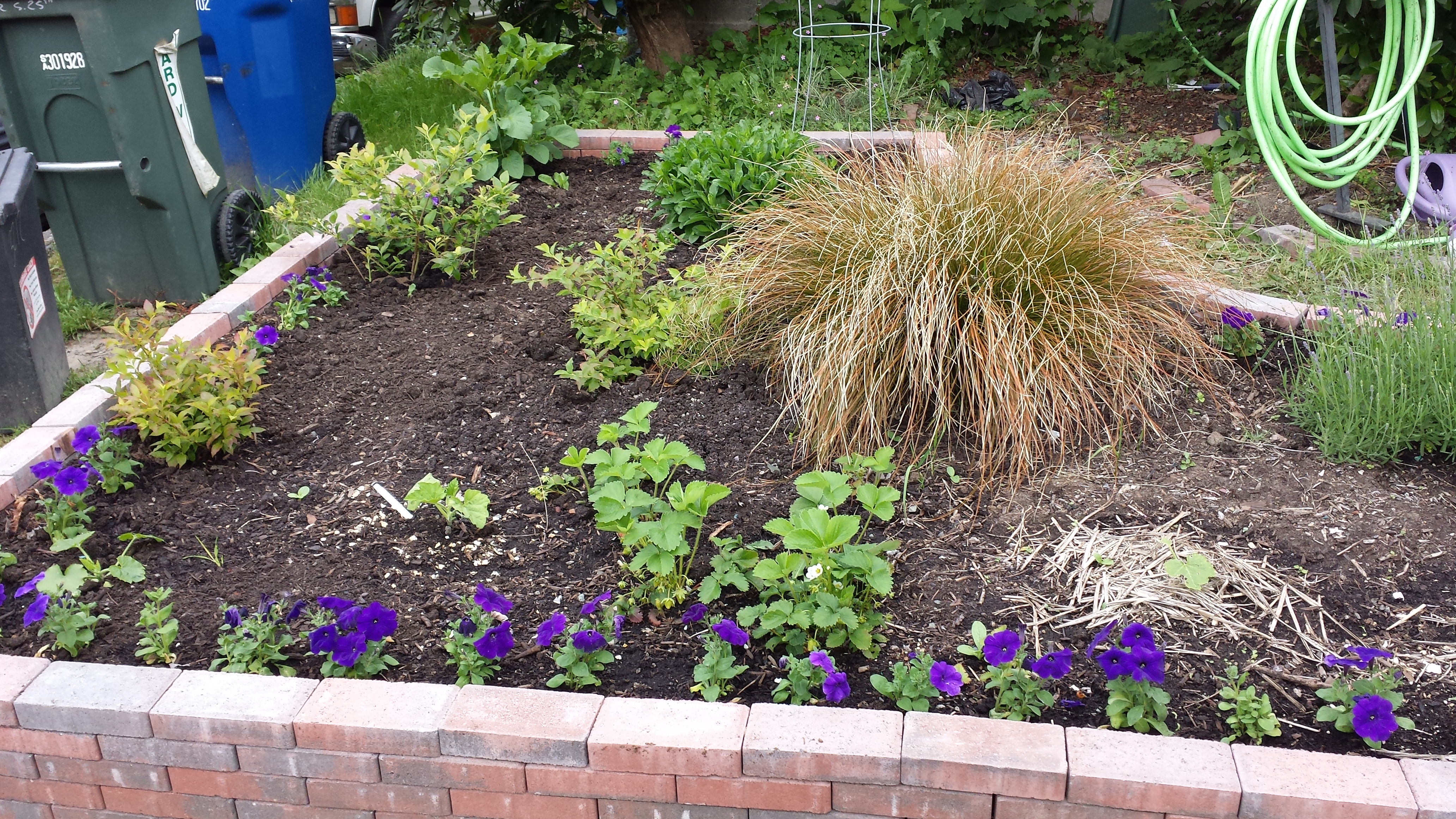
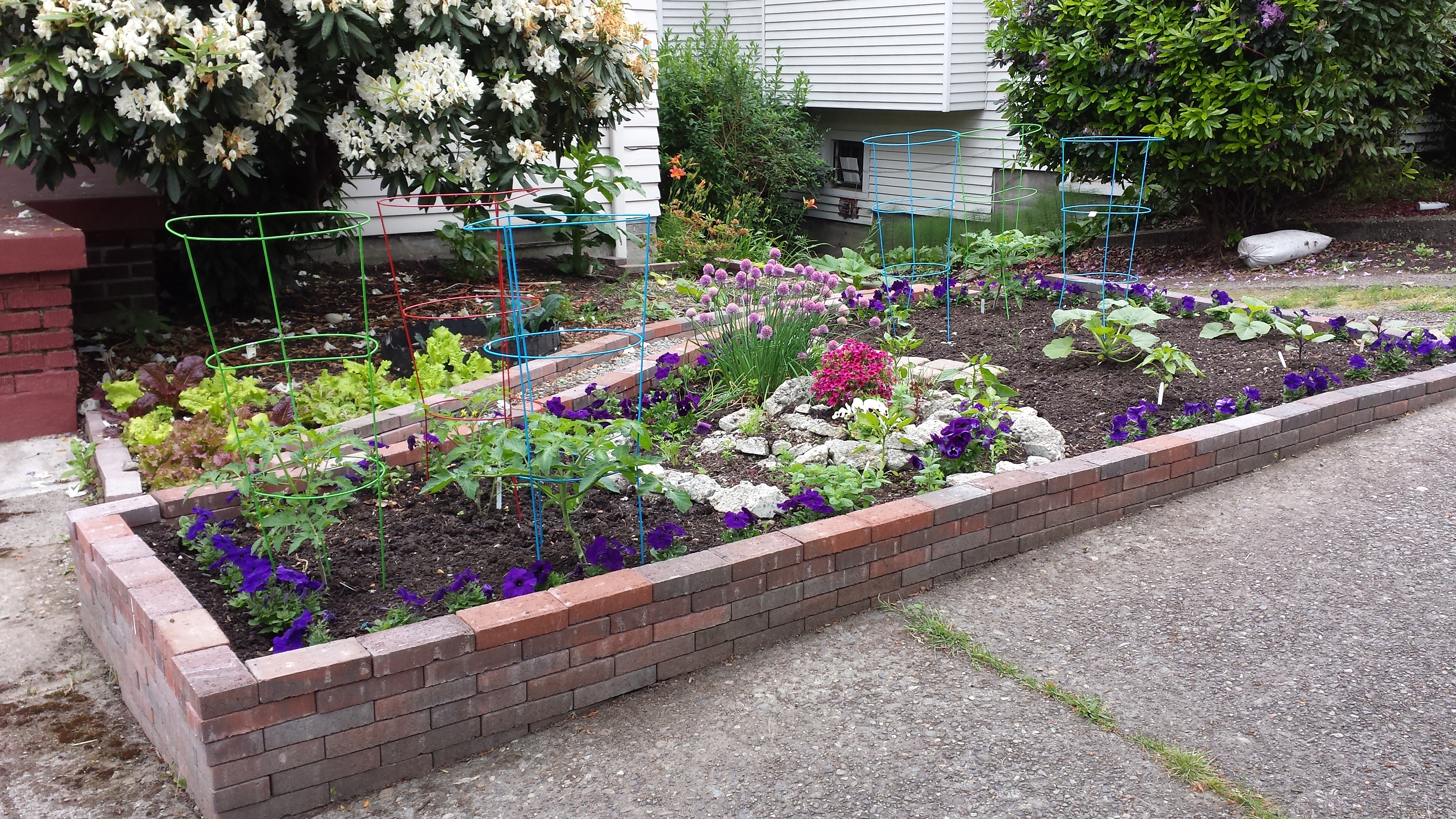
I have shared a glimpse of the garden beds I have been building in past posts, but haven’t shown them up close. I decided now is the time, even though I’ve only completed two of the four.
I plan to add some more dirt to this front one and straighten some of the bricks but other than that it is finished. The bed closer to the house is about half done.
Last week in Attitude is the Key, I shared that I am attempting to be thankful for the moles in my yard by taking the attitude that they are providing free aeration services. Two or three days ago, I had another chance to work on attitude… and discrimination.
When I arrived home that day, I noticed that there was a small mound of dirt on the top of one section of my new brick-lined planting beds. There was also some dirt on the sidewalk in front of that section. I was puzzled. Had children been playing in the garden? I walked over to the dirt expecting to brush it back into the bed, but was horrified to discover that it wasn’t dirt… it was millions (or so it seemed) of ants! The video below is only five seconds long, but it gives you a glimpse of what I saw.
Moles I can live with, but what was I going to do about this? I don’t like to kill anything but I couldn’t leave the ants there. In India, if a trail of ants enter my room, I use a few drops of water on the wall or floor to divert them. There was no way a little bit of water was going to work in this situation; there were too many ants and no trails. And if a child, or anyone else, walked into this area they could be hurt. I knew I needed to do something about it, right away.
I thought for a few minutes and decided I did not want to use poison; I would wash them away with a water hose. I sprayed water along the brick wall several times and then checked the area repeatedly that day and the next. I don’t know how many ants I killed and how many just moved on. Regardless, I feel relieved that the ants are gone.
Where did those ants come from? There was nothing that I know of in the dirt that should have drawn them there; it was as if they manifested out of nowhere. I like to see life as a series of lessons and tests, sent to help me learn something. This seemed like one of those lessons. I believe I used discrimination and took appropriate action. I hope I learned what I was supposed to learn.

Last fall, I started working on a new project. I live on the side of Beacon Hill in Seattle and my front yard slopes down, both south to north and west to east. That means that rain water always flows towards the house. I decided that it would be better to level off the land and in so doing create garden beds where I could plant flowers and vegetables.
To that, I brought home load after load of bricks, and with my level and shovel in hand, I began to build walls. The bricks are loose, but I staggered them in a way that they stayed standing. When all of the walls are finished, I will have four large garden beds.
During the winter, I noticed some of the bricks were shifting and the walls had begun to sag. I assumed it was because the dirt underneath was settling. Also bricks have been bumped, children have moved them, people have even sat or stood on them! The structures still functioned well as garden beds but didn’t look as nice as they did originally.
Two weeks ago, I started to work on the project again. I continued building new walls but also rebuilt some of the old ones. (Since the bricks are loose I can do that as often as I need to.) Before long, I discovered that settling land and human actions were not the only reason for the sagging walls.

Moles had been burrowing under the brick walls and the area was full of their tunnels! That, of course, had caused the walls to become uneven. I knew I wasn’t going to kill the moles, so what would I do? Continue reading “Attitude is the Key”

When I visited Amma’s ashram in Amritapuri, India in December 2014/January 2015, I was fascinated by the banana circles that were located in one of the ashram gardens. Banana circles are a permaculture technique that is most often used in tropical and subtropical regions. They help create humus and water retention where soils are either sandy or heavy clay.
I found this description of banana circles:
“Papaya, banana and coconut circles are developed by digging pits up to two meters in diameter (for papaya and banana – 3 m for coconut) and approximately 1 meter deep. They are then filled with dampened, compacted organic material to a height of 1 meter above ground. Up to seven plants of the appropriate type are then grown on the rim of the pit. Taro or other moisture loving plants may be grown in the inside edge, as sweet potato along the outside edge to provide a living ground cover and mulch, as well as additional food production.”
Banana circles also are a way to compost organic materials, produce food, and utilize grey water. They are filled with microorganisms.
I learned something else in researching this topic. I always thought bananas grew on trees. It turns out that banana palms aren’t trees, they are plants. I was even more surprised when I read the following information from The Permaculture Research Institute:
Did you know that banana palms are actually a grass? Also, each plant only gives fruit once, so after you have cut the bunch of bananas down you can remove the whole plant at ground level. By this time, there should be new suckers coming up — only allow a couple of these to grow, as too many will make your bananas overcrowded and they won’t fruit well.
When I first looked at the banana palms in Amritapuri, I was astounded by how fast they grow. The first picture below was taken on the day the palm was planted. The second and third pictures are of banana palms three or four days after they were planted.


Here are some other pictures of the Amritapuri Banana Circles.


For more information:
http://permaculturenews.org/2014/04/08/banana-circles/
http://www.homegrownediblegardens.com/banana-circlemulch-pit-guilds.html
http://www.mitra.biz/joomla/index.php/writingssustainability/3050-howtobananacircle
http://permaculturenews.org/2008/06/23/build-a-banana-circle/
https://treeyopermacultureedu.wordpress.com/chapter-10-the-humid-tropics/banana-circle/
*****
Originally written for PNW Green Friends Newsletter, Issue 44, March 2015
*****

(Note: The dates on this post overlap with my January 5 post. That is because there were some important events that I didn’t mention in the previous one!)
Stopping Critical Self Talk
Visitors and residents at the ashram offer classes they think would be of interest to the visitors. It is a chance to raise funds for Amma’s humanitarian projects as well as give valuable information and experiences to those who take the classes.
The date and time of the class I was to teach on Stopping Critical Self Talk was changed four times so I had plenty of opportunities to practice patience, flexibility and detachment. I ended up holding the workshop on January 3.
When I taught a class two years ago 5 people signed up ahead of time. More registered the morning of the class. I think the final total was about 10. This year, the evening before the class 15 people had signed up and by the time it started there were 23!
Teaching here provides challenges I don’t face in Seattle because most of the people who attend Amritapuri classes are from Europe or other places around the world where English is not the first language. Conditions are also different because in India there is noise from the fans, and lots of noise from the street below; quite a change from teaching in America.
Attendees were very interested in what I had to say and participated actively in the various components of my class. They expressed a lot of gratitude for the new information and experiences. I was very excited and look forward to teaching again next year. I felt and still feel a lot of gratitude for the two friends who helped me with the logistics of running the workshop, and the emotional support their presence offered.
Cast Viewing of the Play
A week or so after each year’s Christmas play, everyone involved in putting on the drama meet to see the first draft of the play DVD. I love participating in that event. Since most of the cast weren’t able to see the play at the time it was presented this is their first opportunity to see the final production. It is always a time of laughter and celebration.
Below are some more play photos:


To see photos closer click on the gallery. To see the original photos I posted go to:
Then and Now
When I came to the ashram the first time in January 1990, there were a total of 30 Western visitors. At the height of the holiday season this year, i.e. December 2014, there were 1,800 Western visitors! Such a tangible example of the difference between then and now.
On January 7th I was in the dining room when people at the end of the room started standing up. I looked to see what was going on, but all I saw was more and more people standing. When the senior Swamis (monks) enter the hall to sing or if they walk up to us we generally stand up. But that doesn’t generally happen when they are just walking down a corridor. Besides, the number of people coming to their feet seemed bigger than a Swami’s presence would warrant.
I quickly realized it was Amma that was walking by! She was on her way to the auditorium stage to do some bhajan (devotional songs) recording. Seeing her in an unexpected way was such a nice surprise for us. It must have also been a surprise for the people involved in the recording. Minutes later, I saw three of the brahmacharinis (female monks) and one of the senior Swamis running for the stage. It must have been an impromptu bhajan recording! Amma teaches us to be like a bird perched on a dry twig, ready to fly at a moment’s notice. This looked like it was an experience in doing that.
It was also an example in the difference between then and now. In the “old” days it was not unusual for Amma to show up at any time. Now she gives darshan 14-21 hours on every public darshan day and spends time every other day doing scheduled activities with us. She is no doubt busy directing all of the humanitarian projects during a majority of her remaining time. We certainly still have spontaneous experiences with her, but it is rare to have her show up at unexpected times.
Preparing for the South India Tour
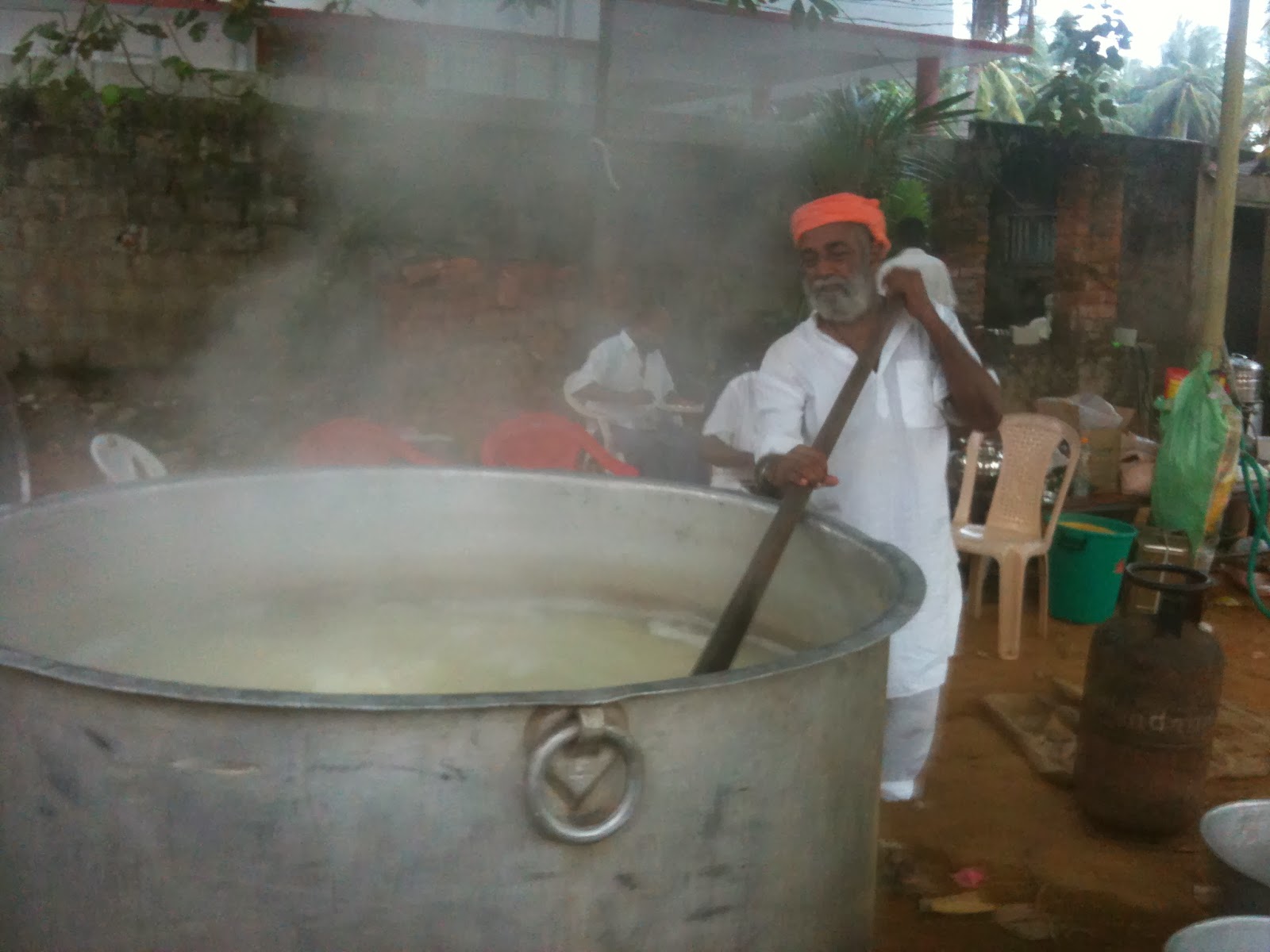
Early in the second week of January, the level of activity at the ashram skyrocketed as preparations were being made for Amma’s upcoming South India Tour. Everywhere vehicles were being loaded with the equipment and supplies needed for the tour. There are cities where 50,000 people or more will attend the programs on a given day. Imagine what it would take to feed that many people! Here is a picture of one of the pots they cook in!
High numbers of ashramites, as well as the local devotees will do the work required to organize and carry out the programs. Twelve bus loads of Amritapuri devotees will be part of the tour. All will work at the programs in one capacity or another.
Organic Gardens
A day or two after I wrote my January 5 post about the small Organic Gardens that have been popping up all over Amritapuri, I had an opportunity to visit two of the larger ones. Those are a fifteen minute walk south of the ashram. I had visited one of those gardens last year. Oh how it has grown! It started off as a tulasi farm but now contains so much more. I will be writing about it in detail for a GreenFriends newsletter towards the end of the month so will add the link to that article after it is published. For now, here are some pictures.


The other garden is called Amma’s Grace Garden. Amma’s goal is to eventually have all food served at the ashram be organic. The first step in reaching that goal is to have the meal Amma serves everyone at the ashram on Tuesdays be organic. This garden is producing a lot of the vegetables needed for that meal.


New Year’s Eve
New Year’s Eve is always an evening of festivities. It was different than normal this year in that the day fell on a public darshan day. The crowds were big so even though she was moving fast, Amma didn’t finishing giving hugs until just before midnight. That meant the evening entertainment program started around midnight. There was a play that was mostly in Malayalam and some other entertainers as well. Then Amma gave a New Year’s talk and led several high energy songs.
I want to give particular emphasis to her New Year’s message. She talked about how to deal with all of the suffering we are witnessing in the world and also identified five things to keep in mind if we want to live meaningful lives. I have no doubt I will be reading this talk multiple times after I get home. To read the speech go to.
It was a tough evening for me because I was so tired, and my back problems make it hard for me to sit for long periods of time. I knew I couldn’t sit in a regular chair for so long, so I decided to sit on the side portion of the auditorium. Many of the brahmacharinis (female monks) were sitting on top of tables there. I sat behind them so I could get up as frequently as I needed to. I moved several times over the next hour trying to get a better view. Continue reading “Living and Learning in Amritapuri- Dec 27, 2014 to Jan 4, 2015”

The Art and Craft of Blogging
A collection of discussions on the environmental issues
“The fool doth think he is wise, but the wise man knows himself to be a fool.” “Love all, trust a few, do wrong to none.” “Love looks not with the eyes, but with the mind, And therefore is winged Cupid painted blind.”-William Shakespeare
...moments of unexpected clarity
Home of Lukas Kondraciuk Photography
Wellness, Support and Mindset
Thoughts on Creativity & Deeper Things
A Blog by Novella Carpenter
Ramblings of an Irish ecologist and gardener
Teaching the art of composition for photography.
Blog from SathyaSaiMemories ~ stories of love in action and the benefits of giving
There are 11,507 stories in Haddonfield; this is one of them.
Perennial gardening and more from the Green Mountains of Vermont
Whatever it will be...
Welcome to my little slice of the blogosphere
 Living, Learning and Letting Go