Sanskrit Practice

Every so often I enjoy sharing my Sanskrit homework on my blog.  This time I decided to include homework from both of my Sanskrit classes.


Homework for Madhavi’s  Friday class

I have been taking this class for more than three years. This week I decided to focus on creating sentences with dual words, meaning sentences involving two people.


द्वाविंशति-April-मासे दिनाङ्के मम  पुत्री तस्याः पति: च Seattle-नगरम् आगमिष्यतः
dvaavimshati April maase dinaangke mama putrii tasyaaha patihi cha seattle nagaram aagamishyataha
On April 22 my daughter and her husband will come to Seattle.


तौ कर्यं करिष्यतः यावति अम्बयाः यत्रा May मासे भविष्यति
tau karyam karishyataha yaavati ambayaaha yatraa May maase bhavishyati
They will work until Amma’s programs begin in May.


तदा तौ अम्बया सह  गमिष्यत:
tadaa tau ambayaa saha gamishyataha
Then they will go with Amma.


आमृतपुर्यां तौ उशितवन्तौ प्राय: षोडश-वर्षेभ्यः
aamritapuryaam tau ushitavantau praayaha sodash-varshebhyaha
They have lived in Amritapuri for 16 years.


मम पुत्र: अमृतपुर्यां वसिष्यति यावत् तौ America-देशे स्तः
mama putraha amritapuryaam vasishyati yaavat tau America deshe staha
My son will live in Amritapuri while they are in America.


Homework for Sunday Samskrita Bharati class

I’ve been taking the Samskrita Bharati class since September.  This class has not studied dual yet, so I avoided that type of sentence.  The main focus for this week was on writing sentences using the combination yadaa (when) and tada (then).  With this particular combination both halves of the sentence should occur at the same time, or be something that happens with certainty.


यदा अम्बा America-देशम् आगच्छति तदा मम पुत्री तस्याः कटकेन सह गच्छति
yadaa ambaa america desham aagacchati tadaa mama putrii tasyaaha katakena saha gacchati
When Amma comes to America then my daughter travels with her caravan.


यदा भङ्ग्रा-जानपद-नृत्यानि पश्यामि तदा बहु अतीव प्रसन्ना अस्मि
yadaa bangraa-jaanapada-nrityaani pashyaami tadaa bahu ativa prasannaa asmi
When I see bhangra folk dances then I am very, very happy.


यदा ते आगच्छन्ति तदा खादामः
yadaa te aagacchanti tadaa khaadaamaha
When they come then we eat.


यदा वयं चलच्चित्रम् आगच्छमः तदा अल्पाहारं खादामः
yadaa vayam calaccitram agaaccamaha tadaa alpaahaaaram khaadaamaha
When we come to the movie then snacks we eat.


यदा सा उपविष्ठवती तदा सा पुस्तकं पठितवती
yadaa saa upavishthavatii tadaa saa pustakam pathitavatii
When she sat down then she read a book.


यदा त्रयः बालकाः क्रीडन्ति तदा ते हसन्ति
yadaa trayaha baalakaaha kridanti tadaa te hasanti
When the three boys play then they laugh.


यदा मित्रैः सह मिलामि तदा मम गृहं चलामः
yadaa mitraihi saha milaami tadaa mama griham calaamaha
When I  meet friends then to my house we walk.


यदा मन्दिरे पूजयामि तदा प्रर्थनां गानं च करोमि
yadaa mandire puujayaami tadaa praarthanaam gaanam ca karomi
When in the temple I worship then praying and singing I do.


I love studying Sanskrit!

Banana Circles in Amritapuri, India

20150105_163744

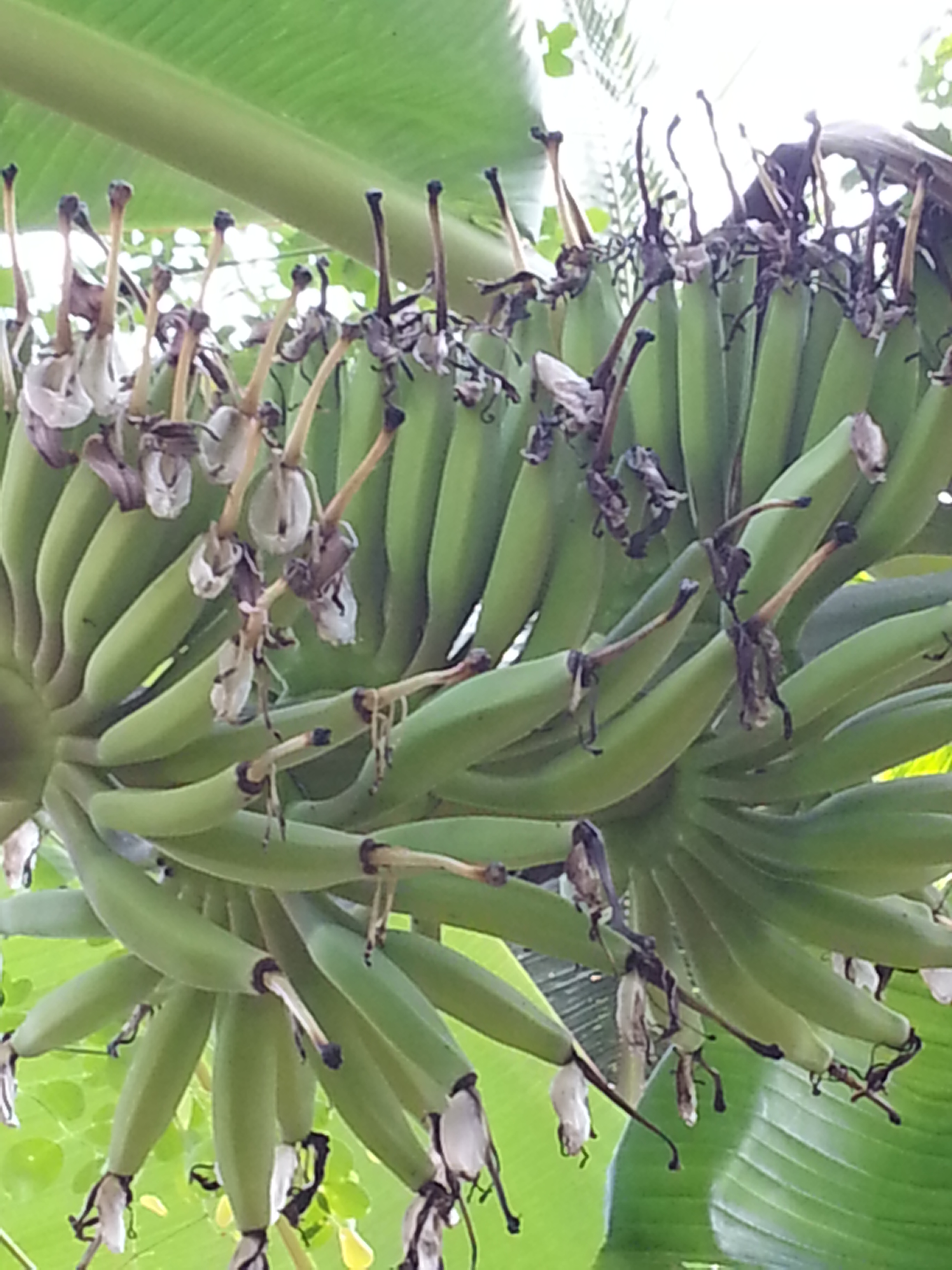
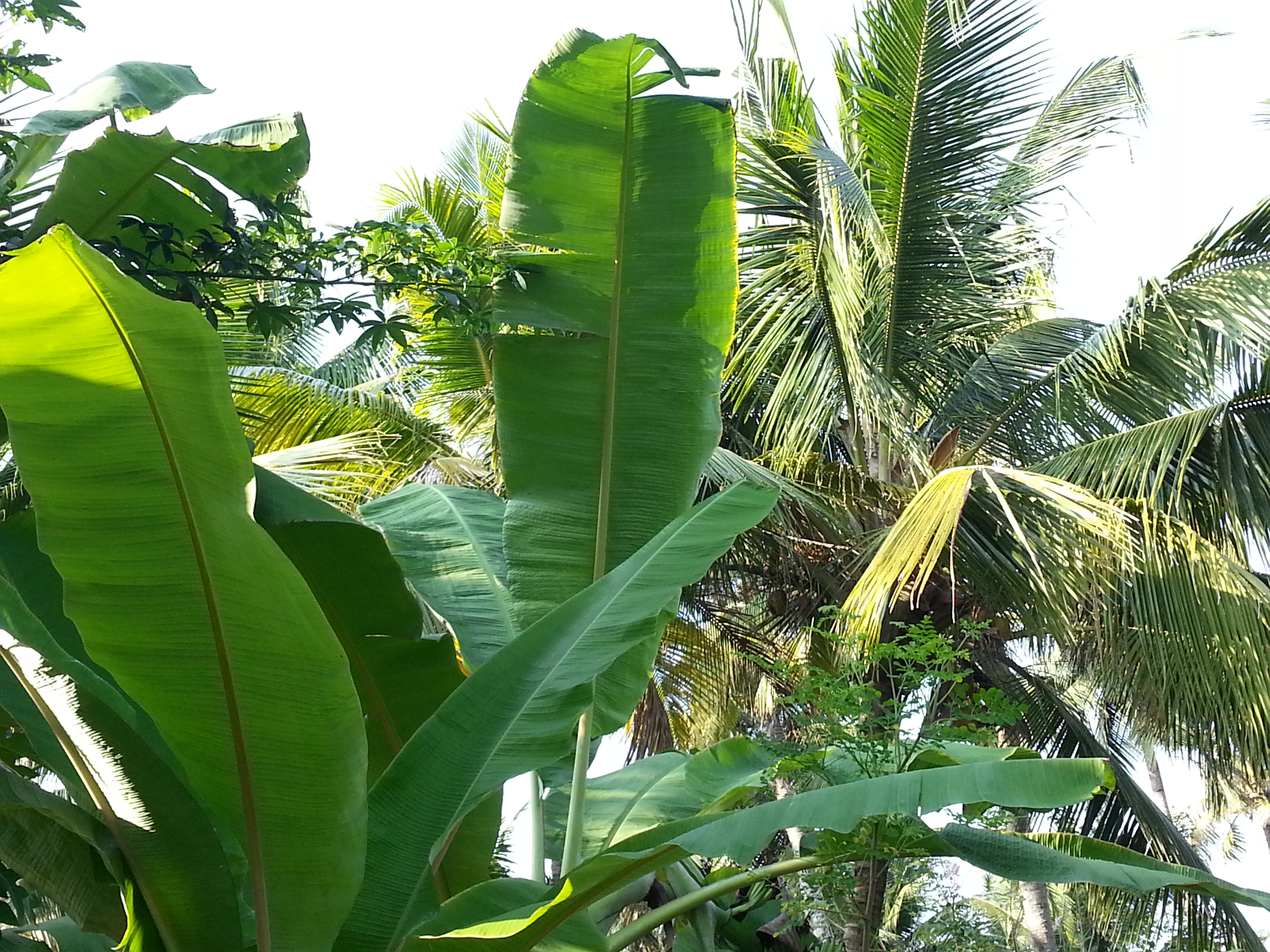
When I visited Amma’s ashram in Amritapuri, India in December 2014/January 2015, I was fascinated by the banana circles that were located in one of the ashram gardens. Banana circles are a permaculture technique that is most often used in tropical and subtropical regions. They help create humus and water retention where soils are either sandy or heavy clay.

I found this description of banana circles:

“Papaya, banana and coconut circles are developed by digging pits up to two meters in diameter (for papaya and banana – 3 m for coconut) and approximately 1 meter deep. They are then filled with dampened, compacted organic material to a height of 1 meter above ground. Up to seven plants of the appropriate type are then grown on the rim of the pit. Taro or other moisture loving plants may be grown in the inside edge, as sweet potato along the outside edge to provide a living ground cover and mulch, as well as additional food production.”

Banana circles also are a way to compost organic materials, produce food, and utilize grey water. They are filled with microorganisms.

I learned something else in researching this topic. I always thought bananas grew on trees. It turns out that banana palms aren’t trees, they are plants. I was even more surprised when I read the following information from The Permaculture Research Institute:

Did you know that banana palms are actually a grass? Also, each plant only gives fruit once, so after you have cut the bunch of bananas down you can remove the whole plant at ground level. By this time, there should be new suckers coming up — only allow a couple of these to grow, as too many will make your bananas overcrowded and they won’t fruit well.

When I first looked at the banana palms in Amritapuri, I was astounded by how fast they grow. The first picture below was taken on the day the palm was planted. The second and third pictures are of banana palms three or four days after they were planted.

Here are some other pictures of the Amritapuri Banana Circles.

For more information:

http://permaculturenews.org/2014/04/08/banana-circles/

http://www.homegrownediblegardens.com/banana-circlemulch-pit-guilds.html

http://www.mitra.biz/joomla/index.php/writingssustainability/3050-howtobananacircle

http://permaculturenews.org/2008/06/23/build-a-banana-circle/

https://treeyopermacultureedu.wordpress.com/chapter-10-the-humid-tropics/banana-circle/

 *****

Originally written for PNW Green Friends Newsletter, Issue 44, March 2015

*****

Sanskrit Fun!

We did a fun exercise in one of my Sanskrit classes this week. Before I show you the exercise, let me say that every noun in Sanskrit may have 7 or 8 different cases. You can identify those cases by how the word ends. The case endings also differ depending on whether the word is male, female or neuter.

Whether a word is considered male, female or neuter is very different than in English. For example, the word for house is neuter, the word for cup is male, and the word for bottle is feminine!

Cases:

1st case is the subject
2nd case is the object
3rd case – “with” (with a fork)
4th case- “for” (for the beggar)
5th case- “from” (from the city)
6th case- possessive or “of” (boy’s; of the boy)
7th case- “in, at, on”

So, with that introduction, here is the exercise we did!

Start with Subject and Verb

Karuna eats.
करुणा खादति
karunaa khaadati

Add 2nd case

Karuna ice cream eats.
करुणा पयोदिमं खादति
karunaa payodimam khaadati

Add 6th Case

Karuna chocolate ice cream eats.
करुणा चाकलेहस्य पयोहिमं खादति
karunaa caakalehasya payohimam khaadati

Add adjective

Karuna lots of chocolate ice cream eats.
करुणा चाकलेहस्य बहु-पयोहिमं खादति
karunaa caakalehasya bahu payohimam khaadati

Add 3rd case

Karuna, with a spoon, lots of chocolate ice cream eats.
करुणा चमसेन चाकलेहस्य बहु-पयोहिमं खादति
karunaa camasena caakalehasya bahu payohimam khaadati

Add 5th case

Karuna, with a spoon, from a cup, chocolate ice cream eats.
करुणा चमसेन चषकात् चाकलेहस्य बहु-पयोहिमं खादति
karunaa camasena cashaakat caakalehasya bahu-payohimam khaadati

Add 7th case

Karuna, with a spoon, from a cup, at home, chocolate ice cream eats.
करुणा चमसेन चषकात् गृहे चाकलेहस्य बहु-पयोहिमं खादति
karunnaa camasena cashakaat grihe caakalehasya bahu-payohimam khaadati

Add another 7th case

Karuna, with a spoon, from a cup, at home, in the evening, lots of chocolate ice cream eats.
करुणा चमसेन चषकात् गृहे सायङ्काले चाकलेहस्य बहु-पयोहिमं खादति
karunnaa camasena cashakaat grihe saayangkaale caakalehasya bahu-payohimam khaadati

Add a direction and also another 7th case

Karuna, with a spoon, from a cup, at home, in the evening, in front of the television, lots of chocolate ice cream eats.
करुणा चमसेन चषकात् गृहे सायङ्काले दरदर्शनस्य पुरतः चाकलेहस्य बहु-पयोहिमं खादति
karunnaa camasena cashakaat grihe saayangkaale dooradarshanasya purataha caakalehasya bahu-payohimam khaadati

Add another adjective

Karuna, with a spoon, from a cup, at home, in the evening, in front of the television, slowly, lots of chocolate ice cream eats.
करुणा चमसेन चषकात् गृहे सायङ्काले दूरदर्शनस्य पुरतः मन्दं-मन्दं चाकलेहस्य बहु-पयोहिमं खादति
karunnaa camasena cashakaat grihe saayangkaale dooradarshanasya purataha mandam mandam caakalehasya bahu-payohimam khaadati

Add another 3rd case

Karuna, with a spoon, from a cup, at home, in the evening, in front of the television, slowly, with happiness, lots of chocolate ice cream eats.
करुणा चमसेन चषकात् गृहे सायङ्काले दूरदर्शनस्य पुरतः मन्दं-मन्दं सन्तोषेण चाकलेहस्य बहु-पयोहिमं खादति
karunnaa camasena cashakaat grihe saayangkaale dooradarshanasya purataha mandam mandam santoshena caakalehasya bahu-payohimam khaadati

Add 4th case

Karuna, with a spoon, from a cup, at home, in the evening, in front of the television, slowly, with happiness, for fun, lots of chocolate ice cream eats.
करुणा चमसेन चषकात् गृहे सायङ्काले दूरदर्शनस्य पुरतः मन्दं-मन्दं सन्तोषेण परिहासाय चाकलेहस्य बहु-पयोदिमं खादति
karunnaa camasena cashakaat grihe saayangkaale dooradarshanasya purataha mandam mandam santoshena parihaasaya caakalehasya bahu-payohimam khaadati


Wordless Wednesday

Beauty above

Wordless Wednesday


20150105_163129


Weekly Photo Challenge: Serenity

Setting sun 2

Posted for Weekly Photo Challenge:  Serenity

My Journey Back to Seattle (Jan 2015)

Photo Credit: Wikimedia

My taxi was scheduled to leave Amritapuri at 5 a.m. on January 9th. Around 9 p.m. on the 8th I was informed that it had been moved to 4:30 a.m.  There would be no time for being idle that morning!

In the past, my itinerary has been to take a 11 p.m. taxi to Trivandrum for a 4:30 a.m. flight to Dubai. That flight is 4 ½ hours. The Dubai layover is two hours and then the flight to Seattle is another 14 ½ hours. Traveling that way means I miss a night’s sleep before I even leave India, and another night’s sleep on the flights (I do not sleep much on airplanes.) As I get older, I have had increasing trouble with jet lag. India is 13 1/2 hours ahead of Seattle so their day is our night and vice versa. The last few years it has been weeks before I adjusted.

I decided to significantly change my itinerary this year. With the new plan, I would leave the ashram at 4:30 a.m. after getting a reasonable amount of sleep. The flight left Trivandrum at 10 in the morning. Once in Dubai, I had a 21 hour layover. Even though it was expensive I had reserved a room at the airport hotel so spent the time resting or sleeping. I hoped it would make my adjustment to Seattle easier, and even if it didn’t it felt a lot better to get significant amount of rest before the long flight. The flight to Seattle was scheduled for 9 a.m. so I missed no night’s sleep before taking the final leg of my journey.


Dubai airport

Photo Credit:  Wikimedia

The bottom floor of the Dubai airport consists of miles of duty free shops. It is loud and has very bright light. The second floor seems to be primarily a business travelers facilities although I only looked down into it so don’t know for sure.  The hotel was on the third floor and was absolutely silent. What a respite from the over-stimulation below!

I had an experience there that will probably amuse some of you and make others shake your head wondering what is wrong with me.

When I entered my hotel room, I found this in the bathroom!

20150109_142236

What in the world was that in on the left? I had never seen anything like it. Was it some kind of men’s urinal? It was a mystery to me. I kept looking at it and soon realized it had no flush so it couldn’t be a urinal. Still later, I realized it had a spout and handle that released cold and hot water, as well as a stopper and drain like a sink. A sink like that in the bathroom? I didn’t get it.

I took this picture and sent it to some other Americans and they didn’t know what it was either. I had fantasies of what people who didn’t know what it was for would do with it, and some of those fantasies were pretty gross.

Later in the day I decided to write a friend who is a world traveler. She immediately responded that it was a bidet. A bidet? I knew what that was and have even used them. But they have always been hoses and/or spray. There was no hose and no spray. It was just like a sink.  Sitting in something like that after using the toilet still seemed really gross so I didn’t go near it!

When I returned to Seattle, I searched on the internet until I found a Wikipedia article about bidets.  The picture on the article was this same type of bidet.

Bidets can be found in some countries in the Americas, especially in South America, and are a standard feature of homes in Argentina, Paraguay, and Uruguay. They are common in Arabic countries[citation needed] in the Middle East, such as Iraq, Kuwait, Saudi Arabia, Qatar, the UAE, and in the Maghreb, especially Egypt and Morocco. Much of East Asia, particularly Japan, Bangladesh, Thailand, Vietnam, and South Korea, use bidets as well.

I also learned that you use toilet paper before you sit in this kind of bidet. I am still left with the question “Why?” but at least it all makes sense, and was a pretty funny experience. What can I say, I’m an American!

I had other interesting experiences during my layover. There was an information station that had a cut out of a man. When he answered questions, his mouth moved. It looked like it was a real man who was actually talking. And stranger yet, when you walked by it looked like his head and eyes follow you as he talked. How did they do that? Was it some kind of hologram? I never really investigated it but I watched it every time I passed by.

After twenty-five years of going to India I am used to being in large groups of women wearing colorful saris and men wearing dhotis. There is a large Muslim population in the part of Seattle where I live so I am also used to seeing women dressed in long black robes (abaya) and/or the Muslim headscarves (hijab). There are even many Muslim women in Seattle who wear the burqa, a cloak that reveals only the women’s eyes.

It, of course, was no surprise to me that there were many more people in this kind of attire at the Dubai airport. Some of the women’s burqa had slits that were smaller than I was used to seeing, but there were considerable numbers of women who wore less restrictive clothing as well. Many of the men wore full length white robes (thobe) and a headress (keffiyeh).

At one point, I saw what I believed to be a Muslim mother and her teenaged daughter. The mother was in the black abaya although I don’t think she wore a headscarf. The teenager was wearing the kind of western blue jeans that contain more holes than cloth.  I sure would love to know their story!

As some of you will remember, on the way to India I had been given an upgrade to business class. What a boon that turned out to be. I had hoped some miracle would happen and I would be give that opportunity again but it was not to be. The plane left at 9:30 a.m. and arrived in Seattle 14 hours later. Staying the night in Dubai made it easier, but it was still an exhausting trip.


Malidoma

Many years ago I read a book titled Of Water and the Spirit by an African shaman named Malidoma. He lived in the United States but returned to Africa each year “to learn from his elders and detox from Western civilization.” I resonated with that statement and have never forgotten it.

I have the same feeling when I am in India. Sweating from the heat even feels like detoxification. Sometimes it seems like all of my cells are being cleaned out and restructured…. or maybe a better word would be renewed. I rest at a level in India that happens nowhere else. I sense even my soul is at rest. One morning on this trip I awoke to find my earplugs in my hands and my covers off. I realized I had fallen asleep before I even covered myself (normally I have a sheet, a light blanket and a shawl over me since I use a fan at night.)

When I return to Seattle I find I have more respect and appreciation for my life in the U.S. as well as increased respect and appreciation for my life in India. I am better able to be content anywhere. While Amma’s body is not in the U.S. except when she comes here for the North American tours, I feel her presence no matter where I am.


Seahawks

20141006_152223Those of you who have followed my blog for awhile or who know me from Seattle, know that a very strange thing happened to me last year. When Seattle went crazy for our Seahawks football team I went crazy along with everyone else! I have never had the slightest interest in football, but something inside of me changed. I know in part it is because of the incredible sense of community that has developed in the city because of this team. (Opportunity for Community May Come When You Least Expect It) 

When I read about their coach’s values and the way he treats his players and expects them to treat each other, I received another level of understanding about why I felt drawn to them. He even had them meditating and doing yoga! Last year after they won the SuperBowl there was a victory parade. 700,000 people stood for hours in 20 degree weather to participate. I was one of them!

While I was in India I still followed the games. It seemed no accident that the first playoff game started only a few hours after I returned to Seattle. Knowing I would be able to watch the playoffs made it easier for me to leave India and come back to my Seattle home!  I still shake my head incredulously when I hear myself talking this way about football.  You never know where life’s journey will take you!

As I end this year’s trip to Amritapuri:

I know I will miss:

  • Being with Sreejit, Chaitanya and Akshay
  • Being with Amma
  • Being with my other Amritapuri friends
  • Evening bhajans
  • Living in community
  • The warm weather (but not the hot)
  • The simplicity of living in one room with minimal belongings
  • The beautiful views of nature
  • The deep sense of rest and deep sleep
  • The accelerated level of synchronicities, blissful moments and lessons


In Seattle I am looking forward to:

  • Being and working with the colleagues and clients in my therapy community
  • Being with my friends in the Pacific Northwest Amma community
  • Leading bhajans at satsang
  • The potentially mild winter (it is 50 F this week!)
  • Watching the Seahawks play and being part of that Seattle community
  • Being in my comfortable house
  • Warm showers
  • Watching my worms
  • Sleeping in my bed
  • Working in my garden
  • Getting beyond the jet lag and being able to sleep
  • Blogging!


With this post, my report of this year’s journey to Amritapuri is complete. I appreciate those of you who have been interested enough to take part or all of the journey with me. I feel abundantly blessed

 

Wordless Wednesday

20150105_171146

Living and Learning in Amritapuri: Jan 7-8, 2015

20150105_163744

Final days

I shared most of the events that happened on the 7th in my last post, but that evening there were even more!  In the past, Amma often didn’t come to bhajans the night before a major tour because the big sound system had already been packed.  That day I noticed the sound system was still in place so was not completely surprised when she showed up at the normal time.  It was a wonderful last bhajan evening for me.  She sang several of my favorite songs, some of which I want to relearn and lead at our local meetings after I return to Seattle.

That evening we were given notice that an elderly woman who lives at the ashram had died and the funeral would be held around 9 p.m..  In India, funerals often occur very shortly after death and the person’s body is cremated immediately thereafter.  At first I wasn’t going to go, but I changed my mind.  I love to be a part of those rituals.

Amma returned to her room after the bhajan program and the brahmacharis set up an area close to the back ashram gate for the funeral.  When their preparation was complete, they carried the woman’s body into the area on a stretcher, and placed her on a table.  She was wrapped in a white sheet, except for her head. Shortly thereafter Amma arrived.  She kissed  the woman and then placed a beautiful flower garland that was at least five feet long over the full length of her body.  Afterwards Amma sprinkled flower petals on her.

The group who attended sang “Om Namah Shivaya” at the beginning and end of the funeral.  After Amma blessed the woman’s body, the attendees chanted the 108 Names of Amma and the 8th chapter of the Bhagavad Gita.  Then family members and friends circled the woman.  It is traditional in Hindu funerals, for the eldest son, carrying a coconut on his head, to lead a procession during which the body of the loved one is taken to the cremation grounds.  Once there, the cremation rituals begin.  The man who took that role at this funeral was young so I wondered if he was her grandson.  Anyone can attend a cremation, but generally it is only the family members and friends who go.  I decided to only participate in the funeral.

I see this type of ending as the perfect way to complete one’s life time. There are other rituals that, for me, are a close second though.  Devotees who live abroad often want to have part or all of their ashes taken to Amritapuri after they die.  In that case, the urn containing the ashes is placed next to Amma during an evening bhajan program.  After the bhajans are completed, she takes the urn to the friends and family members waiting at the bottom of the auditorium stage.  She blesses the ashes and gives darshan (hug) to the close family members.  A brahmachari then takes the group to the ocean, performs some rituals and one of the friends or family members throws the ashes into the ocean.  I have no doubt that is the ritual that will happen for me unless I am blessed enough to be living at the ashram when I pass.

I knew the South India tour group was leaving at 5 a.m. on the 8th, but no one knew when Amma herself would leave.  As it turned out, Amma left the ashram immediately after the funeral.  That day, I had been there when Amma went to the auditorium to record music, when she came to the evening bhajans and when she led the funeral rituals.  I felt very graced to have my trip to Amritapuri end in this way.

On January 8, I finished packing my belongings and cleaning my room.  My taxi would be leaving for the airport at 5:00 a.m. on the 9th so everything needed to be finished that day.  I also spent time reflecting on the six weeks I had spent in Amritapuri.

Before I end this post I will share some of the synchronicites and nature experiences that occurred during my last days at the ashram.


Synchronicities

1)  For the last week, I had a need to talk to an ashram resident. Usually when that happens here, the person passes by me soon thereafter. This time that didn’t happen. For days, both my daughter and I were watching for her, to no avail.  On the 7th, I decided I would try to find out where her room was located. I soon found out the building and the floor. I knew if went there, I would probably find someone who could give me more specific information.

As I walked up the stairs to her building, I looked across the courtyard below and saw her talking to the man who was working in the phone room. This was after watching for her for days!   It was a nice reminder that effort is also necessary to make desires reality. When I put some effort into finding her, beyond just “keeping my eyes open”, there she was.

2)  This year I also noticed how synchronicities that happened in the past can have purpose in the present. Last year, I met a young woman from New York in the line of devotees waiting to hand Amma the prasad (packet of ash and a piece of candy) she gives  people who come to her for a hug. The young woman had overheard me talking to someone else about Sanskrit and had joined the conversation as she also wanted to learn Sanskrit.

As we continued to talk, I discovered she had been born in Seattle. That was interesting enough, but the synchronicity didn’t stop there. It turned out, she was born a hospital where I used to work. In fact, I was working as the Maternal Newborn Clinical Specialist at that hospital when she was born!  It meant so much to her to think that I could have held her during her first days of life.

This year that same woman walked up to me on my last day in Amritapuri, and asked if I remembered her. I said I didn’t recognize her face, but I certainly remembered the interaction once she mentioned it. She told me she has thought about that experience almost every day since it happened.

3)  Last year there was a 73 year old woman whom I saw over and over again. It seemed every time I turned a corner she was there.  I have friends at the ashram that I rarely see, so to see someone so frequently caught my attention. I talked with her several times during that visit and was extremely inspired by her life story. She was an incredible role model of what living in your 70’s can be like.

When I started having back problems this year a friend from BC Canada did some bodywork that was very helpful. I started healing at a rate that was much faster than when my back has “gone out” in the past. One day, another friend told me they knew a woman they thought could also be helpful and suggested I talk to her. I thought about it briefly and decided to say no. When I discovered it was the same woman, now 74, that I had been so inspired by last year I changed my mind.  That synchronicity was way too obvious to ignore, so I accepted her help as well!  I have no doubt that she will continue to be part of my life path in the future.


India’s Natural Beauty

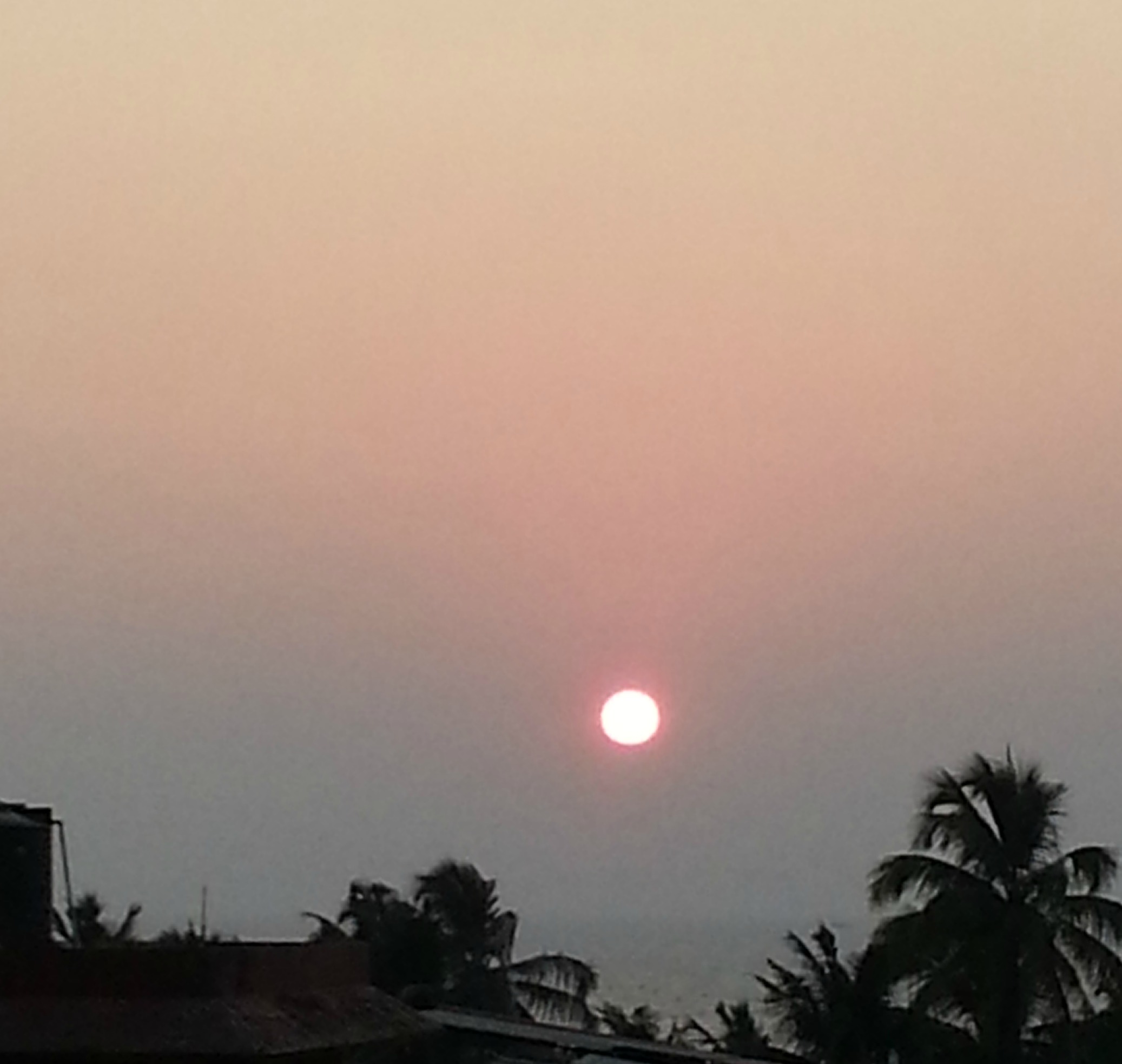
The setting sun on the 7th was beautiful beyond words. No picture I could take could even begin to capture its glory but perhaps this will give you a glimpse of what it was like.

Setting sun


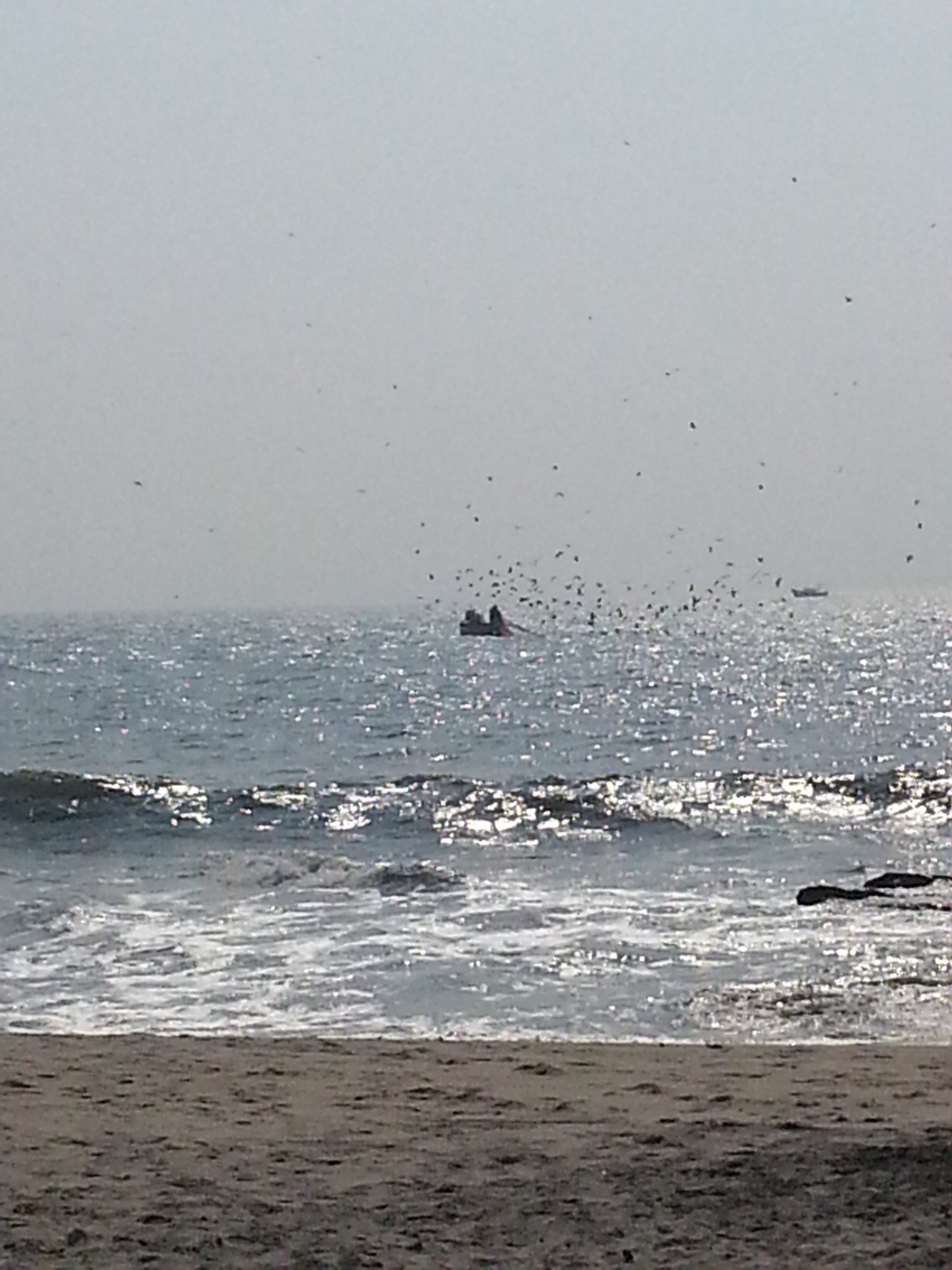
In the afternoon of the 7th, I was with a friend at the Arabian Sea beach. We saw birds swarming in the distance and walked to where we could get a better view. Their focus turned out to be a fishing boat.

20150107_150928

.That evening, I walked to the roof of the building I live in to watch the eagles soaring overhead. There were so many of them. Such a breath taking sight.  Here is a picture of one of them.

20150108_163246

After watching the eagle, I looked down and I saw this form of beauty:

Fishing boat in backwaters

And still later that day

Setting sun 2


I am truly blessed.


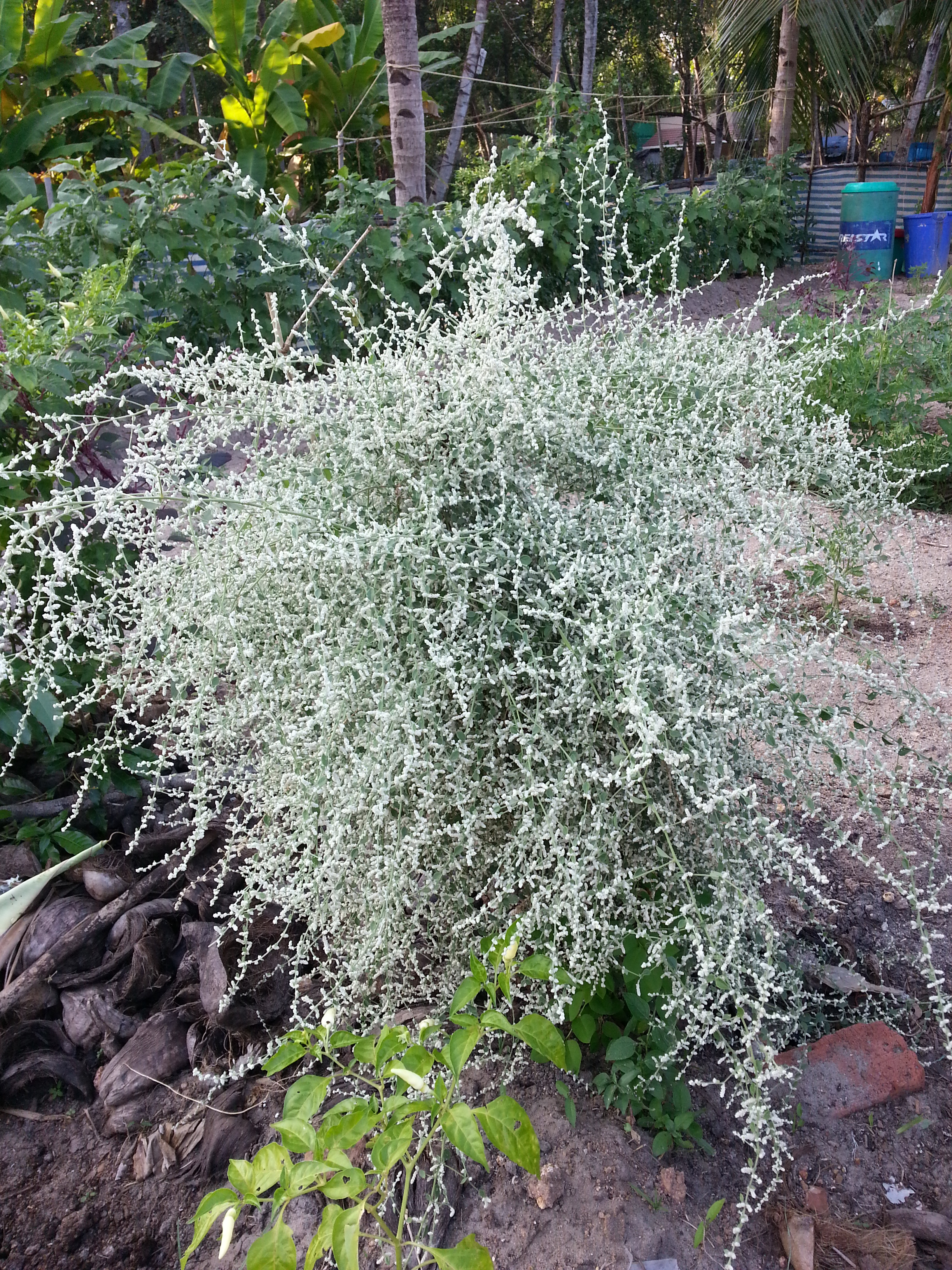
Do you recognize this plant?

I saw one of these plants in a garden in Amritapuri, India.  The gardeners wondered what type of plant it was and I didn’t have a clue but said I would try to find out.  Do you any of you know?  (You can click on the photo and then click the zoom to enlarge it even further!)

20150105_165339