This video was taken two years ago when a raven perched on a fence and cawed for an hour. A family came closer to see what was happening. They soon discovered there were three porcupine quills stuck in the raven’s face and one in its wing.
Tag: nature
The Spark Reignites

I have very few memories of my childhood, most of which was spent as an “army brat” moving from place to place. As I have been thinking about those years lately, I realize that there is a theme in some of my happier days.
While I don’t know for sure, it seems like most of those pleasant memories may have occurred during the four years I lived in Germany. We were transferred to Pirmasens, Germany when I was in third grade and we moved back to the U.S. after I graduated from sixth grade.
Some of my childhood memories:
• Making forts. When I was really young my brothers and I made forts inside our house, often under tables. Later we made forts in the woods near the apartment building where we lived.
• Playing outside. There were times when I would leave the house in the morning and only come home for meals and at bedtime. I would play with my friends in their houses and outdoors. In those days, children were given a level of freedom that would be unheard of in today’s world.
• During fourth grade, I remember making a large system of small trenches in the school playground. I then filled the beginning trench with water and watched as the water flowed throughout the network.
• I loved butterflies.
• In fourth grade, I also remember crawling under the schoolyard fence and going into the woods to collect snails. When I crawled back under the fence, to return to the schoolyard, I saw my teacher, Mrs. Pollen, and my mother, who also taught at the school, watching me. Uh, oh.
• My grandfather was a dock master. When we visited my grandparents during my younger years, I would catch fish using a drop line off of the side of the dock.
• I remember hunting for crawfish. That could have been in North Carolina before we moved to Germany or it could have been in Georgia, the place we were stationed after Germany.
As I think of these events, I realize how important outdoor activities and nature were to me when I was young. While it did not continue to be a life theme, there were exceptions.

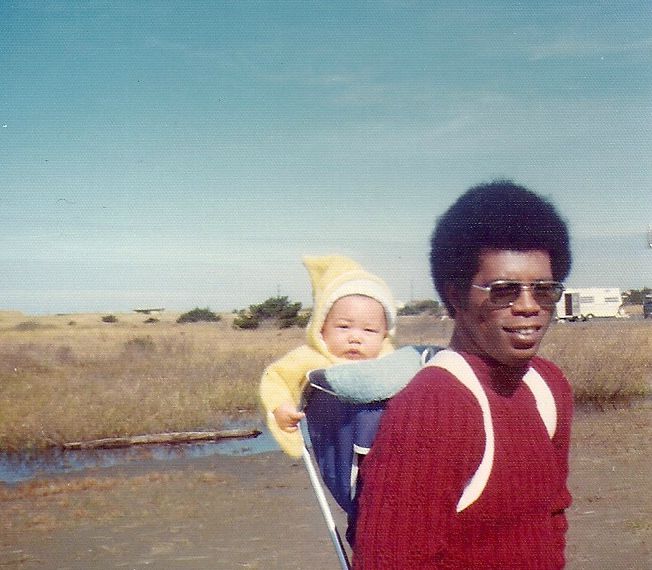
I had loved my experiences of camping with the Girl Scouts and when I traveled across the country with my church youth group in 1965. After Al and I married in 1971 we took trips to Mt. Baker and to National Parks such as Zion, Bryce Canyon, Yellowstone, Grand Canyon, the Redwoods and the Grand Tetons. At least one of those trips we took after Sreejit was born. In some places we camped, in others we stayed in cabins.
When Al and I bought our house in 1973, I loved gardening and canning.
In the 80’s I took my children and one of their friends to places like Zion National Park.

In the early 90’s, I had a strong desire to have a tree house in the magnolia tree in my back yard. I had planned to have a simple structure built, but the carpenter I hired couldn’t do simple. He constructed a beautiful seven by seven foot structure that even had a skylight!

I slept in the tree house from April to October for five years. That era ended the night two large raccoons blocked my path to the tree house. It wasn’t the first time, but it was one time too many. I started sleeping in the house again. At first the cells of my body screamed with grief. Being contained within the walls felt like moving from freedom to prison.
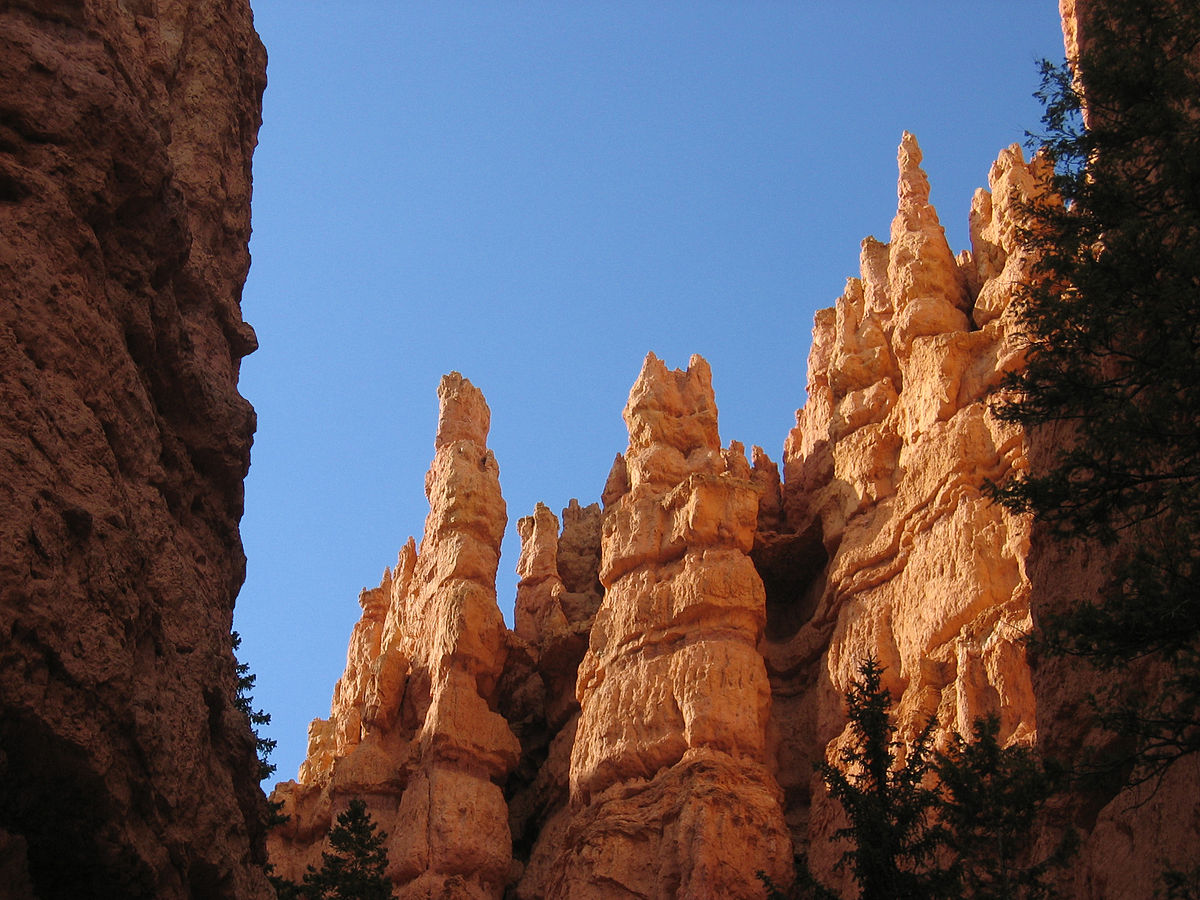
In the 90’s there was a period of three or four years in row where I explored Bryce Canyon on my own.
For the most part though, my outdoor activities had petered out over the years. I was too busy with work, raising children, and life in general. As I reflect on how I am living now, I can see that the spark has reignited. Gardening is again a priority for me. I have become fascinated by nature, whether it be flowers or creatures such as ants and slugs. A considerable amount of my time is spent in writing and editing the PNW GreenFriends newsletter. A part of me that has been long dormant is waking up.
I grieve that children nowadays don’t have the freedom that my generation had as children. Children are not allowed to roam freely for most of the day. Because of all the violence that surrounds us, parents naturally feel a need to keep their children close and well supervised.
But that is not the only difference. Today, children, teens and even adults are so focused on technology that there may be no time or interest in immersing themselves in outdoor play and nature. Texting, videogames and social media all too often fill their days.
Several years ago, I was at a church when the pastor gave a sermon to the young children. He talked about how in the “old days” children spent their days playing outside on this green stuff. He continued talking about grass as if it was something the children had never seen. He then encouraged them to go outside every day and do activities on that green stuff, activities that would cause them to sweat, something else he thought they were unfamiliar with. While it was a funny sermon, it seemed like an important one to me, then and now. If, as a culture, we keep going the direction we are going, where will we end up?
It is my hope and prayer that all of us will either reconnect with, or experience for the first time, the joy that comes when we immerse ourselves in the natural world, and by doing so may we discover that all beings on this earth are interconnected and can learn to live in harmony with one another.
Written for DungeonPrompts: What did you forget?
The Symbiotic Relationship Between Ants and Aphids
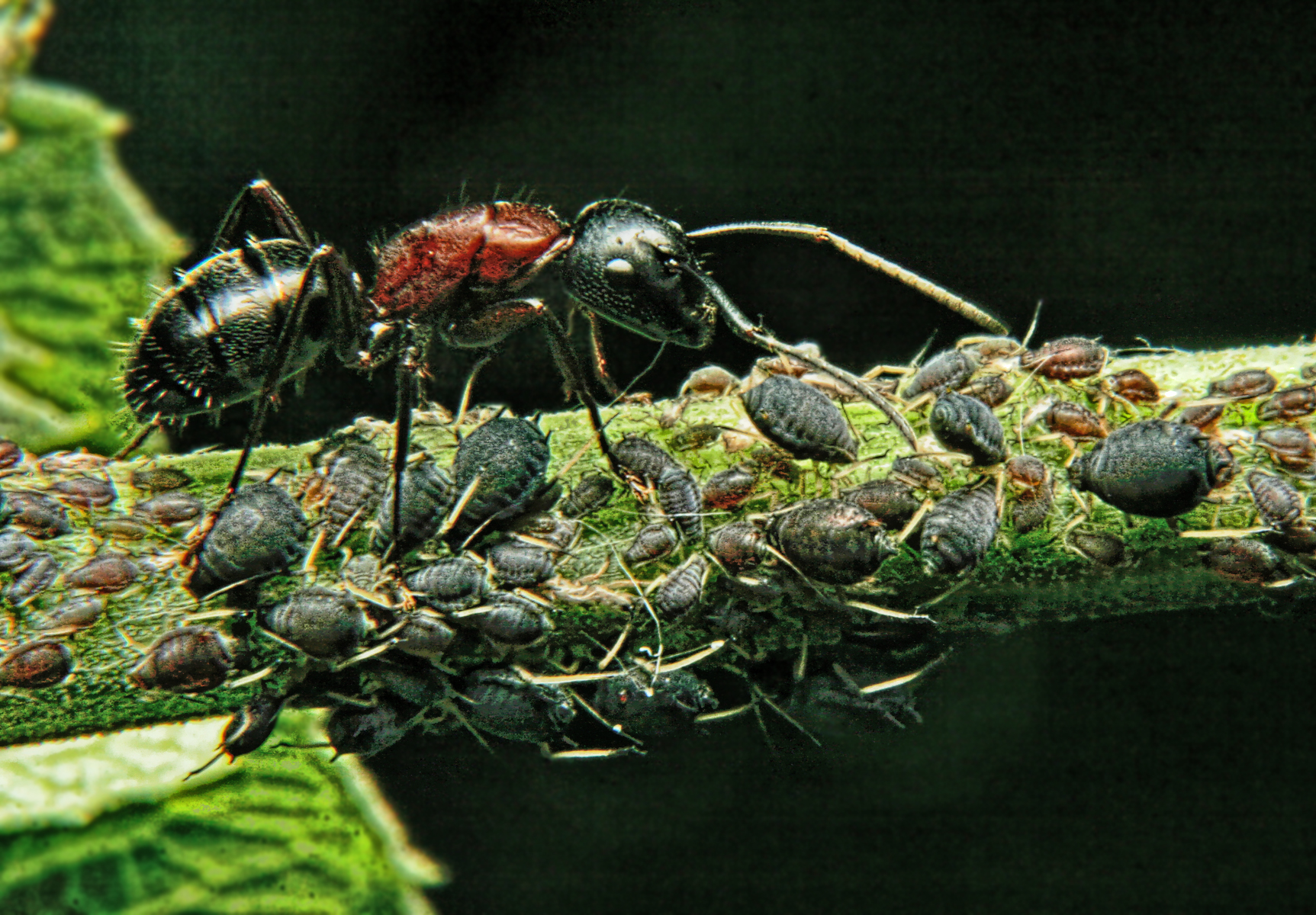
When I blogged about experiences I had with ants earlier this summer (Discrimination Opportunity and Watch, Wait and Wonder), one of my blogging friends, Hariod at contentedness.net told me that ants and aphids have a symbiotic relationship. I was fascinated by his description of the process so decided to learn more about it.
Ants play the role of protector in the ant-aphid relationship. They do that in exchange for the honeydew that the aphids express when the ants stroke the aphids’ bodies with their antennas. I found some videos that show those behaviors.
In the first part of this video, you will see the ant stroking the aphid, the honeydew being expressed, and the ant drinking it.
The next video, shows how ants protect aphids from lady bugs (I was surprised to learn that in other parts of the world lady bugs are called lady beetles, lady birds, or lady cows! Ladybugs is a North American term.)
As I continued exploring the YouTube videos, I found an incredible one which shows ants protecting aphids from an aphid lion, which is actually the larva form of a Green Lacewing. The video also reveals that there are some creatures which ants allow to stay near the aphids.
The ants are very much in charge of the relationship. Some of the articles say that ants “farm” the aphids. When an ant finds a group of aphids, it leaves a trail of pheromones for worker ants to follow. The ants then enslave the aphids. They slow the aphids down by drugging them with a tranquilizing chemical from their feet. They may also bite off the aphids’ wings to prevent them from flying away.
The ants protect and take care of the aphids in ways other than saving them from predators. They may move the aphids to parts of a plant that have the best sap. When it rains the ants may take the aphids to a more sheltered place, bringing the aphids back to the plant after the rain shower is over. Ants may even carry aphid eggs to the storage chamber of their own nest in order to help them survive a cold winter.
Nature is so amazing. Both ants and aphids are such common creatures, but I would never have guessed that they were so interconnected.
References:
Ants Farm Aphids in a Symbiotic Relationship
Defensive Symbiosis
What is the Symbiotic Relationship between Aphids and Ants?
Wordless Wednesday

The Fascinating Tromboncino
I have been fascinated by tromboncino squash ever since I discovered them in 2013. Generally they are eaten when they are small. At that time they are considered summer squash and can be used in the same way you use zucchini. However, if you let a tromboncino squash continue to grow, it will turn into a winter squash.

The winter form may become very large.


In 2013, one of those squash grew in a very fascinating way.

This year I let one grow into the winter form. When I picked it, it weighed five pounds and was two feet long.
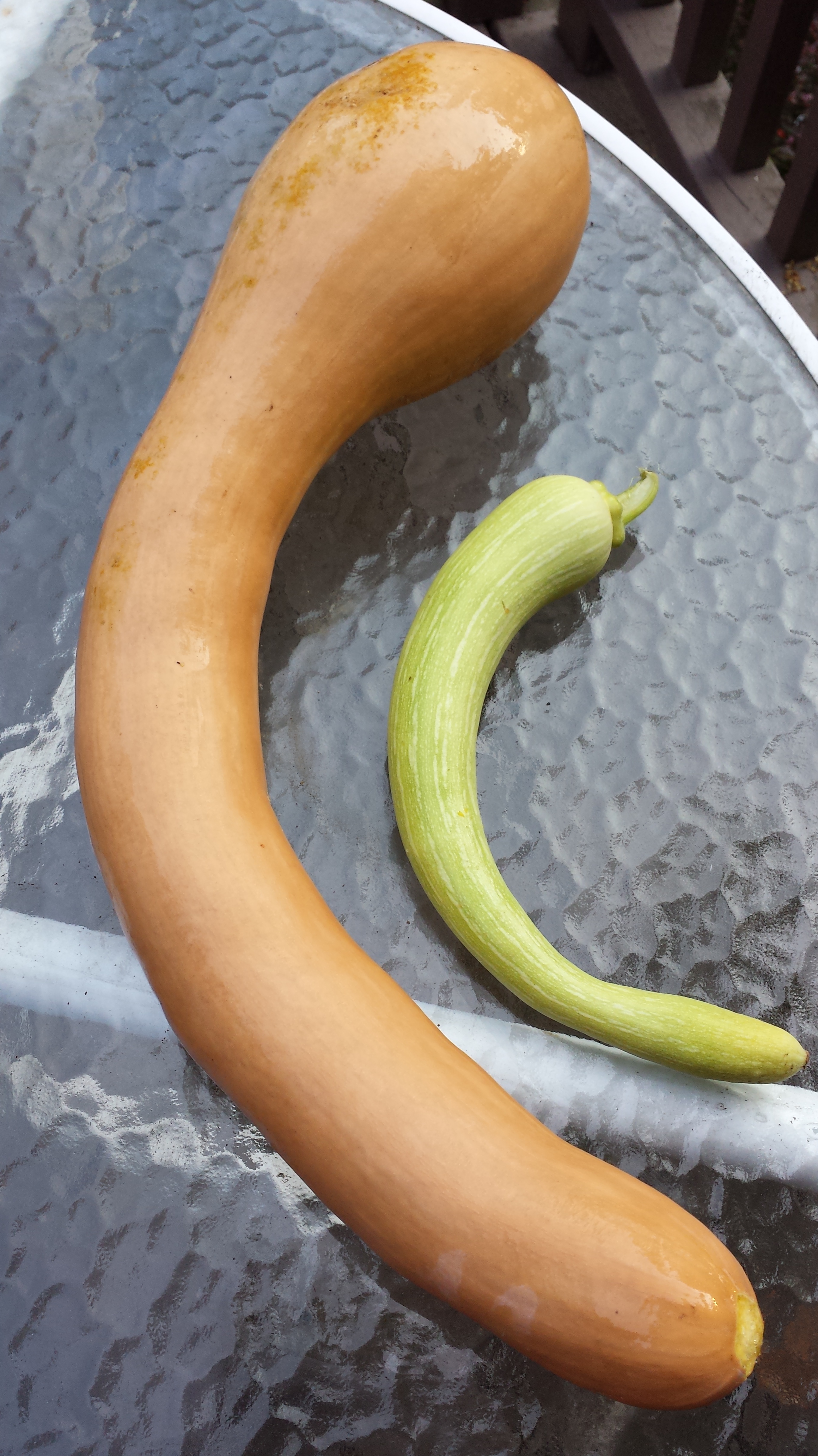
While that is big, it doesn’t come close to the one that grew in 2013. That one was 5 feet long! My memory is that it weighed 15 pounds, but I’m wondering now if it was less. Regardless, it was HEAVY. Below you will see a picture of that squash. It isn’t a clear photo, but it makes the point! I took it by snapping my reflection in a mirror. At that point, I had never heard of a selfie!

Wordless Wednesday


Wordless Wednesday


Weekly Photo Challenge: Beneath Your Feet
This is a closeup of the ground in a park near my home.

Posted for Weekly Photo Challenge: Beneath Your Feet
Wordless Wednesday
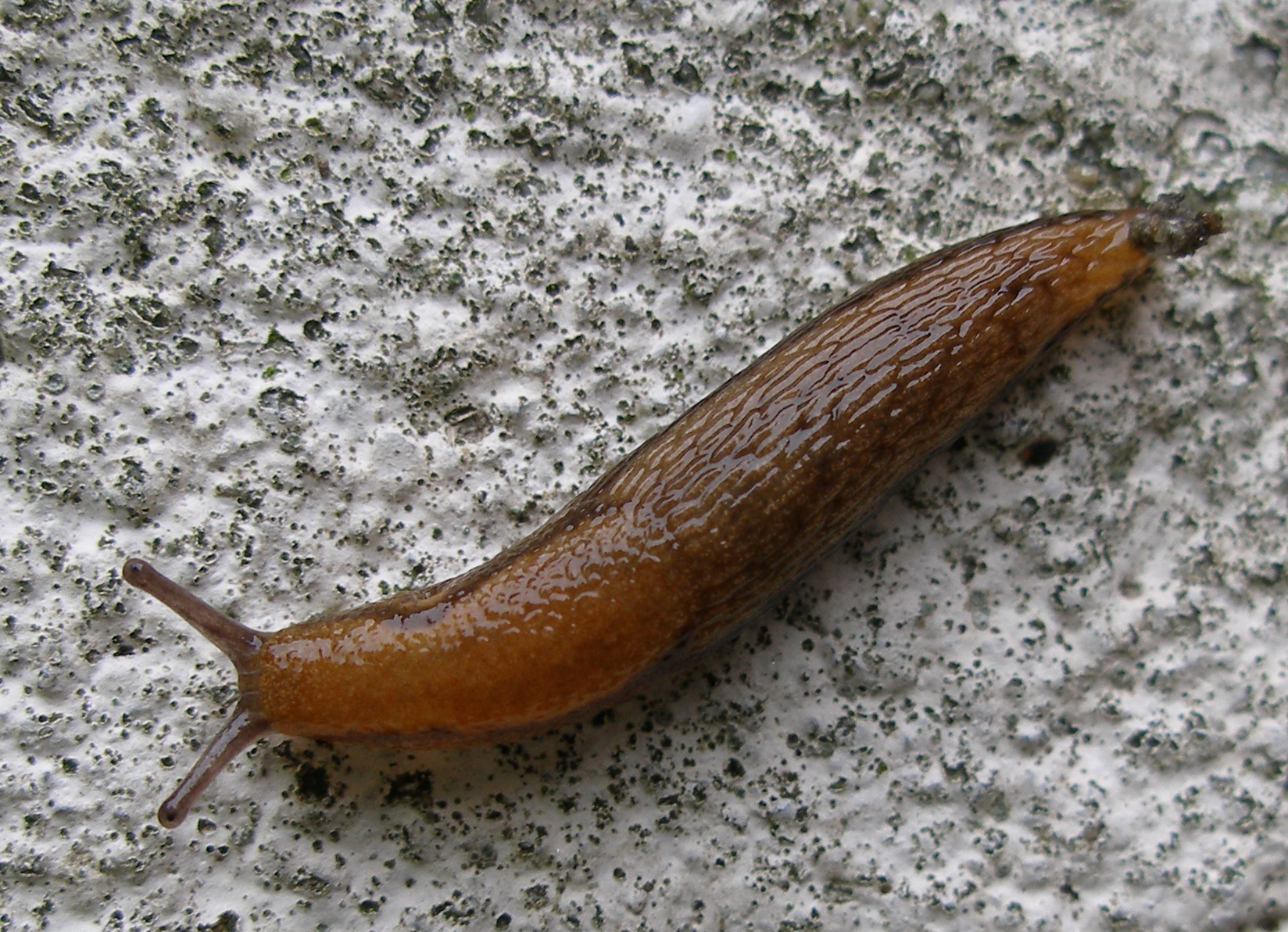
Seeking to Live in Harmony with Slugs

I imagine slugs are a problem for most gardeners, they sure have been for me. It is so discouraging to go to the garden in the morning and see only the stalks left on bean plants and other vegetable seedlings. In the “old” days I used to use powdered slug bait to get rid of them. Later on, I used beer to bait them.
I have become increasingly uncomfortable with killing the slugs. Early this year it seemed I had more than ever; especially in my two worm bins. Believe me, good compost and free food can raise some BIG slugs. During the early part of the summer, I relocated them to other parts of the yard and hoped the slugs didn’t make their way back to my garden. Occasionally, when I found them in the worm bins, I just left them there.
Then one day I decided to check out the relationship between worms and slugs. I was very dismayed to discover that slugs EAT worms! I even found videos that showed that happening.
Eating my vegetable starts was one thing, but getting plump from eating my worms was completely unacceptable. From then on I took the slugs to the bottom of the lot behind my house, about 250 feet away from my garden and my worm bins. That area is full of blackberries vines but I pulled up a lot of morning glory plants and made the slugs a soft bed of edibles.
Next year I will make a home for them that is more hospitable, but still far away from things I hold dear.
I will also experiment with other ways to protect my seedlings. For example, I like the gutter planters that my friend Saroja created this year. She didn’t put her seedlings into the garden until the plants were big enough to be of no interest to the slugs.
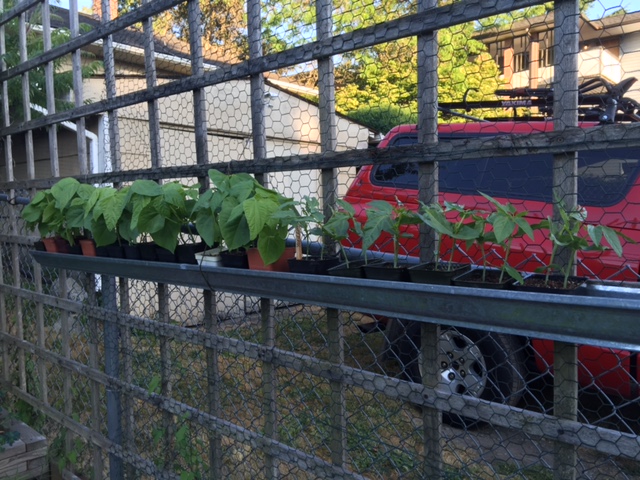
I am happy that I have found ways to protect my garden and worm bins without killing the slugs. I hope to be even more successful in that venture next year. If you have found peaceful ways to deal with the slugs in your garden, I would love to hear about them!
****
I found the information in the following articles very interesting:
Fascinating Slug Facts
Slimy Summer Invasion
Earthworms protect against slugs
Article written for PNW GreenFriends Newsletter: August
 Living, Learning and Letting Go