A friend just sent me this five minute video. I hope you find it as inspiring as I did!

A friend just sent me this five minute video. I hope you find it as inspiring as I did!

Last Saturday, I decided to do the morning prayers as a walking meditation instead of sitting like I normally do. Fairly quickly, I discovered I was “receiving” a series of “tests” or “lessons” in the midst of the prayers. I stayed in the moment and worked through them without missing a word of the chants! I enjoy these types of challenges and decided to share what I learned. Continue reading “Living in Awareness”
By 9:00 this morning, I had already been given the opportunity to witness one of my less virtuous sides. As I’ve mentioned in previous posts, one of the sevas (volunteer work) I do at Amma’s ashram in Amritapuri, India is to work in the vermicomposting center, separating the worms from the compost they make. The harvested worms are sent back to make more compost and the finished compost is bagged and stored for use in the gardens. This is the third year I am doing this seva.
Last year, there was a woman in the center who was working so fast. It seemed to me like she was taking handful after handful of the compost and making no effort to separate out the worms. She had way more experience than I did and worked many hours a day, but my judgment was that she was being careless and not taking her job seriously. “I”, on the other hand, was being meticulous, going carefully over every handful of compost looking for even the smallest of worms. “I” knew what I was doing and “I” was doing it way better than she was.
Fast forward to this year. Yesterday, while I was harvesting the worms, another woman joined me. This year there is a different set up in that the material we are to separate has been formed into mounds that are about 16 inches high. The woman sat down in front of a mound and started picking up handful after handful of the compost and placing it in the bucket which contained the finished compost. She didn’t even seem to be looking for worms, and I rarely saw her put a worm in the worm bucket. Then she started lightly brushing the sides of the mound with her hand. She would pick up the material she had brushed off and placed it in the compost bucket. Again, I was full of judgment. She was being so careless, while “I” was working slowly and methodically, making sure that “I” didn’t miss a single worm. I left soon after that so did not see how she completed the process.
I should mention that my way of harvesting the worms is very different. I know that worms gather at the bottom so I take the mound apart and go directly to the bottom. I am then able to quickly gather large numbers of worms and place them in my worm bucket. That process is very satisfying because I see the fruit of my action right away. Next, I examine every bit of the remaining compost to make sure I haven’t missed any worms.
I thought about that scenario during the day and began to wonder if there was something that I was missing. Was it possible that the two women knew something that I didn’t know? That would make sense since they were the ones who did this work day in and day out. This morning I decided to try it their way.
Once I looked at the mound with fresh perspective, I had a sense of what was happening. The outer part of the mound is drier and, in addition, is exposed to light. Worms want to be where it is damp and dark, so if the compost is dry or there is light, they would burrow deeper into the mound. And the act of someone brushing off the outside layer of the mound would certainly result in the worms quickly moving deeper inside.
Today, when I picked up the compost around the base of my mound, I discovered it didn’t contain a single worm. That was also true when I brushed the outside of my mound; none of the material that I brushed off had worms in it. It was not until I was much deeper into the mound that I found more than the occasional worm. Once I reached the center areas, I joyously harvested big clumps of worms!

It had taken me a full hour to separate the worms from one mound of compost when I did it “my” way. Using their techniques, I finished sorting two mounds in about 40 minutes! Clearly, these two women knew how to efficiently separate the worms and the compost and I did not. I not only had learned a new way to harvest the worms, but I had also received an opportunity to examine my arrogance! And it is still early morning. I wonder what the rest of this day will hold?

Many years ago, I heard a minister say that the voice of God is most often the first voice we hear inside. What usually follows is a flood of discounting messages telling us why God’s message will not work, “You can’t do that,” “That’s wrong,” “It will never work,” “Do this instead.” He said that the quiet voice of God may make another attempt or two, but if we continue to ignore it, the “voice” will eventually fade.
People have many ways of conceptualizing this voice. For some it is God. Others call it intuition, inner voice, higher self, Spirit, or The Divine. In this post I will refer to it as inner voice.
I have experienced that process many times in my life, but never as frequently as during a week in 1995. It began when I was attending one of Amma’s programs in Calicut, India. At that time, I was staying with other ashramites, i.e. devotees from Amma’s main ashram in Amritapuri, on the roof of her Calicut temple.
There were places on the roof where mounds of rough concrete rose two to three inches above the surface. Several times, when I passed a particular mound, my inner voice said, “Be careful, that concrete is dangerous.” My response was, “I see it. I AM being careful.” I would then continue blithely on my way. One day, as I was walking to my sleeping mat, not paying a bit of conscious attention to what I was doing, I tripped over that mound of concrete and tore a big piece of flesh from the top of my toe.
The injury was very painful but that was the least of my concerns. Having an open foot wound in India seemed very dangerous to me. In those days, I generally walked barefoot and I had no doubt that the ground was filled with untold numbers and varieties of bacteria. My nursing background told me that the extreme heat and high humidity created a perfect breeding ground for the bacteria. I cleaned the wound as best I could and went on with my life. I found I needed to stay very conscious of my surroundings because any time I would lose concentration I would hit my toe on something, sending waves of pain coursing through my body.
I apparently hadn’t learned what I was meant to learn though. Over and over that week, my inner voice “warned” me of potential problems and I repeatedly discounted those warnings. The second instance occurred when my daughter Chaitanya, a friend and I took a taxi to the Singapore Airlines office in downtown Calicut. We drove in circles for an hour, unable to find the office. Once there, we discovered we needed to go to the Indian Air office before we could make the necessary changes with Singapore Airlines. As we left the Singapore Airlines office my inner voice said, “Make sure you write down the address so you can get back here.” I responded, “That is not necessary, the next taxi driver will know the way.” Later, when we left the Indian Air office, we spent another frustrating hour searching for the Singapore Airlines office.
Soon thereafter, I needed to relay an important message to a person at Amma’s Amritapuri ashram. I arranged to send it with a friend who was returning to the ashram sooner than the rest of us. The night before my friend’s departure, my inner voice said, “Write the note and give it to her NOW.” I answered, “No, that is not necessary. She will not be leaving until tomorrow afternoon.” When I awakened the next morning, I discovered my friend had abruptly changed her plans, taking off for the ashram at daybreak.
As we cleaned our living area, the morning after the program’s end, I noticed a piece of paper on the floor beside my sleeping mat. My inner voice said, “That looks like a train ticket.” I answered, “MY ticket is in my wallet.” When we arrived at the train station a few hours later, I discovered that our tickets were missing.
My series of misfortunes did not end there. Chaitanya was scheduled to leave India two days after our return from Calicut. A friend cautioned me to pack her most important items in her carry-on luggage. I inwardly responded, “Everything is already packed and I do not want to start over. That is unnecessary.” After driving the three hours from the ashram to the airport, we discovered we had left my daughter’s suitcase sitting in our room at the ashram. That suitcase contained everything she needed for the school report that was due upon her return to the United States. There was no way to retrieve the suitcase before her plane departed. When I reflected on that event, I remembered that God’s messages may also be relayed through another person, such as in this incident with the suitcase.
As I began to ponder my behavior, I realized that after years of being so intensely focused on my spiritual path, I had developed a rather cocky attitude about my ability to hear and respond to that inner voice. I was shocked to see the reality of the situation. Over and over again, I had been warned of an impending problem and had discounted, ignored, and contradicted the warnings. I was awed by how much pain I could have saved myself if I had listened to each instruction. I was thankful for the powerful display of this particular spiritual pitfall and vowed to be much more conscious and conscientious in the future.
I believe that I am much more likely to pay attention to that quiet voice now than I did back then, but I still find myself discounting or ignoring warnings. This will probably be one of those lessons that will last a lifetime.
What experiences have you had in ignoring your inner voice?

When discussing the importance of brevity and simplicity of speech when one is trying to create inner silence, Muller provided information that I have recalled time and time again. He said:
Someone once noted that the Lord’s Prayer contained 56 words, the Twenty-third Psalm 118 words,and the entire Gettysburg address only 226 words– while the U.S. Department of Agriculture directive on pricing cabbage contained 15,629 words. One could easily conclude that we place a higher value on pricing cabbage than on liberty, prayer, or serenity.
From Legacy of the Heart: The Spiritual Advantages of a Painful Childhood by Wayne Muller, Simon and Schuster, 1992, page 104-105.
Sufi teacher Pir Vilayat Khan asks us to view pain in this way:
Overcome any bitterness that may have come because you were not up to the magnitude of pain that was entrusted to you. Like the mother of the world who carries the pain of the world in her heart, each one of us is part of her heart, and therefore endowed with a certain measure of cosmic pain. You are sharing in the totality of that pain. You are called upon to meet it in joy instead of self-pity.
What is your reaction to his suggestion?
From: Pir Vilayat, Khan, Introducing Spirituality in Counseling and Therapy (New York: Omega Press, 1982).
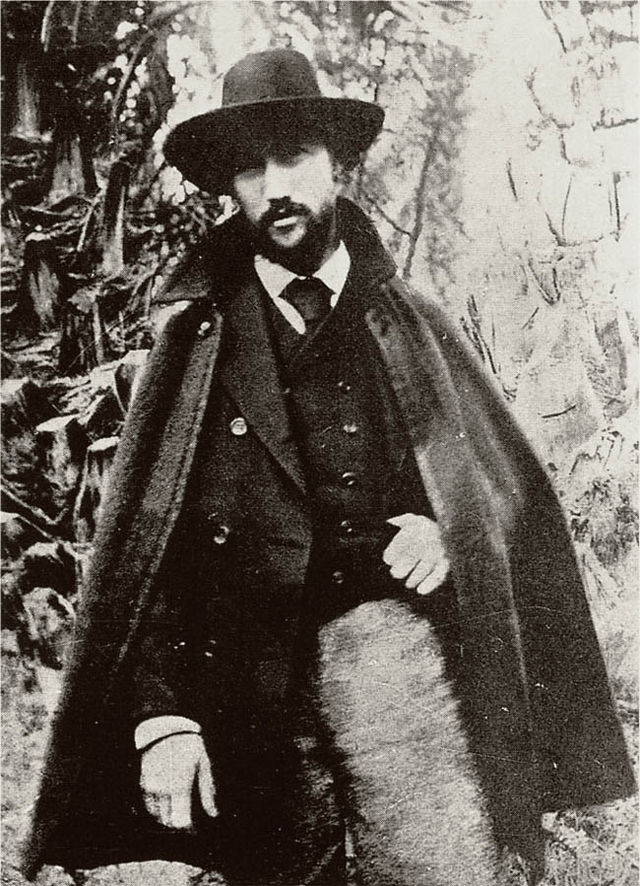
One doesn’t discover new lands without consenting to lose sight, for a very long time, of the shore.
— André Gide
André Paul Guillaume Gide (22 November 1869- 19 February 1951) was a French author and winner of the Nobel Prize in literature in 1947.
Quote from: Les faux-monnayeurs [The Counterfeiters] (1925)
The therapists and clients in my therapy community all use a series of six self-care contracts as guiding principles in their lives. One of those contracts is “I will not be sneaky or lie. I will be honest with myself and others.”
I hold telling the truth in high value and have for a long time. Has being upfront and telling the truth always been important to me? Not at all. I know that I was sneaky and told lies during a good part of my childhood and early teenage years.
In some families, being sneaky and lying may be the only way for children to have power and to do the things that they want to do. To some extent that must have been true for me. I don’t have any memory of how often I engaged in those behaviors, but I do remember one notable example. One day, my mother asked me if I had practiced my accordion, an instrument I hated. I immediately said yes. When she took me to the closet where it was stored, I was dismayed to discover that there was a big rug rolled up against the closet door. There was no way I would have been able to move the rug to get to the accordion. Did being caught in a blatant lie make me change that behavior? No it didn’t. What I learned from that incident was to be much more careful when I told lies. I don’t remember when I made a decision to stop lying, but I did. It may have been in ninth grade when my spiritual journey became so important to me.
One thing that is guaranteed to rile me up is if I find out that someone has lied to me. That seems ironic considering that I used to lie. However, as a therapist I have learned that we are very likely to get triggered when others do the same unhealthy behaviors that we consciously, or unconsciously do (i.e. they are being a “mirror” for us) or when we have not completely forgiven ourselves for our past mistakes. I know I still carry some guilt for all the lies I told during the early years of my life, even though I have some understanding of why I told them.
There is a quote that is often attributed to Buddha that says: “If you propose to speak, always ask yourself, 1) is it true, 2) is it necessary, and 3) is it kind?” While I am not always successful, I strive to keep those three criteria in mind when I speak. That doesn’t mean that the people I’m talking to will think that what I have to say meets all of the criteria. As a therapist, I often say things that are hard for clients to hear. At the time, they may think I am being unkind and that my words were unnecessary, but later, they may change their minds.
Is it ever okay to tell a lie? If someone was in danger and telling a lie would help keep them safe, then I believe the lie would be warranted. In most other cases though, a lie would be unnecessary and potentially harmful to ourselves or others.
If our needs conflict with others desires, we may be tempted to lie. For example, if someone wants us to spend the evening with them we may create some fictitious obligation when the reality is that we just want some quiet time at home. It might be difficult or even frightening to tell the truth, but most people will understand, and even if they don’t, the truth isn’t likely to do as much damage to the relationship as getting caught in a lie. Even if we don’t get caught, when we lie to someone, our sense of self-respect may be damaged. We may not know the effect of all the little lies on our psyche until sometime long into the future.
When people shift from being sneaky or telling lies to being honest, they often believe that they have to tell other people everything. That was true for me. If I didn’t tell people the whole story, I felt like I was lying. I soon learned that was not the case. Generally, our thoughts and actions, whether past or present, are our business. There is no need to share them with others unless we want to. It is not lying to keep private things private. In fact, it may be good self-care. Disclosure is an area that requires discrimination.
There are many times when it would be impossible to tell the whole truth and keep the criteria of saying only what is true, kind and necessary. That doesn’t mean that we have to lie though. It may be a time for silence.
Two areas that I continue to work on are not minimizing my own needs and not exaggerating. Recently someone pointed out to me how something they had done had impacted me in a negative way. Instead of acknowledging that what they had said was true, I started talking about a past experience with someone else that had hurt me more. In a way, that was minimizing the situation, and I missed an opportunity to talk about an ongoing problem.
My speech used to be peppered with exaggeration. I spoke of “millions” of this and “tons” of that. I know there are many other examples, even in the present, of how I exaggerate but I’m not remembering them in the moment. When I find myself exaggerating I correct myself internally, and ideally clear it with the person I have spoken to as well.
I think learning to be upfront and honest, yet still use discrimination, is a lifetime process, or at least it will be for me. But I believe it is worth every bit of effort I put into the journey.
Written for Dungeon Prompts- Season 3, Week 5- For What Would You Lie?
Allow yourself to play with the freedom that comes from being ordinary and nobody special. The pressure is off. You can relax. Nothing special is expected of you. Nobody is watching. Why should they? You are just an ordinary child of the earth. Perfectly unexceptional, perfect just as you are.
from Legacy of the Heart: The Spiritual Advantages of a Painful Childhood by Wayne Muller, Simon and Schuster, 1992, page 84.
When I am miserable it is usually because my mind is full of negative, discounting messages. That might happen because I’ve done or said something I think was wrong or stupid, because I am worrying about some future event, or because I’m upset about something someone else has done. I have to admit that when I am stressed and/or miserable, I am likely to go to the store and buy a big cookie, a doughnut, chocolate or ice cream!
While sugar is all too often part of my “fix”, I generally don’t stop there. I have learned many things over the years about quieting the mind. As I remember the teachings, or use the techniques I have been taught, my inner critic tends to calm down. Continue reading “Silencing the Mind”
The Art and Craft of Blogging
A collection of discussions on the environmental issues
“The fool doth think he is wise, but the wise man knows himself to be a fool.” “Love all, trust a few, do wrong to none.” “Love looks not with the eyes, but with the mind, And therefore is winged Cupid painted blind.”-William Shakespeare
...moments of unexpected clarity
Home of Lukas Kondraciuk Photography
Wellness, Support and Mindset
Thoughts on Creativity & Deeper Things
A Blog by Novella Carpenter
Ramblings of an Irish ecologist and gardener
Teaching the art of composition for photography.
Blog from SathyaSaiMemories ~ stories of love in action and the benefits of giving
There are 11,507 stories in Haddonfield; this is one of them.
Perennial gardening and more from the Green Mountains of Vermont
Whatever it will be...
Welcome to my little slice of the blogosphere

 Living, Learning and Letting Go
