Letting Go of Suffering

IMG_8037

For several years in the mid to late 1990’s and early 2000’s, I wrote articles about my experiences with Amma for “The New Times,” a free newspaper that was, at that time, available in Washington and Oregon. I have started sharing some of those articles on my blog. I am choosing the articles to post based on their topic, therefore they are not being shared chronologically. The article below was published in August of 1995.

~

The experience of grief is inherent in living. As we live, events will happen that we don’t want to happen. We will undergo violations, endings, disappointments and betrayals. If we allow ourselves to fully feel the pain that comes with these events, we will most likely learn the important lessons that are there for us to learn and move on. If we suppress the painful feelings and mask them with self pity, guilt, blame, suspicion, sarcasm, indifference, and/or worry, we are likely to move into suffering.

One day last year (1994), during my annual visit with my spiritual teacher, Mata Amritanandamayi (Amma), whose ashram is located in Amritapuri, India, I had the opportunity to experience and move through two episodes of emotional pain. That year, I had come to the ashram bringing with me 60 handmade skirts and blouses. This clothing had been made by friends and myself for children living in the orphanage operated by Amma.

One day I told Amma that I was going to deliver the clothes to the orphanage. As you might imagine, I was totally shocked when she responded that since I had not brought 600 sets of clothes, enough for each child at the orphanage to have a set, none of the children could have them!

My mind immediately started operating on three tracks. The first track was filled with rage, fear and self pity. Among the internal messages were:

  • What do you mean I can’t take them? Don’t you know how hard we worked? 
  • You betrayed me! 
  • You made me betray my friends. 
  • You aren’t fair. 
  • You made me waste a whole year. 
  • Now everyone is gong to be mad at me and it’s YOUR fault. 

The second track both recognized the lessons I was receiving and attempted to de-escalate the parts of me that were angry and afraid. Those messages, which came in a clear matter of fact, non-critical tone included:

  • Of course she said that. She does not want to set up competition between the children. That is totally reasonable and consistent with what you know of her. 
  • If a gift is an offering that has no strings attached, then the clothes were not a gift. Look at your level of attachment. 
  • This was supposed to be seva (selfless service). Seva, by definition, means that there should be no expectation of the fruit of one’s actions. Examine the process that is happening. How can you learn to give freely? 
  • The work parties were very valuable for the people who participated. They experienced working in community. They experienced giving. They had fun. You have not hurt anyone. 
  • Your friends will have an opportunity to learn lessons such as those you are now learning. 

The third track in my mind was busy contemplating how to sell the clothes so the proceeds could be donated to the orphanage. In that way some of the intention behind the gift would be met. Within minutes I had formulated a tentative plan.

The second and third tracks obviously were supportive and needed no help from me. The first was a different story. I sat close to Amma and let the fury rage inside of me. I could have said something directly to her but there was no need. Ultimately, I believed her response to be correct. The energy I was now experiencing was primarily old betrayal energy of mine, rooted in my childhood. I first tried to move the energy through by imagining myself yelling at Amma. Then I imagined doing various anger release techniques I would do if I were in a therapy setting. These inner processes moved some of my negative energy, but not enough.

I decided to leave the temple and talk to some friends. I asked them if I could have a few minutes to vent, complain, suffer. They agreed and I allowed all that was inside of me to come pouring out. Afterwards, I discovered that the messages on the first track had lost their power. I returned to the temple to sit near Amma feeling successful and complete with the issue. (Brief episodes of anger and fear occurred occasionally over the next few weeks but I was able to easily release the negative energy.)

On the same day as all of this occurred, I experienced another powerful and important event as I was walking back from a local tea shop with a friend. As we passed one of the swamis (monks), he smiled at me. For no apparent reason my whole being exploded with an unnamed grief. The grief was so deep and so intense I could barely walk. I sat in a private place and let the feelings come. I knew it didn’t matter what the grief was about, I simply needed to feel and release it. After about fifteen minutes I felt done; exhausted yet lighter. (One of the ways to differentiate true grief from suffering is to notice what you feel like after you express the emotion. After expressing deep grief, even though you may be tired, you are also likely to feel relieved, lighter, and cleaned out. After immersing yourself in suffering you will probably feel even worse than you did before!)

I ended that day feeling very grateful. Grateful that I had accessed and let go of such core level grief. Grateful that I had experienced the difference between the pain of grief and the pain of suffering. Grateful that I had done my therapy and had the skills to move through the pain. Grateful that I had moved through so much of the pain in my therapy process that what was left was manageable. Grateful that when I am near Amma, I usually move through pain faster than in normal living. Grateful that the process of living has and will continue to bring up any residual pain so I can release it and thereby live my life more and more in the present moment.

As I said in the beginning, grief is inherent in living. We cannot totally avoid pain but we can learn to stop holding on to it. I hope my stories will be of value to you as a model for dealing with your own grief.

~

“The New Times” articles that I’ve already shared:

Support in Times of Trouble

A Multitude of Lessons

Exposing the “Know-It-All”

Many Paths, Same Destination

Putting Pain in Perspective

Putting Pain Into Perspective

IMG_3421 (002)

For several years in the mid to late 1990’s and early 2000’s, I wrote articles about my experiences with Amma for “The New Times,” a free newspaper that was, at that time, available in Washington and Oregon. I have started sharing some of those articles on my blog. I am choosing the articles to post based on their topic, therefore they are not being shared chronologically. The article below was published in May of 1995.

~

As a psychotherapist and a consciously evolving human being, I have a strong interest in examining the emotional pain in my own and others’ lives. This year (1995), during my annual visit to the ashram of my spiritual teacher, Mata Amritanandamayi, also known as Amma, I had an experience that helped me put my own pain into perspective.

This year’s trip was different from my previous trips in that most of my two month visit was spent traveling with Amma as she conducted programs throughout India. (Amma’s public programs include lectures, devotional singing, and darshan, which means to be in the company of a great soul. Amma’s style of darshan is to hug each individual who comes to her.) My time in India was to end with a program in Pune, a city southeast of Mumbai.

Four days before I was to leave India, I found myself filled with grief. While I was excited to be returning to Caesar salads, Western toilets, hot showers, and American efficiency, I felt enormous grief about leaving my teacher, the devotional singing and the bliss of the divine energy that I access so easily when in Amma’s presence. I noticed that my sadness was mixed with a measure of rage which I knew was rooted in my childhood. I sat close to Amma and allowed the sadness and rage to wash away and the peace and stillness to come.

Two days later, during an evening program, I was watching Amma give darshan to the large crowd who had assembled. While I was watching, a man came to her carrying a large teenage boy who had no use of his arms or legs. His legs appeared to be no larger than the diameter of a fifty-cent coin. I thought he might also suffer from cerebral palsy. Moments later, another man carried in a boy who was in a similar condition. Then another pair presented themselves to Amma, and then another, and another.

Soon it became obvious that a bus load of severely handicapped teenagers had been brought to receive Amma’s touch. As the children kept coming, my body flooded with grief. Other images then started coming into my mind’s eye, images of the pain and suffering I had witnessed during the last few weeks.

  • Miles and miles of shanty-town shacks built mostly of corrugated tin; tin in a country where the temperatures may be 90 degrees in the winter and 120 degrees in the summer. I had seen people preparing food in the huts over open fires. I had imagined the nightmare those huts would be at night when the rats roamed.
  • In the middle of busy railroad yards, wherever there was 20 feet between the crisscrossed tracks, families had erected tents. Children were growing up on the tracks. The tracks served as their playgrounds and their toilets.
  • A tall blind man had stepped into the railroad car in which I was traveling. The pupils of his eyes were shiny, bright silver. He was carrying a six-month-old baby. Once he had come to the center of the car, he started singing. People came forward and put money in his hand. When everyone had donated, he stepped down and found his way to the next car.
  • A woman, legs totally useless and crossed stiffly in front of her, inched her way down the sidewalk on her buttocks, moving so slowly that you couldn’t even tell she was moving unless you watched her intently.

Each of these scenes had moved me to tears. As the memories flickered through my mind’s eye, I imagined what it would be like to be trapped inside a body that I had no ability to operate; a body that even robbed me of my ability to communicate. I also imagined what it would be like to be born into extreme poverty, where I had little or no way to improve my situation. As I compared what I believed I would feel in those circumstances to the pain I was now feeling about leaving India, I was able to put my own pain into perspective.

I saw that the pain I was experiencing was temporary. Even though I hurt, I knew the grief would pass. Amma would be coming to the U.S. in a few months. In addition, I knew how to connect with divine energy whether I was in India or in Seattle, I just needed to be willing to make the effort.

I remembered that a portion of my pain was energy I was still holding onto from my childhood. I knew that as I continued to access and release this old rage, I would experience more and more peace and freedom from pain.

Next, I reminded myself that I had consciously chosen to put myself into a situation that would cause me pain. I know it is difficult for me to leave India. Going to India is a choice I make freely and willingly understanding that pain will be one of the many feelings I will experience on the journey.

I wondered briefly if I should feel ashamed of myself for feeling grief about my situation. I let that go, realizing that self-criticism was not the purpose of the lesson I was receiving. My grief and pain were real. My job was not to deny the pain or to judge it but rather to be active in releasing it.

As I pondered this newest thought, yet another came. I noted that as I progress in my own healing, I experience my heart opening more and more to those around me. It is as if my eyes are opening and I can more clearly see the needs of others from a place of deep compassion as opposed to guilt-ridden caretaking. I then thought of the others in my life who are equally committed to their personal growth. I recognized they are undergoing a similar progression.

As these insights flooded into my mind, I experienced a renewal of my commitment to continue this process. In my mind’s eye I could see the ripple effect that will occur as each one of us, completing our own healing, create a world where there is enough food, shelter and love for everyone. A world where no one is left alone in their pain.

We cannot eliminate pain from the earth; that is part of the human experience. We can, however, significantly change the way we relate to pain. I hope that my experiences will give you insights that help you to put your own pain into perspective.

~

“The New Times” articles that I’ve already shared:

Support in Times of Trouble

A Multitude of Lessons

Exposing the “Know-It-All”

Many Paths, Same Destination

Exposing the “Know-It-All”

arrogance-clipart-k4022974


For several years in the late 1990’s  and early 2000’s, I wrote articles about my experiences with Amma for “The New Times,” a free newspaper that was, at that time, available in Washington and Oregon. I have started sharing some of those articles on my blog. The article below was published in March of 2000.

~

One of my major enjoyments in life is to watch and experience the ways in which Life/God/Spirit/Guru reveals the lessons I need to learn. I see each lesson as a potential adventure, an opportunity to participate in one detective mystery after another.

Many lessons become evident when a situation results in exposure of a self-defeating behavior. Once unmasked, we have the opportunity to examine the behavior and then look for new ways to act, ways that will be more nourishing to ourselves and others.

While I know that I will have lessons to learn throughout my entire life, I find that when I am in the presence of my guru, Mata Amritanandamayi (Amma), the lessons are considerably less subtle and seem to come at a faster rate. Luckily, when I am with her, I am usually able to work through the lessons faster.

Earlier this year, while visiting Amma’s ashram in South India, I experienced a series of events that made the theme of a new lesson quite obvious. I was so fascinated by witnessing this process unfold that I decided to write about it.

The new series began when I informed my daughter that Kollam, a city north of the ashram, would be a good place for her to buy new glasses. When others told her the Kollam shop produced poor quality glasses, I insisted they were wrong.  I KNEW that the shop’s glasses were of EXCEPTIONAL quality. After experiencing some of the events that followed, I reflected on this incident once again. I realized that my strong pronouncement had been based on a sample of one, i.e. I knew of ONE person who had purchased glasses in Kollam and SHE had been very satisfied. I could see that I had no basis for having drawn such a strong conclusion.

Next, while waiting for Amma to arrive at the temple for the nightly music program, a woman sitting beside me remarked that it was too bad that the number of Indian visitors coming to the ashram had decreased. I was shocked because there had actually been a HUGE increase in the number of Indians coming to see Amma. In fact,  now there were frequently more visitors than the temple could hold.

I said, “You mean during the last day or two, now that the holidays are over?”  “No,” she said, “I mean all of the time.” She went on to say, “In fact, fewer people are attending the programs she leads throughout India.” As I readied myself to tell her how thoroughly wrong she was, Amma arrived, ending the possibility of further discussion. I agitated throughout the evening program, filled with the desire to correct her misinformation.

I hoped I would see her later, but I never had the opportunity to rectify the situation. I remained agitated for some time, uncomfortable that someone was passing on such mistaken information.

The next day, I observed an interaction between a young Indian girl and a Western man. He said “Om Namah Shivaya” as she approached. This is a mantra that is frequently used as a greeting at the ashram. “What does that mean?” the girl asked. He responded in a shocked and rather demeaning manner, “You don’t know what that means? It is a greeting used all over Kerala (the state in which the ashram is located). Where are you from?”  “Kerala,” she replied. He shook his head, unable to believe that she did not know something so fundamental.

I, without invitation,  inserted myself into their conversation, informing him that “Om Namah Shivaya” was NOT the primary form of greeting used in Kerala. While some Hindus may use it, it was not even that common.   “Namaste” or “Namaskar” was a much more common greeting. He insisted that I was wrong, restating that “Om Namah Shivaya” was the proper greeting. He walked away, totally ignoring the girl’s request for a definition of the phrase.

That same day, I told my daughter the story of a brahmacharini  (female monk) who at one point had chosen to abstain from Amma’s darshan (time when Amma hugs each person who comes to her) for two years. Later in the day, I told the brahmacharini I had shared her story. She informed me that the period of time had actually been six months, not two years. I was shocked. I was SURE it had been two years. Again I saw my urge to be right, but I could not ignore the fact that her recall of the subject matter was more likely to be correct than mine.

As I reflected on these four incidents, I saw how they exposed my tendency to insist that something is fact when I don’t have enough information to warrant that certainty. The woman in the temple and the man who had been talking to the Indian girl had mirrored that behavior. In all four instances I could see my strong desire to “be right” as well as my ongoing urge to “set people straight.”

This know-it-all attitude can be considered a personality trait. Luckily, all personality-based behaviors can be placed on a continuum, having both healthy and unhealthy elements. At the healthy end of the continuum, this trait allows an individual to be efficient, responsible, insightful, helpful, and productive. At the unhealthy end of the continuum, however, the individual becomes arrogant, judgmental, suspicious, pushy, and obsessive.

I appreciated having been presented such a clear picture of ways I sometimes operate from the unhealthy end. In the days and weeks that followed I was repeatedly given opportunities to choose to indulge in those behaviors or to “do it different.”

Since I have returned to the U.S., the same lesson has come again and again, growing in magnitude each time. Even now, while still feeling the pain from the most recent incident, I can see my mind working in ways that makes it obvious I have not fully learned what I need to learn. While I regret the pain I cause myself and others, I am grateful that Life/God/Spirit/Guru is committed to revealing the work I need to do as I continue on my journey Home.

(Above article written in March 2000)

~

“The New Times” articles that I’ve already shared:

Support in Times of Trouble

A Multitude of Lessons

~

Photo Credit for the Know It All: Clip Art Panda

Letting Go of Worry

IMG_3428


“Worry is a thin stream of fear trickling through the mind. If encouraged, it cuts a channel into which all other thoughts are drained.”

 Arthur Somers Roche

Think about how much time you have spent worrying during your life. Did all of your worrying help you in any way or in hindsight do you think that time could have been put to better use?

How would you be different if starting today you were able to live in the present instead of immersing yourself in regrets about the past or worrying about the future? What would your life be like if you no longer worried?

Close your eyes a moment and imagine yourself living a life free of worry. Notice how your muscles relax and your breath comes and goes easier. Are you breathing deeper? What other changes do you notice in your body and mind?

Would you like to let go of your tendency to worry? If your answer is “Yes,” considering using one or more of the techniques I list below whenever you find yourself worrying.

IMG_3428Write a list of all of your worries.  “I’m worried that _________.”  Simply fill in the blank, over and over and over again, until you have listed all of the worries that you can think of. Write whatever comes to your mind whether or not it makes any sense. It is fine for you to write the same worry multiple times

IMG_3428Vince Horan, one of my co-therapists, frequently tells clients that “Fear needs information.” Take a good look at your list of worries and pick one. What information do you need to gather in order to relieve that fear? Go get it!

If you are ready to deal with more than one fear, then identify a second, third, fourth, etc. I suspect if you get the information you need, your fear will reduce, and so will your worrying

IMG_3428

Play the “what if” game. For example, if you are afraid that you will lose your job, the “what if” might be “I won’t have enough money.” Next ask yourself “What if you don’t have enough money?” The answer might be “I won’t be able to feed my kids.” Then ask “What if you don’t have money to feed your kids?” The response might be, “I will go to a food bank.” Keep following the thread until you realize you will be able to deal with whatever happens.

IMG_3428FEAR is False Evidence Appearing Real. Look at your list of worries and identify the ways you have been fooled into thinking you are in danger. Next to the false evidence, write the truth.

IMG_3428

Immerse yourself in the present. You may need to get so focused on the present that you think, “I am moving my spoon towards my bowl of cereal.” “I am picking up a spoonful of cereal.” “I am bringing the spoon towards my mouth.” “I am putting the spoonful of cereal into my mouth.” “I am chewing my cereal.” etc. If you focus on the present this minutely, you will become absorbed in the moment, your mind will quiet and your body will relax.

IMG_3428You can create a variation of Jean Illsley Clarke’s fuss box exercise. Stand in a box or on a pillow, or just draw a circle in the carpet with your finger and stand in the middle of it. Begin to list all of your worries out loud. Don’t stop and think, just let them pour out, even if they don’t make sense. It can be helpful to be dramatic and even to exaggerate them. At some point, you will feel done. If you’ve been dramatic and/or exaggerated, you may even find yourself laughing. When you feel finished, step away from your worry box and identify something you will do to deal with one of the problems you mentioned.

IMG_3428Many years ago, I learned a technique from a therapist named Mary Goulding. She instructed us to push our tongues into our cheeks and then talk nonstop about all of the things we criticize ourselves for. When we talk about our worries that way they, of course, sound really strange. It is another process that often ends up in laughter.

IMG_3428

Create an affirmation and use it as a mantra, such as “I am a competent, capable adult.” The mantra is likely to be something you don’t fully believe but would like to believe.

Say the mantra 1,000 times a day for the next 21 days. Better yet, consider saying it 10,000 to 20,000 times a day!  If you find yourself saying the affirmation and worrying at the same time, speed up the mantra. It doesn’t matter how fast you go.

Imagine the power of filling your mind with a positive belief rather than a fear-based one. If you say enough of them, you may find the affirmation flowing through your mind automatically. You may even wake up and find it streaming through your mind during the night.

IMG_3428Think of all of the challenges that have come into your life unexpectedly. Reflect on how well you dealt with those. We are usually able to deal with whatever unexpected situations occur in our lives. It is worrying about things that haven’t happened, and probably never will happen, that saps our energy and pulls us into depression, anxiety and overwhelm.

IMG_3428Actively choose where you are going to put your attention. Decide if you are going to focus on worrying or focus on something else. If you choose to focus on something else, do it.

IMG_3428Listen to music that you find soothing. As you listen, practice breathing slowly and deeply. Focus on relaxing and letting go of tension.

IMG_3428Distract yourself by doing an activity that you really enjoy. Go for a walk, work in your garden, read a book, immerse yourself in a hobby, spend time with friends, etc

IMG_3428Call a friend and tell them you are worrying. Ask for reassurance or help in problem solving.

IMG_3428Create a 3-second contract, such as those used to break fantasy addictions in some 12-step recovery groups. Your contract might be “I won’t worry for more than 3 seconds.” You won’t break the contract when you find yourself immersed in worrying; you break it if you choose to continue worrying after you have become conscious you are doing it. Sometimes having the contract is enough. If it isn’t, consider creating a consequence you will do each time you break it.

IMG_3428When you are in a worry-free state of mind, write a letter to the part of you that worries. Give him/her reassurance and ideas for moving beyond the worry. Focus on messages that will give hope or help with problem solving. Then put the letter some place where you will be able to find it when you need it. Reading guidance from a stronger part of yourself may be more effective than advice coming from another person.

I’ve shared 15 actions you could take whenever you are worrying; there are certainly more. Add any others that you know, or discover, work for you. I suggest you keep a copy of this list handy so that you can use it whenever you are worrying.

At those times, work your way through the list, in any order you desire, until you find you have shifted out of the fear. The chances are good that you will be feeling better long before you do all of them.

I will end this post with two videos.  You may even want to add them to your list of worry stopping techniques.  They sure help shift my mood!

~

What helps YOU stop worrying?

Gypsy Soup

41zkgmvef1l-_sx311_bo1204203200_


Sreejit’s new book Gypsy Soup is now available at Amazon.com. The book contains some of his older poems and many that have never been published before. As always, Sreejit examines the darkness and the light inside himself and in our world. His poems are insightful and thought-provoking. I also enjoy the humor that he sometimes sprinkles throughout his poetry.

Here is a sample poem from the new book (used with permission).


It’s No Mystery

I wake up every morning,

with another chance

to be the perfect man

I always wanted to be.

I’m not talking about

Amma sucking the pus from the leper,

or Jesus walking on water

perfect,

I just mean that,

‘be the inspiration

I’d always desired to be’

that, ‘give it my all

from the bottomless depths

of my fallible humanity.’


Yet normally, before

I even make it to the bathroom

in the morning to brush my teeth,

an expletive,

or some other colorful thought,

invades my desired

perception of me.

In that moment when

I look in the mirror

and realize so many years

have passed,

or in that moment when

my stomach decides,

it’s better I now pass some gas,

I quickly forget

all about the divine

and become the man that can’t

even relax.

I feel the aches and the pains,

and the not quite migraines,

and start pitifully scratching

my ass.


Is this how Descartes

came up with the phrase,

‘I think therefore I am?’

Here a pain, there a pain,

everywhere I feel a pain,

I am, oh I am, yes I am!

Is this the height of my philosophy –

I feel pain therefore I am?

Then get me some coffee!

I’ll be perfect tomorrow.

Today I’ll just map out the plans,

of how tomorrow I’ll evolve

from this lazy seeker

and discover the mysteries

of man.


Is it really a mystery,

when the saints have laid bare

a path to keep the senses

at bay?

Or is it just that perfection

is another distraction,

another excuse for my

lazy reactions?

– the mind, so in love

with the ego’s satisfaction,

that it lets pleasure

show reason away.

And now, the ego

lives to fight

another day.


To order Gypsy Soup click here.

And consider checking out Sreejit’s blog as well.

The Seeker’s Dungeon


My Dream is Realized- Part 1 (June 2016)

IMG_3990

In 2012, several members of our Seattle satsang went to Amma’s programs at the new MA Center Chicago; located in Elburn, Illinois, a suburb of Chicago. They came back so excited and inspired that it really caught my attention. I used to go to most of the stops on Amma’s annual tour, but I had never been to the Chicago programs. In summer of 2015, I decided I would make visiting MA Center Chicago my top priority for the 2016 tour. Therefore, last Sunday I was on my way to Chicago for the June 27-29 programs.

The property used to be a Seventh Day Adventist college. When Amma’s organization purchased it, it had been empty for some time and the buildings needed a lot of restoration. The 145-acre property had all of the buildings that one would expect a college to have, as well as a large amount of farm land.

I saw the blue water tower, standing tall above the tree line, before I reached the Center. When I turned onto the property I drove through an area of houses that had originally been used for faculty. It was so beautiful that I became teary. I realized that this was a village of Amma devotees, the first in this country.

I marveled at what had been accomplished since the property was purchased in 2012. The program hall and the grounds were beautiful. They had recently finished restoring a building to use as a dining hall. The first afternoon, Br. Shantamrita offered a tour of the grounds and told us a lot about the land, what projects they have been working on, and their plans for the future. I was so happy to finally be at the Center, and to be there with Amma.

One of my major goals for the trip was to walk the land. The second day, I went to the gardens, the Echinacea field and some of the other places that had been pointed out to us on the tour. I will share information and photographs from that experience in a separate post.

When devotees are around Amma our weaknesses often surface so that we can see and work on them. That process was certainly front and center for me on this trip. While I loved being with Amma and I loved being at the Center, it was a very difficult experience for me. I have had ongoing back problems since February. While I am getting better, I still can’t sit or stand in one place for long. That made it difficult for me to enjoy listening to the music or sitting and watching Amma. It even hurt to stand and talk with friends. I would stay in the program hall for a while and then go outside and lay down under a tree.

Being in nature was calming and the view was beautiful, both during the daytime and at night. I took photographs as I was lying down and looking up.

I enjoyed that experience, but I also felt the pain of feeling restricted; i.e.not being able to do what I wanted to do. While part of my despair was due to not being in the hall with Amma as much as I would have liked, there was an emotional trigger even bigger than that one.

Amma’s programs are all run with volunteer labor.  I was tour coordinator for her Pacific Northwest programs for 15 years. I stopped doing that when physical issues made it nearly impossible to continue. For one reason or another, I haven’t been able to work during Amma’s programs for several years. That restriction catapults me into very uncomfortable emotional baggage.  Who am I if I can’t help? What are others thinking about me sitting or standing around and not doing anything?  I can’t be counted to complete anything I sign up to do; besides what could I do that doesn’t involve sitting or standing? I felt useless.

I have long been aware that “over-doing” is a major issue for me and that learning to “be” is my challenge. But it is a lesson that I obviously still have major resistance to learning. Part of me believes that if I surrender and let go, the physical issues might resolve but instead I stay in resistance and keep myself in emotional pain. This is a big one for me and I hope to learn the lesson soon.

So during the Chicago programs, I vacillated between joy at being there and grief. I had Amma’s darshan (hug) twice. My time in her arms felt so good and it was very clear she wasn’t upset with me for not doing anything!

There were some funny times too. My daughter came to my hotel with me during one afternoon break.  There was a Salvation Army store nearby and she asked to me to stop there so she could get some “new” shoes as the pair she was wearing was falling apart. She soon found some sturdy shoes and was very happy with them.  As we left the store, she threw her old shoes into the trash. When we returned to the program later, as she got out of the car she looked down and saw that the heel from the new pair of shoes had separated from the sole and was lying on the ground in front of her. She took off the shoe to look at it and the entire sole came off, in three pieces! Her first reaction was shock, quickly followed by laughter. We both laughed and it still gives me a chuckle when I think about the look on her face and the absurdity of the situation. Luckily, she had a pair of sandals in her room.

The second incident occurred when a friend asked me if I would chant back up for archana. The archana is a series of mantras, followed by a response, that takes over an hour.  I knew I couldn’t sit that long, and said so. Even though my response was true, it was also a good excuse.  The complete truth is that I don’t ever like to sit still that long. Also, many years ago, I was asked to do the archana response at a program in Paris, soon after I got off my international flight. I said no then too, but the person who asked me convinced me to do it. I was so tired that I soon started nodding off. It was all I could do to stay upright.  It was a mortifying experience and further increased my resistance to doing that particular job. I shared that story with my friend and she told me that had happened to her too. But in her case, she started dreaming, and in her dream she started to talk. Even though it was a dream, she talked out loud in reality too, right into the microphone! It certainly wasn’t funny to her at the time it occurred, but she had long since seen the humor in the situation. We shared a good laugh and I appreciated knowing that my own embarrassing moment could have been worse.

As the Chicago programs drew to a close, I felt grateful for having had time with Amma and with my family and friends. I also appreciated having realized my dream of being at MA Center Chicago. I felt sad about the things I couldn’t do, but at the same time was thankful that I am given the lessons that I need to learn and hoped I would learn this one sooner rather than later.

I know that I am making progress and that the lesson will be over when it is over.

Support in Times of Trouble

IMG_3054

Pain is a part of the human experience. Since we are imperfect beings, we all do things (intentionally and unintentionally) that cause pain for ourselves and others. As nothing is permanent, relationships come and go, ending either through separation or death. Each loss makes the way for a new beginning.

Pain creates discomfort that provides us with the opportunity and the motivation to learn and grow.  As our resistance to pain decreases, our ability to experience joy increases.  While pain is inevitable, the support we receive from others can make it more bearable.

I am very aware of the ongoing emotional support that I have received from Amma during  painful life events. While I could give a multitude of examples, perhaps the most remarkable ones occurred in the time frames surrounding the deaths of my mother, brother and father.

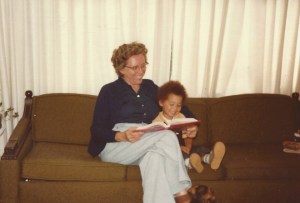
Grandma and Sreejit2
My mother with Sreejit in 1977

In 1992, within days of returning from a visit to Amma’s ashram in southern India, I received a phone call from one of my brothers saying that my mother was in a coma and near death. Every time the coma lifted, however, she would call for me. This was a surprise as she had instructed me years before that when she reached the end of her life, I was not to come to the hospital, nor was I to attend her funeral. My father had disowned me in 1971 when I married a black man and had not spoken to me since. My mother gave me those instructions because she knew my presence would upset my father.

Now her death was imminent and she was calling for me. When I arrived at her bedside a day or two later, my mother wept with joy and relief.  During the next week, I visited her daily at times when my father would not be present. I knew that if he found I had been there, he would refuse to visit her again.

I wondered what I could do to help my mother’s passing.  I felt drawn to buy her a cassette player and two tapes, Alleluia and Om Namah Shivaya, both by Robert Gass and the Wings of Song. [There are many meanings for Om Namah Shivaya. The translation I like includes three of the meanings: “I bow to the God within me,” “I bow to the universal God,”and “I bow to the aspect of God that is Shiva.”]  When I played Alleluia for my mother, she began to cry.  When I played the Om Namah Shivaya  tape her immediate response was, “I have heard that before.” I knew enough about my mother and her life to think it was highly unlikely that she had heard that song before. I sensed that Amma was nearby, helping prepare my mother for her journey Home.

I felt very grateful that these events were happening during a time I felt filled with Amma’s love. I also sensed that my recent vision to her Indian ashram allowed me to be more open to the direction of Spirit than I might be otherwise.

My mother died a month later, after I had returned to Seattle. When I attended her funeral, my brothers’ invitation having overpowered my father’s disapproval, I was told that my mother had listened to the Om Namah Shivaya tape constantly from the time I gave it to her until her death. The nurses would wheel her into the atrium of the hospice with the cassette player and headphones accompanying her. She and my brothers listed to the song together in her room. I was told that one of the nurses would sit with her, and together they would sing along with the tape. I was exceedingly grateful to have been able to participate in my mother’s dying process in that way.

Chai, Cindy, Bill, and Sreejit in the late 80's
Chaitanya, Bill’s wife, Bill, and Sreejit in the late 80’s

My brother Bill had been diagnosed with cancer five years earlier. After my mother died, his health began a rapid decline. I expected that he would die prior to the time Amma arrived in the U.S. for her yearly tour. (She conducts programs in North America in June and July of each year.) As the time for the tour came closer, it became obvious to me that he would pass while Amma was in our country.

That year I traveled to Vancouver, BC to attend the first of Amma’s North American programs.  Next came the Seattle retreat.  (In those days the retreat occurred before the public programs.) On the last day of the retreat, as I was sitting out in an open field listening to a tape, my son approached me and said that my brother had died. He put his arm around me and I cried.

I was aware of how Amma/Spirit/God had taken care of me once again. My brother had passed when I was at a retreat where I could be in Amma’s arms receiving the massive love she bestows. Most of my friends were present and available for support as well.

Later, when I made plane reservations to attend my brothers funeral, I felt even more cared for. Unbelievable as it might seem, my plane would return to Seattle at the same time Amma would be in the airport waiting for the plane that she would take to continue her tour. I was able to walk off of my plane and moments later, once again be in her arms.

The third example happened in January 1999. I was in Amma’s ashram in Amritapuri, India when I received a phone call that my father had unexpectedly died. Once again, I was able to go directly to Amma after having received the news.  When I had attended my mother and brother’s funerals, my father had been unwilling to speak to me. In both instances, he had left immediately after the services to avoid any possible contact. Clearly, he would not have wanted me at his funeral, so leaving India was unnecessary. I felt grateful to be in a place where I could have Amma’s support and the support of many friends as I grieved the loss of the fantasy that he would eventually be willing to engage with me. I was in awe that once again I had been with her when a member of my family died.

10174936_10152034328048302_99397650_n

Photo Credit: Amma’s Facebook Page

So frequently the painful life events I have experienced since I met Amma have occurred just before, during or immediately after I have spent time with her. Having her physical or spiritual presence during those times has increased my faith, allowing me to trust at ever deeper levels that she will be there for me when I need her. As my faith has increased, my ability to surrender to the will of guru and Spirit has grown.

I love this adventure called life. I so appreciate the love and support that is available within a guru-disciple relationship and I am exceedingly grateful that this is the spiritual path I have chosen.

Adapted from article written for The New Times: May 1999


Amma is presently in North America on her 2016 Summer Tour.  Her schedule can be found at: http://amma.org/meeting-amma/north-america


As a Bee Seeks Nectar


As a bee seeks nectar
from all kinds of flowers,
seek teachings everywhere.

Like a deer that finds
a quiet place to graze
seek seclusion to digest
all that you have gathered.

Like a madman
beyond all limits,
go wherever you please,
and live like a lion
completely free from all fear.

Dzogchen tantra


Survivor’s Guilt

As a psychotherapist, I often encounter clients who feel guilty for surviving abuse or other tragedies.  On the news this morning, I heard Patience Carter, a 20 year old who survived the Orlando massacre, read her poem “The Guilt of Being Alive is Heavy.” I will say no more. I believe her words eloquently reflect a message that is important for us to hear. My heart goes out to her and to survivors everywhere.

The Daily Prompt: Struggle

NagariAlphabet

When I think of the word “Struggle,” my attempt to learn to read, write and speak Sanskrit is what comes to mind. For the last four and a half years it has been a major focus in my life, one I feel very passionate about.

The classes I have been taking recently focus on immersion. The goal is to have no English spoken in the class, although some allowances are made. Almost all of the students are Indian and many of the words in their native languages are rooted in Sanskrit. Therefore, the Indian students tend to learn the Sanskrit vocabulary very fast. Even when they don’t know a word they may have a good idea of what it means.

When I start with a class of new Sanskrit students, I feel on reasonably even ground with them, or even ahead. As I proceed in the course, however, they quickly pull ahead of me and by the end I am not understanding much of the conversation that occurs. Eventually, I hit a brick wall where I feel hopeless.

I am in that place again. I have tried retaking the class and have learned a lot by doing that, but I don’t think I can meet my goal by continuing to retake it. I’m going to take a break from that kind of learning and do some independent study focusing on reading Sanskrit; listening to Sanskrit video conversations; speaking with and writing to friends who are also learning Sanskrit; and on building vocabulary. I intend to stay committed to my goal and hope to come back to a class format sometime in the future.

Another struggle I have been dealing with this year has been lower back problems. My life has been very different since that started in mid-February. Now that the problem is resolving, I can see that it would have been a perfect time for me to focus on my Sanskrit and on doing the spiritual practices I neglect. I feel sad that I didn’t take advantage of the long hours of down time to do those things but at the same time I know I can learn from the experience rather than live in regret. I can have compassion for the choices I made this time, and make different ones in the  future.

I appreciate today’s Daily Prompt. It was helpful for me to examine the struggles in my life.