These sunrise photos were taken last week. Today’s sunrise will look very different because it is foggy!
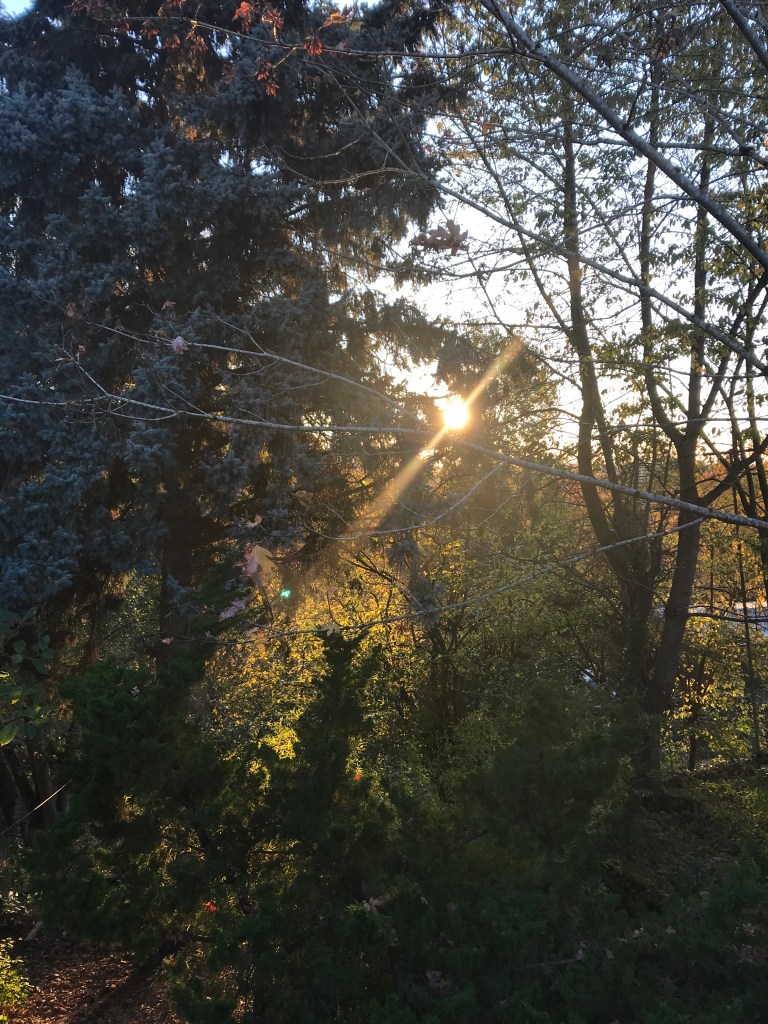

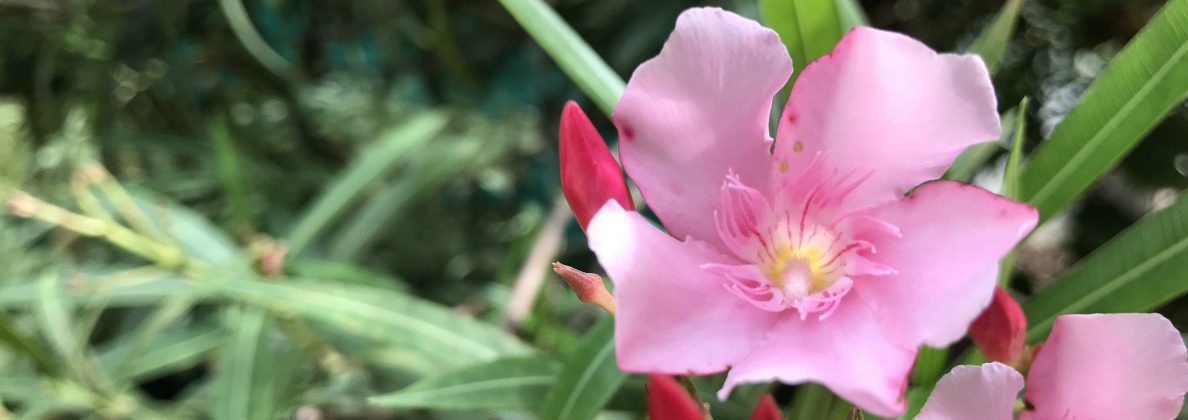
These sunrise photos were taken last week. Today’s sunrise will look very different because it is foggy!
This quarter, we have students from the University of Washington’s Service-Learning program (Carlson Center) helping on our site. The Carlson Center’s service opportunities are tied to academic courses. Two of the students are from an introductory level course in the College of the Environment and four are from an English composition course that is focusing on social issues.
The service-learning students will work in our forest restoration site every week for seven weeks. Each session will last three hours.
Session 1: October 8
Our forest restoration project gives everyone who participates the opportunity to practice flexibility, especially the leaders. That was certainly true of the day the students came to our site for their first session.
In the week that led up to the first session, the weather forecast changed many times; in fact, sometimes it changed several times a day. (We can work in the rain, but we have to cancel if it is windy since many of the trees on the site are old and it is not unusual for branches to fall during wind storms. And we didn’t like the idea of the students’ first experience being in heavy rain.) Often the weather during our work parties is better than the forecast, so we hoped Mother Nature would support us in that way again.
On the day of the event, the weather changed even more often. An hour or two before the work party there was some lightning. (We wouldn’t work in lightning either.) As I was doing the final setup for the work party, the rain was pouring.
Shirley, who co-leads these sessions with me, and I had decided to hold the orientation in my house and to make it much more comprehensive than normal. When the students arrived, it was still raining, but the rain wasn’t as heavy as it had been earlier. After the orientation, Shirley and I took them on a tour of the site. By then, the rain had changed to a light shower. And, by the time we were ready to do the restoration work, the sun was shining!
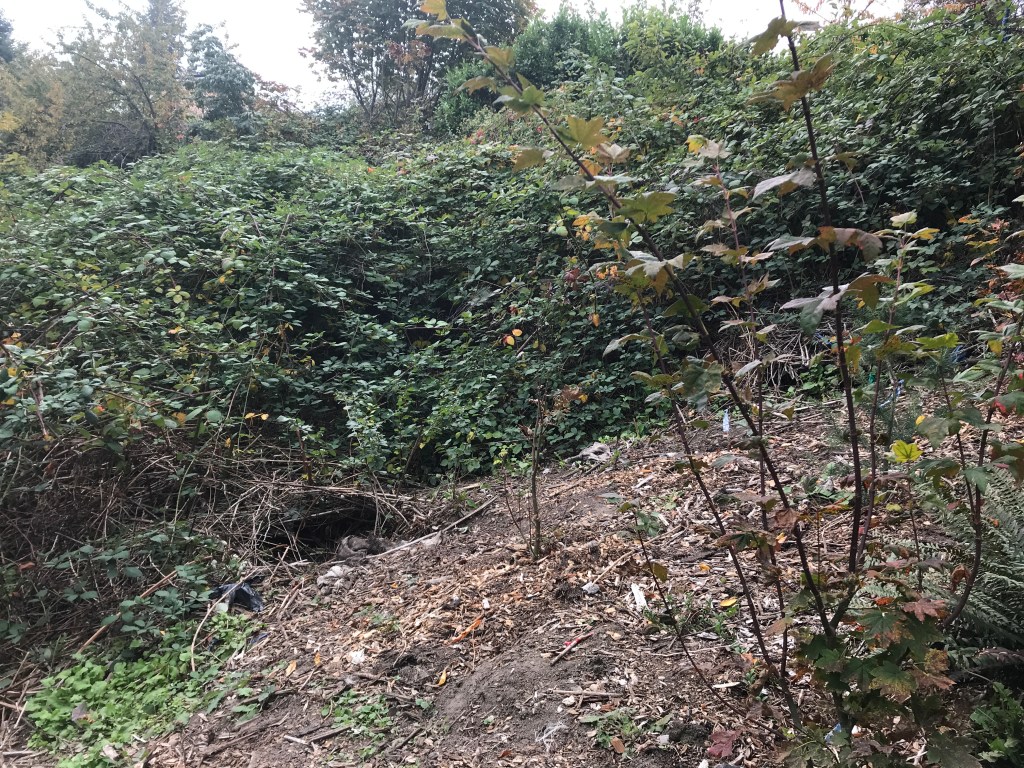
We had reviewed the plan for what work we would do during the first work party numerous times over the preceding week. As we took the tour of the site, we decided the five students and two leaders would break into two teams; we would cut back the blackberry vines that were shooting into the site from the blackberry barrier that goes along the southern border, separating our site from the neighbor’s land.
Click on any of the photo galleries below to enlarge the photos.
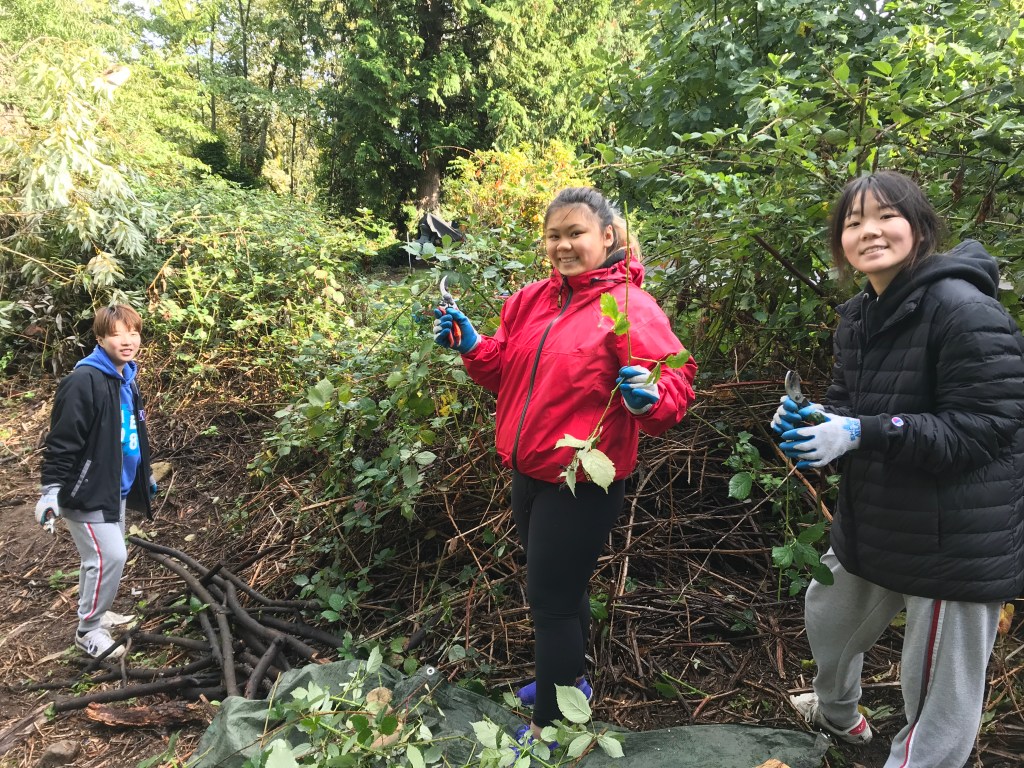
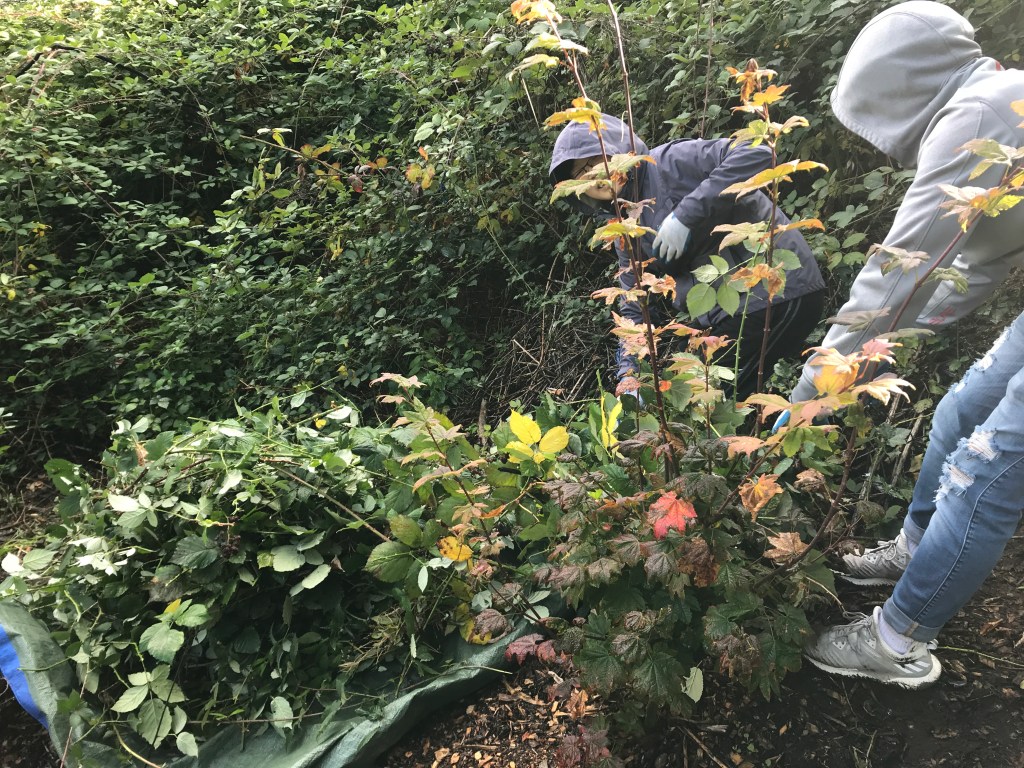
In the two photos above, you can see some of the many piles of blackberry vines that were removed during that first session. The cuttings were carried on tarps to drying racks in other parts of the site. In the photos below, you can see what two of the border areas looked like when we finished that day

Session 2: October 15
Six students attended the second service-learning session. Antje, one of our other team leaders, also participated. We worked together near the red twig dogwood area, an area that is very near wetlands. That land is full of horsetails, a native plant that is older than the dinosaurs. It also contained invasive bindwood, blackberry and ivy vines, as well as nightshade and other weeds. We removed the invasive vines and weeds, but left the horsetails alone.

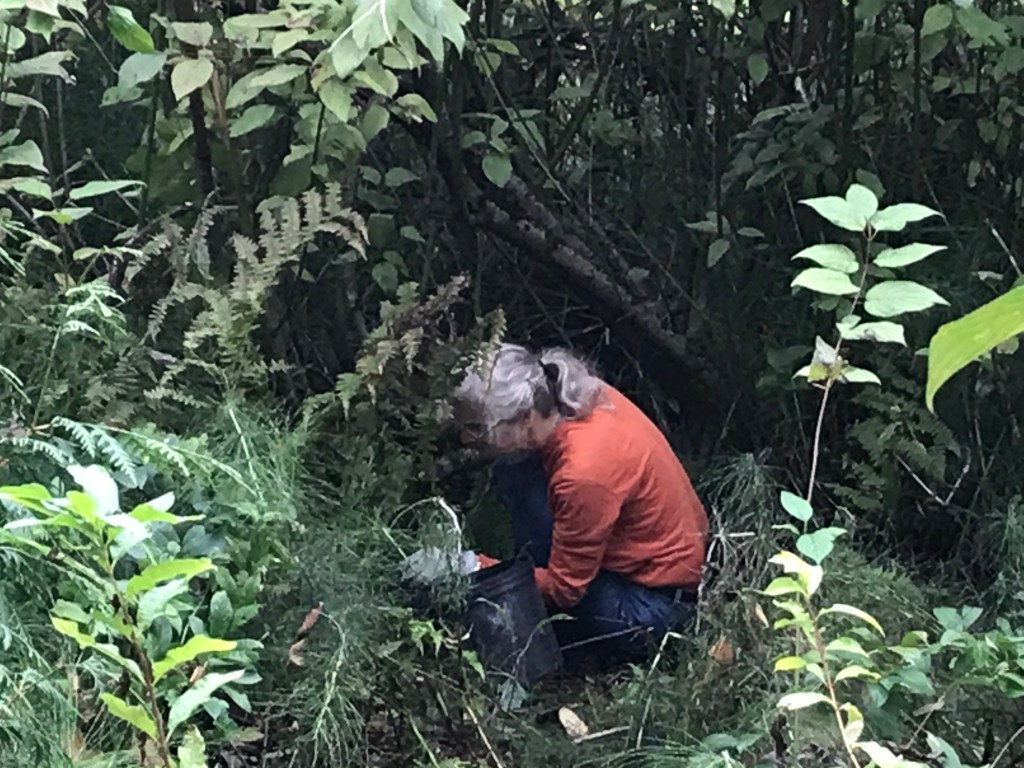


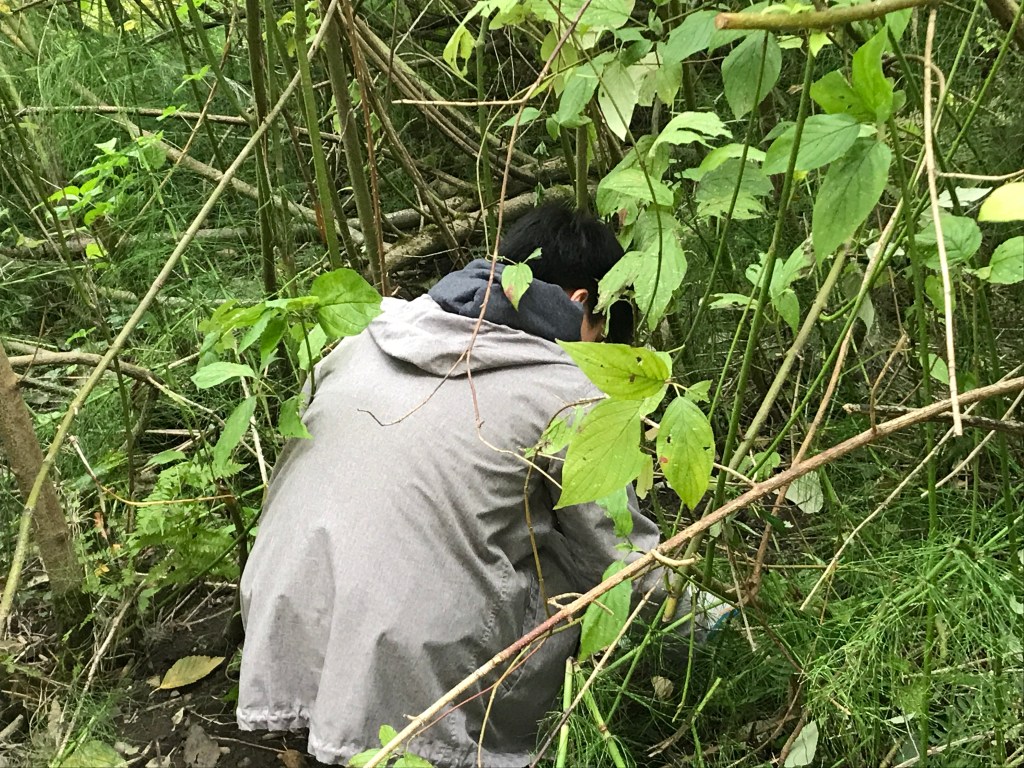
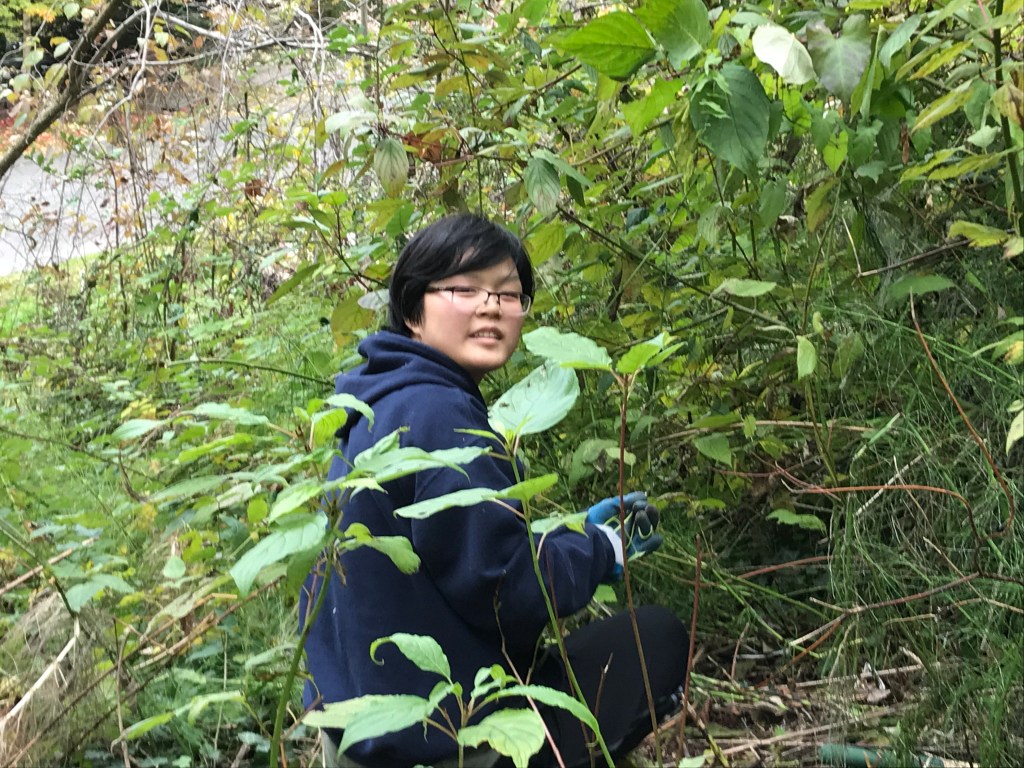
You can see before and after pictures of the area the students worked in that day below. The invasive vines are gone and the native plants are more visible.


After a break, the students removed a big pile of dried cuttings from another area, and took them to a different part of the site where they will break down even further. We will be able to plant shrubs in the space where the large pile of debris the students moved that day once stood.


Session 3: October 22
During this session, five students and the three leaders tackled an area that had been worked on twice during summer work parties. There was still plenty of clearing that needed to be done.

Dried blackberry canes and branches covered the ground, as well as live ivy, blackberry vines and other invasive plants. Under the dried debris, we found layers and layers of ivy vines. They criss-crossed so much that they seemed woven. It is possible that these layers represented 50 years of ivy growth. The students carried many loads of invasive vines to drying racks that day.

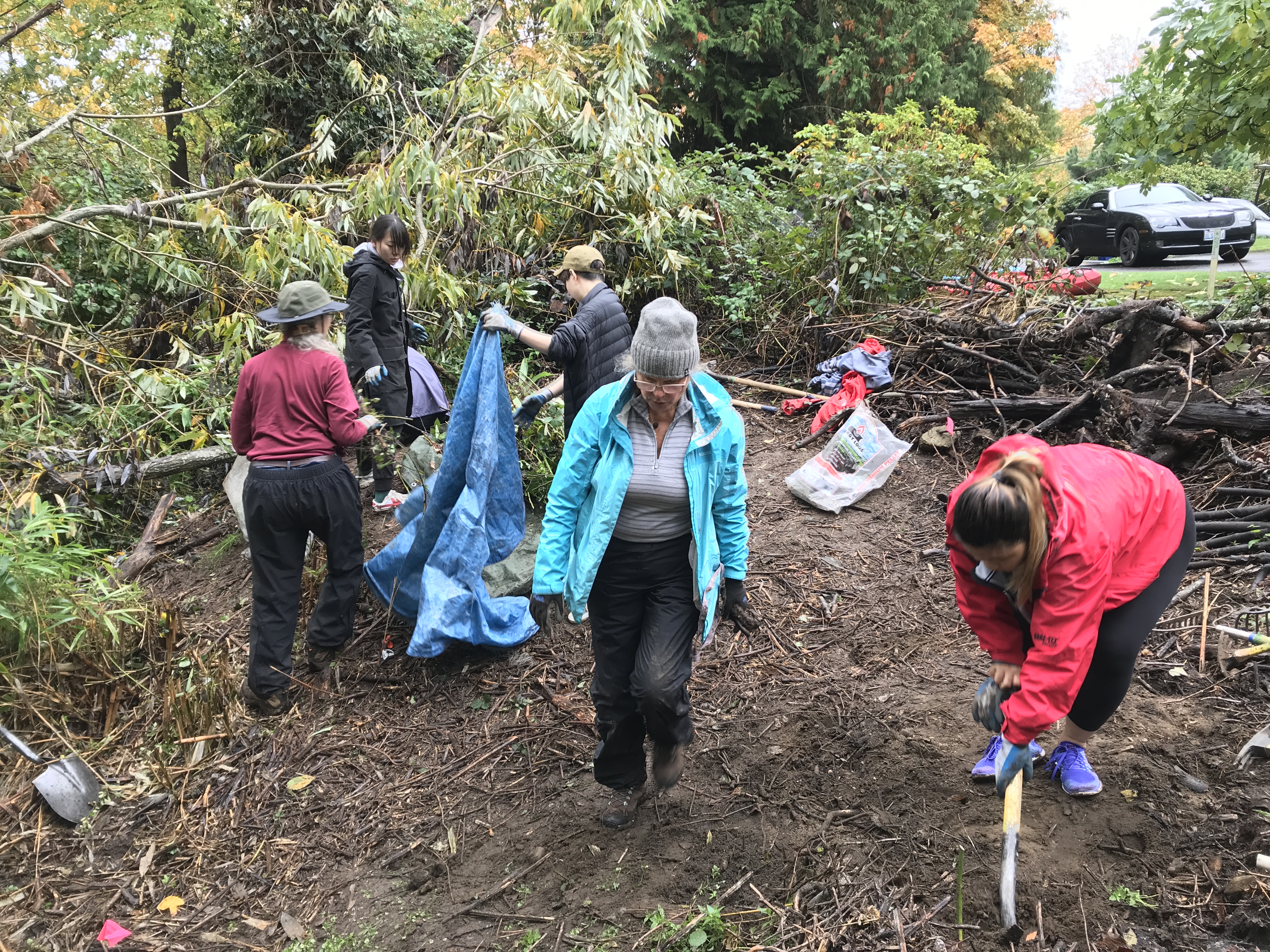

This is what the space looked like at the end of the session. It is another area where native trees and shrubs will be planted in November.

This group has accomplished so much during their first three service-learning sessions. I am always amazed by how much the land transforms during each work party.
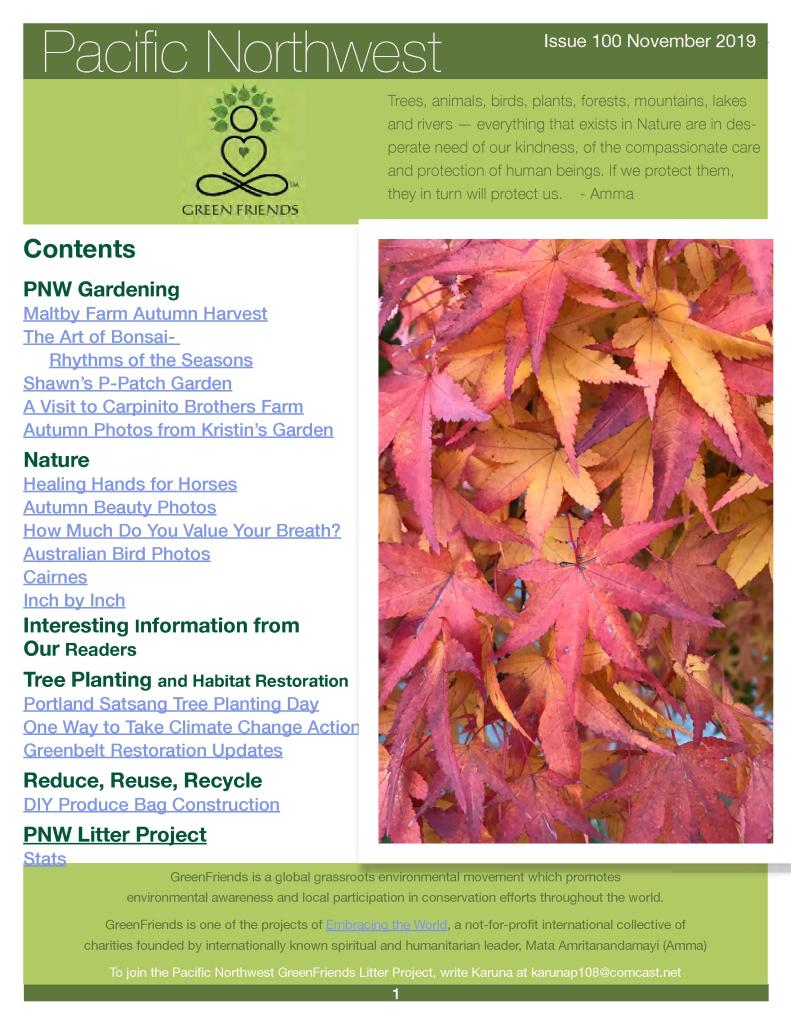
This is our 100th issue!
To download the newsletter, click on the photo.
Enjoy!
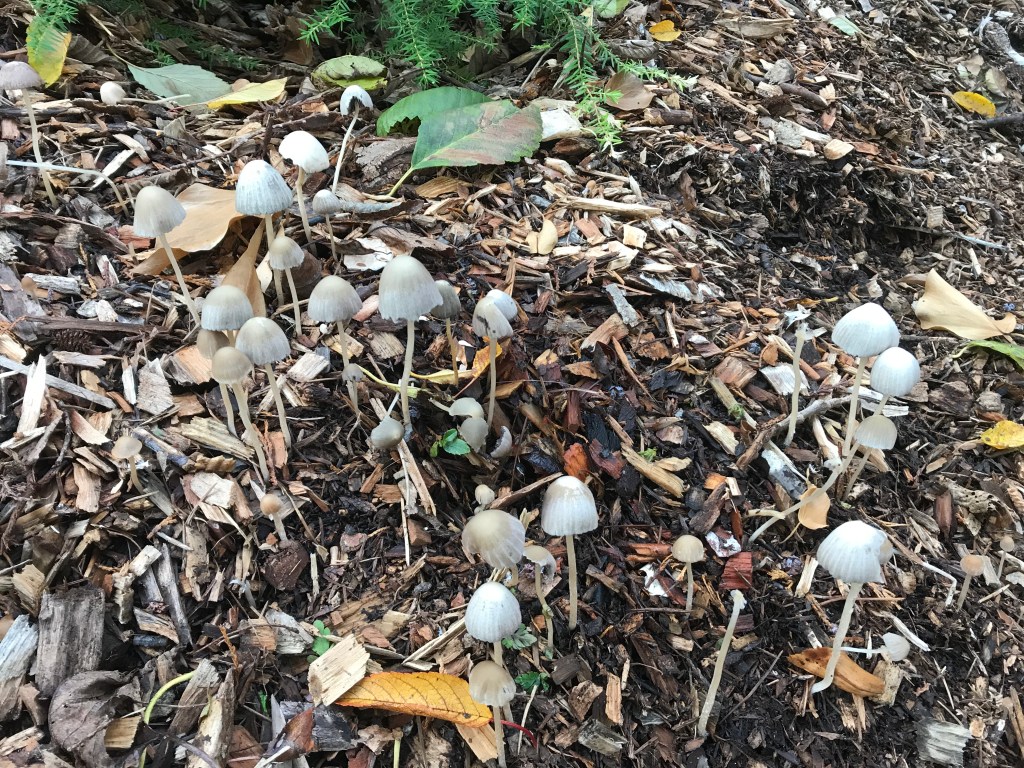
It is my understanding that the presence of mushrooms is an indication that soil is healthy. If that is the case, and I think it is, our restoration site has VERY healthy soil. There are so many mushrooms here now, and they come in many varieties. I will take pictures of more of them, but for now I will share two photos I took several days ago.


Service-Learning Students
The Carlson Center at the University of Washington coordinates the University’s service- learning programs. They describe service-learning this way:
Service-learning combines service in the community with structured preparation and reflection opportunities. Service opportunities are tied to academic coursework and address concerns that are identified and articulated by the community.
We had our first group of service-learning students during Spring Quarter 2019. This quarter, we have another group. The first time we had four students; this quarter we have six. Two of the students are taking ENVIR 100 Introduction to Environmental Studies, and four are taking ENGL 121D Composition Social Issues (Environment). These students are working with us three hours a week for seven weeks. They are interested and enthusiastic and have already made a significant contribution to the project.
Amazing Tree Growth
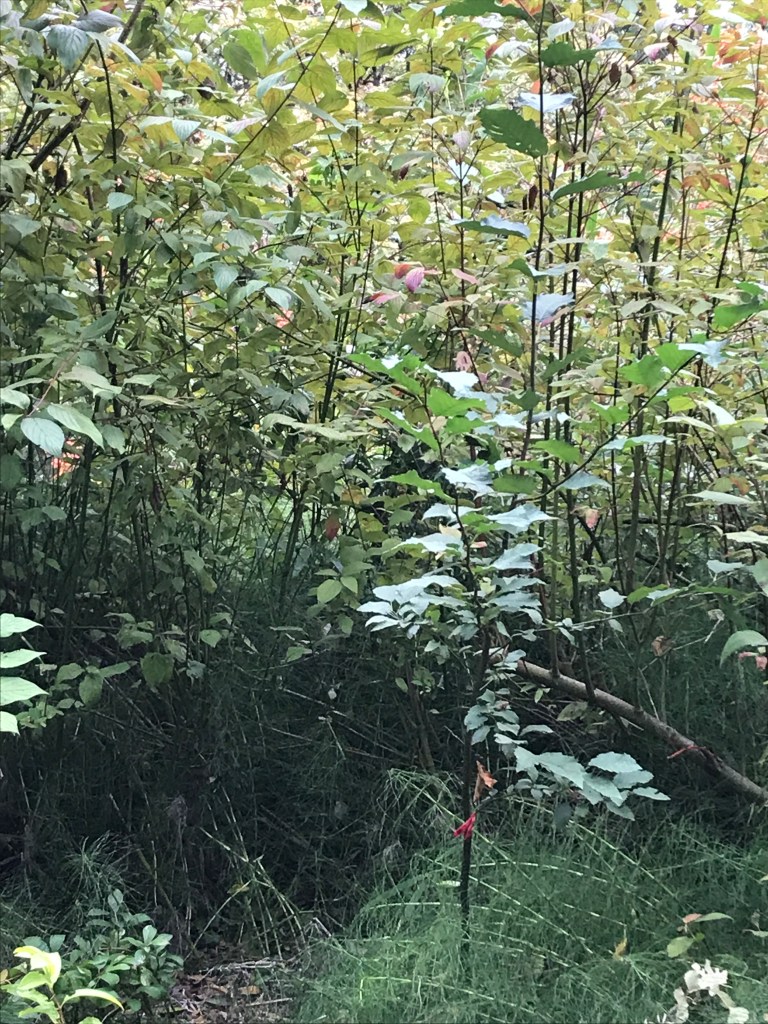
When we planted alder trees in November 2018, they were about four feet tall. Most of the alder trees are now around 5 ½ feet. This month we discovered that there was one alder that is 10 feet 4 inches and another that is 6 feet 5 inches. Both are near the red twig dogwood area, a moist part of the site. I think it is astounding growth for one year. How big will they be by this time next year?

Capstone Interns
We are in the process of picking two senior students from UW’s College of Environment to intern at our site. The Capstone’s Program is described this way:
Students majoring in Environmental Studies gain valuable professional experience and explore potential career paths through a 3-quarter Capstone Course Series which includes a quarter-long internship, study abroad experience or research with a faculty member. Students produce a written deliverable and tie this professional and hands-on component with their academic study.
The Capstone is usually centered around an internship with a community site partner. Potential Capstone sites range from local non-profits and government agencies to faculty research projects and private sector initiatives and the Capstone instructor organizes a “Meet and Greet” small career fair with site partners who have pre-selected projects for students to work on.
The interns will start their formal internship program in January 2020, but they will have the opportunity to start gathering required hours with us this quarter. They will become valuable members of our team.
I’ve been too busy to write on my blog even though I’ve had numerous ideas. This will be the first of my “catching up” posts!
***
My yard used to be covered with grass. I removed the grass from my front yard years ago. Over the last few years I’ve removed it from the back yard as well.
Several years ago, I noticed some white flowers emerging from the ground next to a planter box. I had no idea what it was but knew I had never planted it.
I don’t know when the flowers came up this year; I think it was during August. On September 4th they looked like this:
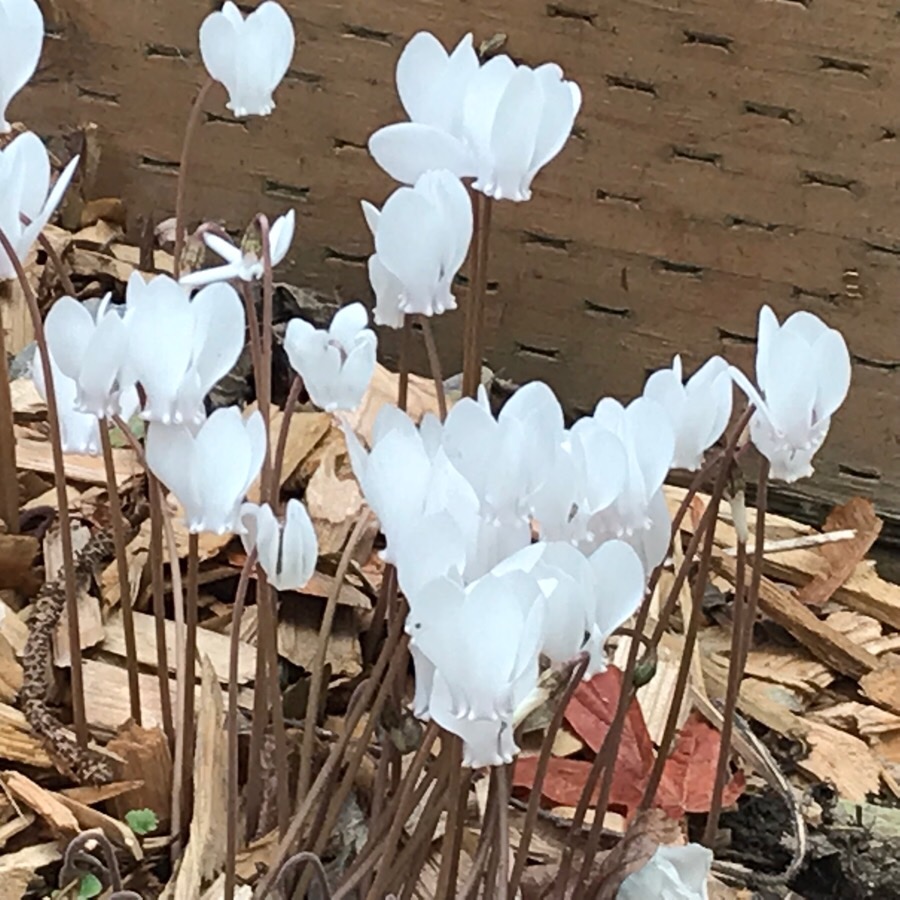
This time I used a plant identification app to find out what kind of flowers they were. They are called ivy-leaved cyclamen, sowbread, baby cyclamen and cyclamen hederifolium.
I continued to watch and photograph the plant. When I took a photo on October 5 there was much more foliage.

And on October 23 the foliage remained the same, but there were only a couple of flowers.

As I look at this close up now, I’m noticing the spirals. I wonder what they are. Could there be more flowers coming? It doesn’t seem likely but I will find out!
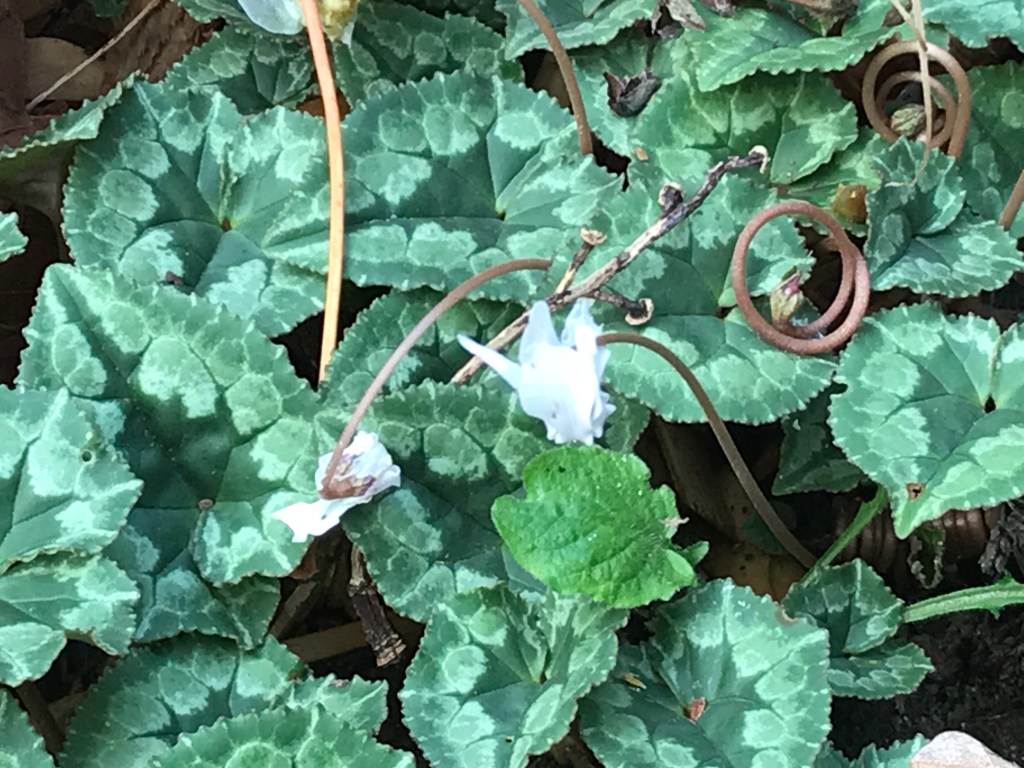
I have enjoyed watching this plant evolve as it goes through its life cycle. Since I don’t know exactly when the flowers were “born”, I will pay even more attention to it next year.
I saw this video on the news last night. I love it! And I’m glad it gives the history behind the story.
To download the newsletter, click on the photo.
Enjoy!
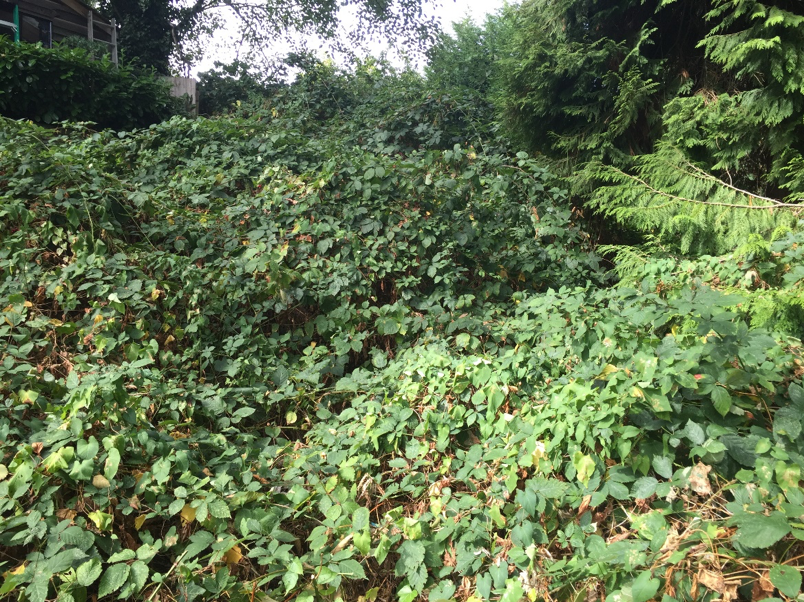
In September 2016, when GreenFriends members started their forest restoration work in this Greenbelt site on Beacon Hill in Seattle, most of the land looked like the two photos below.

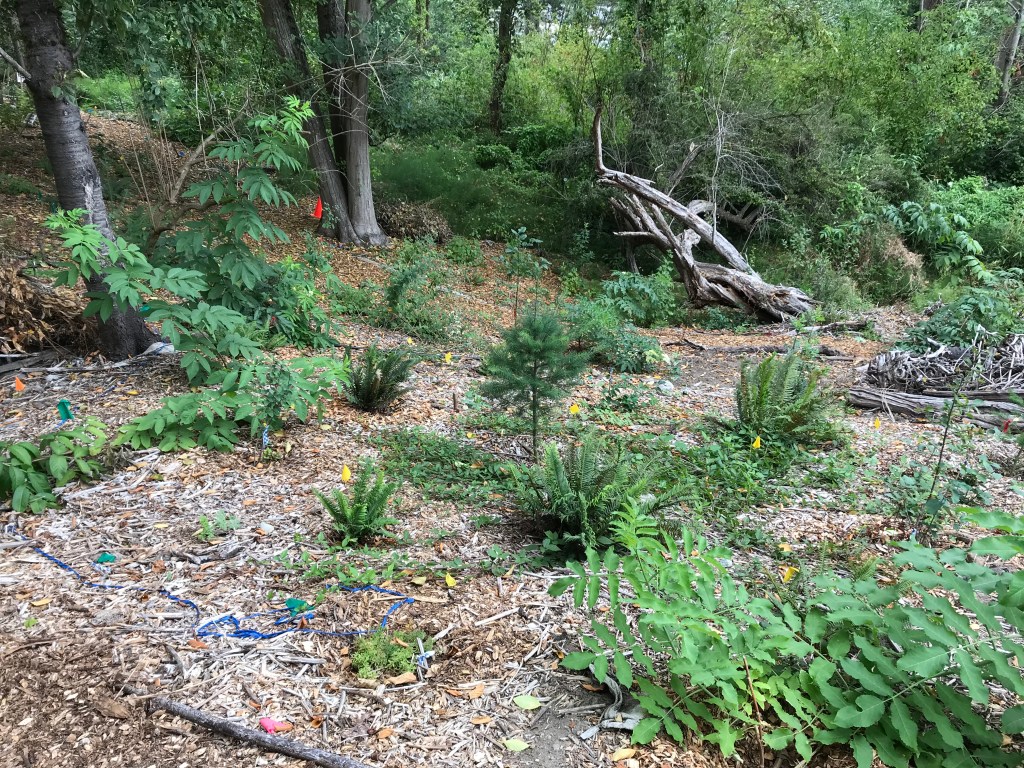
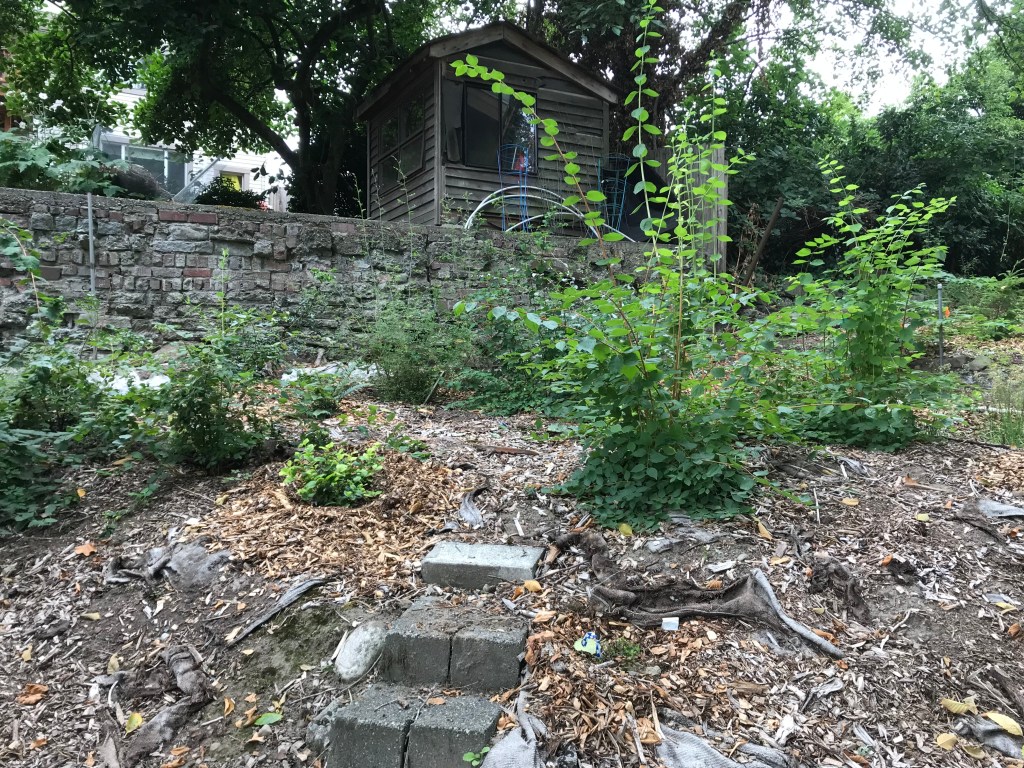
We have now planted trees, shrubs and ground covers in at least 20 areas on the site. The next four photos show the transformation that has occurred between the time two of those areas were planted and August 2019.
Example 1:

Example 2:

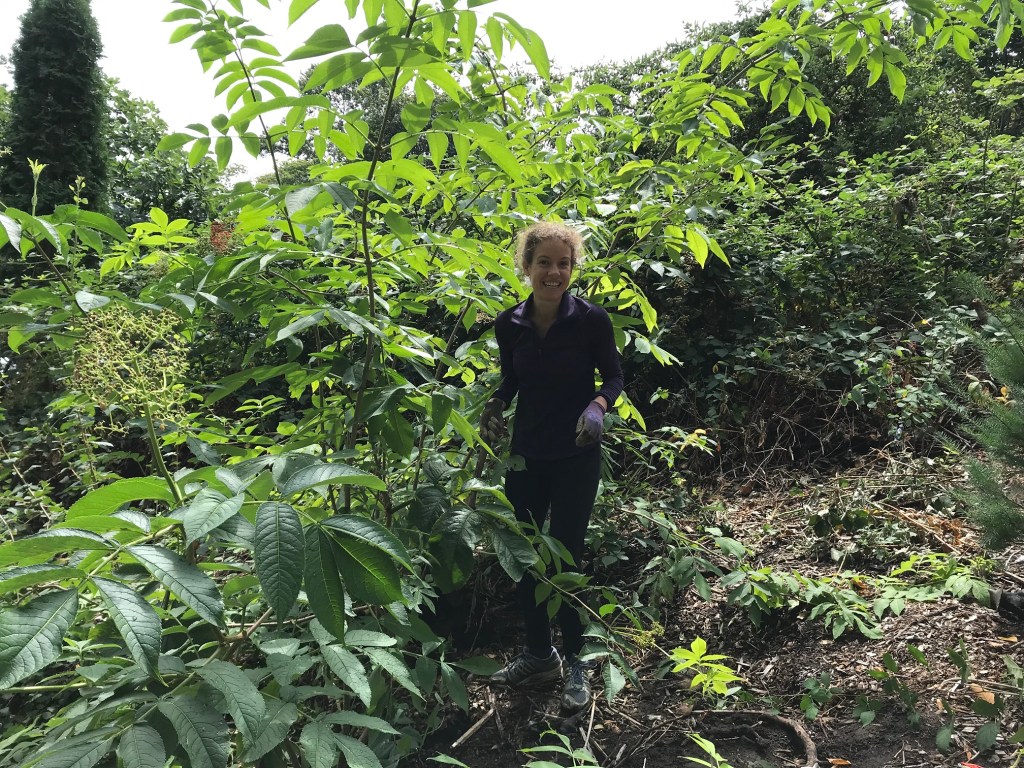
Many of the elderberry shrubs have become very big. We have one that is around 17 feet tall. The photo below is of the second biggest elderberry shrub.
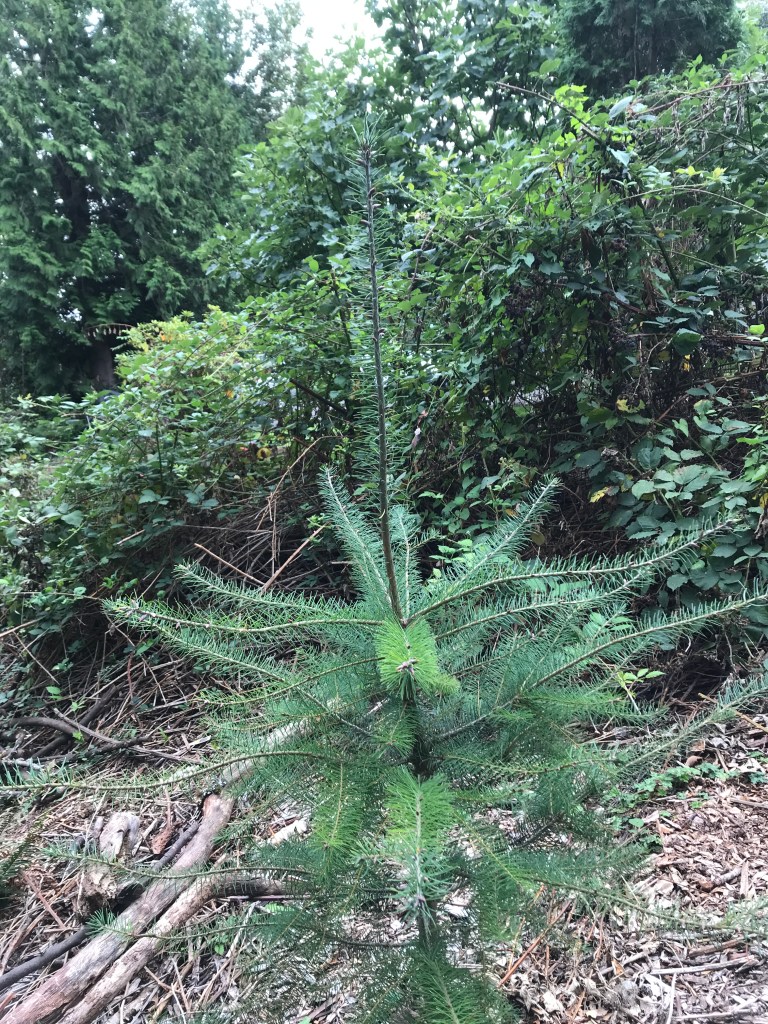
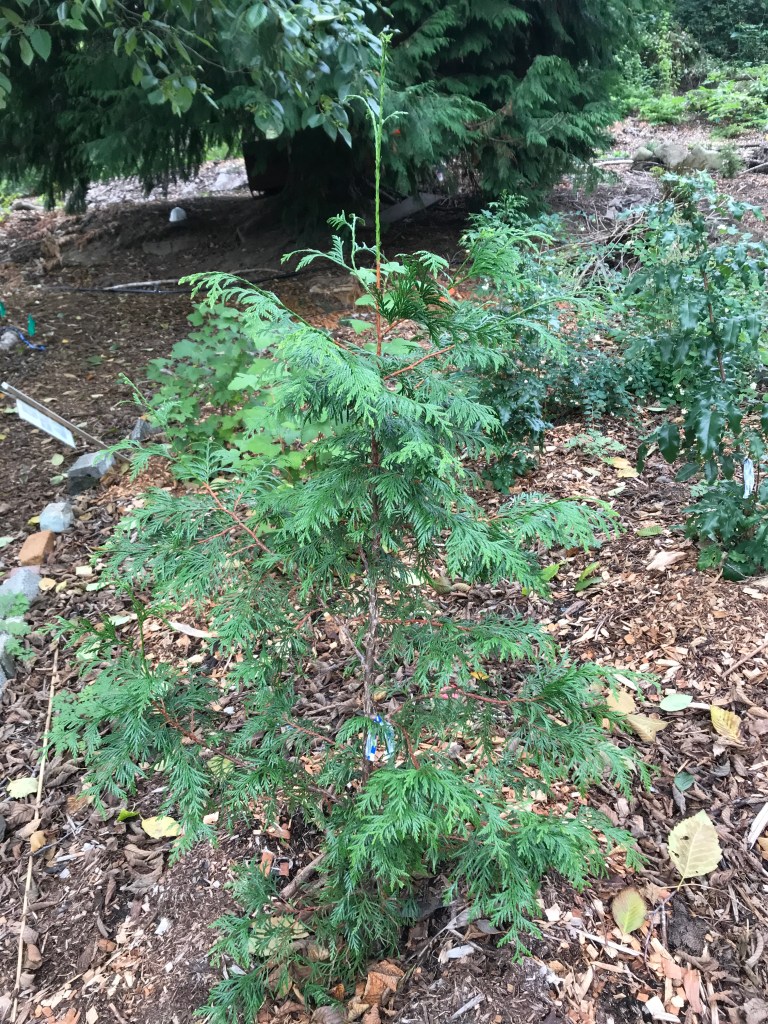
Three of the Douglas Firs and several of the Alders are more than 5’ tall. The Cedars are smaller, but they are so beautiful.
If you click on the photo gallery you will see an enlarged view of the photos.

The transformation that has occurred on the site is remarkable and is thanks to Amma’s encouragement to serve Nature, the support of the Green Seattle Partnership staff, the effort of hundreds of volunteers, and the blessings of Mother Nature.
On September 4, I wrote a post saying how much I was enjoying watching America’s Got Talent this season. In that post, I shared videos of the three people or groups that were my favorites during the first of the semi-finals programs. Those three had also been among my favorites throughout the season. I was very happy when I discovered that they all made it into the finals.
The second semi-finals program was last Tuesday. The videos below were my favorite performances that night. Like the previous week, the ones I chose had been among my favorites throughout the season.
I was happy when two of my favorites that night made it into the finals, but disappointed that Luke wasn’t chosen. Everyone who moved on to the finals was excellent though, so I can’t fault the decision.
Tonight is the finals program. The Unbeatables have been the favorite of my favorites since the first time I saw them, so I’m hoping they will win. At the same time, I wish there was a way for everyone to win, because they all deserve it.
The Art and Craft of Blogging
A collection of discussions on the environmental issues
“The fool doth think he is wise, but the wise man knows himself to be a fool.” “Love all, trust a few, do wrong to none.” “Love looks not with the eyes, but with the mind, And therefore is winged Cupid painted blind.”-William Shakespeare
...moments of unexpected clarity
Home of Lukas Kondraciuk Photography
Wellness, Support and Mindset
Thoughts on Creativity & Deeper Things
A Blog by Novella Carpenter
Ramblings of an Irish ecologist and gardener
Teaching the art of composition for photography.
Blog from SathyaSaiMemories ~ stories of love in action and the benefits of giving
There are 11,507 stories in Haddonfield; this is one of them.
Perennial gardening and more from the Green Mountains of Vermont
Whatever it will be...
Welcome to my little slice of the blogosphere
 Living, Learning and Letting Go