One Step at a Time

Snowberry fruit

In April, my neighbor John and I started doing some clearing of invasive plants, mainly ivy and blackberry vines, in the Greenbelt site that is to the north of ours. Members of Earth Corps had cleared parts of that site 10-15 years ago. They had also planted evergreen trees, native shrubs and ground covers. I know that Susan, who like me is a Green Seattle Partnership Forest Steward worked in that area with some elementary school students several years ago, but for the most part it has gone wild. I’ve been eager to delve into removing the invasive plants from that land for some time, but know that clearing and maintaining our main site needs to stay the priority for our work parties and for work John and/or I did on our own.

A few weeks ago, I decided to spend two hours on two different days working along 25th Avenue S north of the Hanford Stairs, which is on the west border of the Greenbelt site that has been calling me. Once the area along the street was cleared, I/we would clear the land along the Hanford Stairs and eventually work deeper in the forest. We could work on this project from time to time and still keep our main Greenbelt site our top priority.

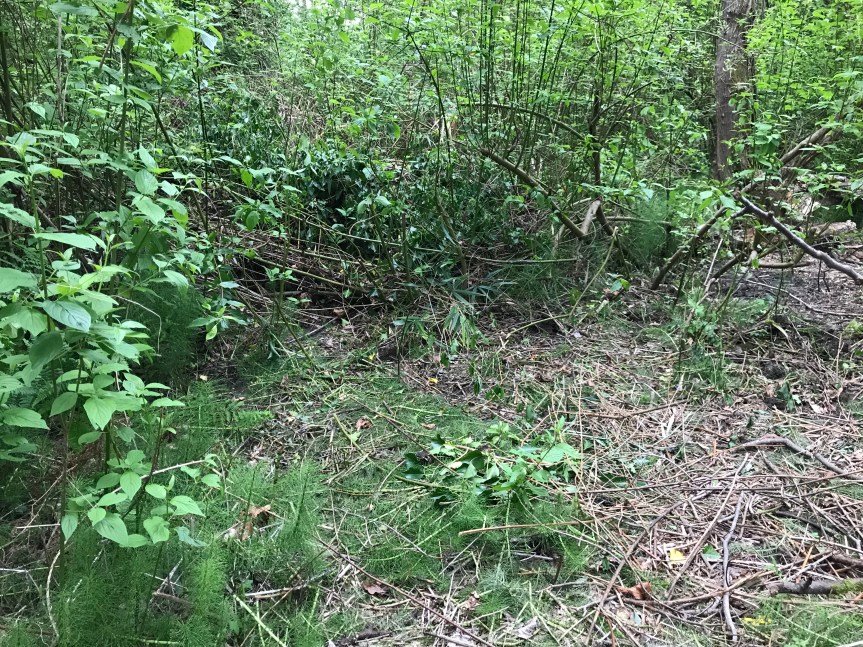
The small area I decided to tackle that day was dense with snowberry and Indian plum shrubs, a maple tree and numerous evergreen trees. Blackberry vines ran through it all. The shrubs were so close together that it was impossible to walk through them. Experiencing the density of the native shrubs was a good reminder that almost everything we are planting in the other site will get big and I need to keep that in mind when making planting decisions.

I couldn’t figure out how to reach the blackberry roots so that I could dig out the root balls. The best I could do was reach into the foliage and cut back the stalks.

The first picture below shows what the shrubs along the street looked like when I began working that day.

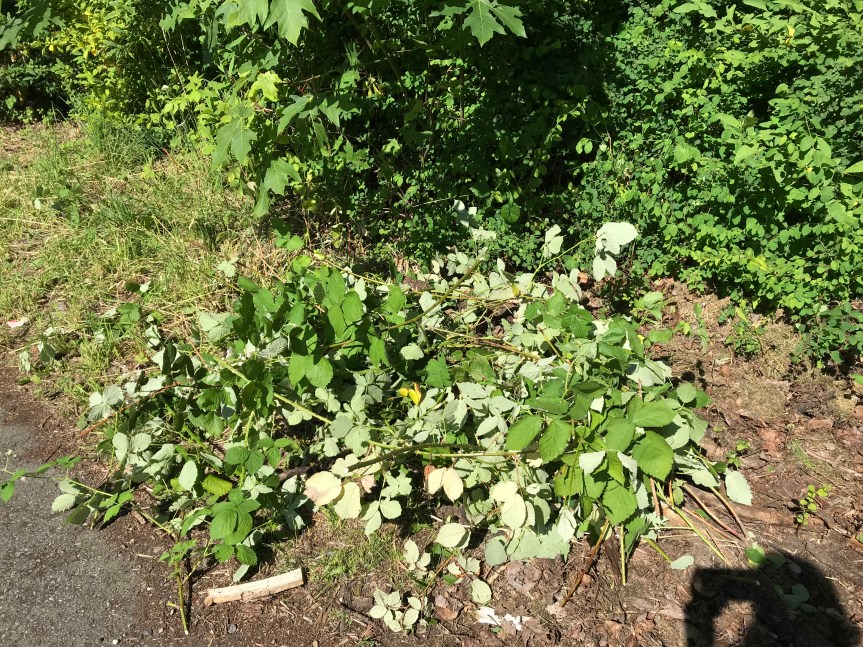
The next one is of the first pile of blackberry stalks I removed.  By the time I took that photograph, I had already partially cleared the ground to the right of the cut stalks. You can get a sense what the ground looked like when I started by looking to the left of the pile.
At one point, I noticed that the snowberry plants had many tiny pink blossoms on them.

A moment later, I saw a small purple fruit deep in the foliage. I realized it was the fruit of an Indian plum shrub. I enjoyed seeing what the plants looked like when they were mature. I haven’t noticed either the pink blossoms of a snowberry plant or the purple fruit of an Indian plum shrub on our site yet.

As I was preparing to stop my work on the second day, I heard lots of buzzing. When I took the time to investigate the source of the sound, I saw honey bees, bumble bees and mason bees flitting from one pink snowberry blossom to another. I loved seeing that wildlife has returned to this site and look forward to the plants in our site getting big enough to attract the bees too.

Once I had cleared the land in front of the shrubs, and cut back as many of the blackberry stalks as I could reach, I laid burlap bags on the ground and scattered wood chip mulch over them. The burlap and mulch will help reduce weed growth and hold in moisture.

This is what the section looked like when I stopped working on the second day.

The before and after photos below show the increased space that resulted from removing the blackberry stalks. I hope to learn how to get to and dig out the roots balls. I also need to find out if there are other things I should be doing to decrease the density of the shrubs.

At one point, I saw an evergreen tree covered by blackberry vines deep in the mass of shrubs. I tried to get to it from all sides but never found a way into the thicket that surrounded it. I look forward to being able to free that tree from the blackberries. Hopefully that will be in the near future.

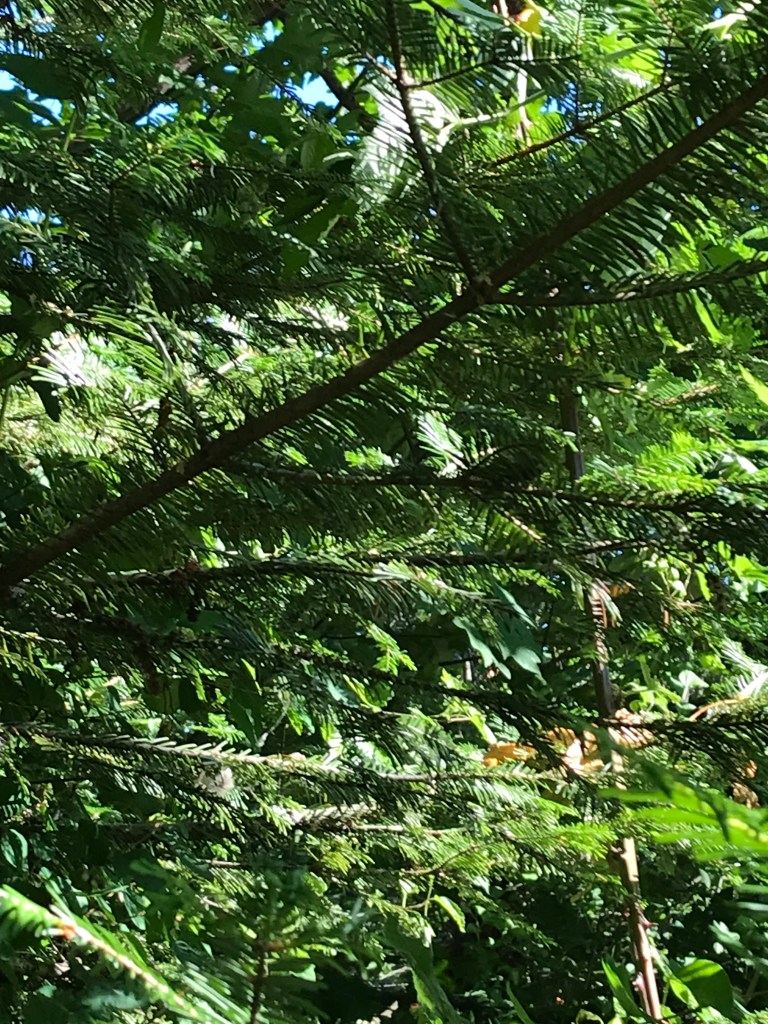
[I don’t think that particular tree can be seen in the following photo, but the photo may give you a sense of why I couldn’t get to it.]
As I was trying to find my way to the tree, I saw a shrub with beautiful white flowers. I thought it was stunning. I used my phone’s Plant Net app to see if I could find out what it type of plant it was. I was excited to discover it was an oceanspray shrub. In February we planted 10 oceanspray shrubs in our site. I loved having had a glimpse of what they will eventually look like.

The strip of land I worked on was only 15 to 20 feet long. So much more needs to be done even in this small section of the second Greenbelt site. Below are photos taken of an area adjacent to the one I described in this post. It is another 15 foot segment.

The strip along 25th Avenue S is 150-200 feet long. The whole site is 1.89 acres. I know it is important for me to focus on the moment rather than looking at the immensity of the whole. In other words, I will remember I need to move forward “One Step at a Time.”

Some Day a Mighty Oak?

In February we planted 10 bare root Gary Oak trees in the Greenbelt. I think only three of them are going to live, but those three are doing well. This afternoon, I took two photos of one of them. The white areas on the leaves are cotton-like fibers from nearby cottonwood trees.

It is hard to imagine that this little tree may someday become a mighty oak. But it is also hard to imagine that only two months ago there was only one tiny bud on the top of this tree; and that bud didn’t appear to have any life in it.. I wonder how tall the tree will be by the end of the summer.

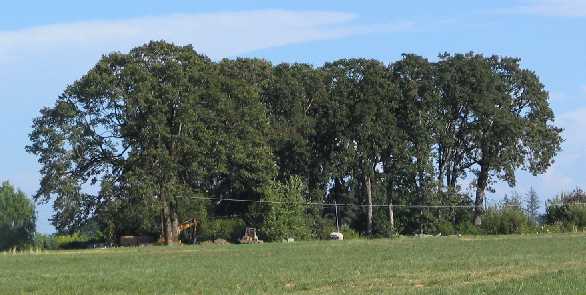
I was concerned that we planted the oaks too close together, but in writing this post I looked for a photo of a mature Garry Oak and found this! Maybe they were planted just where they were “supposed” to be planted, close to their friends.
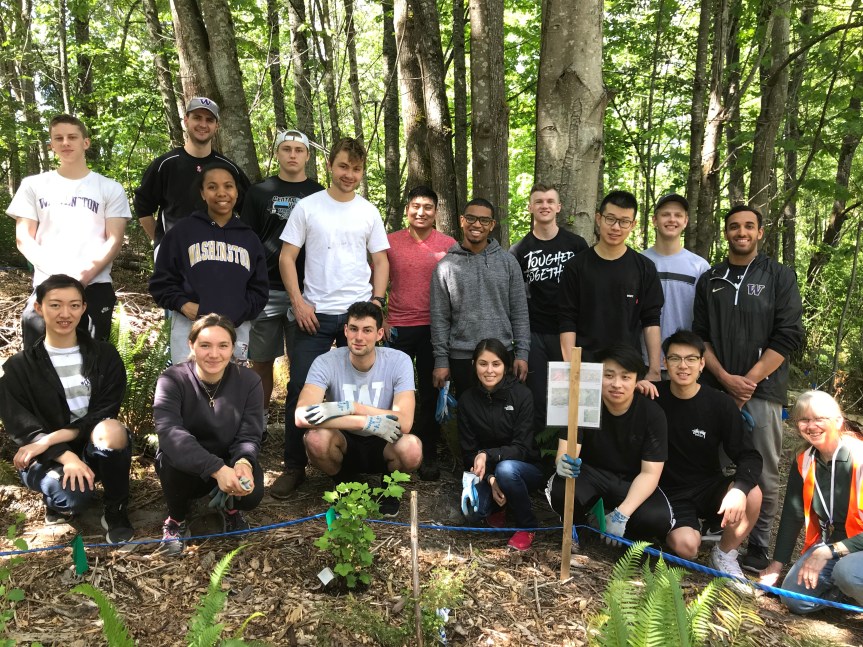
Photo Credit: Wikimedia

The original uploader was Llywrch at English Wikipedia.
[CC BY-SA 2.0 (https://creativecommons.org/licenses/by-sa/2.0)%5D, via Wikimedia Commons

I Will Pass It On!

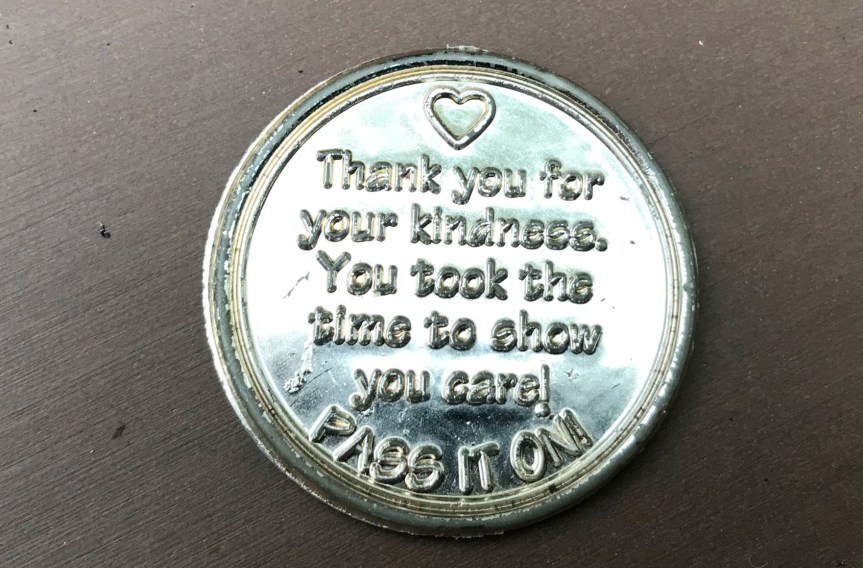
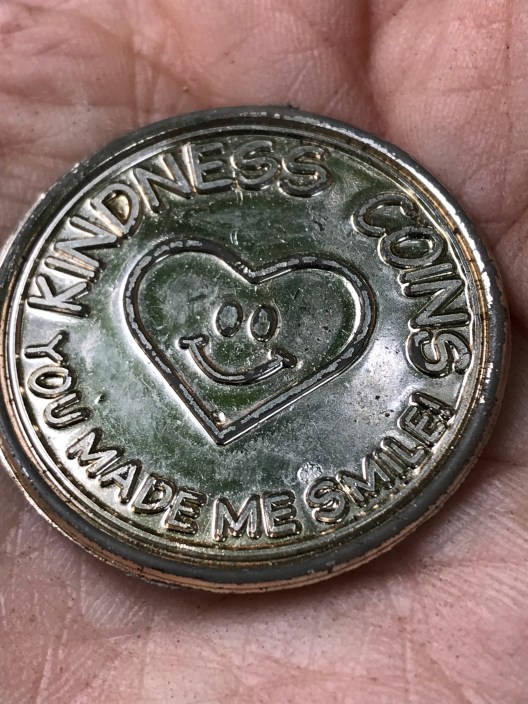
Friday morning, when I was pulling weeds in the Greenbelt, I noticed that there was a coin on the ground next to a sign I had placed under an Indian plum shrub during the spring of 2017.

I was curious what it was, so I picked it up. These messages were on the two sides of the coin:

Over the year, a few people have told me that they appreciated the signs but I have no idea who put the coin there or when they did it. I felt very grateful for the expression of gratitude and will definitely pass the coin on!

Wordless Wednesday

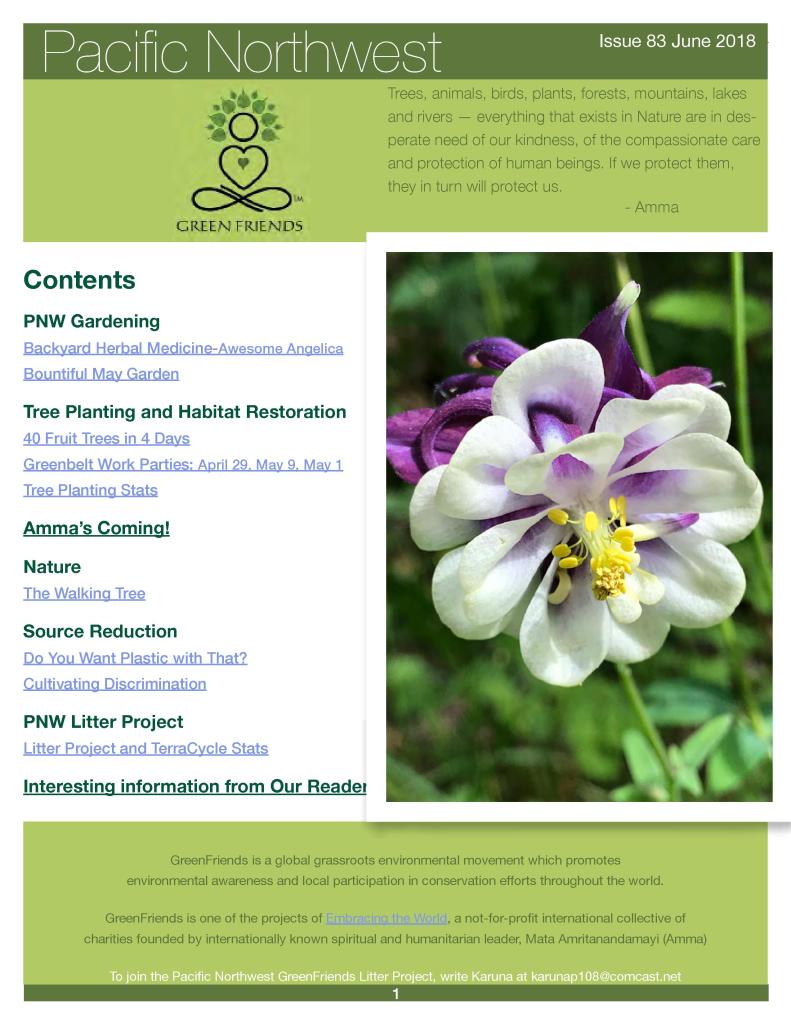
PNW GreenFriends Newsletter: June 2018

To download the latest PNW GreenFriends newsletter, click on the photo.
Enjoy!

Greenbelt Restoration Work Party: May 12, 2018

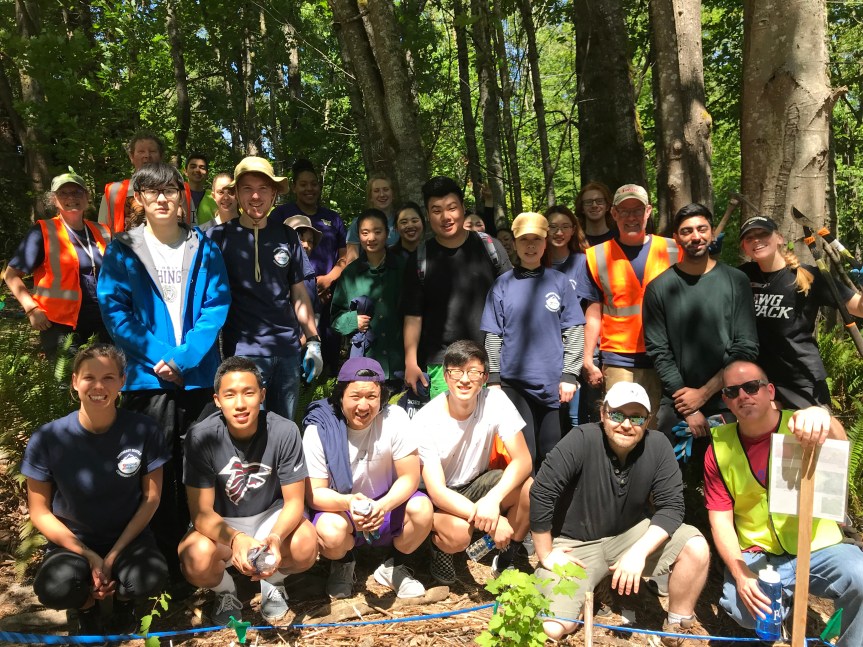
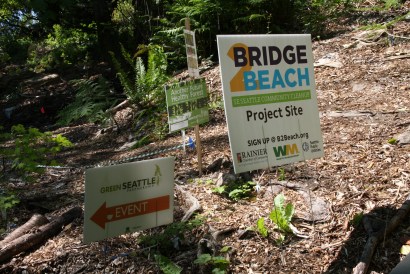
Our May 12th work party was a collaborative effort between GreenFriends, Green Seattle Partnership, Bridge2Beach, and neighbors. Thirty-two volunteers participated in the event. The five team leaders were GreenFriends members and/or neighbors. Additional GreenFriends members and neighbors helped with the sign in process and photography.

Twenty-five additional volunteers had pre-registered through the Bridge2Beach and Green Seattle Partnership event calendars. Twenty-one of them were from the U.W.’s Introduction to Environmental Science course. The UW students who had worked at our May 9 event could also be considered part of this collaboration since they did so much to prepare the planting sites for the work that was done on the 12th.

The volunteers arrived by car, bus and light rail. Once they had signed in they each picked up a pair of gloves and listened to an orientation. The various work opportunities were presented and then the participants divided into three teams.

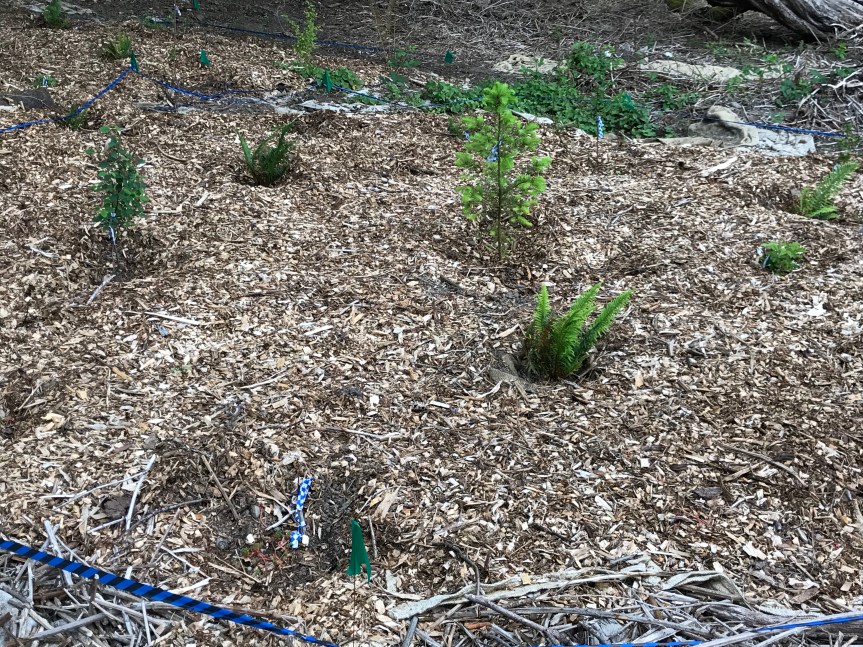
Sixteen of the volunteers and their team leaders formed a bucket brigade to carry wood chip mulch from the city street into the Greenbelt. Once on the site, the mulch was placed around approximately 300 plants which had been planted and mulched in October or November of last year. Since there is no water source on the site, the additional mulch will help hold in moisture during the dry summer months.

Click on any of the galleries to enlarge the photos.

The second team consisted of six volunteers and the team leader. They removed a dense cover of invasive ivy, blackberry vines, and holly from an area on the eastern border of the site. While there will be many other teams working in this area in the future, the transformation that occurred during this three hour work party was remarkable.

Before

After (These photos show only a small segment of the work this team did that day.)

The third team was comprised of the team leader and three other volunteers. They worked in an area that is north of the site we’ve been restoring. In three hours time, they cut survival rings around eleven trees!  In addition, they began to remove ivy and blackberry vines from the land in the vicinity of those trees. [Note: Ivy kills trees. We create a survival ring by removing ivy on a tree from ground level to shoulder height. That way the ivy that is higher up will die off without creating the risk of pulling dead or dying branches onto ourselves or other people.]

While I didn’t take a photo of this area prior to the work party, you can get a sense of what it was like by looking at the backgrounds of the photos below.

I had eagerly awaited this particular work party, and it was everything I had hoped for. We had finished mulching all of the planting areas and accomplished significant invasive plant removal in two new areas.

Next steps:

  1. Remove blackberries and other weeds from pathways all over the site.
  2. Remove weeds from all over the site as they pop up again.
  3. Take apart dried debris piles that are ready to be spread on the paths.
  4. Remove invasive plants from small areas on this site that have not been cleared before.
  5. Continue clearing the larger areas we worked on during this work party

Greenbelt Restoration Work Party: May 9, 2018

Many of the volunteers who help us with our GreenFriends Greenbelt restoration project are students from the University of Washington’s Introduction to Environmental Science course. We are having a big work party this coming Saturday, May 12th, but I decided to offer one mid-week as well. Susan Zeman, a Green Seattle Partnership Forest Steward in a park just south of ours agreed to help me lead the work party. Seventeen students participated. They were a delight to work with.

Susan led a work group in an area that is packed with invasive holly, blackberries and bamboo. It is also an area that has many red twig dogwood plants and a red flower from a rhododendron bush can be seen in the distance. Susan’s group was tasked with starting the process of removing the invasive plants so that the native plants can thrive.

While it will take many work parties to free the area from invasive plants, the group made a lot of progress during this three hour work party.

They were even able to dig out a huge clump of bamboo.

Towards the end of the work party, the students carried all of the invasive plants they had removed to the “Rack Zone”, a place on the site where the debris dries out on racks. By being kept off the ground, the vines and other invasives will not be able to re-root.

The second group of students removed blackberry vines, bindweed and other weeds that had started to sprout in all of the planting areas.

They also removed any wood chip mulch that was too close to the base of the plants. (When we spread wood chip mulch we take care to create a “donut hole” around each plant, keeping the wood chips from actually touching the plants. When it rains, the  chips tend to slide into that empty space.) These students cleaned weeds and chips from the donut holes around approximately 500 plants!

When they finished cleaning up the planting areas, they pulled out ivy, blackberry and bindweed vines that were in the paths and/or mixed in the ferns that are scattered throughout the site.

Every work party adds to the miracle that is occurring on this site. As I was writing this post, I came across a photo that was taken on March 15. It shows what one area looked like two weeks after trees, shrubs and ground covers were planted in it.

This is what that same area looks like today.


Next steps: On Saturday May 12 we will create a big bucket brigade for the purpose of spreading more wood chips around plants that were planted back in October and November of 2017. The work that the students did in this (May 9th) work party will make that process much easier. We will also be clearing ivy and other invasive plants from parts of the property that we have not worked on before.

Greenbelt Restoration Work Party: The DocuSign Employees Come Back!

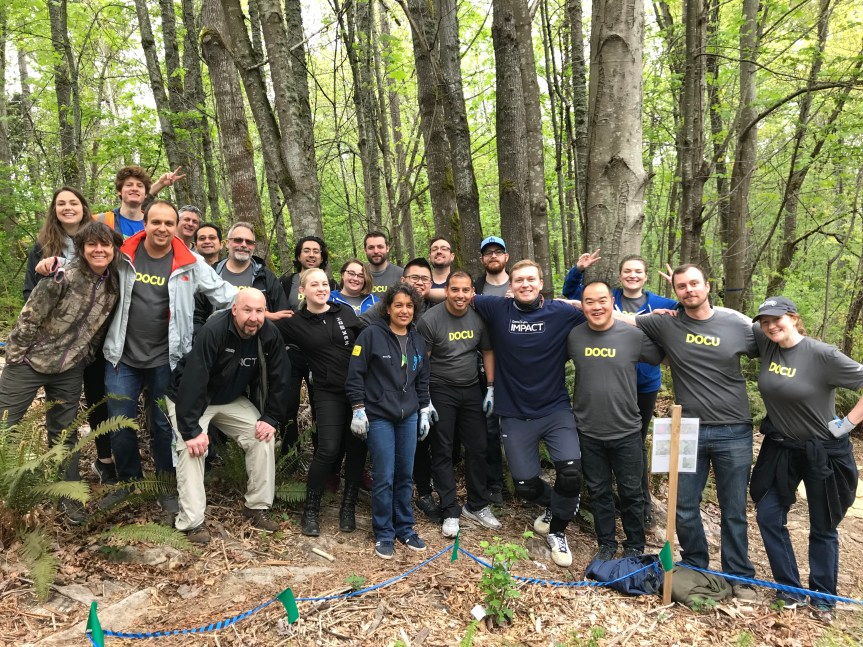
On November 15, 2017, a corporate group from DocuSign came to work at our restoration site. The event was held on their Global IMPACT Day. At that time, I looked up the philosophy behind Impact Day and found this statement:

We believe character is defined through action. With DocuSign IMPACT, we are committed to putting this character into action by harnessing the power of DocuSign’s people, products, and profits to make a difference in the global communities in which our employees and customers live and work.

During that work party, the 42 DocuSign volunteers planted 330 shrubs and ground covers.

Last Friday (April 27), DocuSign held another IMPACT day, and once again they chose our site to be one of the options. This time we had 20 volunteers from DocuSign and a student from the University of Washington’s Introduction to Environmental Science class.

Our staff consisted of  Claire (GreenFriends), Jeb (Forterra) and me (GreenFriends and Green Seattle Partnership.)

I had been working with Andrew and Maksim from DocuSign to plan the event. Maksim attended the work party as well. His help that day was invaluable.

The group signed in, picked up gloves, listened to a short orientation…


… divided into three teams and began to work.

Team 1 gathered the remaining wood chips from our mulch pile and placed them around each plant in 2 1/2 planting areas. The mulch will hold in moisture and make it more likely that the plants will survive the summer if there is little to no rain. (In March there was 15 cu. yd. of mulch in that pile. At that time, it was 6-8 feet high!)


Team 2 removed weeds. While all of this land had been cleared during the year, shoots of blackberry, ivy and bindweed vines were popping up throughout the site. After the work party, I discovered that the group had weeded more than 13,500 sq.ft. of land. The ground looked so clean and open.


(Note: Two of our planting areas contain lots of horsetails. Horsetails are native plants; ones that were here before there were dinosaurs. We leave most of the horesetails alone, removing them only when they are crowding out other native plants.)

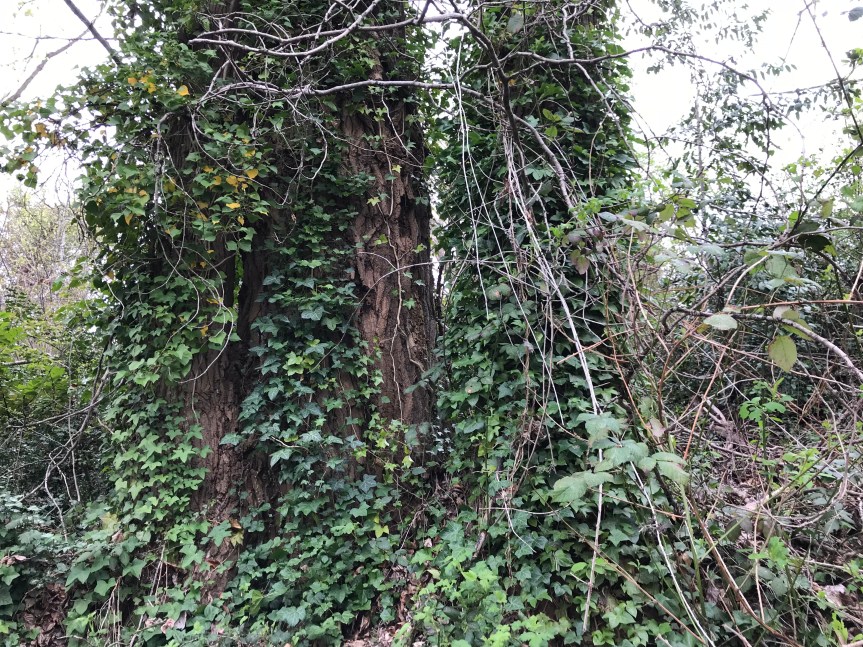
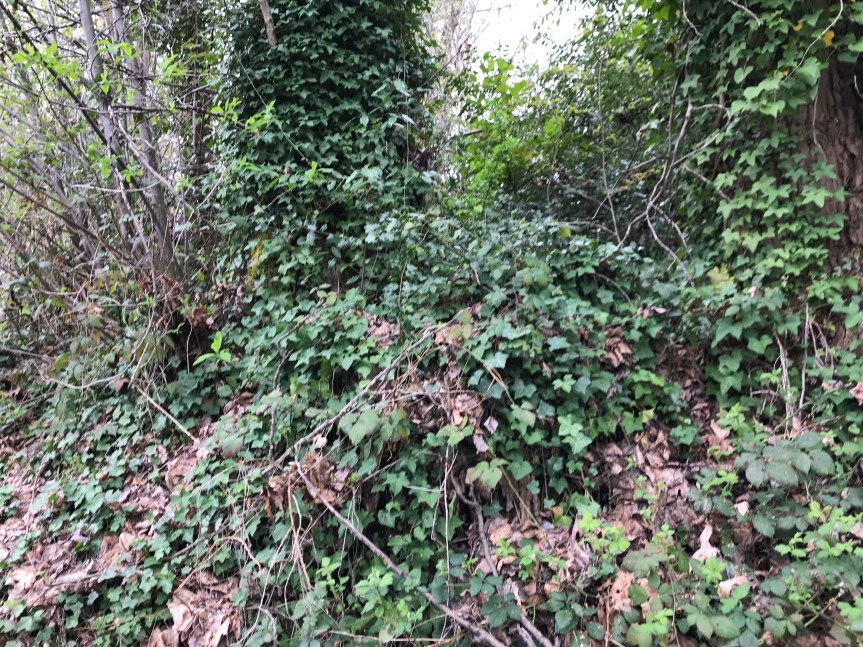
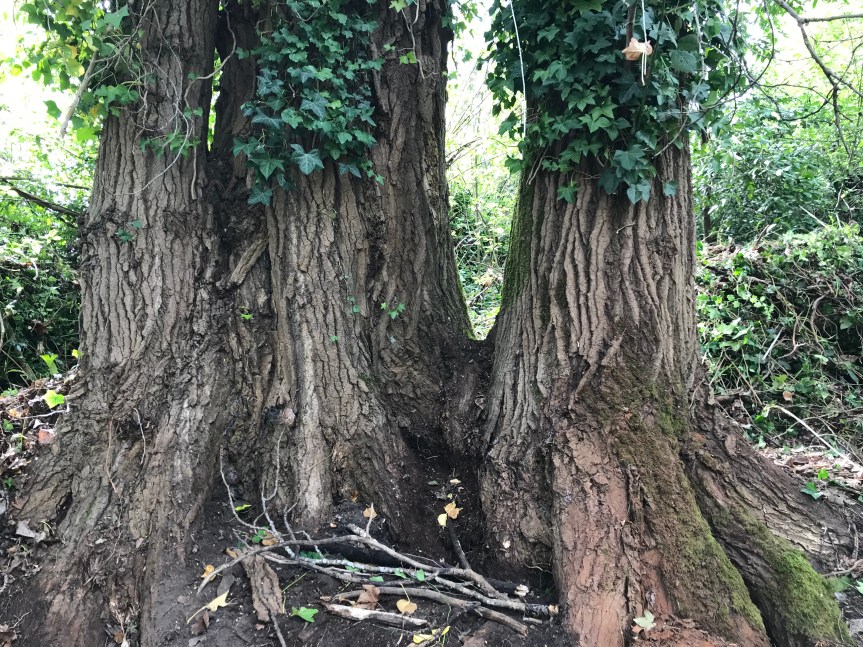
Team 3 worked on a part of the site that we hadn’t worked on before. It is located on the west side of Cheasty Boulevard. We chose to start in a place where there are some gigantic trees. They are located near the bottom of a steep slope. The team cleared blackberry vines and ivy from the ground and made survival rings around four big cottonwood trees. (Note: A survival ring is created by removing ivy from all sides of a tree starting at ground level and going to shoulder height. Cut off from their roots, the rest of the ivy in the tree will die off.)

The group created two drying racks behind the trees. All of the debris was placed on these racks in order to prevent the vines from reaching the ground and regrowing.


These “Before” and “After” photos show the dramatic changes the team made in this area.

Before

After

Once again, the DocuSign volunteers (and the UW student) did incredible work. I look forward to the possibility that they will return here in November for their next Global Impact Day!

PNW GreenFriends Newsletter: May 2018

To download the latest PNW GreenFriends newsletter, click on the photo.
Enjoy!