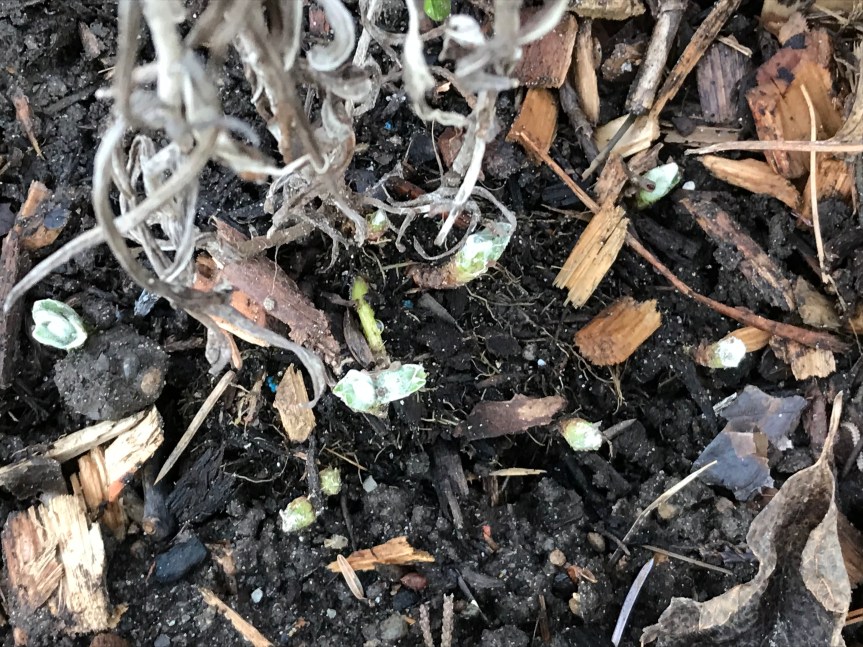
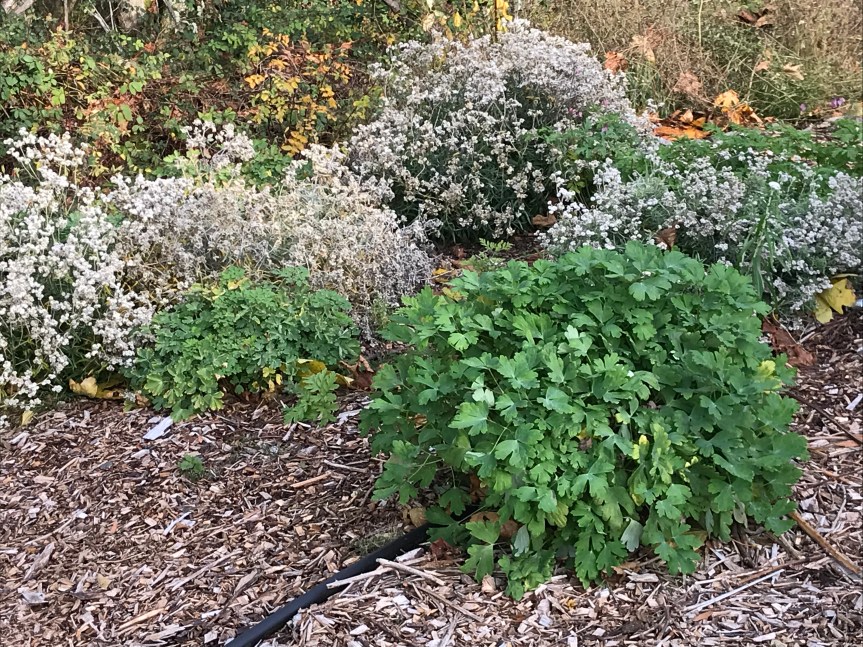
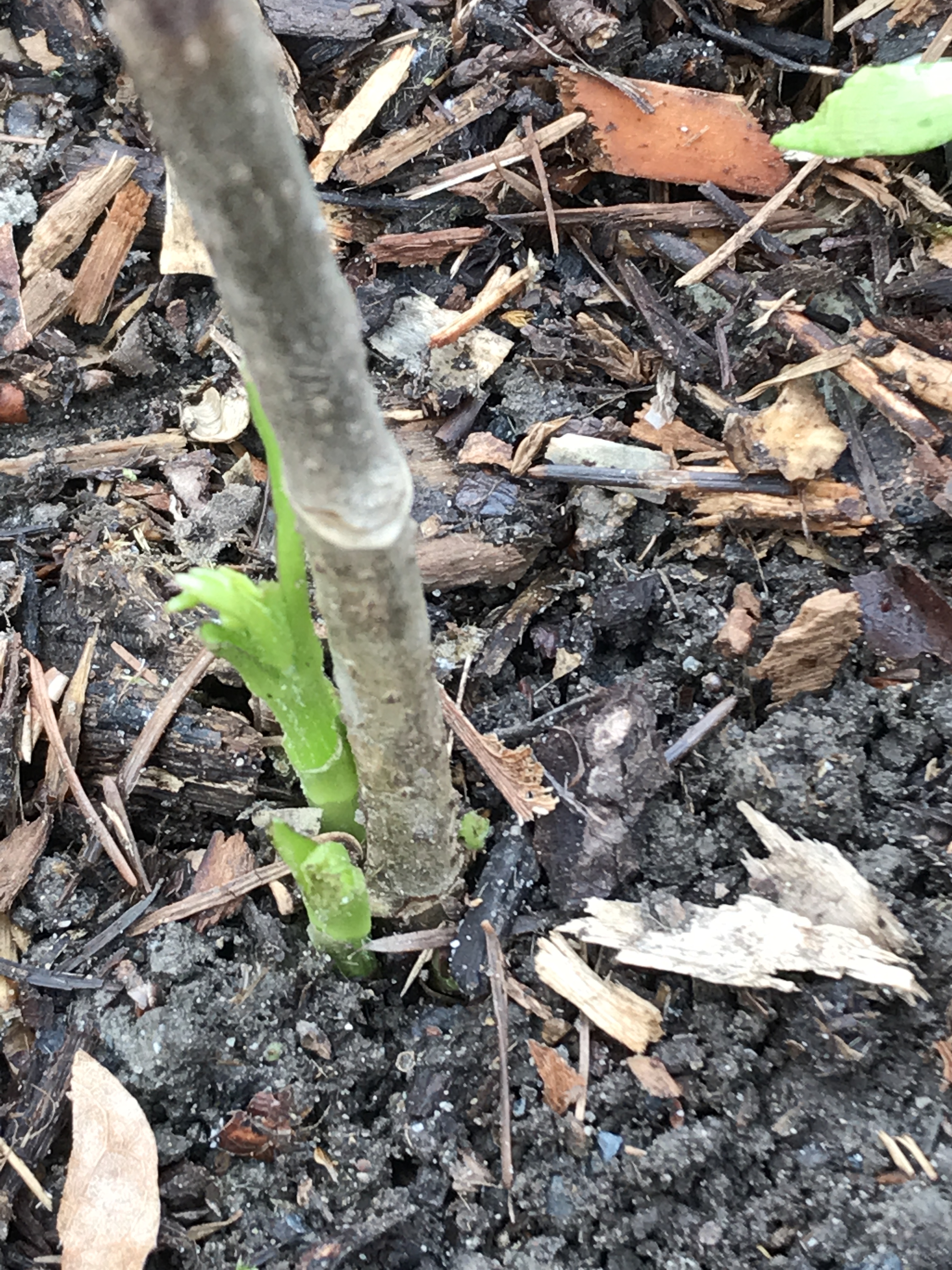
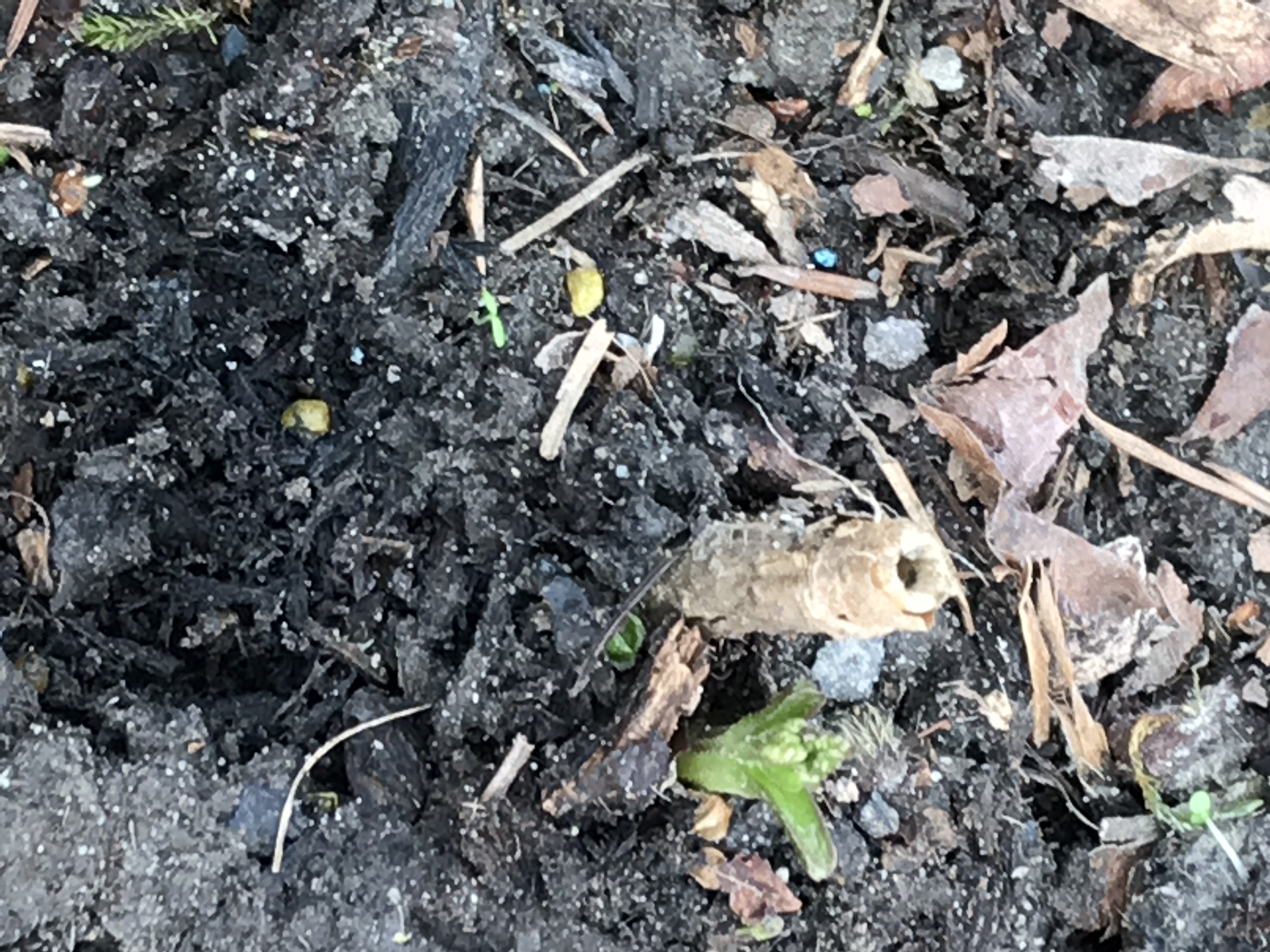
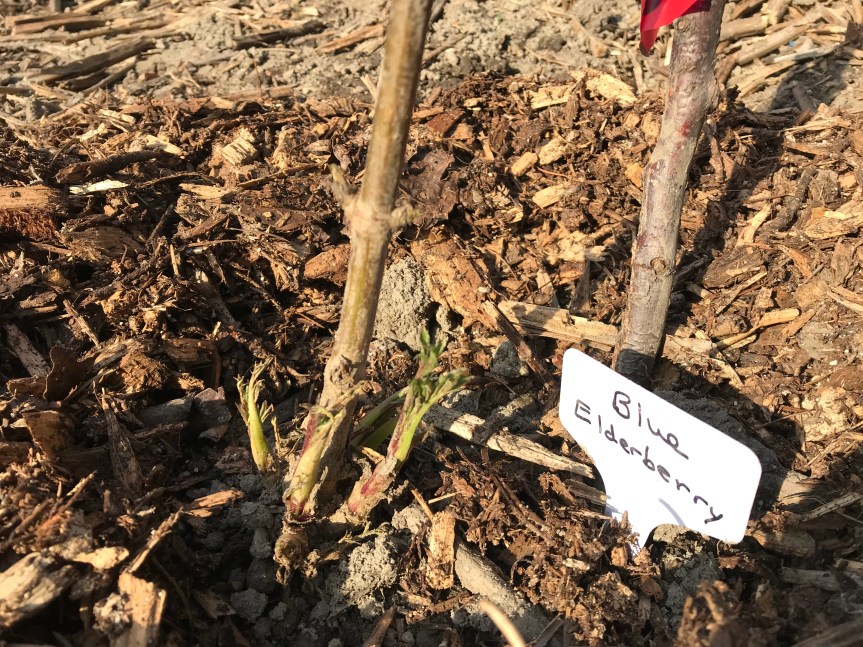
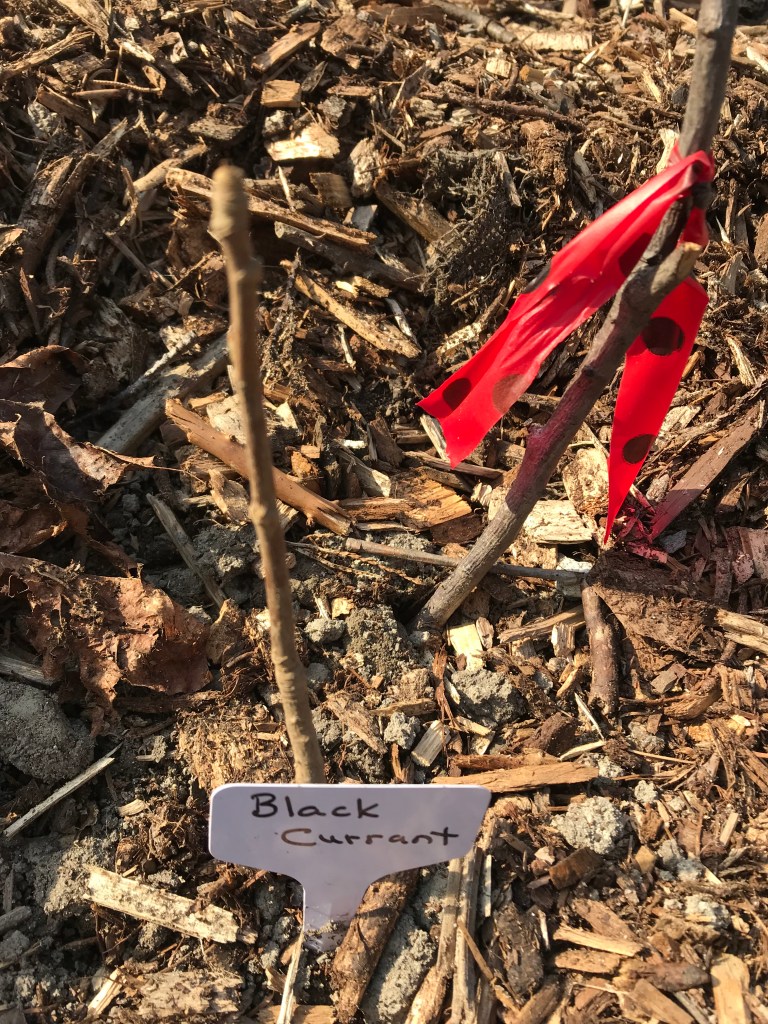
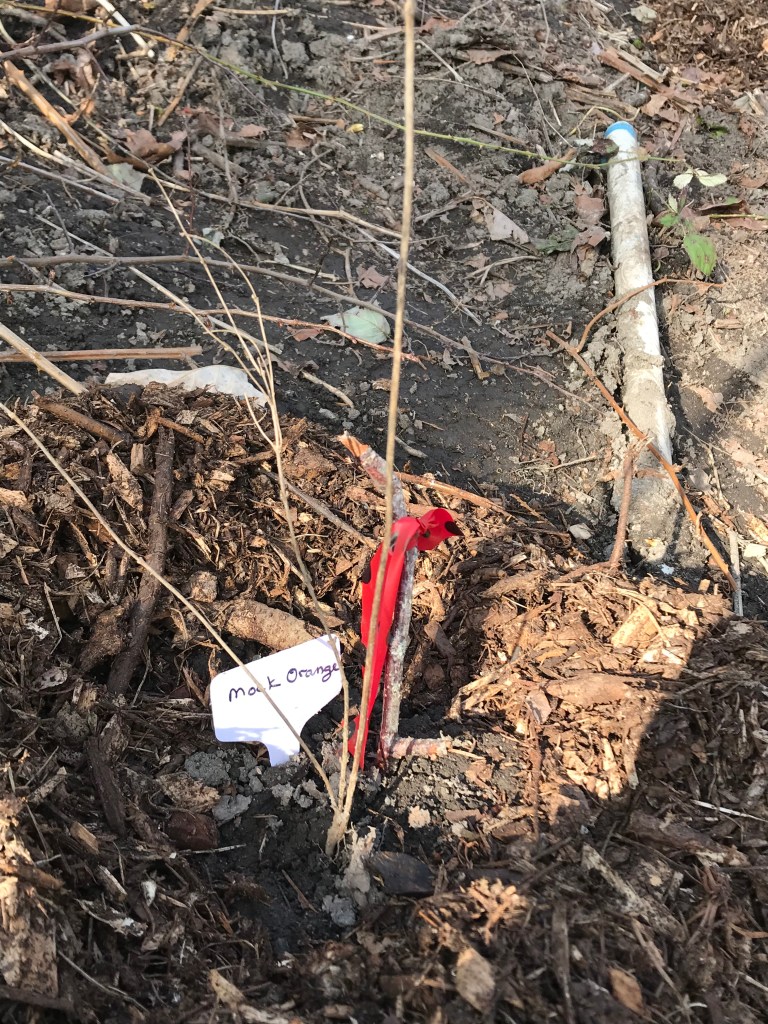
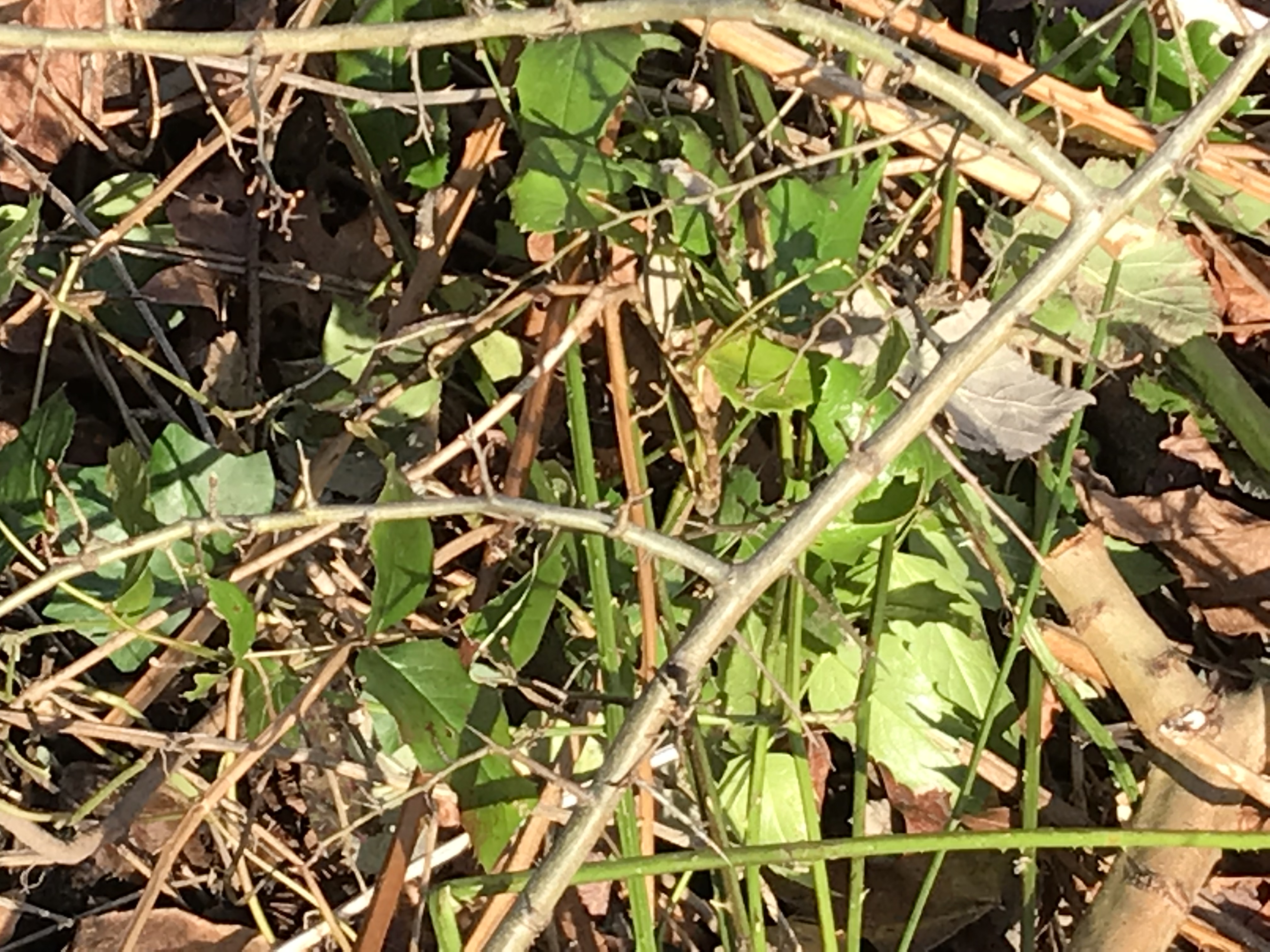
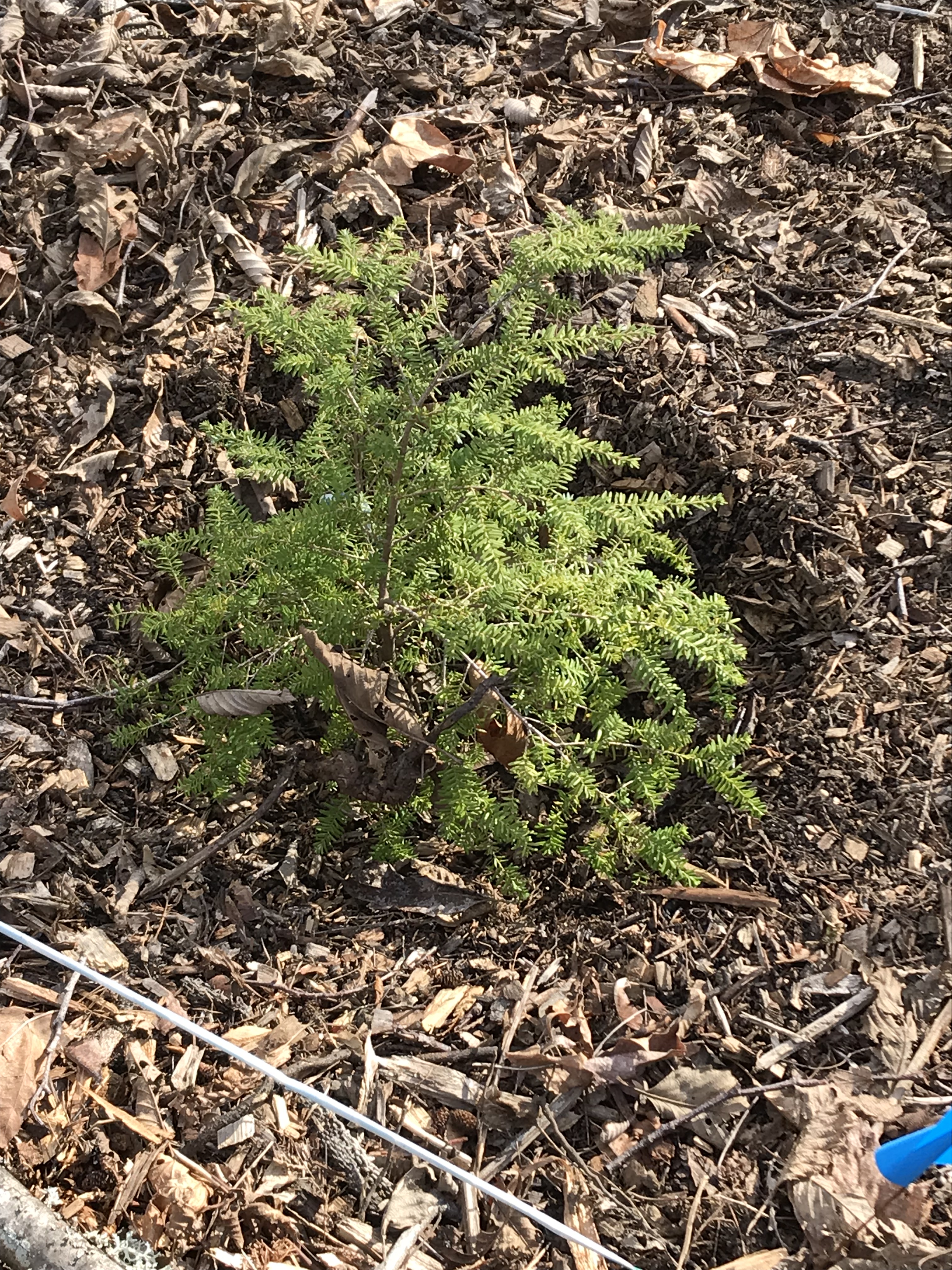
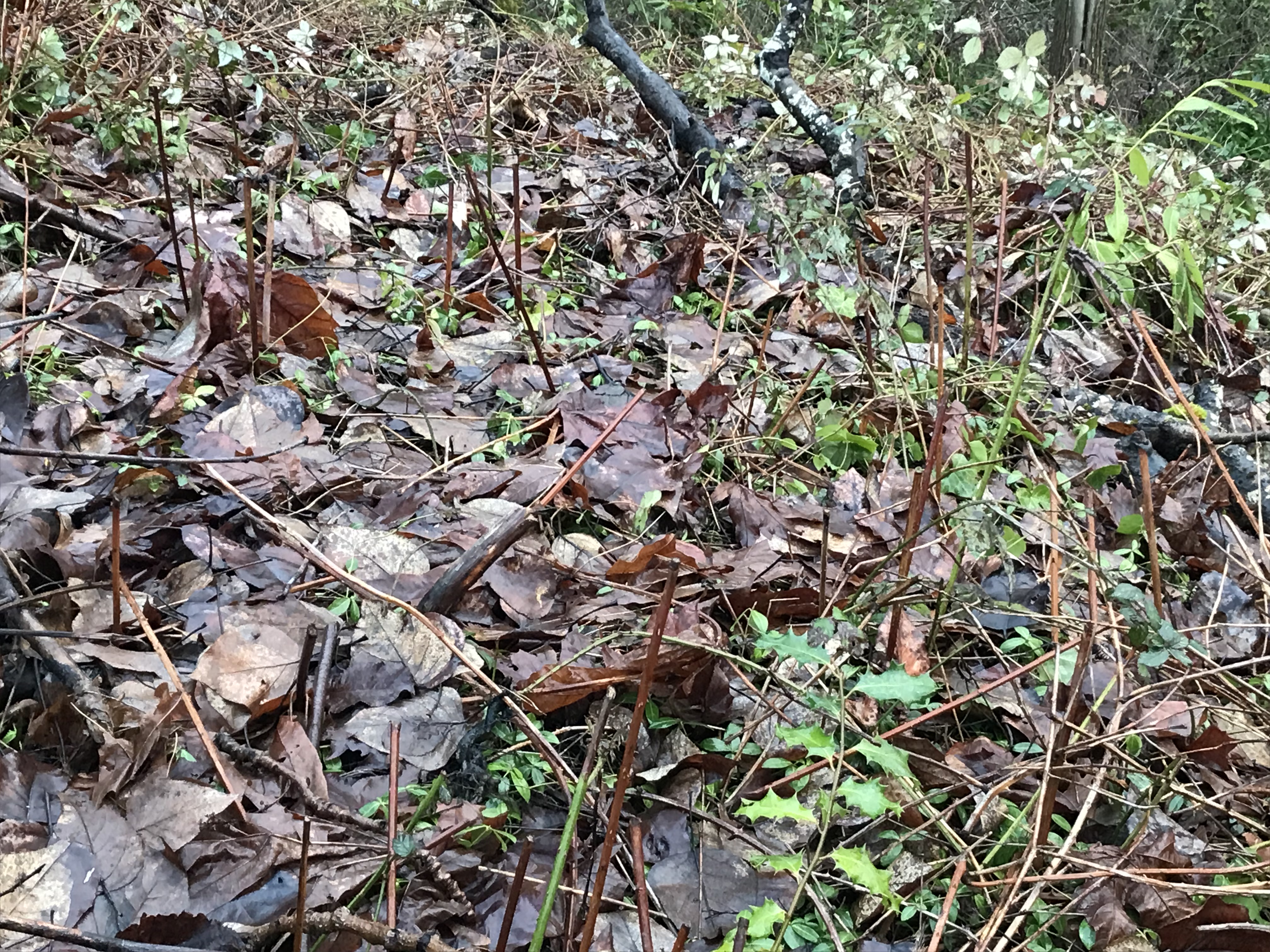
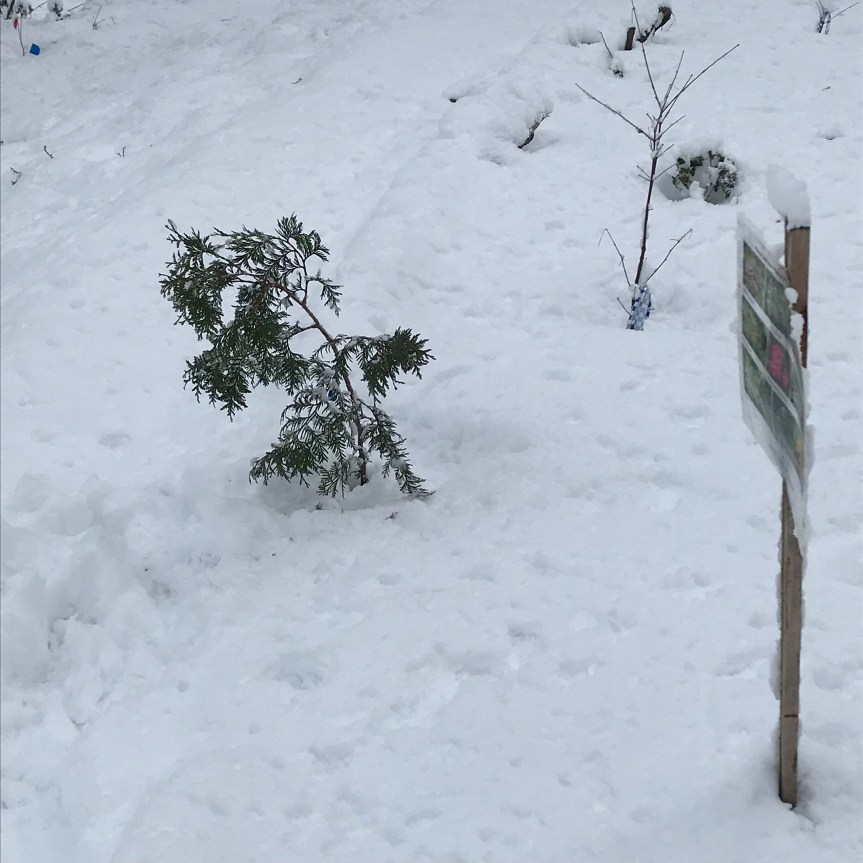
Some of the native shrubs we were given to plant in the Greenbelt this past November were already dormant. Some were simply twigs that look dead. Some of the twigs were even broken. I didn’t have much hope for those, but when I walked through the restoration site yesterday I discovered that life was emerging even from the twigs that looked least likely to survive!
The hollow stalk is only 3/4 inches tall, if that.
Amma teaches us to be like a bird perched on a dry twig, ready to fly at a moment’s notice. We certainly had an opportunity to practice that teaching during our March 17 work party.
At the beginning of the work party, there were five team leaders present and ready for action. The plan for the day took an unexpected turn when no one from the group who was going to do the March planting showed up.
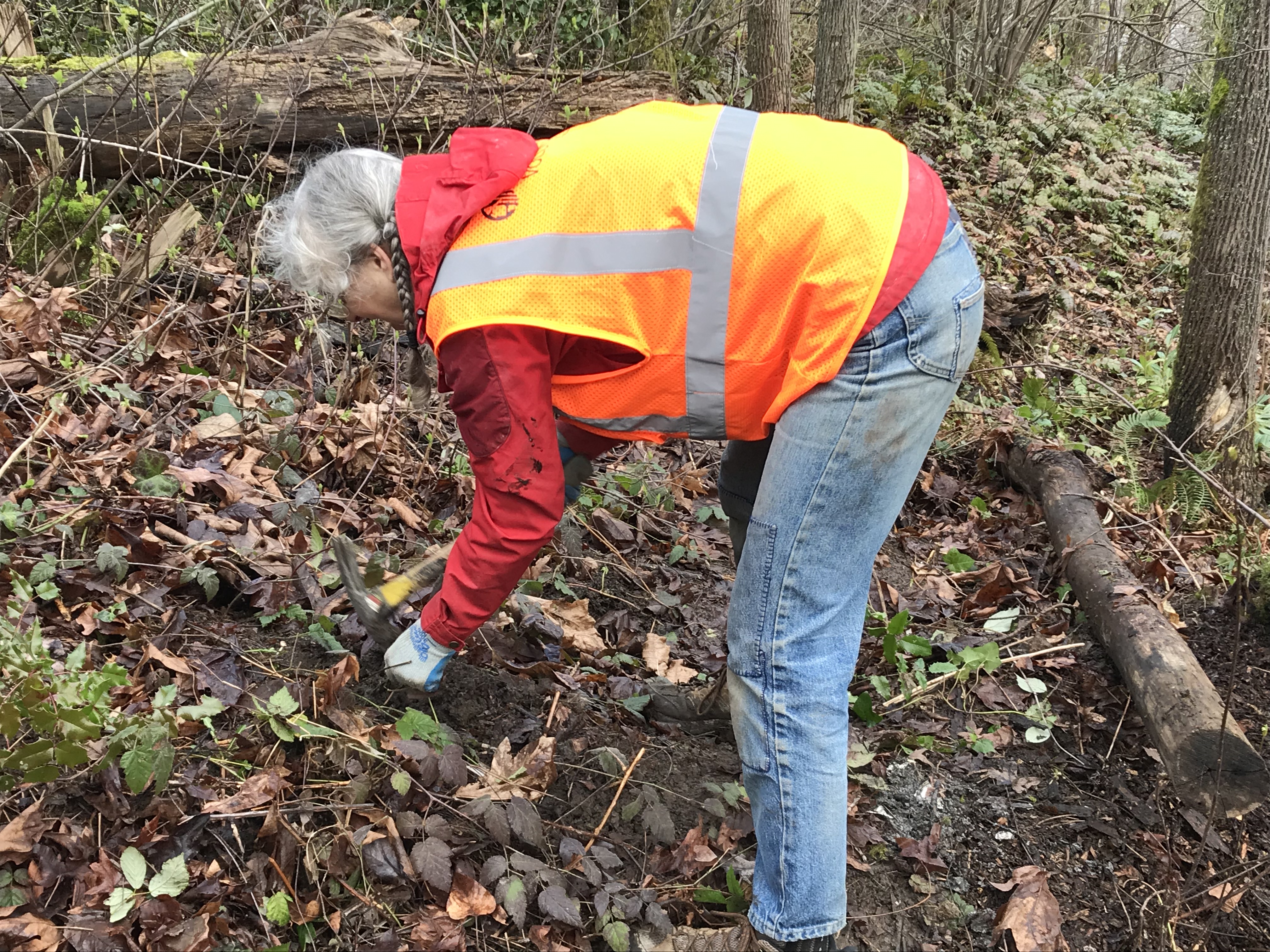
The native shrubs and ground covers we were planting that day were bare root plants or plugs, so we didn’t have the luxury of planting them over time; they had to be planted that day. When it became clear that the group wasn’t going to come, the team leaders “rolled up their sleeves” and started planting the 65 plants themselves.
I called John (neighbor) and asked if he would carry the wood chips we use for mulch to the various planting areas. Thankfully, he was available and came right away. With his help, we were able to finish the project by 2:00 pm!
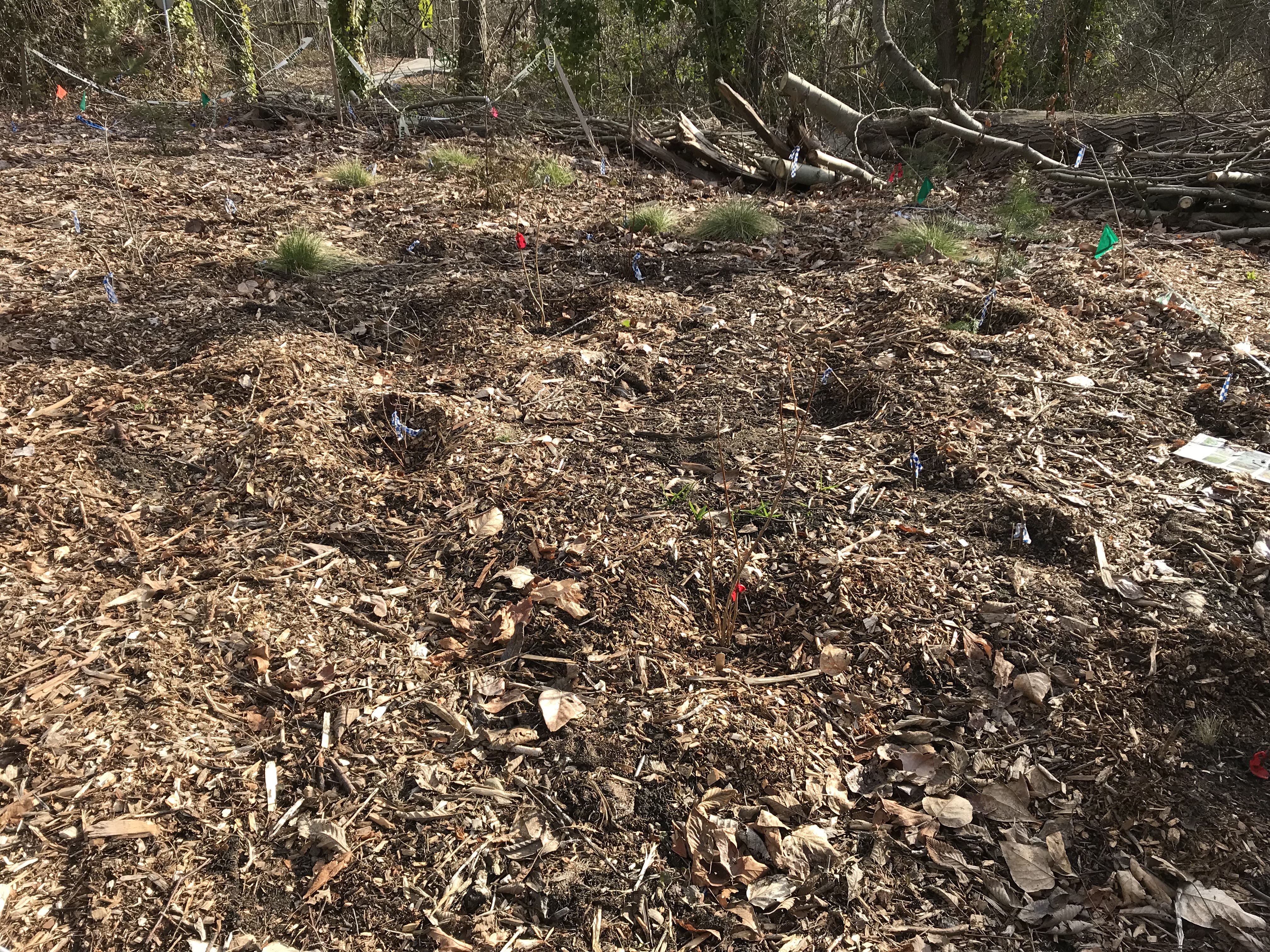
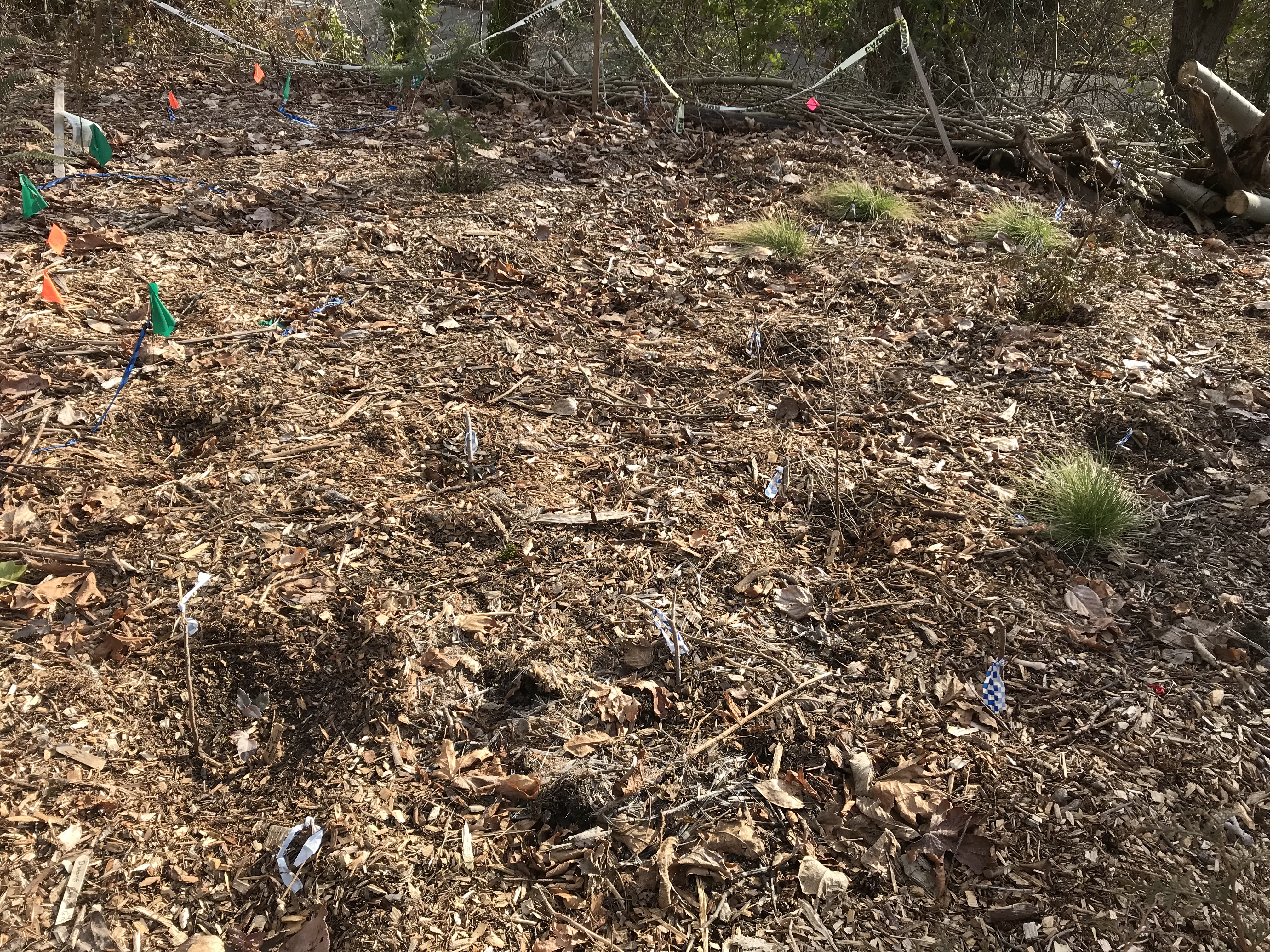
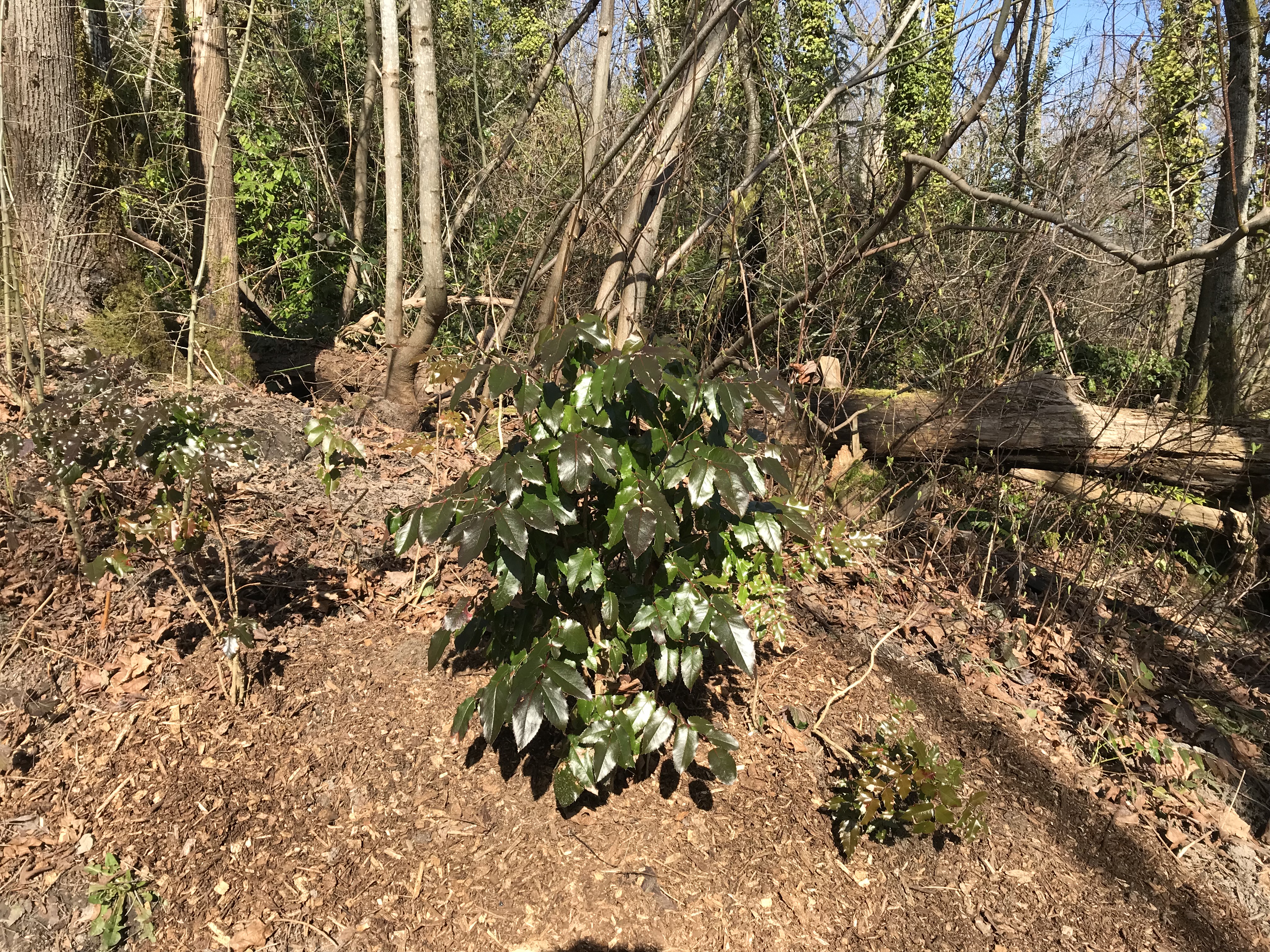
I was too busy planting and carrying wood chips to take any photos during this work party, but took pictures of some of the plants and planting areas later.
(You can enlarge the photos by clicking on any picture in the gallery below.)
Pacific Rhododendron
Coastal Strawberry
Blue Elderberry
Black Currant
Mock Orange
Davidson’s Penstemon area
Bunchberry area
Cedar Tree surrounded by Black Currant plants
If we were being “tested” on flexibility, persistence, letting go, accepting what is, doing whatever it takes, equanimity and/or being like a bird perched on a dry twig, I’d say we passed the test!
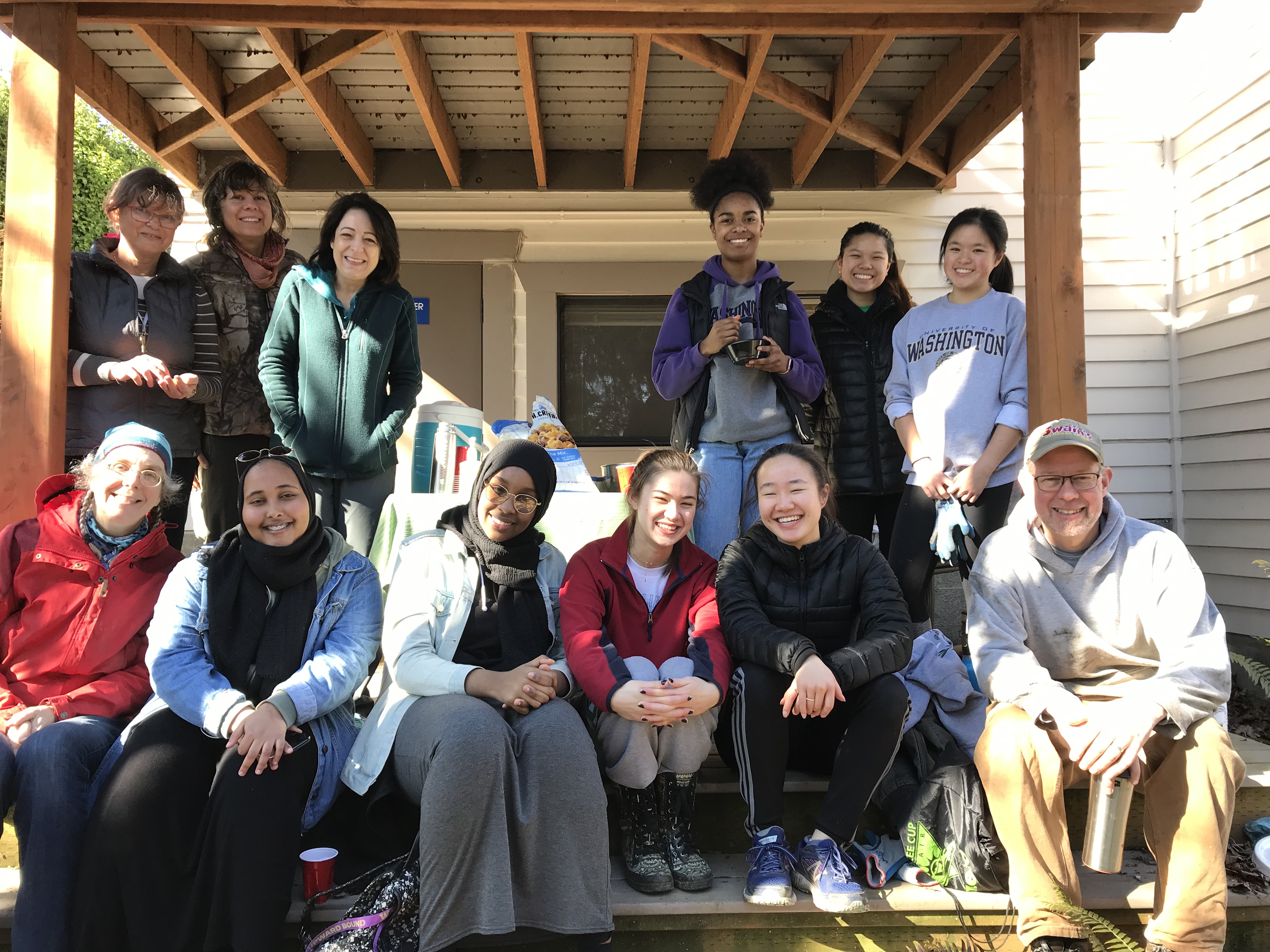
We will be planting 75 shrubs and ground covers in our GreenFriends forest restoration site on March 17. The March 10 work party focused on getting new areas prepared for planting. Almost all of our team leaders attended that work party as did seven members of the Franklin National Honor Society. In addition, friends of two of the team leaders worked with us. In all, 16 volunteers took part in the March 10 work party.
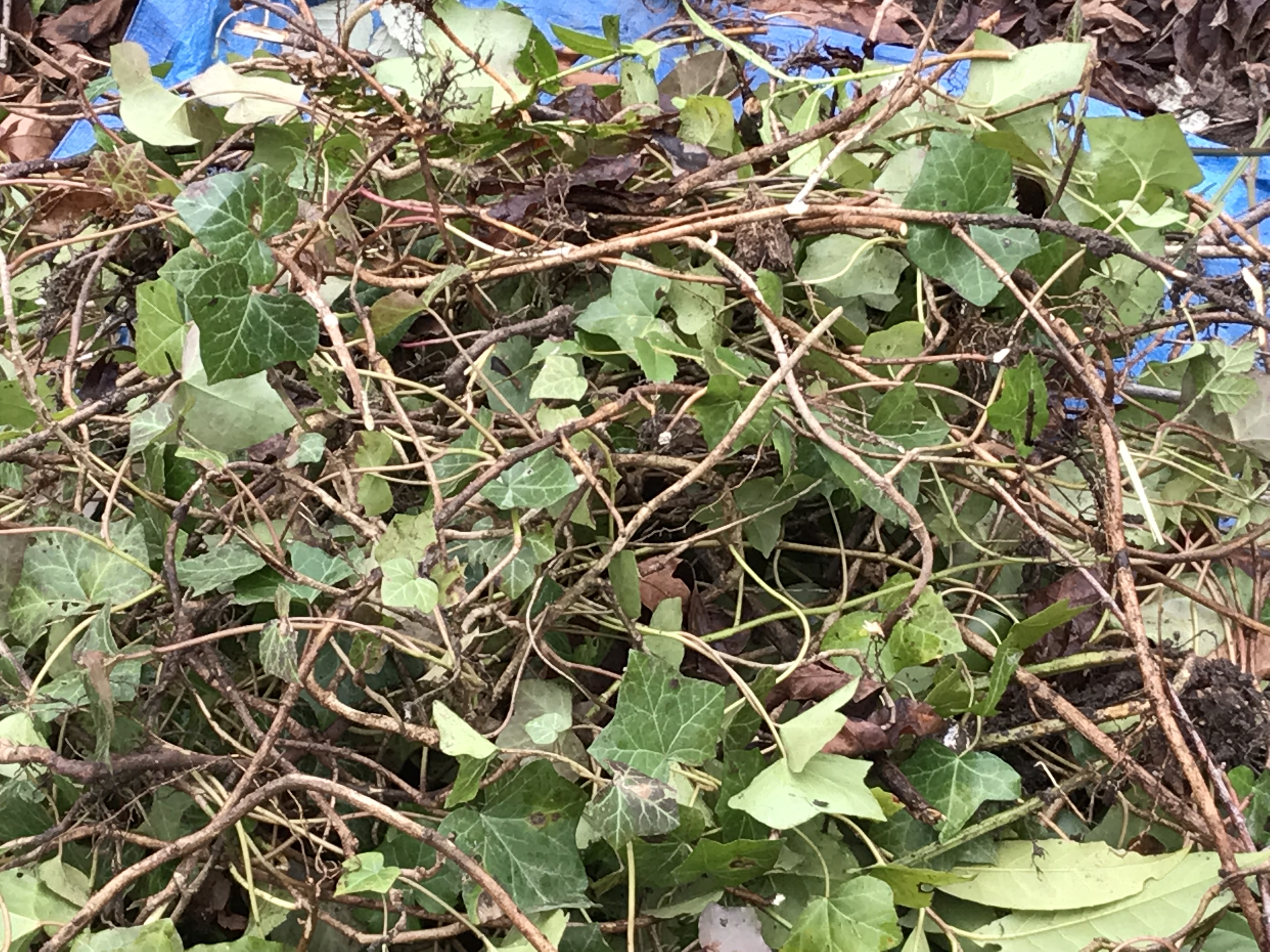
During the last two years, when we cut or pulled out vines such as blackberry, ivy and bindweed, and when we dug out blackberry root balls, we usually took the waste to the foundation of a house that exists on our Greenbelt site. Once there, we placed the waste on drying racks that we had built inside the foundation. We call that area “The Rack Zone” and we generally refer to the dried vines, branches and root balls as “debris.”
In January, we had taken apart the majority of the racks in The Rack Zone and spread the debris throughout the Zone. The debris will continue to decompose and in time The Rack Zone will become another planting area.
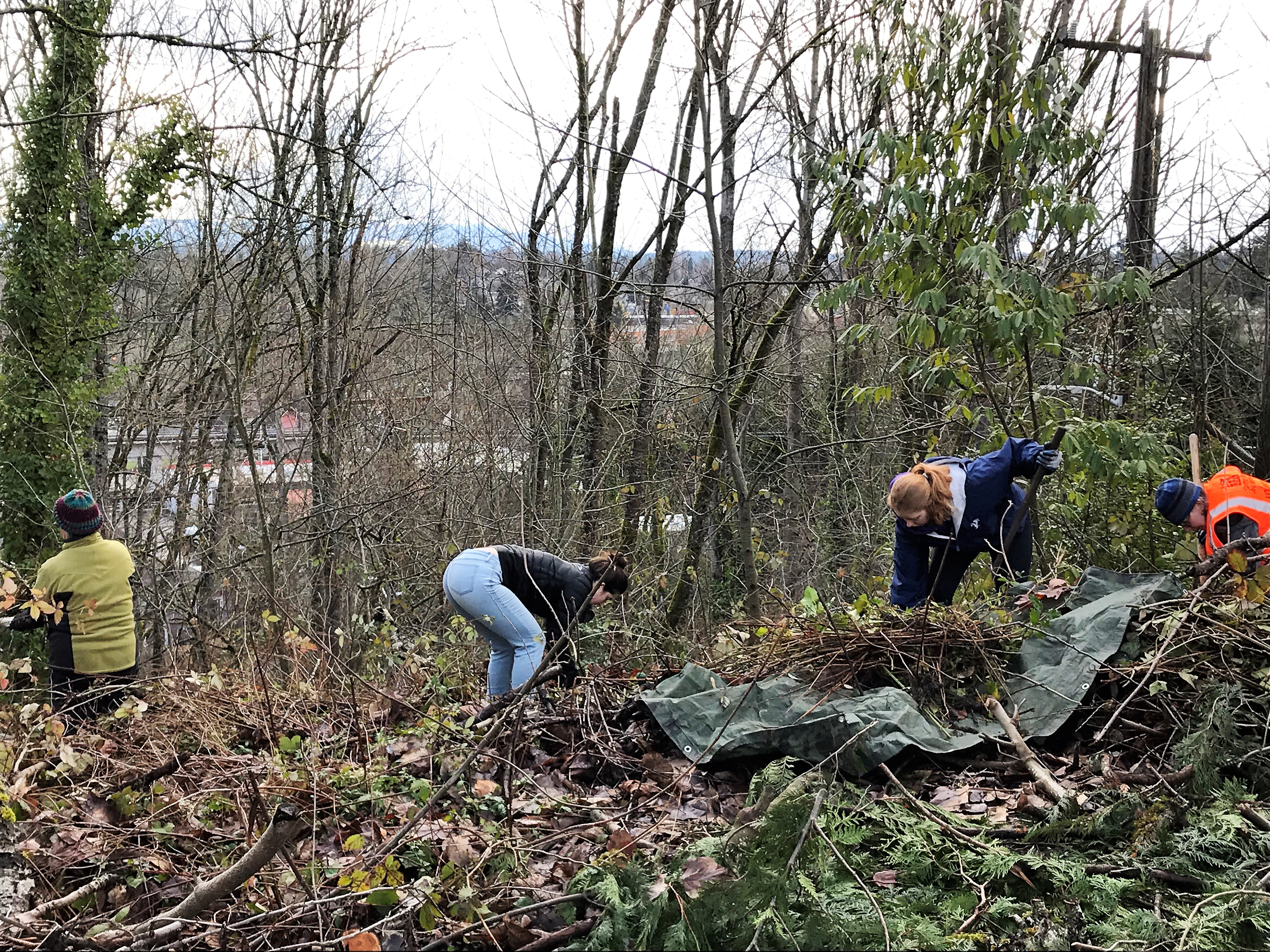
Not all of the debris is located in The Rack Zone however; some of it has been placed on racks that are scattered throughout the site. During the first part of the March 10 work party, we began the process of putting the dried debris in those piles on tarps… and then dumped the contents in The Rack Zone. Removing the piles of debris was the first step in getting those areas ready for planting.
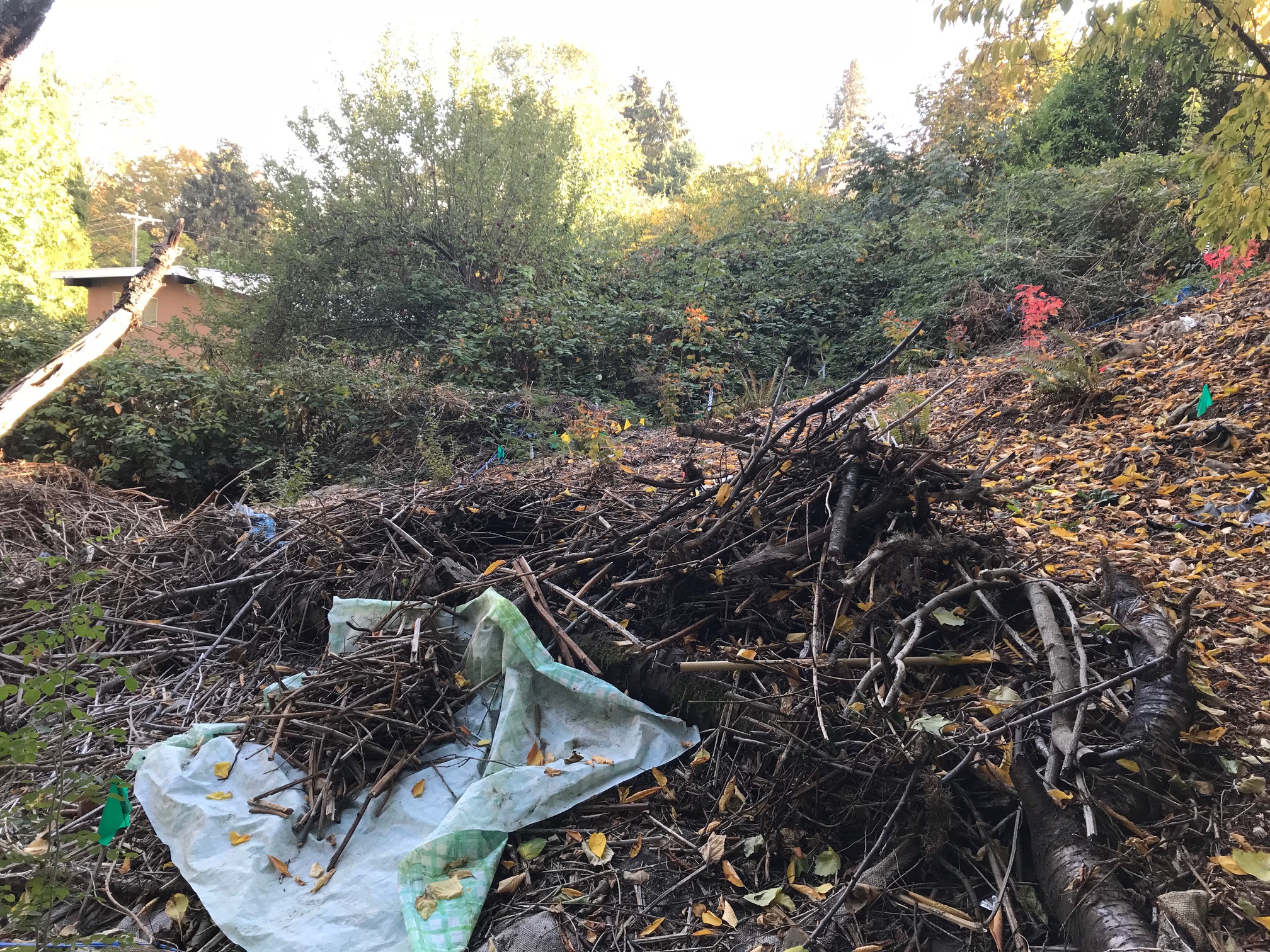
We started by dismantling the racks on the south end of the site. The photo below shows what one area looked like at the beginning of the work party. Last Fall, that pile of debris had been four to five feet high but other work party participants had removed a lot of it. Our goal during this work party was to move the remainder of the debris to The Rack Zone.
Before
We would also be taking down a big pile of debris just east of it. You can see part of that pile in the middle left section of the photo above. That pile was much bigger than what you can see in the photo.
These two piles were located at the southwest part of the site. We also removed a pile of debris in the southeast section of the site and one north of the Hanford Stairs.
(You can enlarge the photos in any of the galleries by clicking on one of the photos.)
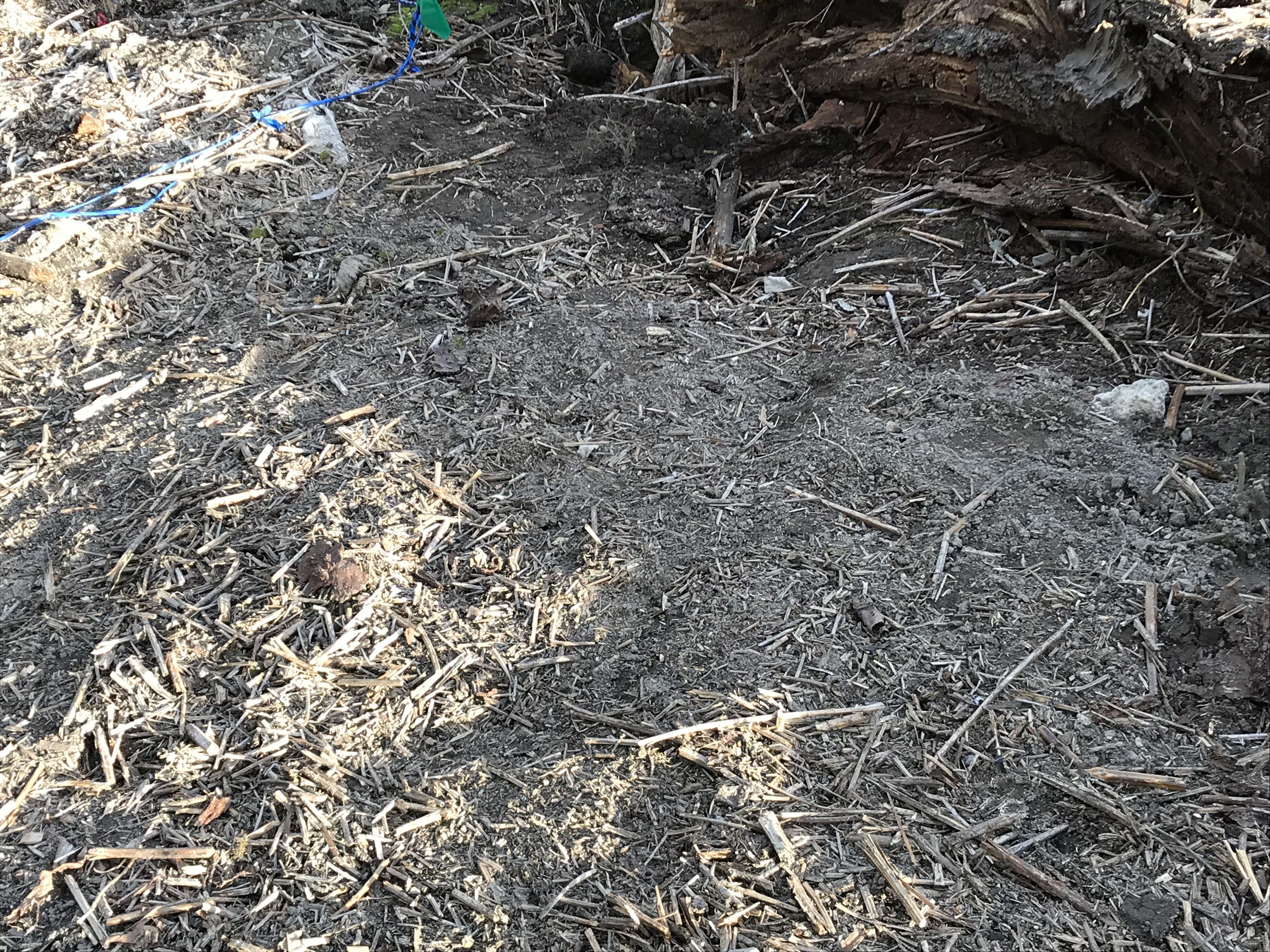
The southwest area looked like this once the piles had been removed. The debris that is still scattered on the ground will become mulch.
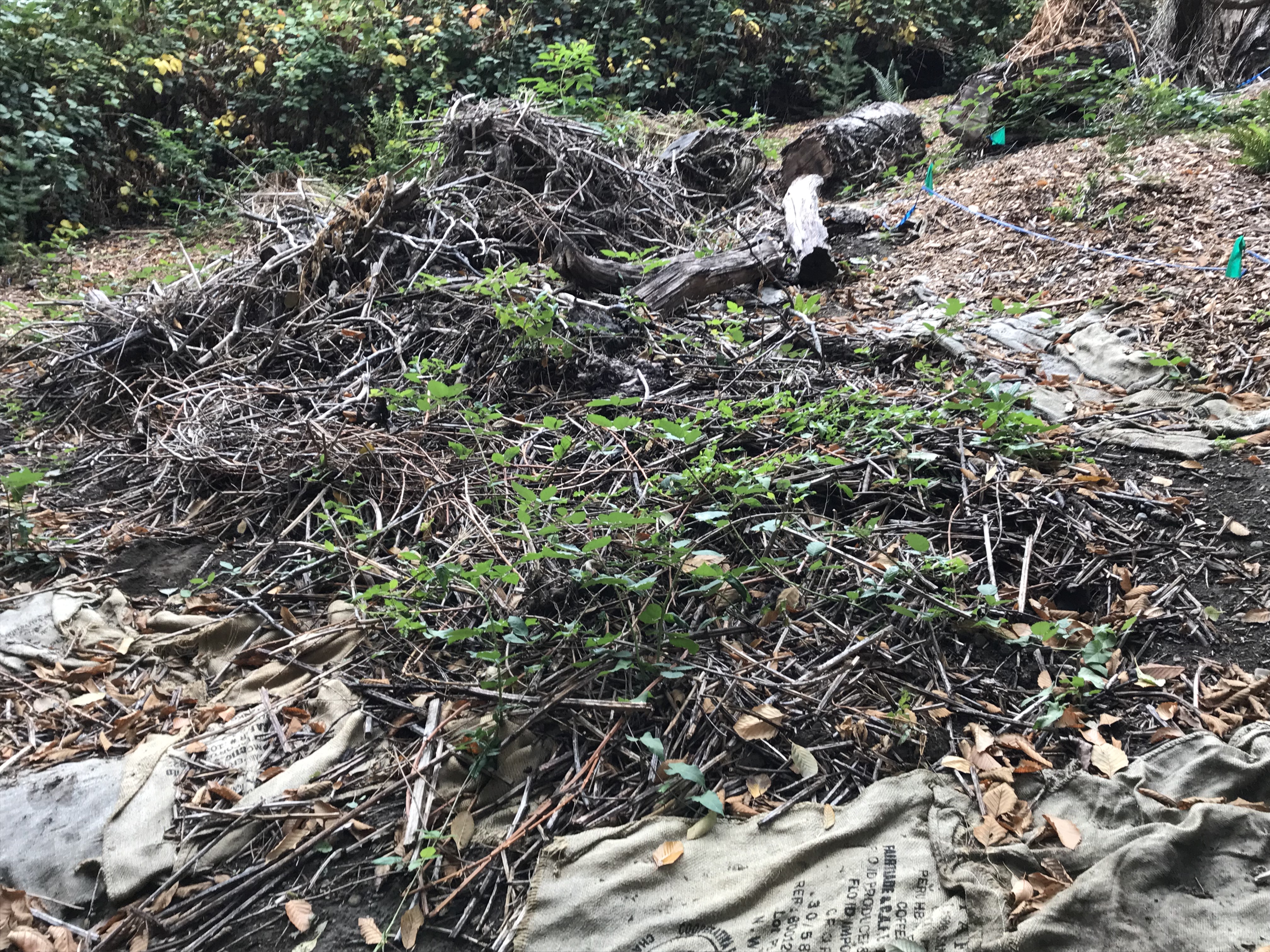
While most of the volunteers were clearing the section on the southwest part of the site, a smaller group worked in the southeast area. The photo below was taken of this space the end of September 2018.
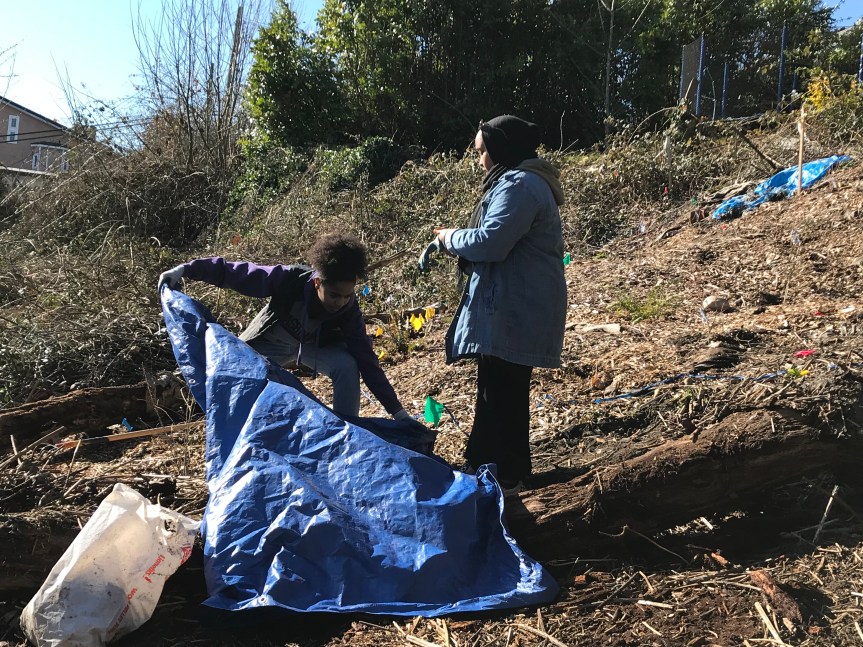
The volunteers in this group moved the pile of dried debris to The Rack Zone.
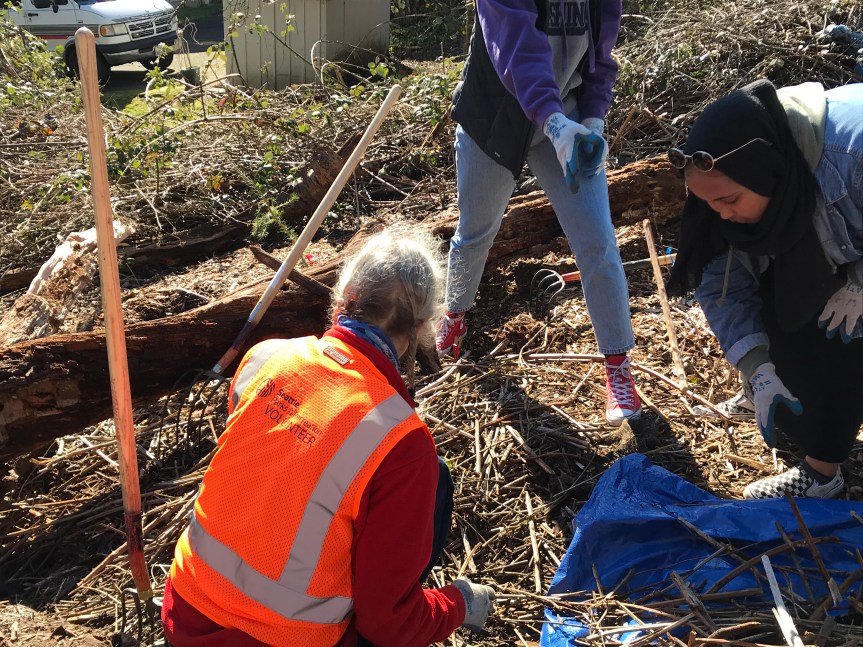
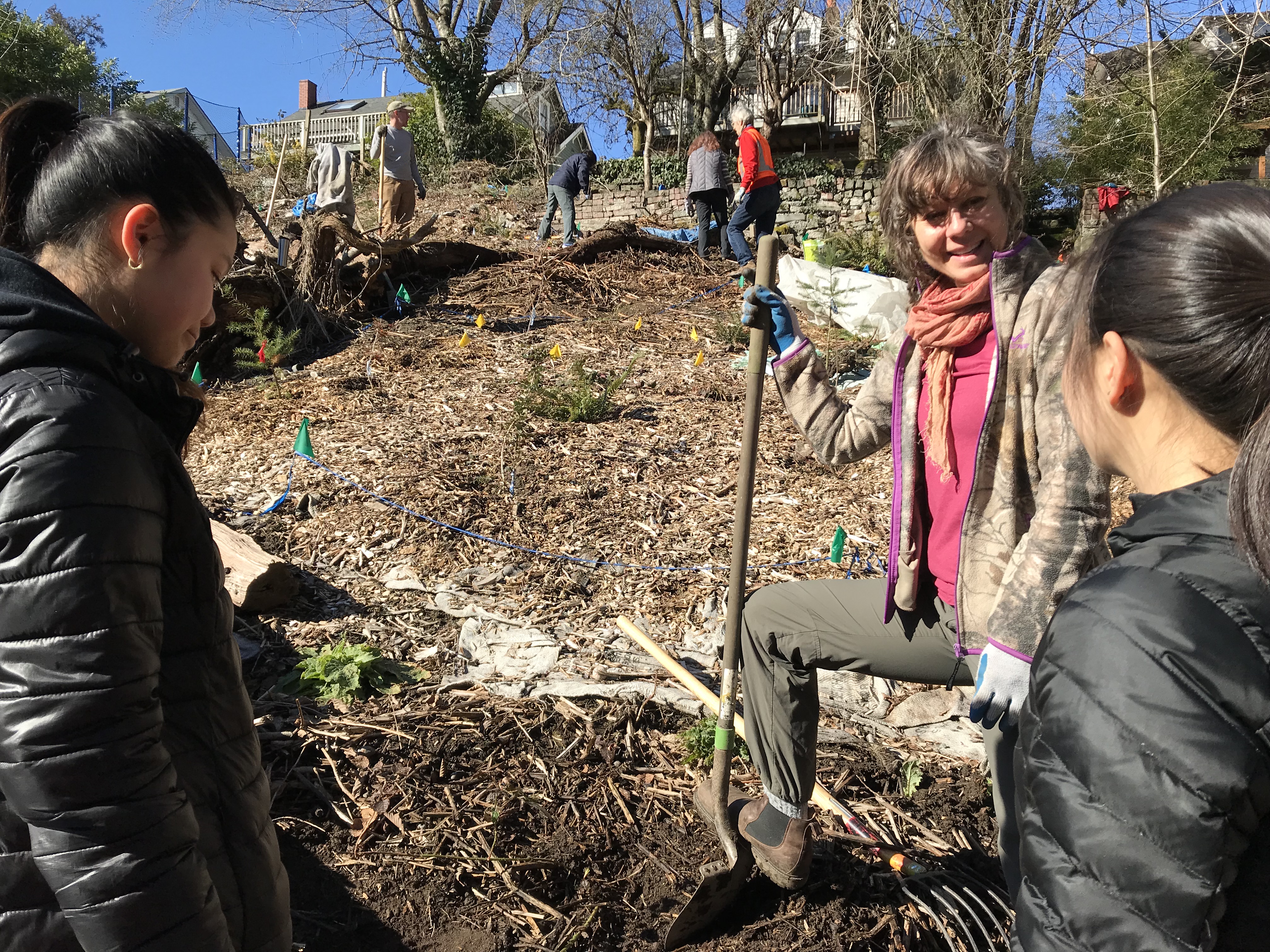
In the photo below, a team leader is teaching the students how to dig out blackberry root balls. If you look up the hill from where they are standing, you will also see some of the larger group working in the southwest area. By the time this photo was taken, both groups had removed most of the debris in their areas.
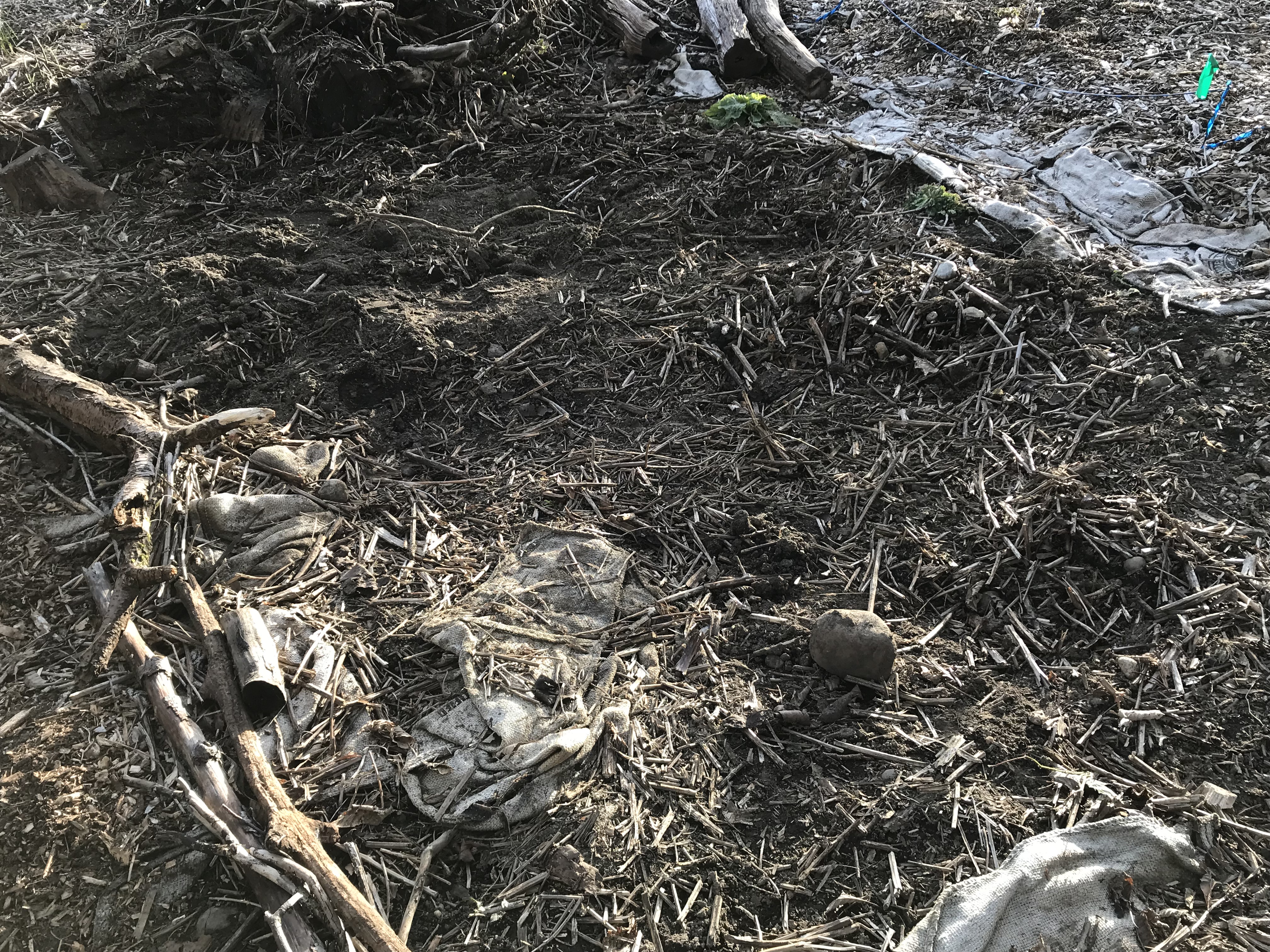
This is what the space in the southeast area looked like once the pile of debris and the blackberry root balls had been removed. The land is ready for planting and the remaining debris will be used for mulch.
An hour-and-a-half into the March 10 work party, we took a snack break. Afterwards, we divided into three groups.
Group 1
Before I tell you about Group 1’s work, I will share some back story.
There is an area along 25th Ave S. that is part of an adjacent Greenbelt site. When we started to clear that area during the February 24 work party, blackberry, ivy and periwinkle vines formed a tight web over much of the ground. There was also a lot of downed trees, branches and other debris.
While we had accomplished a great deal on February 24, I felt overwhelmed by what it would take to have it ready for planting on March 17.
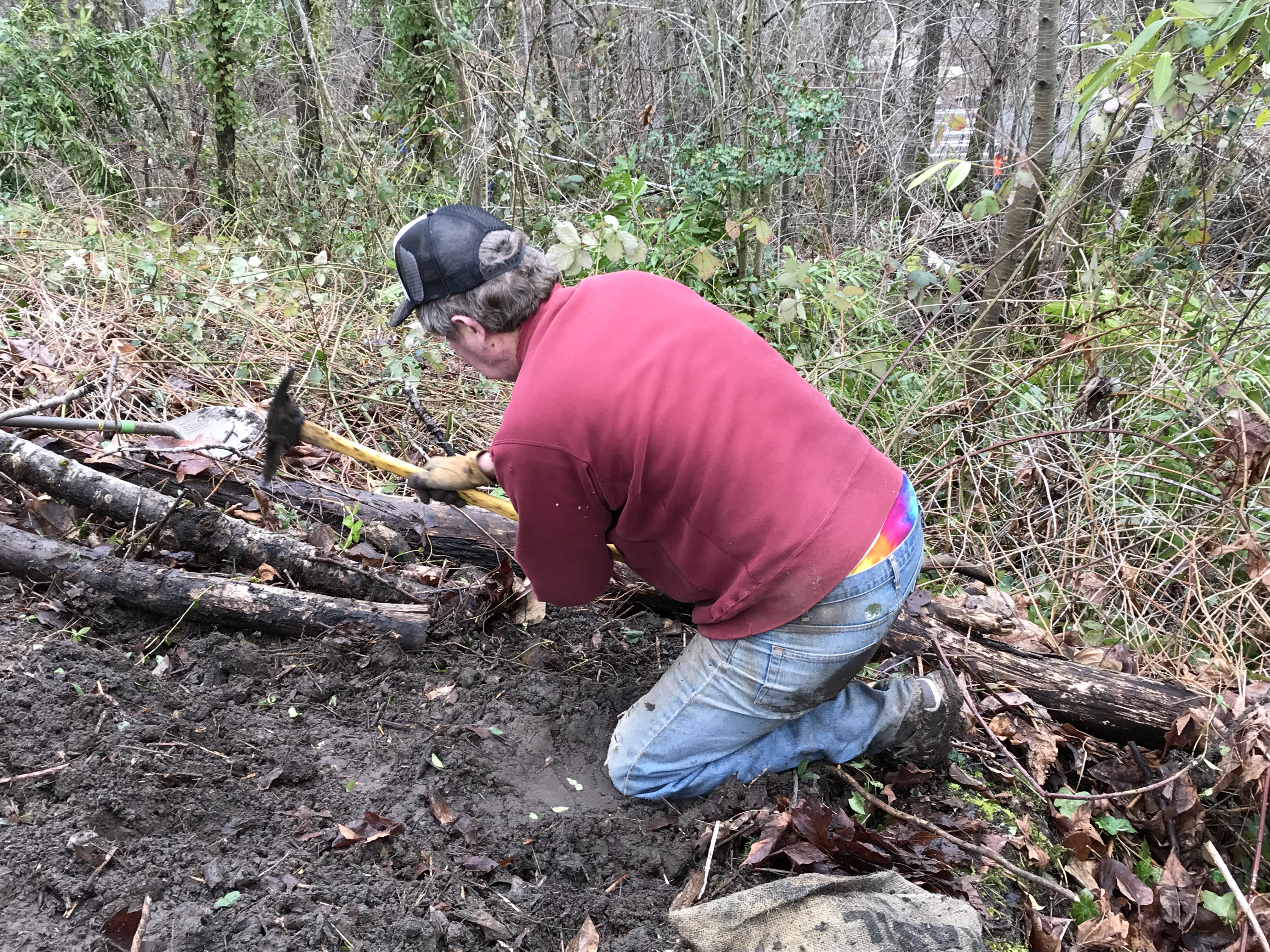
A few days later, I worked on my own and cleared enough space to feel some hope that we could have it ready by the 17th. My neighbor John worked alongside me the two following days. Since he uses a pick ax, we progressed much faster. The land suitable for planting was growing!
Before
After
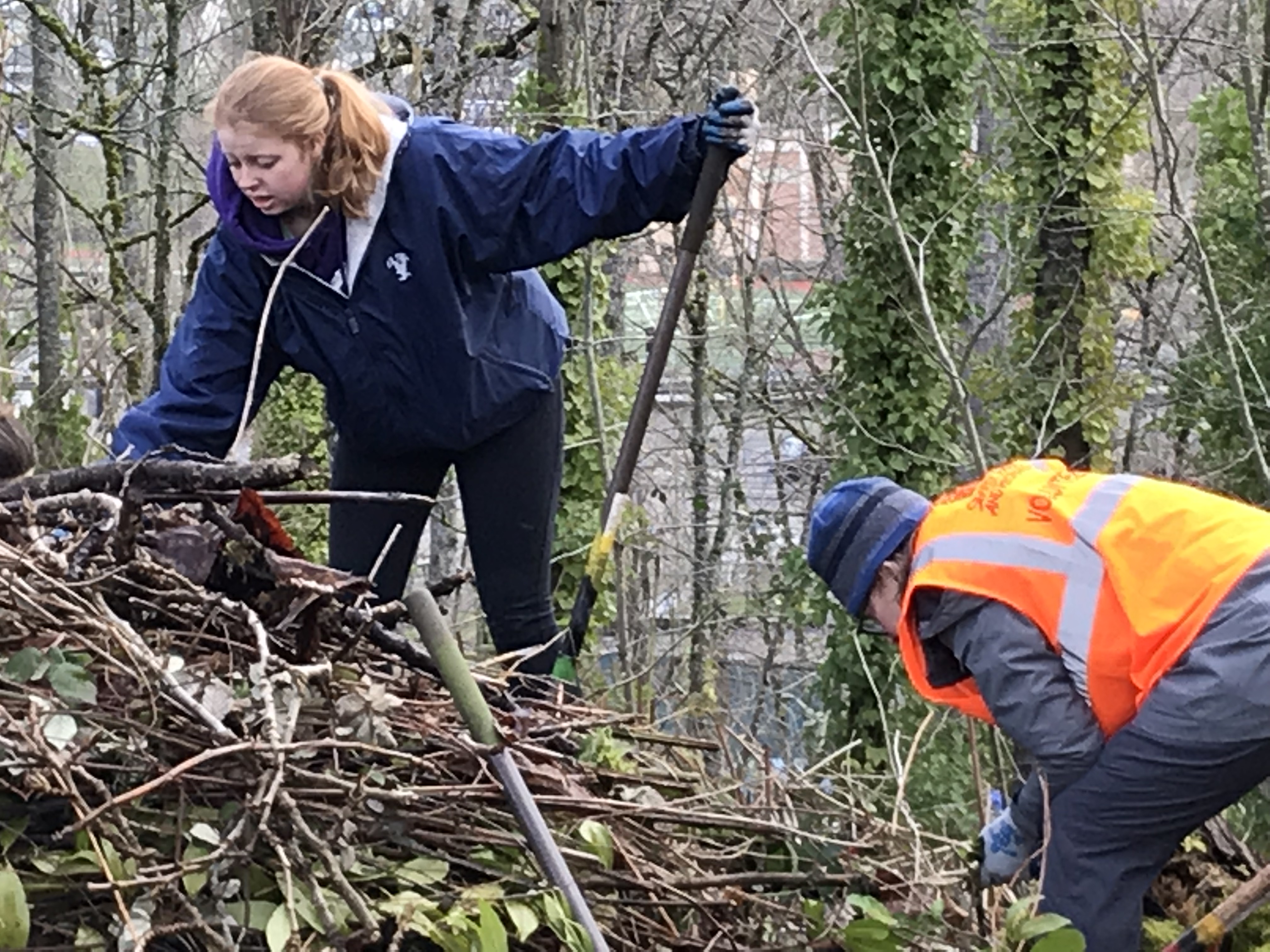
During this work party on March 10, Group 1 removed a debris pile from the 25th Ave. S area and expanded the planting area. They also moved a lot of the branches and logs that were scattered in that area and dug out blackberry root balls.
Group 2
John and Jason, who are both neighbors and team leaders, worked in an area where blackberry vines had pulled two trees to the ground. They freed those trees and cut down blackberry vines in the surrounding area. I wish I had been present when the trees lost their shackles. I love to see how the they snap up and reach for the sky in that moment .
Freed tree #1
Freed tree #2
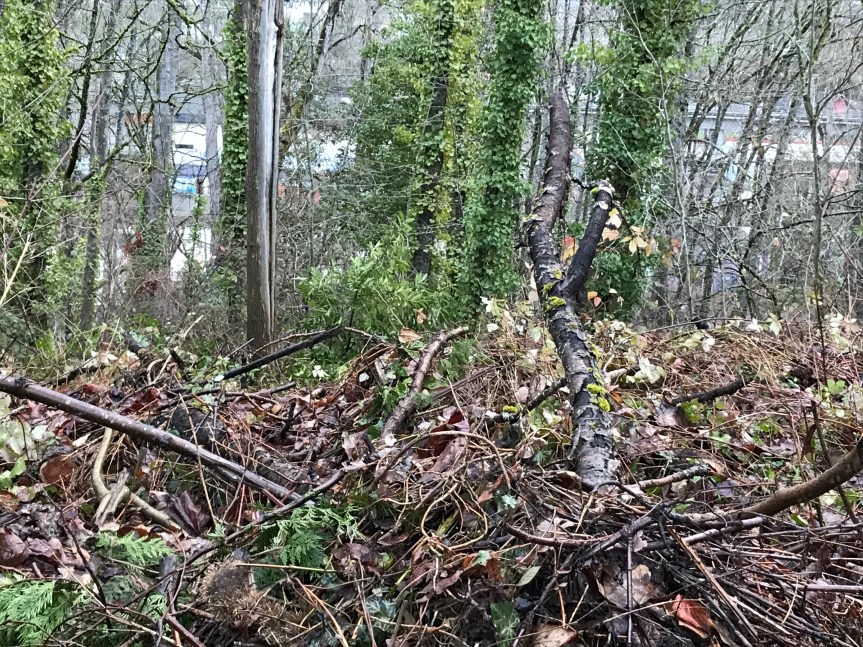
This area will take a lot more work to clear. Here is what it looks like now.
Group 3
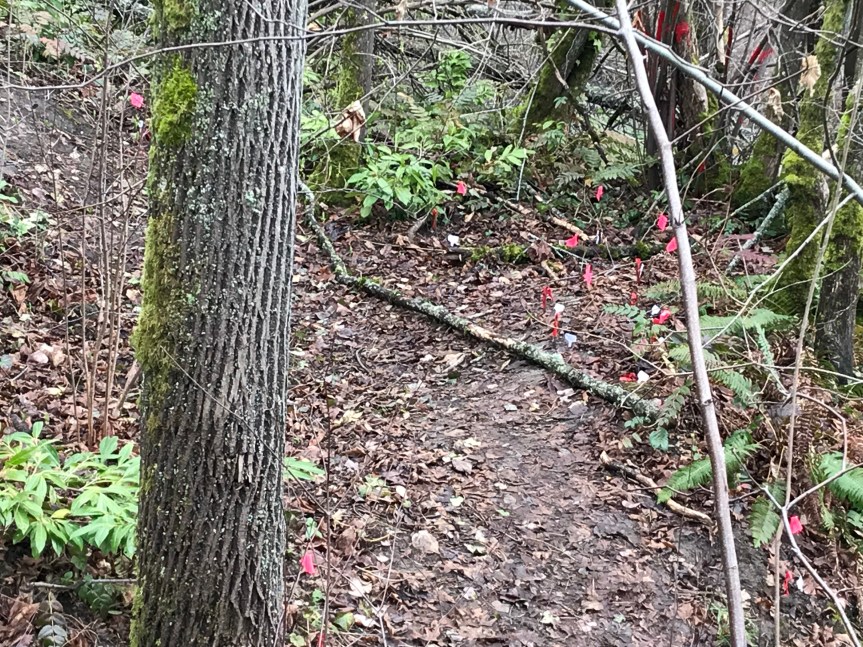
Prior to this work party, I marked the places where new plants will be planted. In each space, I placed a pink flag, a white sign that indicates the name of the plant and a stick with red and black flagging tape. The red and black tape indicates that the item was planted during the 2018-19 planting season.
On March 17, participants will look for the pink flags. They will then plant the specified shrub or ground covers putting the white sign and the stick with the red and black flagging tape into the ground next to the plant.
The third group of volunteers worked in the lower planting area that is on the north side of the Hanford Stairs and near Cheasty Blvd. Their task was to see that all three markers had been left for each future plant .
When that task was finished, those volunteers moved to a different part of the site and cleaned out leaves and wood chips from the “donut holes” around the trees, shrubs and ground covers that had been planted in previous years. (When we plant, we put a four inch layer of wood chips around each plant to hold in moisture. We keep the area close to the plant free of those wood chips. That area is referred to as the donut hole.)
The group also removed the leaves from one entire planting area. All of the leaves were taken to The Rack Zone. The areas looked so beautiful when the group finished their work.
Group 4
The group who had worked in the southeast section during the first part of the work party, continued working there after the snack break. They finished digging out the root balls and then cut back the blackberry vines that are on the south edge of the property. (We have to leave a buffer zone between the neighbor’s house and the Greenbelt so we will need to continue to cut back those vines throughout the year and for years to come.)
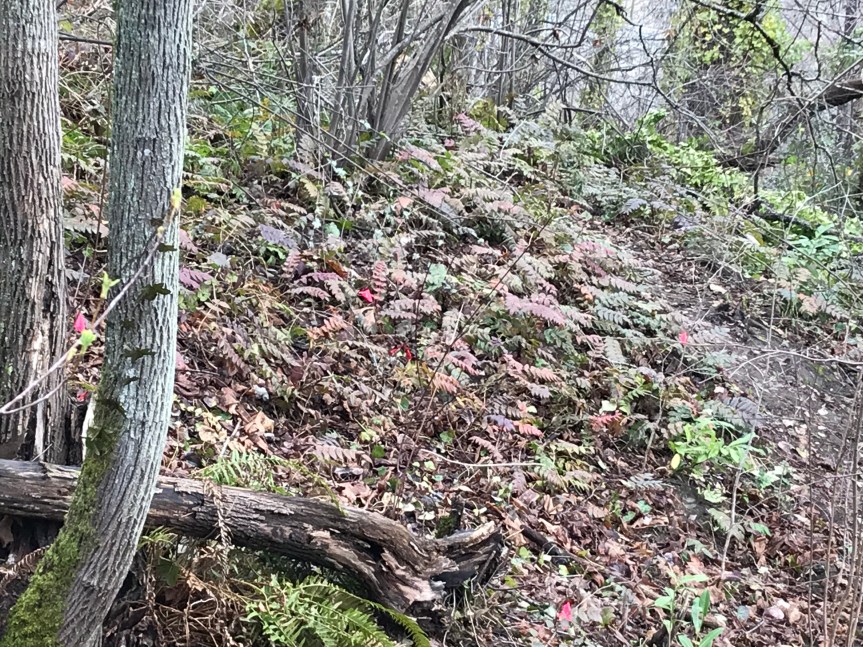
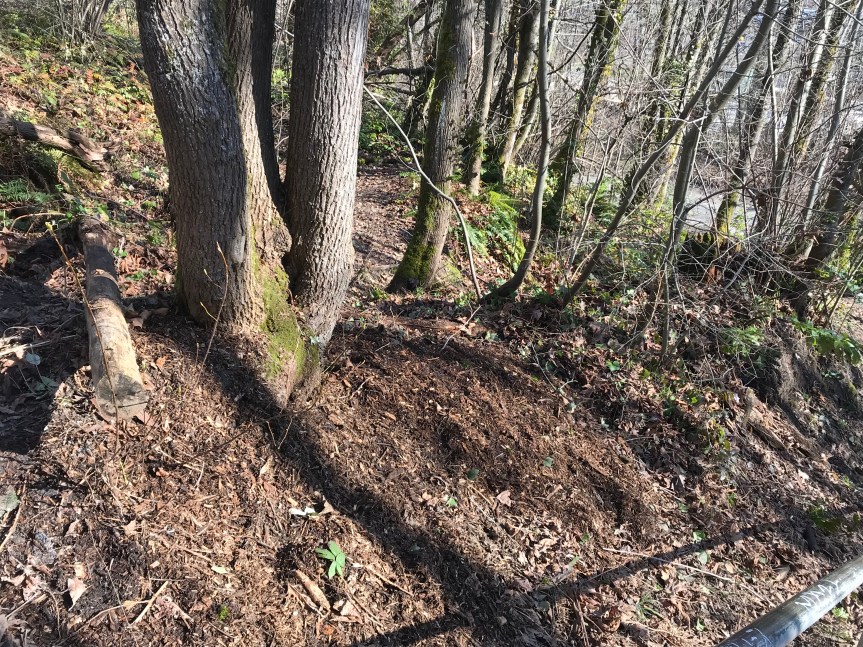
In the third photo below you will see both the buffer zone and that there is a mound of dried debris that goes across the planting area. That area of the site is hilly. Numerous strips like that one were placed there last year in an attempt to prevent or reduce erosion.
Buffer area
I encouraged everyone to walk in The Rack Zone as much as possible throughout the work party, hoping all the traffic would break down the debris faster. I was delighted to see a group of volunteers gathering there towards the end of the event.
As always, I was amazed by how much we had accomplished during the three-hour work party. I believe everyone had a good time and I appreciated that the new planting areas were all ready to receive the new plants.
An added bonus is that the Franklin National Honor Society students want to come back! I look forward to working with them again in the future.
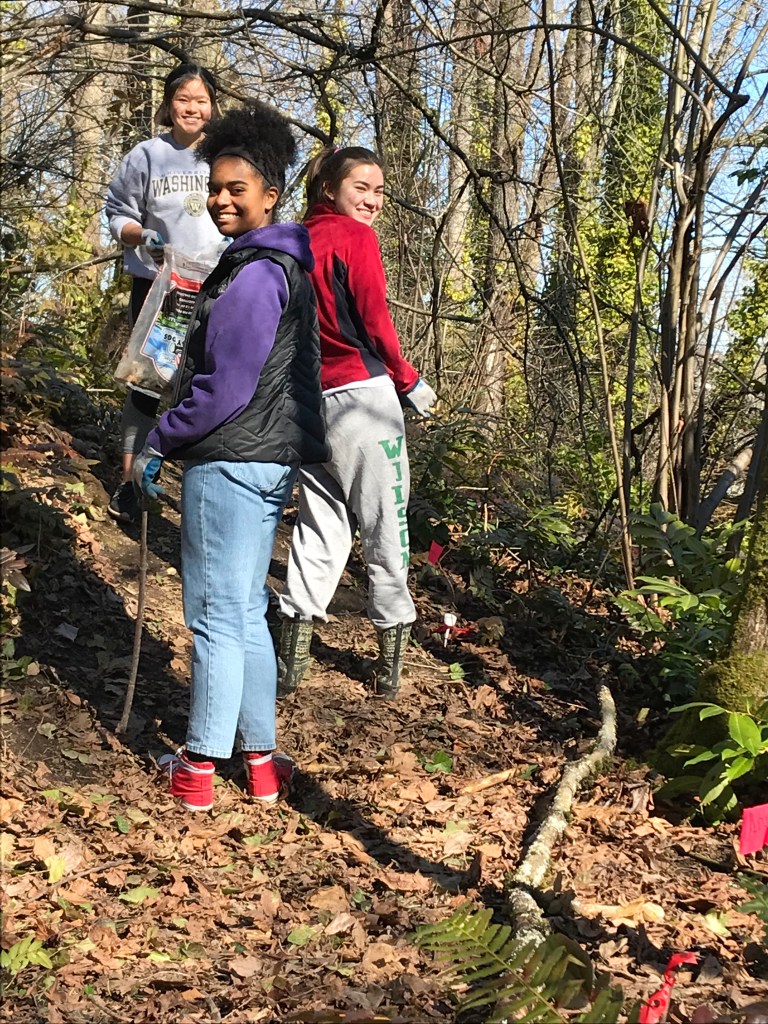
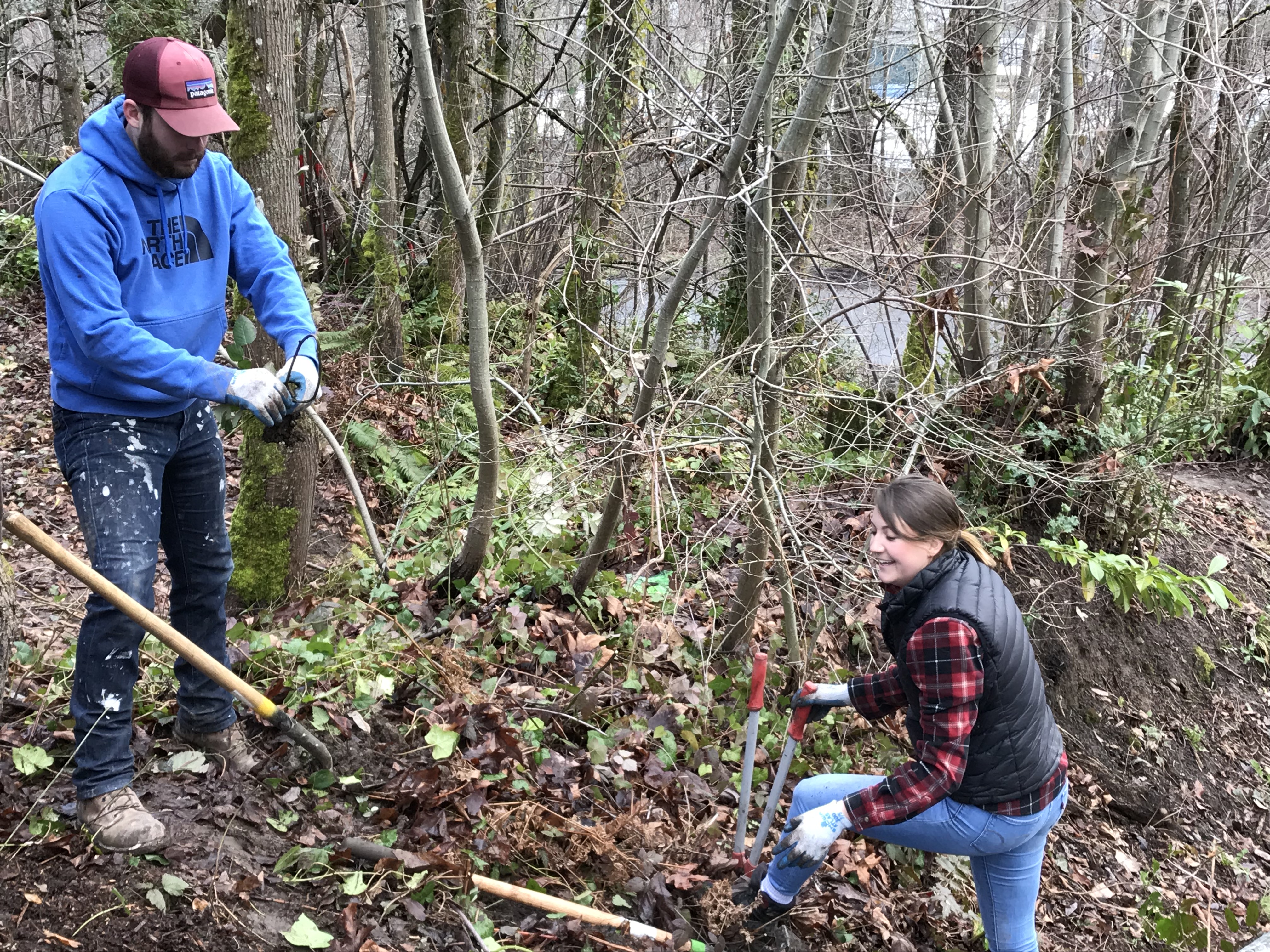
On a chilly but snow-free February morning, eleven volunteers gathered to work in our Greenbelt forest restoration site. Kelly, Antje and I served as team leaders. In addition, a neighbor, two students from Seattle University’s Environmental Perspectives class and five volunteers who had found us on the Green Seattle Partnership’s Event Page participated.
This was the first time we held a work party where the restoration work was exclusively in the Greenbelt site that is north of the Hanford Stairs. (Our main site is south of the stairs.)
After the initial orientation, we divided into three teams.
Teams One and Two
We have been having a problem with people dumping yard waste and trash into a section of the Greenbelt that we had begun to clear last fall. I wondered if we planted trees, shrubs and ground covers in that area if the dumping would stop.
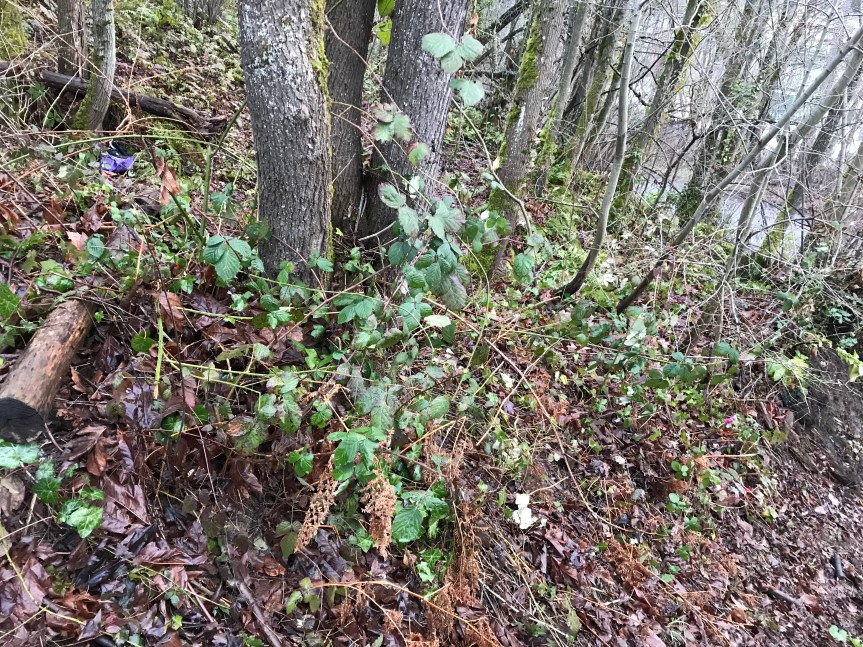
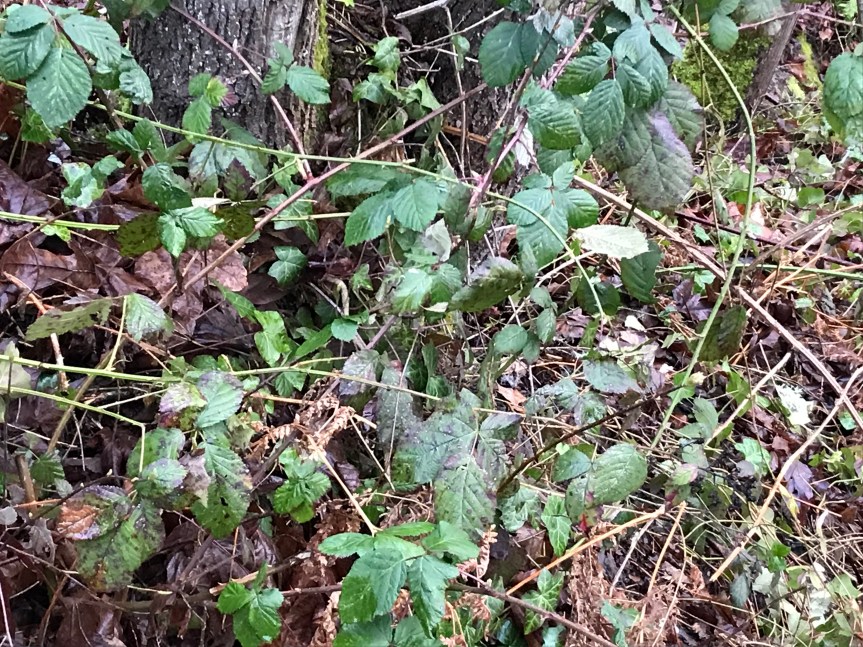
Planting in that section would be no easy matter. Take a look at what the land looked like at the beginning of this work party.
(To get a better sense of the enormity of the task, click on the gallery)
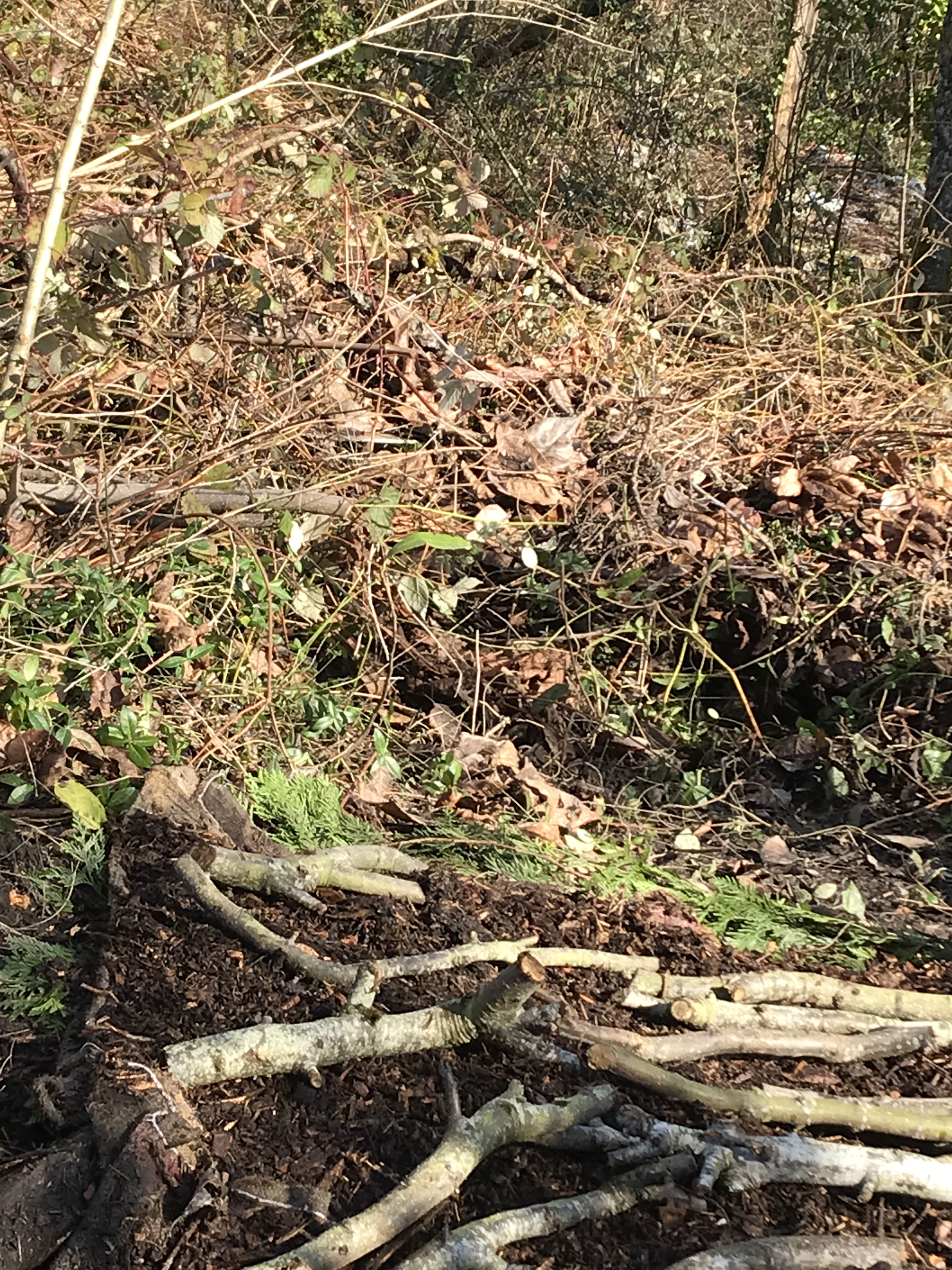
Getting this land ready for planting will take many work parties. We decided to start in a section where the blackberry vines had been cut down but the root balls hadn’t been dug out (see the photo below).
Before
Our plan for this work party was to clear a small strip of land on the edge of the place where the Greenbelt becomes a steep slope. Once it was cleared, we would create a barrier along that strip. The barrier might be helpful in reducing dumping. Even if it wasn’t, it would make people more aware of the slope on the other side of it. [Note: barrier is probably the wrong word since the structure will only be 3-4 feet high, but I can’t think of a better one. Border is a possibility but that doesn’t seem right either.]
The barrier would be built from dried branches as well as materials that might slow down weed growth. All of the materials we will use to create it will decompose over time and enrich the soil. Once the barrier is built, we will plant the trees, shrubs and ground covers on the flat land that is east of it.
As the team began to work, they discovered that there were many layers of ivy and periwinkle vines both on top of the ground and under it. There was also a small holly plant.
The team worked diligently
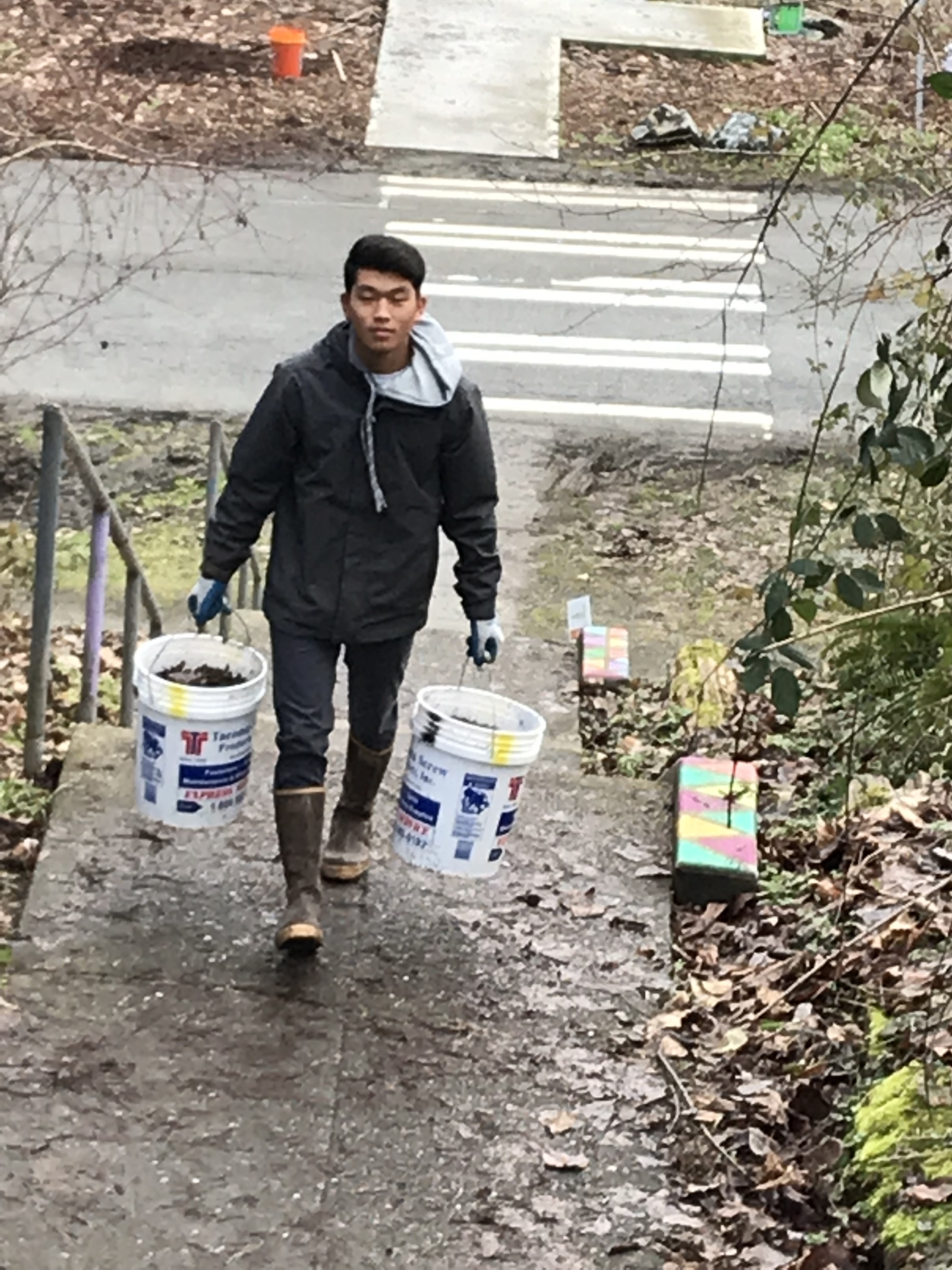
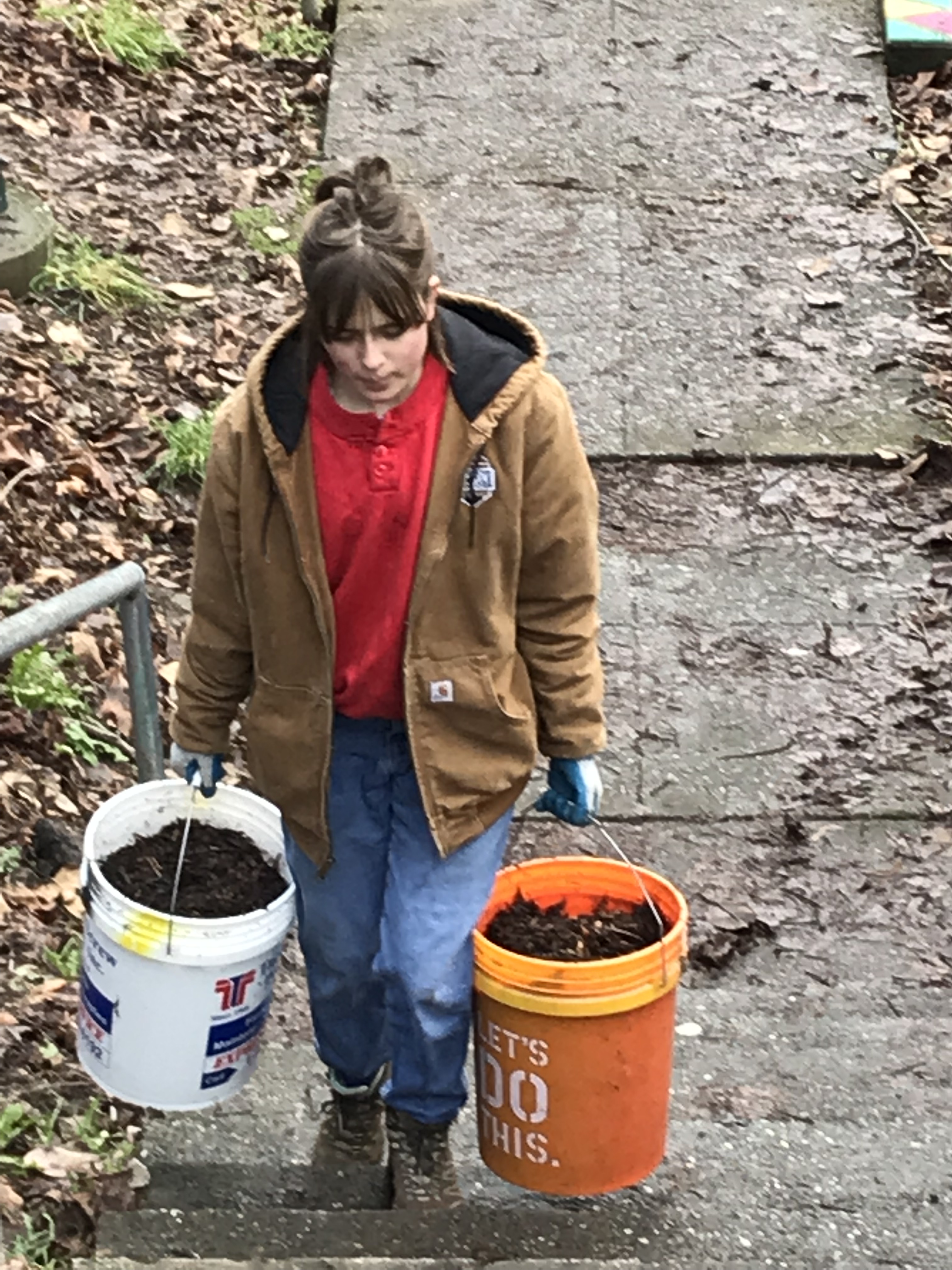
While the first team was clearing the land in the strip, the second team did tasks that supported the first and third teams. For example, they filled buckets with wood chips and then took the buckets to the areas where the wood chips would be spread over cleared ground.
Once the buckets were empty, team two volunteers refilled them. They also filled several buckets with branches that would become part of the barrier. After some time, the second team joined the first team in clearing the strip.
These groups cleared a significant amount of land. This is what the strip looked like once the blackberry root balls, ivy and periwinkle vines had been removed.
After
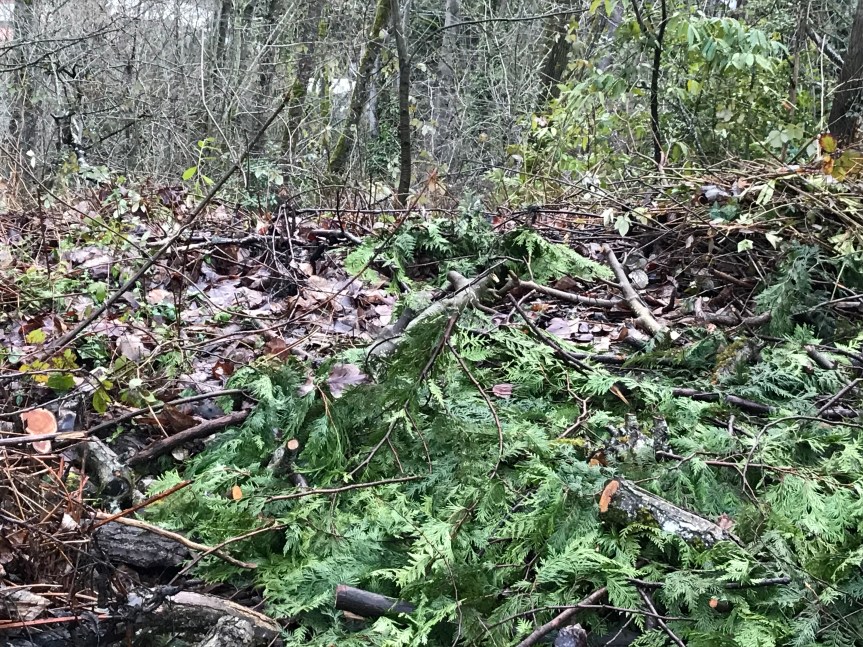
During part of the clearing time, one of the volunteers cut cedar leaves off cedar branches that had been dumped in the Greenbelt. Sometimes the leaves were left on the thinner branches. Those leaves became the first layer of the barrier.
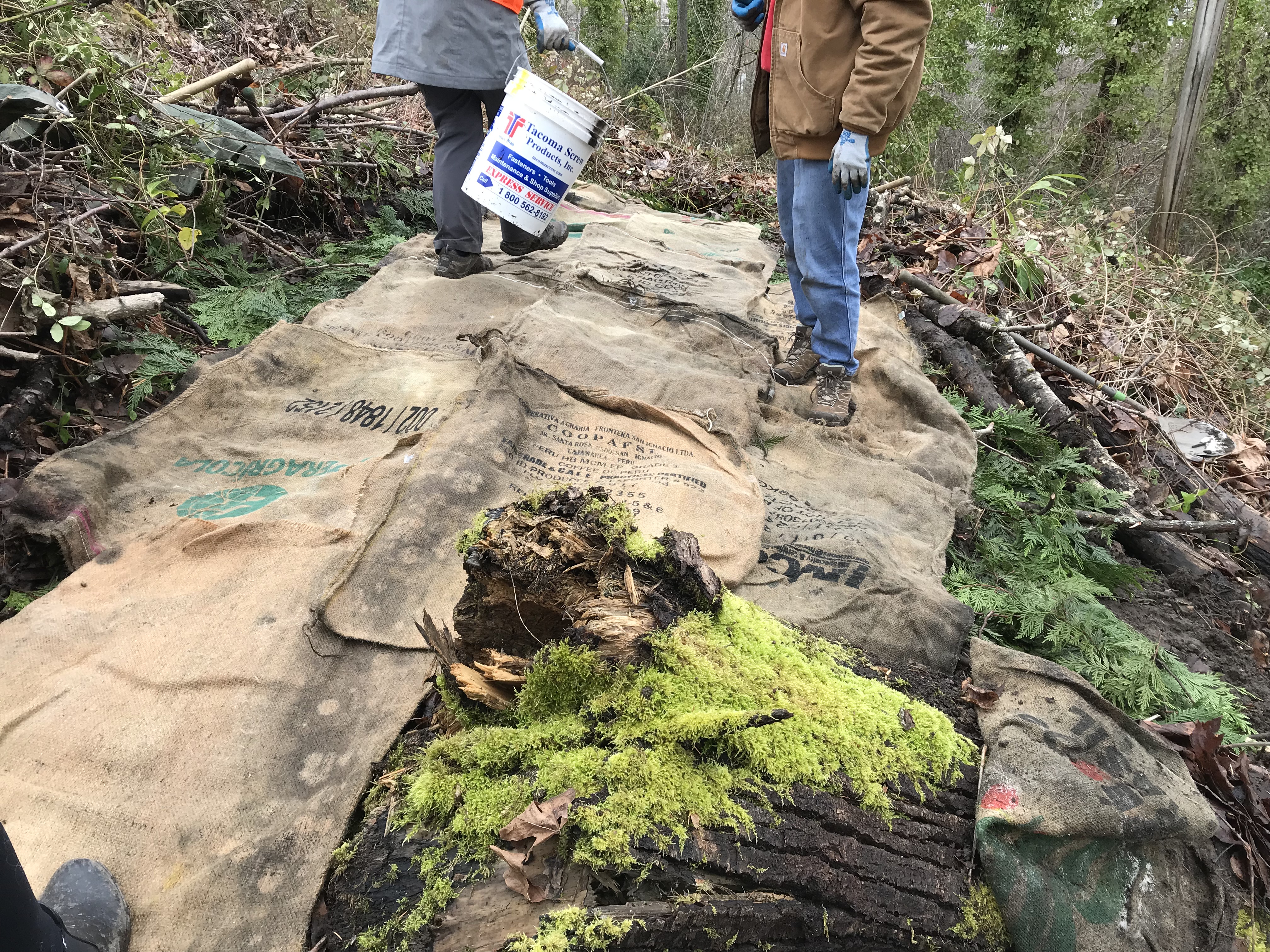
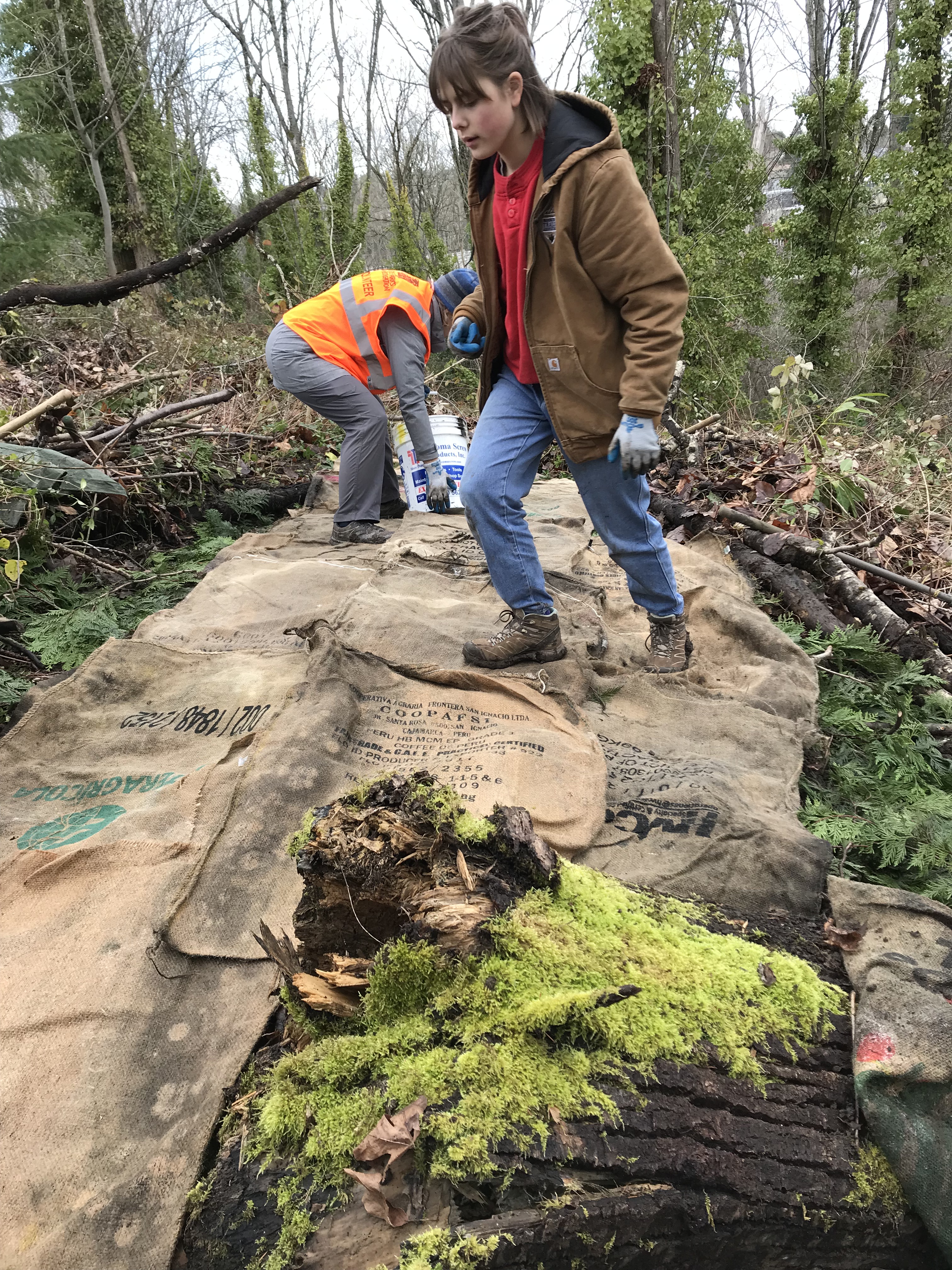
Next the team covered the cedar leaves with two layers of burlap bags.
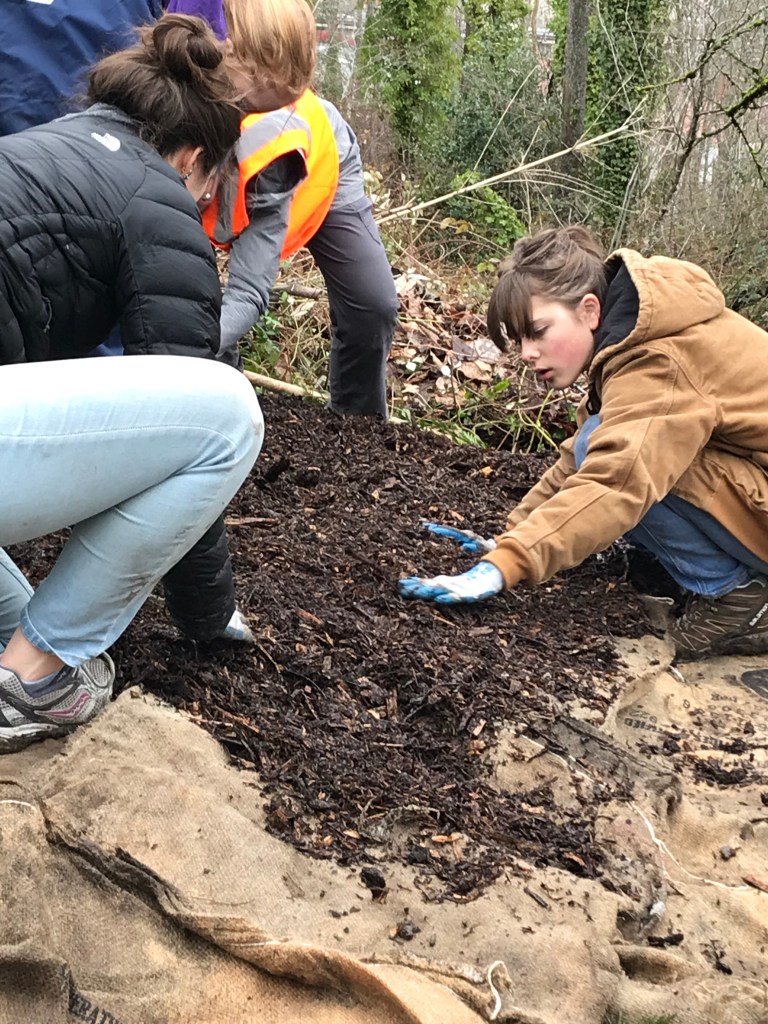
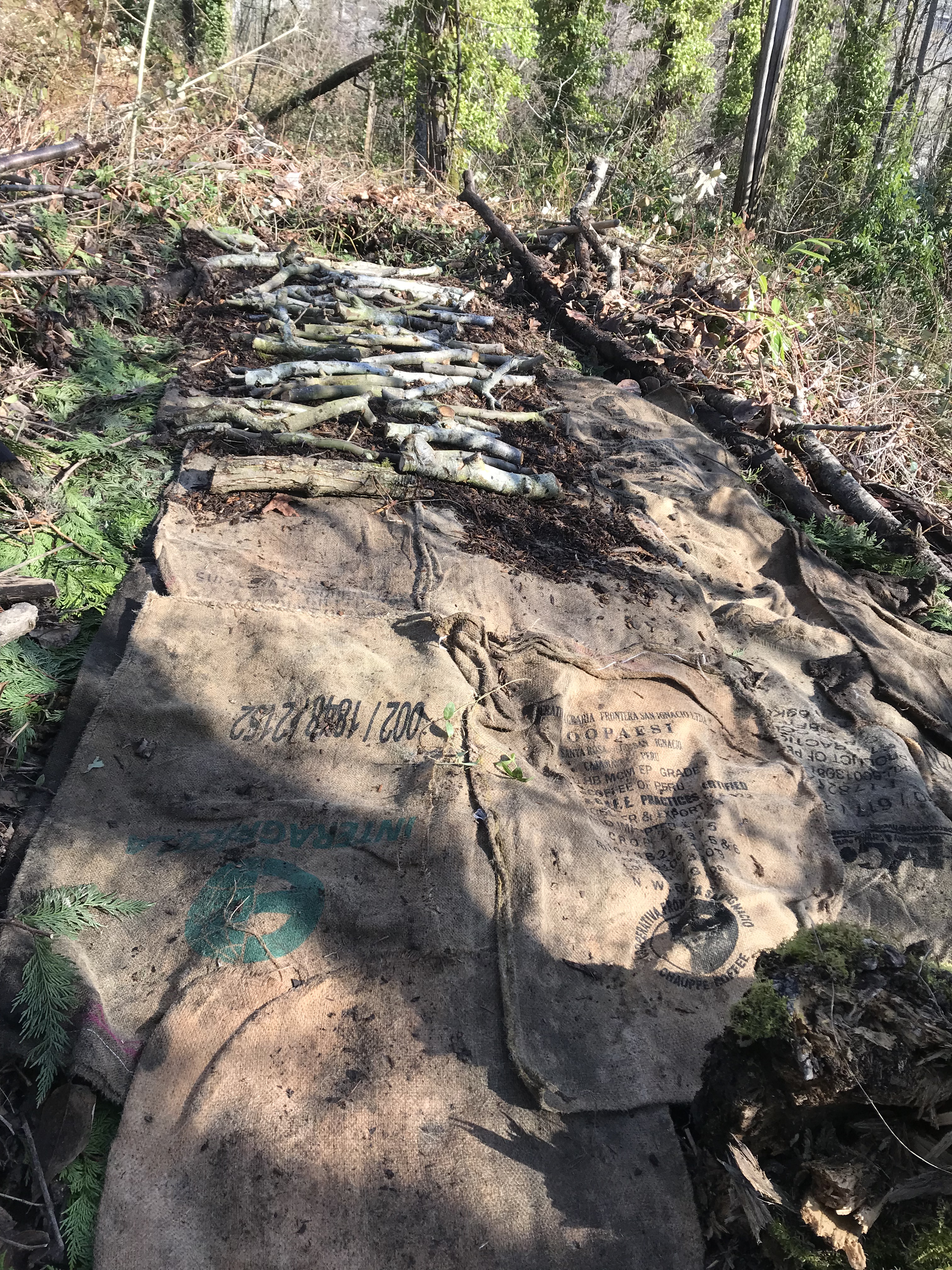
Then a layer of wood chips was spread. The work party was almost over so we put a layer of branches on top of the wood chips. If there had been more time, we probably would have added a thicker layer of wood chips.
There will be many more layers in the barrier and in time the strip will be at least three times as long as it is now. I don’t know exactly what it will look like when we finish it. This project is definitely an experiment.
The first photo below shows the entire strip the team created that day and the second photo will give you a glimpse of the challenges we will face when we extend it.
After
Future work
Team 3
The third team started their day clearing an area near the Hanford stairs; an area that also had invasive blackberry, ivy and periwinkle vines.
Before
Before
As soon as a section was cleared, the volunteers covered the ground with wood chips. Here the wood chips serve primarily as mulch. I was excited to see the changes that were occurring before my eyes. When they finished the area along the stairs looked like this:
After
After
After a snack break, team three decided to clear invasive ivy, blackberry and periwinkle vines… and occasionally trash… in a part of the Greenbelt that was a bit further away from the stairs. One member of group two and I joined them.
I didn’t take before and after photos where this group worked except for the “after” photo below. It shows a section that is full of Dwarf Oregon Grape plants. The space between the plants used to be filled with ivy.
I give thanks to all of the volunteers who helped during this work party and during the work parties that proceeded it. It is due to the volunteers that this land is once again becoming a healthy forest.
***
I always enjoy writing these posts. Whenever I do that, I get to re-live the magic that occurs during each work party.
If you would like to participate in this restoration work, write me at hanfordstairsgreenbelt@gmail.com or you can find information about and/or sign up for our March 10 work party at: https://seattle.greencitypartnerships.org/event/15840/.
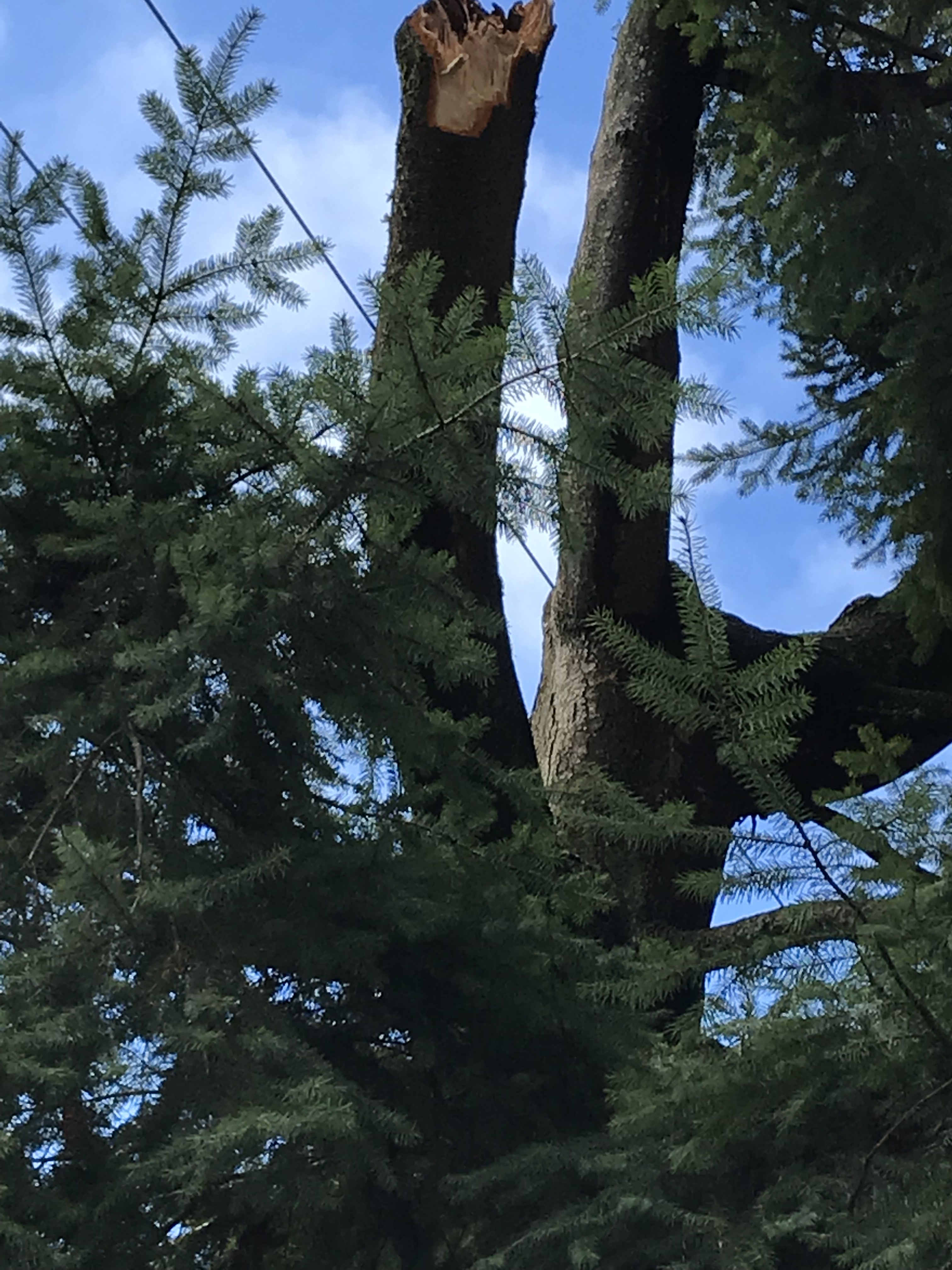
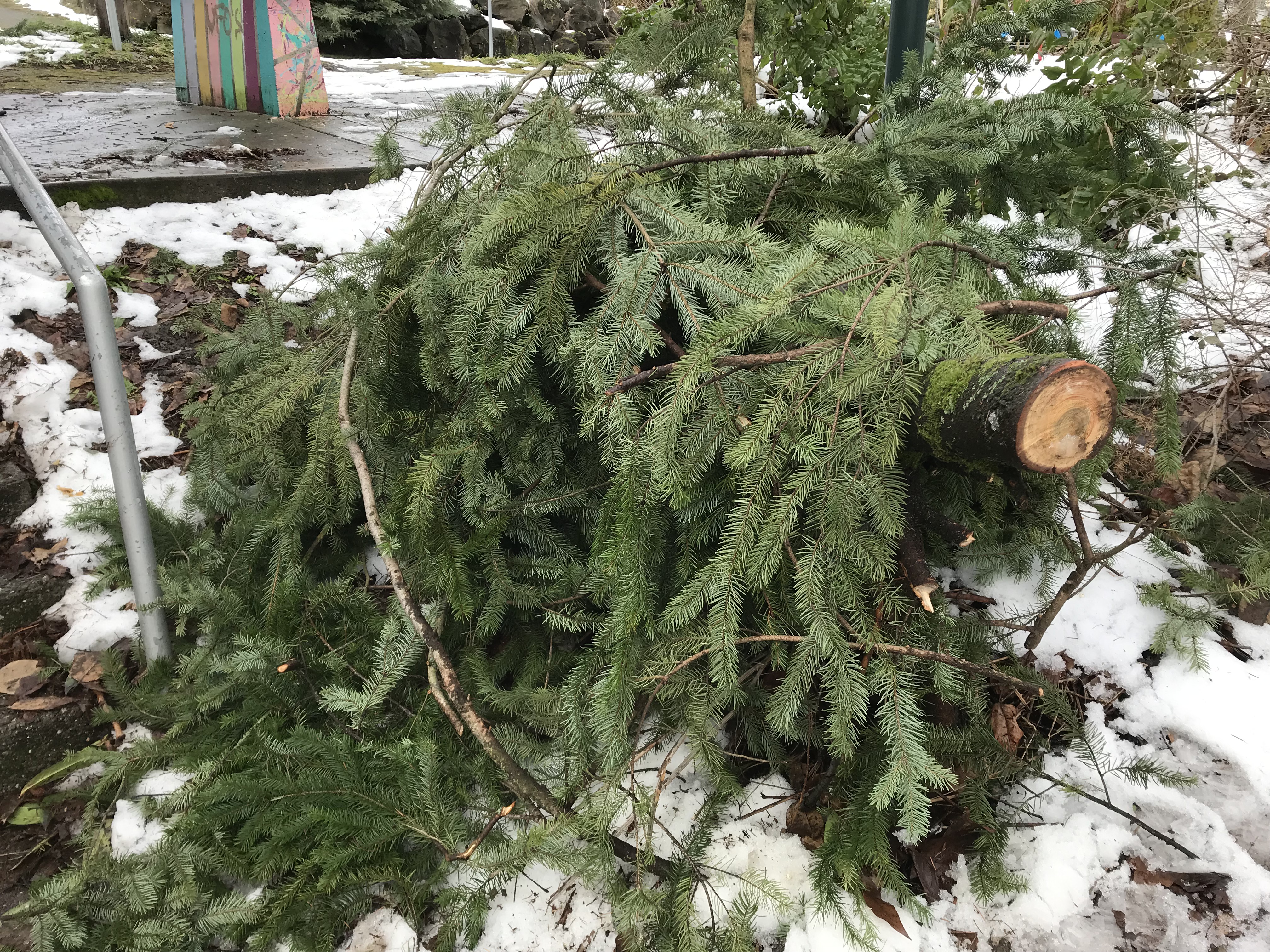
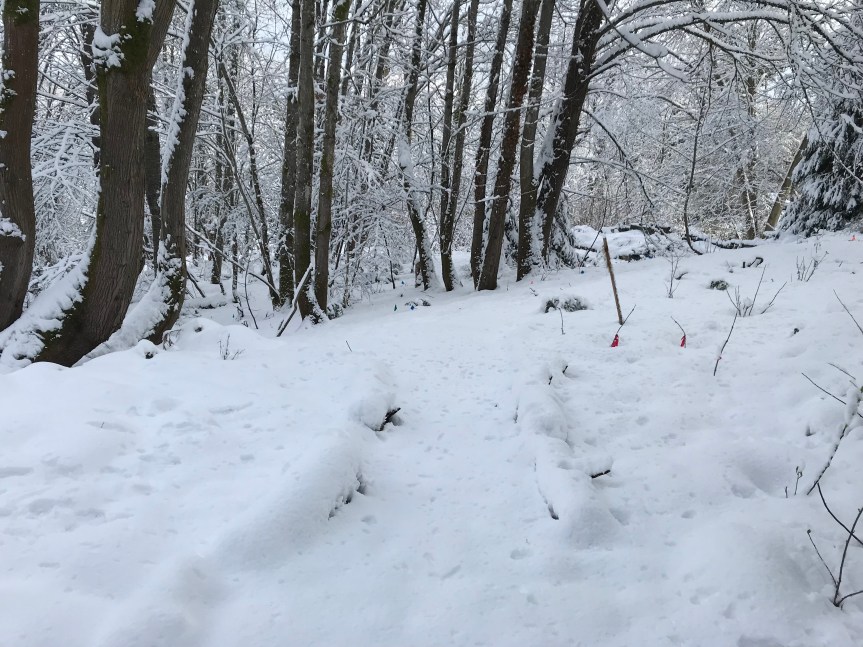
Last week, I heard that a Greenbelt tree had fallen onto the Hanford Stairs. When I walked through the snow to that area, I could see that branches had fallen, but they didn’t cover the stairs. I didn’t feel safe walking any closer to the stairs than I was; the snow was too deep and slippery.
On Friday, February 15, the sidewalks were clear, for the most part, so I headed back to that area to take a closer look at the fallen branches.
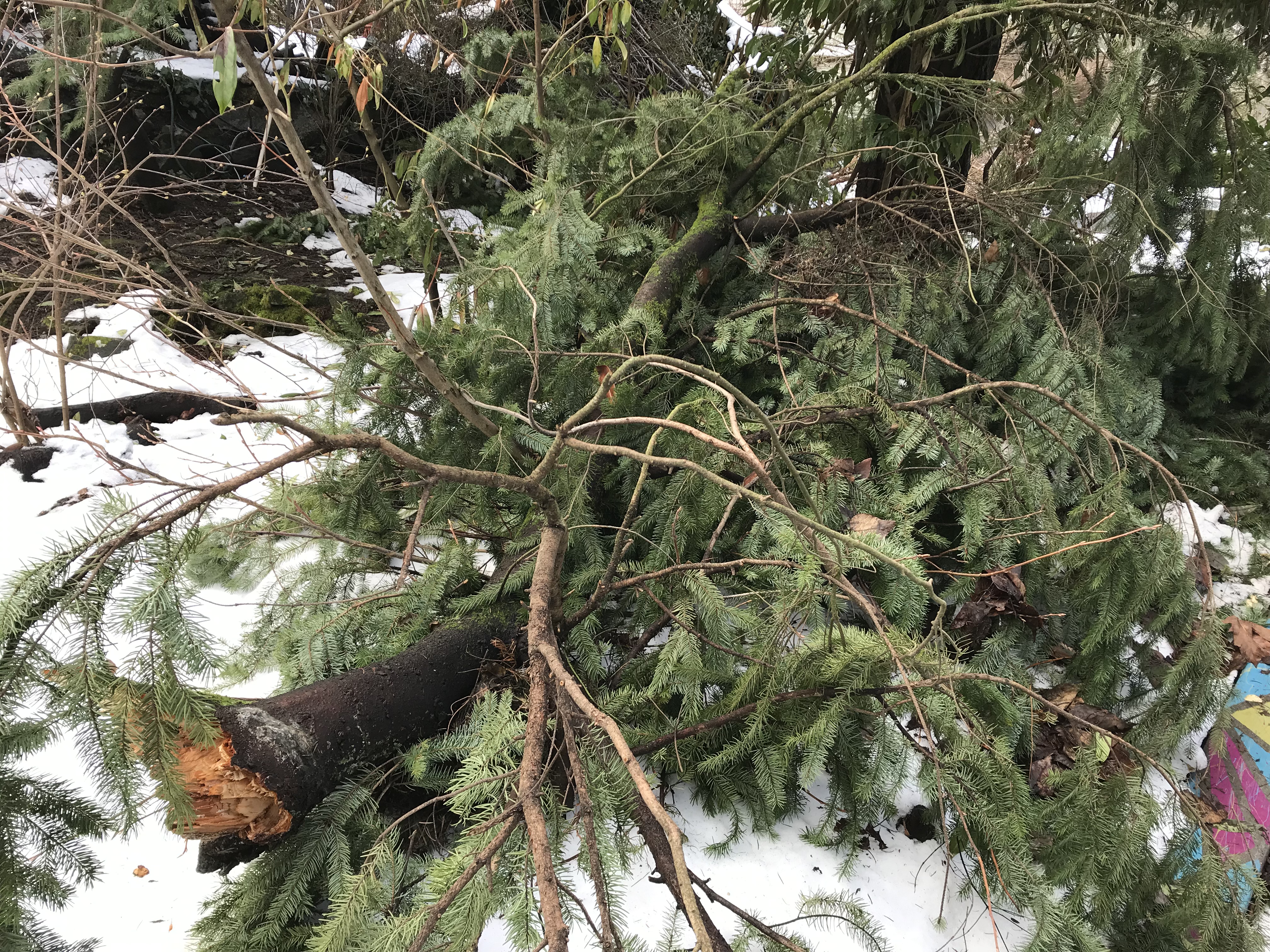
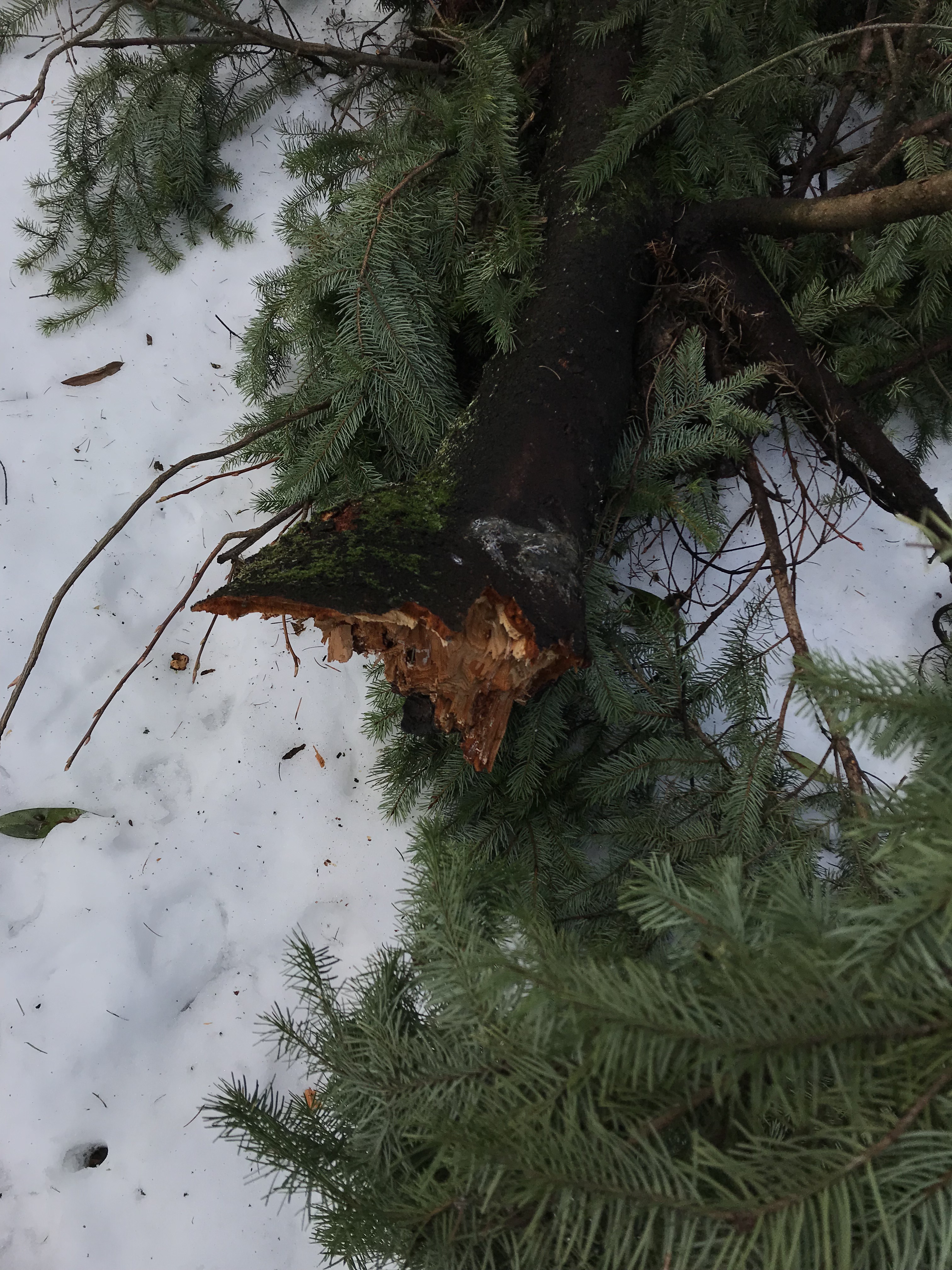
The tree was one that had been cut away from power lines numerous times in the past. I soon discovered it wasn’t just a few small branches that had broken off, it was a BIG one.
I also noticed that the branch had fallen on top of a Pacific Ninebark shrub; one that had been planted by a neighborhood work group many years ago.
I called John, the neighbor who has helped with our reforestation project from the beginning, and asked him to come take a look.
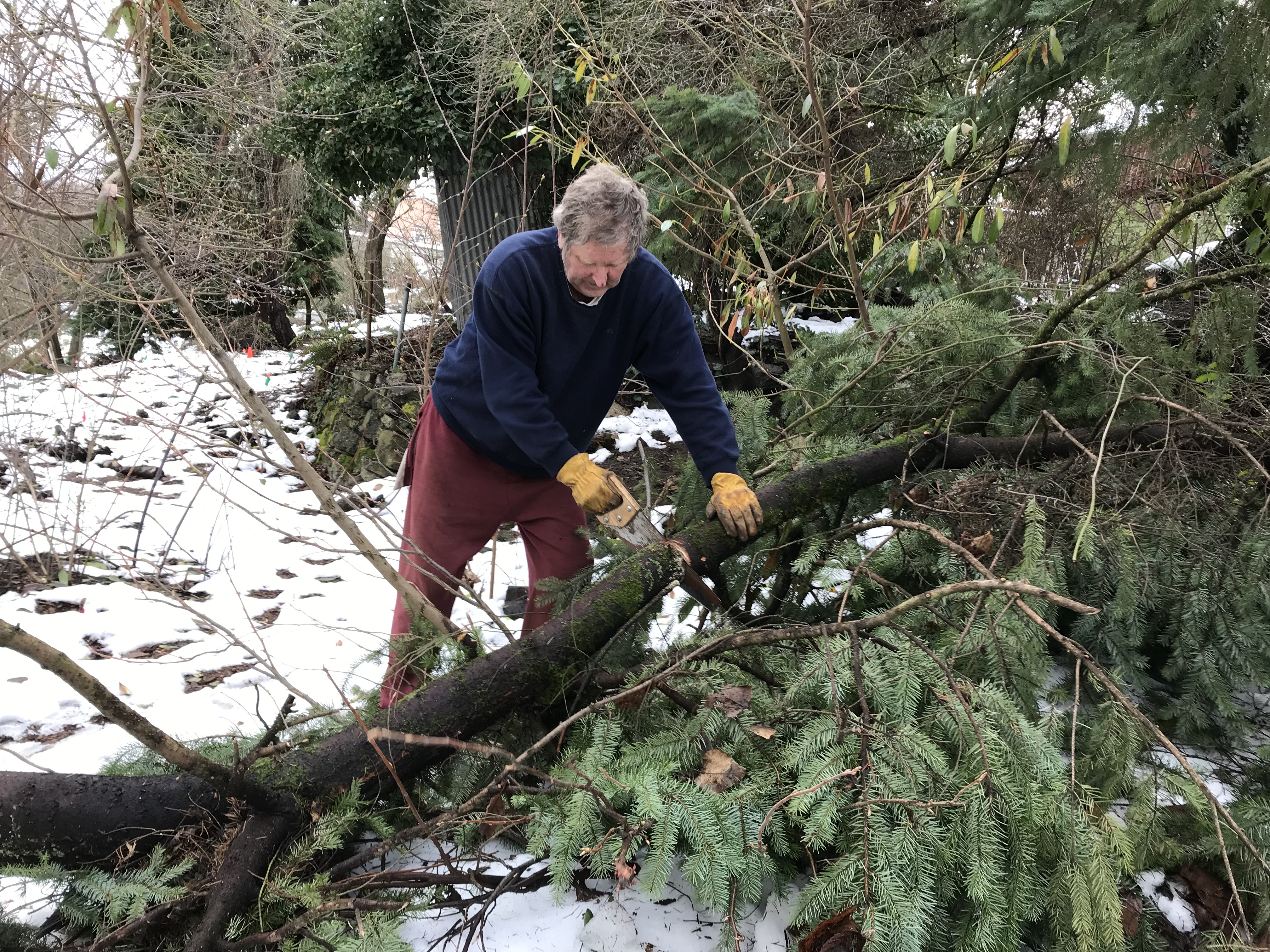
Before long, he was sawing part of the big branch and I was using a lopper to remove smaller branches
Once John had sawed through the branch, we discovered it was too heavy for him to move alone and I couldn’t be of much help. At that moment, another neighbor walked up to us and offered to help. She and John were able to remove the branch, free the shrub, and carry the branch to the other side of the stairs. They put it on top of a pile I had created for the smaller branches.
There was still much more of the fallen tree branch to deal with but that could wait until another day. At least the shrub was free and safe!
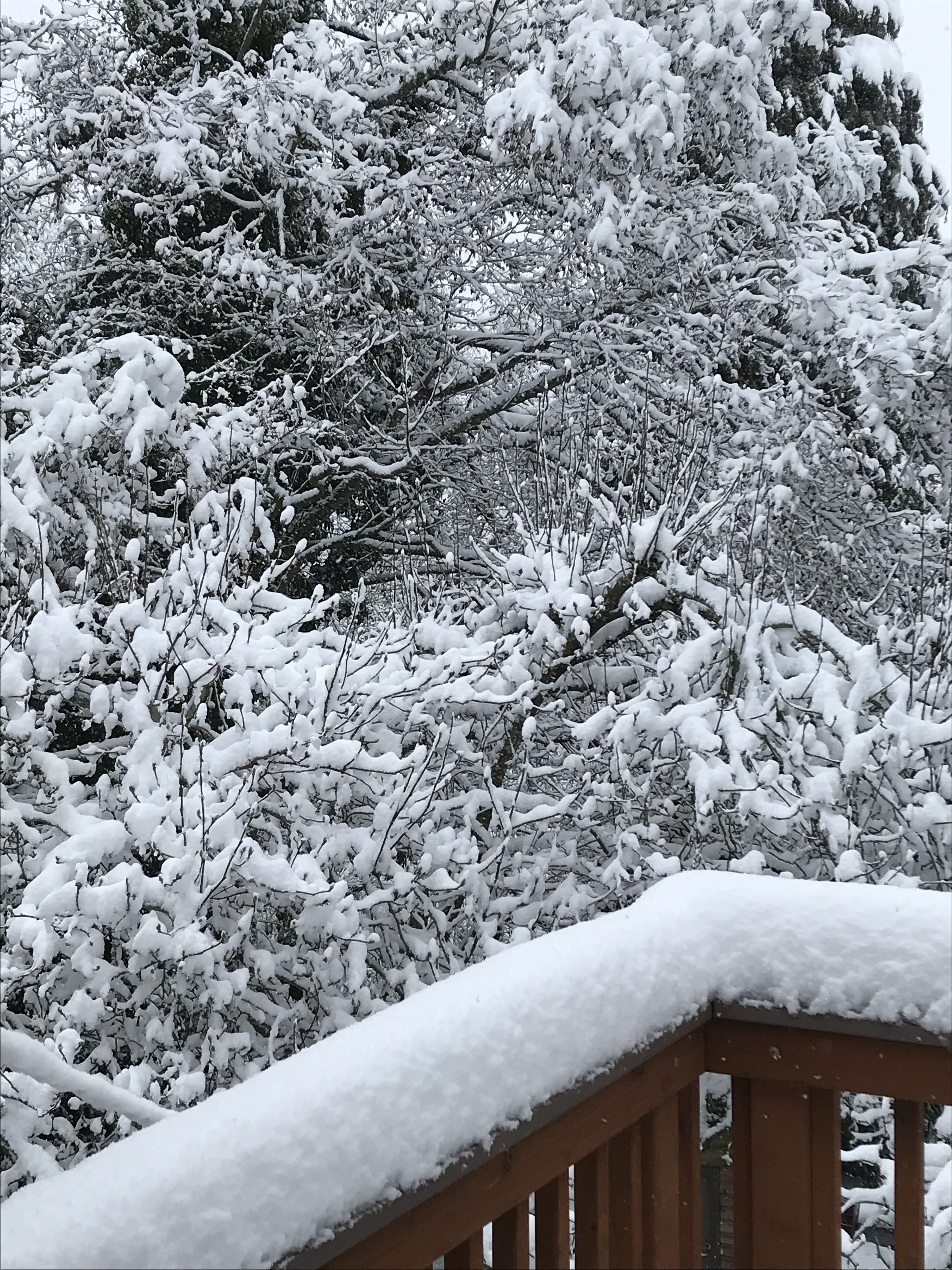
While the amount of snow that has been occurring in Seattle will seem small compared to what most of the country is experiencing, it is not small to us. When I moved here in 1966, Seattle occasionally had big snow storms, but there have been many years when we had no snow, or almost no snow.
The last ten days have been quite an adventure. I have loved the beauty of the snow and the challenges, but I’m quite ready for the snow to go away, at least for now.
I learned a new word! I had written a friend that lives in Bellevue and asked if it was snowing there. She wrote back that it was graupeling. I didn’t have any idea what that word meant so looked it up. Google kept changing the word to grueling. I was persistent and eventually tried graupel. That worked! Graupel is defined as soft hail or soft snow pellets.
Later that day, I walked outside and saw many graupels in my yard .
(Click on any photo gallery to enlarge the photos.)
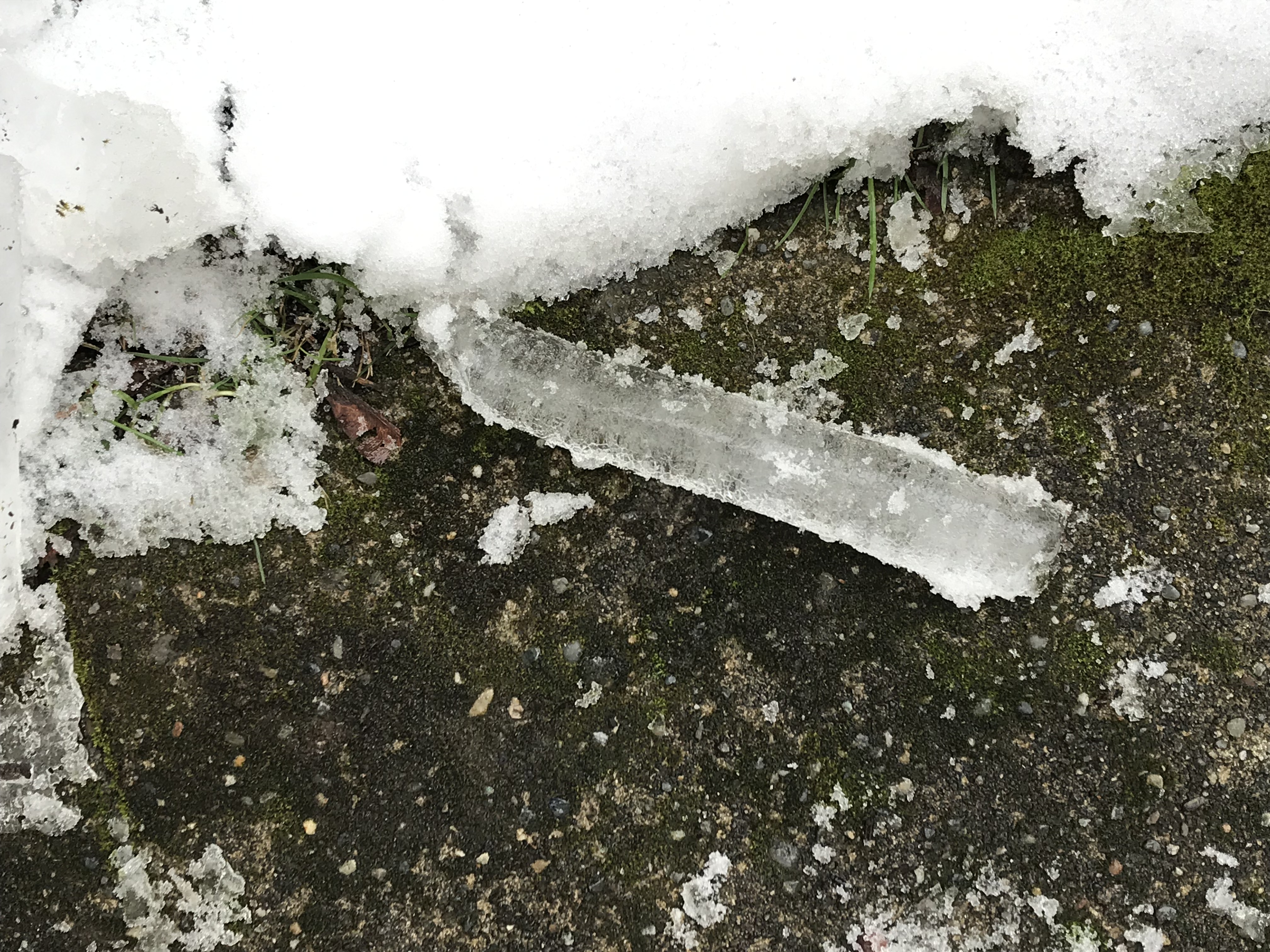
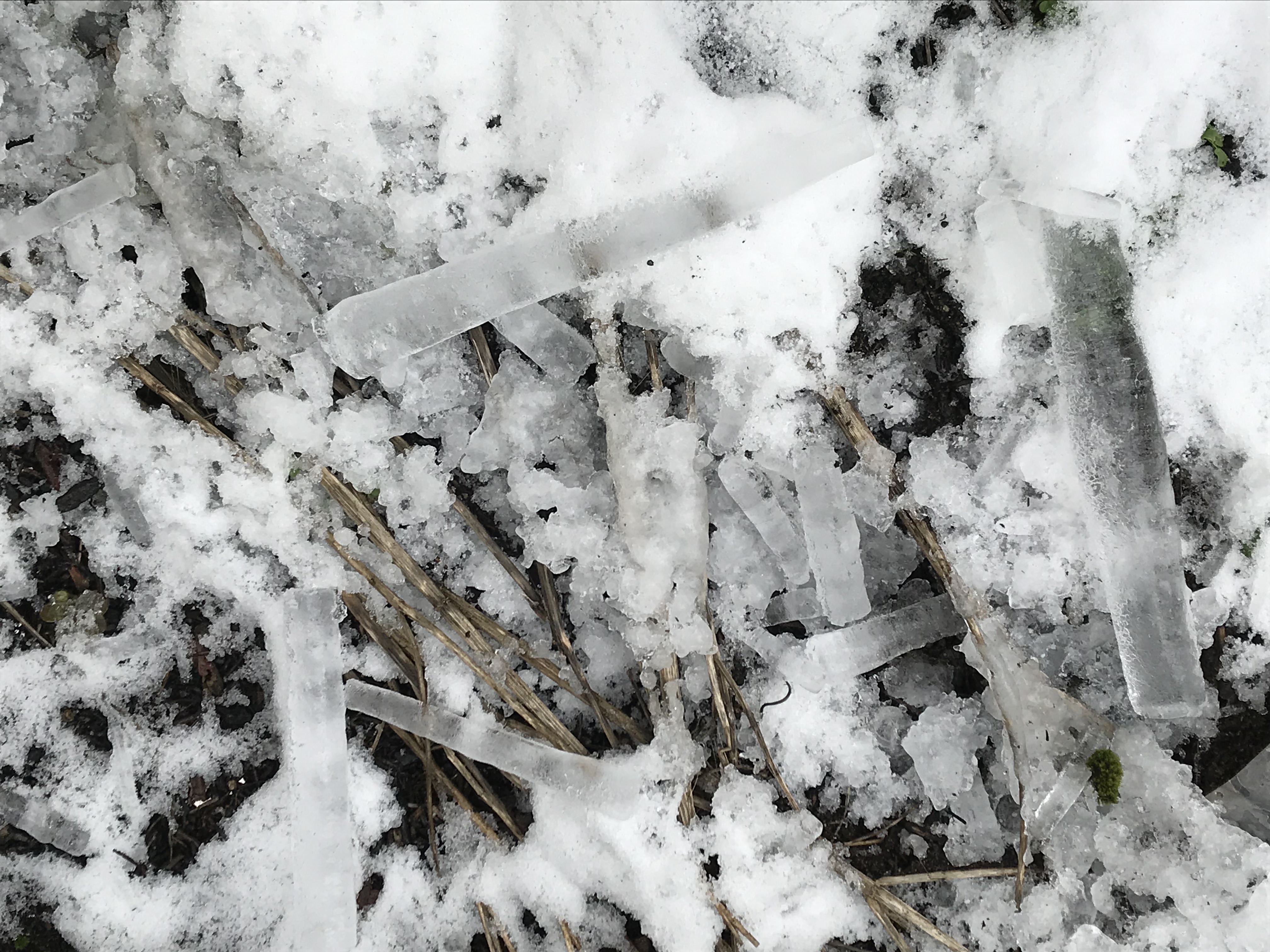
I saw something else that made me curious. At first I didn’t know what it was, but soon realized it must be a thick icicle. It was more than an inch in diameter. There were many fallen icicles on the ground nearby.
Later that day, it began snowing in earnest.
Saturday, February 9
During our first big snow, I stayed inside for days because I was afraid to walk down the front steps. The steps were slippery and they don’t have a railing. This time I realized I could just walk out the basement door. Duhhh. Why didn’t I think of that before? I ventured outside much sooner and more often on these snowy days.
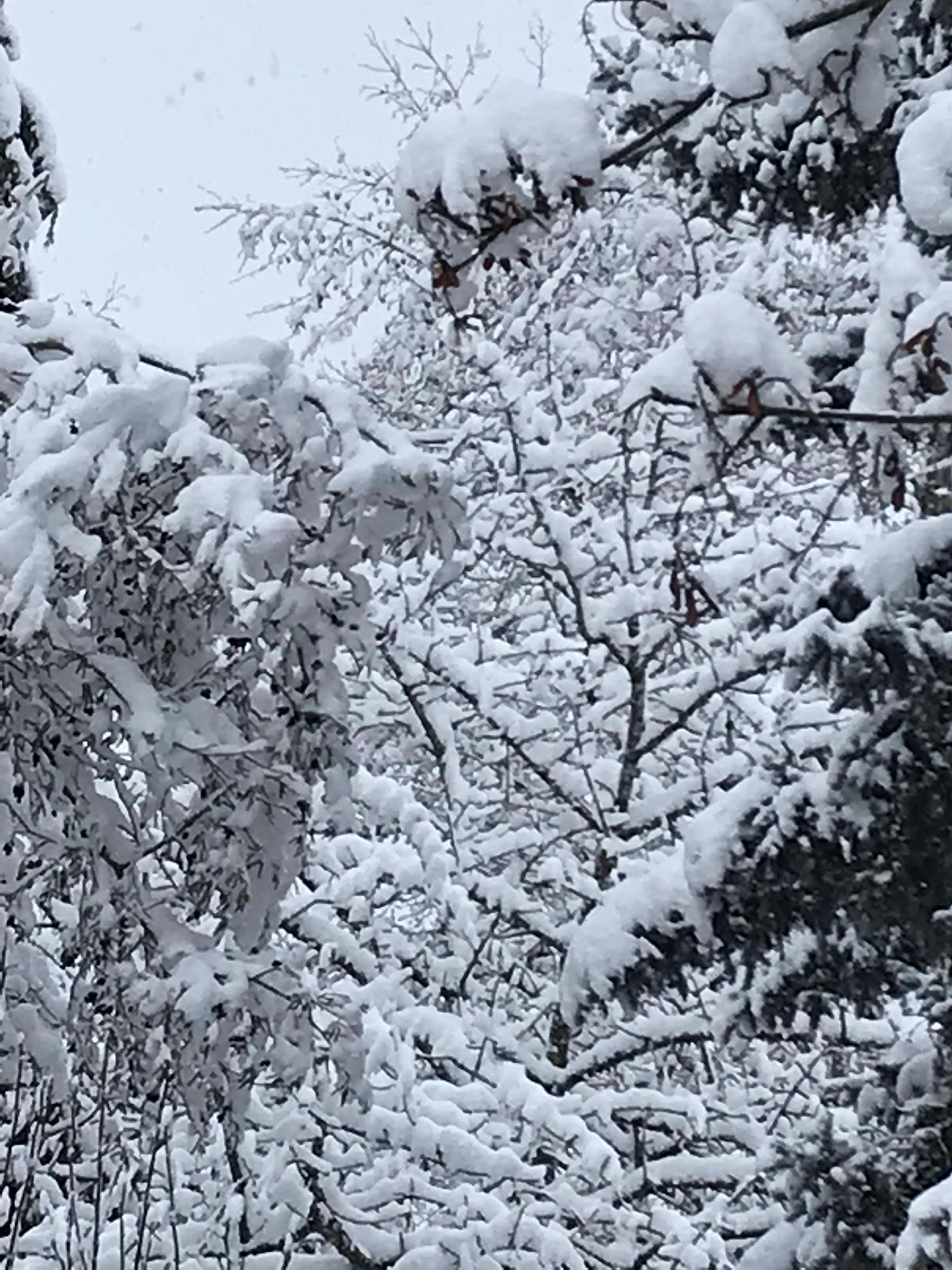
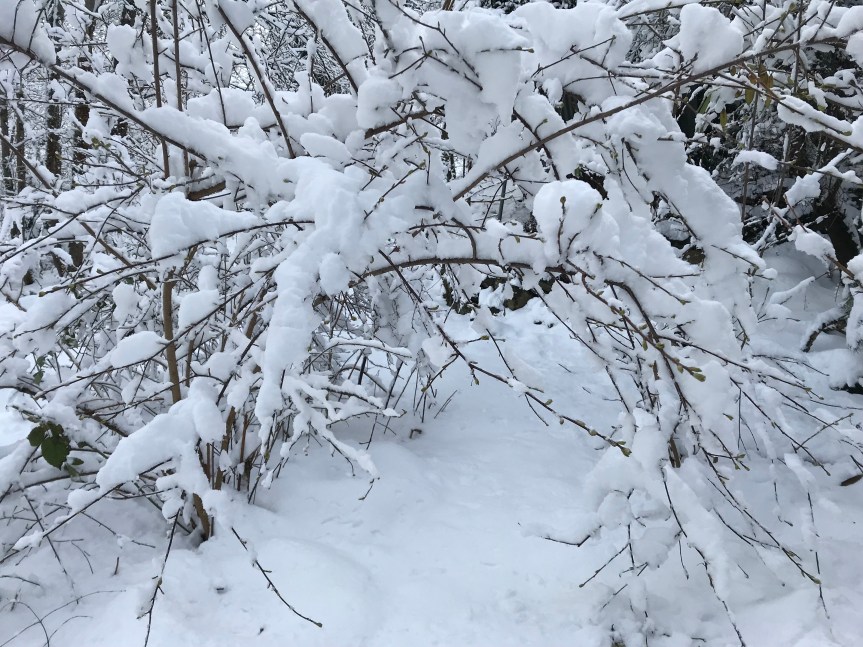
I knew that the little Greenbelt trees that were bent over from the weight of the snow would be bent over again so I walked into the Greenbelt from the Hanford Stairs. The weight of the snow on one of the shrubs created a canopied entrance to the site, I felt like I was entering a magical land.
I removed the snow from the tree I had freed before. I did the same with five other trees on that outing. In the process, I wondered if I was hurting them by freeing them when I knew they were just going to get buried again.
When I got back to my house, I wrote my supervisor at Green Seattle Partnership and asked her what she thought. She told me it would be best to leave them alone.
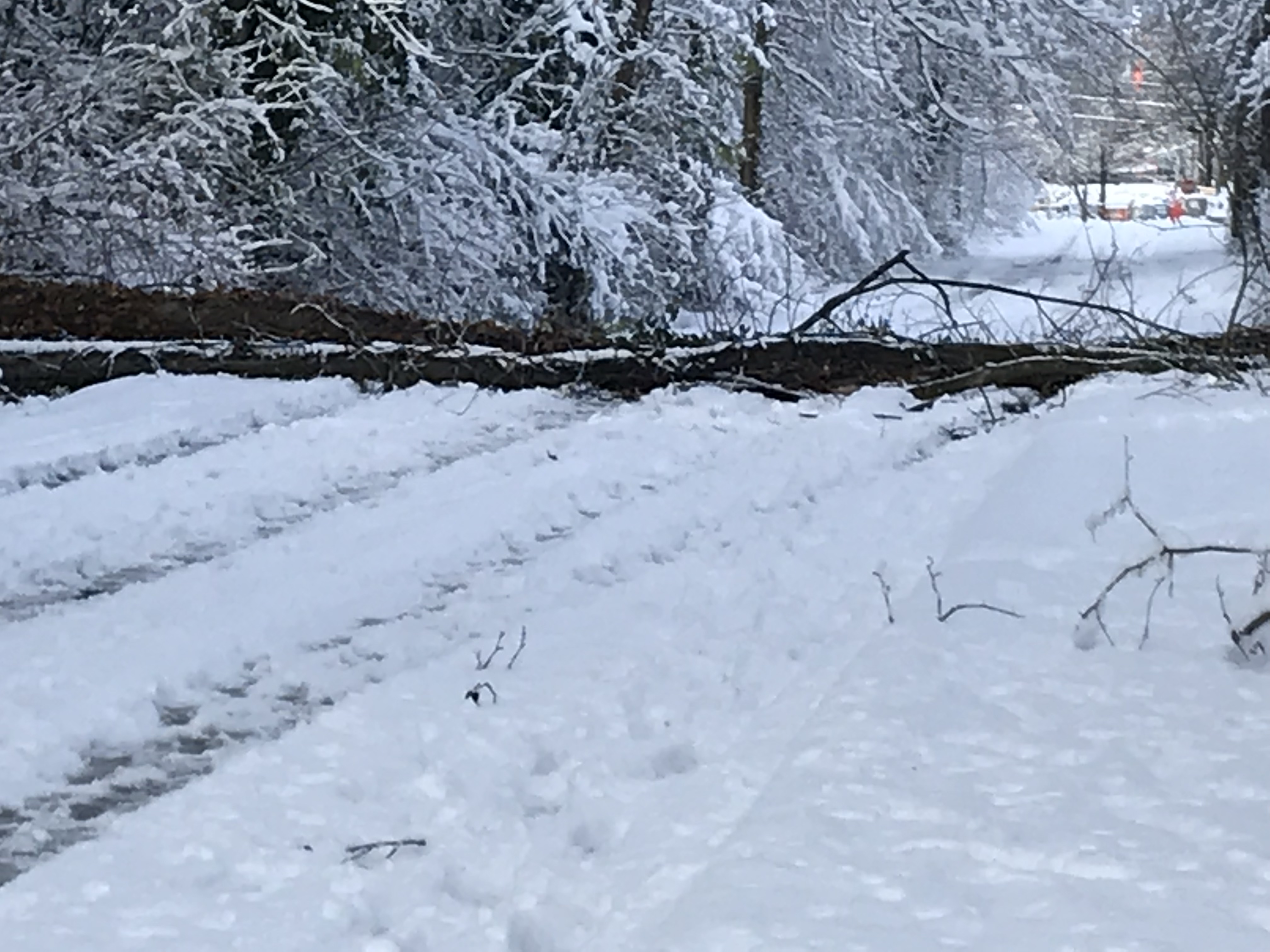
After leaving the Greenbelt, I saw a neighbor who was about to walk down the hill to the store. As we talked, we noticed that people were try drive down 25th Ave S where a tree had fallen across the road the night before. When they turned their cars around, they almost all discovered that they couldn’t get up the S. Hanford hill. Most couldn’t even make the jog in the road at 25th Ave. S and S. Hanford. We guided the motorists to a place where they could park their cars until the roads were drivable for a while.
When we stopped doing that, I walked down 25th Ave S and took a photo of the fallen tree.
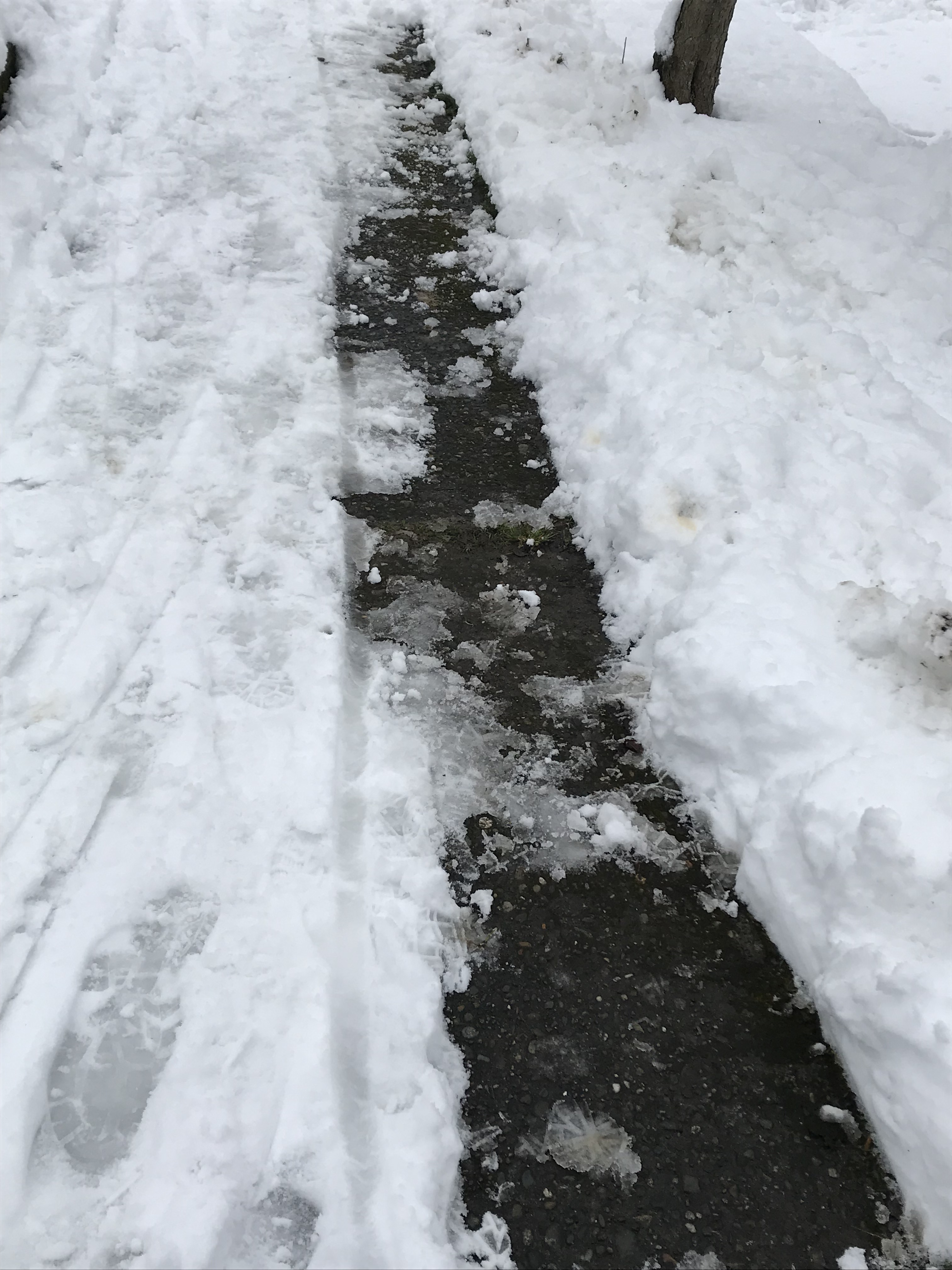
Then I returned home and cleared the snow off of one side of the front steps and off of my car. I tried to clear the front sidewalk too but didn’t get very far with that endeavor; there was ice under the snow that I couldn’t break or get under.
At least I started the job. I was impressed that I accomplished as much as I did. And it felt so good to be out of the house.
Sunday, February 10
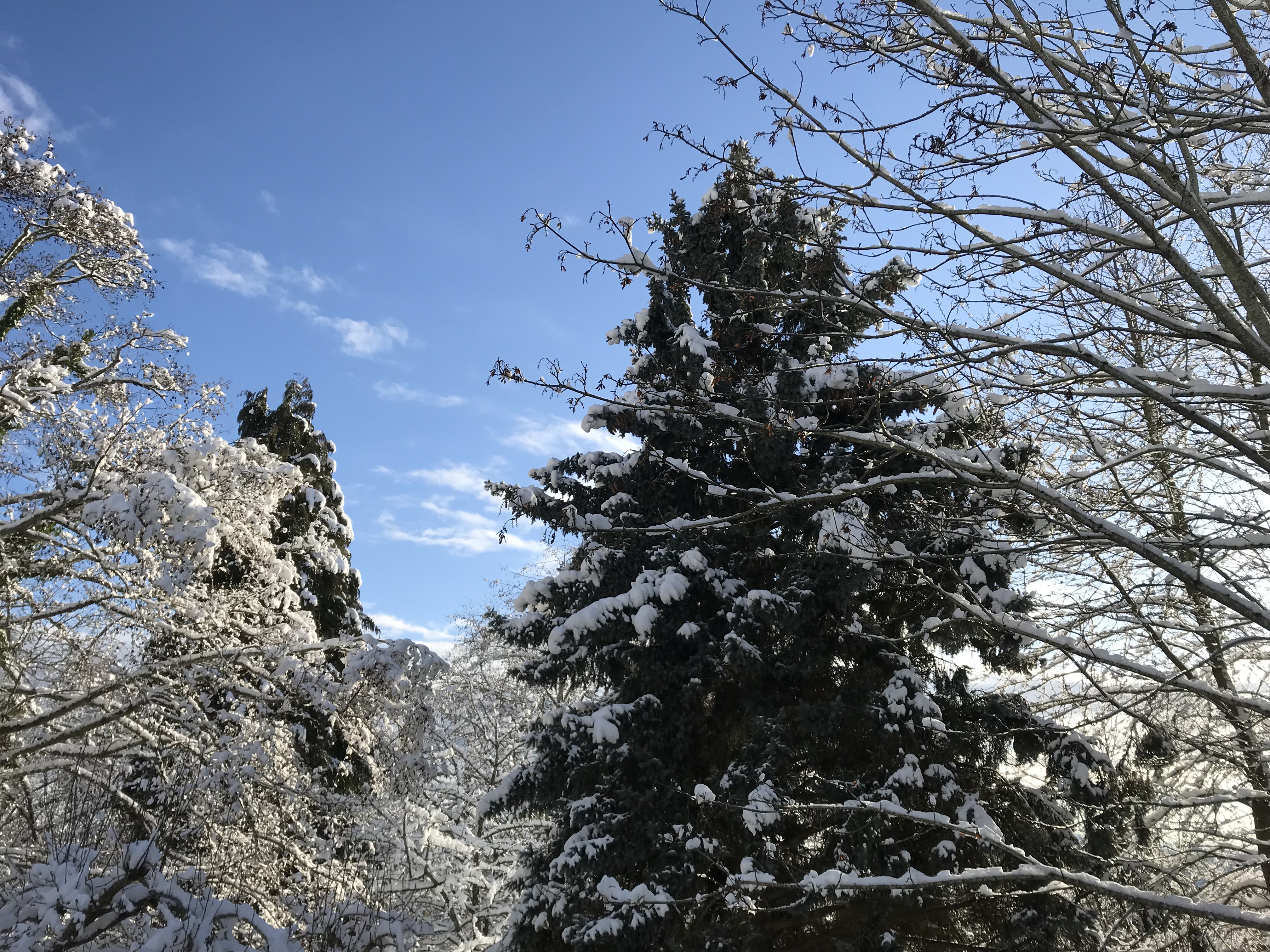
It was beautiful on Sunday morning. At 10 a.m. the sky was blue.
From my back deck
Sometime before 2 pm, the sky started to darken. Soon thereafter, it began to snow again.
Monday, February 11
The snow kept falling… and falling.
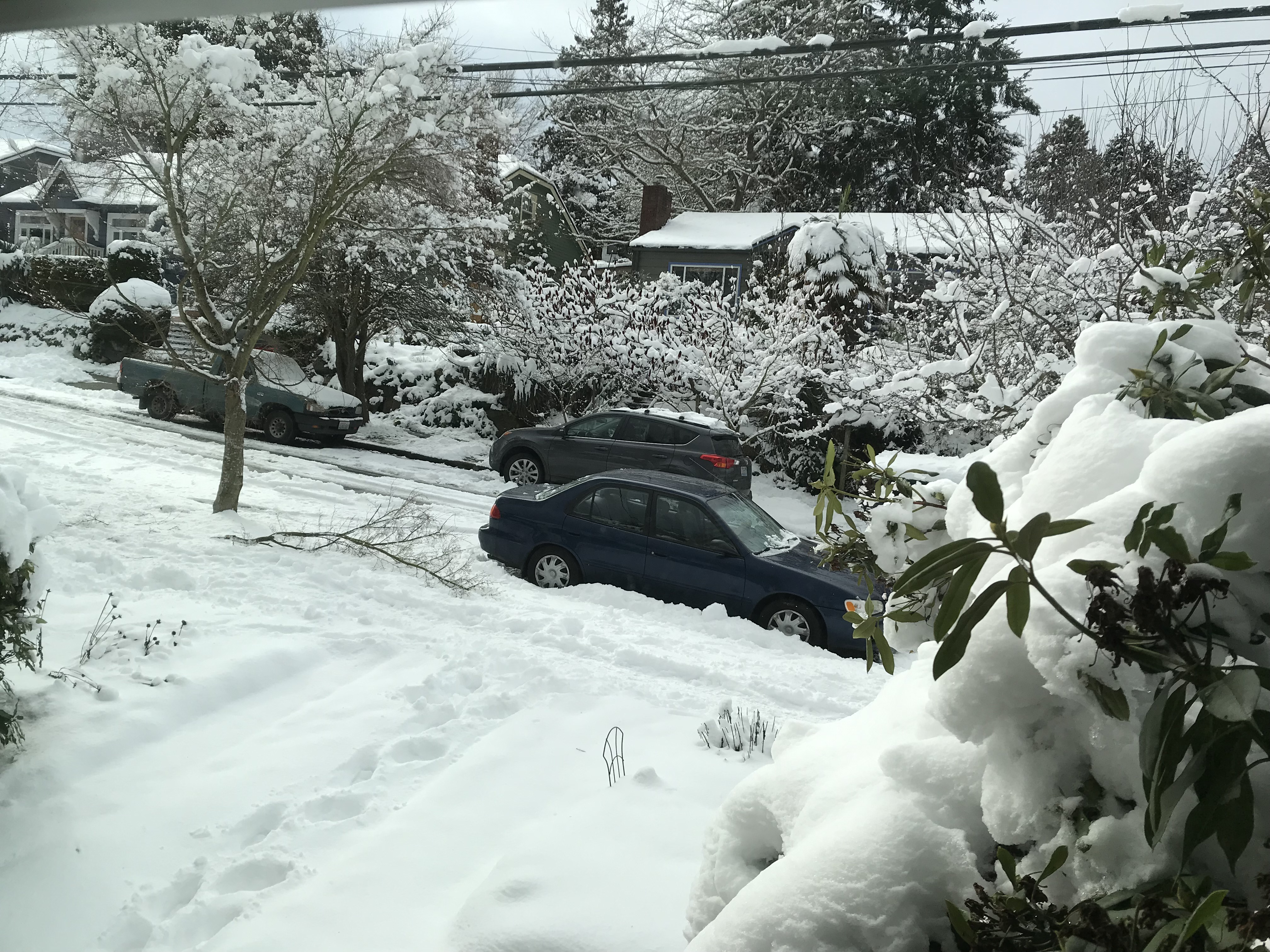
After the snow storm that started on February 3, I didn’t clean the snow off of the car until it had stopped snowing. That was probably on February 6. My car had been parked in the driveway. It took me much longer to be able to drive than the neighbors who had parked on the street.
When I did eventually try to get into my car, the front door was frozen shut. During the second series of snowstorms, I decided to park the car on the street and to remove the snow at least once a day.
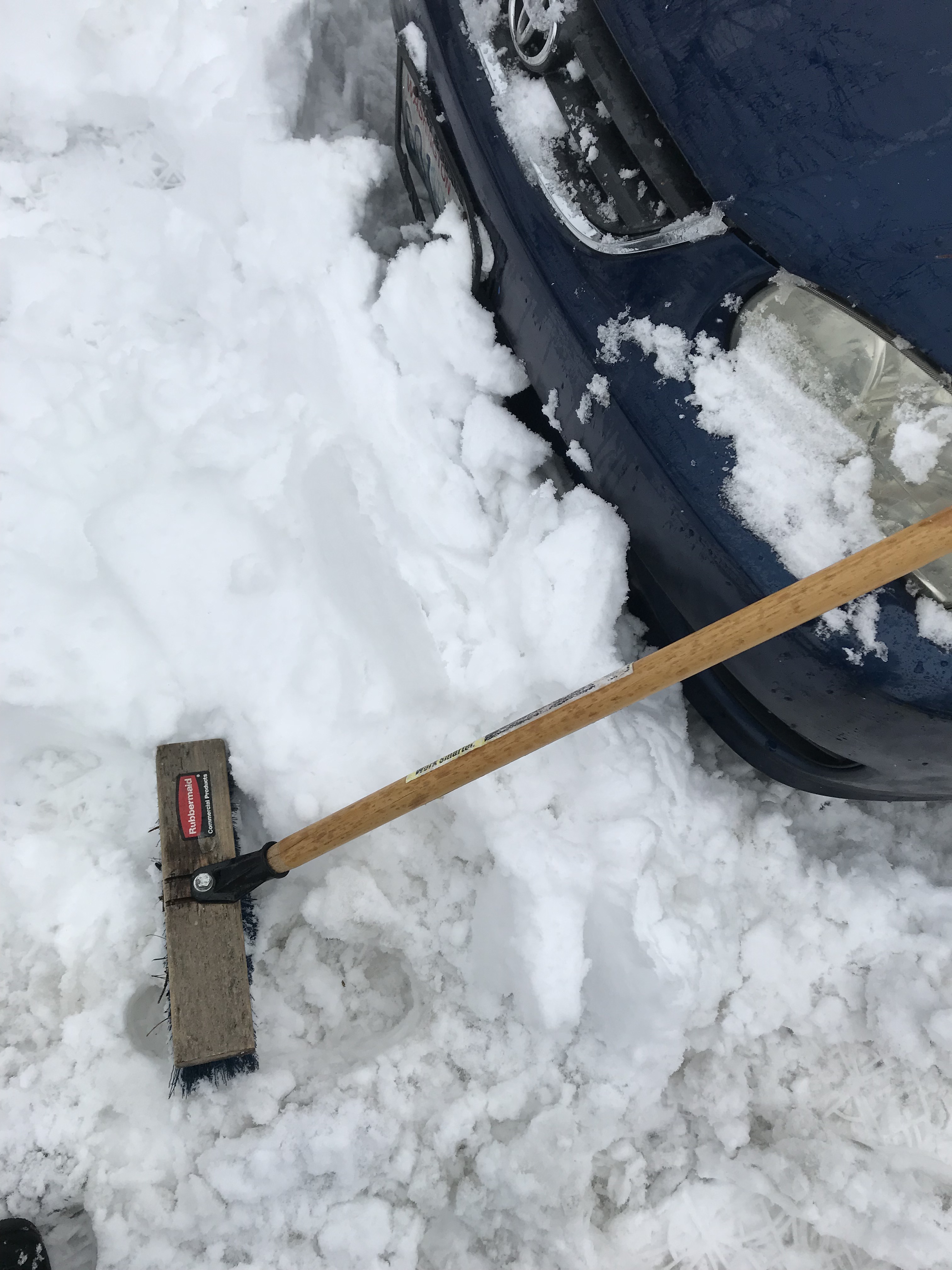
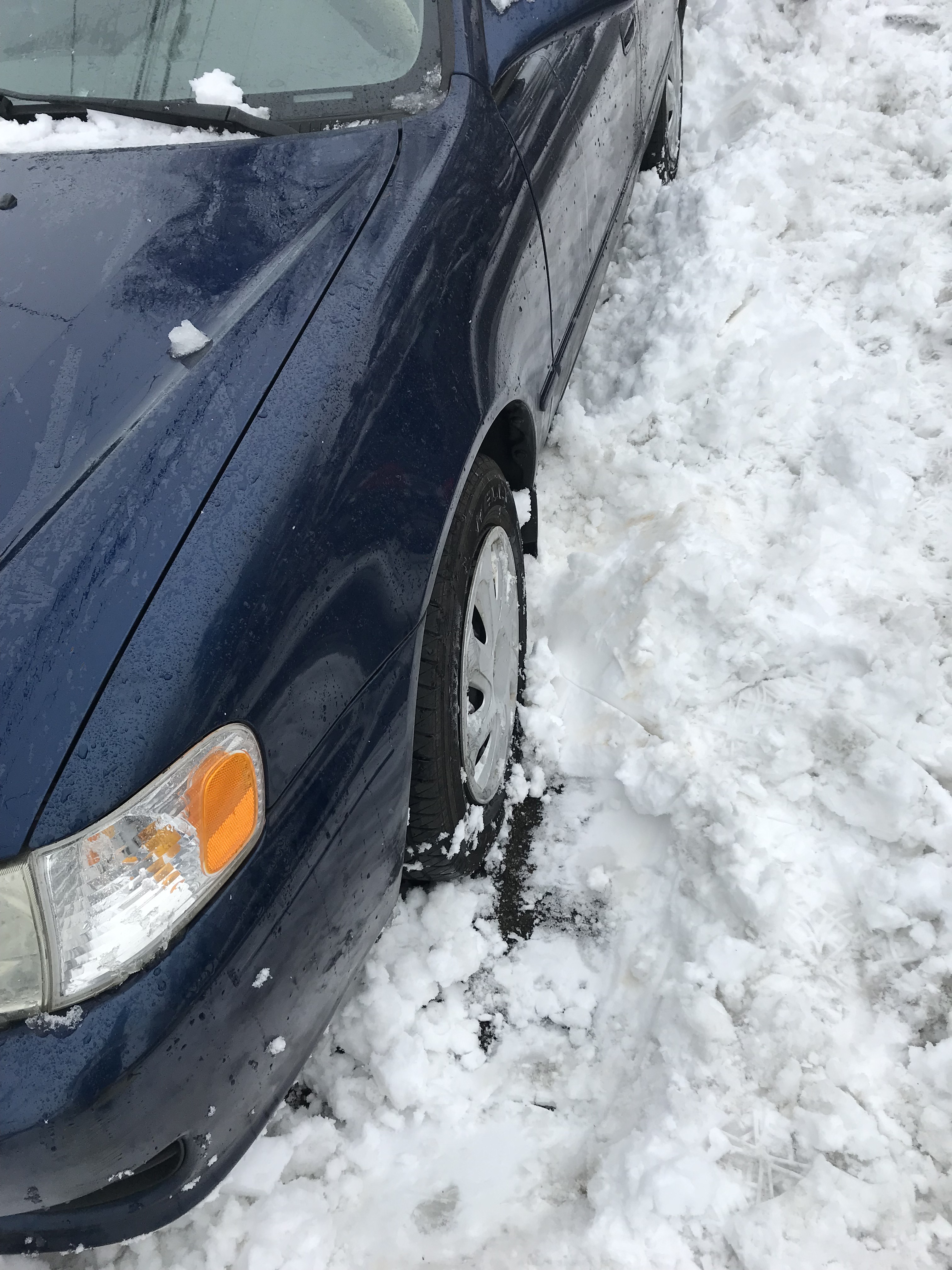
One day, I noticed that brushing the snow off of the car had resulted in a pile of snow around the car that was at times had a height of two-feet. Being hemmed in by snow would would certainly make it difficult to drive. A day later, I noticed that snow was piled tight against the side of the front tire. I sure didn’t want it to freeze there so on Monday, I removed that snow.
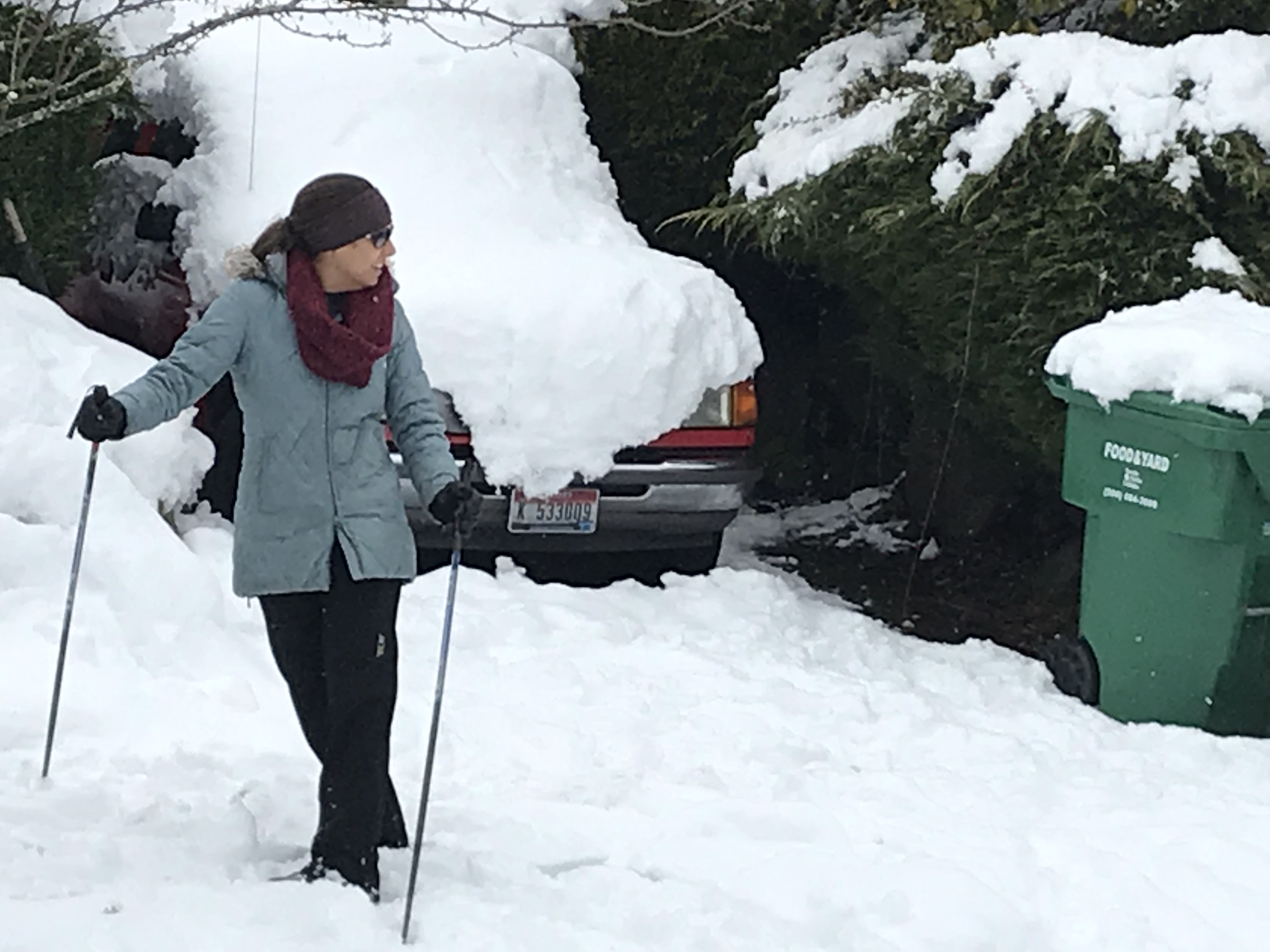
Soon after finishing that process, I was surprised to see a woman ski down S. Hanford St. Moments later, her husband pulling a child carrier, or whatever that structure is called, turned the corner onto 25th Ave. S. There were two small children in the “vehicle”.
While I was talking to the family, I noticed a fire truck had gotten stuck going around the roundabout at the south end of the block. When looked that direction a few minutes later, it was gone.
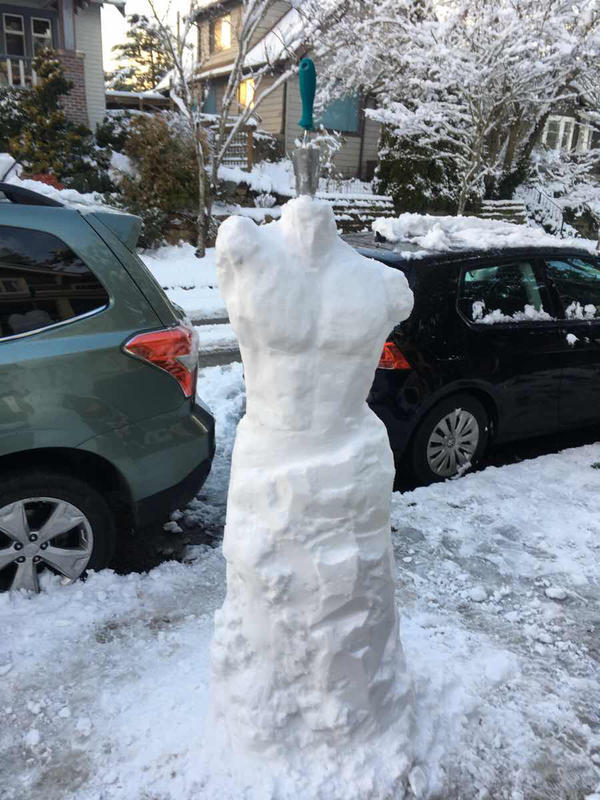
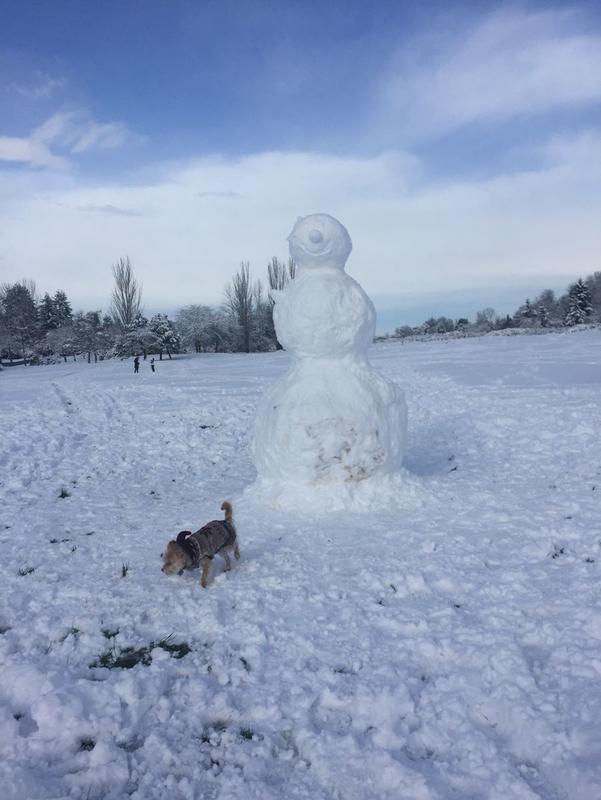
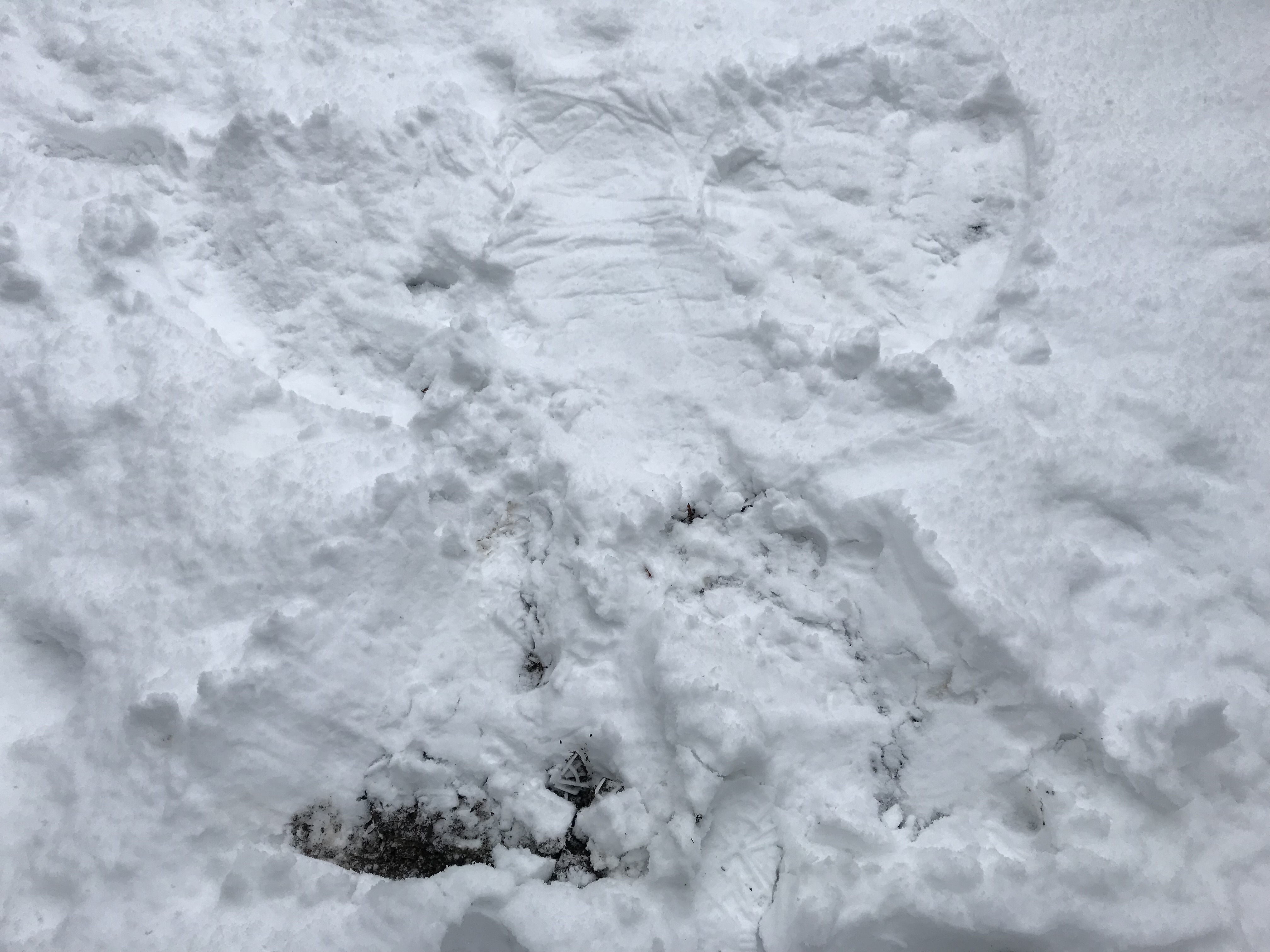
When I checked my email later in the day, I discovered that neighbors had posted photos of “snow art” that they had seen on North Beacon Hill. I was impressed.
Seeing those objects made me think of the snow angels I used to make when I was a kid. I kept thinking of them throughout the day. Eventually, I decided I was going to do it! It was a lot easier to lie down than it was to get up. I thought it interesting that the size of the right wing reflects the trouble I am having with my shoulder.
I was surprised at how heavy the snow was. It took more effort to move it than I thought it would.
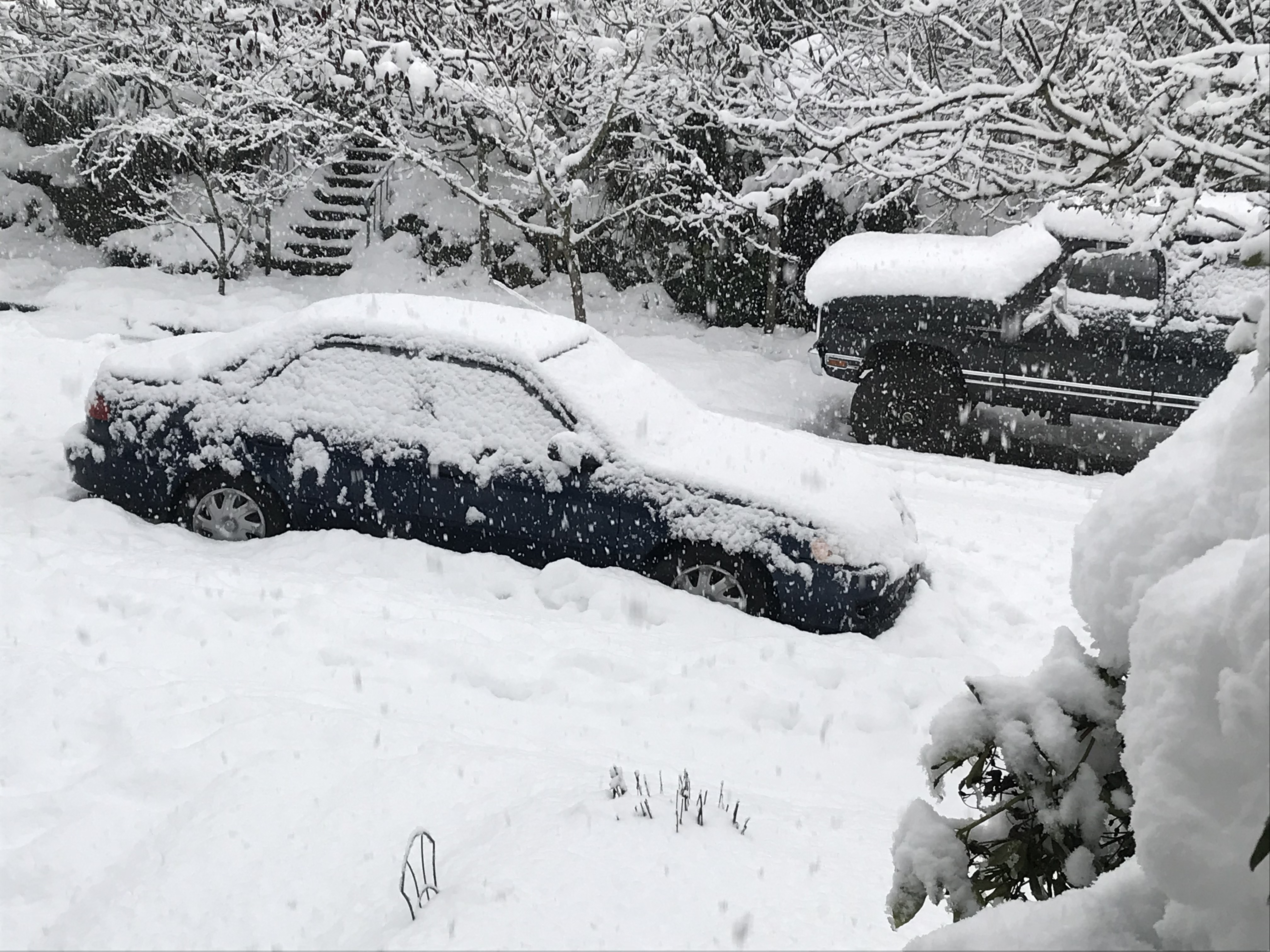
On Monday, I cleared the snow off the car .
That afternoon, it snowed heavier than any other day. It was so beautiful.
But before long, my car was again covered with 4-6 inches of snow!
TT
Tuesday, February 12
A neighbor came over and let me know that she was going to clear my sidewalk for me. I was excited to have the help. I joined her so we worked on it together. The day before, another neighbor had told me he would help me get my car out of the snow when I was ready to drive. A third neighbor had picked up something for me at Lowe’s after the previous snow storm. My new roommate carried pellet bags into the house for me and one day, she cleaned the snow of of my car after cleaning it off of her own. I’m lucky to have neighbors who will help me when I need it. I need to remember these incidents when I’m feeling alone in the world.
Wednesday, February 13
I was supposed to teach a class about our forest restoration project to Environmental Science students from Seattle University on Tuesday and on Thursday the students were planning to work on our site. The university was closed on Tuesday so I will be teaching the class on Thursday. That meant I had to cancel the work party. I hope the students will come to a later one.
I have enjoyed the beauty of the snow and all of the adventures it has brought my way. I also appreciate that it has given me the opportunity to catch up on so many things on my “to do” list. But as I said at the beginning of this post, I’m ready for this to end; and it looks like it is going to. Hopefully by tomorrow I will be able to drive!
Last week, I wrote a post about an intriguing mystery that happened after a recent Greenbelt work party. While I experienced a myriad of emotions at that time, it was primarily a positive experience.
There were several other mysteries in process at that time. They were different than the one I had written about in that I was very irritated by each of them.
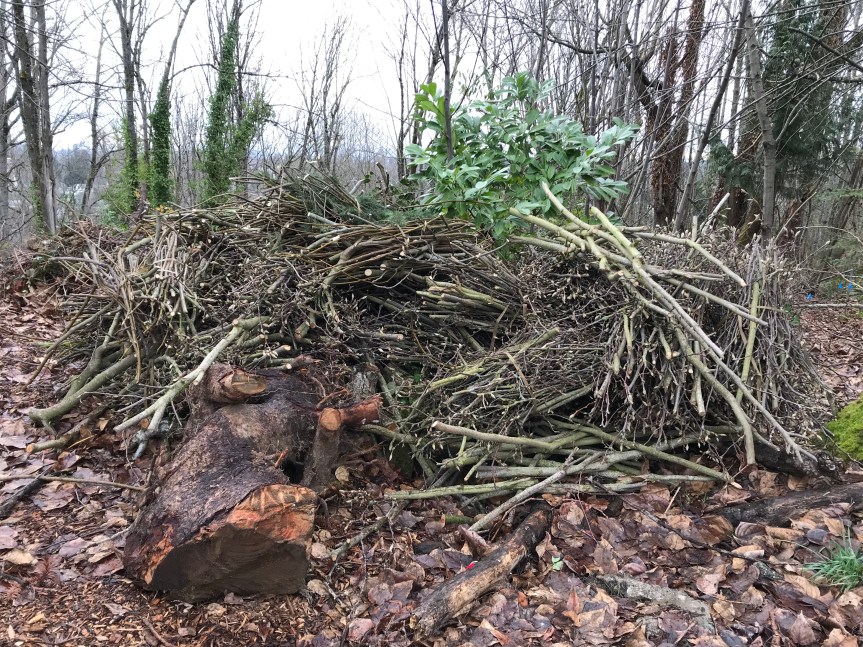
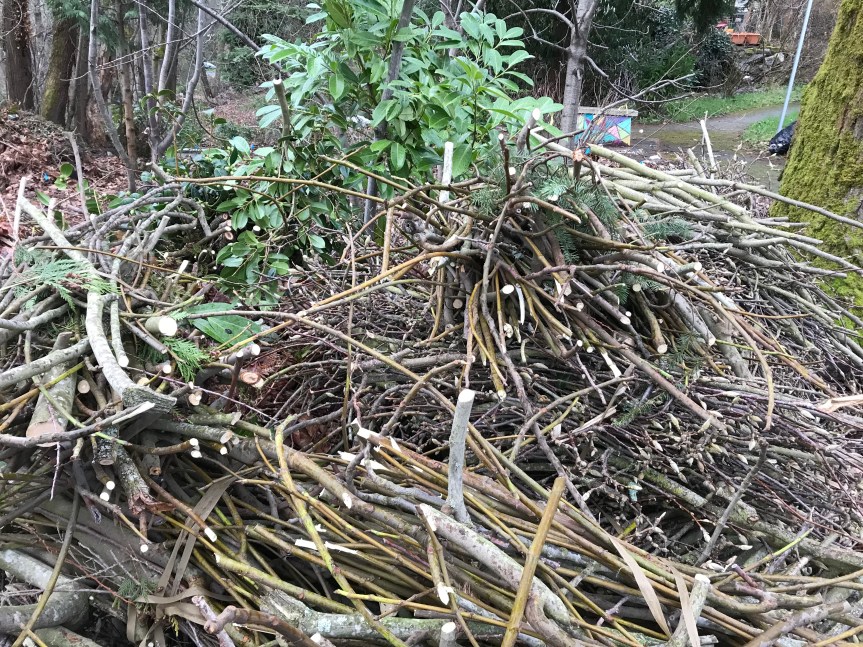
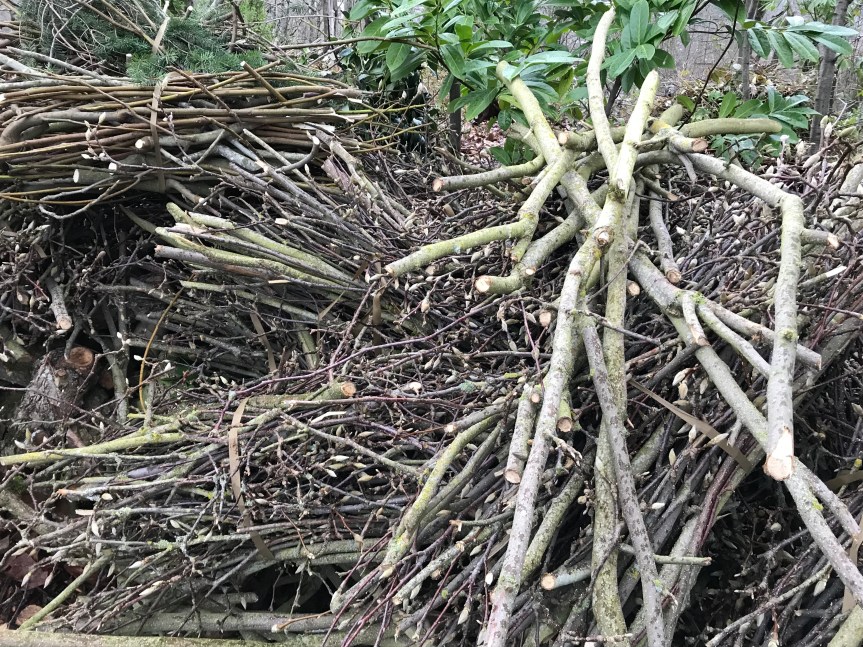
Soon after I came home from India in mid-January, I found that someone had cut down a large tree somewhere and then dumped it in a part of the Greenbelt that we had cleared. I believed it was done by a “professional” company because all the debris had been sorted by size and much of it had been banded before it was dumped.
(Click on the gallery to enlarge the photos.)
A week later, I noticed that someone had pruned a cedar tree and dumped the branches in front of the first stack. The new debris was neither sorted nor banded, so I assumed that this illegal dump was done by a different person than the previous one.
Shortly before our January 21 work party, I noticed that all of our buckets were missing from the site. Most of them were 5 gallon buckets. Many were bright orange or bright blue. How in the world had someone taken 30 buckets without being noticed? And why? We had used the buckets to hold wood chips, trash, glass and weeds.
Some of the buckets in use at a previous work party
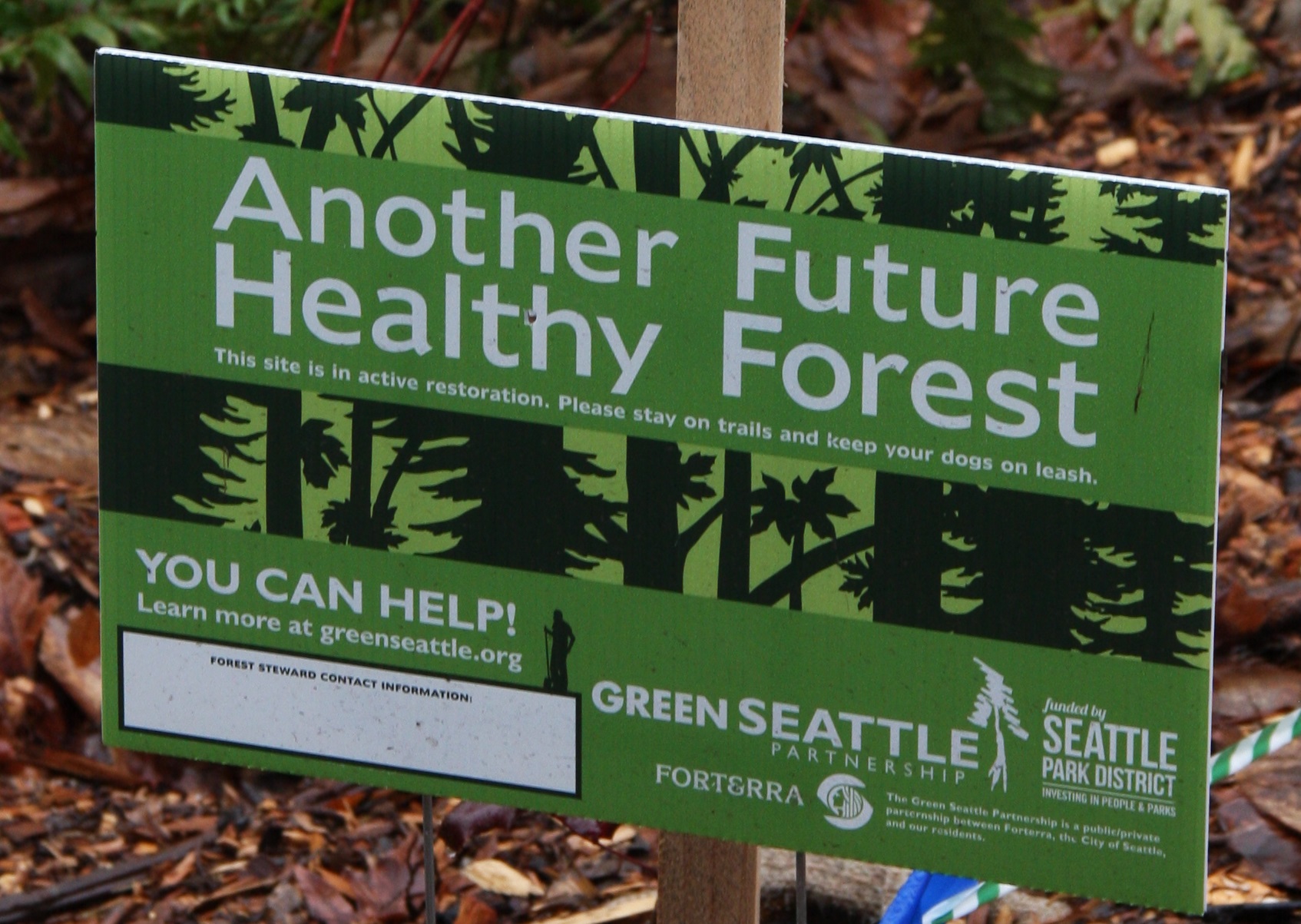
Seattle Parks Department removed most of the dump and replaced most of the buckets. The buckets are now chained to the job box that holds our tools. I also placed three Another Future Healthy Forest signs in hopes that it would prevent people from dumping in the reforestation space.
Instead of going out into the snow to take a new photo for this post, I decided to use one that was taken in February of 2017!
The roads were finally clear and dry yesterday so I drove for the first time since the snow began last Sunday. When I passed the area where I put the three signs, I noticed that one of them was gone.
Grrrr. I guess these are all opportunities to practice equanimity and “putting in the effort and letting go of the results”, but I’m not there.
“The fool doth think he is wise, but the wise man knows himself to be a fool.” “Love all, trust a few, do wrong to none.” “Love looks not with the eyes, but with the mind, And therefore is winged Cupid painted blind.”-William Shakespeare











































 Living, Learning and Letting Go