We have found many wheels during our Greenbelt restoration work. I am glad I took photos of some of them.

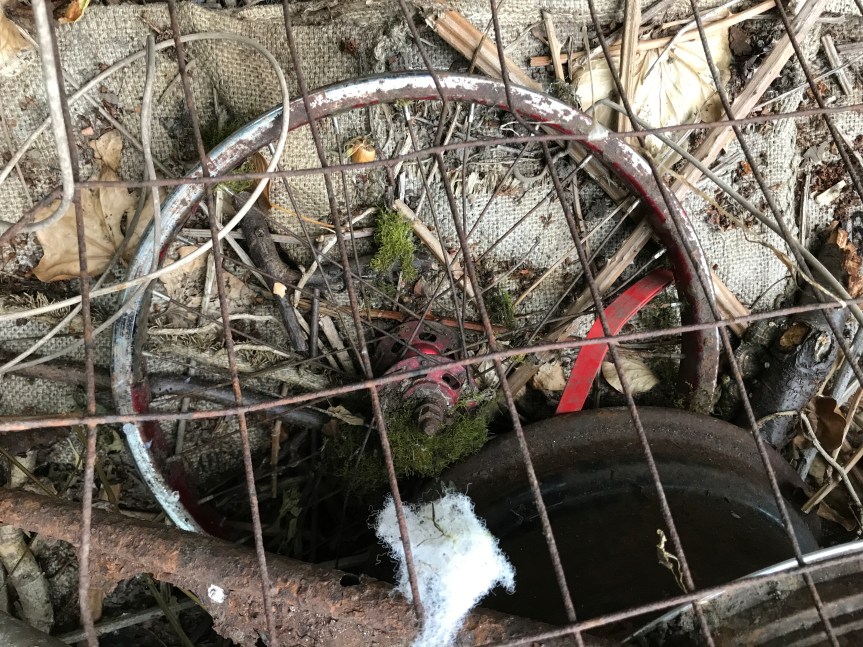


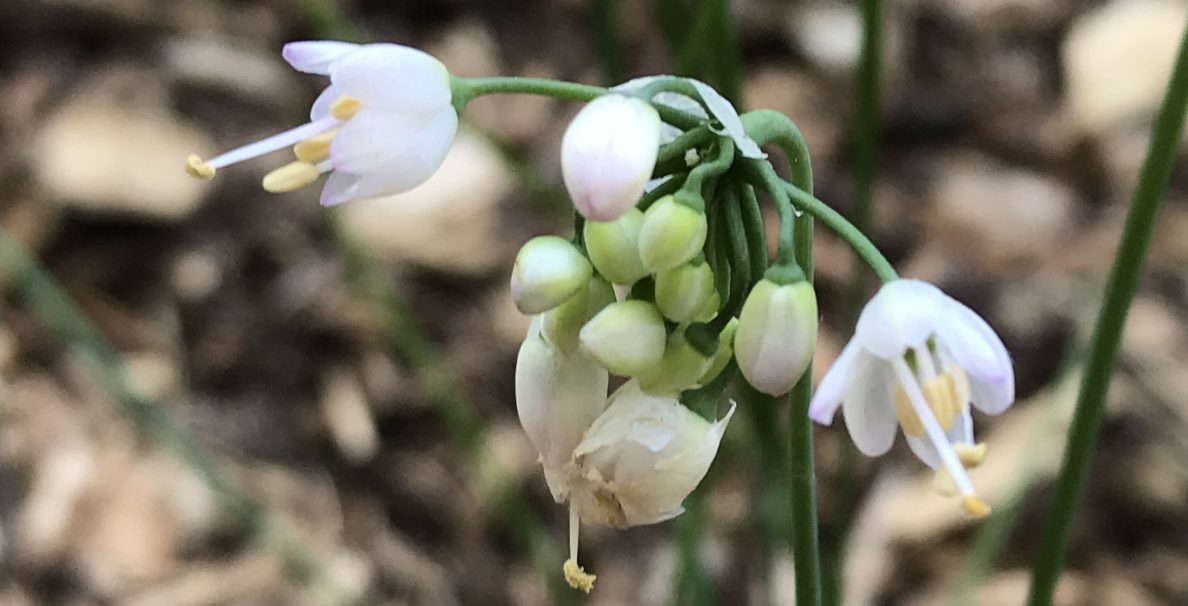
We have found many wheels during our Greenbelt restoration work. I am glad I took photos of some of them.
My neighbor Christine gave me these photographs a day or two ago. She took them in March after Seattle Parks Department staff cut down most of the blackberry vines on the Greenbelt lots we are restoring. I look forward to using it as a “Before” photo in November after we’ve cleared the land and planted new trees, shrubs and ground covers. And I also look forward to comparing them with the photos we will take every spring, summer, fall and winter from now on.
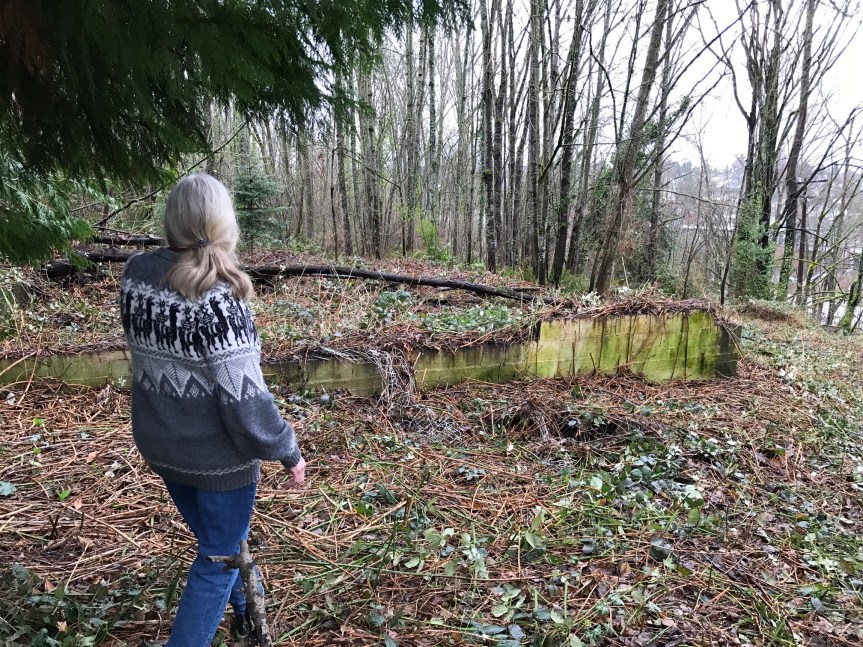
This one will also become a good “Before” shot.
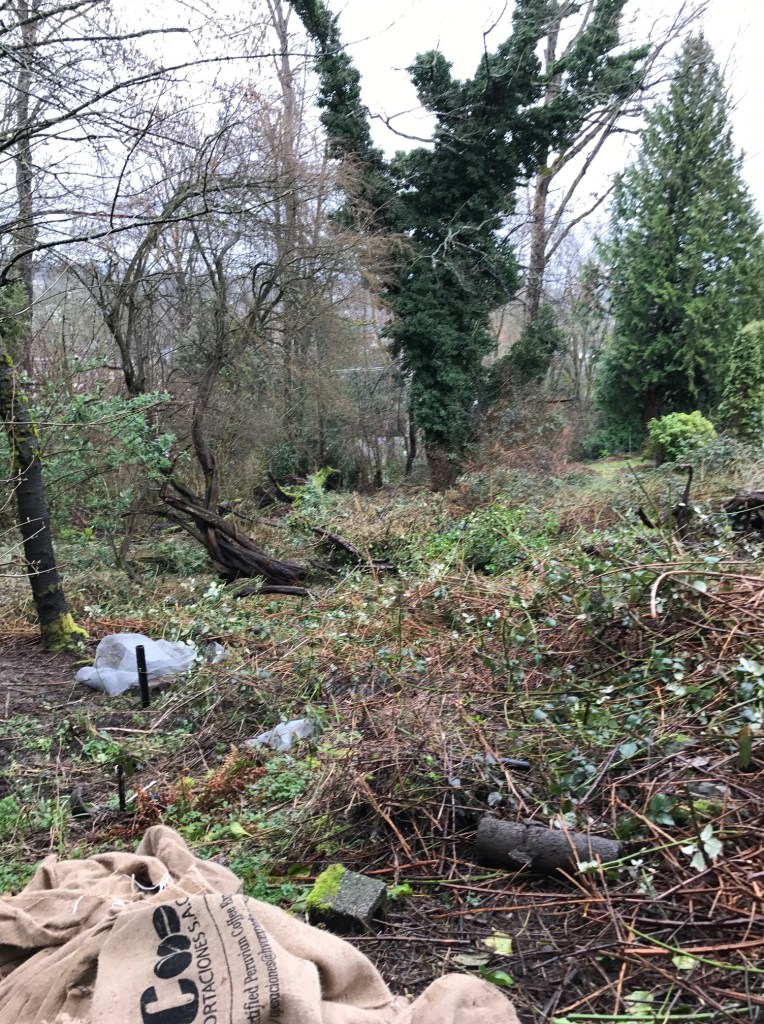


For three hours on June 14, eight volunteers worked diligently in our Greenbelt restoration site. A week before, Seattle Parks Department staff had cut down a large area of blackberry vines, leaving a lot of debris and uncovering an astonishing amount of trash.
We spent the first hour of the work party picking up trash. There is more garbage for us to pick up, but we got a good start on it.


When we began this project, there were two fields of invasive bamboo on this site. Seattle Parks Department cut the bamboo down last March. We placed the cut bamboo on drying racks so that they didn’t re-root. That bamboo is now dry.
On Wednesday, we stripped the branches from the dried bamboo canes. The canes were given away to gardeners and the branches are being used as part of our newest drying racks. (I will write a post about the drying racks soon.)


We also removed blackberry vines from plants and trees…
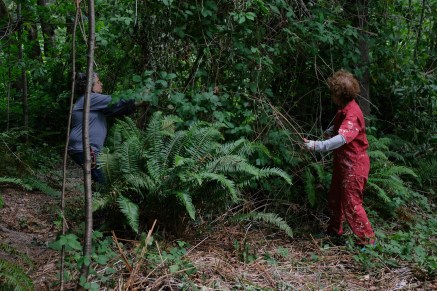
…. and rescued ferns and a fringe cup plant.


It was another productive and rewarding day in the Greenbelt!
I’ve been so involved in the Greenbelt restoration work that I’ve given my front yard garden very little attention. I’m loving how Mother Nature filled in the gap and made it beautiful in her own way.
For the last few years I have planted five or six pansies in the garden. Occasionally one has come back after the winter. This year, though, pansies of all colors have sprung up throughout the garden. There are so many of them! It seems so strange since that has never happened before.
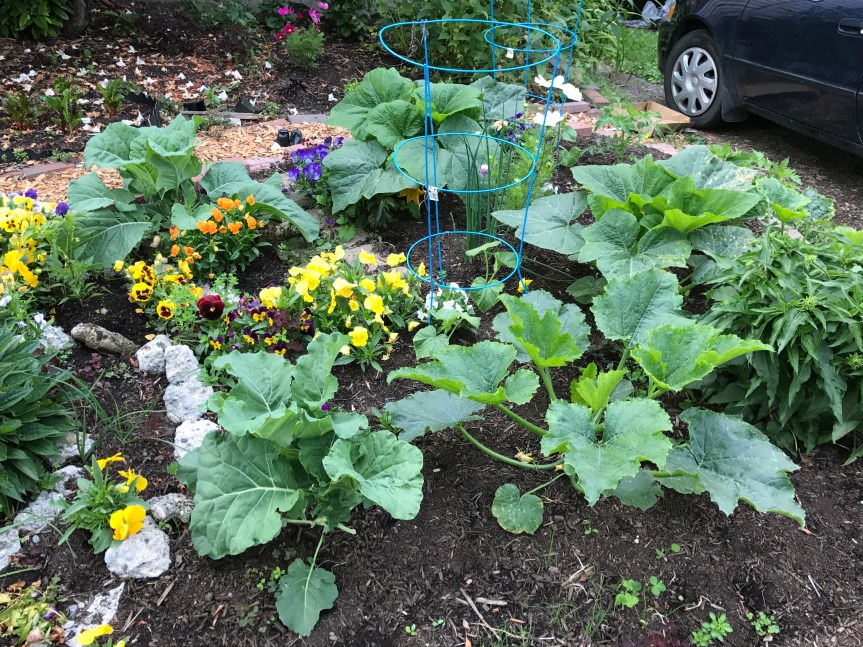
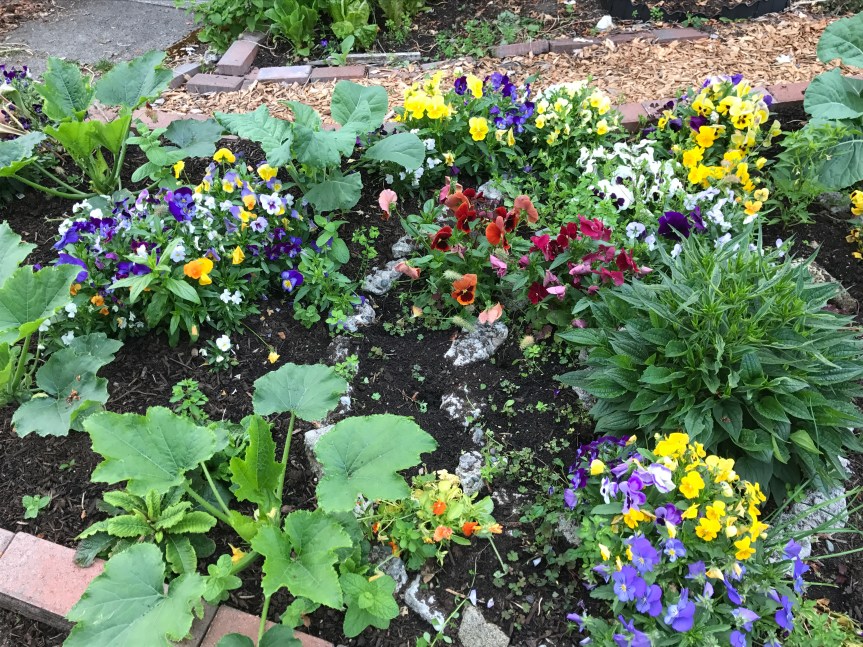

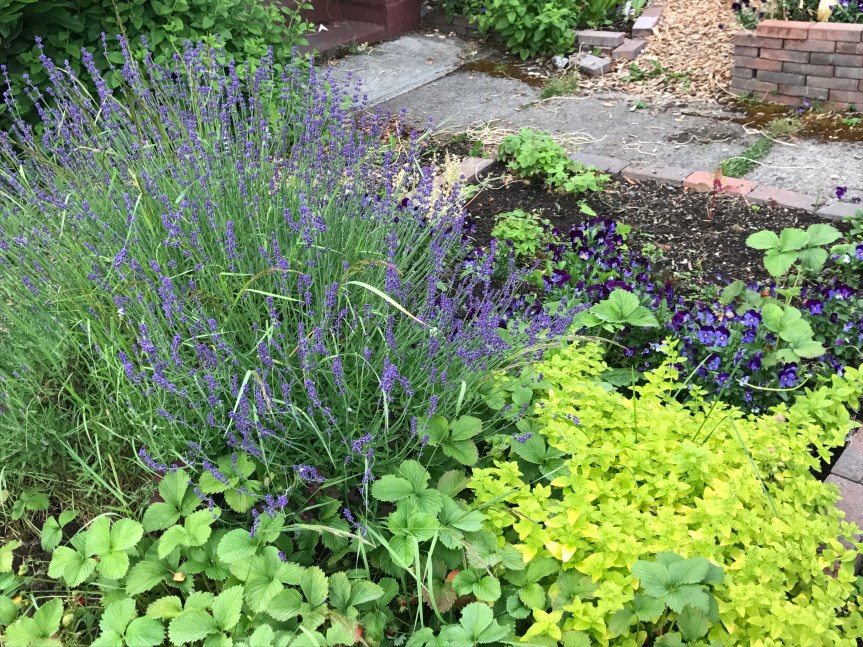
Many of the blooms are withering but the combination of colors are still beautiful.


I had an early bloom on one of the squash plants……..
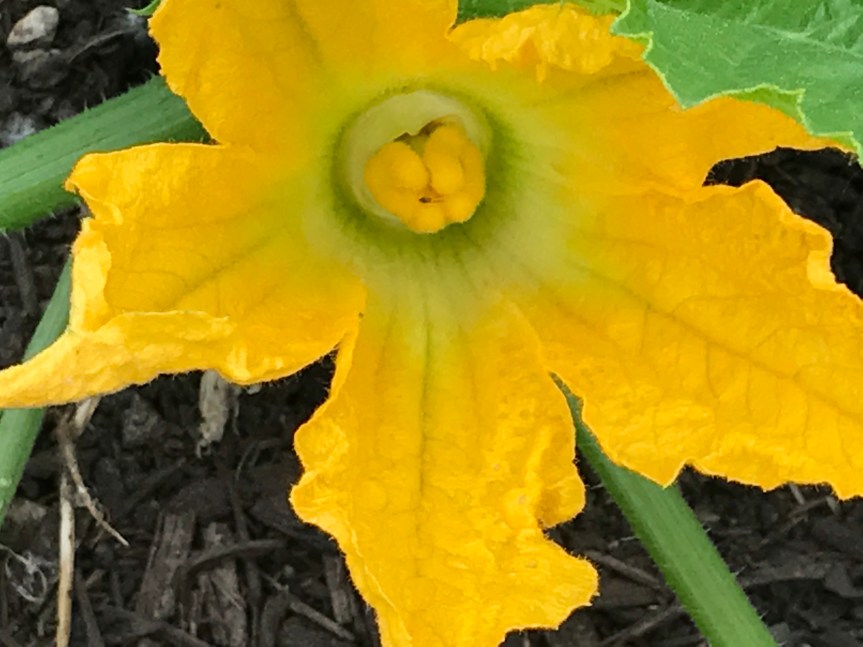
…. but so far there isn’t any squash. The plants seem healthy but I haven’t seen both male and female blooms on any variety and I haven’t seen any bees. I will hand fertilize when that becomes possible.
The Lazy Susan plant and the Echinacea plants have buds. I look forward to seeing their flowers.


There is a seemingly endless supply of lemon balm and peppermint.


Thank you Mother Nature for all that you do for me, and for the world. You are a paragon of compassion and an artist that has no equal.

One part of our Greenbelt restoration site has so many ferns. I decided to read some articles about ferns and was fascinated by what I learned.
When I took this photo today, I imagined dinosaurs walking through this forest. Doing that reminded me of the Jurassic Park movies!
You can learn more about ferns from the articles below:
________
Daily Prompt: Taper
Yesterday I took on the challenge of removing bindweed (morning glory) and blackberry vines from a thimbleberry shrub.

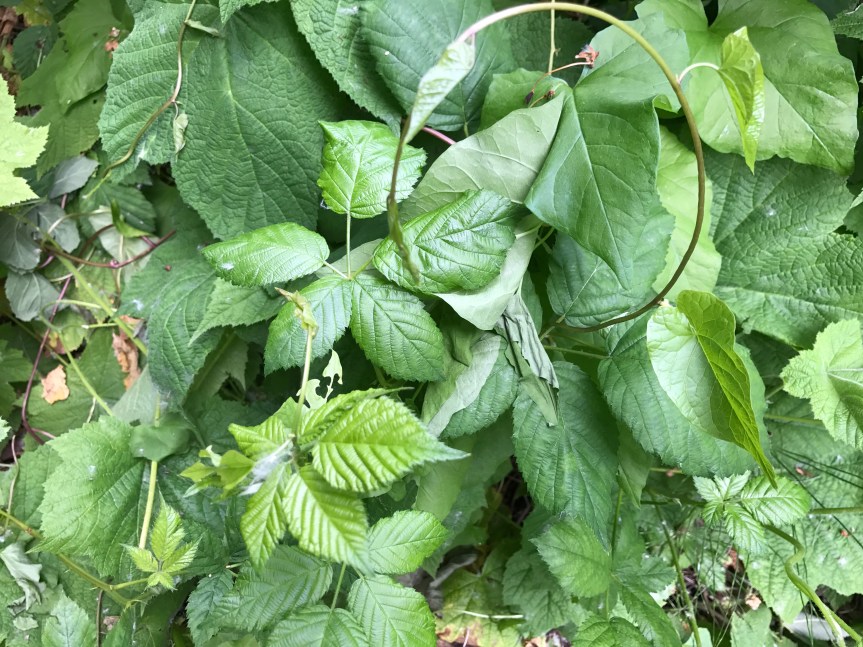
The bindweed wraps itself around each stem, weighing it down and eventually killing it.


The thimbleberry leaves are beautiful. They have three to seven lobes and are soft and hairy.

I tried to unwind the bindweed from each thimbleberry stem carefully, but the leaves and stems are so fragile that I lost many of them in the process of trying to free them. The stems are now free from blackberry and bindweed vines but I’m going to have to get under the shrub and dig out the blackberry roots to keep it that way. We will probably have to deal with the bindweed every year.
It was fun to watch the stems straighten once they were relieved of the weight of the bindweed. The shrub still looks scraggly but it will fill in and return to the beauty it is meant to be.


The density of the bindweed made it hard to tell where the shrub began and ended. The area towards the back had a much thicker layer of bindweed.


As I started to cut it away, I realized that it wasn’t thumbleberry that was under it, it was a gigantic fern. With renewed energy, I started cutting away the bindweed. Before long, the fern was free!
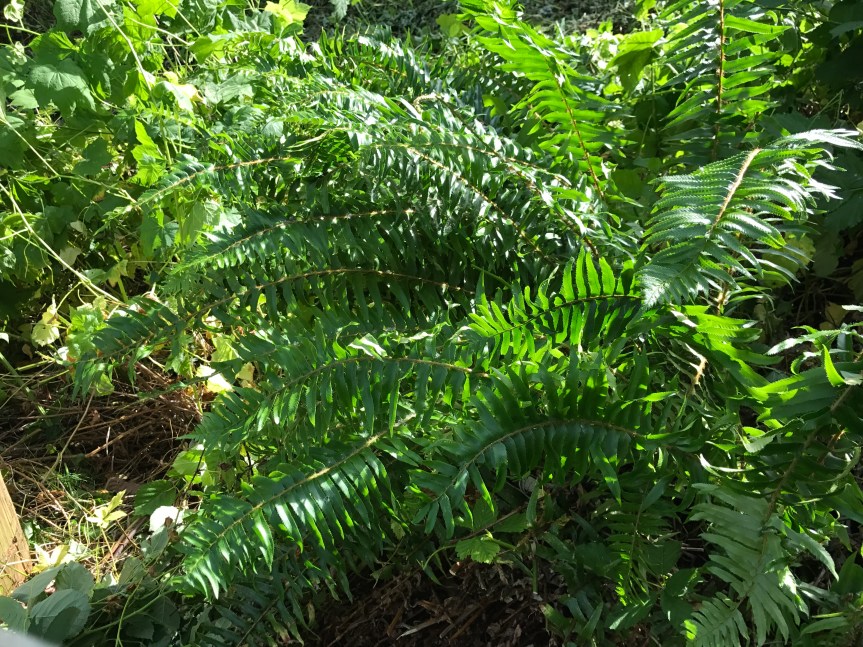
I love doing this work. It is full of mystery and adventure and is so rewarding.
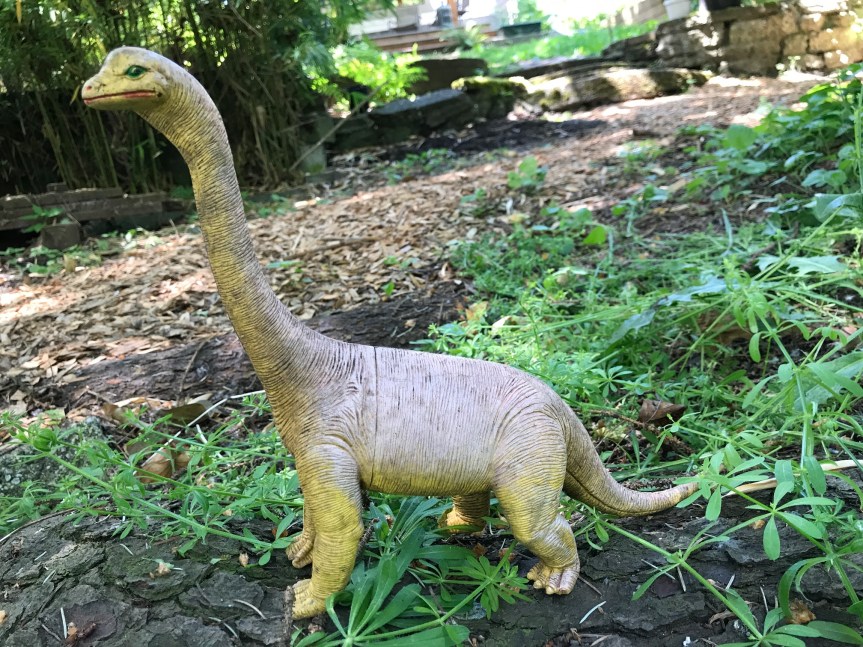
On May 13th, we had a work party that included 20 University of Washington students needing volunteer hours for an Introduction to Environmental Science class. A few days later, I discovered that one of them had left me a surprise. The student had placed this toy dinosaur near, but not in, a pile of Greenbelt trash. I’m not going to throw it away either.

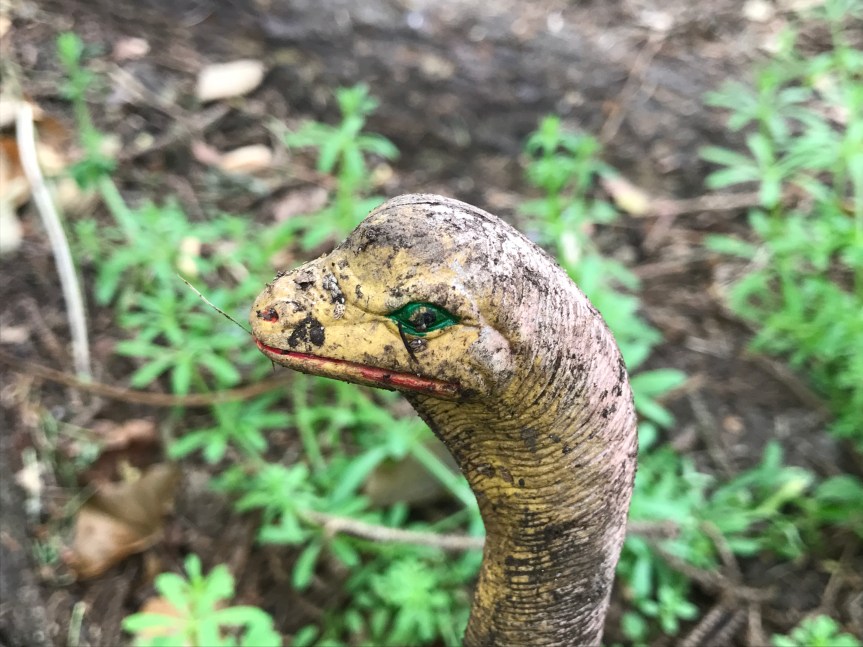
At the time I found it, I washed it and waited for the pile of trash to be picked up. Today, I put it back where the student had left it. I hope it enjoys its new home. I’m imagining it experiencing a sense of freedom and triumph after having survived 30-40 years buried in the dirt.
The Art and Craft of Blogging
A collection of discussions on the environmental issues
“The fool doth think he is wise, but the wise man knows himself to be a fool.” “Love all, trust a few, do wrong to none.” “Love looks not with the eyes, but with the mind, And therefore is winged Cupid painted blind.”-William Shakespeare
...moments of unexpected clarity
Home of Lukas Kondraciuk Photography
Wellness, Support and Mindset
Thoughts on Creativity & Deeper Things
A Blog by Novella Carpenter
Ramblings of an Irish ecologist and gardener
Teaching the art of composition for photography.
Blog from SathyaSaiMemories ~ stories of love in action and the benefits of giving
There are 11,507 stories in Haddonfield; this is one of them.
Perennial gardening and more from the Green Mountains of Vermont
Whatever it will be...
Welcome to my little slice of the blogosphere

 Living, Learning and Letting Go