Remembering December 26, 2004

One of my favorite holiday memories was of participating in a Messiah Singalong at Seattle’s University Unitarian Church the day after Christmas.  While I still think of those times fondly, something else is more likely to come to my mind when I think of December 26 now.

I was at Amritapuri, India for Christmas in December of 2004.  During the evening on Christmas day there was an entertainment program.  What I remember most about that program was an incredible fire dancer.

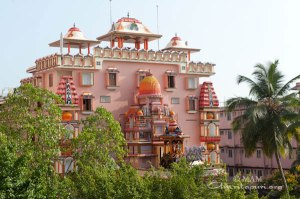
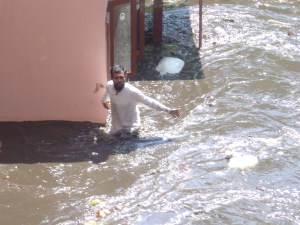
The next morning, December 26, I was on the temple roof practicing with a singing group when someone told us that water had come all the way to the ashram gates.  We didn’t know what they were talking about and for some reason just kept on singing.  Then we heard people screaming.  We looked over the balcony only to see water filling the ashram grounds.  The 2004 tsunami had hit the nearby village and the water was now flowing through the ashram itself.

DSC03800

As anyone who knows her would expect, Amma went into action.  Boats and canoes carried the villagers and the ashram residents to the other side of the backwaters.  Amma fed and housed everyone in her colleges.

There was so much grief that day and for days to come.  Many of the villagers had lost children, husbands, wives, friends, and relatives when they were pulled into the Arabian Sea by the tsunami wave. Amma consoled the survivors, and her own grief was visible.

There is one song I associate with the tsunami.  Amma sang it a few days before the event, and once again in an outdoor courtyard a night or two after the tragedy.  I was so moved by her tears when she sang the ending lines “Loka Samastha Sukhino Bhavantu” (May all beings in the world be happy).

In the months and years that followed, Amma provided tsunami disaster relief work in Kerala, Tamil Nadu and Sri Lanka.  Embracing the World spent forty-six million dollars building new houses and villages, feeding survivors, replacing the lost boats of fisherman, providing vocational training to women, giving scholarships to children, and much, much more.

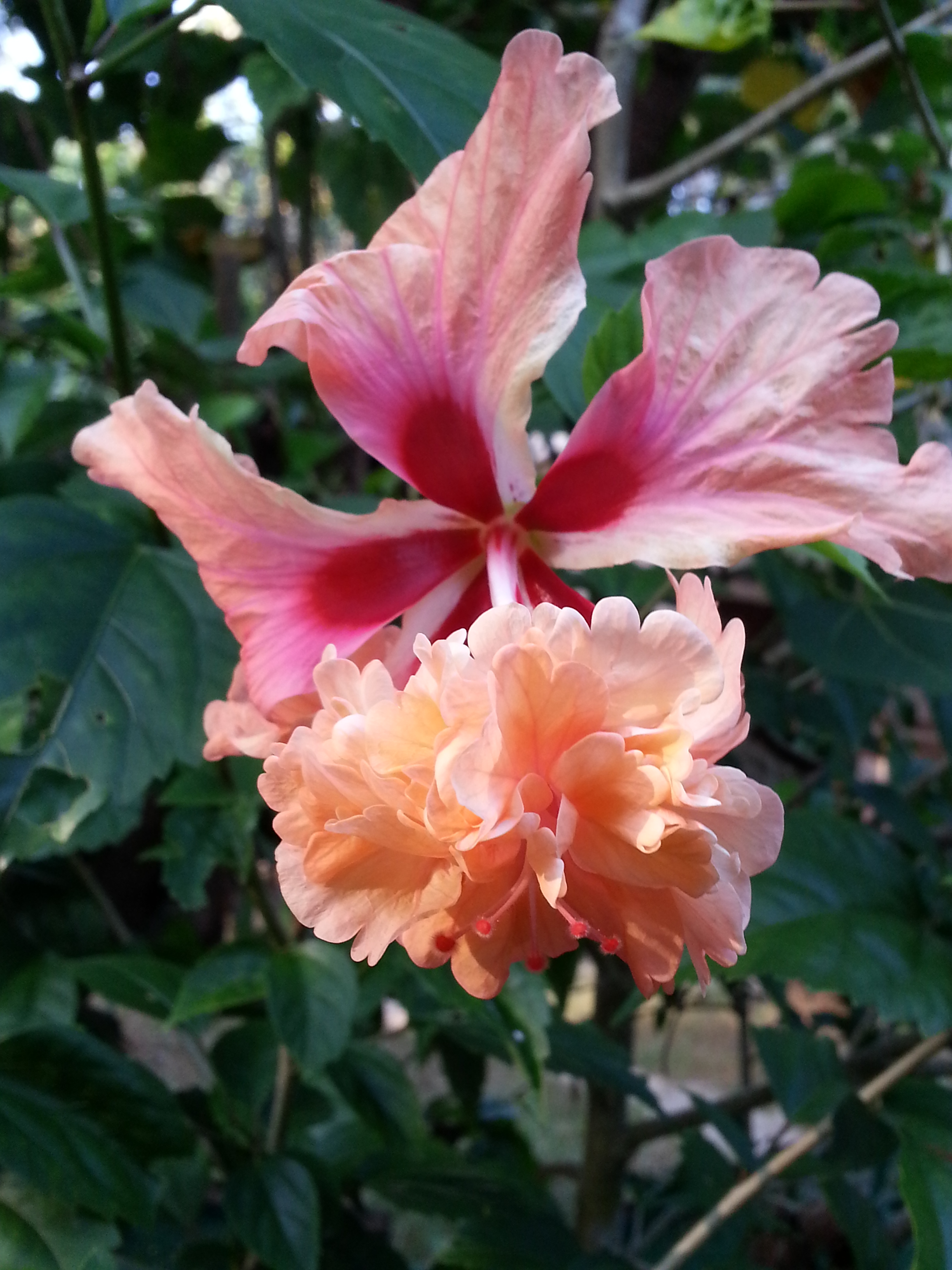
Amritapuri Flowers


Sunrise in Amritapuri, India

(Click anywhere on the gallery to enlarge the photos.)

Early Morning Beauty

Each morning when I take the Tai Chi class this is what I see:

Beauty in front of me

IMG_0338

Those are fishing boats on the horizon.

And beauty above me

IMG_0328

IMG_0332

IMG_0341

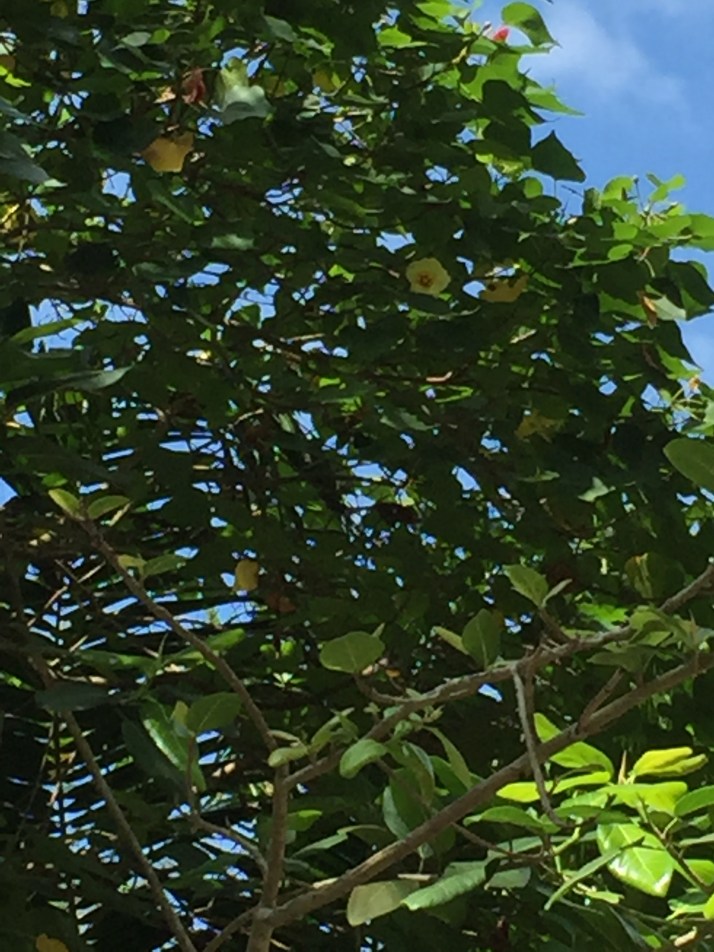
Notice the solitary flower in the tree.

Yesterday there were also eagles flying overhead most of the class!  I will watch and see if they are there every day.


Living and Learning in Amritapuri, India (Nov. 26-28, 2015)

asrham-07

Almost every year since January 1990, I have visited the Amritapuri ashram of Mata Amritanandamayi (who is more commonly referred to as Amma) in Kerala, India. Amma is an internationally known spiritual leader and humanitarian. My adult son (Sreejit) and daughter (Chaitanya) have lived in her ashram for many years so I am also blessed to be able to spend time with them when I come to India. I know from years of experience that my trip will be packed with learning and experiences. I look forward to sharing them with you.

Journey to India

I left Seattle on Thanksgiving Day this year. I was eager to be at my India “home” but dreaded the long trip. On Emirates flights, I am able to make the journey in 24 hours, but it is still grueling. The flight from Seattle to Dubai takes 14 hours; followed by a two hour layover in Dubai, a four hour flight to Trivandrum, an hour or more to get through immigration, customs and retrieving baggage, and then a two to three hour taxi ride to the ashram.

Last year, I was surprised and ecstatic when the airlines gave me an unexpected upgrade to business class for the 14 hour segment. That gift made my journey so much easier. That was the first time I had been upgraded in the 25 years I’ve been going to India, but for the last few months I found myself hoping it would happen again. I believe the best way to achieve a desire is to let go of it, but seemed unable to do that. I yearned to once again experience the luxury of lying down during an international flight. It was not to be however.

Something I really appreciated happened when I was waiting for my baggage in Trivandrum. My name was announced over the loud speaker and I was directed to come to the baggage counter. Once there, they handed me the Kindle I had left in the airplane. I had planned on reading during the flight but dosed off instead and had completely forgotten I had taken it out of my carry-on suitcase.

This scenario was even more remarkable when I compared it to something that had occurred this past summer in the United States. In that instance, I had also left an item on a plane. When I realized my error, I called the airline’s Lost and Found department and gave them my flight and seat number.  I was told that the airlines only had three people to handle Lost and Found for the whole country and that I should keep calling back. They said it often took three months to know whether an item had been found. I called many times and finally gave up. And now, in India, the airport staff had tracked me down before I even left the airport. I left the airport feeling cared for and honored.  It was such a good example of the kindness of the Emirates staff and the Indian people.

November 28

I’m home! I’m exhausted but content. Normally I get to the ashram before Amma returns from her fall European and U.S. tour, but this year the tour was over earlier than normal so she arrived in Amritapuri before me.

My taxi pulled into the ashram grounds at 7 a.m.  After spending a short time visiting with my children, I generally start unpacking and washing the clothes and bedding that has been stored since I left the previous January. This time, when I unlocked my flat, I discovered Chaitanya had cleaned the room and even made the bed. Oh that bed looked so good after no solid sleep for 36 hours. I unpacked for a while and then decided I was too tired to be hand washing all of the laundry in buckets so I took a nap instead!  That change in behavior was a first for me.  I wonder how many other “firsts” there will be this year.

I always watch for changes that have occurred in the ashram since I was last here. On arrival, I noticed that the ground of the courtyard in front of the temple now is covered by large patio stones with grass separating them. It is quite beautiful and makes it much easier to transport luggage and other items from one place to another. I found the biggest change, however, in the huge auditorium. After a decade or more, there are now fans hanging from the ceiling, 35 of them! My eyes really opened in shock and delight when I saw them. Having the breeze during the evening bhajans (devotional singing) on my first night was wonderful.

amma new2

One would think that Amma would take time to rest after returning from such a grueling tour, but of course that isn’t what happened. She came out in the afternoon and sang with us and then gave darshan (her form of blessing is a hug) to visitors who were staying only a short time. In the evening she came again for the bhajans. She sang so many of the old, beautiful Malayalam songs. I feel so blessed to be here!


Banana Circles in Amritapuri, India

20150105_163744

When I visited Amma’s ashram in Amritapuri, India in December 2014/January 2015, I was fascinated by the banana circles that were located in one of the ashram gardens. Banana circles are a permaculture technique that is most often used in tropical and subtropical regions. They help create humus and water retention where soils are either sandy or heavy clay.

I found this description of banana circles:

“Papaya, banana and coconut circles are developed by digging pits up to two meters in diameter (for papaya and banana – 3 m for coconut) and approximately 1 meter deep. They are then filled with dampened, compacted organic material to a height of 1 meter above ground. Up to seven plants of the appropriate type are then grown on the rim of the pit. Taro or other moisture loving plants may be grown in the inside edge, as sweet potato along the outside edge to provide a living ground cover and mulch, as well as additional food production.”

Banana circles also are a way to compost organic materials, produce food, and utilize grey water. They are filled with microorganisms.

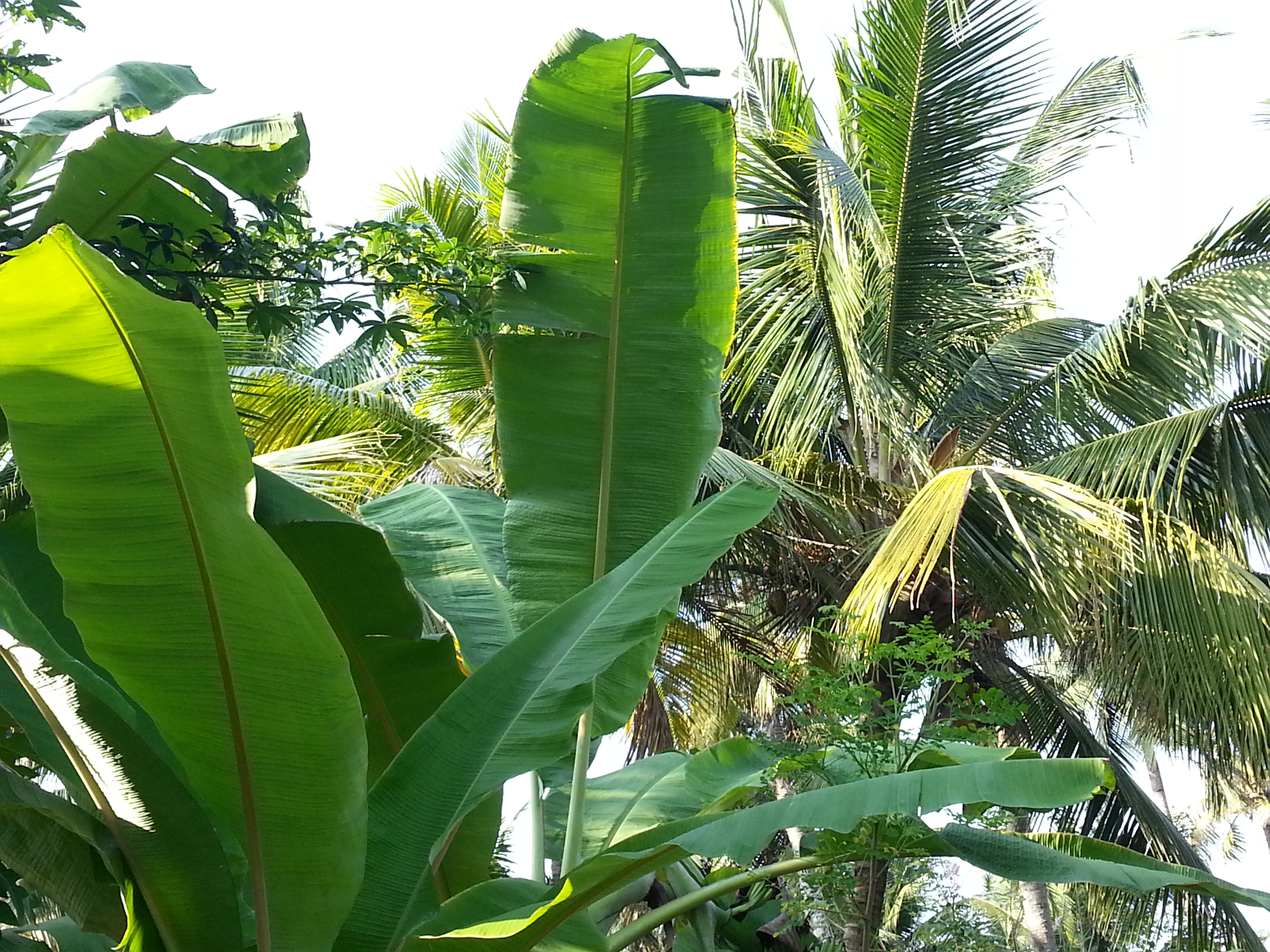
I learned something else in researching this topic. I always thought bananas grew on trees. It turns out that banana palms aren’t trees, they are plants. I was even more surprised when I read the following information from The Permaculture Research Institute:

Did you know that banana palms are actually a grass? Also, each plant only gives fruit once, so after you have cut the bunch of bananas down you can remove the whole plant at ground level. By this time, there should be new suckers coming up — only allow a couple of these to grow, as too many will make your bananas overcrowded and they won’t fruit well.

When I first looked at the banana palms in Amritapuri, I was astounded by how fast they grow. The first picture below was taken on the day the palm was planted. The second and third pictures are of banana palms three or four days after they were planted.

Here are some other pictures of the Amritapuri Banana Circles.

For more information:

http://permaculturenews.org/2014/04/08/banana-circles/

http://www.homegrownediblegardens.com/banana-circlemulch-pit-guilds.html

http://www.mitra.biz/joomla/index.php/writingssustainability/3050-howtobananacircle

http://permaculturenews.org/2008/06/23/build-a-banana-circle/

https://treeyopermacultureedu.wordpress.com/chapter-10-the-humid-tropics/banana-circle/

 *****

Originally written for PNW Green Friends Newsletter, Issue 44, March 2015

*****

Living and Learning in Amritapuri: Jan – 7, 2015

20150105_171038

(Note:  The dates on this post overlap with my January 5 post.  That is because there were some important events that I didn’t mention in  the previous one!)


Stopping Critical Self Talk

Visitors and residents at the ashram offer classes they think would be of interest to the visitors. It is a chance to raise funds for Amma’s humanitarian projects as well as give valuable information and experiences to those who take the classes.

The date and time of the class I was to teach on Stopping Critical Self Talk was changed four times so I had plenty of opportunities to practice patience, flexibility and detachment. I ended up holding the workshop on January 3.

When I taught a class two years ago 5 people signed up ahead of time. More registered the morning of the class. I think the final total was about 10. This year, the evening before the class 15 people had signed up and by the time it started there were 23!

Teaching here provides challenges I don’t face in Seattle because most of the people who attend Amritapuri classes are from Europe or other places around the world where English is not the first language. Conditions are also different because in India there is noise from the fans, and lots of noise from the street below; quite a change from teaching in America.

Attendees were very interested in what I had to say and participated actively in the various components of my class. They  expressed a lot of gratitude for the new information and experiences. I was very excited and look forward to teaching again next year. I felt and still feel a lot of gratitude for the two friends who helped me with the logistics of running the workshop, and the emotional support their presence offered.


Cast Viewing of the Play

A week or so after each year’s Christmas play, everyone involved in putting on the drama meet to see the first draft of the play DVD. I love participating in that event. Since most of the cast weren’t able to see the play at the time it was presented this is their first opportunity to see the final production. It is always a time of laughter and celebration.

Below are some more play photos:

To see photos closer click on the gallery.  To see the original photos I posted go to:


Then and Now

When I came to the ashram the first time in January 1990, there were a total of 30 Western visitors. At the height of the holiday season this year, i.e. December 2014, there were 1,800 Western visitors! Such a tangible example of the difference between then and now.

On January 7th I was in the dining room when people at the end of the room started standing up. I looked to see what was going on, but all I saw was more and more people standing.  When the senior Swamis (monks) enter the hall to sing or if they walk up to us we generally stand up.  But that doesn’t generally happen when they are just walking down a corridor. Besides, the number of people coming to their feet seemed bigger than a Swami’s presence would warrant.

I quickly realized it was Amma that was walking by!  She was on her way to the auditorium stage to do some bhajan (devotional songs) recording.  Seeing her in an unexpected way was such a nice surprise for us.  It must have also been a surprise for the people involved in the recording.  Minutes later, I saw three of the brahmacharinis (female monks) and one of the senior Swamis running for the stage.  It must have been an impromptu bhajan recording!  Amma teaches us to be like a bird perched on a dry twig, ready to fly at a moment’s notice.  This looked like it was an experience in doing that.

It was also an example in the difference between then and now.  In the “old” days it was not unusual for Amma to show up at any time.  Now she gives darshan 14-21 hours on every public darshan day and spends time every other day doing scheduled activities with us.  She is no doubt busy directing all of the humanitarian projects during a majority of her remaining time.  We certainly still have spontaneous experiences with her, but it is rare to have her show up at unexpected times.


Preparing for the South India Tour

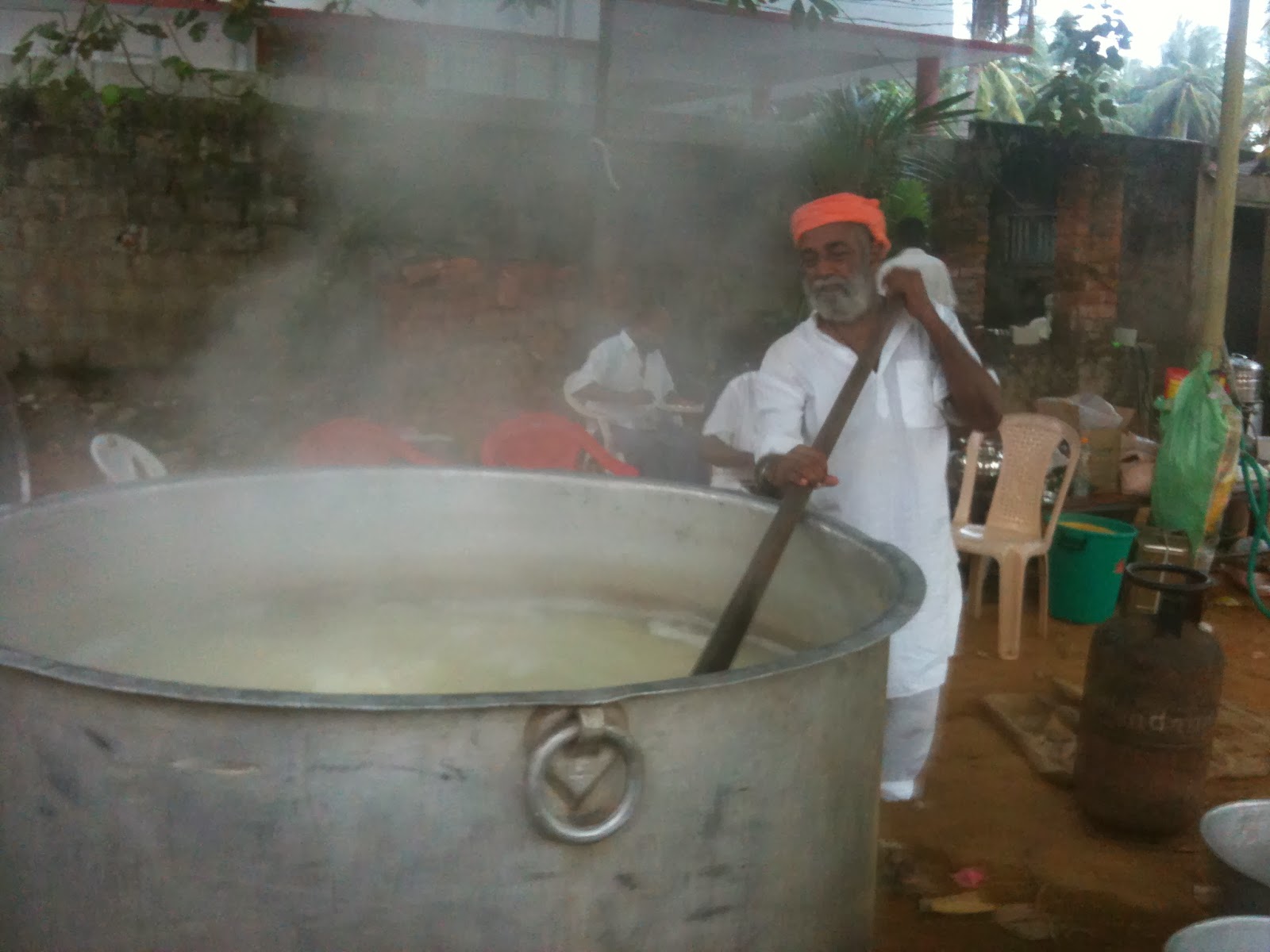
Early in the second week of January, the level of activity at the ashram skyrocketed as preparations were being made for Amma’s upcoming South India Tour. Everywhere vehicles were being loaded with the equipment and supplies needed for the tour. There are cities where 50,000 people or more will attend the programs on a given day. Imagine what it would take to feed that many people! Here is a picture of one of the pots they cook in!
Kanji Making

High numbers of ashramites, as well as the local devotees will do the work required to organize and carry out the programs. Twelve bus loads of Amritapuri devotees will be part of the tour.  All will work at the programs in one capacity or another.


Organic Gardens

A day or two after I wrote my January 5 post about the small Organic Gardens that have been popping up all over Amritapuri, I had an opportunity to visit two of the larger ones. Those are a fifteen minute walk south of the ashram. I had visited one of those gardens last year. Oh how it has grown! It started off as a tulasi farm but now contains so much more. I will be writing about it in detail for a GreenFriends newsletter towards the end of the month so will add the link to that article after it is published. For now, here are some pictures.


The other garden is called Amma’s Grace Garden. Amma’s goal is to eventually have all food served at the ashram be organic. The first step in reaching that goal is to have the meal Amma serves everyone at the ashram on Tuesdays be organic. This garden is producing a lot of the vegetables needed for that meal.
 

Living and Learning in Amritapuri- Dec 27, 2014 to Jan 4, 2015

20150102_101923


New Year’s Eve

New Year’s Eve is always an evening of festivities.  It was different than normal this year in that the day fell on a public darshan  day. The crowds were big so even though she was moving fast, Amma didn’t finishing giving hugs until just before midnight. That meant the evening entertainment program started around midnight. There was a play that was mostly in Malayalam and some other entertainers as well. Then Amma gave a New Year’s talk and led several high energy songs.

I want to give particular emphasis to her New Year’s message. She talked about how to deal with all of the suffering we are witnessing in the world and also identified five things to keep in mind if we want to live meaningful lives. I have no doubt I will be reading this talk multiple times after I get home. To read the speech go to.

It was a tough evening for me because I was so tired, and my back problems make it hard for me to sit for long periods of time. I knew I couldn’t sit in a regular chair for so long, so I decided to sit on the side portion of the auditorium.  Many of the brahmacharinis (female monks) were sitting on top of tables there.  I sat behind them so I could get up as frequently as I needed to. I moved several times over the next hour trying to get a better view. Continue reading “Living and Learning in Amritapuri- Dec 27, 2014 to Jan 4, 2015”

Amritapuri- Then and Now

I just discovered that Amritapuri has it’s own Facebook page.  I had no idea.  It contains old photographs as well as current information.

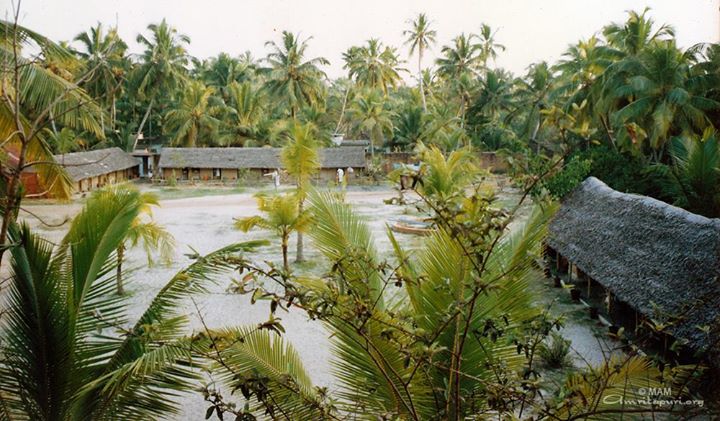
This is a photo taken in 1996; after the ponds and backwaters behind the temple were filled in but before the auditorium was built.  I had totally forgotten this phase in the development of the ashram.

10873379_10152501056716805_1512256293532699323_o

How different it is today.

1939904_10151917632561805_1761926484_n