I felt some sadness as I listened to the song, because these last eight years have shown how much work we still have to do in regards to racial relations. At the same time, I know the words are as true now as they were when it was recorded.
In another post published today, Kathie also shared personal memories of what she was doing during the Civil Rights period and on the day that Martin Luther King was assassinated. Check out her post at In Honor of Dr. King. I think you will be glad you did.
Since I wrote the “Needs vs Wants” prompt, I have been reflecting on my own relationship to that subject. Sitting here in my flat at Amma’s ashram in Amritapuri, India, it occurred to me that the reason I have been able to come here 26 times since January 1990 is because I have made that trip a major priority in my life. I value experience over material possessions so I have never been pulled into the world of consumerism and accumulation. There have only been two years when I was not able to save enough money to allow me to make that sojourn.
I saw Swami Ramakrishna a few days ago for the first time on this trip. He is the swami that oversees Amma groups in North and South America and in Chennai, India. He may be responsible for other areas of the world too.
The reason I hadn’t seen him in Amritapuri was that he has been in Chennai helping with the flood relief efforts. If I understood him to say that the water had hit as high as 23 feet on the outside of the buildings and that there had been 8 to 9 feet of water inside the houses. Amma sent 500 volunteers to help. They rescued people from their homes, provided medical aid, food, clothes, blankets, cooking stoves, etc. Amma also donated $749,000 to the government for use in their ongoing relief efforts.
Swami Ramakrishna
Amma
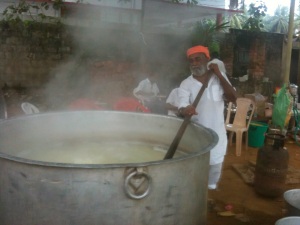
Many people in the ashram spent the days after New Year’s getting ready for Amma’s North Kerala tour. The caravan consisted of 11 buses of ashramites as well as numerous supply trucks. The crowds are huge at these programs and there is a tremendous amount of work that needs to be done during them. Take a look at the size of one of the many cooking pots.
The tour group left the ashram at 4:00 a.m. on the 5th. There are still a lot of people in the ashram but so many fewer than when Amma is here. It is nice to have some days of comparative quiet before I leave India.
Sadhus
I really enjoy seeing sadhus when they come to Amritapuri. Sadhus ascetics/holy people who wear saffron and often wander from place to place. They dress in different ways. The sadhu in this picture reminds me of some of the sadhus I see here, even though he is wearing clothes that are primarily yellow
(Photo Credit: “People of Varanasi 005” by Antoine Taveneaux – Own work. Licensed under CC BY-SA 3.0 via Wikimedia Commons -)
One difference this year is that I have seen two female sadhus. I found them even more intriguing. This picture reminds me of them. The color and type of cloth she is wearing is more typical of what sadhus wear than the man in the picture above.
Prior to the Christmas play, I helped sew and iron costumes. On and off throughout the trip, I have also helped Chaitanya in the café by doing some of the prep work for dinner. My job has been to butter stacks of bread and cut buns. I also chop up capsicum for salads and other menu items.
I had worked in the café as a cashier for 15 years, or more. I stopped doing that job three years ago when I was having so much trouble with my blood pressure. This week, I decided I wanted to work at the café once again. Nowadays, people receive a token when they order their food. My job is to get the food from the kitchen window and then call out the token number. When the person comes to the counter I take their token and give them the food.
Each night, we serve so many people in a short amount of time. It’s fun! I think I will do that job again next year.
A couple of times this week, I also helped with processing the Matruvani magazines. Matruvani is one of the magazines published by the ashram that goes to devotees all over the world. If I remember right, when I first came here in January of 1990, they were sending out 40,000 copies a month. The pages came on big pieces of paper and had to be folded by hand. At some point, each publication would be checked to make sure every page was present and in order. After they were cut and stapled together, we would then fold a piece of paper around them that served as a mailing envelope. Next we would paste on the address labels, using our finger and some watery paste. There weren’t that many people living here in those days, so a mailing of 40,000 was a major endeavor. I remember working on them past midnight.
Now the ashram publishes about 350,000 Matruvani magazines as well as many other publications each month! The work is still a major endeavor and much of it is still done by hand. In addition to all of the components that had to be done in the past, they now have zip codes (called pin numbers here) to contend with. My job this week was to paste on checking labels that verified that the zip codes in each packet had been properly sorted.
Flexibility, Ingenuity
There was one story that I debated about sharing. After all, I don’t want you to think I’m crazy. I’ve decided to share it anyway. My hair grows really fast in India. My bangs had been getting longer and longer and were at the point where they were really annoying me. Two days ago, I had just had it. I had forgotten to bring scissors this year so didn’t know what I was going to cut it with, but I was going to find a way.
I could have found someone who had scissors but that would have taken effort and the scissors probably would have been dull anyway. Regardless, I didn’t want to look for scissors, I wanted it fixed NOW. I thought about the items I had in my room that could cut my hair. I realized the only thing that could cut anything was a pair of nail clippers. That seemed absurd but I used them anyway. While it isn’t a good cut, I have to say it ended up looking way better than when I use scissors! If someone would have told me I would be using nail clippers to cut my hair, I wouldn’t have believed them.
After Brenda and I left New York City, we drove to Pennsylvania. We spent the day looking for work and finally found a job, on trial, for $1.50 an hour. The housing they provided was for men so we stayed in a campground.
The owner was very unsure about hiring girls but we turned out to be better pickers than the teenage boys he employed. Since he paid by the hour, they did as little work as they could get away with.
We picked peaches and nectarines for four days. One day we also worked in the evening in the packing house. The other nights I was asleep by 7:30 p.m.
I was amused by something that happened on this job. The owner was moderately conservative; very conservative about some things. Little did he know that he had a gigantic field of marijuana growing on the edge of his orchard. There were also marijuana plants scattered throughout his orchard. The kids spent more time harvesting the marijuana than they did picking his fruit. They thoroughly enjoyed THAT work!
If he only knew……..
After leaving Pennsylvania we drove on to Yakima in Washington State. Once there, we found a job with no problem; a job picking fuzzy peaches yet again!
Finding housing in Yakima was much more difficult because the state had condemned all housing that didn’t have a toilet, running water, stove and refrigerator. Most farmers couldn’t afford to provide for that level of accommodation, so there was almost no housing available.
Local people rented their yards to the migrants, at a rate of $5 a night. That seemed to us to be a big racket, especially since most of the workers and their families slept in their cars. [Note: As I think how little money we earned on these jobs, I’m realizing what a big chunk of it that $5 would have taken.]
We finally found a place to live. It was somewhat like a motel. Having a room that had a stove and a bathroom felt like unbelievable luxury!
We picked peaches for four days. We were paid the same wages in Washington State as everywhere else.
My college roommate visited us while we were there and for two days the three of us studied together for our nursing licensing exams.
One day, when we were driving around, we saw this new living area for migrant farm laborers.
I also found the bridge I had slept under when I had gone to Yakima to pick fruit while I was in college.
After our time in Yakima, we returned to Seattle. I ended my summer adventure with this scrapbook entry.
I had been surprised by the amount of racism we experienced that summer. After all, it was 1970 not 1950. Brenda and I decided we should share our story with others. We contacted a local newspaper and gave them an interview. This is the article the newspaper published. (My name at that time was Carol Smith!)
In the article, I said that in the future I wanted to spend a summer with one migrant group. While I never did that, my 1970 experience has stayed very close to my heart for the last 45 years.
With that statement, this series now comes to an end. Thank you for sharing my journey with me. I hope that you enjoyed it and had a sense of what our life was like as we crossed the country in 1970 working as migrant farm laborers.
Amma says we should be a bird perched on a dry twig, ready to fly at a moment’s notice. She is really good at giving us opportunities to work on that lesson. Last year, since the play was on public darshan day, we expected to present it on the floor of the auditorium instead of on the stage where Amma is hugging people. The play was prepared with that plan in mind.
Then on December 20, Amma told us that she would stop darshan early so she could watch the play with us. That meant that the play would be on the stage. The backdrops were WAY too long for the stage and would all have to be altered. The stage was smaller than what had been designed for the auditorium so both the acting and dances had to be reworked to fit in the smaller space. It was amazing how well the cast worked together to make the changes.
The same thing happened this year, but in the opposite direction. We had prepared to present the play on the stage and three days before the event Amma said since the crowds were large, she would be giving darshan on the stage. Therefore, the play would be performed on the auditorium floor in front of her. That way she could watch it while she was hugging those who came to receive her blessing. Again many aspects of the play had to be reconfigured. The cast was used to this type of challenge by now, so they laughed and cheered and began to make the necessary alterations.
Costumes
Once the costumes were made, they all had to be ironed. It took four for five people many hours over a three day period to accomplish that task. One day, I was irritated because the only iron available to me was so heavy. It reminded me of the heavy irons from centuries past, the ones that were placed on a stove to get hot. I learned to tip the iron onto the fabric rather than pick it up each time I moved it. Once I got my technique down, I discovered that it was actually the best iron of all of them. It was so heavy it seemed like it flattened many of the wrinkles through its weight! It was a good lesson in remembering that there is a lot I don’t know and my judgments may be wrong.
Christmas Eve
The day of the play finally arrived. The last rehearsals had gone well and everyone was ready.
There is only one story in the Bible about Jesus as a child. This play was about what Jesus might have been like when he was growing up, as well as what it might have been like to be his parents, siblings or friends. It also contained scenes about John the Baptist and about the 40 days and nights Jesus was tempted by Satan. While Jesus is known as a peacemaker, he also challenged the traditional religious teachings, so that area was addressed as well.
At one point in the play, Joseph told the children the story of David and Goliath. Our Goliath was a 12 foot high puppet! A man was inside of the puppet carrying him on his shoulders. As I’m sure you can imagine, Goliath was a major attraction!
The play was absolutely wonderful. The singing, dancing and acting were remarkable. (You can click on any picture in the gallery to enlarge them all.)
Sabbath dinner
In Joseph’s workshop
Waiting for Jesus
John the Baptist
Saul’s army with David
12 foot high Goliath puppet
Mary, Joseph and Jesus with high priests
Jesus being expelled
Satan tempting Jesus
Jesus is home again!
After the play was over, Amma gave her Christmas message and then we all received Christmas cake. If you are interested, you can read Amma’s speech at: http://www.amritapuri.org/50818/15-christmas.aum
Crowds
Very late on Christmas Eve, big groups of Indians started arriving and on Christmas day the crowd was huge. That evening we went to the beach to meditate with Amma and the whole time we were there people continued to come. I have never seen that many people on the beach at one time.
At 6:15 or so we returned to the auditorium for bhajans (devotional singing). There were so many people that everyone couldn’t fit in the auditorium. It has been quite a while since I’ve seen the auditorium that full!
Play cast celebration
On Christmas day the play cast had a party. Devapriya and Chaitanya had prepared a funny skit. Goliath was part of it as well. Sreejit was Goliath’s voice. I took some pictures so you could see Goliath close up.
Morning prayers (archana)
I had started staying in my room during the morning prayers and reading one of the chants in Devanagari (Sanskrit) script during that time. At first I did that was because I had lost my archana book, and then because I wasn’t waking up in time to get to the temple before the prayers started. It was also a way for me to practice my Sanskrit. One day this week though I was awakened at 3:30 in morning, by the computer! I hadn’t logged out, but I had closed the cover and everything had turned off. I had left the internet stick inserted but it was off too. At 3:30, the computer started making noise. When I looked to see what was going on, there were lights flashing several feet around it. That had never happened before and I was mystified. It was as if the computer had turned itself on. I couldn’t go back to sleep so decided I was “supposed” to go to archana in the temple, and did.
Challenges
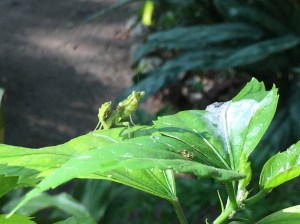
December 26 was a challenging day for me. I was very triggered by several things that happened in the early morning. Soon thereafter, someone approached me and asked if I would like to take a picture of an insect. I went with them and was very intrigued by what I saw.
I chose to believe that being given the opportunity to see this creature, which I think was a very young praying mantis, was either a reward for weathering the challenges, or something to lift my spirits. Since that day ended with more triggering events, I was very glad when it was over.
Tai Chi
A positive thing about the 26th was that we had two Tai Chi classes! I am so in love with that process. We’ve had two teachers working with us. Dave returned to Canada a few days ago and Stephanie will leave on January 2. I will miss learning from them but look forward to practicing what I have learned on my own, and hopefully will find another teacher when I get back to Seattle.
I can already feel changes in my body from doing it. It seems to me that my body is more relaxed, that my posture has improved and that I am looking straight in front of me instead of down. I look forward to seeing if it has any effect on my scoliosis. Most important though is that it brings me into a meditative state.
Time with Amma
I have been so busy since I’ve been here that I haven’t spent much time with Amma. She leaves January 5 on her South Kerala tour and I will be gone when she comes back to Amritapuri. I am going to make sure that I go to the beach meditations on Mondays and Fridays and will hand her prasad (the candy and ash she gives everyone she hugs) every darshan day!
I can’t believe that there are less than two weeks left in this trip. I wonder what other lessons and experiences will come my way before I leave.
The night we left South Carolina, we stopped in Virginia. We asked a man if he knew of any place where we could find shelter if it rained (we sleep on the ground in sleeping bags). He told us we could sleep on the front porch of his house. Then he changed his mind and said if it rained, we could sleep in the camper he had in front of his house. Still later he told us we could stay in the camper regardless of whether or not it rained. So we lived in luxury that night. I had left South Carolina filled with anger towards white people. His kindness began to restore my faith in people with white skin.
The next day we drove north of Richmond and stopped at a truck stop. Mimi and Lara were leaving us at that point so we all took showers and then Brenda and I helped them get ready to go. They found a ride to Boston with some truck drivers. Once in Boston they would find other means to get back to Seattle.
Mimi leaving
Brenda and I then drove on to Easton, Maryland. We had no trouble finding a job or a place to stay. The farm labor office wanted to make sure that we realized all of the workers in the camp were black but offered no objection to our staying there.
The camp was not as nice as the one in South Carolina. It consisted of 54 houses that were each divided into three rooms. The only thing that separated the rooms were sheets of plasterboard; plasterboard that had big holes in it. A family lived in each room. Our room had two beds, a light that wouldn’t turn off and some shelves. That’s all.
Our home
There were showers in the camp, but no way to turn them on. Several houses down there was a water spigot.
We fixed up our room by buying some flannel to put on our beds and using plastic to cover the shelves and holes in the wall.
Our home fixed up!
The first morning we picked cucumbers and earned $6. What cucumbers do to the hands is something else. They create a yellow-green-brown stain that doesn’t come off. I liked this picking better than any other we’d done. I was sure glad we were picking something other than fuzzy, itchy peaches. If it got hot we’d be in trouble though because there was no shade in the cucumber fields.
I had sworn I would never work in a cannery again but that resolve didn’t last. Since picking vegetables wouldn’t provide enough income for us, we had to also work in a corn cannery. We worked one day separating good corn from bad, several days on a machine that stripped the husks off the cobs and several more putting the cobs into machines that took the kernels off. We worked 7 pm to 1 am.
The corn cannery paid once a week, on Friday. Since we didn’t know if there would be a lot of drinking in the camp on payday, we thought Friday night would be a good night to go to Baltimore. Once there, we went to an outdoor Peter, Paul and Mary concert!
The people in the camp were very nice. Many of the men offered to “keep us company” but no one was obnoxious about it and they took “No” for an answer. It seemed inconceivable to them that we could spend a summer, or even a night, without a man, but once our answer got around no one bothered us.
Our new friends
The corn cannery was really different than the peach cannery. Here we could work whenever we wanted to and they hired anyone who showed up for work. We were even allowed to take frequent breaks. The product they put out seem a lot better quality too. I had fun working at the cutter. I found I could put 110 ears in the machine per minute, but that was only when the machine didn’t get clogged. I was able to remove the clog myself, most of the time.
We worked in the fields for six days. Most of that time we picked tomatoes. I calculated our pay to be:
Regular tomatoes: 92 tomatoes= 1 basket= 18 cents
Pear tomatoes: 260 tomatoes= 1 basket= 20 cents
On our best day, we picked 65 baskets of tomatoes, together. Our combined total for that day was $12.35, or $6.18 each.
We wouldn’t have minded staying in that camp all summer. It was our most stable situation and the people were fun to be with.
We found that even in those poor conditions, we had everything necessary to be happy. It was amazing, considering that there were no showers, how clean the people were and how clean and well-dressed they kept their children. In this camp, the children went to school every day.
After two weeks we were ready to take off again. We received $140 cash for our work. That sure looked like a lot of money to us. Most of it was from the cannery work. $140/ 2 people= $70 each. Since that was for two weeks, we had each earned $35 a week for picking vegetables and working in the cannery combined.
After leaving Maryland, we drove to Ocean City, New Jersey and went to a coffee house called the Purple Dragon. A team from University Presbyterian Church in Seattle wase working there. They were all friends of Brenda’s. Were they ever surprised to see us! We stayed with them for two days.
We then drove to Middletown, New Jersey to be with lifelong friends of my family. I really enjoyed spending time with them. We talked a lot about my parents’ lives when they were young. It helped me to understand many things about them.
We had no luck finding for work in New Jersey. This had once all been farm country, but by 1970 it had all been developed. The few farms that were left were very small.
In the South we had encountered racial discrimination. In New Jersey, we faced gender discrimination. No one was willing to hire “girls.”
One day, we drove to New York City. We visited the Phoenix House (a drug rehabilitation program), Harlem, and the Downstate Medical Center midwifery program. We were pleased, and surprised, that we never got lost!
After leaving New York City, we headed for our next stop, Pennsylvania!
(The next post in this series will be published on Friday January 1.)
In India, you often take off your shoes before you enter a house, business or meeting room. Yesterday, the cast gathered to practice the Amritapuri Christmas play that they will present to Amma and the ashram residents and visitors on Christmas Eve. This is a photo of the footwear outside the hall where the practice took place.
In a previous post, I mentioned that I wanted to learn more about termites. They are as fascinating as I assumed they would be. Here is some of the facts I discovered:
There are more than 3000 varieties of termites.
Termites work 24 hours a day 7 days a week.
If you calculated the weight of all of the termites in the world and the weight of all humans, the termites would weigh more.
Termites eat dead plant materials and cellulose in wood, leaves, soil, animal dung, etc. They are considered to be a pest when they are in our houses because of the damage they cause by eating the wood.
They are important to the environment because they are decomposers. They aerate and improve the quality of soil.
Termites have been around for 300 million years.
They descended from an ancestor that was similar to a cockroach.
New kings and queens have wings. The wings are needed in order for the pair to find and build their colony. Once the colony is established, the king and queen break off their wings and begin to reproduce.
Termite kings and queens stay together for life. The king helps the queen in raising their young .
The video below says that the queen may live for 15 years and during that time she will lay more than 164 million eggs. (One article I read said the queen may live 50 years.)
Termite workers and soldiers are sterile. The workers build and maintain the nest and take care of the king and queen. The soldiers defend the nest.
Both the workers and the soldiers are blind since they live in the dark and don’t need eyes. (The king and queen need eyes to pick the location for their nest.)
The termites communicate with each other using pheromones, a chemical scent. They talk to each other in this way as well as leave trails to guide other workers. The soldiers communicate danger by banging their heads against the walls of the nest.
The size of a termite colony can vary from hundreds of termites to millions.
Cleanliness is important to termites. They spend a lot of time grooming each other.
I found this interesting two minute YouTube video about a termite queen and her attendants.
You can read more about termites in these articles:
I have very few memories of my childhood, most of which was spent as an “army brat” moving from place to place. As I have been thinking about those years lately, I realize that there is a theme in some of my happier days.
While I don’t know for sure, it seems like most of those pleasant memories may have occurred during the four years I lived in Germany. We were transferred to Pirmasens, Germany when I was in third grade and we moved back to the U.S. after I graduated from sixth grade.
Some of my childhood memories:
• Making forts. When I was really young my brothers and I made forts inside our house, often under tables. Later we made forts in the woods near the apartment building where we lived.
• Playing outside. There were times when I would leave the house in the morning and only come home for meals and at bedtime. I would play with my friends in their houses and outdoors. In those days, children were given a level of freedom that would be unheard of in today’s world.
• During fourth grade, I remember making a large system of small trenches in the school playground. I then filled the beginning trench with water and watched as the water flowed throughout the network.
• I loved butterflies.
• In fourth grade, I also remember crawling under the schoolyard fence and going into the woods to collect snails. When I crawled back under the fence, to return to the schoolyard, I saw my teacher, Mrs. Pollen, and my mother, who also taught at the school, watching me. Uh, oh.
• My grandfather was a dock master. When we visited my grandparents during my younger years, I would catch fish using a drop line off of the side of the dock.
• I remember hunting for crawfish. That could have been in North Carolina before we moved to Germany or it could have been in Georgia, the place we were stationed after Germany.
As I think of these events, I realize how important outdoor activities and nature were to me when I was young. While it did not continue to be a life theme, there were exceptions.
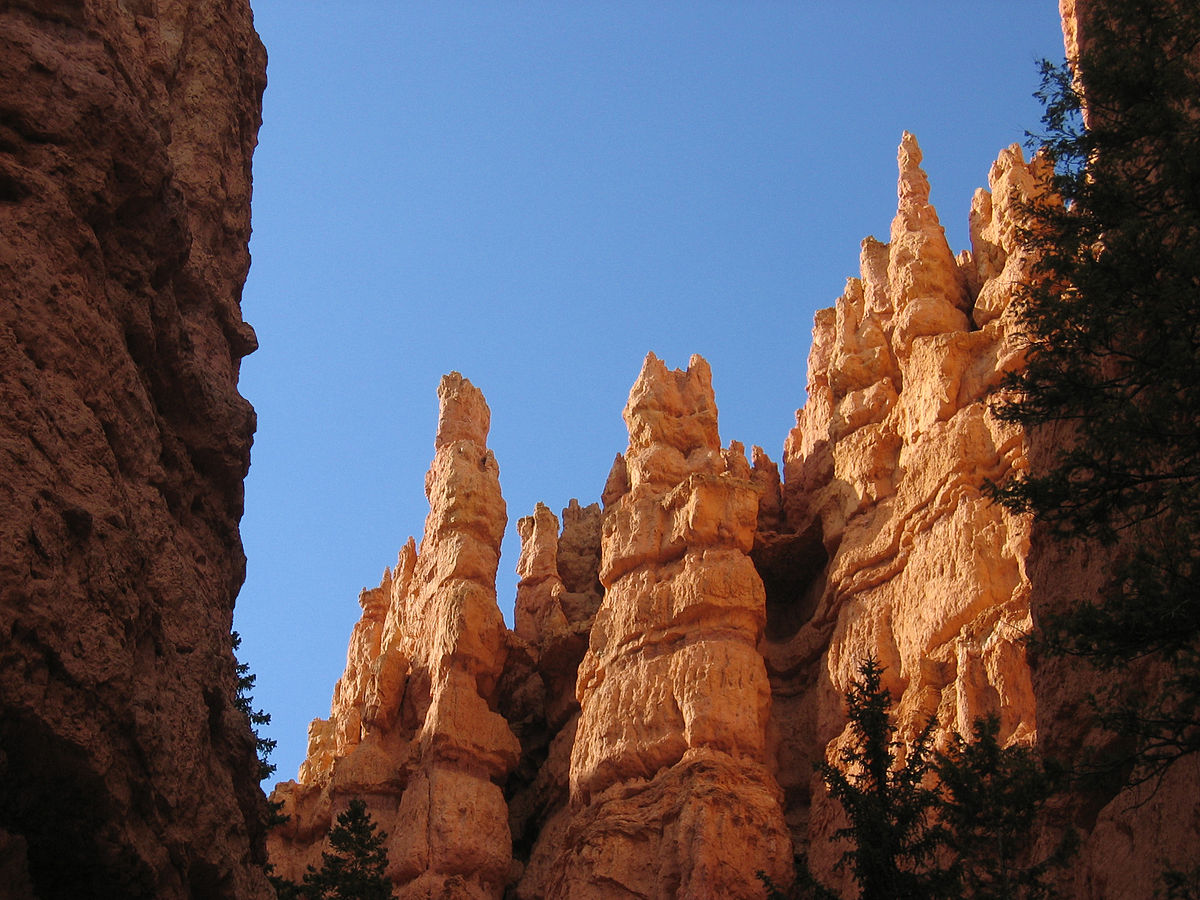
I had loved my experiences of camping with the Girl Scouts and when I traveled across the country with my church youth group in 1965. After Al and I married in 1971 we took trips to Mt. Baker and to National Parks such as Zion, Bryce Canyon, Yellowstone, Grand Canyon, the Redwoods and the Grand Tetons. At least one of those trips we took after Sreejit was born. In some places we camped, in others we stayed in cabins.
When Al and I bought our house in 1973, I loved gardening and canning.
In the 80’s I took my children and one of their friends to places like Zion National Park.
In the early 90’s, I had a strong desire to have a tree house in the magnolia tree in my back yard. I had planned to have a simple structure built, but the carpenter I hired couldn’t do simple. He constructed a beautiful seven by seven foot structure that even had a skylight!
I slept in the tree house from April to October for five years. That era ended the night two large raccoons blocked my path to the tree house. It wasn’t the first time, but it was one time too many. I started sleeping in the house again. At first the cells of my body screamed with grief. Being contained within the walls felt like moving from freedom to prison.
In the 90’s there was a period of three or four years in row where I explored Bryce Canyon on my own.
For the most part though, my outdoor activities had petered out over the years. I was too busy with work, raising children, and life in general. As I reflect on how I am living now, I can see that the spark has reignited. Gardening is again a priority for me. I have become fascinated by nature, whether it be flowers or creatures such as ants and slugs. A considerable amount of my time is spent in writing and editing the PNW GreenFriends newsletter. A part of me that has been long dormant is waking up.
I grieve that children nowadays don’t have the freedom that my generation had as children. Children are not allowed to roam freely for most of the day. Because of all the violence that surrounds us, parents naturally feel a need to keep their children close and well supervised.
But that is not the only difference. Today, children, teens and even adults are so focused on technology that there may be no time or interest in immersing themselves in outdoor play and nature. Texting, videogames and social media all too often fill their days.
Several years ago, I was at a church when the pastor gave a sermon to the young children. He talked about how in the “old days” children spent their days playing outside on this green stuff. He continued talking about grass as if it was something the children had never seen. He then encouraged them to go outside every day and do activities on that green stuff, activities that would cause them to sweat, something else he thought they were unfamiliar with. While it was a funny sermon, it seemed like an important one to me, then and now. If, as a culture, we keep going the direction we are going, where will we end up?
It is my hope and prayer that all of us will either reconnect with, or experience for the first time, the joy that comes when we immerse ourselves in the natural world, and by doing so may we discover that all beings on this earth are interconnected and can learn to live in harmony with one another.
There were separate toilets for “whites” and “coloreds” in the southern United States.
I worked for a short time picking fruit in South Carolina in 1970. There the “white” workers were given a toilet to use while the “colored” workers had to use an outhouse.
There were department store restrooms where half of the toilets were pay toilets. You had to insert a dime into a metal box on the door in order to get access to the toilet. The pay toilets were kept clean, the others were dirty.
In 2014, I went to a restroom in a public building near Seattle and found a sign on one stall saying “This toilet is reserved for e-cigarette employees only.” (I am choosing to not reveal the name of the company that did this.)
“The fool doth think he is wise, but the wise man knows himself to be a fool.” “Love all, trust a few, do wrong to none.” “Love looks not with the eyes, but with the mind, And therefore is winged Cupid painted blind.”-William Shakespeare













 Living, Learning and Letting Go
