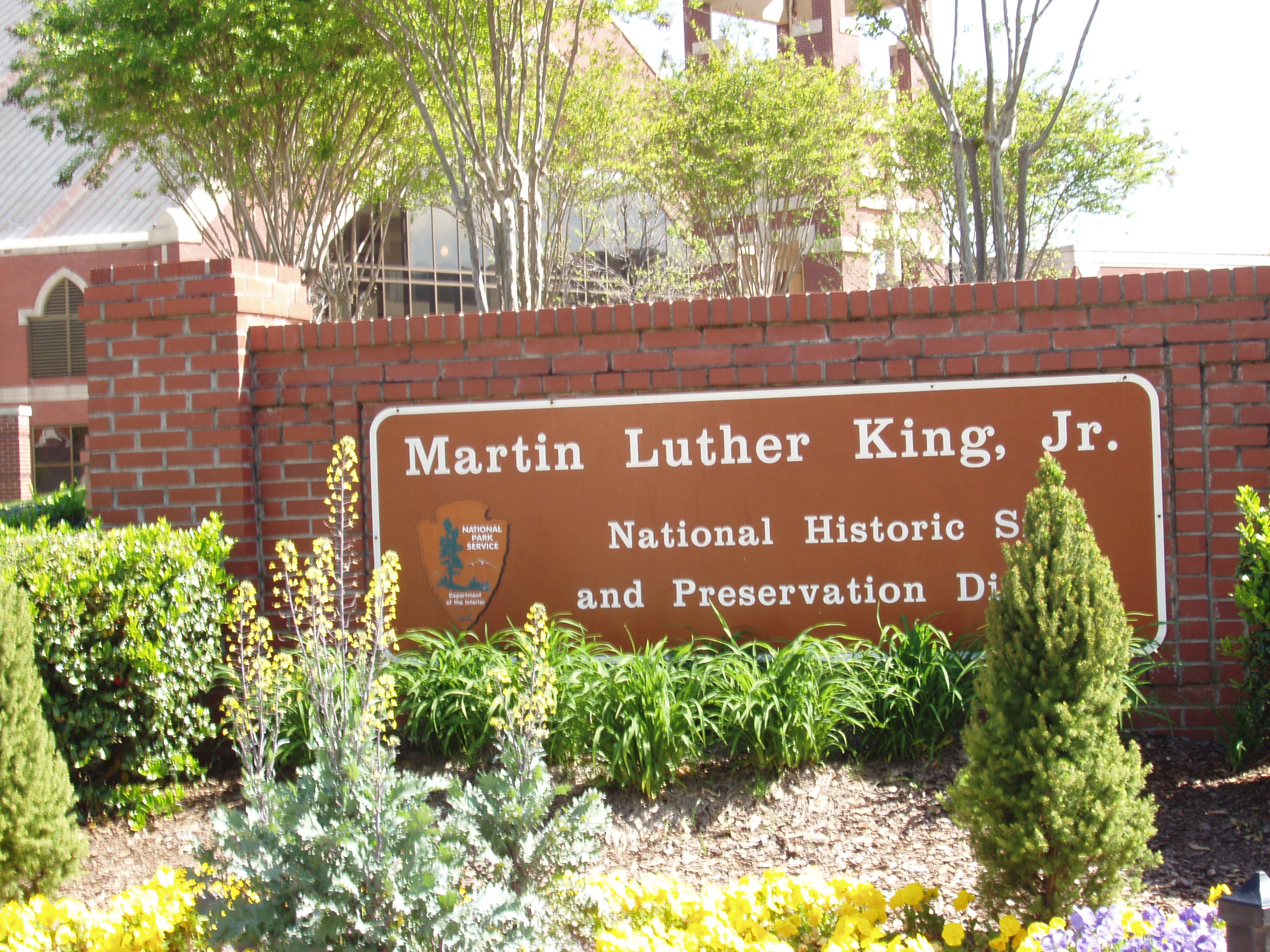
On June 29 and 30, Amma conducted programs in Atlanta for the first time. At one point, my daughter Chaitanya asked if I wanted to visit Martin Luther King, Jr.’s church and the other buildings at the MLK National Historical Site. I jumped at the opportunity. We went during the short break between Amma’s morning and evening programs. Our plan was to see as much as we could this year, and view the rest the next time we go to Atlanta. The first place we visited was Ebenezer Baptist church. Starting in 1960, Martin Luther King, Jr. co-pastored that church, along with his father. As we sat in the pews, a recording of one of Dr. King’s speeches filled the air. I closed my eyes and imagined myself being present at the time the speech was first given. I would have been content to stay sitting there for hours. When I looked around, I noticed many people were taking photographs. I resisted doing the same, but in time changed my mind; I wanted to be able to share this memorable experience with others.
At King Hall there were many exhibits about the lives of Dr. King and his wife Coretta Scott King. In addition, the hall contined rooms that were tributes to Rosa Parks and Mahatma Gandhi.
In Rosa Parks’ room, there were many pictures and mementos. I was particularly drawn to a quilt that was hanging on the wall.
Among the items in Mahatma Gandhi’s room were one of his walking sticks, a pair of sandals, a portable spinning wheel, and framed quotes. I was not aware that Dr. King had so much respect for Mahatma Gandhi. I also didn’t know he had traveled to India. Dr. King once said: “To other countries I may go as a tourist, to India I come as a pilgrim.”
This slideshow requires JavaScript.
Next we went to the place where Dr. and Coretta King’s bodies are interred. It was beautiful and felt like very sacred space to me.
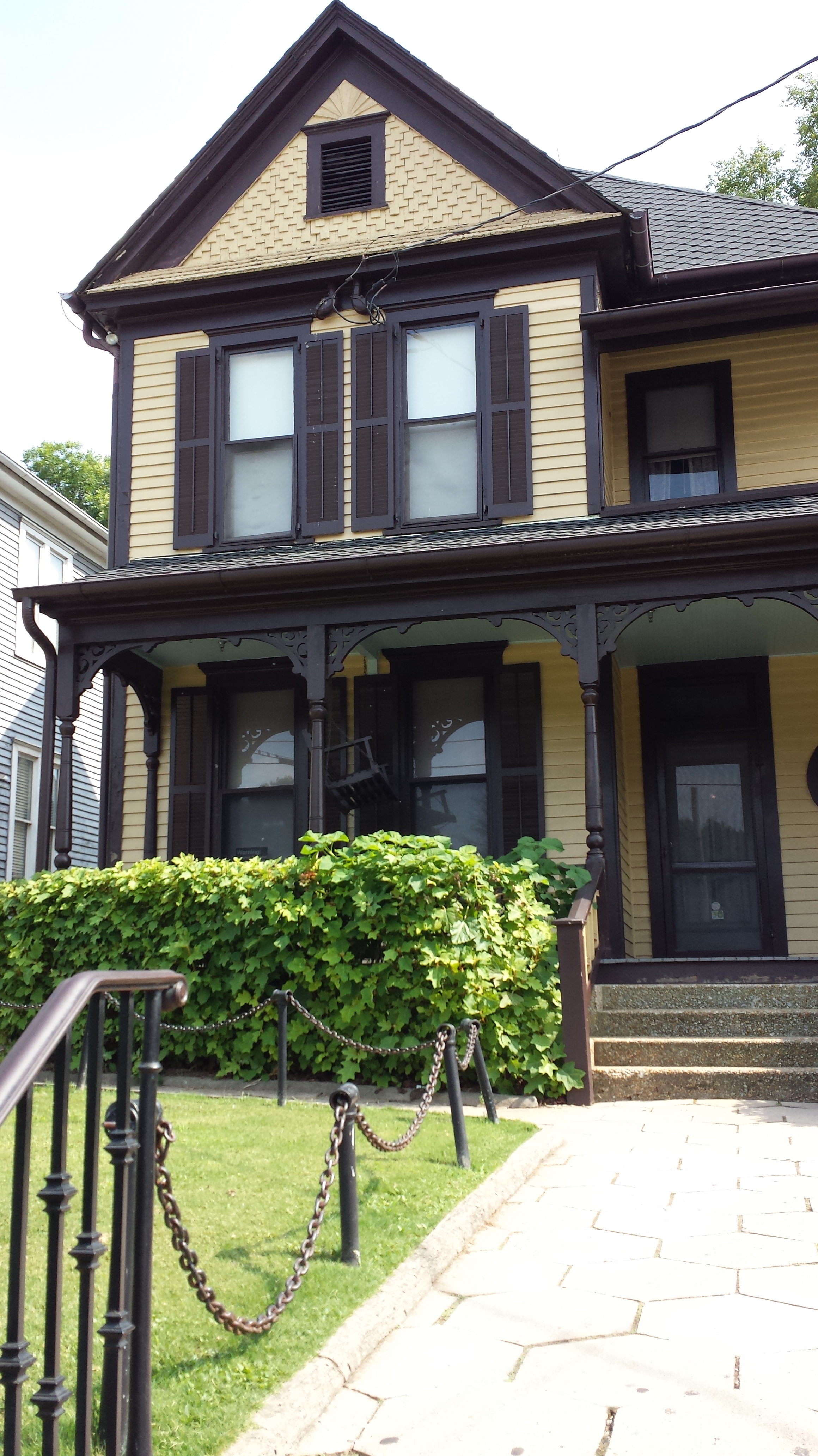
We had planned to visit the home where Dr. King was born, but once there we discovered they only let visitors in twice a day and you have to get tickets ahead of time. We did appreciate having the opportunity to see his house and stand on his porch, but will have to wait for a future visit to go inside. We spent the last half hour of our visit at the National Park Visitor Center. Below you will see parts of the huge mural that is across from the entrance to that building. I wish I had had time to look carefully at all that was contained in that artwork. Inside the Center there were enough exhibits to keep us busy for most of a day. Several of the displays were interactive. An example is in the picture below, where visitors were able to walk alongside statues of the civil rights marchers. We will definitely spend more time at this Center in the future.
The night before our visit, I read about the National Historical Site in the tourist book in my hotel. I found a story that really surprised me. In preparation for writing this post, I learned more about it. When Martin Luther King, Jr. was awarded the Nobel Peace Prize, not everyone supported the decision. The first ever integrated dinner in Atlanta was planned to celebrate it. Black business owners signed up to attend but the white business establishment wanted nothing to do with it. J. Paul Austin, chairman and CEO of Coca-Cola, and Mayor Ivan Allen brought some of the prominent white business leaders together. The message Paul Austin gave them was:
“It is embarrassing for Coca-Cola to be located in a city that refuses to honor its Nobel Prize winner. We are an international business. The Coca-Cola Co. does not need Atlanta. You all need to decide whether Atlanta needs the Coca-Cola Co.”
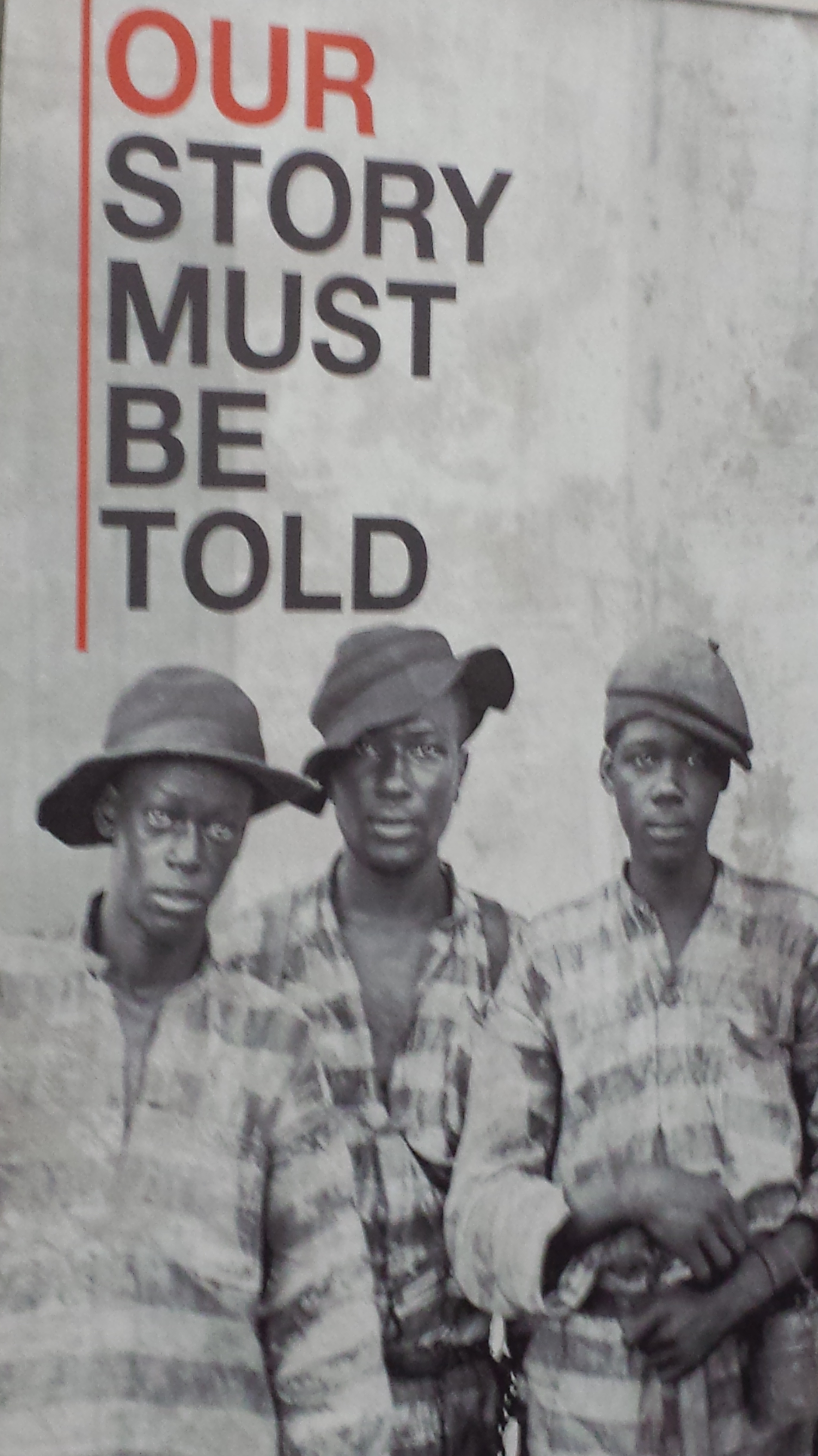
The event sold out within two hours! During our time at the Site, I experienced deep emotions and many memories. That era had affected me and my life decisions profoundly. There is no doubt that Martin Luther King, Jr. contributed significantly to making me the person I am today. I feel blessed to have visited Dr. King’s memorial site and look forward to returning to it in the future.
This is an amazing time in which to live. Since June 18, the Pope took powerful stands on environmental and weapons issues and the U.S. Supreme Court voted to preserve the Affordable Care Act and to uphold the rights of gays and lesbians to marry.
Due to a horrific shooting in South Carolina, Confederate flags are coming down across the South and there is a movement to have it removed from the South Carolina statehouse. Businesses such as Walmart, eBay, Target, Sears, Etsy, and Amazon have banned sales of the flag.
A friend just sent me a video that talks about the history of the Confederate flag. I learned much from watching it and thought some of you might also be interested in viewing it.
All of our mistakes have made us into the people that we are today, and so this is not meant to be an exercise in regret, but rather a fun look back with the thought, “that was maybe not such a great idea.” Tell us about a past exploit of your younger, less wise self.
It only took seconds for me to know what I would be sharing!
I moved from Florida to Washington State in 1966 to go to a conservative Christian school named Seattle Pacific College. Months before I arrived, the administration had granted students the privilege of being able to go to movie theaters. The school still had rules against wearing pants on campus, except on Saturdays, and they didn’t allow students to play cards, dance, or drink alcohol.
I believe it was sometime early in 1968 when I decided to become a volunteer at the First Avenue Service Center. That was a place where the homeless men and women from “skid row” could wash their clothes, bathe and have a place to hang out during the day.
I have no memory of how I found the Center but I loved being there. I talked with the people who frequented it and tried to bring some light into their days. I played a lot of pinochle with them even though I knew my college would not approve; pinochle was a major past-time for those who gathered at the Center. At some point, I wrote a letter to my mother saying something along the line of “Oh mom, I am meeting so many interesting people. I am getting to know ex-cons, drug addicts, drag queens, and prostitutes!”
I was very surprised when my mother wasn’t as excited about my adventure as I was. In fact, she told me she would be sending me a plane ticket home! I had no intention of leaving Seattle or the Center. While I don’t remember what happened next, since I never received the plane ticket, she must not have followed through on her threat. And I didn’t leave the Center.
My involvement with those people was not confined to my volunteer time. I would hang out with some of them outside of the Center as well. At one point, I started dating a young man who was a heroin addict. I was madly in love with him and did everything I could to spend time with him. To his credit, and my luck, he never asked me to get high with him. I had no interest in using any kind of drugs even though it was the 60’s. I just loved hanging out with him. I was so co-dependent though. If he wanted me to drive him somewhere I did it. I remember being so eager to see him that I drove back to Seattle non-stop after I had finished a summer job in New Mexico. The first thing he did upon my arrival was ask me to drive him to Portland … then … and I did it.
I didn’t know anything about co-dependency in those days, I just knew I was meeting fascinating people and my life was full of adventure. He eventually lost interest in me and took off. Looking back, I believe that he never considered me to be his girlfriend. I think I was mainly a chauffeur and he let me tag along at other times.
In hindsight, was it wise for a naive 19 or 20 year old to be volunteering at a place like that? Was it appropriate for me to be hanging out with “ex-cons, drug addicts, drag queens and prostitutes” outside of the Center? Was my “dating” a heroin addict a mistake? I would answer “No” to all of those questions, although I have to admit as I am writing this blog post, I am wavering on those answers a bit.
Would I want my daughter to have the experiences I had? I’d answer “Yes” in regards to some of them, but definitely not to all of them. I put myself into some very dangerous places and painful situations. Did I make mistakes? Yes I did, but I learned from them. And as Sreejit said in the prompt directions, everything that happened during that period of my life contributed to making me the person I am today.
I still remember a few of the people I met in those days. And the lessons I learned then allow me to do a much better job of keeping myself safe now. I also have a lot more compassion for my mother than I did at that time. I can certainly understand why she would react to my letter by telling me she would be sending me a plane ticket home!
Later in my life, I met my spiritual teacher, Amma. When I asked her for a spiritual name she named me Karuna. Karuna means compassion. I think that my sense of compassion and my adventurous spirit really blossomed and came to fruition during the year or so I volunteered at the First Avenue Service Center. I don’t have any regrets.
My taxi was scheduled to leave Amritapuri at 5 a.m. on January 9th. Around 9 p.m. on the 8th I was informed that it had been moved to 4:30 a.m. There would be no time for being idle that morning!
In the past, my itinerary has been to take a 11 p.m. taxi to Trivandrum for a 4:30 a.m. flight to Dubai. That flight is 4 ½ hours. The Dubai layover is two hours and then the flight to Seattle is another 14 ½ hours. Traveling that way means I miss a night’s sleep before I even leave India, and another night’s sleep on the flights (I do not sleep much on airplanes.) As I get older, I have had increasing trouble with jet lag. India is 13 1/2 hours ahead of Seattle so their day is our night and vice versa. The last few years it has been weeks before I adjusted.
I decided to significantly change my itinerary this year. With the new plan, I would leave the ashram at 4:30 a.m. after getting a reasonable amount of sleep. The flight left Trivandrum at 10 in the morning. Once in Dubai, I had a 21 hour layover. Even though it was expensive I had reserved a room at the airport hotel so spent the time resting or sleeping. I hoped it would make my adjustment to Seattle easier, and even if it didn’t it felt a lot better to get significant amount of rest before the long flight. The flight to Seattle was scheduled for 9 a.m. so I missed no night’s sleep before taking the final leg of my journey.
Dubai airport
The bottom floor of the Dubai airport consists of miles of duty free shops. It is loud and has very bright light. The second floor seems to be primarily a business travelers facilities although I only looked down into it so don’t know for sure. The hotel was on the third floor and was absolutely silent. What a respite from the over-stimulation below!
I had an experience there that will probably amuse some of you and make others shake your head wondering what is wrong with me.
When I entered my hotel room, I found this in the bathroom!
What in the world was that in on the left? I had never seen anything like it. Was it some kind of men’s urinal? It was a mystery to me. I kept looking at it and soon realized it had no flush so it couldn’t be a urinal. Still later, I realized it had a spout and handle that released cold and hot water, as well as a stopper and drain like a sink. A sink like that in the bathroom? I didn’t get it.
I took this picture and sent it to some other Americans and they didn’t know what it was either. I had fantasies of what people who didn’t know what it was for would do with it, and some of those fantasies were pretty gross.
Later in the day I decided to write a friend who is a world traveler. She immediately responded that it was a bidet. A bidet? I knew what that was and have even used them. But they have always been hoses and/or spray. There was no hose and no spray. It was just like a sink. Sitting in something like that after using the toilet still seemed really gross so I didn’t go near it!
When I returned to Seattle, I searched on the internet until I found a Wikipedia article about bidets. The picture on the article was this same type of bidet.
Bidets can be found in some countries in the Americas, especially in South America, and are a standard feature of homes in Argentina, Paraguay, and Uruguay. They are common in Arabic countries[citation needed] in the Middle East, such as Iraq, Kuwait, Saudi Arabia, Qatar, the UAE, and in the Maghreb, especially Egypt and Morocco. Much of East Asia, particularly Japan, Bangladesh, Thailand, Vietnam, and South Korea, use bidets as well.
I also learned that you use toilet paper before you sit in this kind of bidet. I am still left with the question “Why?” but at least it all makes sense, and was a pretty funny experience. What can I say, I’m an American!
I had other interesting experiences during my layover. There was an information station that had a cut out of a man. When he answered questions, his mouth moved. It looked like it was a real man who was actually talking. And stranger yet, when you walked by it looked like his head and eyes follow you as he talked. How did they do that? Was it some kind of hologram? I never really investigated it but I watched it every time I passed by.
After twenty-five years of going to India I am used to being in large groups of women wearing colorful saris and men wearing dhotis. There is a large Muslim population in the part of Seattle where I live so I am also used to seeing women dressed in long black robes (abaya) and/or the Muslim headscarves (hijab). There are even many Muslim women in Seattle who wear the burqa, a cloak that reveals only the women’s eyes.
It, of course, was no surprise to me that there were many more people in this kind of attire at the Dubai airport. Some of the women’s burqa had slits that were smaller than I was used to seeing, but there were considerable numbers of women who wore less restrictive clothing as well. Many of the men wore full length white robes (thobe) and a headress (keffiyeh).
At one point, I saw what I believed to be a Muslim mother and her teenaged daughter. The mother was in the black abaya although I don’t think she wore a headscarf. The teenager was wearing the kind of western blue jeans that contain more holes than cloth. I sure would love to know their story!
As some of you will remember, on the way to India I had been given an upgrade to business class. What a boon that turned out to be. I had hoped some miracle would happen and I would be give that opportunity again but it was not to be. The plane left at 9:30 a.m. and arrived in Seattle 14 hours later. Staying the night in Dubai made it easier, but it was still an exhausting trip.
Malidoma
Many years ago I read a book titled Of Water and the Spirit by an African shaman named Malidoma. He lived in the United States but returned to Africa each year “to learn from his elders and detox from Western civilization.” I resonated with that statement and have never forgotten it.
I have the same feeling when I am in India. Sweating from the heat even feels like detoxification. Sometimes it seems like all of my cells are being cleaned out and restructured…. or maybe a better word would be renewed. I rest at a level in India that happens nowhere else. I sense even my soul is at rest. One morning on this trip I awoke to find my earplugs in my hands and my covers off. I realized I had fallen asleep before I even covered myself (normally I have a sheet, a light blanket and a shawl over me since I use a fan at night.)
When I return to Seattle I find I have more respect and appreciation for my life in the U.S. as well as increased respect and appreciation for my life in India. I am better able to be content anywhere. While Amma’s body is not in the U.S. except when she comes here for the North American tours, I feel her presence no matter where I am.
Seahawks
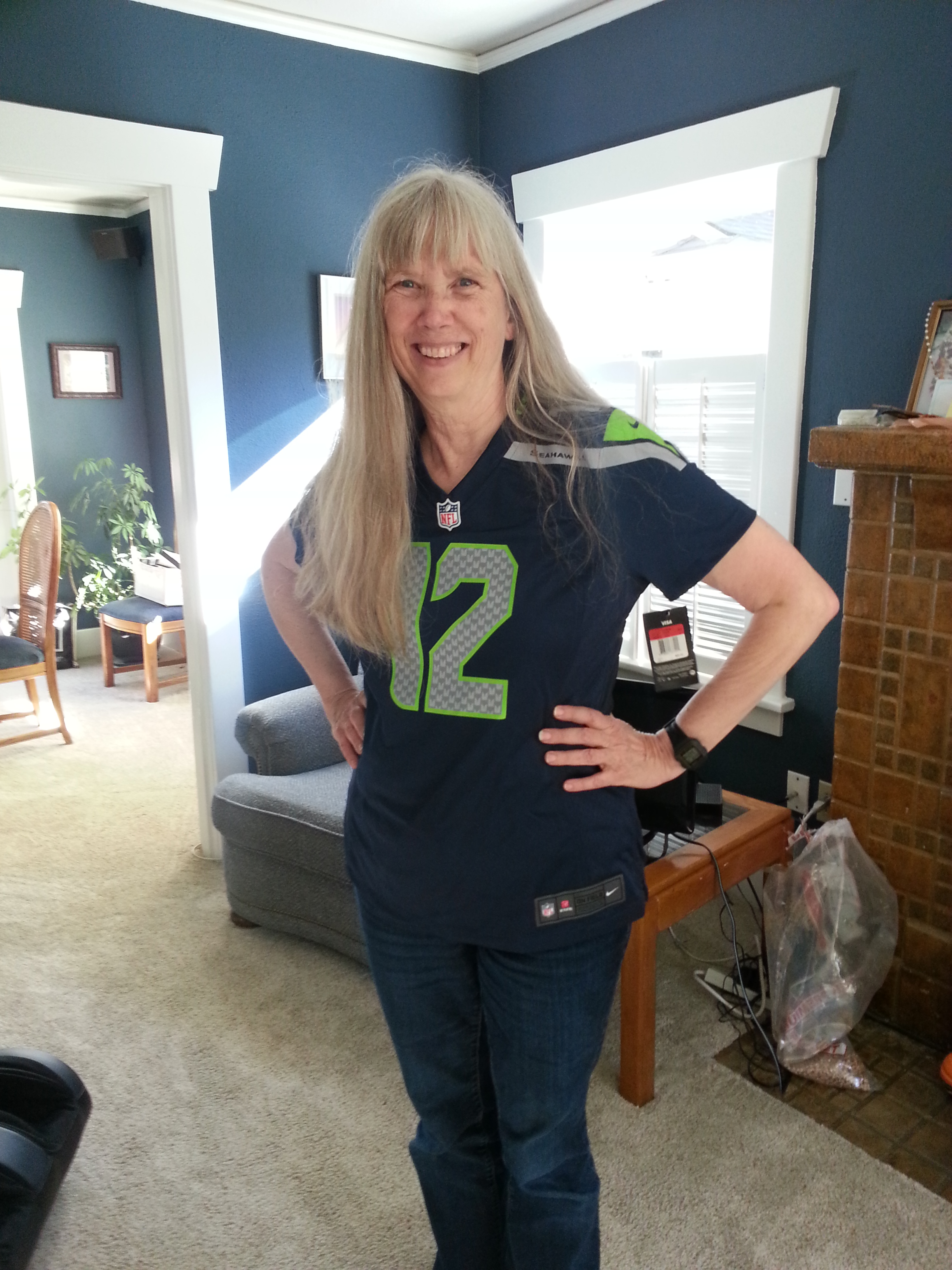
Those of you who have followed my blog for awhile or who know me from Seattle, know that a very strange thing happened to me last year. When Seattle went crazy for our Seahawks football team I went crazy along with everyone else! I have never had the slightest interest in football, but something inside of me changed. I know in part it is because of the incredible sense of community that has developed in the city because of this team. (Opportunity for Community May Come When You Least Expect It)
When I read about their coach’s values and the way he treats his players and expects them to treat each other, I received another level of understanding about why I felt drawn to them. He even had them meditating and doing yoga! Last year after they won the SuperBowl there was a victory parade. 700,000 people stood for hours in 20 degree weather to participate. I was one of them!
While I was in India I still followed the games. It seemed no accident that the first playoff game started only a few hours after I returned to Seattle. Knowing I would be able to watch the playoffs made it easier for me to leave India and come back to my Seattle home! I still shake my head incredulously when I hear myself talking this way about football. You never know where life’s journey will take you!
As I end this year’s trip to Amritapuri:
I know I will miss:
Being with Sreejit, Chaitanya and Akshay
Being with Amma
Being with my other Amritapuri friends
Evening bhajans
Living in community
The warm weather (but not the hot)
The simplicity of living in one room with minimal belongings
The beautiful views of nature
The deep sense of rest and deep sleep
The accelerated level of synchronicities, blissful moments and lessons
In Seattle I am looking forward to:
Being and working with the colleagues and clients in my therapy community
Being with my friends in the Pacific Northwest Amma community
Leading bhajans at satsang
The potentially mild winter (it is 50 F this week!)
Watching the Seahawks play and being part of that Seattle community
Being in my comfortable house
Warm showers
Watching my worms
Sleeping in my bed
Working in my garden
Getting beyond the jet lag and being able to sleep
Blogging!
With this post, my report of this year’s journey to Amritapuri is complete. I appreciate those of you who have been interested enough to take part or all of the journey with me. I feel abundantly blessed
A year or two ago, my son, Sreejit, wrote a poem called A Couple of Brats. The first line stated: “A political statement until they had us,” referring to the births of his sister and himself, kids with a white mother and a black father. While I knew that line was true, at least to some degree, his poem still gave me plenty to reflect on. Recently, I have been thinking of the events that occurred throughout my life that led me to make that particular “political statement.”
The earliest memory I have of experiencing racism was when I visited Florida during my early grade school years. I grew up moving place to place in an Army family, but my mother’s home was in West Palm Beach, Florida. When we visited there one year, probably about 1955, we had occasion to get on a city bus. As a kid, it had been my experience that the best seats were at the back of the bus so, as always, I rushed to that prized area. Once seated, I looked towards the front of the bus and saw the look of horror on my mother’s face. She gestured me to come to the front of the bus, NOW! I couldn’t imagine what was wrong but obeyed her command. When I discovered the reason behind her demand, I was FURIOUS. How could they treat black people, known as coloreds or Negros in those days, in such a manner? I also remember during that time whenever we drove through the black part of town, it was referred to as N*****town. I was disgusted, but to the southern whites of that era, it was just the normal way to speak, they knew no other.
My parents retired to West Palm Beach just before my Junior year in high school. The following Summer, 1965, our church youth group took a trip from WPB to Seattle and back studying “Beliefs Men Live By.” The youth minister, who was pretty revolutionary, had arranged for two black teenagers to participate in the journey. During that period there was never any mixing of races, so that type of trip was a really big deal for both the white and black teenagers.
The minister had a difficult time finding a white family to host the black teenagers the night before we left West Palm Beach. The white families were afraid, knowing their neighbors would have strongly disapproved. Luckily, my Aunt Ruth and Uncle Ted stepped forward to provide the necessary shelter.
The next morning we began our adventure. I believe it was the first night, when we passed through Americus, Georgia, we glimpsed a Klu Klux Klan meeting through the trees. That was frightening for everyone. The van driver ordered the black teenagers to lie flat on the floor until we could get way out of town. I remember having a strong sense we were being followed.
One of the nights early in the trip, we stopped for the night at Tougaloo College, a black college in Mississippi. It was the first time any of us had experienced what it’s like to be in the minority in a racially divided group. During the evening we met with a group of the college students and had an interesting dialogue.
A year later, I moved to Seattle to study Nursing. After I graduated from college in 1970, three female friends and I decided to spend the summer working as migrant farm laborers. We would start in Florida, work up the east coast (Georgia, South Carolina, Maryland and Pennsylvania) and then head back to Washington State. We had a multitude of experiences that summer.
We had serious car trouble on the way to Florida, so it took us more than a week to get there. After having more car problems once we arrived in Florida, there was no money left to take our trip. We spent a week washing windows, cleaning houses and porches and selling flowers. Next, we found a job picking oranges in Belle Glade for a few days. At night, we stayed in a heavy canvas tent. In Florida heat, the temperature inside the tent was intolerable, so the tent went no further with us.
Each morning, we left the campsite at 5 a.m. and joined the bus taking the farm workers to the orchard. We were the only white people on the bus, but everyone was so nice to us. Once at the orchard, each woman was paired with a man. The men used a 20 foot ladder to pick the oranges high in the tree; the women picked the lower ones. During the days we worked in Belle Glade, the four of us earned between $17-31. We figured it took 30 oranges to earn 1 cent. We came back to my parents’ house in West Palm Beach, exhausted but feeling successful and ready for our big trip.
Our first stop was Byron, Georgia where we attended the Atlanta International Pop Festival, along with more than 200,000 other people! We had to park 3 miles away and hike in. There was no shade to speak of and it was 104 degrees. We ended up 30 feet from the stage! The artists I remember most were Jimi Hendrix, Chambers Brothers, Richie Havens and the Memphis cast for HAIR. I remember waking up to Richie Havens singing “Here Comes the Sun.”
After the festival, we drove 60 miles north. We stopped at a state campground and went to pay our fee. The ranger said we could not camp there unless we had an adult chaperone. I was flabbergasted as our ages ranged from 19 to 22! He said that would be true of any campground in the state. He added, “Lady, this is Georgia!” We got back into the car drove to a campground 20 miles away. They accepted us without question.
The next day, we started looking for work. The white farmers refused to let us work with black pickers. They suggested we ask for work at the farmers’ market in Atlanta. We did find a job there. It was tough work, made harder by the fact that the white farmers treated us like we were prostitutes; why else would white women be doing this kind of work?
We were advised that we could get farm labor work in Fort Valley, Georgia. One of the first things we did when we arrived in town was to go to a laundromat. A 13 year old white girl told us the hippies who went to the rock festival stripped naked in the car wash, in the grocery store, in the back of trucks. The things she said were outrageous. While we were there, a black man walked in and put his laundry in the washer. She was furious, grabbed her wet laundry from the machine she was using, saying N**** to him and rushed out. I had the feeling if we had talked to him our lives would have been in danger.
We were able to get some picking work in Ft. Valley, but it was not to pay our expenses so we decided to work in a peach cannery as well. The woman who hired us said she bet her husband $5 we wouldn’t last more than 2 days. We definitely intended to prove her wrong.
We were assigned the night shift. The workers on that shift were almost 100% black. The day shift was nearly 100% white, the exception being some hard labor jobs. To keep the job, we were required to work 7 days a week, 8-10 hours a day with one 10 minute break and no dinner. If we didn’t show up for work, we would be fired. If the machines didn’t work, which happened a lot, we didn’t get paid, but if we left we would be fired. After several weeks the night shift was laid off. By then we were very happy to leave.
Our boss, whom we liked a lot, gifted us with an empty peach can labeled Pride of Georgia. (It was many years before I ate another canned peach. The machine we had been running was overflowing with lye that hadn’t been completely rinsed off the peaches before they sealed the can.)
Next we went to South Carolina. We easily found a job, but finding a place to stay was a problem. The farm had an area for black workers to live and a separate area for the white workers. They wouldn’t let us stay in the black camp; saying we wouldn’t last 15 minutes there. I asked how that could be since the black camp was full of families. The farmer said there were no families in his camp. Then he thought a moment and said, oh you mean the N******. To him black children didn’t even qualify as “children”. Once again, I was outraged.
They gave us cattle truck to stay in, but staying there one night was more than enough. I decided to talk to the black crew boss, Leroy, and ask if we could sleep in their bus. He offered us that chance to stay in their kitchen. I asked if he would get in trouble with the farmer if we did that and he said no, there would be no trouble. We spent our first evening in the camp singing late into the night with the kids.
It turned out that the black workers’ kitchen was in the same building as the white men’s quarters. During the night they were drinking and we heard them saying “They want to see what a migrant camp is like; let’s show them what it is like.” Several times, white men came into the kitchen and it was only by our quick talking and shaming that were we able to get them away from us.
After talking with Leroy, our plan for the next night was to have his wife lock us in the kitchen so that the white men couldn’t get in again. However, around 11:00 p.m. when we were singing with the kids and a little girl was brushing my hair, someone spoke up behind me. We turned around to find three policemen standing behind us. They said the farmer wanted us off his land, NOW. We were shocked. The farmer hadn’t said a word to us about it during the day. We asked if we could go to the packing shed to talk to him ourselves and they said gave us their permission. When we arrived at the shed, we discovered that three black workers and one white worker had beat us there. They had told the farmer that if he kicked us out in the middle of the night, every worker he had would be gone by morning! Luckily, he relented and let us stay the night.
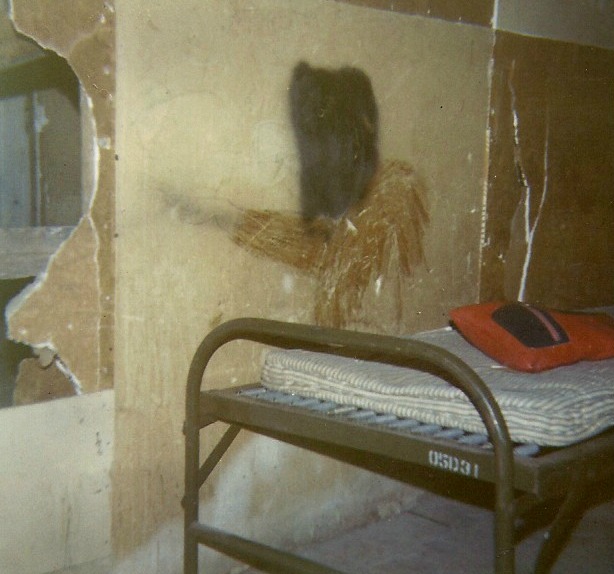
I will mention only one other experience from that summer; and that happened in Maryland. We had no trouble finding a job or a place to stay there. The labor office said we were welcome to stay in the farm workers’ camp as long as we realized everyone else would be black. That camp consisted of 54 buildings. Each building was divided into three rooms, and each room held a separate family. Our room had two beds, a light that wouldn’t turn off and a few shelves. There were huge holes in the plasterboard between our room and the room on the other side. There were showers in the camp, but they couldn’t be turned on. The only source of water was a spigot several houses down.
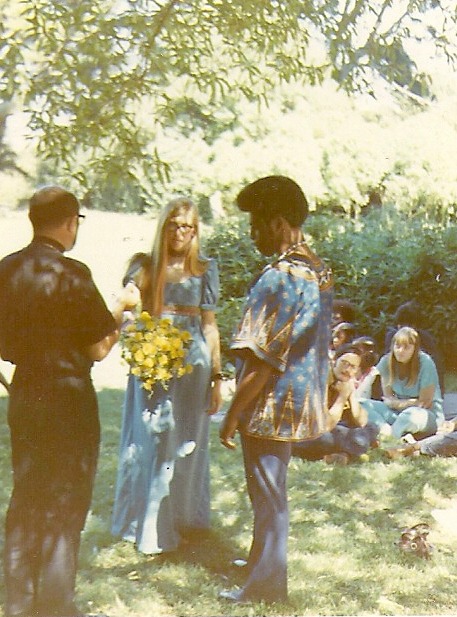
I came back to Seattle after that 1970 trip with lots of positive memories, but also angry about the racism I had witnessed. I decided that I was going to make a difference. In my young mind, the best way to stop this nonsense was to blend the races through interracial marriage. I started pursuing Al, who by that time had been my best friend for several years. A year later, we were married in Golden Gate Park in San Francisco. The morning of the day we were going to be married, we attended Glide Memorial Methodist Church. Roberta Flack sang during the church service, and Quincy Jones played the piano. While their appearance had nothing to do with our wedding, it made for a great memory! After our wedding service in the park, Jane Fonda came up to us and wished us well. What an awesome beginning to our new life!
While the mixing of races as a political stand against racism might have been a naïve way for me to look at solving racism, it always felt right to me. When I told my father of my plans, he vowed to never speak to me again, and he didn’t. Still my resolve never wavered. He told my mother that she could never see me again, but she wasn’t willing to stand for that and started visiting Seattle regularly.
So, was marrying Al a Political Statement? I’d have to say “yes”, at least in part. More than anything, it was a decision to walk my talk, to make my life a testimony to my beliefs.
As a result of the union between Al and me, two very beautiful, very talented, very loved and loving individuals were brought into this world. Three years after our marriage, Sreejit was born, and nearly three years after that came his sister, Chaitanya.
Did our marriage and having mixed raced children end racism? No it did not. But certainly, between then and now, mixed marriage has gone from unacceptable to much more widespread and “acceptable”. As individuals in each generation have more contact (of all kinds) with those of other races, we gain more understanding of each other. Every step forward makes a difference. I am happy to have participated in an active way in the journey.
When the Dungeon Prompt about Community came out the last week in January 2014, I wrote something in the comments section but since I didn’t have a blog I couldn’t post it properly. Now I have a blog!
February 1, 2014
To me, community is to be a part of something, to belong. For nearly 30 years I have been part of our therapy community. For 25 years I have been part of the Amma community. This year I have also found community in what, for me, is the unlikeliest of places. In September, I heard that our local football team, the Seattle Seahawks, were on a winning streak. In general, I have had no interest in sports of any kind. The only exceptions have been that I, on very rare occasions, have watched part of the Olympics, and a few, very few, times have watched some of the playoff games when one of our teams was doing exceptionally well. But essentially it is safe to say, I do not watch sports. Continue reading “Opportunity for Community May Come When You Least Expect It”→
“The fool doth think he is wise, but the wise man knows himself to be a fool.” “Love all, trust a few, do wrong to none.” “Love looks not with the eyes, but with the mind, And therefore is winged Cupid painted blind.”-William Shakespeare



 We spent the last half hour of our visit at the National Park Visitor Center. Below you will see parts of the huge mural that is across from the entrance to that building. I wish I had had time to look carefully at all that was contained in that artwork. Inside the Center there were enough exhibits to keep us busy for most of a day. Several of the displays were interactive. An example is in the picture below, where visitors were able to walk alongside statues of the civil rights marchers. We will definitely spend more time at this Center in the future.


 During our time at the Site, I experienced deep emotions and many memories. That era had affected me and my life decisions profoundly. There is no doubt that Martin Luther King, Jr. contributed significantly to making me the person I am today. I feel blessed to have visited Dr. King’s memorial site and look forward to returning to it in the future.





 Living, Learning and Letting Go