“You are enough right now, not after further, future achievements, but now, as you are.
Your wisdom is a valuable contribution to others right now, not after further study and life experience, but now, as it is.
You are worthy of respect and compassion right now, as you are, and not just because Brene Brown says so, but she does say so, and she seems like a nice person.
You are wonderfully lovable as you are right now, not at some future point when you’ve purged yourself of every human foible, but now, and not just because Mr. Rogers would say so, but you know he SO would.
You have the inalienable right to be flawed, ordinary, in your stuff, and off-track. These are fundamental to existence, and in no way subtract from any of the above.
In 1996, I was on an airplane that “fell” 25,000 feet in about a minute’s time. For the next two hours we did not know if we were going to live or die. Since then I have had a sense that I am living on borrowed time. I think I was supposed to die that day, but Grace prevailed. Now, I see every moment I live as a gift and remember that tomorrow is not promised. I have a strong desire to live in a way that allows me to die without regrets.
When I was a new psychotherapist, I assisted in a therapy group led by Delphine Bowers. She used to ask clients if the actions they were thinking about doing would “contribute to their living or their dying.” That question has stuck with me for almost 30 years.
***
I believe I am contributing to my dying, instead of my living, when I am:
Overdoing
I am great at getting things done. There was a time in my life when I was working three jobs, going to school, and raising two children. Throughout my adult life, I have generally been unwilling to stop “doing” unless I get so sick that I can’t do otherwise.
In the last few years, I have made great strides in stopping that behavior. Still, it is not lost on me that I have back problems which have impacted my level of activity since mid-February. While 97% of the time I am resting and doing what I know I should do, I still find myself saying, “Oh it’s okay if I plant a few seedlings.” Or I do other minor garden work when I know I should be avoiding all leaning over and bending down. What will it take for me to learn this lesson? I shudder to think of the answer.
Overthinking
I used to obsess about anything I wanted to say for so long that I often lost the opportunity to say it. I also obsessed about things I did say, analyzing my words looking for errors or wondering if I had said something that made me look stupid. While I stopped those behaviors decades ago, I believe that overthinking is still the most common way I make myself miserable. And it is certainly the source of most of my stress. If I am offended by something, I may fixate on it. Worrying about the future also leads me to overthinking. The fact that I avoid mind-slowing spiritual practices, such as meditation, perpetuates the problem.
***
I have long been aware of my tendency to overdo and overthink. In fact I have written about those behaviors before. (Recovering from Overdoing, Stay in the Present and Stop Thinking!) In the last month, awareness of another way I contribute to my dying has resurfaced.
Emotions such as anger, sadness and fear are meant to show us that there are problems we need to deal with. If we feel the feelings and address the issues, the emotions are likely to flow through us. If we repress them, we probably won’t solve the problems and we may become depressed, anxious or sick.
I have been conscious of the fear in my body for a long time, but I used to bury my anger so deep that I didn’t even realize it was there. Now I feel the anger at the time it is triggered. My new awareness is that I am repressing my grief.
***
Stuffing Grief
When I was growing up, a frequent message from my father was, “If you are going to cry, I will give you something to cry about.” If I didn’t stop crying, I was usually spanked or sent to my bedroom. I learned it was not okay for me to express my sadness.
When I met Amma in 1989, grief began to erupt from inside of me. Generally that grief was not associated with any conscious memory. Even though I didn’t know what it was related to, I often had a sense that I was releasing the energy from traumas that had occurred earlier in my life. Sometimes I wondered if some of it was coming from other lifetimes, or if it was some form of “universal grief.” That spontaneous release of tears, which usually occurred during Amma’s programs, went on for several years. Letting them pour out felt very healing.
Then one day someone teased me about my tears. My childhood programming took over and I shut them down so fast it was mind-boggling. From time to time, something will still bring up that deep well of grief inside of me, but for the most part it is nowhere to be found.
A week or so ago, there was a moment when I felt sadness about my back pain and the resulting physical limitations. I shed a tear, or maybe two, before a firm inner voice said, “It’s good that you felt your sadness, but that is ENOUGH.” I saw that my father’s message was still operating within me. Certainly no healing can come from releasing one or two tears.
When I heard the news that Prince had died, I started crying, and I cried on and off throughout the week. The grief I felt was so deep, very similar to the level of emotion I experienced during my early years with Amma. While Prince’s “Purple Rain” album and movie, and especially the song “When Doves Cry,” was important to me in the 80’s, I hadn’t followed his career after that, other than taking my children to his 1988 Seattle concert. Even though I didn’t understand my level of emotion, I was aware that the tears I shed felt cleansing and therapeutic.
***
I believe that overdoing, overthinking and stuffing my grief are the three biggest ways that I am currently contributing to my dying. I know it is important for me to continue working on these issues and to keep the “Will this action contribute to your living or your dying?” question in mind as I make day-to-day decisions as well as when I consider long term decisions, such as when to retire.
I have no way of knowing whether I will live one more day or one year, five years, ten years or more. I am committed to making the most of every moment I have left in this lifetime.
Originally Published on May 6, 2016 as part of The Seeker’s Dungeon’s On Living and Dying event.
If you’d like to be one of the guest authors, you can learn more about the event here: 365 Days On Living and Dying.
From January to March 2016, I offered a weekly Challenge for Growth Prompt. Participants published a post that related to the weekly topic and I posted a summary of those contributions. You will find that list below.
I give thanks to everyone who contributed to the challenges, whether it was by publishing a post, by reading the posts written by others or by thinking about the challenge topics as they lived their life that week.
Everyone is still welcome to write for Challenge for Growth Prompts. If you do, I will add you to the list of contributors. You will find the full prompt list below the contributors list. The directions for participating in a prompt can be found in each of the prompt descriptions. Continue reading “Challenge for Growth Prompts: January to March 2016”→
Over the last few years I have felt myself inching towards retirement. Last month, I set a retirement date of May 31, 2017 but the size of my psychotherapy practice has reduced so much lately that sometimes I feel as if I am already retired. I know that could change, but I don’t know if it will.
This transition time has been very interesting. When my ex-husband had a massive heart attack in 2001, we began to reconnect. Now we are regularly doing things together, such as watching Seahawks games and Dancing with the Stars, and occasionally going together to movies or other events. We have talked about contacting two or three of our friends from our pre-marriage days.
I also have reconnected with Kathie, who was a close friend in the mid-80’s to mid-90’s. I helped her start a blog last year, ChosenPerspectives, so we have that in common in addition to our past history.
I’ve noticed other things that could be related to this transition. Since 2005 or so, I have felt a drive to reduce the number of my belongings. While I have never been much interested in material possessions, I began to give away anything I hadn’t used in the last three years, unless there was some major reason to keep it. Last year, I changed that number to objects that I hadn’t used in the last two years. I also have had an ongoing desire to organize and clean out cupboards, shelves and drawers.
I have had a renewed interest in numerous activities that I enjoyed doing in the past, such as gardening and canning. For about a year, I felt pulled to buy a microscope, an item I loved during my childhood. When I realized that I could add microscopic photos to the nature photography I put on my blog, I bought a microscope and started using it immediately.
I’ve also developed new passions during the last few years. The most important is blogging, which has become a major part of my day-to-day life. As a result of our mutual blogging interest, I have much more contact with my son, who is the person responsible for me starting my blog. (His blog is The Seeker’s Dungeon.) As the result of blogging, I have also developed a passion for photography.
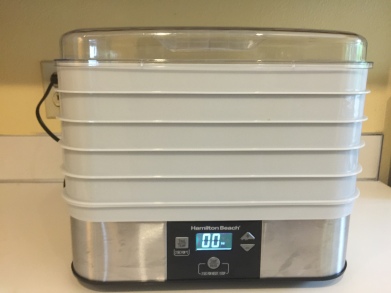
For several years, I have considered learning how to dehydrate vegetables and fruits. Last month, I purchased a dehydrator and started dehydrating bananas, mangoes, plums, tomatoes, zucchini, mushrooms, cucumbers (probably won’t do that again), and as of yesterday, watermelon. I’ve also felt the urge to start knitting, crocheting, sewing, and possibly folk dancing and going to Dances of Universal Peace, all activities I enjoyed decades ago. These could all be retirement activities.
When I am with Amma, the frequency of the synchronistic events that happen in my life increase dramatically. This summer was no different in that regard. A clear theme emerged in the course of those synchronicities.
The week before Amma arrived in Seattle, I was at my Network Chiropractor’s office when a woman walked out of the treatment room. She looked familiar. I did a quick 20 year age-progression in my mind and then asked if she was the person I thought she was. I was correct. The next week, the same thing happened, in the same place but with a different person. Again, the woman was someone I hadn’t seen since the mid-90’s.
When Amma came to Seattle, I spent the first morning she was here helping a staff member find and go to a dentist. I didn’t walk into the program hall until 1 p.m. As I was walking in, a woman was walking out. She called me by name. When I looked at her, I recognized that she was also someone who had been in my life in the early to mid-90’s. I hadn’t seen her since then and she told me she hadn’t attended one of Amma’s programs during the intervening years. I was amazed by the commonalities between all of these synchronistic experiences.
The most amazing reconnecting events happened just before and during Amma’s Toronto programs. On Father’s Day, I received an email from my brother saying that his son had written a Father’s Day post about our father, i.e. my nephew’s grandfather. Before I tell that story, and the events that followed, let me say that I left home to go to college when I was 17; my brothers were 12 and 14 at that time. I saw them very few times after that. My youngest brother died in 1992. (My children and I did visit him several times between the time he was diagnosed with cancer and the time he died.) I have seen my other brother only three times since 1992, and those visits were brief. We do email each other every now and then.
So back to the story at hand. It was fascinating to read my nephew’s post and to learn about my father from his perspective. Even more fascinating was that I discovered that my nephew and his wife are professional photographers and that my father had also had an interest in photography. My nephew posted some of my father’s photos in his Father’s Day tribute. I knew my father had taken some family pictures but this part of his life was completely unknown to me. It was particularly interesting to me because of my current interest in photography. I was discovering there are things I have in common with my family that I didn’t know anything about.
In his post, my nephew had referred to my father’s military life. Some of what he said was different than my memories. When I checked those things out with my brother, he put together a time line of my father’s career. There was information in it that I didn’t know, and I knew some things that he wasn’t aware of. We wrote back and forth over the next few days. At one point, he added his two sons to the email exchange, so I added my son and daughter. All of us made a comment or two on the joint exchange and then the four cousins wrote each other separately. This was the first conversations they had ever had with each other. I marveled at the miracle that was unfolding.
Over the next week or so, my brother and I continued emailing each other about our childhood memories. He mentioned that he thought our father had gifted us with a love of music, books, education, hard work and the desire to do things right. I believe we also learned the value of hard work and education from our mother and even more important, the value of being in service to others.
I still don’t know my surviving brother well but over the years I have learned that we share some of the same political beliefs. Recently, I learned that we are both introverts and have similar thoughts about some religious issues. Since he is a landscape architect I assume we share a love of nature.
While I was pondering all of these commonalities, I realized that my current passion about nature is something I have in common with my youngest brother, even though we didn’t have that focus at the same time. His room, both as a teenager and a young adult, was always filled with injured birds and other animals he had rescued and was nursing back to health. I remember visiting him before he married. At that time, he was raising snakes in his room. I will never forget this piece he wrote just prior to his death at age 39:
I am very sad that people seem to see so little of the world around them. I can’t walk outside without seeing the beauty of our created world, from the rainbow in a line of earthworm slime, to another visible ring on Jupiter. We have been given this magnificent world to study and enjoy in limitless detail at any level, microscopic to cosmic. Even though I have enough things to interest me another 10 lifetimes, I must take solace in knowing that, at least compared to others, I’ve had much more than my share even in half a life time..
As I approach retirement, I am grateful that a natural transition seems to be occurring. I am reconnecting with my past in many different ways. I have no doubt that I will have enough activities that I am passionate about to keep me occupied for years to come. The unanswered question that is most up for me now concerns where I will ultimately live: “Will I move to India?” “Will I live in one of Amma’s U.S. Centers?” ” Will I continue to live in my own house in Seattle?” Those answers, and the answers to many other questions, are yet to be revealed. At this moment, there is no need for me to know the future. I know I will know what I need to know when the time is right!
I once heard a story about a monkey who decided to give up eating bananas. Even though the monkey was committed to his goal, when he saw a banana in a tree far away, he decided to sit closer to it. That way he could at least enjoy looking at it. Nothing wrong with that!
Soon, he decided to move even closer to the banana. And then closer. And then closer yet. Before long he was sitting right next to it. At that point, the monkey reached over and grabbed, peeled and ate the banana, telling himself that he would give up bananas “tomorrow.”
I often use that story when talking to my psychotherapy clients about breaking their addictive patterns. If you have the addictive substance, such as drugs, alcohol, a particular type of food, porn, etc., in close proximity to you, it is unlikely you will be able to keep your commitment to abstain.
That is the way I am about chocolate. Dark chocolate to be specific. A little dark chocolate can be healthy, but if I have some, I usually want more. If it is in the house, and it comes to my mind, it won’t be long before I go looking for it. Once it is in plain sight, forget about abstaining, I will do that “tomorrow.”
I don’t intend to ever give up dark chocolate completely, but when I am serious about stopping my over-indulgence, I know to not have it in the house and before I leave the house to recommit to myself not seek it out.
(Note: At the moment, I’m congratulating myself for choosing to use a photo of a monkey eating a banana for this post rather than a photo of a piece of dark chocolate. That way, every time I see this post in the future, I won’t be tempted to go buy some!)
I enjoy looking at the work of new bloggers. Today I discovered Rajaraman and his “Raja’s Short Stories” blog. The two short stories of his that I read today were well written and really held my interest. They also contained meaningful lessons about life. I decided to reblog this one so you can all get a sense of his work. Join me in welcoming Rajaraman to the WordPress blogging community!
“Enough of all this. Shut up, this is not working out.” Rishi said.
“Yeah, I knew this would never work out.” said Naina.
Their marriage had become strained over the past few years. They weren’t spending enough time with each other. The sweet talks had vanished. Their relationship had become more or less like a chore. The passion was missing.
But they did fight with passion. They loved themselves more than the other person. They didn’t care for each other’s opinion or point of view.
They finally felt that they were nearing their end.
“Oh God. Why did I marry her? Please relieve me of this pain.” he thought.
For several years in the mid to late 1990’s and early 2000’s, I wrote articles about my experiences with Amma for “The New Times,” a free newspaper that was, at that time, available in Washington and Oregon. I have started sharing some of those articles on my blog. I am choosing the articles to post based on their topic, therefore they are not being shared chronologically. The article below was published in May of 1995.
~
As a psychotherapist and a consciously evolving human being, I have a strong interest in examining the emotional pain in my own and others’ lives. This year (1995), during my annual visit to the ashram of my spiritual teacher, Mata Amritanandamayi, also known as Amma, I had an experience that helped me put my own pain into perspective.
This year’s trip was different from my previous trips in that most of my two month visit was spent traveling with Amma as she conducted programs throughout India. (Amma’s public programs include lectures, devotional singing, and darshan, which means to be in the company of a great soul. Amma’s style of darshan is to hug each individual who comes to her.) My time in India was to end with a program in Pune, a city southeast of Mumbai.
Four days before I was to leave India, I found myself filled with grief. While I was excited to be returning to Caesar salads, Western toilets, hot showers, and American efficiency, I felt enormous grief about leaving my teacher, the devotional singing and the bliss of the divine energy that I access so easily when in Amma’s presence. I noticed that my sadness was mixed with a measure of rage which I knew was rooted in my childhood. I sat close to Amma and allowed the sadness and rage to wash away and the peace and stillness to come.
Two days later, during an evening program, I was watching Amma give darshan to the large crowd who had assembled. While I was watching, a man came to her carrying a large teenage boy who had no use of his arms or legs. His legs appeared to be no larger than the diameter of a fifty-cent coin. I thought he might also suffer from cerebral palsy. Moments later, another man carried in a boy who was in a similar condition. Then another pair presented themselves to Amma, and then another, and another.
Soon it became obvious that a bus load of severely handicapped teenagers had been brought to receive Amma’s touch. As the children kept coming, my body flooded with grief. Other images then started coming into my mind’s eye, images of the pain and suffering I had witnessed during the last few weeks.
Miles and miles of shanty-town shacks built mostly of corrugated tin; tin in a country where the temperatures may be 90 degrees in the winter and 120 degrees in the summer. I had seen people preparing food in the huts over open fires. I had imagined the nightmare those huts would be at night when the rats roamed.
In the middle of busy railroad yards, wherever there was 20 feet between the crisscrossed tracks, families had erected tents. Children were growing up on the tracks. The tracks served as their playgrounds and their toilets.
A tall blind man had stepped into the railroad car in which I was traveling. The pupils of his eyes were shiny, bright silver. He was carrying a six-month-old baby. Once he had come to the center of the car, he started singing. People came forward and put money in his hand. When everyone had donated, he stepped down and found his way to the next car.
A woman, legs totally useless and crossed stiffly in front of her, inched her way down the sidewalk on her buttocks, moving so slowly that you couldn’t even tell she was moving unless you watched her intently.
Each of these scenes had moved me to tears. As the memories flickered through my mind’s eye, I imagined what it would be like to be trapped inside a body that I had no ability to operate; a body that even robbed me of my ability to communicate. I also imagined what it would be like to be born into extreme poverty, where I had little or no way to improve my situation. As I compared what I believed I would feel in those circumstances to the pain I was now feeling about leaving India, I was able to put my own pain into perspective.
I saw that the pain I was experiencing was temporary. Even though I hurt, I knew the grief would pass. Amma would be coming to the U.S. in a few months. In addition, I knew how to connect with divine energy whether I was in India or in Seattle, I just needed to be willing to make the effort.
I remembered that a portion of my pain was energy I was still holding onto from my childhood. I knew that as I continued to access and release this old rage, I would experience more and more peace and freedom from pain.
Next, I reminded myself that I had consciously chosen to put myself into a situation that would cause me pain. I know it is difficult for me to leave India. Going to India is a choice I make freely and willingly understanding that pain will be one of the many feelings I will experience on the journey.
I wondered briefly if I should feel ashamed of myself for feeling grief about my situation. I let that go, realizing that self-criticism was not the purpose of the lesson I was receiving. My grief and pain were real. My job was not to deny the pain or to judge it but rather to be active in releasing it.
As I pondered this newest thought, yet another came. I noted that as I progress in my own healing, I experience my heart opening more and more to those around me. It is as if my eyes are opening and I can more clearly see the needs of others from a place of deep compassion as opposed to guilt-ridden caretaking. I then thought of the others in my life who are equally committed to their personal growth. I recognized they are undergoing a similar progression.
As these insights flooded into my mind, I experienced a renewal of my commitment to continue this process. In my mind’s eye I could see the ripple effect that will occur as each one of us, completing our own healing, create a world where there is enough food, shelter and love for everyone. A world where no one is left alone in their pain.
We cannot eliminate pain from the earth; that is part of the human experience. We can, however, significantly change the way we relate to pain. I hope that my experiences will give you insights that help you to put your own pain into perspective.
~
“The New Times” articles that I’ve already shared:
For several years in the late 1990’s and early 2000’s, I wrote articles about my experiences with Amma for “The New Times,” a free newspaper that was, at that time, available in Washington and Oregon. I have started sharing some of those articles on my blog. I am choosing the articles to post based on their topic, therefore they are not being shared chronologically. The article below was published in March of 1998.
~
The day after Christmas, while eating brunch with friends, I half-jokingly said that next year I thought I would ask my guru, Amma, if I should come for my annual visit to her ashram in South India. (Normally I just go; I don’t ask.) On my way to the ashram last year (1996), my plane had decompression problems and fell 25,000 feet. This year (1997), less than a week before I was to leave on the trip, I discovered that I needed surgery, now. There for I had to cancel, or at least postpone, my pilgrimage.
While I am abundantly aware of the lessons I had the opportunity to learn from these two experiences, a part of me is a bit tentative about planning another trip to India. What else might happen? After making this statement, one of my friends snapped, “Why don’t you just check in with yourself?” I responded with some ineffective statement, and then kept my mouth shut.
Then, when I received my January 1998 issue of The New Times, my eye fell on statements written by Sobonfu Somé:
“People in the West tend to live unbalanced lives… so they search for a guru of some form to take care of their spiritual needs. The idea of a guru doing everything and all we have to do is show up and tell the guru, “this is what I need, fix everything and I can get out of here” does not work. The guru takes the individual’s involvement away and once the individual’s involvement is not there, nothing can really happen.” [Note: This quote is from 1998. I don’t know if Sobonfu still holds the same belief.]
After dealing with my initial desire to defend, justify, rationalize, explain, and judge, I decided that it is time for me to respond to this way of thinking.
What I have discovered in nine years of being a devotee of a guru [Note: I have now been a devotee for more than 27 years!] is that discipleship is anything but mindless pursuit. I have needed to learn to become – and stay – exceedingly conscious and attuned to what is happening both within and around me, to be impeccable in my actions, and to be fully in integrity. I have needed to learn when to ask my teacher for help and when to find the answer within. I have certainly not “given away my power,” but rather have been learning about what surrender means.
That is not to say that I have not observed people using gurus in the way that Sobonfu described. Several years ago, I asked for time with one of Amma’s swamis in order to share my concern over what I perceived as devotees “following” in ways I judged to be mindless, acting from what appeared to me to be blind faith.
He explained the difference between mature and immature discipleship. He said that the surrender that comes from a mature disciple results from years of testing and observing the guru as well as from watching the growth of both oneself and of other disciples. As a disciple has experience after experience with his or her guru, faith grows naturally. Surrender to the guru and to Spirit/God comes as faith grows.
I find I have judgments similar to Sobonfu’s of the ways I perceive some people using astrology. It seems to me that when individuals make most or all of their decisions based solely on astrological readings, they create self-fulfilling prophesy, give away their personal power, stay stuck in self defeating behaviors and as a result limit their personal growth. I notice that others use astrology as a guide or as a way of helping them to understand what they are experiencing, rather than a tool that has every answer. I guess any tool used in an obsessive and mindless manner is likely to undermine the purposes for which it was created. That is not the fault of the tool nor of the system, but rather problems created by misuse of the tool.
My years with Amma have been filled with an almost unbelievable level of challenge and growth. My personal spiritual process has amazed me. I believe that asking Amma to be my guide and teacher has resulted in speeding up the rate in which the universal “lessons” come and has provided me with the support I need as I move through each challenge. I am thankful that I have someone to help guide me as I find my way through unknown territory. I am also very thankful, and quite certain, that she does not “do it for me.” As far as I am concerned, meeting and going through each challenge is what creates the joy of living. I would not want anyone to do it for me. That does not mean, however, that I must learn all I need to learn without help.
Perhaps instead of criticizing each others chosen spiritual paths, we can instead be thankful that there are so many ways to connect with Spirit/God. With this attitude we will be better able to support each other as we learn the lessons we are here to learn.
~
“The New Times” articles that I’ve already shared:
For several years in the late 1990’s and early 2000’s, I wrote articles about my experiences with Amma for “The New Times,” a free newspaper that was, at that time, available in Washington and Oregon. I have started sharing some of those articles on my blog. The article below was published in March of 2000.
~
One of my major enjoyments in life is to watch and experience the ways in which Life/God/Spirit/Guru reveals the lessons I need to learn. I see each lesson as a potential adventure, an opportunity to participate in one detective mystery after another.
Many lessons become evident when a situation results in exposure of a self-defeating behavior. Once unmasked, we have the opportunity to examine the behavior and then look for new ways to act, ways that will be more nourishing to ourselves and others.
While I know that I will have lessons to learn throughout my entire life, I find that when I am in the presence of my guru, Mata Amritanandamayi (Amma), the lessons are considerably less subtle and seem to come at a faster rate. Luckily, when I am with her, I am usually able to work through the lessons faster.
Earlier this year, while visiting Amma’s ashram in South India, I experienced a series of events that made the theme of a new lesson quite obvious. I was so fascinated by witnessing this process unfold that I decided to write about it.
The new series began when I informed my daughter that Kollam, a city north of the ashram, would be a good place for her to buy new glasses. When others told her the Kollam shop produced poor quality glasses, I insisted they were wrong. I KNEW that the shop’s glasses were of EXCEPTIONAL quality. After experiencing some of the events that followed, I reflected on this incident once again. I realized that my strong pronouncement had been based on a sample of one, i.e. I knew of ONE person who had purchased glasses in Kollam and SHE had been very satisfied. I could see that I had no basis for having drawn such a strong conclusion.
Next, while waiting for Amma to arrive at the temple for the nightly music program, a woman sitting beside me remarked that it was too bad that the number of Indian visitors coming to the ashram had decreased. I was shocked because there had actually been a HUGE increase in the number of Indians coming to see Amma. In fact, now there were frequently more visitors than the temple could hold.
I said, “You mean during the last day or two, now that the holidays are over?” “No,” she said, “I mean all of the time.” She went on to say, “In fact, fewer people are attending the programs she leads throughout India.” As I readied myself to tell her how thoroughly wrong she was, Amma arrived, ending the possibility of further discussion. I agitated throughout the evening program, filled with the desire to correct her misinformation.
I hoped I would see her later, but I never had the opportunity to rectify the situation. I remained agitated for some time, uncomfortable that someone was passing on such mistaken information.
The next day, I observed an interaction between a young Indian girl and a Western man. He said “Om Namah Shivaya” as she approached. This is a mantra that is frequently used as a greeting at the ashram. “What does that mean?” the girl asked. He responded in a shocked and rather demeaning manner, “You don’t know what that means? It is a greeting used all over Kerala (the state in which the ashram is located). Where are you from?” “Kerala,” she replied. He shook his head, unable to believe that she did not know something so fundamental.
I, without invitation, inserted myself into their conversation, informing him that “Om Namah Shivaya” was NOT the primary form of greeting used in Kerala. While some Hindus may use it, it was not even that common. “Namaste” or “Namaskar” was a much more common greeting. He insisted that I was wrong, restating that “Om Namah Shivaya” was the proper greeting. He walked away, totally ignoring the girl’s request for a definition of the phrase.
That same day, I told my daughter the story of a brahmacharini (female monk) who at one point had chosen to abstain from Amma’s darshan (time when Amma hugs each person who comes to her) for two years. Later in the day, I told the brahmacharini I had shared her story. She informed me that the period of time had actually been six months, not two years. I was shocked. I was SURE it had been two years. Again I saw my urge to be right, but I could not ignore the fact that her recall of the subject matter was more likely to be correct than mine.
As I reflected on these four incidents, I saw how they exposed my tendency to insist that something is fact when I don’t have enough information to warrant that certainty. The woman in the temple and the man who had been talking to the Indian girl had mirrored that behavior. In all four instances I could see my strong desire to “be right” as well as my ongoing urge to “set people straight.”
This know-it-all attitude can be considered a personality trait. Luckily, all personality-based behaviors can be placed on a continuum, having both healthy and unhealthy elements. At the healthy end of the continuum, this trait allows an individual to be efficient, responsible, insightful, helpful, and productive. At the unhealthy end of the continuum, however, the individual becomes arrogant, judgmental, suspicious, pushy, and obsessive.
I appreciated having been presented such a clear picture of ways I sometimes operate from the unhealthy end. In the days and weeks that followed I was repeatedly given opportunities to choose to indulge in those behaviors or to “do it different.”
Since I have returned to the U.S., the same lesson has come again and again, growing in magnitude each time. Even now, while still feeling the pain from the most recent incident, I can see my mind working in ways that makes it obvious I have not fully learned what I need to learn. While I regret the pain I cause myself and others, I am grateful that Life/God/Spirit/Guru is committed to revealing the work I need to do as I continue on my journey Home.
(Above article written in March 2000)
~
“The New Times” articles that I’ve already shared:
“Worry is a thin stream of fear trickling through the mind. If encouraged, it cuts a channel into which all other thoughts are drained.”
Arthur Somers Roche
Think about how much time you have spent worrying during your life. Did all of your worrying help you in any way or in hindsight do you think that time could have been put to better use?
How would you be different if starting today you were able to live in the present instead of immersing yourself in regrets about the past or worrying about the future? What would your life be like if you no longer worried?
Close your eyes a moment and imagine yourself living a life free of worry. Notice how your muscles relax and your breath comes and goes easier. Are you breathing deeper? What other changes do you notice in your body and mind?
Would you like to let go of your tendency to worry? If your answer is “Yes,” considering using one or more of the techniques I list below whenever you find yourself worrying.
Write a list of all of your worries. “I’m worried that _________.” Simply fill in the blank, over and over and over again, until you have listed all of the worries that you can think of. Write whatever comes to your mind whether or not it makes any sense. It is fine for you to write the same worry multiple times
Vince Horan, one of my co-therapists, frequently tells clients that “Fear needs information.” Take a good look at your list of worries and pick one. What information do you need to gather in order to relieve that fear? Go get it!
If you are ready to deal with more than one fear, then identify a second, third, fourth, etc. I suspect if you get the information you need, your fear will reduce, and so will your worrying
Play the “what if” game. For example, if you are afraid that you will lose your job, the “what if” might be “I won’t have enough money.” Next ask yourself “What if you don’t have enough money?” The answer might be “I won’t be able to feed my kids.” Then ask “What if you don’t have money to feed your kids?” The response might be, “I will go to a food bank.” Keep following the thread until you realize you will be able to deal with whatever happens.
FEAR is False Evidence Appearing Real. Look at your list of worries and identify the ways you have been fooled into thinking you are in danger. Next to the false evidence, write the truth.
Immerse yourself in the present. You may need to get so focused on the present that you think, “I am moving my spoon towards my bowl of cereal.” “I am picking up a spoonful of cereal.” “I am bringing the spoon towards my mouth.” “I am putting the spoonful of cereal into my mouth.” “I am chewing my cereal.” etc. If you focus on the present this minutely, you will become absorbed in the moment, your mind will quiet and your body will relax.
You can create a variation of Jean Illsley Clarke’s fuss box exercise. Stand in a box or on a pillow, or just draw a circle in the carpet with your finger and stand in the middle of it. Begin to list all of your worries out loud. Don’t stop and think, just let them pour out, even if they don’t make sense. It can be helpful to be dramatic and even to exaggerate them. At some point, you will feel done. If you’ve been dramatic and/or exaggerated, you may even find yourself laughing. When you feel finished, step away from your worry box and identify something you will do to deal with one of the problems you mentioned.
Many years ago, I learned a technique from a therapist named Mary Goulding. She instructed us to push our tongues into our cheeks and then talk nonstop about all of the things we criticize ourselves for. When we talk about our worries that way they, of course, sound really strange. It is another process that often ends up in laughter.
Create an affirmation and use it as a mantra, such as “I am a competent, capable adult.” The mantra is likely to be something you don’t fully believe but would like to believe.
Say the mantra 1,000 times a day for the next 21 days. Better yet, consider saying it 10,000 to 20,000 times a day! If you find yourself saying the affirmation and worrying at the same time, speed up the mantra. It doesn’t matter how fast you go.
Imagine the power of filling your mind with a positive belief rather than a fear-based one. If you say enough of them, you may find the affirmation flowing through your mind automatically. You may even wake up and find it streaming through your mind during the night.
Think of all of the challenges that have come into your life unexpectedly. Reflect on how well you dealt with those. We are usually able to deal with whatever unexpected situations occur in our lives. It is worrying about things that haven’t happened, and probably never will happen, that saps our energy and pulls us into depression, anxiety and overwhelm.
Actively choose where you are going to put your attention. Decide if you are going to focus on worrying or focus on something else. If you choose to focus on something else, do it.
Listen to music that you find soothing. As you listen, practice breathing slowly and deeply. Focus on relaxing and letting go of tension.
Distract yourself by doing an activity that you really enjoy. Go for a walk, work in your garden, read a book, immerse yourself in a hobby, spend time with friends, etc
Call a friend and tell them you are worrying. Ask for reassurance or help in problem solving.
Create a 3-second contract, such as those used to break fantasy addictions in some 12-step recovery groups. Your contract might be “I won’t worry for more than 3 seconds.” You won’t break the contract when you find yourself immersed in worrying; you break it if you choose to continue worrying after you have become conscious you are doing it. Sometimes having the contract is enough. If it isn’t, consider creating a consequence you will do each time you break it.
When you are in a worry-free state of mind, write a letter to the part of you that worries. Give him/her reassurance and ideas for moving beyond the worry. Focus on messages that will give hope or help with problem solving. Then put the letter some place where you will be able to find it when you need it. Reading guidance from a stronger part of yourself may be more effective than advice coming from another person.
I’ve shared 15 actions you could take whenever you are worrying; there are certainly more. Add any others that you know, or discover, work for you. I suggest you keep a copy of this list handy so that you can use it whenever you are worrying.
At those times, work your way through the list, in any order you desire, until you find you have shifted out of the fear. The chances are good that you will be feeling better long before you do all of them.
I will end this post with two videos. You may even want to add them to your list of worry stopping techniques. They sure help shift my mood!
“The fool doth think he is wise, but the wise man knows himself to be a fool.” “Love all, trust a few, do wrong to none.” “Love looks not with the eyes, but with the mind, And therefore is winged Cupid painted blind.”-William Shakespeare




 Write a list of all of your worries. “I’m worried that _________.” Simply fill in the blank, over and over and over again, until you have listed all of the worries that you can think of. Write whatever comes to your mind whether or not it makes any sense. It is fine for you to write the same worry multiple times
 Actively choose where you are going to put your attention. Decide if you are going to focus on worrying or focus on something else. If you choose to focus on something else, do it.
 Living, Learning and Letting Go