Amma, Embodiment of Compassion

Amma, Embodiment of Compassion

For the tiny infant to the eldest elder, she is there.
For the faint of heart and the bravest of the brave, she is there.
For the rich and the poor, for the saint and the sinner, she is there.
For those who are happy and those in despair, she is there.

When I’m sad and lonely, when I’m in danger, she is there.
When my children, friends and family need help, she is there.
When I need momentum to learn and grow, she is there.
When I want a hug because I’m feeling low, she is there.

Amma, embodiment of compassion and love renowned.
I thank you with an appreciation that has no bounds.

*****

This slideshow requires JavaScript.

Note:  Most of the pictures come from Amma’s Facebook Page

Written for Writing 201: Hero(ine)  The assignment was to create a ballad using anaphora or epistrophe.  “Anaphora simply means the repetition of the same word (or cluster of words) at the beginning of multiple lines of verse in the same poem. Epistrophe is its counterpart: the repeated words appear at the end of lines.”
The Development of Trust (Acrostic)

Day 3’s assignment for Writing 201: Poetry is to write a poem about trust, using the form of an acrostic.

  • An acrostic is any poem in which the first (or last) letters of each line combine to spell out a word or a phrase, or follow the order of the alphabet.

  *****

Here is the result of my effort!

Blind faith does not the basis for true trust make,

Experience after experience is what it will take.

Seeing- hearing, being-doing,

Time, effort and discrimination are a must.

Intuition’s a factor, but inner silence may lead to “knowing” robust.

Let go of the need for perfection, that’s not the aim;

Live, learn, let go, and allow the other to do the same.

*****

The act of writing this poem was an experience in and of itself.  I focused on letting go and letting the words emerge rather than trying to force them.  When I came to close to finishing it, I was bothered by a couple of lines and wondered if they would be misunderstood.  My eyes were then drawn to the line “Let go of the need for perfection, that’s not the aim.”  I reminded myself this is my third poem.  No one else will expect perfection from me, and I shouldn’t expect it from myself.

Over the next hour or so I tweaked a couple of words.  Soon thereafter, I realized the entire poem could be seen as a message to me.  I will learn to trust in my ability to write poetry as I continue to write poems!

*****

Quote of the Week: Hafiz

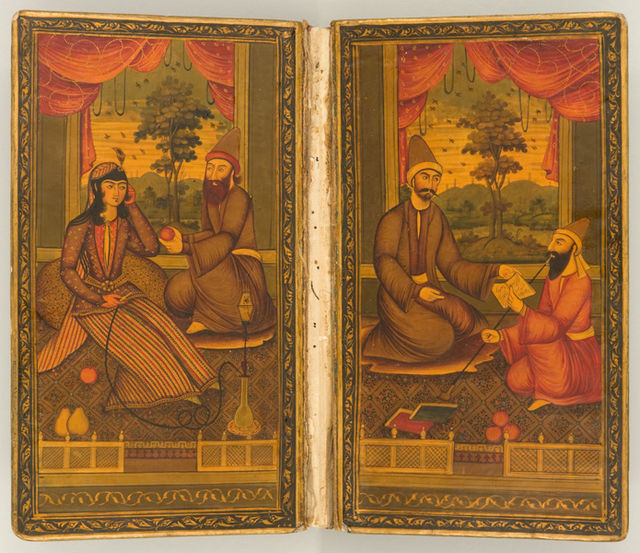
Photo from Wikipedia
Photo from Wikipedia: Doublures inside a 19th-century copy of the Divān of Hafez. The front doublure shows Hafez offering his work to a patron. 

A Divine Invitation

You have been invited to meet
The Friend.

No one can resist a Divine Invitation.

That narrows down all of our choices
To just two:

We can come to God
Dressed for Dancing.

Or

Be carried on a stretcher
To God’s Ward.


Muhammad Hāfez-e Shīrāzī (also known as Hafiz, was a fourteenth century Persian poet.
 
Poem from I Heard God Laughing: Renderings of Hafiz by Daniel Ladinsky


Tears of the Prophets

I read this poem for the first time today. It really spoke to me. In these days of war and unrest I think God cries for all of his/her children, regardless of nationality, religion, race or any of the other ways we subdivide ourselves and create a sense of otherness. Thank you for writing and posting the poem Paul.

Paul F. Lenzi's avatarPoesy plus Polemics

(Originally posted here April 2013)

Illustration from bongoisme.com Illustration from bongoisme.com


Jerusalem shudders
Her ancient stones bleed
From perpetual combat
Among three great creeds
Whose branches give forth
Each a different hued fruit
Yet all stem precisely
From one selfsame root


Abraham cries against hatred
Christ cries for wars still begun
Mohammed cries at injustice
My God cries for all three His sons

View original post