DEAR YOU

Neal's avatarNeal's Epiphany

Disclaimer – A letter to my former self.  A probable epilogue to my “DEAR ME” post. 

Dear You,

There is nothing I can say to prepare you for where life will take you in the next ten years.

You will have experiences you never imagined possible or plausible—there will be great heartaches and devastating blows—and you will be taken to places you never knew existed. You will feel like you can’t go on, and you will feel like you will explode.

Your greatest fears will come to reality and you will never be the same, but you will fumble your way through.

I want to tell you specifics, I want to tell you where you should try harder and hold on more and not give up; I want to tell you where you should give in and let go and how to take care of yourself when the unthinkable…

View original post 679 more words

Letting Go of Suffering- Week Fourteen: Making It Bigger

elephant-1598359_1280

Dr. Ed Beckham, Associate Professor of Psychiatry and Behavioral Sciences at the University of Oklahoma Health Science Center in Oklahoma City, once developed a series of tips to aid you in ruining your day.

      1. Plan twice as much as you can get accomplished.
      2. Don’t be flexible
        -demand others do everything your way
        -know it will be a catastrophe if you don’t get your way
        -view everyone who disagrees with you as an obstacle
      3. Worry about anything that can be worried about
        -think a lot about anything that is going wrong even if you can’t do anything about it
      4. Take things personally
        -think about how others aren’t treating you fairly
        -ruminate about how others don’t have the right to do what they do to you
        -brood about how you don’t deserve what is happening to you
      5. Don’t be humorous about anything
        -take everything very seriously
        -consider everything to be a life and death situation

(Source: Stimulate Your Stress, US Air Magazine, p. 10, July 1991.

Paradoxically, these same tips can be used to help you stop your suffering.

Your assignment this week is to make everything BIGGER:

        1. For 15 to 60 minutes a day
          -plan twice as much as you can get accomplished
          -don’t be flexible
          -worry about anything that can be worried about
          -take things personally
          -don’t be humorous about anything
        2. Pick a specific time period to complete the assignment, i.e. do not do “10 minutes here and 10 minutes there.” If possible, do the assignment the same time each day.
        3. Do NOT set yourself up
          -don’t do this assignment at work
          -do not do this assignment around people who are not supportive of you
          -let the people who will be around you when you are doing the assignment know what you are doing
        4. If you are tempted to suffer at any other time during the day, tell yourself that it is important for you to wait until the assigned time.
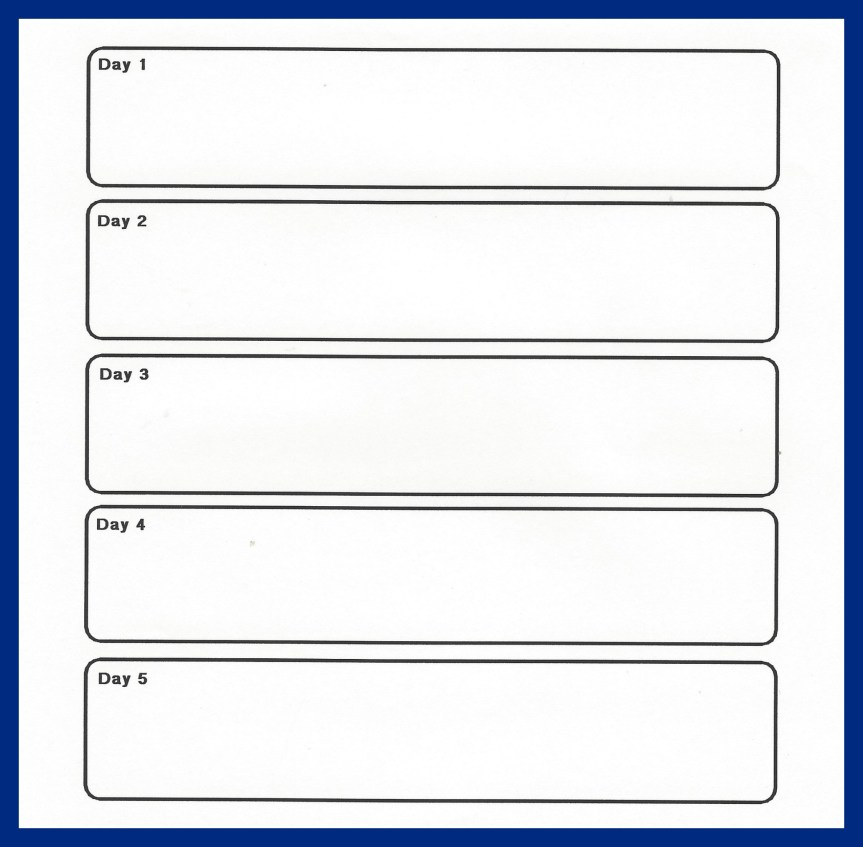
        5. Each day, after you complete your assignment, spend a few minutes journaling about your experience and about your day in general.

Day 1

52c

Day 2

52c

Day 3

52c

Day 4

52c

Day 5

52c

Day 6

52c

Day 7

52c

See you next Monday for the fifteenth lesson.

To find the lessons in this series that have already been published, click here.

Photo Credit: Pixabay

Letting Go of Suffering- Week Thirteen: Holding Yourself Accountable

accountable

It is easier to make contracts than it is to keep them. For example, if you made a contract not to eat chocolate, how long would you be able to resist if there was a piece of chocolate on the table next to you?

One way to increase the likelihood that you will keep your contract is find ways to hold yourself accountable. In my psychotherapy groups, clients do “Accountability Work” whenever they break their contracts. The structure we use looks like this:

The contract I broke:

How I broke it:

The mistaken belief that caused me to break the contract:

One or two things that I will do to prevent myself from breaking the contract again:


Here are some examples:

EXAMPLE #1

Contract I broke: I won’t eat junk food.

How I broke it:  I ate a bag of cookies.

Mistaken belief that caused me to break it: My feelings are not okay. [Note: People often use overeating as a way to shove down their feelings.]

One or two things that I will do to prevent myself from breaking the contract again:
1) I will remove all of the junk food from my house.

2) When I crave junk food, I will call a friend and ask for support.


EXAMPLE #2

The contract I broke:  I will not work more than 50 hours per week.

How I broke it: I worked 65 hours last week.

The mistaken belief that caused me to break the contract: It is not okay for me to say “NO.” [Note: You can’t say NO to everything you don’t want to do, but many people with this belief develop an unhealthy pattern of saying YES to everything.]

One or two things that I will do to prevent myself from breaking the contract again:
1) I will let my friends know that I am going to practice saying NO and would like their help. If they agree to help me, I will ask them for something every day for two weeks. [Note: This will also give you practice in hearing “NO.” When I did this exercise I asked someone to pay for my graduate school tuition!]

2) I will say the mantra “My needs are important” 1000 times a day for twenty-one days.


If you find yourself breaking a contract regularly, you may find it helpful to add a consequence to the contract.

Example #1 

Contract: I will clean the kitchen before I go to bed.

How I broke it: I watched TV after dinner. I went to bed without cleaning the kitchen.

Consequence: For the 7 days, I will not watch TV until the kitchen is clean.


Example #2

Contract: I will exercise 3 times a week.

How I broke it: I did not exercise at all.

Consequence:  Any week I do not keep my exercise contract, I will pick up litter for 45 minutes. I complete this consequence within 5 days of breaking the contract.


The assignment for this week is to be accountable for your contracts. In the box below, write the two contracts you will focus on this week. They can be the same ones you worked on last week, or new ones.

54a

Do accountability work any time you break one of your contracts:

The contract I broke:

How I broke it:

The mistaken belief that caused me to break the contract:

One or two things that I will do to prevent myself from breaking it again:


After completing your accountability work, ask yourself if you need to add a consequence to these contracts. If so what consequence will you set?

Consequence Contract 1:

Consequence Contract 2:


Each day this week, journal about your experience with contracts and holding yourself accountable.

Day 1

25a

Day 2

25a

Day 3

25a

Day 4

25a

Day 5

25a

Day 6

25a

Day 7

25a


See you next Monday for the fourteenth lesson.

To find the lessons in this series that have already been published, click here.

Photo Credit: Pixabay

Letting Go of Suffering- Week Twelve: Using Contracts to Heal

pen-661970_1920

A contract is usually an agreement between two or more people but you can also use contracts to make agreements with yourself. It is a structure that can be invaluable when you are serious about making changes in your life.

Here are some examples of this type of contract:

Example #1

Problem: I work 65 hours a week

Contract: I will work no more than 50 hours a week for the next month and will reduce my work time to 45 hours a week after that.


Example #2

Problem: I constantly criticize myself.

Contract: Every time I am self-critical, I will internally say the affirmation “I am worthy of respect. I will not harm myself by thought, word or deed.”


Example #3

Problem: I eat when I am not hungry.

Contract: For the next week, I will record every time I am tempted to eat when I’m not hungry. Next to the date and time, I will write what incident or thought triggered my desire to eat, as well as the emotion that followed the trigger.


Example #4

Problem: When someone asks me to do something, I automatically say yes, even when it is something I don’t want to do.

Contract: I will not say yes to requests without taking time to think about the request first.


In the next section, you will make a list of your self-sabotaging behaviors, such as those in the examples above. After you make your list, you will formulate a contract for each one. Don’t worry, I’m not going to ask you to commit to keeping a lot of contracts. The purpose of the first exercise is to help you learn how to write simple, clear contracts.

It is important that you word your contracts in a way that promotes you in being successful. For example, if you would like to exercise 5 days a week for 30 minutes, it would be best to start with a contract that says “I will exercise a minimum of 3 days a week for 20 minutes.” That way you won’t break the contract if you only do 3 or 4 sessions on a busy week. You can always do more than your contract requires.

Exercise #1

In the box below, list 4-8 behaviors you desire to change and write a contract for each one. If you have trouble identifying the changes you want to make, you might find it helpful to look through the Week 1 and Week 2 lessons of this course. If possible, complete Exercise #1 on the first day of this week so that you have the rest of the week to work on Exercise #2.

l51

Exercise #2

Pick two of the contracts from the list above, and commit to keeping them for the rest of the week. At the end of each day, jot down some notes about your experience.

52a

52b

At the end of the week, answer the questions below:

Was it easy for you to keep the two contracts?

If it wasn’t easy, then commit to continue keeping them. It takes time to change behavior patterns.

When you are ready to add one or two new contracts to the original two, write them in the box below.

52c

If you would like feedback about the contracts you write, feel free to put them in the comment section. I would be happy to answer questions or make suggestions.

Pen Photo Credit: Pixabay


See you next Monday for the thirteenth lesson.

To find the lessons in this series that have already been published click here.

DEAR ME

Yesterday, I read a post at Neal’s Epiphany that I thought was incredibly powerful. I don’t know how Neal sees it, but using my psychotherapy frame, I see him as having written a beautiful letter to his inner child. Neal has graciously consented to me sharing his letter with all of you.

Neal's avatarNeal's Epiphany

Dear Me,

You and I go way back, to the beginning. We’re one hundred percent connected in a way no one will–or could ever–understand. We’ve been there, standing together. Sometimes crying in the shower, sometimes snorting through our nose, but it’s always been you and me. Always and forever…

Or so it was supposed to be, but some time ago I left you–

I left you floundering on your own, to rely on love and encouragement and strength from others–from strangers–when it was I who should have held you up. When it was I who should have hugged you and praised you and appreciated you for the wondrous person you are–for all the beauty and life you bring to this world.

I seldom tell you how much I love you. How much I admire you. How beautiful and caring and intelligent and strong you are. That you are my hero.

View original post 383 more words

Letting Go of Suffering- Week 5: Why Do I Suffer? (continued)

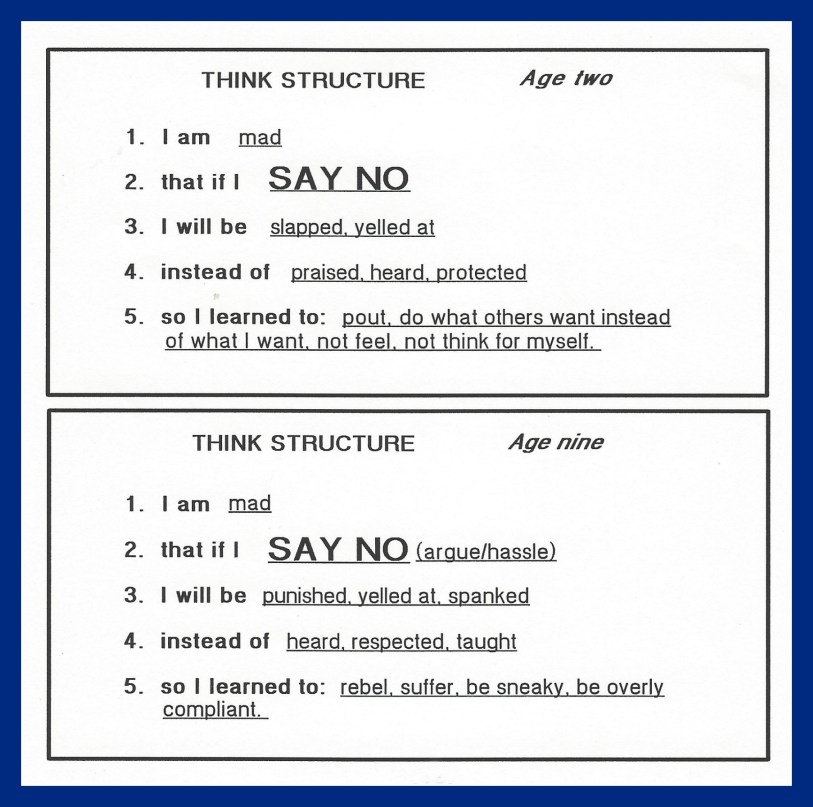
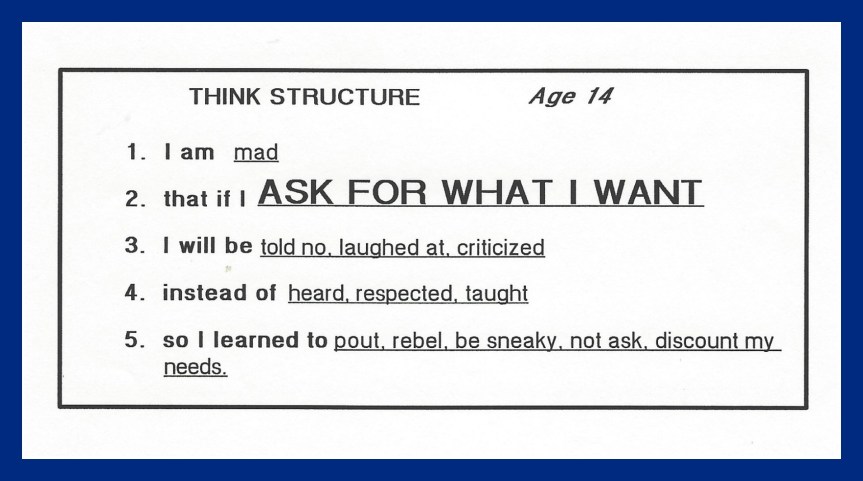
Most likely, the reason you suffer as an adult is because suffering was an acceptable method of expressing your feelings, or more accurately, a method of “stuffing” your real feelings, in your family of origin. This week you will explore some of the childhood origins of your suffery behavior. Again, Levin’s Think Structure (Cycles of Power) will be used as the tool to help you organize your thinking.

(The Think Structure process is taught in the previous lesson.)

Example 1

Situation: As an adult, I have trouble saying “NO”. I will think about what happened when I said “NO” as a two-year-old and nine-year-old child.

18

Example 2

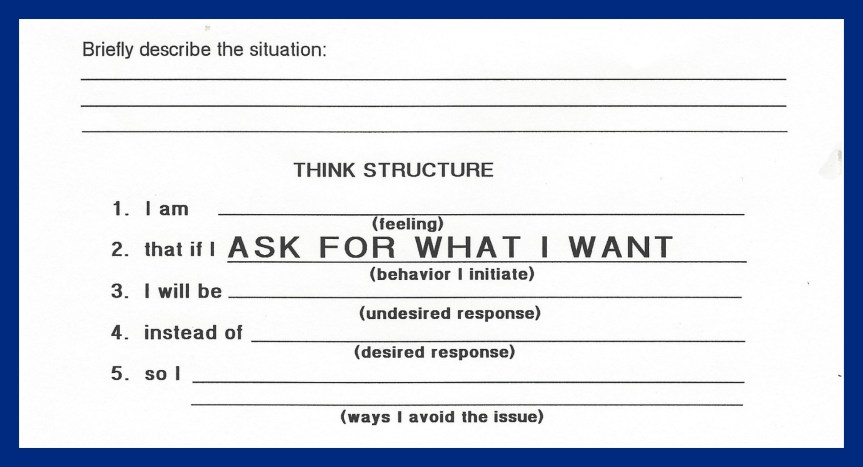
Situation: As an adult, I have trouble asking for what I want. I will think about what happened when I asked for what I wanted as an infant and a 14 year-old child.

19a

19b

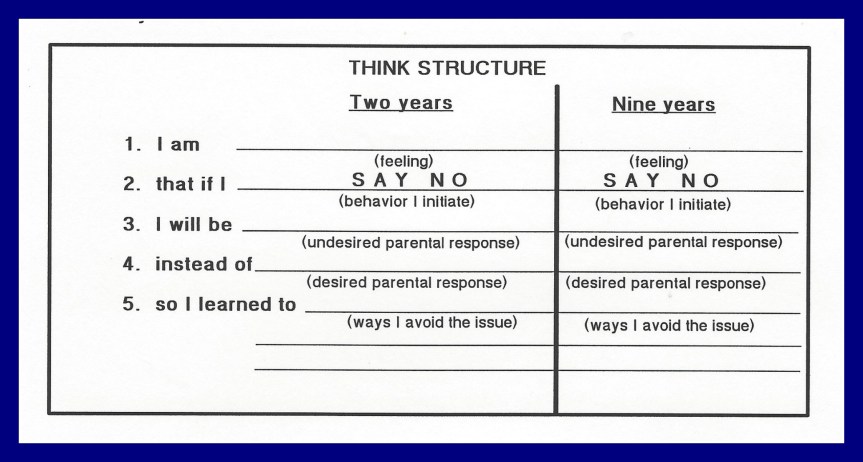
When you explore how your adult behaviors relate to your childhood, it would be helpful for you to look at one behavior over a variety of ages. In each of the examples below I ask you to look at an issue for two different ages. Fill in the blanks to come up with your own think structures.

Practice Exercise 1

20a

Practice Exercise 2

20b

During the rest of the week, complete Think Structures for some of the adult behaviors you worked on in Practice Exercise 3 in the previous lesson. Explore two childhood ages for each Think Structure. (Ages that tend to be particularly good to reflect on are infant, 2, 5, 9, 14 and 17.)

You may need to change the way you described the adult behavior in Practice Exercise 3 in the previous lesson, so that it becomes a childhood behavior. For example, if your adult behavior was “leave work early”, the child behavior might be “do what I want to do.”

21

See you next Monday for the sixth lesson.

To find the lessons in this series that have already been published click here.


Letting Go of Suffering- Week 4: Why Do I Suffer?

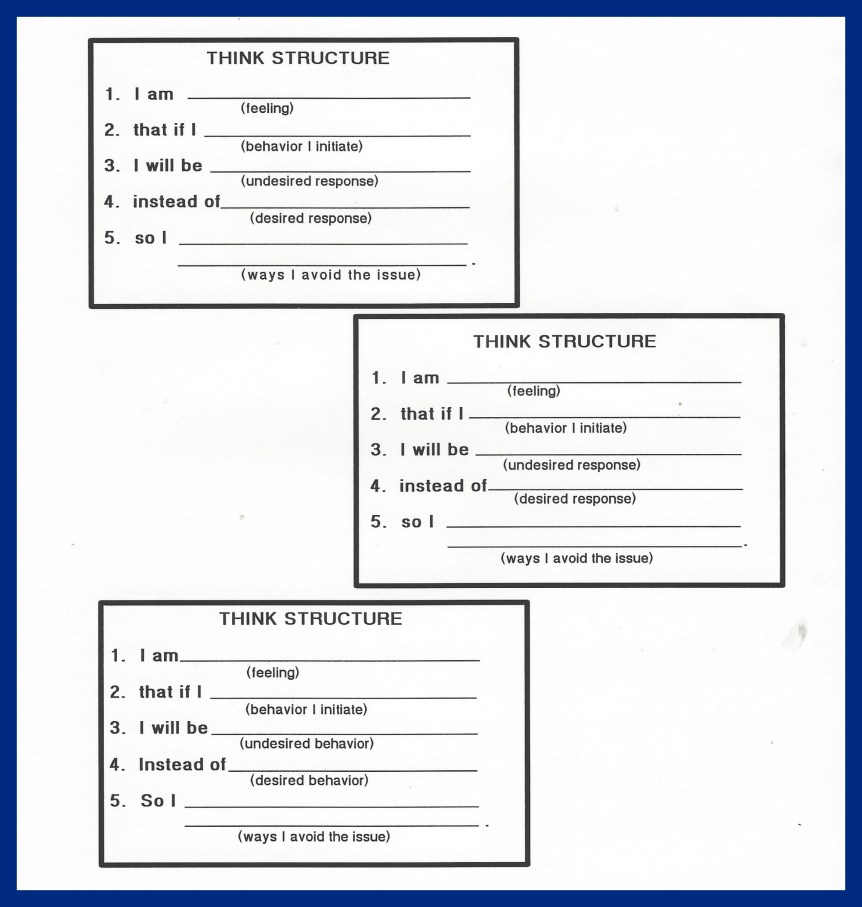
The task for this week and the next will be to explore WHY you suffer, e.g. why you are suffering now as an adult and why you learned to suffer as a child. The primary tool you will use is Pam Levin’s “Think Structure” (Cycles of Power). This structure will help you 1) organize your thinking and 2) determine what motivates or drives the behaviors that lead you to suffering.

week-3-a

Example 1

Situation: I agreed to help a friend move to a new apartment and even though I didn’t want to do it. I feel mad that I am not spending my day doing what I want to do. This would not have happened if I had said “No” in the first place, but I was afraid to do that.

think-1

Example 2

Situation: I want to go to the movie but I am afraid that if I ask my friend to go, she will say “NO” to me, so I stay home alone.

think-2

Your turn! Think of recent times when you had trouble 1) saying “NO” and 2) asking for what you want. Fill in the practice exercises below. If you can’t think of recent incidents, use experiences from the past.

Practice Exercise 1

think-3

Practice Exercise 2

think-4

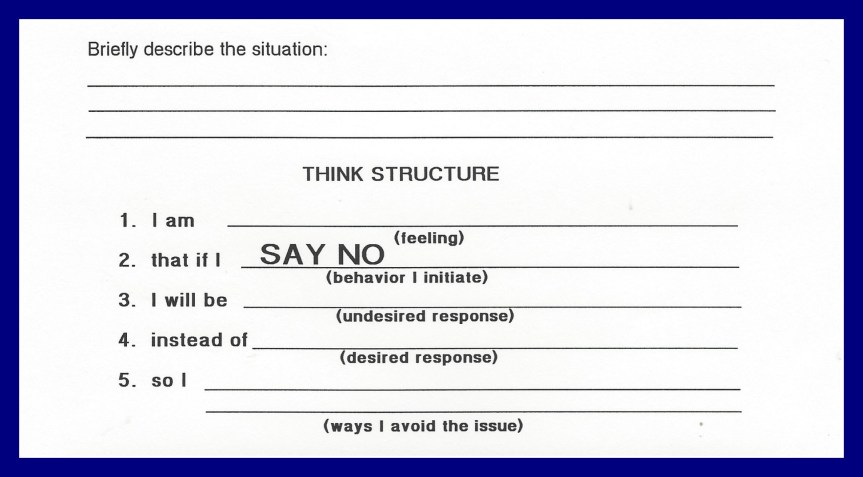
During the rest of the week, be aware of times you are suffering. Use the Think Structure to help you sort out what is going on for you.  If you have no incidents of suffering during the week, complete the structures from incidents in the past. If you have trouble identifying when you are suffering, use some of the behaviors you identified in Exercise 1 of Lesson 2. Complete at least three more Think Structures this week.

Practice Exercise 3

think-5

Feel free to share or ask for feedback on Think Structures that you come up with!

See you next Monday for the fifth lesson.

To find the lessons in this series that have already been published click here.

Making A Difference

img_4781

Many years ago, at the the end of the programs in each city on Amma‘s North American tour, there was an announcement that contained a story about a squirrel who contributed to the building of the Rama Setu bridge. The squirrel participated by rolling in the sand and then going to the end of the bridge and shaking the sand off, chanting the name of Lord Rama throughout the process.

Lord Rama rewarded the squirrel by picking him up and stroking his back. From then on, this type of squirrel had three stripes on its back, stripes that went from head to tail. The stripes are seen as Lord Rama’s fingers. At Amma’s programs, this story was used to teach that everything we do to contribute makes a difference.

I remember thinking that what was called a squirrel in the story must be what we call a chipmunk. Since then, I have learned that the squirrel is a palm squirrel and it the same size as a large chipmunk.

On one of the first days I was in the Saraswati garden, I heard a sound. I thought it was a bird at first, but when I followed the sound, I discovered it came from the squirrel in the picture at the top of this post. I didn’t know squirrels were so loud! Here are two more photos of that squirrel:

A few days ago, I saw another squirrel in the garden; or maybe it was the same one. I feel so privileged to have been able to watch squirrels like the one in the story I have heard so many times.

img_4833


To look at previous posts in this Amritapuri series, click here.

Letting Go of Suffering: Week 3- What Would Your World Be Like If You Didn’t Suffer?

Walt Disney once said, “If you can dream it, you can do it.” Many years ago, Pam Levin taught me that the first step in manifesting your vision is to have one.

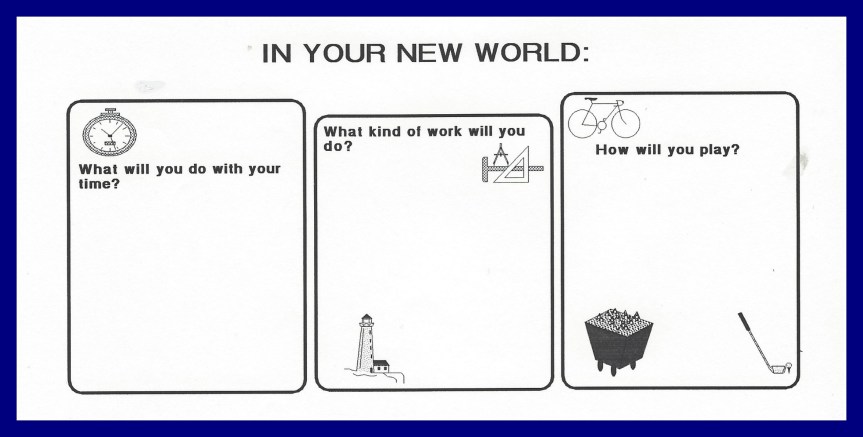
The exercises for this week are devoted to imagining what your life would be like if you didn’t ruminate about the past, worry about the future or do the unhealthy behaviors that you know make you miserable.

Exercise 1

Identifying Your Vision

Take a few deep breaths. Focus on “breathing in relaxation” and “breathing out tension.” Let your body settle into the chair you are sitting on, or the bed or floor on which you are lying. As you begin to relax, let yourself imagine what your life would be if you were no longer immersed in suffering.

Let the images come and your new world develop. When you are ready, bring yourself back into the present and then answer the questions in this exercise. If you need to, close your eyes and go back into your new world to get the answer to a question.

vision1

vision2

Exercise 2

To make your vision become a part of your life, spend 10-30 minutes a day for the next five days putting yourself into a meditative state (through breathing slowly and allowing yourself to relax) and then experiencing your new world. Feel what it feels like to live there. Experience whatever you experience. Let your new life develop in your mind’s eye. Jot down some notes in the spaces below.

vision3

As you identify other components you would like to have in your new world, add them to your vision. Periodically, throughout your life, refer to the two exercises in this lesson to see where you are in creating that vision. Each time, see if there are areas you want to add, or parts you want to let go of. Decide which part of your vision you want to work on next. Don’t feed suffering by expecting your life to change all at once. You will create you vision one day, or even one step, at a time.

See you next Monday for the fourth lesson.

To find the lessons in this series that have already been published click here.

Letting Go of Suffering: Week 2- The Beginning Continued

Exercise 1:

An important step in letting go of suffering is identifying the many ways we contribute to our suffering. I make myself suffer when I eat too much chocolate, when I agree to do things I don’t want to do, and when I over-think or over-do. What are the unhealthy behaviors  you do that bring suffering into your life?

chains

Exercise 2

In the psychotherapy model I use, therapists differentiate between core feelings and racket feelings. Child words, i.e. mad, sad, scared and glad, are used to designate the core feelings. Rackets are substitute emotions that are used to cover (hide) the core-level feelings.  Racket feelings are much more likely to lead to suffering than experiencing and addressing the core feelings.

In our families of origin, some emotions might have been more acceptable than others. In my family it was okay to feel scared but not mad, so I learned to cover my mad with scare. The pattern became so pervasive in my life that there was a period of time when I needed to assume that I was mad whenever I felt scared. When I examined my scare, I usually discovered there was no danger present and that I was actually mad. So in this example, scare was the racket and mad was the core. Other people may cover their scare with mad.

While core feelings can become rackets, there are also many other kinds of racket feelings. Some common examples are disappointment, confusion, sarcasm, and guilt. Using the chart below, identify the racket feelings that you use as substitute emotions. If you identify any that are not on the chart, add them. This week, whenever you experience a racket feeling, see if you can identify the core feeling that lies underneath it.

racket

Exercise 3

The more we can learn about our own suffering tendencies, the easier it will be to stay out of them. For example, if we tend to be miserable on holidays, then it is important to be proactive in making plans for those days, ones that will give us satisfaction and prevent suffering. In the chart below, identify factors that are part of your suffering profile. If you become aware of other factors during the week, or in the future, add them.

profile


See you next Monday for the third lesson.

To find the lessons in this series that have already been published click here.