
Wordless Wednesday

I have owned a car since 1969. At that time I borrowed money from my parents in order to purchase a little white Datsun. I needed the car so I could make home visits during my public health nursing course.
The cars I have had since then have usually lasted seven years. In 2001, I bought the Toyota Corolla I still drive. It has been a great car and I expect, or at least hope, it will be the car I drive until the end of my driving years.
In my 49 years of owning cars, I have never put a bumper sticker on my car. Earlier this year, I was at a Green Seattle Partnership event where there were many displays. On one table there was a stack of bumper stickers. I picked up one even though I didn’t expect to use it, at least not as a bumper sticker.
I have looked at it many times since then. The message on it reflects my values and I believe it will continue to reflect my values throughout the rest of my life. One day last week, I decided to put the sticker on the car.
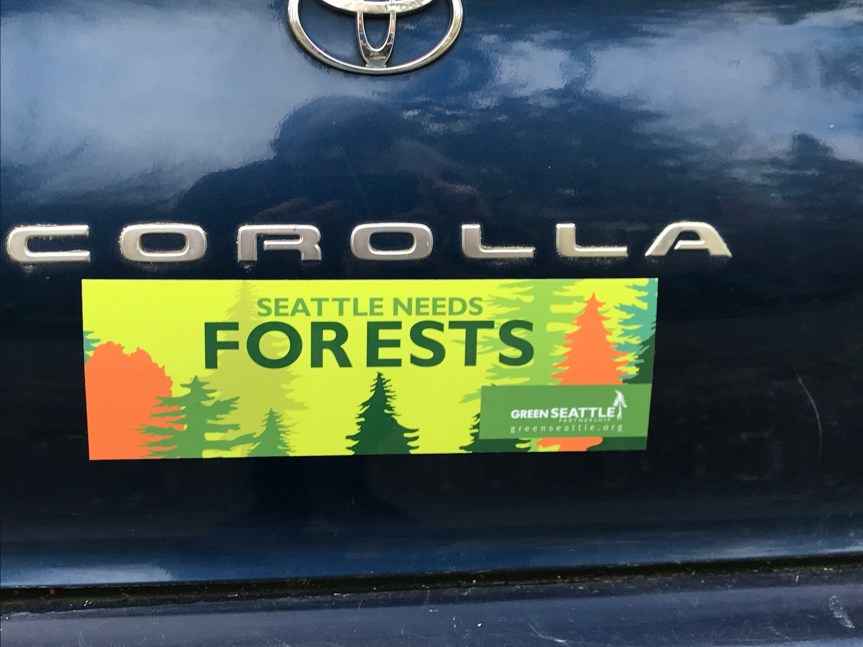
After I applied it, I realized I had put it in the middle of the back of the car, not on the bumper! That makes sense though. The high visibility placement reflects the value I place on the message.
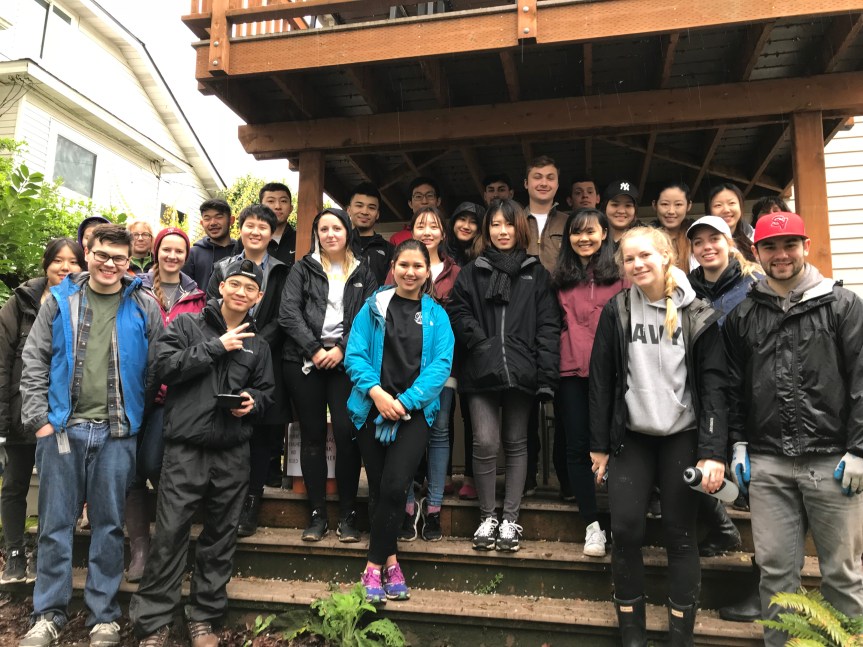
During the week leading up to the April 14 party, there were plenty of opportunities to practice Amma‘s teaching to “Be like a bird on a dry twig, ready to fly at a moment’s notice”. The weather forecast looked pretty good a week out but then it got worse and worse. The night before the event, it seemed like there was a chance that it might not rain during the work party, but when I checked the next morning it had shifted back to 90% chance of rain during the last two hours.
We don’t cancel work parties for rain, we only cancel for high winds, so I also got practice in maintaining equanimity. There was no use in worrying about what might or might not happen; that would only result in me creating an emotional roller coaster for myself. Instead, I needed to come up with a variety of plans and decide what we would do in the moment.
Twenty-five students from the University of Washington’s Introduction to Environmental Science class participated in the event. I felt so grateful that they were willing to work knowing that it might rain. Three GreenFriends members served as team leaders.
After an orientation, we started the day with a bucket brigade that everyone could participate in, moving wood chip mulch from an area on the street that is north of our Greenbelt site to a planting area in the southern part of the site.


When the mulch arrived at its destination, a few students spread it four to five inches thick throughout the area. Trees and shrubs had been planted there on February 26th. Being heavily mulched will keep the ground moist making it make it more likely that the plants will survive the dry summer months. The mulch also deters weed growth and prevents erosion.
The 600 sq. ft. of land we covered that day is on a continual slope. There are several swale-like structures towards the bottom of the strip that will also help reduce erosion.


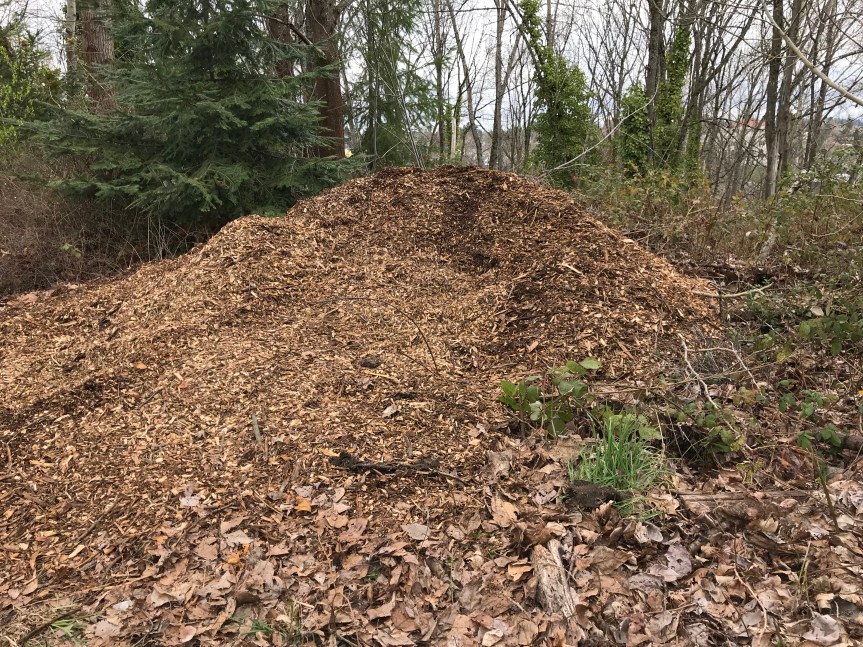
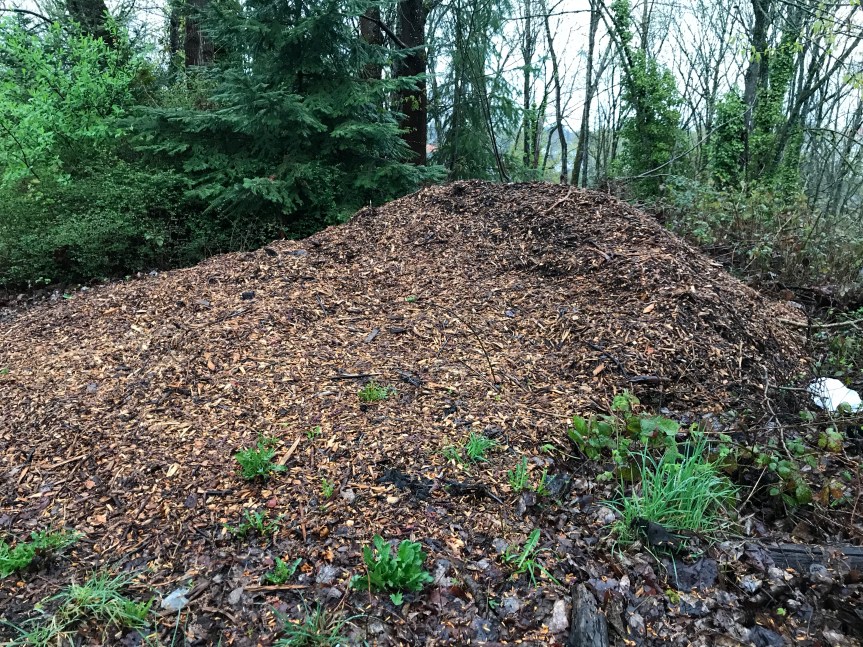
The mulch we were getting the wood chips from had been delivered on March 5. At that time, there were 15 cu. ft. of them and the pile was 6-8 feet tall. (Susan was standing on a slope so the pile was actually taller than it looks in the second photo.)


We have had three bucket brigade work parties since that time. I have enjoyed watching the pile decrease in size. I have no idea how many hundreds of buckets filled with wood chips have been passed down the line during those work parties.
After the March 17 work party the pile looked like this:
After the April 8 work party:
And after the April 14 work party:
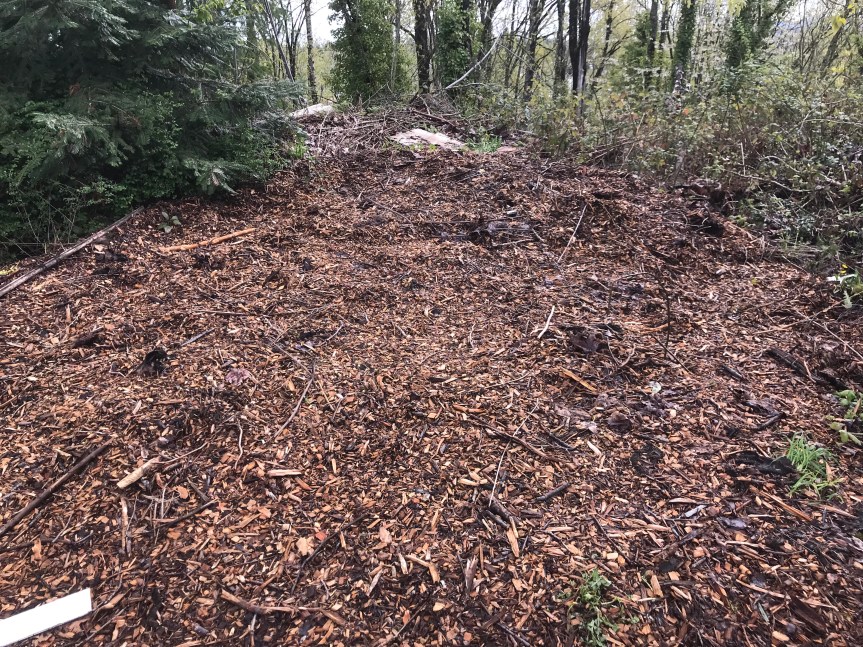
The bucket brigade continued until it was time for a snack break. By that point, it had started to rain; luckily, it was a light rain. After the break, we broke into three groups for the last 45 minutes of work time. During that time, the groups would focus on removing non-native invasive plants- blackberry and ivy vines, bindweed, laurel, holly and bamboo.
There is a Douglas Fir tree on the northwest corner of the property that had been partially topped in the past because it was too close to power lines. On the day of the work party, the tree was surrounded by a patch of laurel so thick that the bottom part of the Douglas Fir trunk was barely visible.
The students cut off the laurel plants lower branches. As the lower branches were removed, we could see that the laurel was covering and/or displacing Pacific ninebark, Oregon grape and other shrubs. I also saw new laurel shoots nearby. Finding the native plants being crowded out by the laurel made it obvious to me why laurel is considered an invasive plant. I know that the part of the Greenbelt that is north of the site we are working on has big areas of laurel.
I appreciated being able to see more of the Douglas Fir tree truck and look forward to the day when I will be able to see all of it. I feel sad that the treetop had needed to be cut away from power lines. Seeing the deformity, though, will serve as a constant reminder that we need to be careful where we plant trees as we restore this piece of forest.


Now that it is spring, all of the trees, shrubs and ground covers we have planted since October are growing rapidly. Simultaneously, new shoots of blackberries and bindweed are emerging from the ground. There are also several areas on the site that still have ivy.
A second group of students scoured a section of the land that is full of old maple trees, sword ferns, and other older shrubs. Their purpose: locate and remove invasive plants. Everything was wet and it was still raining. The students worked diligently even in these less than desirable conditions.


The third group worked in an area that was new to us. Our plan had been to clear a path, dig out holly and cut bamboo. The group cleared a path that led to the holly and bamboo, but after a week or more of rain, the ground was too muddy to work with the holly. (We didn’t want to make the area any muddier than it already was.)
Instead the group focused on cutting and stripping the bamboo. Last year, we used the bamboo branches from another bamboo field in building the racks we create to dry out the invasive plants. We gave the stripped stalks to gardeners to use as stakes.


When the last forty-five minute work period was up, the students from all three groups took the invasive plants they had removed to the racks to dry and then gathered, cleaned and put away all of the tools. Afterwards, we celebrated our accomplishments. Then everyone brushed the mud from their shoes and headed home.
Soon after the work party was over, the rain became very heavy. April 14, 2018 turned out to have the largest rainfall that has ever been recorded in Seattle in April. Mother Nature had certainly blessed our work party. Two hours of the three hour work party had been rain-free and even though it rained during the last hour, the rain was comparatively light.
Next on our to do list:
The list could go on and on but that is enough to think about today!

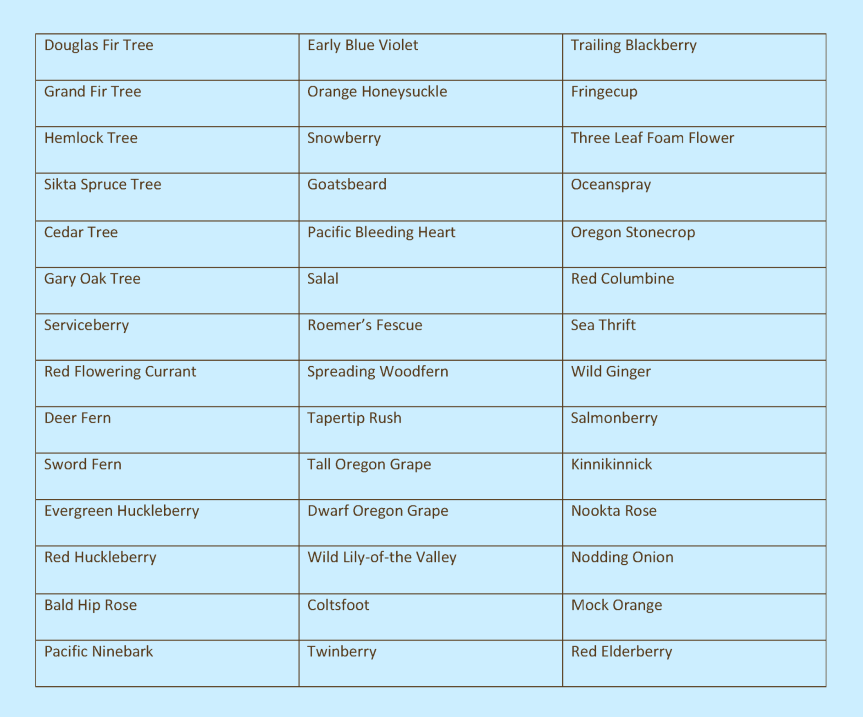
The planting season in Seattle’s parklands starts when the autumn rains begin and ends in mid-March. The reason for planting during those months is that it gives the plants time to root before they have to deal with the dry summer months. During our first planting season, we have planted 55 trees and 530 shrubs and ground covers.
All of the new plants are native to the Pacific Northwest. This chart lists the types of plants we planted during our first season.
I love watching the plants grow. Some have doubled or tripled in size since we planted them. Almost all of them have leaves now and some even have flowers.


There are plants emerging from the ground that are a complete surprise. One day, I noticed long stalks scattered around one area.


Later, I was told they are Bracken ferns. I found some photos of Bracken ferns on Pixabay.


We are going to have a LOT of Bracken ferns in that area. I hope they get along with the new plants.
When I was outside taking photos today, a tiny hummingbird came within two feet of me. It is going to be an exciting spring and summer. I hope I see some butterflies too!

April 8 was our first work party of Spring Quarter. I so love this forest restoration work and I love working with the University of Washington Introduction to Environmental Science students and, of course, anyone else who joins us. It had only been three weeks since our last work party but it felt a lot longer than that to me. I was eager and ready.
There was a lot of rain the week leading up to the event. The weather forecast for that day was breezy weather and rain but we lucked out. It rained as I was setting up, but there was none during the work party. Twenty-three students braved the forecast and came ready to work. Three GreenFriends members served as team leaders.
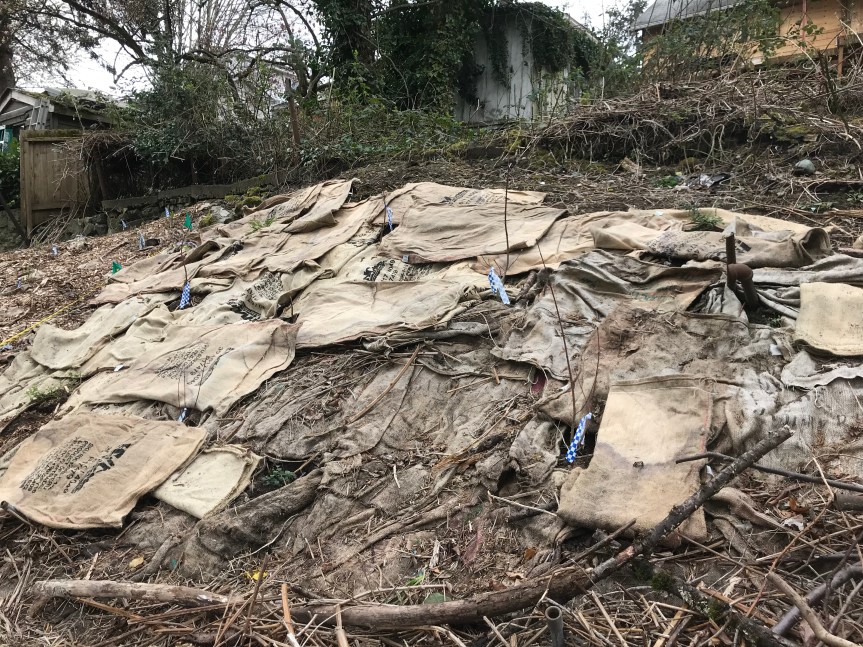
We split into two teams for the first part of the event. The larger group moved 1250 sq. ft. of burlap from the street into different sections of the restoration site. The burlap is used to cover areas we have cleared of invasive plants such as blackberry and ivy vines. The burlap helps to reduce weed growth and prevent erosion. Having it located onsite gives us easier access to it.
(Click on the galleries to enlarge the photos.)


After all the burlap had been moved, the same group starting filling buckets with wood chips. Wood chips are spread around each plant and also throughout the planting areas. The wood chips serve as mulch, thereby holding in water, making it more likely the plants will survive during the dry summer months. Both the wood chips and the burlap will eventually decompose and enrich the soil.


The second group focused on weeding; in this case searching for and removing ivy and blackberry vines. These vines have smothered and killed most of the trees and shrubs in this section of the Greenbelt and we need to prevent them from regrowing so that they don’t destroy all of the native trees, shrubs and ground covers we’ve planted since October.


Midway through the work party we took a snack break…..

and then everyone participated in a bucket brigade. We sent the buckets we had previously filled with wood chips down the line and then started filling more. Once each bucket reached the end of the line the wood chips were poured around newly planted shrubs, and then throughout the planting area.


We were able to spread the mulch through three different planting areas. Below are photos of two of them.


Once again, we had accomplished so much during the three hour work party and I think everyone had enjoyed working together. I know I did!
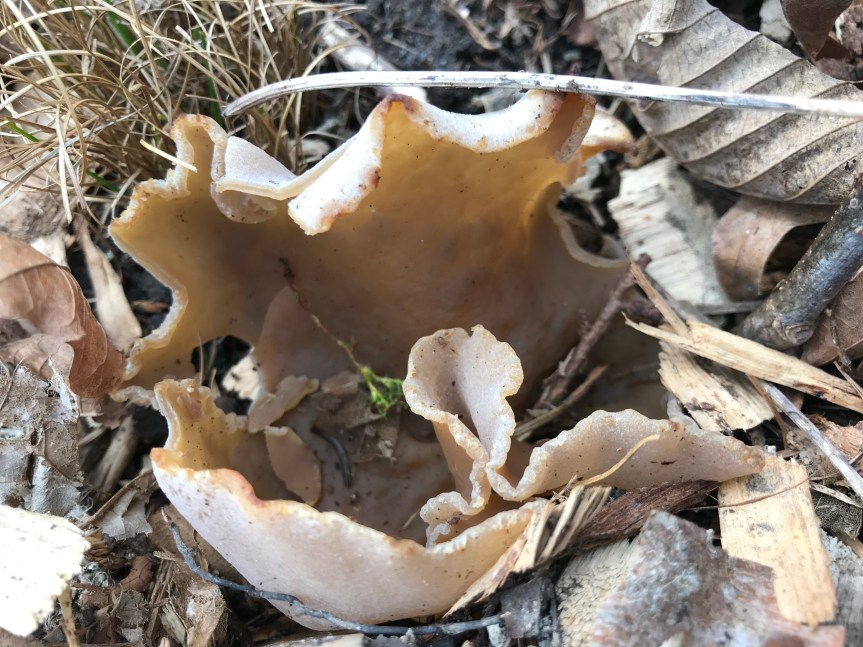
Today I was walking near a pile of debris…
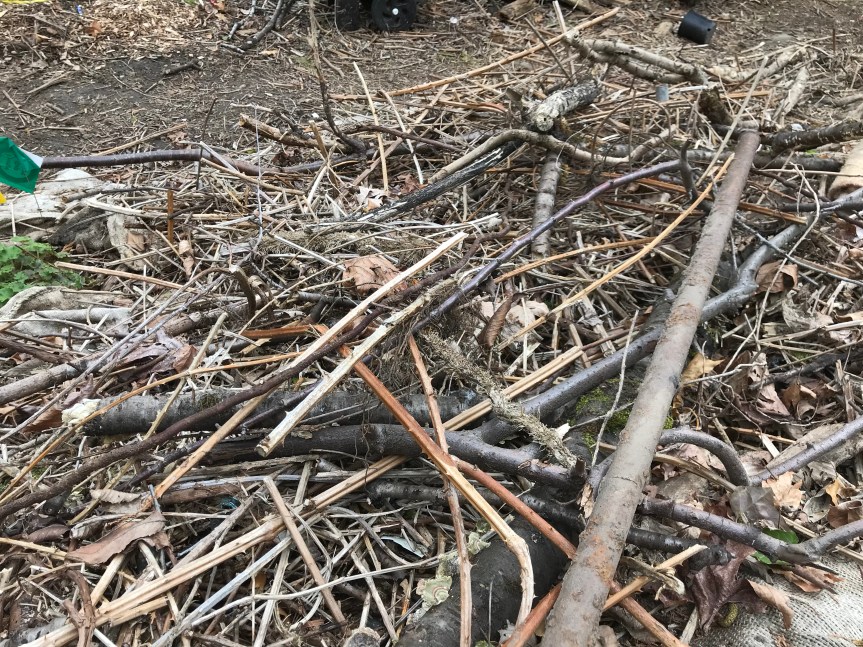
as I was walking up and down a slope to place burlap on areas that we are going to cover with wood chip mulch on Sunday. There is a shrub planted every place you see the blue and white checkered tape. Some of the plants haven’t been marked yet.
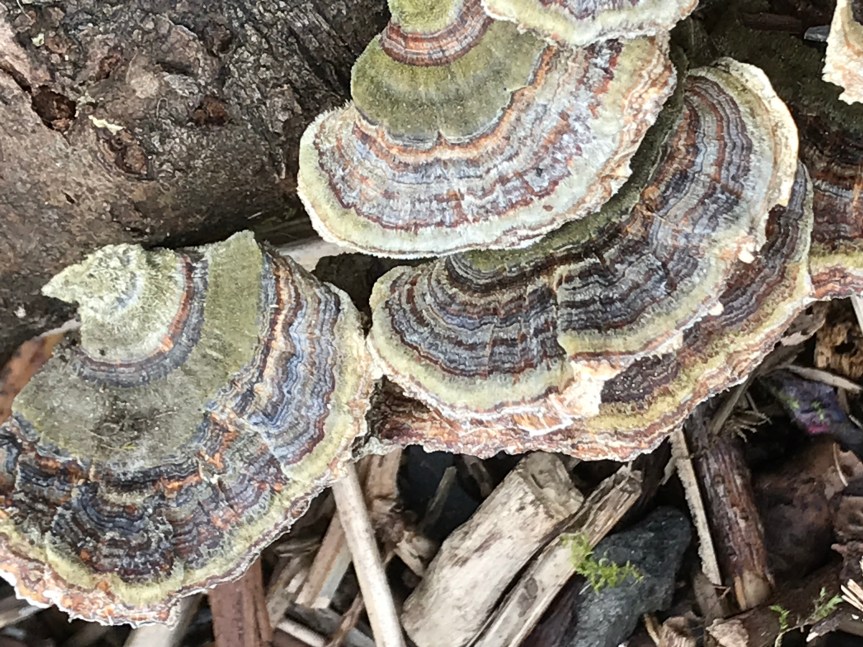
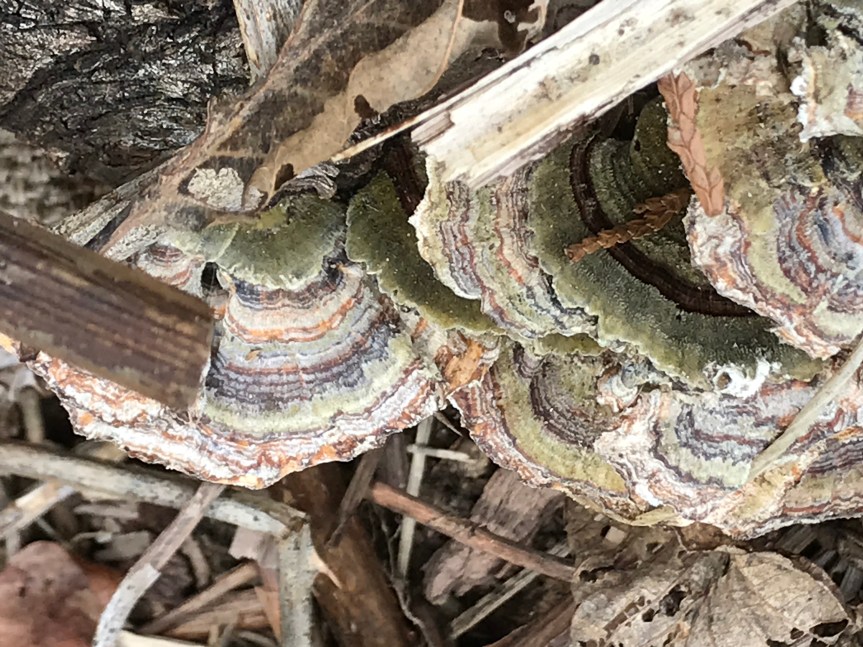
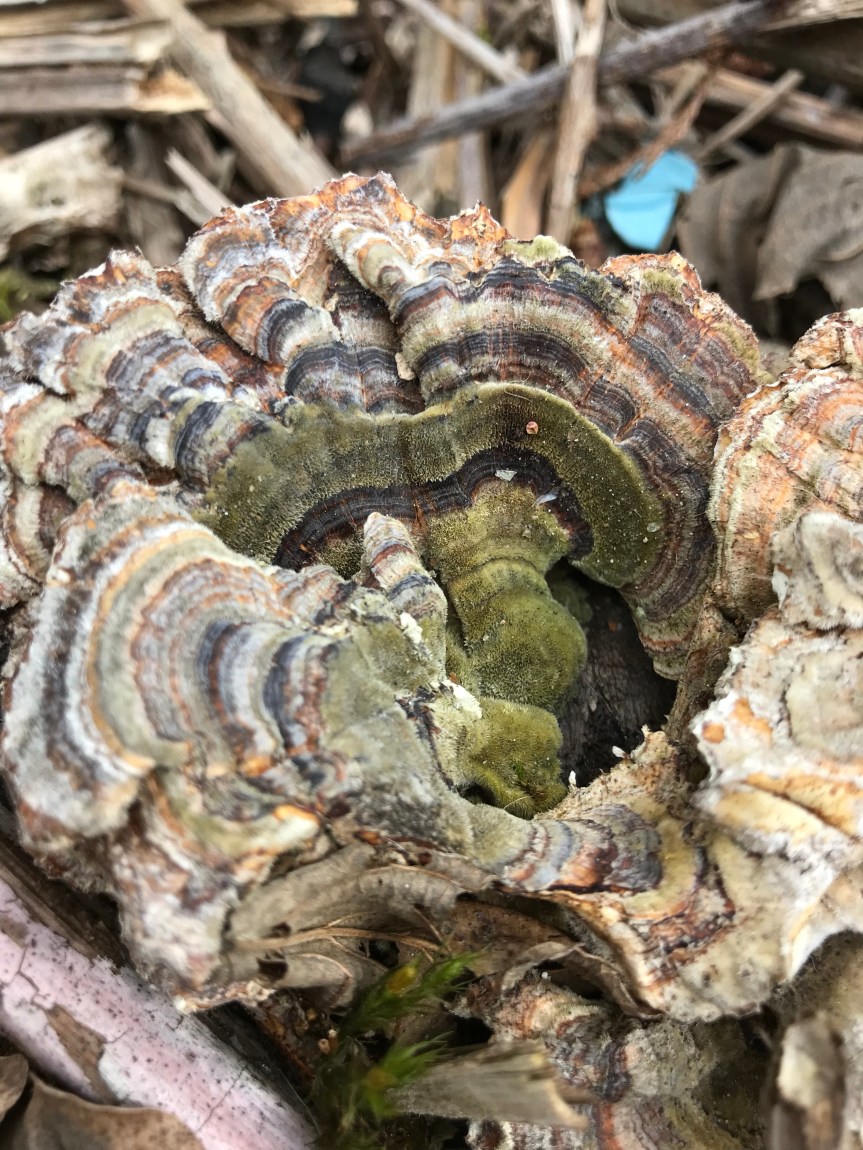
On one trip up the slope, a log caught my eye. I took a closer look at it when I walked back down.
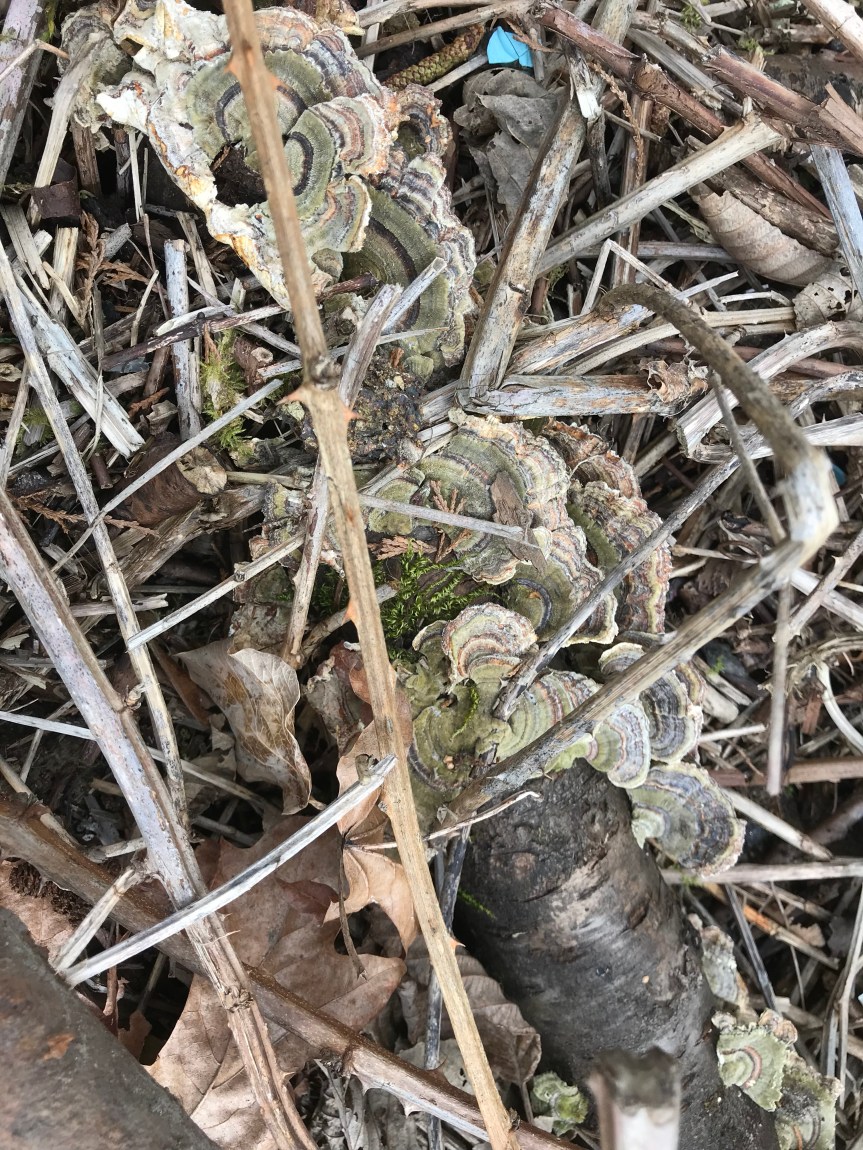
How wondrous and beautiful nature is.

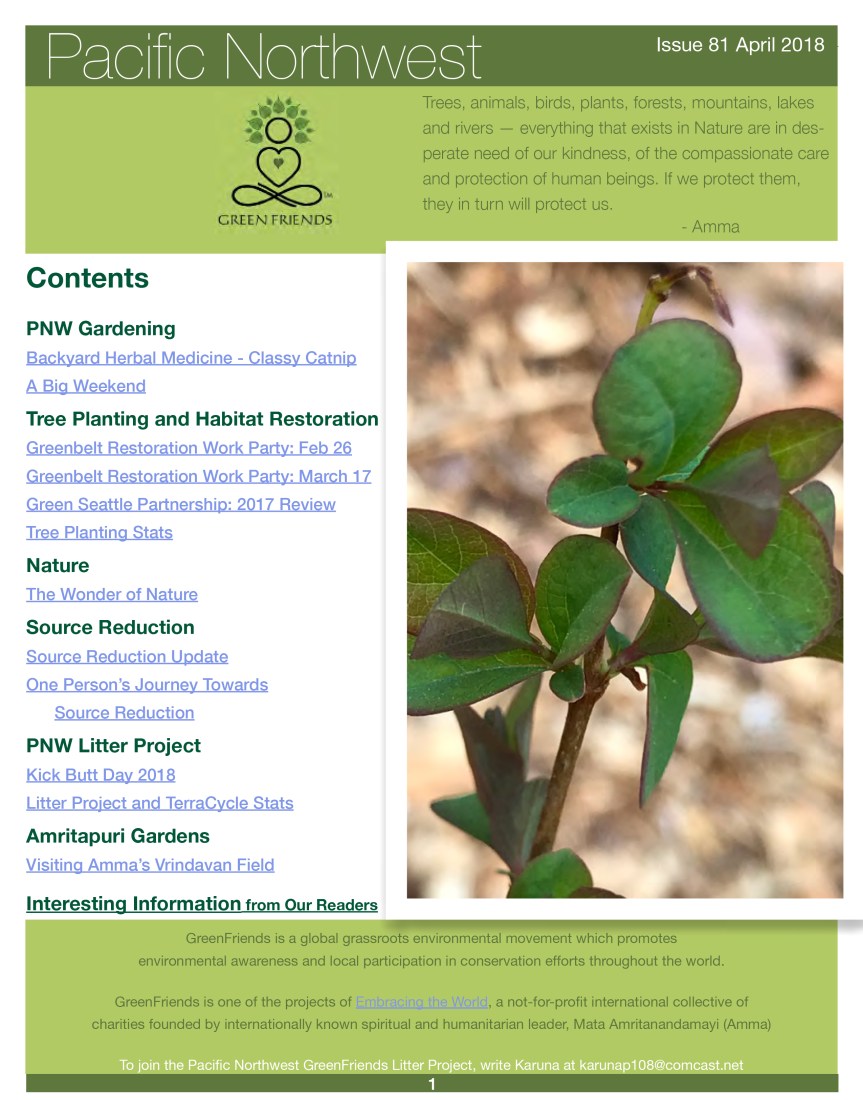
To download the latest PNW GreenFriends newsletter, click on the photo.
Enjoy!
Last week’s Weekly Photo Challenge was to tell a story with photos. What a perfect way for me to share photos of one of our Greenbelt Restoration Site’s Oregon Grape plants.
February 3
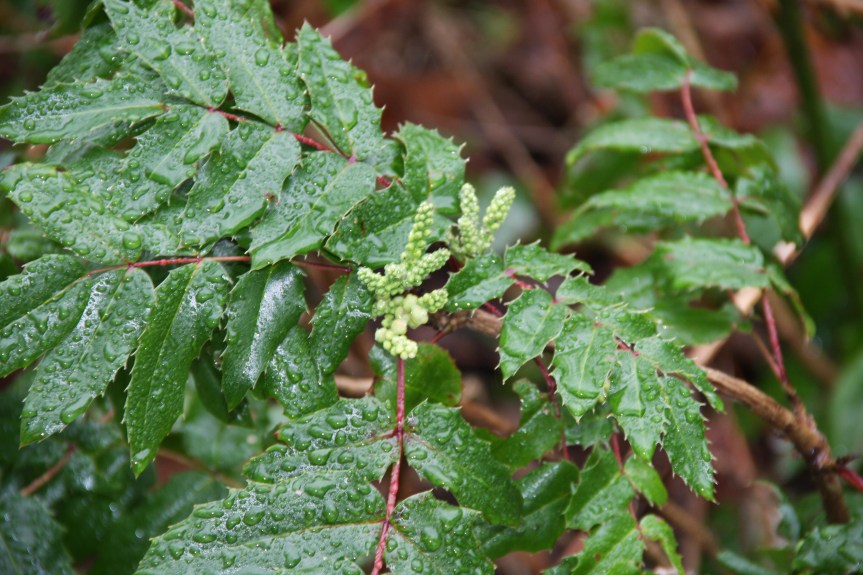
February 10
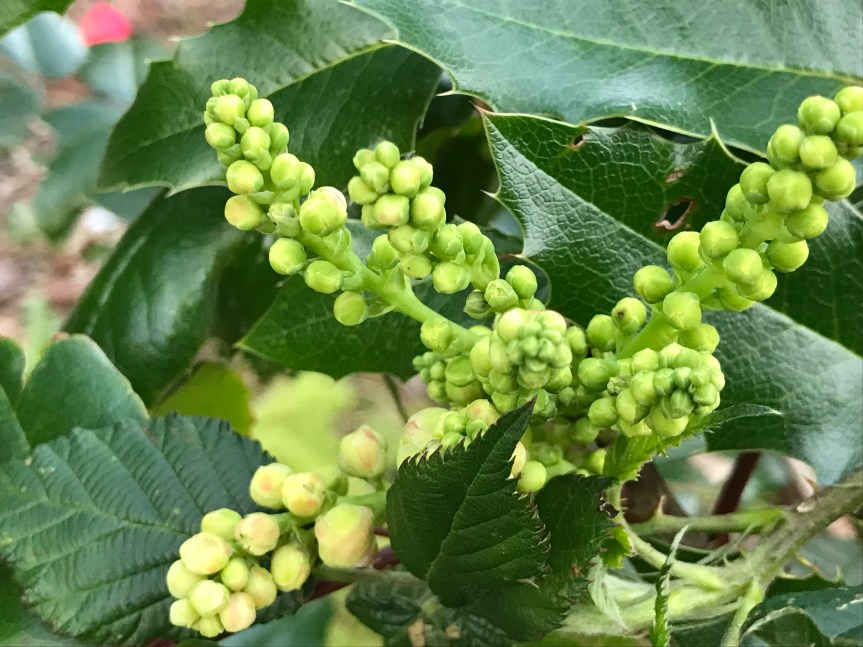
March 20

March 26
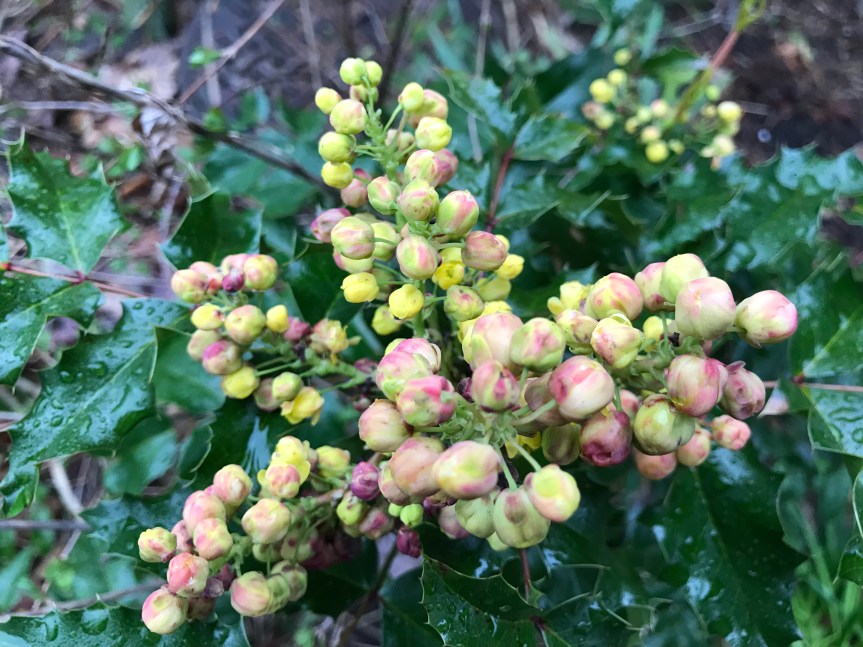
Clearly this is a story that will have future developments!
(The first picture was taken by a neighbor, Marine Kleven, who sometimes take photos during our work parties.)
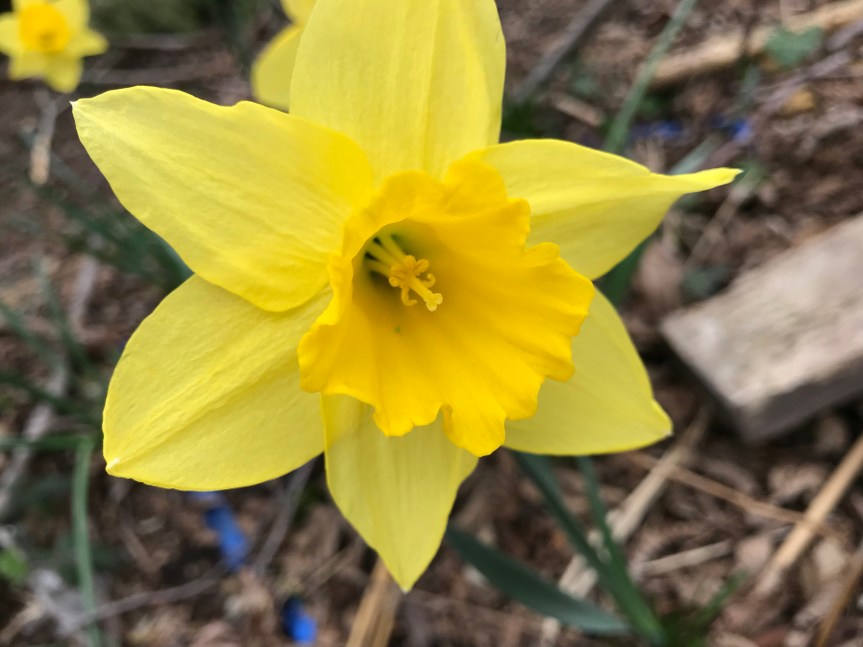
I had attempted to clear parts of the Greenbelt lot behind my house numerous times over the years, long before our current GreenFriends Greenbelt restoration project began. One day in March 2015, when Ramana and I were doing some clearing, we saw a glimpse of yellow among all of the invasive blackberry and ivy vines.
It seemed likely that the flowers were daffodils and I was determined to free them from their prison. I picked up my shears and headed towards them. Because of the uneven, sloped ground, and the invasive plants, I needed to create a path of twists and turns.


Once I arrived at my destination, I was gifted with some beautiful sights.


We started the GreenFriends Greenbelt Restoration project in September of 2016. When I saw the daffodils coming up in March 2017, I put some bright blue ribbon around them to decrease the likelihood of them being trampled. (The pile to the right of the daffodils is cut bamboo stacked on a drying rack.)
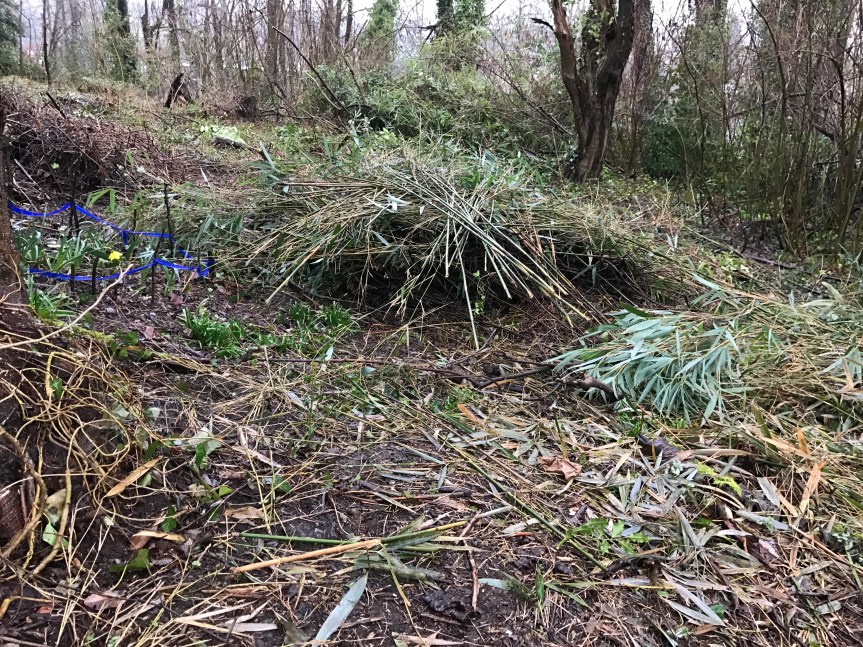
It may be my imagination, but when I saw the daffodils this year (March 2018) it seemed to me that they were more beautiful than ever before and had a sense of lightness and freedom.


By the time the daffodils emerge in March 2019, their surroundings will be clear of debris. I believe I will always view these flowers with a sense of respect and honor. Like ferns, they have survived being covered with blackberry and ivy vines for thirty or more years and are a striking example of living through adversity and thriving.
The Art and Craft of Blogging
A collection of discussions on the environmental issues
“The fool doth think he is wise, but the wise man knows himself to be a fool.” “Love all, trust a few, do wrong to none.” “Love looks not with the eyes, but with the mind, And therefore is winged Cupid painted blind.”-William Shakespeare
...moments of unexpected clarity
Home of Lukas Kondraciuk Photography
Wellness, Support and Mindset
Thoughts on Creativity & Deeper Things
A Blog by Novella Carpenter
Ramblings of an Irish ecologist and gardener
Teaching the art of composition for photography.
Blog from SathyaSaiMemories ~ stories of love in action and the benefits of giving
There are 11,507 stories in Haddonfield; this is one of them.
Perennial gardening and more from the Green Mountains of Vermont
Whatever it will be...
Welcome to my little slice of the blogosphere
 Living, Learning and Letting Go