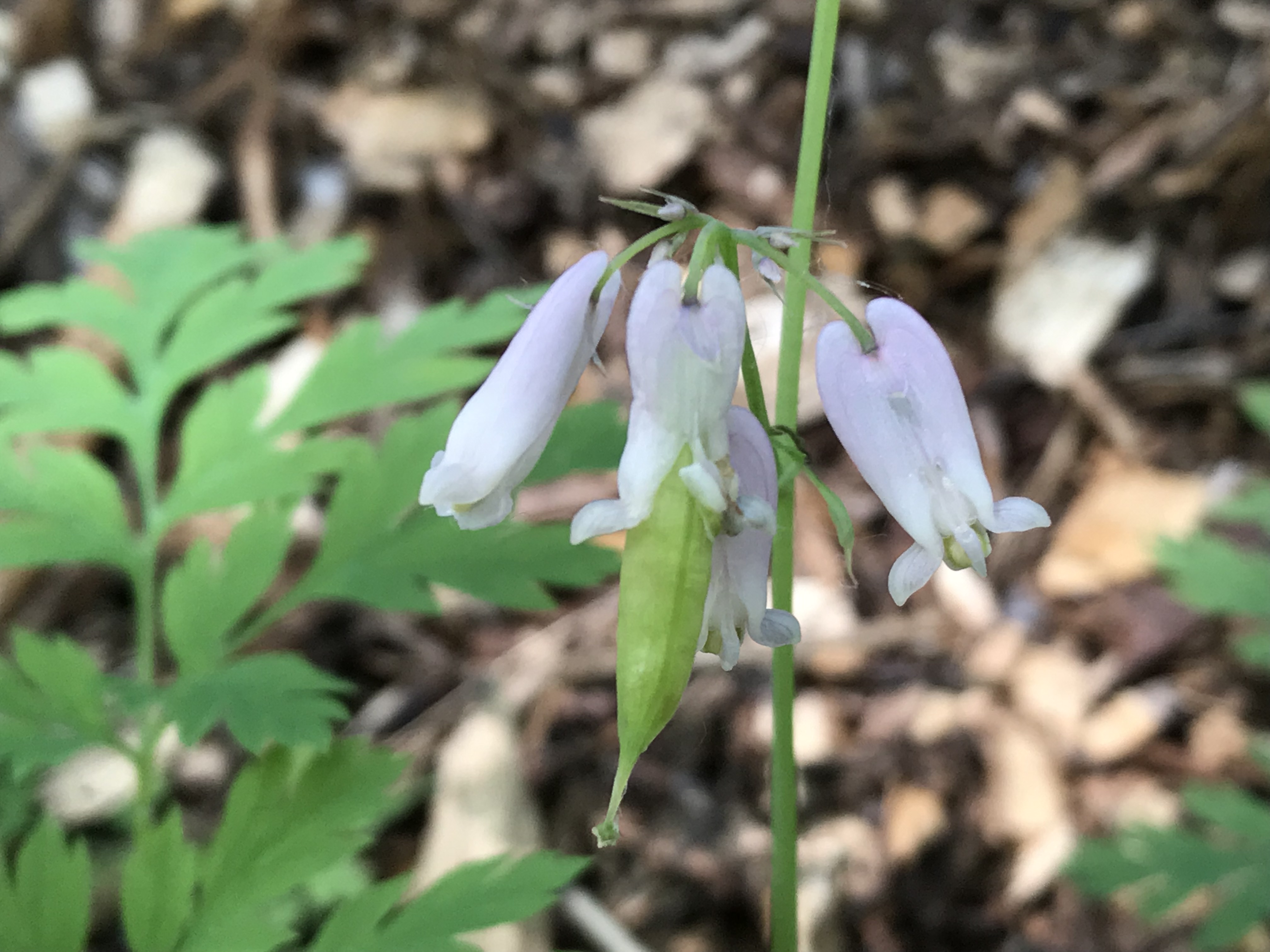
One of my favorite Greenbelt flowers is the bleeding heart flower; they are so small and delicate. On June 9, I took what I think is an amazing photo of one of those plants.
To me it looks like a bleeding heart flower birthing a seed pod. I look forward to learning how and when to harvest and spread the seeds. Even more, I look forward to seeing a lot more bleeding heart flowers in our Greenbelt restoration site next spring!
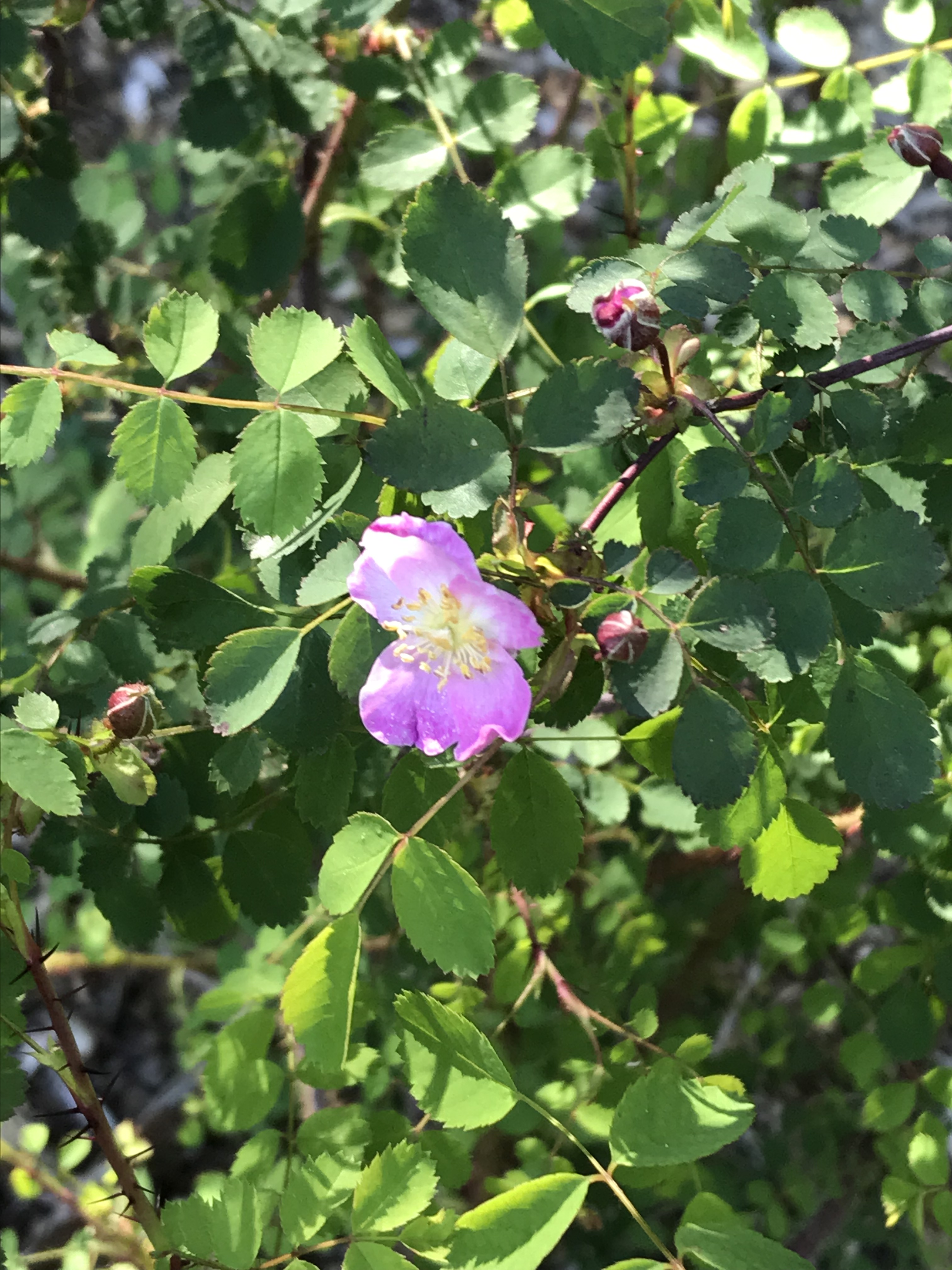
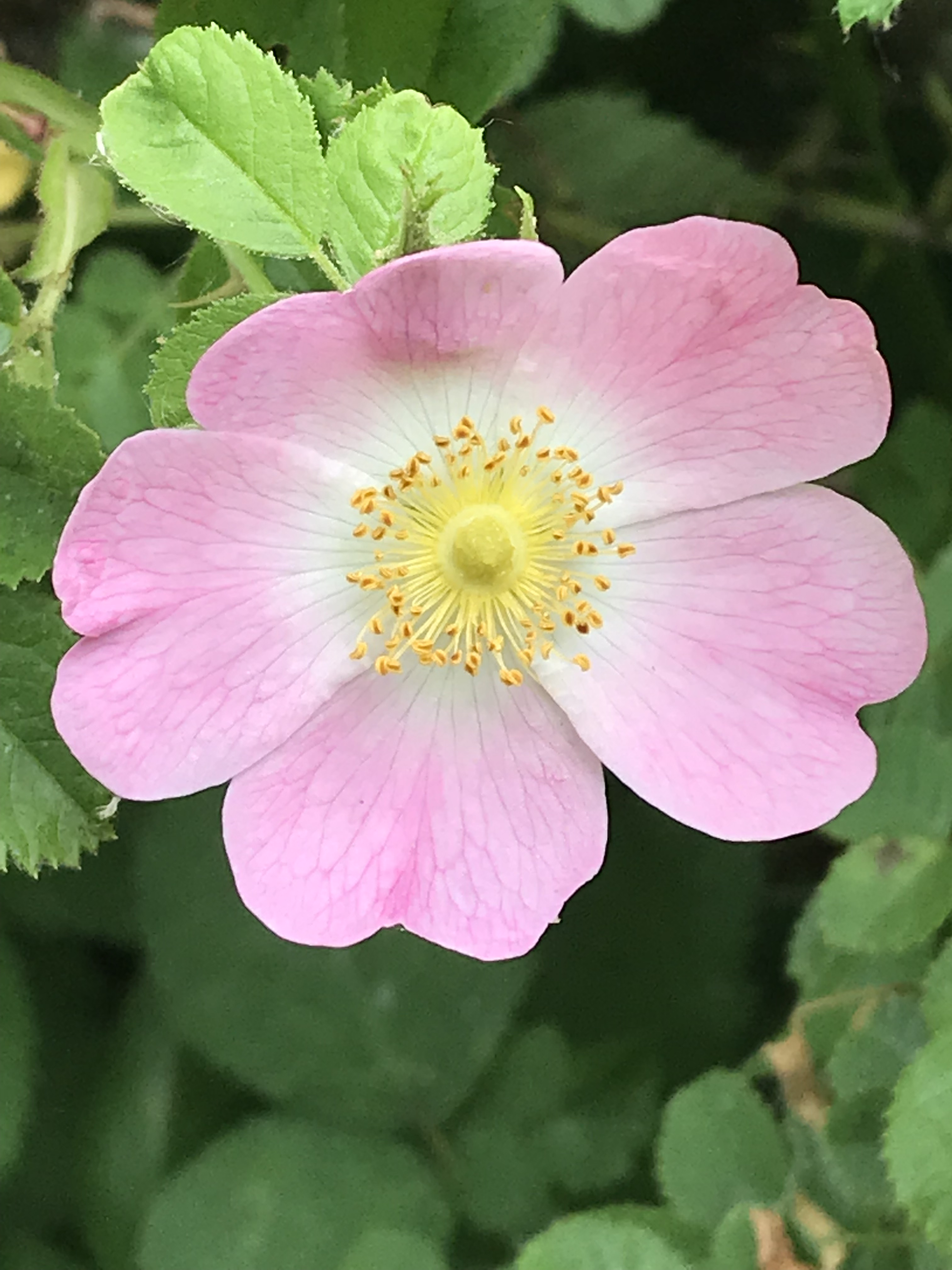
This spring has been very exciting for me. We planted our first trees, shrubs and ground covers in November of 2017. This year most of those plants had a tremendous growth spurt. Several species bloomed for the first time. One of those was this bald hip rose shrub.
April 2019
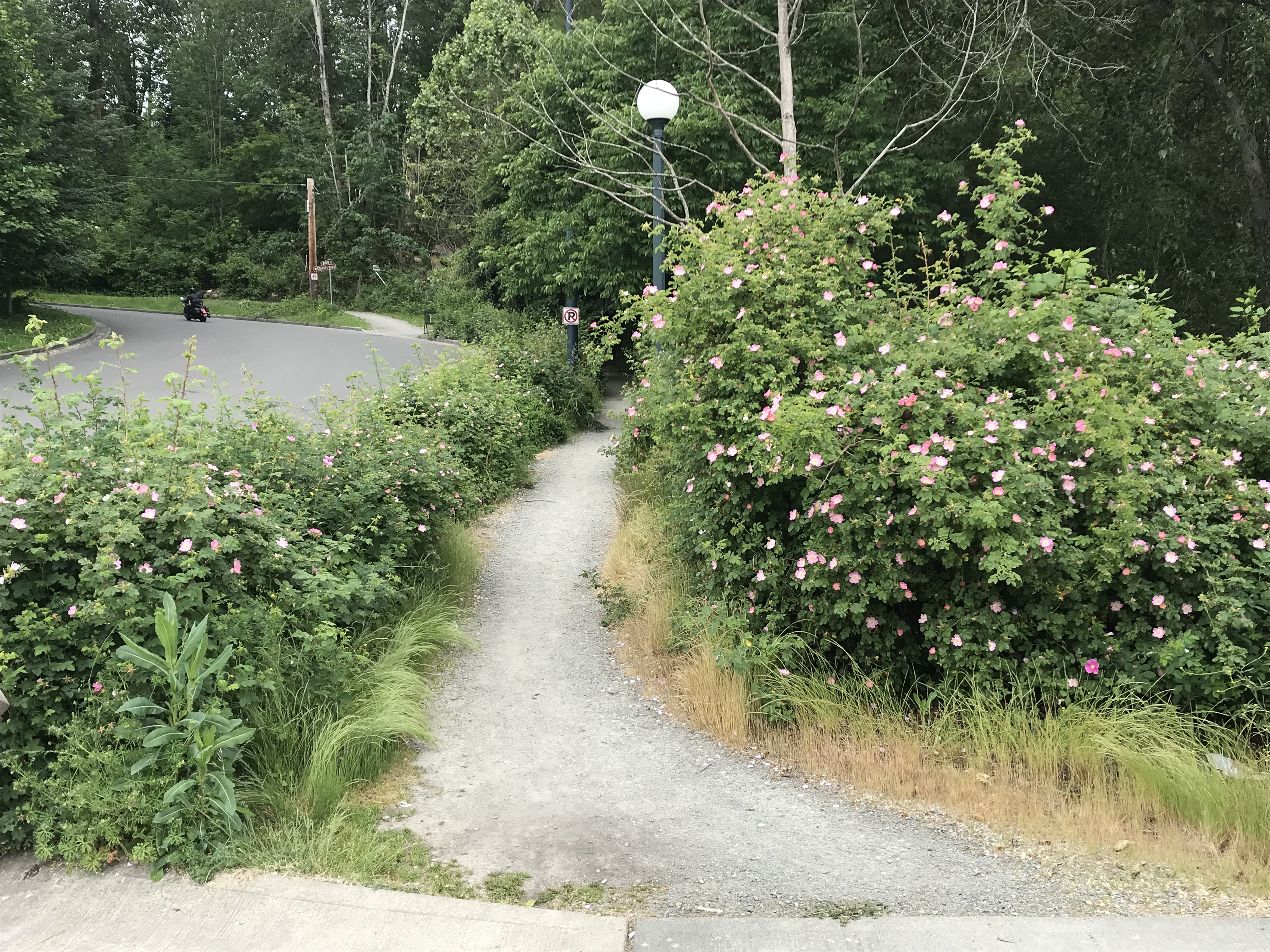
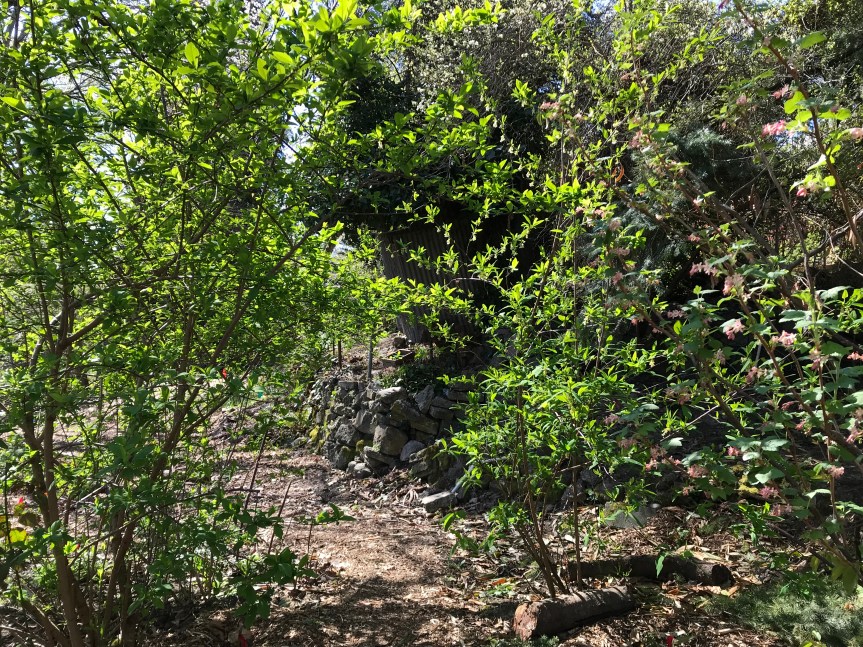
The beginning of the path between the Mt. Baker light rail station and the Hanford Stairs is lined with bald hip rose shrubs.
One day in late May, this is what I saw as I was walking home from the Mt. Baker station.
I realized I was getting a glimpse of what our Greenbelt site is going to look like in a few years. WOW!
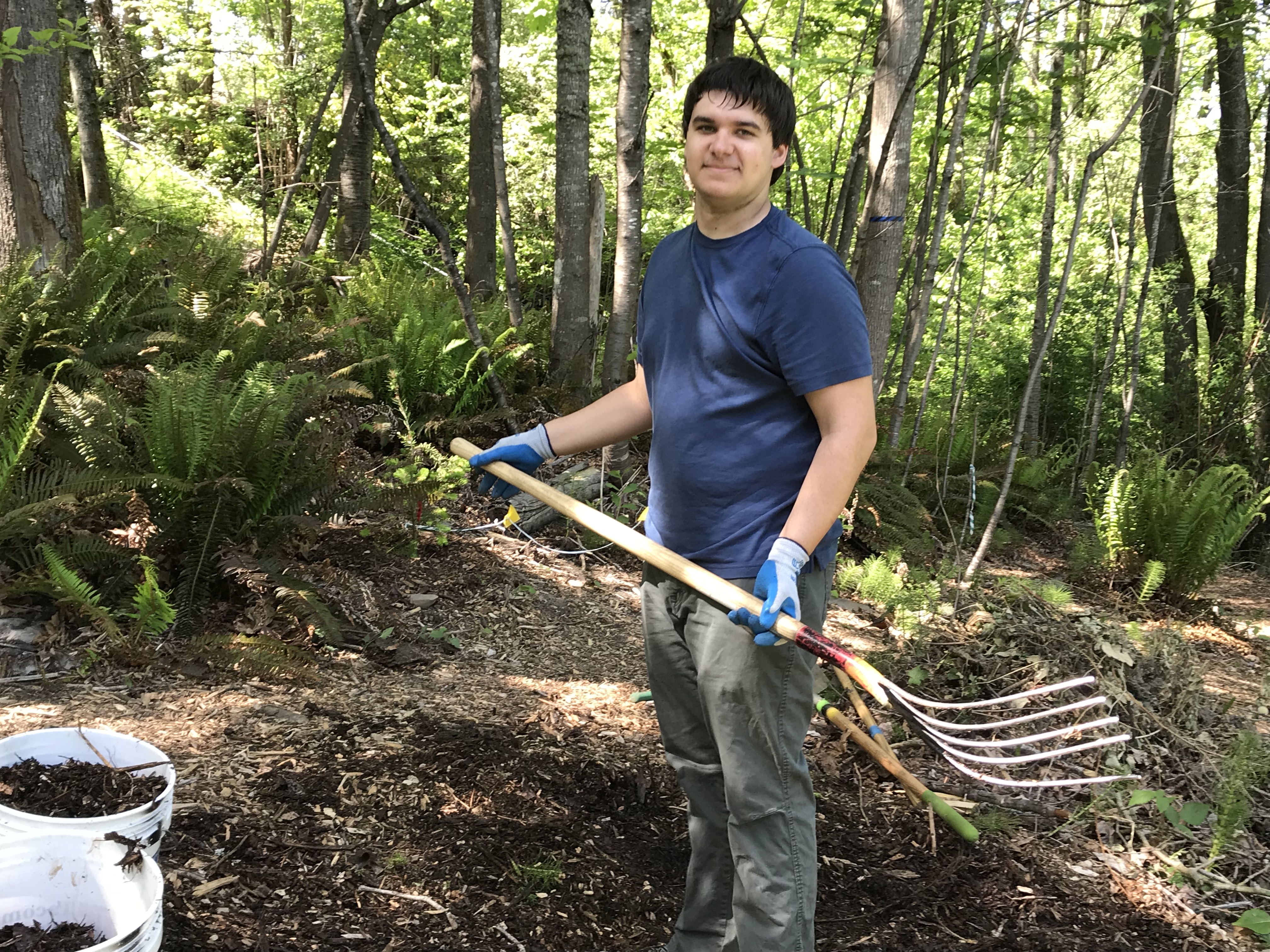
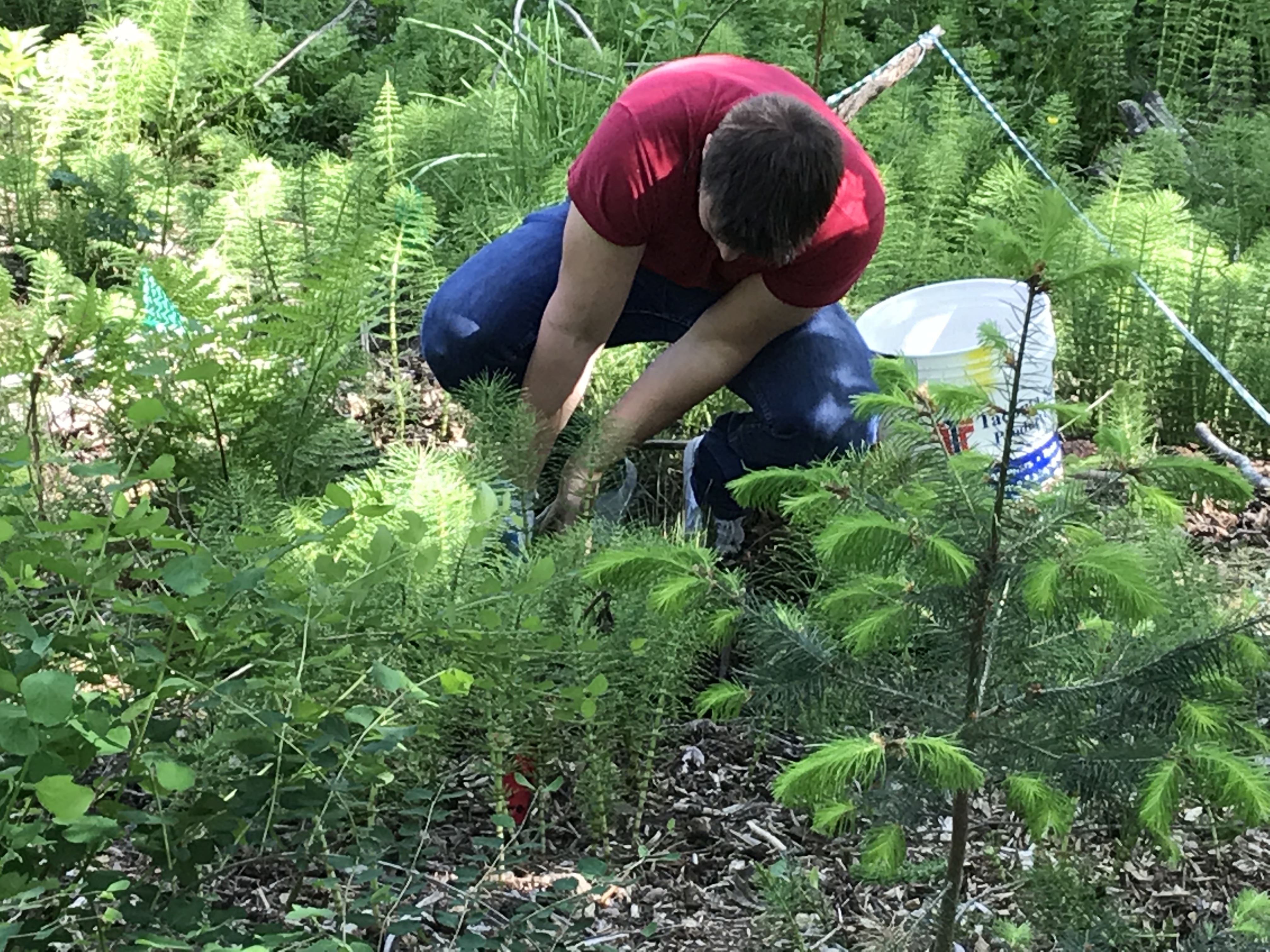
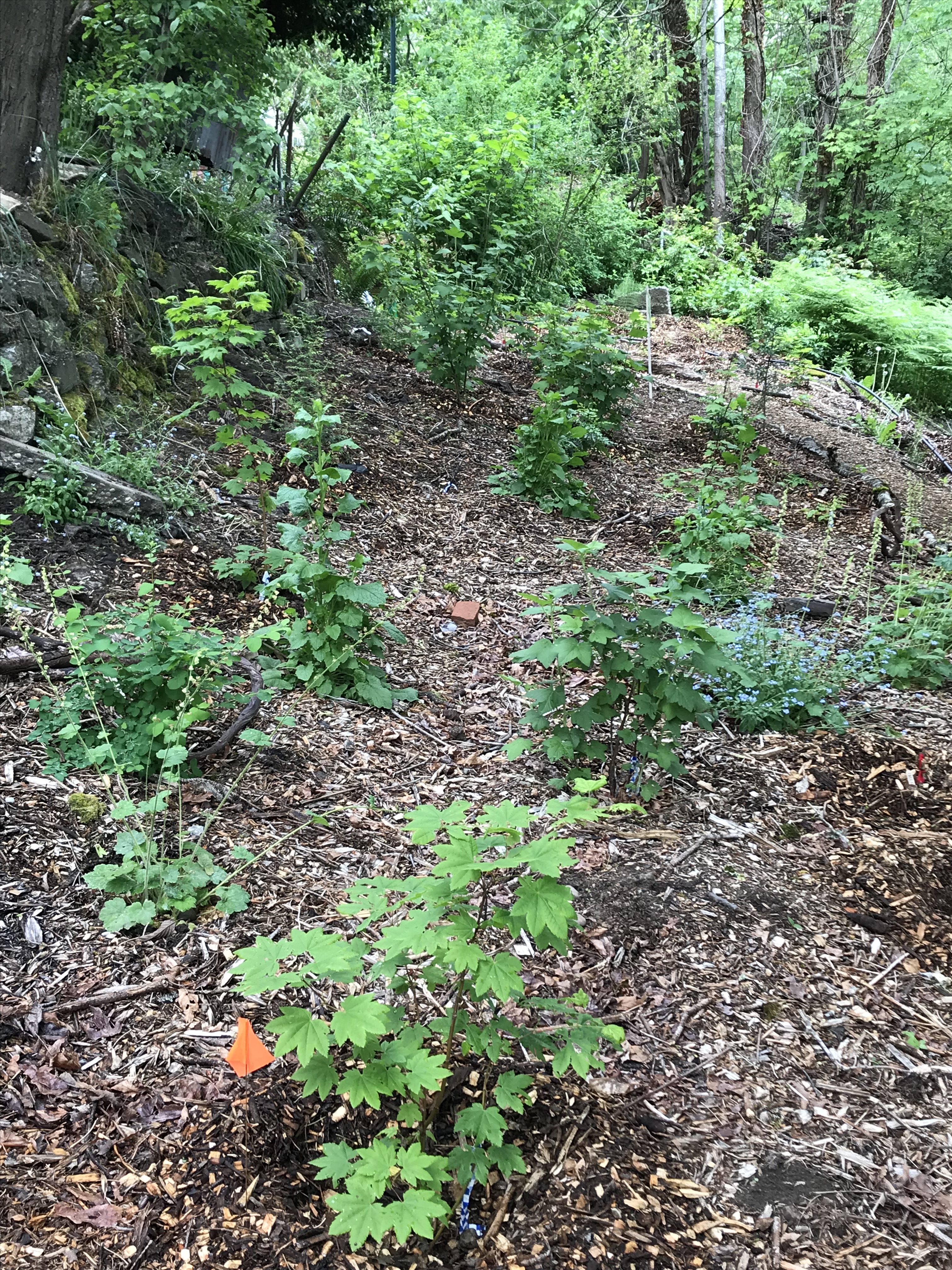
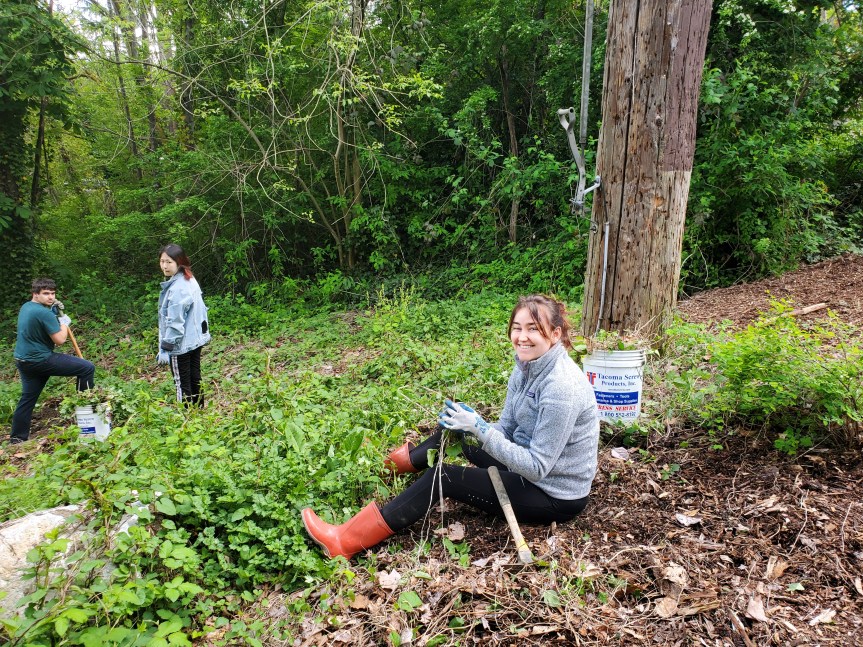
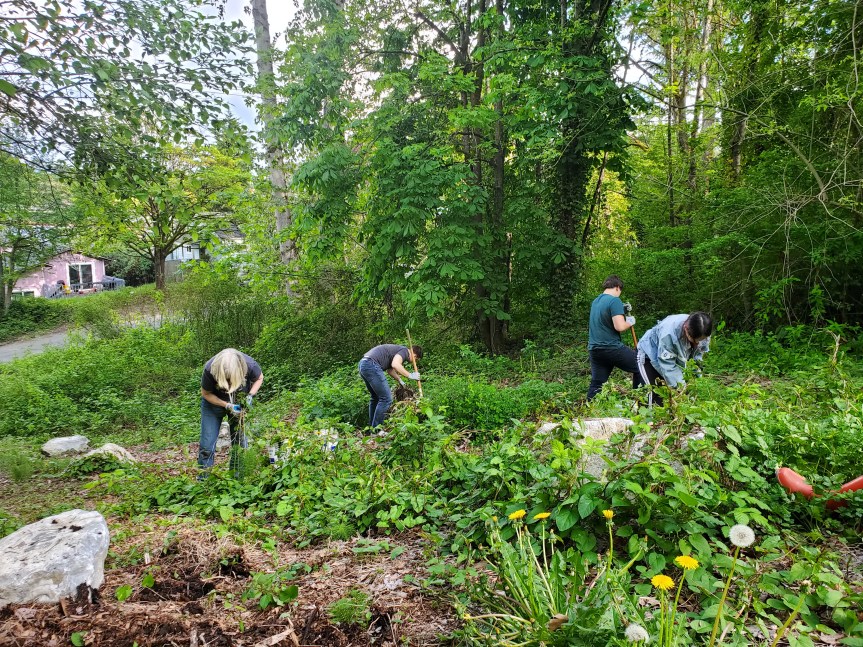
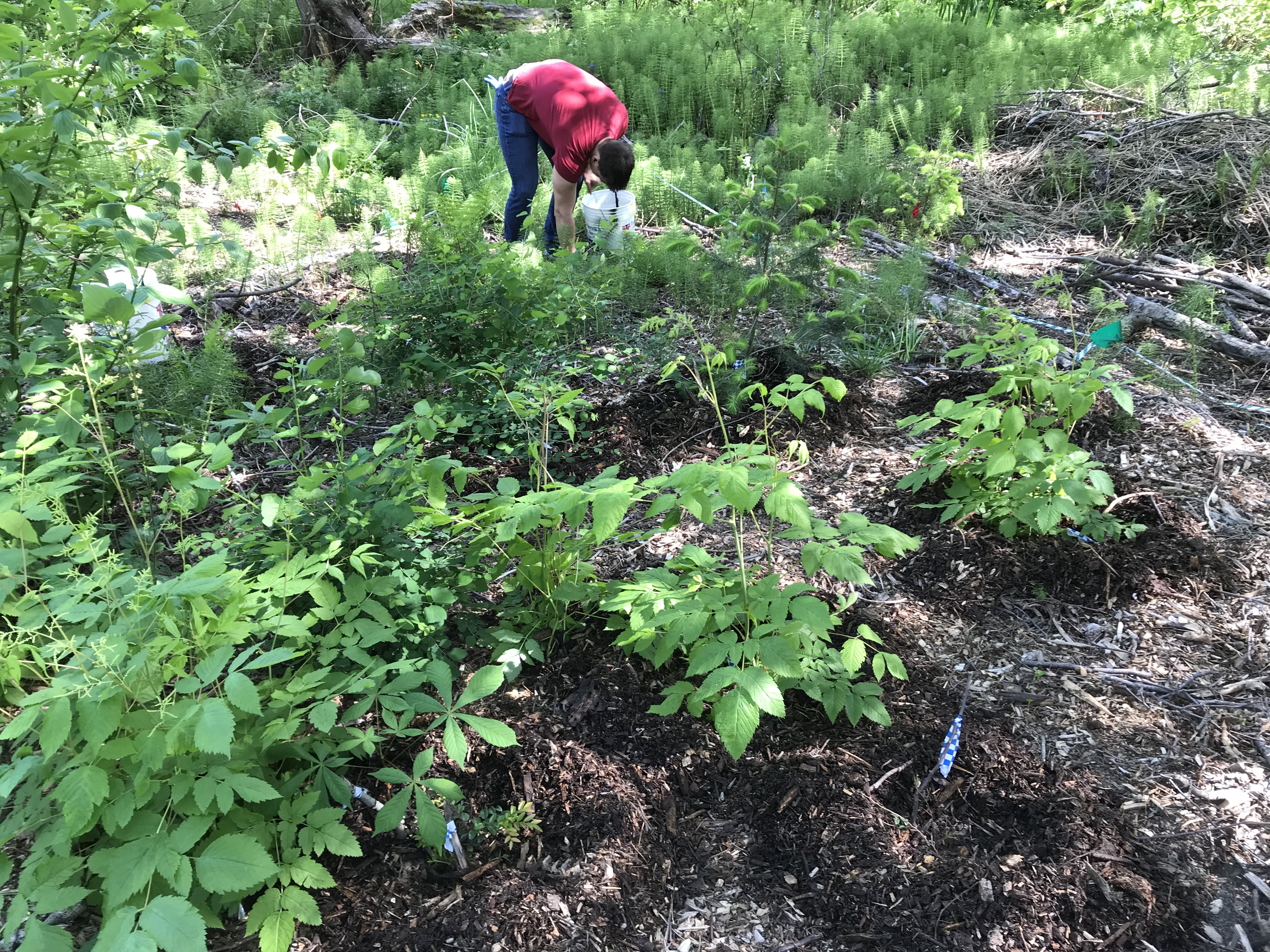
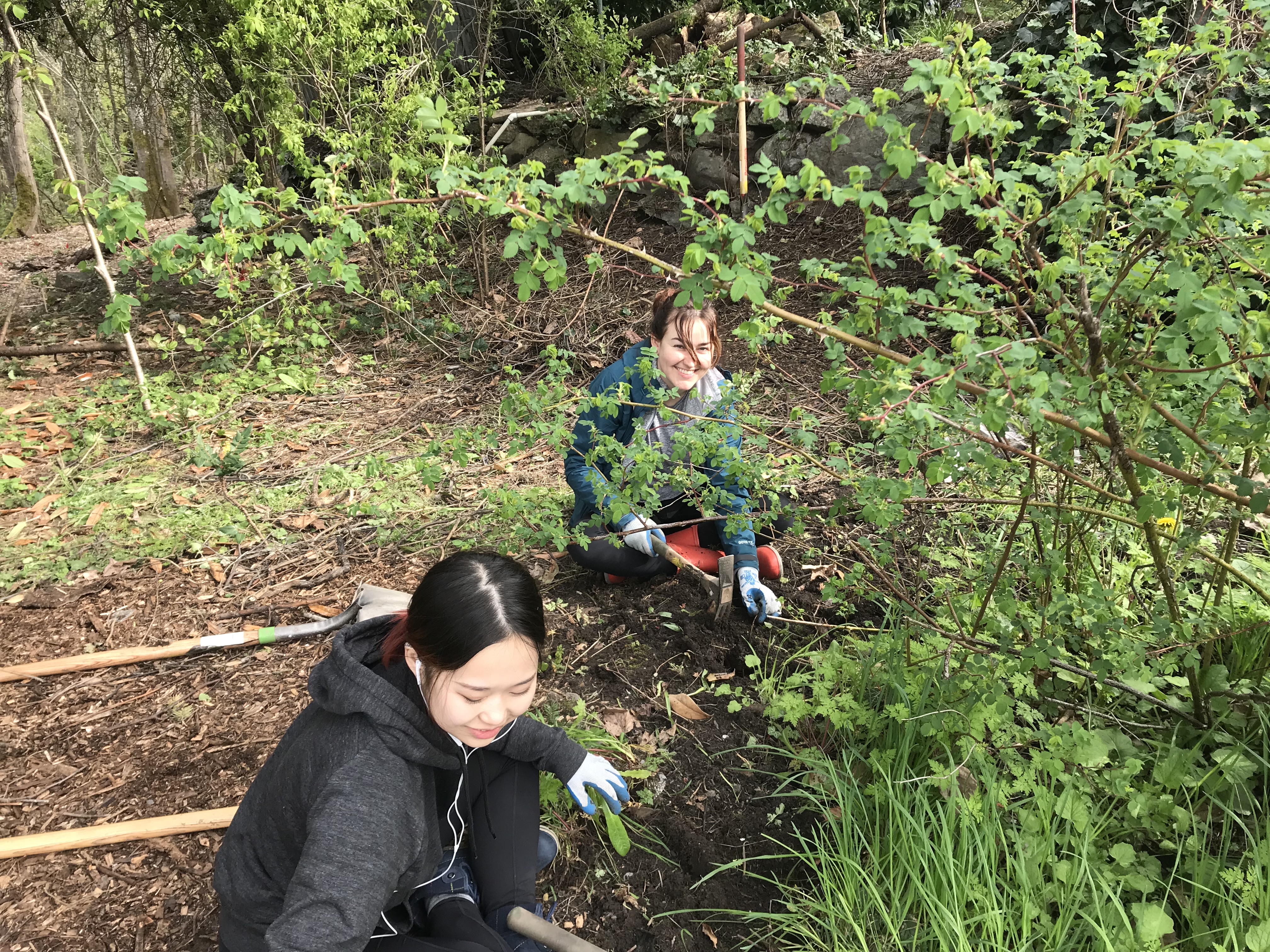
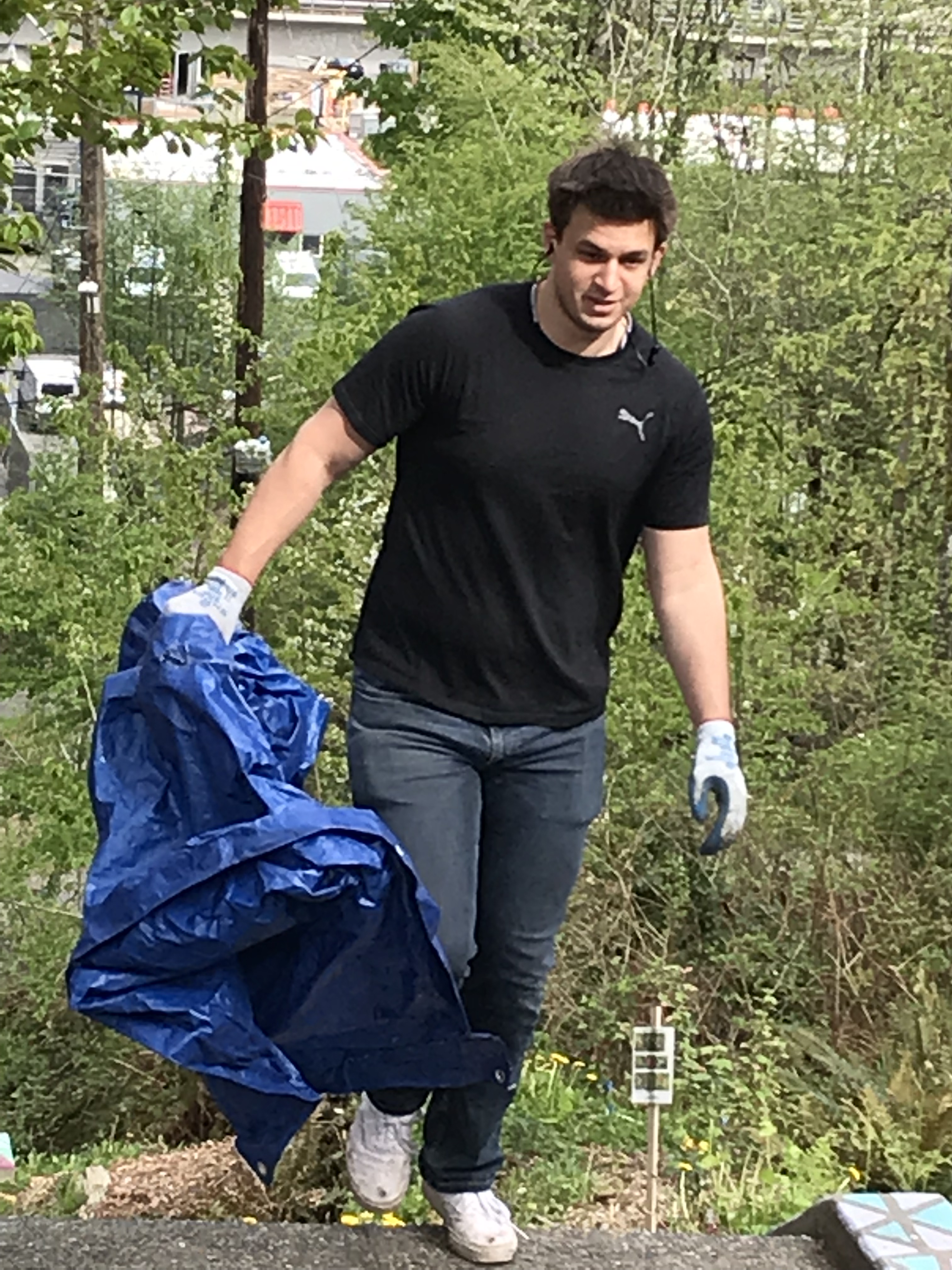
On May 6, the UW students came for their fifth service-learning experience. Most weeks Shirley, one of our team leaders, and I both work with the students. This week Shirley was not available. The rest of us weeded four planting areas (2050 sq. ft.) and put wood chip rings around 90 trees, shrubs and ground covers in the eastern part of the site. The wood chip rings hold in moisture thereby increasing the chance the plants will survive during a dry summer.
On May 13, Shirley was back. Once again, we weeded and put wood chip rings around plants, this time in the northwest part of the site. These areas had many more weeds than the places where we had worked on May 6. At this work party, we weeded 3705 sq. ft. and built 116 wood chip rings. I’m sorry I didn’t take photos that day; but am glad that Shirley took a few.
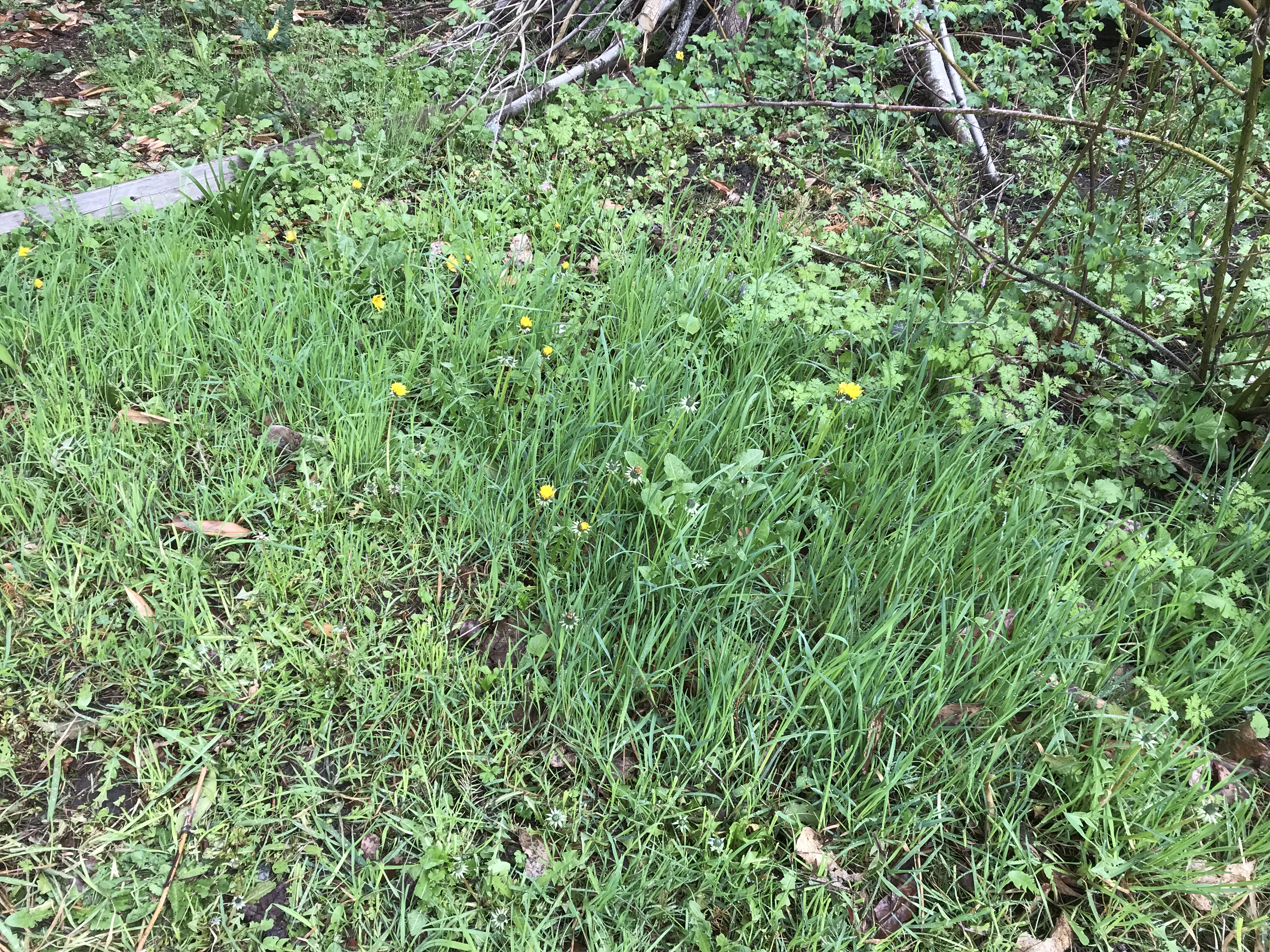
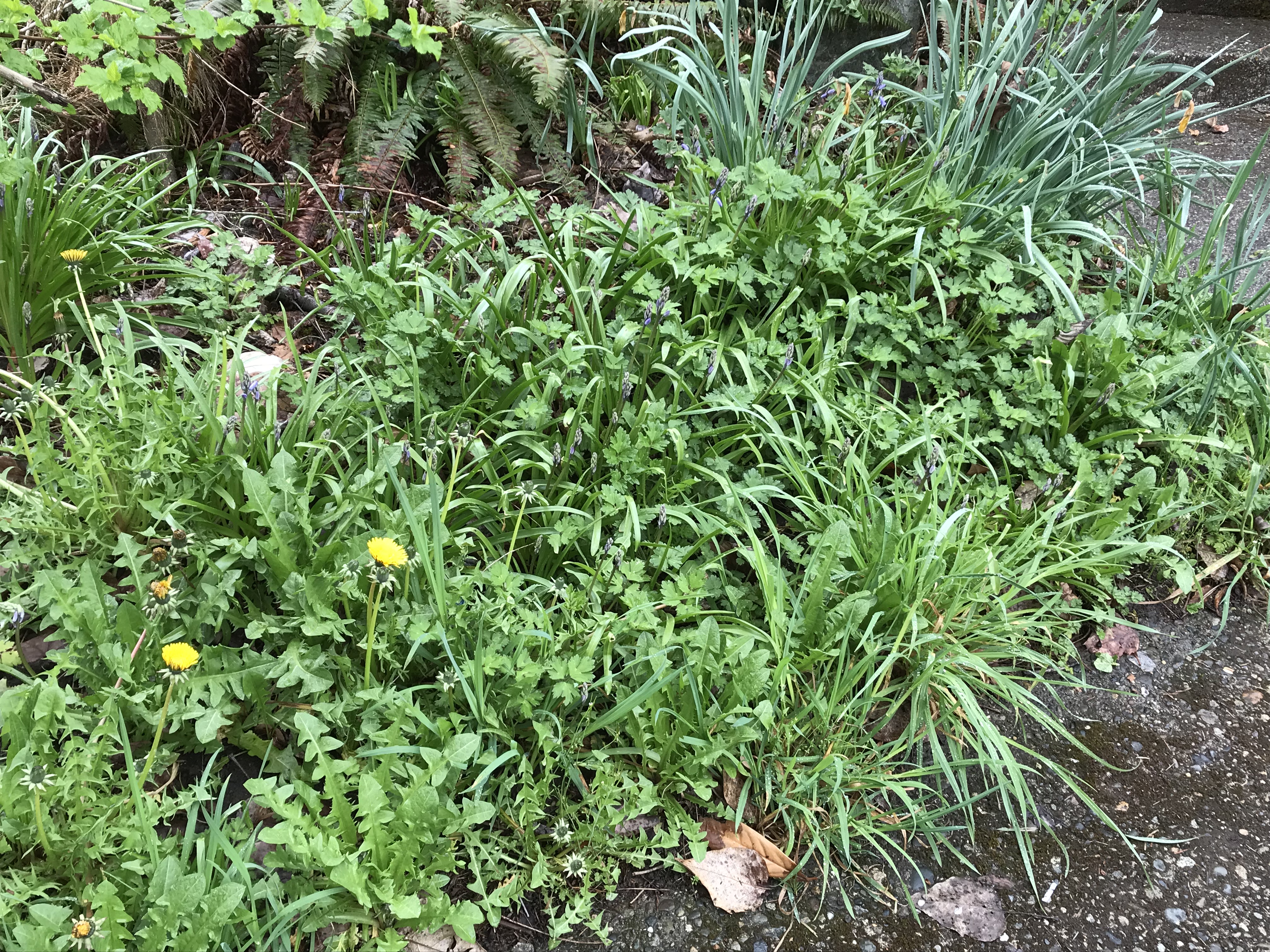
However, the next day I did snap photos of some of the planting areas where we had worked. I thought they looked so beautiful.
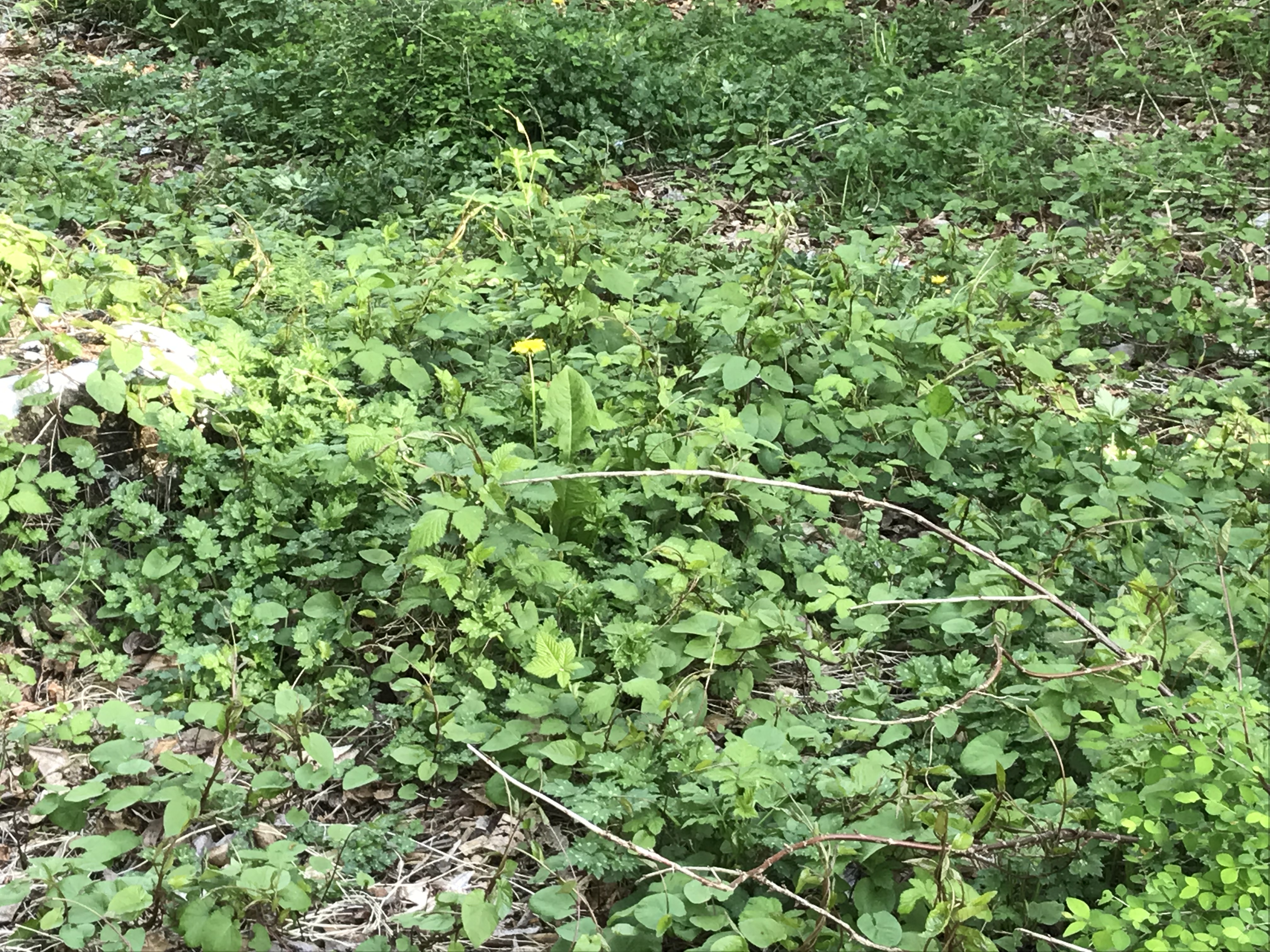
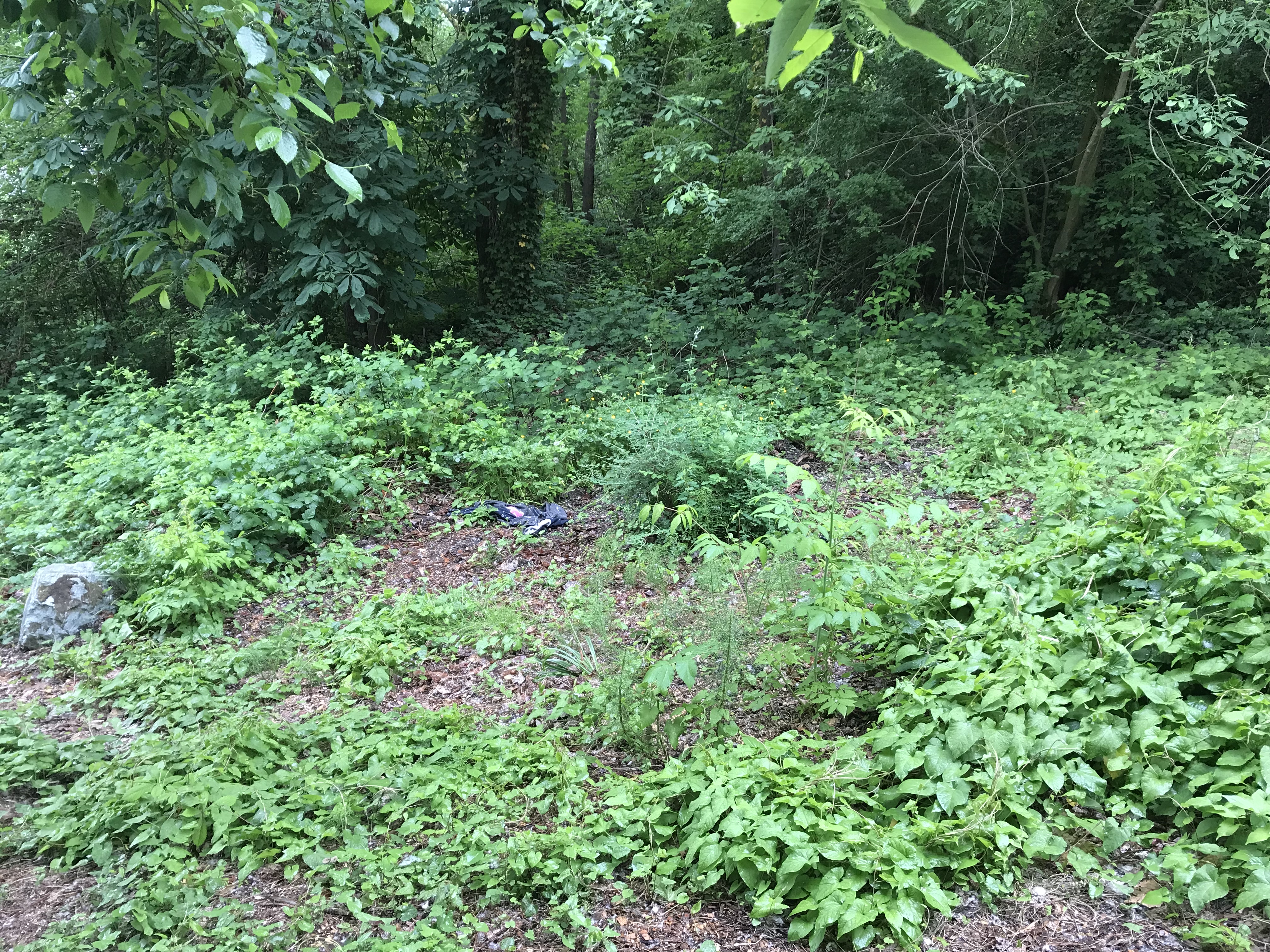
May 20 was the last service-learning session. Shirley and I decided the group would spend the whole time working on the new site across Cheasty Boulevard. We had begun to clear bindweed and other invasive vines from that area on April 29. This was what the land looked like before and during the April 29 work party.
(You can enlarge the photos in any of the galleries by clicking on the gallery.)
April 29 Before
April 29 During
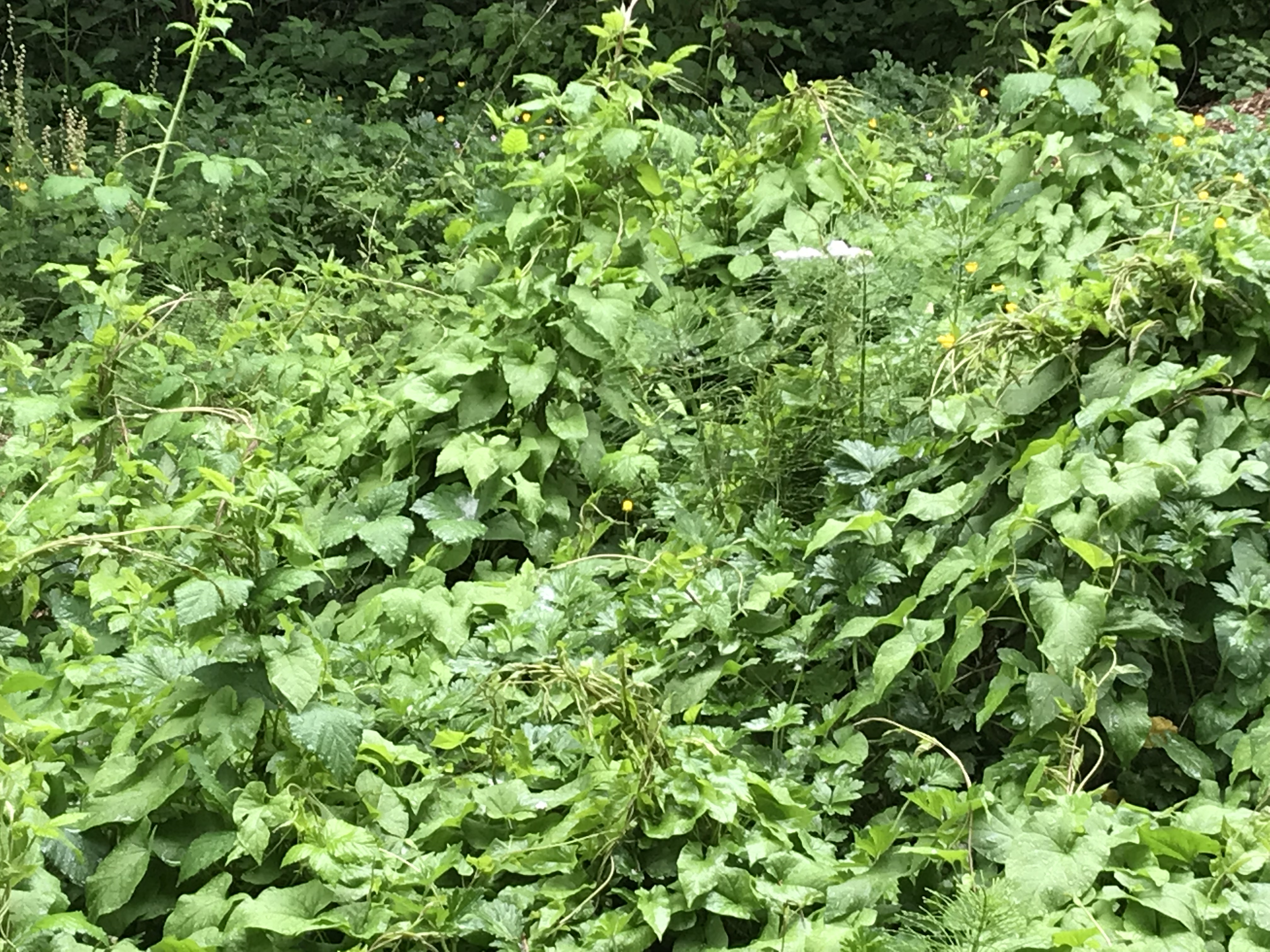
We had done so much clearing on April 29. I was shocked when I visited that site two days before the May 20 work party. While some of our previous work was still visible, the bindweed was already on shrubs we had rescued at the earlier work party, and the bindweed we hadn’t pulled then had grown at an unbelievable rate.
May 20
May 20
May 20
I knew there was no way we would be able to remove all of the bindweed, ever; I’ve read that the roots can go down 32 feet! But we would clear away as much of it as we could.
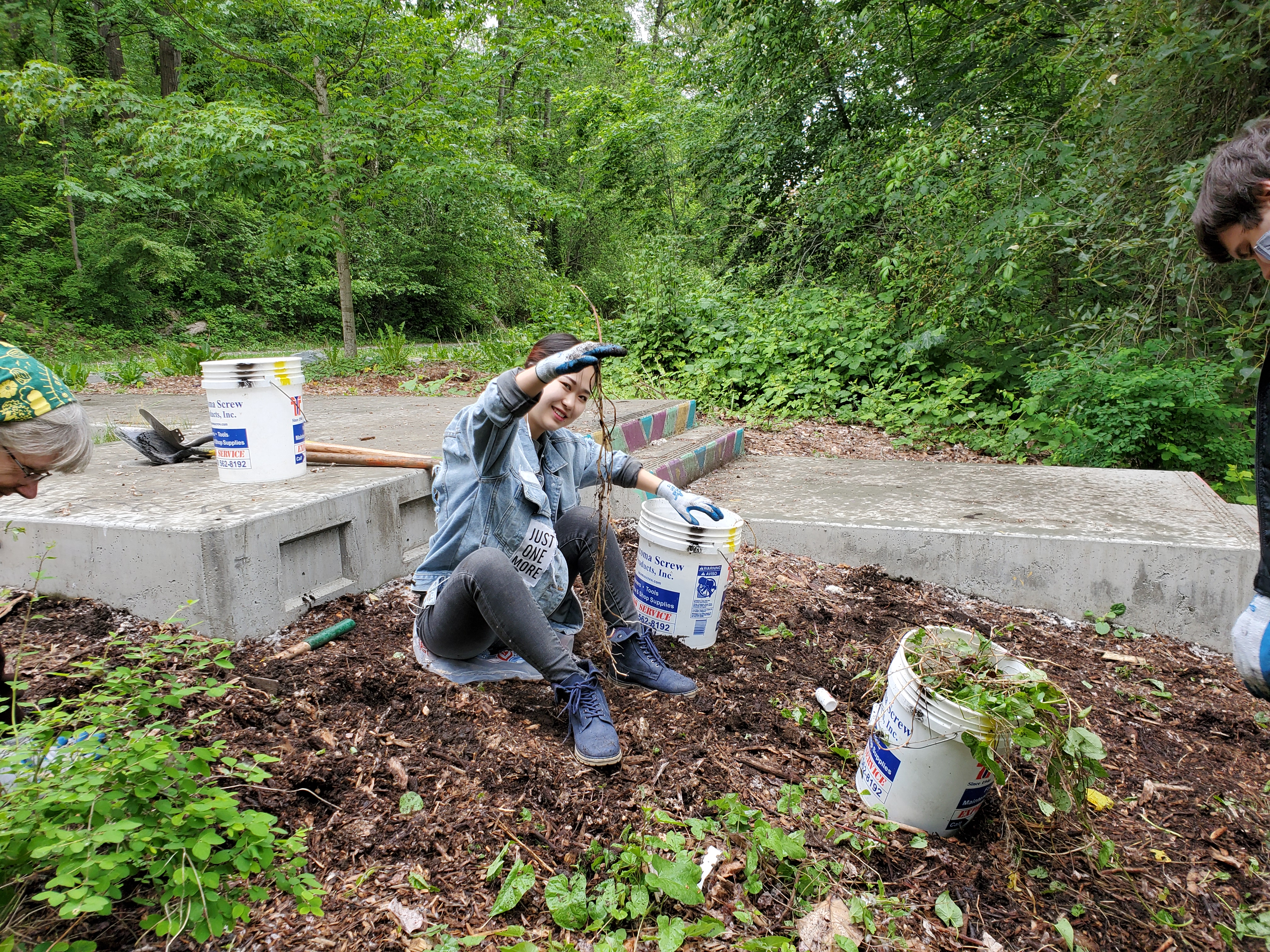
I was surprised to see that many of the bindweed roots were woven together like a lattice. However, since the group that had planted the shrubs, years ago when the lower part of the Hanford Stairs were built, had covered the area with wood chips, the roots were more surface than I’ve ever seen before. To see what I mean by long roots, be sure to take a look at the last photo in the gallery below!
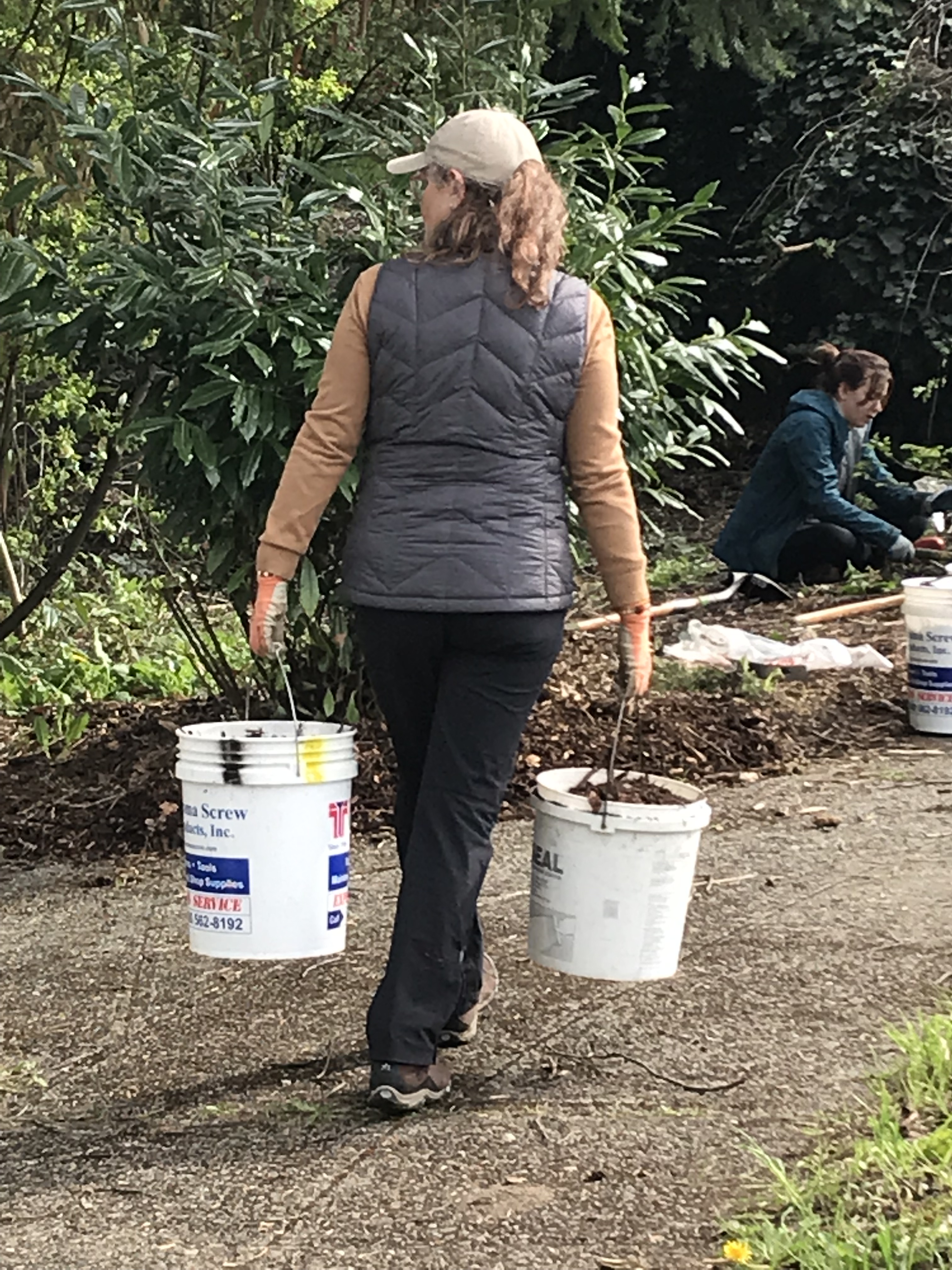
We filled bucket after bucket with the vines. Once the buckets were full, we emptied them on the drying racks along Cheasty Blvd that we had built last summer. (I took the photo of the drying rack four days later than the work party, so the bindweed was already wilting.)
We spent the last hour of the work party spreading wood chips on the part of the site we had cleared.
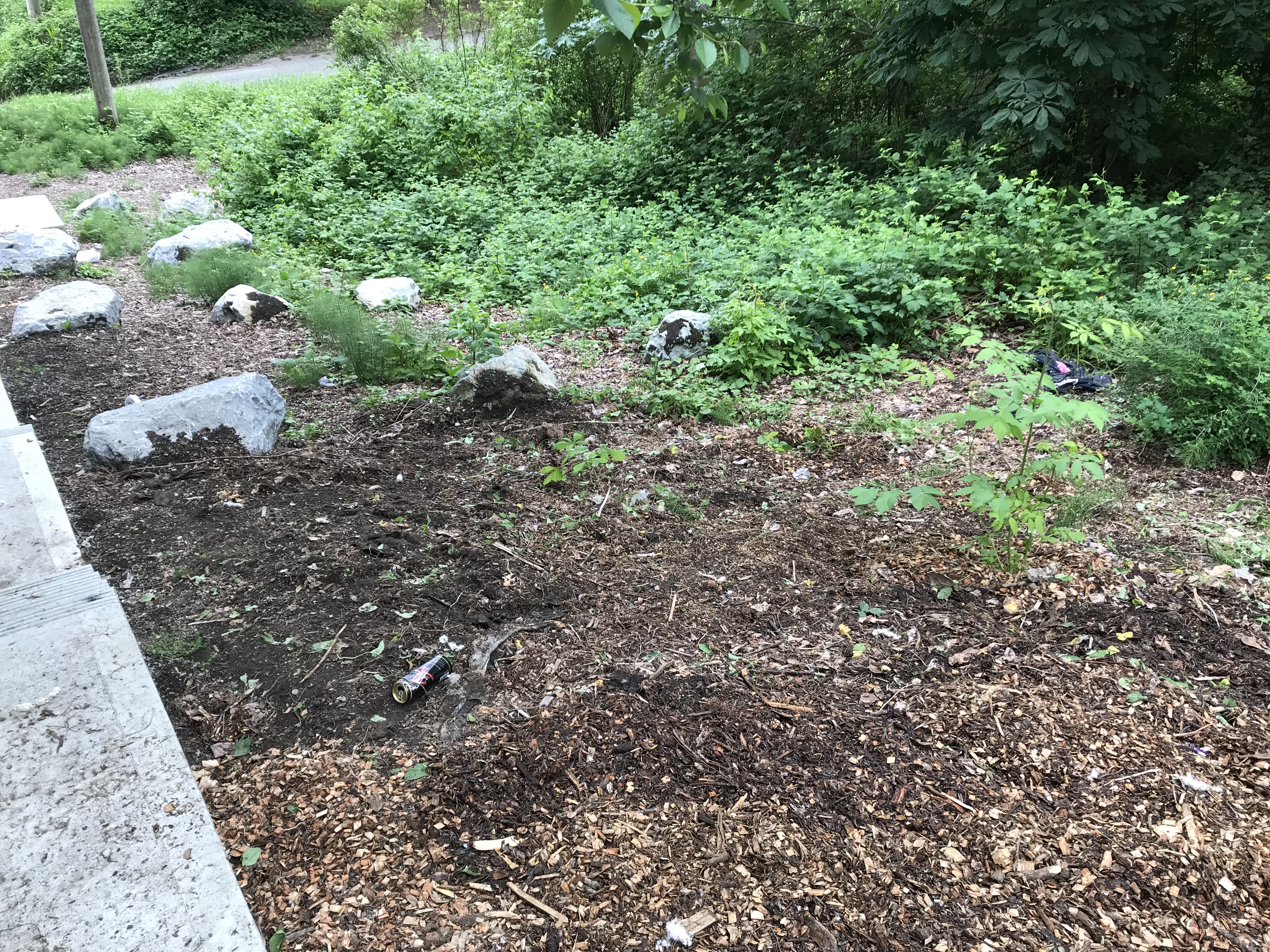
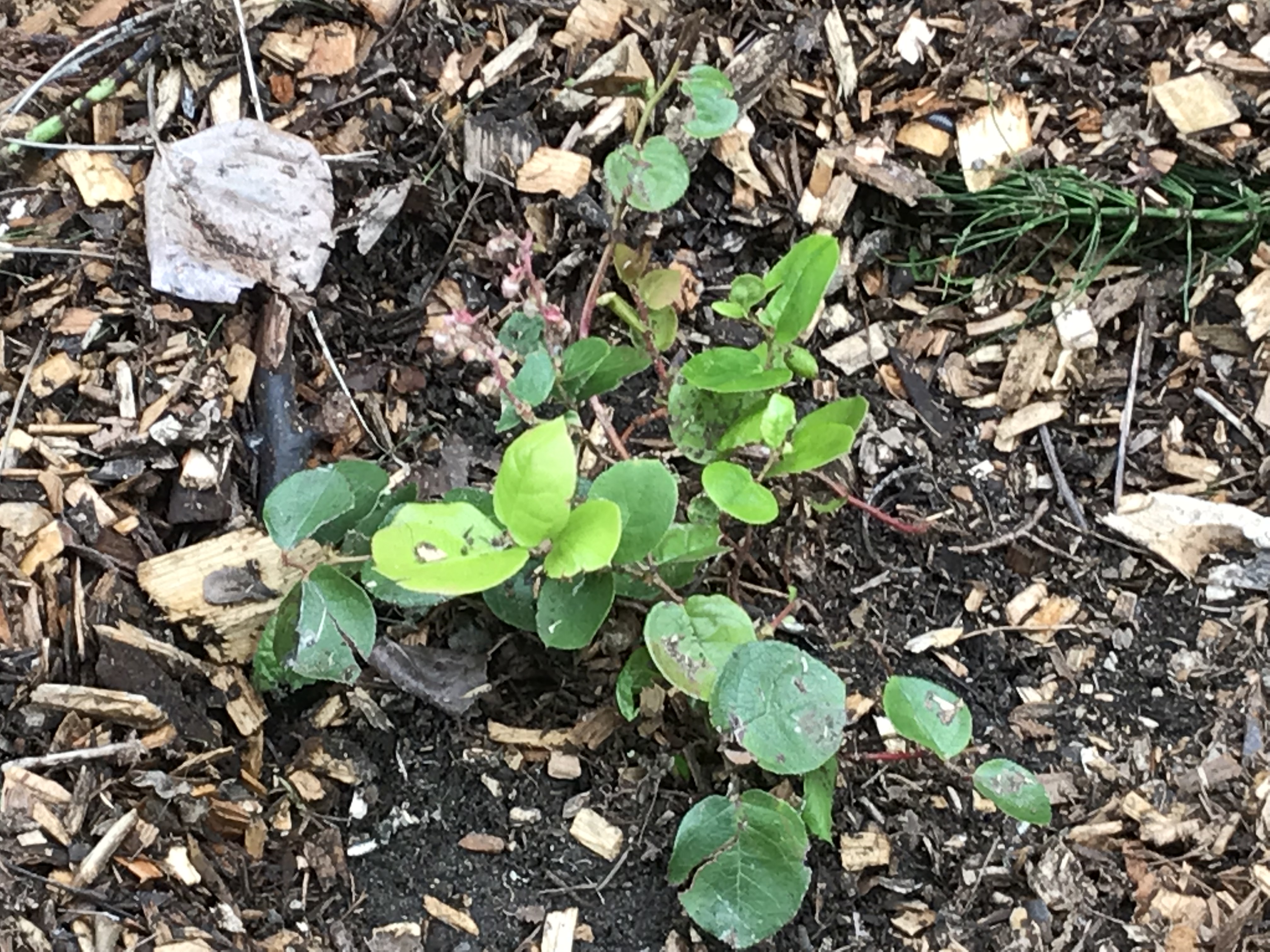
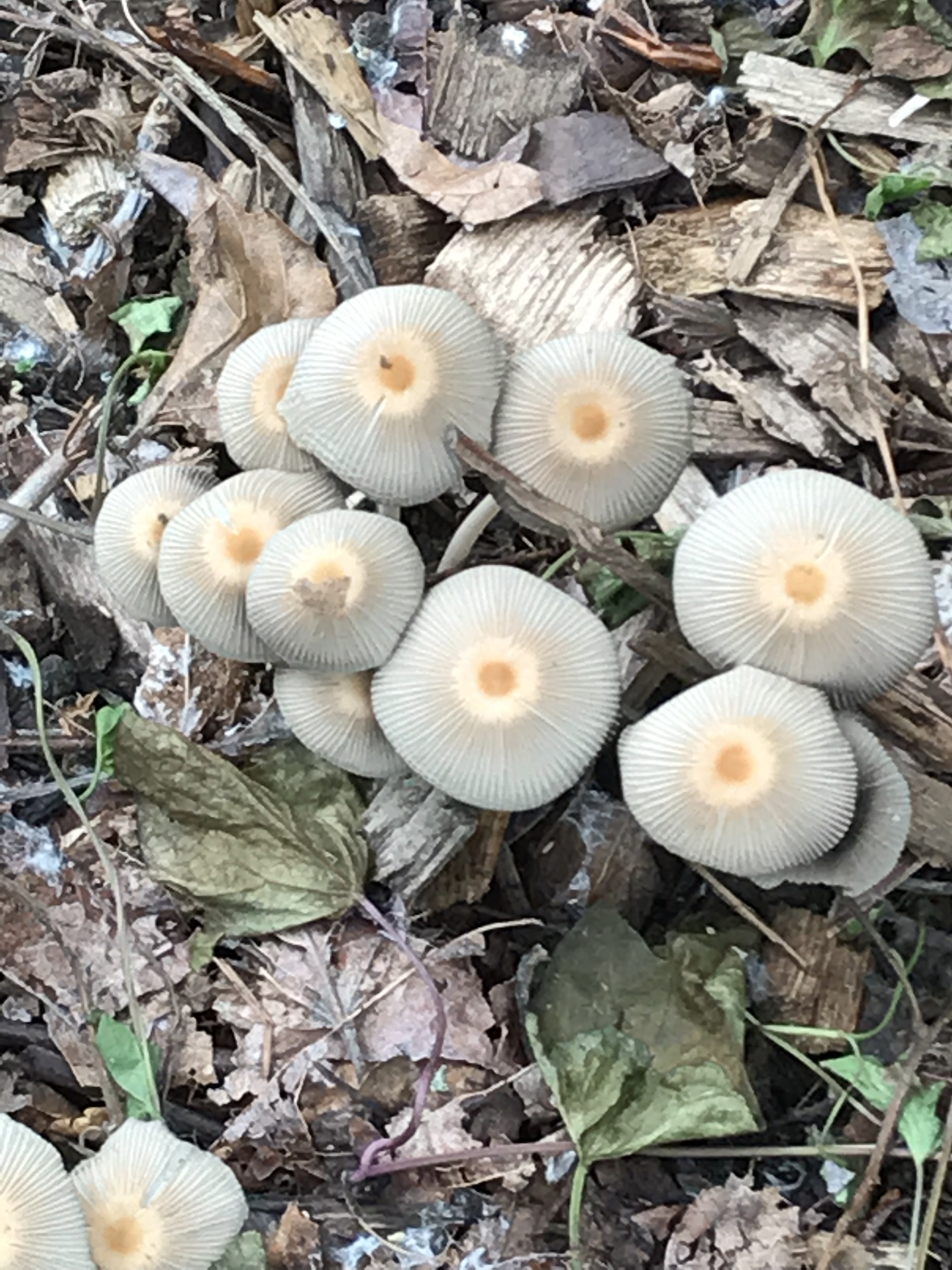
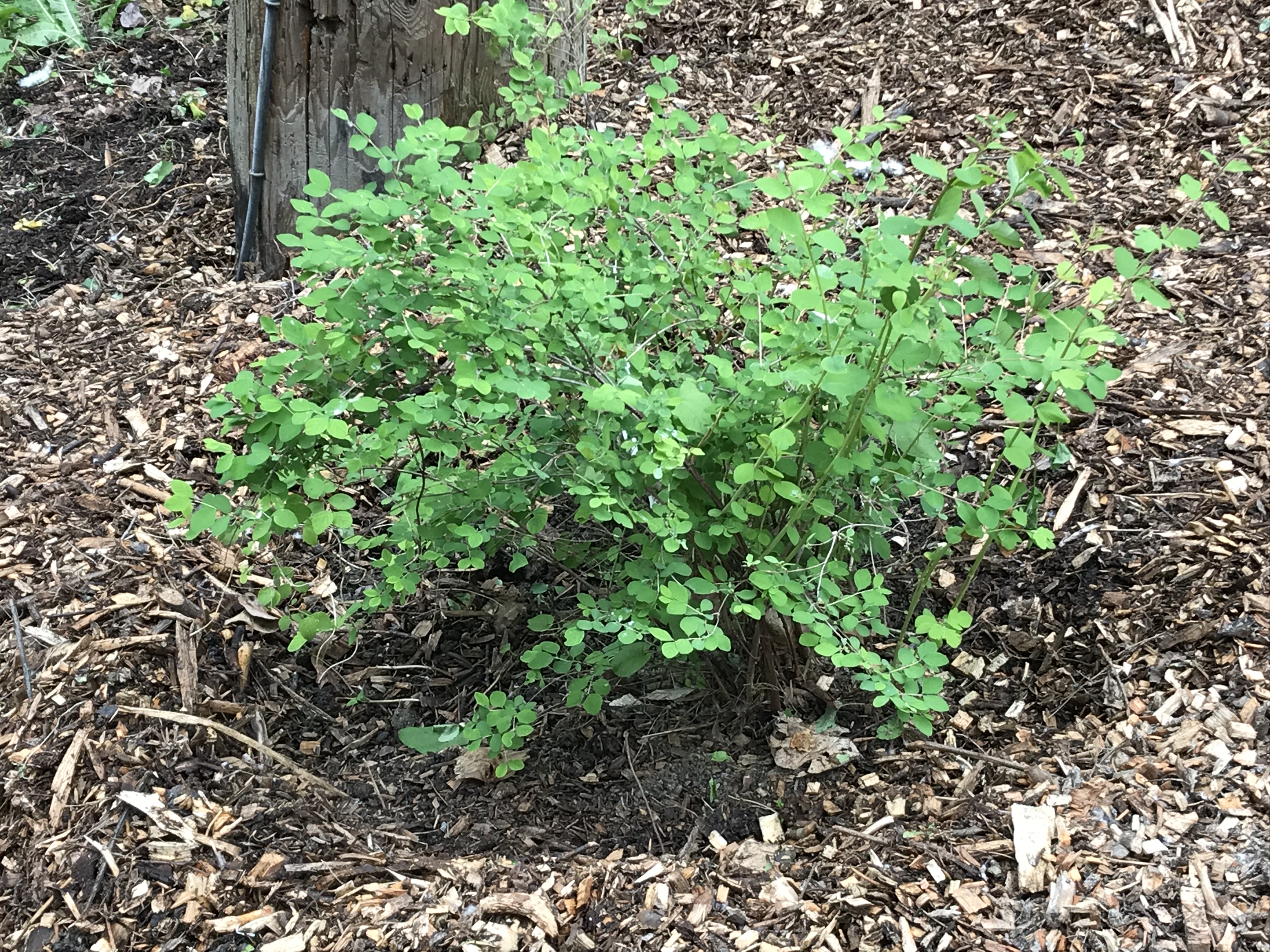
I have no illusion that the bindweed is gone but there is sure a lot less of it and the land we cleared looks wonderful. We had removed the bindweed from the area around three salal shrubs and two snowberry shrubs and circled them with wood chip rings. A few days later, I saw mushrooms had emerged from the ground a little lower on the site.
What a wonderful and productive last service-learning session we had. I feel very grateful to the students for all they have done during the last seven weeks. Because of their work, our Greenbelt restoration site is so much more prepared for the dry summer months.
In April of 2017, I took a live stake workshop. The participants cut branches from a variety of shrubs, took them home and planted them in containers. The stakes rooted throughout the summer and early fall. In November of 2017, I planted the ones that had in our forest restoration site.
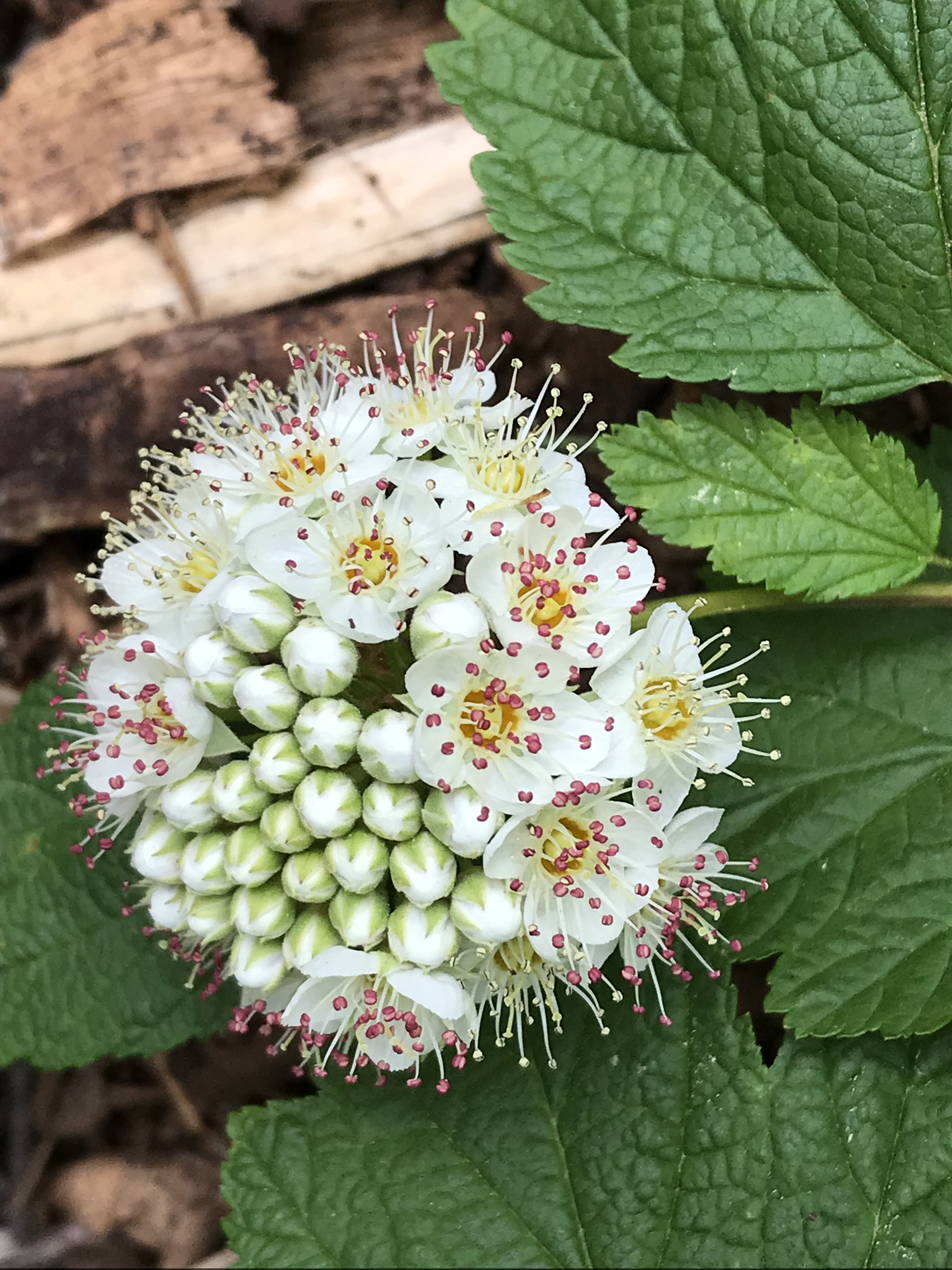
Three of the Pacific Ninebark stakes not only survived, they thrived. When I was walking through the restoration site today, I noticed that there were many buds on the shrub. One of the flowers had partially bloomed. I think it is SO beautiful.
There are many flowers like this one on the shrub. The photo below shows about a third of the plant’s flowers-to-be.
This shrub will be so beautiful when all of these buds open. At this point, it is still a fairly small plant. I can only imagine what it will look like years from now when it is fully grown.
When I walked out of my house onto the back deck yesterday, this sight caught my eye:
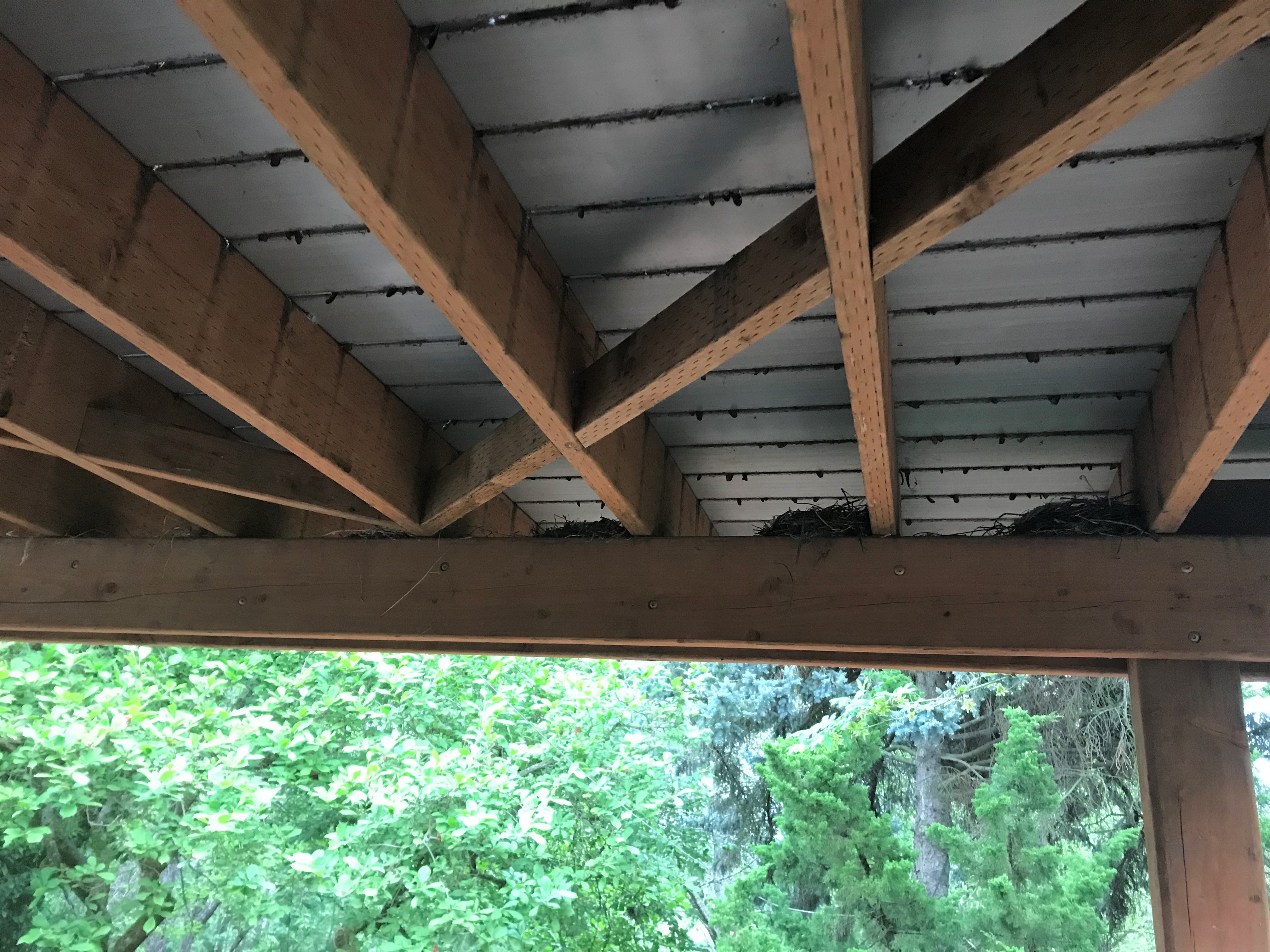
I couldn’t believe it. When were these built? The nest on the right was biggest and they descended in size for seven rafters.
I’ve had bird nests in the rafters before, but only one at a time. And why did the bird not finish any of them? I looked on the other side of the beam and saw this:
The wasp nest was very small, but it is more than likely the answer to my question. I wouldn’t want to raise babies there!
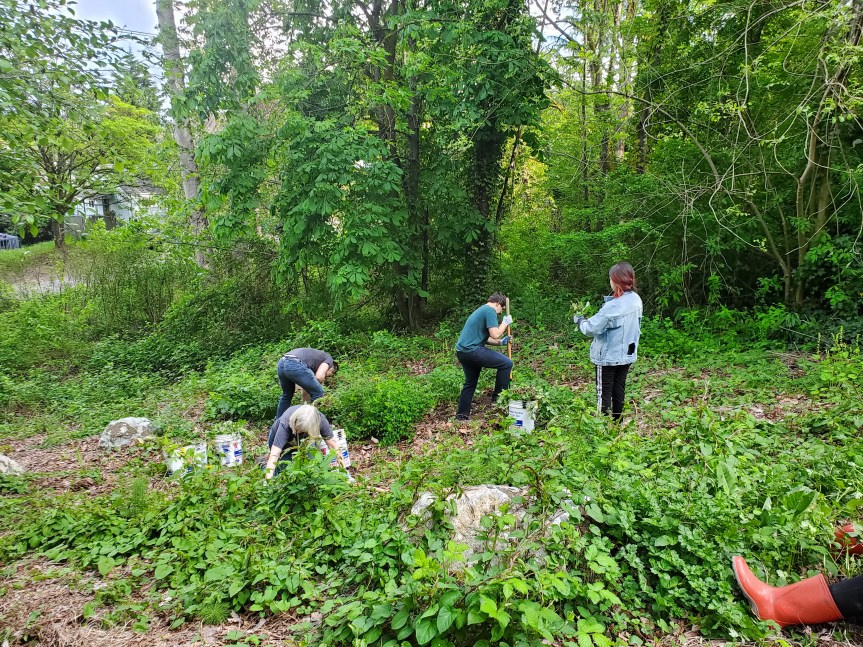
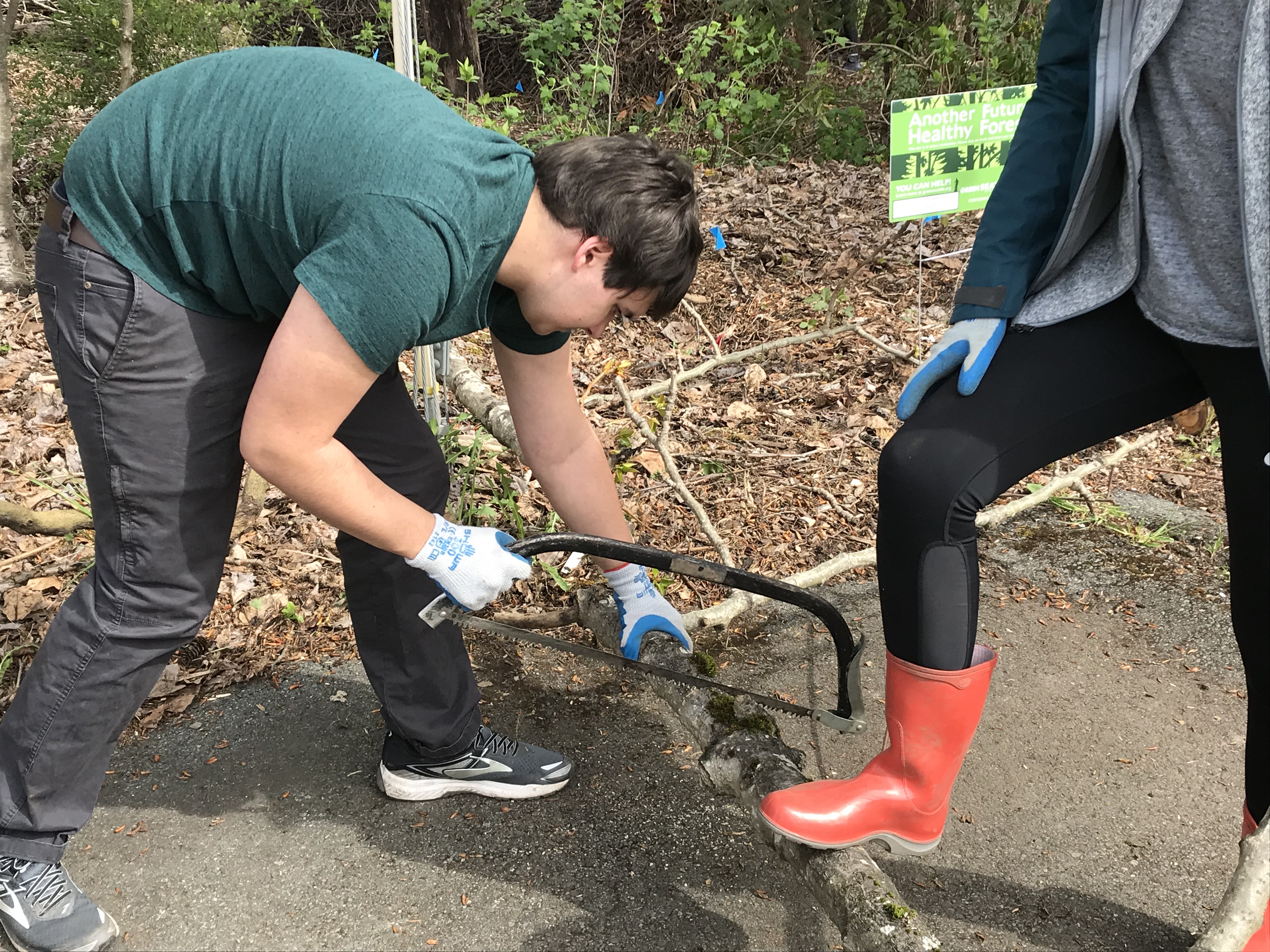
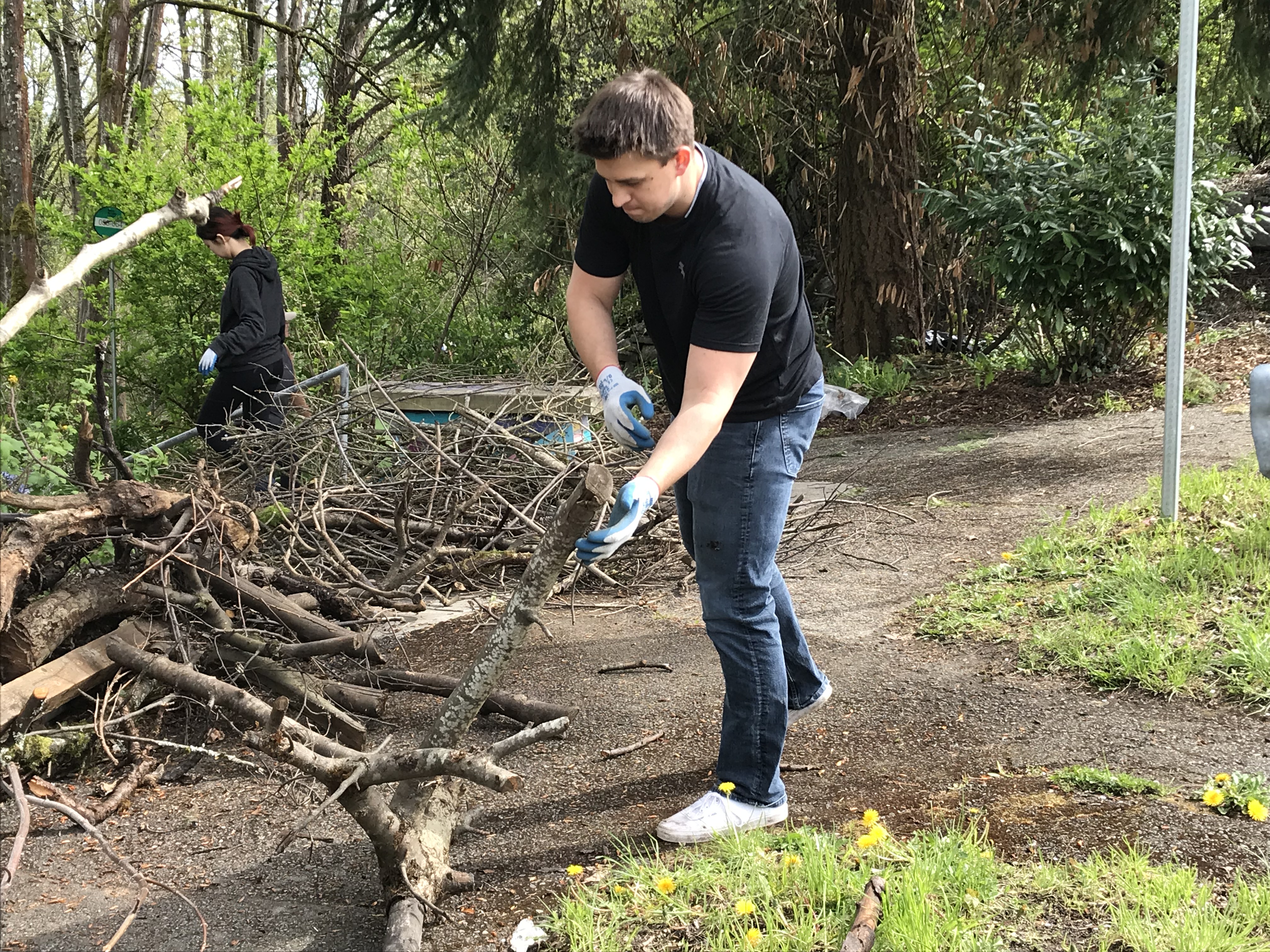
We’ve had three more service-learning work parties since I wrote about the first two. Since the group is small, Shirley and I usually work alongside the students so I often forget about taking photos. Luckily, Shirley took a few during the April 22 work party and I remembered during the May 6 one.
April 22 was the first work party this year where it was wet and muddy. We spent most of the time digging out bindweed and blackberry vines in of the eastern planting areas and then moved on to weeding the north side of the Hanford Stairs.
On April 29, the students spent the first part of the work party building a ring of wood chips around some the plants. The wood chips act as mulch, reducing weed growth and keeping the soil near the plants moist during the summer. Once the rings (often referred to as a donut) are built, the donut hole is cleaned out. That way rain water will get to the plant easier.
During the second part of that work party, two of the students removed invasive plants along the north side of the stairs again and spread wood chips in areas that they cleared.
Shirley (team leader) and the other two students worked in an area near the second set of Hanford Stairs; across Cheasty Boulevard. It was the first time we have worked on that site, but it won’t be the last.
The Seattle Transportation Department had planted native plants in that area at the time they built the stairs. Since then, bindweed had taken over; most of those plants and the nearby land was covered with bindweed at the time of the work party.
After a break, all of us worked in that area. We freed a snowberry shrub, a bald hip rose shrub and two salal plants.
We dug up a lot of bindweed and other invasive vines, but there is plenty more to be done in that area.
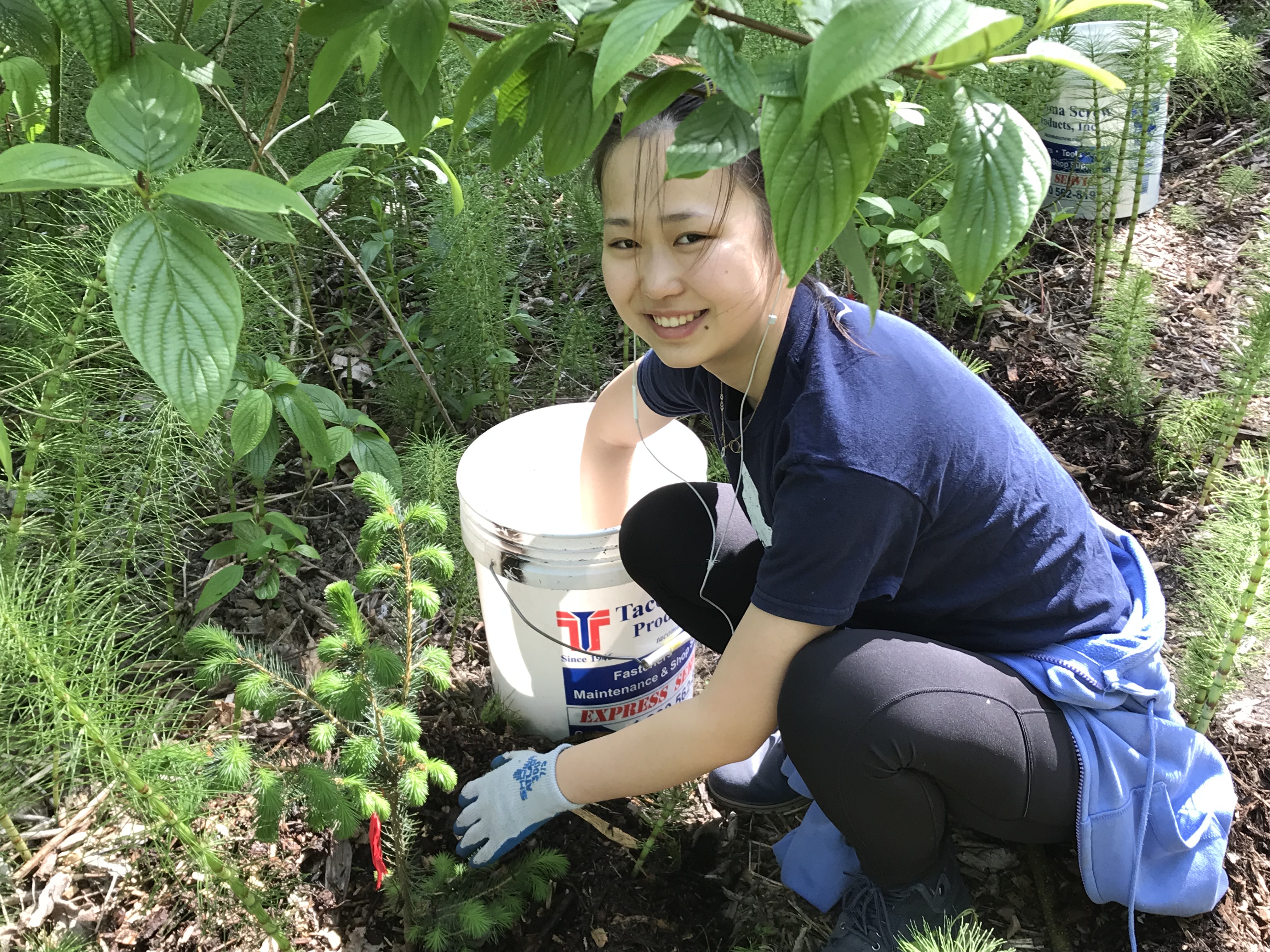
On May 6, the students came for their fifth service-learning experience. This time they weeded four planting areas and put wood chip rings around 90 trees, shrubs and ground covers!
There are only two service-learning work parties left in this series. It has been fun to have the same students each week for seven weeks.
Next week we will be putting the wood chip rings around plants in three or four more planting areas, and during the last week we plan to go back to the bindweed area across Cheasty Boulevard.
From Spring of 2017 through Autumn of 2018, students from the University of Washington’s Introduction to Environmental Science class worked in our restoration site. The students were required to do three hours of volunteer work during the quarter, so their needs and ours matched very well. In November of 2018, I was dismayed to learn that the instructor was retiring at the end of the quarter and the future of the course was uncertain. That class had been our primary source of volunteers.
Losing those volunteers has been a good chance to practice taking the attitude “What you need will be provided.” I also kept in mind a line adapted from the movie, Field of Dreams– “If you build it, he (they) will come.”
In mid November 2018, DocuSign, a corporate group did our fall planting. On Martin Luther King Day, we had a sizable work party. In February, my neighbor John and I worked together to rescue a shrub that a massive pine tree branch had fallen on. We also had two winter work parties where the participants consisted primarily, or exclusively of team leaders.
As Spring came, I began to get worried. Blackberry shoots, bindweed and other invasives were emerging from the ground. I started working in the site on my own and thoroughly enjoyed the work, but I knew I couldn’t do everything that needed to be done by myself. In addition to trusting that what I needed would be provided, it was an opportunity to practice staying focused on what I was doing in the moment rather than being distracted and/or brought down by obsessing about the enormity of the whole task.
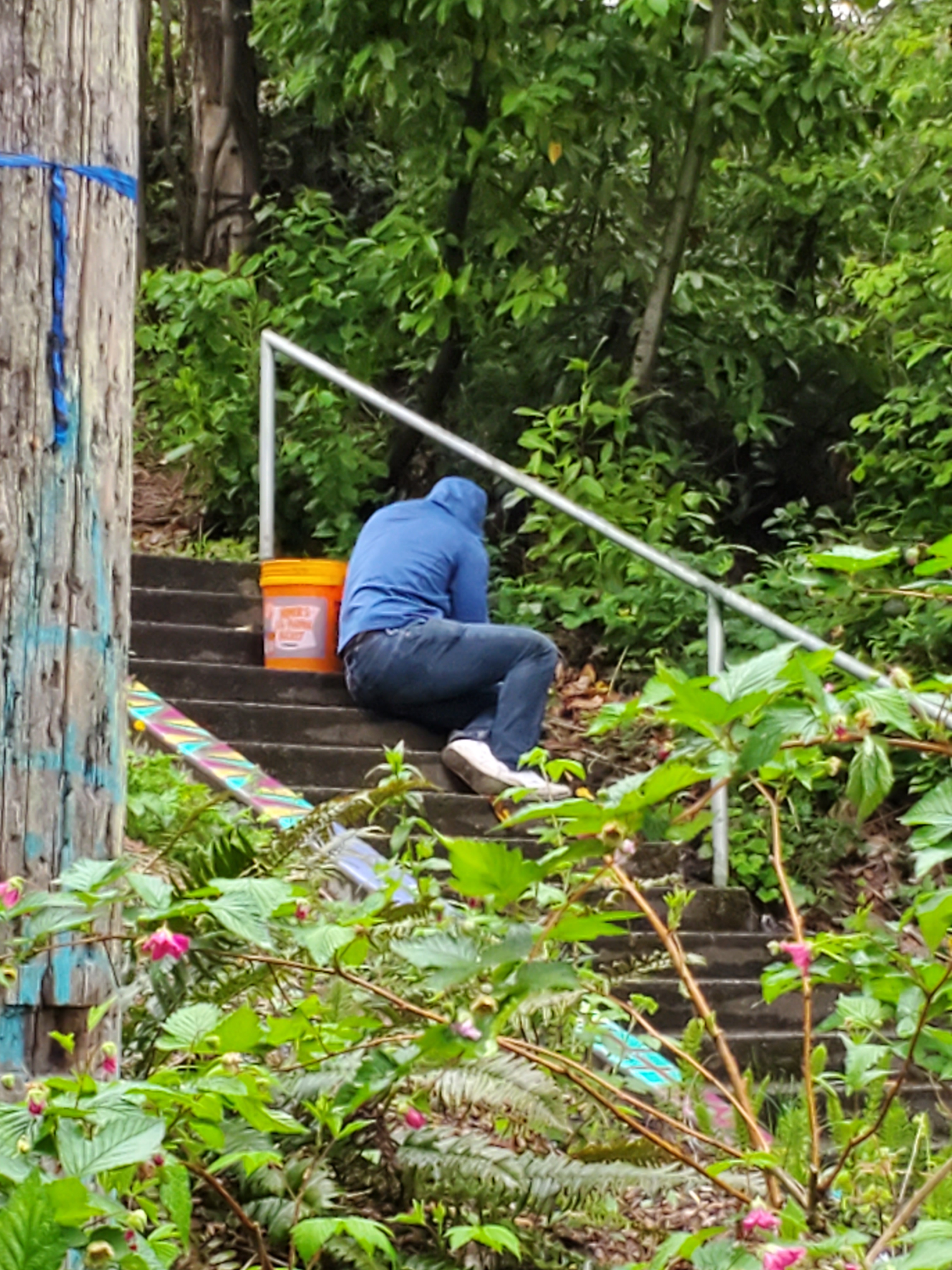
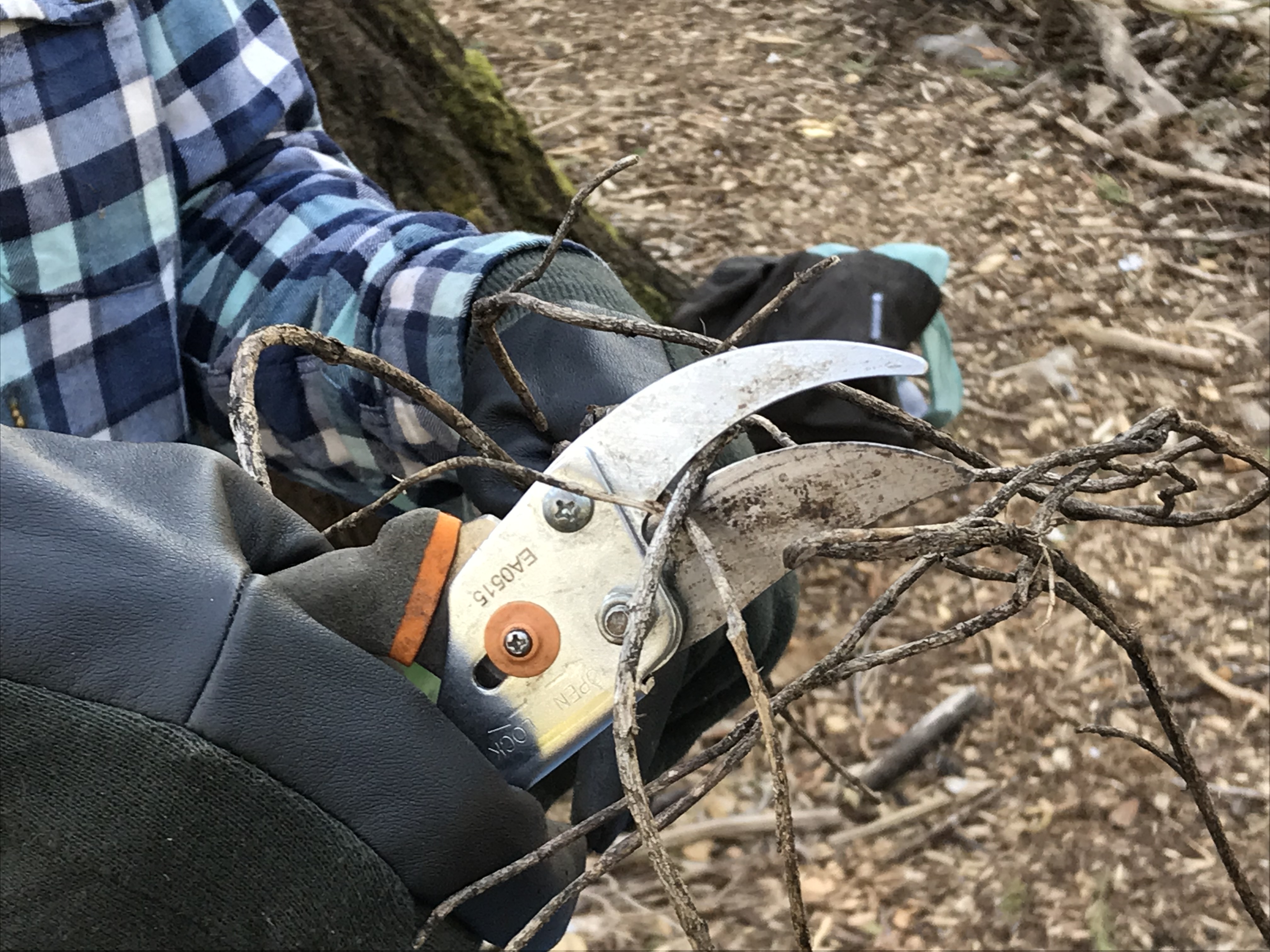
One day in mid-March, Lillie, a woman whom I had seen on the Hanford Stairs numerous times, stopped and talked with me. I invited her to help with the restoration work and she was interested. The first time she came, we cut up debris from the fallen pine tree branch and scattered it on an area where I had removed a drying rack.
The second time we worked together, we cut up debris on another drying rack and took it to The Rack Zone, a place we are beginning to prepare as a planting area.
Lillie cutting dried debris
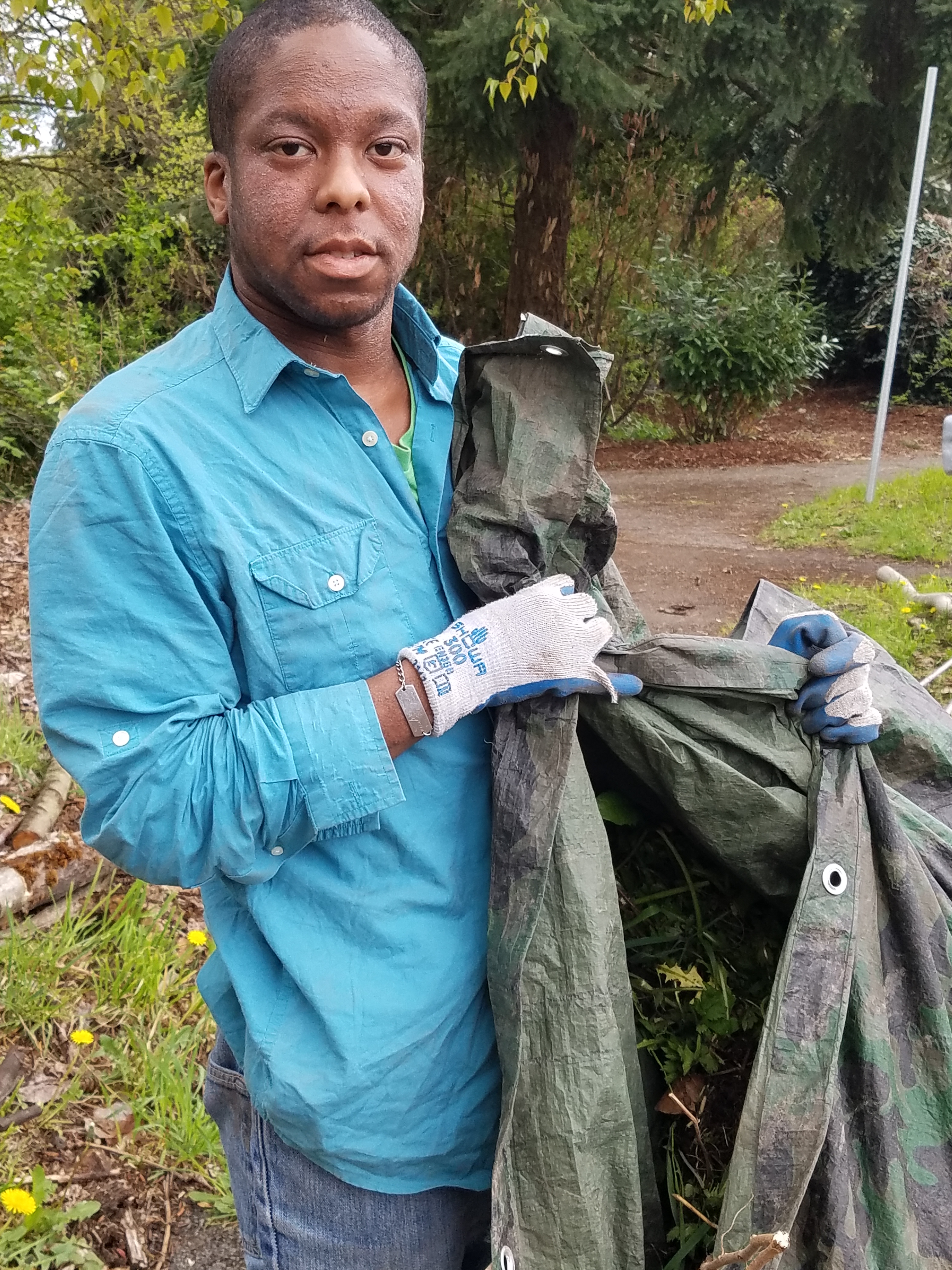
A week or so after Lillie started working with me, a young man walked up to me as I was working near the stairs. His name is Mycole and he wanted to work with me once or twice a week. The first time he came, we removed wood chips from around the plants in two planting areas. The next time, we started taking apart a large drying rack, cutting up the debris and taking it to the Rack Zone. The last time we finished clearing an area I will describe later in this post.
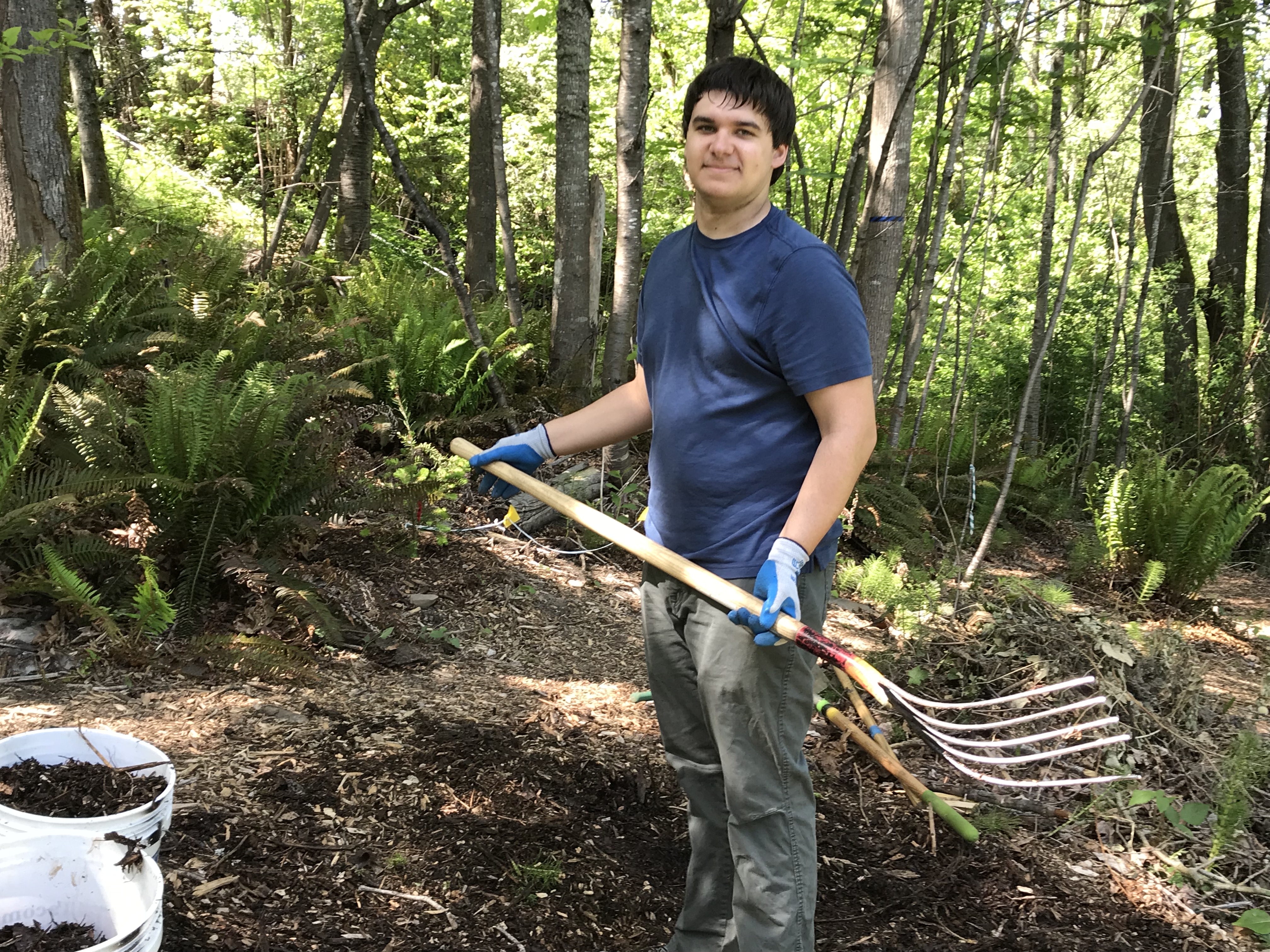
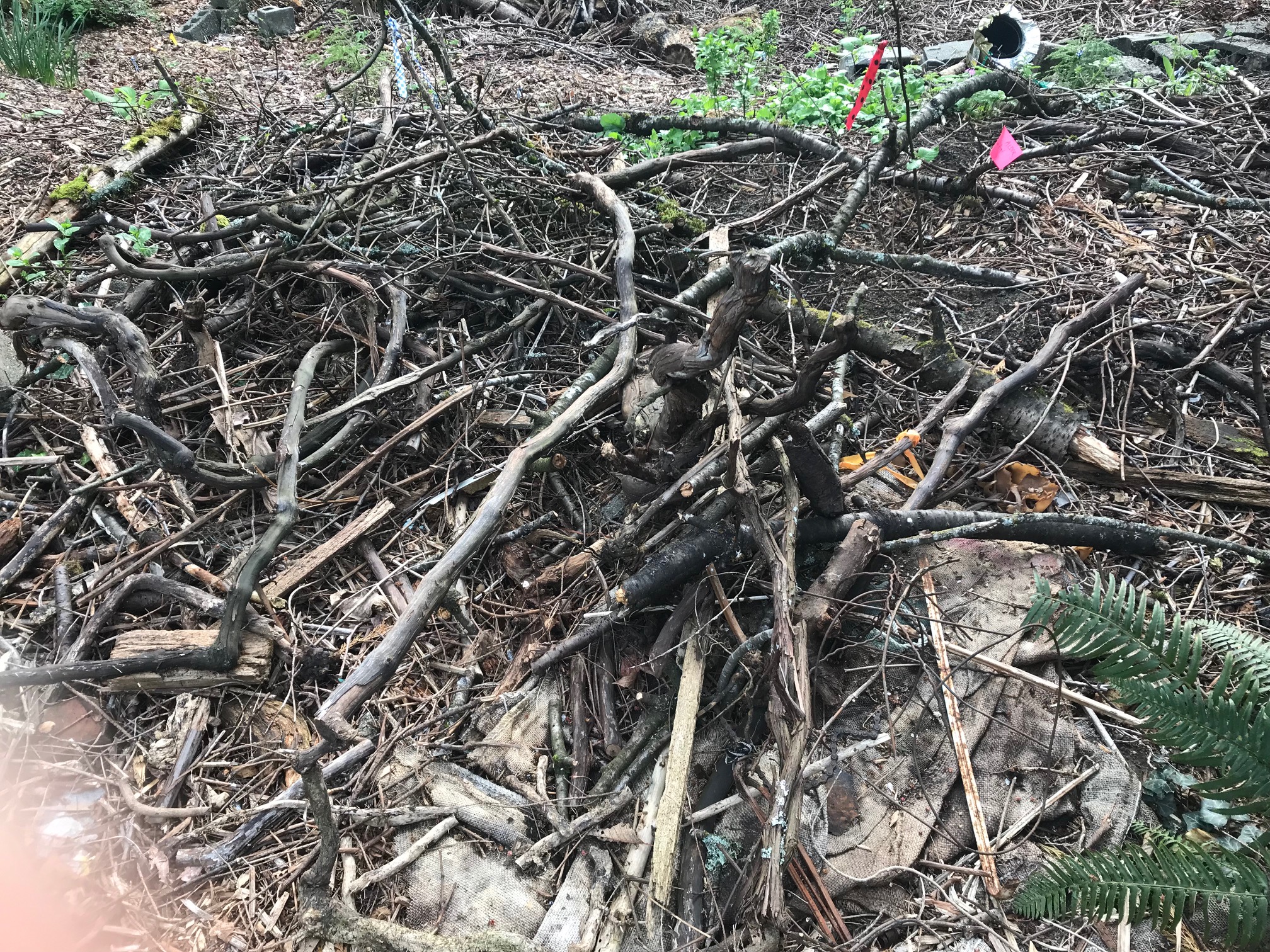
The debris pile in the photos below is the one that Mycole, Lillie and I worked to dismantle. I don’t have a photo of what it looked like when we started, but my guess is that it was about 14 ft (L) x 10 ft by 5 feet (H). The first photo shows what it looked like after Mycole and I worked on it. A that point it was around 8 x 8 x 2.5. The second photo shows what it looks like now. It is only 12-18 inches high. We will eliminate it fully in the near future.
I had also applied to be a community partner in the Carlson Center’s (University of Washington) service-learning. They help match students who need volunteer opportunities as part of their course work with community partners who need help. This program is very different than the Introduction to Environmental Science students we had worked with between Spring Quarter of 2017 and Autumn Quarter of 2018. As I mentioned earlier, those students had a three-hour volunteer requirement to meet. The service-learning students would work in our Greenbelt site for three-hours a week for seven weeks.
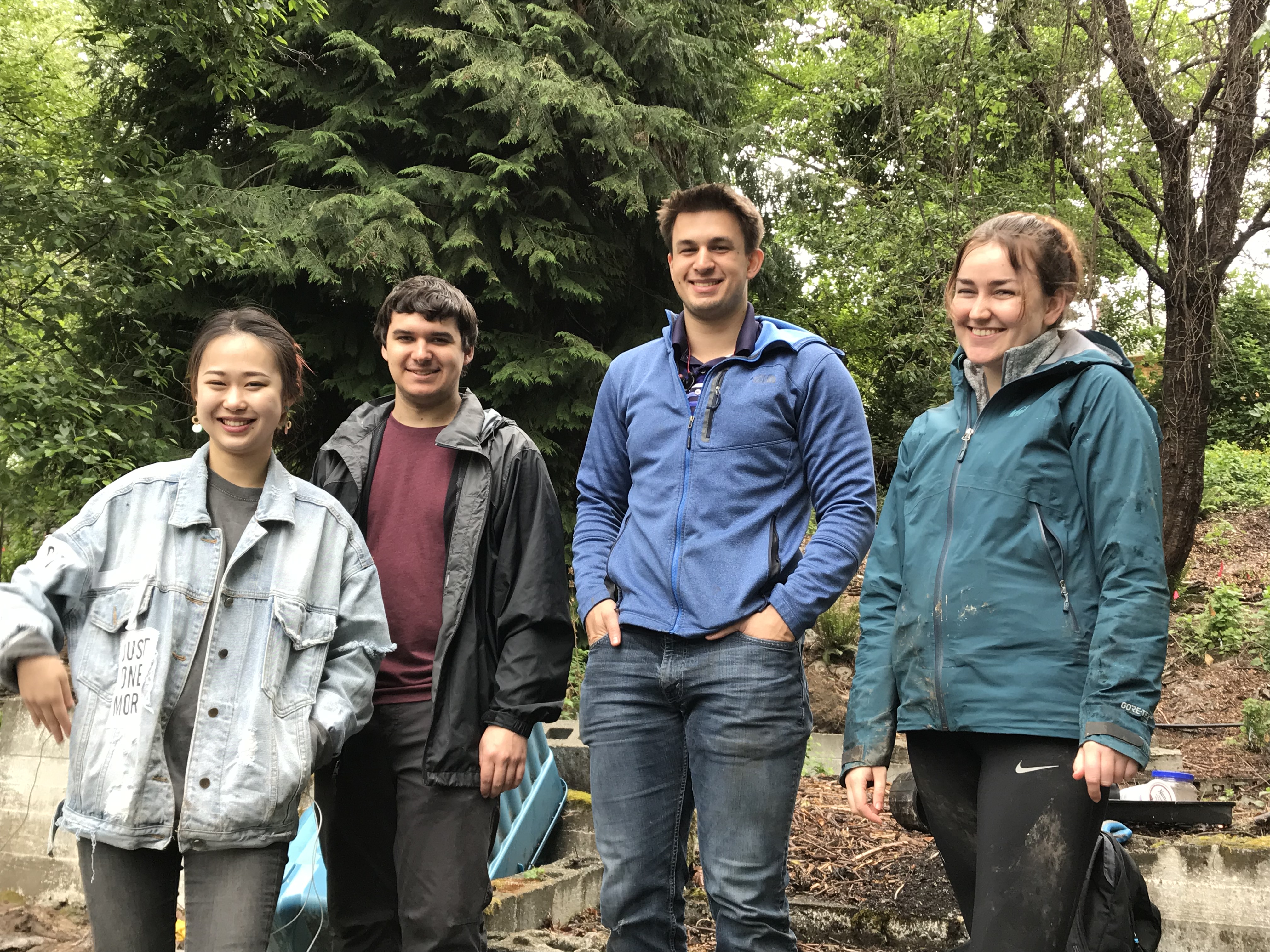
Our application was accepted. This quarter we have four service-learning students. They are part of an English Composition course that is focusing on the Environment. It is fun to work with them and nice to have the continuity from week to week. Shirley, one of our most active team leaders, and I lead their weekly work parties.
During their first two service-learning experiences, the students focused on clearing weeds and grass from an area that is near the entrance to the restoration site. They also moved a big pile of tree and ivy branches from that area to a different part of the site. As each patch of ground was cleared, it was covered with wood chips. The students also cut up a big branch that had fallen on top of a large shrub during a wind or snow storm.
Click on the gallery to enlarge the photos.
When we started the project, the area looked like this:
Before:
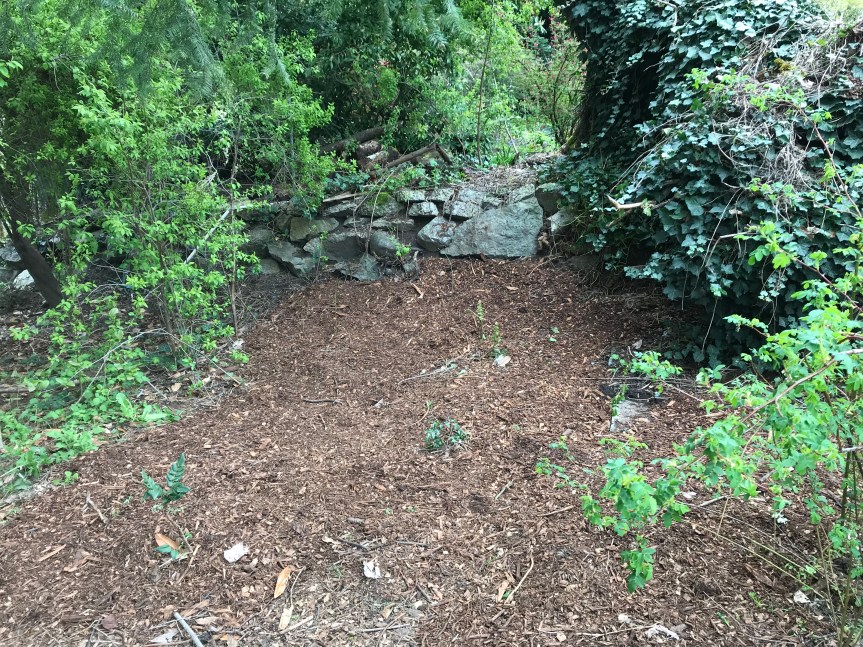
The transformation in the land after the students worked on it for the two sessions was remarkable. Mycole and I finished that section two days after the second service-learning work party.
What a difference it makes to be greeted by this sight when walking towards the entrance to our Greenbelt site:
‘After:
I’m thoroughly enjoying working with our new volunteers and with the volunteers who have been committed to this project for a long time. What we need is definitely being provided.
If you live in the Seattle area and are interested in attending one of our events, our next public work party is Saturday, May 4 from 10 a.m. to 1 p.m. You can get more information and/or sign up at https://seattle.greencitypartnerships.org/event/16055/ .
“The fool doth think he is wise, but the wise man knows himself to be a fool.” “Love all, trust a few, do wrong to none.” “Love looks not with the eyes, but with the mind, And therefore is winged Cupid painted blind.”-William Shakespeare

















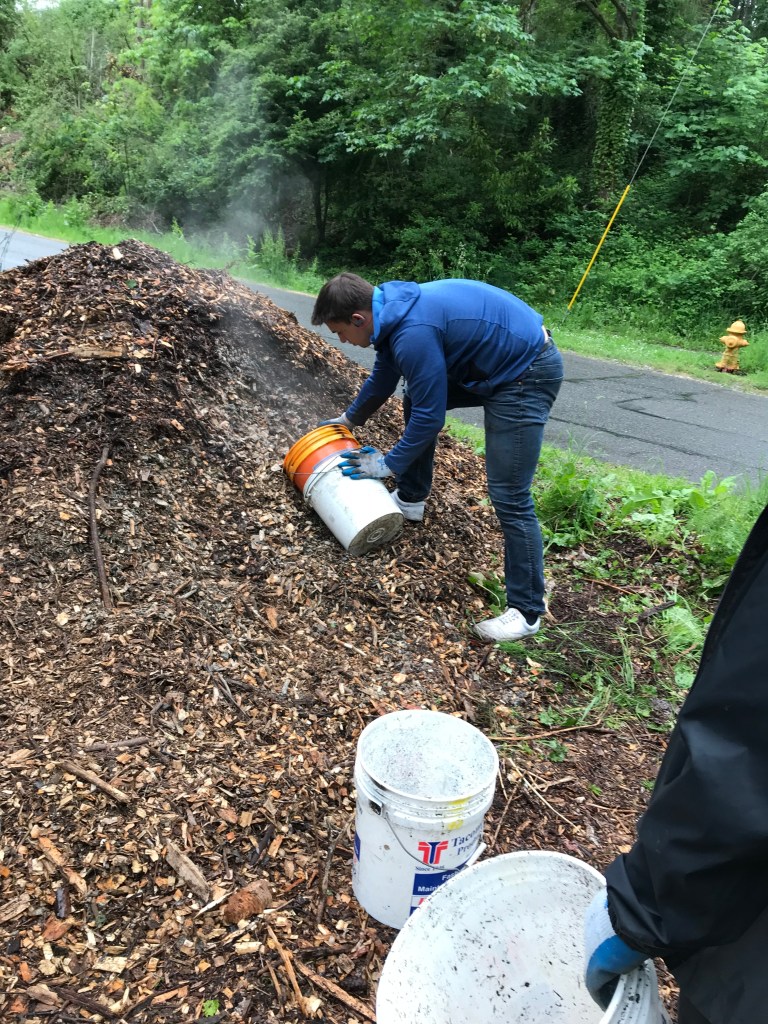
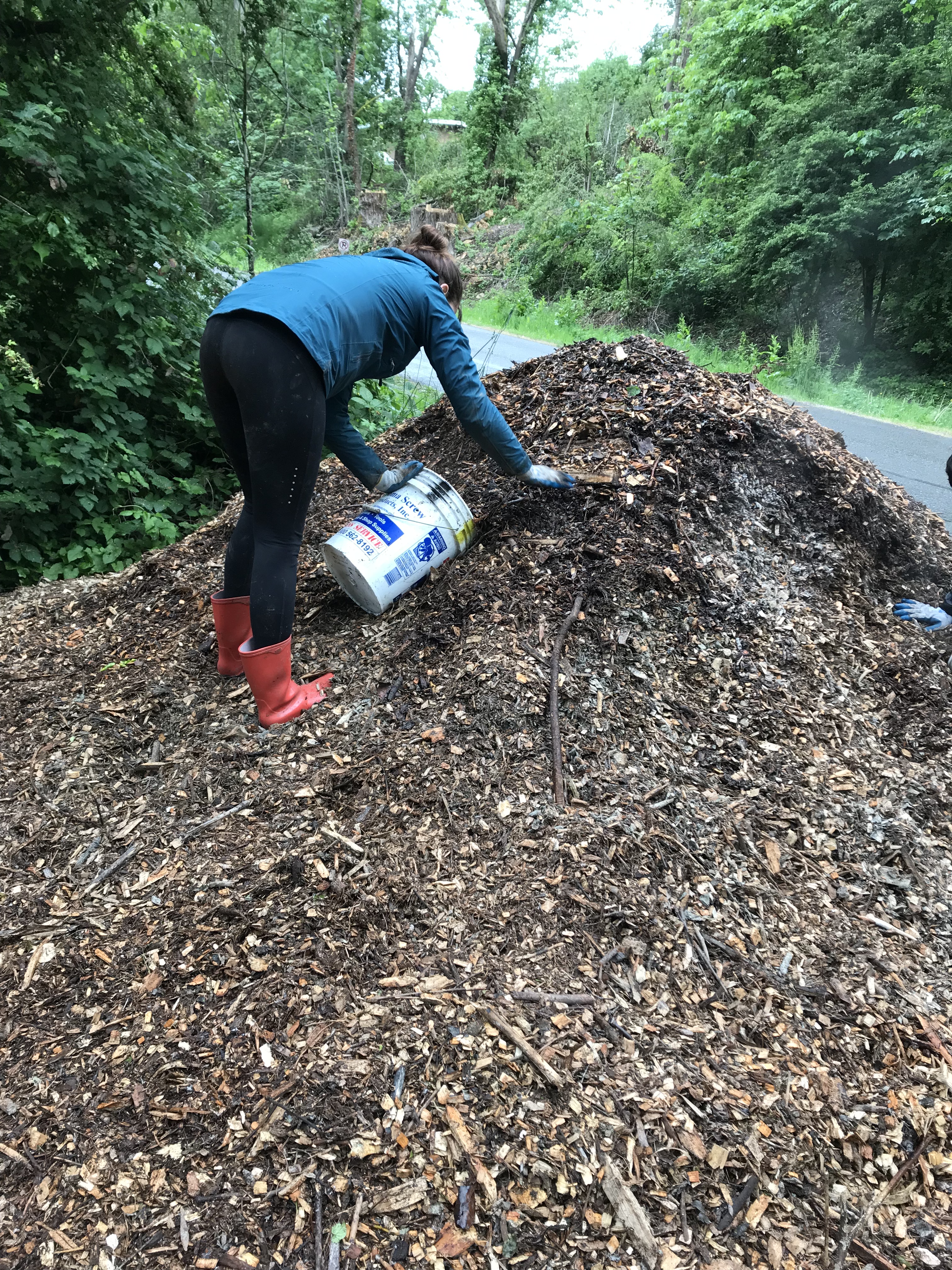
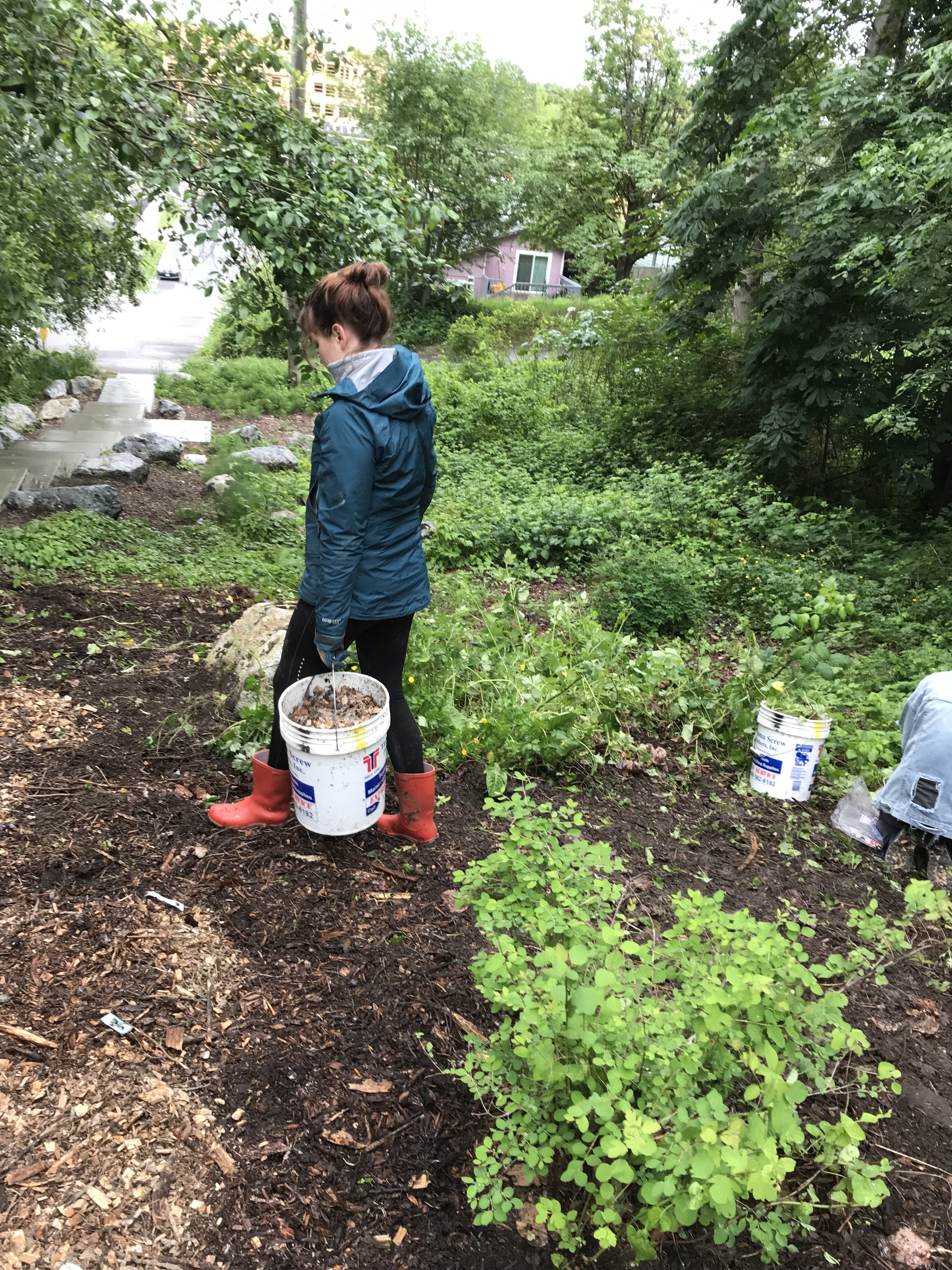

















 by 5 feet (H). The first photo shows what it looked like after Mycole and I worked on it. A that point it was around 8 x 8 x 2.5. The second photo shows what it looks like now. It is only 12-18 inches high. We will eliminate it fully in the near future.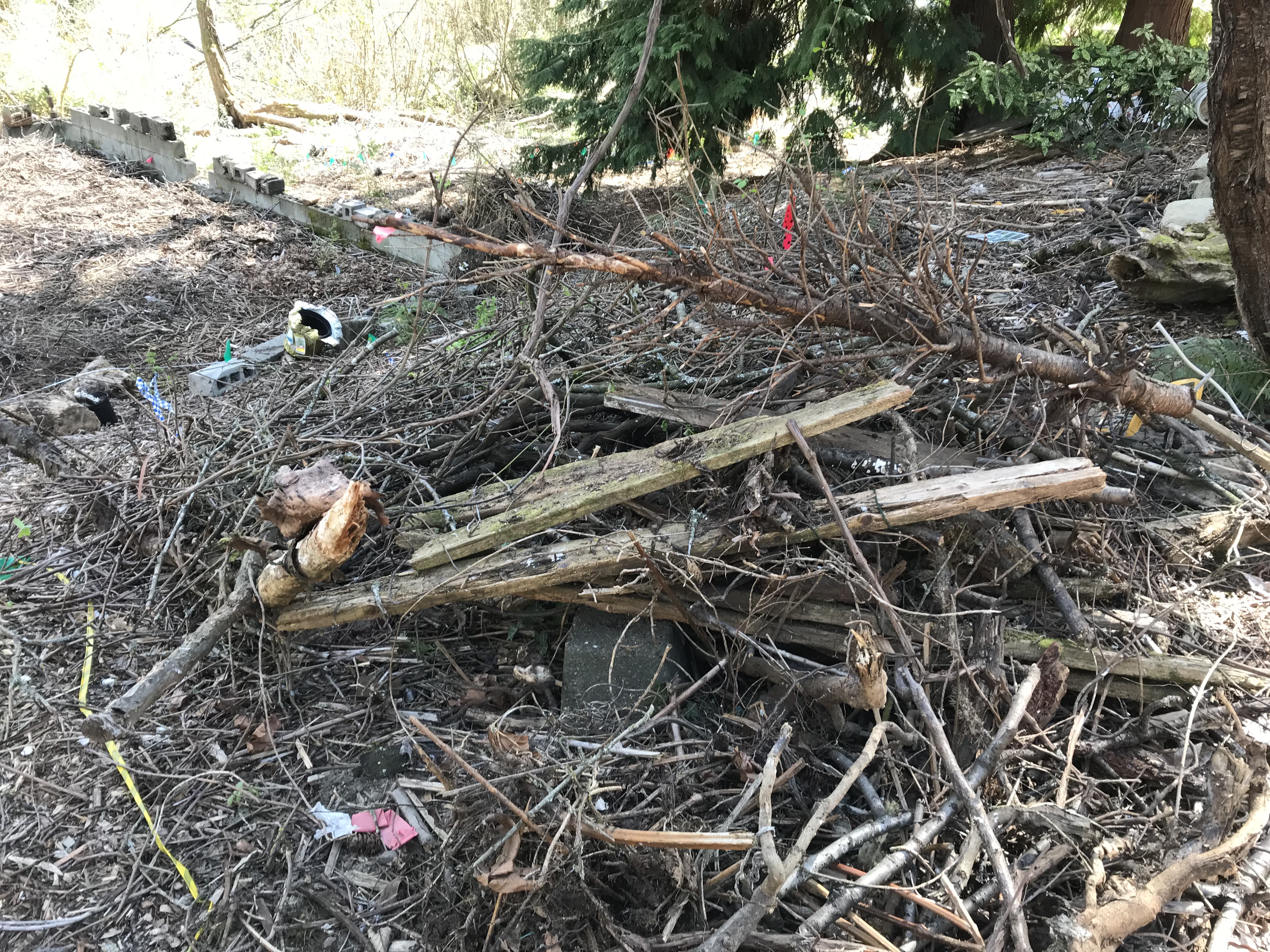








 Living, Learning and Letting Go