Why Do We Behave the Way We Do?

Puzzly_puzzled.svg

In the mid 80’s, I met Pam Levin, a therapist who was to become one of my mentors. One of the tools I learned from her is called the Think Structure. I have used it in my personal life and with the clients in my therapy practice.  I have found it to be a helpful way for myself and others to gain insight into why we behave the way we do. Continue reading “Why Do We Behave the Way We Do?”

Living with Purpose

20150330_091910


In the early to mid-90’s, I created a personal mission statement based on a process I learned in Stephen Covey’s book First Things First. When I finished the mission statement, I hung it on a wall in my house. I glance at it from time to time, and when I do I always feel amazed. That document is as true today as it was on the day I wrote it. There is no doubt in my mind that these have been the guiding principles of my life and are evidence that I have walked this life with intention. Continue reading “Living with Purpose”

What Does It Mean to Be?

800px-Hair_pulling_stress


Being

What does it even mean to BE,
free?
Doing, doing never done,
run.
That is all I’ve ever known,
moan.
Body, mind, and soul yearn to rest,
quest.
That new goal must be addressed,
professed.
Heart caught within the mind’s net,
reset.


Written for Challenges for Growth Prompt #3: Learning to Be
Photo Credit: Wikimedia

There Is No “Other”

IMG_0379

In the mid 90’s, I read a book that really spoke to me. It was called “The Balkan Express: Fragments from the Other Side of the War” by Slavenka Drakulic. She is a respected journalist and commentator from Croatia. The publication contained a series of essays about the effect the Serbo-Croatian war had on her colleagues and fellow countrymen.

The portion of the book that I remember to this day is her essay “High Heeled Shoes.” In it she described her growing awareness that she had turned citizens of her country, even close friends, into “others.”

First, she saw that instead of seeing refugees as people who had escaped slaughter by the Serbians, she had started stereotyping them. “They are just sitting smoking, doing nothing. Waiting. Waiting for what? For us to feed them. They could work, there are plenty of jobs around, houses to be repaired or working the land.” She heard a woman on a train say “This city stinks of refugees” at a time when there were refugees sitting beside her.

As she continued to examine her own attitudes, she saw that she had reduced individuals to the category of “they” and from there to “second-class citizen” or “non-citizen.” She realized when we do this, they soon become “not-me” or “not-us.” We may feel some sense of responsibility for them, but it is the type of responsibility that we feel towards beggars.  “The feeling of human solidarity turns into an issue of my personal ethics.” We help only if we want to.

As her reflection continued, she wondered :

Perhaps what I am also witnessing is a mechanism of self-defence as if there were a limit to how much brutality, pain or suffering one is able to take on board and feel responsible for. Over and above this, we are often confronted with more less abstract entities, numbers, groups, categories of people, facts– but not names, not faces. To deal with pain on such a scale is in a way much easier than to deal with individuals. With a person you know you have to do something, act, give food, shelter, money, take care. On the other hand, one person could certainly not be expected to take care of a whole mass of people. For them, there has to be someone else: the state, a church, the Red Cross, Caritas, an institution.

and

Out of opportunism and fear we are all becoming collaborators or accomplices in the perpetuation of war. For by closing our eyes, by continuing our shopping, by working our land, by pretending that nothing is happening, by thinking it is not our problem, we are betraying those “others” – and I don’t know if there is a way out of it. What we fail to realize is that by such divisions we deceive ourselves too, exposing ourselves to the same possibility of becoming the “others” in a different situation.

I still resonate with everything Slavenka Drakulic said in that essay. I know I put panhandlers in the “other” category. When I see someone whom I think might be about to ask me for money, a whole litany of judgments erupt within me. While I’ve worked on this issue, it is not gone. While I don’t believe I have the same negative judgments about the victims of war and the natural disasters that are occurring with increasing frequency in the world, I believe I am still seeing them as “others.”

I need to confront my judgments, help more, and remember to think of people as individuals who like me have needs and wants. I need to remind myself that we belong to the same human family. They are a part of me; we are one. No, I can’t fix all of the problems in the world, but I can do more than I am doing and it can be from a place of love, caring and inclusion rather than from some “better than thou” place within myself.

As I was completing this post, I remembered a part of a guided imagery meditation from “Legacy of the Heart: The Spiritual Advantages of a Painful Childhood.” by Wayne Muller. I will leave you with his words.

Observe how birth, suffering, illness and death touch each one of us who lives on the earth. This is the pain we all share, in which we all partake, the pain of being human that touches our common bodies, hearts and minds. You may say to yourself as each image arises. “I am your other self.”

Embrace each image with forgiveness, mercy and love, touching the pain your heart, touching all the beings who suffer with your heart. This is the inheritance of the family of creation. This is your family.

Feel the depth of connection to all beings as you allow the pain to be the doorway into community with your greater family. Feel the truth of that belonging. Gradually return to the awareness of your breath as it naturally flows in and out of your body; feel your body as a tiny cell in the larger body we all share.


Lokah Samastha Sukhino Bhavantu
May all beings in the world be happy.


Written for Challenge for Growth Prompts: Looking for the Good in Others.

Are My Trips to Amritapuri Fulfilling a Need or a Want?

Since I wrote the “Needs vs Wants” prompt, I have been reflecting on my own relationship to that subject.  Sitting here in my flat at Amma’s ashram in Amritapuri, India, it occurred to me that the reason I have been able to come here 26 times since January 1990 is because I have made that trip a major priority in my life. I value experience over material possessions so I have never been pulled into the world of consumerism and accumulation.  There have only been two years when I was not able to save enough money to allow me to make that sojourn.

Is going to India a need or a want? At first I thought it was a want, but then I remembered there were many years I went to India even though I felt a lot of resistance to going. Continue reading “Are My Trips to Amritapuri Fulfilling a Need or a Want?”

What a Difference Attitude Can Make!

IMG_0112

Soon after I arrived in Amritapuri, I had the foolish thought that this might be the year that I don’t have any experiences to share. I say foolish because I don’t believe there ever was any remote possibility that could happen.

My first week was full of challenges. In hindsight, I see that I was receiving endless opportunities to choose between two possible attitudes. For example:

  • I could lament that I left my good thongs in Seattle, or instead choose to be grateful that I had felt drawn to pick up and pack a cheap pair of thongs that, for the last two years, had been lying on the floor of an empty room where I work.
  • I could suffer about the fact that my internet stick was not where I believed I had left it last January or instead choose to do what it took to get another one.
  • I could berate myself for not remembering that I needed to bring a water filter or instead choose to look for creative ways to solve the problem.
  • I could bemoan that the seva (volunteer work) I look forward to most in Amritapuri (separating worms from the fertilizer they produce) was no longer an option or instead choose to appreciate that I would have more time to support the development of the Christmas play.
  • I could obsess about the seemingly endless internet and phone problems I was experiencing or instead choose to see those problems as opportunities to practice equanimity while doing what needed to be done to solve them, one step at a time.

I will describe three other examples in more detail:

1) The evening of December 2, I was about to go to my room when someone walked up to me and asked if I would be willing to hand Amma prasad (the candy she gives devotees after she hugs them). That is one of my favorite sevas so I eagerly accepted the invitation and joined the prasad line. As I reached the front of the line and took the position next to Amma, a western man came for his hug. He started speaking to her in beginner’s level Malayalam. Amma and he were having a great time laughing about his speaking attempt.  Afterwards, he handed Amma three malas (prayer bead necklaces). He wanted Amma to put them on him. Once she did that, he pulled out another handful of malas made from a different substance and asked her to put those on him too. He went through that sequence two more times. The last set was a handful of about 15 rosewood malas. It was a rather bizarre scene, especially since he was now wearing around 30 malas. I imagined he had plans to give them away to friends at home but having her put them on him was a rather bizarre change from normal practice of simply asking Amma to bless the malas he would be giving as gifts. Amma and he were laughing and so was everyone who was witnessing the incident. To me it seemed like “no accident” that I was present for that entire encounter.

I had not been able to sleep for more than two or three hours at a time since I arrived in India on November 28, so was hopeful that night would be different. You can imagine how upset I was when, after 2 ½ hours of sleep, there was a huge ruckus between nearby dogs. Once I wake up, sleep is over for the night. How long could I live like this? I had to get some sleep! Would the dogs start barking again? Would they continue to be a problem throughout my stay? It didn’t even occur to me that they hadn’t barked during the previous nights and dogs had never been a problem in the past. I was too sleepy and too lost in fear of the future to think clearly.

It did occur to me that I had been in bliss when I went to bed and now felt like I was in hell. I realized it was a good example of how quickly our minds can change our reality. While I struggled with the fear for the rest of the night, I found it immensely helpful to recall my experience of witnessing the interaction between Amma and the man with the malas. As I smiled with the memory, I let go of some of my tension. What a gift that prasad experience had been for me.  So in a situation like this, I could choose to stay in the fear, or consciously focus on a time when I was happy, reminding myself that this current challenge will pass.

2) With the ongoing lack of sleep, it soon became obvious I was developing a cold. On the afternoon of December 4, I felt strongly pulled into sleep and I slept almost continually for the next 36 hours, getting up only for meals and for meeting bathroom needs. I realized I could focus on how many things I was missing out on while I was sleeping or could instead choose to be grateful that:

  • as I moved in and out of sleep when Amma was leading bhajans (devotional songs) that night, I heard small portions of them from my room.  Each bhajan segment I became aware of was a favorite of mine.  I wasn’t sure whether I was really hearing the songs or if I was dreaming I was hearing them. Regardless of whether it was a dream or reality, I could choose to believe that experience was a gift from Amma to me.
  • during the short time I went downstairs for dinner on Dec. 5, Swami Pranavamrita sang Kalam Kanalu and a Swami Ayyappa song. I have a special history with both of those songs so I could choose to take them as yet another gift to me.
  • since I have been sleeping around the clock the swelling in my feet has gone away.  Perhaps the jet lag will also be gone when this illness has run its course!  I can choose to believe that my sickness has multiple purposes and they are all good ones.

3) I have felt pulled to learn Tai Chi for several years but the pull was not strong enough for me to take action. Before I left Seattle, I knew that this was the year for me to start, so I enrolled in the classes as soon as I arrived in Amritapuri. One lesson was all I needed to take to know that it was so right for me. The process quickly brought my mind and body into a meditative stillness. I could tell some part of me recognized the moves and knew what to do. I could berate myself for taking this long to begin, or I could choose to remember that my life will unfold in its own time and acknowledge that now must be the perfect time for me to start Tai Chi.


All in all, during the eight days I have been at the ashram, I think I have done a pretty good job of choosing to not make myself miserable by taking on negative attitudes and instead consciously choosing positive ones.  The time I was least successful in that endeavor was the night the dogs woke me up.  All of these events have reminded me that I can choose my attitude towards the lessons, challenges, and tests that come my way, and that my attitude will make a  significant difference in my experience.

Live to Work or Work to Live?

Chai as Baby
“If you do what you love, you’ll never work a day in your life.”

While there are days when I am tired or discouraged that I may think that I work in order to be able to buy the things I need to live, I know that isn’t really true.  I have no doubt that I live to work.  I  have been a psychotherapist since 1987.  My primary modality is group therapy based on a developmental model that includes the concept of “inner children.”  I believe that one of the most important elements in healing is for clients to learn how to parent those vulnerable “children” inside of themselves.

Most people start therapy because they are depressed and/or anxious.  They may have learned to cover their pain with addictive behaviors such over-working, over-thinking, eating disorders or substance abuse.  They frequently have trouble in relationships and often feel alone and lonely.  Past traumas may cause them to experience flashbacks.  They often have poor self esteem and think they are unworthy and will never be good enough.  They may be very critical of themselves and others.

Continue reading “Live to Work or Work to Live?”

“I will be responsible and accountable for my feelings, thoughts, actions and attitudes.”

Accountability
Photo Credit: Fritz Reitz

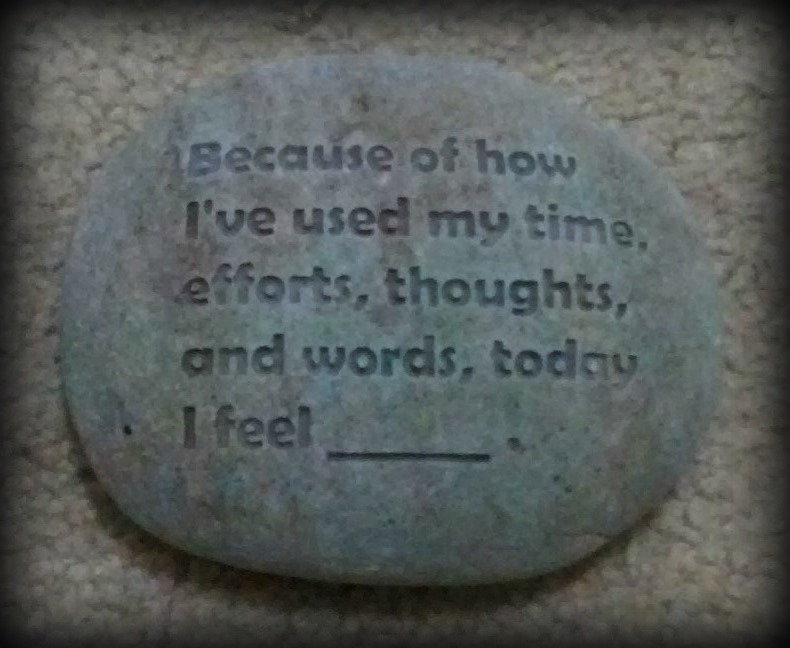
When a friend showed me a picture of this rock, I thought of a one of the self care contracts* that I use in my personal life and with my psychotherapy clients.  That contract is “I am responsible and accountable for my thoughts, feelings, actions and attitudes.”

It is not uncommon to hear people in our society make comments such as, “You hurt my feelings.” and “You made me do that.”  You…..you….you….you.  When we get into the “you’s” we are more than likely not being responsible and accountable for our own feelings, thoughts, actions and attitudes.  Using that way of speaking increases the chances we will immerse ourselves in victim thinking and as a result experience a sense of powerlessness.

I’m not saying that people who are nasty and viscous in their words and actions should not be responsible for what they say and do.  Continue reading ““I will be responsible and accountable for my feelings, thoughts, actions and attitudes.””

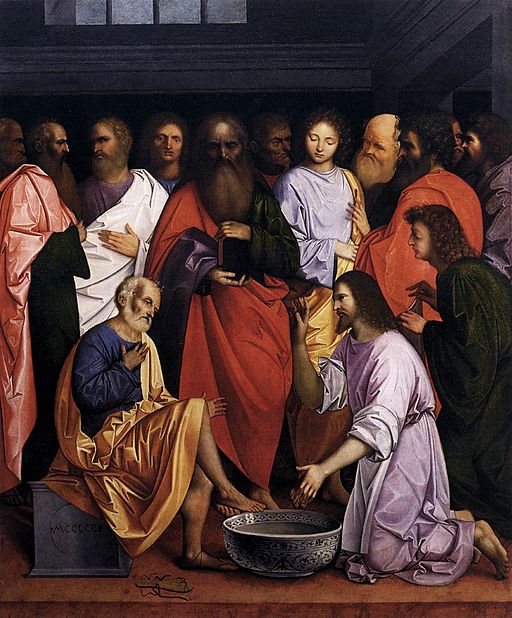
My Journey Towards Humility

GA_da_Lodi_Lavatorio_1500_Gallerie_dell'Accademia_Venecia

“A true genius admits that he/she knows nothing.” Albert Einstein

“It is unwise to be too sure of one’s own wisdom. It is healthy to be reminded that the strongest might weaken and the wisest might err.” Mahatma Gandhi

“I will not ask thee for improved memory, only for a little more humility and less self-assurance when my own memory doesn’t agree with that of others. Teach me the glorious lesson that occasionally I may be wrong.”  An Anonymous Abbess 

“Acting with humility does not in any way deny our own self-worth. Rather it affirms the inherent worth of all persons. Some would consider humility to be a psychological malady that interferes with “success.” However, wealth, power or status gained at the expense of others brings only anxiety- never peace and love.” Commentary on Christian Bible Reference Site

Humility, among other things, is the absence of arrogance. One of the ways I am most likely to be arrogant is to hold on to a belief that I am right and others are wrong. I may verbalize my opinion and then stay silent, but internally I am very likely to be holding on to my rightness.

Two situations from the past come to mind when I think of ways I’ve worked on this issue: Continue reading “My Journey Towards Humility”

Finding Happiness

Photo Credit: Wikimedia

Yesterday, I discovered a blog created by a fifteen-year-old Finnish girl (This Girl’s Bucket List).) She is signing her posts as “ThisGirl” so that is how I will refer to her.

I thoroughly enjoyed reading the pieces ThisGirl had written. When I woke up this morning I noticed she had published a new post, so headed to her blog to see what she had to say.

In the new post, ThisGirl described the guest speaker who talked to students at her school yesterday. The speaker’s name was Marja Korhonen and she “talked” by looking at a board with letters.  A helper then voiced Marja’s message. ThisGirl ended her post with the trailer for Marja’s book.

As I watched the short video, tears started running down my face. Nine hours later, I re-watched it and had the same reaction. Once again, I have been presented with a person whose willingness to live life fully inspires me, profoundly inspires me. A person who teaches me that my life will be of value regardless of the circumstances. One who by example lets me know that it is possible for me to be happy no matter what challenges come my way.  As I age, I find I need that reminder more often than ever.

I will leave you with the same video. Be sure to turn on the subtitles by clicking on the CC at the bottom, unless you speak Finnish that is!

Written for Dungeon Prompts: Getting to Our Happy Place