The Wonder of Nature

After making my way to the rhododendron flower last week (Keeping My Eye on the Goal), I turned around and came face to face with what became my next Greenbelt restoration task.

So many trees this Greenbelt site have been killed by ivy. One of the first trees I focused on freeing from blackberries and ivy last September was the one in the photo to the left. It had a split trunk at the bottom and both trunks split again further up. The trunks/branches on the west side were dead; the east side of the tree had leaves.
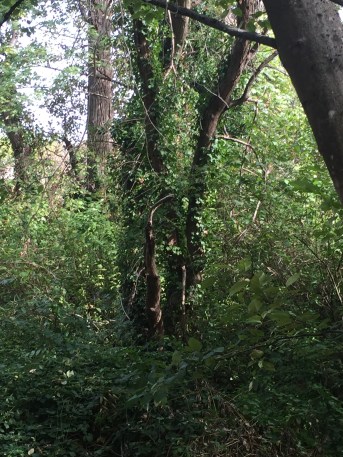
It was this tree that I saw when I turned away from the rhododendron bush. I noticed ivy was growing on it again so I started cutting. Since the time I originally worked on the tree, I have learned that our job is to cut the ivy at the bottom and at shoulder height. That is called a “survival ring.” We don’t pull down the ivy above the survival ring because dead tree limbs could fall on us. The City Parks Department usually leaves dead trees standing because they are a habitat for many bugs and other insects, as well as smaller organisms.

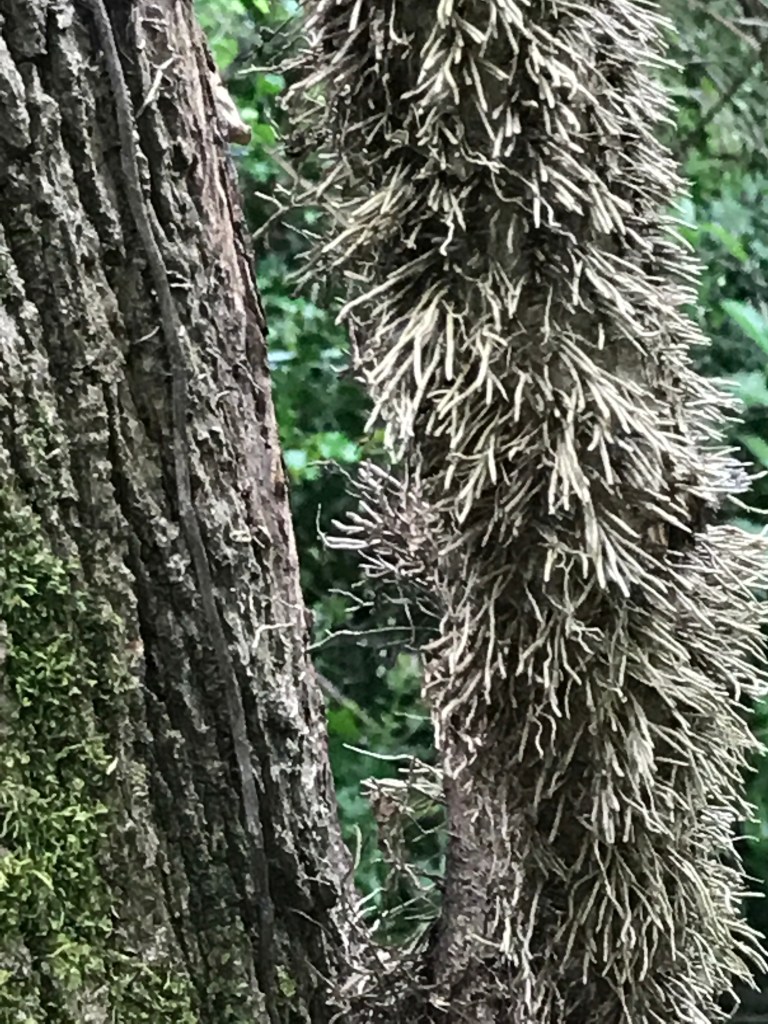
Some of the ivy vine roots are thin and others are thick. It usually takes a saw to cut through the larger ones. The second two photos below show a root that I’ve already cut at the bottom and pulled it away from the tree. Sometimes we have to use a crow bar to separate the root from the tree.

[Aside: Here are photos of an ivy ring that was pulled off of another tree in March. It is so dense… and hard. Looking at it helps me understand how it can kill a tree.]

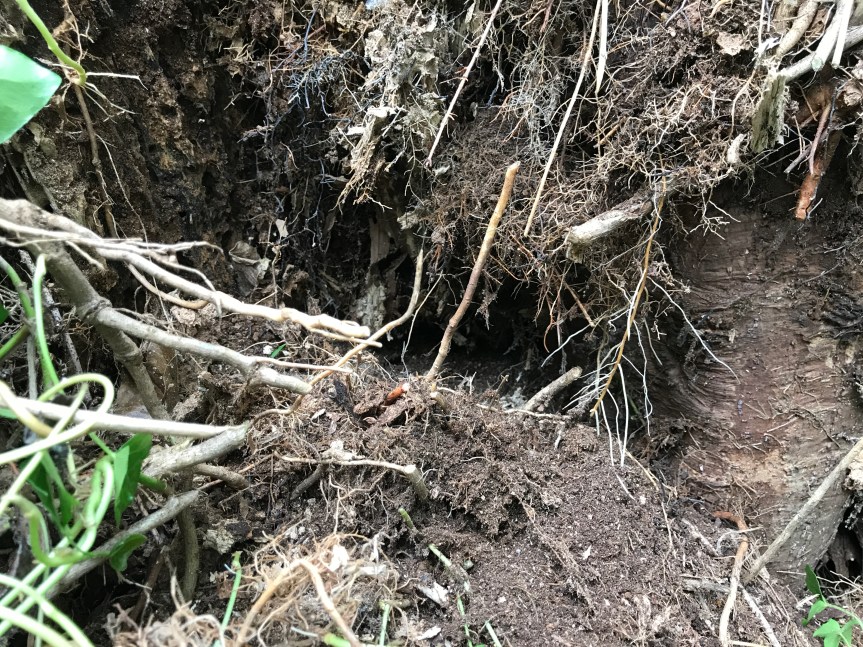
Back to the story at hand: When I removed the ivy from around the bottom of the tree, I noticed that it looked as if the ivy had separated the bark from what seemed like the core of the tree.

It amazed me that the tree was still standing with a core this small. The separation of bark from core gave me the impression that there was a deep hole under the tree, but I don’t think that was the case.

I enjoyed looking at the inside portion of the bark.

As I was finishing the work, I noticed that fungi is growing on the portions of the tree that are dead or dying.

In closing, I will share words that my brother Bill wrote shortly before he died in 1992 at 39 years-of-age.

I can’t walk outside without seeing the beauty of our created world, from the rainbow in a line of earthworm slime, to another visible ring on Jupiter. We have been given this magnificent world to study and enjoy in limitless detail at any level, microscopic to cosmic. (The Truth I Live By)

I’m becoming more like my brother. I can now see that there is so much wonder even in this one tree.

[Note: It just occurred to me that what I call the core is under the dead part of this tree. Now I am really confused, especially since I didn’t see anything similar under the other side of the tree. I do see wood shavings, but I would have expected the empty space to be under the east side of the tree and the rotten wood to be on the west. I will have to investigate this more and will add an addendum to the post … or write a new one… if I get answers! If anyone who reads this post notices mistakes in my interpretations, please let me know. I’m a novice.]

Seattle Chinese Garden

Yesterday, I attended a Tai Chi class that was held at South Seattle Community College, near the Seattle Chinese Garden. I saw some beautiful peonies while I was there.

Found in the Greenbelt

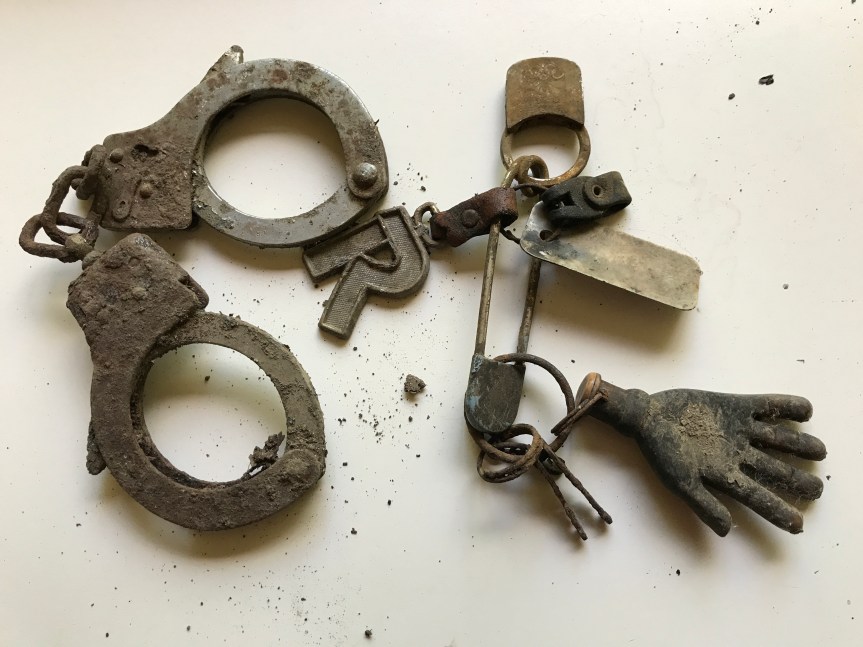
We have found so many interesting items buried in the dirt of the Greenbelt site we are restoring. One of these items I found today and one was found by University of Washington students on May 13.


100 Word Stories

s

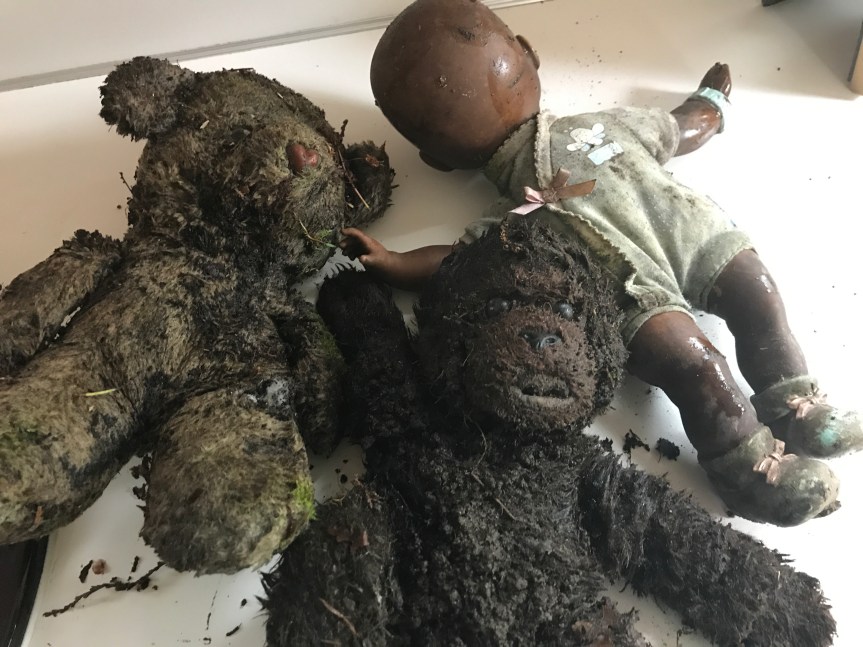
Rochelle Wiseoff hosts a regular event called Friday Fictioneers. She posts a weekly photo and participants are asked to write a complete story in 100 words or less; a story that is inspired by viewing the photo. With my permission, my blogging friend Cheryl from Traces of the Soul sent Rochelle a photo of some toys I found buried in our Greenbelt restoration site. Rochelle used the photo for her June 2 prompt.
It has been fun and interesting to read the stories that emerged. At this point 70 people have participated. If you are interested in reading some of them go to http://www.inlinkz.com/new/view.php?id=716926.

Thank you Rochelle and Cheryl for giving me the opportunity to have this experience.

Keeping My Eye on the Goal

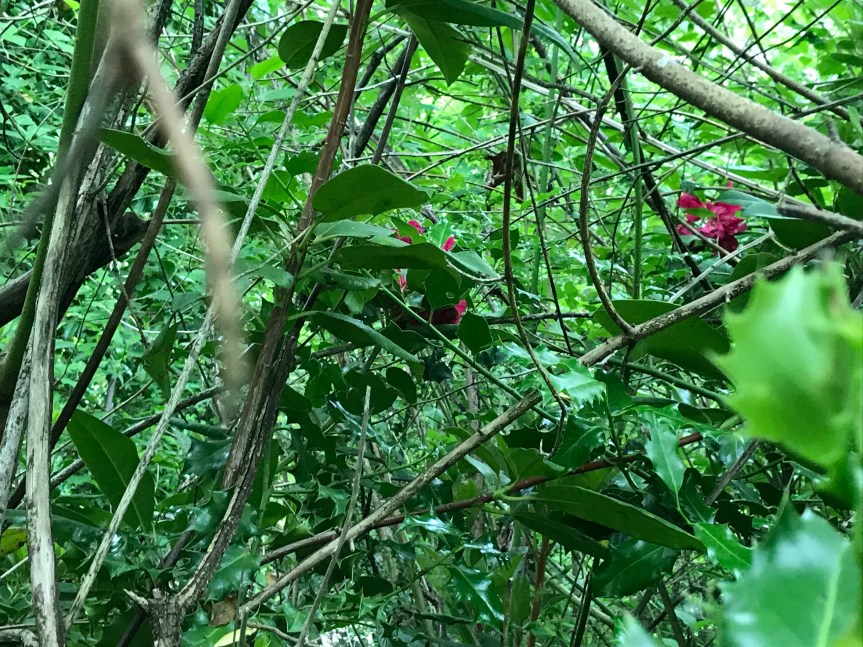
When I was showing a friend around our Greenbelt restoration project on May 25, she saw a red flower in the distance. It was too far away, and too covered by invasive plants, to know what it was. We guessed it was a rhododendron flower. (Mystery in the Making).

At the time, I was in the midst of preparing for Amma’s programs so wasn’t able to make my way to the flower. Last Saturday, I decided to do whatever it took to get close. I gathered my tools and headed for the thicket. I took the photo above just before I began to cut my way through the dead branches, blackberry vines, laurel, ivy, and downed trees.

As I worked, I realized how much I missed the excitement of freeing the trees in the Greenbelt and discovering what was under the mass of invasive plants. Most of our recent work has been to dig out blackberry root balls from areas where blackberry vines have been cut down.

Every so often I looked up to see how close I was to the red flowers.

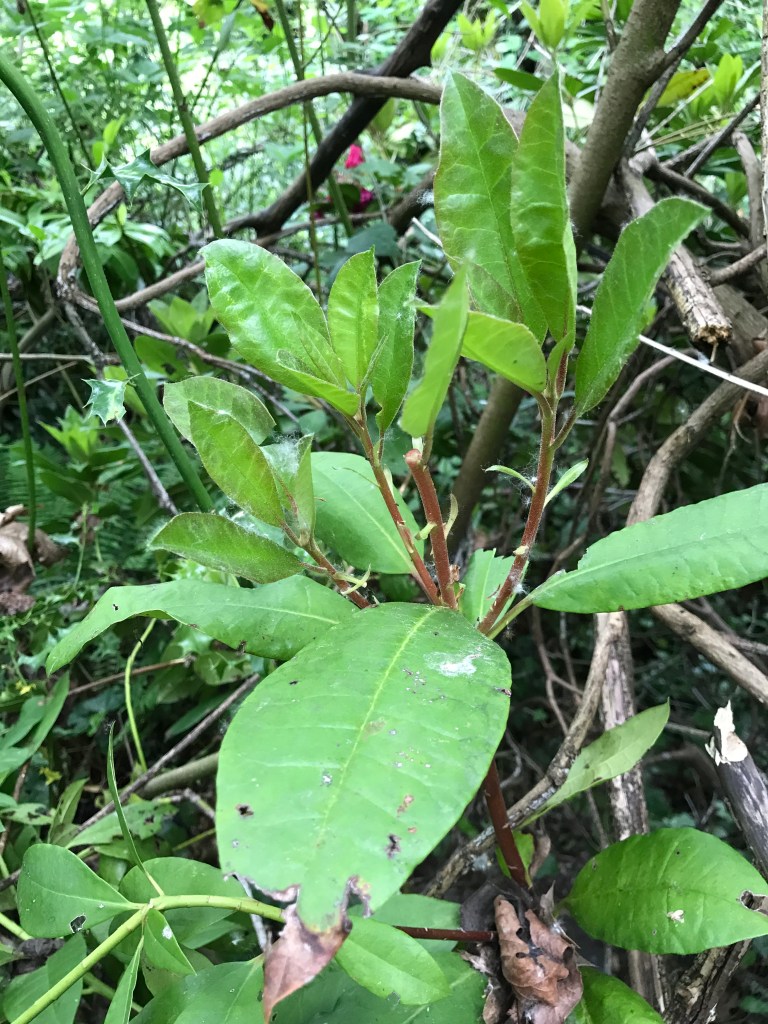
I progressed much faster than I expected. At one point, I realized that a branch I cut was not laurel, it was a rhododendron branch. Soon I saw more rhododendron branches.

There is a steep slope along the eastern border of the property. For liability reasons, the City of Seattle does not allow us to work on slopes that steep. I noticed that the rhododendron was on the last piece of flat land before the slope began. I continued on my way, getting ever closer to my goal.

Closer and closer.

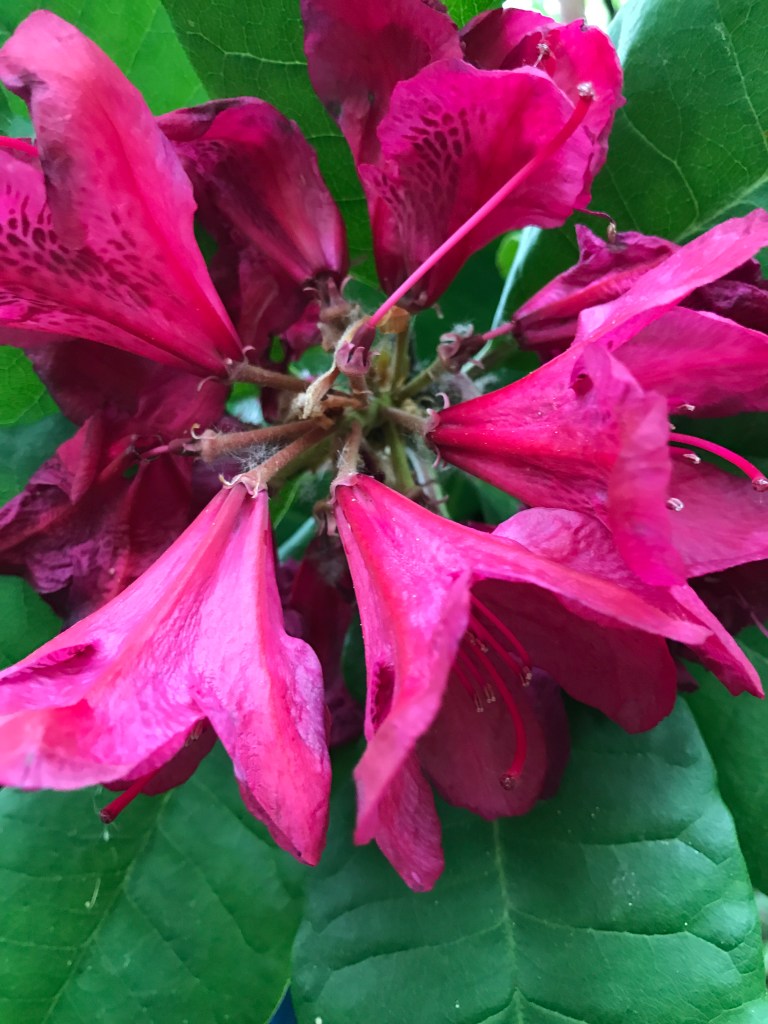
And then I was there. I knew there was no way I was going to free the whole bush, at least not on that day, but I was able to touch one of the flowers. I wish the photo was clearer but I’m glad that I have it. I realized if I had waited much longer to solve this mystery, all of the petals would have fallen off.

I looked up and saw this sight.

I also enjoyed seeing the rest of the bush.

There were so many branches, going every direction. They reminded me of a pretzel.

When I looked through the thicket, I thought I saw more rhododendron bushes. I wonder what other discoveries await me. I look forward to the time when we focus on clearing that part of the Greenbelt. For now, though, I will go back to digging out blackberry root balls!

Red Clover: Under the Microscope

At this point, most of the red clover blossoms are withering. I looked at three of the “flowers” under the microscope.

#1

#2

#3

These photos were taken with an iPhone 7 connected to a microscope with an adapter. You can click on any of the galleries to see a closer view.

A Glorious Week

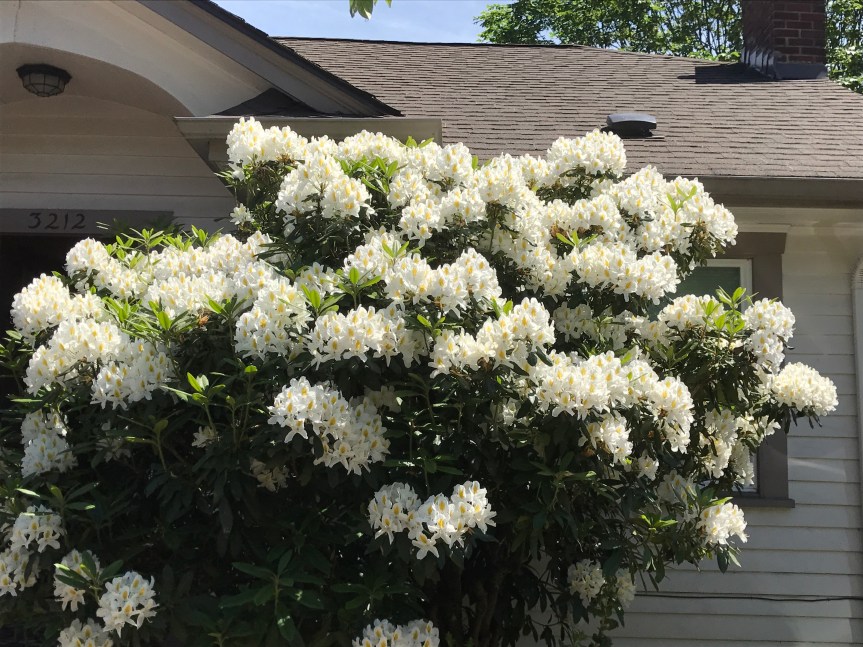
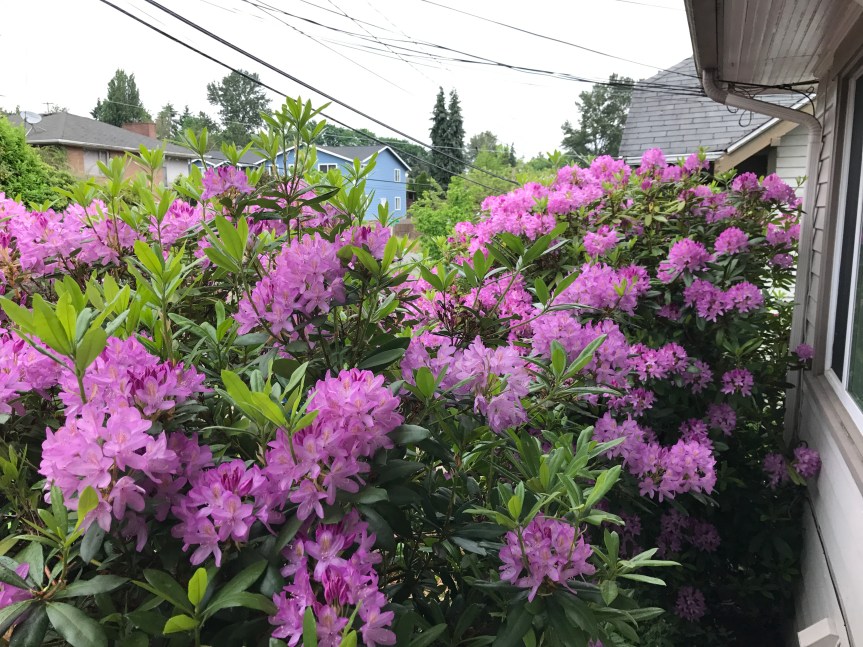
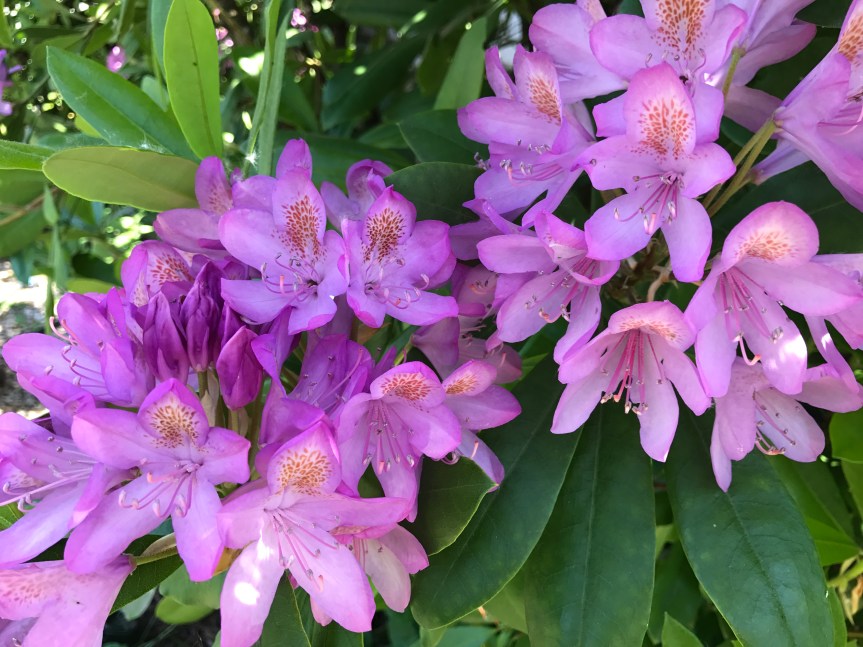
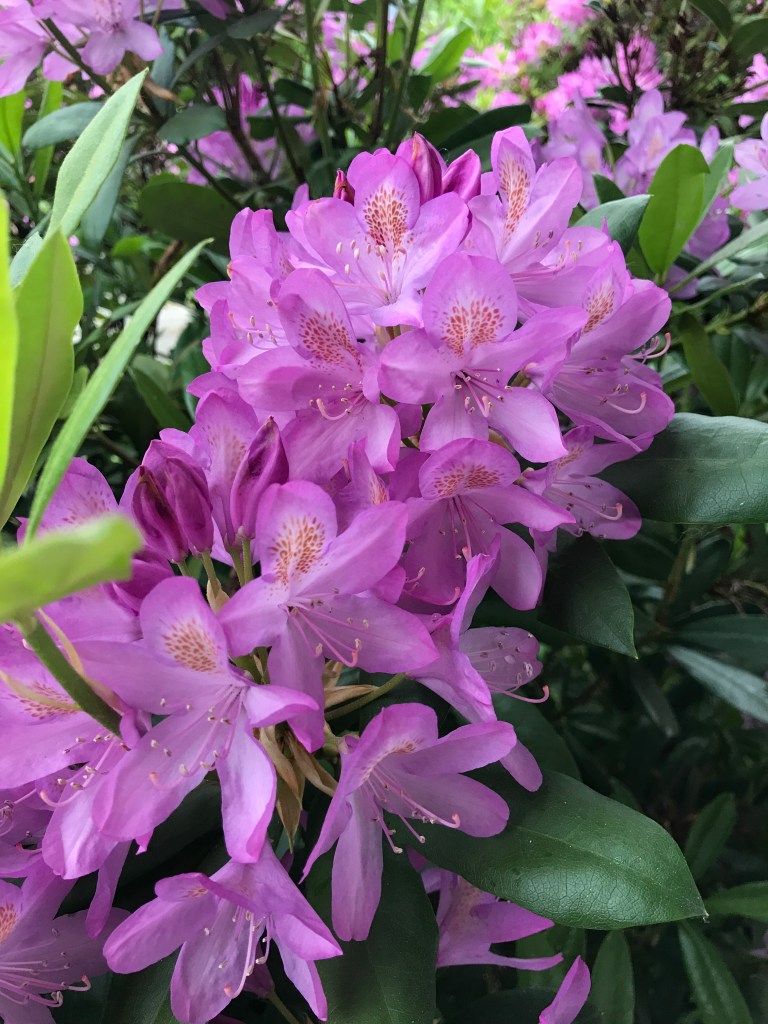
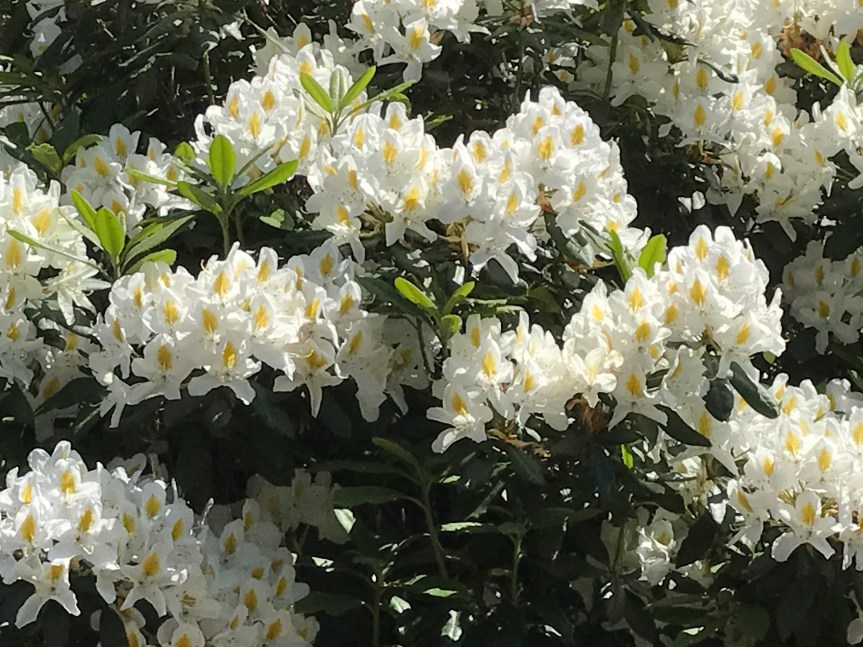
This is the week when the rhododendrons in my front yard are in full bloom.


Mystery in the Making

On Thursday, when I was showing a friend the restoration work we are doing in the Greenbelt, she asked me about the red she was seeing through the trees. It was deep into an uncleared and presently unreachable part of the project and I had never seen it before. We walked as close to it as we could get, but still couldn’t identify it. Our guess was that it is a rhododendron bush. If so, it is a first on that property.

The next day, I walked back to that area to see if I could get closer. I could still barely see the blossoms. In taking an enlarged view, this is what I saw.

I walked a different direction to see if I could get a better view. From that vantage point, I could spot a bit of red, but it was very tiny. See if you can see it.

So much of the property has already been cleared of blackberry and ivy vines and other invasive plants. I am enjoying the thought of making new discoveries when we begin working on the remaining areas of “uncharted territory”!

Red Clover

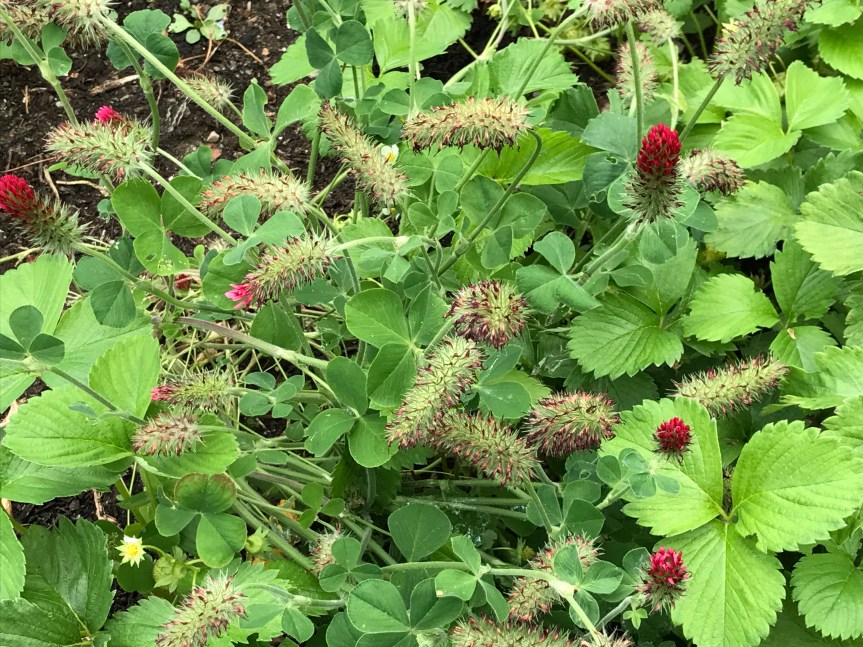
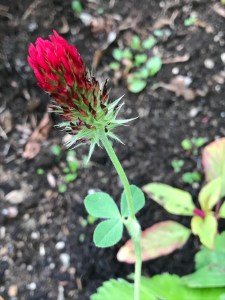
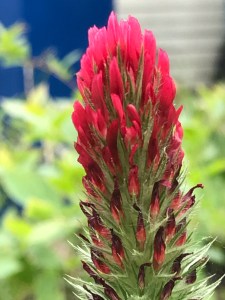
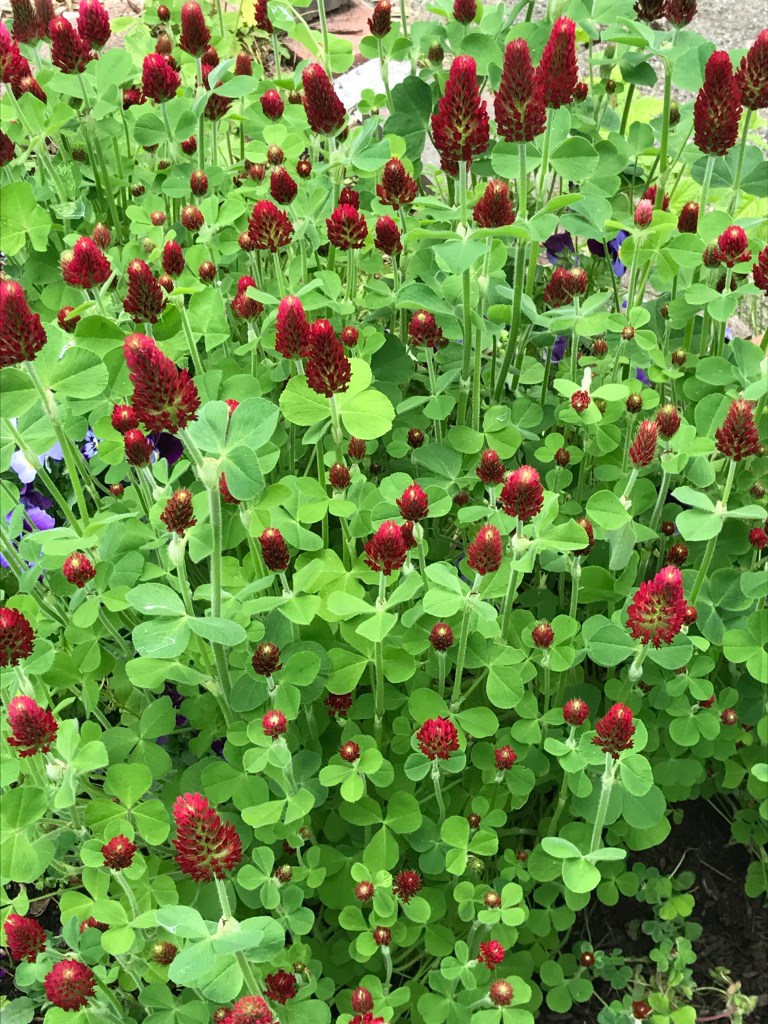
I planted red clover as a cover crop in my garden last October. I’ve done that before and just turned the plants over in the spring. This year, a friend told me she always lets it grow because she loves the red flowers it produces. I decided to find out what those flowers were like. I was not disappointed.

The bumble bees love it and I’ve seen one honey bee gathering nectar there as well. I look forward to examining one of the flowers under the microscope next week. What a fun way to provide nutrients to my garden soil.