There are so many different kinds of dahlias. Who would think these flowers would be the same genus


as this one!
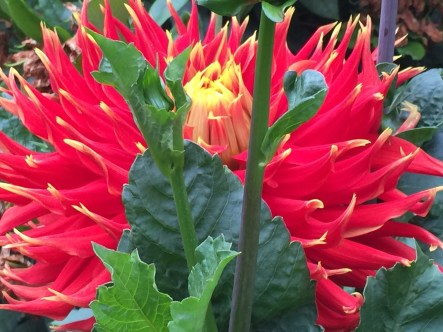
Wikipedia says that dahlias are also related to sunflowers, daisies, chrysanthemums, and zinnias.

There are so many different kinds of dahlias. Who would think these flowers would be the same genus
as this one!
Wikipedia says that dahlias are also related to sunflowers, daisies, chrysanthemums, and zinnias.
Last week, when I removed an overgrown chive plant from my garden, I discovered it had been covering two snails. One appeared to be missing a big part of its shell and mucous was pouring out of that area. It looked like the other snail was eating the mucous. When I separated them, the wounded one didn’t move but the other one did. I followed its movement taking photographs along the way.
Notice in the photos below that the snail is approaching a crevice in the piece of concrete.


Wow!
Turning to the right.
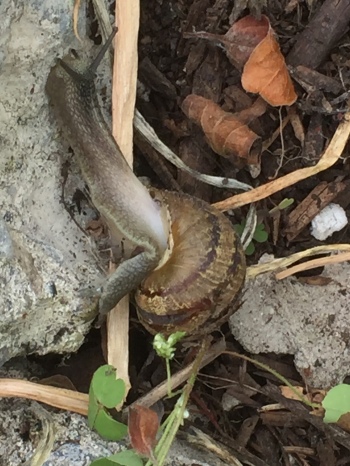
And then pulling his shell up.
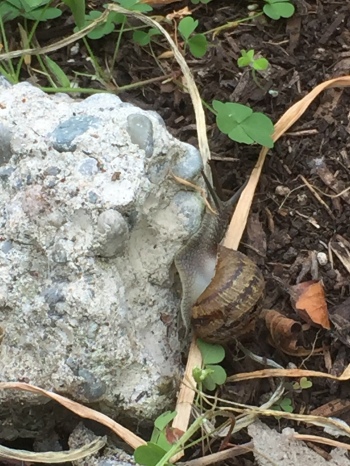
He has almost made it to the top.

Success!

As I continued to watch, I decided to follow him by video.
You are about to enter a snail’s world. [The snail you see at the very end of the first video is the wounded snail. The snail from the photographs above is the star of the first video (47 seconds) and all of the second one (2.59 minutes).]
I thought he was headed in a particular direction but I was wrong!
After about 20 minutes, the wounded snail began to show signs of life. In time it started on its own journey. So was it really wounded? If not, had they been mating?
I looked for information and videos on snail mating but nothing that was described or shown looked like what I had seen. There is so much I don’t know. I appreciate the glimpse into the wonders of nature that this experience has given me.
Weekly Photo Challenge: Fun (for me!)

I have long been fascinated by Chinese Lantern plants. One of my neighbors has them lining the fence in front of her yard. In reading about them for this post, I learned they are nightshades, and therefore are related to tomatoes, peppers and eggplants.
I try not to pluck any bloom before its time so have never had the opportunity to look at the pods closely. However, when I walked by the house yesterday, one of the pods was lying in the middle of the sidewalk. I took it home and began my investigation! What follows is a mixture of camera and microscopic photos.
(You can enlarge the photos by clicking on any of the galleries.)
The pod itself has a consistency similar to a heavy paper. When I opened it, I discovered that it was not the hollow object I had thought it to be. The red ball I found inside was striking, and it did indeed seem similar to a ripe tomato.

When I opened the fruit, it looked even more like a tomato. One of the things I learned later was that the fruit is edible when it is ripe, although not very tasty, but it is poisonous when it is not ripe. I felt relieved I had had the intuition that I should wash my hands after cutting it open.

Using the microscope I had the privilege of once again viewing the beauty and intricacies of nature.
Here are photos of the pod from the outside
and the inside.
The stem has multiple colors and features.
Here is what the bottom of the pod looks like.


Once I opened the pod, I found the shiny red fruit and the part that connects the fruit to the pod to be so interesting.
My favorite views came when I looked inside the fruit.
I hope you enjoyed this journey into the Chinese Lantern pod. I sure did.
I was fascinated by the various surfaces on this Pacific Madrone (Arbutus menziesii) tree that is located in Lincoln Park in Seattle.


(Click any gallery for closer view of the photos.)
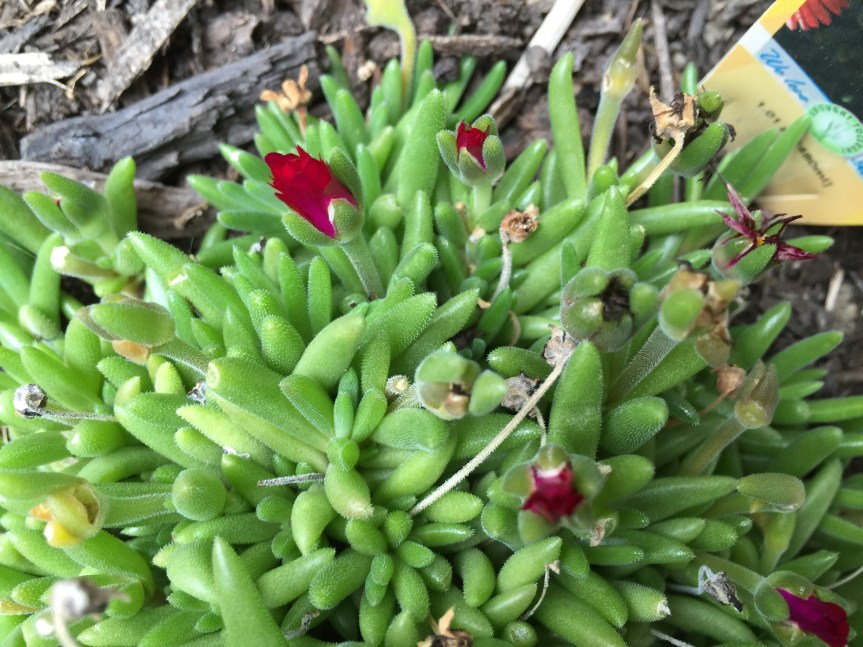
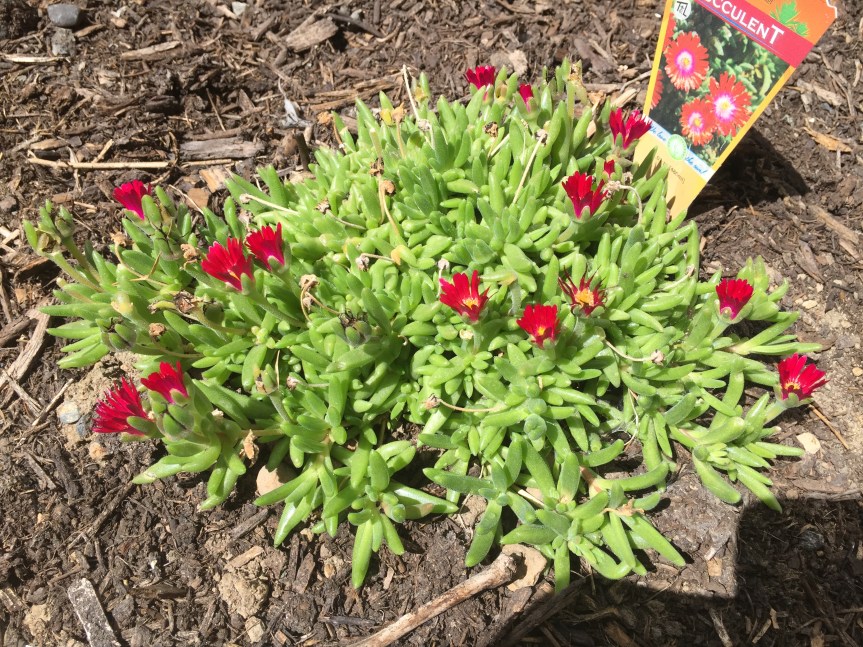
I enjoy looking at this succulent in the morning and then following it throughout the day.
Morning

Midday
Late afternoon

(I think I will go pick off the dried up flowers. Nothing like a photo to make the work that needs to be done in the garden obvious.)
Saying that made me I realize I should look at these flowers even closer, so I picked one of the flowers and took some microscopic views.


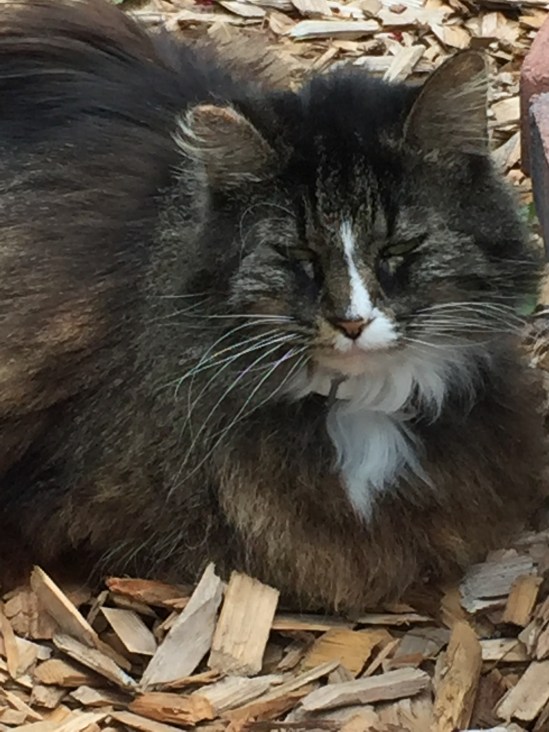
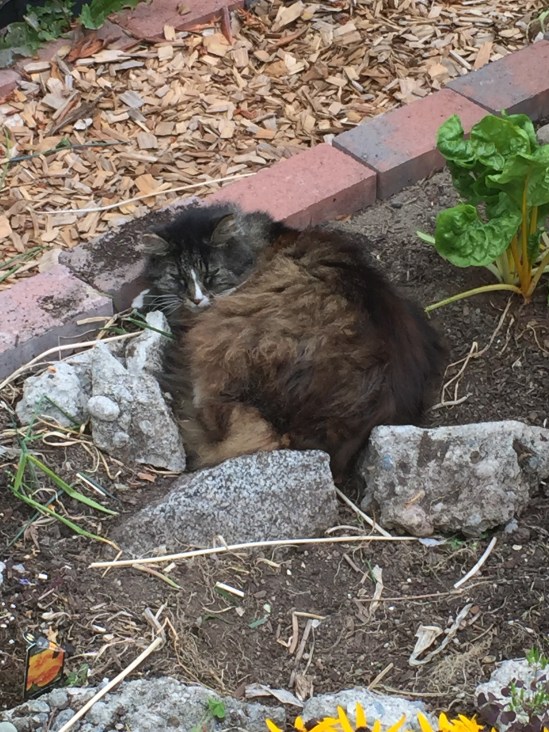
A neighbor’s cat is spending more and more time in my yard. He seems to love to sleep on the play chips near my garden. (As I look at the garden picture below I’m aware how close it is to the end of the season. The tomatoes are just beginning to ripen but almost everything else is gone or ending. Must be time to put in some cover crops!)


Yesterday I was quite startled when I unexpectedly found him IN my garden.
When I took the portrait photo at the top of this post I tried to get him to open his eyes. I thought that would be easy because he usually takes off when he sees me coming near him. This time he stayed put, but would only open his eyes a sliver. He was probably thinking “Would you just go away and let me sleep!”
Written for Discovery Challenge: Portraits
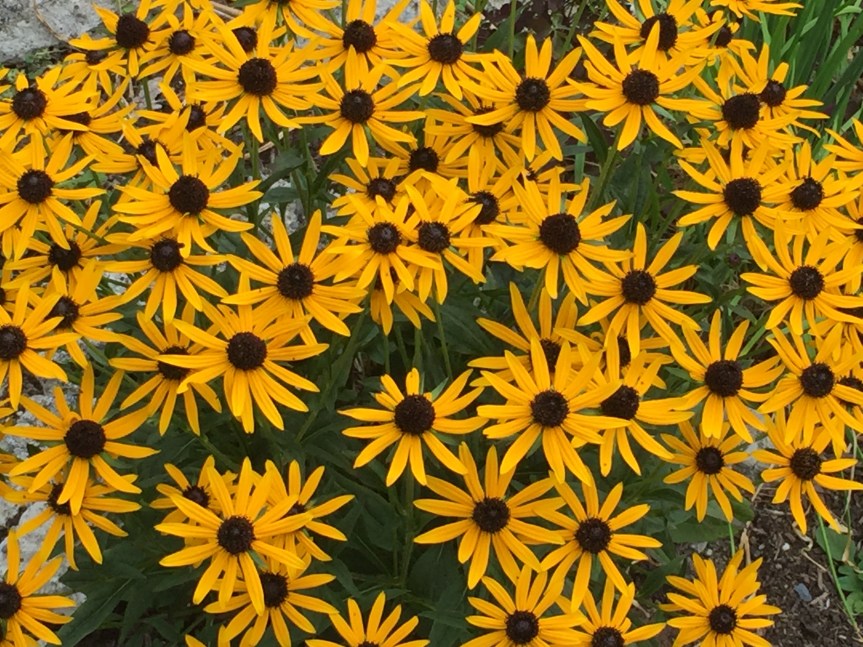
I’m amazed by how many beautiful roses I am still seeing in my neighborhood even though it is now August. In April the roses were in full bloom so I thought their season would end early.
I think this collection of roses is particularly interesting because they are so close in color, yet each is different.


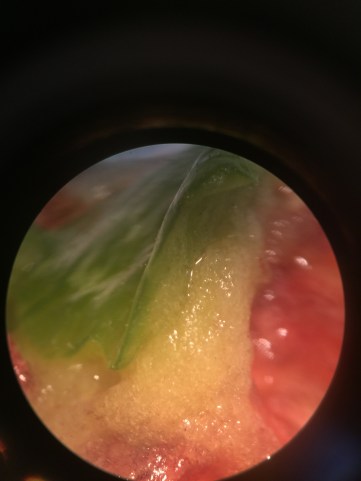
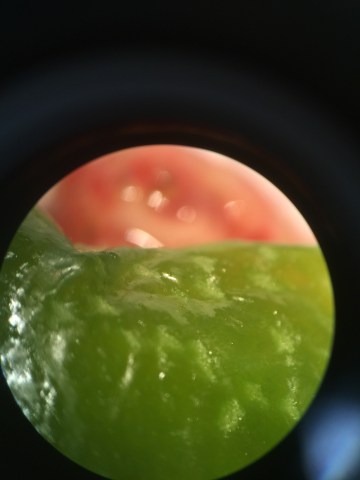
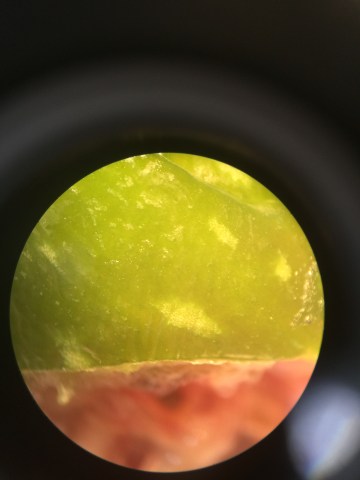
Who would have guessed that a fig would look like this under a microscope? I sure didn’t.




The Art and Craft of Blogging
A collection of discussions on the environmental issues
“The fool doth think he is wise, but the wise man knows himself to be a fool.” “Love all, trust a few, do wrong to none.” “Love looks not with the eyes, but with the mind, And therefore is winged Cupid painted blind.”-William Shakespeare
...moments of unexpected clarity
Home of Lukas Kondraciuk Photography
Wellness, Support and Mindset
Thoughts on Creativity & Deeper Things
A Blog by Novella Carpenter
Ramblings of an Irish ecologist and gardener
Teaching the art of composition for photography.
Blog from SathyaSaiMemories ~ stories of love in action and the benefits of giving
There are 11,507 stories in Haddonfield; this is one of them.
Perennial gardening and more from the Green Mountains of Vermont
Whatever it will be...
Welcome to my little slice of the blogosphere
 Living, Learning and Letting Go