
A contract is usually an agreement between two or more people but you can also use contracts to make agreements with yourself. It is a structure that can be invaluable when you are serious about making changes in your life.
Here are some examples of this type of contract:
Example #1
Problem: I work 65 hours a week
Contract: I will work no more than 50 hours a week for the next month and will reduce my work time to 45 hours a week after that.
Example #2
Problem: I constantly criticize myself.
Contract: Every time I am self-critical, I will internally say the affirmation “I am worthy of respect. I will not harm myself by thought, word or deed.”
Example #3
Problem: I eat when I am not hungry.
Contract: For the next week, I will record every time I am tempted to eat when I’m not hungry. Next to the date and time, I will write what incident or thought triggered my desire to eat, as well as the emotion that followed the trigger.
Example #4
Problem: When someone asks me to do something, I automatically say yes, even when it is something I don’t want to do.
Contract: I will not say yes to requests without taking time to think about the request first.
In the next section, you will make a list of your self-sabotaging behaviors, such as those in the examples above. After you make your list, you will formulate a contract for each one. Don’t worry, I’m not going to ask you to commit to keeping a lot of contracts. The purpose of the first exercise is to help you learn how to write simple, clear contracts.
It is important that you word your contracts in a way that promotes you in being successful. For example, if you would like to exercise 5 days a week for 30 minutes, it would be best to start with a contract that says “I will exercise a minimum of 3 days a week for 20 minutes.” That way you won’t break the contract if you only do 3 or 4 sessions on a busy week. You can always do more than your contract requires.
Exercise #1
In the box below, list 4-8 behaviors you desire to change and write a contract for each one. If you have trouble identifying the changes you want to make, you might find it helpful to look through the Week 1 and Week 2 lessons of this course. If possible, complete Exercise #1 on the first day of this week so that you have the rest of the week to work on Exercise #2.

Exercise #2
Pick two of the contracts from the list above, and commit to keeping them for the rest of the week. At the end of each day, jot down some notes about your experience.


At the end of the week, answer the questions below:
Was it easy for you to keep the two contracts?
If it wasn’t easy, then commit to continue keeping them. It takes time to change behavior patterns.
When you are ready to add one or two new contracts to the original two, write them in the box below.

If you would like feedback about the contracts you write, feel free to put them in the comment section. I would be happy to answer questions or make suggestions.
Pen Photo Credit: Pixabay
See you next Monday for the thirteenth lesson.
To find the lessons in this series that have already been published click here.
I’ve been working outside. My toes and fingers are ice cold even though I was wearing gloves and boots.
The weather forecasters say to plan for snow for tonight and tomorrow. I don’t think I have seen snow for five years or more, partially because I go to India from the end of November until mid-January.
Maybe I will feel warmer if I think about last summer!

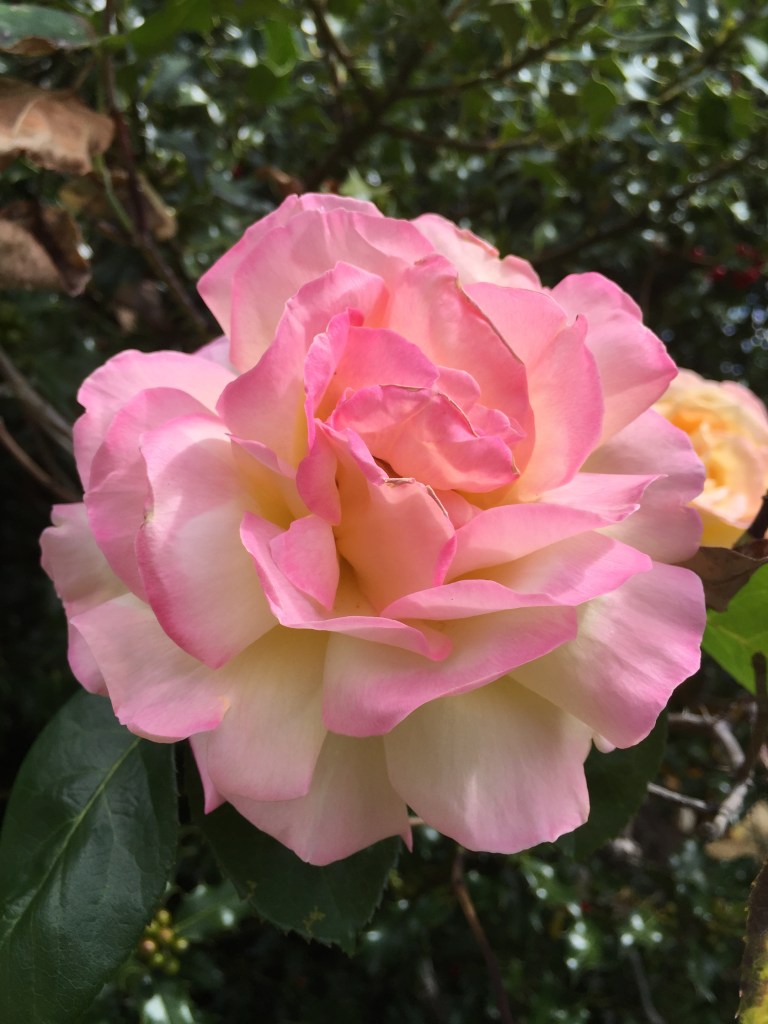








In 2015, I added three bird houses to my back yard. Last spring, birds came in and out of the houses. I had thought they were making nests, but none of them stayed very long.
A few days ago, I decided it was time for me to look inside them, so I could remove old nests, if there were any, and get the accommodations ready for this year’s guests. I was very surprised by what I found.
Bird House #1


Bird House #2


Bird House #3


Below is a photo of the three nests side by side.

The third nest was built almost to the ceiling of the birdhouse. That nest was more than six inches high; and the top of it was completely flat. Both of those characteristics surprised and disturbed me.
The holes that give access to these bird houses are very small. Does anyone have an idea why a tiny bird would build a nest that large; a nest which practically fills the bird house? And why would a bird make the top of the nest flat, with no place to lay eggs? Do you know anything about this? I’d appreciate any information you could give me.
 Shared on Senior Salon and Lets Create a Fine Chain…
A Surprising and Disturbing Discovery- Part 2. A Surprising and Disturbing Discovery- Part 3
I have been interested in crafting for as long as I can remember. One of my favorite projects was working with a group of Embracing the World volunteers to create beautiful bags and baskets by crocheting and weaving discarded grocery bags, strapping, newspaper wrappers, snack bags and other forms of waste.
Below are photos of some of the items I made during that time in my life. If you click on the gallery you will be able to see what each article was made from.


Here is a more detailed listing for one of the items.
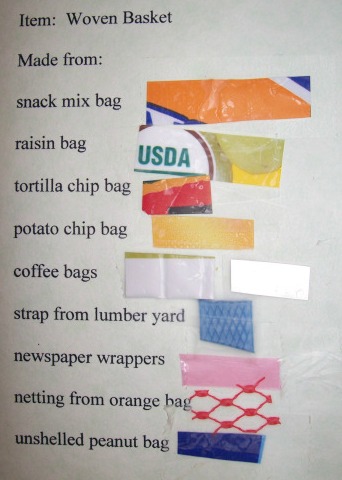
Weekly Photo Challenge: Repurpose

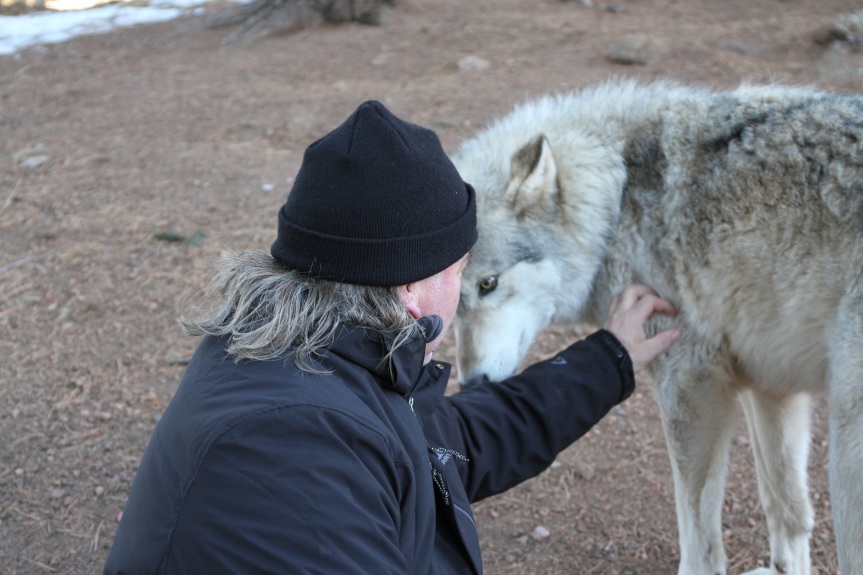
July 2000: On my way to a Sundance in southern Alberta, I see a red building on my right. Something about the building grabs my attention so intensely that I U-turn on the highway. I must explore what is there. The place is a wolf haven, and I spend time petting wolves through a chain link fence.
July 2000: I am giving a new friend from Alberta a ride back to Seattle. I talk about the place and the wolves. Wolf Haven was closed when we got there. I am disappointed.
April 2008: I am on spring break from college and meeting a friend in Jackson Hole, Wyoming for a week. One day it is snowing, and we decide to drive out to the country, to watch the snow, share our stories from the past year, and sit in silence staring at the mountains across the way. On our left, we both see a lone wolf, trotting across the snow covered field. As we continue to watch, the wolf stops and stares at us for what seems like 20 minutes. We sit in silence watching back..
April 2015: I am in Yellowstone National Park. Along with lots of snow from a fresh spring storm, I see wolves ‘being’ themselves in their environment. I watch, mouth open catching flies… Well if a fly could live in that temperature, I would have caught multiple. I am in awe of how natural the wolves seem.
June 2016:. I see a Facebook post from a friend and text her, saying her radiance was showing in the picture and asking where the photo was taken. She responded with a location and shared a bit of the impact of her experience.
November 2016: I booked an hour at Colorado Wolf & Wildlife Center, the place my friend had named.
December 31, 2016: It was 5 degrees when I arrived in the mountains, snow and ice on the ground, a clear blue sky and the sun was just starting to make its way over the nearest of the eastern mountains. As I walked up, I did not see any wolves, but could hear them howling in the distance and then the echo of the howl on the hills around me. Somewhat surreal to my experience, my mind started thinking of safety, along with flashes of horror movies and bloody bodies laying in the woods while being torn to shreds by wild animals.
Luckily for me, the walk was a short distance and a nice person greeted me, taking me out of the next Stephen King thriller my mind was creating. Of course there was the paperwork; just in case I was attacked. There were ferrets and a rooster running around greeting people; the building was warm and full of wolf items.
I listened to the staff say to me: the wolves are not dogs, do not hug them, grab their face and kiss them, or rough-house with them; they will react as if you are their size and power and that could be dangerous.

The first pack: Once I sat down on the ground, face level with the first pack, everything disappeared that did not need to be in my world at that moment. I was fully present to every breath, movement, posture, nudge, or growl from each wolf and each gesture had its meaning. I was not cold or concerned for my safety.
I have to be honest. One thing concerned me, and that was how they greet each other, and that greeting would also include me. The process is the equivalent of a human handshake; the wolves greet each other by sticking their tongues into each others mouths, and trying to touch the tonsils.
It took me three tries before I would let a partially wild animal get that close, i.e tongue in the mouth close. First try, the Alpha male comes over, sniffs my hand and arm, then goes for the tongue action. I keep my lips together and kiss him on the cheek like I would a friend.
The wolf walked off. Being the kind wolf that he is, and with some luck, he came back about 5 minutes later and tried it again. Still, I could only part my lips a tiny bit, and did not let his tongue in. I then notice the wolf seem to make a sigh and sit just far enough away from me that I could not physically connect with him. A few minutes went by, and the same wolf gave me another chance. No other wolves had come close to me.
Internally, I agreed to go for it. I told myself, how bad could it be… maybe just some small raw animal parts, a piece of stick or bone stuck to his tongue, and the possibility of having part of my face taken off by sharp and giant teeth.
Luckily for me, none of that happened. In fact, the wolf’s tongue was not slimy, not gross, no after taste, and he was very gentle so as not to bang teeth. I thought to myself, I have kissed a few women with worse tasting tongues. Somewhere in the faraway distance, I could hear one of the two staff giving instructions, although I somewhat failed to follow them and was guided by intuition.


(Click galleries to enlarge photos.)
When meeting the second pack, I was told not to get down to the level of the alpha male, as he is known for trying to top everyone.
Remember the rules I spoke about earlier, I broke them all. The first thing I did was grab the alpha wolf by the face and kiss him. Then, when he pushed against me, I gave him a big hug and kissed him again. I played with him like I would a regular dog. Sometime after the hug, I could hear the staff telling me, ‘apparently you guys know each other’ and not to worry about being topped.
We, the alpha male and I, rubbed, nudged, and pushed a bit back and forth. Later he allowed me to rub his belly and front legs. That is when I about pissed my pants. The alpha male started growling at me and showing his teeth. I yanked my hands away from him so fast. Even if it were a rattlesnake, I would not have been bitten.
The Wolf and Wildlife Center staff chuckled and informed me, the wolf was letting me know he liked what I was doing. Still shaken a bit, I informed them, that when someone growls and shows their teeth, I typically stop the behavior and move away. I was then encouraged to start rubbing him again in the same way, and he growled and snarled the entire time. Once I understood his communication style, I felt less nervous. Still, it took me a few minutes to relax. Wolves have big teeth and deep growls…. Just saying!


For my last 25 minutes, I had the option of seeing wolf puppies or another pack of adults. Of course I chose puppies. I mean come on, who doesn’t want to see puppies. When we arrived, I found out these were 80-90 pound sister and brother puppies who were eight months old!
The moment I sat down with them, I had two playful wolf puppies kissing me in their traditional way, then stealing my Seahawks hat; by the way, stealing my hat means means the wolves are Seahawks fans…(wink). They then stole my hair tie by gently pulling it out of my hair with their teeth. They tried to try to take anything that was loose on my clothing.
The staff started to get nervous that they might tear my coat, or ruin something. I wasn’t nervous, I was laughing and loving the playfulness of youth, the exploration of boundaries and their trust of me. Here are two kids wanting to play. I chose to wear what I wore, and be involved with them. How could I then get upset? I couldn’t.


Sadly it was time to leave, and my time with these wonderfully loving creatures would be over for now. Once I exited the area and returned to my truck, I started the motor, put the truck in gear and noticed something. I had no energy to leave, to drive, or to converse with others. My mind and body were silent. I had no want. There was no internal voice on either shoulder talking to me. My experience was “I am”.
Once I returned to the world of fast moving cars, Starbucks, and snowy Colorado mountain roads, I realized how similar my experience was to the many times I have received Amma’s darshan (hug).

Shared on Senior Salon and Lets Create a Fine Chain…

Suffering is created or enhanced by critical self-talk. An important step in ending suffering is to replace the negative critical messages with positive nurturing and/or structuring messages.
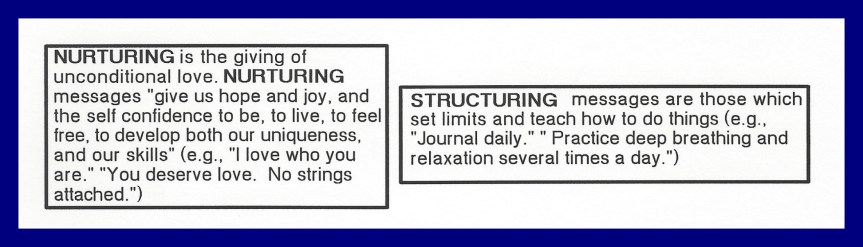
Creating nurturing and structuring messages is a skill that takes practice. This lesson will focus on helping you to learn that skill by walking you through a multi-step process. At the end of the lesson you find a worksheet you can copy for future use.
EXAMPLE:
State the problem in one sentence:
I forgot to bring my children’s sack lunches when I drove them to the bus that would take them to summer camp.
What critical messages are you telling yourself?
1) Stupid! There were 300 children there and you were the ONLY parent who forgot her children’s lunches.
2) You are a terrible parent.
3) Why are you making such a big deal out of nothing? They won’t be allowed to go hungry.
Identify nurturing messages you can use to counteract the critical messages (messages that are gentle, caring, supportive, and unconditional).
1) You do care for your children and they know it.
2) You are a good parent even though you make mistakes.
3) It is highly unlikely that you were the only parent who forgot their child’s lunch.
4) It is important for your children to know that you make mistakes. When they see you make a mistake, they learn that it is okay for them to make mistakes.
5) You were feeling very sad because your friend Jean was leaving today and you won’t see her for a very long time. It is understandable that you didn’t remember everything.
Identify structuring messages you can use to counteract the critical messages (messages that set limits, show how and give options.
1) Talk to the camp counselors. Tell them what happened and ask if they have arrangements for children who come without lunches.
2) Tell your children that you forgot the food and have them help brainstorm solutions.
3) Check and see if there is time for you to go to a convenience store and buy them some lunch. Continue reading “Letting Go of Suffering- Week Eleven: Stopping the Critical Self Talk”

Helen’s direction for this week’s Song Lyric Sunday:
Our theme for Song Lyric Sunday is to celebrate the sun. You can interpret it any way you’d like through music, meaning you can even post a song that only has the word “sun” in it, or really any other way you can fathom.
Helen mentioned that she felt gloomy this week. I can relate to that. For Song Lyric Sunday, I decided to take the one word option and pick a familiar song that would help me in this moment. I’m going to visualize Sitting on the Dock of the Bay and watching my fear, anger and sadness, and the fear, anger and sadness of so many others, roll away with the tide.
Sitting on the Dock of the Bay was written by Otis Redding and Steve Cropper. It was recorded in 1968, three days before Otis Redding died in a plane crash.
Sittin’ in the mornin’ sun
I’ll be sittin’ when the evenin’ come
Watching the ships roll in
And then I watch ’em roll away again, yeah
I’m sittin’ on the dock of the bay
Watching the tide roll away
Ooo, I’m just sittin’ on the dock of the bay
Wastin’ time
I left my home in Georgia
Headed for the ‘Frisco bay
‘Cause I’ve had nothing to live for
And look like nothin’s gonna come my way
So I’m just gonna sit on the dock of the bay
Watching the tide roll away
Ooo, I’m sittin’ on the dock of the bay
Wastin’ time
Look like nothing’s gonna change
Everything still remains the same
I can’t do what ten people tell me to do
So I guess I’ll remain the same, yes
Sittin’ here resting my bones
And this loneliness won’t leave me alone
It’s two thousand miles I roamed
Just to make this dock my home
Now, I’m just gonna sit at the dock of the bay
Watching the tide roll away
Oooo-wee, sittin’ on the dock of the bay
Wastin’ time
(whistle)
The Art and Craft of Blogging
A collection of discussions on the environmental issues
“The fool doth think he is wise, but the wise man knows himself to be a fool.” “Love all, trust a few, do wrong to none.” “Love looks not with the eyes, but with the mind, And therefore is winged Cupid painted blind.”-William Shakespeare
...moments of unexpected clarity
Home of Lukas Kondraciuk Photography
Wellness, Support and Mindset
Thoughts on Creativity & Deeper Things
A Blog by Novella Carpenter
Ramblings of an Irish ecologist and gardener
Teaching the art of composition for photography.
Blog from SathyaSaiMemories ~ stories of love in action and the benefits of giving
There are 11,507 stories in Haddonfield; this is one of them.
Perennial gardening and more from the Green Mountains of Vermont
Whatever it will be...
Welcome to my little slice of the blogosphere

 Living, Learning and Letting Go