We have lots of gophers in my neighborhood so I’m used to finding gopher holes in my yard. This year, when I came back from India in mid-January, I discovered that the gophers had been very active. Soon thereafter, I noticed different kind of holes, ones that I wasn’t used to, scattered around the dirt portion of my driveway.
The ground is hard there but something was burrowing out from the earth. I couldn’t imagine what it would be. The holes were miniscule in comparison to a gopher hole but big enough to completely stump me.
Soon after I added top soil to one of my new garden beds, I noticed the holes begin to appear there as well. I’ve never seen anything go in or out of these holes so I stayed mystified.
One day a tree service employee came to do some work in my yard. I asked him if he knew what created the holes. His immediate response was “Worms.” I wondered if he was kidding but he seemed totally serious.
WORMS?????? How could that be? I knew that my gardens contained a lot of worms, and some of the earthworms I’ve seen are very big, but I had never seen one of them on top of the earth. If his statement was true, I have to assume that there are a lot of worms coming out of the ground during the night.
Does that mean there are giant earthworms roaming the land at night? That question conjured up images worthy of a 1950’s science fiction movie.
So to those of you who know about such things, are these truly worm holes?
After Lalita and I left Amrita Herbal Gardens, we walked to the Vrindavan Tulasi Field, the farm I had originally planned to see that day. This property contains the gardens I have heard about most over the years. The devotees who have worked there have faced so many obstacles. Year after year it has been a process of trial and error. Amma teaches us to put in the effort and let go of the results. Those who have worked at this farm have done such a good job of doing that.
When I walked onto the property, I gasped at what I saw. The place had truly become paradise. The first plants that caught my eye were some that had beautiful flowers, different from any I had ever seen.
After leaving that area, Lalita and I walked from place to place, marveling at everything we saw. There were coconut trees of course, but so much else. We saw many banana circles, each with its own compost pile in the middle. We viewed many different types of plants, all looking healthy and luscious. (Click on the gallery to enlarge the pictures.)
This farm was first known as the Tulasi Field. (Tulasi is also called holy basil and is known for its medicinal and religious properties.) Several years later, they discovered that Rudraksha trees were growing there and throughout the ashram. The devotees started planting Rudraksha trees in all of the gardens. For a while the Tulasi Field became known as the Rudraksha Farm. This year I discovered it has been renamed Amma’s Vrindavan Tulasi Field.
Lalita noticed that the bottom portion of all of the Rudraksha trees had been painted white; I didn’t think to ask one of the workers why that was done. A worker told us that 10,000 rudraksha seeds had been harvested this year. Those were produced by a small number of trees, as the trees that had been planted in the last few years were not mature enough to produce fruit. One thousand seeds had been harvested from the tree in the picture on the right side of the gallery below. It was the most prolific tree on the property.
Rudraksha seeds are considered sacred in India. They symbolize the dissolution of desires and the awakening of truth. A rudraksha seed is divided into 1-21 segments. Those segments are also known as faces or mukhi. While all rudraksha seeds have healing properties, the properties change depending on the number of mukhi. The five mukhi rudraksha seed is the most common form. It can help with regulating blood pressure, heart problems, stress, mental disability, obesity, anger management, diabetes, piles, neurotic and behavioral problems.
Here are some pictures I took the first year they started harvesting the fruit of the rudraksha trees. After the fruit is picked, it is opened and the seed is taken out, soaked and then brushed until it is clean. To read an article I wrote about the rudraksha seeds two years ago go to: Rudraksha Farming at Amritapuri, pages 7-9. That document contains more information and many pictures.
There may have been tulasi plants growing throughout the property, but one of the last areas we came upon before we returned to Amritapuri was a field of tulasi. The plants were so big and so healthy. A woman who had recently come to the ashram was watering them. I had the feeling she didn’t understand why we were so astounded by what we were seeing. She probably didn’t know about all of the years and effort that had been spent trying to get anything to grow in the dry, barren ground.
I found myself teary as I wrote this post. The earth in so many of the pictures looks dark and rich; so different from how it used to be. This property is certainly proof that when you put in the effort and let go of the results, miracles can happen.
The Friday before I left India, my friend Lalita and I decided to go a garden near Amma’s Amrita School of Ayurveda. Even though I had been to the property before, I wasn’t sure how to get there so we hired a rickshaw.
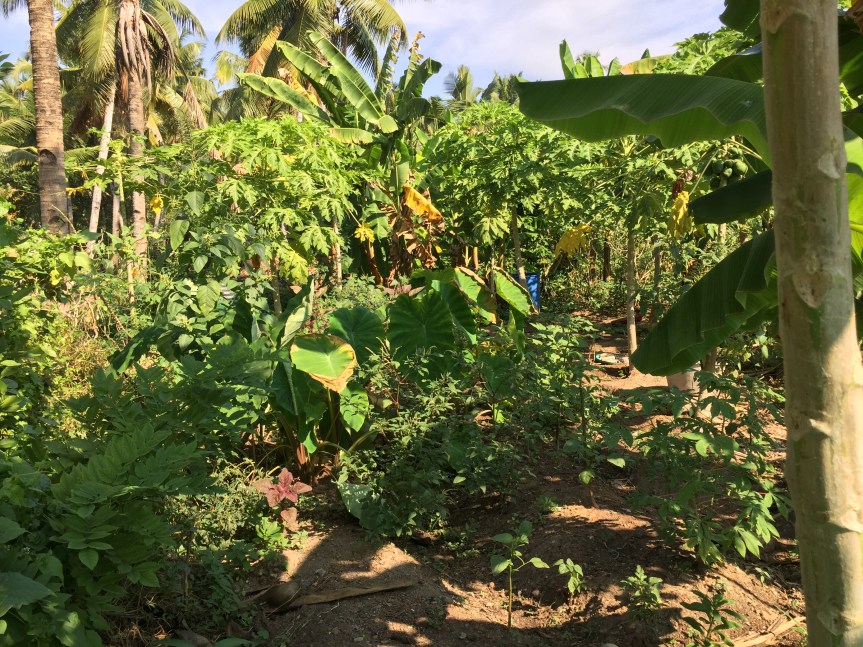
When I saw a garden across from the college, I told the driver to stop and let us out. It turned out not to be the garden I had planned to see, but it was “no accident” that we stopped. We were soon walking in a wonderland.
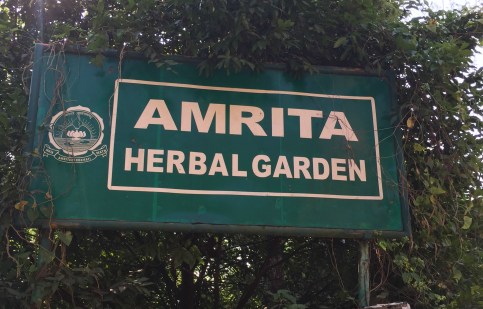
The garden is named Amrita Herbal Garden and it is part of the School of Ayurveda. I learned later that it covers 5 acres and that there are 500 rare species of medicinal plants growing on the land. The plants are used for research and for making Ayurvedic medicines.
One of my goals for the last week of my trip was to visit the garden/farm south of the ashram as well as the one across the bridge near Amma’s Amrita School of Ayurveda. The land in both places is very dry, and water is scarce, so developing the gardens has been a process of trial and error over many years. This year the change was mind-boggling. In both places, I felt like I was walking into paradise. This post will be dedicated to the garden south of the ashram which is now called Kuzhitura Farm.
When I visited this farm last year, I had learned that they were focusing on using permaculture techniques. One of those techniques was the banana circle. I still remember how shocked I was when I researched bananas and banana circles later and learned that banana palms are not trees, they are actually considered a grass! (Banana Circles in Amritapuri).
When Premarupa and I arrived at the farm this year, I was struck by how different it looked. It is amazing how fast trees and plants grow in the tropics. While there are vegetables growing throughout the area, the big vegetable garden I remembered from the previous year wasn’t even in the same place. My guess is the trees and banana palms had grown so big that there was no longer enough sunlight in the original area. There is now a garden that is about triple the size of the previous one a distance away.
Here are pictures of the farm this year.
India
water retention pond
tulasi plant
India
(Click to enlarge pictures)
This property is also now home to Amritapuri’s food composting and vermi-composting (worm composting) centers. I will share more about those projects in the next post.
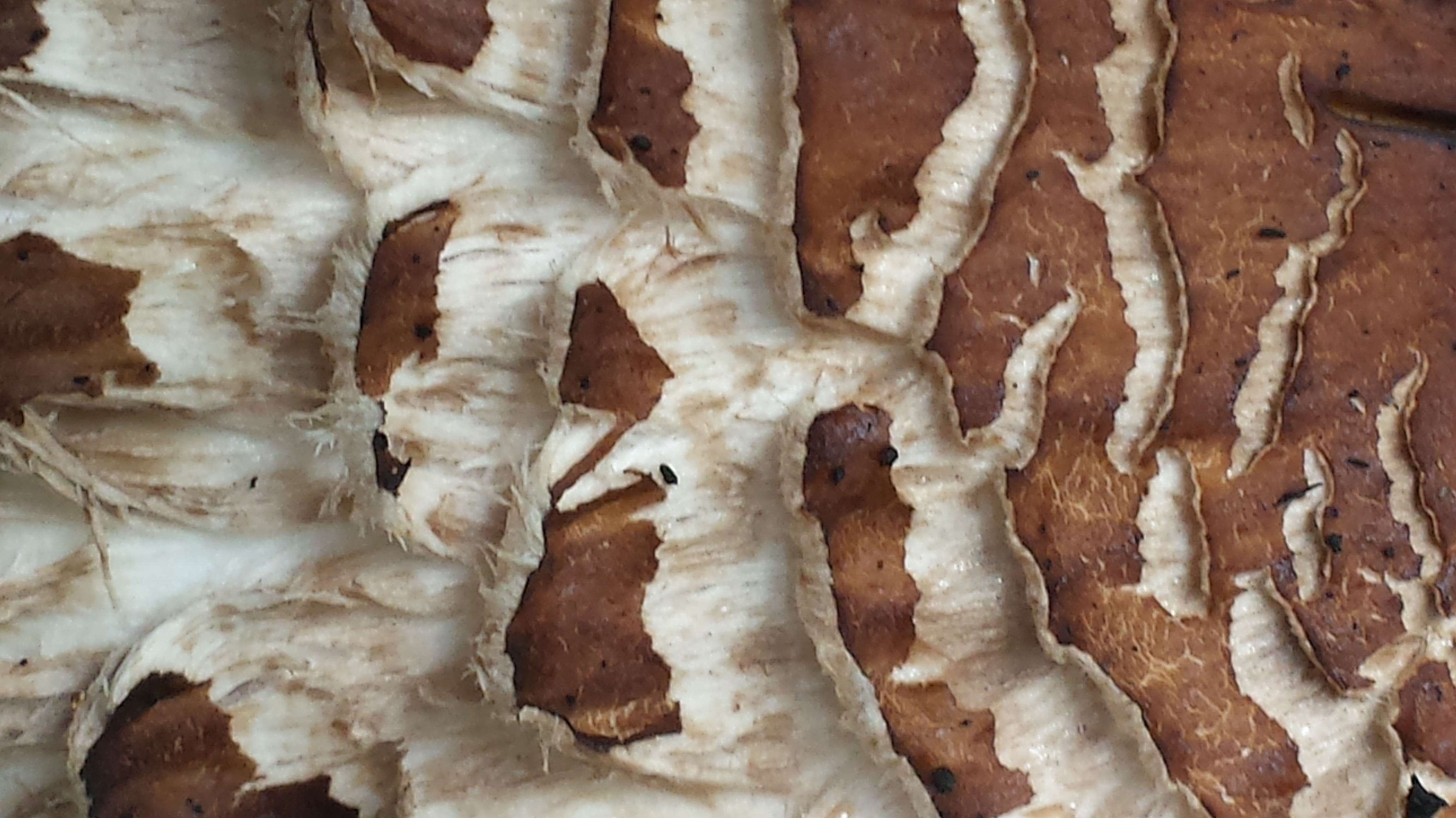
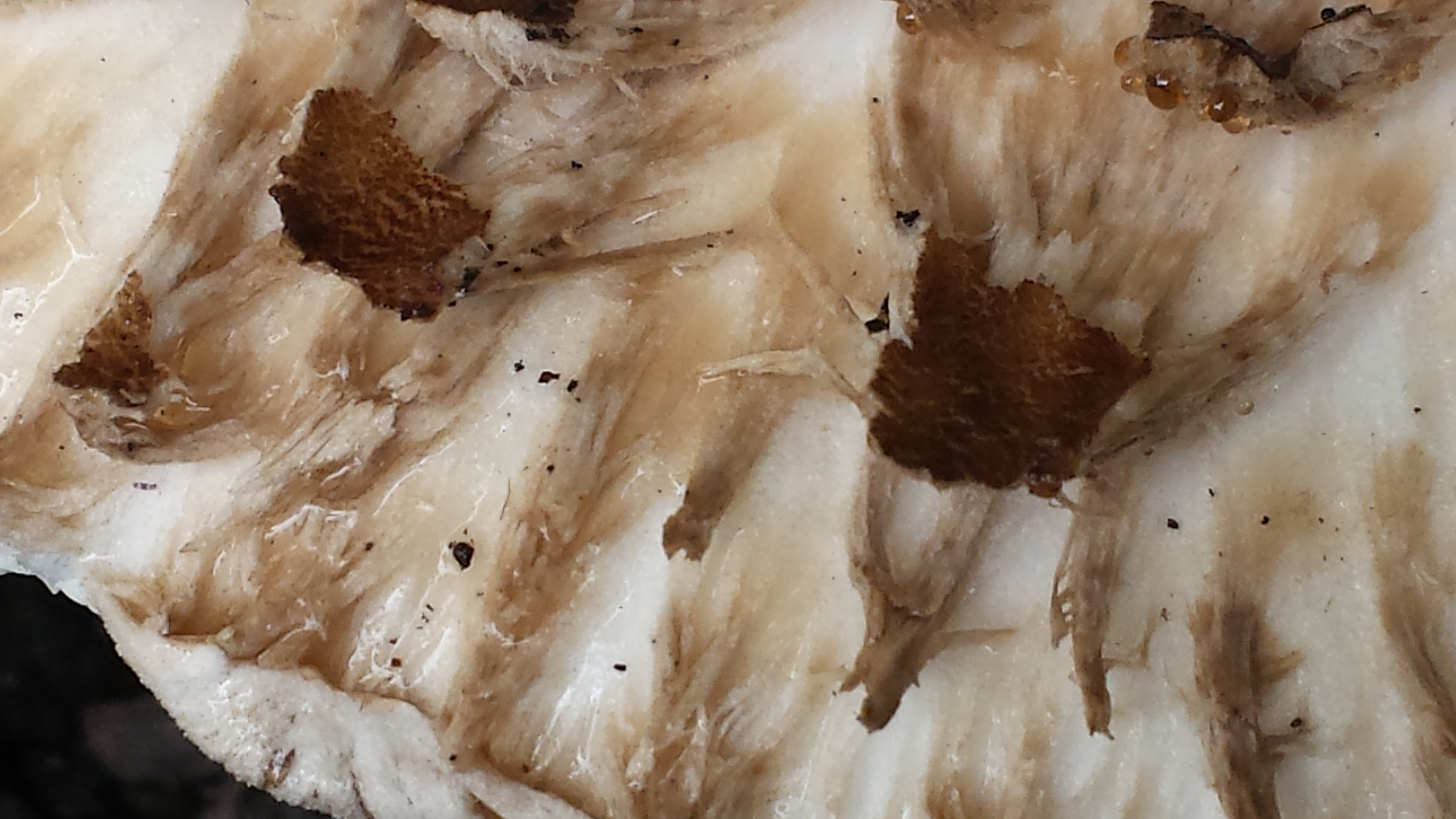
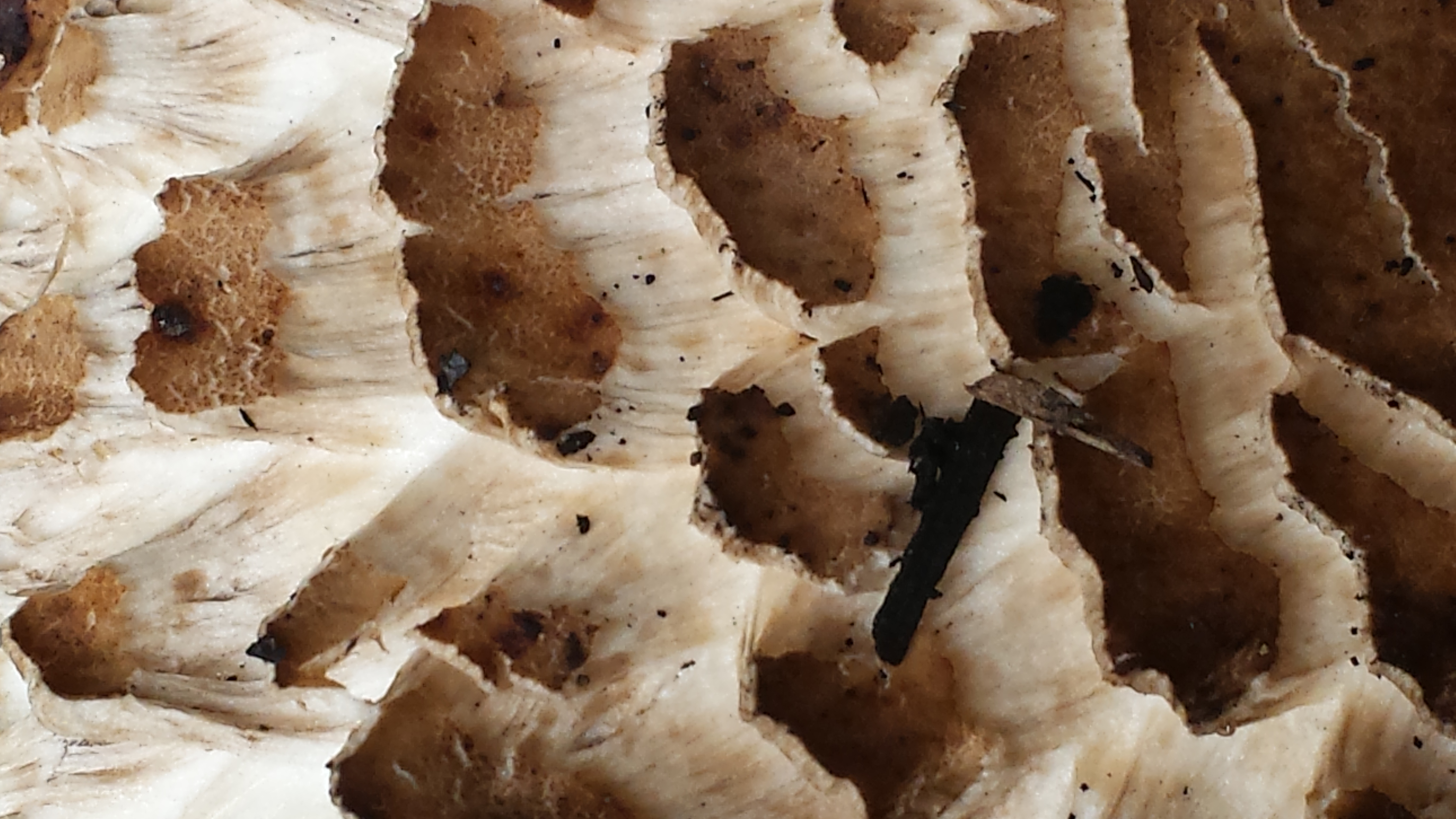
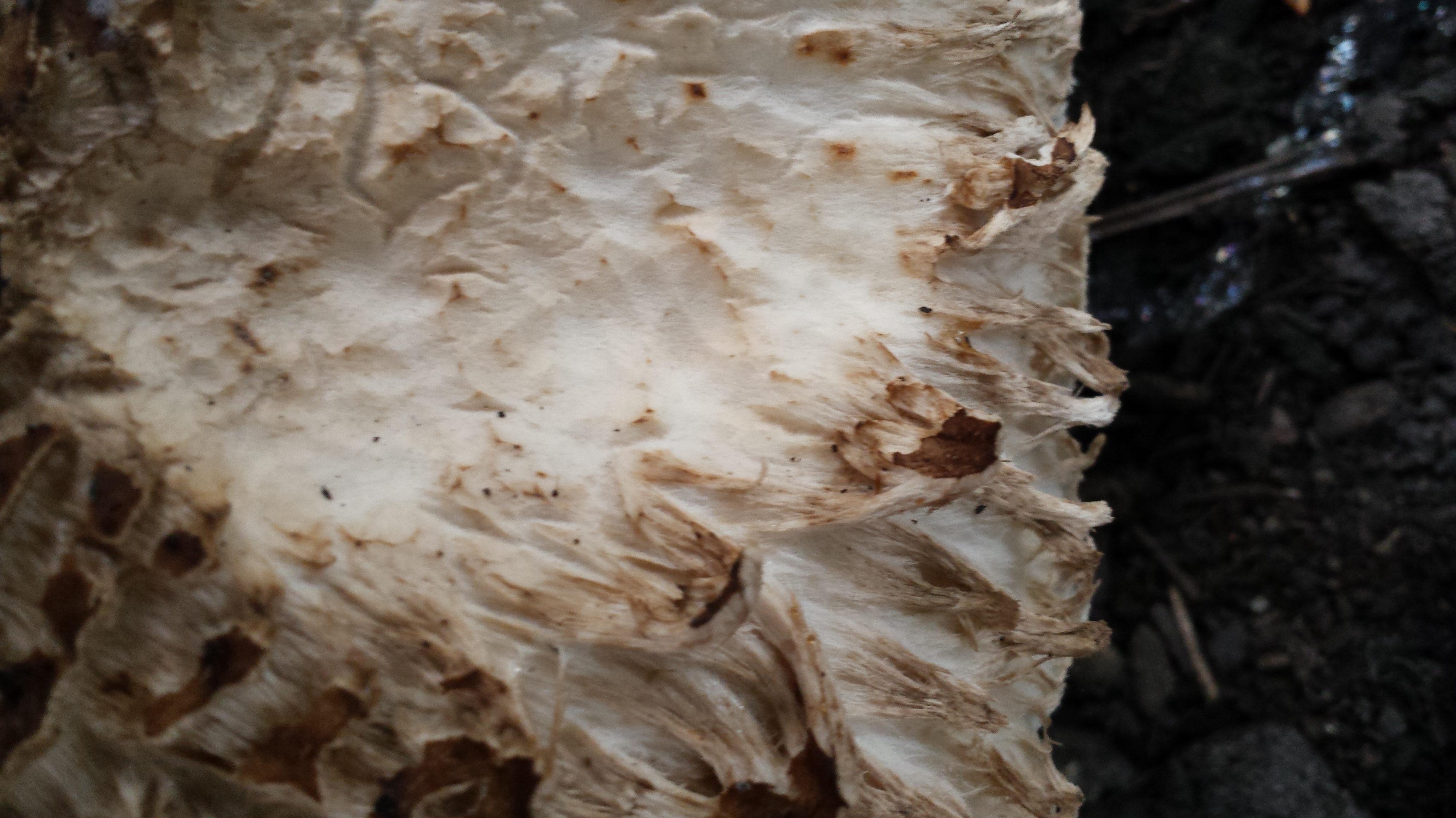
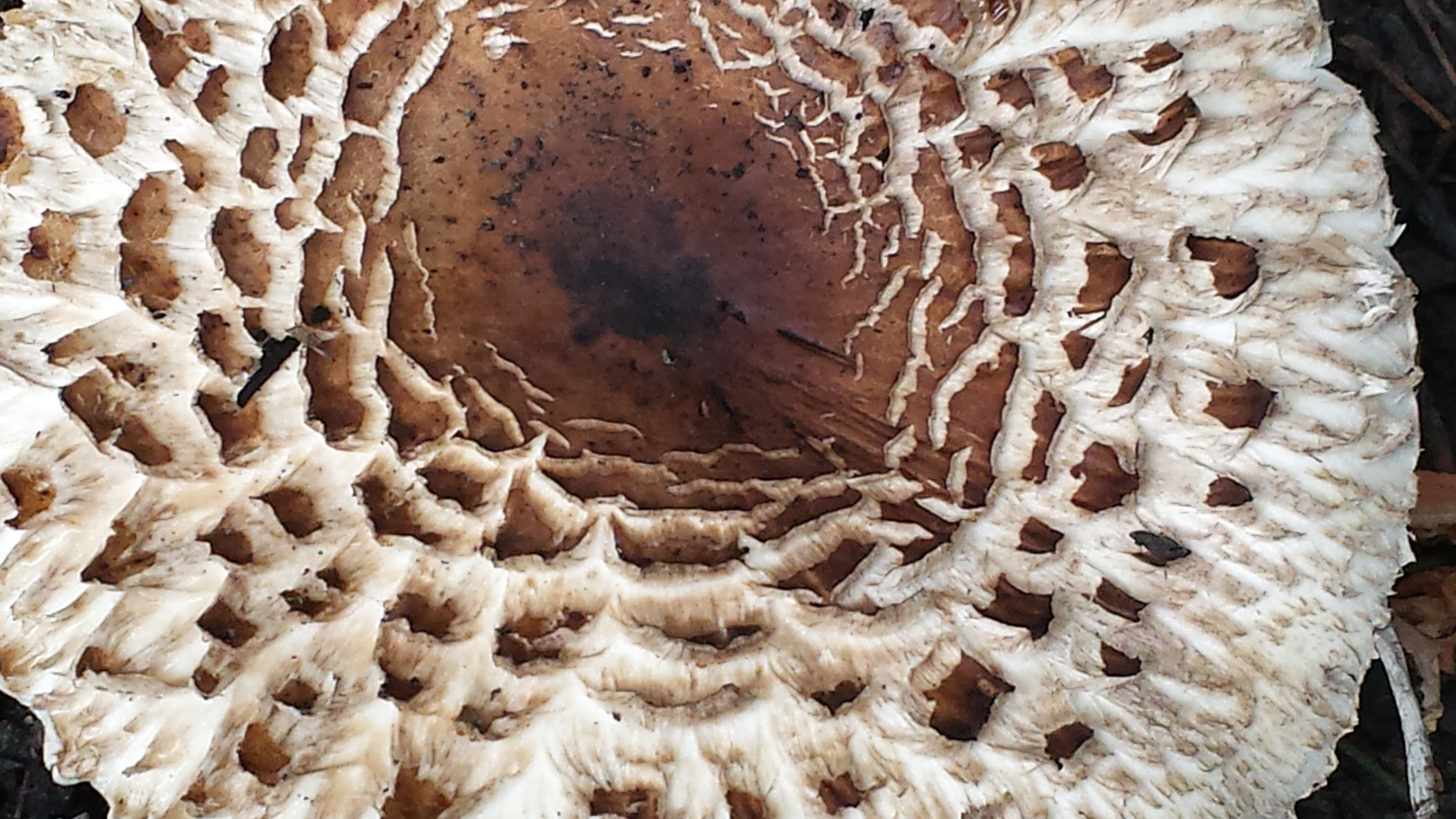
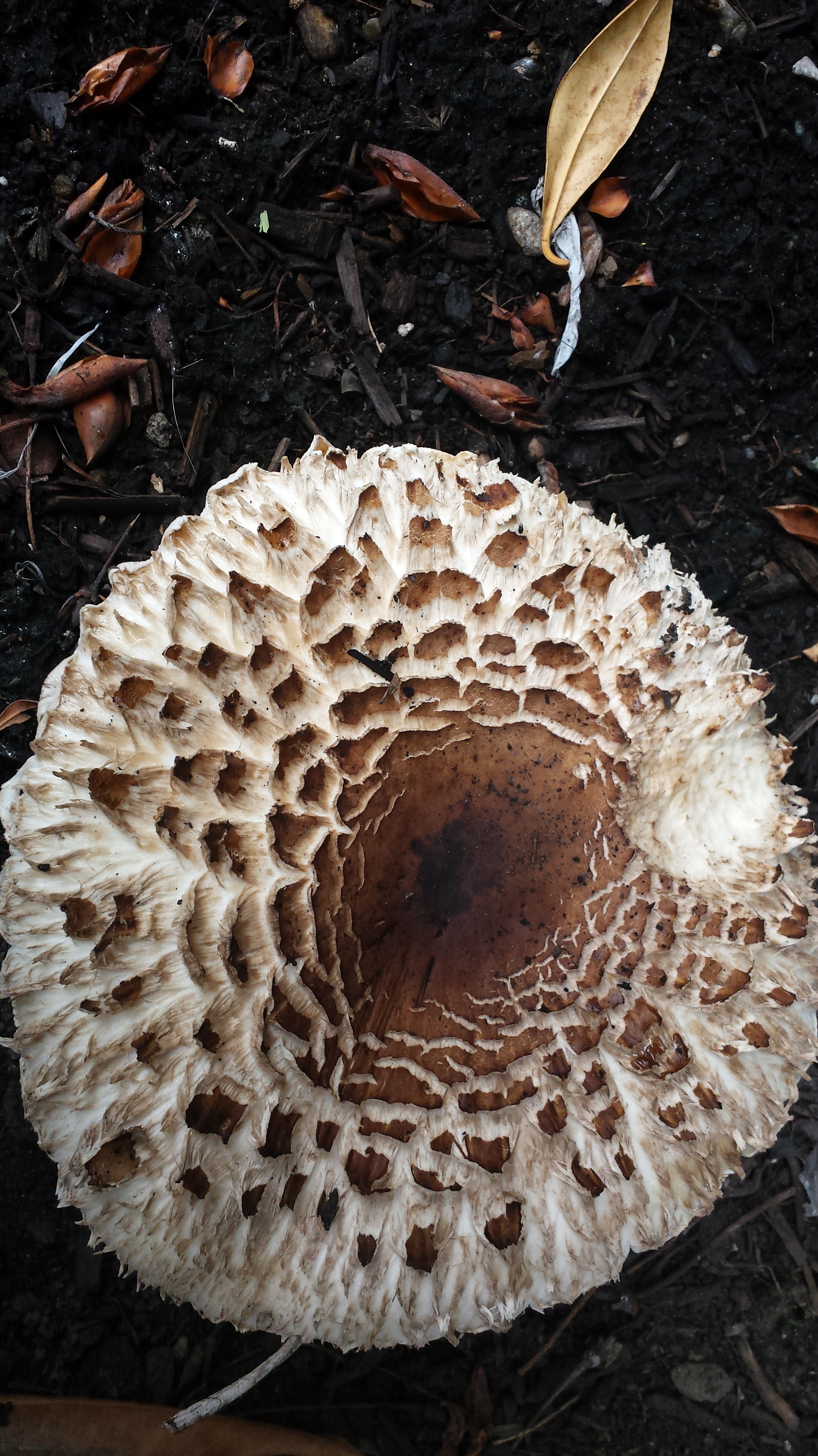
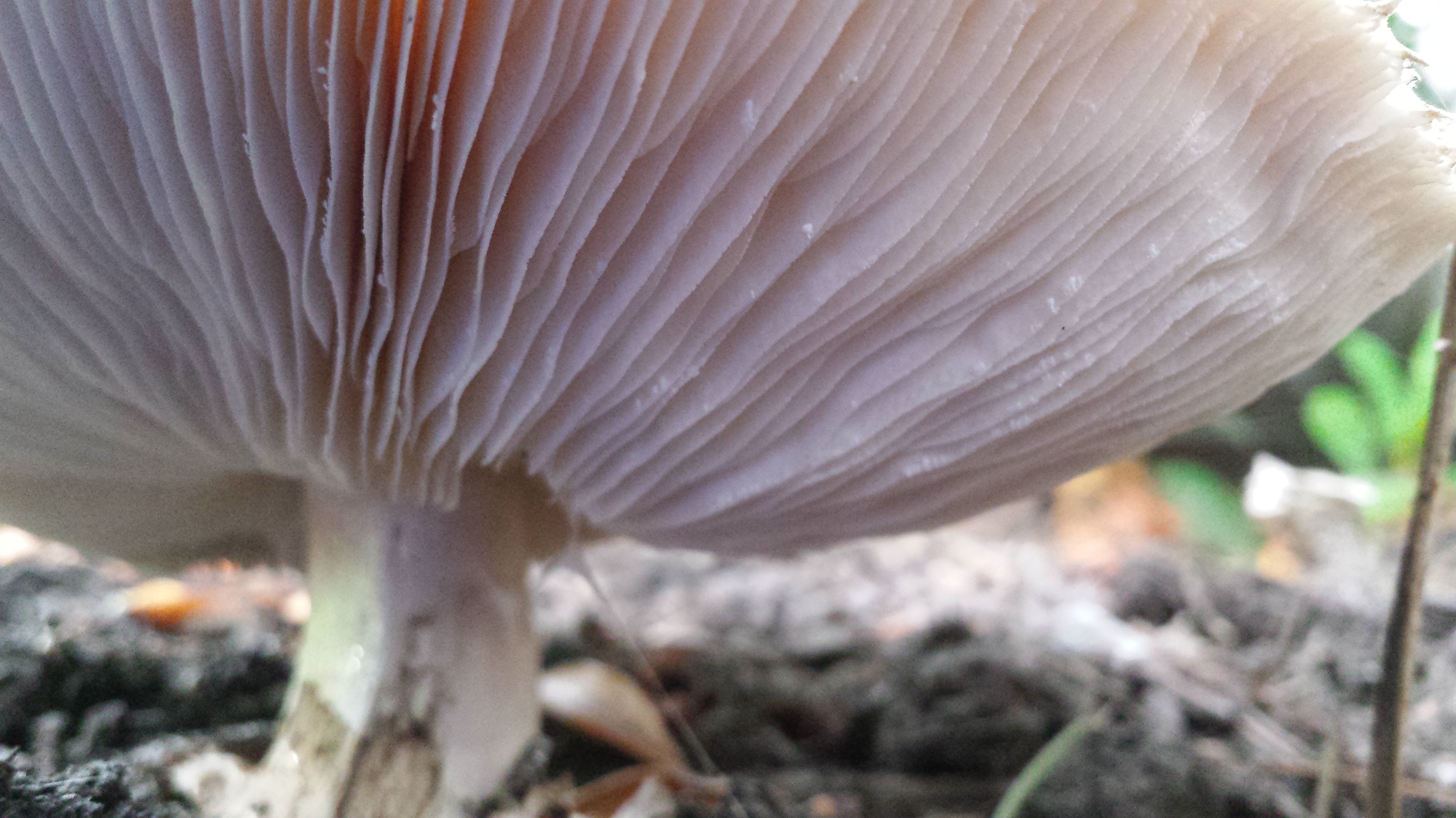
Yesterday an interesting object caught my eye. I will show it from several views. I wonder how soon you will recognize what it is!
1.
2.
3.
4.
5.
5.
6.
These are pictures of a mushroom, one that is seven inches in diameter. All of the photos are taken from the top, except for the last one. Did you figure it out? If so, what was the number of the picture when you first realized it was a mushroom?
There are several of these growing in my front yard. I’ve had mushrooms in my yard before but they have always been quite small.
My one melon. The plant was given to me late in the season by friend Saroja! Ymmmm. I wonder how many of the tiny melons it would have produced if it had the whole summer to grow.
Almost everything in the garden has finished producing. But I can start preparing for next year; in this case harvesting bush bean seeds.
The plant that is doing its best to ignore the season is the one that produces the big red and yellow dahlias. In the many years it grew in my back yard, the plant produced one flower a year. When I moved it to the sunny front yard two years ago, it took off! The photo on the right is of a part of the plant that was knocked to the ground by wind and rain a few weeks ago. It still is blooming! And so is the rest of it.
“The fool doth think he is wise, but the wise man knows himself to be a fool.” “Love all, trust a few, do wrong to none.” “Love looks not with the eyes, but with the mind, And therefore is winged Cupid painted blind.”-William Shakespeare











 Living, Learning and Letting Go