Seeing What Is

In 1973, when Al and I bought the house I still live in, the yard was beautiful.  An elderly couple had lived there for more than 40 years.  It was obvious that much of their time had been devoted to taking care of the grounds. Because of divorce, child-rearing, working, going to school, etc. it was impossible for me to do all the work that was necessary to maintain the yard and the landscaping disintegrated. I yearned to have the property be beautiful again.

One day, I was standing with a friend in my back yard bemoaning the disarray. She said “Karuna, just look around you.”  That was probably 15 years ago, so the trees are taller now, but what I saw when I looked around that day was similar to these photos I took yesterday. (You can enlarge the pictures by clicking on the galleries.)

The view was stunning.  I realized that by putting my focus on what I didn’t like, I had become blind to the beauty that surrounded me.

Last year, I discovered another situation where I was not seeing something that was in front of me.  The tree in the photos below is so close to my top deck that some of the branches actually touch it.  The tree’s budding and blooming process is fascinating.  How could I not have noticed it before?

(Note: To see the whole tree go to Branches Reach for the Sky.)


Have you ever not seen something that was directly in front of you because you were so focused on something else? I believe that experience takes many different forms, whether it be like the examples I’ve shared in this post, or a lost item showing up in a place we’ve looked for it many times.  It could even be not seeing how lovable and capable we are or how much other people care about us because we are focused on traumas from the past or fear of the future.

Consider sharing ways you have not seen what is in front of you in the comment section below or in one of your own posts!


Challenges for Growth: Ending and March Summary

20150726_193656

Ending and March Summary


As I noted briefly in the last post, I have decided to end the Challenges for Growth series. I would like to thank everyone who participated during the last twelve weeks whether it was by writing a post or by keeping the challenge in mind throughout the week. I give extra thanks to the four bloggers who participated the most: Sreejit at The Seeker’s Dungeon and Where Love Meets War; Nichole at Nik’s Place; Annette at Annette’ Place and Cheryl-Lynn at Traces of the Soul.

The twelve prompts will remain available. You are welcome to take the challenges at any time. If you write a post, link to the challenge page and I will add your post to the appropriate monthly summary.


March Summary


Contributors to: Message to a Child

I Love You…- Living, Learning and Letting Go

saying it real (troiku ~ narrative)- Traces of the Soul

For You- Nik’s Place

Contributors to: Ending Food Waste

Challenge for growth/food waste- Annette’s Place

Food Waste: More Information to Ponder- Living, Learning and Letting Go

Contributors to: Overcoming Resistance

A Little Bit of Clarity- Where Love Meets War

Dealing with My Resistance- The Seeker’s Dungeon

Challenge for growth prompt/resistance- Annette’s Place

Laughing with God- Living, Learning and Letting Go

As He Wishes- Nik’s Place

Contributors to: Honoring My Body

Challenge for growth prompt/honor my body- Annette’s Place

Physical Education in the 1960’s- Living, Learning and Letting Go

E is for Eating- Traces of the Soul

Past Monthly Summaries

January

February


Physical Education in the 1960’s

In 1961, President Kennedy declared physical fitness to be a national priority. He urged all schools to create fitness programs. This was one of the advertisements for the program.

Is this the shape

The schools took immediate action.  In honor of President Kennedy’s challenge, the high school age students from the army base I lived in at the time walked en masse to their school in Las Cruces, 45 miles away.  The younger kids went to school on the base, so we did not participate in that walk; but I remember feeling so excited about it. Our president wanted us to be healthy and he was showing us the way!

When I watched this video two years ago, I was struck by how thin we were during those years.

As I was putting together this post, a friend told me about a video of a boys high school physical education class in the 60’s.

I wonder what school physical education programs look like in 2016.


Written for Challenge for Growth Prompt #12: Honoring My Body


Challenge for Growth Prompt #12: Honoring My Body

20150726_193656

I honor my body


This week’s challenge is:

“Today I eat and drink food and beverages
that honor my body.”


Most of us know which foods and beverages are healthy for us to eat and drink. However, when fast food restaurants, sodas, desserts and junk snacks call out to us, we succumb, much like an alcoholic giving in to the call of alcohol.

As alcoholics in recovery know, unhealthy habits are changed one day at a time. This week, for 1, 2, 3 days or longer, eat and drink only food and beverages that honor your body. Treat your body as if it is a temple, a temple worthy of great respect.

Sometime during the week, write a post about some aspect of this topic or about experiences you had when you focused on eating food that honors your body. Feel free to use whatever form you desire: i.e., prose, story, poem, photograph, etc. (If you don’t have a blog, please share your thoughts and experiences in the comment section below.)


General Prompt Information:

(Note: This will be the last Challenge for Growth prompt.)

Since it is easier to make behavioral changes if we focus on them one day at a time, each of the weekly challenges will start with “Today, I focus on…….” It will be up to you to decide how long you want to focus on a particular challenge— one, two, three days or even longer. At some point during the week, publish a post that relates in some way to the subject of the week.

Link your post back to this prompt post. If the pingback doesn’t work, then leave the link to your post in the comment section below. Be sure to include “Challenge for Growth Prompts” as one of your tags.

Throughout the week, I will publish the links for the posts that were created as the result of this prompt. I will also post the links from those who participated the previous week. That way they will be seen by anyone who comes to this page.


This week’s contributors to: Honoring My Body

Challenge for growth prompt/honor my body- Annette’s Place

Physical Education in the 1960’s- Living, Learning and Letting Go

E is for Eating- Traces of the Soul

How about you?


Last week’s contributors to: Overcoming Resistance

A Little Bit of Clarity- Where Love Meets War

Dealing with My Resistance- The Seeker’s Dungeon

Challenge for growth prompt/resistance- Annette’s Place

Laughing with God- Living, Learning and Letting Go

As He Wishes- Nik’s Place

Laughing with God

IMG_0231


My favorite joke is- Question: Do you know how to make God laugh? Answer: Tell him your plans for your life. I believe I gave God the chance to laugh last week.

My story actually begins early last December. At that time I started writing a post for The Seeker’s Dungeon, a post about my resistance to doing a spiritual practice that Amma, my spiritual teacher, asks us to do every day. That practice is to chant the Sri Lalita Sahasranama, a sacred Hindu text that consists of 1000 names of the Divine Mother, the female part of God. Amma says that chanting that text will benefit both the person chanting it and the world. Because of some past experiences, I have no doubt that it would be beneficial for me to follow Amma’s direction, but I still don’t do it.

I worked on writing the post, while attempting to overcome my resistance at the same time. I soon became very frustrated. Part of my frustration was because I wanted to end the post having happily vanquished my resistance. I saw no such ending in sight. After years of reinforcement, my resistance was solidly mired. The second week in March, I finally accepted the fact that the post was going to end with me as fully entrenched in my resistance as when I started it. I published “Dealing with My Resistance” in The Seeker’s Dungeon on March 11.

About the same time, I received an email from my spiritual group in Seattle saying that during our weekly meeting on April 9, we would be chanting the Sri Lalita Sahasranama not just once, but three times. Since each round would take 45 minutes, I believed we would not be singing any bhajans (devotional songs), which is my favorite part of the gathering. My immediate internal response was “I’m not going.”

Following hot on the heels of this new opportunity for resistance, came the due date for the weekly Challenge for Growth prompt I offer to the blogging community. It occurred to me that “resistance” would make a good topic as I knew I wasn’t the only person with this issue. What might other bloggers write on the subject? I decided the challenge for the week would be for participants to do something they were resistant to doing. I posted the new prompt on March 16.

On March 17, I started thinking about what my response to the prompt would be. All of a sudden the answer was clear. Even though the April 9th Sri Lalita Sahasranama chanting was more than three weeks away, it felt right for me to respond to the prompt by declaring my commitment to attend.

As I thought about my decision, I imagined God laughing. I fancied that I had been a pawn in a game of chess and had been outmaneuvered by a force much bigger than myself. What could I do but join the laughter, and appreciate the synchronicity of all that had occurred.

Barring something happening that is out of my control, I know where I will be at 3 p.m. on April 9!


Written for Challenge for Growth Prompt #11: Overcoming Resistance


Challenges for Growth Prompt #11: Overcoming Resistance

20150726_193656 Overcoming Resistance

This week’s challenge is:

“Today I do something I’ve been resisting.”

A co-therapist I used to work with often told clients that it may take 75% of the time one is in therapy to do 25% of the work that needs to be done. The remaining work is likely to be completed much faster. I also remember hearing Amma, my spiritual teacher, say that we ask her to clean us up, but then we won’t hold still for the bath. The common factor in these two circumstances is resistance.

Resistance isn’t all bad.  It would be unhealthy to walk into a new situation and turn ourselves over to the whim of other people.  Blind faith can be dangerous.  It also takes time to determine a correct course of action.  However, when we know that there are changes we need to make, holding on to resistance often results in us holding on to, or creating, pain for ourselves.  It may also stifle our growth.

This week, for 1, 2, 3 days or longer do something you’ve been resisting doing.

Sometime during the week, write a post about some aspect of this topic or about experiences you had when you focused on overcoming something you’ve been resisting. Feel free to use whatever form you desire: i.e., prose, story, poem, photograph, etc.  (If you don’t have a blog, please share your thoughts and experiences in the comment section below.)


General Prompt Information:

New prompts will be posted at 5 a.m. (PST) every Wednesday.

Since it is easier to make behavioral changes if we focus on them one day at a time, each of the weekly challenges will start with “Today, I focus on…….” It will be up to you to decide how long you want to focus on a particular challenge— one, two, three days or even longer. At some point during the week, publish a post that relates in some way to the subject of the week.

Link your post back to this prompt post. If the pingback doesn’t work, then leave the link to your post in the comment section below.  Be sure to include “Challenge for Growth Prompts” as one of your tags.

Throughout the week, I will publish the links for the posts that were created as the result of this prompt.  I will also post the links from those who participated the previous week. That way they will be seen by anyone who comes to this page.


This week’s contributors to: Overcoming Resistance

A Little Bit of Clarity- Where Love Meets War

Dealing with My Resistance- The Seeker’s Dungeon

Challenge for growth prompt/resistance- Annette’s Place

Laughing with God- Living, Learning and Letting Go

As He Wishes- Nik’s Place

How about you?


Last week’s contributors to: Preventing Food Waste

Challenge for growth/food waste- Annette’s Place

Food Waste: More Information to Ponder- Living, Learning and Letting Go


Food Waste: More Information to Ponder

https://livinglearningandlettinggo.com/wp-content/uploads/2014/08/1024px-gi_market_food_waste.jpg
Photo Credit: Wikimedia

I included some food waste facts in my Challenge for Growth Prompt #10: Ending Food Waste post. Below you will find a quote from Gandhi, an abundance continuum from Jean I. Clarke, and some more relevant facts.

1)  Gandhi once said, “Earth provides enough to satisfy every man’s needs, but not every man’s greed.”

2)  Jean I. Clarke created an abundance continuum.  It looks like this:  “too little … enough …   abundance …  too much”

3)  “As of 2013, half of all food is wasted worldwide, according to the British Institution of Mechanical Engineers (IME)”   https://en.wikipedia.org/wiki/Food_waste.

4)  “Food waste that goes to the landfill breaks down anaerobically and produces methane; methane is 21 times more potent than CO2 as a greenhouse gas.” (Environmental Protection Agency) from End Food Waste Now

5)  “Every ton of food wasted results in 3.8 tons of greenhouse gas emissions. Waste & Resources Action Programme (WRAP)” End Food Waste Now

6)  “A single restaurant in the U.S. can produce approximately 25,000 to 75,000 pounds of food waste in a year, according to the Green Restaurant Association.” End Food Waste Now

7)  “Every year, consumers in rich countries waste almost as much food (222 million tons) as the entire net food production of sub-Saharan Africa (230 million tons).” Food and Agriculture Organization

8)  “Hunger is still one of the most urgent development challenges, yet the world is producing more than enough food. Recovering just half of what is lost or wasted could feed the world alone.” Food and Agriculture Organization of the United Nations

9)  “Around 100 million tonnes  in the EU. If nothing is done, food waste could rise to over 120 million tonnes by 2020.” Another source Reported: “Each year, 22 million tonnes of food is wasted in the European Union, according to a new study, of which 80 per cent is avoidable.”   (Both studies are reported.  I do not know how to account for the discrepancy in numbers.)

10)  “With an estimated 70 billion pounds (~32 million tons) of food waste in America each year, we must work together to capture more of this valuable resource for the nearly 48 million people in the United States who feel the effects of food insecurity.” Feeding America

Personal reflections:

Not wasting food has long been a value of mine but I am far from perfect about it.  It will be a life goal I think.

I am lucky to live in a city, Seattle, where recycling and composting of food and yard waste has been available for years.  Nowadays, if city residents put food or recyclables in their trash cans, they may be fined.  The city’s food and yard waste is sent to Cedar Groves where it is turned into garden compost.

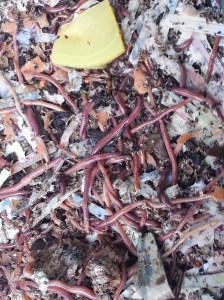
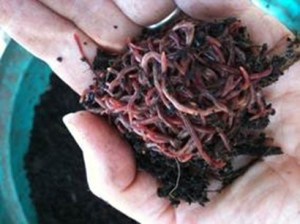
I also compost some of my food waste in two worm bins.  One is a big outdoor wooden bin, and the other is a Worm Factory bin that can stay inside my house or on my back deck.  Vermi-composting creates high quality fertilizer.

20150221_093011

Worm composting

I LOVE MY WORMS!

Challenge for Growth Prompt #10: Ending Food Waste

20150726_193656

Ending Food Waste

This week’s challenge is:

“Today I do not waste food.”

In 2012, the National Resources Defense Council of the U.S. concluded that Americans waste 40% of their food. Food is wasted at the farm level, between harvest and sale, during processing, during distribution, in grocery stores, in restaurants and in our homes. The study also reported that American’s throw out 25% of the food and beverages they buy. You can learn more about these statistics at: Wasted: How America Is Losing Up to 40 Percent of Its Food from Farm to Fork to Landfill

Many children in my generation grew up with parents who demanded that they eat their food because of the starving kids in China. As a result, many of us learned to tune out that message and disregard the fact that there is some truth to that way of thinking. I believe it is important for us to become responsible citizens of the world.

That does not mean we should force ourselves or our children to eat when we/they aren’t hungry. It is also not about shaming people into cleaning their plates. Instead, I think we should focus on how much food we buy, how much we cook, and how much we put on our plates. Children will be more likely to finish eating their food if they are given small portions. They can always ask for more if they are still hungry after they finish the original serving. That is true for adults as well.

While these are U.S. statistics and may be higher than those in other countries, I doubt we are the only country with the problem. This week, for 1, 2, 3 days or longer focus on not wasting food.

Sometime during the week, write a post about some aspect of this topic or about experiences you had when you focused on ending food waste. Feel free to use whatever form you desire: i.e., prose, story, poem, photograph, etc.  (If you don’t have a blog, please share your thoughts and experiences in the comment section below.)


General Prompt Information:

New prompts will be posted at 5 a.m. (PST) every Wednesday.

Since it is easier to make behavioral changes if we focus on them one day at a time, each of the weekly challenges will start with “Today, I focus on…….” It will be up to you to decide how long you want to focus on a particular challenge— one, two, three days or even longer. At some point during the week, publish a post that relates in some way to the subject of the week.

Link your post back to this prompt post. If the pingback doesn’t work, then leave the link to your post in the comment section below.  Be sure to include “Challenge for Growth Prompts” as one of your tags.

Throughout the week, I will publish the links for the posts that were created as the result of this prompt.  I will also post the links from those who participated the previous week. That way they will be seen by anyone who comes to this page.


This week’s contributors to: Ending Food Waste

Challenge for growth/food waste- Annette’s Place

Food Waste: More Information to Ponder- Living, Learning and Letting Go

How about you?


Last week’s contributors to: Message to a Child

I Love You…- Living, Learning and Letting Go

saying it real (troiku ~ narrative)- Traces of the Soul

For You- Nik’s Place

I Love You…

512px-Love_Heart_SVG.svg


The Challenge for Growth Prompt that started on February 2 was to say something to a child that you wish someone had said to you when you were young.  I practice a developmental form of psychotherapy that derives from Transactional Analysis.  It uses a model that says that inside of us we have a parent part, an adult part and a child part.  There are subdivisions of these parts as well.

As clients heal from their childhood traumas and learn to parent their inner children in healthy ways, I have plenty of opportunity to talk to their child parts.  As a result, I say many things that I wish had been said to me.

There are six stages of development and each one has its own developmental tasks.  For example the first stage is called the Being stage.  It lasts from 0 to 6 months of life.  Two of the tasks children are supposed to learn during the Being stage are that they are loved and wanted and that their needs are important.  If those tasks aren’t learned, it may leave a developmental gap that could last throughout life.

Pamela Levin and Jean I. Clarke both created sets of developmentally based affirmations.  Pamela’s series offers five affirmations for each stage and Jean’s has seven or eight.  Jean includes a “Love” affirmation for each stage.  If you look below, you will see the developmental tasks, the age ranges, and the Love affirmations.  A child needs to begin hearing the affirmation when the developmental stage starts and continue hearing it forever.  For example, we need to hear that we are loved and cared for from the beginning of our lives until the end.


512px-Love_Heart_SVG.svg

Being (0-6 months)
I love and care for you willingly.


512px-Love_Heart_SVG.svg

Doing (6-18 months)
I love you when you are active and when you are quiet.


512px-Love_Heart_SVG.svg

Thinking (18 months to 3 years)
You can become separate from me and I will continue to love you.


512px-Love_Heart_SVG.svg

Identity and Power (3 -6 years)
I love who you are.


512px-Love_Heart_SVG.svg

Structure (6-12 years)
I love you even when we differ; I love growing with you.


512px-Love_Heart_SVG.svg

Identity, Sexuality and Separation (13- 18 years)
My love is always with you.  I trust you to ask for my support.


512px-Love_Heart_SVG.svg

Interdependence (Adult)
You are lovable at every age.


Consider saying the age appropriate Love affirmations to children that you know… and to the “children” that live within you!

***

To learn more about the stages of development, the developmental affirmations, and how to fill in developmental gaps read:

Cycles of Power by Pamela Levin

Growing Up Again by Jean Illsley Clarke and Connie Dawson


Tools for Dealing with Repetitive Thinking

1280px-I_Don't_Know_ANY_of_This!


One of the main ways we make ourselves miserable is by repetitive thinking.  Very few of our thoughts are new; we recycle them again and again.  We ruminate about past traumas, feel indignant over ways we were slighted, or obsess about possible future problems.  Repetitive thinking can lead to depression and anxiety.

Below I am going to list many tools you can use when you find yourself trapped in this cycle.  They are not listed in any particular order.  If one doesn’t work for you at a given time, try another.

1)  Say “Be here now” to yourself and shift your focus to the present. Do that every time you find yourself thinking about the past, worrying about the future, or into repetitive thinking of other kinds. You may need to say the phrase hundreds of times a day when you start, but if you continue saying it and bringing your attention to the present, the repetitive thoughts will stop.  Remember that you are working to break an old habit and build a new one, and that takes time.

2)  When  you find yourself into repetitive thinking, bring single-minded focus to every moment. For instance, say to yourself “I am picking up my fork,” “I am holding my fork,” “I am picking up food with my fork,” “I am bringing my fork to my mouth,” “I am putting my food into my mouth,” I am chewing my food,” “I am swallowing my food,” etc.

3)  Pick an affirmation and say it at least 1,000 a day, or more, for 21 days.  Say your mantra internally, going as fast as you like. If unhelpful thoughts start coming at the same time, speed up the affirmation You can use any kind of affirmation. Some examples are “Be here now,” “I’m competent and capable,” “I let go,” “My needs are important,” “I am enough,” “I am smart,” “My life is unfolding as it should,”etc. Pick one affirmation and stick to the same one for the entire 21 days. It doesn’t matter if you believe what you are saying. What matters is that you want to believe it. If you say the affirmation in the 10,000 a day range, it may start flowing through your mind automatically, during the day and possibly throughout the night as well.

4)  Make a 3 second contract with yourself. Since repetitive thinking is a habit, you will probably find yourself in the midst of it without being aware it had started. You don’t break the contract when you find that you have been obsessing or over thinking for some time. You break the contract when you realize you are doing it and don’t start working to disrupt the thinking within 3 seconds.

5)  Distract yourself. Go for a walk, exercise, read, talk to a friend, etc.

6)  Write lists of what you are feeling mad, sad and/or scared about. Don’t spend time thinking about it; just write whatever comes to your mind in the moment, even if you end up writing the same thing over and over.

     I am mad that _______

     I am mad that _______

     I am mad that _______

     I am scared that _______

     I am sad that _______

     I am mad that ______

     I am scared that ______

     I am scared that ______

     etc.

7)  If you are angry with someone and obsessing about that, do some anger work. Journal about your anger, write a poison pen letter telling the person off (and then destroy it), twist a towel and imagine yourself yelling at them, scream into a pillow. Stop when you feel a shift in your energy.  These techniques are for the purpose of releasing the angry energy in a way that doesn’t hurt yourself, others or the environment.

8)  Write a list of your scares in one column and in a second column write the truth about each situation.  For example:

If he leaves me I will die                           If he leaves me I will feel very sad but I will not die.

I have done nothing with my life           I have done many things with my life (and list them).

9)  Write a list of all the things in your life that you are grateful for.

10)  Each time you have a negative thought about someone else, write or say three positive things about them.

11)  Each time you have a negative thought about yourself, write or say three positive things about yourself.

12)  Most often fear needs information. If you are feeling afraid, ask yourself what information you need and then go get it.

13)  If you find yourself obsessing about a negative event from your past, write a list of the things you learned because that happened to you. Also, identify the skills you have today because that event occurred.

14)  A friend recently told me about a process she finds very helpful:

The moment you get a repetitive thought, write down what scares you about that thought; i.e., what is behind it that worries or frightens you? In a stream of consciousness way (don’t go back to read what you write), write down everything you’re afraid of that comes to mind until you run out. Then wad up the paper and burn it [or tear it up] and go about your business. Do this process daily and/or every time you get a thought you don’t want.

15)  Think what your life would be like if you were able to stop most of your repetitive thinking.  Hold that vision in front of you as you make moment to moment decisions about where you put your focus.

I hope you find these tools helpful.  I wish you the best on your journey towards a peaceful mind.


Written for Challenge for Growth Prompt #8: Stop (Repetitive) Thinking

Photo Credit: Wikimedia