
Living and Learning in Amritapuri, India: September 7-11, 2018

Attitude

On my first day in Amritapuri this year, I noticed a man wearing a t-shirt that said “let go” on the front. Since my blog is named Living, Learning and Letting Go, his shirt caught my eye and my interest. A few days later, he asked me if I was having a good day or a great day. I was startled at first but then realized it was a nice example of how powerful choosing our attitudes can be. If our choice is between a good day or a great day, we are more likely to create one of those two options for ourselves.

***

I was reminded me of a story that I once heard Jean Illsley Clarke tell. She is a parent educator and was a mentor for me. Her story was about a seven-year-old girl who had been kicked out of a number of foster homes. Jean visited her on a day that she had been acting out. When Jean went outside to talk to her, she asked the child “How did you make your day go today?” The girl was startled for a moment. After thinking about it, she said, “Exactly the way I wanted it to go.”

***

A quote that is projected on the screens during Amma’s programs in Amritapuri and the U.S. (and probably elsewhere) is also about the importance of choosing ones attitudes.

***

For the last few weeks, I’ve been thinking about Victor Frankl, a psychiatrist who survived the Holocaust. In one of his books, Man’s Search for Meaning, he wrote:

Everything can be taken from a man but one thing: the last of the human freedoms—to choose one’s attitude in any given set of circumstances, to choose one’s own way.

***

There is so much power in realizing we can be responsible for our own attitudes.

Choices

Towards the end of last week, I realized I hadn’t done many of the activities that were important to me during previous trips.

  1. I hadn’t joined the prasad line to hand Amma the packet of ash and candy that she gives each person who comes to her for a hug.
  2. Amma has given western visitors and ashram residents the opportunity to sit on the stage with her each darshan day. Not only had I not taken advantage of that opportunity, I hadn’t even checked to see what my assigned time was.
  3. During my last three trips to Amritapuri, I had enjoyed doing a one-hour shift as a prasad assistant twice a week. That job consists of making sure that there are always people available to hand Amma the prasad and teaching them what to do if it is their first time giving prasad, I had planned to do that seva (volunteer job) again this year, but kept putting it off. I soon realized that it wasn’t going to be a priority for me this year.

Instead, I have kept focused on coming to bhajans on time, and sitting in the floor-seating area in the front of the auditorium, as well as attending more of the meditations and Q&A programs.

A few days ago, I walked by the prasad-giving line and saw that it was almost empty. I know what it is like to not have enough people to run the line, so as soon as I could, I joined the line myself. I enjoyed giving Amma the prasad packets as much as I always do.

After I finished doing that, I noticed that there was a lot of empty space in the area on the stage where devotees sit. That is very unusual, so I decided to take advantage of it. I had an incredible view of Amma as she gave darshan. I sat there for about half an hour and then left. I realized this was a good example of the importance of staying aware of opportunities that arise and not holding on to plans in a rigid way. It is important for me to consider each choice that comes my way individually.

***

This week I also had the opportunity to see that I don’t always make choices that are in my best interests. On Sunday, I got a hug from Amma and then decided to have dinner with friends instead of listening to the Swami bhajans. During that dinner, I heard Swami Pranavamrita singing one of my favorite bhajans after another. Even though I longed to be immersed in the music, I chose to stay with my friends. It was nice to be able to choose between between two good options, but since I am still longing for what I missed that day, I don’t think I made the best choice for me in that moment. I know it was a learning opportunity though and I believe I will have an opportunity to make a different choice many times in the future.

***

I used to teach a workshop based on Wayne Mueller’s book Legacy of the Heart.  I ended the workshop by saying “You will have endless opportunities to choose between Pain or Forgiveness, Fear or Faith, Performance or Belonging, Scarcity or Abundance, Grandiosity or Humility, Drama or Simplicity, Judgement or Mercy, Busyness or Stillness, Disappointment or Nonattachment, Isolation or Intimacy, Habit or Mindfulness and Obligation or Loving Kindness. The choice is up to you.”

Discovering My Limits

I have enjoyed sitting on the floor during bhajans. My legs often get uncomfortable but my back feels better than if I am sitting in a chair. If I go to the earlier meditation and Q&A program, I usually sit in a chair since sitting on the floor for the 1 1/2 -2 hour bhajan program is all I can handle. I’m pleased that I am able to get up and down from the floor, although I’m not very graceful about it.

On Thursday of last week, I faced a new challenge and soon realized I had discovered a new limit. When the program is in the auditorium there is a lot of space in the front area. However, on Thursday, darshan was held in the temple, which is much smaller. I decided to go to the temple for the 6:30 bhajan set. Since Amma would be giving darshan,  a swami would lead the singing. It would be like the “old days”.

The situation was very much like the old days. The front area was very crowded and there was no room to walk between people. As more and more people sat down, I began to wonder how I was going to get out. The swami would sing longer than a normal bhajan program and I knew I couldn’t sit that long. As crowded as it was, it would be difficult to get into a standing position and my balance would probably be a problem.

I worried about it for a while. Then the person next to me stood up. By using her space and my own I was able to stand up. That didn’t solve the problem of walking through a crowd of people when there was no space between them though. I slowly made my way past one person and then another, and then reached out my hand for support to go the last distance. One person either didn’t see me or ignored me, but another took my hand. With that extra support I was able to get to the aisle.

I had discovered a new limit. I will not sit on the floor during the 6:30 p.m. bhajans if darshan is in the temple. I can sit there at other times during the day.

***

I used to tell new devotees to be sure to stay until the end of programs because so many special things happen then. Another limit I have had to accept is that I can’t handle staying up late. If I do, I feel horrible the next day.

One of the events I missed this week was Rosh Hasshana, the Jewish New Year. A group from Israel sang for a while. I was there for part of that. I loved their music. Later in the night, another group of Jewish devotees sang for Amma and then Amma sang with them. I could hear a bit of that song from my room.  Part of me wanted to join them, but I knew I needed to respect my limits.

Saraswati Garden

I spent some time in Saraswati Garden a few days ago. It has become so lush. As I wandered through it, I marveled at how big the plants are compared to those that were there in 2016 when the garden was fairly new. Some of the plants that were 18-24 inches in 2016 are now well over 6 feet tall. And there are many new plant varieties.

November 2016

September 2018

Photo credits:

The Amma quote is from Amma’s Facebook Page.
The attitude, choices, and limits photos are from Pixabay.com.

To read the previous posts in this series click here.
Living and Learning in Amritapuri, India: September 2-6, 2018

Krishna Jayanthi

I planned this trip to Amritapuri based on the dates for my favorite Indian holidays- Krishna Jayanthi, Ganesh Chaturthi, and Onam. Many, if not all, of the holidays operate on a lunar calendar. As a result, the dates and order may change from year to year.  Onam came first this time. You may remember than Amma wanted that holiday to be less festive than normal in recognition of the pain and suffering experienced by those affected by the Kerala floods. She asked that the event be more focused on praying for peace in the world.

Amma said the same for Krishna Jayanthi. The afternoon procession and games were canceled and there were some other adjustments made throughout the day.

My favorite part of the holiday occurred first thing in the morning. When I took the morning seva shift at the cafe, it was with the agreement that I could have Krishna Jayanthi morning off! Normally a big group of people start to gather in the courtyard in front of the temple around 6:30 a.m. We put on orange headbands and then place sandlewood paste and kum kum on our foreheads, in the space between our eyebrows. By 7:30, everyone is ready and a large procession around the ashram grounds… and beyond… begins. We sing high energy Krishna songs as we walk.

This year, everyone gathered in the courtyard but the group was much smaller. There were no headbands. When we were ready, the procession and songs started but the group only walked to the area in front of the Indian kitchen. We sang a lot of songs though. I particularly enjoy the songs that we sing during that procession, because they are in Sanskrit and easy to follow. And most of them I have sung many times over the years. Before we returned to the temple, we received word that Amma wanted us to chant the peace mantra at the end of the early morning event.

Adults and children dressed as Krishna and Radha joined us when we were singing near the kitchen. They stayed near the front of the procession as we walked back to the temple. Five decorated cows were in front of the temple when we returned. Rituals were performed honoring the cows and we sang more songs. Afterwards, we chanted the peace mantra and the crowd dispersed. As always, I had had a wonderful time.

Normally on Krishna Jayanthi, there is a much larger procession that goes between the ashram and a local Krishna temple in the late afternoon. There is lots of singing and it is a very joyful experience. Last year, the procession started at the temple and ended at the ashram. When we walked into the ashram gate that day, the courtyard was filled with people waiting for the games to begin.  The game is similar to hitting a pinata in that the participants use a stick to try to break a vessel filled with candy. One of the differences is that in the Indian game, the participants are not blindfolded. When they run towards the hanging pot, water is thrown at the person who is trying to hit it. As the person gets close to the pot, the rope is pulled up and the pot rises. There many different groups that participate; players vary from young children to the elderly.  This activity is particularly popular with the college students.

Neither the big procession nor the games were included in this year’s program. Instead, Amma held a normal darshan day. At one point, when I was sitting on the auditorium floor watching her give hugs, I noticed that a group of children who were in Krishna and Radha costumes had gathered. Some of them were as young as two. They were all so cute. I left the hall soon thereafter. When I returned, the children were on the riser where the singers usually sit, chanting the peace mantra. It was very beautiful. After a while, they stopped chanting and each went to Amma to get a hug.

Amma had another surprise in store for us. Sometime during the afternoon, it was announced that she would be stopping darshan in time to lead bhajans from 6:30-8:30. She doesn’t normally sing on darshan days, so it was a very welcome addition to the program.

The last part of the Krishna Jayanthi celebrations usually start around 11:00 p.m. and go until about 2:00 a.m. During that time, Amma gives a talk, sings bhajans and hands out payasam, a sweet pudding. I was exhausted and knew if I stayed up that late, I would feel horrible the next day, especially since I had a cafe shift at 7:30 a.m. and had my last Ayurvedic appointment at 10. I made the choice to go to bed instead of going to the program. I woke up as Amma started singing bhajans so went outside and listened to them from a balcony that is near my room. It wasn’t as much fun as being at the program but it was a healthy choice for me.

(To read excepts from Amma’s talk click here.)

Photo credits: Amma’s Facebook Page and Amritapuri.org

Darshan Programs

After the floods, the number of Indian visitors who visited the ashram was greatly reduced and since the Cochin airport was closed for quite a while, Western devotees had trouble getting here. Normally, large groups of students from Amma’s colleges visit, but that also stopped for a while. There were days during that time when the darshan programs finished between 8 and 9 p.m.

The college students started coming again last week. On the first day, there were groups from two schools; each school sent around 250 students. I think there have been even more students on some days. There has also been quite a few weddings since I’ve been here. Some of the weddings have a lot of guests. The wedding itself is short and simple, but I enjoy watching everyone before and after the ceremony. There is so much excitement.

There have been many years when I have gone to darshan to get a hug from Amma at the time I arrived at the ashram and again when I was about to leave. Occasionally, I would go one other time during the stay. For the last three years, we have been able to get a hug from Amma more often. I feel blessed to be the ashram no matter the situation, but it is so nice to be able to be in her arms so frequently.

Tuesday Prasad Lunch

Tuesday is the day that Amma serves lunch to ashram residents and visitors. Before the lunch, she leads a meditation and answers questions. I found this photo of the September 4th pre-lunch program on Amma’s Facebook PageThere was a quote that accompanied the photo. It was in response to one of the answers asked that day.

Pure love will help us transcend our shortcomings and mental weaknesses. Immeasurable is the power of such love. Its transforming energy serves as a catalyst and serves as a success formula both in our spiritual practices and efforts in the world. Just as a mountaineer has a safety rope tied around his waist to catch him in case he falls, divine love is our true protection. If we have this love and focus, we will be able to overcome all kinds of obstacles”

My Experiment

I have continued to make a priority of sitting in the front section of the hall for bhajans and in addition have gone to the meditation and Q&A sessions more often. I have been experimenting with finding a frequency that is challenging but not exhausting. It is my sense that reconnecting to the bhajans is the most important thing for me to do on this trip, so I always give bhajans priority.

In my last “Living and Learning” post, I talked about leelas being “God’s play.” I experienced a leela on late Monday or Tuesday afternoon that was more of the fun variety. I tend to be very avoidant of meditation unless it is the meditative state that sometimes arises within me during bhajans. On that day, I decided to attend the meditation program even though I didn’t really want to. I ran into a friend on my way to the auditorium and he said that the meditation had been canceled. That had never happened before so I was puzzled. I was also a bit mortified when “Hallelujah” came out of my mouth, loud. But that is how I felt.

I walked back to my room, and just as I was inserting the combination into the lock, a bell rang three times. That is the signal that Amma is coming. Clearly, she was going to do the meditation after all. What could I do other than laugh and head back to the hall!

Cafe

I have continued to do a morning seva (volunteer) shift in the cafe, calling out the number on a food order when it is ready for the devotee to pick it up. I always enjoy that job, but I enjoy it even more when the students are present. They tend to order in large groups. Years ago, they ordered mainly toast, but that has changed. One day, there was a group of 12 male students waiting for their breakfast. They had ordered 2 Grilled Cheese sandwiches, a regular omelet, a cheese omelet, 2 orders of French Toast, 4 Egg and Cheese sandwiches and 6 Breakfast sandwiches! Needless to say, it takes a little longer for everyone else to get their food when there are orders this big, but the cafe staff do an amazing job of handling it.

An even more interesting thing happened last week, and is still going on. Essentially all of the eggs we have served since we received the last egg delivery have had double yolks. I also saw two that had triple yolks. On the rare occasions there was a single yolk, it was very large. The double yolks are very easy to see when the eggs are fried  but there are noticable differences in the omelets as well; they are bigger and are a deeper yellow than is normal.

Photo Credit: Offered by Miya to Wikimedia

Since there were so many double yolk eggs, I decided to learn more about them. Several articles I read said that the occurrence rate was 1:1000. (That certainly wasn’t true in this case!) There also seemed to be consensus that double yolks happen when hens are young and that as they age, the hens will start producing one yolk eggs.

Another article said that we don’t usually see double yolk eggs because eggs are scanned to check the contents prior to putting them cartons. When double yolks are found, they are sold to companies that use eggs in the ingredients of a product. (Part of the reason that is done is that double yolk eggs are bigger than eggs with single yolks. The bigger eggs don’t fit in the egg cartons.) Yet another article mentioned that a farmer’s flocks tend to be about the same age, so that if there are a lot of double yolks, it is probably because the farmer’s flock is young. I can’t imagine that the contents of eggs are scanned in India, but the concept that it occurs because a given flock is young seems plausible.

Weather

On most days during the first week of this visit to Amritapuri, it rained once or twice a day. I love hearing the rain here. Since most of the roofs are metal, the sound is even louder than it would normally be. Often when I think it couldn’t rain any harder, it does. There have been times in previous years when I have been in the auditorium and the sound of the rain has drowned out the sound of the amplified music.

I took this recording from my room on one of my first days here. By the time I found the voice recorder app, the sound was not at its loudest but I think it will give you an idea of how hard it was raining and how loud the sound was.

It has rained very little since that first week. The temperature has been cooler than normal, which is very nice. If there weren’t fans, though, I’d be sweating; but there are lots of fans. In fact, in the evening, I often get chilled when I am in the auditorium. I generally wear a light-weight jacket for those programs because I know I will get cold. I’m not complaining. We had many, many years without fans in the auditorium and in those days I was SOOOO hot.

Phone

The phone rates here as so low that they defy belief. It seems like they go down every year. You can get a phone plan that gives 2 GB of data a day for 84 days. The plan costs 350 rupees ($4.85). In addition to the impressive amount of data, you get free phone calls within India, as well as free texts. At the end of the 84 days, the plan can be renewed.

I have that data plan. In addition, I spent 250 rupees ($3.47) to use on international calls. When, I called the U.S., however, those rupees disappeared quickly. Later in the day, I learned that I could pay an additional 43 rupees and get reduced rates to the U.S. When I asked what the per minute cost would be for that plan, I was told calls to the U.S. would be 1 rupee and 80 paise per minute. I thought I must have misunderstood, but when I made a 2-minute call later, I was charged 3.8 rupees (5 cents)!

These prices make me wonder how much of the $85/month or more I’ve paid to U.S. Phone companies over the years is pure profit. I feel good that I changed to Consumer Cellular last month. When I return to the U.S. I will be paying $33/month… and that includes taxes and fees. The rates aren’t as good as in India but they are certainly better than $85/month.


To read the previous posts in this series click here.

Living and Learning in Amritapuri, India: August 29-September 1, 2018

Amrita University Graduation

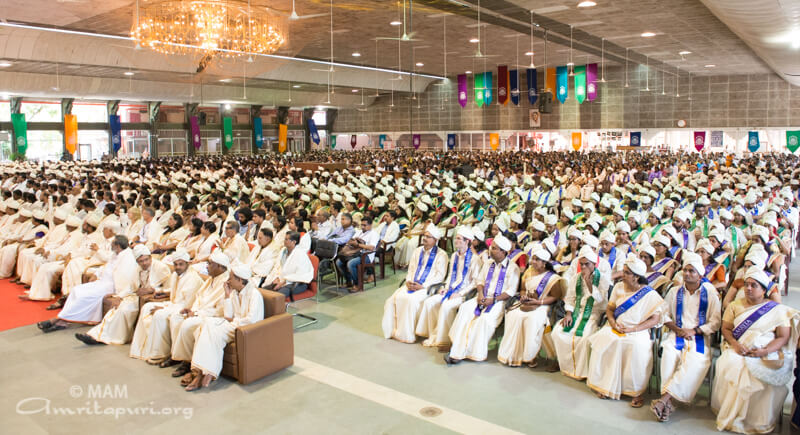
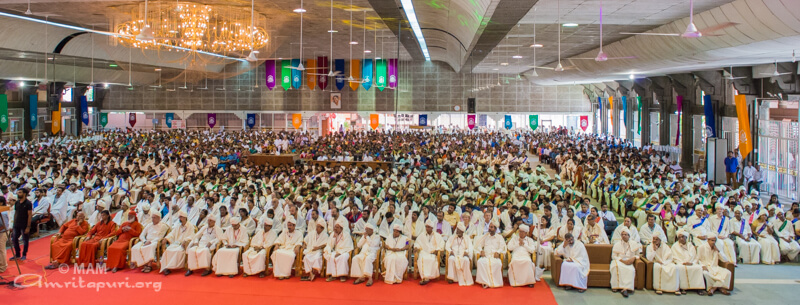
Friday, August 31, was graduation day for 1,325 undergraduate, post graduate and PhD students from the Amritapuri campus of Amrita University. The graduates came from the Schools of Arts & Sciences, Ayurveda, Biotechnology, Business, and Engineering.

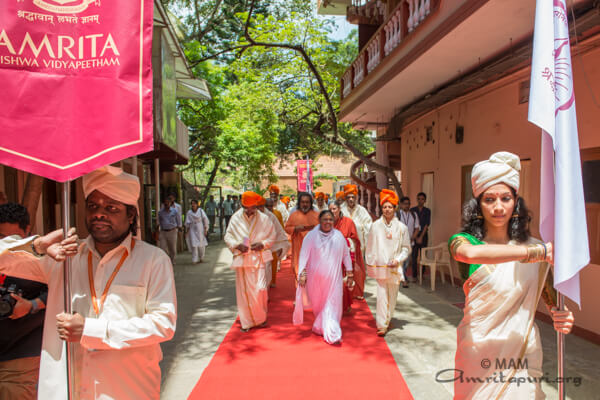
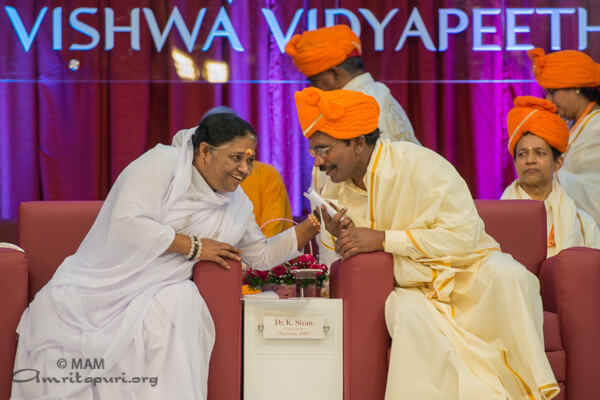
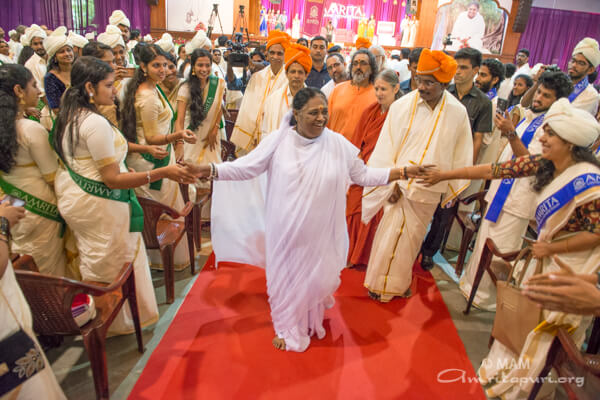
This year, the graduates and their families gathered in the Amritapuri auditorium and waited for Amma and the other dignitaries to arrive. The Chief Guests, were Dr. K Sivan, Chairman, Indian Space Research Organisation and Amma who is the Chancellor of the University.

Procession to the hall
Amma and Dr. Shivan

Recession at the end of the ceremony

I was not able to attend the event, but I had been present when the decorating began the night before. The next day, I discovered that the front of the stage had been decorated with beautiful flowers and there were purple curtains that extended from one side of the auditorium to the other. They were so beautiful that they practically took my breath away. The pink lights that were placed behind the curtains made the scene even more striking. As you can see in some of the photos, many banners had been hung around the sides of the auditorium.

I was able to hear the last part of Amma’s speech. You can read some of Amma’s message to the graduating students if you click here.

So much love went into preparing and presenting this ceremony. I have no doubt that the graduates will remember this day for the rest of their lives.

The photos are from Amma’s Facebook Page and Amritapuri.org.

A New Experience

I have had a cyst on my left cheek for about six years. The doctors I have seen during that time have kept an eye on it but the only solution they offered me was to have it surgically removed. I had been told that the surgery would leave a sizable scar. I would have no problem with that if it was a necessary surgery, but since it was cosmetic, I decided to just let it be.

One day last week, a friend asked if I had considered talking to Dr. Sushila about the cyst. Dr. Sushila is the Ayurvedic doctor that runs Amritapuri’s panchakarma program. I’ve known her since my early days in Amritapuri. I thought it was a great idea, so I walked to her office and was able to schedule an appointment for that very day. During the visit, Dr. Sushila suggested I see a doctor who works at the Amrita University School of Ayurveda. The next morning, I took a rickshaw to the Ayurveda hospital/school/clinic.

Since it is a University clinic, there were students who observed the doctor closely. A few of them also assisted her. That first day, the doctor did an examination and then had one of the senior students make a poultice of herbs. I noticed it consisted of some black herbs and something that looked like a small citrus fruit. (I probably didn’t see everything that went into the poultice.) The student used a mortar and pestle to crush up the ingredients. After applying the mixture, she put a bandage over it. (The purpose of the poultice was to see if the cyst would soften overnight.)

That was the first of five daily visits to the clinic. The second morning, the doctor took of the bandage and then removed a scab that had formed on the outside of the cyst years ago. She then began the process of taking out the contents of the cyst. It was important that she also remove the outer sack because if any of the sack remained under my skin, the cyst would regrow. When the doctor finished her work, a different student applied a new bandage.

That day I had heard the doctor tell the students my cyst was a sebaceous cyst. When I looked it up later, I read that the contents of that type of cyst is a “cheese-like matter”. That description matched what I have observed in the past.

There had been some build-up of that matter overnight, so it was clear that not all of the cyst had been removed. The doctor supervised a senior student in removing more of the substance. She instructed me to return to the clinic for next two days. On the fourth and the fifth day there was no indication that the cyst was still producing the matter.

I was told I could remove the bandage at the end of that day. And, at that point, I could also finally wash my hair (I hadn’t been able to wash it because I was supposed to keep the bandages dry). When I took the last bandage off, I was very pleased to discover that there will be almost no scar.

Hopefully, I won’t need to return to the clinic, but if I do, so be it. The procedure caused no pain, so I do not dread the possibility of going back. Since I used to teach nursing students at the University of Washington, I had enjoyed being in the teaching environment.

I feel so grateful, and impressed, that the doctor was willing to give me this level of attention. I can’t imagine being told to come back five days in a row in the U.S. She had so much patience and was so gentle. And she asked repeatedly if I was experiencing pain. The cost was unbelievable. I paid 200 rupees ($3.00) to register at the clinic and 30 rupees (45 cents) for each of the dressings. That’s it!

Leelas Abound

Leela is a Sanskrit word that is often defined as “God’s play.” Even though the word “play” is used, that doesn’t mean all leelas are fun. They often take the form of lessons and challenges coming in rapid succession. Or they may be a whole series of events that leave you thinking “What in the world is going on?

I always experience an increase in leelas when I visit Amritapuri. The leelas that stand out for me on this trip occurred the evening of August 31. You may remember that earlier on the trip, I made a commitment to myself to not sit in the back or far sides of the auditorium and instead to sit in the front of the hall. For several days, I took every opportunity to do that. While I loved being in the front, I also did too much; I can’t sit cross-legged for long periods of time so my legs hurt, and I was getting too tired.

On August 31, I decided I would stay in my room during the evening meditation and the question-and-answer period that followed it; I would just go to the bhajan (devotional singing) program that followed it. During the first program, I would catch up on computer work.

About the time that the meditation started, I received an email saying that someone may have attempted to get into my Comcast account and that I needed to reset the password. After multiple failed attempts at changing the password, I called the U.S. and got help from Comcast directly.

After the call I was able to change the password on both my phone and laptop, but still wasn’t able to get the emails to download. I ended up deleting the Comcast email account on both devices and then reinstalling it. After that I was able to get my emails on the phone, but still couldn’t get them to download onto the laptop. Soon thereafter, I discovered that all of the contacts on my laptop had disappeared. Needless to say, dealing with this took a lot of time and I didn’t get any computer work done during the meditation and Q&A. In fact, I’m still dealing with some of the problems that started that evening.

By then, it was time for me to go to the bhajan program, so I headed to the auditorium. Once there, I discovered  Amma had started singing earlier than normal. As I walked into the hall, she was singing the last verse of Morya Re. I couldn’t believe it. I had heard that song for the first time during the 2017 Amritapuri Ganesh celebrations and fell in love with it. I have been with Amma for 29 years and I’ve never heard her sing the song before. I was happy that I got to hear some of it, but longed for the full experience.

I was still determined to sit in the front of the room but the hall was crowded due to the upcoming Krishna’s birthday celebrations. I decided to get to the front area by coming in from the side. Perhaps I could sit against the wall at the bottom of the stage. The front section of floor-sitting area is primarily occupied by the brahmacharinis (female monks) and long-term western residents. That would be an awesome place to sit for bhajans, although at this point I knew I would likely be sitting so close to the stage wall that I might not be able to see anything.

I did find a place to sit there and I was even able to get a glance of Amma from time to time. I was content. Moments later, an Indian brahmacharini asked if I could see Amma, and when I responded “a little” she motioned for me to come sit next to her. I was hesitant at first, because I didn’t want to block anyone’s vision, but she said it was fine. I moved up and felt very appreciative that she had helped me in this way. Then a Western resident, who was even closer to the front, motioned for me to come sit beside her, and I did. If Amma had been sitting on the floor instead on the high stage, I would have been about 20 feet away from her. Needless to say, I had a wonderful time singing bhajans from that area… and felt very taken care of besides.

My conclusions from these experiences:

Was I bad for skipping the meditation and Q&A : No

Was my choice to skip those programs a mistake: No, I made the choice based on self-care and it still feels right. However, choices may have consequences and these did.

Throughout this experience, I had the opportunity to practice behaviors such as persistence, flexibility, equanimity, and letting go. I was also reminded that what I need will be provided.

What I will do differently in the future because of this experience: I will come early to the bhajan program so if Amma starts the program before I expect her to, I will be ready.


To read the previous posts in this series click here.

Greenbelt Restoration Work Party: July 25, 2018- Practice in Flexibility, Persistence, Letting Go and More

Preparing for and leading the July 25 work party was a perfect opportunity to practice flexibility, letting go, non-attachment, staying in the moment, equanimity, persistence and a host of other values that I haven’t yet identified. At times, the challenges seemed endless.

Perhaps the first challenge occurred two weeks before the event when I fell while working in the Greenbelt. I found myself dealing with bruised ribs… again. I’ve done my best to stay conscious of my feet while walking on the sloped, uneven land but clearly I wasn’t staying conscious enough. As the work party approached, I purchased a walking stick, something I’d considered doing for a long time, and bought a good pair of hiking shoes. I also threw away the very old tennis shoes that I had been wearing the day I fell. I had known they didn’t give my feet enough support but they were so comfortable and easy to slip on. It felt good to take care of myself by discarding them.

Based on past experience, I expected we would have around 15 students from the UW Introduction to Environmental Science class. I felt very grateful when two of our regular volunteers agreed to be team leaders. Then, I was told that someone I had met in the past had moved to Washington. I discovered that he has lots of experience doing this kind of work. When I told him about the event, he was very interested in helping. So, counting me, we had four staff. Hooray!

That changed when one team leader got sick and it became obvious he wasn’t going to be able to come and another let me know she couldn’t participate. Then the third had a conflict and would only be able to come for part of the time. That left me as the only leader that would be present the whole time.

The day before the work party, we only had two students registered. Another registered that evening. I was surprised that we were going to have such a small work party, but with such a limited number of staff I knew it was for the better. Besides it is fun to have a tiny group from time to time.

Another challenge that we would have to deal with was hot weather. I’m used to having work parties planned out in great detail. When I discovered it would be in the high 80’s or low 90’s that day, I realized I would have to be prepared to let go of my “plans” and instead to practice flexibility and letting go. We would have to work wherever there was shade as it would be too hot to work in the sun. (Most of the work I had planned would have been in direct sunlight.)

Since this work party would be from 1 to 4 pm, I waited until the morning of the event to buy food for snack time. When I got into my car, I used the handle to shut the door and it broke off. I went back in the house to ponder the situation. When I returned to the car, I discovered that in addition to the broken handle, the driver’s door was locked and wouldn’t open. Because of my injured ribs, I couldn’t move into the driver’s seat from the back seat or from the passenger seat. I couldn’t believe it. I decided snack time would have to consist of what I already had in the house, uninteresting as it might be.

Several hours before the beginning of the work party, I set out directional signs on 25th Avenue South, on the Hanford Stairs and on Cheasty Boulevard. As I walked down the stairs going towards Cheasty, I noticed there was a police car parked nearby. And to the north of it, there was yellow tape blocking the road.

Since that was the way the students who took the light rail would be arriving, I walked down the stairs to get a closer look. Once there, I learned that a big tree had fallen during the night and it had knocked down power lines. I told the policewoman that people would be coming to a work party in a few hours and would be walking along that road. She told me that the repair work would take most of the day but assured me that the students would be allowed to walk through. I was still concerned. What if the students saw the tape stretched across the road and didn’t know what to do. Would they turn around and go home? I walked back to my house and sent out notices by voicemail and email.

Shortly before the work party was to begin, I walked towards the stairs again. I could hear, and soon could see, that there were  students sitting on the stairs. I thought they might be the UW students I was expecting. As I got closer to them, I could see that they were smoking. When they saw me, they ran away. I realized they were not here for the work party and that they were probably students from a nearby high school who were on their lunch break . They probably ran away because they were caught smoking, but I also laughed to myself when I thought how weird it must have seemed to have an older woman who was wearing a sun hat and an orange safety vest and holding a long walking stick come out of the forest.

Finally, it was almost time for the work party to begin. One of the  students came early, so he helped me bring the rest of the supplies into the site. Then the other team leader and the rest of the students arrived… and then a surprise… a fourth person, who had seen the work party on an event calendar joined us. I had wondered if there would be participants who would decide not to come because of the heat. Not only did everyone who had signed up show up but we had an additional person!

We started working in areas that had already been planted, removing wood chips that were touching the stems of the plants as well as digging out invasive blackberries, ivy and bindweed that was sprouting. (We put wood chips throughout the planting areas to hold in moisture and reduce weed growth. The wood chips are not supposed to touch the plant however, so we attempt to keep the space around the plant cleaned out. We refer to that empty space as a “donut hole”. ) As we finished one area, we moved to another, following the shade as much as possible. Every planting area looked so much better after we finished taking out the invasive blackberries and bindweed, and cleaning out the donut holes.

I didn’t remember to take photos during the first part of the work party, but this is what some of the planting areas looked like after we worked on them.


And these photos were taken later.


After the break, we all moved to the Greenbelt site that is north of our main site. We started by moving a drying rack that had accidentally been constructed in the place where future wood chip piles would go. I was amazed to see that the blackberry canes and other invasive plant cuttings that had been placed on it were already dry. We used that dried debris in constructing the new rack.

[Note: We place the blackberry canes, blackberry root balls, ivy and bindweed on drying racks so that they don’t touch the ground and re-root. The increased airflow that results from having them off of the ground also speeds up the drying process.]

We will be removing a lot more blackberry vines and root balls from this area. It is good to have a new rack ready to receive them.

There was a truck parked in the area I had planned to clear next, but the sun was also there, so we moved further  into the Greenbelt instead. It was still hot there, but there was a lot of shade, and a slight breeze.

We cleared an area of blackberries so that we could build another rack there. Once that rack was complete, the students continued digging out blackberries. We also started pulling out ivy. All of the cuttings were placed on the new rack.


Ten to fifteen years ago, many evergreen trees were planted in this part of the Greenbelt. I have been very eager to start freeing them from the invasive vines that had grown over them since then. We began working on one of those trees at this work party. There is much more to do before the tree is fully free, but we made considerable progress. (If you click the gallery to enlarge the photos…. and look closely…. you may be able to see that there is less ivy under and going up the tree!)


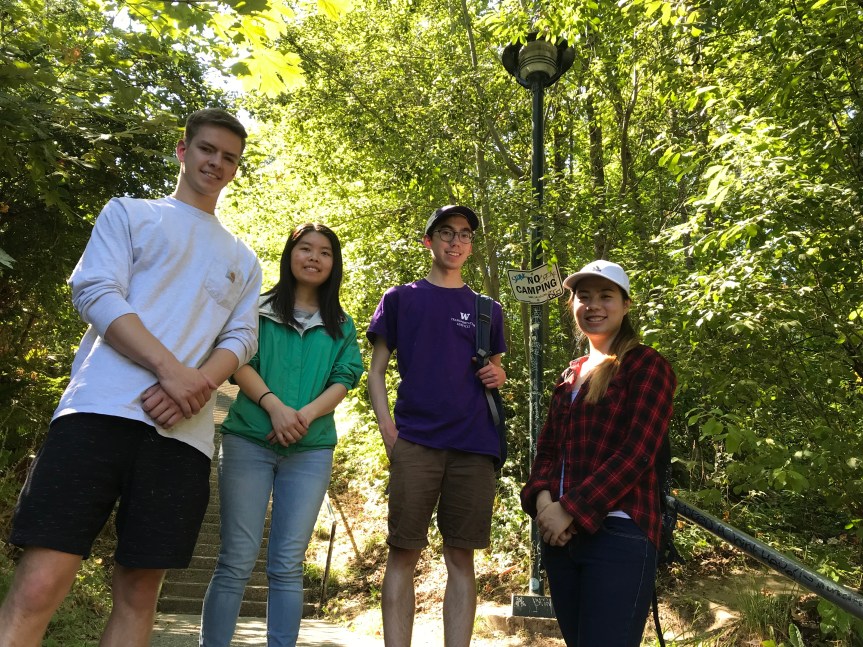
Even though the area was shady, we were all tired from working in the heat so stopped a bit sooner than we would have under normal conditions. After putting the tools and other supplies away, we gathered on the stairs to celebrate our achievements and to take a group photo.

Once again, we had accomplished so much in a short period of time. It was another big step in returning this land to the healthy forest it once was.

Not only did I enjoy leading another work party, but I had also survived a myriad of challenges and had had an abundance of opportunity to practice flexibility, letting go, non-attachment, staying in the moment, equanimity, persistence and more. While I know that these experiences will help me grow, I hope the frequency of the challenges will slow down for a while!

Update on Practice in Accepting Change and Letting Go

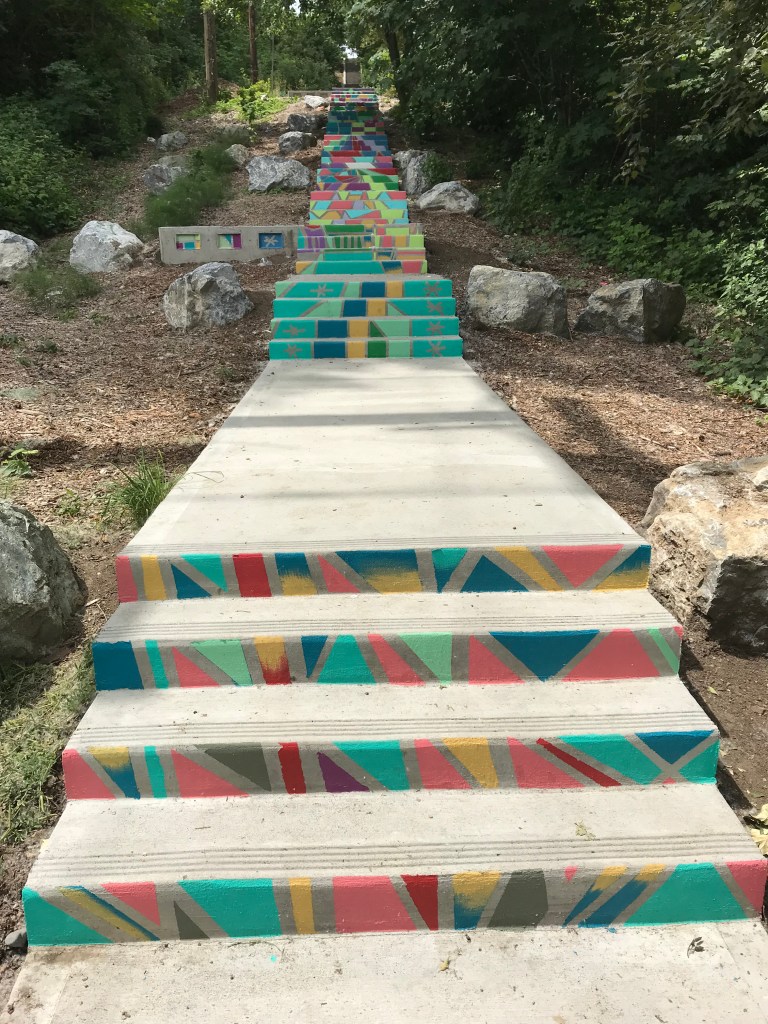
In my June 8 post, I shared my concern that the stairs near our Greenbelt site were being painted. I had come to the conclusion that it was a good opportunity for me to practice both accepting change and letting go.

When the stairs below ours were finished, I thought the optical illusion was cool but another concern arose. Our stairs are much smaller and closer together than those. I wondered if the bright paint would be overwhelming. I decided to stick with my decision to consider it an opportunity to not worry; to let go and accept whatever change came my way.

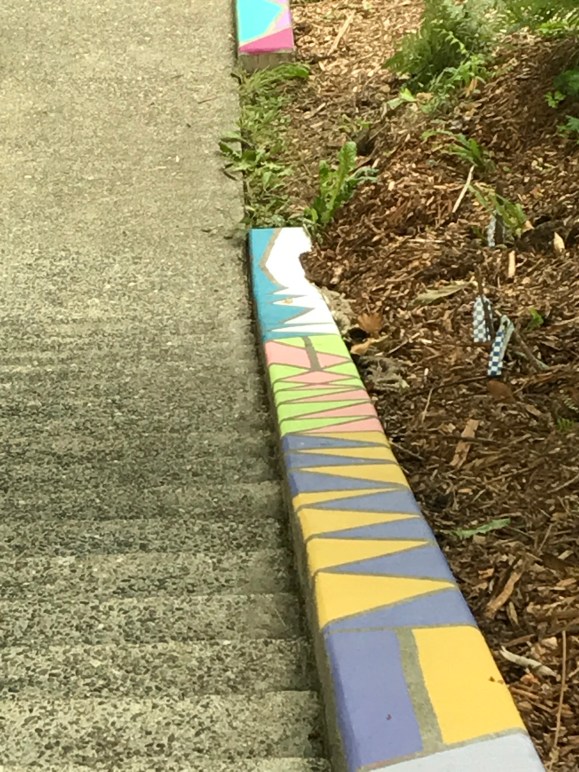
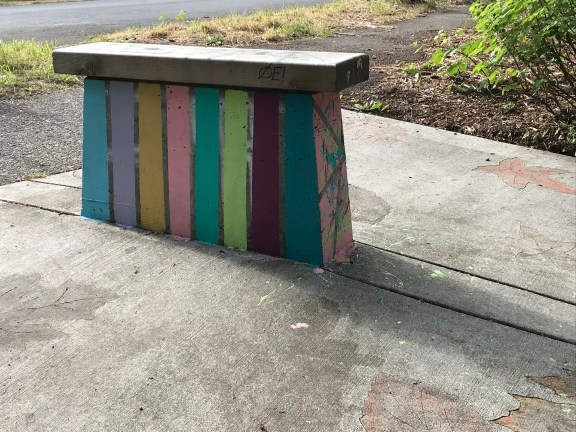
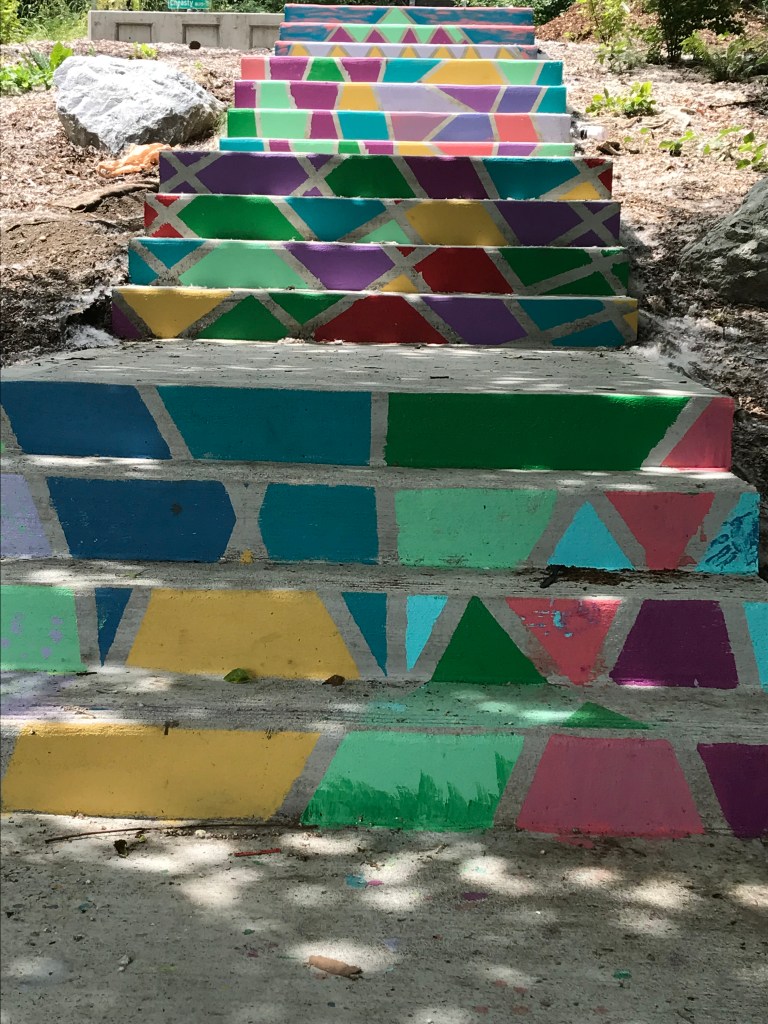
The stairs closest to our site were to be painted on Saturday. That afternoon, I decided to check it out. I was delighted with what I saw. The colors are beautiful. Instead of painting the sides of each step, like they did in the area below ours, the painters painted the cement border that goes between the various landings. They also painted the “bench” at the top of the stairs. (I put bench in quotes because it used to be the mount for a bulletin board.)

I’m so glad I decided to see this experience as a “lesson” rather than worrying or fretting about it. I couldn’t be happier with the results.

I Will Pass It On!

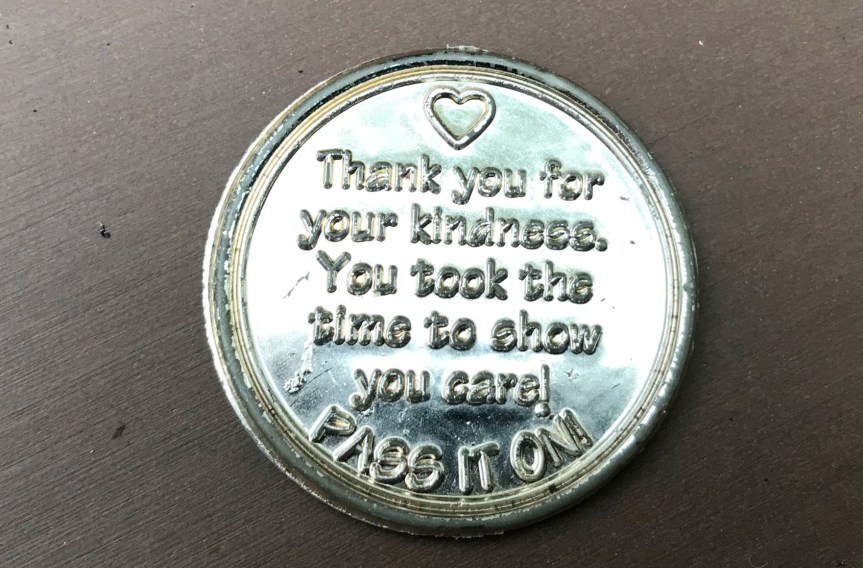
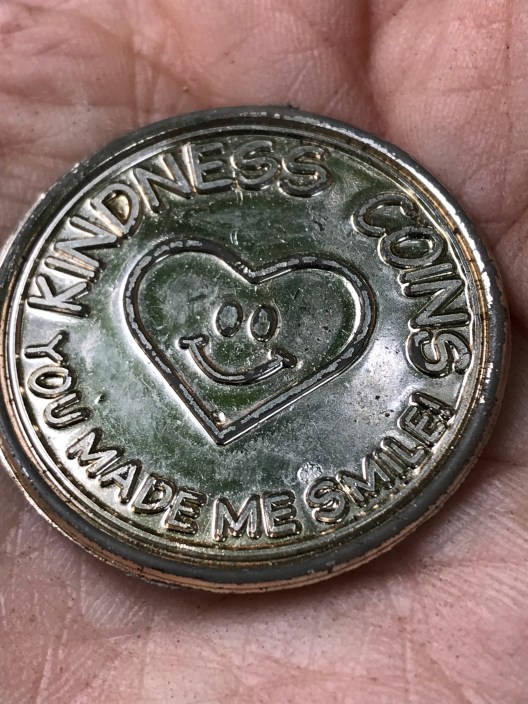
Friday morning, when I was pulling weeds in the Greenbelt, I noticed that there was a coin on the ground next to a sign I had placed under an Indian plum shrub during the spring of 2017.

I was curious what it was, so I picked it up. These messages were on the two sides of the coin:

Over the year, a few people have told me that they appreciated the signs but I have no idea who put the coin there or when they did it. I felt very grateful for the expression of gratitude and will definitely pass the coin on!

Practice in Accepting Change and Letting Go

The last week in April, a friend sent me an email that said an artist, working with Seattle Department of Transportation’s Safe Routes to School project, was painting staircases around Seattle. The notice also said that the next steps to be painted were the Hanford Stairs, the stairs that border our Greenbelt restoration site.

When I saw the photo I was concerned. I couldn’t imagine something so bright going through the forest. I didn’t understand how painting the stairs would make walking to school safer, but thought that anything that accomplished that goal would be a good thing. I liked that she was inviting community members to help paint. In addition, I knew that this unexpected change would be an opportunity for me to practice letting go and suspending judgment.

I took some comfort in the fact that the notice included a photo of the stairs that were to be painted and they were the new set of stairs that are below ours. Maybe ours would stay the same.

Last Saturday was the day the lower stairs were to be painted. Yesterday afternoon, I decided to walk down and check them out. From the top of the stairs they looked like this…. no sign of paint.

But when I walked to the bottom of the stairs and looked up, this is what I saw.

The bright colors still seemed strange to me but I had to admit that there was beauty to it. I loved that the stairs looked clear one way and fancy when you looked at them from the other direction.

This morning, I noticed that there was a lot of sand on the plants on both sides of the stairs near us. It seemed so strange and I couldn’t imagine what could have caused it. When I pointed the sand out to somebody later in the day, she said that the stairs had been pressure washed. In that moment, I realized that our part of stairs must also be part of this project and that they will probably be painted tomorrow!

I still think it will take me time to get used to this change, but I’m glad that I decided that the lower stairs were okay and even kind of pretty. I have no doubt that children will enjoy them a lot and I hope that it does indeed keep them safe.

Weekly Photo Challenge: Unlikely

Last week’s photo challenge was to share a photo of something “unlikely”; something that may fit into the category of “never say never”.

I, for the most part, stopped saying “never” decades ago when I realized that many, if not most, of the things that I said “never” to ended up being an important part of my life journey.

I first recognized that pattern in my early 40’s when in a span of 2 years I became a devotee of an Indian guru (and still am), a “groupie” of a rock band named “Tribal Therapy” (for about a year), and started going to an African-American Pentecostal church (for about 15 years.) At the time when these life changes began, I had described myself as being somewhere between an agnostic and an atheist for 20 years. If, at that time, someone had told me these things would become a life focus of mine, I would have adamantly said “never… no way… not a chance”.

The other area where I have moved from “never” to it being a life focus is photography. I took some photos as a teenager, a college student and when my children were young but at some point developed the belief that photography keeps one from being in the moment; that you don’t “live” when you are focused on preserving a past moment.

I started blogging in 2014. I soon decided that my posts looked better when there were photos in them. Since most photos on the internet are copyrighted, I started looking for ones in the public domain. While over the years I have found some good sources, like pixabay.com and Creative Commons, finding free photos was a very time consuming endeavor at first. It occurred to me that I could solve that problem by taking photographs of my own.

As my interest in nature developed, I became interested in nature photography. At that point, a whole new world opened up for me.

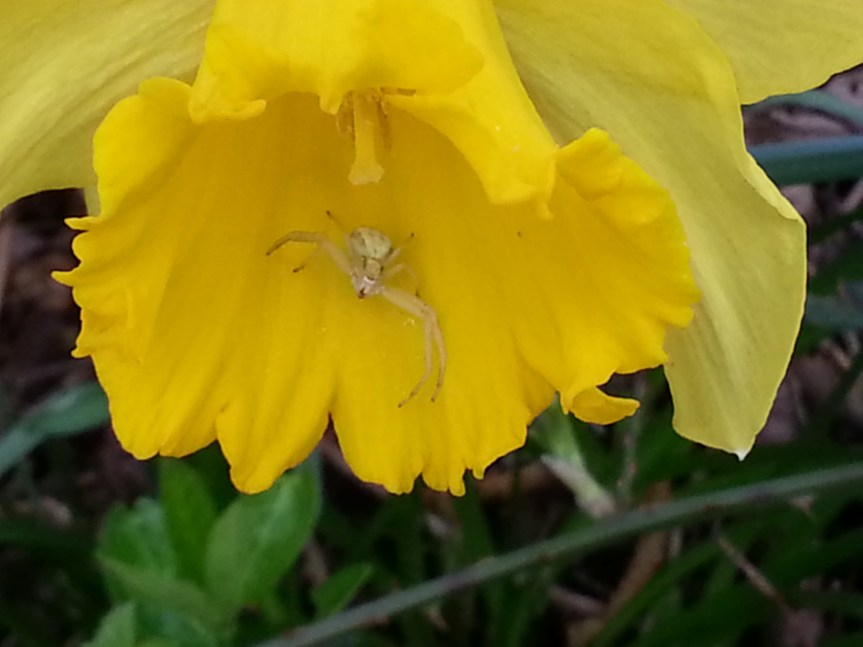
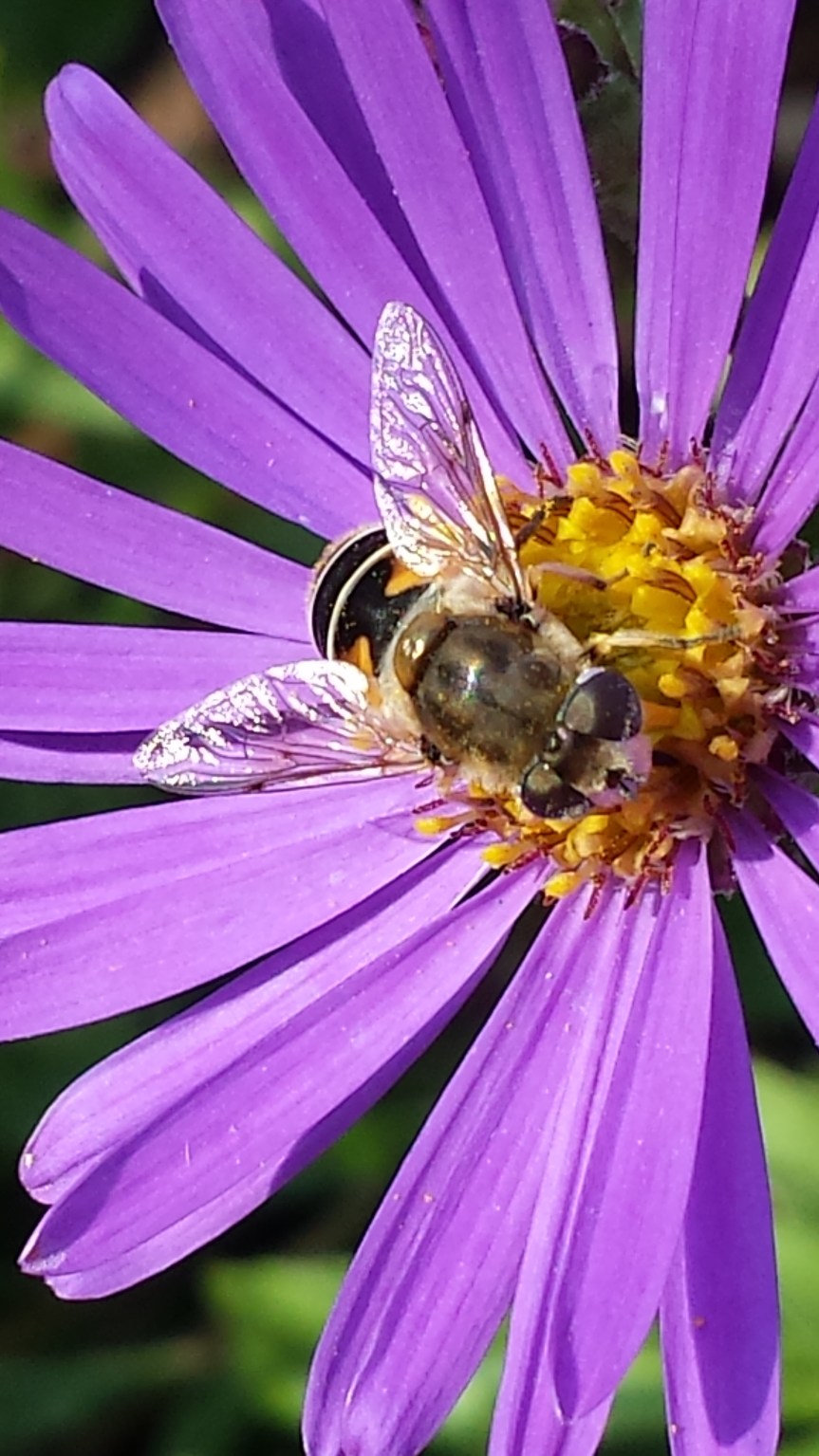
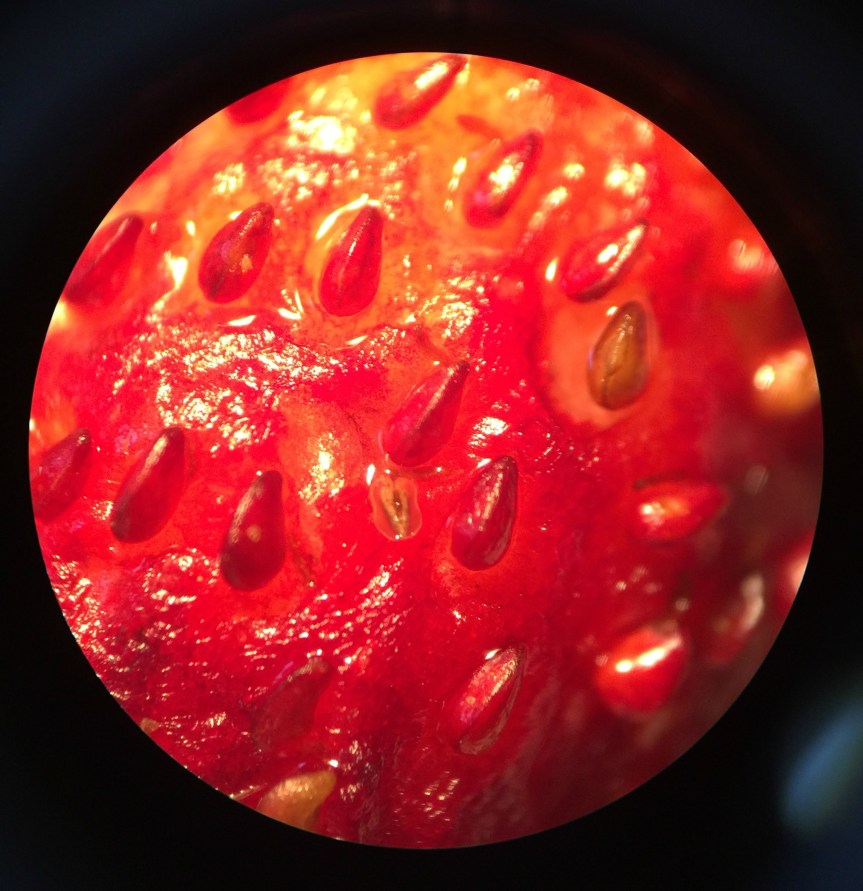
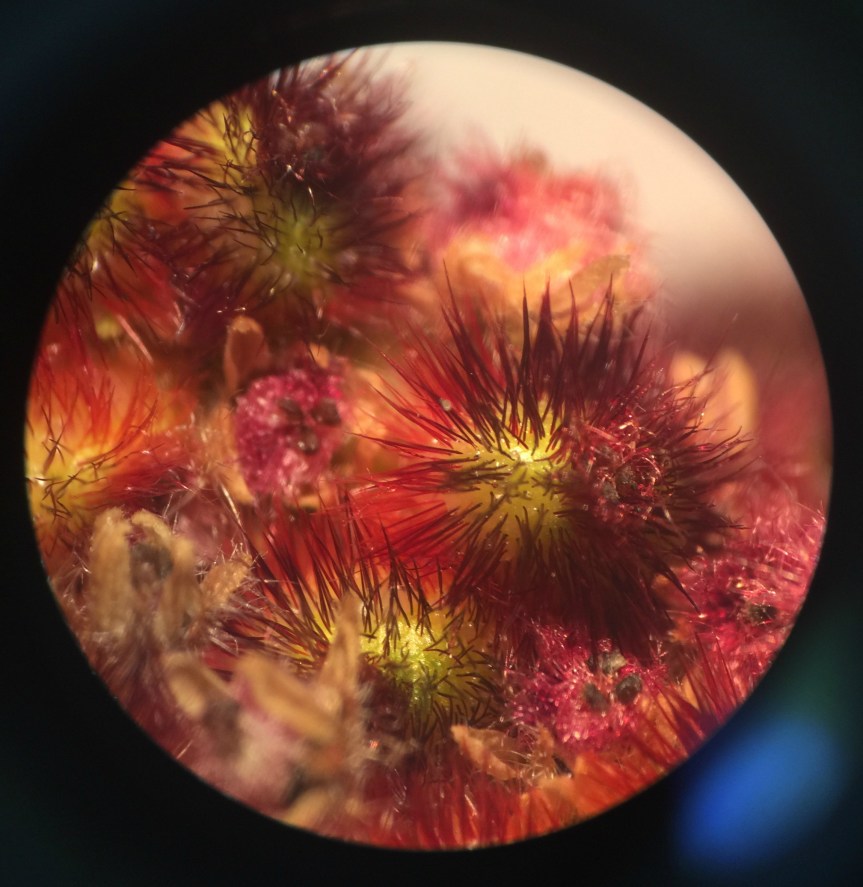
I even bought a microscope and began to snap pictures with my iPhone and an adapter.

I suspect photography will be in my life for a long time.

This photo was taken yesterday, 5-9-18

I will continue to make it a practice to (almost) never say never.


Unlikely

Living and Learning in Amritapuri, India: January 4-13, 2017

Even though I’m back in Seattle now, it is important to me that I tell you stories about the last part of this visit to Amritapuri.

Baby Feeding Photos

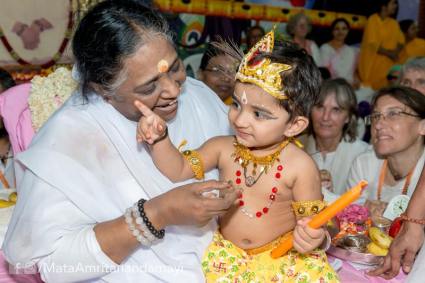
In Hinduism, it is traditional for a baby to be fed its first solid food as part of a sacred ceremony. When a parent asks Amma to perform that ritual, she holds the baby on her lap and feeds him or her some payasam, a sweet pudding. An ashram photographer takes a photo of Amma feeding the baby; thus, providing the parents a memento of the experience.

Soon after I arrived at Amma’s Amritapuri ashram this year, I noticed that there were five big photos of Amma under the windows of the outside portion of the west wall of the auditorium stage.  I had never noticed them there before.

The pictures were visible to every person who walked up the ramp that goes from the auditorium floor to the stage. From a distance, the photos looked identical. They were each about 40 inches high and 24 inches wide. When I saw the photos up close, and read the sign that was next to them, I learned that the big photos of Amma were actually comprised of tiny photos of Amma feeding babies. Each big photo contained pictures of 6000 different baby feedings. I remember believing they were tile mosaics but now that I think about it, I’m having doubts about that.

Since each of the baby feeding photos were of a different baby, and there were five large pictures of Amma, 30,000 babies feedings were part of that exhibit. I was intrigued and astounded by that display throughout my trip; astounded by the display itself and by the fact that Amma has performed that many baby feedings.


Friends

Many of my friends were participating in a nine-day silent retreat (meditation, yoga, silence) during the end of my trip. It was over the evening of the 11th and I was on the road to the airport by 5:00 a.m. on the 12th. It felt strange to leave not having seen so many friends for nine days. A highlight though was that my friend Ramana arrived from Seattle on the 9th. He and I hadn’t been in Amritapuri at the same time for several years. It was fun to spend some time with him during the last days of my visit.

Synchronicities

I was trying to get some information for friends who were coming to India a few days after my departure. I was walking to an ATM when my friend Do walked up to me and asked if I had been able to get the information I was needing. When I said no, he told me that Prabha could probably help. I proceeded to the ATM. As I was returning to my building, I had a momentary glimpse of someone who looked like Prabha. I wasn’t sure since I was seeing her from behind. After a moment’s thought, I decided to check it out. It was her, and she did give me the information I needed. I found out that Do had seen her right after I talked to him, and told her that I was looking for her and why, so by the time I talked to her, she already knew what information I was looking for. This whole scenario seemed so synchronistic to me and it was all the more amazing because there were around 5000 people living in the ashram. There are always some people I don’t see during my whole visit, and all of these connections were made within a five minute period.

***

I never know what Amma’s schedule will be when I plan a trip. Her India tour dates are often not announced until a week or two before the event occurs. As it turned out, Amma started her South India tour hours after I boarded the plane for Seattle. Sreejit and Chaitanya were both going on that tour. So, we all left the ashram on the same day. Perfect timing!

Lessons

Many experiences and lessons were contained within this trip. I visited gardens, farms and fields. Through those experiences, I came to some sense of peace around the fact that not all of the trees, shrubs and ground covers in our Seattle forest restoration project will live. This kind of work is trial and error and will also be affected by weather, soil conditions and many other factors. Whether or not a plant survives is not in my hands. My job is to put in the effort and let go of the results.

My experience with the ants was a challenge that reminded me to “wait, watch and wonder” rather than immediately react. It also gave me the opportunity to practice equanimity. Sometimes I was able to get there and sometimes not.

Being able to witness and participate in the production of the Christmas play, as always, gave me joy. It also reminded me that when we work together great things can be accomplished. I could see how far the cast have come in learning to take whatever comes. No matter the challenge, the participants do what needs to be done and hold on to a positive attitude throughout. Their growth is obvious and their work inspires many.

One of our Seattle satsang members died while I was in Amritapuri. I still can’t believe that is true; it feels surreal. His death reminds me to make every day count.

My respect for the importance of “going with the flow” rather than trying to force things to happen has grown. When I try to force my will, I am likely to exhaust myself and cause myself pain. During the month I was in Amritapuri, there were so many times that a person I needed to talk to walked in front of me moments after I became aware of the need.

Here are some of my favorite memories from this trip. There are so many others that I don’t have photos of, such as my darshans with Amma and time with my family and friends.

Traveling back to Seattle

My trip home would be as long as it always is: a 2 1/2 hour taxi from the ashram to the airport, a 4 hour flight from Trivandrum to Dubai, followed by a 14 1/2 hour flight from Dubai to Seattle. This time I planned to take a LYFT taxi from SeaTac airport to my house.

For several years, I have made the trip more tolerable by taking a long layover in Dubai. During that time, I have stayed at the Dubai International Airport Hotel. It is expensive but the opportunity to sleep, or at least have my feet up, in a quiet room for 15-19 hours has been well worth it.

Sometime during this last year, I heard that Emirates would give me a free hotel and food if I asked for it. They provided the accommodation without question. Having the free hotel turned out to be a mixed blessing though. I hadn’t realized I would have to go through immigration and that took well over an hour. Also, I didn’t know where to go when I got to the baggage claim area. Everyone I asked told me to go to exit 1. When I finally found that exit, and the hotel bus, I was told I  should have checked in with someone in the terminal. Luckily, that person brought a group of people to the bus at that moment and I was able to get on the bus.

Once I was at the hotel, there was a very long check in line. The hotel was also very noisy. While I was waiting in the check in line, I decided it was unlikely I would make this choice again.  That thought was followed by another; if the hotel room had a bathtub I would consider returning. After a month of cold showers, taking a tub bath would be heavenly. (At Dubai International airport hotel there was  only a shower.) One of the first things I saw when I entered the room was the bathtub!

There were more challenges at the hotel than the ones I mentioned above, but the hotel staff were very friendly and the food was excellent. Another challenge occurred when I returned to the airport for my flight to Seattle. After going through immigration again, I looked for a restroom. I was in the old wing of the airport and every restroom had a very long line. I finally found one with a somewhat shorter line at the end of the wing, so joined the line. That restroom ended up having only two stalls. If I had been staying in the airport hotel, I would have been able to stay in my room until it was time to board the plane.

Was the bathtub and the free room and food worth it to me or will I choose to pay more and stay in the airport? Only time will tell.

Greenbelt restoration project

Within five minutes of walking into my house, I changed shoes and went outside to look at the plants in the Greenbelt. They seem to be surviving well. None had been broken by falling branches and the snow didn’t seem to have affected them. I was so excited and eager to start the restoration work again. Our first work party will be on Sunday, January 21.

Jet lag

Even now, I am in the throws of jet lag. I really dislike the experience of turning my night and day around (there is a 13 1/2 hour time difference between India and Seattle). Sometimes I can’t sleep for more than 2-3 hours at a time for many weeks. While my sleep is still disrupted, I think it is going to be shorter this time. I returned to Seattle a week ago today, and last night I slept 5 hours. May that shift continue!

The end and the next beginning

While I could write so much more about this trip, I hope that my posts have given you an idea what it is like to be in Amritapuri. Every trip is filled with adventure, challenge and learning. Even though I’ve only been back in Seattle a week and I’ve been hampered by jet lag, I have had so many experiences since I’ve returned. I look forward to posting about them in the next few days.

To read the previous Amritapuri posts in this series click here.
Living and Learning in Amritapuri, India: January 3, 2018

IMG_1002

January 3 was a particularly good day for me, full of so many things I love about my visits to Amritapuri. I decided to give the day a post of its own.

That morning, I woke up at 5:50 a.m. I showered and dressed, read and answered email, looked at the news on cnn.com, and then, at 7:15,  headed to the cafe.  Once there, I assisted with breakfast preparation and handed out meals to customers until the first rush was over. Then I ordered breakfast for myself and visited with friends while I ate.

At 9:00 a.m., I left the ashram for my next adventure. This time I was going to the seed-saving farm. I had visited that site for the first time the year before. Before I tell you about going to see it this year, let me give you some back story.

January 2017

Last January, a devotee told me about the seed-saving farm and gave me directions for getting there. He said I should walk to end of the main road in Vallikavu and turn left. After I passed the temple, I should turn right. That sounded easy but I soon discovered there were two paths north of the temple, paths that were quite close together.

I took the first path and walked a long way. After some time, I decided I must have taken the wrong one so went back to the temple and took the second  path. I walked a long way on that one too but still couldn’t find the farm. I returned to the road and decided to take the first path again; I would walk further along it this time.
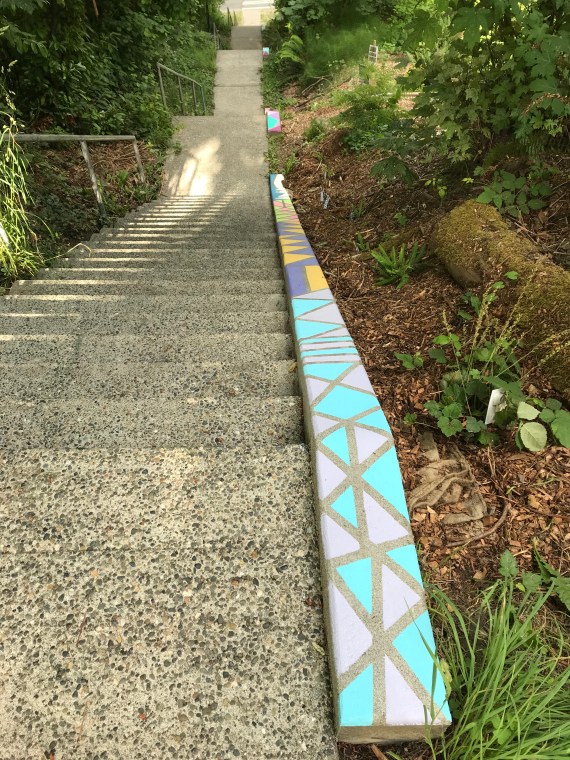
I had been told the farm would be next to a blue house. Before long, I came to a blue house where tapioca, banana palms and some other plants were growing. It was a smaller farm than I had expected, but it was very nice. No one was there, so I wandered around taking photos.
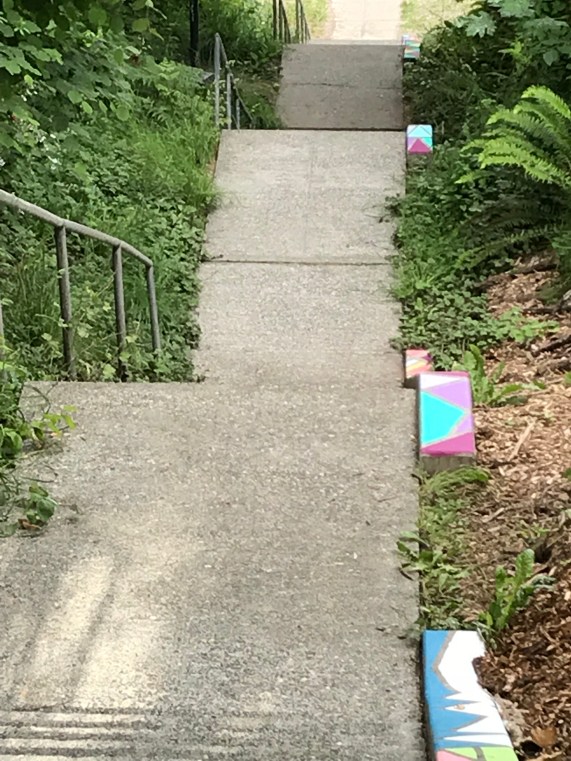
After exploring that farm, I returned to the ashram feeling very successful. When I showed my photos to the person who had given me the directions, however, he said that I had not been at the seed-saving farm; I had been on private property! He told me that the farm was further down that path.

The next day, I headed out to find the seed-saving farm and this time I found it. Lokesh, who manages that farm, showed me around and told me many fascinating things. I took lots of photos and looked forward to writing a post about the farm.

After visiting the seed-saving farm that day, I went to the tulasi farm that is closest to the ashram and took photos there as well. Then I stopped by Saraswati garden.  At some point between my visit to the tulasi farm and the time I returned to the ashram, I lost my iPhone.  I retraced my steps numerous times that day and went to various Lost and Found stations in the ashram as well, but I never found the phone. I had downloaded the photos of the private farm the same day I took them, but losing the phone meant I had lost all of the photos I had taken at the seed-saving farm and the tulasi farm. I was leaving India the next day, so there would be no way to replace them until my next trip to Amritapuri.

January 3, 2018

Back to my story about this year. I left the ashram at 9:00 a.m. on January 3rd, heading for the seed-saving farm. I took the first turn to the right after passing the temple. In time, I passed the private farm I mentioned above. I kept walking but never found the seed-saving farm.

When I realized this path wasn’t working, it occurred to me that maybe the second path had been the correct one and my memory was wrong. On my way back to Vallikavu, I came to a small road. I decided to go north on that one rather than return to town and start over. I walked a short way on the small road, stopping when an Indian man who didn’t speak English, indicated I should go the other direction. I turned around just in time to see a Western woman crossing the road not far from where I was standing. I asked if she was going to the garden and she said yes.

The gate to the farm was a short distance from the road. That was not how I entered the farm last year, but that was irrelevant. I was where I wanted to be thanks to the man turning me around and the woman crossing the road.

The area looked completely different than I remembered it. Part of the reason for that was that it is a 13 acre farm and the volunteers were focusing on a different part of the property than they were last year.

Lokesh was a bit dismayed when he saw me. He told me there are four growing seasons in Kerala and one had just ended. Everything had recently been harvested. They were just beginning to prepare for the next season, so there wasn’t much to show me. He gave me a tour anyway, and in my mind showed and taught me a lot. I will write a separate post about that garden but will share some photos below as a preview and perhaps as a teaser.

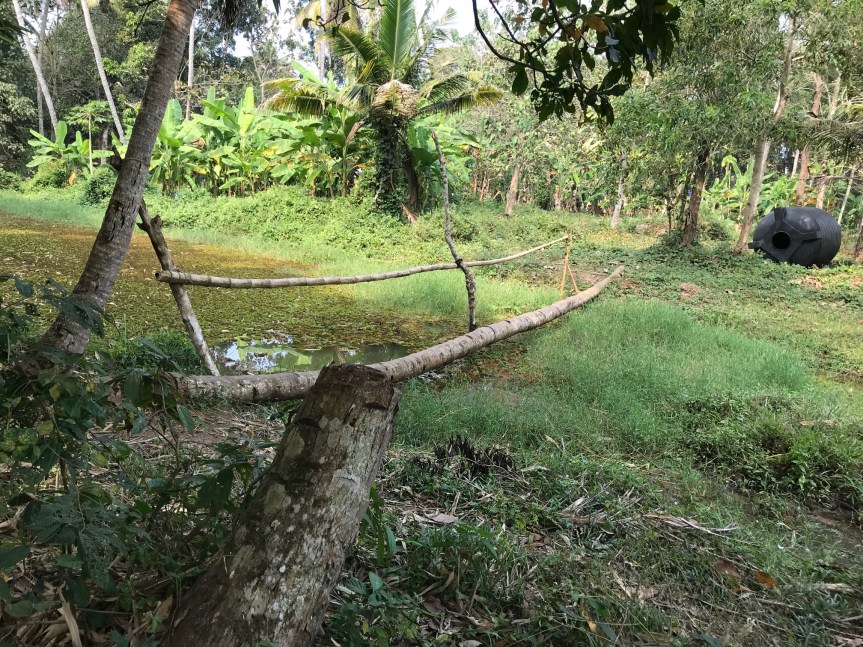
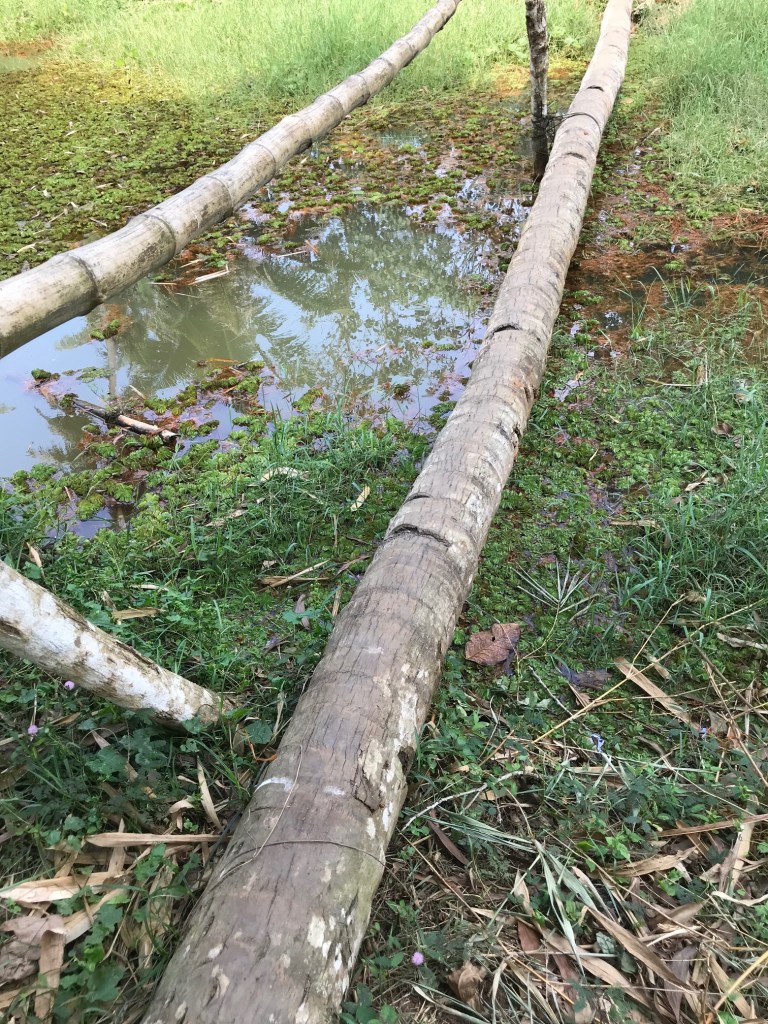
There was another reason that this farm was an important part of my day. Last year, there had been a rickety bridge that went from one section of the farm to another section. As I remember it, the bridge swayed and it was scary to walk across it. Sometime during the year, that bridge had been replaced by a new one. It is hard to call it a bridge, though,  because it was only a coconut tree that had been cut down or fallen. There was something I could hold on to as I crossed but it wasn’t as close to the tree trunk as I would have liked. I made my way across the bridge tentatively and carefully. I believed that the the water underneath the bridge was shallow but I sure didn’t want to fall into it!

As I walked back to Vallikavu, I realized I was taking a different path than when I had come. It ended up being the second path from the temple. I think I will remember how to find it when I come back later in the year.

When I arrived in Vallikavu, I decided to visit this bakery. Seeing or thinking about the name of it always brings a smile to my face.

img_5712

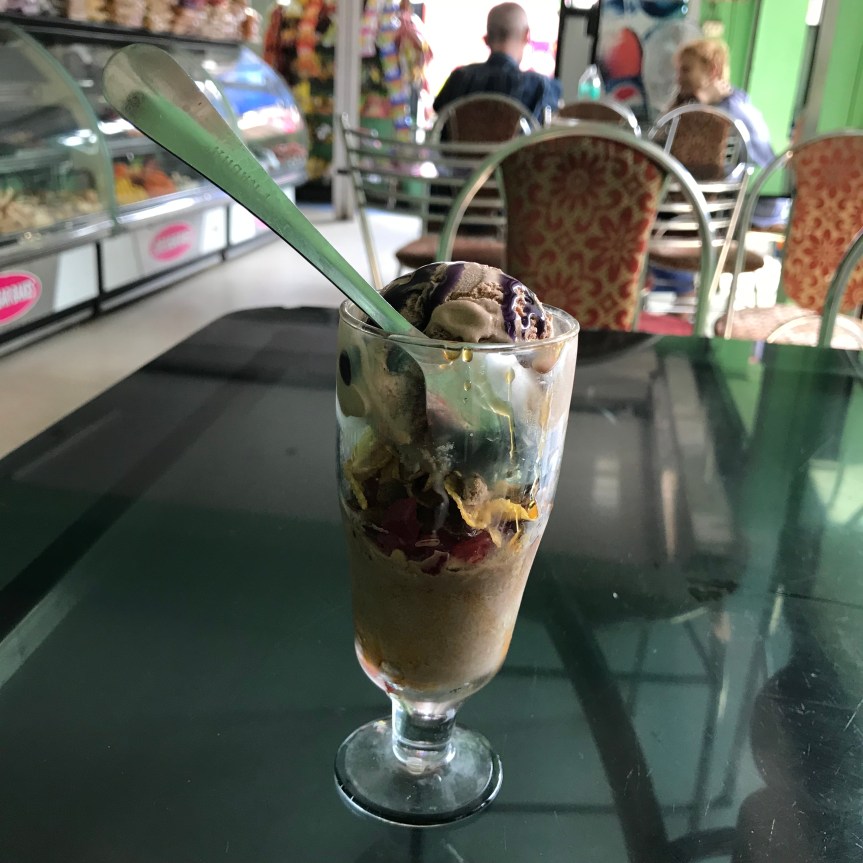
Once there, I bought my favorite treat. (It isn’t as big as it looks!)

I returned to the ashram sometime between noon and 12:30. Lunch begins at 12:30 but I wasn’t ready to eat since I had just had a treat. I checked my phone and saw a text from Chaitanya asking if I wanted to join her for lunch at 1:30. That was a surprise, and a very welcome one. I usually only get time with my kids if I go to where they are working. I, of course, said yes!

From 4:00-5:00 p.m., I did the prasad assistant job I’ve mentioned in previous  posts. It is one of my favorite sevas. When I did it in August I was overwhelmed, partially because the job was new to me, but also because I was dealing with the stress from living with a broken wrist. This time, for the most part, it was stress-free.

When I left the stage, I decided to join the prasad-giving line so I could be the person handing Amma the ash and candy packets that she gives to those who come to her for a hug. So from 5-6 p.m. I made my way through the prasad line and ultimately had the joy of being so close to Amma and serving her in that way.

The canteen dinner doesn’t start until 7:00 p.m. and I would be working in the cafe from 7:00 to 9:00 so after giving prasad, I went to my room and made some oatmeal. After my shift, I sat in the auditorium and listened to the bhajans (devotional singing) for a while and then went back to my room.

I no doubt checked email and the news again and perhaps worked on an article I was writing for another publication. I went to bed around 11 p.m.

What an enjoyable and full day it had been.

To read the previous posts in this series click here.