Living and Learning in Amritapuri, India: November 27-December 2, 2019

Pre-post Reflections

I am presently in Amritapuri on my 32nd visit to Amma’s ashram in 30 years. This almost yearly pilgrimage has been an incredible part of my life. I feel blessed to have been able to spend so much time in the place where Amma was born. It seems to me that her energy permeates every grain of sand whether her physical body is present or not.

That does not mean that I’ve always wanted to make the trip. There were several years in the past when I went with the same attitude I might take when I go to a doctor or a dentist– i.e. because I know it is for my own good. I grow so much when I’m here and have always felt like the experience was an important purification process. Almost always, though, I am very eager to come to India. I wish there was a way to teleport here though; the journey there is so long.

When I am in Amritapuri, I am challenged in many of the same ways that I’m challenged by life in the U.S., but here it is like the process is put on fast forward. I may feel like I’m on an emotional roller coaster, but even though the challenges may come one after the other, I usually work through them faster too.

As I write this, I’m thinking about the saying that “growth comes from the challenges not the consolations.” While being consoled feels good and is also important, I think it is true that growth comes from facing the challenges that come my way.

I love being with Sreejit, Chaitanya and Akshay, my son, daughter and son-in-law, who have lived in Amritapuri for many years. I love being with my Amritapuri friends, and, of course, I love being with Amma, who in many ways became the center of my life when I met her in 1989.

I also love the sights, sounds and smells of India. Each time I arrive in the country, part of me wants to bow down and kiss the earth. There were two years that I couldn’t afford to come to the Amritapuri, When I informed Amma of that fact during her North American summer tour, I was crying so hard that someone thought I was telling Amma that one of my kids had died. That incident always reminds me how important this part of my life is to me.

I had no plans to start this post in this manner, but it felt good to reflect on these things. So on with my November 2019 story;

I left Seattle on November 27. It was a 14-hour flight to Dubai, followed by a 3-hour layover. During the connecting flight security check, I was instructed to take off my Fitbit and put it in the bin. I’m not used to doing that so I forgot to take it out of the bin after I went through the security line.

Soon after I entered the main part of the terminal, I realized I had left the Fitbit in the bin. I was instructed by airport staff to go to one place and then another. Eventually, I was able to find it, but by then the layover was almost over. That challenge certainly made the time go by fast, and provided me with a lot of exercise. My normal routine is to buy a cup of ice cream in Dubai, and there was enough time before my next flight for me to do that!

The flight to India was a 4-hour flight. I had decided not to add the 3-hour taxi trip to the ashram to the journey, so stayed in a hotel in Kovalam, a town near the airport, for the day. I planned to get lots of sleep. I did rest a lot, but couldn’t sleep. There is a 13 ½ hour time difference between Seattle and India, and turning day and night around is difficult.

I had many challenges during my time in Kovalam. The one I will mention now is that they were fixing the road between the hotel and the area where the restaurants are located. It is not unusual in India for people to walk through construction sites, but I don’t like to do that. I had to eat, however, and there was no other option.

In some places there was a thin strip of normal ground alongside the new road but that strip was rocky and very uneven ground. I had trouble walking on it. An Indian woman gave me a hand both when I went towards the restaurants and coming back from there. But that was only for a few feet, so most of the time I ended up walking on the hot tar and gravel. My shoes may never recover.

The Beginning

At 5 a.m. the next morning, I was in a taxi and on my way to the Amritapuri ashram. The traffic was much lighter than it would have been even an hour later. In two-and-a-half hours, I was back in my India home. I felt exhausted but happy to be there. After spending a bit of time with Sreejit and Chaitanya, I had some breakfast and then went to my room and started unpacking.

In January 2005, I bought a flat at the ashram. That allows me to have a room to myself which makes life easier for me. I can use it whenever I’m in Amritapuri, and it is rented out to other visitors when I am gone.

I was so exhausted and very wobbly that first day. I got help from Sreejit and Chaitanya, and reminded myself that it was important for me to go slow. I was especially careful when I left my room. It would be so easy for me to trip on something, but as I got some sleep my balance improved tremendously.

Changes

There are always so many changes here from one visit to the next. Some of the ones I’ve noticed so far are:

  1. Those of us who live alone are required to sign in on a Wellness Register each morning. If someone doesn’t sign the register then someone goes to the room to make sure the person is okay. For years, I’ve signed in on a desk that is near the elevator in my building. Now everyone has to go to the International Office to do it. Writing that statement reminds me I need to go sign in for today… soon.
  2. The Indian store has been remodeled. Now, it is more like a supermarket where you can just take things off the shelf rather than ask someone to get it for you. The hours have been extended; it is now open all day and well into the night.
  3. The Indian Canteen has been remodeled. There are open air “walls” around it now, as well as numerous other improvements which I can’t figure out how to describe.
  4. The dishes and containers from the kitchen are now washed in a special little building that is attached to the area where we all wash and dry our dishes when we eat. We started drying our dishes in that area the last time I was here. Moving the kitchen washing space and the drying racks to that spot meant that two of the five circular dining tables are gone. I feel sad about that, but it is certainly understandable.
  5. The area that I described in #4 is partially fenced off now and there are lots of new plants that surround it. It is very beautiful.
  6. I was able to recharge my cell phone as soon as I got to the ashram even though I hadn’t used that SIM card since last January. In the past if you didn’t use a SIM card for 3 months, you had to get a new one. That meant I had immediate use of the phone and the Personal Hotspot!

Those are the changes I’ve noticed so far. I’m sure there are many more.

Weather

It usually doesn’t rain here much in December but it has rained several times every day since I arrived. I love the sound of rain on the aluminum roof of the auditorium. Actually I love the sound of the rain anywhere. It is quite a deluge and then it is over, for hours. I was actually able to hang out some laundry after a rain on Sunday and it dried it less than three hours. That could never happen in Seattle!

Amma

When it works out easily, I time my arrival to be here for a few days before Amma returns to the ashram. That gives me time to rest before crowds of people come. Amma started her yearly European Tour the beginning of October. When it finished in mid November, she conducted programs in Los Angeles and Detroit.

Sometimes parts of the international programs are live streamed to Amritapuri. Residents and visitors come to the auditorium to watch it. That happened on Sunday. They don’t leave the live stream up all the time, or nothing would get done here, but it is very nice to be able to watch it for awhile. That day, it was live streamed three different times during the day, the last time being during our evening bhajan (singing) time. I loved being able to watch Amma.

I often marvel at how much has changed over the years. On my first visit in January of 1990, we had to take a rickshaw to Oachira, which is a town 15 minutes away, to use a telephone. I still remember that it was a red phone on a table in the middle of an alley. People gathered to watch me make the call. Now almost everyone has a cell phone, I get internet connection from a Personal Hotspot, and I can watch Amma when she is halfway across the world.

The rumor I heard a few days ago was that Amma would return to the ashram early Tuesday morning. When I went downstairs this morning someone told me that they thought she had returned around 8:00 a.m. I wonder if she will come sing with us tonight!

Challenges

My re-entry has been relatively challenge free compared to the past. Normally, I have a lot of trouble with jet lag. This time I slept relatively well on the Seattle to Dubai leg of the trip. That has never happened before. Since I’ve been at the ashram, I’ve slept a lot. This is the first time in all these years that I haven’t been wide awake at 2 a.m. and if I wake up, I’ve been able to go right back to sleep. I hope that continues.

My biggest challenge is that I’ve been unable to find an adapter that allows me to attach a thumb drive to my computer. I remember seeing it when I unpacked but haven’t seen it since. I’ve looked in every inch of this room two or three times to no avail. I know I will find it when the time is right, but haven’t accepted the fact that I can’t have it when I want it, which is NOW!

Amma Quote


Within you, immense knowledge is waiting for your permission to unfold.
 — Amma


Amma with a Baby

I just found this delightful video on Amma’s Facebook page. It was posted on May 12, 2019.

Amma will be in North America soon.

Seattle, WA: June 6-7
San Ramon, CA: June 9-14
Los Angeles, CA: June 16-18
Santa Fe, NM: June 20-23
Dallas, TX: June 25-26
Atlanta, GA: June 28-29
Washington, DC: July 1-2
New York, NY: July 4-6
Boston, MA: July 8-9
Chicago, IL: July 11-13
Toronto, ON: July, 15-18

For more information go to:
https://amma.org/meeting-amma/ammas-north-america-tour

Amma’s 2019 North American Tour Dates

Amma will be holding programs in the following metropolitan areas this summer. Details will be posted on Amma.org as they become available.

Seattle, WA: June 6-7

San Ramon, CA: June 9-14

Los Angeles, CA: June 16-18

Santa Fe, NM: June 20-23

Dallas, TX: June 25-26

Atlanta, GA: June 28-29

Washington, DC: July 1-2

New York, NY: July 4-6

Boston, MA: July 8-9

Chicago, IL: July 11-13

Toronto, ON: July, 15-18

The photo of Amma at the top of the post is from her Facebook Page.

Amazing Followup Story

Soon after I published yesterday’s post (Mystery Tool: Gimlet), I received a phone call from a neighbor… and she was crying.

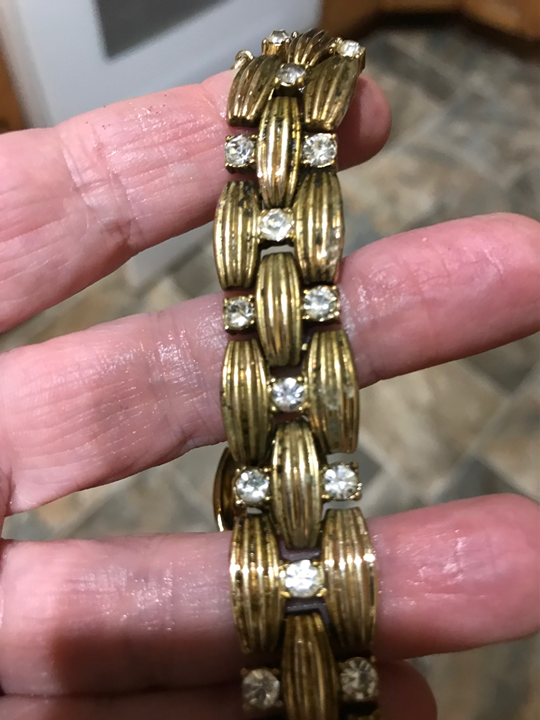
Though I’d been writing primarily about the gimlet, an antique tool, I had included photos of some of the other “trash” we’ve found during the forest restoration work. One of those photos was of a bracelet I had unearthed in Winter or Spring of 2018 when I was digging out blackberry roots.

At the time I found the bracelet, I believed it was costume jewelry, but as I continued to look at it I began to wonder. What if the band was made of gold and the jewels were real? I decided to take it to a jeweler. I was a little disappointed when, after looking at it through a microscope, the jeweler reported that it was “fun” jewelry.

Well, it turned out that the bracelet was valuable—just in a different way. When my neighbor read my post, she had seen the photo of the bracelet. Through her tears, she told me the bracelet had been her mother’s, and it had been stolen from my neighbor’s house in 2014! She said she still had a segment of the necklace and an earring that went with it. I, of course, returned the bracelet.

I get chills even now as I think of my neighbor’s deep emotion, the remote chance that I had found this particular item in one shovelful of dirt in an acre of land; that it belonged to one of the two neighbors who I know reads my blog; and to make it even more remarkable, she has helped during some of the restoration work parties! So much Grace.

Mystery Tool: Gimlet

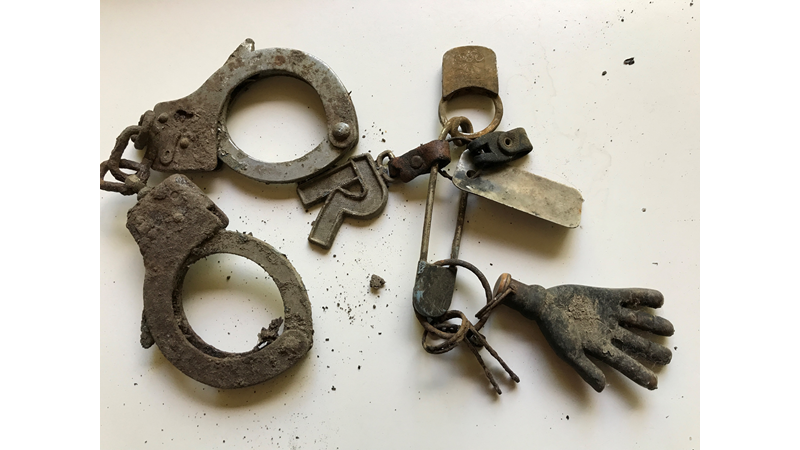
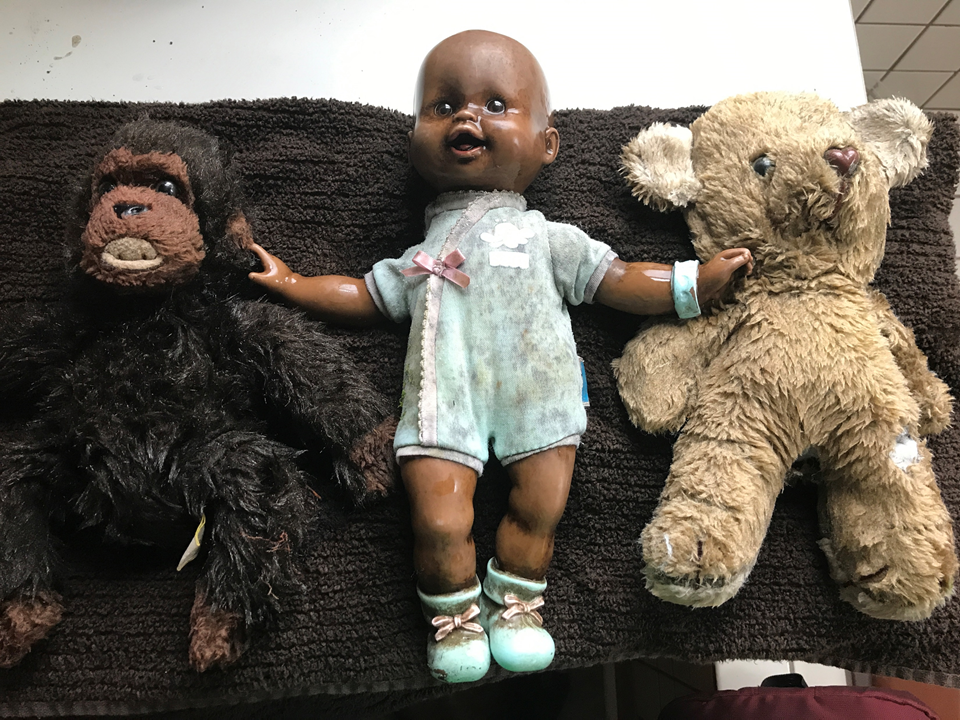
During the years we’ve been working in the Greenbelt, we’ve found some interesting “trash”. These have been my favorite finds:

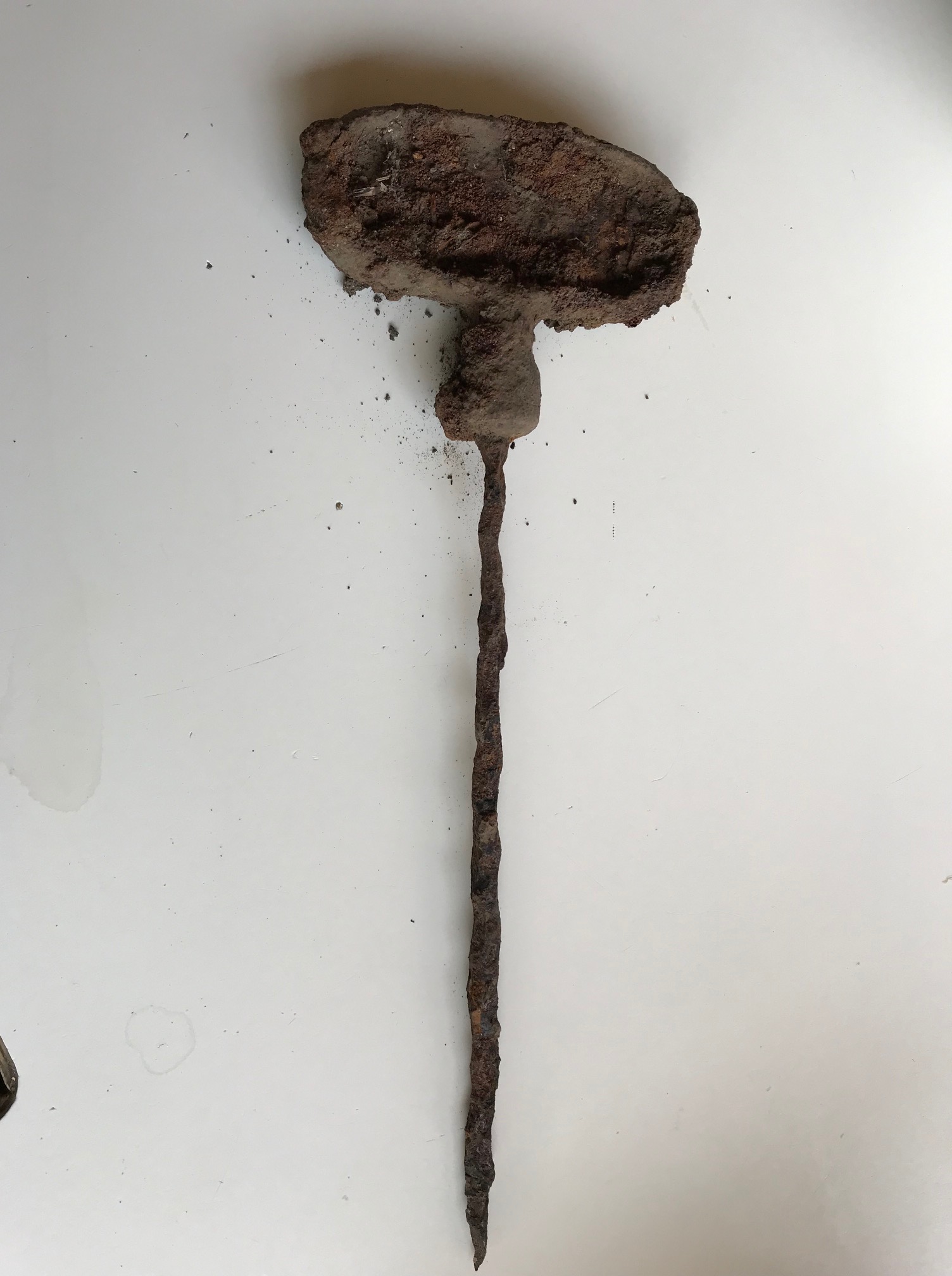
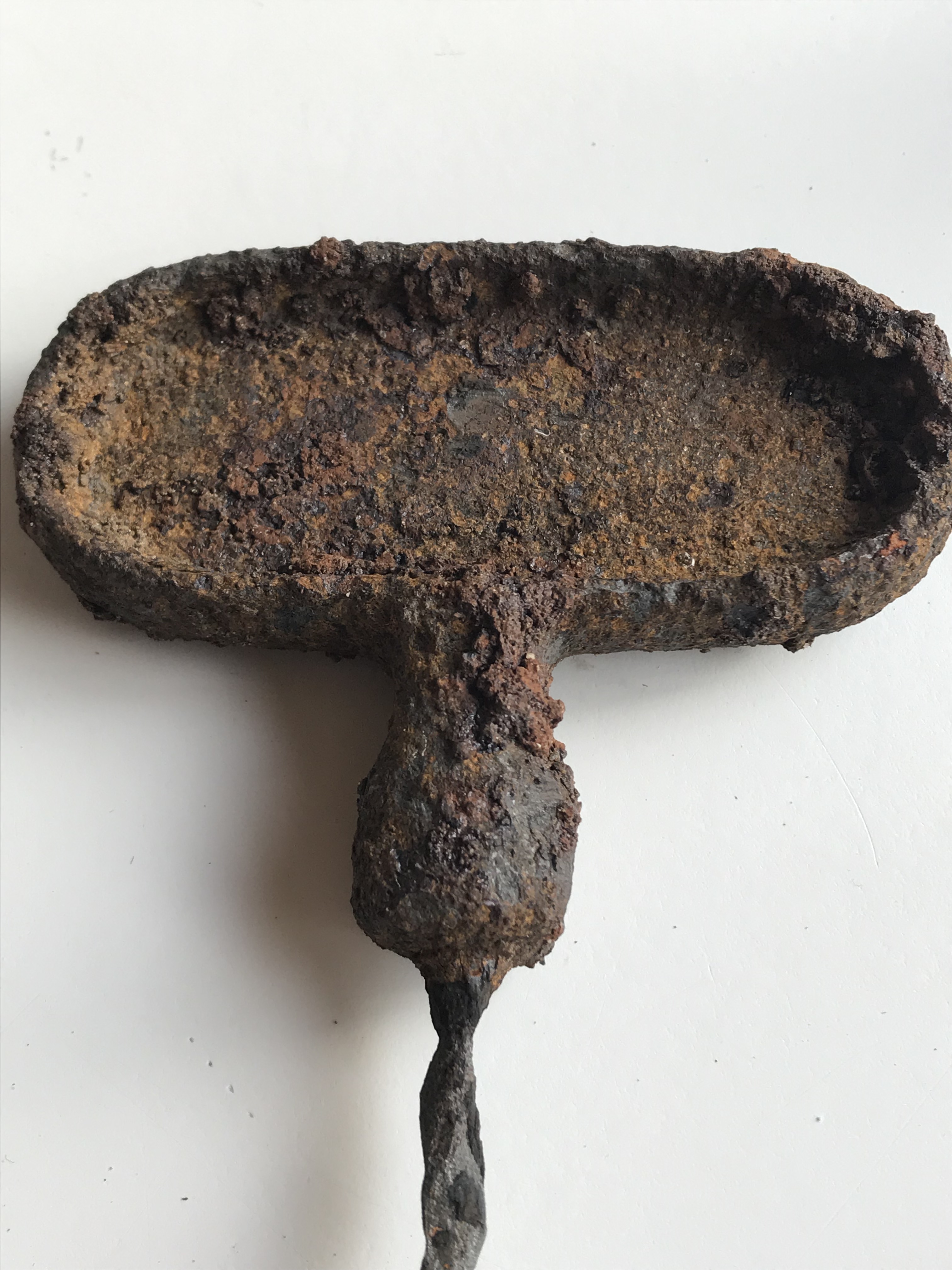
A few weeks ago, one of our team leaders found an interesting item when he was working on the site. I sent a photo if it to my neighbors and asked if anyone knew what it was. Several people thought it was a woodworking tool.

Numerous times over the past year, a woodworking school that is part of Seattle Central Community College has caught my eye. I noticed it enough times that I was beginning to wonder if I would be taking a woodworking course in the future.

Years before, I had learned that in nature where there is a poisonous plant, the antidote to the poison can often be found nearby. I also learned that we need to live in awareness because the answers to problems are all around us. When I was told that this might be a woodworking tool, my seeing the woodworking school seemed very synchronistic.

I had no doubt that my best chance of finding out what the tool was to go to the school. When I arrived there, the receptionist took me to the classroom of one of the older teachers.

The instructor thought it was an awl but he wanted to put it in a rust remover overnight. That was fine with me. The next morning, I returned to the school. The teacher had hoped he would be able to remove enough rust to be able to see some writing on it. The tool was still too rusted to be able to accomplish that goal.

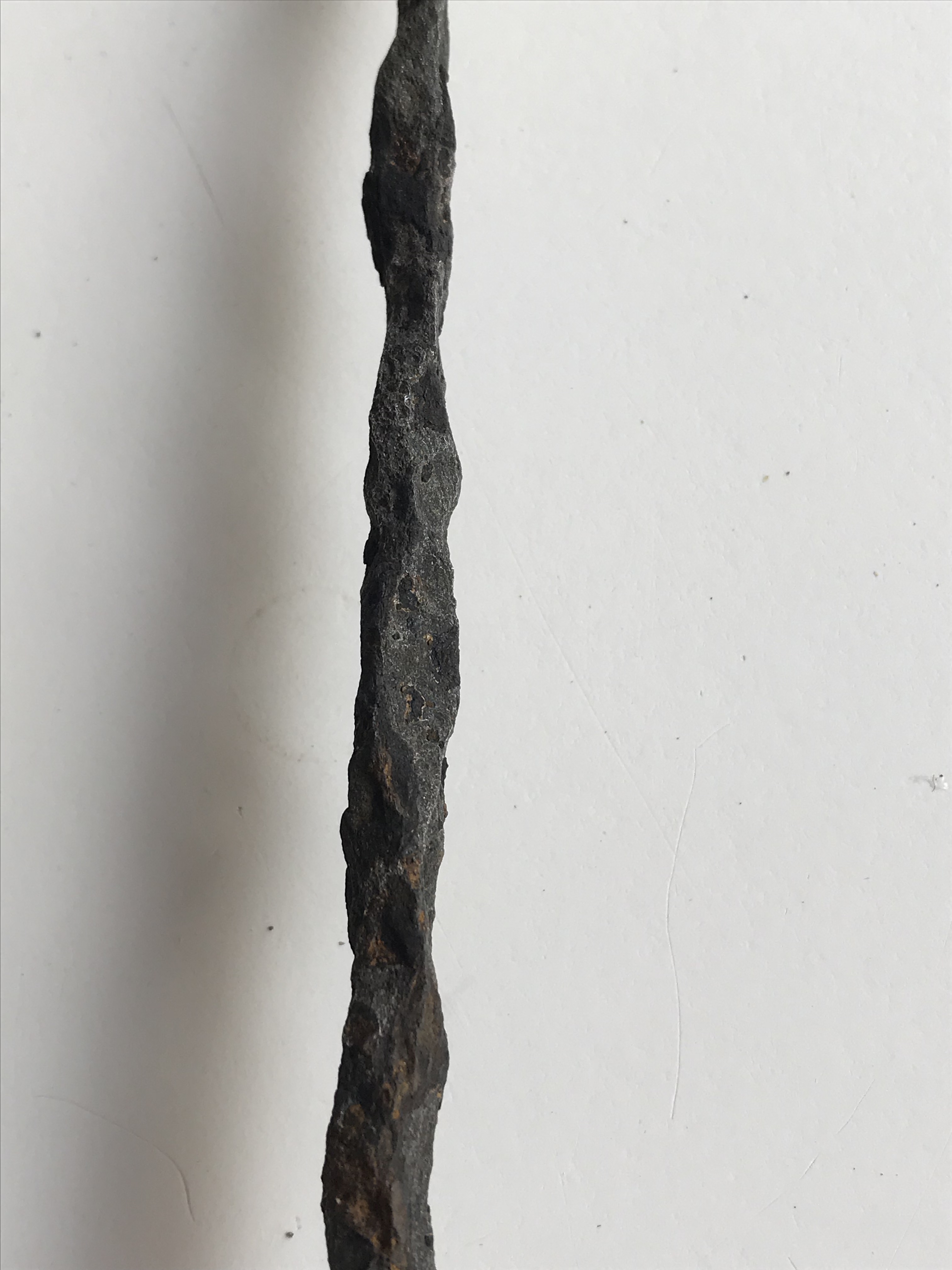
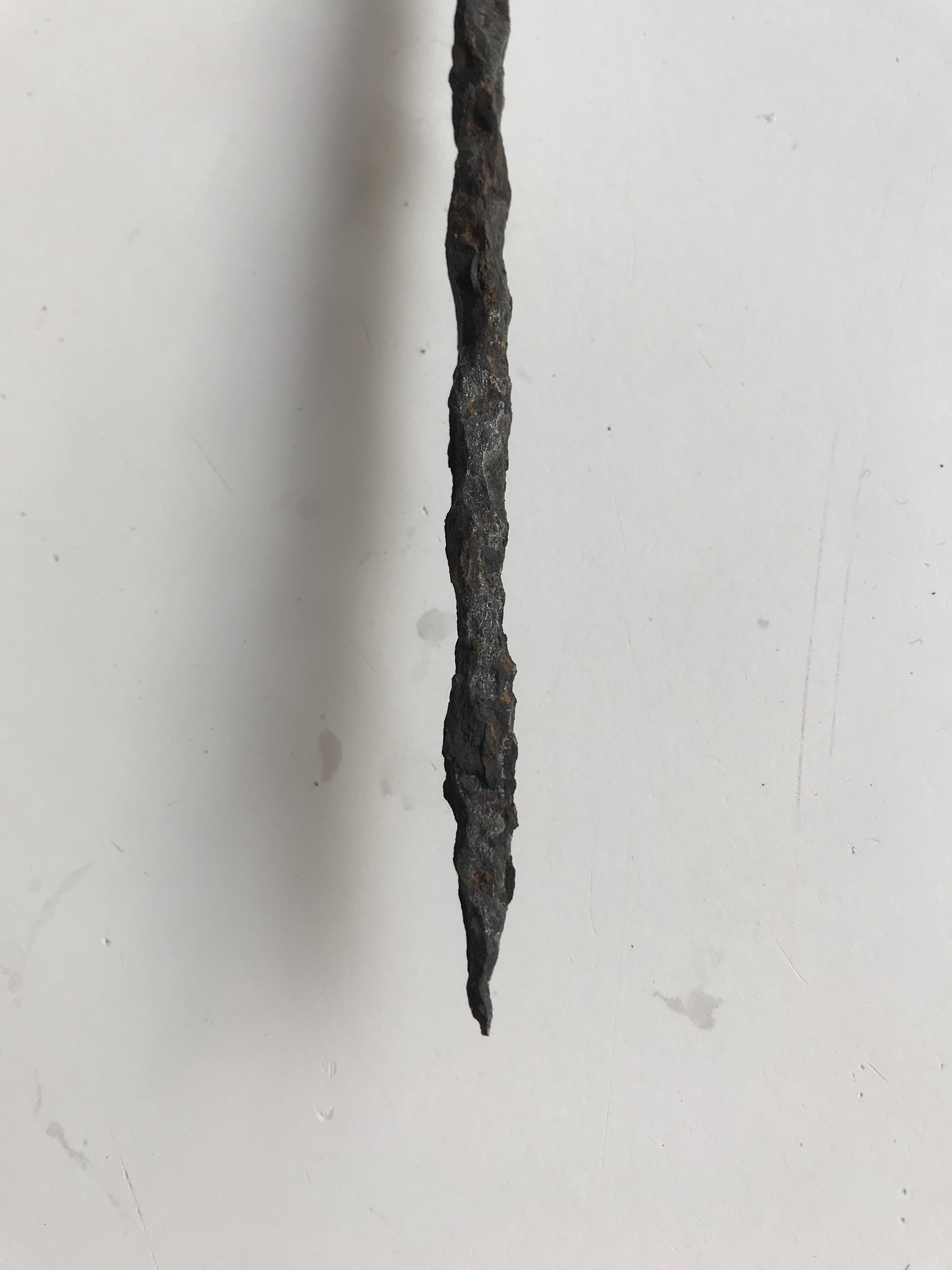
After removing some of the rust, the instructor told me the tool wasn’t an awl; it was a gimlet. He had originally thought it was made in the 1920’s but after realizing it was a gimlet, he said it was much older than that. So it must have been made in the 1800’s!

Wikipedia says:

gimlet is a hand tool for drilling small holes, mainly in wood, without splitting. It was defined in Joseph Gwilt‘s Architecture (1859) as “a piece of steel of a semi-cylindrical form, hollow on one side, having a cross handle at one end and a worm or screw at the other”.[1]


A gimlet is always a small tool. A similar tool of larger size is called an auger. The cutting action of the gimlet is slightly different from an auger, however, as the end of the screw, and so the initial hole it makes, is smaller; the cutting edges pare away the wood which is moved out by the spiral sides, falling out through the entry hole. This also pulls the gimlet farther into the hole as it is turned; unlike a bradawl, pressure is not required once the tip has been drawn in.


The name “gimlet” comes from the Old French guinbeletguimbelet, later guibelet, probably a diminutive of the Anglo-French “wimble”, a variation of “guimble”, from the Middle Low German wiemel, cf. the Scandinavianwammie, to bore or twist. Modern French uses the term vrille, also the French for a tendril.[2]

Once the tool had been identified, I wondered what I would do with it. I often keep interesting trash but this item felt dangerous; it reminded me of an ice pick. I checked etsy.com and ebay.com and found that they sold gimlets for $6 to $30. And those were antique woodworking tools in good condition.

Green Seattle Partnership and the Seattle Parks Department don’t have museums for interesting trash so I decided to give it to another Forest Steward. She is part of a project that will eventually be making a sculpture of tools they have found in the Greenbelt.

I’m happy that the gimlet will have a new home; one where it will be appreciated.

Grateful and Blessed

I woke up during the night with the song How Great Thou Art reverberating throughout my body and soul. It was one of those dreams that was so much more than a dream, or maybe it wasn’t a dream at all. I felt grateful and blessed.

I heard that song for the first time in 1962 when George Beverly Shea sang it during a Billy Graham crusade my mother and I attended. I was in 10th grade at the time and we were living at Ft. Shafter Army Base in Honolulu, Hawaii. That experience was a major turning point in my life. While it wasn’t the beginning of my spiritual life, it certainly was the beginning of a new chapter.

I woke up several times during the night with that “dream” in the forefront of my mind. Again, I felt grateful and blessed. My sleep ended at 4 a.m. when I started thinking of events that had occurred early in my life. I remembered being really young (5 years old?) and loving the Christian music my father’s mother sang to me when my family visited her in New Jersey. As I thought about those times, the words “church in the vale” and later “little brown church in the vale” came into my mind. I don’t remember if that was a song my grandmother introduced me to, but it certainly could have been.

I decided to write a post about my dream and the reflections that followed it so I got up. I looked for YouTube videos of both songs. The video I chose for How Great Thou Art was recorded in 1957, several years before I heard the magnificent song for the first time. It was probably recorded during a Billy Graham crusade. Wikipedia says the song “is a Christian hymn based on a Swedish traditional melody and a poem written by Carl Boberg in Mönsterås, Sweden in 1885.”

The other song is called the Church in the Wildwood or The Little Brown Church. The video I’m sharing for that one is of Andy Griffith, Don Knotts and Robert Emhardt singing it in a 1963 show. That song was written by Dr. William S. Pitts in 1857.

***

The image at the top of the post was taken by Kevin Phillips from Pixabay.

The Courage to Believe

In 1989 or 1990, a friend wrote a poem for me. It was written soon after I met Amma, but prior to the time I asked Amma for a name. So at that time my name was Carol. That name seems so unfamiliar to me now.

Her poem came into my mind the other day; for the first time in decades. I was able to find the booklet it was published in.

THE COURAGE TO BELIEVE, FOR CAROL POOLE

The pot looked empty. It was a clay pot, orange and cracked from the rain. On Mondays people came to fill it and the water, somewhat yellowed, seeped out at the bottom.

At first I wondered why they didn’t patch it. But looking closely, I saw their need to bend slightly to the right. Some called it agility, but really they were trying to keep their hands on the hole.

Now you choose a jug, and songs arise from its clay. And in the rhythms of drums from inside, the moon-roundness of it takes on the form of a woman with the courage to believe.

The jug is round and smooth, and the water is always full.

SHELLEY TUCKER

Thank you Shelley. Your poem means as much to me today as it did the first time I read it. I hope our paths cross again some time in the future.

More Greenbelt Mysteries- this time of the Grrrrrr variety

Last week, I wrote a post about an intriguing mystery that happened after a recent Greenbelt work party. While I experienced a myriad of emotions at that time, it was primarily a positive experience.

There were several other mysteries in process at that time. They were different than the one I had written about in that I was very irritated by each of them.

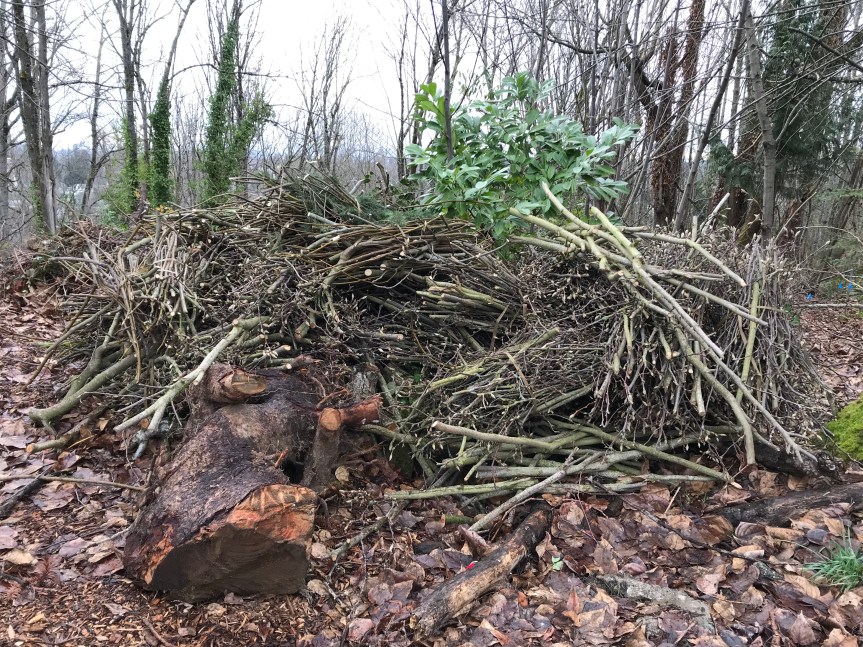
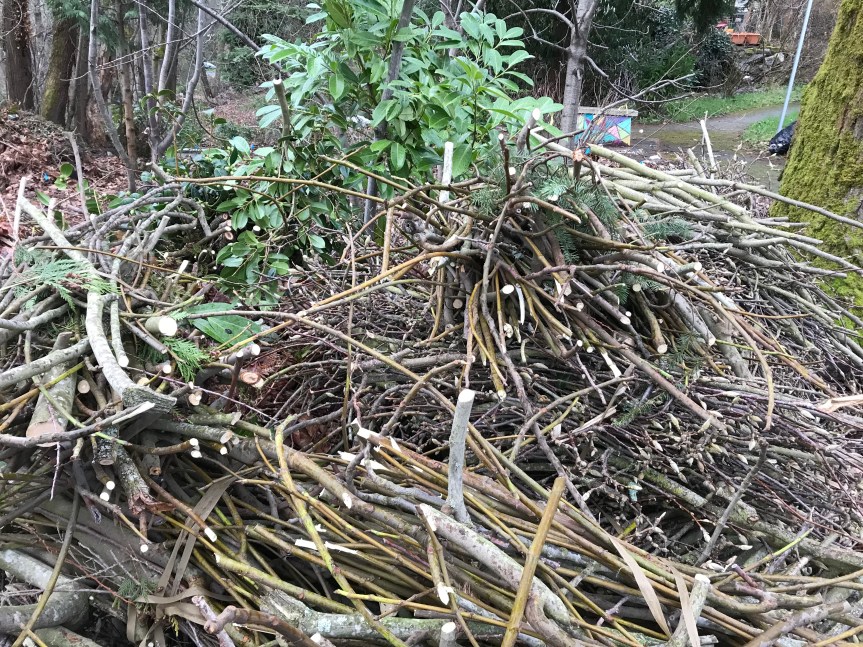
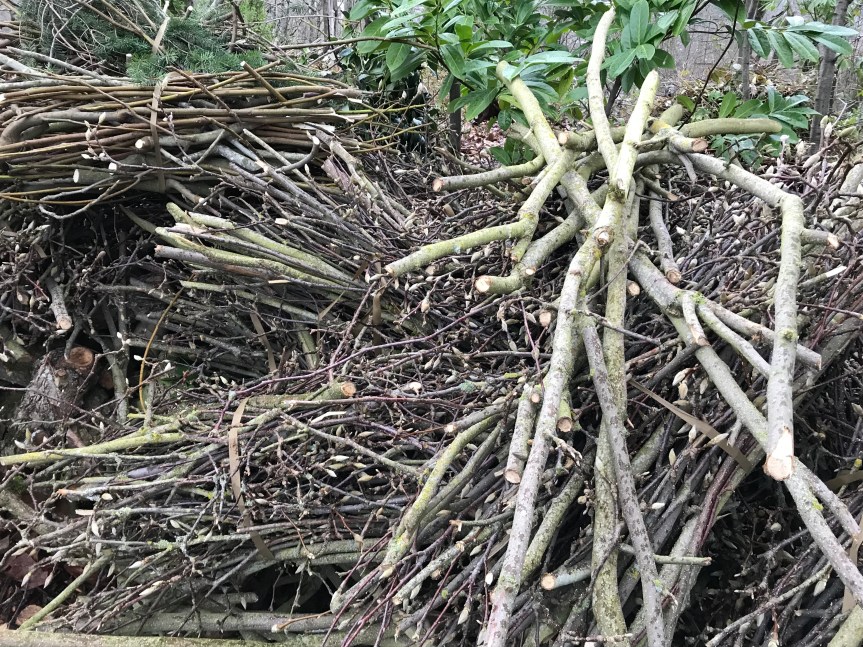
Soon after I came home from India in mid-January, I found that someone had cut down a large tree somewhere and then dumped it in a part of the Greenbelt that we had cleared. I believed it was done by a “professional” company because all the debris had been sorted by size and much of it had been banded before it was dumped.

(Click on the gallery to enlarge the photos.)

A week later, I noticed that someone had pruned a cedar tree and dumped the branches in front of the first stack. The new debris was neither sorted nor banded, so I assumed that this illegal dump was done by a different person than the previous one.

Shortly before our January 21 work party, I noticed that all of our buckets were missing from the site. Most of them were 5 gallon buckets. Many were bright orange or bright blue. How in the world had someone taken 30 buckets without being noticed? And why? We had used the buckets to hold wood chips, trash, glass and weeds.

Some of the buckets in use at a previous work party

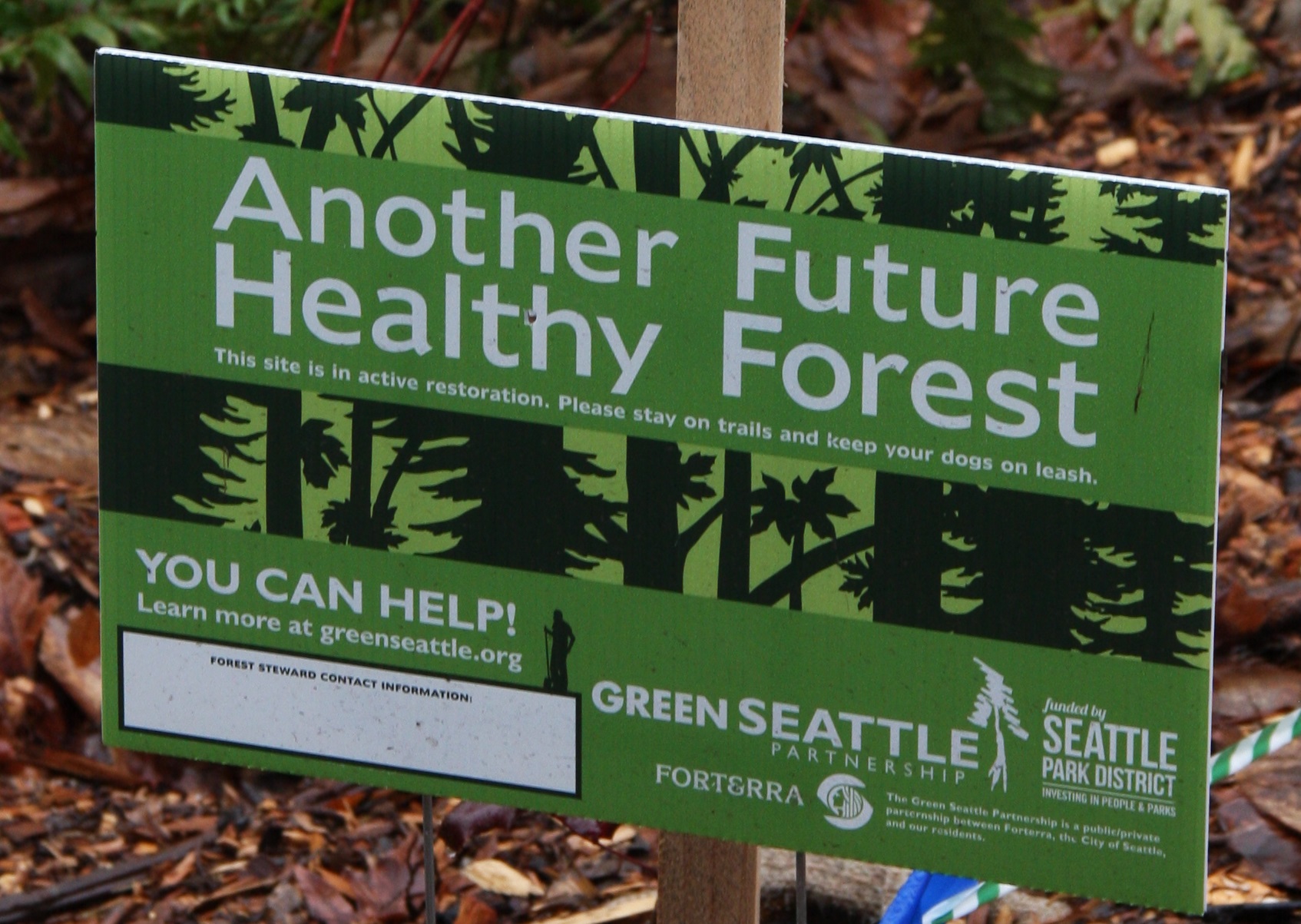
Seattle Parks Department removed most of the dump and replaced most of the buckets. The buckets are now chained to the job box that holds our tools. I also placed three Another Future Healthy Forest signs in hopes that it would prevent people from dumping in the reforestation space.

Instead of going out into the snow to take a new photo for this post, I decided to use one that was taken in February of 2017!

The roads were finally clear and dry yesterday so I drove for the first time since the snow began last Sunday. When I passed the area where I put the three signs, I noticed that one of them was gone.

Grrrr. I guess these are all opportunities to practice equanimity and “putting in the effort and letting go of the results”, but I’m not there.

This image has an empty alt attribute; its file name is face-1683128_1280.png

Mystery in the Greenbelt

The day after our January 21 work party, I was taking photos of our work and was shocked to see a shovel propped up against the foundation of an old house that is in the middle of the site. I was particularly surprised to see the shovel there because all of the team leaders had been standing close-by that area at the end of the work party. If the shovel was present at that time, one of us would certainly have seen it and put it in the job box where our tools are stored.

The fact that the team leader who had gone through the site looking for tools later hadn’t seen it either added to the mystery. Where did it come from? Who had put it there?

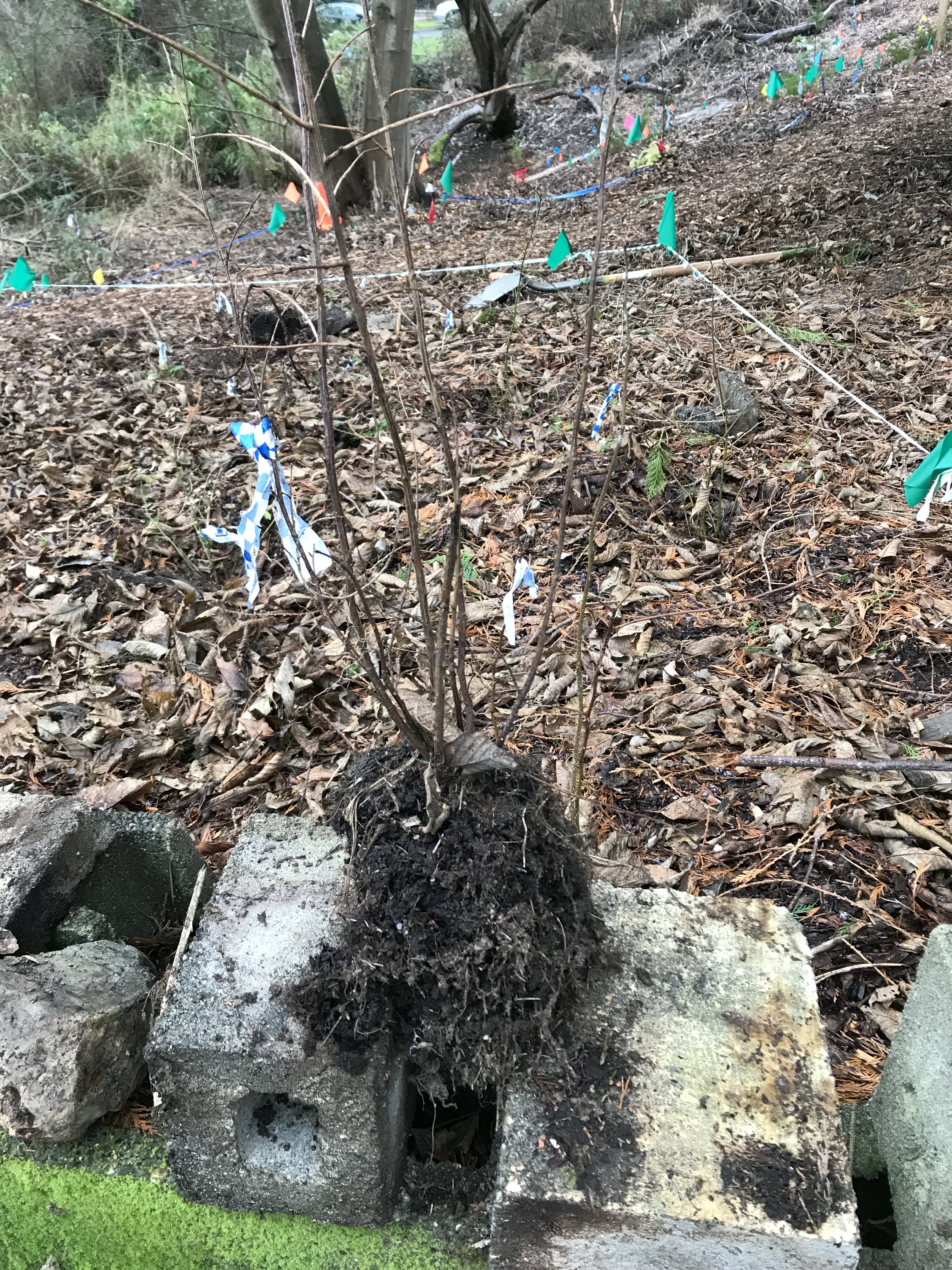
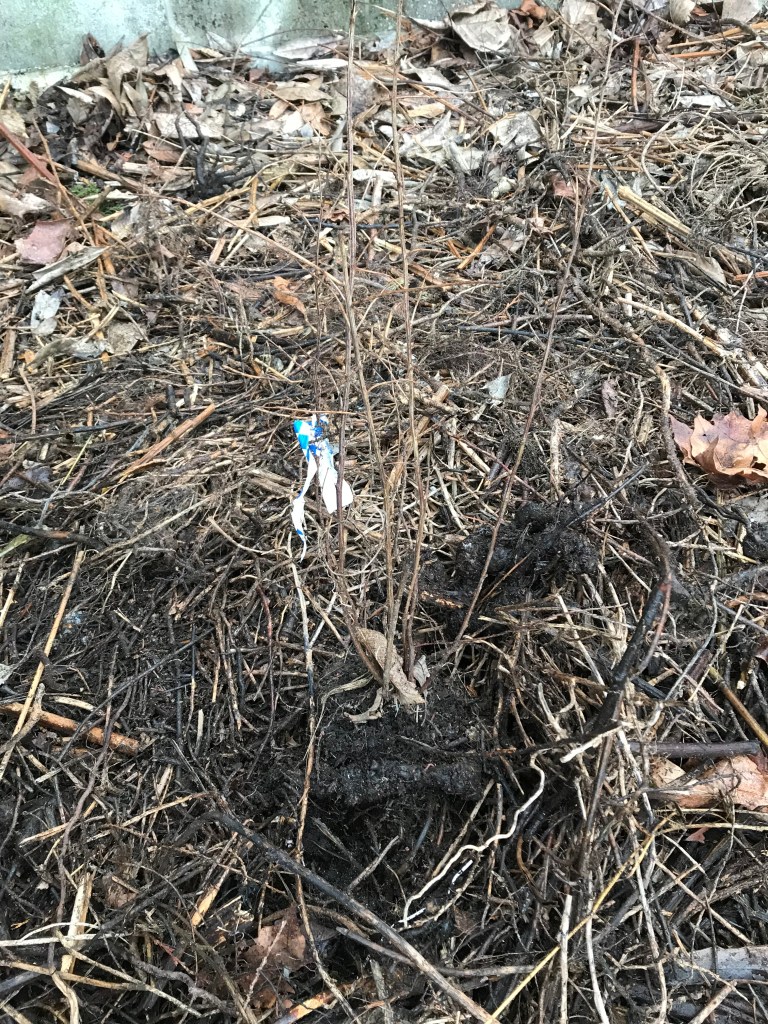
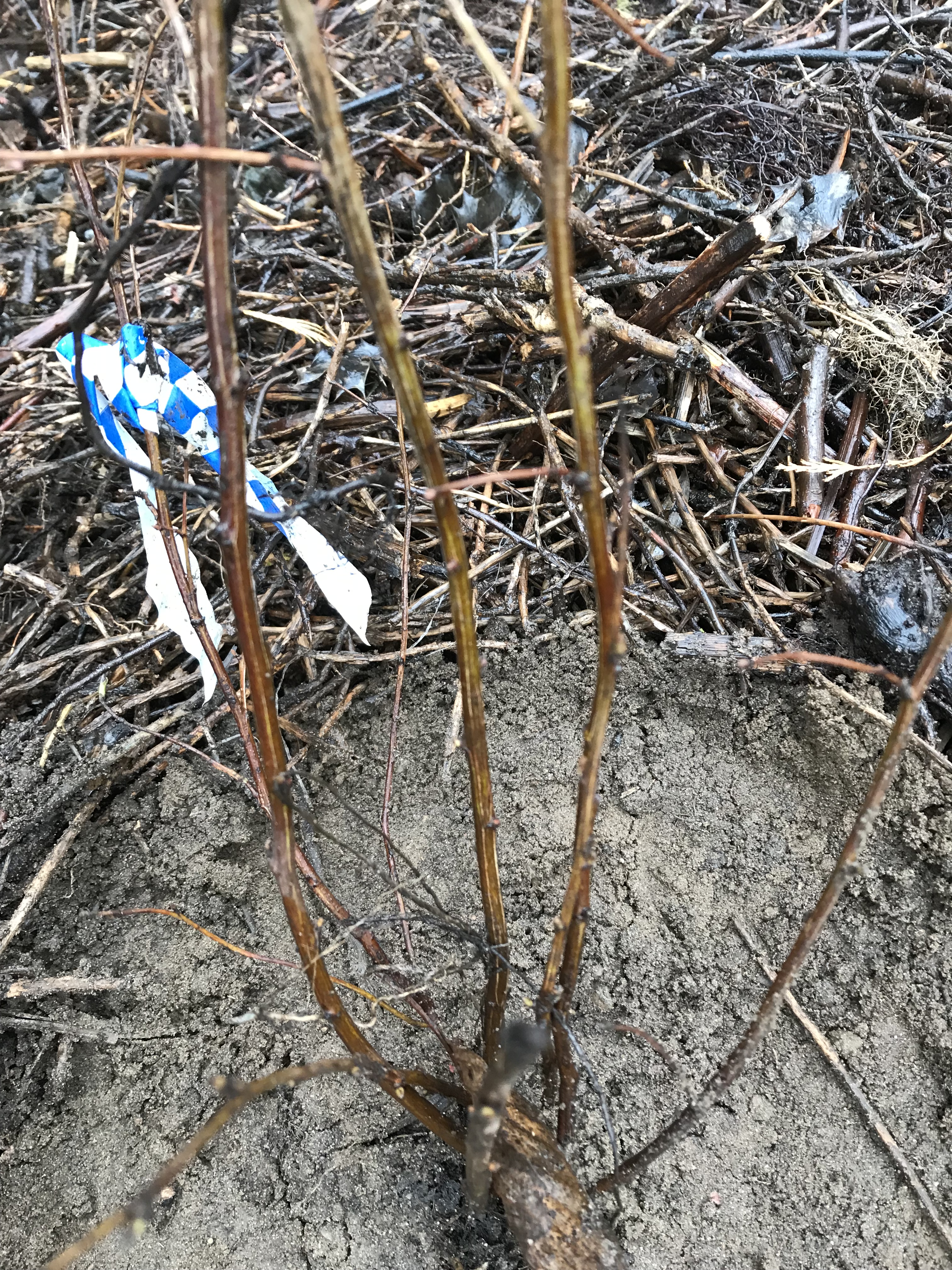
On January 23, I was shocked to see an un-potted plant sitting on the ledge not far from where the shovel had been. I hadn’t seen it the day before. Had it been sitting there when I found the shovel? I didn’t think so but I will never know.

I assumed someone had removed a plant from one of the planting areas. The mystery deepened when I couldn’t find any holes that had missing plants. Inside that foundation is the area we call The Rack Zone. Until the January 21 work party, it had contained drying racks for most of the invasive plants we had cut down or dug out since the project began. During the work party, some of the volunteers had taken apart the drying racks and spread the dried debris. We have planned to plant beautiful shrubs and ground covers in that area at some point in the future.

Had this shrub been in one of the racks that had been taken apart? That seemed unlikely, but I called the team leader who had been working on that project. He said, “NO” and that if he had seen it, he would have shown it to me.

It occurred to me that since there was no rational explanation for how the shovel and the plant got there, I should look for a non-rational explanation. The thought that came to my mind was that this was to be the first shrub to be planted in The Rack Zone.

I walked into The Rack Zone and looked for an area where the new “ground” looked higher than the rest of it. Once I found a suitable place, I pulled back the surface debris that hadn’t fully decomposed to see whether there was composted dirt under it. There was, and it was deep enough to plant the shrub. I made the hole bigger and then inserted the shrub. I also made sure that there were no inter-twined ivy vines that would strangle it as it grew.

I needed more dirt to fill in the hole. After thinking about it for a moment, I remembered that I had seen mole mounds nearby. I also remembered a friend once helping me re-frame how I saw the moles in my own yard. She told me that the moles were providing me with free aeration for my soil. I decided to use the dirt from mole mounds for completing the planting process.

Another memory resurfaced when I was thinking about moles. Soon after we started this Greenbelt project, the person who was co-leading the project with me at the time, was sitting on the ledge of the foundation. A mole came out of the ground and looked up at her. While the photo below comes from pixabay.com, seeing it reminds me of that incident.

That shrub is now securely planted in its new home. It remains to be seen whether or not it is alive. There are no buds on it that look alive, but the branches are not brittle. Even though many of the Greenbelt plants are budding, it is only January. Maybe this is a plant that buds later. If it is living, our first shrub has been planted in The Rack Zone!