Living and Learning in Amritapuri: (Dec 3-7, 2015)

IMG_0188

Once I started sleeping around the clock, my body healed rapidly.  I’m not back to normal but I’m getting there.

Spiritual Practices

I’ve historically done a lot of seva but have never made other forms of spiritual practice a priority.  One of my goals for this trip is to really increase the amount, and quality, of time I spend doing spiritual practices.  Participating in the morning prayers, is an important part of that endeavor.  They start at 4:55 am and last about an hour and fifteen minutes.  They consist of chanting the 108 names of Amma, the Sri Lalita Sahasranama Stotram and the Mahishasura Mardini Stotram.

The last stotram is a tribute to Durga, who is considered to be the Mother of the World, responsible for the creation, preservation, and destruction of the world.  Last week, the translation of one verse caught my eye and touched my heart.

O Mother! Even a simple sweeper in Your courtyard inherits all heavenly pleasures.  Be pleased to accept my humble service and grant to me whatever You consider to be good for me.

I found a YouTube version of the Mahishasura Mardini Stotram that sounds very similar to the way we sing it.

I generally tend to run from one activity to another.  I decided one way I would honor my intention to give increased importance to my spiritual practices is to slow down.  After the morning prayers, a relatively small group of people stay to brush themselves with the smoke coming from the camphor flame after Arati is offered to the Kali murti.  Instead of rushing out of the temple at the end of the morning prayers, I committed to myself to routinely stay and participate in that ritual.  I haven’t done that for many, many years.

Another way I am increasing my sadhana (spiritual practice) is by learning Tai Chi.  Today was my first day back in that class since I became sick.  I loved it as much as I did the first week.  The practice leads me into a meditative state, something I really need. I have no doubt I will continue the lessons when I return to Seattle.

Play practice

Yesterday everyone that is going to be involved in this year’s play met together for an hour.  Chaitanya told the story that is the basis for the play.  I always enjoy being present for that introduction.  As I was writing this portion of my post, there was a practice for the singers going on nearby.  I could hear the music from my room. The songs are so beautiful.

Swimming

When I was getting sick, it was suggested that I go swimming as a way of cooling my body down. That sounded like a good idea to me.  I had long ago given away my swimming dress, so I went to the store and bought a new one.  I had heard that the style had changed, and it was true. In the early days, it was a simple dress with straps and elastic at the top.  When we were in the pool, the dress often billowed up above the water like a balloon! Now the dresses are a bit like pantaloons, without the elastic at the bottom.  I hung up my new one so I could take a photo to show you.

IMG_0190

As I swam around the pool, I had so many memories.  The ashram built the swimming pool sometime in the mid to late 90’s.  Amma used to take us to the pool; the women first and later the men. It was such a special time for us to be with her. I remember her pushing us into the pool one by one!  During that time, Amma also gave swimming lessons to the brahmacharinis (female monks).  In India, at least in the fishing village where the ashram is located, boys play in the sea but girls don’t, so the girls never have any opportunity to learn to swim.  Many of the brahmarcharinis were very frighted at even the thought of swimming.

After playing with us, everyone would get out of the pool and Amma would swim by herself.  She would lie on her back, in full lotus position, and go into a deep meditative state.  Her body would then float around the entire pool without any muscle movement on her part.  It was so beautiful to witness.

I also remembered Amma bringing village children to the ashram after the 2004 tsunami.  The children were so frightened of the ocean since many of their loved ones had been killed during that event.  Amma and the ashramites took the children to the pool, played in the water with them, and taught them how to swim.  They learned to once again associate the water with something other than death.

My Room

I live in a small flat that has a main room, a small bathroom and a kitchen that consists of a sink, a cupboard, a counter and a propane burner!  I eat in the various ashram dining areas but it is nice to make tea in my room occasionally and I love being able to add a cup or two of hot water to the bucket of cold water I use for my morning shower.

Ashram Changes

I’ve been noticing a new construction area that is located immediately outside of the north gate.  I don’t remember what was there before, if anything.  When I asked someone if they knew what was being built, I was told the international office is going to be moved there.  Everything that is now on the fourth floor of the temple, i.e. seva office, computer room, information office, gift shop, etc.  will move into the building the international office currently occupies.  All of the rooms on the fourth floor of the temple will then be available to be used for visitors’ sleeping rooms.

The other big change that I discovered yesterday is that there is now a new IAM (meditation) hall and an Amrita Yoga hall.  The rooms are located on the second or third story of the same building that housed the old Yoga Shala.  They are huge rooms and are so beautiful. Three sides of the rooms are almost completely open to the outside, with netting to keep the birds out.

Disaster Relief

Amma usually takes us to the beach to meditate on Monday’s, prior to the evening bhajan program.  It looked like it was going to rain tonight, so we met in the auditorium instead.  When I arrived, Amma was already there and was talking about the flooding in Chennai.  She had sent teams of volunteers to Chennai, right from the beginning, to rescue people from their houses and to provide food, clothes and medical care.

At the end of the meditation, Amma showed us a video of the rescuers releasing the water from the houses in order to free the residents.  If I find that video, I will post it.

A Message from the World’s Astronauts

For many years, Amma has urged us to do what we can do as individuals and together to heal the earth.  As I was reflecting on that topic last night, I remembered hearing about a video that was shown at the Climate Change conference that was held in Paris this week.  In the video, the world’s astronauts sent an important message to those attending the conference.  I was able to find the video and will use it as a powerful and moving way to end this post.


To see the earlier posts in this series go to: https://livinglearningandlettinggo.wordpress.com/india/
What a Difference Attitude Can Make!

IMG_0112

Soon after I arrived in Amritapuri, I had the foolish thought that this might be the year that I don’t have any experiences to share. I say foolish because I don’t believe there ever was any remote possibility that could happen.

My first week was full of challenges. In hindsight, I see that I was receiving endless opportunities to choose between two possible attitudes. For example:

  • I could lament that I left my good thongs in Seattle, or instead choose to be grateful that I had felt drawn to pick up and pack a cheap pair of thongs that, for the last two years, had been lying on the floor of an empty room where I work.
  • I could suffer about the fact that my internet stick was not where I believed I had left it last January or instead choose to do what it took to get another one.
  • I could berate myself for not remembering that I needed to bring a water filter or instead choose to look for creative ways to solve the problem.
  • I could bemoan that the seva (volunteer work) I look forward to most in Amritapuri (separating worms from the fertilizer they produce) was no longer an option or instead choose to appreciate that I would have more time to support the development of the Christmas play.
  • I could obsess about the seemingly endless internet and phone problems I was experiencing or instead choose to see those problems as opportunities to practice equanimity while doing what needed to be done to solve them, one step at a time.

I will describe three other examples in more detail:

1) The evening of December 2, I was about to go to my room when someone walked up to me and asked if I would be willing to hand Amma prasad (the candy she gives devotees after she hugs them). That is one of my favorite sevas so I eagerly accepted the invitation and joined the prasad line. As I reached the front of the line and took the position next to Amma, a western man came for his hug. He started speaking to her in beginner’s level Malayalam. Amma and he were having a great time laughing about his speaking attempt.  Afterwards, he handed Amma three malas (prayer bead necklaces). He wanted Amma to put them on him. Once she did that, he pulled out another handful of malas made from a different substance and asked her to put those on him too. He went through that sequence two more times. The last set was a handful of about 15 rosewood malas. It was a rather bizarre scene, especially since he was now wearing around 30 malas. I imagined he had plans to give them away to friends at home but having her put them on him was a rather bizarre change from normal practice of simply asking Amma to bless the malas he would be giving as gifts. Amma and he were laughing and so was everyone who was witnessing the incident. To me it seemed like “no accident” that I was present for that entire encounter.

I had not been able to sleep for more than two or three hours at a time since I arrived in India on November 28, so was hopeful that night would be different. You can imagine how upset I was when, after 2 ½ hours of sleep, there was a huge ruckus between nearby dogs. Once I wake up, sleep is over for the night. How long could I live like this? I had to get some sleep! Would the dogs start barking again? Would they continue to be a problem throughout my stay? It didn’t even occur to me that they hadn’t barked during the previous nights and dogs had never been a problem in the past. I was too sleepy and too lost in fear of the future to think clearly.

It did occur to me that I had been in bliss when I went to bed and now felt like I was in hell. I realized it was a good example of how quickly our minds can change our reality. While I struggled with the fear for the rest of the night, I found it immensely helpful to recall my experience of witnessing the interaction between Amma and the man with the malas. As I smiled with the memory, I let go of some of my tension. What a gift that prasad experience had been for me.  So in a situation like this, I could choose to stay in the fear, or consciously focus on a time when I was happy, reminding myself that this current challenge will pass.

2) With the ongoing lack of sleep, it soon became obvious I was developing a cold. On the afternoon of December 4, I felt strongly pulled into sleep and I slept almost continually for the next 36 hours, getting up only for meals and for meeting bathroom needs. I realized I could focus on how many things I was missing out on while I was sleeping or could instead choose to be grateful that:

  • as I moved in and out of sleep when Amma was leading bhajans (devotional songs) that night, I heard small portions of them from my room.  Each bhajan segment I became aware of was a favorite of mine.  I wasn’t sure whether I was really hearing the songs or if I was dreaming I was hearing them. Regardless of whether it was a dream or reality, I could choose to believe that experience was a gift from Amma to me.
  • during the short time I went downstairs for dinner on Dec. 5, Swami Pranavamrita sang Kalam Kanalu and a Swami Ayyappa song. I have a special history with both of those songs so I could choose to take them as yet another gift to me.
  • since I have been sleeping around the clock the swelling in my feet has gone away.  Perhaps the jet lag will also be gone when this illness has run its course!  I can choose to believe that my sickness has multiple purposes and they are all good ones.

3) I have felt pulled to learn Tai Chi for several years but the pull was not strong enough for me to take action. Before I left Seattle, I knew that this was the year for me to start, so I enrolled in the classes as soon as I arrived in Amritapuri. One lesson was all I needed to take to know that it was so right for me. The process quickly brought my mind and body into a meditative stillness. I could tell some part of me recognized the moves and knew what to do. I could berate myself for taking this long to begin, or I could choose to remember that my life will unfold in its own time and acknowledge that now must be the perfect time for me to start Tai Chi.


All in all, during the eight days I have been at the ashram, I think I have done a pretty good job of choosing to not make myself miserable by taking on negative attitudes and instead consciously choosing positive ones.  The time I was least successful in that endeavor was the night the dogs woke me up.  All of these events have reminded me that I can choose my attitude towards the lessons, challenges, and tests that come my way, and that my attitude will make a  significant difference in my experience.

1970: My Summer as a Migrant Farm Laborer #2 (Atlanta International Pop Festival)

After a good night’s sleep, we said goodbye to my parents and then headed for Byron, Georgia. We were excited to attend the upcoming Atlanta International Pop Festival prior to looking for more work.

To get to the event, we had to park about three miles away and walk in. We decided to camp outside the festival grounds on our first night. We had left the hot canvas tent in Florida, so ended up sharing a tarp with some people we met.

Pop festival

We spent the next day at the festival roasting in the sun. The temperature was about 104 degrees. There was no shade and no breeze. There wasn’t enough water and ice was considered a luxury. Five pounds of ice cost $1 and we paid 25 cents for a popsicle. The event staff passed out salt tablets, hats and suntan lotion.

I enjoyed the music despite the physical discomfort. We were about 30 feet from the stage!

I had mixed feelings/thoughts about being there. I was super, super uptight during a lot of it. The heat as well as the lack of water and food was unbearable and I didn’t like being around so many people who were stoned.

Our skin was blistered and swollen from sunburn when we left. However listening to musicians such as Jimi Hendrix, Richie Havens,  the Chambers Brothers and the Memphis cast for Hair as well as getting to know some of the people who were there made it worth it. My favorite memory of the event was waking up the last morning to Richie Havens singing “Here Comes the Sun!”

My final conclusion was that I was glad we had gone, but didn’t think I would ever want to do it again.

Pop festival 6

The festival was over at 10 a.m. Monday so we packed up, hitched a ride to our car and were on our way by 11:30. Off to find a job!


[Note: My scrapbook says there were 200,000 people at the festival.  Wikipedia said that the estimates varied from 250,000 to 600,000!  Their article contains a lot of interesting information.]


(The next post in this series will be published on Friday December 11.)

To read the previous posts go to:

1970: My Summer as a Migrant Farm Laborer (Series Intro)

1970: My Migrant Farm Labor Summer #1  (Seattle to Florida)


Living and Learning in Amritapuri, India (Nov 29 – Dec 2, 2015)

IMG_0121


I decided to make this post a random list of some of the things that have happened during the last few days!

***

As we were driving from the airport to the ashram on Saturday morning, I noticed at times there were huge puddles covering a good part of the street. There were also big potholes in the roads. The rainfall must have been tremendous. That monsoon type of rain is usually over by this time of year, so I was surprised.

After evening bhajans (devotional songs) on Sunday, it began to rain again. You could hear the rain pounding on the metal roof of the auditorium. It started raining harder, and harder. When the rain seemed like it couldn’t possibly get any heavier, it did; time and time again. The sound became so loud it was hard to hear what people were saying.

Tuesday night there was thunder and lightning and more rain. I love the array of dramatic sights and sounds that occur when that happens in India.  (I later heard that Chennai is “under water.”  That certainly puts a different slant on my story. All is not beautiful about torrential rains.)

It has been hotter and more humid in the last few days than I can remember in any past December.

***

On Monday, Amma gave darshan (hugs, which are her form of blessing) to all of the brahmacharis (male monks) and brahmacharinis (female monks) as well as to the ashram residents who stayed at the ashram during the months she had traveled in Europe and North America. I enjoyed watching them get their hugs. They are so devoted to Amma and love her so much.

***

On Tuesdays, Amma comes to meditate with the ashram residents and visitors. Afterwards, she either asks or answers questions and then leads a song before serving lunch to everyone. That may sound simple but keep in mind that 3,000-5,000 people are living in the ashram. She hands each person their plate of food. Over the years, that process has been refined so that it happens with amazing speed. After everyone has received their food, we sing the meal prayer together and then eat. Afterwards Amma gives darshan to the visitors who arrived that day.

***

Three friends and I have been eating together at least one meal a day.  We all met Amma in 1988 or 1989. Three of us took our first trip to Amritapuri in January 1990. This is my twenty-sixth trip to Amritapuri and they have come here many times as well. Sometimes we reminisce about the “old days.” Very few of the “oldtimers” we know come to India anymore; many seem to be content with seeing Amma when she comes to the U.S.  I can’t imagine being with her only once a year, and if I had to pick between the U.S. programs and India, my choice would be India!

***

I’ve been going to the beach each day for a Tai Chi class. (There will be more about that in future posts.) This morning I went to the beach early and watched the waves. I remembered a tragic incident that happened last year. A young village boy was swimming in the water and was pulled into the sea by the undertow. I will never forget the blood curdling scream his mother made when she was notified that her son was gone. So many villagers, ashramites and the local coast guard looked for him, to no avail. His body washed up on the beach the next day. Such a sad situation.

***

I get much more exercise when I am here than I do in Seattle. I wear a Fitbit that counts my steps. In the U.S. I average  3,000 – 4,000 steps in a day. On my first day in Amritapuri, I walked 13,000 steps. Most days are between 8,000 – 10,000.  In addition to walking from building to building, I also walk down five large flights of stairs eight to ten times a day. I walk up them two or three times. One of the two elevators in our building hasn’t worked since I’ve been here. I don’t know if it is broken or if they are saving electricity. Regardless, I am thankful my room is on the 6th floor instead of the 15th. If I don’t want to wait in an elevator line I just climb the stairs.

***

Every year, on Christmas Eve the ashram residents put on a Broadway style musical. Chaitanya (my daughter) writes and directs the play. Sreejit (my son) and his friends compose many tunes for her to select from as she creates the songs and lyrics. While Chaitanya and the musicians work on the script and the music throughout the year, the bulk of the play preparation starts after Amma and the tour staff get back from the Europe and U.S. programs. That means there are only three weeks for the cast to be picked and the dances to be choreographed.  The musicians have to work on the instrumentation and the actors and actresses have to learn the scripts, songs and dances. Simultaneously, props, costumes, backdrops, sound, lights, subtitles and much more have to be made. The play work goes on night and day.  The cast also do their normal ashram jobs during that time. The energy in the ashram becomes electric as the big night gets closer!

I won’t give any hints about the content of this year’s play, but I will mention that last year’s was about the life of St. Francis, St. Sebastian, St. Claire. I will share a few of the pictures so you can get a sense of the intricacy of the work.

****

There is more that I plan to share in a future post, but as I was coming to a close on this one, I had an experience that is a perfect ending.

Several years back, Amma decided she wanted everyone who is staying at the ashram to have the opportunity to sit near her for 30 minutes every public program day. Sometimes I go for my shift and sometimes I don’t. When I do, I often slide in just as my shift begins. Today, I decided to go early. I ended up being the first person in line for that opportunity. I was led to a seat about six feet from Amma in a position where I had completely unblocked vision the whole time! What a gift that was for me. Thank you Amma.


Previous Amritapuri post: https://livinglearningandlettinggo.wordpress.com/2015/11/29/living-and-learning-in-amritapuri-india-nov-26-28-2015/

Living and Learning in Amritapuri, India (Nov. 26-28, 2015)

asrham-07

Almost every year since January 1990, I have visited the Amritapuri ashram of Mata Amritanandamayi (who is more commonly referred to as Amma) in Kerala, India. Amma is an internationally known spiritual leader and humanitarian. My adult son (Sreejit) and daughter (Chaitanya) have lived in her ashram for many years so I am also blessed to be able to spend time with them when I come to India. I know from years of experience that my trip will be packed with learning and experiences. I look forward to sharing them with you.

Journey to India

I left Seattle on Thanksgiving Day this year. I was eager to be at my India “home” but dreaded the long trip. On Emirates flights, I am able to make the journey in 24 hours, but it is still grueling. The flight from Seattle to Dubai takes 14 hours; followed by a two hour layover in Dubai, a four hour flight to Trivandrum, an hour or more to get through immigration, customs and retrieving baggage, and then a two to three hour taxi ride to the ashram.

Last year, I was surprised and ecstatic when the airlines gave me an unexpected upgrade to business class for the 14 hour segment. That gift made my journey so much easier. That was the first time I had been upgraded in the 25 years I’ve been going to India, but for the last few months I found myself hoping it would happen again. I believe the best way to achieve a desire is to let go of it, but seemed unable to do that. I yearned to once again experience the luxury of lying down during an international flight. It was not to be however.

Something I really appreciated happened when I was waiting for my baggage in Trivandrum. My name was announced over the loud speaker and I was directed to come to the baggage counter. Once there, they handed me the Kindle I had left in the airplane. I had planned on reading during the flight but dosed off instead and had completely forgotten I had taken it out of my carry-on suitcase.

This scenario was even more remarkable when I compared it to something that had occurred this past summer in the United States. In that instance, I had also left an item on a plane. When I realized my error, I called the airline’s Lost and Found department and gave them my flight and seat number.  I was told that the airlines only had three people to handle Lost and Found for the whole country and that I should keep calling back. They said it often took three months to know whether an item had been found. I called many times and finally gave up. And now, in India, the airport staff had tracked me down before I even left the airport. I left the airport feeling cared for and honored.  It was such a good example of the kindness of the Emirates staff and the Indian people.

November 28

I’m home! I’m exhausted but content. Normally I get to the ashram before Amma returns from her fall European and U.S. tour, but this year the tour was over earlier than normal so she arrived in Amritapuri before me.

My taxi pulled into the ashram grounds at 7 a.m.  After spending a short time visiting with my children, I generally start unpacking and washing the clothes and bedding that has been stored since I left the previous January. This time, when I unlocked my flat, I discovered Chaitanya had cleaned the room and even made the bed. Oh that bed looked so good after no solid sleep for 36 hours. I unpacked for a while and then decided I was too tired to be hand washing all of the laundry in buckets so I took a nap instead!  That change in behavior was a first for me.  I wonder how many other “firsts” there will be this year.

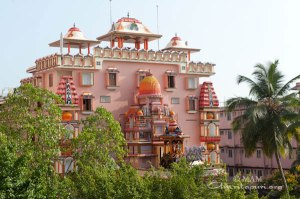
I always watch for changes that have occurred in the ashram since I was last here. On arrival, I noticed that the ground of the courtyard in front of the temple now is covered by large patio stones with grass separating them. It is quite beautiful and makes it much easier to transport luggage and other items from one place to another. I found the biggest change, however, in the huge auditorium. After a decade or more, there are now fans hanging from the ceiling, 35 of them! My eyes really opened in shock and delight when I saw them. Having the breeze during the evening bhajans (devotional singing) on my first night was wonderful.

amma new2

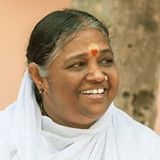
One would think that Amma would take time to rest after returning from such a grueling tour, but of course that isn’t what happened. She came out in the afternoon and sang with us and then gave darshan (her form of blessing is a hug) to visitors who were staying only a short time. In the evening she came again for the bhajans. She sang so many of the old, beautiful Malayalam songs. I feel so blessed to be here!


Would You Be Interested?

I’m considering offering a weekly Challenges for Growth Prompt.

If there is interest, I would post a focus weekly.  For example:

  1. This week I focus on meeting my needs instead of my wants.
  2. This week I focus on finishing things I haven’t finished
  3. This week I focus on walking my talk.
  4. This week I focus on making time to play
  5. This week I do not gossip
  6. This week I remember that “trials and tribulations” help me grow.

People could participate in different ways.

  • Everyone can consider it a challenge for the week and make it as much a focus as they want to.
  • Some bloggers could write a post about their experiences during the week.
  • Other bloggers may choose instead to write a post about the topic rather than make it a week-long focus.
  • Bloggers and non-bloggers would be welcome to write about their experience in the comments section of my post.

Would you be interested in participating in this type of prompt?

If so, which of the areas I have listed would you suggest I start with?  Other suggestions are welcome!


1970: My Summer as a Migrant Farm Laborer #1 (From Seattle to Florida)

1 pump


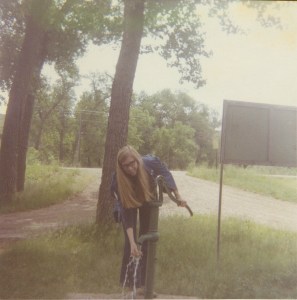
There were times during my college years that I picked fruit as a way of making some money. I remember picking blueberries in Seattle and apples in Yakima. I also remember sleeping under a bridge when I picked in Yakima. I enjoyed doing the outside, physical work.

I graduated with a BSN (Bachelor of Science in Nursing) degree in June of 1970. I would not be able to take my licensing exams until September so I wanted to do something very different than nursing until I took the exams. Three friends and I decided to travel around the U.S. doing migrant farm labor. Brenda, who would also be taking the licensing exams, and I planned to also do a lot of studying during that time.

Over the next six weeks, I will be publishing posts about our experiences that summer.  The content comes from a scrapbook I wrote soon after the trip was over.

Scrapbook

June 9, 1970

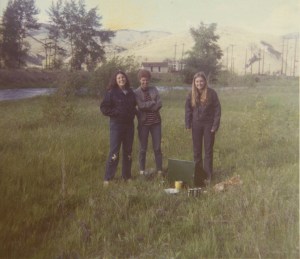
Mimi, Laura, Brenda and I left Seattle planning to spend the summer doing migrant farm labor. Our first destination was West Palm Beach, Florida where my parents lived. We planned to surprise them on their 25th wedding anniversary.

The rest stop where we ate our first meal had a river and beautiful scenery in back of us but in front there was an automobile junk yard! We were very cold but having fun.

Ready to Start!

The second night out it was pouring. This was the first time all four of us slept in the Datsun.

4 in Datsun

Early the next morning, we had car trouble. The radiator hose broke, resulting in a burned out head gasket. We found ourselves stranded in Plankinton, South Dakota, 250 miles from nowhere. The population of the town was 500. [As I was typing this, I was curious and decided to check out how much Plankinton has grown since 1970. I learned that in 2013 there were 715 people living in the town!]

Main Street of Plankinton

Through the help of a minister, we were able to find someone to fix our car and a place stay, the minister’s church basement. Our car was supposed to be fixed by the next day, but due to Greyhound losing three different head gaskets, we were to be in Plankinton for seven days, long past my parents’ anniversary.

The church basement was great; it had a kitchen and everything else we needed. The only problem was that the minister went on vacation without telling anyone he said we could stay there. On the second night, we received a visit from the sheriff. Luckily, once he found out why we were in the church, he was fine with us staying.

Plankinton was very boring though. The theater was available only on Saturday night, and it was filled with a million kids. The teenagers amused themselves by driving up and down main street or by watching everyone else driving up and down main street. We could swim for 50 cents per person.

We are bored!
We are bored!

There was plenty of chance for us to read and study though.

We started worrying about our mental status when, during meals, we found ourselves stripping membranes from the inside of eggs and looking at the fountains that spurted up when we squeezed lemon peels.

Our mechanic, Al, took the car apart on the day we arrived. Once the part he needed arrived, he worked from 10 am to 3 pm and the following day he worked on it from 6 am to 2pm. He only billed us $14 for his labor. Sure was great to meet friendly people.

Our Mechanic, Al
Al

Finally, we left Plankinton and headed on. We drove straight to Florida, making only one stop….to visit a friend. We arrived at my Aunt Muriel’s house early on Sunday morning.

We sure surprised mom when we showed up at church. Dad was happy to see us too. They didn’t seem to be upset when they found out our plans for the summer. I was surprised.

We soon had car problems again. This time we were broke, so we spent a week washing windows, cleaning houses and porches, and selling flowers. We earned $100!

Selling flowers

We had planned to do our migrant work across the south of the U.S., but my Uncle Ted advised us to work up the east coast instead. I thought he had a better idea of what we would be facing than anyone else, so we decided to heed his advice.

One day, mom drove us to Belle Glade. We soon discovered that we would be able to work there picking oranges. We went back to West Palm Beach to get ready for our first job. A couple of days later, we headed back to Belle Glade!

Ready to Start!

We had borrowed my parents’ old heavy canvas tent. A man in a nearby campsite gave us some extra rope and a stake. He said he thought that we were living in substandard housing and wanted to help.

Canvas tent

That first night was miserable. We were inside a canvas tent in hot weather. To make it worse we needed to sleep in hot sleeping bags in order to keep away from the mosquitoes.  The tent was useless. I finally got two hours of sleep by sleeping on the hood of the car.

The next morning, we were up at 5 a.m., in the dark. We drove to the place where we would board the bus that would take us to the fields. The bus was there when we arrived and it was already packed with pickers. We were the only white people on the bus. Everyone kept asking us, “Have you got a man yet?” We were startled by the question and didn’t know what to say. We soon discovered that everyone picked the oranges in pairs, because the ladders were 20 feet long. Each pair consisted of one woman and one man.

We arrived at the orange field at 7:30 a.m. By the time it was 4:30 pm, I was so tired; my body ached through and through. My partner Joe and I had filled seven bins. We were paid for our work at 6:00 pm and were back at our campsite in Belle Glade at 8:00 pm. On the second day, we again picked 7 bins of oranges. On the third day, Brenda picked with Joe and me. We tired much faster this day. We only filled 6 bins even though three of us were working.

The people we worked with were so nice. They knew the third day was our last, and they all wished us luck. Joe gave us a whole chest of fish to take home.   That day, two tiny birds had fallen from the tree. We put them in a hat and took them home so my brother Bill could take care of them.

We arrived at my parents’ house at 7 pm. We were so filthy that they wouldn’t let us sit on anything.

The income we each made from our three days of work varied.  The person who made the least earned $17; the one who made the most earned $31. We estimated that we had earned one cent for every 30 oranges we picked.

We were ready to leave Florida. Next stop- the Atlanta International Pop Festival!


(The next post in this series will be published on Friday December 4.)


In Science Class- विज्ञानस्य वर्गे

Große_Essigfliege_-_Drosophila_funebris_ _(14213086147)
Photo Credit: Wikimedia

As many of you know, learning Sanskrit is a passion of mine.  I take two classes a week and each of the classes require that I write five or more sentences in Sanskrit.  This week I decided to do something even more ambitious. I took much of the information from my recent fruit fly post and translated it into Sanskrit.  I finished the homework by writing the sentences as if they were being spoken in a science class where the teacher was asking the children what they knew about fruit flies.

आचार्या –  सुप्रभातं बालाः। अद्यतन विषयः फल-मक्षिकाः।
Teacher –  Good morning children.  Today’s topic is fruit flies.

आचर्या –   भवन्तः विषये फल-मक्षिकानां किं जानन्तिः।
Teacher –  What do you know about fruit flies?

सुल्मा –     फल-मक्षिकाः अष्टतः दश-दिनानि जीवन्ति।
Sulma – Fruit flies live from 8 to 10 days.

आचर्या –     उत्तमं सुल्मा।  डेविद्?|
Teacher – Very good Sulma! David?

डेविद् –      स्त्री फल-मक्षिकाः पञ्चशत-अण्डानि दश-दिनेषु स्ठापयन्ति|
David – Female fruit flies lay 500 eggs in 10 days.

आचर्या –     सम्य़क् डेविद्।  रमणः?|
Teacher – Good David.  Ramana?

रमणः –     एकस्मिन् फल-मक्षिकस्य नेत्रे ७६० दीप्तोपलाः  सन्ति|
Ramana – In a fruit fly’s eye there are 760 lenses.

आचर्या – आम्। सम्यक्। अन्ये वदन्तु।
Teacher – Yes, good!  Others speak.

बार्बरा – फल-मक्षिकाणां रक्त-नेत्रौ पिङ्गल-देहा: तेषाम् उदरेषु कृष्ण-रेखाः च सन्ति |
Barbara – Fruit flies have red eyes, brown bodies, and black stripes on their abdomens.

सवत्री –  फल-मक्षिका: पक्षौ द्विशत-वारं पतिक्षणं अ्भिविक्षपन्ति |
Savatri – Fruit flies wings beat 200 times per second.

रामा –  फल-मक्षिका: विज्ञान-प्रकल्पेषु उपयुक्ता: सन्ति |
Rama- Fruit flies are useful in scientific research

कर्ल् –  फल-मक्षिका: चत्वरि-chromosomes मानवानां इव सन्ति |
Carl –  Fruit flies have four chromosomes that are similar to humans’ chromosomes.

सुमती –  फल-मक्षिका: Parkinson’s, Alzheimers, aging, cancer, immunity, alcohol, and drug abuse विज्ञान-प्रकल्पेषु उपयुक्ता: सन्ति |
Sumati –  Fruit flies are used in Parkinson’s, Alzheimers, aging, cancer, immunity, alcohol, and drug abuse research.

सुसन् – फल-मक्षिका:  क्षीयमाणानि फलानि शखानि खादन्ति।
Susan –  Fruit flies eat decaying fruits and vegetables.

स्टॆव् – विगल-फलानि मा खादतु। तेषु फल-मक्षिक-अण्डानि भवेयुः|
Steve –  Don’t eat rotten fruit.  There may be fruit fly eggs and disease (causing organisms) in them.

आचर्या –     उत्तमं बालाः। श्वः इतोपि वदिष्यामः विषयॆ फल-मक्षिकाणां |
Teacher – Very good, children.  Tomorrow we will talk more about fruit flies.


[Thank you Madhavi for helping me with this translation!  I so appreciate your constant support.]

Family (Echo Poem)

Hold_my_hand
Photo Credit: Wikimedia

On Thursday, Sreejit announced that this week’s Dungeon Prompt will be the last of the year due to his upcoming Walking with Intention event.  He proposed that we write about Family.

Around the same time I read an echo poem written by Oliana on Traces of the Soul.  I decided to see if I could create a poem using that style.

Oliana stated that in an echo poem “the last syllable or two of a main line is repeated, perhaps with different spelling or meaning, as if an echo; usually this echo will be indented to a point under or beyond the syllable it mimics and will function as an independent line of one or two syllables.”

Here is my beginner’s attempt!

FAMILY

left home at seventeen, did not look back
unpack
life unfolds- study, marry, children arrive
strive
challenges occur- divorce and illness
suppress
families of choice materialize
ties
ancient wounds healing, become whole again
when
belonging and connection do abound
love found

The Fascinating Fruit Fly

Drosophila_repleta_lateral
Photo Credit: Wikipedia

I do my best not to kill spiders, bugs, and insects but fruit flies can be so overwhelming.  Even when I put my fruit in the refrigerator, at some point during the summer I usually end up resorting to trapping them with vinegar.  Perhaps because the summer was so warm this year, there were more fruit flies than normal.  Once, when I opened my outdoor compost bin, the swarm that emerged was so huge I could barely breathe.  One day, I visited a friend’s house only to find a big swarm of fruit flies in her kitchen, even though there didn’t seem to be anything present in the kitchen to draw them.

During the last few months, I have posted interesting facts about ants, aphids and slugs on this blog.  I decided to do the same for fruit flies.  I was astounded at what I learned about them.

    • Fruit flies have red eyes and tan bodies. On their abdomens, there are black bands.
    • Fruit flies become .098 inches in length.
    • They flap their wings 220 times per second.
    • Their eyes have 760 individual lenses. They use 2/3 of their brains for visual processing.
    • Fruit flies live 8 to 10 days. During that time females may lay 500 eggs. (One article said they may lay up to 2000!)
    • Fruit flies are drawn to decaying fruits and vegetables, as well as greasy items, in garbage dumps, trash cans, restaurants and homes.
    • They are also drawn to anything that is fermenting. They love beer and wine.
    • They are considered nuisance pests but they can transmit diseases.
    • Do not eat fruits that have rotten parts as they may contain fruit fly eggs and disease.
    • People who have pet geckos, chameleons, frogs and praying mantises often breed fruit flies to feed them. They must also be a food source to many creatures in the wild.
    • Fruit flies have only four chromosomes but those four are similar to human chromosomes.
    • Fruit flies are used in genetic research and also for studying evolution and neurobiology.
    • Seventy-five percent of genetically linked human diseases can be induced and examined in fruit flies.
    • Fruit flies are used in Parkinsons, Alzheimers, aging, cancer, immunity, alcohol and drug abuse research.
    • Fruit flies originated in West Africa and then spread to Europe. They probably arrived in North America on slave ships.
    • In 1995 three scientists who used fruit flies in their experiments won the Nobel Peace Prize!

Here is an interesting video of the developmental stages of a fruit fly’s life.

Well, the fruit fly may be considered a nuisance pest, but I can see that they provide important services to this world.  I will never look at them the same again!

References:

5 Things You Didn’t Know about Fruit Flies
Drosophila melanogaster: Common Fruit Fly
Basic Fruit Fly Facts
Fruit Flies
Top Ten Fascinating Facts about Fruit Flies

This article will also be published in the November issue of the PNW GreenFriends Newsletter.  To see previous issues of that newsletter click here.