Sanskrit Practice

Every so often I enjoy sharing my Sanskrit homework on my blog.  This time I decided to include homework from both of my Sanskrit classes.


Homework for Madhavi’s  Friday class

I have been taking this class for more than three years. This week I decided to focus on creating sentences with dual words, meaning sentences involving two people.


द्वाविंशति-April-मासे दिनाङ्के मम  पुत्री तस्याः पति: च Seattle-नगरम् आगमिष्यतः
dvaavimshati April maase dinaangke mama putrii tasyaaha patihi cha seattle nagaram aagamishyataha
On April 22 my daughter and her husband will come to Seattle.


तौ कर्यं करिष्यतः यावति अम्बयाः यत्रा May मासे भविष्यति
tau karyam karishyataha yaavati ambayaaha yatraa May maase bhavishyati
They will work until Amma’s programs begin in May.


तदा तौ अम्बया सह  गमिष्यत:
tadaa tau ambayaa saha gamishyataha
Then they will go with Amma.


आमृतपुर्यां तौ उशितवन्तौ प्राय: षोडश-वर्षेभ्यः
aamritapuryaam tau ushitavantau praayaha sodash-varshebhyaha
They have lived in Amritapuri for 16 years.


मम पुत्र: अमृतपुर्यां वसिष्यति यावत् तौ America-देशे स्तः
mama putraha amritapuryaam vasishyati yaavat tau America deshe staha
My son will live in Amritapuri while they are in America.


Homework for Sunday Samskrita Bharati class

I’ve been taking the Samskrita Bharati class since September.  This class has not studied dual yet, so I avoided that type of sentence.  The main focus for this week was on writing sentences using the combination yadaa (when) and tada (then).  With this particular combination both halves of the sentence should occur at the same time, or be something that happens with certainty.


यदा अम्बा America-देशम् आगच्छति तदा मम पुत्री तस्याः कटकेन सह गच्छति
yadaa ambaa america desham aagacchati tadaa mama putrii tasyaaha katakena saha gacchati
When Amma comes to America then my daughter travels with her caravan.


यदा भङ्ग्रा-जानपद-नृत्यानि पश्यामि तदा बहु अतीव प्रसन्ना अस्मि
yadaa bangraa-jaanapada-nrityaani pashyaami tadaa bahu ativa prasannaa asmi
When I see bhangra folk dances then I am very, very happy.


यदा ते आगच्छन्ति तदा खादामः
yadaa te aagacchanti tadaa khaadaamaha
When they come then we eat.


यदा वयं चलच्चित्रम् आगच्छमः तदा अल्पाहारं खादामः
yadaa vayam calaccitram agaaccamaha tadaa alpaahaaaram khaadaamaha
When we come to the movie then snacks we eat.


यदा सा उपविष्ठवती तदा सा पुस्तकं पठितवती
yadaa saa upavishthavatii tadaa saa pustakam pathitavatii
When she sat down then she read a book.


यदा त्रयः बालकाः क्रीडन्ति तदा ते हसन्ति
yadaa trayaha baalakaaha kridanti tadaa te hasanti
When the three boys play then they laugh.


यदा मित्रैः सह मिलामि तदा मम गृहं चलामः
yadaa mitraihi saha milaami tadaa mama griham calaamaha
When I  meet friends then to my house we walk.


यदा मन्दिरे पूजयामि तदा प्रर्थनां गानं च करोमि
yadaa mandire puujayaami tadaa praarthanaam gaanam ca karomi
When in the temple I worship then praying and singing I do.


I love studying Sanskrit!

An Offering (Haiku)

  20150307_213036


20150307_213143


Handful of petals
Offering to the Mother
From my heart to hers


The Haiku was written about a Bhagavati Puja I attended last night. The photographs were taken after the puja had ended.

The Bhagavati Seva Puja, is an ancient Vedic puja ceremony done to restore balance in the environment and bring peace within us and the world. It is a very beneficial puja performed to keep us in harmony with cosmic forces, thereby removing and overcoming the sorrows of life and bringing spiritual upliftment.


Banana Circles in Amritapuri, India

20150105_163744

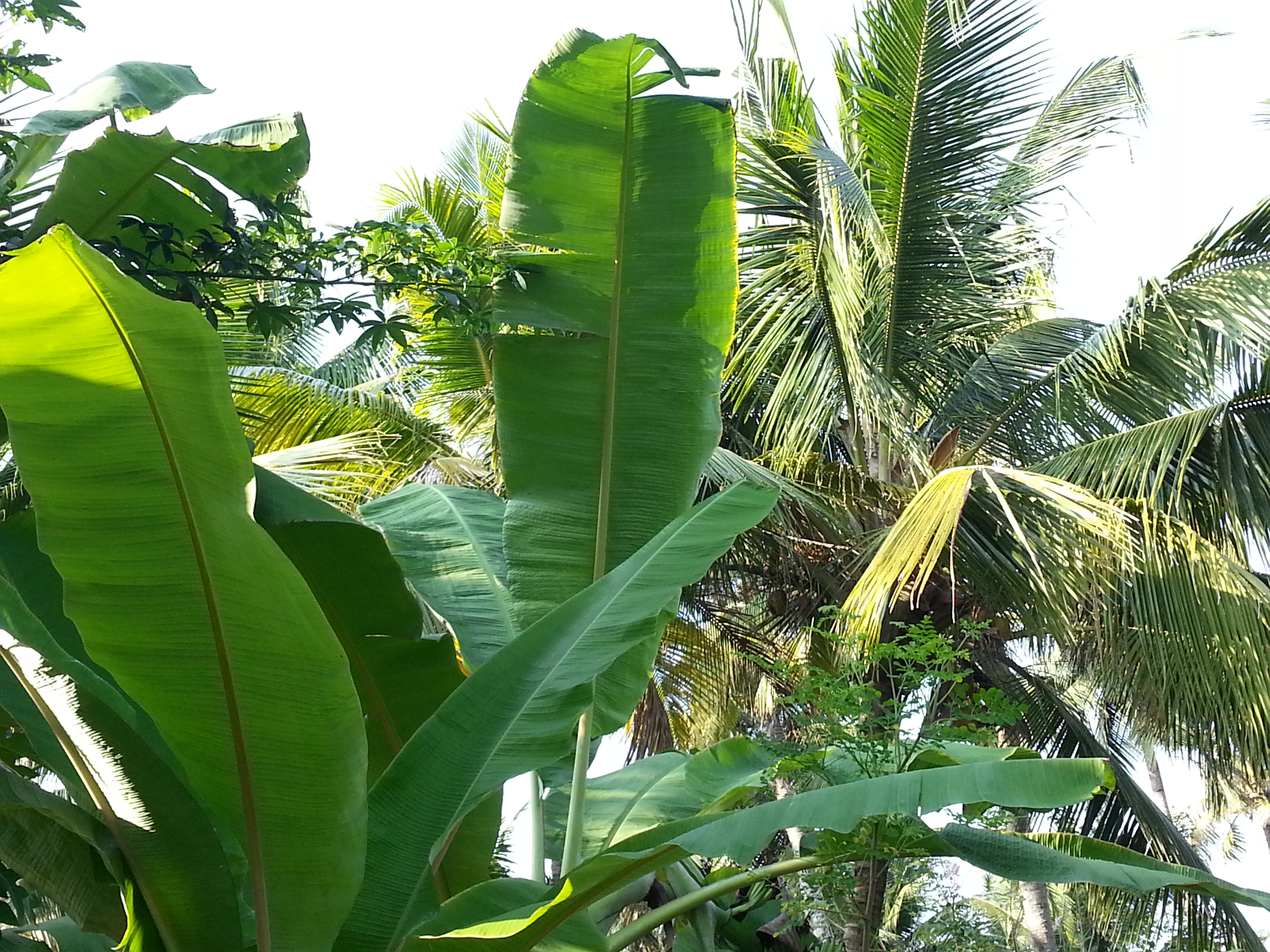
When I visited Amma’s ashram in Amritapuri, India in December 2014/January 2015, I was fascinated by the banana circles that were located in one of the ashram gardens. Banana circles are a permaculture technique that is most often used in tropical and subtropical regions. They help create humus and water retention where soils are either sandy or heavy clay.

I found this description of banana circles:

“Papaya, banana and coconut circles are developed by digging pits up to two meters in diameter (for papaya and banana – 3 m for coconut) and approximately 1 meter deep. They are then filled with dampened, compacted organic material to a height of 1 meter above ground. Up to seven plants of the appropriate type are then grown on the rim of the pit. Taro or other moisture loving plants may be grown in the inside edge, as sweet potato along the outside edge to provide a living ground cover and mulch, as well as additional food production.”

Banana circles also are a way to compost organic materials, produce food, and utilize grey water. They are filled with microorganisms.

I learned something else in researching this topic. I always thought bananas grew on trees. It turns out that banana palms aren’t trees, they are plants. I was even more surprised when I read the following information from The Permaculture Research Institute:

Did you know that banana palms are actually a grass? Also, each plant only gives fruit once, so after you have cut the bunch of bananas down you can remove the whole plant at ground level. By this time, there should be new suckers coming up — only allow a couple of these to grow, as too many will make your bananas overcrowded and they won’t fruit well.

When I first looked at the banana palms in Amritapuri, I was astounded by how fast they grow. The first picture below was taken on the day the palm was planted. The second and third pictures are of banana palms three or four days after they were planted.

Here are some other pictures of the Amritapuri Banana Circles.

For more information:

http://permaculturenews.org/2014/04/08/banana-circles/

http://www.homegrownediblegardens.com/banana-circlemulch-pit-guilds.html

http://www.mitra.biz/joomla/index.php/writingssustainability/3050-howtobananacircle

http://permaculturenews.org/2008/06/23/build-a-banana-circle/

https://treeyopermacultureedu.wordpress.com/chapter-10-the-humid-tropics/banana-circle/

 *****

Originally written for PNW Green Friends Newsletter, Issue 44, March 2015

*****

Weekly Photo Challenge: Reward

This morning, I walked while chanting the Sri Lalita Sahasranama.  This is a sacred text that I ideally would be chanting daily.  As I walked, I was pulled by the desire to be focusing on the beauty around me rather than reciting the chant.  I have felt that pull many times before, but it was particularly strong today.

Then the question “Isn’t focusing on the beauty of Mother Nature a spiritual practice too?” came into my mind.  Of course it is; about that I had no doubt.  I realized what wanted to be doing was to immerse myself in nature, taking photographs to share on my blog and in the GreenFriends newsletter I organize monthly.

For the rest of my walk, I continued my chant, but if I felt called to stop and look at something and/or take a picture, I did.  Sometimes I felt literally “called” in that it seemed like a song bird or crow was calling out to me.

I felt “rewarded” for being flexible in my definition of spiritual practice by capturing several beautiful photographs.

I suspect that tomorrow morning I will be going on a nature walk!

*****

Written for Weekly Photo Challenge: Reward

A Day of Challenges!

Today was one of those days where I had “plans” but all of them changed.

It started with me waking up at 1:45 a.m. I had been dreaming about Sanskrit and about blogging, something that is happening with increasing frequency, but thankfully it is not usually that early. As I moved from a dream state into a more conscious state of mind, the idea of posting a Sanskrit declension matrix by making a Power Point slide show came to my mind. Then the idea of adding audio to it surfaced.

I have helped others with Power Point slide shows before but only by typing in the words. I had never done a real one and I certainly had never put audio to one. As I lay there sleepless, I started pondering how to do it. Around 3:00 a.m., since sleep didn’t seem to be coming, I got up.

I went back to bed for about an hour and a half at 5:00 a.m. and then spent most of the day working on this project. The slide show went together quickly and even the audio was reasonably easy to figure out. But then came getting correct pronunciation, correct timing and most time consuming of all, finding a way to put it into a format that the blog would accept. That last part took until 7:45 tonight! But with Grace and persistance, I finished it!

I’ve mentioned in earlier posts that every noun in Sanskrit may have 7 or 8 different cases. You can identify those cases by how the word ends.

Cases:

1st case is the subject
2nd case is the object
3rd case – “with” (with a fork)
4th case- “for” (for the beggar)
5th case- “from” (from the city)
6th case- possessive or “of” (boy’s; of the boy)
7th case- “in, at, on”

The slide show will present the declensions for the pronoun “aham” which means “I”. Singular, dual (2 people) and plural (i.e. three or more) forms will be presented for each of the seven cases. You will notice that some of the words are the same but have different meanings. In those instances, we have to read the word in a sentence to determine the meaning.

So with that for an introduction, here is my PowerPoint Slide Show with Audio of the declensions for the word “aham”! (In hindsight, it would have been helpful for me to put the case number and whether the word was singular, dual or plural on the slides, but even this way it gives you a good idea what the process is like!) I hope you enjoy it.

Waking in the Night (Troiku)

I have been intrigued lately by a form of poetry that Tournesol from Traces of the Soul and Tournesol Dans Un Jardin has been writing.  (See Courting Moon.)  The style is a new form of Haiku called Troiku that was developed by Chevrefeuilles.

In this style, there is a three lined Haiku that is the base of the poem.  The author then creates a separate Haiku using each of the base lines.

Here is my first attempt at writing a Troiku!


*****

Waking in the night

dreaming about Sanskrit

It’s time to blog!


Waking in the night

Raindrops falling

Mind on overdrive


Dreaming about Sanskrit

Will I ever learn?

Yes!


It’s time to blog!

Ideas rolling in

Can sleep another day!


Mahatma Gandhi Quote

Mohandas_K._Gandhi,_portrait
Photo Credit: Wikimedia


My imperfections and failures are as much a blessing from God as my successes and my talents and I lay them both at his feet.


Amma, Embodiment of Compassion

Amma, Embodiment of Compassion

For the tiny infant to the eldest elder, she is there.
For the faint of heart and the bravest of the brave, she is there.
For the rich and the poor, for the saint and the sinner, she is there.
For those who are happy and those in despair, she is there.

When I’m sad and lonely, when I’m in danger, she is there.
When my children, friends and family need help, she is there.
When I need momentum to learn and grow, she is there.
When I want a hug because I’m feeling low, she is there.

Amma, embodiment of compassion and love renowned.
I thank you with an appreciation that has no bounds.

*****

This slideshow requires JavaScript.

Note:  Most of the pictures come from Amma’s Facebook Page

Written for Writing 201: Hero(ine)  The assignment was to create a ballad using anaphora or epistrophe.  “Anaphora simply means the repetition of the same word (or cluster of words) at the beginning of multiple lines of verse in the same poem. Epistrophe is its counterpart: the repeated words appear at the end of lines.”

The Fog

The 5th Writing 201: Poetry assignment was to write an elegy; a first-person poem on themes of longing, loss, and mourning. The word prompt was “fog.”  My poem is very rough, because I definitely don’t know what I am doing on this one!

I chose to write about my experience with Chronic Fatigue Syndrome during the 1980’s.  While the poem itself is unskilled, I believe there will probably be numerous readers who will relate to my experience.

The Fog

Five years living in the fog
Everything is slow; can’t think, can’t do.
Exhaustion never ends.
Plan after plan put on hold.
Dreading to go to bed at night
Can’t face yet another dawn.
Walking to the kitchen to make some food?
Not worth it… why try?
Heavy
Heavy
Heavy
Five years later, fog is lifting
Good days, bad days, but it’s shifting.
Will it end? Will it return?
Dare I hope?
May I hope?
Hope?

They Wiggle and Squiggle!

I love the variety of challenges Writing 201: Poetry is offering us.  Today’s assignment was to explore Concrete Poetry, also known as Shape Poetry.

“The idea here is to arrange your words on the screen (or the page) so that they create a shape or an image. The meaning of the image can be obvious at first glance, or require some guesswork after reading the poem. It’s up to you to decide how difficult you want to make it for your readers.”

We were also encouraged to use enjambment.

Enjambment “may sound like a mouthful. But what it describes is a really simple phenomenon: when a grammatical sentence stretches from one line of verse to the next.”

The word prompt we were to use was “Animal.”

“Polar bears, microbes in your cells, unicorns, your pet hamster, lolcats: find a way to include an animal, today’s word prompt, in your poem. Or write about a situation that can bring out the animal in you (or someone else). Or dig deeper into the word’s etymology (anima = latin for breath). One way or another, give us a beast of a poem.”

It was a fun assignment to do, although figuring out how to do the formatting in a way that it held when put into the post was a challenge.  I am grateful to the various people who offered suggestions.

So here is my animal shape poem using enjambment!

Shape poem2

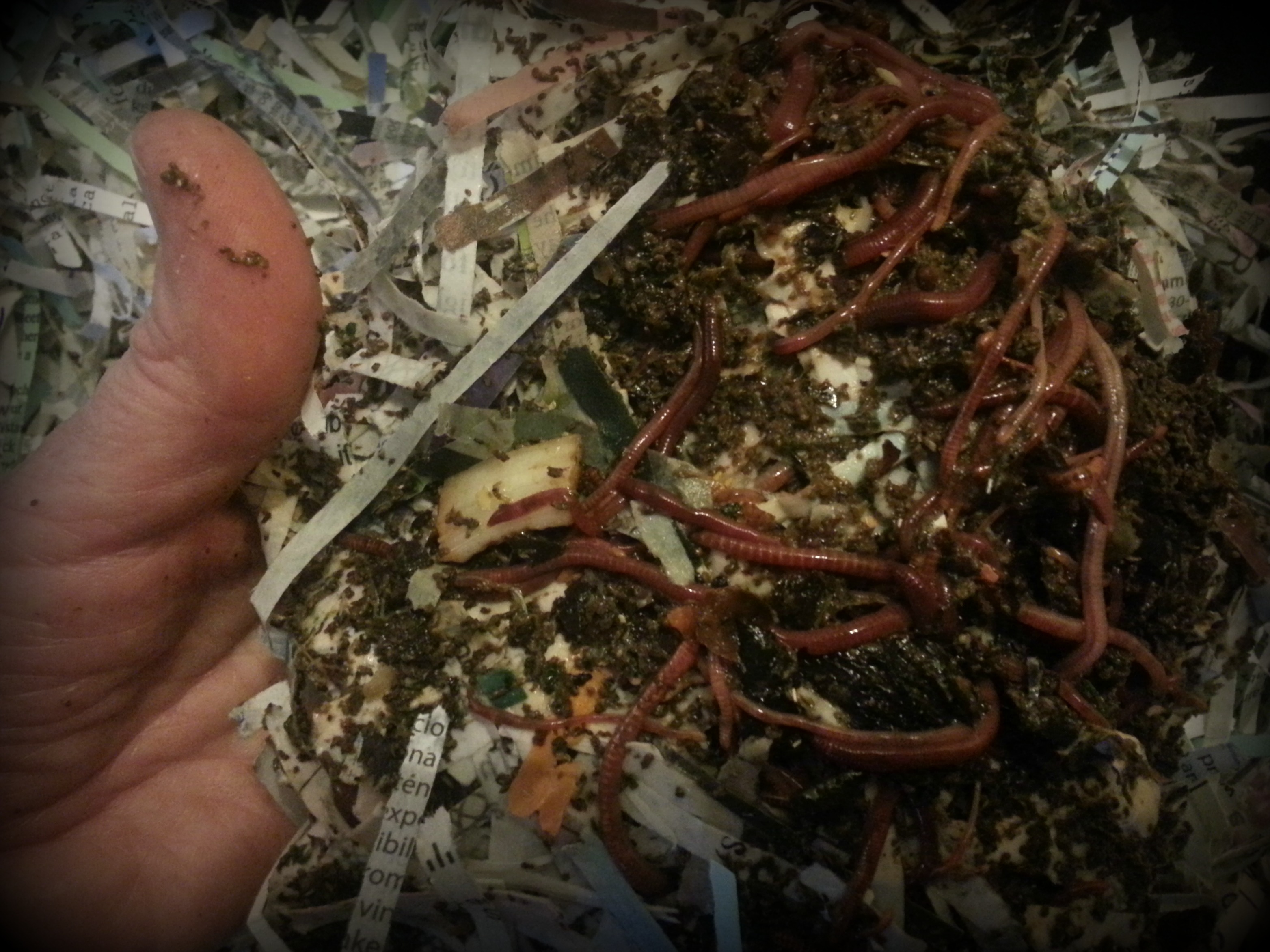
And here is a photo of my “pets!”

My Worms!