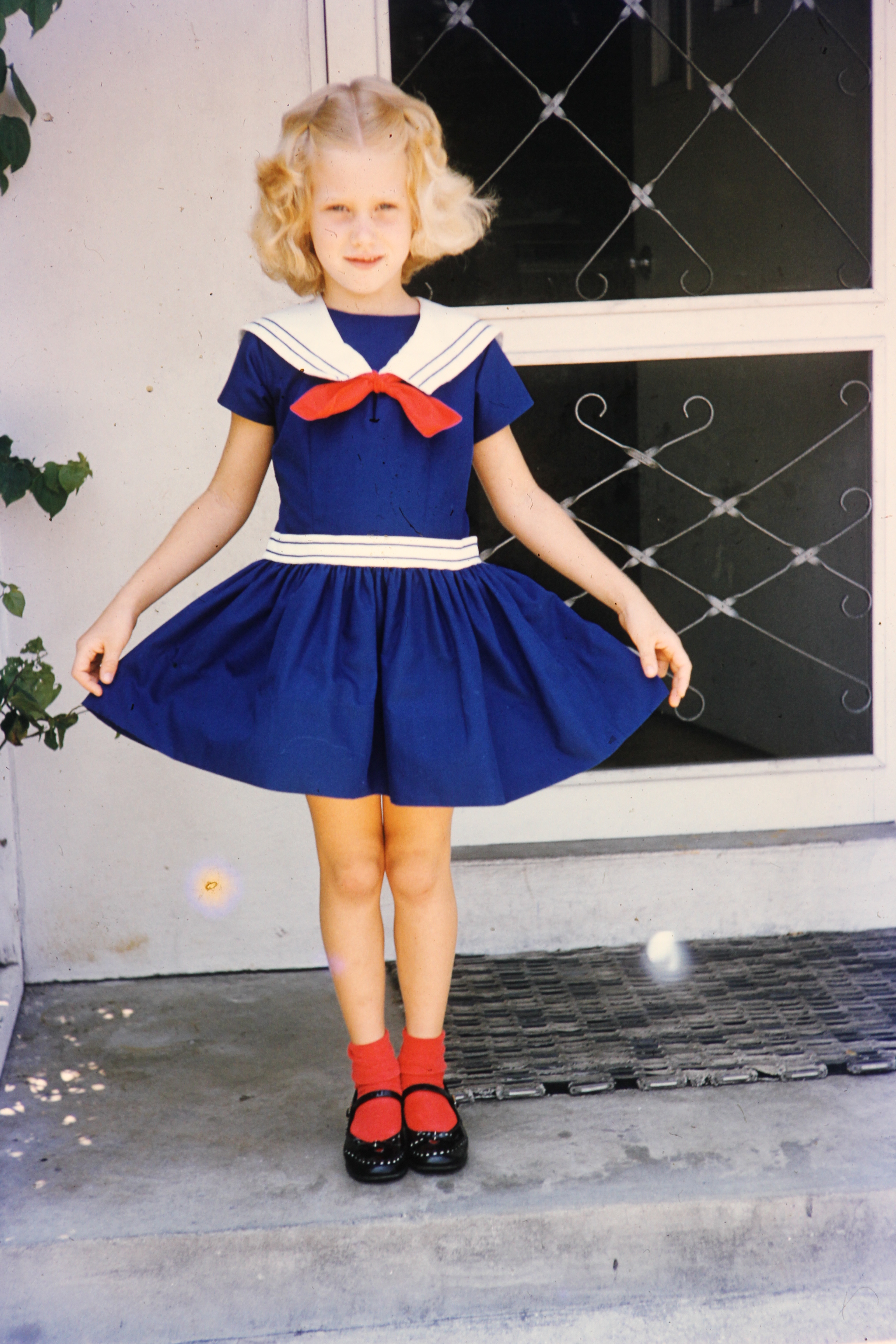
As a child, I understand I confused people by telling them that I was half Mexican and half Indian. I can imagine how puzzled they must have been since I was so blond, and so white! It made perfect sense to me. After all, I was born in New Mexico so I must be Mexican, and besides, there were a lot of Indians in New Mexico.
As I grew older, I learned that my father’s ancestors were German and my mother’s were from Scotland. Many of my father’s relatives were named Von Behren and my mother’s maiden name was McClain.
When I started blogging last March, one of the first bloggers I met was Nathan James from The Relative Cartographer. He is very interested in genealogy and writes many stories about his family, some true and some fiction. I have been fascinated by his work and it peaked my curiosity.
A few months ago, a friend told me he had learned what percentage of his DNA came from various countries in the world. I was intrigued and decided to do the same thing. For $99 and some saliva, 23 and Me, the largest DNA ancestry service in the world, provides “ancestry-related genetic reports.”
I learned the results of my tests on Tuesday!
I am:
99.5% European
Northern European
39.4% British & Irish
14.1% French & German
3.2% Scandinavian
35.1% Broadly Northern European
Southern European
0.8 Italian
1.3% Broadly Southern European
0.6% Eastern European
4.9% Broadly European
Sub-Saharan African
0.3% West African
< 0.1% Broadly Sub-Saharan African
East Asian & Native American
East Asian
< 0.1% Broadly East Asian
< 0.1% Native American
0.1% Broadly East Asian & Native American
< 0.1% Unassigned
I was quite surprised by how high the British and Irish components were. When I shared the results with my brother, he said his understanding was that our father’s relatives were Prussian and that our mother’s were Scot Irish. He hopes to learn a lot more about them in the future. I don’t know that I have that level of curiosity, but I’m very happy to have learned the information from this DNA test!
I am very interested in knowing which of my posts you either enjoy the most, or find the most valuable. I have identified six primary categories and have listed examples of some of the posts I have written for each of those categories. After the list there is a poll. Please order the categories from your most favorite to your least.
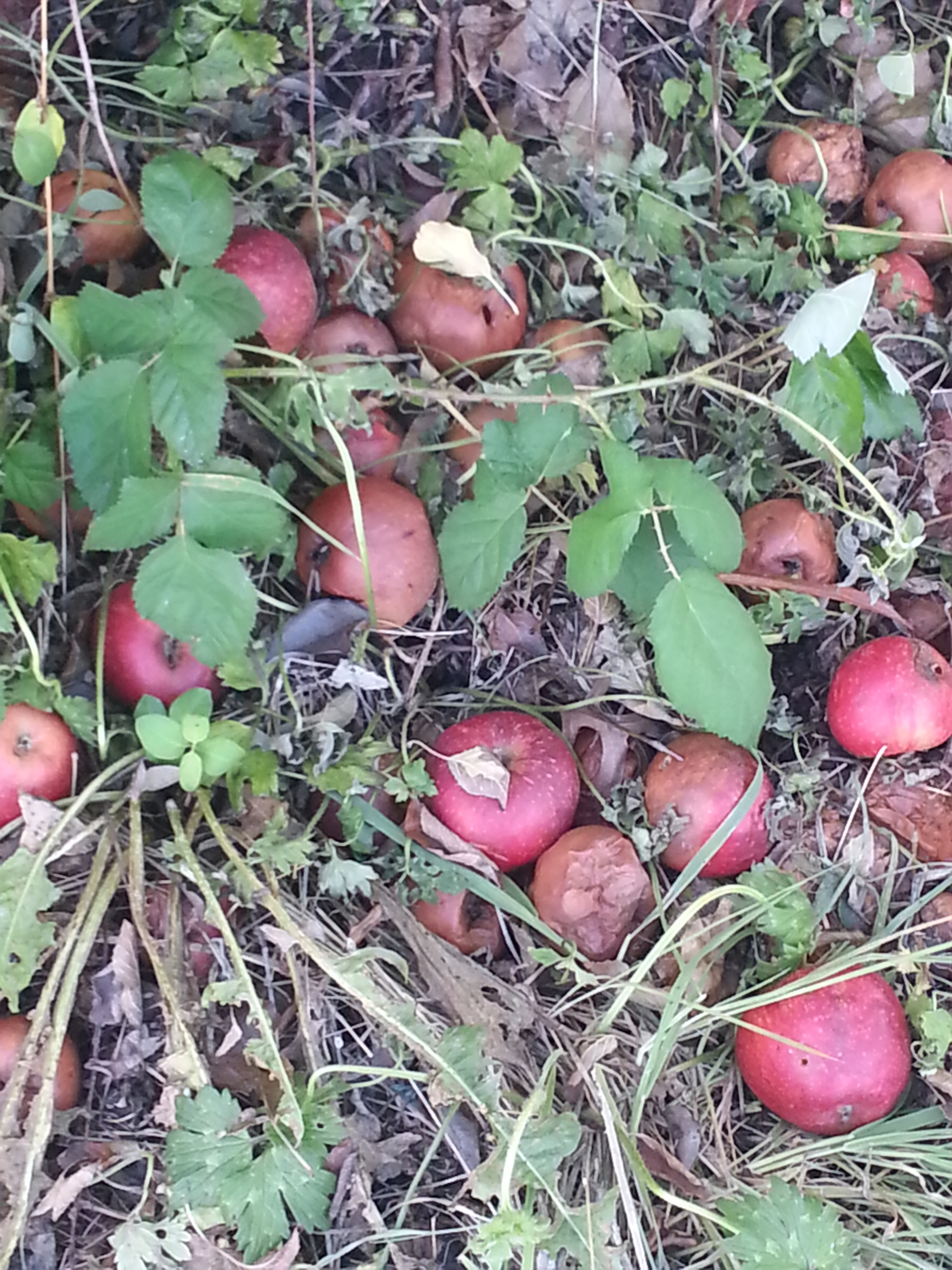
On a morning walk several weeks ago, I passed by a number of homes where the ground under fruit trees was covered with rotting fruit. Seeing the apples reminded me of a post I wrote in August. At that time, The Daily Post challenge had been to identify what we considered to be the 8th Cardinal Sin. I decided to add “Wasting Food” to the 7 Cardinal Sins from the Bible. (See The Eighth Cardinal Sin: Wasting Food)
In doing the research for that post, I learned that in 2012, the National Resources Defense Council (NRDC) of the United States concluded that the U.S. wastes 40 percent of its food. My response to the challenge reviewed many of the ways we waste food in this country. When I saw the rotten apples, I realized I should also consider letting the fruit and vegetables in our gardens rot as a form of wasting food. After all, if we don’t need the produce, we could give it to individuals and families in need or to organizations such as missions and/or food banks.
Earlier this summer, I had considered sending a note to neighbors reminding them that the food banks welcome garden fruit and vegetables but I never did it. I regret not having followed through on that impulse.
A few days go, I discovered in Seattle we have a group called City Fruit. Their website states:
City Fruit promotes the cultivation of urban fruit in order to nourish people, build community and protect the climate. We help tree owners grow healthy fruit, provide assistance in harvesting and preserving fruit, promote the sharing of extra fruit, and work to protect urban fruit trees.
Since 2008, City Fruit volunteers have harvested and donated more than 80,000 pounds of fruit (24,000 pounds were harvested in this year alone). This is definitely a group I could tell my neighbors about next year.
The spiritual group I belong to feeds the homeless in Seattle once or twice a month. That project is called “Mother’s Kitchen.” In August, one of our members decided to plant a garden dedicated to Mother’s Kitchen so that the people we serve would be eating more organic produce. She also asked us to donate vegetables from our gardens. I did not have a very good harvest this year so did not donate anything.
I pledge to those of you who are reading this, that next year I will inform neighbors of places that would welcome their unwanted fruit and vegetables and will do a better job of not wasting garden produce myself. I will continue to give extra produce to family members and friends, but will also share what I have grown with food banks and Mother’s Kitchen.
How do you, or will you, prevent vegetable and fruit wastage in your gardens?
The instructions for the Weekly Photo Challenge are:
For this week’s Photo Challenge, stimulate your creative process and imagine which of your images you would like to see gracing the cover of a book, an album, or a magazine. Would the image inspire us to take a peek through the pages, listen to the music, or buy a ticket to the show? Would it strike a chord with viewers, making them reflect on or revisit memories of places, people, and experiences.
Early in my blogging, I wrote about an experience of losing the books I had treasured as a child (Loss in an Army Brat’s Life). It occurred to me at that time that it would be fun to re-read some of those books. I recently realized I could create an interesting blog series from that endeavor. I decided I would start with a book from the Cherry Ames series since it was those books that led me to choose nursing as a career. I was very curious to discover my reaction to them as an adult. Continue reading “Books From My Younger Years: Cherry Ames”→
Today is the third day of the Blogging 201 course. Our assignment is to :
Conduct a short and simple stats analysis that will help you create an editorial calendar for the next 30 days. Why do this? Because knowing which topics and posts are most popular helps you to brainstorm new content that you know your audience will love. Because knowing which days of the week your visitors are most likely to show up lets you plan to publish that content on your best days.
I decided to examine the posts that had the top number of “likes,” those that had the top number of “views” and the days of the week that visitors showed up. Likes When reviewed by the number of likes, six of the top ten posts were posts inspired by photography challenges. Another one on that top ten list was primarily composed of photographs. Views When I look at number of views, however, it is a different matter. Here are my top twenty-one posts and how many views they have received. Continue reading “Give ‘Em What They Want”→
When discussing the importance of brevity and simplicity of speech when one is trying to create inner silence, Muller provided information that I have recalled time and time again. He said:
Someone once noted that the Lord’s Prayer contained 56 words, the Twenty-third Psalm 118 words,and the entire Gettysburg address only 226 words– while the U.S. Department of Agriculture directive on pricing cabbage contained 15,629 words. One could easily conclude that we place a higher value on pricing cabbage than on liberty, prayer, or serenity.
From Legacy of the Heart: The Spiritual Advantages of a Painful Childhood by Wayne Muller, Simon and Schuster, 1992, page 104-105.
While we have made progress in addressing inequality in the world since I was a child, the work is far from done. There are still examples of inequality all around us. It may be due to race, sexual orientation, social status, gender, religion or a myriad of other factors.
Inequality exists when African American and Hispanic citizens fill our prisons due to racial profiling and when they receive harsher jail sentences for committing the same crime as Caucasians. Inequality exists when unarmed teenagers are shot by police, when rich children have better funded schools than poor children and when homosexual men and women suffer hate crimes, or have different privileges than heterosexuals. Inequality exists when women and children are forced into the sex trade.
When I think of inequality in my own life, two experiences come to mind. The first happened the summer of 1970, soon after I graduated from college. I decided to spend that summer doing migrant farm labor while I studied for the State Board of Nursing exams I would take in the fall. Three friends and I picked fruit and vegetables in Florida, Georgia, South Carolina, Maryland, Pennsylvania and Washington State. Continue reading “Experiences of Inequality”→
In 2004, Seattle Amma satsang members joined together to make crocheted afghans for men and women who were moving from the streets into transitional housing. The afghans were all made from scrap yarn. Each of us crocheted as many squares as possible and then we mixed and matched the squares to create the beautiful blankets.
Here are pictures of some of the afghans we made:
This project was inspired by a group called Warm Up America.
I didn’t start that January 2014 day planning on becoming a train hopper. Far from it. My intention was to accompany my daughter, Chaitanya, to her dentist appointment. Since her appointment was at Amma’s multi-speciality hospital in Kochi (India), several hours away from her ashram in Amritapuri where Chaitanya lives, it was bound to be an adventure, but train hopping was not supposed to be part of it.
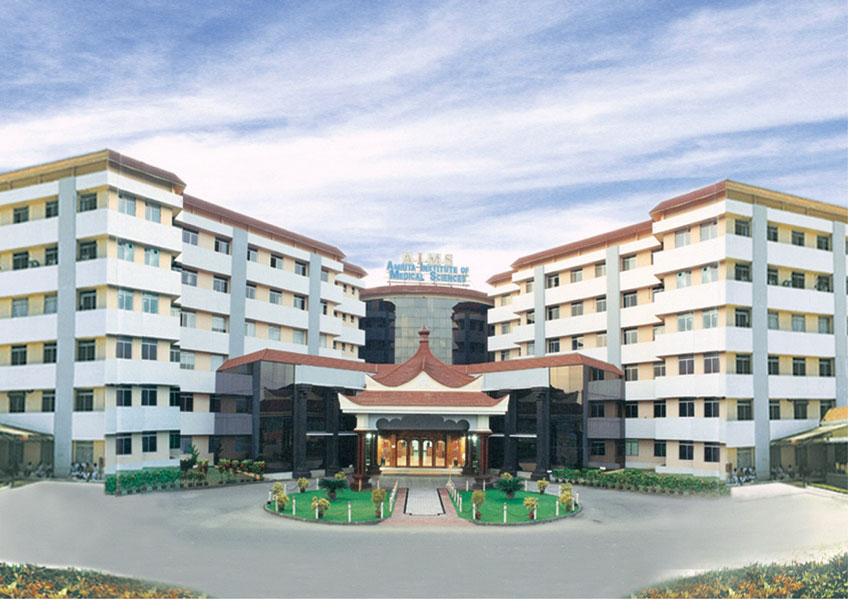
Amrita Institute of Medical Sciences (AIMS)
Amrita Institute of Medical Sciences (AIMS) began in 1998 as a 100 bed hospital and has grown into a 1400 bed tertiary care center with a campus that includes a School of Medicine, School of Nursing, School of Dentistry, School of Pharmacy, and a Center for Nano-sciences and Molecular Medicine.
I have wanted to see AIMS for a long time, but once I arrive at the ashram on my yearly India visit, I don’t want to leave. I’ve always said that when I had a reason for going to AIMS, I would go.
When I found out that Chaitanya needed to go to AIMS for a root canal and to see an ophthalmologist, I decided my time to visit AIMS had come. I was excited that she was planning to travel by train rather taking a bus. I have always enjoyed my train experiences in India. I knew Chaitanya would normally use the open 3rd class seating, so I asked if I could treat her to an air conditioned (AC) or sleeper car. She was more than happy to receive that gift!
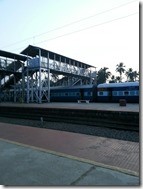
Chaitanya had checked the train schedule ahead of time. We were aiming for the 6:30 a.m. train, the first one to Kochi that day. We left the ashram in an auto ricksaw at 5:30 a.m. and arrived at the railroad station around 6:10.
In 1990, when I took my first train trip in India, I described the railroad station in this way:
“For westerners who have never witnessed an Indian train station, it should be pointed out that it was nearly indescribable in its chaos, noise and odor. Every open area was filled to the rafters with humans and animals. It was literally a sea of humanity, full of travelers carrying baggage and poultry on their heads and beggars asking for money and food. Only the passing of bodies moved the moist, fetid air.”
That station was in Chennai, which is a big city. It was also during festival time. This station was entirely different. It was in a town instead of a city and we were there in early morning. The station was quiet and peaceful, almost deserted!
When Chaitanya went to the counter to buy the tickets, she was told that there was no 6:30 train, we would have to wait for the one at 7:00 a.m. It was unlikely she would make her dental appointment on time but there was nothing we could do about it.
Chaitanya didn’t seem particularly concerned. She asked for tickets in the AC car but was told to buy a regular ticket and once we were on the train and in the AC car we could pay the difference in price to the conductor.
When the train arrived, we started looking for the AC or sleeper car. We walked the entire length of the train and couldn’t find either one of them. We were starting to suspect that there wasn’t one. We turned around and walked back to see if we had missed it.
All of a sudden, the whistle blew, so we just jumped onto a third class car. In that class, there are no seat assignments. The train was packed, unbelievably packed. As we started walking towards the front of the train, the number of people thinned out considerably. When we found open seats I sat down and Chaitanya continued looking for the AC car. She finally discovered a car that had chairs instead of benches. It didn’t have AC but it was more comfortable than the other area so we moved there.
The train trip was 2 ½ hours in length and then it took us another 20 minutes by rickshaw to arrive at AIMS. As expected, we had missed Chaitanya’s scheduled appointment. She was told the dentist was working on someone else so she would have to wait at least until noon.
We decided to visit a friend who was a patient in the main hospital. We were really glad to be able to spend time with her as she was headed for surgery later that day.
Once she was called, Chaitanya was in the dentist’s chair for two hours. She had already been to the dental school for an appointment to determine what was wrong with the tooth, and would have to return for at least one and possibly two more appointments before the process would be finished. I had recently had a root canal myself, and the whole procedure was competed in one appointment. Not so here. For one root canal, Chaitanya needed four or five appointments, each requiring her to travel 3 hours by train and rickshaw ….each way.
While Chaitanya was with the dentist, I decided to look around. My fantasy had been that AIMS was a campus with many spread out buildings and rolling green lawns. Not so. There were many tall buildings and every available space was being used, either by an existing building, or one under construction. And there were so many people.
The campus was so big that I was afraid to do much exploring. It was like a big maze and I didn’t want to get lost. I decided to limit my outing to the main hospital, the School of Dentistry, and a building that had a cafeteria in it!
When Chaitanya finished her dental work, we found the ophthalmology department and she did what she needed to do there. By the time that was finished, she was famished so I bought her some lunch. Afterwards, she took me to a different building where we could get ice cream. I decided to have a banana split! Here is what a banana split looks like in India! I’ve never had one here before, and it was very different than what I expected. Even the texture of the banana was different. (This picture is of a partially eaten one!)
We then headed back to the train station to get the AC or sleeper car that I believed we deserved after this very long day! Well that was our plan, but wasn’t what happened! Chaitanya knew a short cut to the railroad station that allowed us to walk rather than take a rickshaw. What we didn’t realize was that we would end up in a part of the train yard that was nowhere near the counter where they sold the train tickets…. and a train was coming.
When Chaitanya asked where that train was going, she discovered it was the train we needed to take. If we went to the ticket office, we would certainly miss it, so we decided we would board the train and pay the conductor. We didn’t know if that was allowed, but since we had been told in the morning to just pay the conductor the balance of the fee, we decided it was a reasonable thing to do.
We once again walked the length of the train looking for the AC or sleeper cars….. and once again we couldn’t find them. The whistle blew, so we jumped on the train. Once we were in the car, we realized there was a problem. Normally when you board a train, you can walk from one car to the another from the beginning of the train to the end. This particular car was very different in that there were no doors that connected to the other cars. That meant there was no way for us to walk through the train looking for the AC car or to pay the conductor.
A man was already in the car. He told us we would need to get off at the next station and find a different car. When he discovered we didn’t even have tickets, he repeated that statement even stronger. I thought he was a railroad employee, although it seemed a little strange that he wasn’t wearing a uniform.
Moments later, he informed us that it fine for us to be in that car. He then said that he was calling some of his friends and they would be joining us. Moments later two men and a woman boarded. By now I was convinced that none of them belonged in the car anymore than we did.
We soon learned that we were in the “disability car.” At one point, a man with a disability did enter, but no one else in the car should have been there.
Eventually, the train left the station. When we arrived at the next station the other passengers told us not to leave. (They spoke little to no English, but Chaitanya speaks enough Malayalam to get a general idea of what they were saying.) When we departed that station, the train started going backwards, i.e. in the opposite direction from where we wanted to go. What was happening? We decided we would get off at the next station regardless of what anyone said.
The train started going really fast. Soon we realized that we couldn’t get off at the next station because the car we were in had only one door and it opened out onto the tracks. All of the subsequent stations were like that as well.
I was wondering where this train was going. Would we end up in North India? And why was no one else concerned about this situation? After a half hour or so, I noticed the placement of the sun. Somehow we had changed tracks and started going the right way without a sense that the train had turned around. I still have no idea how that happened but was very relieved to discover we had been going in the right direction.
The other four people laid down in the sleeper bunks and slept most of the trip. It seemed clear that they made a practice of staying in the disability car. I was having fun, although I was concerned about how I was going to explain this situation to the conductor…… but I felt somewhat comforted knowing the others would have explaining to do as well.
As we neared our station, we realized that the car door still opened onto the tracks instead of the station platform. What were we going to do? Chaitanya wanted to get off on the tracks. I didn’t like that idea, but began to think there was no other option. She at least agreed that if we saw another train coming, we would stay on the train.
We told the man we had met at the beginning that our station was the next one. When we arrived there, he walked to the part of our car that had a toilet. Much to my surprise, there was an alcove I hadn’t seen before. It contained another door, one that opened the other direction. He unlocked the door and we walked directly onto the loading and unloading platform. I just shook my head, realizing we could have disembarked at any station!
We took a rickshaw back to the ashram, returning 16 hours from the time we started our journey. What a day it had been and what an adventure. And because of it, I could now add “(unintentional) train hopper” to my list of life experiences!
“The fool doth think he is wise, but the wise man knows himself to be a fool.” “Love all, trust a few, do wrong to none.” “Love looks not with the eyes, but with the mind, And therefore is winged Cupid painted blind.”-William Shakespeare










 Living, Learning and Letting Go

