In 2009, Seattle FINALLY opened its first light rail line. This photo is of the Mt. Baker station which is a 5-10 minute walk from my house. It is so nice to be able to go the airport or downtown without driving and/or having to find a place to park.
A few months ago the light rail line expanded to Capitol Hill and the University District but I haven’t taken it to either of those places yet.
I recently finished reading Novella Carpenter’s book Farm City. Years ago, Novella turned an empty lot in Oakland into an urban farm. On it she had a big garden, as well as bees and animals. At one time or another, she raised chickens, ducks, turkeys, rabbits and pigs! I loved the book and felt sad when I reached the end. I related to many parts of it.
One part that I related to was Novella’s comment that when you have an urban farm, part of the farm ends up in the house. In her case, she had beekeeping and gardening equipment throughout the house. Even though my gardening attempts can not be considered farming, I do end up with so many outdoor items inside. This weekend when I looked around my house, I remembered her statement and laughed.
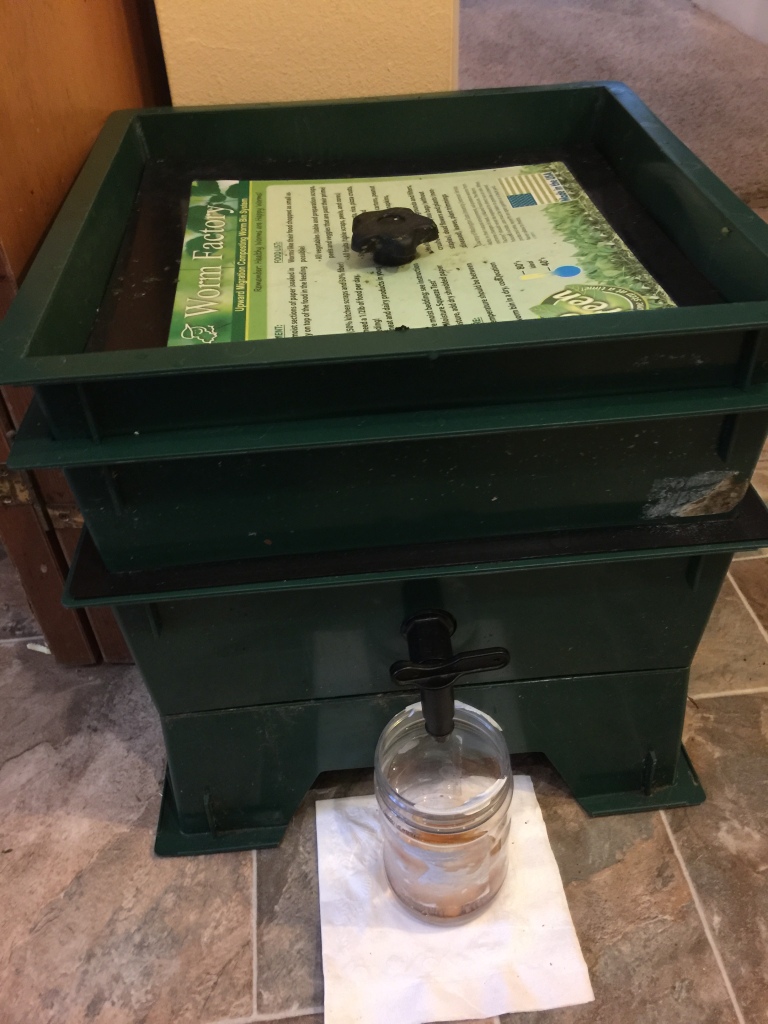
I don’t raise bees, but I have two worm bins; one inside and one outside. The indoor one stays in the kitchen. In addition to transforming food into vermi-compost, a high quality fertilizer, the worms produce a liquid that can be turned into “worm tea.” I’ve been diluting it and pouring it around plants, or just pouring it around the plants undiluted. Today I read some articles that have shown me that much more goes into making worm tea than draining the liquid from the worm bin, so I need to change that practice.
Anyway, back to the subject of how the outside world ends up inside my house. As I looked around my kitchen yesterday I saw:
My worm composting bin with a jar in front to collect the liquid they produce.
Inside the bin are my worm friends and all of their castings.
Novella went dumpster diving to feed her animals. I’ve never done that, but the worms now eat way more than I can give them from my food waste, so I beg grocery stores for some of their damaged or wilting produce. Therefore, I have bags of produce for the worms in my refrigerator. That is certainly not something that would be inside of a “normal” household!
As I continued to look around the kitchen I saw:
Egg shells that I will grind up to put in the worm binsI recently separated the worms from the compost and took a big box of the compost to the outside shed. This container has some extra compost.This is a jar of the liquid from the worms; there were four jars there a few days ago. Behind it is the food waste bin. Food I don’t use for the worms goes into the big yard and food waste bin that the city picks up and this container is for that. To the right of it is a jar with some vinegar in it that is used to trap fruit flies that may be in the food waste bin. I have no problem with fruit flies in any part of the vermi-composting processes.I use a food processor to chop up the food that I put in the worm bins. That really increases the speed of vermi-compost production. Sometimes I also add coffee grounds that my friends give me. The worms really love that!
My outdoor clippers are also in the kitchen at the moment.
I have something new in my kitchen. It will be there until I figure out what to do with it.
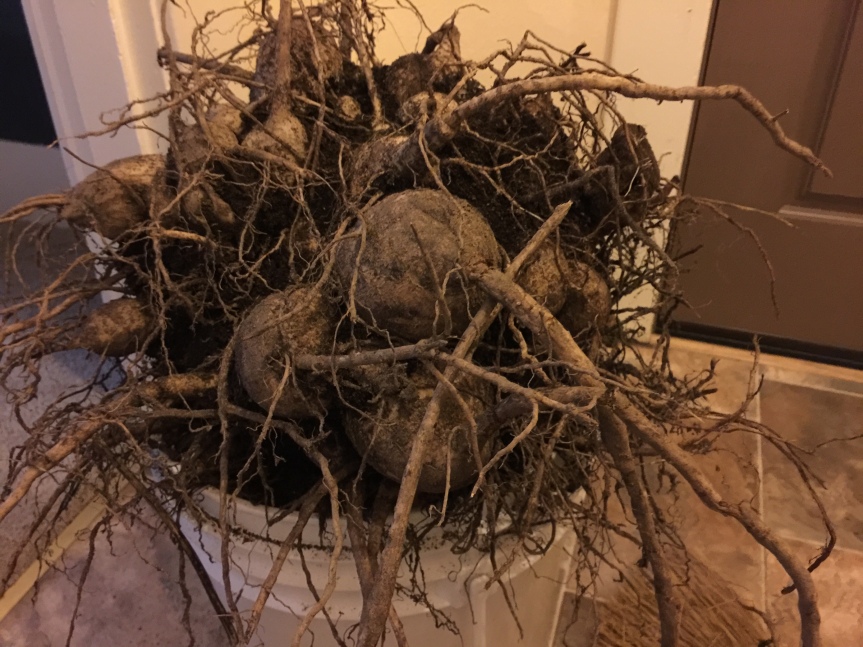
Three years ago my dahlia plant was in the back yard. It would grow tall but it only produced one flower a year. That fall, I dug out the tubers and in the spring planted them in two parts of the front yard. What a difference that made! By summertime, the new plants were six feet tall and often had stalks that were more than an inch in diameter. They produced flowers until November, lots of them.
The dahlias have been taking up so much of my garden space, that I decided to dig the tubers out again and give most of them to the neighbors and friends who had asked for them.
So this past Friday my friend Rachael and I set out to accomplish that task. We were amazed at what we found.
Rachael saying “It’s SO big!”
My plan had been to separate the tubers and give them to people right away, but I couldn’t separate them without breaking them. Rachael looked on the internet and discovered they should be placed upside down for a few weeks so that any liquid could drain out and be then stored inside for the winter.
What would I do with them? I decided to put them upside down in a wheelbarrow at first and leave them outside. I put a tarp over them but that night we had a big windstorm and the tarp blew off. And rain was expected for the next day.
So, yes, for the moment the tubers from one of the plants resides in my kitchen. I need to figure out what to do with it.
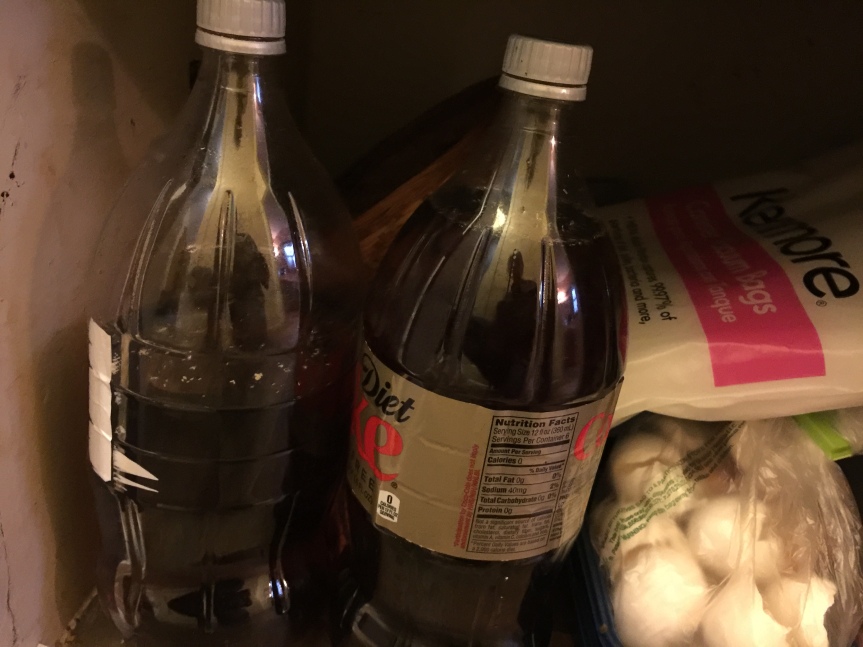
In my hallway closet, I have two bottles of the diluted vermi-compost liquid. My friend Vince gave me some Coke bottles to put the liquid into. Eventually, this will make it to the outside shed. Next to the bottles are some egg shells that I need to grind up for the worms.
Inside my front door is the room I call the “entry way.” Garden tools often occupy part of that space.
At this point there is also box with a bit of vermi-compost there.
When I brought in the tuber ball from the second plant, it was so big and heavy that the best I could do was get it through the front door. So at this moment, that is where it is living.
I decided to weigh the bundle of tubers so I could share that information in this post. It is almost 30 pounds! In the process of weighing it, I created a mess.
I think I made my point. There is a whole lot of outside, inside my house. It is time for me to finish this post and go clean up the mess in my entry way!
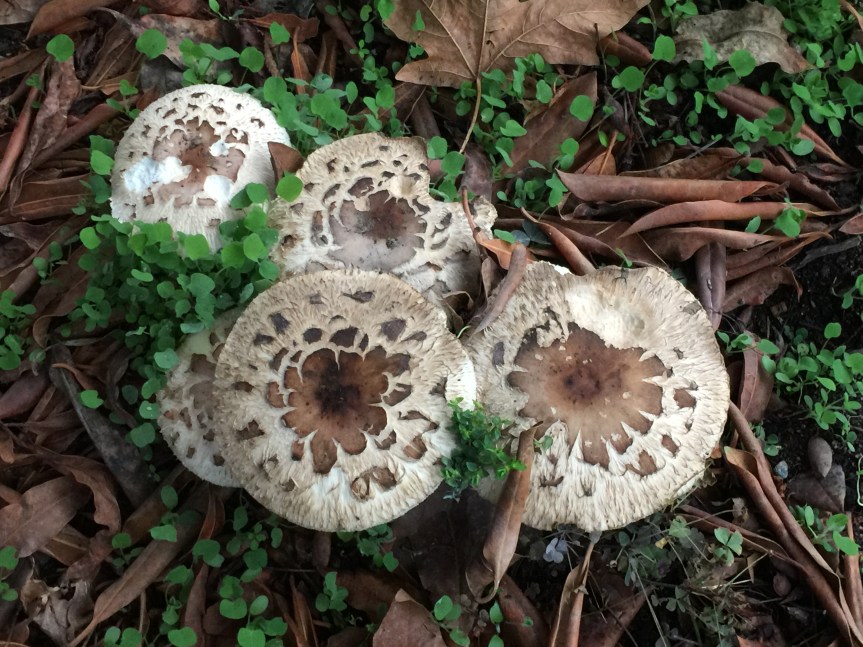
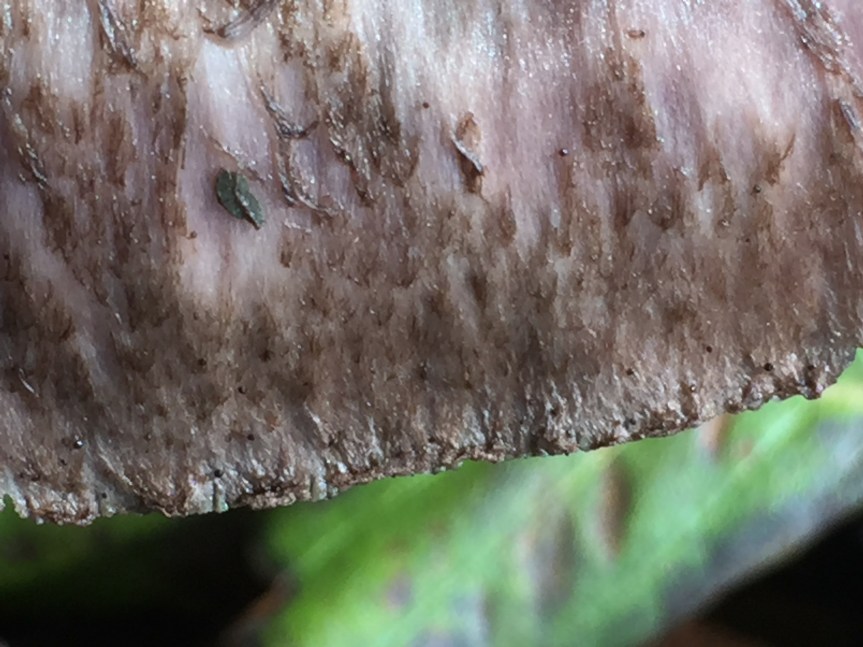
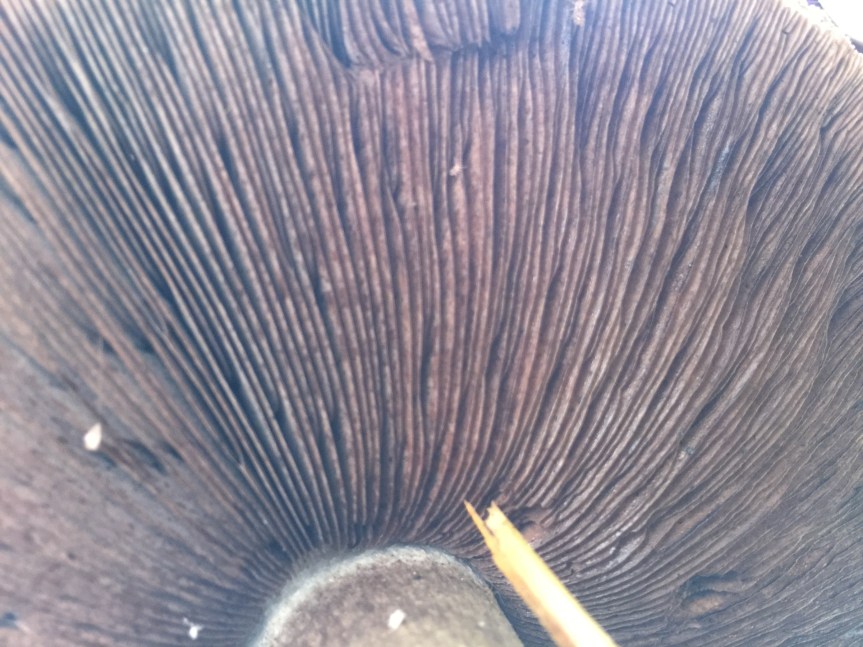
Yesterday I found this big mushroom in the Greenbelt. It was more than six inches across.
Top:
The edge of the top:
Taking a photo of something I couldn’t see was tricky. The underneath part of the cap, also called gills, isn’t as clear as I would have liked but the view is right:
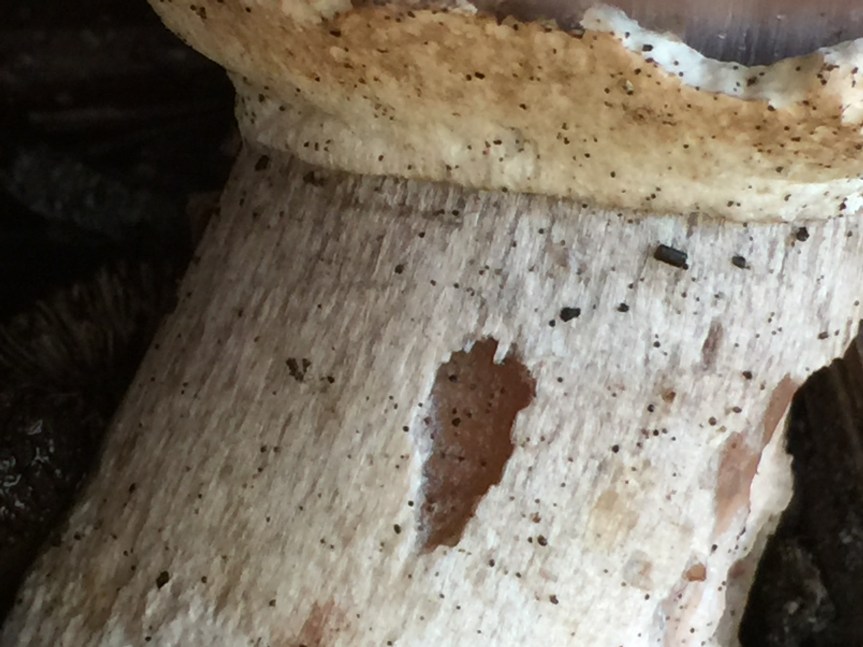
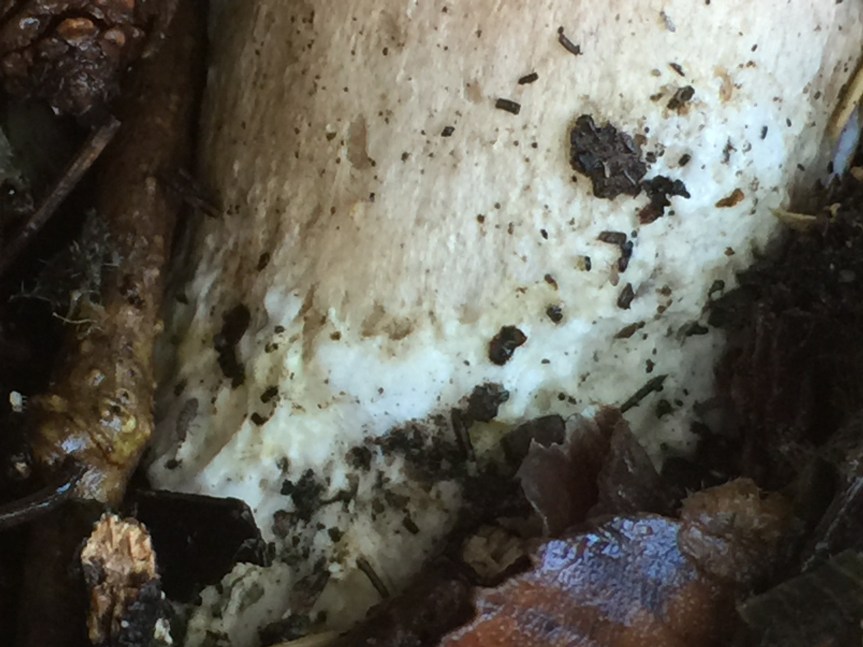
The next two photos show the stalk and the ring around the stalk:
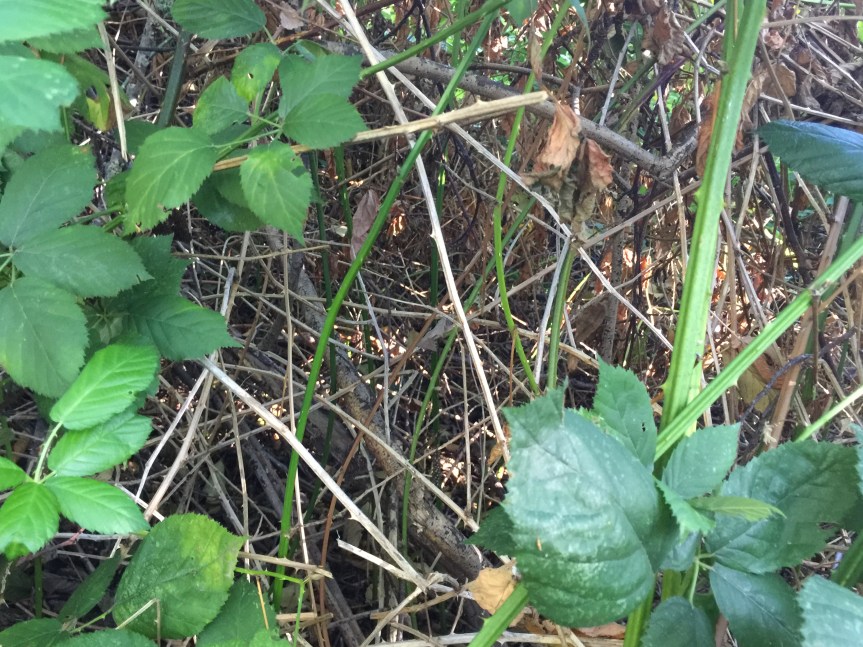
The Greenbelt lot behind my house is on a fairly steep decline. In the 70’s, most of it was a beautiful, terraced lot; then the blackberry, ivy and morning glory vines took over. These stairs, which until recently were covered by the invasive vines, serve as a bridge between one level and the next.
“The fool doth think he is wise, but the wise man knows himself to be a fool.” “Love all, trust a few, do wrong to none.” “Love looks not with the eyes, but with the mind, And therefore is winged Cupid painted blind.”-William Shakespeare

















 Living, Learning and Letting Go