So much has happened since I woke up one morning in late August 2016 realizing that I wasn’t willing to watch another tree die in the Greenbelt lot behind my house. That lot was filled with blackberries which had been growing for decades. I gathered my trusty hedge shears and lopper and started chopping them down.
Soon, a friend started working with me. A month or two after that, three other friends, members of our GreenFriends group, joined me in clearing the land of invasive plants. We decided we would make restoring this lot a GreenFriends project.
In October, we linked our project to the Green Seattle Partnership, a collaborative group that includes the City of Seattle, Forest Stewards and many other non profit groups, all of whom are dedicated to restoring Seattle’s 2500 acres of forested parks. One of the city botanists came to see the work we had already done, answer our questions and give direction.
We were told that it was necessary for least one member of our group to take the Forest Steward training. That training would teach us what needed to be done on the lot and how to lead restoration work parties. Ananya and I decided to become Forest Stewards. The training wouldn’t be held in March and April of 2017 but we would be able to continue to remove the invasive plants in the meantime. We wouldn’t hold big work parties until we took the training.
Each restoration project has four phases: 1) Remove invasive plants, 2) Plant trees, shrubs and ground covers, 3) Plant establishment- watering, weeding, mulching and 4) Long term maintenance. Our project is in Phase 1. Once the invasive plants are gone, Seattle Parks Department will provide all of the trees, shrubs and ground covers for volunteers to plant.
We decided we would not only restore the one lot, we would restore the whole four lot strip of Greenbelt that it is a part of. The lot behind my house is Lot 3 and has been covered by invasive plants for around 30 years; Lot 2 and 4 have been covered for fifty or more years. There has been quite a bit of restoration work done in Lot 1 during the last three or four years. It needs maintenance work, but when we look at the many new trees, shrubs and ferns that run through it, we are able to visualize what the whole strip will become.
As we continued to remove the invasive plants, we found so much trash. In addition to the big garbage, there were tiny pieces of plastic everywhere. I found a bird’s nest that was full of plastic.
On Saturday, February 25, six children and their leader came from Redmond Satsang’s Bala Kendra program to pick up litter. This was their haul after an hour of work.

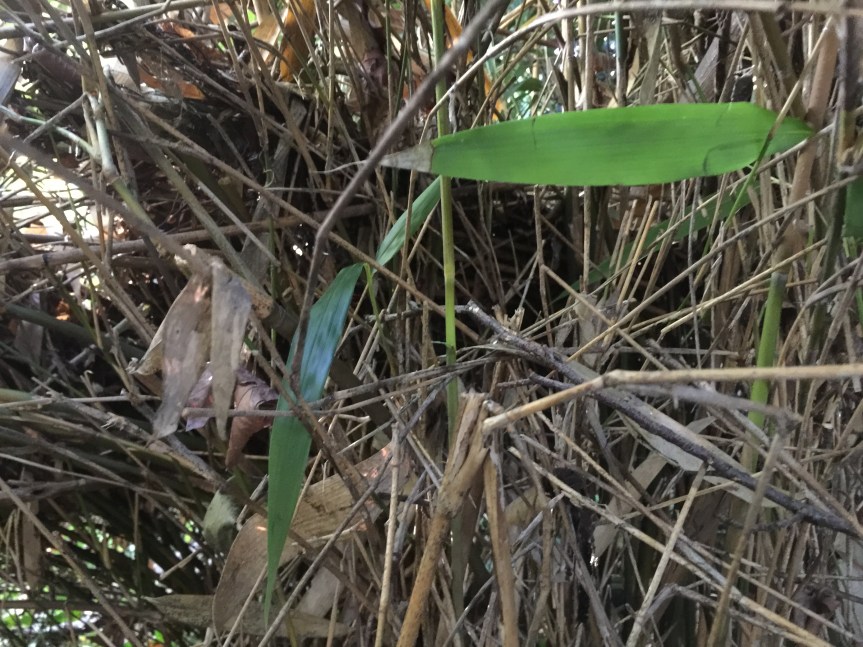
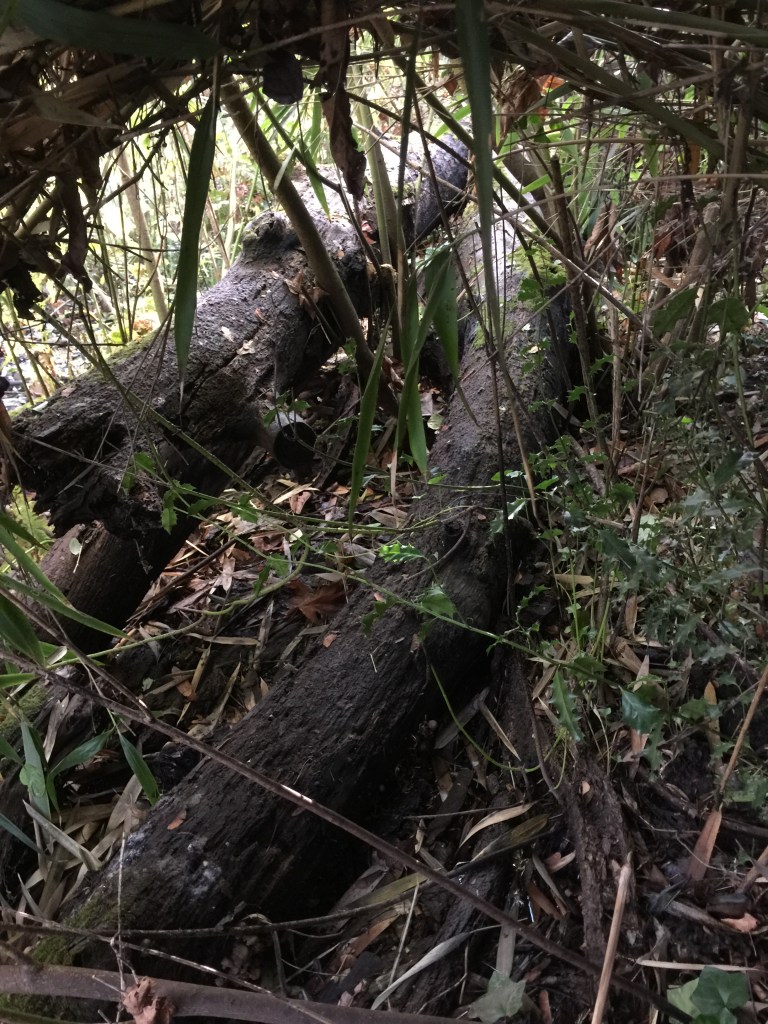
We have been cutting down invasive bamboo since the project began. Last month, Yashas and I cut off the leaves and branches from the stalks. Those stalks which were suitable for stakes were given away. [Note: When the project began, we were told we could give the bamboo to the zoo for the elephants to eat. That person, and the rest of us, had forgotten that the Seattle zoo no longer has elephants!]
We continued to remove the invasive hemlock plants, blackberries and ivy.
Yashas and I took a one day course to learn how to make live stakes. Live stakes are cuttings from shrubs that are used to make new shrubs. I brought 75 of them home (Twin Berry, 9 Bark and Indian Plum) and planted them in pots. In the fall, we will see how many of them rooted, and will plant the ones that did in the Greenbelt.
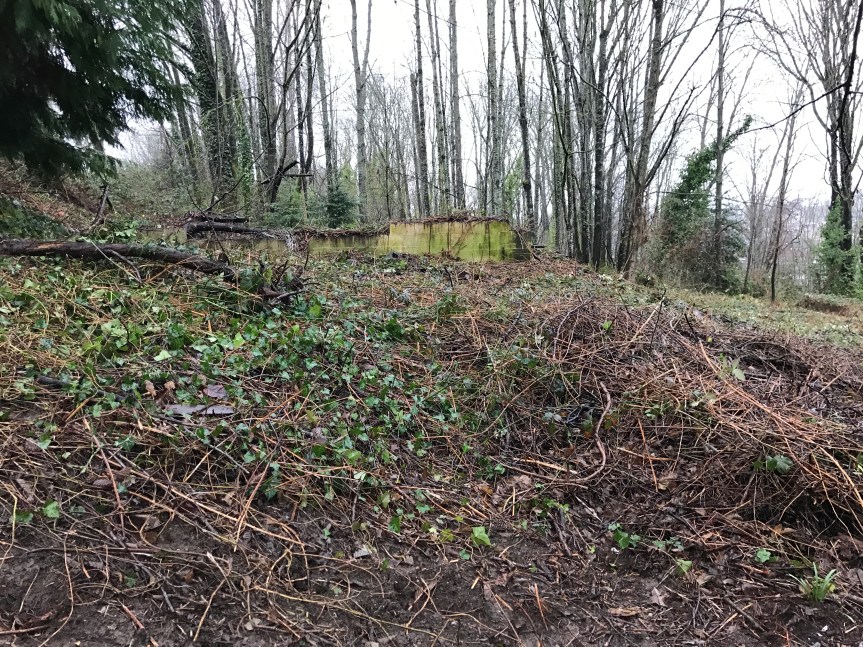
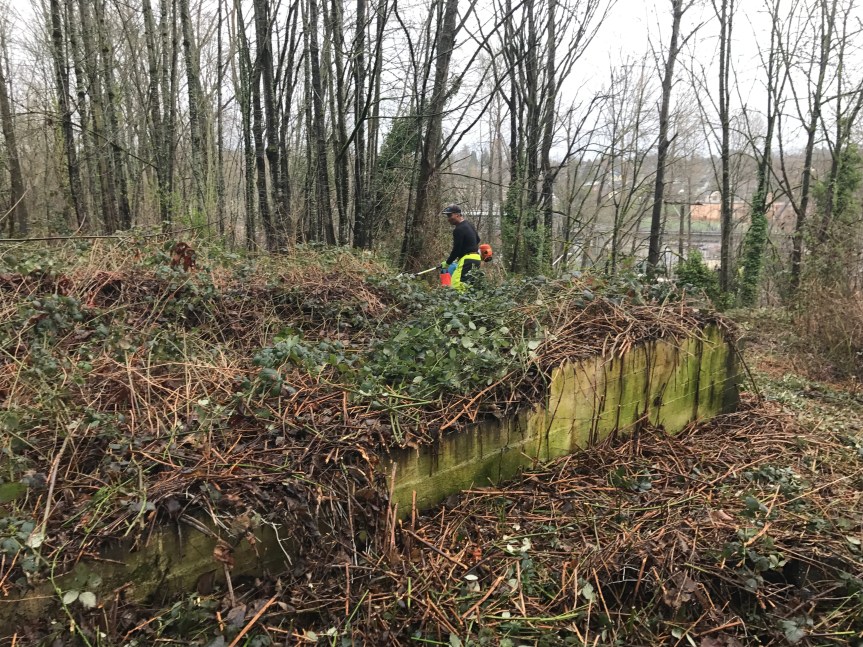
Volunteer groups are not allowed to use power tools, so when they are needed, city workers come to do the work. In March, eight workers from the Seattle Park Department cut down most of the invasive vines and bamboo on this four lot strip of Greenbelt. That will make it much easier for volunteers to dig out the blackberry root balls and ivy. It also opened up a view of the whole property that no one has seen for 50 years or more.
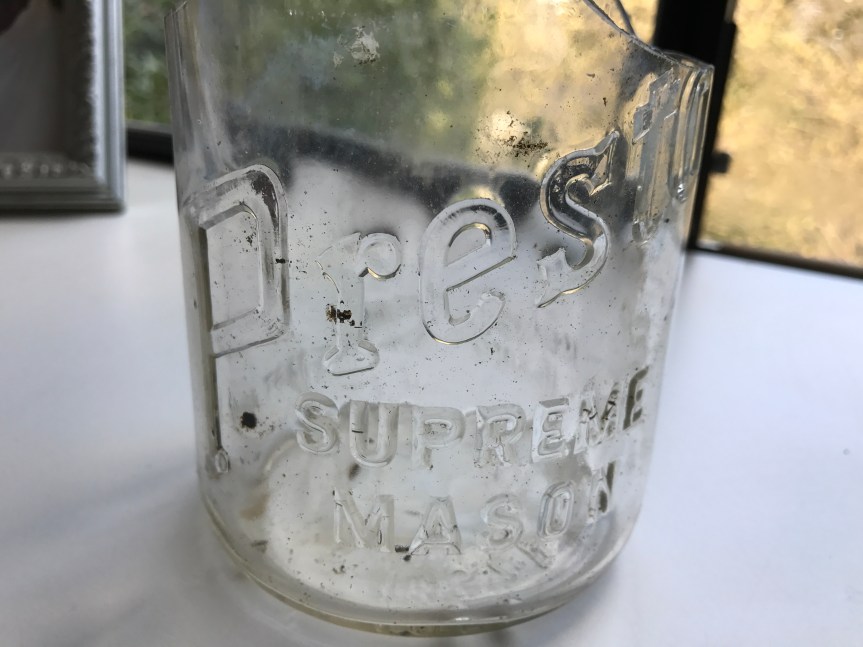
When they cut down the blackberries in the second lot, the workers found something that surprised all of us. There was a foundation of a house! I have lived here since 1973 and didn’t know there used to be a house there, and neither did my neighbors. Interesting objects were found in or near the “house.”
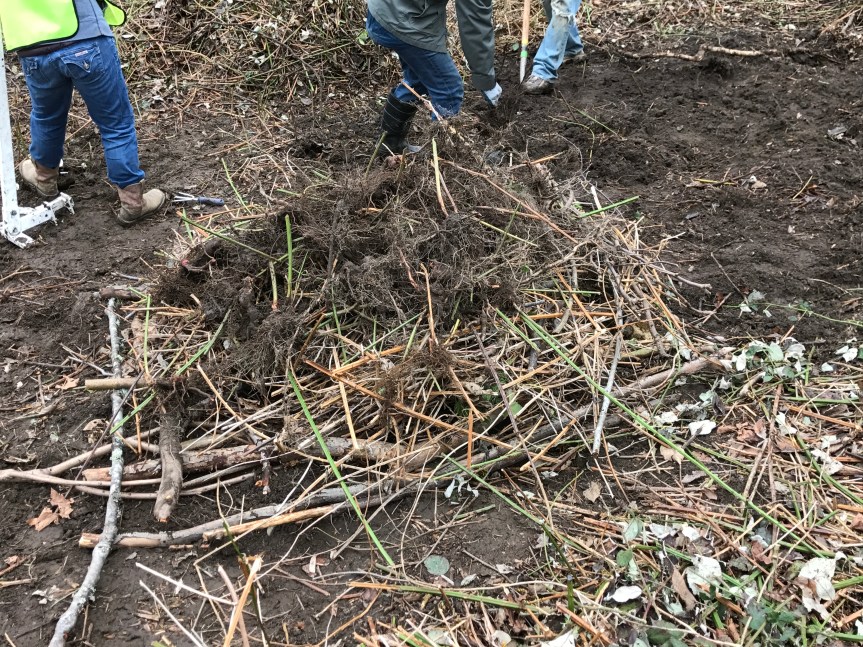
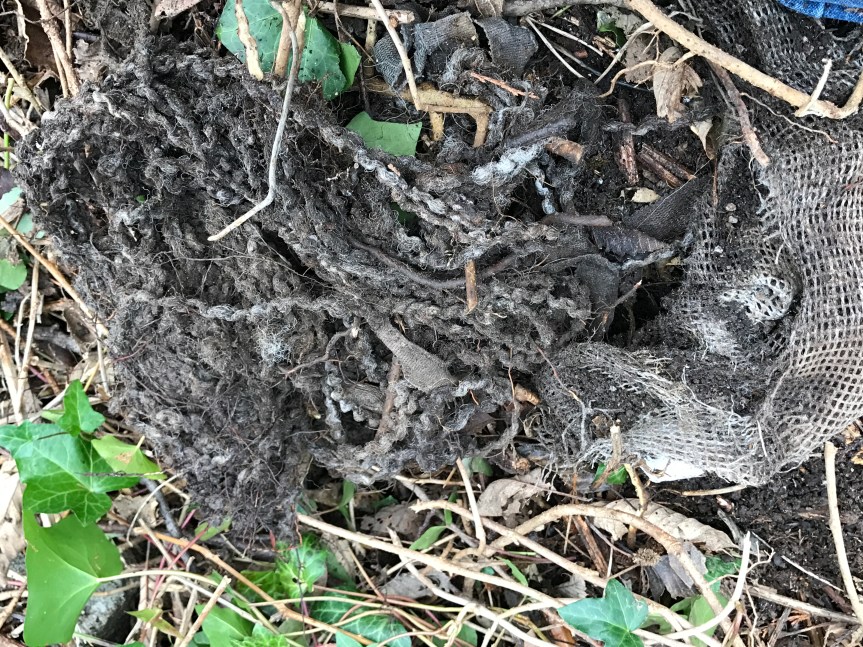
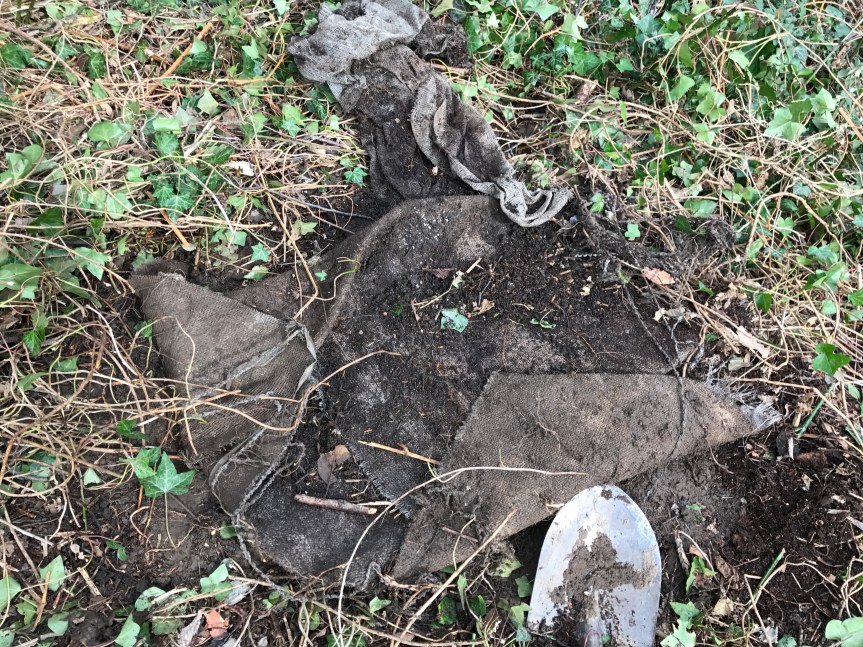
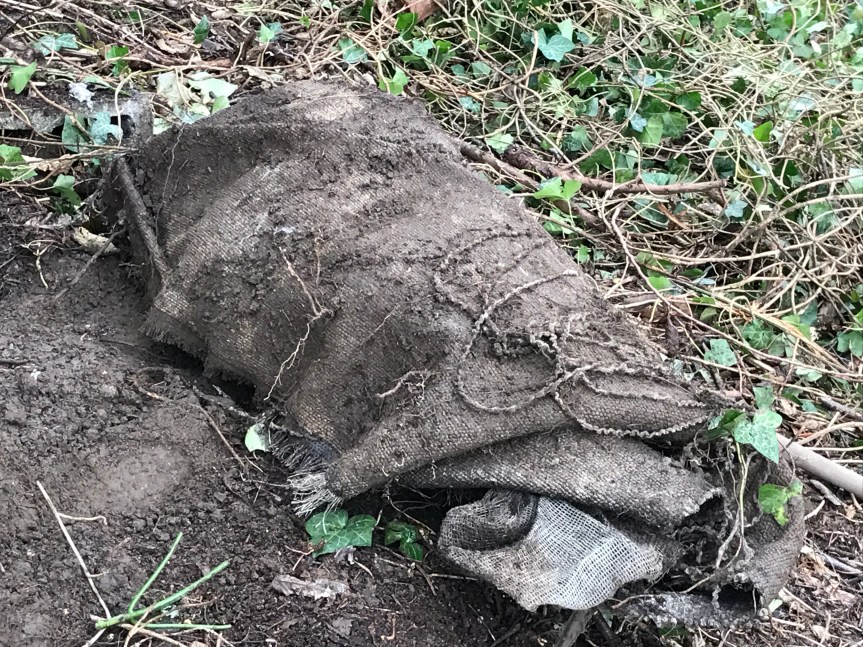
In the weeks after the city workers came, I spent a lot of time pulling out building racks we will put the blackberry vines and ivy on so they can dry out, digging out blackberry rootballs and covering the cleared land with burlap.
On March 4, Ananya and I took the first half of the Green Seattle Partnership Forest Steward training. We took the second part on April 1. We will attend ongoing training courses but are now qualified to lead bigger work parties.
On April 8, we held the first “official” work party. Nine volunteers met to build racks for the debris, rake debris, dig out ivy and blackberry root balls and find and mark ferns. We accomplished so much in our three hour work party. (You can click on any of the galleries in this post to see a bigger version of the photos.)

sign in

Every shoot leads to a rootball!

cleared area covered by burlap

blackberry root balls go on top of the debris racks

marking ferns
My update is now complete. This project has become my passion so you will definitely read more about it in the future!
(Previous posts about my experiences in the Greenbelt: Is My Path Taking a Turn?, The Will to Live, and Another Greenbelt Adventure.)


























 Living, Learning and Letting Go