Greenbelt Restoration Work Party: May 12, 2018

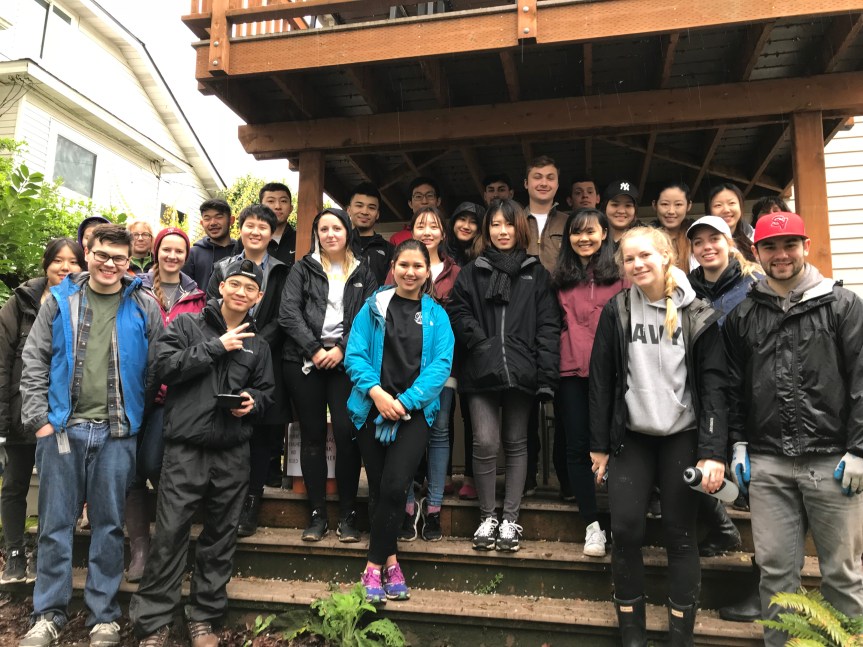
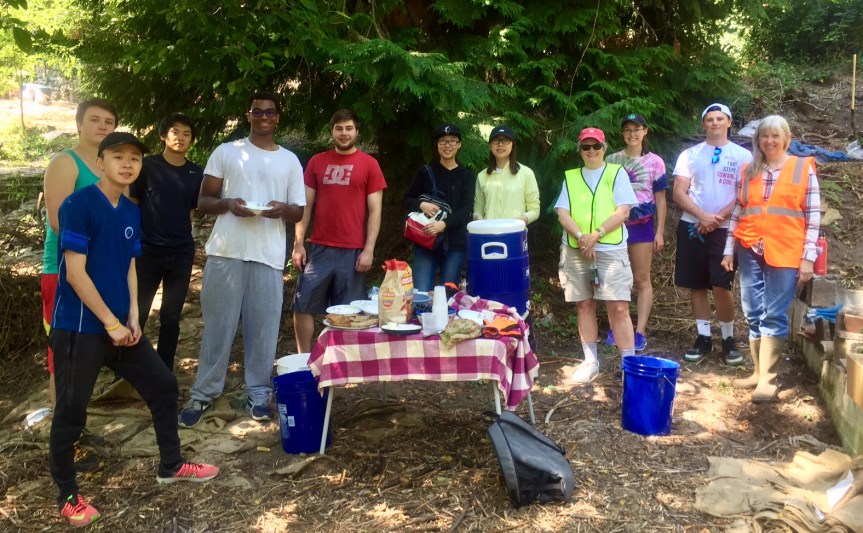
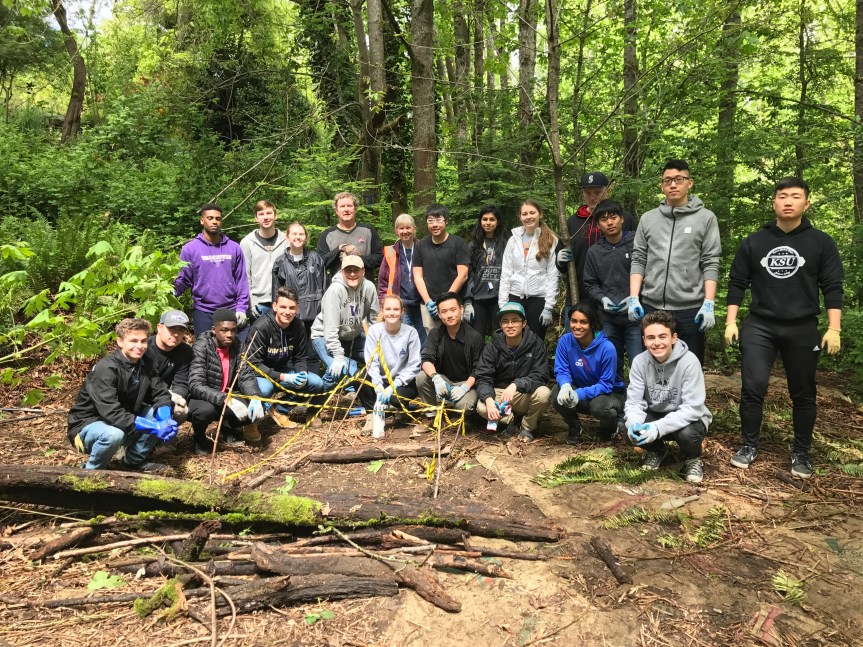
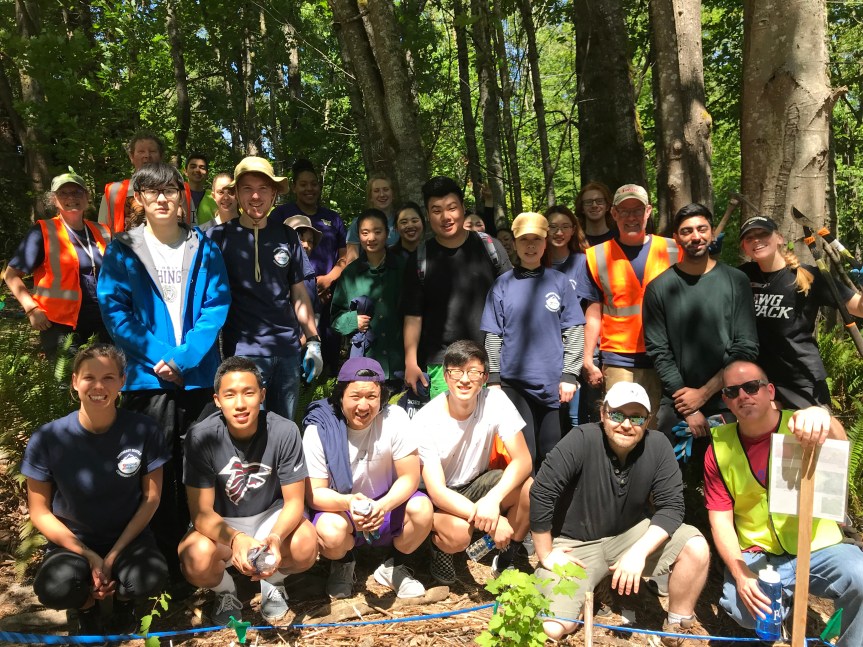
Our May 12th work party was a collaborative effort between GreenFriends, Green Seattle Partnership, Bridge2Beach, and neighbors. Thirty-two volunteers participated in the event. The five team leaders were GreenFriends members and/or neighbors. Additional GreenFriends members and neighbors helped with the sign in process and photography.

Twenty-five additional volunteers had pre-registered through the Bridge2Beach and Green Seattle Partnership event calendars. Twenty-one of them were from the U.W.’s Introduction to Environmental Science course. The UW students who had worked at our May 9 event could also be considered part of this collaboration since they did so much to prepare the planting sites for the work that was done on the 12th.
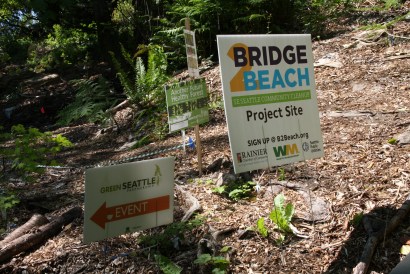
The volunteers arrived by car, bus and light rail. Once they had signed in they each picked up a pair of gloves and listened to an orientation. The various work opportunities were presented and then the participants divided into three teams.

Sixteen of the volunteers and their team leaders formed a bucket brigade to carry wood chip mulch from the city street into the Greenbelt. Once on the site, the mulch was placed around approximately 300 plants which had been planted and mulched in October or November of last year. Since there is no water source on the site, the additional mulch will help hold in moisture during the dry summer months.

Click on any of the galleries to enlarge the photos.

The second team consisted of six volunteers and the team leader. They removed a dense cover of invasive ivy, blackberry vines, and holly from an area on the eastern border of the site. While there will be many other teams working in this area in the future, the transformation that occurred during this three hour work party was remarkable.

Before

After (These photos show only a small segment of the work this team did that day.)

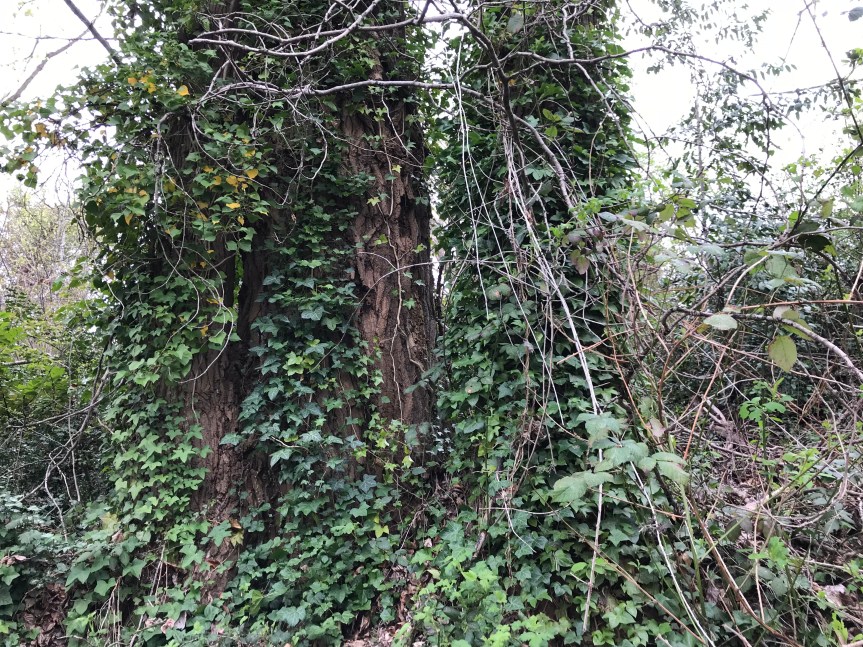
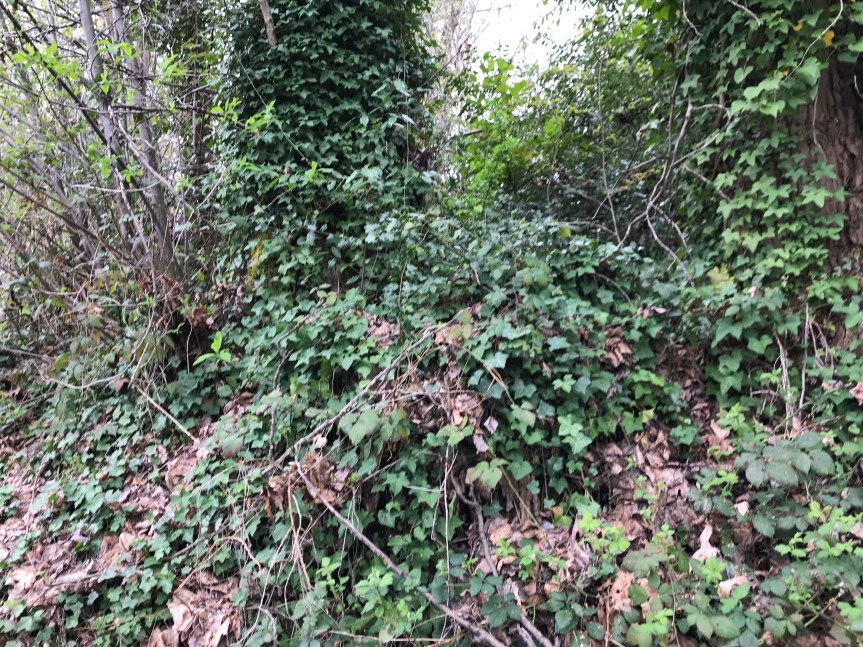
The third team was comprised of the team leader and three other volunteers. They worked in an area that is north of the site we’ve been restoring. In three hours time, they cut survival rings around eleven trees!  In addition, they began to remove ivy and blackberry vines from the land in the vicinity of those trees. [Note: Ivy kills trees. We create a survival ring by removing ivy on a tree from ground level to shoulder height. That way the ivy that is higher up will die off without creating the risk of pulling dead or dying branches onto ourselves or other people.]

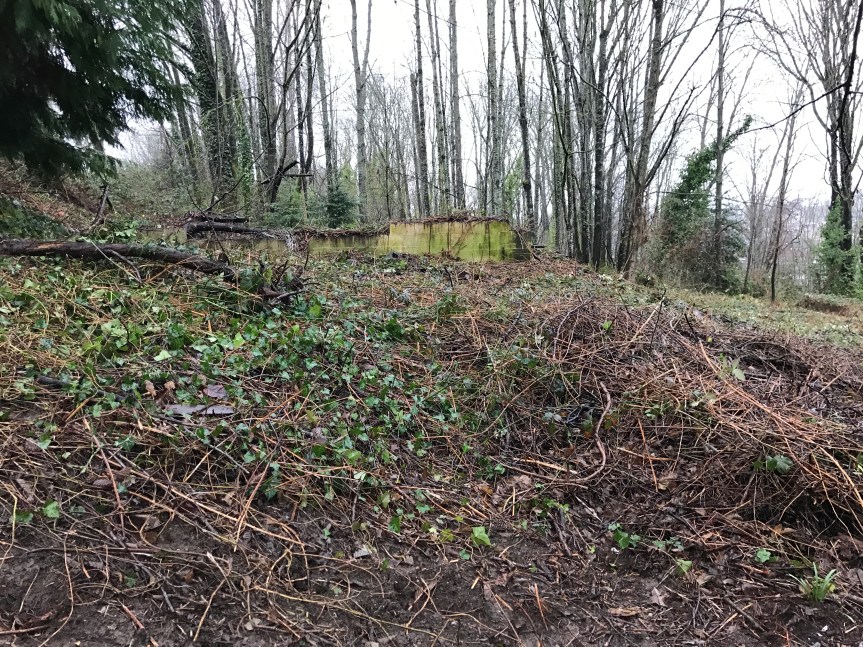
While I didn’t take a photo of this area prior to the work party, you can get a sense of what it was like by looking at the backgrounds of the photos below.

I had eagerly awaited this particular work party, and it was everything I had hoped for. We had finished mulching all of the planting areas and accomplished significant invasive plant removal in two new areas.

Next steps:

  1. Remove blackberries and other weeds from pathways all over the site.
  2. Remove weeds from all over the site as they pop up again.
  3. Take apart dried debris piles that are ready to be spread on the paths.
  4. Remove invasive plants from small areas on this site that have not been cleared before.
  5. Continue clearing the larger areas we worked on during this work party
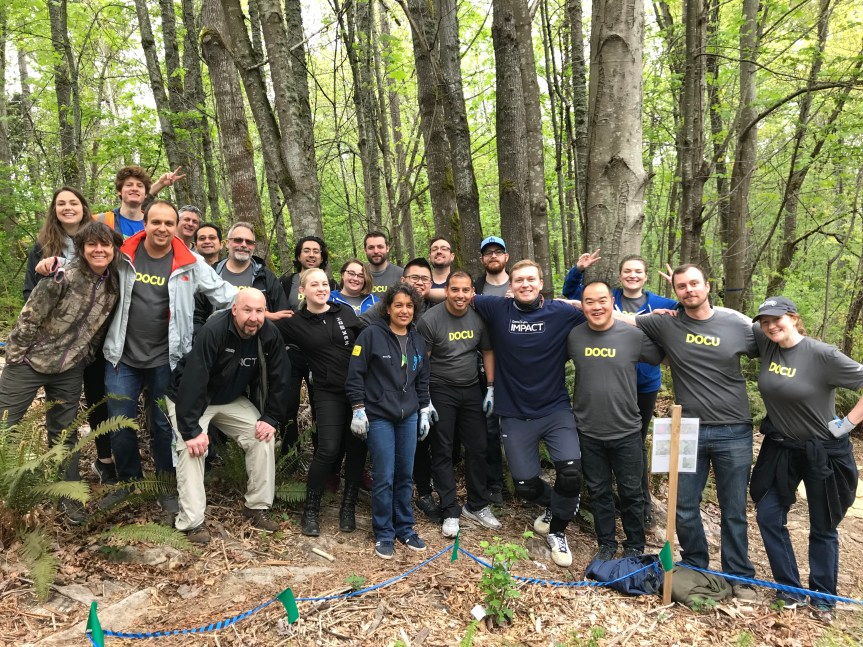
Greenbelt Restoration Work Party: The DocuSign Employees Come Back!

On November 15, 2017, a corporate group from DocuSign came to work at our restoration site. The event was held on their Global IMPACT Day. At that time, I looked up the philosophy behind Impact Day and found this statement:

We believe character is defined through action. With DocuSign IMPACT, we are committed to putting this character into action by harnessing the power of DocuSign’s people, products, and profits to make a difference in the global communities in which our employees and customers live and work.

During that work party, the 42 DocuSign volunteers planted 330 shrubs and ground covers.

Last Friday (April 27), DocuSign held another IMPACT day, and once again they chose our site to be one of the options. This time we had 20 volunteers from DocuSign and a student from the University of Washington’s Introduction to Environmental Science class.

Our staff consisted of  Claire (GreenFriends), Jeb (Forterra) and me (GreenFriends and Green Seattle Partnership.)

I had been working with Andrew and Maksim from DocuSign to plan the event. Maksim attended the work party as well. His help that day was invaluable.

The group signed in, picked up gloves, listened to a short orientation…


… divided into three teams and began to work.

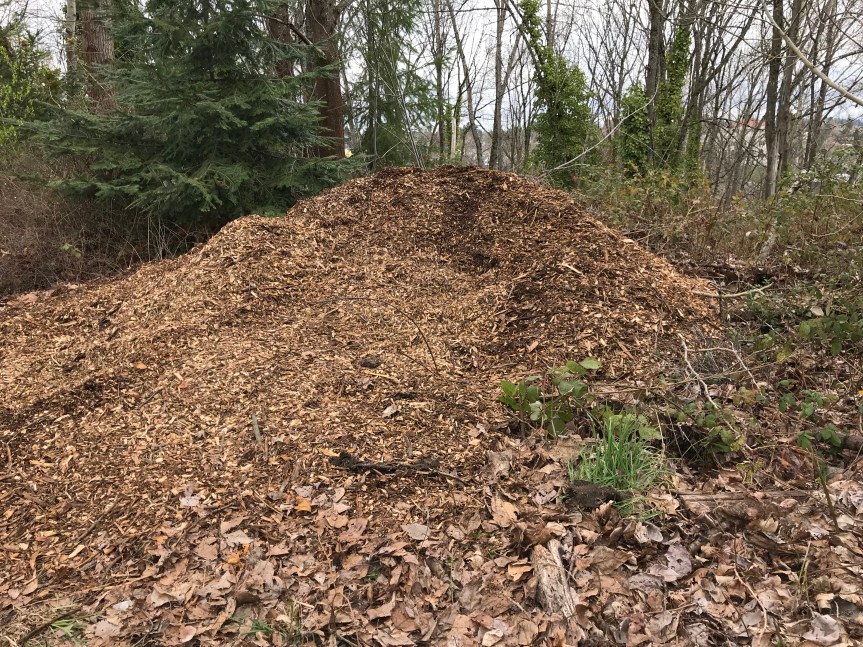
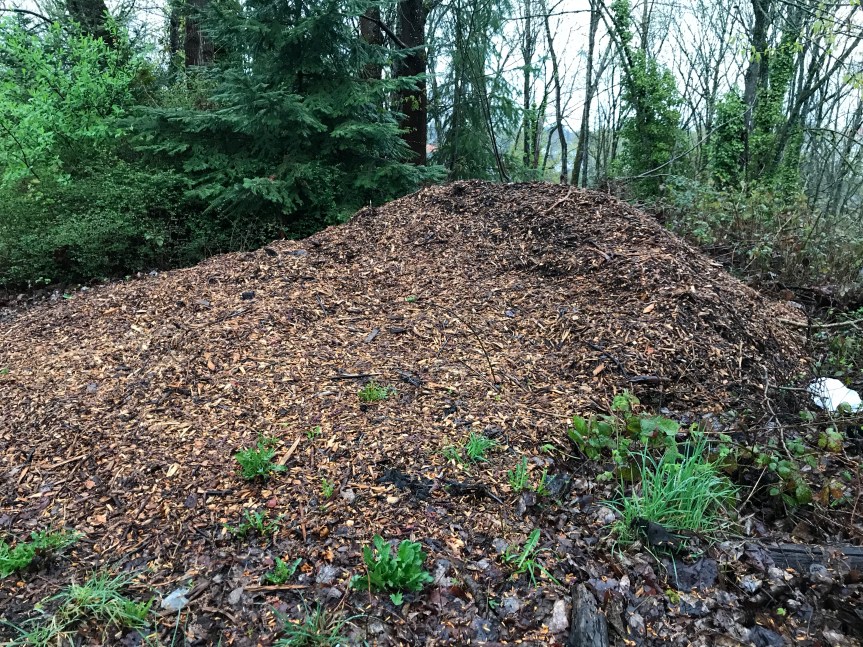
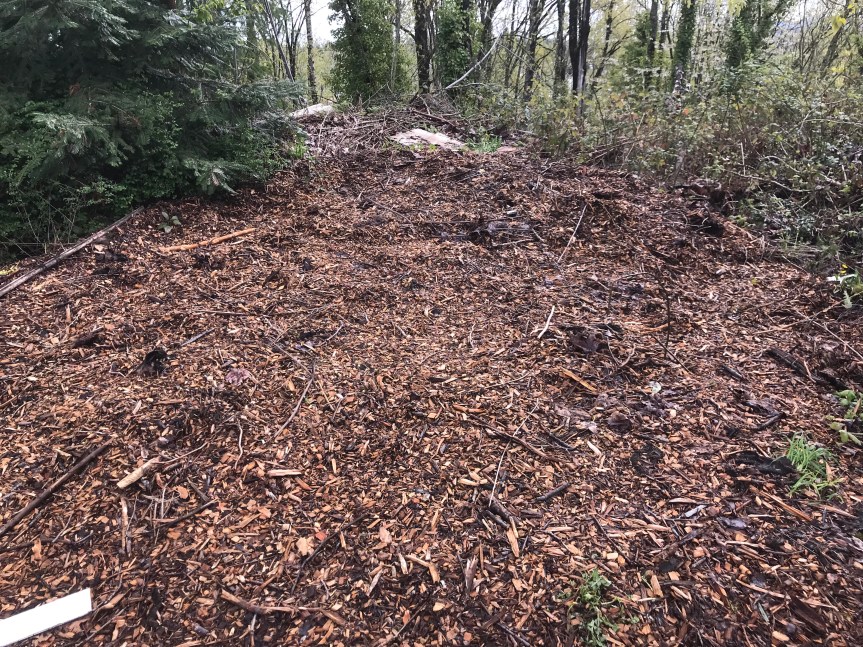
Team 1 gathered the remaining wood chips from our mulch pile and placed them around each plant in 2 1/2 planting areas. The mulch will hold in moisture and make it more likely that the plants will survive the summer if there is little to no rain. (In March there was 15 cu. yd. of mulch in that pile. At that time, it was 6-8 feet high!)


Team 2 removed weeds. While all of this land had been cleared during the year, shoots of blackberry, ivy and bindweed vines were popping up throughout the site. After the work party, I discovered that the group had weeded more than 13,500 sq.ft. of land. The ground looked so clean and open.


(Note: Two of our planting areas contain lots of horsetails. Horsetails are native plants; ones that were here before there were dinosaurs. We leave most of the horesetails alone, removing them only when they are crowding out other native plants.)

Team 3 worked on a part of the site that we hadn’t worked on before. It is located on the west side of Cheasty Boulevard. We chose to start in a place where there are some gigantic trees. They are located near the bottom of a steep slope. The team cleared blackberry vines and ivy from the ground and made survival rings around four big cottonwood trees. (Note: A survival ring is created by removing ivy from all sides of a tree starting at ground level and going to shoulder height. Cut off from their roots, the rest of the ivy in the tree will die off.)

The group created two drying racks behind the trees. All of the debris was placed on these racks in order to prevent the vines from reaching the ground and regrowing.


These “Before” and “After” photos show the dramatic changes the team made in this area.

Before

After

Once again, the DocuSign volunteers (and the UW student) did incredible work. I look forward to the possibility that they will return here in November for their next Global Impact Day!

Greenbelt Restoration Work Party: April 14, 2018

During the week leading up to the April 14 party, there were plenty of opportunities to practice Amma‘s teaching to “Be like a bird on a dry twig, ready to fly at a moment’s notice”. The weather forecast looked pretty good a week out but then it got worse and worse. The night before the event, it seemed like there was a chance that it might not rain during the work party, but when I checked the next morning it had shifted back to 90% chance of rain during the last two hours.

We don’t cancel work parties for rain, we only cancel for high winds, so I also got practice in maintaining equanimity. There was no use in worrying about what might or might not happen; that would only result in me creating an emotional roller coaster for myself. Instead, I  needed to come up with a variety of plans and decide what we would do in the moment.

Twenty-five students from the University of Washington’s Introduction to Environmental Science class participated in the event. I felt so grateful that they were willing to work knowing that it might rain. Three GreenFriends members served as team leaders.

After an orientation, we started the day with a bucket brigade that everyone could participate in, moving wood chip mulch from an area on the street that is north of our Greenbelt site to a planting area in the southern part of the site.

When the mulch arrived at its destination, a few students spread it four to five inches thick throughout the area. Trees and shrubs had been planted there on February 26th. Being heavily mulched will keep the ground moist making it make it more likely that the plants will survive the dry summer months. The mulch also deters weed growth and prevents erosion.

The 600 sq. ft. of land we covered that day is on a continual slope. There are several swale-like structures towards the bottom of the strip that will also help reduce erosion.

The mulch we were getting the wood chips from had been delivered on March 5. At that time, there were 15 cu. ft. of them and the pile was 6-8 feet tall. (Susan was standing on a slope so the pile was actually taller than it looks in the second photo.)

We have had three bucket brigade work parties since that time. I have enjoyed watching the pile decrease in size.  I have no idea how many hundreds of buckets filled with wood chips have been passed down the line during those work parties.

After the March 17 work party the pile looked like this:

After the April 8 work party:

And after the April 14 work party:

The bucket brigade continued until it was time for a snack break. By that point, it had started to rain; luckily, it was a light rain. After the break, we broke into three groups for the last 45 minutes of work time. During that time, the groups would focus on removing non-native invasive plants- blackberry and ivy vines, bindweed, laurel, holly and bamboo. 

There is a Douglas Fir tree on the northwest corner of the property that had been partially topped in the past because it was too close to power lines. On the day of the work party, the tree was surrounded by a patch of laurel so thick that the bottom part of the Douglas Fir trunk was barely visible.

The students cut off the laurel plants lower branches. As the lower branches were removed, we could see that the laurel was covering and/or displacing Pacific ninebark, Oregon grape and other shrubs. I also saw new laurel shoots nearby. Finding the native plants being crowded out by the laurel made it obvious to me why laurel is considered an invasive plant. I know that the part of the Greenbelt that is north of the site we are working on has big areas of laurel.

I appreciated being able to see more of the Douglas Fir tree truck and look forward to the day when I will be able to see all of it. I feel sad that the treetop had needed to be cut away from power lines. Seeing the deformity, though, will serve as a constant reminder that we need to be careful where we plant trees as we restore this piece of forest.

Now that it is spring, all of the trees, shrubs and ground covers we have planted since October are growing rapidly. Simultaneously, new shoots of blackberries and bindweed are emerging from the ground. There are also several areas on the site that still have ivy.

A second group of students scoured a section of the land that is full of old maple trees, sword ferns, and other older shrubs. Their purpose: locate and remove invasive plants. Everything was wet and it was still raining. The students worked diligently even in these less than desirable conditions.

The third group worked in an area that was new to us. Our plan had been to clear a path, dig out holly and cut bamboo. The group cleared a path that led to the holly and bamboo, but after a week or more of rain, the ground was too muddy to work with the holly. (We didn’t want to make the area any muddier than it already was.)

Instead the group focused on cutting and stripping the bamboo. Last year, we used the bamboo branches from another bamboo field in building the racks we create to dry out the invasive plants. We gave the stripped stalks to gardeners to use as stakes.

When the last forty-five minute work period was up, the students from all three groups took the invasive plants they had removed to the racks to dry and then gathered, cleaned and put away all of the tools. Afterwards, we celebrated our accomplishments. Then everyone brushed the mud from their shoes and headed home.

Soon after the work party was over, the rain became very heavy. April 14, 2018 turned out to have the largest rainfall that has ever been recorded in Seattle in April. Mother Nature had certainly blessed our work party. Two hours of the three hour work party had been rain-free and even though it rained during the last hour, the rain was comparatively light.

Next on our to do list:

  • Finish mulching some small areas on the property that have not been mulched yet
  • Weeding, weeding and more weeding
  • Remulch areas that were planted in October and November of 2017
  • Finish cutting down the bamboo
  • Dig out the holly and bamboo

The list could go on and on but that is enough to think about today!

Greenbelt Restoration Work Party: July 9

It seems like I think every work party we have is the best. That was true on this day too. Eight students from the University of Washington’s Introduction to Environmental Science class, one student from Garfield High School, one neighbor and three GreenFriends members came together to do restoration work in the Greenbelt.

We cut blackberry vines, dug out blackberry root balls and bindweed (morning glory vines)

(click on any of the galleries if you want to enlarge the photos)

…. picked up trash

…. freed ferns

…. carried wood chips from a pile near 25th Avenue S and S Hanford, down the Hanford stairs, into the Greenbelt and scattered them in an area that will be used for a 250 square foot cluster of trees, shrubs and ground covers when we start to plant in the fall. Having the wood chips there will facilitate decomposition of the burlap bags that are under it and help to build the soil by creating mulch.

…. and moved debris to the rack zone to dry.

Vandya, Ellen, John and I organized the work party and led work groups. Vandya and I also took photos. At one point, we snapped pictures of each other taking photos!

During the three hour work party we cleared a lot of land. The next step will be to spread burlap bags to prevent erosion and weed growth.

One group dug out the biggest root ball we’ve found!

Needless to say, our July 9 work party was a big success.

The Wonder of Nature

After making my way to the rhododendron flower last week (Keeping My Eye on the Goal), I turned around and came face to face with what became my next Greenbelt restoration task.

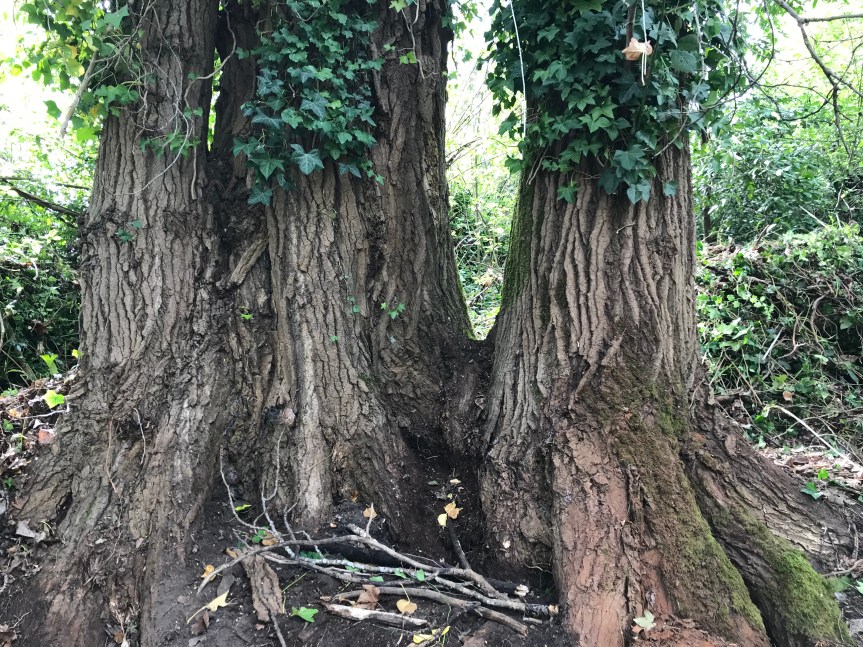
So many trees this Greenbelt site have been killed by ivy. One of the first trees I focused on freeing from blackberries and ivy last September was the one in the photo to the left. It had a split trunk at the bottom and both trunks split again further up. The trunks/branches on the west side were dead; the east side of the tree had leaves.

It was this tree that I saw when I turned away from the rhododendron bush. I noticed ivy was growing on it again so I started cutting. Since the time I originally worked on the tree, I have learned that our job is to cut the ivy at the bottom and at shoulder height. That is called a “survival ring.” We don’t pull down the ivy above the survival ring because dead tree limbs could fall on us. The City Parks Department usually leaves dead trees standing because they are a habitat for many bugs and other insects, as well as smaller organisms.

Some of the ivy vine roots are thin and others are thick. It usually takes a saw to cut through the larger ones. The second two photos below show a root that I’ve already cut at the bottom and pulled it away from the tree. Sometimes we have to use a crow bar to separate the root from the tree.

[Aside: Here are photos of an ivy ring that was pulled off of another tree in March. It is so dense… and hard. Looking at it helps me understand how it can kill a tree.]

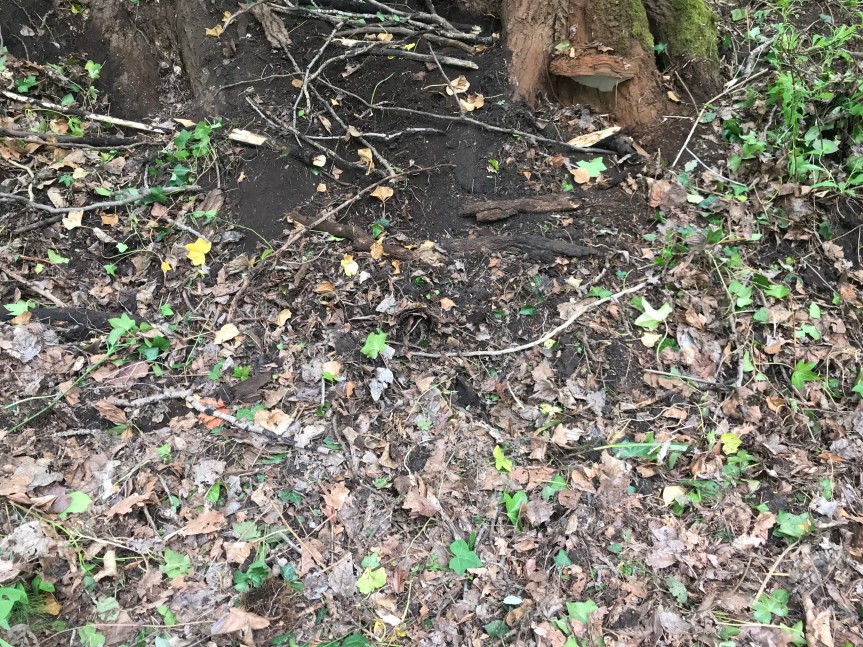
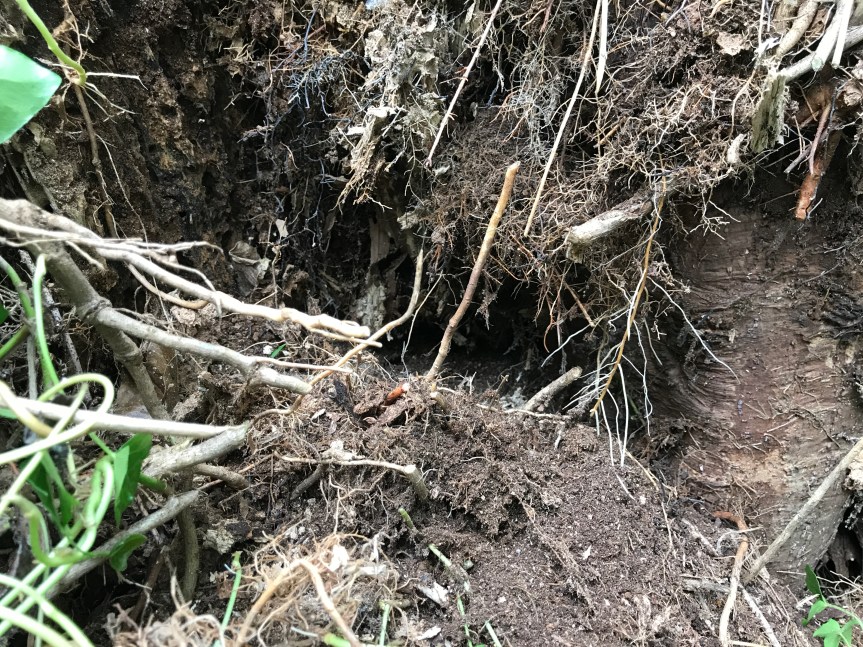
Back to the story at hand: When I removed the ivy from around the bottom of the tree, I noticed that it looked as if the ivy had separated the bark from what seemed like the core of the tree.

It amazed me that the tree was still standing with a core this small. The separation of bark from core gave me the impression that there was a deep hole under the tree, but I don’t think that was the case.

I enjoyed looking at the inside portion of the bark.

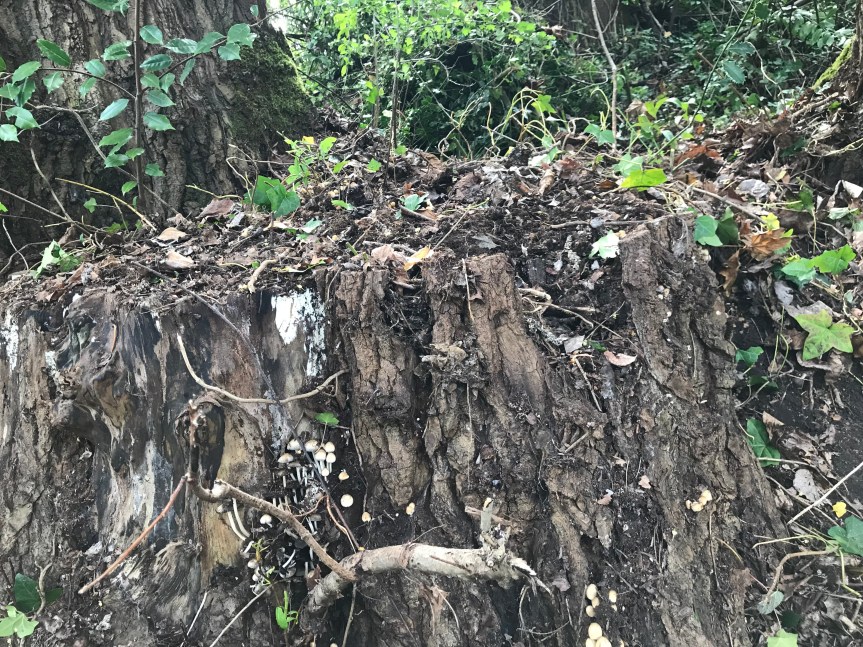
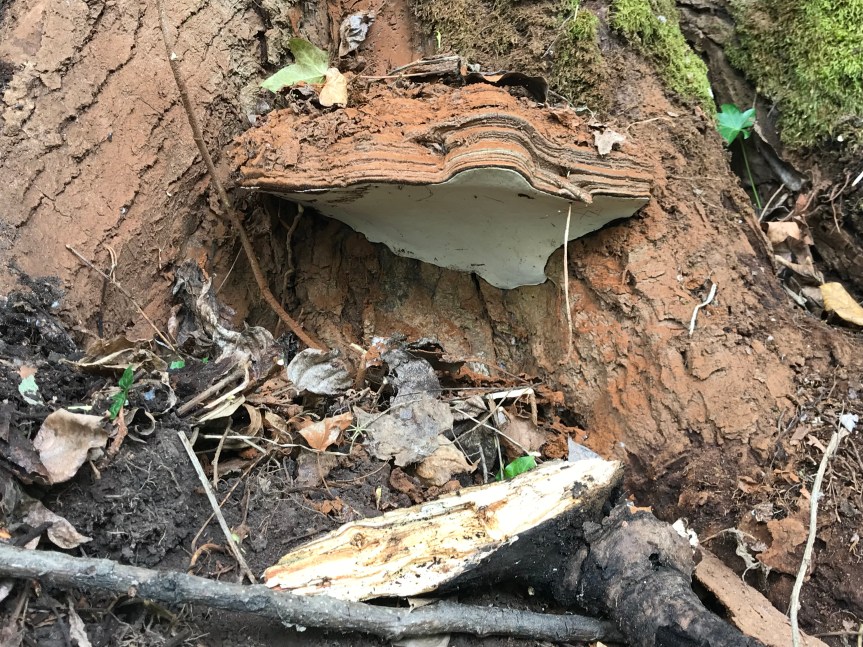
As I was finishing the work, I noticed that fungi is growing on the portions of the tree that are dead or dying.

In closing, I will share words that my brother Bill wrote shortly before he died in 1992 at 39 years-of-age.

I can’t walk outside without seeing the beauty of our created world, from the rainbow in a line of earthworm slime, to another visible ring on Jupiter. We have been given this magnificent world to study and enjoy in limitless detail at any level, microscopic to cosmic. (The Truth I Live By)

I’m becoming more like my brother. I can now see that there is so much wonder even in this one tree.

[Note: It just occurred to me that what I call the core is under the dead part of this tree. Now I am really confused, especially since I didn’t see anything similar under the other side of the tree. I do see wood shavings, but I would have expected the empty space to be under the east side of the tree and the rotten wood to be on the west. I will have to investigate this more and will add an addendum to the post … or write a new one… if I get answers! If anyone who reads this post notices mistakes in my interpretations, please let me know. I’m a novice.]

In the Tradition of “The Blob”

PHOTO PROMPT © Sarah Potter


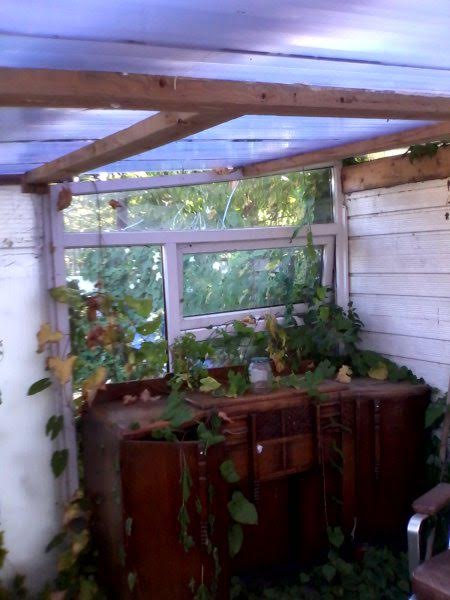
The ivy was relentless. Keeping it from destroying everything in its path felt like a never-ending battle. I didn’t know whether to laugh or cry when I saw that it had invaded the shed. For years, I had left a window cracked to keep the contents inside the shed from being covered with mildew. Instead of mildew, I was now faced with a scene reminiscent of the 1988 movie, The Blob. I picked up my clippers and like a warrior began to cut. I was determined to win the battle and emerge the victor… in The Invasion of the Ivy.

.

Word Count: 100

Written for Friday Fictioneers hosted by Rochelle. Read the other entries here.

Keeping My Eye on the Goal

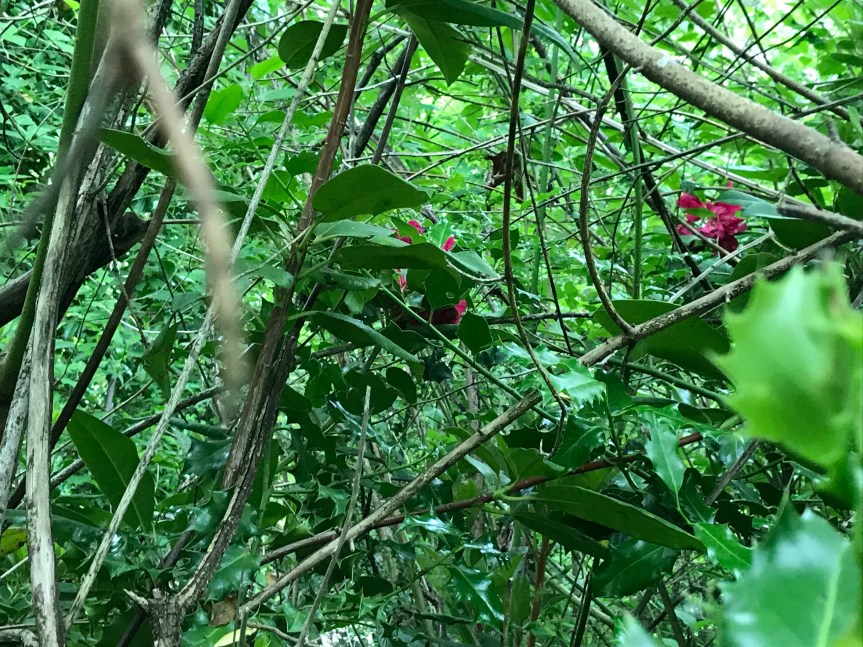
When I was showing a friend around our Greenbelt restoration project on May 25, she saw a red flower in the distance. It was too far away, and too covered by invasive plants, to know what it was. We guessed it was a rhododendron flower. (Mystery in the Making).

At the time, I was in the midst of preparing for Amma’s programs so wasn’t able to make my way to the flower. Last Saturday, I decided to do whatever it took to get close. I gathered my tools and headed for the thicket. I took the photo above just before I began to cut my way through the dead branches, blackberry vines, laurel, ivy, and downed trees.

As I worked, I realized how much I missed the excitement of freeing the trees in the Greenbelt and discovering what was under the mass of invasive plants. Most of our recent work has been to dig out blackberry root balls from areas where blackberry vines have been cut down.

Every so often I looked up to see how close I was to the red flowers.

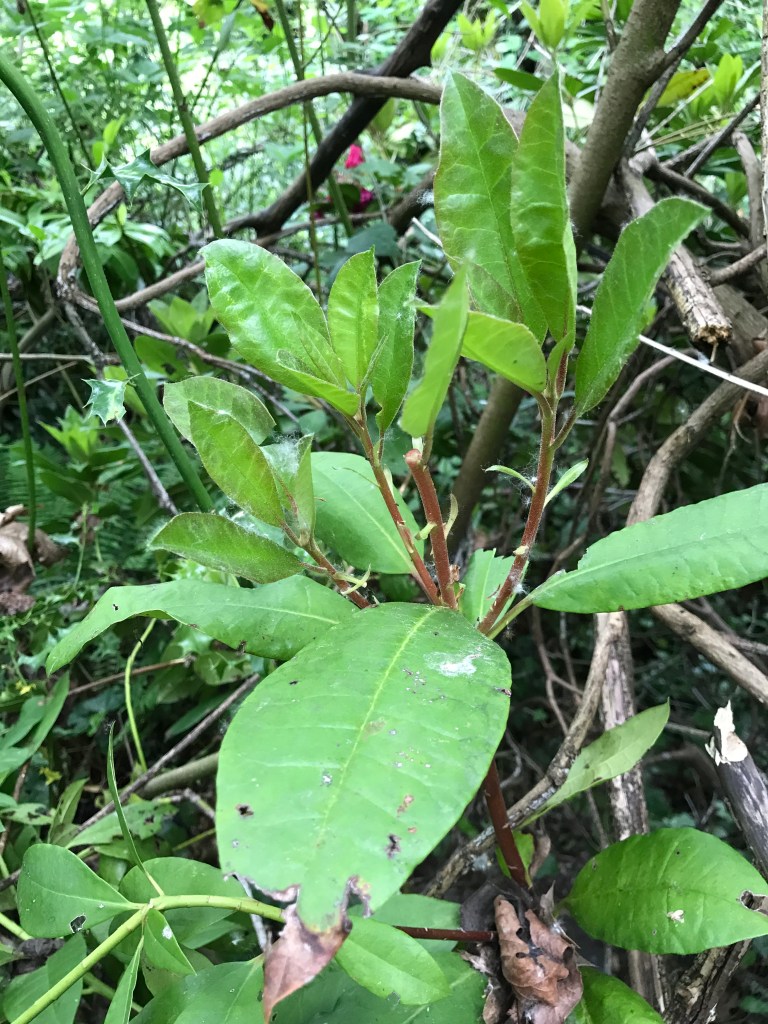
I progressed much faster than I expected. At one point, I realized that a branch I cut was not laurel, it was a rhododendron branch. Soon I saw more rhododendron branches.

There is a steep slope along the eastern border of the property. For liability reasons, the City of Seattle does not allow us to work on slopes that steep. I noticed that the rhododendron was on the last piece of flat land before the slope began. I continued on my way, getting ever closer to my goal.

Closer and closer.

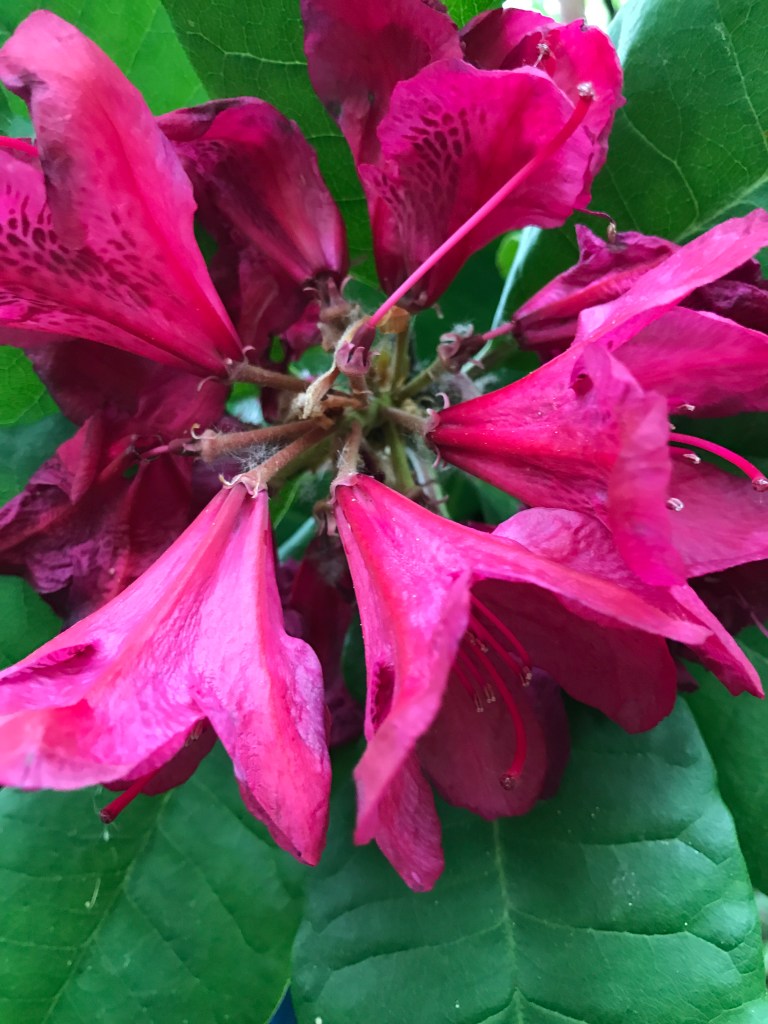
And then I was there. I knew there was no way I was going to free the whole bush, at least not on that day, but I was able to touch one of the flowers. I wish the photo was clearer but I’m glad that I have it. I realized if I had waited much longer to solve this mystery, all of the petals would have fallen off.

I looked up and saw this sight.

I also enjoyed seeing the rest of the bush.

There were so many branches, going every direction. They reminded me of a pretzel.

When I looked through the thicket, I thought I saw more rhododendron bushes. I wonder what other discoveries await me. I look forward to the time when we focus on clearing that part of the Greenbelt. For now, though, I will go back to digging out blackberry root balls!

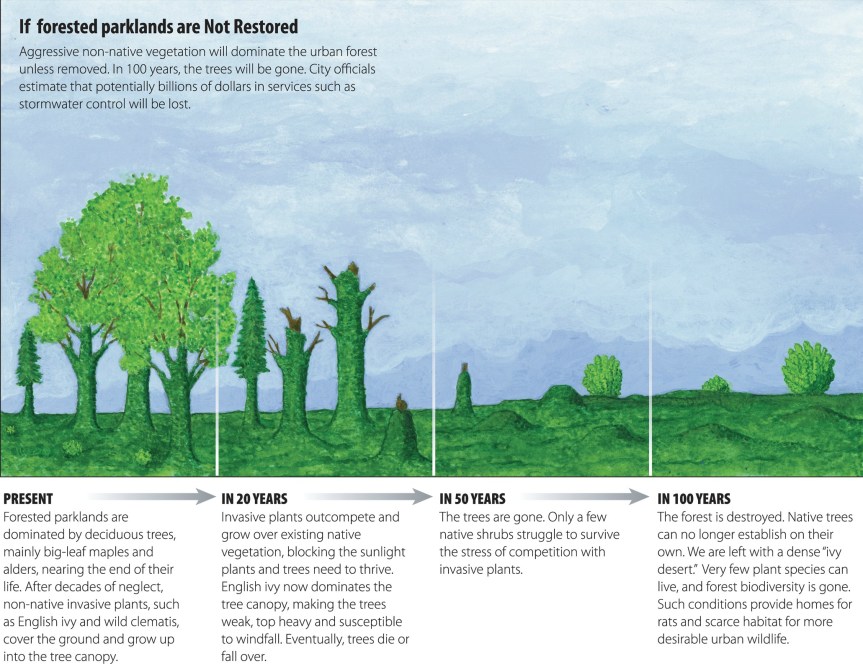
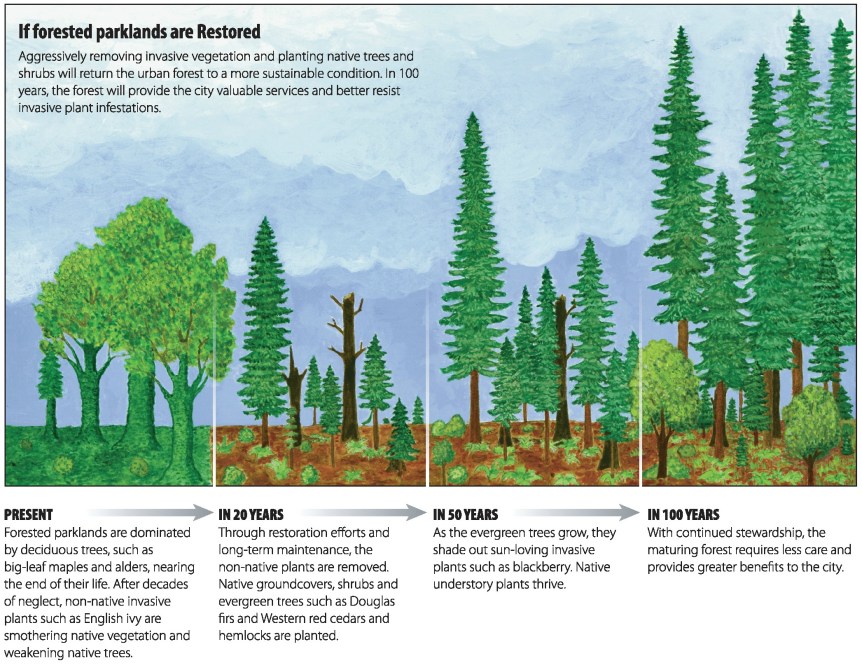
No Forest Restoration vs Forest Restoration

These timelines profoundly affected me when I saw them at the Green Seattle Partnership Forest Steward training that Ananya and I attended last March.


I choose to do whatever I can do to make the second timeline the reality.

Greenbelt Restoration Work Party: May 13

Twenty of the 23 participants in last Saturday’s work party were students from a University of Washington Environmental Studies class. I loved the opportunity to share this project with young people and appreciated what enthusiastic workers they were.

I set up five different work stations, and assigned four students to each of them. One group finished their work early so they joined another group for the remainder of the time.

Most of the work party was spent cutting down blackberry and ivy vines, and digging out blackberry root balls. Once the root balls were removed, we cover the cleared land with burlap bags to reduce weed growth. Then dried blackberry canes and other debris were placed on top of the burlap. In time, the bags and debris will turn into mulch which will hold in moisture and enrich the soil.

Since we use the blackberry canes to cover the burlap bags, it can be difficult for photographs to show how much work has been done. As you look at the before and after photos below, keep in mind that so many blackberry root balls are now above ground, stacked on racks made from tree branches where they will dry out.

Before and after photos for each of the five stations:

#1

#2

#3

#4

#5

The amount of trash that we collected during the last two work parties shocks me. I wonder it will ever come to an end.


As always, I was amazed and delighted by how much we were able to accomplish during a three hour work party.

Roots, Roots and More Roots

I laughed when I read that the April 26 Daily Post prompt was Roots. My life is filled with roots. I even dream about roots.

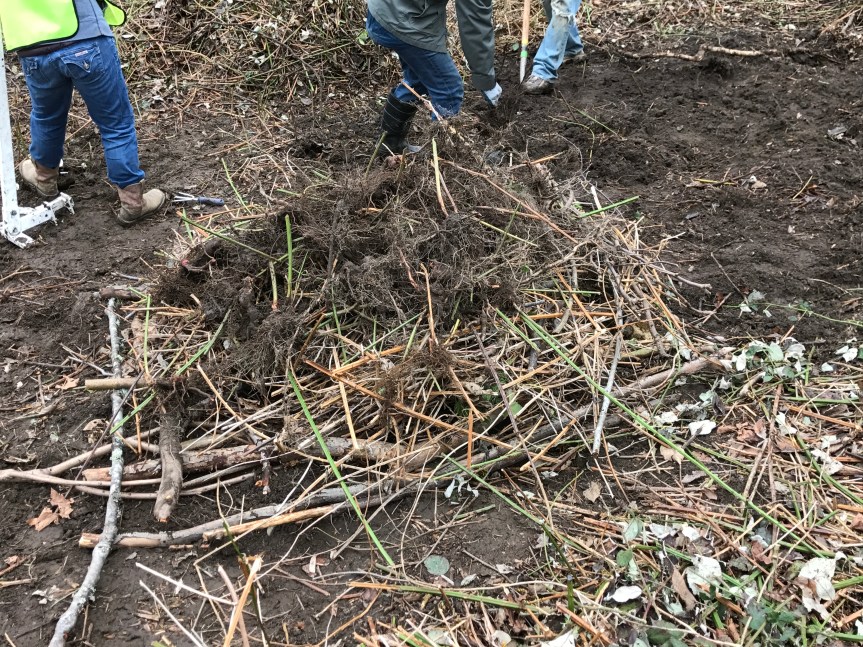
Our local GreenFriends group has taken on the responsibility of restoring four lots in Seattle’s Greenbelt. That land has been overrun by blackberries and ivy for decades. Part of our job in phase one of the project is to remove the blackberry vines and their root-balls.

The City of Seattle Parks Department staff cut down most of the blackberry vines in March. There are now thousands of canes sticking up from the ground. They lead us to the root-balls.
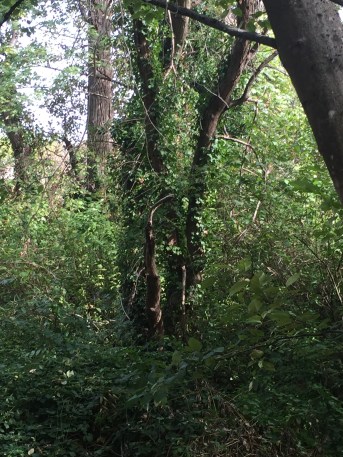
Raking up the debris makes it easier for us to see the canes and to dig out the root-balls.

Once we dig them out we put them on racks so they can dry out.

I suspect that blackberry root-balls will be in my life for years-to-come.

To read more about this project go to Greenbelt Restoration Project Update