I have many loves but the one that I am most immersed in at the moment is my study of Sanskrit. Almost every night, I am dreaming of Sanskrit. In my sleep I’m formulating sentences, reviewing vocabulary, hearing the song we sing in class. I’m learning words faster now and I believe some of that is due to whatever is happening during the night.
Here is a photo from the Samskrita Bharati camp I attended for three days last summer. I’m quite easy to spot!
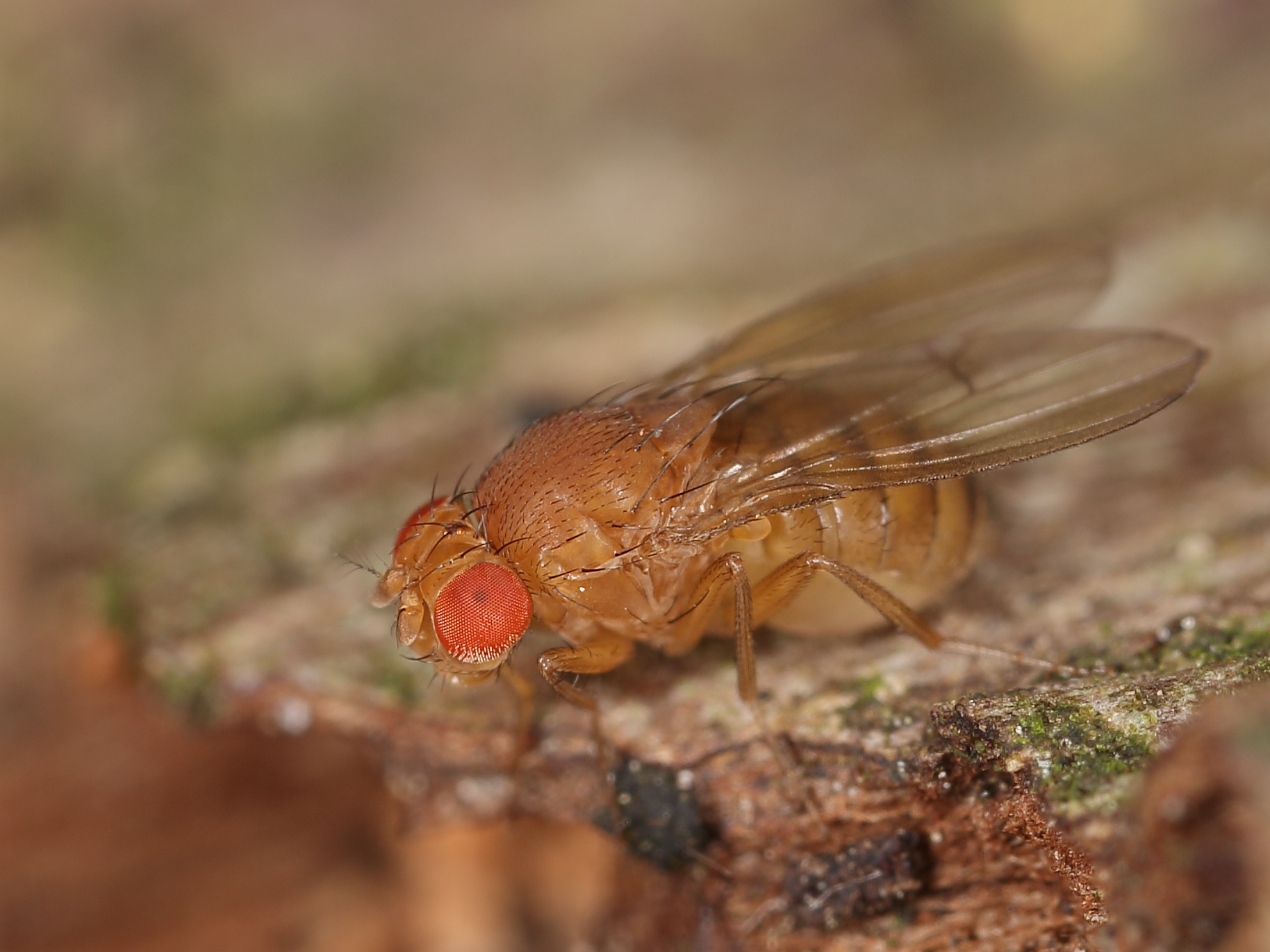
As many of you know, learning Sanskrit is a passion of mine. I take two classes a week and each of the classes require that I write five or more sentences in Sanskrit. This week I decided to do something even more ambitious. I took much of the information from my recent fruit fly post and translated it into Sanskrit. I finished the homework by writing the sentences as if they were being spoken in a science class where the teacher was asking the children what they knew about fruit flies.
आचार्या – सुप्रभातं बालाः। अद्यतन विषयः फल-मक्षिकाः।
Teacher – Good morning children. Today’s topic is fruit flies.
आचर्या – भवन्तः विषये फल-मक्षिकानां किं जानन्तिः।
Teacher – What do you know about fruit flies?
सुल्मा – फल-मक्षिकाः अष्टतः दश-दिनानि जीवन्ति।
Sulma – Fruit flies live from 8 to 10 days.
आचर्या – उत्तमं सुल्मा। डेविद्?|
Teacher – Very good Sulma! David?
डेविद् – स्त्री फल-मक्षिकाः पञ्चशत-अण्डानि दश-दिनेषु स्ठापयन्ति|
David – Female fruit flies lay 500 eggs in 10 days.
आचर्या – सम्य़क् डेविद्। रमणः?|
Teacher – Good David. Ramana?
रमणः – एकस्मिन् फल-मक्षिकस्य नेत्रे ७६० दीप्तोपलाः सन्ति|
Ramana – In a fruit fly’s eye there are 760 lenses.
बार्बरा – फल-मक्षिकाणां रक्त-नेत्रौ पिङ्गल-देहा: तेषाम् उदरेषु कृष्ण-रेखाः च सन्ति |
Barbara – Fruit flies have red eyes, brown bodies, and black stripes on their abdomens.
सवत्री – फल-मक्षिका: पक्षौ द्विशत-वारं पतिक्षणं अ्भिविक्षपन्ति |
Savatri – Fruit flies wings beat 200 times per second.
रामा – फल-मक्षिका: विज्ञान-प्रकल्पेषु उपयुक्ता: सन्ति |
Rama- Fruit flies are useful in scientific research
कर्ल् – फल-मक्षिका: चत्वरि-chromosomes मानवानां इव सन्ति |
Carl – Fruit flies have four chromosomes that are similar to humans’ chromosomes.
सुमती – फल-मक्षिका: Parkinson’s, Alzheimers, aging, cancer, immunity, alcohol, and drug abuse विज्ञान-प्रकल्पेषु उपयुक्ता: सन्ति |
Sumati – Fruit flies are used in Parkinson’s, Alzheimers, aging, cancer, immunity, alcohol, and drug abuse research.
सुसन् – फल-मक्षिका: क्षीयमाणानि फलानि शखानि खादन्ति।
Susan – Fruit flies eat decaying fruits and vegetables.
स्टॆव् – विगल-फलानि मा खादतु। तेषु फल-मक्षिक-अण्डानि भवेयुः|
Steve – Don’t eat rotten fruit. There may be fruit fly eggs and disease (causing organisms) in them.
आचर्या – उत्तमं बालाः। श्वः इतोपि वदिष्यामः विषयॆ फल-मक्षिकाणां |
Teacher – Very good, children. Tomorrow we will talk more about fruit flies.
[Thank you Madhavi for helping me with this translation! I so appreciate your constant support.]
Every week our homework in my Sanskrit class is to write five to ten sentences in Sanskrit. To accomplish that I pick a theme, compose the sentences in English and then translate them into Sanskrit.
Sometimes I publish my homework on my blog. This is one of those weeks!
Generally I don’t show the direct translation in my posts. I included it this time because I thought it might be interesting for you to see that the structure of Sanskrit sentences is not the same as we use when we write in English. Notice also that the Sanskrit meaning is generally more poetic than the direct English translation.
प्रतिजनस्य जीवनं महत्त्वपूर्णं अस्ति ।
Direct translation: Every person’s life important is.
Meaning: Every person’s life is important.
प्रतिजनः विश्वाय योगदानं करोति ।
Direct translation: Every person for world contribution makes.
Meaning: Every person makes a contribution to the world.
युध्दं मा भवतु । Direct translation: War no be.
Meaning: May there be no war.
प्रतिजनाय पर्याप्तं आहारं भवतु ।
Direct translation: Every person enough food be.
Meaning: May every person have enough food.
प्रतिजन: प्रसन्नः भवतु ।
Direct translation: Every person happy be.
Meaning: May every person be happy.
प्रतिजनः अन्यान् गौरवेण पश्यतु ।
Direct translation: Every person others with respect see.
Meaning: May every person look at others with respect.
Last month, I attended a three day Sanskrit immersion family camp being held at Evergreen State College in Olympia, Washington. The camp was sponsored by Samskrita Bharati (संस्कृतभारती), an international organization that is “devoted to the mission of popularizing Sanskrit as a spoken language, and, thereby, engendering a cultural renaissance through rejuvenation of this language which holds the key to the unfoldment of India’s rich cultural heritage and knowledge.”
This was the fourth year I had attended their summer workshop. I loved being with the faculty and students I had met in previous years, as well having the opportunity to meet the new students. I felt very connected to everyone; connected through our love of Sanskrit.
A few days ago, I found a photo of the students and faculty who attended this year’s camp on the Seattle Samskrita Bharati Facebook page. I don’t think you will have any trouble spotting me! 🙂
Everyday Amma asks us to see white flowers of peace raining on the entire universe.
Lokah Samastha Sukhino Bhavantu
May all beings in the world be happy.
Peace, Peace, Peace
When I met Amma in 1989, I didn’t know anything about Eastern spirituality and I had never heard of Sanskrit. Months later, I attended a one or two day workshop focused on learning the sounds of the Sanskrit letters. I have no memory of where I heard about the workshop or why I went. I do remember one other Amma devotee there, so maybe he invited me to go, or perhaps a group of devotees attended. Many of the bhajans (devotional songs) Amma sings are in Sanskrit so it may be I wanted to learn to pronounce the words of the songs correctly.
The workshop leader, Vyaas Houston, taught us the sounds of the letters through music; i.e. we sang the alphabet! He told us that by the end of the workshop few, if any, of us would be able to sing the whole piece by ourselves, but as a group we would sing it well. He was right. I thought it was a powerful display of the power of group process.
My writing the first two paragraphs of this post brought back another memory of that time. In the first weeks after I met Amma, I bought a cassette tape at East-West Bookstore. It was called Jai Ma. When I played the tape the first time, I had an experience that astounded me. As I listened to one song, I burst into tears. During the next song, my body flooded with joy. Yet another tune filled me with peace. How could that be? After all, the songs were in Sanskrit and I had no idea what the words meant.
Later, when I told one of my co-therapists what had happened he responded, “Of course, in Sanskrit the feelings are imbedded in the sounds.” This therapist was very logical and science oriented, as opposed to being interested in spirituality, yet he said this in such a matter-of-fact way. I was intrigued, but not enough to start in-depth study of Sanskrit.
After the weekend workshop, I made flashcards to teach myself the meaning of some of the Sanskrit bhajans. I also wanted to learn Malayalam, Amma’s language, so even though the word on the flashcard above is Sanskrit, the letters are in Malayalam script. (The meaning of the word is on the other side of the card.) Over the years, I attempted to learn Malayalam several times but without a teacher it seemed impossible. I didn’t make any significant progress so eventually gave up the endeavor.
Amma has always worked to bring back India’s traditions, e.g. traditional dances, traditional music, traditional values. There was a period when Amma started encouraging the ashram residents to learn Sanskrit. I remember a time about five years ago when Amma asked some of the brahmacharinis (female monks) to stand up and speak to everyone present in Sanskrit. Amma looked so happy as she listened to them talk.
Watching Amma’s joy piqued my interest in Sanskrit again, but I knew learning on my own wouldn’t work well. In 2011 my desire began to grow. When I went to Amritapuri in November of 2011 for my annual visit to Amma’s main ashram in India, one of the first things I saw was a friend of mine, Meenamba, sitting by herself studying Sanskrit! I sat down beside her and told her I also wanted to learn. She offered to give me the books she used when she first started learning the language.
Soon thereafter, I received a group email from a devotee in Seattle named Madhavi. She was offering to teach our satsang (a group of Amma devotees) how to say and understand the Sri Lalitha Sahasranama Strotram, a spiritual text Amma asks us to chant daily. I had met Madhavi before but she was new to our satsang so I didn’t know anything about her.
Her email certainly caught my attention. I responded, commenting that learning to read the chant was not my goal; I wanted to learn spoken Sanskrit! I asked if she would be willing to correct my homework as I worked my way through the books I had been given.
Madhavi replied that she had been teaching spoken Sanskrit for seven years! She said I could learn the letters and their sounds in the class she had advertised, and that she was willing to expand the curriculum so that those of us who were interested in learning spoken Sanskrit could do so. I marveled at the synchronicity of all that was occurring. This was certainly a major turning point in my Sanskrit journey
Madhavi’s class started in February of 2012 and I have been studying Sanskrit with her ever since. That first summer I also took a Samskrita Bharati three-day intensive, and did that again in 2013 and 2014. While Madhavi’s classes focused on reading, writing, and grammar, Samsrkita Bharati’s classes focused exclusively on spoken Sanskrit. In fact, that group resists speaking any English during the summer camp and they also discourage students from taking written notes. Luckily, they were willing to relax the rules a little with me since I need some things clarified in English. But each year I attend the camp I can see my progress.
When I went India in November of 2012, I studied with Meenamba for a month. During Amma’s Seattle programs in the summer of 2013, members of Madhavi’s Sanskrit class went together to receive Amma’s blessing. In November 2013, I attended Meenamba’s Sanskrit class during my visit to Amritapuri and just before I returned to Seattle we also went as a group to be blessed by Amma. That time each of the students said a sentence in Sanskrit to her! Amma beamed.
In May of 2014, our Seattle Sanskrit class organized and performed a skit in Sanskrit for Amma. That autumn, I started attending a weekly Samskrita Bharati class as well as Madhavi’s class. All but two students in the new class were Indian. The Indian students learn so much faster than I can. That is largely due to the fact that their native languages contain a lot of Sanskrit words so vocabulary isn’t as much a problem for them as it is for me. I found that I had learned enough of the fundamentals of Sanskrit in Madhavi’s class though, so that even if I still couldn’t understand conversations in Sanskrit, I could usually understand what was being taught. I’ve had to learn to be patient with myself and be okay with what I can and cannot do. But I do see myself moving forward and that is what is most important.
Last winter, a brahmachari (male monk) was teaching a Sanskrit class when I came to Amritapuri so I attended his class. I appreciate how each of my instructors have used a different style of teaching. I have learned so much by experiencing the various styles.
As Amma’s 2015 summer tour approached, I decided I wanted to again speak to Amma in Sanskrit, but this time I wanted to say more than a solitary sentence! I had the opportunity to do that last Thursday when I attended her programs in Dallas. Speaking Sanskrit, I thanked Amma for the new satsang that recently formed in the Seattle area. I told her I was very happy there and that I was leading bhajans every week. I added that I loved studying Sanskrit and asked her to help me learn to speak it. Her smile got bigger with every sentence I uttered, which of course filled me with joy!
I believe this week has been yet another turning point on my Sanskrit journey. I think this will be the year that I will be able to build my vocabulary enough to finally be able to participate, at least to a limited degree, in Sanskrit conversations. I am excited and ready to do whatever it takes to make that happen!
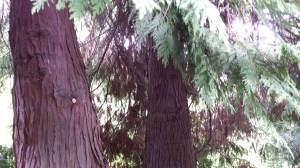
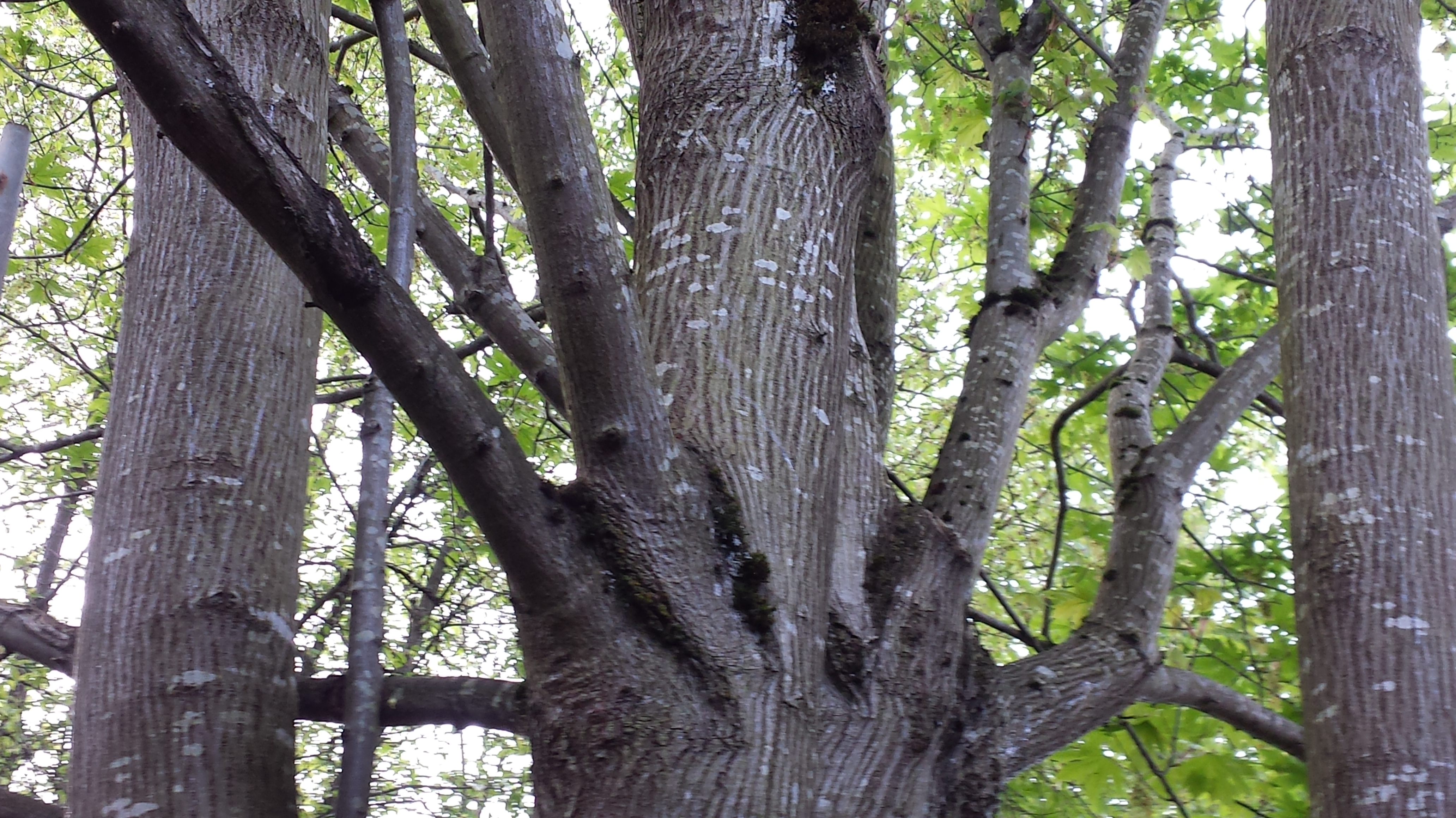
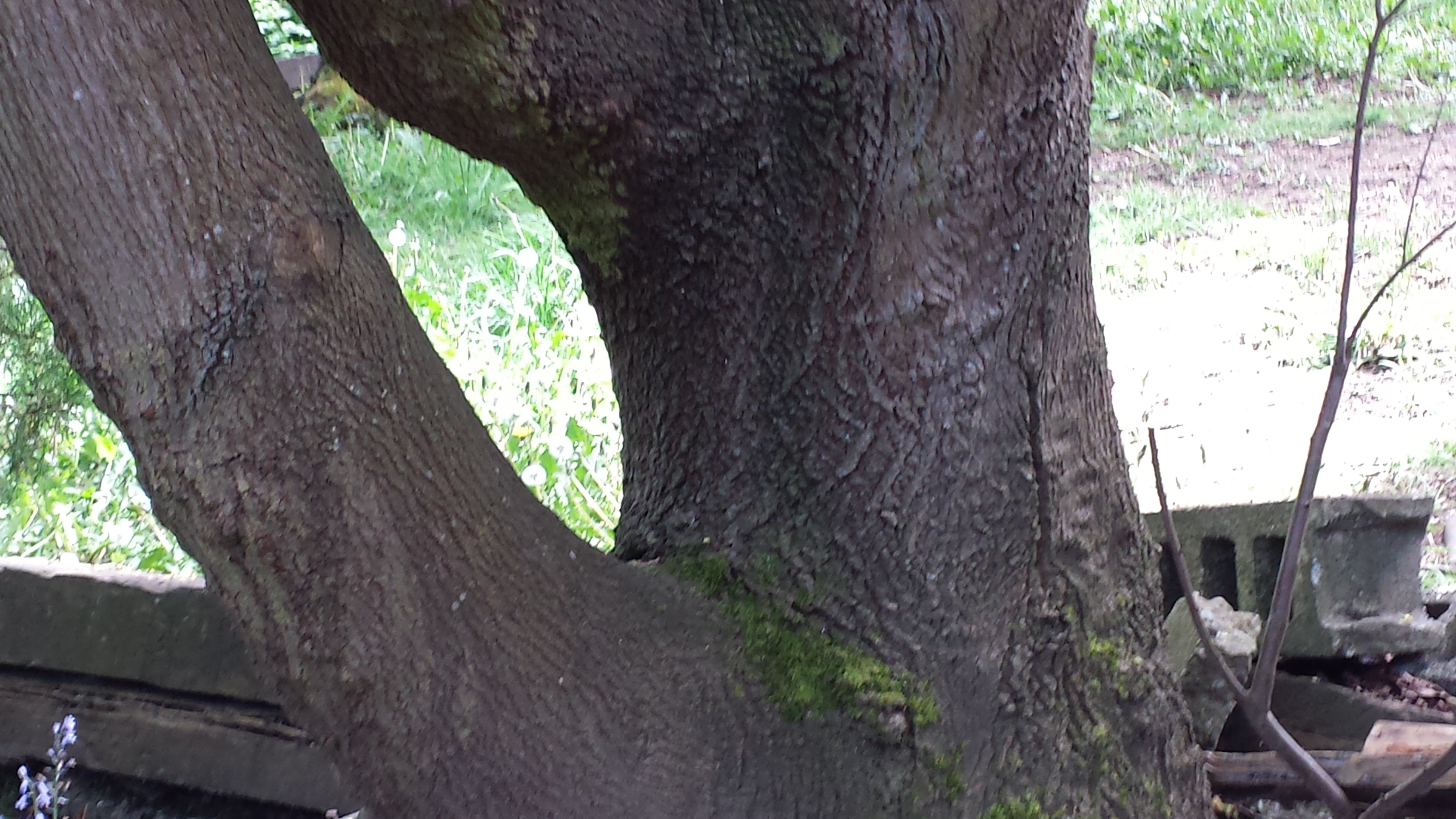
In an earlier post, I shared pictures of blooms on a tree that is in my back yard.
I realized later that I wanted to give readers a better sense of the full majesty of the tree. It is much taller than my house and covers a significant area in both my yard and my neighbor’s. I decided I would do that by taking photos of different parts of the tree.
Every so often I enjoy sharing my Sanskrit homework on my blog. This time I decided to include homework from both of my Sanskrit classes.
Homework for Madhavi’s Friday class
I have been taking this class for more than three years. This week I decided to focus on creating sentences with dual words, meaning sentences involving two people.
द्वाविंशति-April-मासे दिनाङ्के मम पुत्री तस्याः पति: च Seattle-नगरम् आगमिष्यतः
dvaavimshati April maase dinaangke mama putrii tasyaaha patihi cha seattle nagaram aagamishyataha
On April 22 my daughter and her husband will come to Seattle.
तौ कर्यं करिष्यतः यावति अम्बयाः यत्रा May मासे भविष्यति
tau karyam karishyataha yaavati ambayaaha yatraa May maase bhavishyati
They will work until Amma’s programs begin in May.
तदा तौ अम्बया सह गमिष्यत:
tadaa tau ambayaa saha gamishyataha
Then they will go with Amma.
आमृतपुर्यां तौ उशितवन्तौ प्राय: षोडश-वर्षेभ्यः
aamritapuryaam tau ushitavantau praayaha sodash-varshebhyaha
They have lived in Amritapuri for 16 years.
मम पुत्र: अमृतपुर्यां वसिष्यति यावत् तौ America-देशे स्तः
mama putraha amritapuryaam vasishyati yaavat tau America deshe staha
My son will live in Amritapuri while they are in America.
Homework for Sunday Samskrita Bharati class
I’ve been taking the Samskrita Bharati class since September. This class has not studied dual yet, so I avoided that type of sentence. The main focus for this week was on writing sentences using the combination yadaa (when) and tada (then). With this particular combination both halves of the sentence should occur at the same time, or be something that happens with certainty.
यदा अम्बा America-देशम् आगच्छति तदा मम पुत्री तस्याः कटकेन सह गच्छति
yadaa ambaa america desham aagacchati tadaa mama putrii tasyaaha katakena saha gacchati
When Amma comes to America then my daughter travels with her caravan.
यदा भङ्ग्रा-जानपद-नृत्यानि पश्यामि तदा बहु अतीव प्रसन्ना अस्मि
yadaa bangraa-jaanapada-nrityaani pashyaami tadaa bahu ativa prasannaa asmi
When I see bhangra folk dances then I am very, very happy.
यदा ते आगच्छन्ति तदा खादामः
yadaa te aagacchanti tadaa khaadaamaha
When they come then we eat.
यदा वयं चलच्चित्रम् आगच्छमः तदा अल्पाहारं खादामः
yadaa vayam calaccitram agaaccamaha tadaa alpaahaaaram khaadaamaha
When we come to the movie then snacks we eat.
यदा सा उपविष्ठवती तदा सा पुस्तकं पठितवती
yadaa saa upavishthavatii tadaa saa pustakam pathitavatii
When she sat down then she read a book.
यदा त्रयः बालकाः क्रीडन्ति तदा ते हसन्ति
yadaa trayaha baalakaaha kridanti tadaa te hasanti
When the three boys play then they laugh.
यदा मित्रैः सह मिलामि तदा मम गृहं चलामः
yadaa mitraihi saha milaami tadaa mama griham calaamaha
When I meet friends then to my house we walk.
यदा मन्दिरे पूजयामि तदा प्रर्थनां गानं च करोमि
yadaa mandire puujayaami tadaa praarthanaam gaanam ca karomi
When in the temple I worship then praying and singing I do.
“The fool doth think he is wise, but the wise man knows himself to be a fool.” “Love all, trust a few, do wrong to none.” “Love looks not with the eyes, but with the mind, And therefore is winged Cupid painted blind.”-William Shakespeare








 Living, Learning and Letting Go