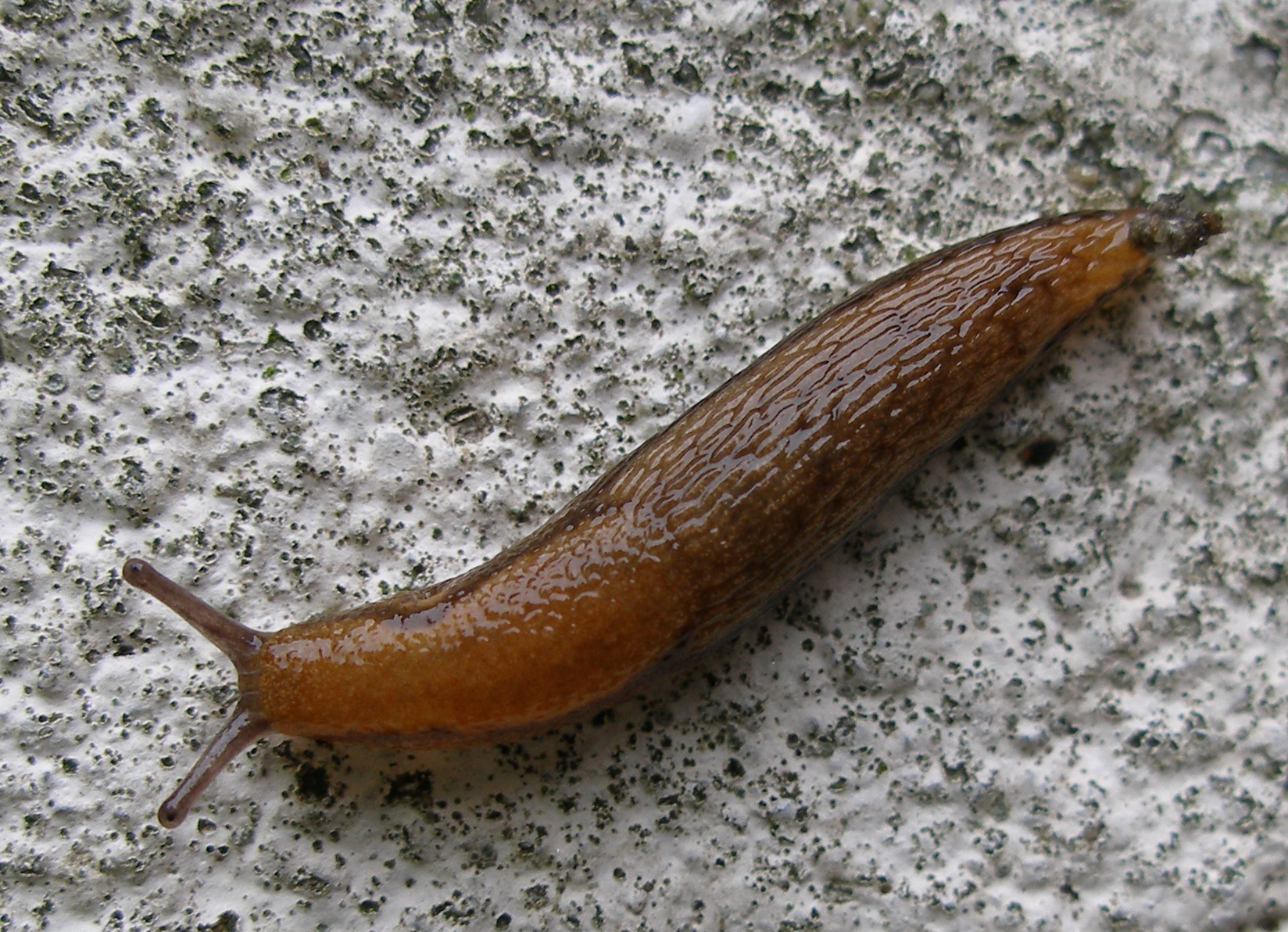
Today’s Daily Prompt: Underground reminded me of a list of facts about slugs I included in the PNW GreenFriends Newsletter in August of 2015 (Page 20). Before compiling that list, I had no idea that 95% of slugs live underground. It is still near impossible for me to visualize that reality. Here is that list:
Did you know…
Only 5% of the slug population is above ground at any one time. The other 95% is underground digesting your seedlings, laying eggs, and feeding on roots and seed sprouts.
Slugs do play an important role in ecology by eating decomposing vegetation.
A slug lays 20-100 eggs several times a year.
Slug eggs can lay dormant in the soil for years and then hatch when conditions are right.
In favorable conditions a slug can live for up to 6 years.
Slugs used to live in the ocean, which is why they still need to keep moist
One individual field slug has the potential to produce about 90,000 grandchildren.
It’s been estimated that an acre of farmland may support over 250,000 slugs.
A cubic metre of garden will on average contain up to 200 slugs.
Slugs leave their own individual scent trail so they can find their way home.
A slug can stretch out to 20 times its normal length, enabling it to squeeze through the smallest of openings.
A slug has approximately 27,000 teeth – that’s more teeth than a shark.
The above facts are excerpts from: Fascinating Sluggy Facts. Go there to learn many more facts about slugs!
You can also find fascinating information about slugs at:
I have been reading a book by an urban farmer that I have been thoroughly enjoying, until last night. Just before I went to bed I read how she killed slugs in the most horrific way I can imagine. This morning I decided to re-read a post I wrote last year… and share it with you. (Be sure to also read the 2016 addendum.)
I imagine slugs are a problem for most gardeners, they sure have been for me. It is so discouraging to go to the garden in the morning and see only the stalks left on bean plants and other vegetable seedlings. In the “old” days I used to use powdered slug bait to get rid of them. Later on, I used beer to bait them.
I have become increasingly uncomfortable with killing the slugs. Early this year it seemed I had more than ever; especially in my two worm bins. Believe me, good compost and free food can raise some BIG slugs. During the early part of the summer, I relocated them to other parts of the yard and hoped they didn’t make their way back to my garden. Occasionally, when I found them in the worm bins, I just left them there.
Then one day I decided to see if there was any information on the internet about the relationship between worms and slugs. I was very dismayed to discover that slugs EAT worms! I even found videos that showed that happening.
Eating my vegetable starts was one thing, but getting plump from eating my worms was completely unacceptable. From then on I took the slugs to the bottom of the empty lot behind my house, about 250 feet away from my garden and my worm bins. That area is full of blackberries vines but I pulled up a lot of morning glory plants and made the slugs a soft bed of edibles.
Next year I will make a home for them that is more hospitable, but still far away from things I hold dear.
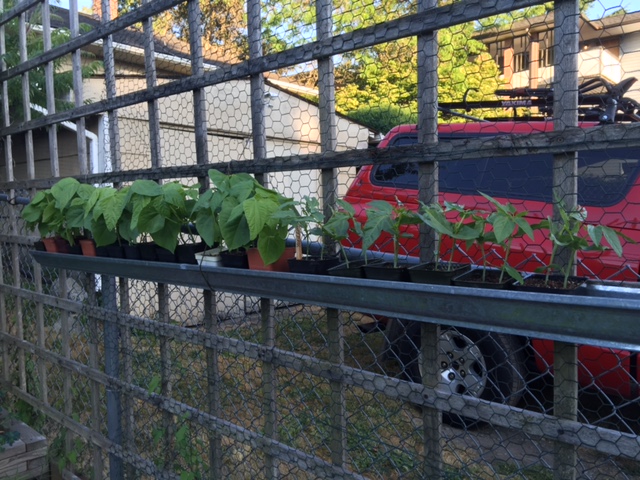
I will also experiment with other ways to protect my seedlings. For example, I like the gutter planters that my friend Saroja created this year. She didn’t put her seedlings into the garden until the plants were big enough to be of no interest to the slugs.
I am happy that I have found ways to protect my garden and worm bins without killing the slugs. I hope to be even more successful in that venture next year. If you have found peaceful ways to deal with the slugs in your garden, I would love to hear about them!
2016 Addendum: What I have found interesting this is year is that I have not needed to follow through on my 2015 plan. Other than losing two green bean seedlings at the beginning of the season, I have had NO problem with slugs in my garden or yard this year. There have been a few in my worm bins, and they were big and fat before they came into view, but I have just set them free outside of the worm bins. I don’t know where they go but I do know that all of the plants in my yard have been spared!
Just before hitting publish on this current post, I decided to read the article I mentioned above “Earthworms protect against slugs.” It reported about a study that showed that slugs damage 60% less leaves if earthworms are present. I know my yard has more earthworms than ever before so maybe that is the reason I’ve had no problem this year. I don’t know the “why”, but I definitely appreciate the reprieve and hope it continues.
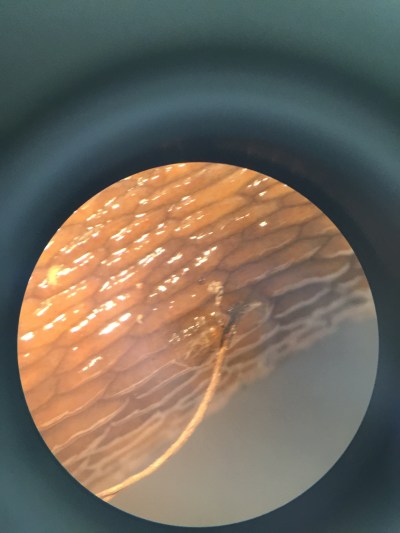
A few days ago, I decided to take microscopic photos of a slug. That was the only live creature I could think of that would move slow enough to allow me to get some good shots.
I soon discovered that slugs are able to move way faster than I thought. In fact, I had to bring it back to the microscope’s field three times in order to take these photos. The pictures are not as clear as I had hoped they would be, but that’s not surprising since my subject was in motion!
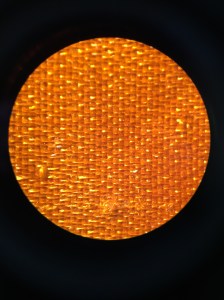
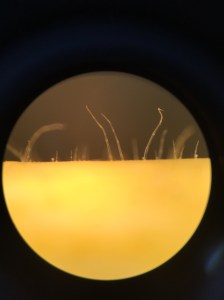
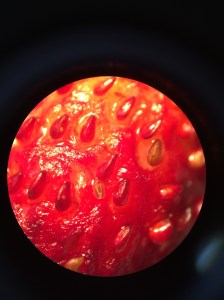
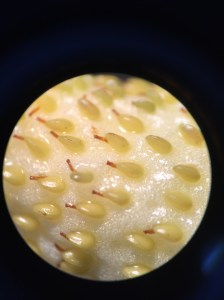
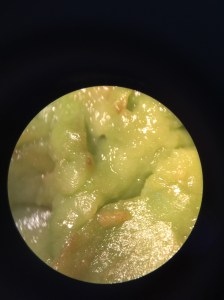
I thought it would be fun to show readers a variety of microscopic pictures I’ve been taking and see if you can identify what they are. Make a list and compare your answers with the key at the end.
#1
#2
#3
#4
#5
#6
#7
#8
#9
scroll down for the answers
*
*
*
*
*
*
*
*
*
*
keep going
*
*
*
*
*
*
*
Answer key
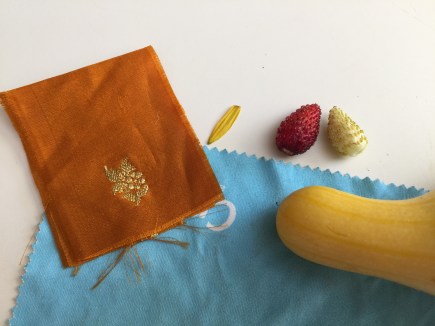
gold sari fabric
crook neck squash
blue microfiber cloth
red strawberry- the small variety
white strawberry- the small variety
Black Eyed Susan flower petal
avocado
dragon fly wing
slug
How did you do? I’d love to hear in the comments below.
I have many photos of the slug, the dragon fly and the avocado and will share them in future posts. I found the dragon fly dead on my rug but the slug was alive. I had no idea how fast slugs could move. It was pretty funny trying to get pictures of it!
Here is a photo of several of the items on this list.
I imagine slugs are a problem for most gardeners, they sure have been for me. It is so discouraging to go to the garden in the morning and see only the stalks left on bean plants and other vegetable seedlings. In the “old” days I used to use powdered slug bait to get rid of them. Later on, I used beer to bait them.
I have become increasingly uncomfortable with killing the slugs. Early this year it seemed I had more than ever; especially in my two worm bins. Believe me, good compost and free food can raise some BIG slugs. During the early part of the summer, I relocated them to other parts of the yard and hoped the slugs didn’t make their way back to my garden. Occasionally, when I found them in the worm bins, I just left them there.
Then one day I decided to check out the relationship between worms and slugs. I was very dismayed to discover that slugs EAT worms! I even found videos that showed that happening.
Eating my vegetable starts was one thing, but getting plump from eating my worms was completely unacceptable. From then on I took the slugs to the bottom of the lot behind my house, about 250 feet away from my garden and my worm bins. That area is full of blackberries vines but I pulled up a lot of morning glory plants and made the slugs a soft bed of edibles.
Next year I will make a home for them that is more hospitable, but still far away from things I hold dear.
I will also experiment with other ways to protect my seedlings. For example, I like the gutter planters that my friend Saroja created this year. She didn’t put her seedlings into the garden until the plants were big enough to be of no interest to the slugs.
I am happy that I have found ways to protect my garden and worm bins without killing the slugs. I hope to be even more successful in that venture next year. If you have found peaceful ways to deal with the slugs in your garden, I would love to hear about them!
“The fool doth think he is wise, but the wise man knows himself to be a fool.” “Love all, trust a few, do wrong to none.” “Love looks not with the eyes, but with the mind, And therefore is winged Cupid painted blind.”-William Shakespeare











 Living, Learning and Letting Go