
Wordless Wednesday

When discussing the importance of brevity and simplicity of speech when one is trying to create inner silence, Muller provided information that I have recalled time and time again. He said:
Someone once noted that the Lord’s Prayer contained 56 words, the Twenty-third Psalm 118 words,and the entire Gettysburg address only 226 words– while the U.S. Department of Agriculture directive on pricing cabbage contained 15,629 words. One could easily conclude that we place a higher value on pricing cabbage than on liberty, prayer, or serenity.
From Legacy of the Heart: The Spiritual Advantages of a Painful Childhood by Wayne Muller, Simon and Schuster, 1992, page 104-105.

I didn’t start that January 2014 day planning on becoming a train hopper. Far from it. My intention was to accompany my daughter, Chaitanya, to her dentist appointment. Since her appointment was at Amma’s multi-speciality hospital in Kochi (India), several hours away from her ashram in Amritapuri where Chaitanya lives, it was bound to be an adventure, but train hopping was not supposed to be part of it.
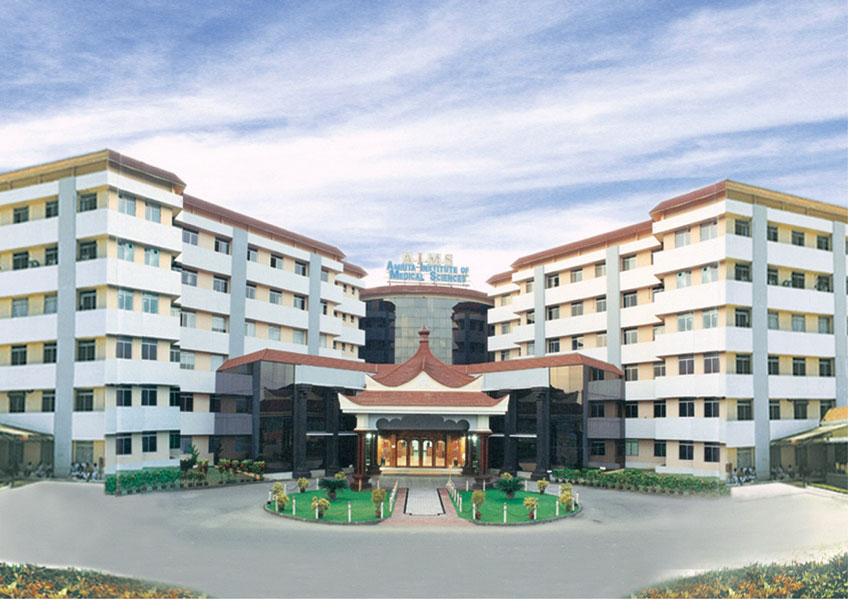
Amrita Institute of Medical Sciences (AIMS) began in 1998 as a 100 bed hospital and has grown into a 1400 bed tertiary care center with a campus that includes a School of Medicine, School of Nursing, School of Dentistry, School of Pharmacy, and a Center for Nano-sciences and Molecular Medicine.
I have wanted to see AIMS for a long time, but once I arrive at the ashram on my yearly India visit, I don’t want to leave. I’ve always said that when I had a reason for going to AIMS, I would go.
When I found out that Chaitanya needed to go to AIMS for a root canal and to see an ophthalmologist, I decided my time to visit AIMS had come. I was excited that she was planning to travel by train rather taking a bus. I have always enjoyed my train experiences in India. I knew Chaitanya would normally use the open 3rd class seating, so I asked if I could treat her to an air conditioned (AC) or sleeper car. She was more than happy to receive that gift!

Chaitanya had checked the train schedule ahead of time. We were aiming for the 6:30 a.m. train, the first one to Kochi that day. We left the ashram in an auto ricksaw at 5:30 a.m. and arrived at the railroad station around 6:10.
In 1990, when I took my first train trip in India, I described the railroad station in this way:
“For westerners who have never witnessed an Indian train station, it should be pointed out that it was nearly indescribable in its chaos, noise and odor. Every open area was filled to the rafters with humans and animals. It was literally a sea of humanity, full of travelers carrying baggage and poultry on their heads and beggars asking for money and food. Only the passing of bodies moved the moist, fetid air.”
 That station was in Chennai, which is a big city. It was also during festival time. This station was entirely different. It was in a town instead of a city and we were there in early morning. The station was quiet and peaceful, almost deserted!
When Chaitanya went to the counter to buy the tickets, she was told that there was no 6:30 train, we would have to wait for the one at 7:00 a.m. It was unlikely she would make her dental appointment on time but there was nothing we could do about it.
Chaitanya didn’t seem particularly concerned. She asked for tickets in the AC car but was told to buy a regular ticket and once we were on the train and in the AC car we could pay the difference in price to the conductor.
When the train arrived, we started looking for the AC or sleeper car. We walked the entire length of the train and couldn’t find either one of them. We were starting to suspect that there wasn’t one. We turned around and walked back to see if we had missed it.
All of a sudden, the whistle blew, so we just jumped onto a third class car. In that class, there are no seat assignments. The train was packed, unbelievably packed. As we started walking towards the front of the train, the number of people thinned out considerably. When we found open seats I sat down and Chaitanya continued looking for the AC car. She finally discovered a car that had chairs instead of benches. It didn’t have AC but it was more comfortable than the other area so we moved there.
The train trip was 2 ½ hours in length and then it took us another 20 minutes by rickshaw to arrive at AIMS. As expected, we had missed Chaitanya’s scheduled appointment. She was told the dentist was working on someone else so she would have to wait at least until noon.
We decided to visit a friend who was a patient in the main hospital. We were really glad to be able to spend time with her as she was headed for surgery later that day.
Once she was called, Chaitanya was in the dentist’s chair for two hours. She had already been to the dental school for an appointment to determine what was wrong with the tooth, and would have to return for at least one and possibly two more appointments before the process would be finished. I had recently had a root canal myself, and the whole procedure was competed in one appointment. Not so here. For one root canal, Chaitanya needed four or five appointments, each requiring her to travel 3 hours by train and rickshaw ….each way.
While Chaitanya was with the dentist, I decided to look around. My fantasy had been that AIMS was a campus with many spread out buildings and rolling green lawns. Not so. There were many tall buildings and every available space was being used, either by an existing building, or one under construction. And there were so many people.
The campus was so big that I was afraid to do much exploring. It was like a big maze and I didn’t want to get lost. I decided to limit my outing to the main hospital, the School of Dentistry, and a building that had a cafeteria in it!
 When Chaitanya finished her dental work, we found the ophthalmology department and she did what she needed to do there. By the time that was finished, she was famished so I bought her some lunch. Afterwards, she took me to a different building where we could get ice cream. I decided to have a banana split! Here is what a banana split looks like in India! I’ve never had one here before, and it was very different than what I expected. Even the texture of the banana was different. (This picture is of a partially eaten one!)
We then headed back to the train station to get the AC or sleeper car that I believed we deserved after this very long day! Well that was our plan, but wasn’t what happened! Chaitanya knew a short cut to the railroad station that allowed us to walk rather than take a rickshaw. What we didn’t realize was that we would end up in a part of the train yard that was nowhere near the counter where they sold the train tickets…. and a train was coming.
When Chaitanya asked where that train was going, she discovered it was the train we needed to take. If we went to the ticket office, we would certainly miss it, so we decided we would board the train and pay the conductor. We didn’t know if that was allowed, but since we had been told in the morning to just pay the conductor the balance of the fee, we decided it was a reasonable thing to do.
We once again walked the length of the train looking for the AC or sleeper cars….. and once again we couldn’t find them. The whistle blew, so we jumped on the train. Once we were in the car, we realized there was a problem. Normally when you board a train, you can walk from one car to the another from the beginning of the train to the end. This particular car was very different in that there were no doors that connected to the other cars. That meant there was no way for us to walk through the train looking for the AC car or to pay the conductor.
A man was already in the car. He told us we would need to get off at the next station and find a different car. When he discovered we didn’t even have tickets, he repeated that statement even stronger. I thought he was a railroad employee, although it seemed a little strange that he wasn’t wearing a uniform.
Moments later, he informed us that it fine for us to be in that car. He then said that he was calling some of his friends and they would be joining us. Moments later two men and a woman boarded. By now I was convinced that none of them belonged in the car anymore than we did.
We soon learned that we were in the “disability car.” At one point, a man with a disability did enter, but no one else in the car should have been there.
Eventually, the train left the station. When we arrived at the next station the other passengers told us not to leave. (They spoke little to no English, but Chaitanya speaks enough Malayalam to get a general idea of what they were saying.) When we departed that station, the train started going backwards, i.e. in the opposite direction from where we wanted to go. What was happening? We decided we would get off at the next station regardless of what anyone said.
The train started going really fast. Soon we realized that we couldn’t get off at the next station because the car we were in had only one door and it opened out onto the tracks. All of the subsequent stations were like that as well.
I was wondering where this train was going. Would we end up in North India? And why was no one else concerned about this situation? After a half hour or so, I noticed the placement of the sun. Somehow we had changed tracks and started going the right way without a sense that the train had turned around. I still have no idea how that happened but was very relieved to discover we had been going in the right direction.
The other four people laid down in the sleeper bunks and slept most of the trip. It seemed clear that they made a practice of staying in the disability car. I was having fun, although I was concerned about how I was going to explain this situation to the conductor…… but I felt somewhat comforted knowing the others would have explaining to do as well.
As we neared our station, we realized that the car door still opened onto the tracks instead of the station platform. What were we going to do? Chaitanya wanted to get off on the tracks. I didn’t like that idea, but began to think there was no other option. She at least agreed that if we saw another train coming, we would stay on the train.
We told the man we had met at the beginning that our station was the next one. When we arrived there, he walked to the part of our car that had a toilet. Much to my surprise, there was an alcove I hadn’t seen before. It contained another door, one that opened the other direction. He unlocked the door and we walked directly onto the loading and unloading platform. I just shook my head, realizing we could have disembarked at any station!
We took a rickshaw back to the ashram, returning 16 hours from the time we started our journey. What a day it had been and what an adventure. And because of it, I could now add “(unintentional) train hopper” to my list of life experiences!
When I was walking in my neighborhood two weeks ago, I saw this tree stump and wondered why it had been decorated it this way. After pondering it for some time, the story I made up was that the homeowners didn’t want the tree there and didn’t want to take out the stump. I suspected these materials were placed in this way to keep people from tripping over it. Continue reading “Why?”
I met Amma in summer of 1989 and took my first trip to India in January 1990. I have traveled to India almost every year since then. The first two visits were short (10 days to 3 weeks). The third and fourth were for two months. From then on, my yearly journey has been for five or six weeks. Continue reading “Gratitude Sunday”
Sufi teacher Pir Vilayat Khan asks us to view pain in this way:
Overcome any bitterness that may have come because you were not up to the magnitude of pain that was entrusted to you. Like the mother of the world who carries the pain of the world in her heart, each one of us is part of her heart, and therefore endowed with a certain measure of cosmic pain. You are sharing in the totality of that pain. You are called upon to meet it in joy instead of self-pity.
What is your reaction to his suggestion?
From: Pir Vilayat, Khan, Introducing Spirituality in Counseling and Therapy (New York: Omega Press, 1982).
As usual, this week’s Dungeon Prompt is one that makes us explore our inner realms. Here are the questions we were asked to address:
Imagine that you were in an accident and you can feel your life fading away. With your last breaths, what does your mind fly to? Are you scared? Accepting? Worried for friends or family, work unfinished or some other business? Does your focus change to the hereafter? With your final breaths, to what do you cling?
I had an experience about 17 years ago that gave me some sense of what might happen when that time of my life comes. In December of 1997, I took my yearly trip to Amritapuri, Amma’s ashram in Kerala, India. Half-way between Singapore and India, our plane started shaking. Simultaneously all of the oxygen masks fell from their compartments. As we struggled to put on our masks, the plane started falling, first 15,000 feet, then another 10,000. The entire fall took about a minute. As the plane began to descend, my daughter and I glanced at each other and then we each focused inward. My mantra immediately started flowing freely within me. With the mantra came a great sense of peace. I had awareness that if I died that day, I could leave the earth without regret. I had no sense of unfinished business. (You can learn more about that experience at A Reason to Believe.) Continue reading “With My Last Breath”
I have been reading gratitude posts on SeasonedSistha2 for some time. She regularly participates in Gratitude Sunday and today I read her Thankful Thursday post. That got me thinking. Why have I not started participating in one of those weekly gratitude prompts?
To me, the ability to feel and express gratitude is an incredibly important component of healthy living. I once was taught that depression and gratitude cannot co-exist. I don’t know if that is actually a researched fact, but I believe it to be true. I know that when people begin to focus on gratitude, the negativity within them diminishes and their spirits lift. They also learn to see the positive in events that might normally be considered negative. Continue reading “Gratitude Sunday in Advance”
Every year, I spend the Christmas season in Amritapuri, Amma’s ashram in Kerala, India. One of the highlights of the season is that on Christmas eve the Western residents present a Christmas play. For the last five years, they have been Broadway style musicals. That event is even more special to me because my daughter Chaitanya writes and directs the plays and my son composes most of the musical scores. In addition, he works with the singers and plays the harmonium, an instrument that has a keyboard and bellows. Continue reading “God is Able”
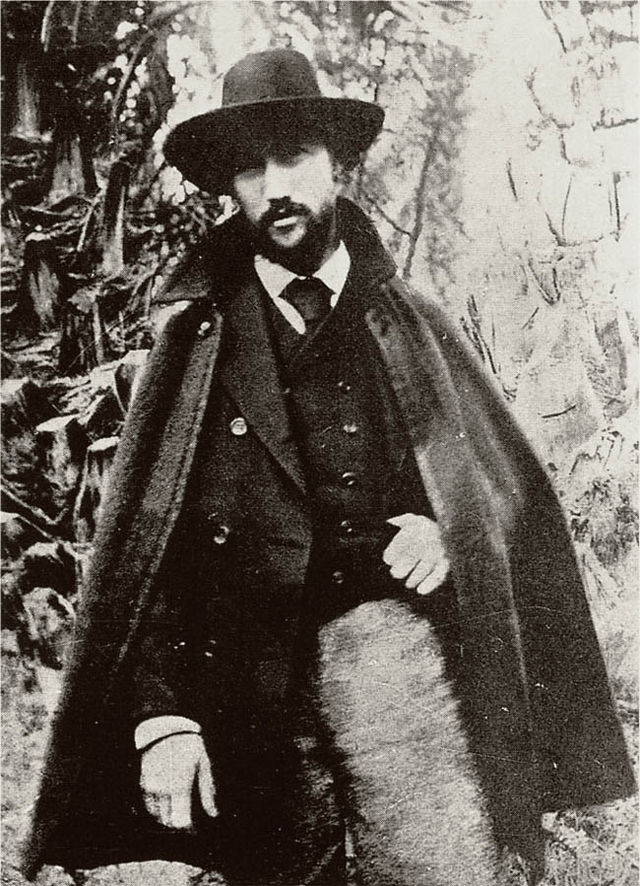
One doesn’t discover new lands without consenting to lose sight, for a very long time, of the shore.
— André Gide
André Paul Guillaume Gide (22 November 1869- 19 February 1951) was a French author and winner of the Nobel Prize in literature in 1947.
Quote from: Les faux-monnayeurs [The Counterfeiters] (1925)
The Art and Craft of Blogging
A collection of discussions on the environmental issues
“The fool doth think he is wise, but the wise man knows himself to be a fool.” “Love all, trust a few, do wrong to none.” “Love looks not with the eyes, but with the mind, And therefore is winged Cupid painted blind.”-William Shakespeare
...moments of unexpected clarity
Home of Lukas Kondraciuk Photography
Wellness, Support and Mindset
Thoughts on Creativity & Deeper Things
A Blog by Novella Carpenter
Ramblings of an Irish ecologist and gardener
Teaching the art of composition for photography.
Blog from SathyaSaiMemories ~ stories of love in action and the benefits of giving
There are 11,507 stories in Haddonfield; this is one of them.
Perennial gardening and more from the Green Mountains of Vermont
Whatever it will be...
Welcome to my little slice of the blogosphere

 Living, Learning and Letting Go
