To download the newsletter, click on the photo.
Enjoy!

To download the newsletter, click on the photo.
Enjoy!
Soon after I published yesterday’s post (Mystery Tool: Gimlet), I received a phone call from a neighbor… and she was crying.
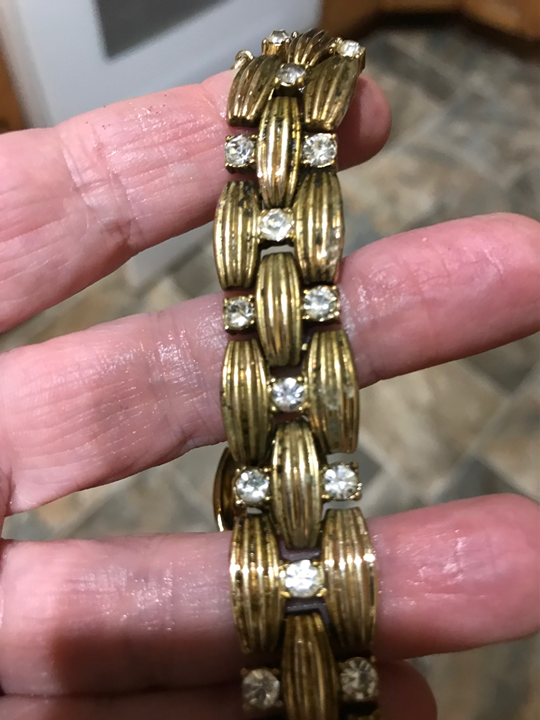
Though I’d been writing primarily about the gimlet, an antique tool, I had included photos of some of the other “trash” we’ve found during the forest restoration work. One of those photos was of a bracelet I had unearthed in Winter or Spring of 2018 when I was digging out blackberry roots.
At the time I found the bracelet, I believed it was costume jewelry, but as I continued to look at it I began to wonder. What if the band was made of gold and the jewels were real? I decided to take it to a jeweler. I was a little disappointed when, after looking at it through a microscope, the jeweler reported that it was “fun” jewelry.
Well, it turned out that the bracelet was valuable—just in a different way. When my neighbor read my post, she had seen the photo of the bracelet. Through her tears, she told me the bracelet had been her mother’s, and it had been stolen from my neighbor’s house in 2014! She said she still had a segment of the necklace and an earring that went with it. I, of course, returned the bracelet.
I get chills even now as I think of my neighbor’s deep emotion, the remote chance that I had found this particular item in one shovelful of dirt in an acre of land; that it belonged to one of the two neighbors who I know reads my blog; and to make it even more remarkable, she has helped during some of the restoration work parties! So much Grace.
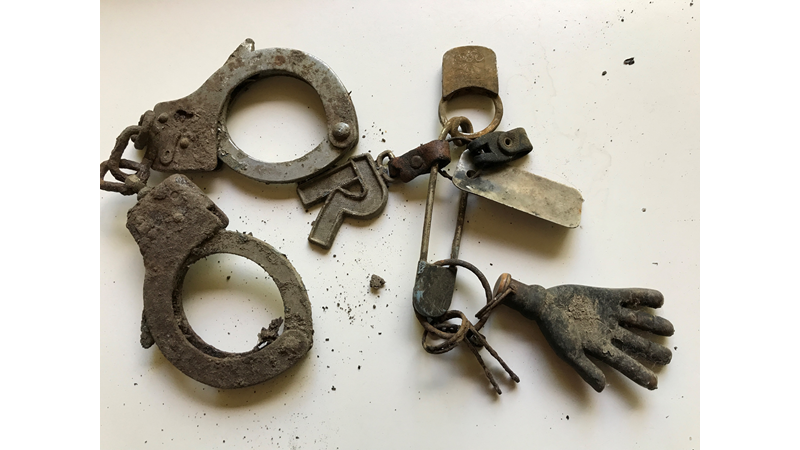
During the years we’ve been working in the Greenbelt, we’ve found some interesting “trash”. These have been my favorite finds:



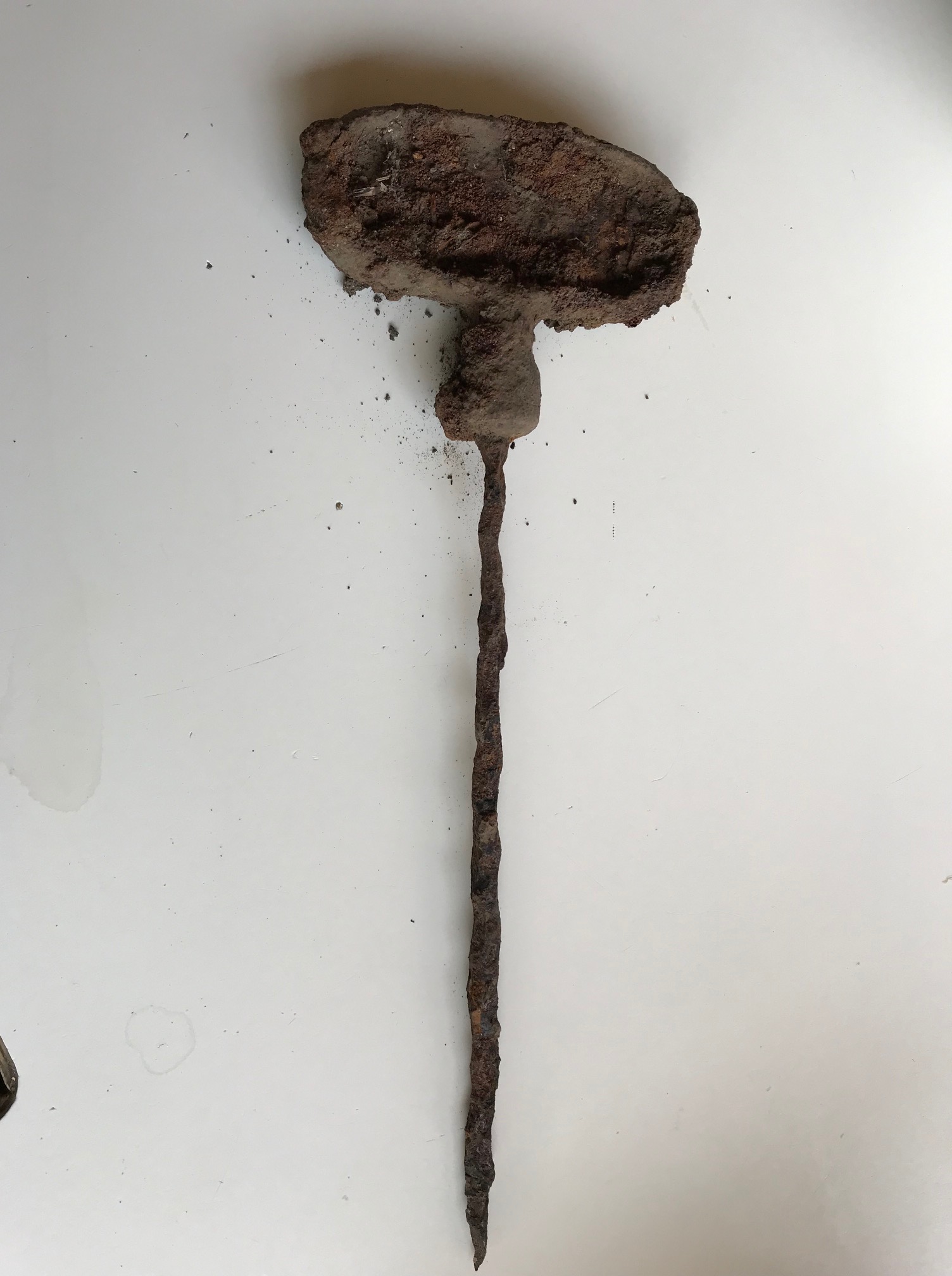
A few weeks ago, one of our team leaders found an interesting item when he was working on the site. I sent a photo if it to my neighbors and asked if anyone knew what it was. Several people thought it was a woodworking tool.
Numerous times over the past year, a woodworking school that is part of Seattle Central Community College has caught my eye. I noticed it enough times that I was beginning to wonder if I would be taking a woodworking course in the future.
Years before, I had learned that in nature where there is a poisonous plant, the antidote to the poison can often be found nearby. I also learned that we need to live in awareness because the answers to problems are all around us. When I was told that this might be a woodworking tool, my seeing the woodworking school seemed very synchronistic.
I had no doubt that my best chance of finding out what the tool was to go to the school. When I arrived there, the receptionist took me to the classroom of one of the older teachers.
The instructor thought it was an awl but he wanted to put it in a rust remover overnight. That was fine with me. The next morning, I returned to the school. The teacher had hoped he would be able to remove enough rust to be able to see some writing on it. The tool was still too rusted to be able to accomplish that goal.

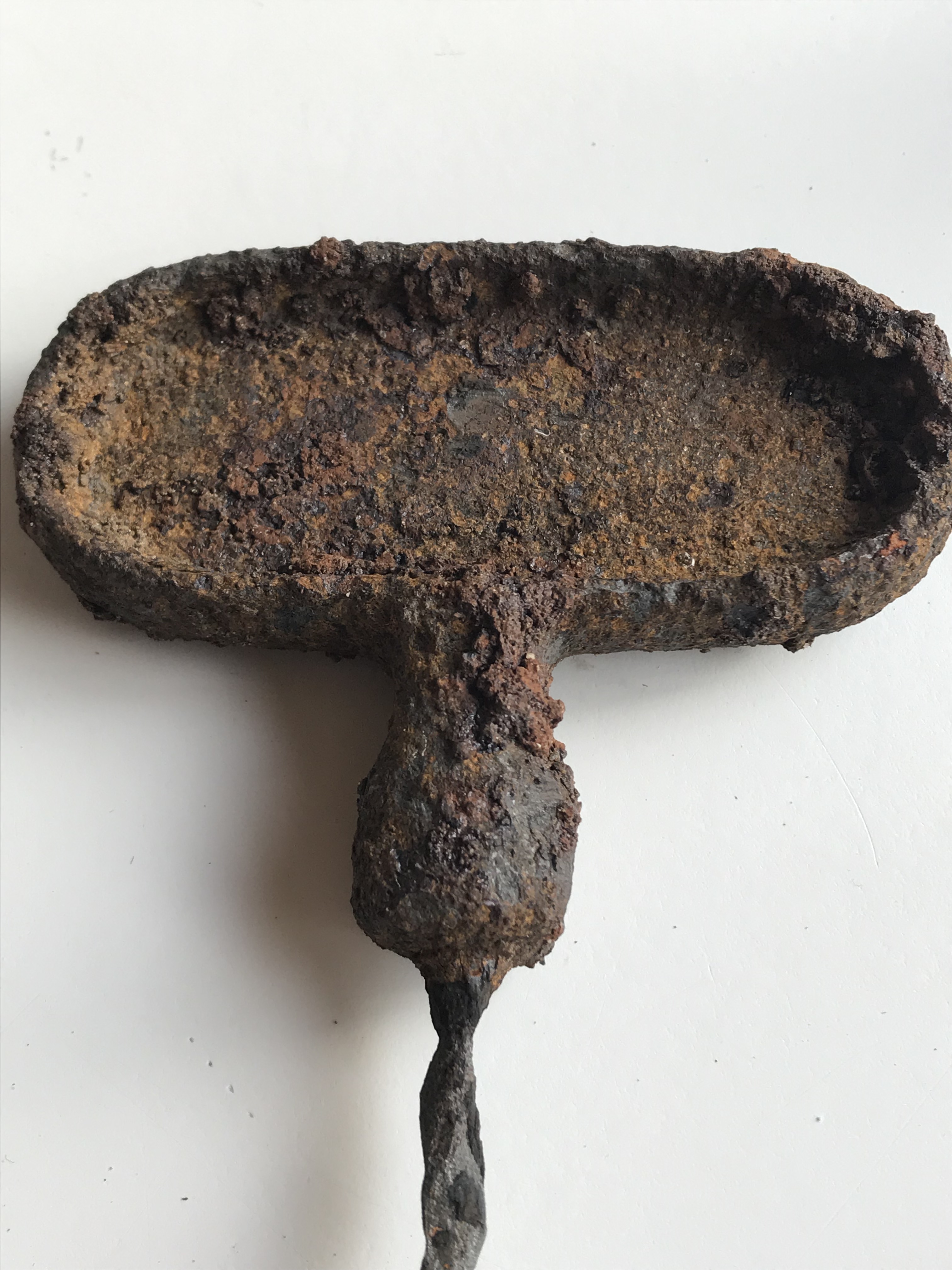
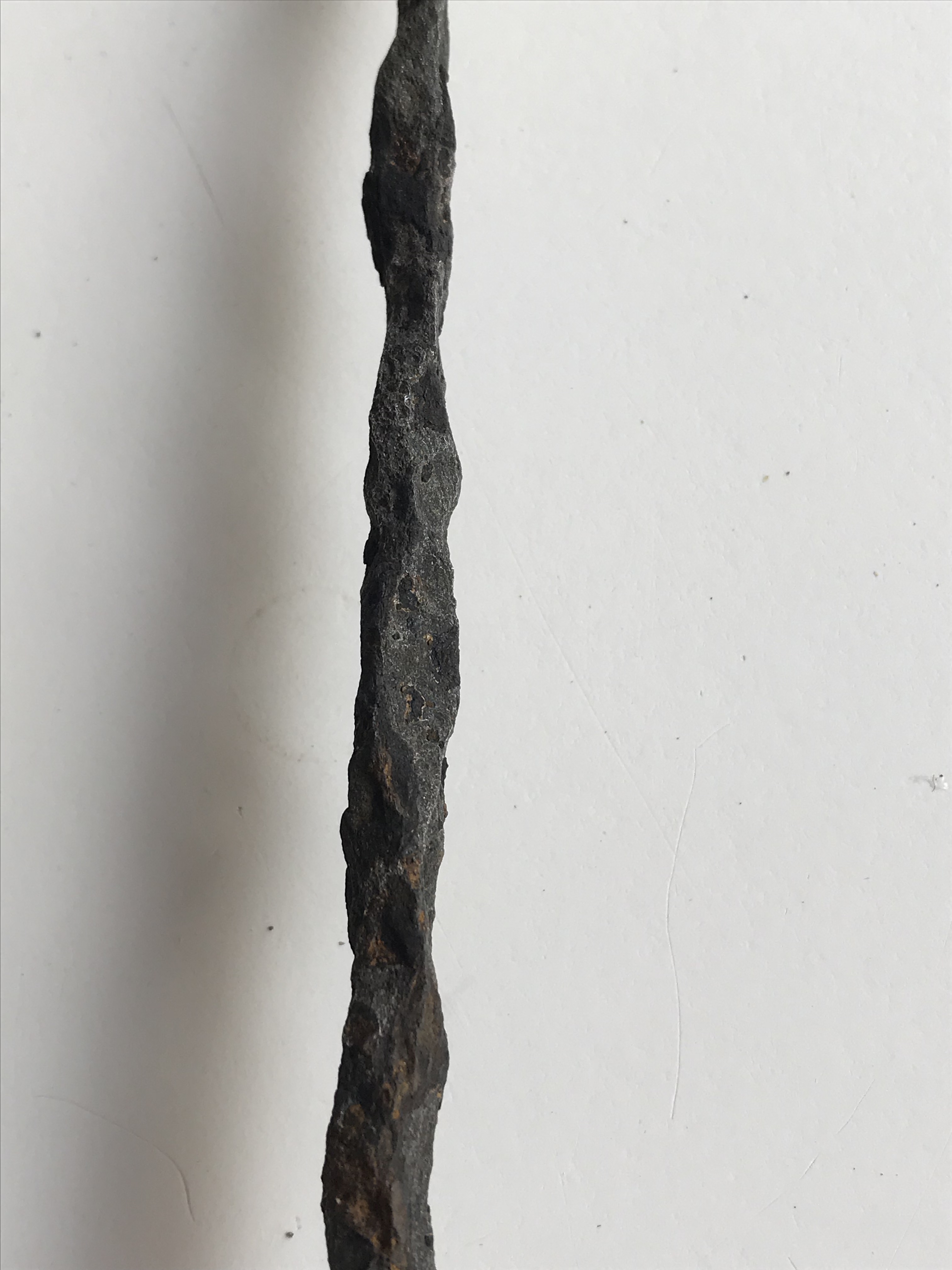
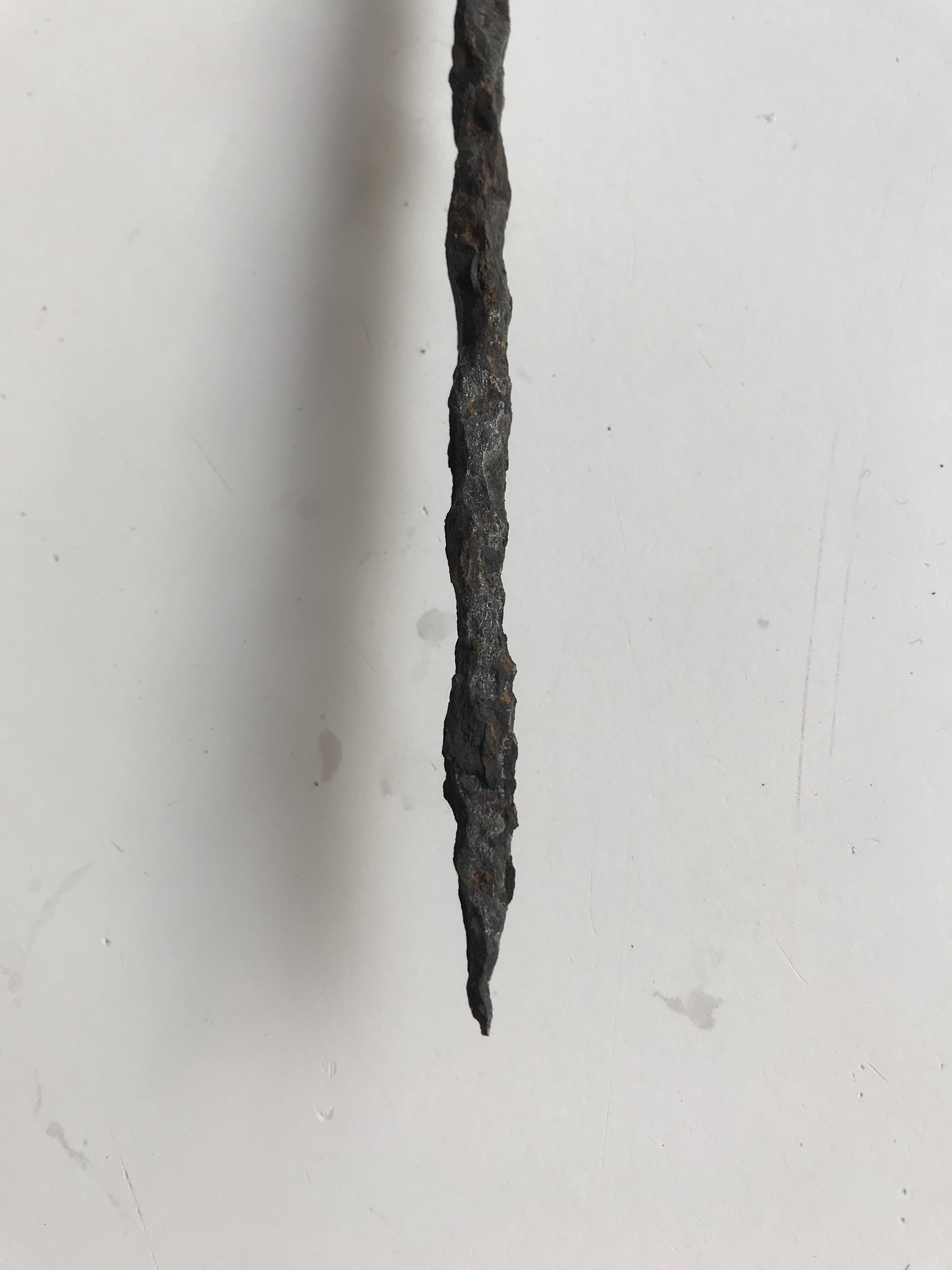
After removing some of the rust, the instructor told me the tool wasn’t an awl; it was a gimlet. He had originally thought it was made in the 1920’s but after realizing it was a gimlet, he said it was much older than that. So it must have been made in the 1800’s!
Wikipedia says:
A gimlet is a hand tool for drilling small holes, mainly in wood, without splitting. It was defined in Joseph Gwilt‘s Architecture (1859) as “a piece of steel of a semi-cylindrical form, hollow on one side, having a cross handle at one end and a worm or screw at the other”.[1]
A gimlet is always a small tool. A similar tool of larger size is called an auger. The cutting action of the gimlet is slightly different from an auger, however, as the end of the screw, and so the initial hole it makes, is smaller; the cutting edges pare away the wood which is moved out by the spiral sides, falling out through the entry hole. This also pulls the gimlet farther into the hole as it is turned; unlike a bradawl, pressure is not required once the tip has been drawn in.
The name “gimlet” comes from the Old French guinbelet, guimbelet, later guibelet, probably a diminutive of the Anglo-French “wimble”, a variation of “guimble”, from the Middle Low German wiemel, cf. the Scandinavianwammie, to bore or twist. Modern French uses the term vrille, also the French for a tendril.[2]
Once the tool had been identified, I wondered what I would do with it. I often keep interesting trash but this item felt dangerous; it reminded me of an ice pick. I checked etsy.com and ebay.com and found that they sold gimlets for $6 to $30. And those were antique woodworking tools in good condition.
Green Seattle Partnership and the Seattle Parks Department don’t have museums for interesting trash so I decided to give it to another Forest Steward. She is part of a project that will eventually be making a sculpture of tools they have found in the Greenbelt.
I’m happy that the gimlet will have a new home; one where it will be appreciated.
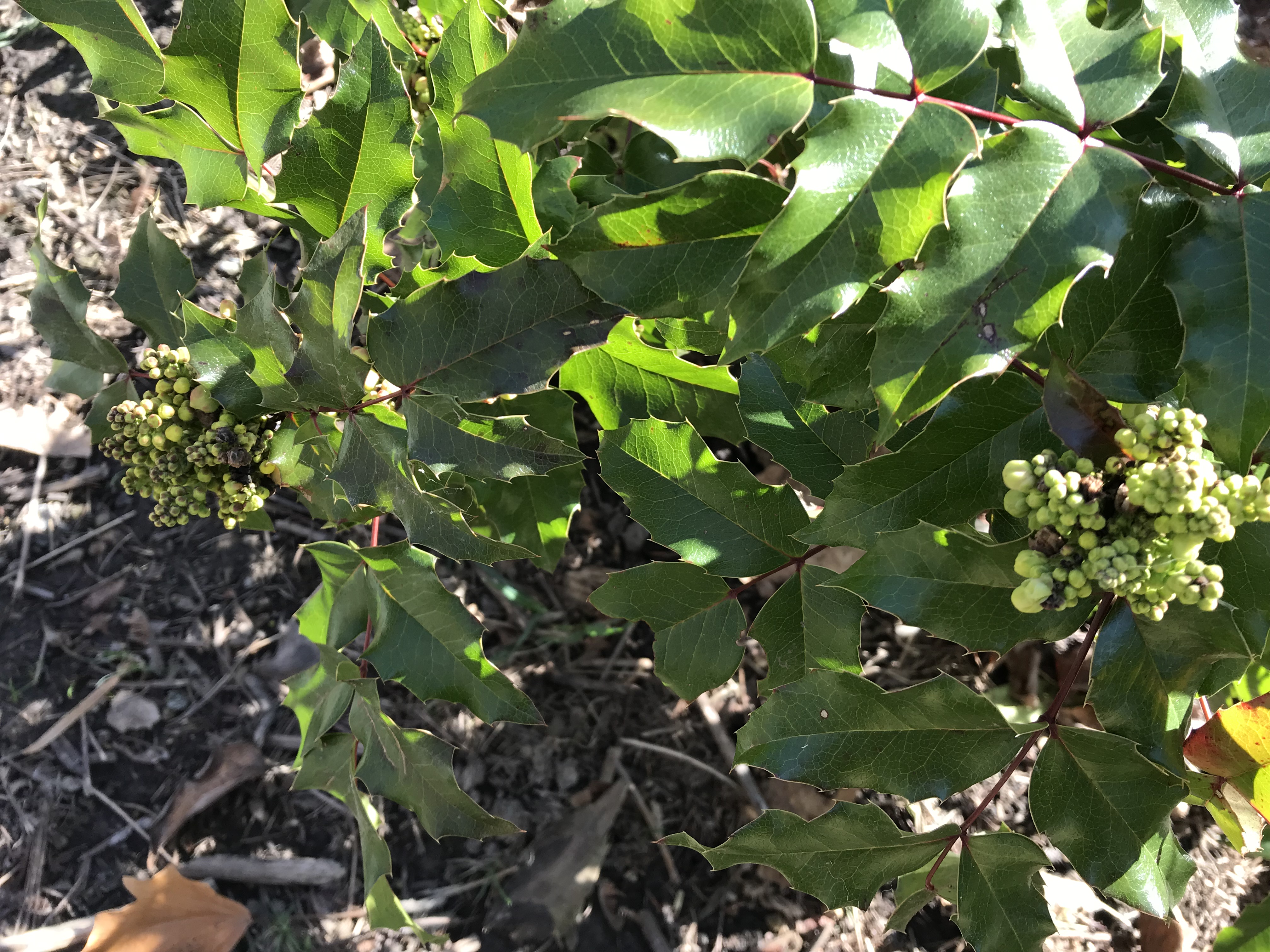
We have so many Oregon Grape shrubs on the restoration site. Some of them north of the Hanford stairs were planted by Earth Corps 10-15 years ago. Some of the ones south of the stairs were planted by a neighborhood group 6-10 years ago. All of shrubs had been crushed by blackberry vines but thrived once they were freed from those invasive plants. We have also planted new Oregon Grape shrubs throughout the site.

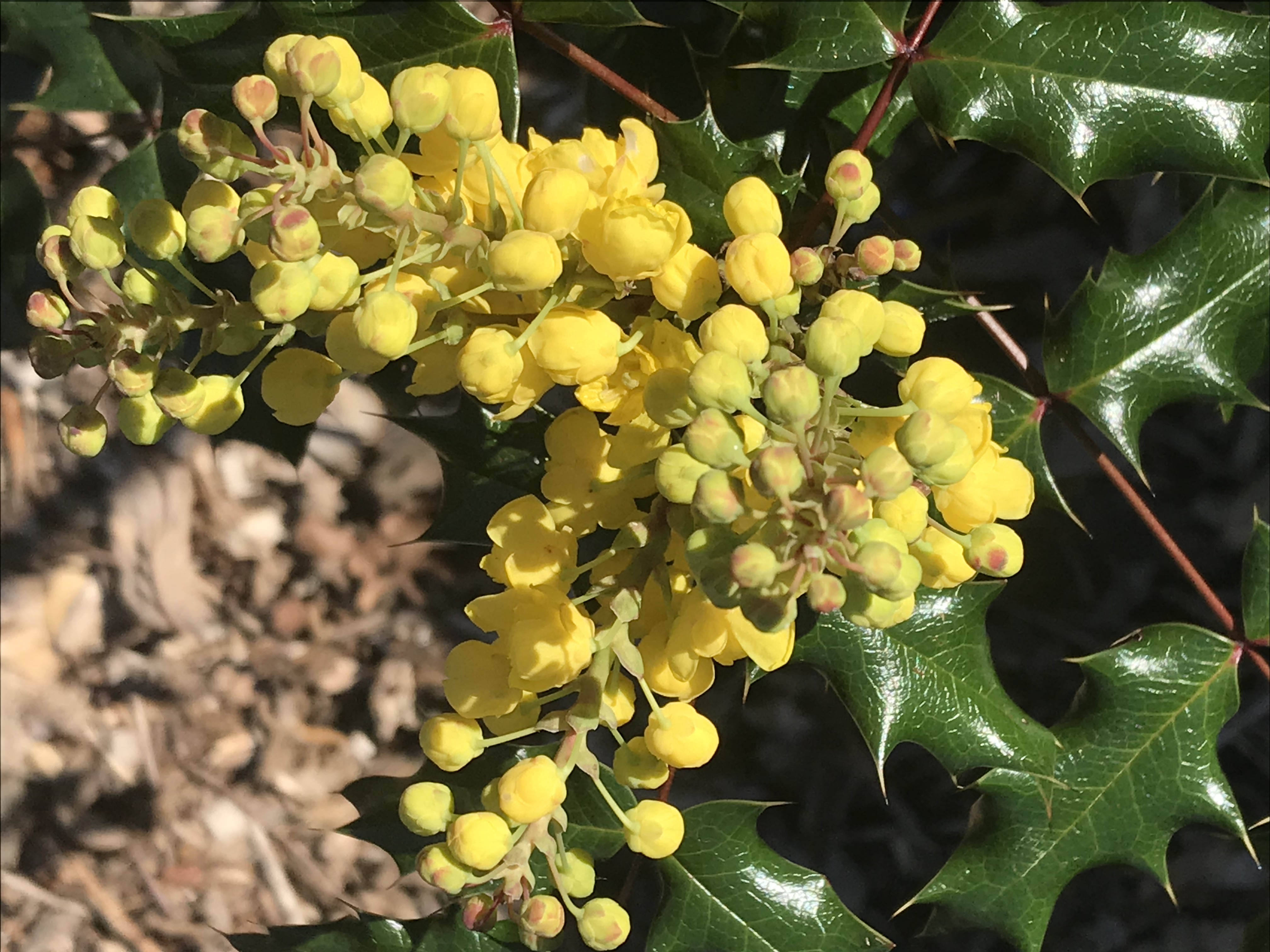
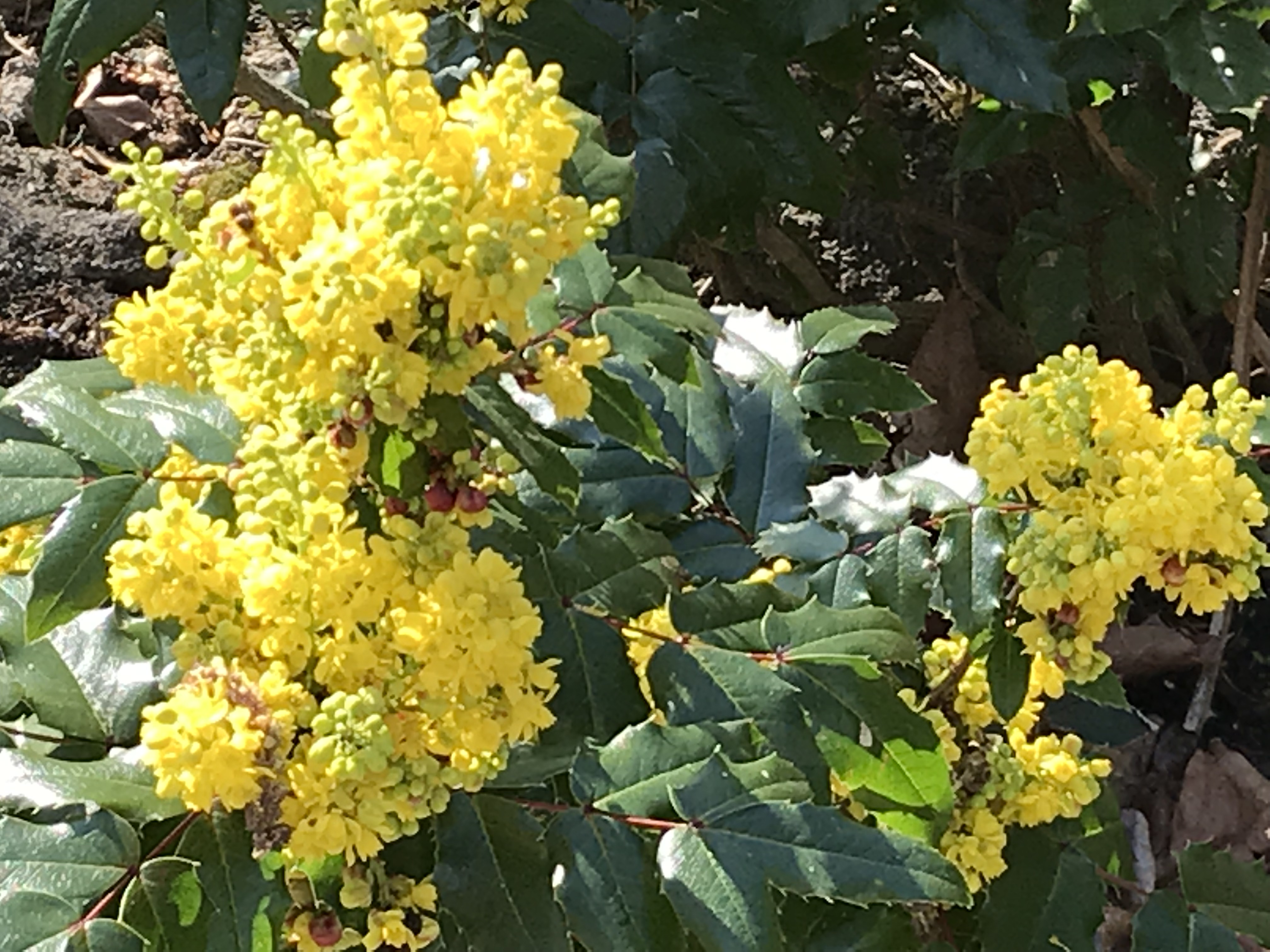
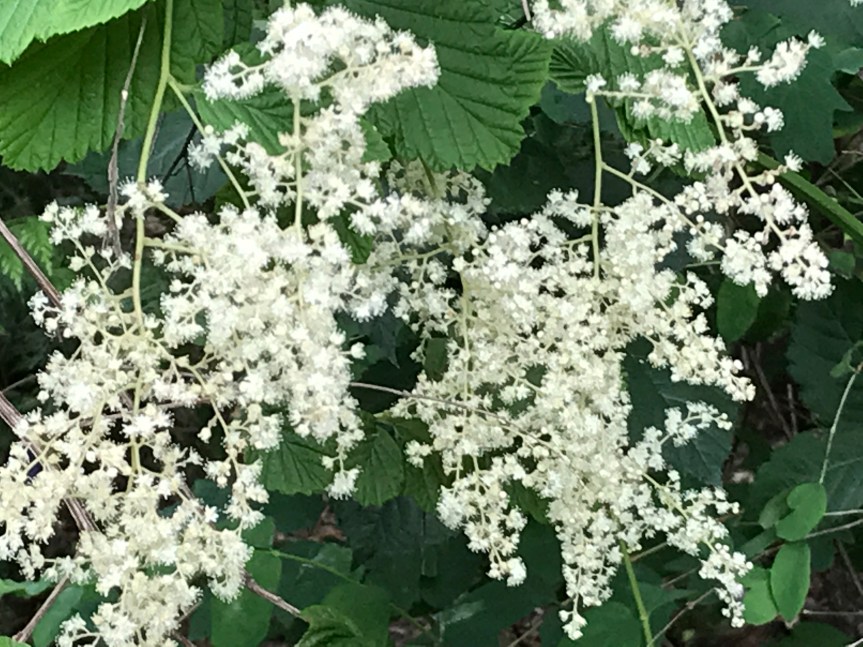
In the days after our January 21 forest restoration work party, some peculiar events occurred. I wrote about them in Mystery in the Greenbelt.
I don’t know where the mystery shovel or the mystery plant came from. The only clue was the blue and white checkered flagging tape that was hanging from one of the branches of the plant. We had put that tape on all of the trees, shrubs and ground covers we planted during the 2017-18 planting season. But I still haven’t found a hole or a missing plant.
At the time, I decided that since there was no rationale explanation for the mystery, I would accept a non-rational one. I concluded that the plant was sitting on the side of The Rack Zone because it was “supposed” to be the first plant we planted in that area.
[The Rack Zone is located in the foundation of a house that we believe burned down in the 50’s. We have put all the blackberry, ivy and bindweed vines plus all of the weed we have removed since early in 2017 on drying racks in that area. During the January 21 work party, we took apart all but three of the drying racks and spread the contents over the concrete foundation. Our plan has been to eventually use that space as a planting area. The first photo below shows The Rack Zone after we had spread most of the dried debris on January 21. We have continued to add dried debris to that area since then. The second photo shows one of those work parties.]

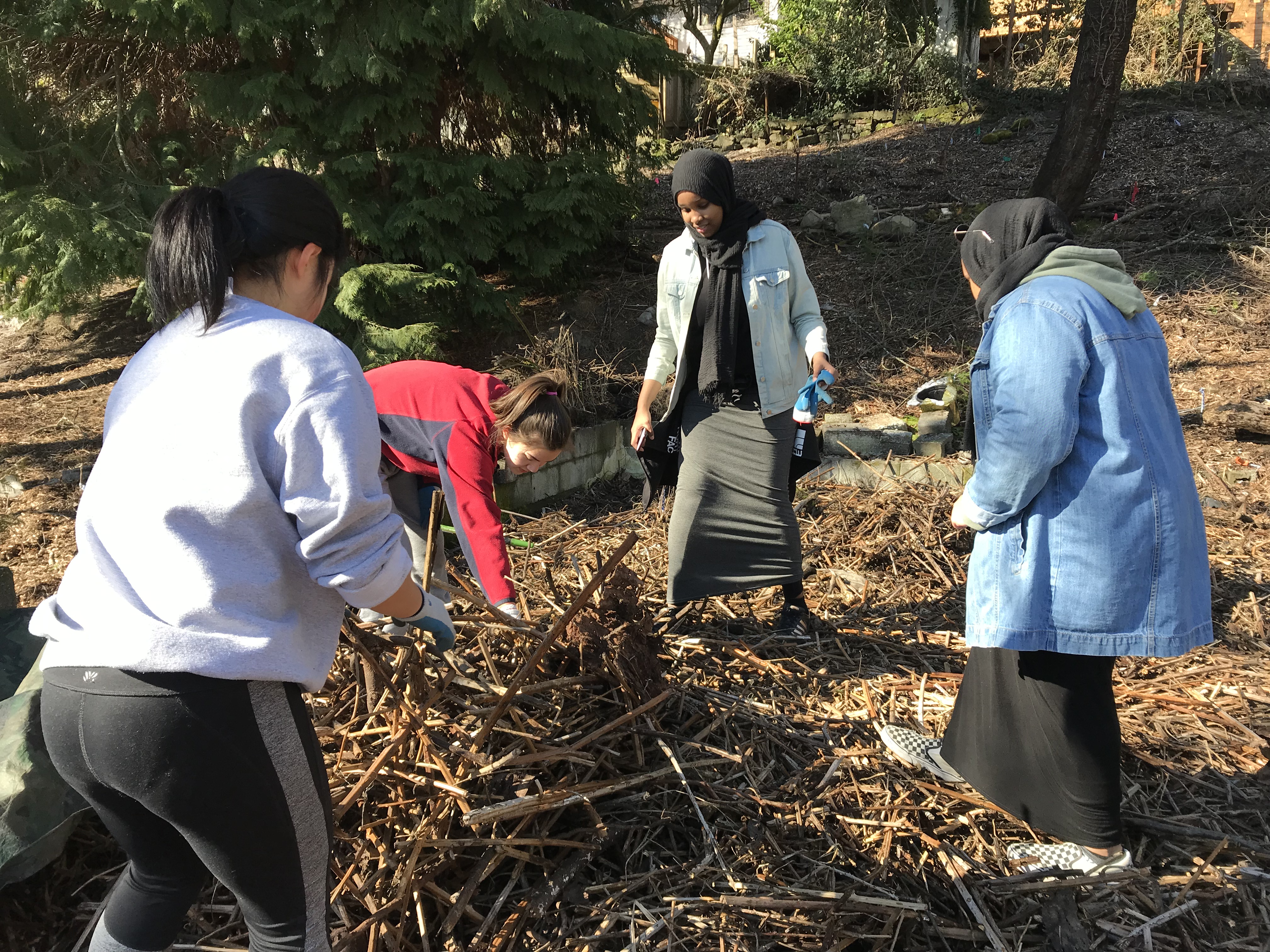
So I planted the mystery shrub in The Rack Zone. I didn’t know what kind of plant it was and I didn’t know if it was alive.

When most of the plants on the site began to bud this year and that one didn’t, I thought it was probably dead. Then on March 18th some tiny buds appeared!
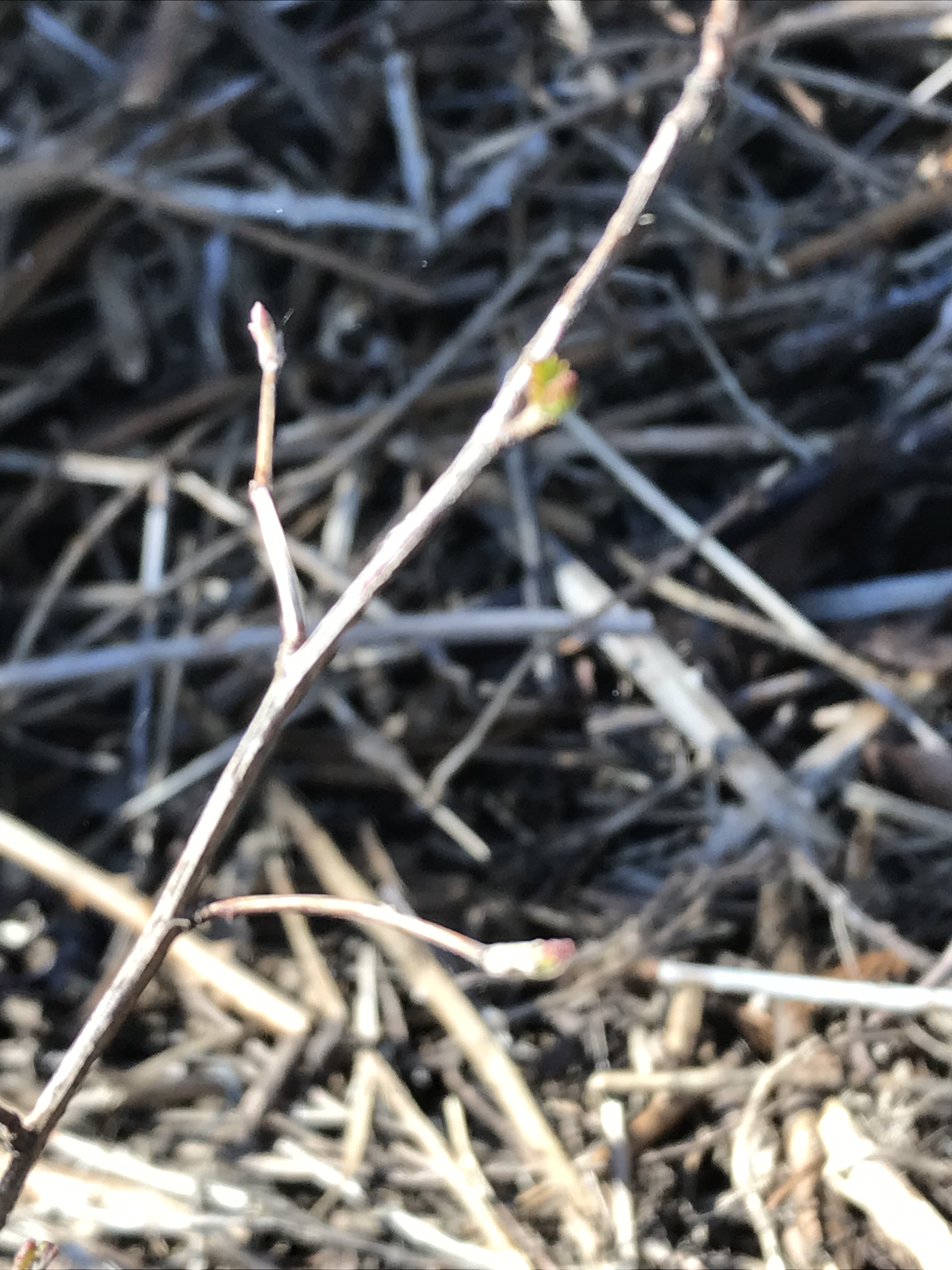
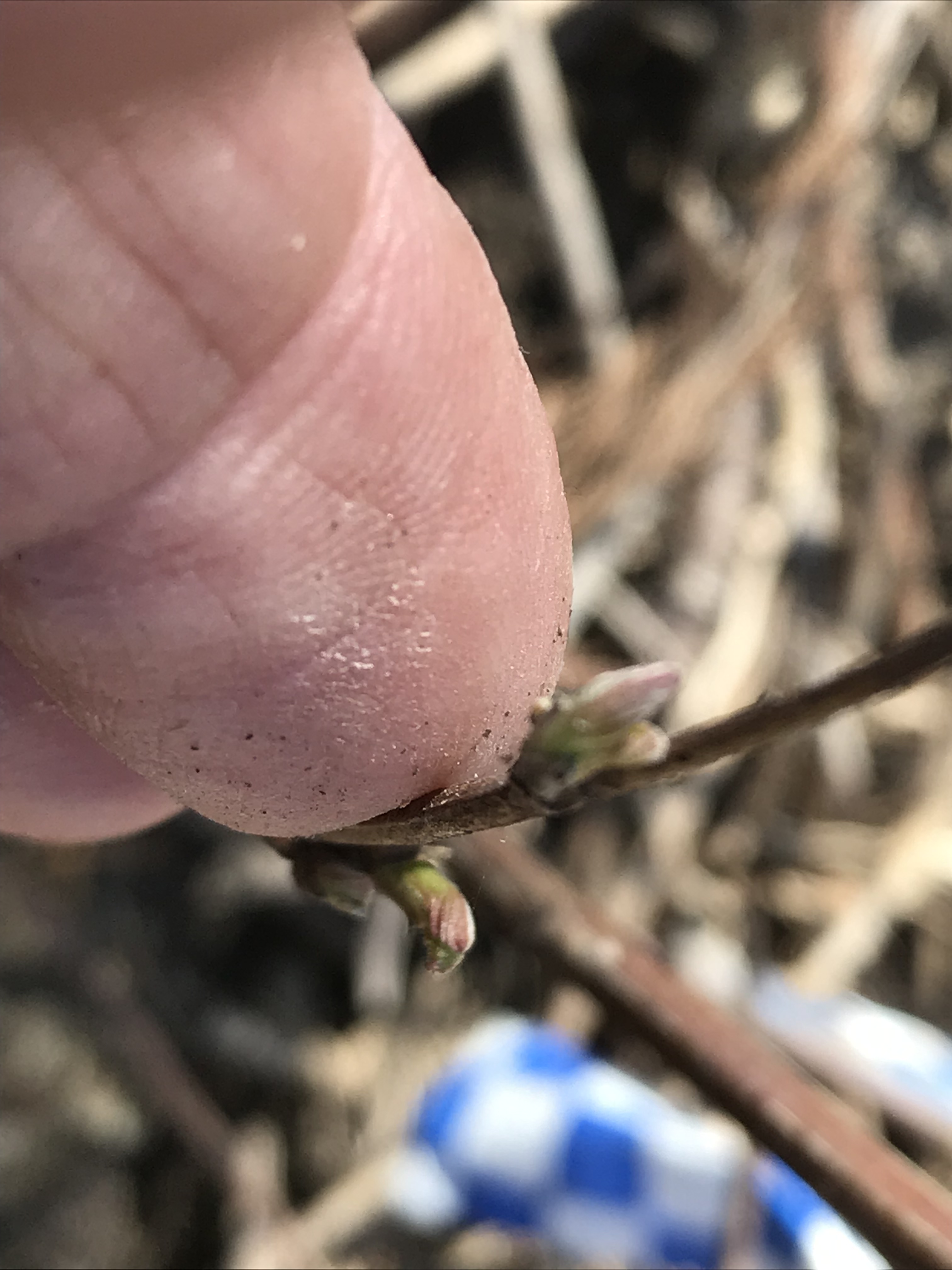
When I looked at the shrub again on March 21, there were leaves.
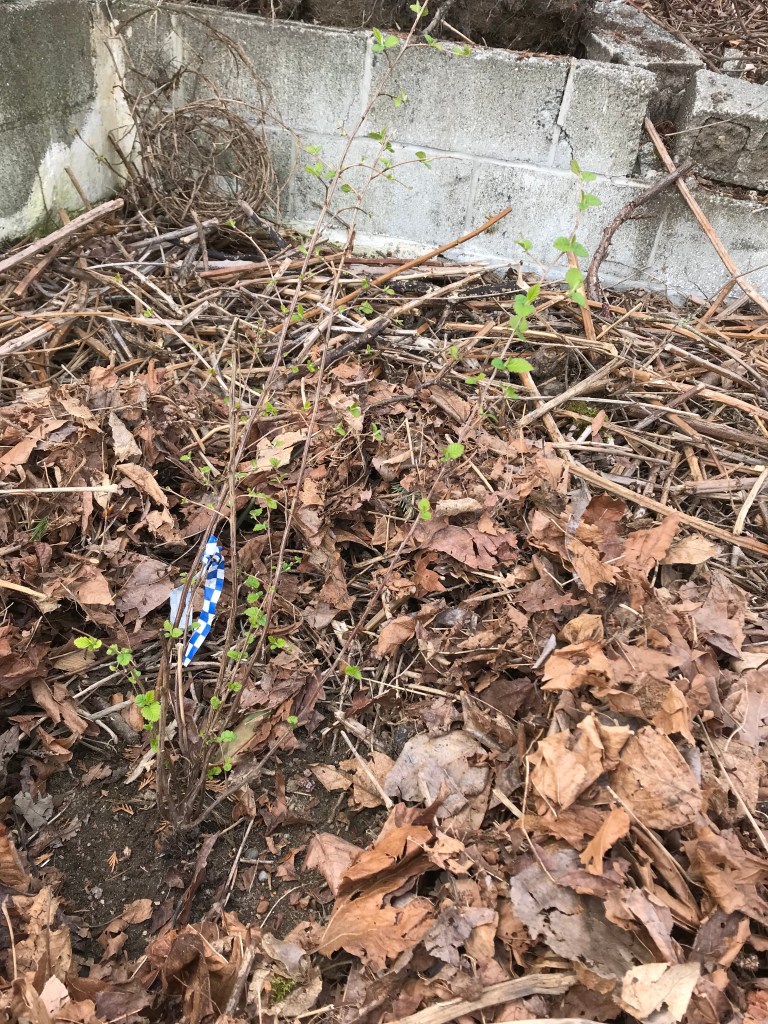
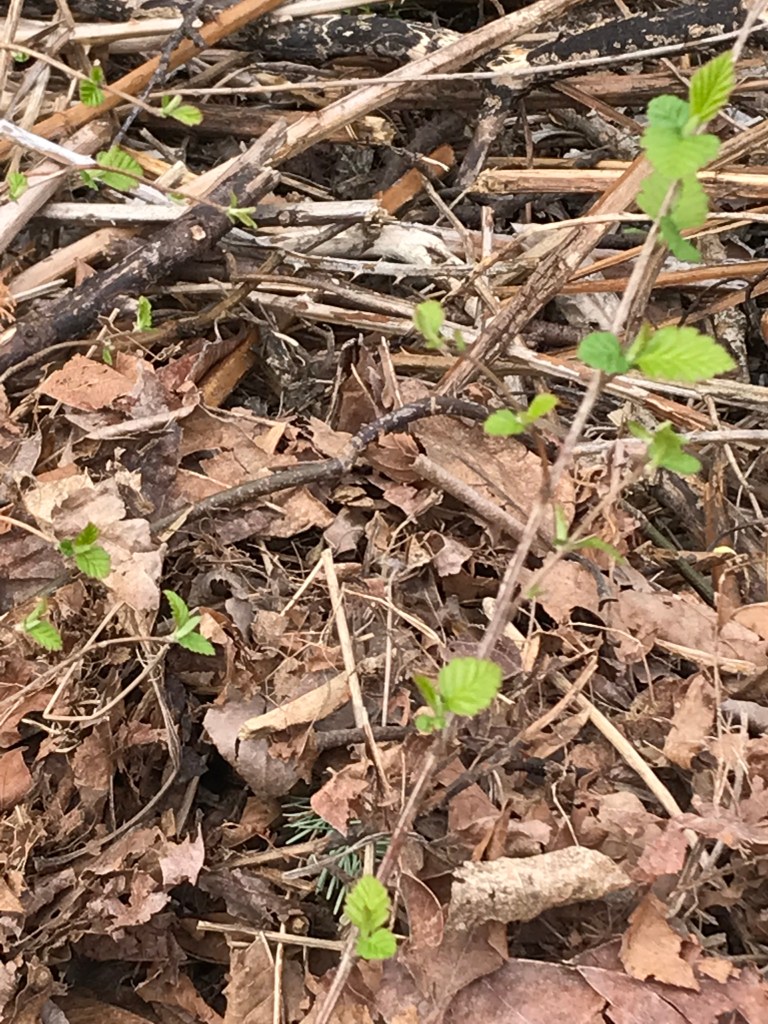
It was beginning to look like the shrub was an Oceanspray plant. In the days that followed, leaves emerged from all over the plant.
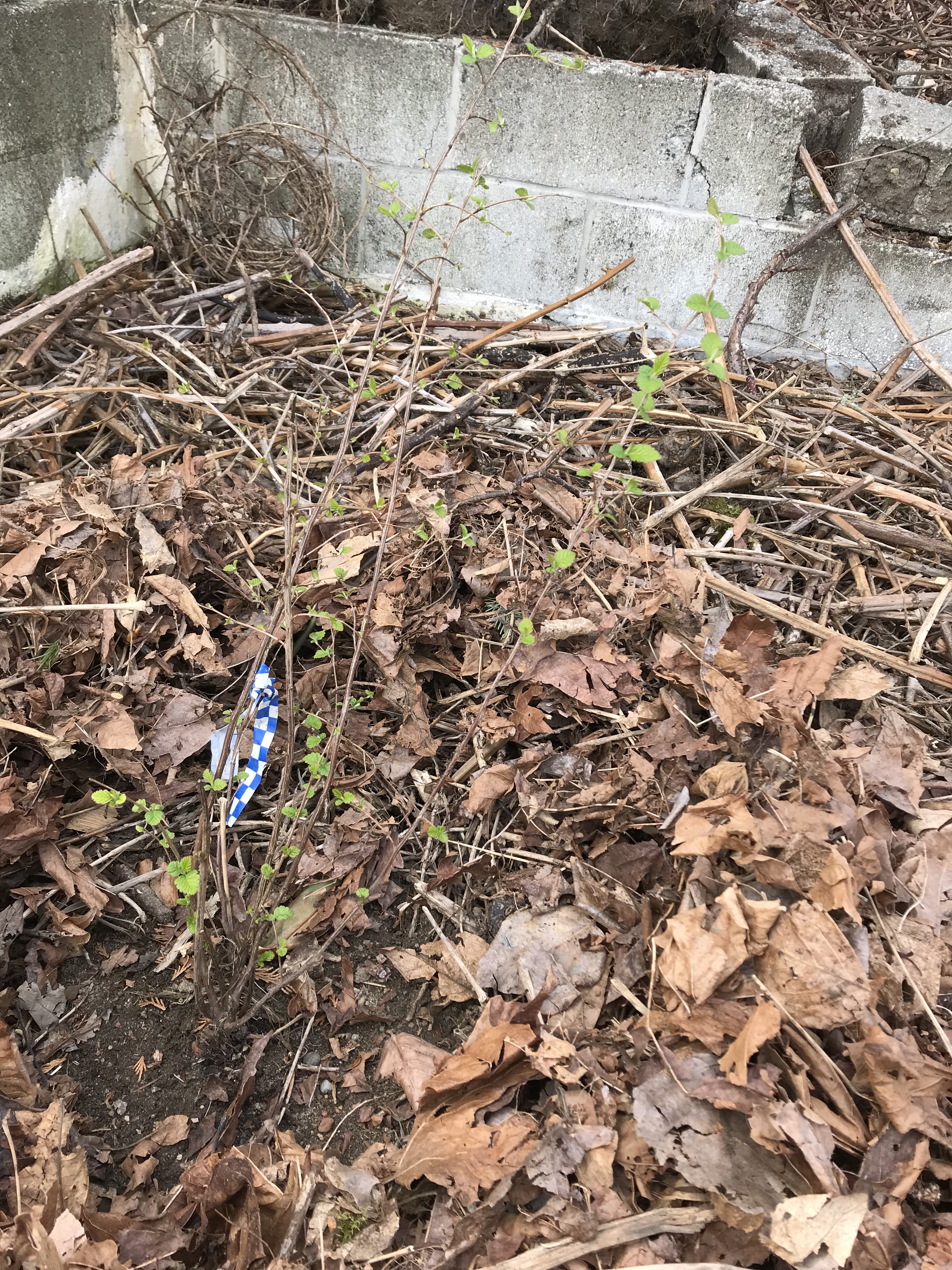
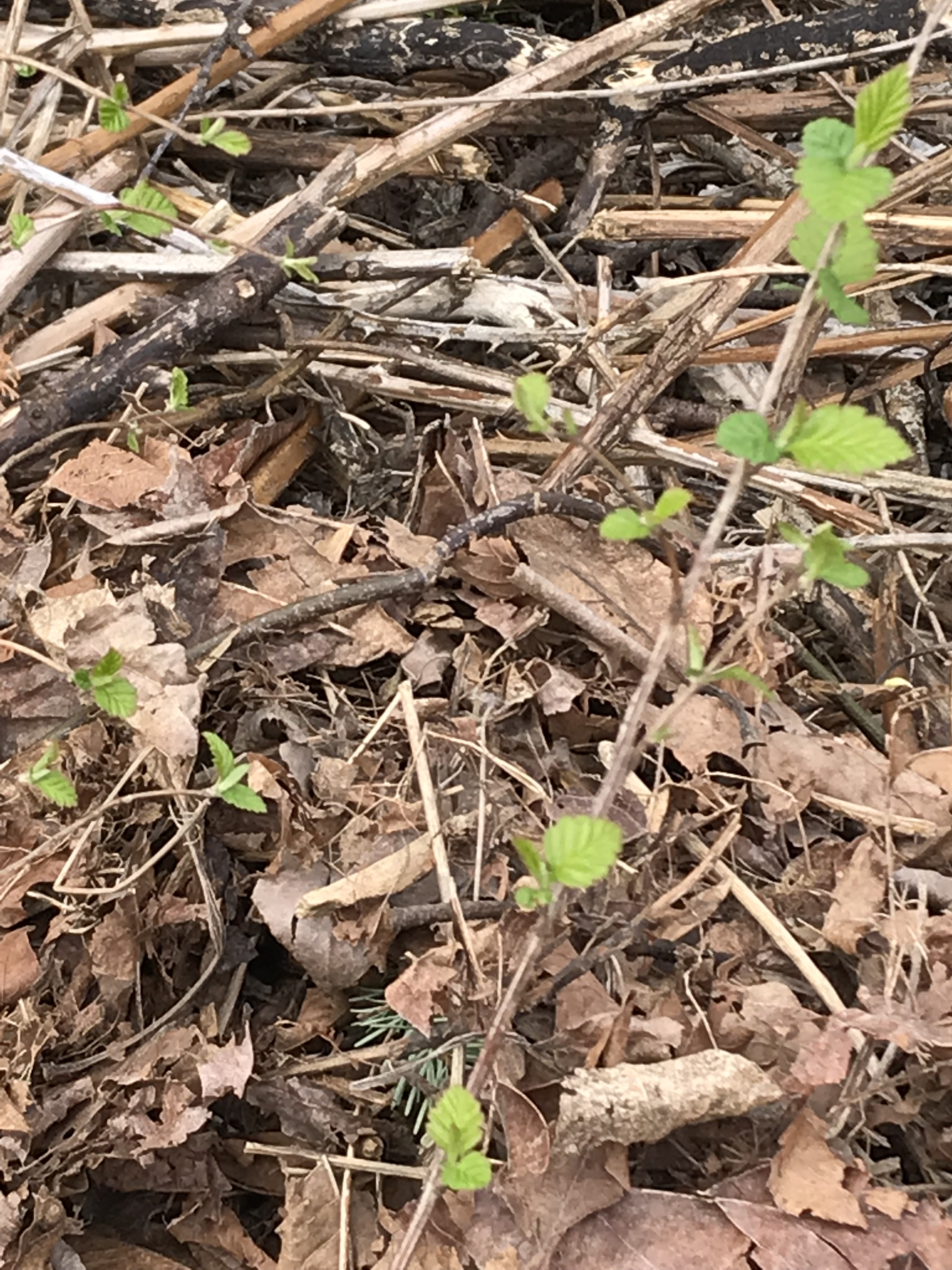
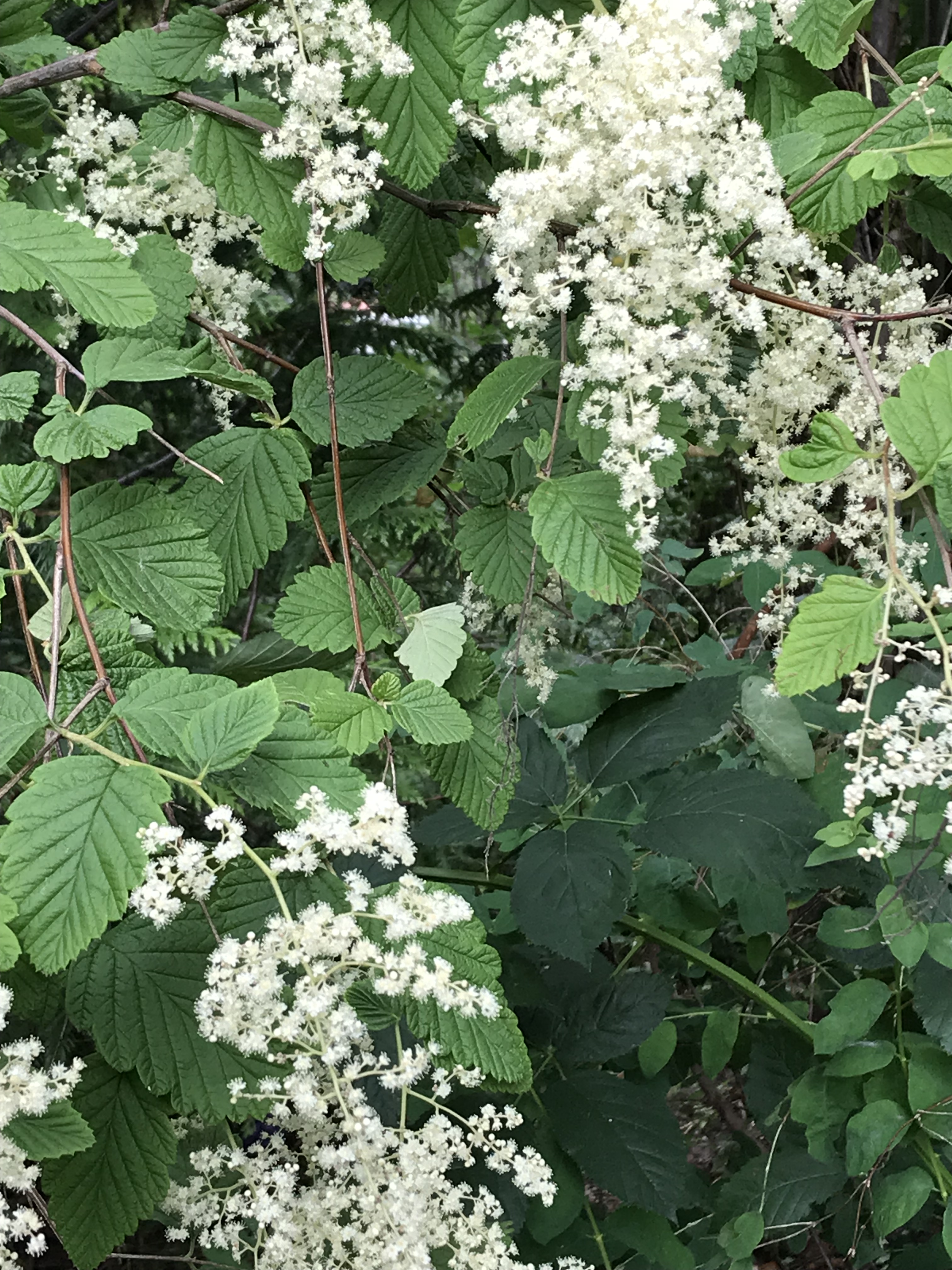
We now have a plant in The Rack Zone and it IS Oceanspray. I am eager to discover how it reacts to being in that environment. I hope one day it looks like this Oceanspray shrub I saw last summer.
I spend so much time working in the Greenbelt that I often don’t notice what is going on in my own yard.
Two days ago, I realized my camellia shrub had started blooming, and the flowers were beautiful.
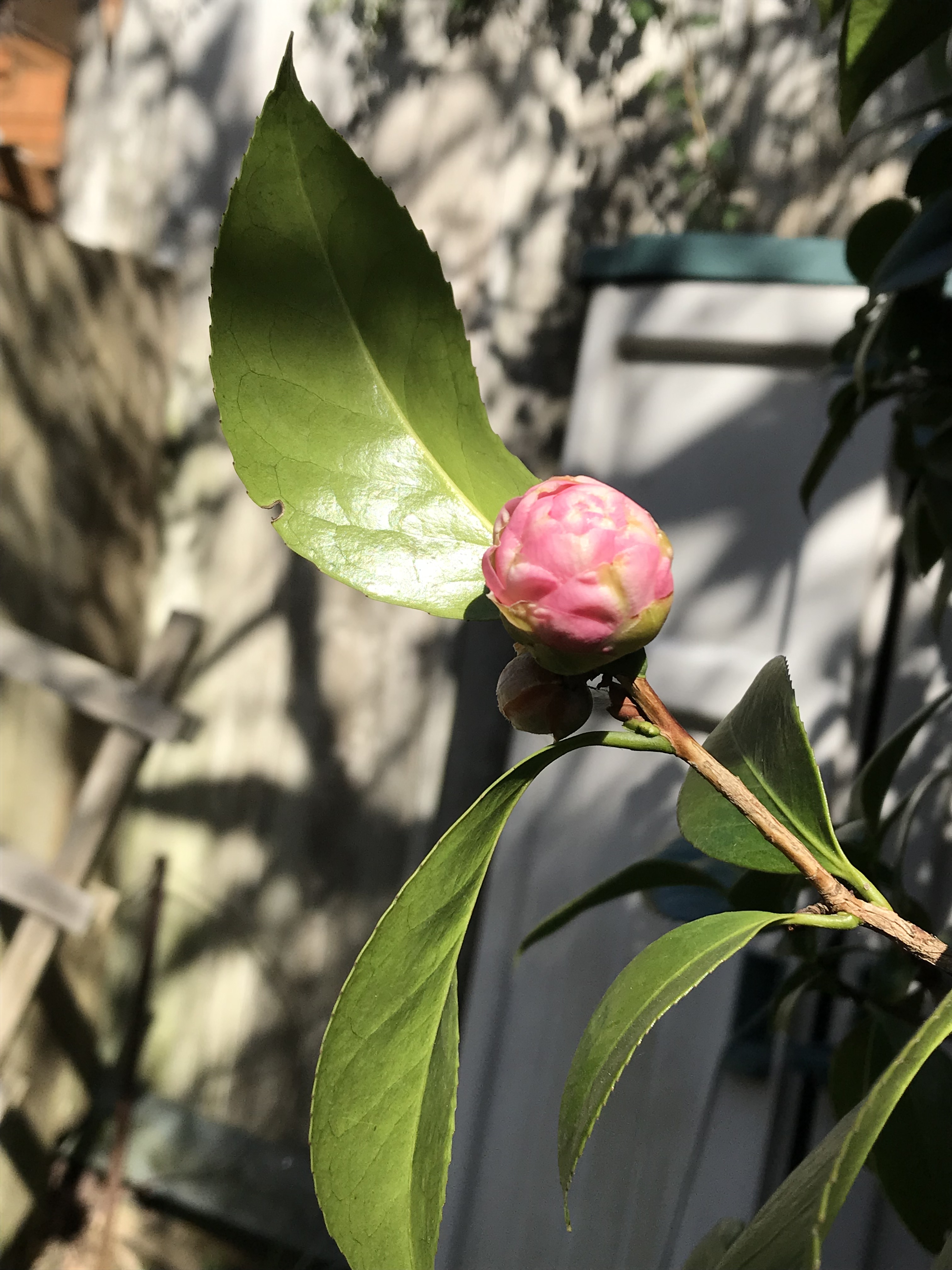


When I knelt down to take a photo of a bloom towards the bottom of the bush…

… I saw that there was something partially buried in the ground. I pulled it out.

Where did the shoe come from and when? It certainly didn’t come from my house. I looked around and noticed that the bottom part of my neighbor’s rotten garage was in front of me.

An animal must have pulled the shoe from there at some point. Finding something so unusual in my yard felt like an added bonus. I now had a mini adventure to report on, in addition to sharing the beautiful flowers.
When we received the new plants for our forest restoration project towards the end of October, the Pearly Everlasting shrubs looked like this:

And here they are in their new home:

In the last post I wrote about them, they were beginning to emerge from the ground. I was surprised as I had no idea this was how they would grow.
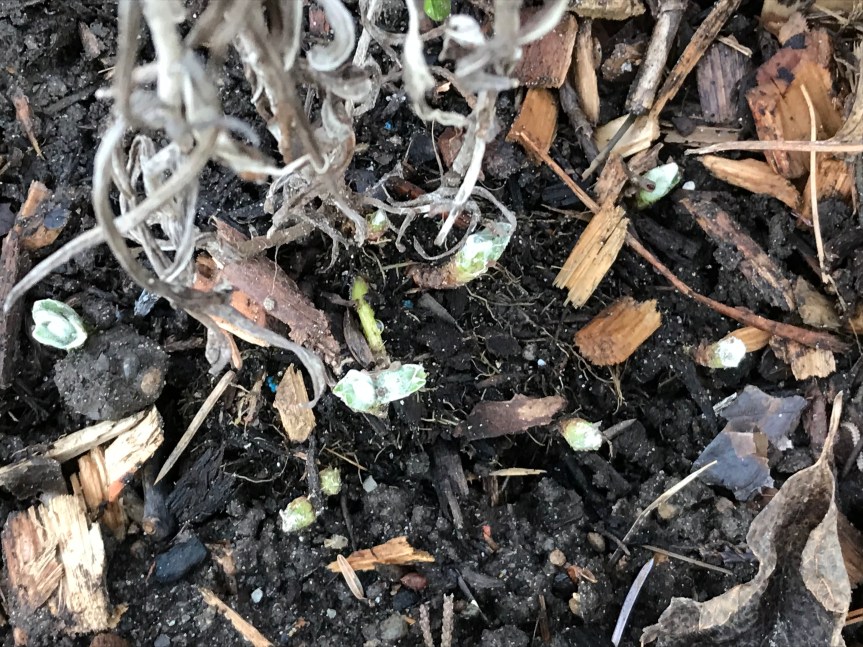
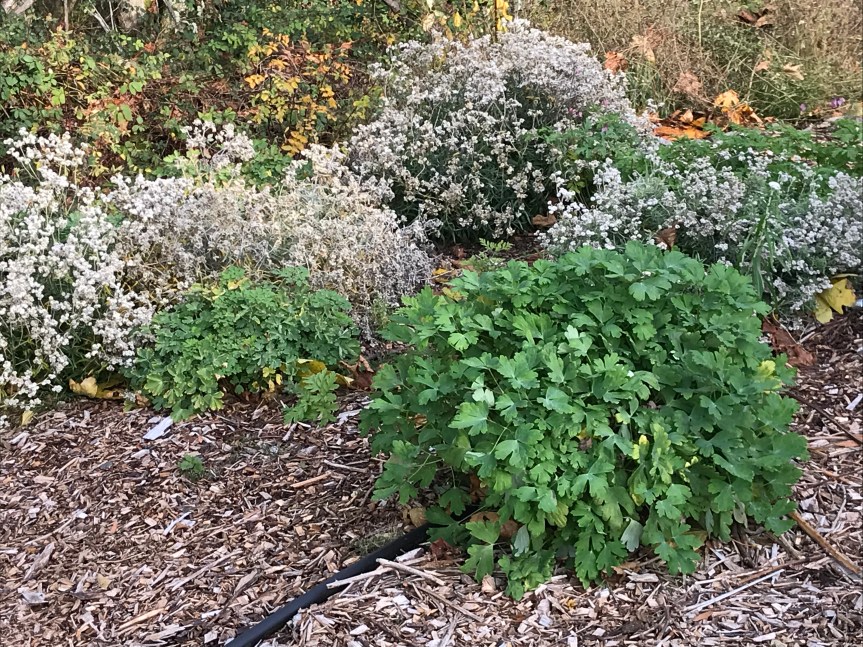
And now they look like this!

I look forward to seeing how they evolve from this stage to the way they looked when I first saw the shrub during a November 2017 workshop.
Some of the native shrubs we were given to plant in the Greenbelt this past November were already dormant. Some were simply twigs that look dead. Some of the twigs were even broken. I didn’t have much hope for those, but when I walked through the restoration site yesterday I discovered that life was emerging even from the twigs that looked least likely to survive!
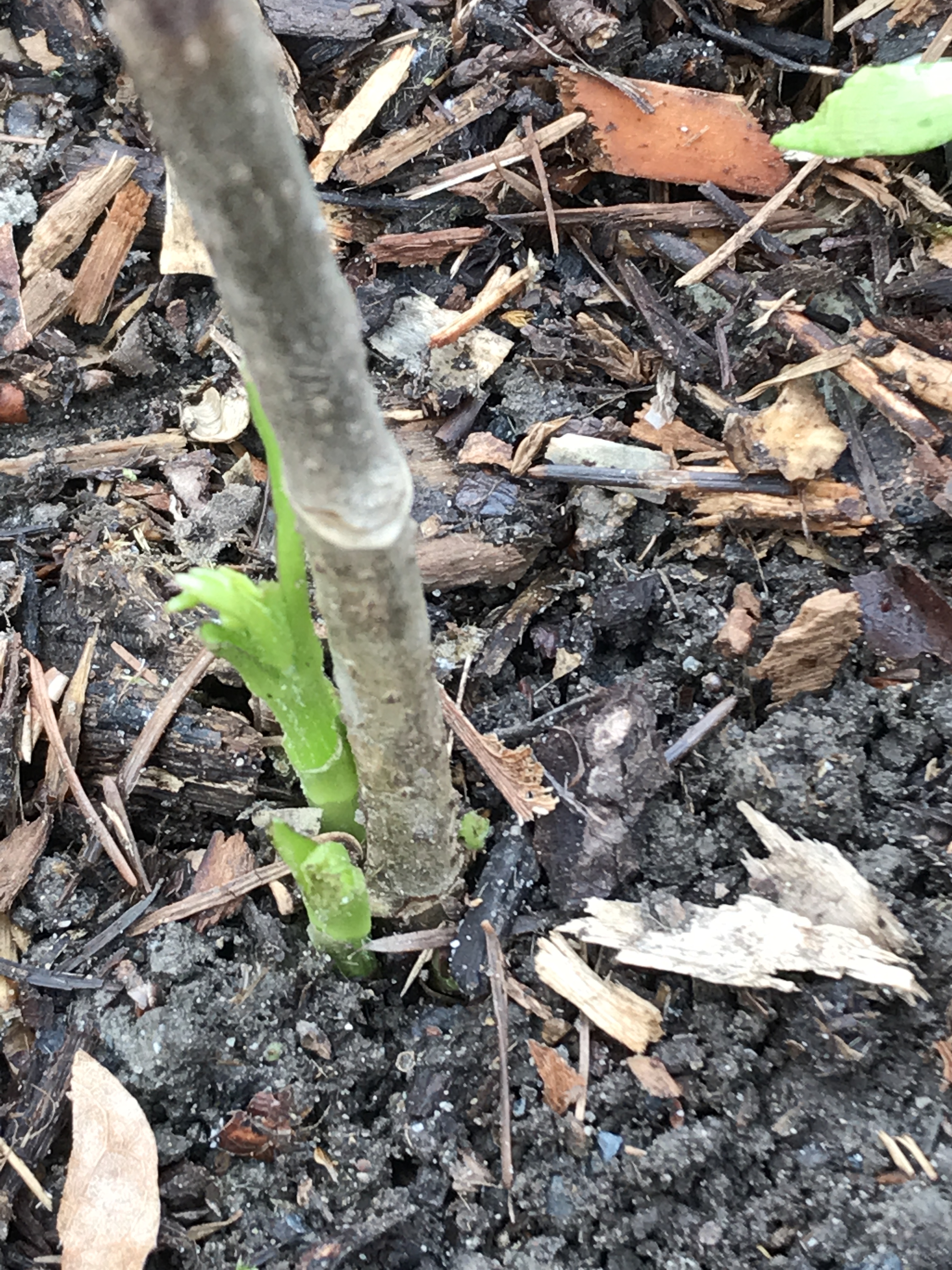
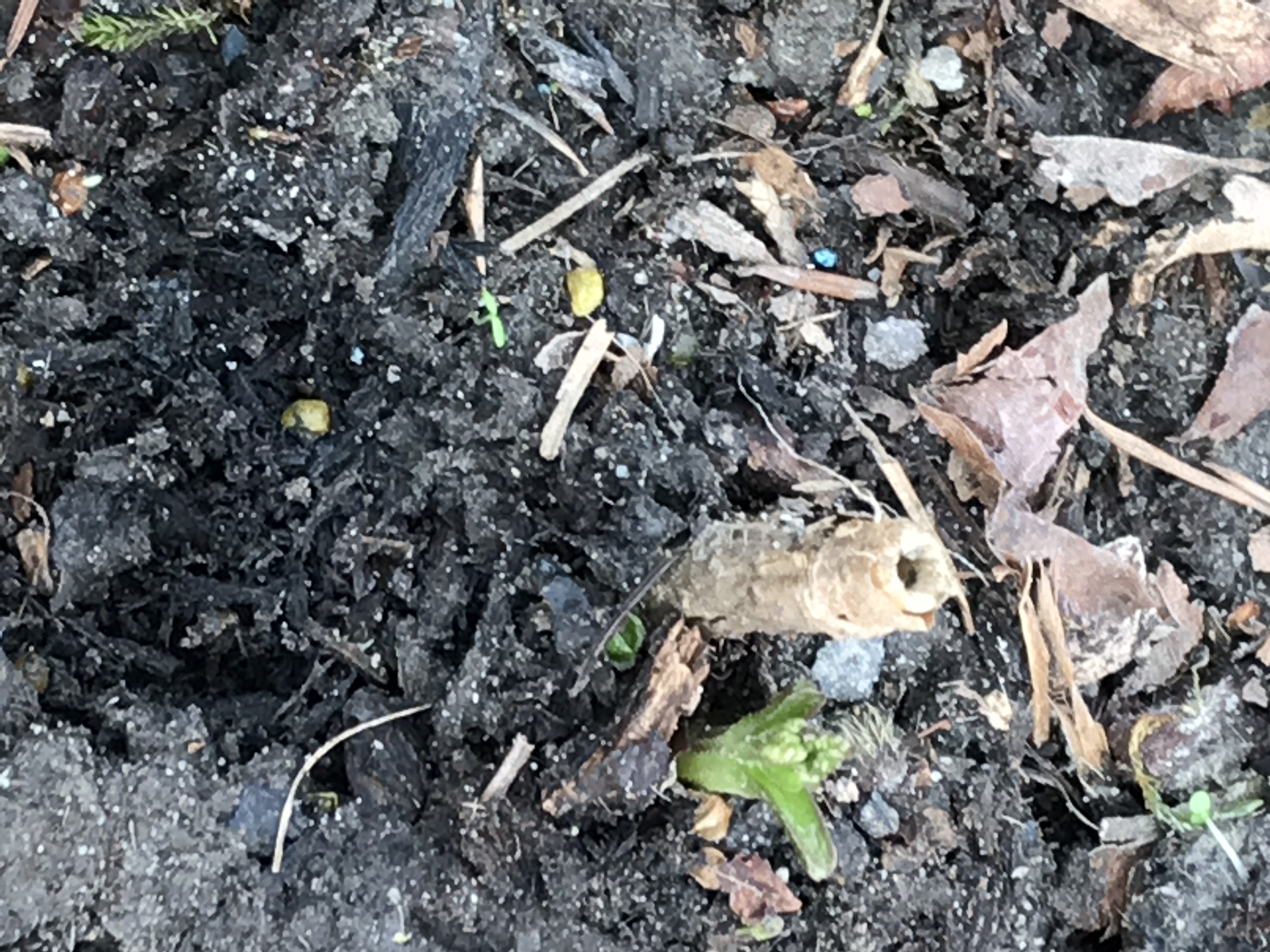
Life is good. Life is amazing.

Amma teaches us to be like a bird perched on a dry twig, ready to fly at a moment’s notice. We certainly had an opportunity to practice that teaching during our March 17 work party.
At the beginning of the work party, there were five team leaders present and ready for action. The plan for the day took an unexpected turn when no one from the group who was going to do the March planting showed up.
The native shrubs and ground covers we were planting that day were bare root plants or plugs, so we didn’t have the luxury of planting them over time; they had to be planted that day. When it became clear that the group wasn’t going to come, the team leaders “rolled up their sleeves” and started planting the 65 plants themselves.
I called John (neighbor) and asked if he would carry the wood chips we use for mulch to the various planting areas. Thankfully, he was available and came right away. With his help, we were able to finish the project by 2:00 pm!
I was too busy planting and carrying wood chips to take any photos during this work party, but took pictures of some of the plants and planting areas later.
(You can enlarge the photos by clicking on any picture in the gallery below.)


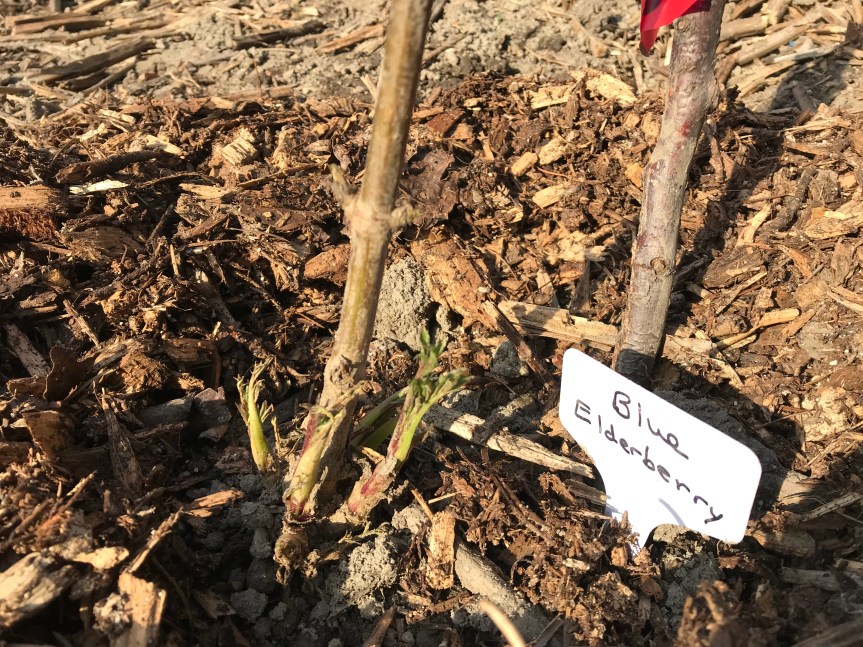
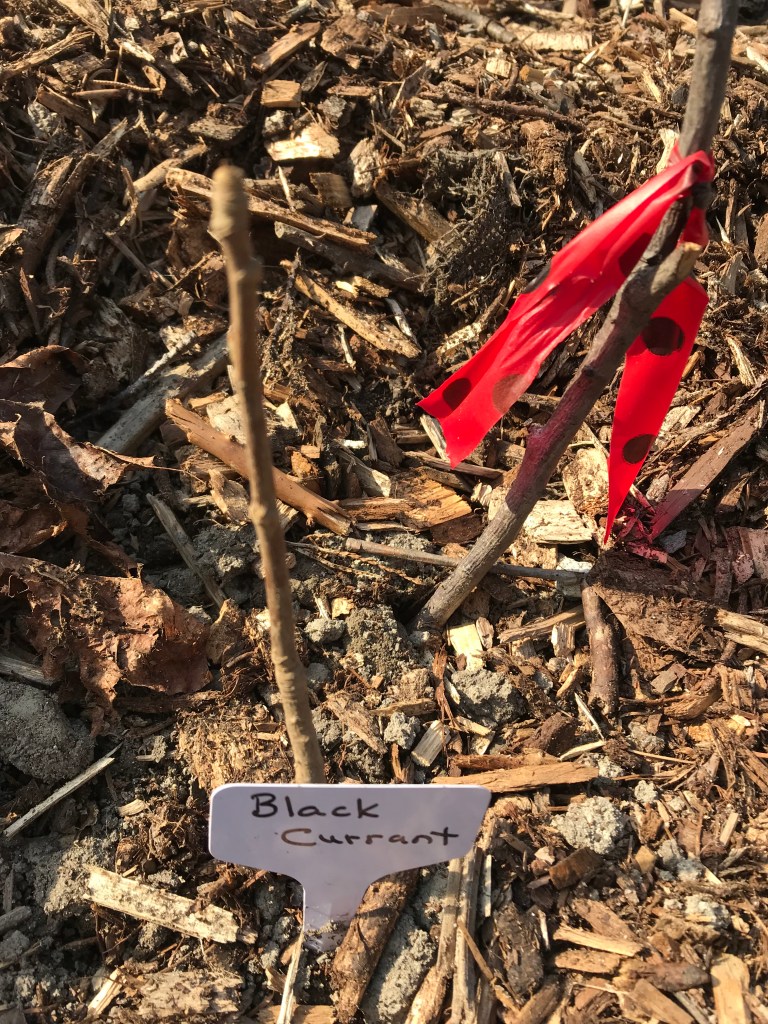
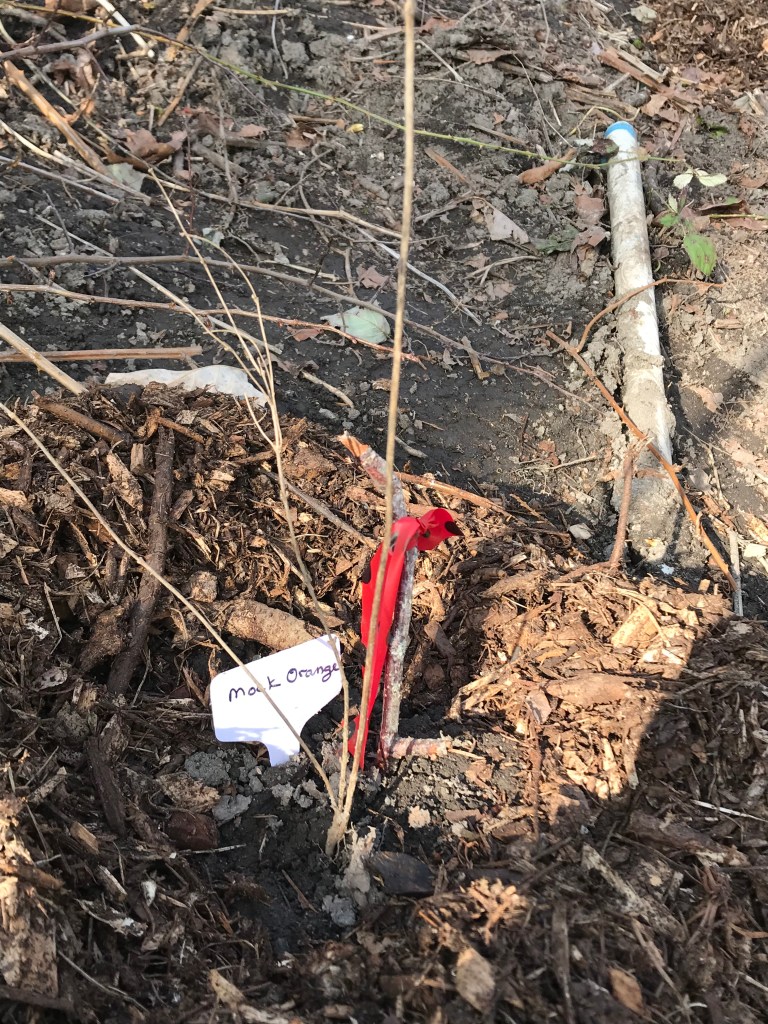


If we were being “tested” on flexibility, persistence, letting go, accepting what is, doing whatever it takes, equanimity and/or being like a bird perched on a dry twig, I’d say we passed the test!
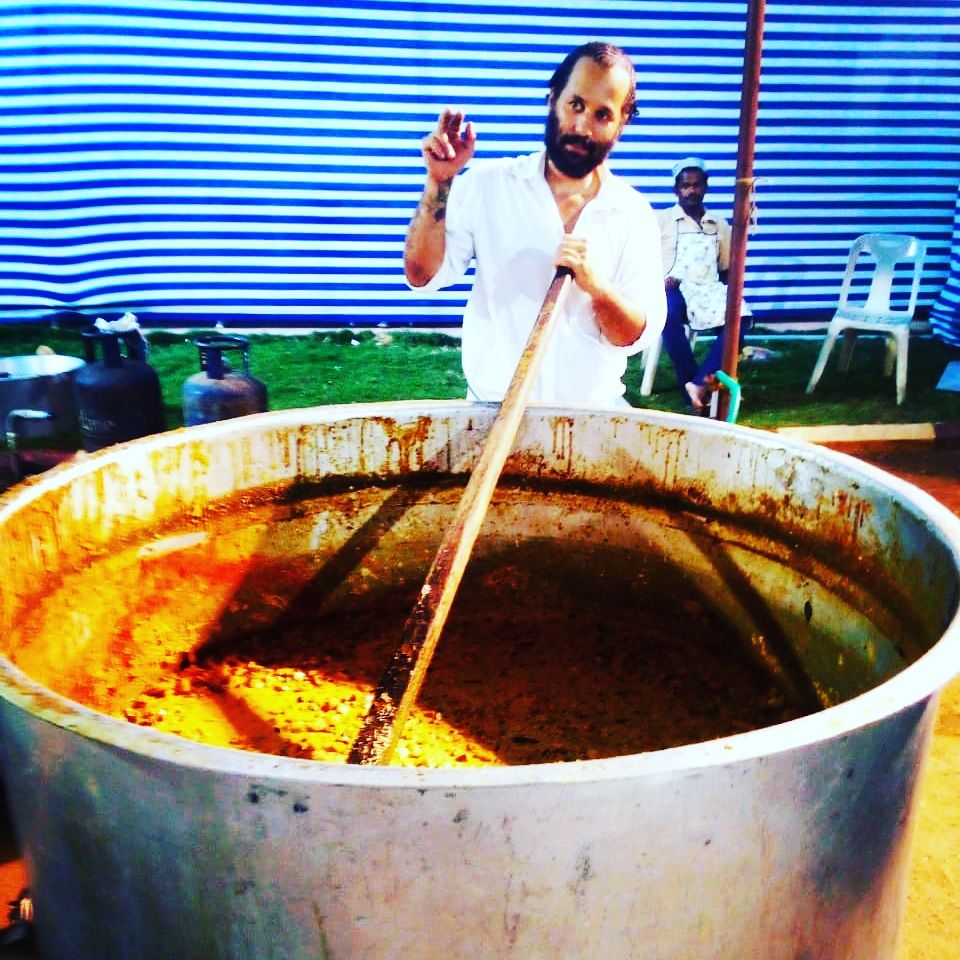
Sreejit is in the process of writing a new song called This is What the Dream Looks Like. It is about his experience of living and working on Amma’s most recent North India Tour. The video below was taken when he shared the lyrics with a group in Amritapuri.
Lyrics:
Straw mat and a concrete floor, food in the corner from two days before, laundry hanging from a rope through the center of the room – this is what the dream looks like.
Callus hands but they weren’t always rough, sharp words but we weren’t always tough, one thing this life teaches is that, together, we are enough.
This is what the dream looks like, more than a struggle it’s a fight to be kind when you’re hungry and tired, ‘cause you don’t have any right to be tired
when people are coming to forget their problems, and maybe a little of your time could help solve them, maybe a kind word from you would absolve them of the feeling that they’re all alone – though sometimes we all feel that we are all alone – yeah this is what the dream looks like.
Beaten down by the work no one sees, ‘cause it’s always full-on behind the scenes to magnify the glitz and the lights – yeah this is what the dream looks like.
Getting home to see family at most once a year, and never bringing home the glam and the cheer – just wanting to hide in your bed, to watch tv just to get out of your head – yeah this is what the dream looks like.
Feet full of cracks and can barely walk, always falling asleep and so can barely talk, all eyes on you confused why you can’t form a sentence, let alone a thought,
always irritated by the smallest things, ‘cause that’s just what happens when you forget to eat, and that’s just what happens when you’re consumed with the work that you love – yeah it truly is a gift from above.
Straw mat and a concrete floor, kind of looks like the city before, but that place had water and this one you have to go next door,
but next door they have a kitchen and some home cooked food, and a friendly ear to pry out the blues if you choose to forget for a moment that you are not alone in the struggle – yeah this is what the dream looks like.
Tour photos:




The Art and Craft of Blogging
A collection of discussions on the environmental issues
“The fool doth think he is wise, but the wise man knows himself to be a fool.” “Love all, trust a few, do wrong to none.” “Love looks not with the eyes, but with the mind, And therefore is winged Cupid painted blind.”-William Shakespeare
...moments of unexpected clarity
Home of Lukas Kondraciuk Photography
Wellness, Support and Mindset
Thoughts on Creativity & Deeper Things
A Blog by Novella Carpenter
Ramblings of an Irish ecologist and gardener
Teaching the art of composition for photography.
Blog from SathyaSaiMemories ~ stories of love in action and the benefits of giving
There are 11,507 stories in Haddonfield; this is one of them.
Perennial gardening and more from the Green Mountains of Vermont
Whatever it will be...
Welcome to my little slice of the blogosphere
 Living, Learning and Letting Go